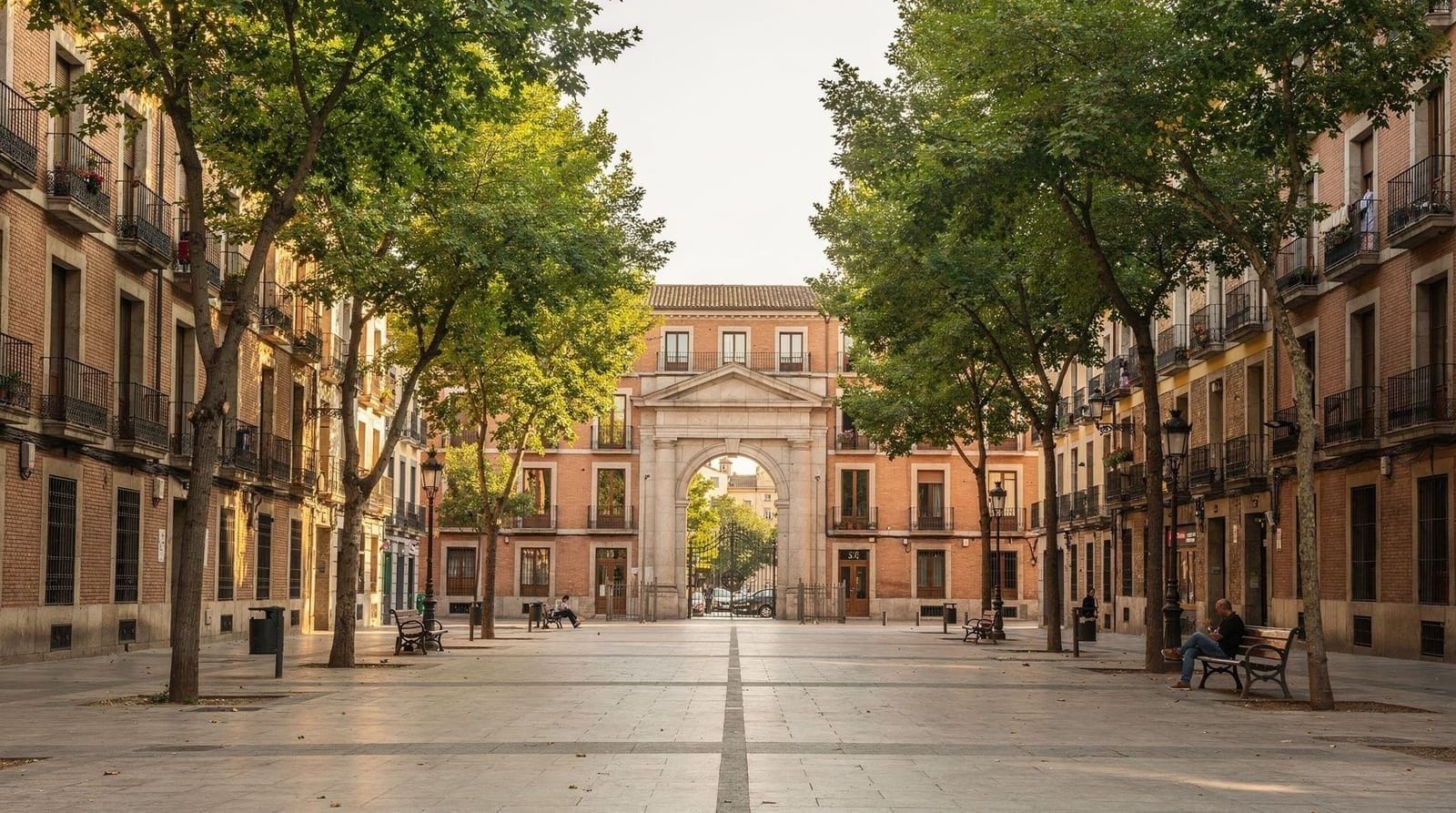
Madrid first weekend: the perfect 2-day introduction
Madrid: Old Town Walking Tour
Quick answer: Two days is the minimum to feel Madrid properly. Day 1 covers the royal and Habsburg city: Royal Palace, the Austrias quarter, La Latina tapas, and the Prado. Day 2 opens with Retiro Park and moves through Barrio de las Letras to the Reina Sofía, then into the evening neighbourhoods of Malasaña or Chueca. A flamenco show on night two closes the weekend correctly.
A Madrid weekend is well-earned. Unlike Barcelona, where the big-ticket sights are spread across the city and need two metro lines to link, Madrid’s historic core is extraordinarily compact: the Royal Palace, Plaza Mayor, Prado, Retiro, and the Reina Sofía all sit within a 2.5 km radius. You can cover them on foot, pausing for coffee and wine along the way, without needing to rush.
This is an introduction, not an exhaustive itinerary. The Thyssen-Bornemisza, the Sorolla Museum, flamenco at a proper tablao, and the neighbourhood bars of Lavapiés will wait for your next trip — and there will be a next trip.
| Duration | 2 days — the honest minimum for a real first taste |
| Pace | Full but not rushed: one museum plus one neighbourhood per day |
| Getting around | Mostly on foot; metro for La Latina and cross-city moves |
| Budget | Mid-range around €175–€250/day per person incl. hotel |
| Best time | April–May or September–October for comfortable temperatures |
Day 1: The royal city and its art
Morning: Royal Palace and the Austrias quarter
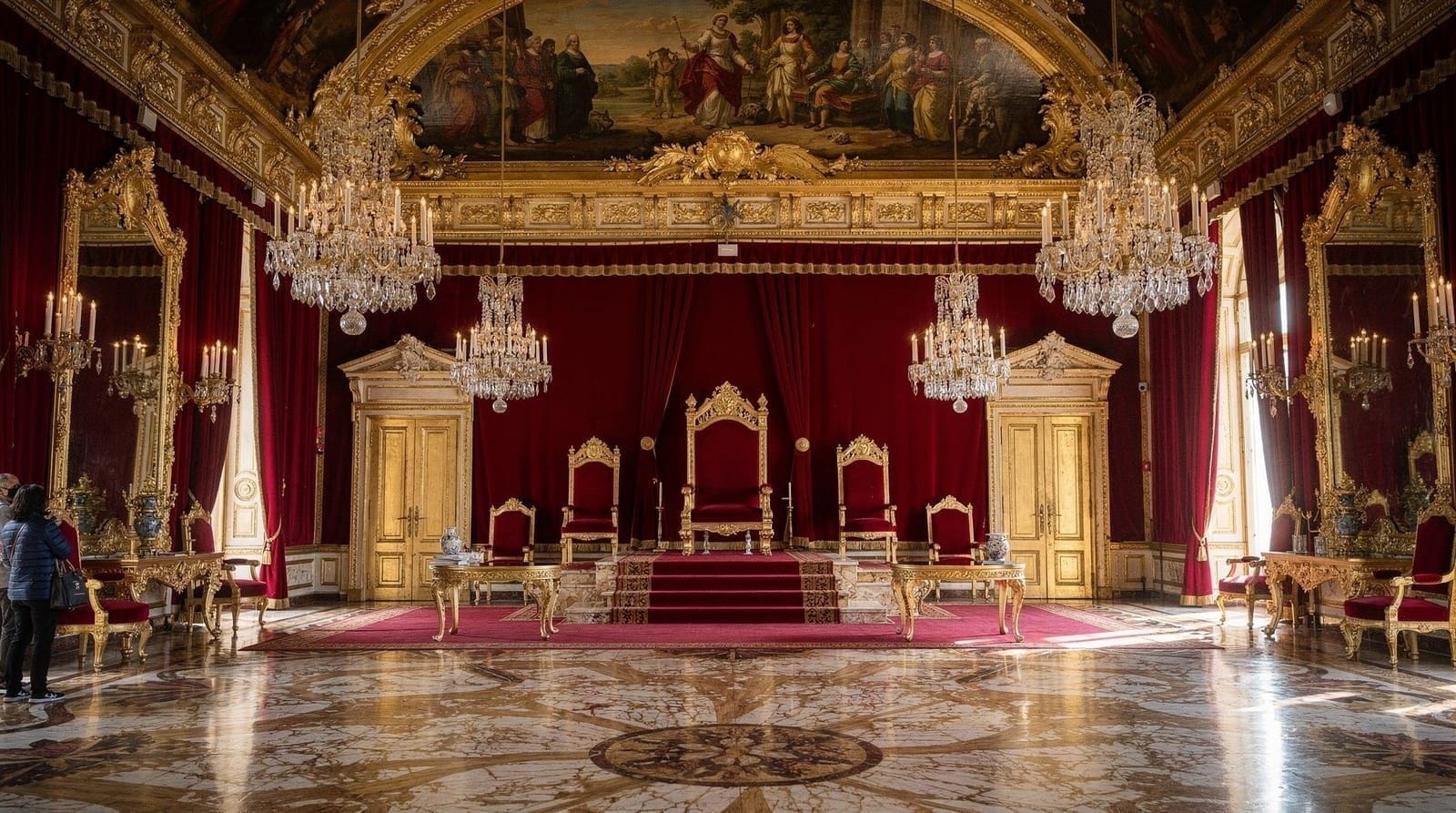
Arrive by 9:30 am at the Royal Palace. Pre-book a Royal Palace fast-access ticket — walk-in queues peak at 45–60 minutes in spring and autumn. The palace is the largest functional royal palace in Western Europe by floor area, though the Spanish royals have not actually lived here since the 1930s; it is now used for state ceremonies and open to the public most days.
The circuit covers the Throne Room (ceiling fresco by Giovanni Battista Tiepolo), the Gasparini Room (floor-to-ceiling embroidered silk walls), the Royal Armoury, and the collection of Stradivarius instruments still played at official events. Allow 90 minutes for the standard circuit plus exterior gardens.
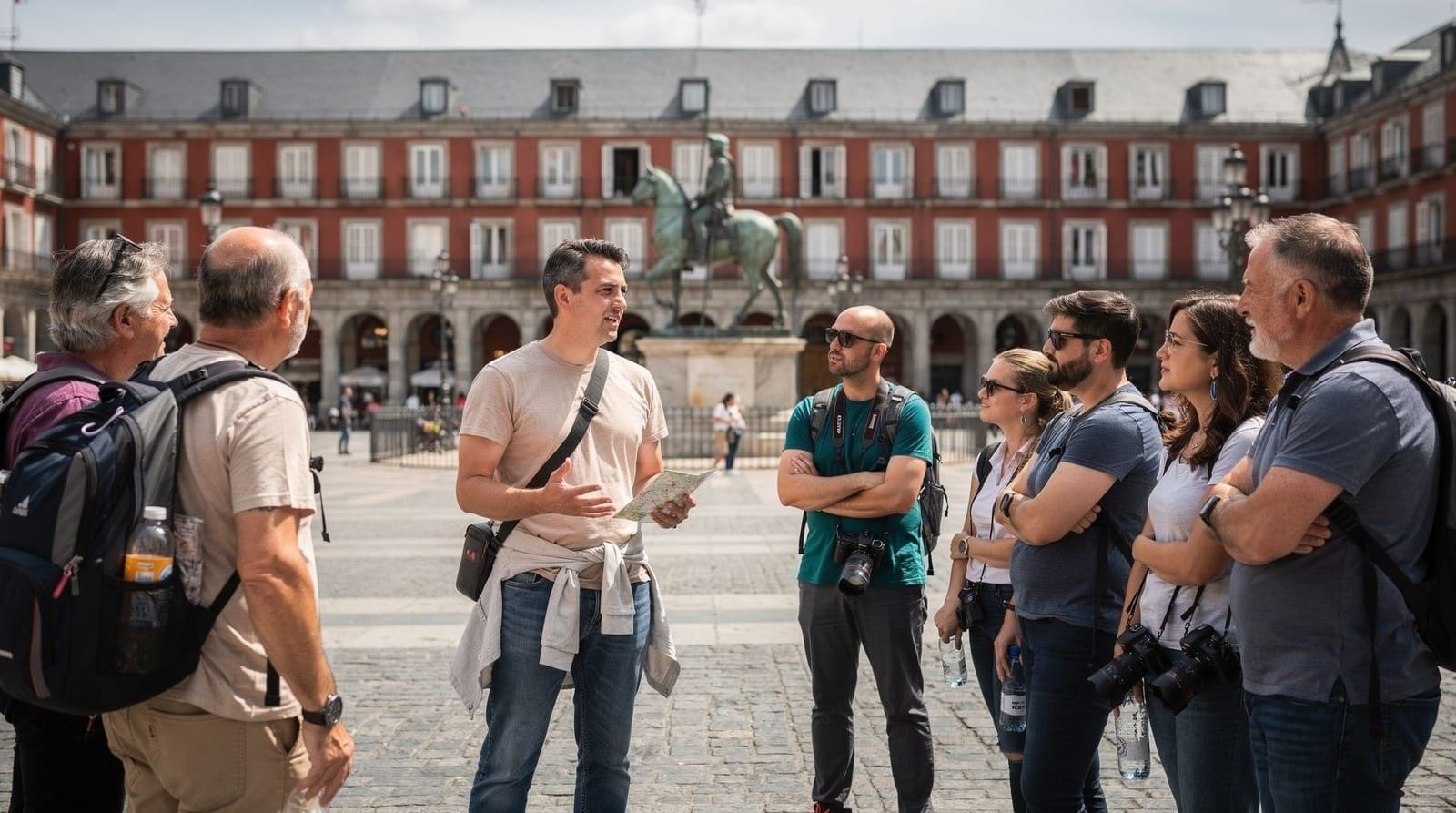
Walk east through the Madrid de los Austrias quarter — the oldest part of the city, built under Philip II and Philip III in the 16th and 17th centuries. The Plaza Mayor is the centre of gravity: an arcaded Renaissance square big enough to hold 50,000 people, originally used for bullfights, executions, and royal proclamations. Have a coffee at a café on a side street rather than at the plaza’s own terraces (those charge a 60–80% location premium). From the plaza, walk through the Arco de Cuchilleros to the old market streets.
Continue to Puerta del Sol and walk south-east through the Barrio de las Letras (the literary quarter) towards the Prado. The streets are named after Golden Age writers — Cervantes and Lope de Vega both lived here — and the neighbourhood has concentrated bookshops, small theatres, and wine bars that attract a literary crowd.
Midday: The Prado
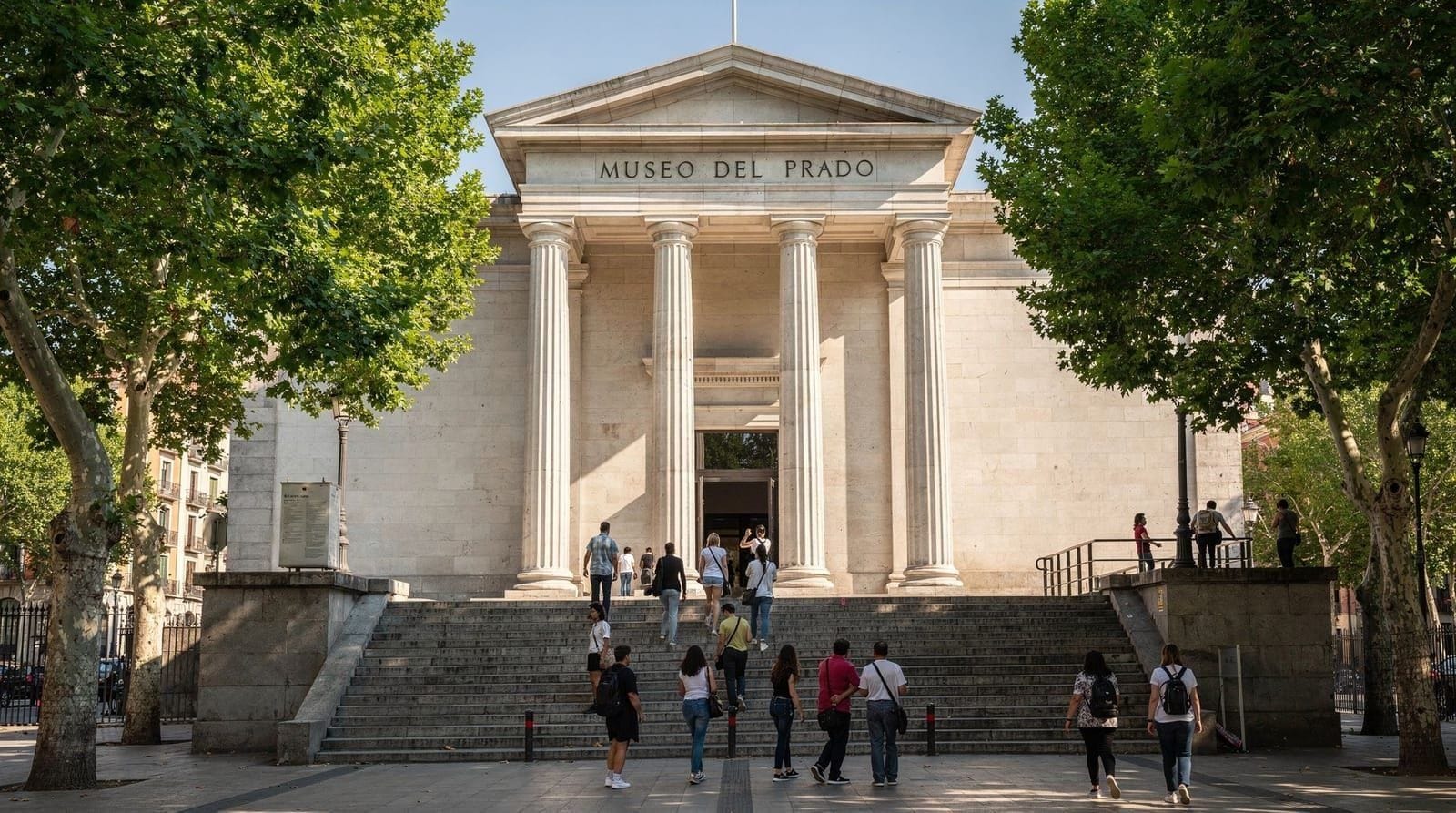
Plan 90 minutes to two hours at the Prado Museum. The collections is vast but the essential rooms are defined: Velázquez (Rooms 12–15, Las Meninas is in Room 12), Goya (the Black Paintings on the ground floor, Room 67), El Greco (Rooms 8B and 9B), and Bosch (Room 56A).
The Prado skip-the-line guided tour is a good investment on a first visit — a two-hour tour with a focused expert covers the Spanish school in depth and gives you the art-historical context that makes the difference between looking and seeing.
After the museum, cross Paseo del Prado and walk five minutes into the northern end of the Retiro Park — a brief decompress before lunch.
Afternoon and evening: La Latina and a flamenco show
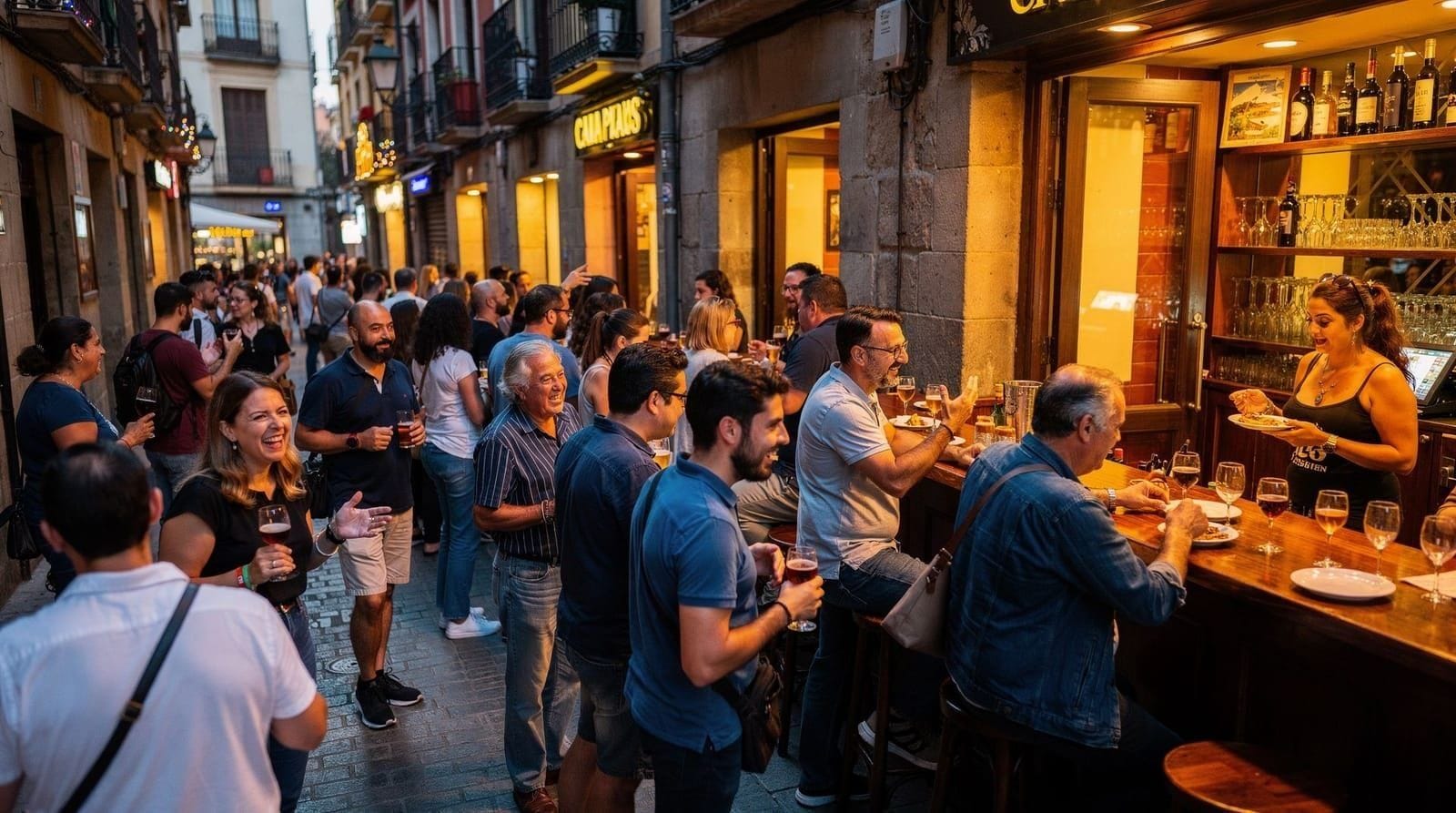
Take the metro from Atocha to La Latina station (Line 5, three stops) and spend the afternoon in La Latina. The tapas bars on Cava Baja and Cava Alta are the best concentration of authentic Madrid bar culture in the city; stand at the bar, order a caña, and let the afternoon happen. The best tapas bars guide has the specific recommendations worth knowing — Juana La Loca (pintxos), Casa Lucas (modern sharing plates), and El Viajero (rooftop terrace) are the anchors.
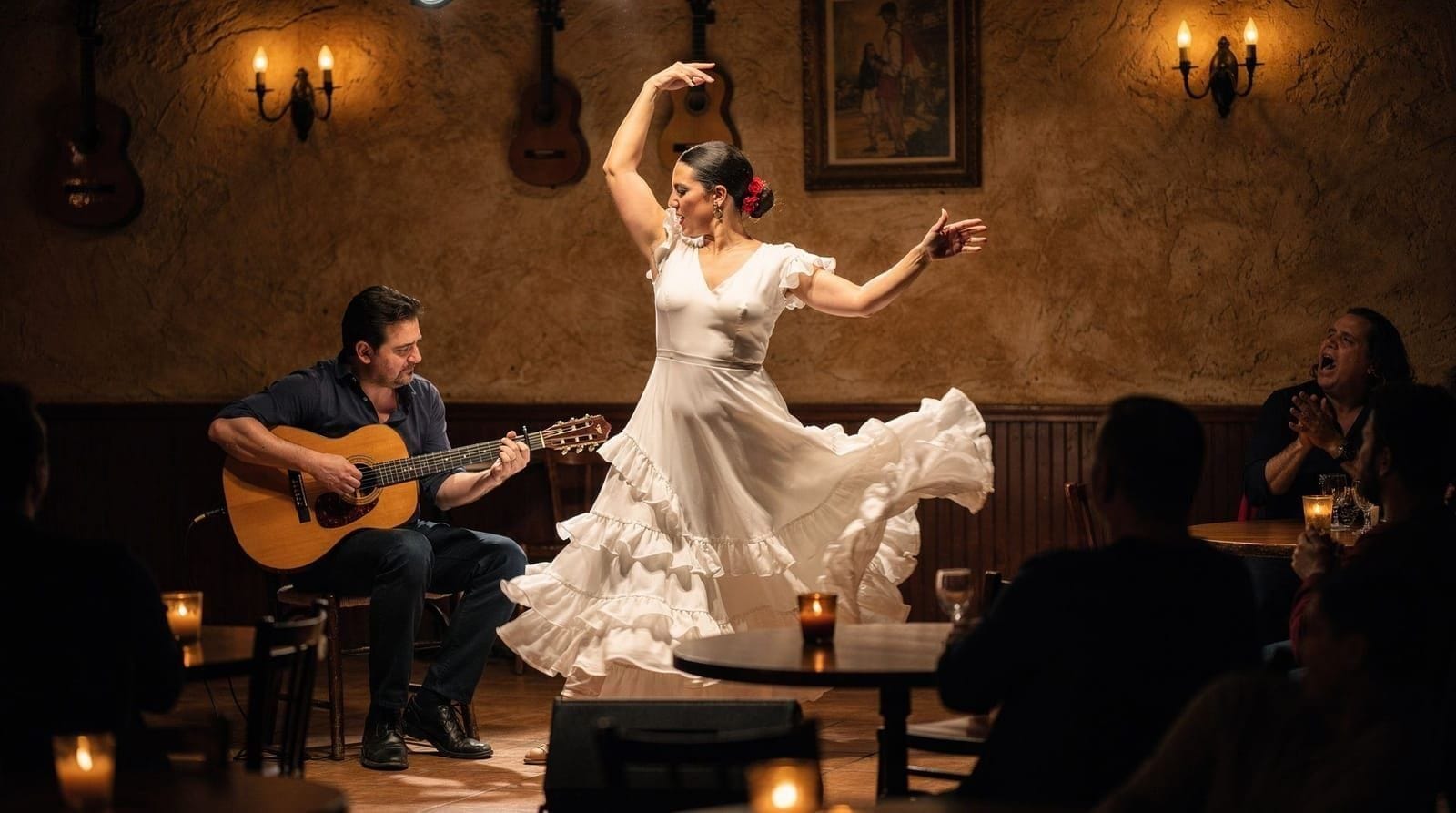
Evening: book a flamenco show in advance. The Madrid Emociones live flamenco show is one of the honest-value options — proper professional dancers and musicians, not a tourist-trap performance. See the flamenco guide for the full breakdown of tablaos and what separates the real thing from the restaurant-floor shows.
Dinner after the show in La Latina or in nearby Barrio de las Letras — Madrid dinner service starts at 9 pm and it is normal to eat at 10 pm.
Day 2: Retiro, Reina Sofía and the evening neighbourhoods
Morning: Retiro Park
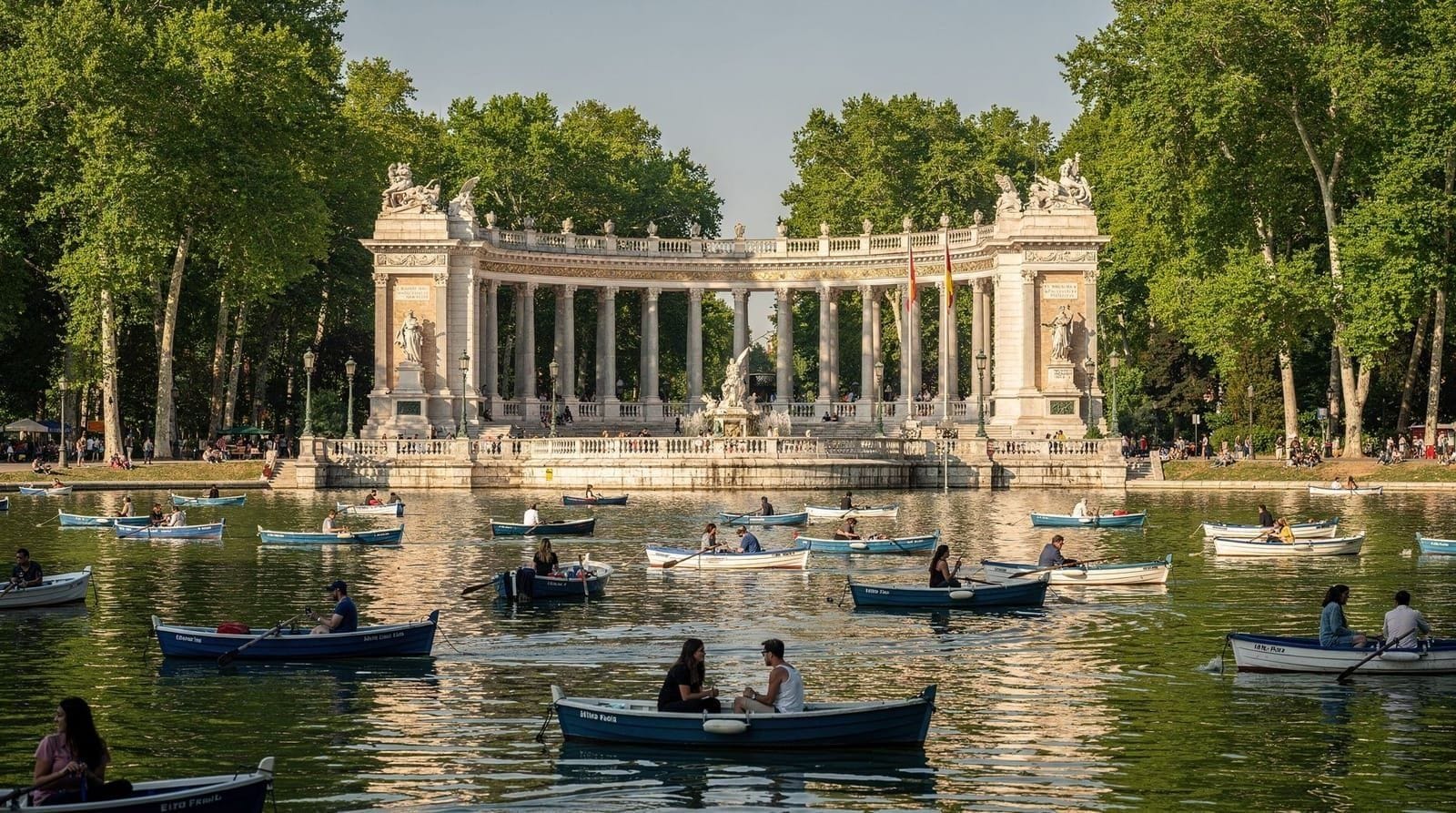
Start the second day at the Retiro Park. This 125-hectare royal garden in the centre of the city is free to enter and at its best before 11 am on weekdays, when the Sunday crowd has not yet gathered. Walk around the Estanque Grande — the large rectangular lake where you can rent rowing boats — past the Crystal Palace and down to the Rose Garden. A mid-morning coffee at one of the park’s kiosks is the genuine local version of the Madrid morning.
From the south end of the park, it is a five-minute walk to the Reina Sofía.
Midday: Reina Sofía
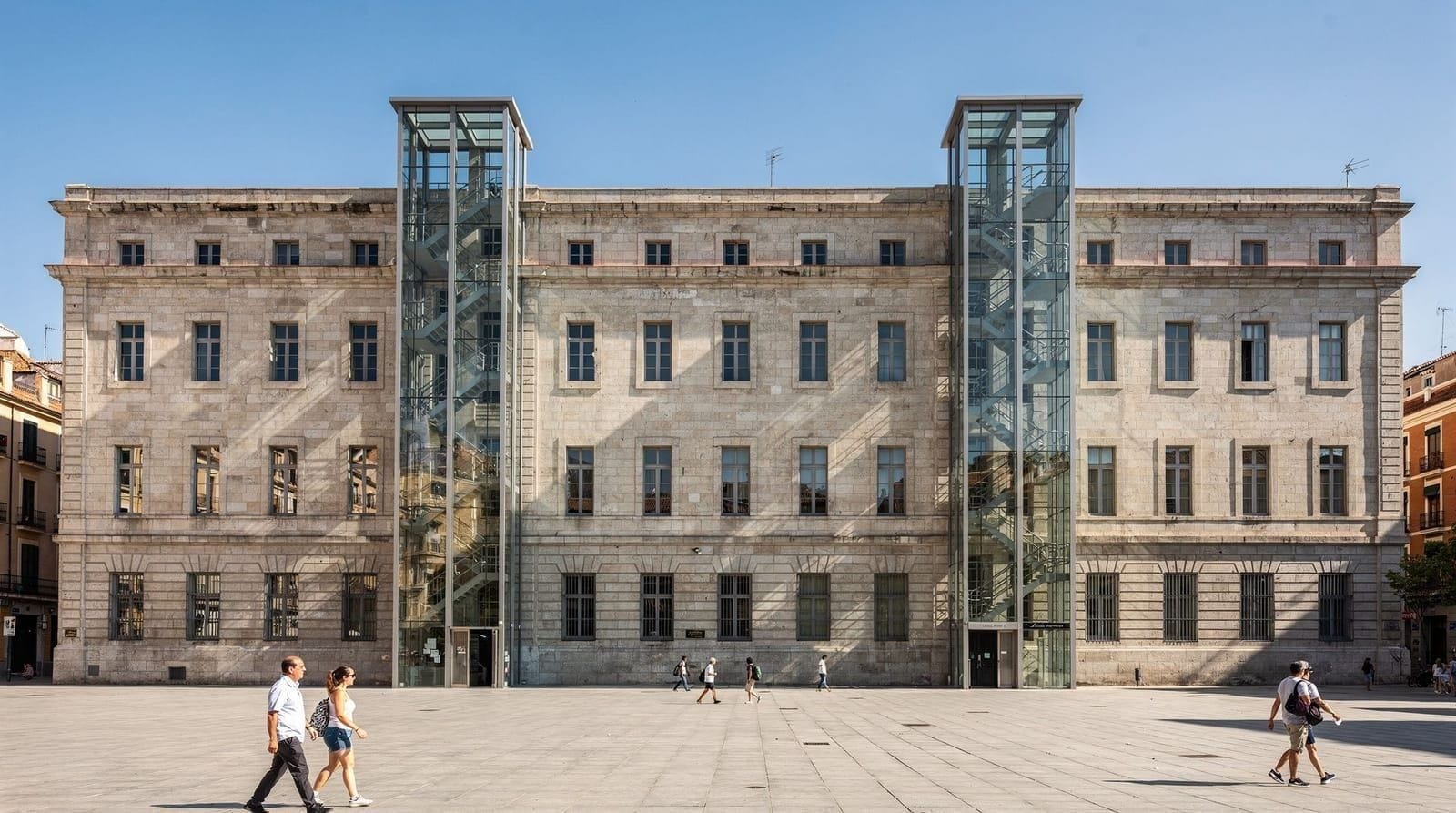
The Reina Sofía Museum is built around one work: Pablo Picasso’s Guernica, a 3.5-metre by 7.8-metre painting in Room 206 that documents the 1937 bombing of a Basque village during the Spanish Civil War. The permanent collection around it — Juan Miró, Salvador Dalí, the Spanish Surrealists and post-war generation — is extensive and rewarding, but Guernica is the reason to come.
Allow 90 minutes for a focused visit. The museum opens at 10 am Monday to Saturday and is free on Monday evenings from 19:00 to 21:00, and Sunday afternoons 13:30 to 19:00. Check the museum-free-hours guide before you go if timing your entry matters.
Lunch near the Reina Sofía or in Lavapiés — the neighbourhood immediately west of the museum is one of Madrid’s most genuinely mixed and characterful, with low-cost restaurants from every cuisine. For a proper sit-down Spanish lunch, a menú del día (three courses plus a drink) is €12–€15 at neighbourhood restaurants here.
Afternoon: Malasaña or Chueca
Spend the second afternoon in one of Madrid’s two northern barrios. Malasaña is the older bohemian neighbourhood — slightly scruffy, independent-minded, full of vintage clothing shops, record stores, and bars that have been there 30 years. Chueca is neater, more design-conscious, and the heart of Madrid’s LGBTQ+ scene.
Both are excellent for afternoon wandering, coffee, and early evening drinks. The Malasaña guide and Chueca guide give the neighbourhood-level context worth having.
By evening, Gran Vía links both neighbourhoods back to Sol. The Azotea del Círculo de Bellas Artes rooftop (off Gran Vía) is the classic spot for a sunset drink with a city view — entry is €6.
Where to stay
For a first Madrid weekend, staying in or adjacent to the historic core (Sol, Barrio de las Letras, La Latina, Lavapiés, Austrias) puts the major sights within walking distance. The where-to-stay-in-madrid guide and best area for first-time visitors cover the neighbourhood-by-neighbourhood tradeoffs in detail.
Mid-range hotels in this zone run €100–€180 per night for a double; budget options are €60–€90. Book the Royal Palace and Prado tickets before you book accommodation — if both are full for the days you want, your dates may need to shift.
For a first weekend specifically, prioritise proximity over neighbourhood character: you are covering a lot of ground in a short time, and a hotel that saves you a 20-minute walk or metro change each morning adds up to real extra time at the sights themselves. Barrio de las Letras is the single best compromise — quiet enough to sleep well, close enough to the Prado and Sol to walk everywhere on this itinerary, and with a strong enough restaurant scene that you rarely need to travel for dinner.
Practical tips
- Book the Royal Palace and Prado in advance. Peak season queues are long enough to break your schedule.
- The metro is straightforward. Three lines cover everything on this itinerary: Line 1 (Atocha–Sol–Gran Vía), Line 5 (La Latina–Callao), Line 3 (Sol–Malasaña direction via Tribunal). A Tourist Travel Pass for 2 days covers unlimited rides.
- Walking distances are short. Royal Palace to Prado is 2 km; Prado to La Latina is 1.5 km. You will walk more than you metro on this itinerary.
- Madrid eats late. Lunch at 14:00–15:30, dinner at 21:00–22:30. Showing up at 19:00 looking for dinner will find you a half-empty restaurant with a tourist menu.
- Flamenco booking: pre-book by at least a day; the best shows sell out in high season.
What to know about Madrid before you arrive
Language. Spanish is universal; English is widely spoken in hotels, major attractions, and the central restaurant zone. In neighbourhood bars in La Latina, Lavapiés, and Chamberí, you may find limited English — a few Spanish phrases (hola, gracias, por favor, la cuenta) are helpful and warmly received. Young Madrileños under 35 typically speak confident English.
Money. Madrid is in the euro zone and is meaningfully cheaper than Paris, London, or Amsterdam for equivalent quality — roughly 20–25% less expensive. Cards are accepted almost everywhere; contactless payment (including Apple Pay and Google Pay) works in most places. Carry small cash for the El Rastro market and tiny neighbourhood bars. The eat like a local guide has the price points that matter.
What is tourist-trap and what is not. The restaurants immediately surrounding Plaza Mayor and Puerta del Sol are consistently overpriced — €20–€25 for a set menu that costs €12–€15 two streets away. The chains along Gran Vía are similarly inflated. The tourist traps guide maps the areas to avoid and the areas worth going to. The rule of thumb: the further from Sol, the better the value.
Museum logistics for a weekend. The free entry windows at all three golden triangle museums are genuine — the full permanent collection at no cost. The tradeoff is a queue on weekday evenings (15–25 minutes), longer on weekends. If you are comfortable with queuing and timing flexibility, the free windows are excellent. If you want to control your schedule precisely, pre-booked timed entry is worth the €12–€15. The museum free hours honest guide gives the realistic picture.
Flamenco options. Madrid has more flamenco shows than any city in Spain including Seville, because the capital absorbs the best performers from Andalusia, Extremadura, and the Basque Country. The range goes from tourist-trap tablao dinners (expensive, mediocre dancing, choreographed for non-Spanish audiences) to small performance spaces with professional artists and a limited audience. The flamenco guide is the reference; for a weekend visit, the important point is: book in advance and choose a show where the performers are professional flamenco artists, not restaurant entertainment.
Transport for a two-day visit. Most of what you will do is walkable — Royal Palace to Prado is 2 km; Prado to La Latina is 1.5 km; La Latina to Malasaña is 2.5 km via Gran Vía. A Tourist Travel Pass for 2 days (unlimited metro and bus) is worth buying if you take four or more metro journeys per day; otherwise individual tickets at €1.50–€2 are fine. See the tourist travel pass guide and the metro guide.
If you arrive Friday evening instead of Saturday morning
Many first-time weekenders fly in Friday evening rather than Saturday morning, which effectively adds a half-day. If your flight lands by early evening, skip a formal itinerary item and instead settle into your neighbourhood: check in, walk to Puerta del Sol or Plaza Mayor for an orientation stroll, and have a light tapas dinner nearby rather than trying to squeeze in a museum. This keeps Saturday and Sunday full for the Royal Palace, Prado, and Reina Sofía without rushing the arrival evening, and means you start Day 1 already knowing the city centre’s layout.
Weekend cost breakdown
Two days runs approximately €353–€503 per person including accommodation, based on: a mid-range hotel at €120–€180/night, the Royal Palace ticket €18, the Prado guided tour or entry €15–€35, museum-adjacent lunches €12–€18 each, a proper dinner €25–€35, and the flamenco show with a drink €30–€45. Cutting the guided Prado tour for standard entry and using a free-entry window for the Reina Sofía can trim €30–€50 without losing much of the experience — the museum free hours guide shows exactly when.
Frequently asked questions about a Madrid weekend
Is 2 days enough for Madrid?
Two days covers the first tier: Royal Palace, Prado, Reina Sofía, Retiro, La Latina. You will not have time for the Thyssen, Sorolla, Bernabéu, day trips, or the smaller neighbourhood museums. For most first-timers, a weekend is a good introduction and leaves enough undone that you will want to return. The how-many-days guide gives a full breakdown.
What is the best area to stay for a first visit?
Sol/Gran Vía for central access to everything, Barrio de las Letras for a quieter base close to the Prado, or La Latina for the atmosphere. Malasaña is good if you prioritise evening life. See the best area for first-timers guide.
Should I book museum tickets in advance?
Yes, for the Royal Palace and the Prado during peak season (April–May, September–October). Reina Sofía queues are generally shorter but advance booking still saves time. The free-entry windows at all three museums (evenings and Sunday afternoons) are an option for budget travellers but require timing flexibility.
How much does a Madrid weekend cost?
Mid-range budget: €120–€180 per night for accommodation, €15–€25 for museum tickets, €30–€50 for meals per day. Total for two days with a flamenco show: approximately €353–€503 per person including accommodation.
Is Madrid better than Barcelona for a weekend trip?
Different rather than better. Madrid has more and better museums, a stronger tapas-bar culture, and is cheaper. Barcelona has beach access, Gaudí architecture, and more varied urban geography. For a weekend focused on art and food, Madrid has the edge. For architecture and a beach component, Barcelona. The madrid vs barcelona guide argues this in full.
What is the best time of year for a Madrid weekend?
April and May (San Isidro festival around May 15), and September and October are the sweet spots — comfortable temperatures (18–24°C), full cultural programming, parks at their peak. Late June and early July coincide with Madrid Pride (Orgullo), one of the largest Pride events in Europe, which transforms the Chueca and Gran Vía area. December is festive with good light displays and cheaper accommodation. July and August are hot (35–40°C) and the city empties of locals; the museums are still excellent but the street food culture is muted.
What is the Sunday schedule in Madrid?
Sunday is different from the rest of the week: La Latina fills up for El Rastro market (9 am–2 pm), then pivots into the long Sunday vermut and lunch culture (12:00–16:00) that is one of the city’s most enjoyable social rituals. Most shops close by afternoon; many neighbourhood restaurants serve Sunday lunch menú del día until 16:00. The museums are open with their Sunday free-entry windows. A Sunday arrival day for a two-day weekend makes good use of both El Rastro and the museum free windows.
Can I fit a day trip into a Madrid weekend?
Not comfortably alongside everything above. A day trip to Toledo or Segovia takes a full day on its own, which would mean cutting either the golden triangle museums or La Latina/flamenco — the two things that make a first weekend feel complete. If a day trip matters more to you than the second museum, swap Day 2’s Reina Sofía for Toledo or Segovia; otherwise save it for a return trip with an extra day.
Weekend at a glance
| Day | Focus | Evening |
|---|---|---|
| Day 1 | Royal Palace, Austrias quarter, Prado | La Latina tapas, flamenco show |
| Day 2 | Retiro Park, Reina Sofía | Malasaña or Chueca, sunset rooftop |
Top experiences
Bookable activities with verified prices and instant confirmation on GetYourGuide.