Getting around Madrid by metro: the complete 2026 guide
Madrid: Prado Guided Skip the Line
How easy is the Madrid metro to use for tourists?
Very easy. The metro covers virtually every major attraction and neighbourhood in central Madrid. A single ticket costs €1.50–€2 depending on zones. For multi-day visits, the Tourist Travel Pass offers unlimited travel with no airport supplement to pay. Most tourists need only Lines 1, 2, 3, 5, and 10 to reach everywhere on a standard itinerary.
The short answer: Madrid’s metro is fast, clean, inexpensive, and covers the entire tourist circuit. For 1–2 days, buy a Multi 10-trip card (€7.30). For 3+ days, the Multi 10 is still very economical; the Tourist Travel Pass makes sense mainly if you ride a lot every day or take Cercanías day trips (Zone T).
| Single fare | €1.50–€2 (Zone A) |
| Tourist Pass (Zone A) | €10.30 (1-day) to €43.20 (7-day) |
| Hours | 06:00–01:30 daily |
| Airport line | Line 8, +€3 supplement (waived with Tourist Pass) |
| Key lines | 1, 2, 3, 5, 10 cover most tourist journeys |
Why the metro is your best friend in Madrid
Madrid’s historic centre is compact and highly walkable — the walk from Sol to the Prado is 15 minutes, from the Royal Palace to La Latina is 10 minutes. But the metro becomes essential for three situations: arriving or departing from the airport, reaching outer neighbourhoods and day-trip stations, and covering longer city distances quickly when heat, rain, or aching feet make walking impractical.
The network has 13 lines, 302 stations, and covers the entire metropolitan area. For tourists, the inner Zone A (roughly the M-30 ring road) is where you’ll spend most of your time. The metro runs every 3–5 minutes on major lines during the day, making it genuinely on-demand rather than something you schedule around.
The key lines for tourists
Line 1 (light blue) — the main north-south artery
The most useful line for first-time visitors. Running from Pinar de Chamartín in the north to Valdecarros in the southeast, it passes through Sol (the geographic and tourist centre of Madrid), Atocha (main railway station for Toledo AVE trains and south Spain), and connects to Chamartín in the north. If you remember one line, make it Line 1.
Key stops: Sol, Atocha Renfe, Tribunal, Chamartín.
Line 2 (red) — Sol to Retiro and east
Connects Sol to the Retiro park area (Retiro station), continuing to Ventas (Las Ventas bullring) and beyond. Short but essential for reaching the Retiro without walking from the Prado area.
Key stops: Sol, Retiro, Ventas.
Line 3 (yellow) — south of centre
Serves Lavapiés (Embajadores station), Callao (Gran Vía shopping), Argüelles. Useful for accessing Lavapiés and Malasaña from the south side.
Key stops: Callao, Embajadores, Argüelles.
Line 5 (green) — east-west through the centre
Covers Gran Vía (Callao, Gran Vía stations), Chueca, Alonso Martínez, and Nuevos Ministerios (for connecting to the airport line). Useful for Malasaña–Chueca bar-hopping and accessing the Chamberí area.
Key stops: Callao, Gran Vía, Chueca, Alonso Martínez, Nuevos Ministerios.
Line 8 (pink) — the airport line
Direct service from T1/T2/T3 and T4 at Barajas to Nuevos Ministerios. The €3 airport supplement applies at both airport stations. Frequency every 4–7 minutes. For the full airport logistics picture, see the airport to city guide.
Line 10 (dark blue) — north connector
Runs from Tres Olivos (north) down through Tribunal, Chamberí, and connecting to Nuevos Ministerios. Useful for reaching the northern districts and for the Hospital La Paz area.
Line 6 (grey, circular) — the ring line
Circles the inner city, passing through Nuevos Ministerios, Laguna, Cuatro Caminos, and Príncipe Pío. Useful for cross-city transfers without going through Sol.
Understanding Madrid’s fare zones
Madrid Metro uses a zone system based on distance from the city centre:
| Zone | Coverage | Single fare |
|---|---|---|
| Zone A | Central Madrid (most tourist areas, inside M-30) | €1.50–€2 |
| Zone B1-B3 | Inner suburbs | €1.70–€2.50 |
| Zone C | Outer suburbs | €2–€3 |
| Airport supplement | Line 8 airport stations only | +€3 (waived with Tourist Pass) |
The vast majority of tourist journeys are within Zone A. The airport supplement is the one thing that catches visitors by surprise — it is added automatically to your fare when boarding Line 8 at the airport, on top of the standard zone fare.
Tickets and passes explained
Single ticket (billete sencillo): Valid for one journey on the metro, regardless of transfers, within Zone A. Costs approximately €1.50–€2. Requires a TTP card (free plastic card from the machine) to load onto.
Multi 10-trip card: Ten Zone A journeys for €7.30. The card can be shared between multiple people (tap individually). This is the best value for short stays without airport travel.
Tourist Travel Pass (Abono Turístico): Unlimited metro, EMT bus, and Cercanías within its zone. Zone A (the city) costs €10.30 for 1 day, €17.50 for 2, €23.10 for 3, €27.80 for 4, €33.40 for 5 and €43.20 for 7; Zone T (the whole region) costs €15.40 to €62.80. No airport supplement is payable in either zone. For the full breakdown and calculations of when it pays off, read the dedicated Tourist Travel Pass guide.
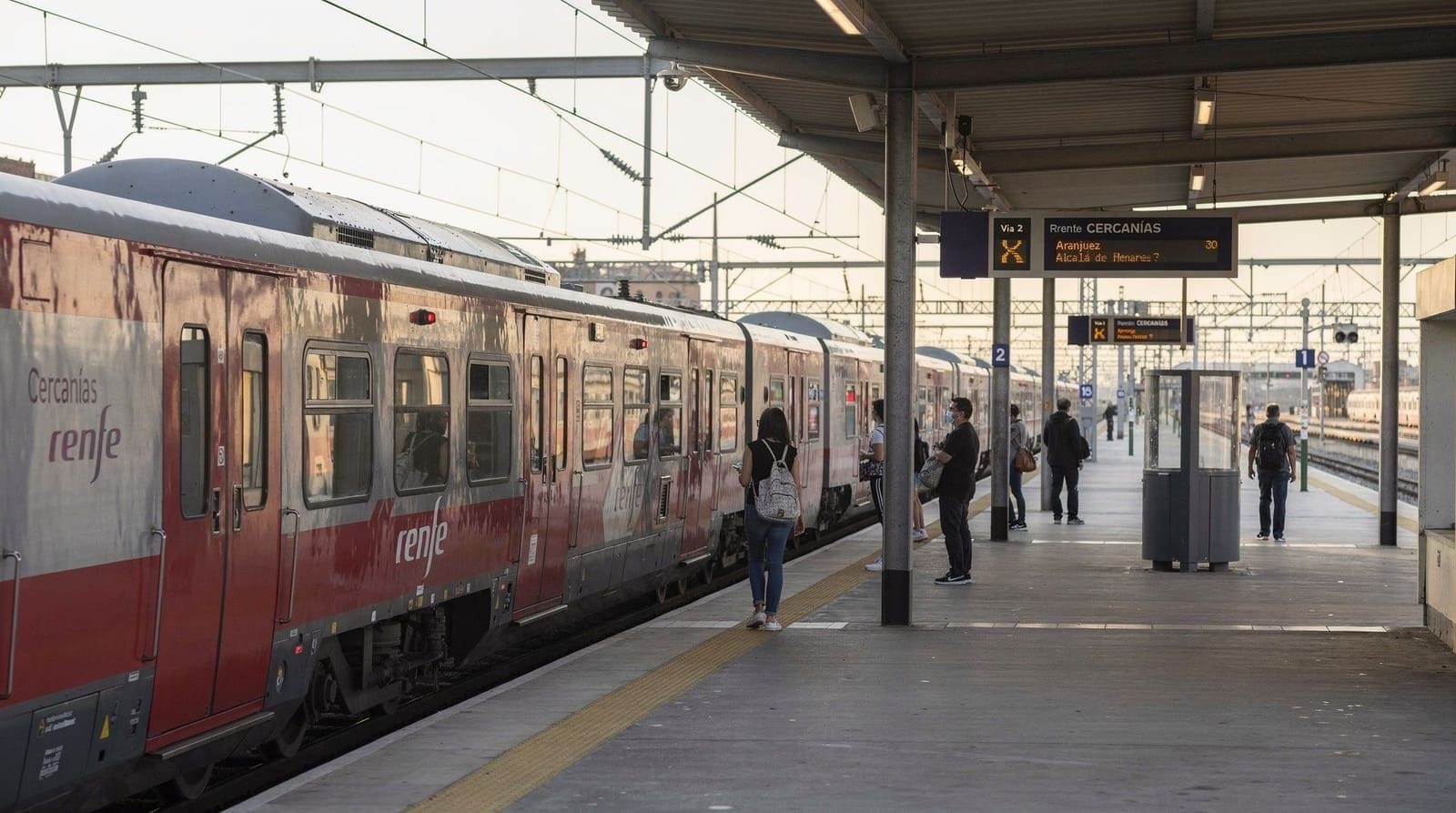
Cercanías integration: The Tourist Pass in Zone T also covers Cercanías suburban trains within the Madrid region, opening up El Escorial, Alcalá de Henares, Aranjuez, and other day trips by regional rail without extra payment. More on this in the Cercanías guide.
How to buy tickets: step by step
- At the station entrance, find the yellow ticket machine (Máquina de Venta de Billetes).
- Press the flag for English (top-right of screen).
- Select “Get a TTP card” if it’s your first time — the card costs €0 and is reusable.
- Select your product: Single, Multi 10, or Tourist Pass.
- Insert your card (Visa/Mastercard/Amex accepted, contactless works), or cash.
- Collect the TTP card and receipt.
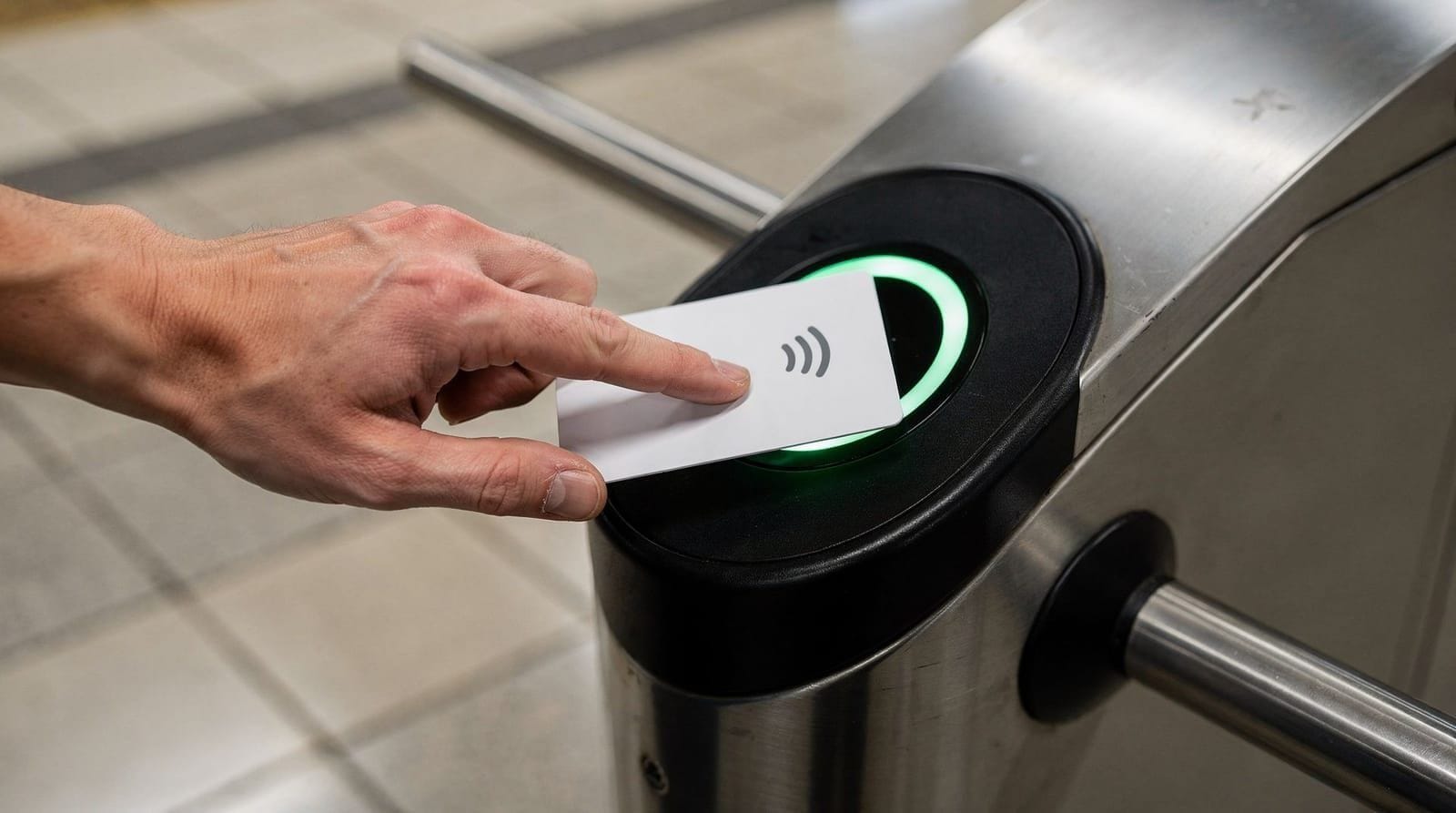
The TTP card is a grey plastic card about the size of a credit card. Hold it against the yellow reader at the turnstile to enter. Keep the card — you can reload it throughout your trip.
Can I use my bank card directly? Not yet. Madrid Metro still requires a TTP card as the medium. Open-loop contactless payment (tap your bank card at the gate) is not currently supported, unlike some other European metro systems.
Navigating the stations
Madrid Metro stations are well-signed in Spanish, with line numbers and colour codes prominent. The universal convention: look for the large “M” logo at street level. Inside, follow signs for your line number and direction (toward the terminus station). Transfer points are marked “Correspondencia” with the connecting line number.
Sol station is the main interchange hub — it connects Lines 1, 2, and 3. It is Madrid’s version of Times Square or Oxford Circus: busy, slightly confusing on first visit, but clearly signed. Allow extra time at Sol during rush hours (08:00–09:30 and 18:30–20:30).
Nuevos Ministerios is the most important interchange for airport travellers, connecting Line 8 (airport) to Line 10 and Line 6.
The centre is walkable — use your feet
The metro is a tool, not a necessity, for most tourist movements within the historic core. From Sol to the Prado takes 15–20 minutes on foot down Carrera de San Jerónimo and is a pleasant walk past the Congreso building, cafés, and bookshops. From Sol to the Royal Palace is 20 minutes through Plaza Mayor. From La Latina to Malasaña is a 25-minute walk north through the Austrias district.
The metro genuinely earns its value for:
- Airport runs (saves €25+ over a taxi when using Tourist Pass)
- Reaching outlying attractions: Santiago Bernabéu (Line 10, Santiago Bernabéu station), Retiro (Line 2), Ventas (Line 2)
- Day-trip station access: Atocha for Toledo (Line 1), Chamartín for Segovia (Line 1 or 10)
- Hot days in July/August when walking feels punishing
For a walk-heavy itinerary strategy, see the how many days in Madrid guide.
Planning a museum day around the metro
The art museums sit close together, so the metro is mostly useful for getting to the first one and home from the last. Start with the Prado museum guide, then add the Reina Sofía and the Thyssen-Bornemisza as your energy allows; the Golden Triangle art walk shows how to link the three on foot. Ride to the area, walk between the buildings, and save the return trip for when your feet have had enough.
Queues at the big museums can eat into a day more than any metro delay. If you would rather not spend your morning in line, a guided Prado visit with skip-the-line entry is one option, and it is worth comparing with the free-entry windows described in the museum free hours guide. If you prefer a single ticket covering several sights, a pass for three of the city’s art museums keeps the planning simple. For the royal side of the city, see the Royal Palace guide and the Retiro park guide, both an easy ride or walk from the central stations.
EMT buses: the complement to the metro
The EMT (Empresa Municipal de Transportes) bus network fills the gaps. The most useful lines for tourists:
- Line 27: Runs east-west along the Prado–Retiro corridor to Cibeles, useful for the museum triangle
- Line 2: Sol to Ventas along Alcalá
- Line 5: Castellana to Atocha
- Line 203 (Airport Express): 24-hour service, see airport to city guide
The same TTP card and fares (including Tourist Pass) work on EMT buses. Validate at the yellow reader by the driver when boarding.
Night transport (after 01:30)
When the metro closes around 01:30, three options remain:
Búho (night buses): 26 night bus routes radiate from Cibeles plaza. Lines N1–N26 cover all areas of the city. They run approximately every 30 minutes from 00:30 to 06:00, with increased frequency on weekends. Standard EMT fare applies.
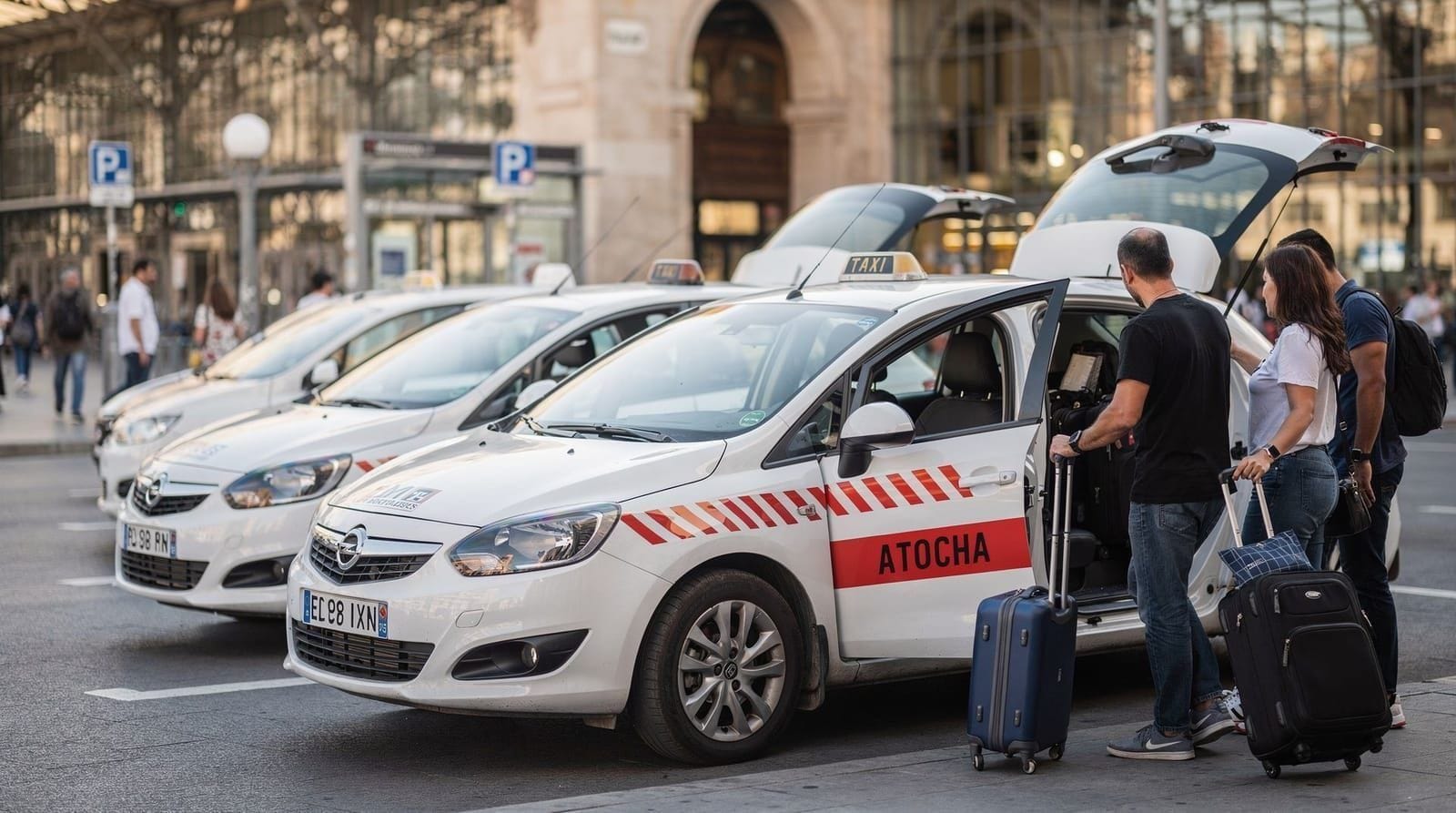
Taxis: Available throughout the night at stands and via MyTaxi/Free Now app. The standard metered fare applies — no night supplement on top, though the meter rate changes slightly after 21:00 and on weekends.
Ride-hailing (Uber/Cabify): Available but can have surge pricing on Friday and Saturday nights in Malasaña, Chueca, and La Latina. More detail in the taxi vs Uber guide.
Madrid’s nightlife runs late — the clubs don’t fill up until 01:00, and last calls can be at 05:00 or 06:00. Plan night transport before you go out, not after.
Accessibility
Madrid’s metro has made significant accessibility investments. Most central stations have lifts and/or ramps, though older stations on Lines 1 and 2 have some gaps. The Metro de Madrid website has a complete accessible station map. All new rolling stock is step-free with gap plates at the door.
The most accessible route from the airport: Line 8 is fully equipped with lifts throughout. Sol interchange can be awkward with heavy luggage — if accessibility is a concern, the taxi flat fare of €33 is the most straightforward option. For more, see the accessible Madrid guide.
Common mistakes to avoid
Forgetting the airport supplement: The €3 is easy to miss if you’re relying on your Multi card. It gets deducted automatically but can leave your card with insufficient credit. Always check the balance on the machine before heading to the airport.
Buying single tickets for 3+ days: The Multi 10 card is significantly cheaper for any stay beyond a day trip. The single ticket is only economical for one or two journeys.
Rushing through Sol transfers: The Line 1/2/3 interchange at Sol involves two separate platforms in different parts of the station. Allow 5–7 minutes for the transfer, especially with luggage.
Assuming the metro covers all day trips: Cercanías (not the metro) serves El Escorial, Aranjuez, and Alcalá de Henares. The AVE high-speed trains from Atocha and Chamartín (not metro, not Cercanías) serve Toledo and Segovia. The metro gets you to the station; you need a separate ticket for the train. See day trips by train from Madrid.
Practical tips from experience
Rush hour reality: Madrid’s rush hours (08:00–09:30 and 18:30–20:30 weekdays) on Lines 1, 5, and 6 can be very crowded, particularly around Sol and Nuevos Ministerios. Trains run every 3 minutes but carriages are full. If you’re carrying luggage or have elderly/mobility-impaired companions, slightly offset your timing — either 30 minutes earlier or 30 minutes later than peak.
Pickpockets in the Metro: The Metro is not particularly dangerous, but Sol interchange and crowded peak-hour carriages are where pickpockets operate. Keep bags in front of you, zip all pockets, and be aware when the carriage is very crowded. The risk is real but manageable with basic awareness.
Line 1 as your mental map: Line 1 is the backbone of tourist Madrid. Learning this single line — Sol, Tirso de Molina, Antón Martín, Atocha (south) and Tribunal, Bilbao, Cuatro Caminos, Chamartín (north) — gives you the axis from which to extend with transfers. Everything else is a short hop from Line 1.
The “circular” Line 6: Line 6 (grey, circular) is useful for cross-city journeys that would otherwise require changing at Sol. From Nuevos Ministerios (airport connection) to Príncipe Pío (west Madrid) without going through Sol: take Line 6 around the circle. Most tourists don’t use it but it’s valuable once you know the route.
Metro and the stadium circuit
For football visitors, the Metro serves both Madrid clubs’ stadiums:
Santiago Bernabéu (Real Madrid): Metro Line 10, station “Santiago Bernabéu.” 2–3 stops from Nuevos Ministerios. Direct and fast on a normal day; extremely crowded on match days (take the Metro to the stadium, not from it — see the Bernabéu guide).
Metropolitano (Atlético Madrid): Metro Line 7, station “Estadio Metropolitano.” Further from the city centre (approximately 20 minutes from Sol). Line 7 is less central but the station is purpose-built for the modern stadium.
Las Ventas (bullfighting): Metro Line 2, station “Ventas.” Direct from Sol in about 10 minutes.
Integration with Madrid Río and the west
Madrid Río — the 6 km riverside park along the Manzanares — is accessible via several Metro and Cercanías connections:
- Metro Line 6: “Principe Pío” or “Arguelles” for the northern section
- Cercanías C-5: “Pirámides” or “Acacias” for the central section
- Walking from Sol: approximately 30–40 minutes west along Gran Vía to Princesa, then down to the river
The riverside is increasingly a place where Madrileños exercise, picnic, and spend weekend time. It has no admission charge. The Metro connections make it accessible for visitors wanting a break from the tourist circuit.
Travelling the metro with children
Madrid’s Metro is family-friendly in most respects:
- Foldable pushchairs/strollers allowed in carriages without folding during non-peak hours
- Lifts at accessible stations accommodate pushchairs (check the accessible route planner for your specific route)
- Children under 5 travel free
- Children under 11 get 50% off the Tourist Pass
- The metro is generally safe for older children and teenagers travelling independently
The main challenge: rush-hour carriages with a pushchair are physically difficult. For family transit at peak hours, consider buses (lower-floor, more space) or taxis for the pushchair/infant-heavy moments of the day.
Choosing between Multi 10 and the Tourist Travel Pass
The break-even calculation is straightforward once you know your trip length and journey count. A Multi 10-trip card costs €7.30 (about €0.73 per journey) and covers 10 Zone A journeys with no time limit on using them — good for a short stay or a longer one where you mostly walk. The Tourist Travel Pass is much harder to justify on metro rides alone: a 3-day Zone A pass at €23.10 costs more than 12 Multi 10 journeys (about €8.76) plus two airport supplements (€6). It becomes worthwhile only with very heavy daily use, or in Zone T (3 days: €35.00) if you plan several Cercanías day trips.
For a family or group, note that the Multi 10 card can be shared (tap in individually, one card, multiple people), while Tourist Travel Passes are typically issued per person — run the maths for your specific group size and itinerary rather than defaulting to either option. The Tourist Travel Pass guide has the full day-by-day cost comparison.
Metro etiquette and unwritten rules
Madrid’s metro has a few informal conventions worth knowing. Stand on the right on escalators, letting people in a hurry pass on the left — this is followed consistently and visitors who block escalators get noticed. Priority seating (marked with symbols) is genuinely respected; offer your seat to elderly passengers, pregnant women, or anyone with a visible mobility need without being asked. During rush hour, let passengers exit before boarding — Madrid platforms can get chaotic at Sol and Gran Vía if this isn’t observed. Eating on the metro is uncommon and mildly frowned upon, though not prohibited; a quick snack is fine, a full meal draws looks. None of these are strictly enforced, but observing them makes the experience smoother for you and the locals sharing the carriage.
Using the metro for day trips and neighbourhood evenings
The metro is the first leg of nearly every excursion. It gets you to Atocha or Chamartín, and the train does the rest; the Atocha vs Chamartín guide explains which station suits which destination. Guides to Toledo and Segovia cover the journey in detail, and the AVE day trips guide compares the options. If you would rather have transport and entry sorted for you, a day tour taking in Ávila and Segovia with monument tickets removes the logistics, though the train remains the more flexible choice.
In the evening, the metro links the lively districts: see the Malasaña guide, the Chueca guide and the Lavapiés guide for where to go, and the Madrid at night guide and late-night Madrid for planning the journey home once the trains stop. Keep the pickpockets and safe areas guide in mind on crowded platforms. Families can find more tips in the Madrid with kids guide, and the Sol and centre guide covers the interchange most visitors pass through first. To fit all this into a schedule, the 3-day itinerary shows a realistic pace.
Frequently asked questions about Getting around Madrid by metro
How much does a single Metro ticket cost in Madrid in 2026?
A single ticket (billete sencillo) within Zone A (the central city) costs €1.50–€2 depending on distance (1–5 stations). A 10-trip Multi card costs €7.30 (about €0.73 per trip). Note that Line 8 to the airport adds a mandatory €3 supplement per journey, which is waived with the Tourist Travel Pass.What is the Tourist Travel Pass and is it worth it?
The Tourist Travel Pass (Abono Turístico) gives unlimited rides on metro, EMT bus, and Cercanías trains in Zone A (the city) for 1 day (€10.30), 2 days (€17.50), 3 days (€23.10), 4 days (€27.80), 5 days (€33.40), or 7 days (€43.20). Zone T, which adds travel across the whole region by Cercanías, costs €15.40 to €62.80. No airport supplement is payable with either zone. With a Multi 10 at €7.30, the pass only pays off for very heavy daily use or regional day trips in Zone T.Which metro lines do tourists use most?
Line 1 (light blue) runs north-south through Sol, Atocha, and Chamartín — essential for the Prado area and main railway stations. Line 2 (red) connects Sol to the Retiro and Ventas. Line 3 (yellow) covers Lavapiés and Embajadores. Line 5 (green) runs east-west through Chueca and Callao. Line 10 (dark blue) reaches Nuevos Ministerios from the airport line. Line 2 extension and Line 6 (circular grey) connect outer districts.How do I buy a Metro ticket in Madrid?
Ticket machines are at every station entrance — all machines accept cards and cash, and have English language menus. You need a TTP card (Tarjeta de Transporte Personal, free) to load Single tickets or Multi cards onto. Insert the card and select your fare. Tourist Travel Passes can also be loaded onto TTP cards, which you keep throughout your stay.Is the Madrid metro safe at night?
Generally yes. Madrid's metro is well-lit, staffed, and considered safe until closing time (~01:30). Standard precautions apply: be aware of pickpockets at busy stations (Sol, Callao, Gran Vía) and during crowded rush-hour trains. Keep bags in front, not in back pockets. The metro is not advisable after 01:30 when it closes — use taxis or the night bus (Búho service) instead.What time does the Madrid metro open and close?
Weekdays and Saturdays: 06:00 to 01:30. Sundays and public holidays: same hours. On New Year's Eve and selected festival nights, the metro runs extended hours — check Metro de Madrid's website or app for specific date exceptions.