Accessible Madrid: a practical guide for visitors with disabilities
Madrid: Prado Royal Palace Guided
Is Madrid accessible for wheelchair users and visitors with mobility impairments?
Largely yes, with caveats. The central metro stations have lifts. The major museums (Prado, Reina Sofía, Royal Palace, Thyssen) have full wheelchair access. The historic old town (La Latina, Austrias, Plaza Mayor) has significant cobblestone areas — manageable but not always smooth. Purpose-booked accessible taxis and private transfers are available.
Honest assessment: Madrid is better than its image suggests for accessibility — the main museums are fully accessible, the modern metro is well-equipped, and purpose-booked accessible transport is available. The main challenge is the historic cobblestone centre, which requires advance route planning.
| Best-equipped areas | Museum triangle (Prado–Thyssen–Reina Sofía), Gran Vía, Retiro Park |
| Hardest areas | La Latina, Austrias, Lavapiés (cobblestones, steps) |
| Accessible taxi flat fare | Around €33 to/from the airport, same as standard taxis |
| Booking accessible transfers | Advance request recommended, especially for airport pickup |
| Best season | Spring or autumn — mild weather eases cobblestone navigation |
General accessibility overview
Madrid has made significant accessibility investments since the early 2000s. The city is required to comply with EU accessibility directives, and major public buildings, transport infrastructure, and the main tourist sites generally meet modern standards.
The good news:
- All major museums have lifts and accessible entrances
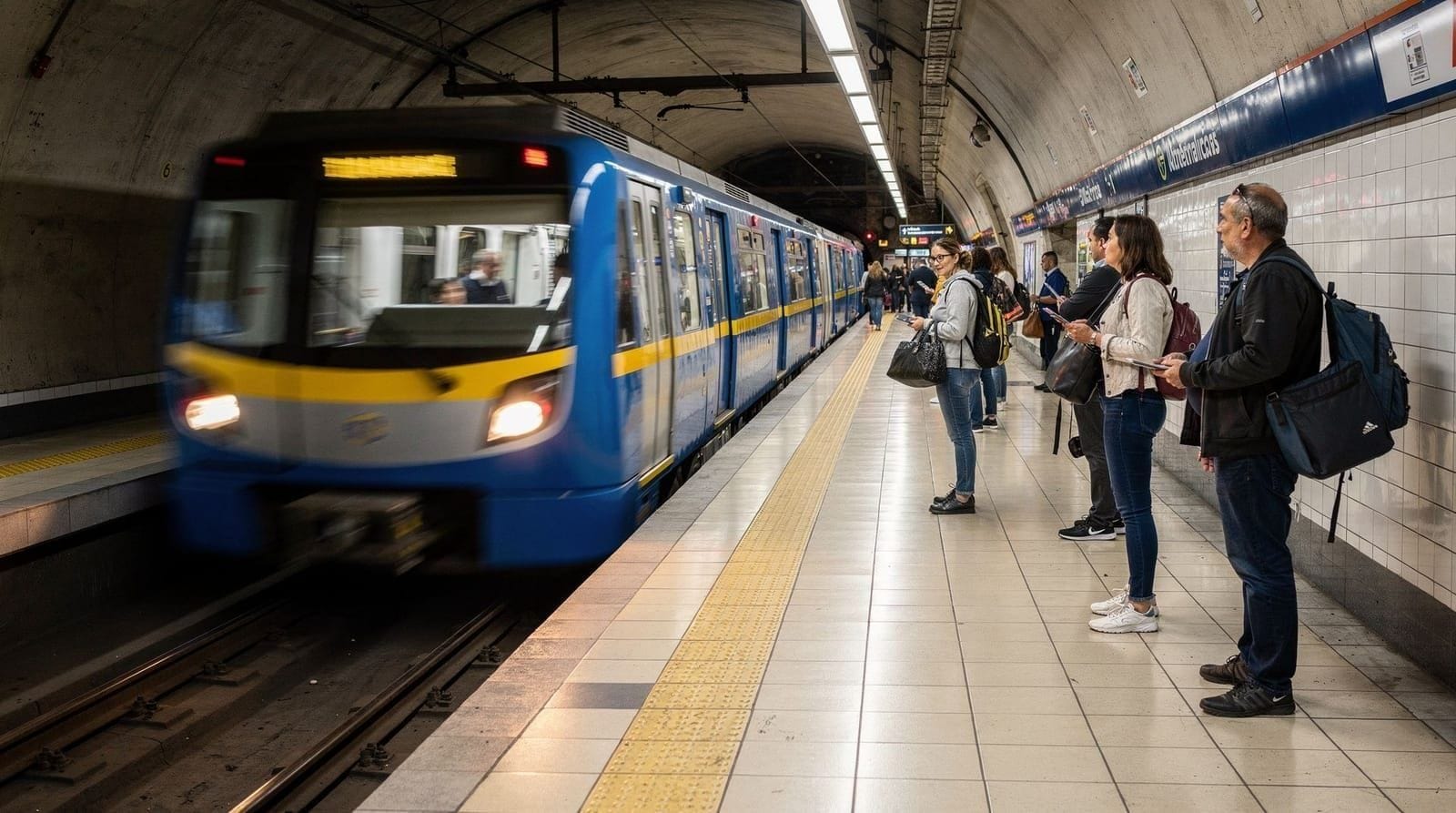
- The Metro has lifts at most central stations
- Accessible taxis are available with booking
- Retiro Park has paved paths and accessible facilities
- The Tourist Travel Pass is available to everyone at station machines
The realistic challenges:
- The historic centre (La Latina, Austrias, the area around Plaza Mayor) has extensive cobblestone streets, steep gradients, and old pavements with irregular surfaces
- Some older Metro stations on Lines 1 and 2 have access gaps or lift outages
- Not all neighbourhood bars and restaurants have level access
- Some day-trip destinations (Toledo’s old city streets, for example) are more difficult
Metro and transport accessibility
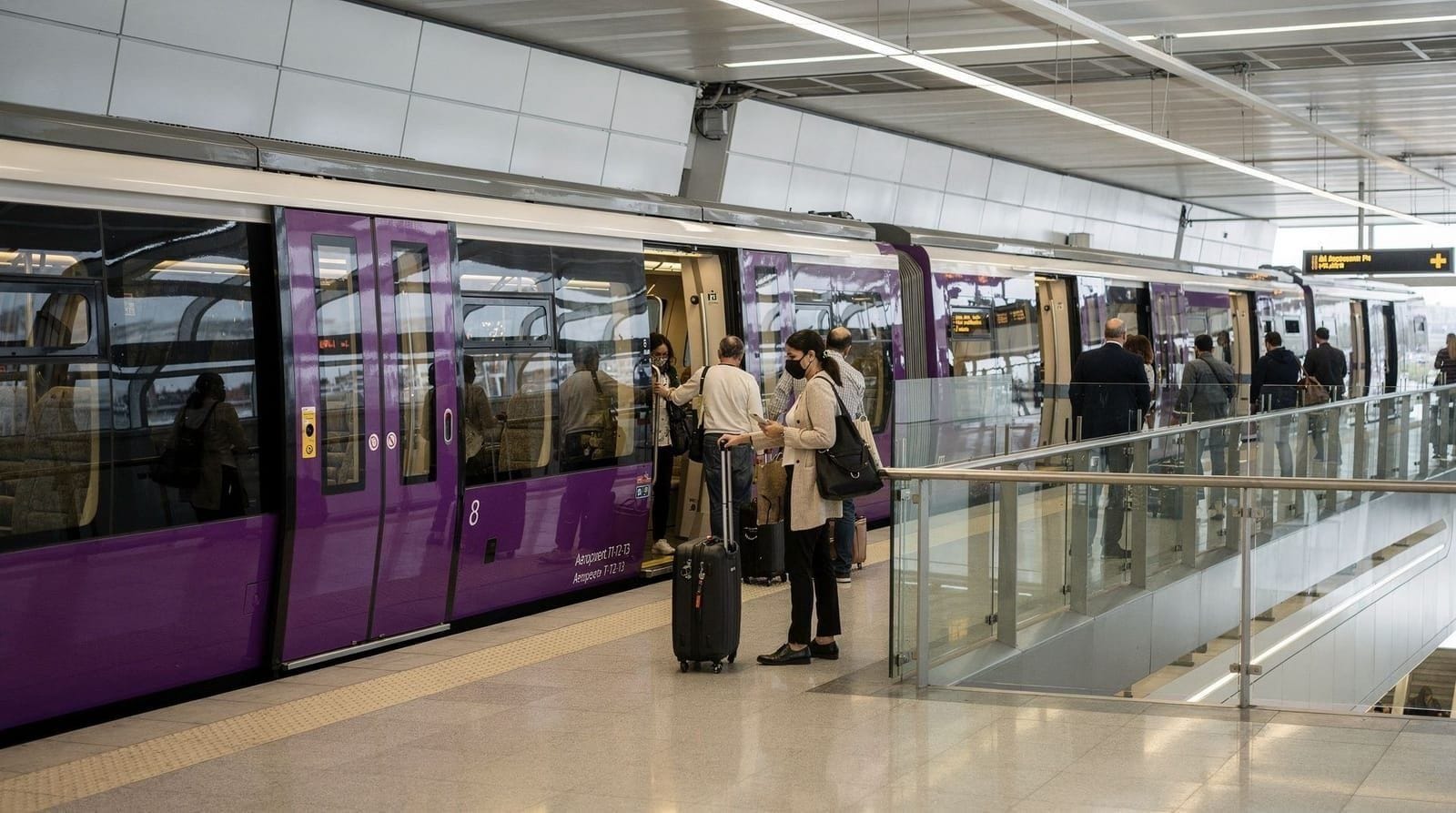
Metro Line 8 (airport) and most modern lines: Fully accessible with lifts at every station. The airport journey from Terminal 4 or T1/T2/T3 to Nuevos Ministerios is step-free throughout.
Central station accessibility (2026 status):
- Sol (Lines 1, 2, 3): Has lifts; complex station with multiple levels — allow extra time
- Atocha Renfe (Line 1): Accessible; the main railway station also has full accessibility
- Chamartín (Lines 1, 10): Accessible lifts throughout
- Nuevos Ministerios (Lines 6, 8, 10): Accessible, important interchange for airport journeys
- Gran Vía (Line 5): Accessible
- Retiro (Line 2): Accessible
Stations with potential issues: Some stations on the older sections of Lines 1 and 2 have lifts that are occasionally out of service. The Metro de Madrid accessibility map (available at station information offices or on the Metro website) shows current lift status.
Practical Metro tip: The Metro de Madrid website and app have a specific “accessible route planner” that automatically routes around stations with lift outages on a given day. Use this rather than general route planning if lift access is essential.
EMT buses: All EMT Madrid city buses are low-floor and have a ramp. Wheelchair users board and leave by the ramp at the central or rear door, with the chair placed facing backwards and the brake on.
Tourist Travel Pass: Available to all visitors at station ticket machines. The machines have accessible-height screens and audio options. Station staff can assist with purchase if needed.
Airport accessibility
Adolfo Suárez Madrid-Barajas Airport (MAD) has full accessibility throughout all terminals:
- All terminals have step-free routes, lifts, and accessible toilets
- Aena (airport operator) provides free assistance service (SATE — Servicio de Atención a Personas con Movilidad Reducida) for passengers with mobility needs — book through your airline at check-in or online in advance
- Accessible parking in all terminal car parks
- Accessible taxis at designated stands outside arrivals
For airport transport options, see airport to city guide.
Private accessible transfers: Pre-booked private transfers can specifically accommodate wheelchair users with accessible vehicle requests. Specify requirements when booking — standard vehicles are not accessible for wheelchair users who cannot transfer to a standard seat.
Accessible taxis
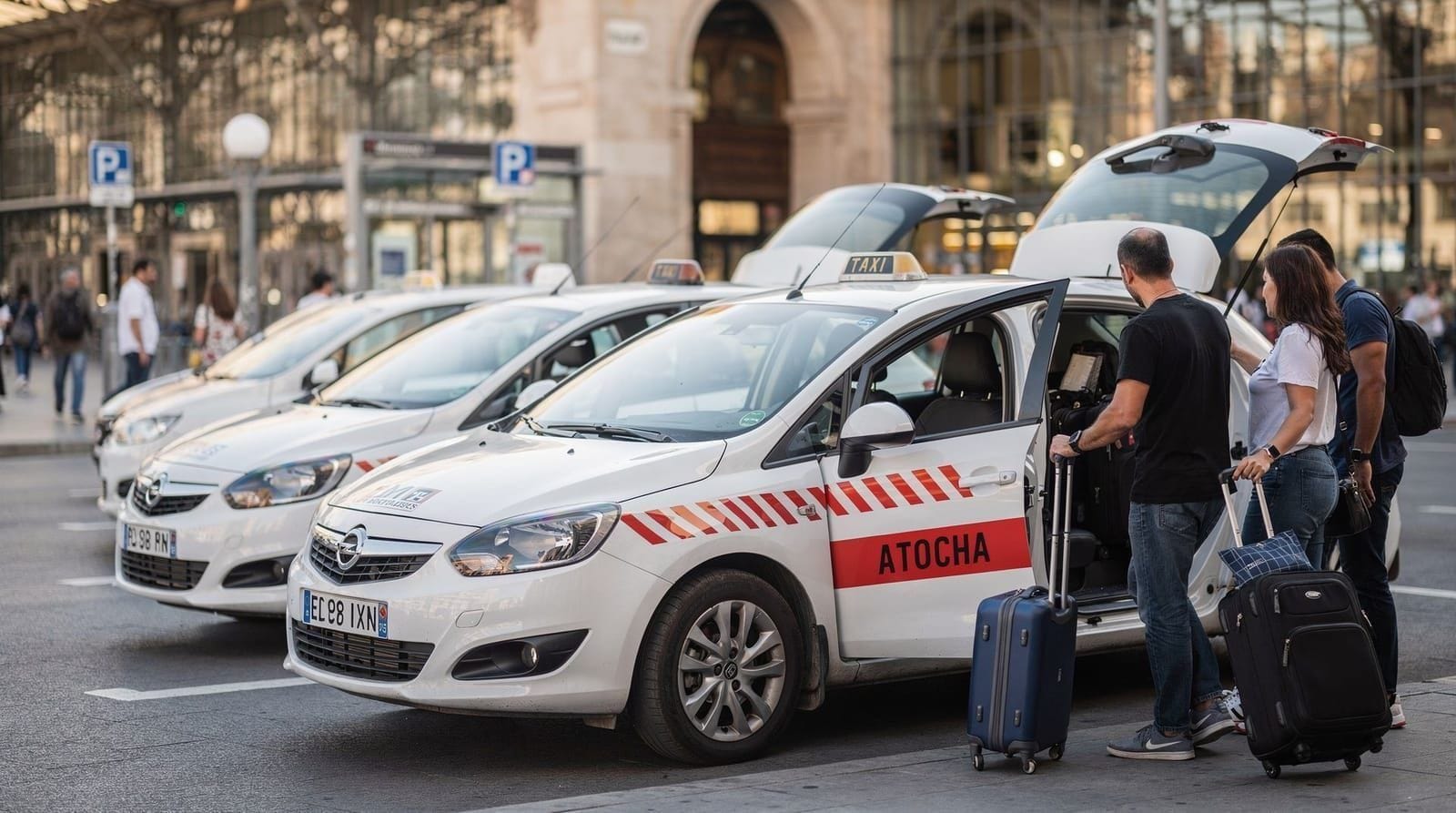
Madrid’s Eurotaxi fleet (accessible taxis with ramps for wheelchair users who prefer to remain in their chair) is available through radio-taxi numbers with advance booking:
- Radio-taxi dispatchers: the City of Madrid publishes the list of radio stations that handle Eurotaxi bookings; book in advance
- Free Now app: Has an accessible vehicle option in Madrid, though availability is not guaranteed in real-time
The standard taxi flat fare to/from the airport (€33) applies to accessible taxis.
Uber/Cabify: Limited accessible vehicle options. Not the most reliable for wheelchair accessibility — pre-booking the radio-taxi accessible service is more dependable.
Museum accessibility
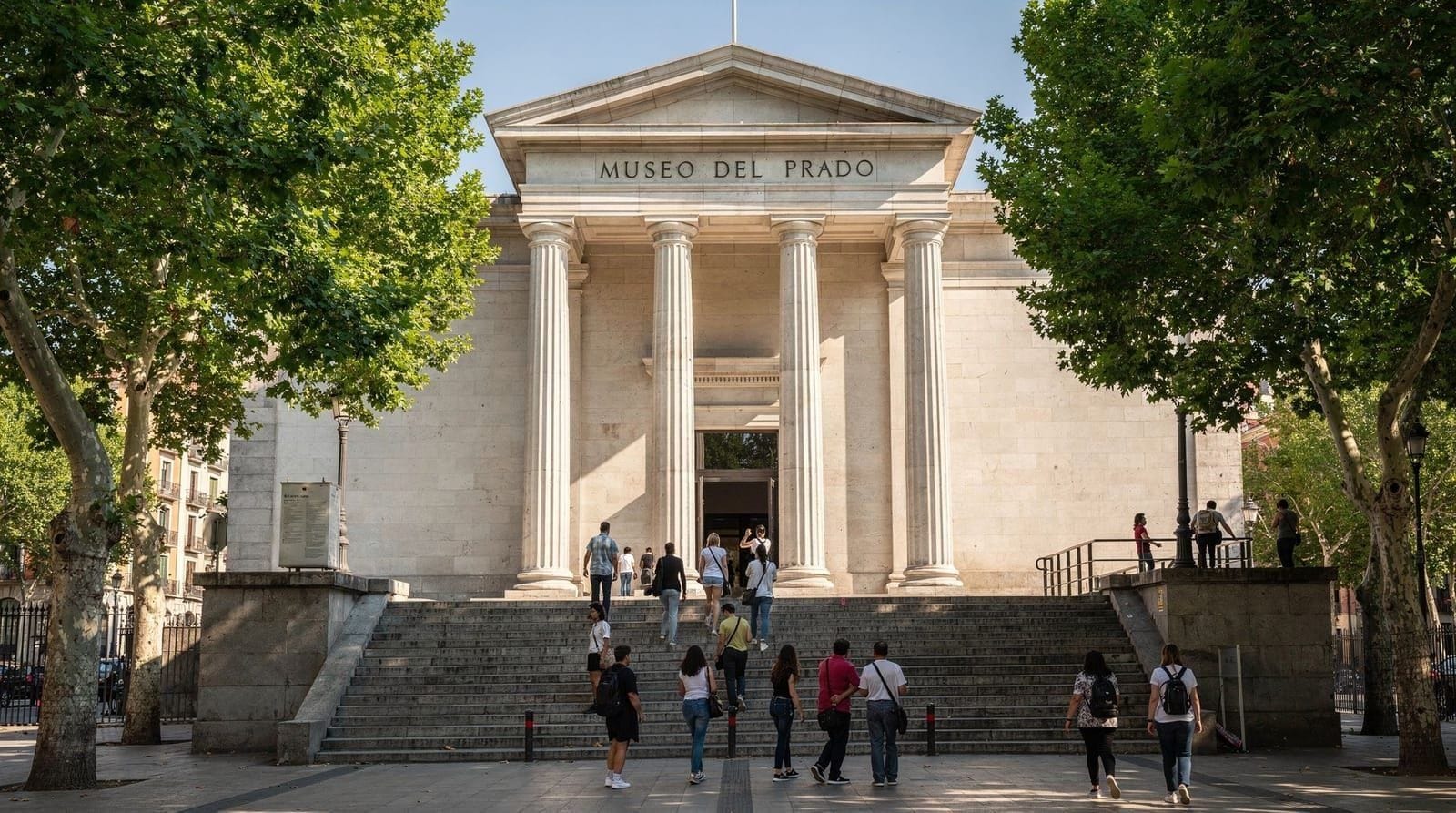
Prado Museum: Fully accessible. Wheelchairs are available on request at the entrances (free, first-come). All floors have lifts. Main accessible entrance via the Edificio Jerónimos (the new building). Audio guides include descriptive content. A tactile tour program (Itinera) allows blind and visually impaired visitors to touch reproductions of key works — book in advance.
Reina Sofía: Fully accessible, with lifts throughout the building. The main building (former hospital) has generous corridors and wide doorways. All galleries are accessible. Wheelchairs available at the entrance.
Thyssen-Bornemisza: Fully accessible. Entrance on Paseo del Prado has level access. Lifts to all floors. The museum also has audio guides with descriptive content for visually impaired visitors.
Royal Palace: Accessible routes throughout. The main entrance and all state rooms can be reached without steps via alternative routes — ask at the entrance for the accessible itinerary. Some sections with original historic flooring (the parquet rooms) require care; these are all manageable in a wheelchair.
Bernabéu Stadium Tour: The new Santiago Bernabéu renovation has full accessibility throughout the tour circuit. Lifts to all levels. Wheelchair spaces available at actual matches — book specific accessible seats when purchasing match tickets.
Historic old town: the cobblestone reality
The historic districts of Madrid — La Latina, the Austrias quarter, the area around Plaza Mayor, Lavapiés — have character-defining cobblestone streets (adoquines) and uneven historic pavements. The honest assessment:
Manageable but requires planning:
- Plaza Mayor itself: the square’s perimeter is accessible, but some approaches via the covered arches have steps — the main accessible entry points are from Calle Mayor and Calle Postas
- La Latina / Cava Baja: largely cobblestone. Power wheelchair or robust manual wheelchair needed; standard lightweight travel wheelchairs may struggle
- Lavapiés: steep streets with some steps; the market area is more accessible than the upper residential streets
- Gran Vía / Sol: wide, relatively smooth pavements; accessible
Route planning for accessible old-city visits: Use Google Maps “wheelchair accessible” route option — it identifies level or ramped routes and avoids stairs. Some of the best cobblestone street areas (parts of La Latina) can be partially circumnavigated via parallel streets.
The tourist office in Sol has accessible Madrid maps and specific routing advice.
Retiro Park accessibility
Retiro Park (125 hectares) is a good accessible option:
- Multiple entrance points with level access from surrounding streets
- Main central areas (the boating lake, Paseo de la República Argentina, the Crystal Palace) are on smooth asphalt or broad paved paths
- Wheelchairs can be hired at the park entrance
- The Crystal Palace (glass pavilion) is step-free inside
- Some areas of the park have gravel or grass paths less suitable for wheelchairs — stick to the paved circuit
The Prado museum is a 10-minute level walk from the Retiro’s south entrance — the stretch of Paseo del Prado from the park to the museum is wide and accessible. See Retiro park guide.
Day trips: accessibility considerations
Toledo by AVE: The AVE itself is fully accessible (level boarding with ramp assistance at Atocha and Toledo). Toledo’s old city, however, is built on a steep hill with significant cobblestone streets. The cathedral, Alcázar, and most museums have internal lifts, but reaching them involves gradient and uneven streets. A mobility scooter or power wheelchair is more practical than a manual wheelchair for exploring Toledo independently. Guided tour operators can arrange accessible routes with advance notice.
Segovia: The high-speed station (Segovia-Guiomar) is accessible, and the connecting bus to the centre has accessible options. The historic centre is on a promontory — challenging terrain. The aqueduct can be viewed from the accessible road level. The Alcázar has a lift to the main floor but the tower involves many steps.
Aranjuez: The Cercanías station is accessible. The Royal Palace and its ground-floor state rooms are wheelchair accessible. The gardens are largely accessible on main pathways. One of the more manageable day trips for mobility-impaired visitors.
El Escorial: The Cercanías station platform has a gap. The monastery itself has accessible routes to the main areas, though some historic sections are step-heavy. Phone ahead to confirm current accessible access points.
For full day trip details see best day trips from Madrid.
Accessible sightseeing: practical routes
Route 1: The museum triangle (accessible) The Prado–Thyssen–Reina Sofía circuit is the most accessible major sightseeing route in Madrid:
- The Paseo del Prado (the boulevard connecting all three museums) is wide, flat, and fully paved
- All three museums have step-free entrance routes
- Distance Prado to Thyssen: approximately 3 minutes on the Paseo
- Distance Thyssen to Reina Sofía: approximately 10 minutes on level ground
- This is genuinely one of the most accessible major museum circuits in Europe
Route 2: Royal Palace and Palacio de Oriente
- The Royal Palace has accessible entrances; call ahead or check the website for the accessible route, as the main ceremonial entrance has steps
- Plaza de Oriente (the formal garden in front of the palace) is accessible on main pathways
- From the nearest Metro (Opera, Line 5 or 2): the Opera station has lifts, and the 5-minute walk from Metro to the palace is on paved streets with some incline
Route 3: Retiro Park
- Enter via the Retiro Metro station (Line 2, has lift) on Calle de Alcalá
- The main central area including the lake, rose garden, and Crystal Palace circuit is on well-maintained paths
- Allow 1.5–2 hours for a Retiro accessible circuit without rushing
Route 4: Gran Vía shopping and sightseeing
- Gran Vía itself is fully accessible — wide pavements, level, well-maintained
- All major shops have step-free entrances (H&M, Zara, El Corte Inglés)
- The area around Callao and the start of Gran Vía at Alcalá is the flattest section
- Some side streets off Gran Vía have kerbs and uneven pavements — stay on the main boulevard for the smoothest experience
Accessible dining and bars
Finding accessible restaurants in Madrid:
Most tourist-area restaurants on the main streets are step-free or have a single small step manageable with assistance. Terraces (outdoor seating) are almost always at street level.
Neighbourhood tapas bars in La Latina and Lavapiés can be problematic — many are set into old buildings with a 10–15cm step at the entrance and narrow interior spaces. The exterior terraces are usually accessible even when the interior is not.
The best accessible approach to La Latina tapas: Choose terrace seating on Cava Baja street and use the flat-access establishments. Staff are generally helpful — ask before entering if you’re unsure.
ElTenedor (TheFork) restaurant app allows filtering by accessibility — useful for advance restaurant research.
Museums with enhanced accessibility programs
Prado: The tactile Itinera program for visually impaired visitors includes reproductions of 10 key works (including Las Meninas and The Garden of Earthly Delights) that can be touched with guides, available in Spanish, English, and French. Requires advance booking (museodelprado.es). Audio guides also include descriptive content for visually impaired visitors.
Reina Sofía: Audio guides with descriptive content. Tactile models of the Guernica composition are available for blind and visually impaired visitors — request at the information desk.
Thyssen: Audio guide includes visual descriptions. The Thyssen also offers educational programs for visitors with cognitive disabilities — check the website for schedule.
Royal Palace: An adapted tour route for wheelchair users covers all the main state rooms without using the ceremonial entrance stairs. Request the adapted route when buying tickets.
Booking guided visits to the Prado and Royal Palace
For visitors who want less friction on the day, a pre-booked visit can take some of the improvisation out of the two big sights. Reserved entry means less standing around in a queue, and a guide can set the pace of the visit around your needs. Whichever option you pick, tell the operator about your access requirements before booking and ask them to confirm in writing that the route suits a wheelchair or reduced mobility, since arrangements differ from one provider to the next.
- If you want both big sights covered with a guide, a guided visit combining the Prado and the Royal Palace is worth weighing against going alone; a guided tour of the Prado and the Royal Palace keeps the logistics in one booking.
- If the palace is your priority, a fast-access ticket for the Royal Palace avoids the entrance queue, which is often the most tiring part of the visit. Pair it with the adapted route described above.
- If you prefer to move at your own speed, a Royal Palace visit with an audio guide lets you pause whenever you need to rest.
For the full picture of each building, read the Royal Palace guide and the Prado museum guide before you book.
Weather and seasonal accessibility considerations
Summer (July–August): The heat (35–38°C) significantly affects visitors with certain conditions. The museums (all air-conditioned) become the primary daytime activity. Early mornings (before 11:00) are the best window for outdoor sightseeing. The cobblestone areas of La Latina become especially difficult to navigate in the heat — more energy expenditure on uneven surfaces compounds the temperature impact.
Winter (November–February): Cold weather (5–12°C) plus rain can make outdoor navigation harder, particularly on wet cobblestones. However, museum queues are at their shortest. Covered arcades (the Austrias quarter’s porticos, shopping galleries) provide shelter for wheelchair users.
Spring and autumn: The optimal seasons for accessibility-conscious visitors — mild weather, outdoor spaces accessible without heat management, manageable crowds.
Accessible accommodation
Madrid’s main hotel areas have varying accessibility. Properties built or renovated post-2000 typically have accessible rooms required by law. When booking:
- Request a specific accessible room (habitación adaptada) rather than assuming one is available
- Confirm the accessible room features: roll-in shower vs adapted bath, grab rails, wide doorways
- Check the hotel’s proximity to accessible Metro stations (important if not using taxis for all transport)
Best accessible hotel areas:
- Retiro / Prado area: newer hotels with good transport links (Line 1 Atocha)
- Gran Vía / Sol: central, accessible Metro, flat terrain on Gran Vía itself
- Chamberí: good transport, flatter terrain than La Latina
Sensory-friendly and neurodivergent travel
Accessibility in Madrid isn’t only about mobility. For visitors with autism, sensory processing differences, or anxiety around crowds and noise, a few practical notes:
- Quietest museum windows: The Prado museum and Reina Sofía are calmest on weekday mornings right at opening, before tour groups arrive. Avoid the free-entry evening hours, which draw the largest, loudest crowds.
- Sensory overload spots to plan around: Puerta del Sol, Plaza Mayor at peak afternoon, and the Gran Vía shopping stretch on weekends can be intensely crowded and noisy. Early morning or early evening visits are noticeably calmer.
- Quiet green space: Retiro Park has large, low-stimulation areas away from the boating lake — the rose garden and the paths near the Fallen Angel statue are usually peaceful even midday.
- Sunflower Lanyard scheme: Madrid-Barajas Airport participates in the Hidden Disabilities Sunflower scheme; wearing the lanyard signals staff to offer extra time or a quieter queue at security.
- Restaurant noise: Traditional tapas bars are often loud, echo-y spaces by design. If noise sensitivity is a concern, ask for terrace seating (also usually the most physically accessible option) or choose quieter sit-down restaurants over standing-room bars.
Accessible planning tools and passes
Before you arrive, a little research saves a lot of on-the-ground troubleshooting:
- The Metro de Madrid app lets you filter routes to avoid stations with known lift issues on a given day — set this before relying on general route planning.
- The Tourist Travel Pass works the same for accessible and standard travellers; buy it at station machines, which have accessible-height screens.
- If comparing whether the Madrid City Card is worth it for your trip, note that it doesn’t change accessibility — it’s a separate discount/transport bundle decision.
- For getting between the airport and the centre, cross-check options on the airport to city guide against the accessible-taxi numbers above; not every option listed there suits wheelchair users.
- Deciding between taxi and Uber matters more here than for most visitors: ride-hailing apps have limited accessible-vehicle coverage in Madrid, so a pre-booked radio-taxi is usually the safer default.
Building a realistic itinerary: If you’re working out how many days in Madrid you need, add roughly 20–30% extra time to any accessible itinerary compared with a standard one — lift waits, longer accessible routes around cobblestones, and slower boarding on buses and trains all add up. It’s a better strategy to plan fewer stops per day and enjoy them properly than to rush an ambitious list and hit accessibility friction at every turn.
More Madrid guides to read alongside this one
Accessibility is only one filter on a trip, and these pages help with the rest:
- Choosing a base: the where to stay guide and the best area for first-time visitors help you weigh central, flat districts against quieter ones; the Chamberí district page covers one of the flatter options.
- Pacing the days: the three-day itinerary and the one-day itinerary are easy to trim to fewer stops if energy is limited.
- Art without the rush: the Golden Triangle art walk follows the same flat boulevard described above, and the Thyssen museum guide and Reina Sofía guide go deeper on each gallery.
- Quiet time: see Madrid in spring and Madrid in autumn for the milder seasons, and pickpockets and safe areas for the crowded spots where bags and chairs need extra attention.
- Getting around: the Metro guide and the Madrid with kids guide are useful if you are travelling as a family or group with mixed needs.
Useful contacts and resources
- Metro de Madrid accessibility info: metromadrid.es/accesibilidad
- EMT accessible bus routes: emtmadrid.es/accesibilidad
- Spain tourist board accessibility guide: spain.info (disability section)
- Accessible Spain Travel (specialist agency): accessiblespaintravel.com
- Spanish emergency number: 112 (English available)
Frequently asked questions about accessible Madrid
Is the Madrid Metro fully wheelchair accessible?
Most central stations have lifts, but “most” is not “all.” Some older stations on Lines 1 and 2 have gaps in lift coverage or occasional outages. Use the Metro’s accessible route planner on the day of travel. Lines 8 (airport), 10, and 6 are the most consistently accessible.
Can I bring my powered mobility scooter to Madrid?
Yes — Madrid allows mobility scooters on the Metro (in designated areas, outside peak hours) and in public parks. The cobblestone historic streets are more challenging than the main boulevards. Advance battery charging is the main practical consideration; most hotels provide accessible room facilities with appropriate outlets.
Are guided tours available for visitors with visual impairments?
Yes. The Prado Museum offers tactile tours (book in advance) for blind and visually impaired visitors. Reina Sofía and Thyssen have audio-described guides. For city tours, specialist accessible tour operators (including guide organisations for the blind) can arrange described city walks and museum visits.
How accessible are Madrid’s restaurants and bars?
Variable. Newer restaurants and large terrace bars in tourist areas generally have level access. Traditional tapas bars in La Latina can have a single step at the entrance, narrow interiors, and no accessible toilets. Ask staff about access before entering — they are generally helpful. The best tapas bars guide notes several accessible options.
Is it easy to plan an accessible day trip from Madrid without a car?
It’s possible but takes more planning than in-city sightseeing. Aranjuez is the most manageable by public transport — the Cercanías station and the palace’s ground floor are both accessible. Toledo and Segovia have accessible train stations but hilly, cobblestoned historic centres, so a mobility scooter or guided accessible tour with a private vehicle is more practical than trying to navigate independently. See best day trips from Madrid for the wider picture, then plan the accessible logistics separately for whichever destination you choose.