Best tapas bars in Madrid: an honest list without the tourist circuit
Madrid: Guided Tapas Tour Drink Food
What are the best tapas bars in Madrid?
Casa Labra (croquetas and bacalao near Sol), Casa Revuelta (bacalao, La Latina), El Tempranillo (natural wine, La Latina), Docamar (patatas bravas, Alcalá), and Malasaña's Lolina Vintage Café for casual plates. Avoid the terraces on Plaza Mayor.
In brief: The best tapas bars in Madrid are not on Plaza Mayor or in the Sol tourist zone. They are spread across La Latina, Malasaña, and a handful of neighbourhood institutions that have been doing one or two things very well for decades. This list is specific and honest.
How this list works
Every entry here is a real place with real names, real opening hours, and an honest note on both strengths and weaknesses. No filler entries included because they appear on every other list. No bars that pay for placement. The focus is practical: what to order, what to expect, and what not to bother with.
Prices are as of June 2026. Madrid’s tapas prices have increased roughly 15–20% since 2022 but remain significantly cheaper than equivalent food in London, Paris, or Amsterdam.
If you want the wider picture of how Madrid eats, the eat like a local guide sets out the rhythm of the day, and the La Latina guide gives the neighbourhood context for the first section below.
| Where | La Latina, Malasaña, Chueca, plus a handful of neighbourhood outliers |
| Cost | Around €2–10 per tapa; a full crawl for two roughly €80–90 |
| Format | Mostly counter service — order, pay and eat standing at the bar |
| Booking | Rarely needed; arrive early to beat the lunch/dinner rush |
| Avoid | Terraces on Plaza Mayor and any menu posted in 5+ languages |
La Latina: the classics
Casa Labra (Calle Tetuán 12)
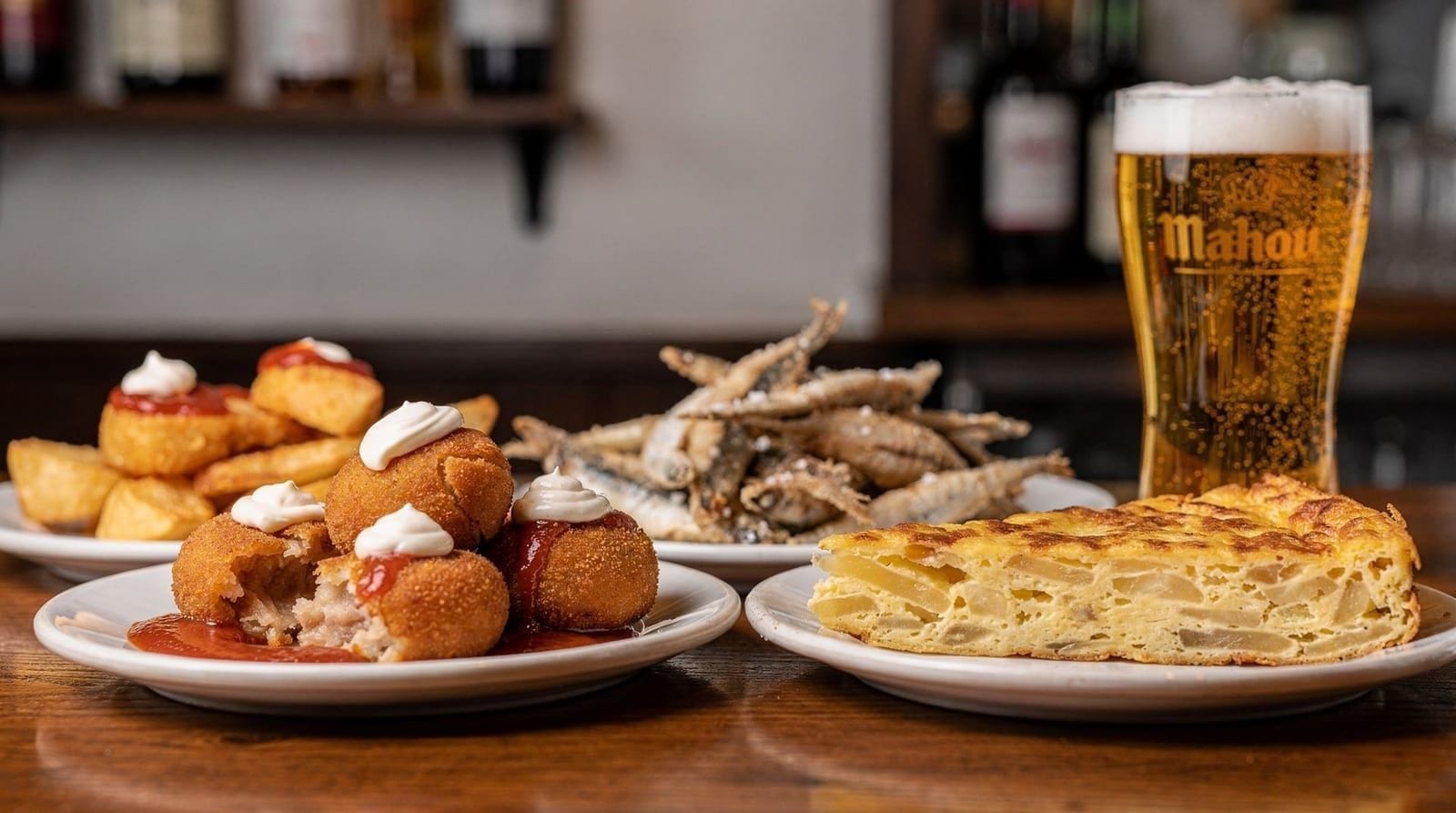
The most important address on this list. Casa Labra has been operating since 1860 and specialises in exactly two things: croquetas de bacalao (salt cod croquettes) and tajadas de bacalao (fried bacalao slices). That is the entire menu, essentially. Both are excellent. The croquetas are small, perfectly crispy, with a properly seasoned bacalao interior. Price: €1.80–2.50 each.
The bar is tiny, always crowded at lunch (13:00–15:30), and has a take-away window that moves queues fast. Do not come expecting a sit-down meal — this is counter tapas. Open 11:30–15:30 and 18:30–22:30, every day except 1 January.
Historical note: this bar was where the Spanish Socialist Workers’ Party held its founding meeting in 1879. There is a plaque.
Casa Revuelta (Calle de Latoneros 3)
Another bacalao specialist, in the La Latina heart near Plaza de la Cebada. Same principle as Casa Labra: do not come for the menu variety, come for the fried bacalao. Also serves a solid huevos revueltos (scrambled eggs with jamón or mushrooms). Packed on Sunday post-Rastro. Counter service, no fuss. €2–3 per tapa.
El Tempranillo (Calle de la Cava Baja 38)
The best wine bar on Cava Baja — a street that has become significantly more touristy over the last decade but still has this anchor. Good natural wine selection (unusual for Madrid, which is primarily a Rioja-and-Ribera-del-Duero town), rotating small plates, educated staff. Prices honest by Cava Baja standards: glass of wine €3.50–5, small plates €5–8. Does not take reservations; arrive early or be prepared to wait.
Almendro 13 (Calle del Almendro 13)
Known for huevos rotos (broken eggs over potatoes with ham or chorizo) and raciones of cured meats. Very popular, very reliable, significantly busier than it was five years ago. The wait for a table on Sunday afternoon can be 45–60 minutes. Worth it if you are patient; if not, walk to a less famous alternative on adjacent streets.
Txirimiri (Calle del Humilladero 6)
A Basque bar in the heart of a Castilian neighbourhood. Pintxos (the Basque bread-topped variety) at €2–3.50 each, with a selection of hot and cold options on the counter. Quality is consistent. Less crowded than the Cava Baja axis. The txistorra (spiced Navarran sausage) pintxo is excellent.
Sol area: selective options only
Most of what surrounds Puerta del Sol is tourist-trap territory. Two exceptions:
Casa Labra (see above — nearest option to Sol)
About 150 metres from Puerta del Sol at Calle Tetuán 12. The closest quality option to the tourist hub.
Museo del Jamón (multiple central locations)
A Madrid institution that divides opinion. Hanging jamón legs cover every ceiling, counter service, prices are genuinely low (bocadillo de jamón from €3.50), and the quality is exactly what you pay for — decent ibérico but not the top-tier bellota variety. It is fast, cheap, honest about what it is, and fine for a quick lunch. Not the best jamón in Madrid, but not a rip-off either.
What to absolutely avoid: Any restaurant with a terrace facing Plaza Mayor with photos of every dish on the menu posted outside. These are uniformly poor value and mediocre quality. The paella pictured has been sitting in a bain-marie for three hours. See the tourist traps guide.
Malasaña: the neighbourhood regulars
For a fuller look at the area, see the Malasaña guide and the Malasaña bars list, which pick up where the eating ends and the evening begins.
La Musa (Calle de Manuela Malasaña 18)
The most dependable neighbourhood restaurant in Malasaña. Good for a full meal rather than just tapas, but the small plates are well-executed. Expect Andalusian-influenced dishes, good tortilla, and reliable croquetas. Popular with younger locals. Often full by 21:30; booking ahead for dinner recommended. €4–8 for tapas, €12–18 for mains.
Bodega de la Ardosa (Calle de Colón 13)
A genuinely old bodega (wine cellar) that has been operating since 1892. Beers on draught from barrels, wine straight from the vat, vermouth on tap. The tortilla española here is considered one of the best in Madrid — creamy in the centre (the Spanish preferred style, not the well-done version). Usually a queue for the tortilla. Also: salmorejo (cold tomato soup) and croquetas.
Federal Café (Plaza del Comandante Las Morenas 9)
A slightly different entry — an Australian-run café that has become a Malasaña institution for brunch and lunch. Good eggs, excellent coffee (better than most Madrid bars), and a relaxed atmosphere. Not traditional tapas territory, but useful context: this is the kind of international food scene that has grown up around the traditional bar culture.
Chueca: wine bars and modern tapas
Baco y Beto (Calle de Pelayo 24)
One of the better new-generation tapas bars in Chueca — natural wines, creative small plates that do not abandon Spanish ingredients. The anchoa (anchovy) and cheese plates are excellent. More expensive than traditional bars (€6–10 for plates) but the quality justifies it. Good for sharing over two hours rather than a quick stop. If natural wine is what draws you, the wine bars guide lists more places to settle in, and the Chueca guide covers the rest of the neighbourhood.
La Castela (Calle del Doctor Castelo 22, Retiro edge)
Technically in the Retiro–Jerónimos area, but worth the mention. Traditional Madrid bodega atmosphere, excellent house vermouth, good bar snacks. The type of bar that locals worry about becoming famous. Preserved so far.
Beyond the tourist trail: neighbourhood specialists
Docamar (Calle de Alcalá 337, near Retiro)
Widely cited as Madrid’s best patatas bravas. A neighbourhood bar in a non-touristy residential area that became known primarily for one dish. The bravas sauce is house-made, genuinely spicy, and completely different from the bottled variety most bars use. Worth a taxi ride specifically for the patatas bravas if you take Spanish fried potato seriously.
La Vaca Verónica (Calle de Moratín 38, Barrio de las Letras)
A small, traditional bar in the literary quarter with particularly good vermouth and solid traditional tapas. Less well-known than the Cava Baja options, less crowded, honest pricing. It makes a natural stop after a morning in the Barrio de las Letras, and the same logic applies to vermouth in general: the vermouth guide explains why a glass before lunch is a Madrid habit worth adopting.
What to avoid
A brief but important list of overrated or tourist-trap tapas destinations:
- Sobrino de Botín (Calle Cuchilleros 17): Famous as “the world’s oldest restaurant.” Genuinely old (1725). The food is competent but overpriced and tourist-orientated. The cocido madrileño is not the best version available. Worth a photo outside, not worth dining inside.
- Any “restaurant” with a menu in 12 languages posted outside: Self-explanatory.
- “Iberian ham museums” near Sol: The ones that have evolved into tourist experiences with ham-cutting demonstrations and photo opportunities. Buy jamón from a proper charcutería instead.
The best guided tapas experience
A guided tour is a sensible investment if you are new to Madrid and want to understand the geography of good eating. The better guides take you to neighbourhood bars you would not find alone.
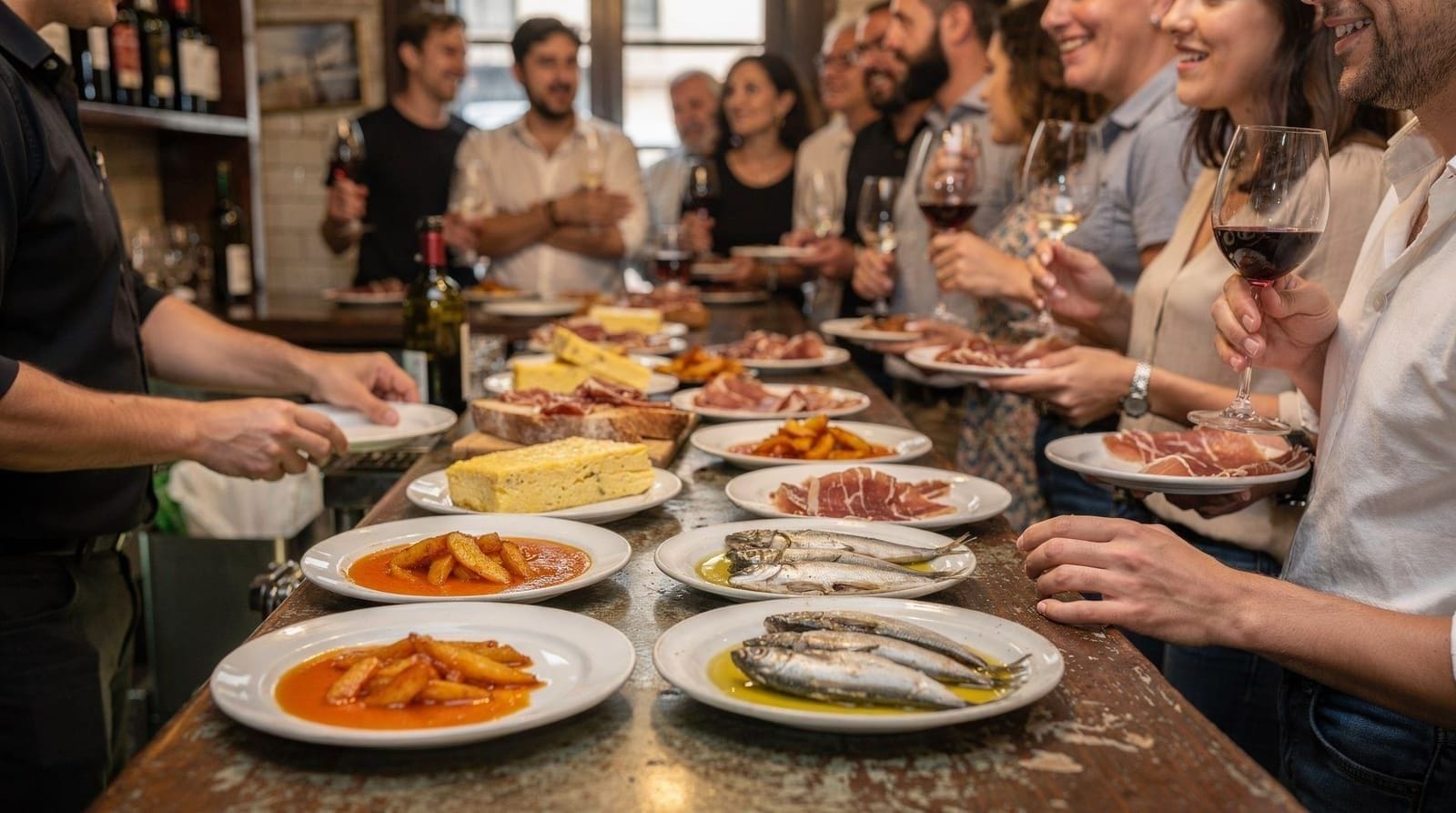
A guided tapas tour with drinks and food covers the authentic Madrid circuit.
A tapas and taverns history tour adds cultural context to the eating — useful if you want to understand the history behind the bars, not just the food.
A food and drink walking tour with a local guide takes the same neighbourhood-first approach.
Practical notes
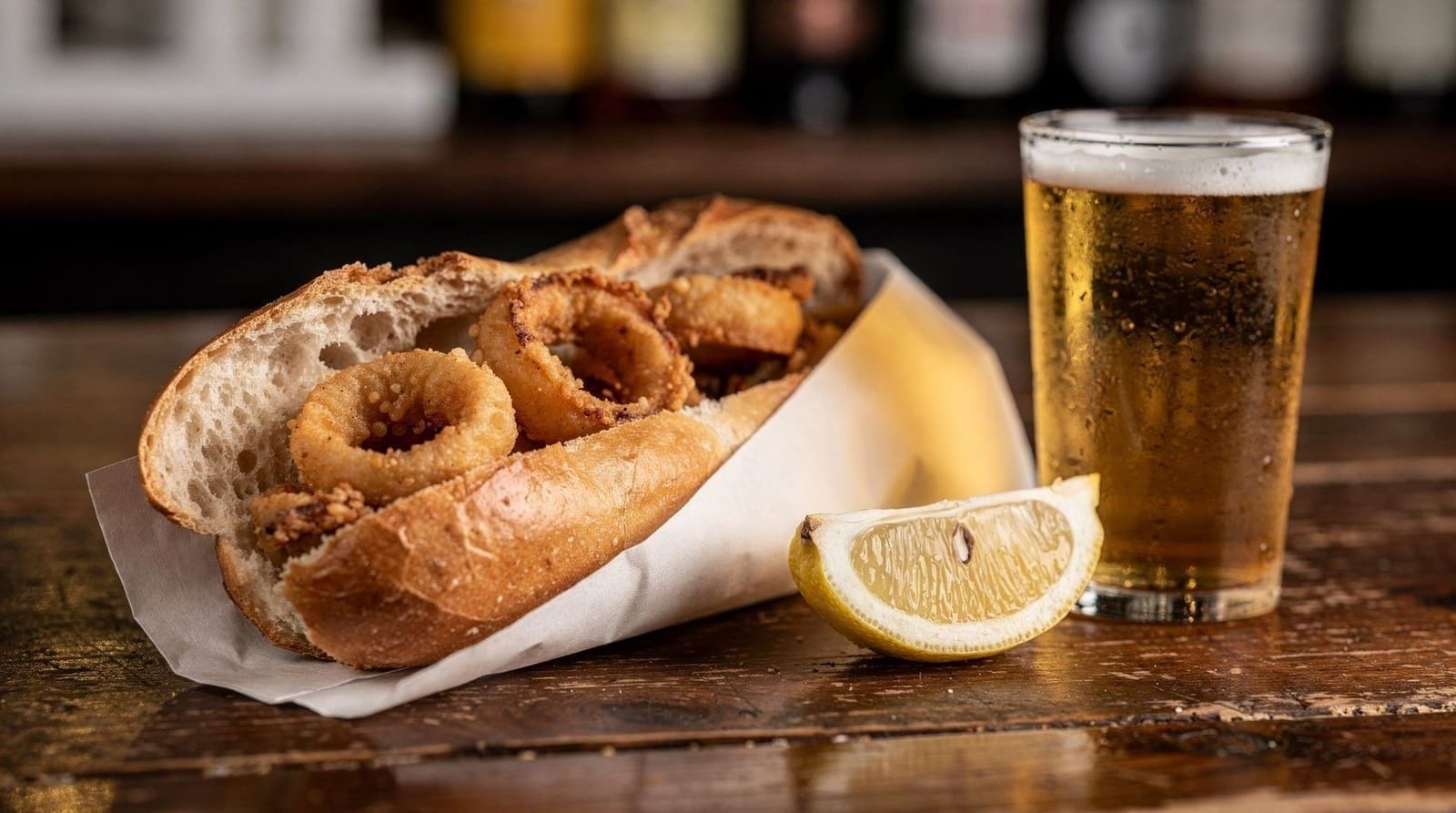
Opening hours: Most traditional Madrid bars close on Sunday evenings and Monday (their rest days). Many close in August for summer holidays. Check before making a special trip. For something later in the evening, the late night Madrid guide covers what stays open once the classic bars have closed, and the bocadillo de calamares guide is the answer to a cheap, quick stop between two bigger meals.
Language: In neighbourhood bars away from the tourist circuit, menus are often in Spanish only. The staff almost never speak English. A basic vocabulary (una caña por favor, patatas bravas, la cuenta) goes a long way. Pointing at what someone else is eating also works.
Payment: Most bars accept cards now, but some old-school establishments are cash-only. Carry €20–40 in cash when doing a tapas crawl. Check the getting around guide for ATM info.
Allergies and dietary needs: Ask specifically. Croquetas often contain gluten and dairy. Patatas bravas may be fried in oil shared with other ingredients. Jamón is everywhere. The traditional Madrid tapas menu is not particularly accommodating of dietary restrictions — this is not the city’s strength in that regard.
The Madrid tapas format: standing vs sitting
A point that confuses northern European visitors: the physical format of traditional Madrid tapas bars is counter-standing, not table-sitting.
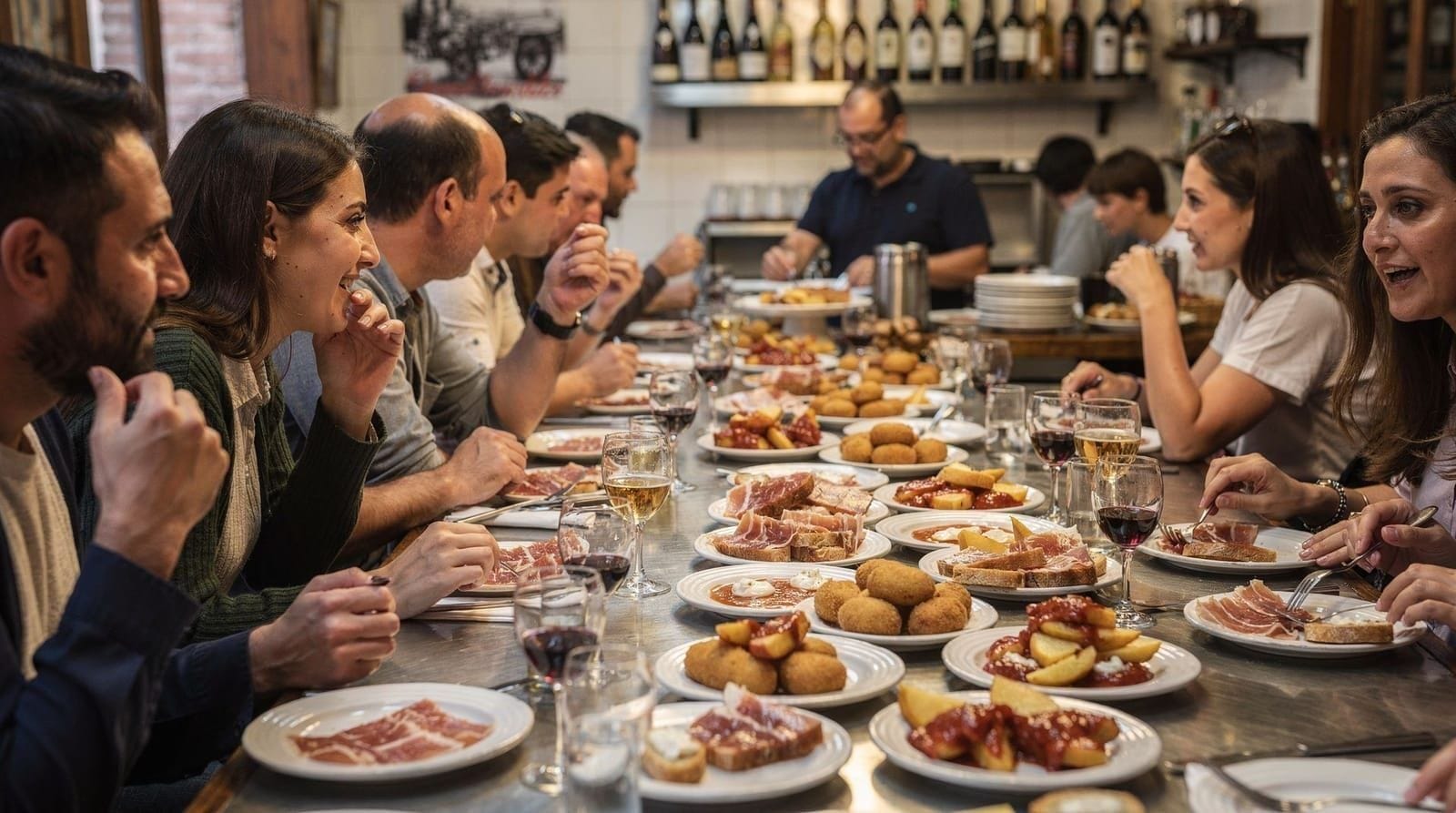
Counter service: You order at the bar, pay at the bar, eat at the bar. This is the fastest and often cheapest way to eat tapas — some bars charge €0.50–1 more for table service. The social dynamic is different too: standing at the bar means you can talk to the person next to you, move on quickly, and order in the spontaneous way that tapas eating is designed for.
Tables: Available at most bars with a dining room component. Slower service, higher prices in some cases, but more comfortable for a long lunch. Sit-down tapas in Madrid are perfectly valid; they just change the rhythm.
Terraza (outdoor terrace): Madrid’s bar terraces are ubiquitous and legally contested — the city government periodically clamps down on terrace footprints. On a warm evening, a terrace spot in La Latina or Malasaña is excellent. In summer heat (July–August), afternoon terraces in full sun are uncomfortable; shaded terraces or interior bars are better.
The menú del día: how to eat very well at lunch for €12–15
The menú del día (lunch menu) is one of Spain’s greatest consumer value propositions and is largely unknown to visitors who do not research in advance.
What it is: A fixed-price lunch menu, usually €12–16, including a first course, a second course, dessert or coffee, bread, and a glass of house wine or water. Available Monday through Friday at lunchtime (13:30–15:30) at the vast majority of neighbourhood restaurants, including many that are more expensive in the evening.
Quality: Often excellent. The menú del día uses the freshest ingredients of the day (what the chef bought at the market that morning), and the kitchen’s efficiency improves with volume. Many Madrid food critics have noted that some of the best lunches they have eaten were on a weekday menú del día at a bar they had never heard of.
How to find it: Look for restaurants with “Menú del día €X” on a chalkboard outside. They are everywhere in working neighbourhoods. In tourist-heavy areas (Sol, Plaza Mayor) they are rarer and sometimes more expensive (€16–20 for a worse product).
The menú del día culture is specifically weekday lunchtime. Weekend lunches are more expensive and do not follow the same format at most restaurants.
Beyond the classics: bars for specific dishes
If you have a specific dish you want to try, these are the specialists:
Patatas bravas: Docamar (Calle de Alcalá 337). Worth a specific trip. The bravas sauce is genuinely different from the standard bottled version.
Jamón ibérico de bellota: Any specialist jamón bar or jamnería — look for the black hoof displayed on the label. The Museo del Jamón chain is the accessible budget option; specialist shops like Jamonería Sánchez Romero Carvajal (Calle Serrano) offer the premium experience.
Gambas al ajillo (garlic prawns): La Casa del Abuelo (Calle de la Victoria 12, near Sol) has been the Madrid reference since 1906. The prawns are cooked in a ceramic vessel with olive oil, garlic, and chilli at your table. Very good, very touristy.
Boquerones en vinagre: Found at virtually every traditional bar. The best versions are made in-house (ask “son de la casa?”) rather than from a commercial supplier.
Pulpo a la gallega: Galician octopus in Madrid is an important dish — the city has a large Galician community and the pulperías (octopus restaurants) here are serious. Taberna Ibérica (La Latina) and Pulpería Moby Dick serve reliable versions.
Building a tapas crawl route
The classic La Latina Sunday circuit (for two people):
- Casa Revuelta (Calle de Latoneros 3) — bacalao, one beer each: €12
- Almendro 13 (Calle del Almendro 13) — huevos rotos for two, house wine: €25
- El Tempranillo (Calle de la Cava Baja 38) — two glasses natural wine, small plate: €20
- Txirimiri (Calle del Humilladero 6) — four pintxos, beer: €18
- Any bar on Calle Almendro for a final wine: €10
Total for two people: approximately €85 for a full Sunday tapas circuit
This is the authentic experience. If you prefer to eat your way through the same area with a plan already made, the La Latina eating guide offers further stops, and the Madrid for foodies itinerary shows how to spread a few such evenings across a trip. Compare this to a single meal for two at a Plaza Mayor tourist restaurant (€60–80 for worse food, less variety, no cultural immersion).
How to evaluate a tapas bar before sitting down
Walk past and observe:
- Are the people at the counter local? Spanish? Mixed? Purely tourists?
- Is there a menu posted outside in 5+ languages? (Often a bad sign)
- Are there photos of food on the menu? (Tourist-facing signal)
- Is the bar counter visible and active? (Good sign — a functioning tapas bar is always working)
- What time is it? If it is 13:30 on a weekday and the place is empty, either it is not popular or you are in the wrong neighbourhood for that hour.
The best signal: if a Spanish family with children and an elderly grandmother is eating there, the food is almost certainly good. See the Madrid tapas guide for the full cultural context.
The cultural context: why these bars exist
The traditional Madrid tapas bar is not a restaurant that decided to make small dishes. It is a separate cultural institution with its own economy, social function, and history.
The economy: Many traditional bars operate on a counter-service model where the margin is in volume — many customers, quick turnover, low overheads. The bar at Casa Revuelta might serve 200 bacalao portions on a Sunday for €2.50 each. The margins are thin but the volume sustains the operation.
The social function: The neighbourhood bar in Spain serves as an extension of public space. It is where neighbours see each other, where conversations happen, where the daily social fabric is maintained. This is structurally different from the Anglo-American model where a bar is a place you go for entertainment.
The history: Many of the bars on this list have operated continuously since before the Spanish Civil War. Casa Labra since 1860. Bodega de la Ardosa since 1892. They have survived two republics, a civil war, a dictatorship, three economic crises, and a global pandemic. They survived because they serve a genuine need in the community, not because they are fashionable.
Jamón: the quality guide
Jamón is the central ingredient of Madrid’s tapas culture. Understanding the quality hierarchy prevents expensive mistakes:
Jamón serrano: Generic cured ham from white pigs. The cheapest, widely available, perfectly decent for a bocadillo. No DO designation required.
Jamón ibérico (pata negra — black hoof): From iberian-breed pigs. The breed itself is significant — iberian pigs have a genetic tendency to infiltrate fat into their muscle (similar to wagyu beef). Three sub-categories:
- Jamón ibérico de cebo: Iberian pigs fed on commercial feed. The entry level. Better than serrano; not the top.
- Jamón ibérico de cebo de campo: Iberian pigs that had outdoor access and some natural grazing alongside commercial feed.
- Jamón ibérico de bellota: The top category. Iberian pigs fed exclusively on acorns (bellotas) during the montanera (autumn acorn season) in the dehesa (traditional Spanish woodland pasture). The fat is nutritionally different — high in oleic acid, the same as olive oil — and the flavour is exceptional.
Price signals at bars: A small plate of jamón ibérico de bellota should cost €12–18. If it is €6, you are getting cebo at best. If a bar claims to serve bellota at low prices, the claim is false.
The best way to taste the difference: at a specialist jamón shop (jamónería), ask for a comparative tasting of the three categories. The step from cebo to bellota is genuinely significant, not marketing.
Vegetarian and vegan tapas: what actually works
Traditional Madrid tapas culture is built around jamón, bacalao, and other animal products, which is not the city’s strength for vegetarian or vegan travellers. But it is entirely manageable with some navigation:
Reliably vegetarian dishes at any bar: Patatas bravas (check the sauce doesn’t contain hidden pork stock, which is rare but happens at a few places), tortilla española (contains egg, not vegan), pimientos de padrón, gazpacho and salmorejo (chilled soups, summer menus), champiñones al ajillo (garlic mushrooms), and pan con tomate. These appear on almost every traditional tapas menu without needing to ask.
Vegan-specific challenges: Tortilla and most croquetas contain egg or dairy. Bravas sauce occasionally contains mayonnaise-based alioli rather than a tomato base — ask “¿lleva mayonesa o huevo?” (does it contain mayonnaise or egg?) if unsure. Bread is usually vegan by default but confirm at bakeries using butter in the dough.
Where it’s easiest: Malasaña and Chueca have the highest density of modern, internationally-influenced kitchens (see Baco y Beto and the newer Malasaña spots) that routinely mark vegetarian and vegan options on the menu. Traditional La Latina bodegas are the hardest — their entire identity is built around cured meat and bacalao, so a vegetarian visitor there is choosing from a genuinely narrow subset of what’s on offer.
The honest verdict: A vegetarian eats reasonably well in Madrid’s tapas scene with some advance vocabulary and a willingness to ask; a strict vegan needs to be more selective about which bars to target, leaning toward Malasaña and Chueca over the classic bacalao-and-jamón bodegas of La Latina.
Seasonal tapas in Madrid
The tapas menu in Madrid changes with the seasons, and the best bars follow the rhythm:
Autumn (October–November): Wild mushrooms (setas, specifically rovellons from Catalonia and níscalos from Castile), truffles from Teruel (white truffle in October, black in winter), and game birds (perdiz — partridge — from La Mancha).
Winter (December–March): The heavy preparations — cocido madrileño, callos a la madrileña, braised meats, robust legume dishes. The hearty Castilian table.
Spring (April–May): White asparagus from Navarre (the brief season is April–June), spring lamb, artichokes from Tudela, and the emergence of the lighter seafood dishes as the sea temperature drops are ideal for fishing.
Summer (June–September): Cold dishes dominate — gazpacho, salmorejo, ajoblanco (cold almond soup). Lighter seafood, raw preparations (boquerones, oysters), and the excellent Galician and Cantabrian sardines grilled over charcoal.
The best tapas bars in Madrid incorporate this seasonal rhythm. At Casa Labra, the bacalao is year-round; but at El Tempranillo or Juana la Loca, the menu changes with what is available. This is the sign of a kitchen that cooks rather than a kitchen that re-heats.
Frequently asked questions about Best tapas bars in Madrid
Do traditional Madrid tapas bars take reservations?
Rarely. Most of the classics on this list — Casa Labra, Casa Revuelta, El Tempranillo — are counter-service or first-come, first-served, with no booking system. The workaround is timing: arrive before 13:30 for lunch or before 20:30 for dinner to beat the main rush, or accept a short wait at the busiest spots like Almendro 13 on Sunday afternoons.How much should a tapas crawl for two people cost?
Budget around €80–90 for a full four-to-five-stop crawl covering wine, beer and shared plates at honest neighbourhood prices, as in the La Latina route detailed below. A single meal for two at a Plaza Mayor tourist terrace often costs as much for a fraction of the variety and none of the local atmosphere.
Top experiences
Bookable activities with verified prices and instant confirmation on GetYourGuide.