Callos a la madrileña: Madrid's tripe stew and where to eat it
Madrid: Traditional Villages Winery Tapas
What is callos a la madrileña and is it worth trying?
Callos a la madrileña is slow-cooked beef tripe with chorizo, morcilla, jamón, paprika, and tomato — a rich, deeply spiced winter stew that has been a Madrid staple for centuries. Worth trying if you eat offal; avoid if you have a strong aversion to tripe texture. The best versions are at La Tasquita de Enfrente, Casa Labra (sometimes), and old tabernas in La Latina.
In brief: Callos a la madrileña is the second great winter dish of Madrid after cocido madrileño. Slower to appreciate, more challenging in texture, and less internationally famous — but for madrileños, it carries significant cultural weight. It is a dish of poverty made extraordinary by spicing and time.
| Where | La Tasquita de Enfrente, Taberna de Ángel Sierra, La Casa del Abuelo |
| Cost | Around €9–16 for a ración at a serious taberna |
| Season | October through March; rarely worth ordering in summer |
| Service | Lunchtime mainly (14:00–16:00); shared ración or media ración |
| Booking | Advisable for La Tasquita de Enfrente; walk-in fine elsewhere |
What callos a la madrileña is
Callos are beef tripe — specifically the reticulum and honeycomb sections of the bovine stomach. Madrid’s version is slow-braised with chorizo, morcilla (blood sausage), jamón (or a ham bone), paprika, tomato, garlic, onion, and bay. The result is a deeply reddish-orange stew with intense fat and paprika flavour, soft-textured tripe, and the smoke and pork notes from the cured meats.
This is not a dish that happens quickly. Good callos need 3–4 hours of very slow cooking after the tripe has been parboiled and cleaned. The collagen from the tripe itself thickens the sauce naturally; the result is gelatinous and rich in a way that no other dish achieves.
Like cocido, callos is fundamentally a winter food. The cold, the richness, and the heaviness are all part of its appeal in November through March. It also reheats beautifully — callos is often better on the second day, when the stew has had more time to consolidate.
A brief history
Tripe cookery in Madrid is documented at least from the 16th century, when the city became the permanent capital under Philip II. The market of San Antón (predecessor to the current market) sold tripe alongside other off-cuts — the cheaper parts that aristocrats did not want and that working people cooked for themselves.
The specific Madrid preparation — with chorizo, morcilla, and significant paprika — developed into its current form in the 18th and 19th centuries. By the late 19th century, it was established as a canonical taberna (traditional restaurant) dish alongside cocido and bacalao a la vizcaína.
The texture question: what to expect
For anyone who has not eaten properly cooked tripe: the texture is soft and slightly gelatinous, not at all crunchy. When overcooked, it becomes rubber-like. When undercooked, it has a slight graininess. When correctly cooked for the right time at the right temperature, it is silky, offering very little resistance to the tooth.
The flavour of the tripe itself is mild and slightly mineral — it is primarily a carrier for the paprika-chorizo sauce rather than a strong flavour on its own. The morcilla and chorizo provide most of the dominant taste.
This description does not convert everyone. If you have a strong aversion to the idea of offal, callos is not the place to start. If you eat foie gras or jamón without hesitation but have avoided tripe, this is a reasonable first step into offal cookery — the flavours are familiar (pork, paprika, garlic) and the tripe is not the dominant element.
Where to eat callos in Madrid
La Tasquita de Enfrente (Calle de la Ballesta 6)
The best restaurant in Madrid for callos, when it is on the daily menu. Chef Juanjo López changes his menu based on what is available that day, and callos appears when he has excellent tripe. You cannot book specifically for callos — you call and ask, or you go and see. One Michelin star, moderate prices (€50–70 per person for a full meal). The callos here is the most refined version available in the city.
Taberna de Ángel Sierra (Calle de Gravina 11, Chueca)
A traditional Chueca taberna that has been serving callos for generations. Draught vermouth, marble bar, old tiles. The callos here is the workmanlike neighbourhood version — not La Tasquita’s refinement, but honest and properly made. Good for the full traditional taberna experience. €8–12 for a ración of callos.
La Casa del Abuelo (Calle de la Victoria 12, near Sol)
Famous primarily for garlic prawns (gambas al ajillo) but also reliable for callos in winter. A tourist-heavy location that manages to maintain quality despite its popularity. Callos ración: €10–14.
Casa Labra (Calle Tetuán 11)
Primarily a bacalao bar, but occasionally serves callos as a seasonal special. Worth asking when you visit (see also the best tapas bars guide).
Neighbourhood tabernas and restaurants
The best version of callos you will eat in Madrid may be at a completely unknown neighbourhood taberna — the kind of place with a handwritten daily menu, three tables, and an owner who makes it the same way their grandmother did. These establishments are genuinely not findable through tourist channels; the way to find them is to walk through residential neighbourhoods (Lavapiés, Chamberí, Carabanchel) and look for hand-lettered chalkboards that say “Callos” or “Cocido” on the lunchtime menu.
How callos is served
Callos a la madrileña is almost always served as a shared ración (large plate for 2–4 people) or a media ración (half portion for 1–2). It is eaten with bread — the sauce, which thickens as it cools, is too good to leave in the bowl.
Wine pairing: a robust tempranillo (Rioja or Ribera del Duero) or, interestingly, a glass of fino sherry (the mineral, slightly salty quality of fino cuts through the fat in a way red wine sometimes cannot). See the wine bars guide.
Seasonal availability
Like cocido, callos is a winter dish. Most traditional restaurants serve it from October through March. In summer, you will sometimes find it on menus but it is rarely the best version — it requires cold weather both psychologically and technically (the cook wants to make it; you want to eat it).
If your Madrid visit is in summer, prioritise the cold-weather dishes on your next trip and focus on mercado de San Miguel light plates, bocadillo de calamares, and vermut in the meantime.
Callos and Madrid’s offal culture
Callos is the most prominent but not the only traditional offal dish in Madrid:
- Mollejas: Sweetbreads — thymus gland — lighter and more delicate than callos. Found at better traditional and modern restaurants.
- Riñones al jerez: Kidneys in sherry sauce. Less common now but still found at traditional tabernas.
- Criadillas: Testicles (usually bull’s, from Las Ventas after corridas). Seasonal, unusual, genuinely Madrid-specific.
- Sesos: Brain. Mostly historical now — rarely found outside very traditional butchers and home cooking.
Callos is by far the most commonly eaten of these and the most accessible entry point to Madrid’s offal tradition.
Callos and the November–March Madrid table
Callos sits alongside cocido madrileño at the centre of Madrid’s winter table. If you visit in November through February, the combination of cold air and the smell of callos simmering in a corner taberna creates an atmosphere specific to this city at this time of year.
The full winter eating strategy:
- Cocido madrileño on a Sunday: The formal, long lunch. See the Sunday cocido guide.
- Callos at a neighbourhood taberna: The more casual winter lunch, available at lunchtime any weekday.
- Churros con chocolate in the morning: See the churros guide.
- Vermut on Sunday at noon: The pre-lunch social ritual. See the vermut guide.
This four-part winter routine is how many madrileños actually live through the cold months — a rhythm of specific foods at specific times that is deeply embedded in the city’s culture.
Recipe: how callos is made
For visitors who want to understand what they are eating at a technical level:
Traditional method: The tripe is cleaned (multiple washes, often soaked overnight in cold water with vinegar), then boiled for 30–45 minutes, drained, and cut into small pieces. The cut tripe goes into a pot with the cured meats (chorizo, morcilla, tocino, jamón bone) and is covered with water.
The base sauce (sofrito) is made separately: onion, garlic, and tomato cooked down in olive oil with sweet paprika (pimentón dulce) and spicy paprika (pimentón picante). Bay leaves, thyme, and black pepper are added.
The sofrito combines with the tripe and meats and cooks at a very low simmer for 2.5–3 hours until the tripe is completely tender and the sauce has thickened from the natural gelatin. The result should be deep reddish-orange, thick but pourable, intensely flavoured.
The modern shortcut: Pressure cookers reduce the cooking time to 45–60 minutes. The result is slightly different — the gelatin doesn’t bind quite the same way, the flavour is less concentrated — but it is a practical version for domestic cooking.
Where the recipe varies:
- Some cooks add chickpeas (garbanzos) — these appear in certain regional versions and some Madrid interpretations
- Some add hard-boiled egg, sliced into the stew at the end
- The ratio of sweet to spicy paprika varies by cook; the Madrid version tends toward 2:1 sweet to spicy
Useful Spanish for ordering callos
Ordering confidently at a traditional taberna is part of the experience, and callos has its own small vocabulary worth knowing:
“¿Tienen callos hoy?” — Do you have callos today? Useful at places where it appears as a rotating daily special rather than a fixed menu item, like La Tasquita de Enfrente.
“Una ración de callos” / “Una media ración” — A full or half portion. A media ración is a sensible way to try it alongside other dishes without committing to a full stew-heavy meal.
“¿Lleva garbanzos?” — Does it contain chickpeas? Some cooks add them; useful to know if you’re also ordering cocido madrileño in the same meal and want to avoid repetition.
“Para llevar” — To take away, relevant at market stalls selling callos by the kilo, as described in takeaway and ready-made callos above.
“¿Está picante?” — Is it spicy? Madrid’s version leans toward sweet paprika (roughly 2:1 sweet to spicy), so it is rarely aggressively hot, but the question is worth asking if you’re sensitive to chilli heat.
Staff at traditional tabernas are generally patient with hesitant Spanish from visitors ordering a dish that clearly signals genuine interest in local food — callos is not a tourist-menu item, so asking about it in Spanish, even imperfectly, is usually well received.
Callos in Madrid’s food history
The dish appears in 16th-century Spanish recipe collections as a humble preparation for the urban poor. By the 19th century, Madrid’s tabernas (traditional neighbourhood restaurants) had standardised the recipe into something recognisable as the modern version.
The key historical ingredient transition: the use of pimentón (smoked Spanish paprika, from the Extremadura region) became widespread in the 16th–17th centuries after Spanish colonists brought chilli peppers back from the Americas. Pimentón transformed callos from a pale, herb-flavoured stew into the distinctive reddish preparation it is today.
This pattern — an existing Iberian dish fundamentally altered by New World ingredients — repeats across Spanish cooking. Cocido madrileño in its modern form would not exist without the New World chickpea trade routes; callos would be a different dish without pimentón.
How to identify a good callos in a restaurant
The key quality signals when ordering callos at a restaurant:
Colour: Should be deep reddish-orange, not pale (indicates weak paprika or short cooking) and not dark brown-black (indicates overcooking or burning).
Texture of the tripe: When a spoon presses down, the tripe should offer minimal resistance — soft but not disintegrated. If it is rubbery, it has been undercooked; if it has lost all structure, it has been overcooked.
Thickness of the sauce: The sauce should cling to the tripe rather than running like water. The natural gelatin from the tripe itself should create viscosity without thickening agents.
The meats: Good callos includes visible, intact pieces of chorizo, morcilla, and tocino. If the cured meats have disintegrated entirely into the sauce (making it impossible to identify separate pieces), the stew has been cooked too long or from inferior ingredients.
Price as signal: A proper ración of callos costs €9–16 at a serious taberna. If it is €6, either the quality of ingredients is poor or the portion is very small.
Pairing: what to drink with callos
Red wine: A young Rioja or Valdepeñas tempranillo is the traditional pairing. The wine needs body to stand up to the fat but does not need the complexity of an aged reserva — the callos is the star, not the wine.
Beer: A cold caña (draught beer) works perfectly. The carbonation cuts through the fat in the same way it does with fried food. Many tabernas that serve callos are primarily beer establishments.
What to avoid: Delicate white wines (Albariño, Verdejo) are overpowered by callos’s intensity. Fino sherry works surprisingly well — the oxidative, saline quality is a counterpoint to the fat — but this is an acquired pairing.
See the wine bars guide for broader wine pairing context.
Callos in Madrid’s restaurant calendar
Unlike cocido madrileño, which most serious establishments serve for a specific lunch service, callos in Madrid tends to appear:
At lunch (14:00–16:00): The primary service. Most traditional tabernas that serve callos only offer it at lunchtime — it is a midday dish, not a dinner dish.
As a shared tapa (ración): At bars like Taberna de Ángel Sierra, callos is ordered as a shared plate with drinks at the bar. This is a more casual and accessible version than the full restaurant lunch.
On specific days: Some restaurants serve callos only on certain days — often Wednesday or Thursday as a special, or available daily but listed as the chef’s recommendation only when the batch is particularly good. Call ahead at traditional restaurants to confirm.
Not in summer: Confirmed. Most serious callos producers take it off the menu from June through August. If you see callos in July in a tourist restaurant, it was made from a packet.
The disappearing dish: cultural preservation
Callos a la madrileña, like cocido madrileño, is a dish that requires time to make and represents a commitment to traditional ingredients and methods. In an era of fast casual dining and reduced kitchen labour, these dishes are at risk.
Several cultural organisations and food critics have noted the decline in the number of Madrid tabernas serving genuinely good callos — not because demand has disappeared, but because the economics of slow-cooked offal dishes are challenging. A proper callos requires the cook’s attention for 3–4 hours; the ingredients (quality tripe, good chorizo, proper jamón bones) are not cheap; and the margin at €10–12 per ración is thin.
The restaurants that continue to serve excellent callos are serving it out of conviction as much as commerce. When you eat callos at La Tasquita de Enfrente or Taberna de Ángel Sierra, you are supporting a culinary tradition that is genuinely under pressure.
Takeaway and ready-made callos
For visitors staying in self-catering apartments, several options exist for eating callos without a restaurant:
Market stalls: The Mercado de Maravillas (Bravo Murillo, Tetuán) and similar working-class markets have prepared-food stalls that sell callos by the kilo — made that morning, ready to heat at home. €8–12 per serving.
Supermarket versions: The better supermarket brands (Carretilla, Coto) sell vacuum-packed callos that is a reasonable emergency approximation. Not the same as a restaurant version, but substantially better than making callos from scratch without experience.
Specialist food shops: Some Madrid delis and cooked-food shops (carnicerías with a cocina section) sell house-made callos. Quality is intermediate between a restaurant and a supermarket version.
For visitors in Madrid for a week or more who are self-catering, trying a market-stall or specialist-shop callos is a genuinely useful food-culture experience separate from the restaurant format.
Building a food day around callos
Callos is a heavy lunch, so it works best when the rest of the day is light on the stomach and heavy on walking. Book the stew for the main lunch service, then spend the afternoon on foot in La Latina or the Barrio de las Letras, where the streets themselves are the digestif. The La Latina eating guide and the Madrid tapas guide suggest where to pick up the lighter plates before and after.
If you would rather not plan the day yourself, a guided format can add context to a dish like this. Some visitors like to pair a small-group outing through nearby villages with wine and tapas, such as a countryside trip with a winery visit and tapas, as a contrast to the city’s heavier winter dishes. Those who prefer to combine eating with museum time can look at a small-group Reina Sofía visit with a gourmet element, then walk to lunch in the same area. For a longer art-and-food plan, see the Reina Sofía guide and the foodie itinerary.
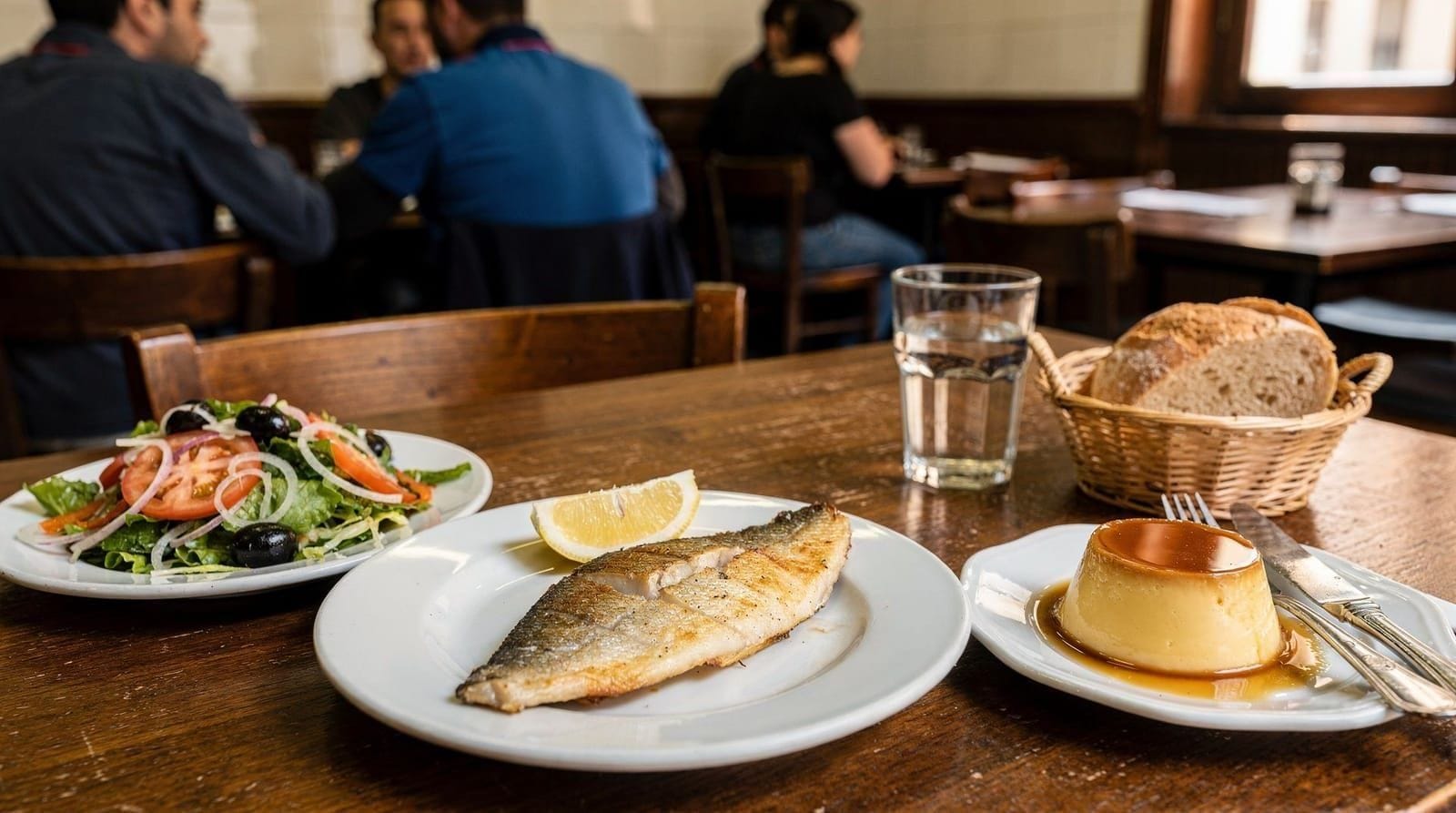
A final practical note: because callos is rarely the only thing you will eat, treat it as the centrepiece and keep the other dishes simple. A salad or some grilled vegetables alongside, then churros con chocolate or a coffee later, makes for a balanced day. The food-tour guide explains when a guided tasting is worth it and when you are better off following your own appetite.
Frequently asked questions about Callos a la madrileña
What does callos a la madrileña taste like?
Mild and slightly mineral from the tripe itself, carried by a deeply spiced sauce of paprika, chorizo, morcilla and jamón. The dominant flavours are pork and smoked paprika rather than anything distinctly offal-tasting — the tripe mostly contributes texture (soft, faintly gelatinous) rather than a strong flavour of its own.Can vegetarians or people avoiding offal find an alternative dish?
Callos itself has no vegetarian version worth seeking out — it is defined by the tripe and cured meats. If offal isn't for you, Madrid's other winter classics like cocido madrileño (chickpea and meat stew, can be ordered with the meat course reduced) or simple roast dishes are the practical alternatives; ask the kitchen directly, as substitutions are common at neighbourhood restaurants.