Mercado de San Miguel: what it is, what it costs, and honest alternatives
Madrid: San Miguel Market Street Food
Is the Mercado de San Miguel worth visiting?
Yes for a glass of wine and the architecture — no if you are expecting a cheap local food market. The Mercado de San Miguel is a beautiful iron-and-glass market from 1916, now primarily a premium food hall for tourists and wealthy madrileños. Food is good quality but expensive. Budget €15–25 per person for a light meal. Go for the experience, not for value.
In brief: The Mercado de San Miguel is beautiful, the food is genuinely good, and the prices are genuinely high. Go in with realistic expectations — this is a premium food hall aimed at a mixed tourist-and-foodie audience, not a neighbourhood market. For authentic local food shopping, the Mercado de la Paz or Mercado de Antón Martín are better choices.
| Where | Plaza de San Miguel 1, next to Plaza Mayor |
| Cost | Around €15–25 per person for a light meal; free entry |
| Time needed | 45–60 minutes for a focused visit |
| Best time | Tuesday–Thursday before 13:00 |
| Booking | Not needed; no reservations taken |
What the Mercado de San Miguel is and what it used to be
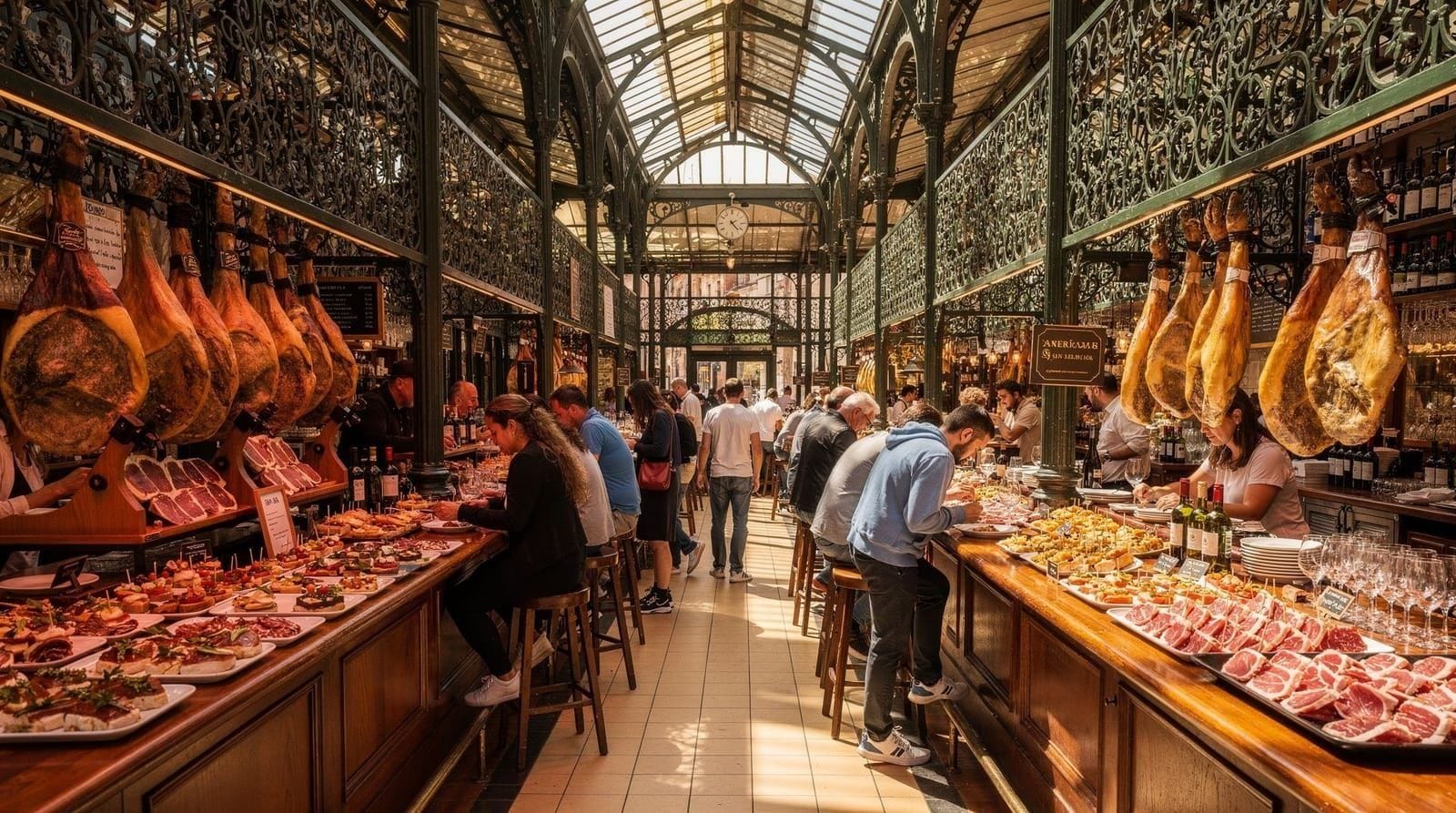
The iron-and-glass building at Plaza de San Miguel 1 (next to Plaza Mayor) dates from 1916. It is one of Madrid’s few surviving examples of early 20th-century iron-frame market architecture — a style that defined European covered markets before concrete took over. The building itself is worth seeing.
What it used to be: a functioning neighbourhood food market where La Latina residents bought their produce, meat, and fish. That function ended in the 1990s when the market fell into disrepair and was closed. It reopened in 2009 after renovation as a premium food hall — a different thing entirely.
Today, the Mercado de San Miguel operates on the model of Barcelona’s Mercat de Santa Caterina or London’s Borough Market: a curated space for high-quality food and drink, at prices calibrated for people who choose to be there rather than people who need to be there. The clientele is 70% visitors, 30% madrileños who come for a glass of wine and some seafood as a treat rather than weekly shopping.
The location is part of the appeal and part of the price premium — it sits at the edge of Plaza Mayor, inside the Austrias historic district, meaning nearly every visitor to central Madrid walks within five minutes of it. That foot traffic is exactly why the food hall model, rather than a working neighbourhood market, made commercial sense after the 2009 renovation.
This is not a criticism — it is context. Knowing what the market is will help you decide how to use it.
The stalls worth visiting
The market has around 30 stalls. Quality varies. The following are the most reliable:
Seafood
The raw seafood stalls are the strongest section. Galician oysters (ostras), fresh clams (almejas), cockles (berberechos), and grilled gambas al ajillo (garlic prawns). The Galician connection is genuine — much of Spain’s Atlantic shellfish comes from Galicia, and market stalls usually display the provenance.
Marisco Jesusa: Long-established stall with fresh oysters at €3–4 each. The quality is reliable. Order with white wine (Albariño from Galicia is the natural pairing).
Jamón ibérico
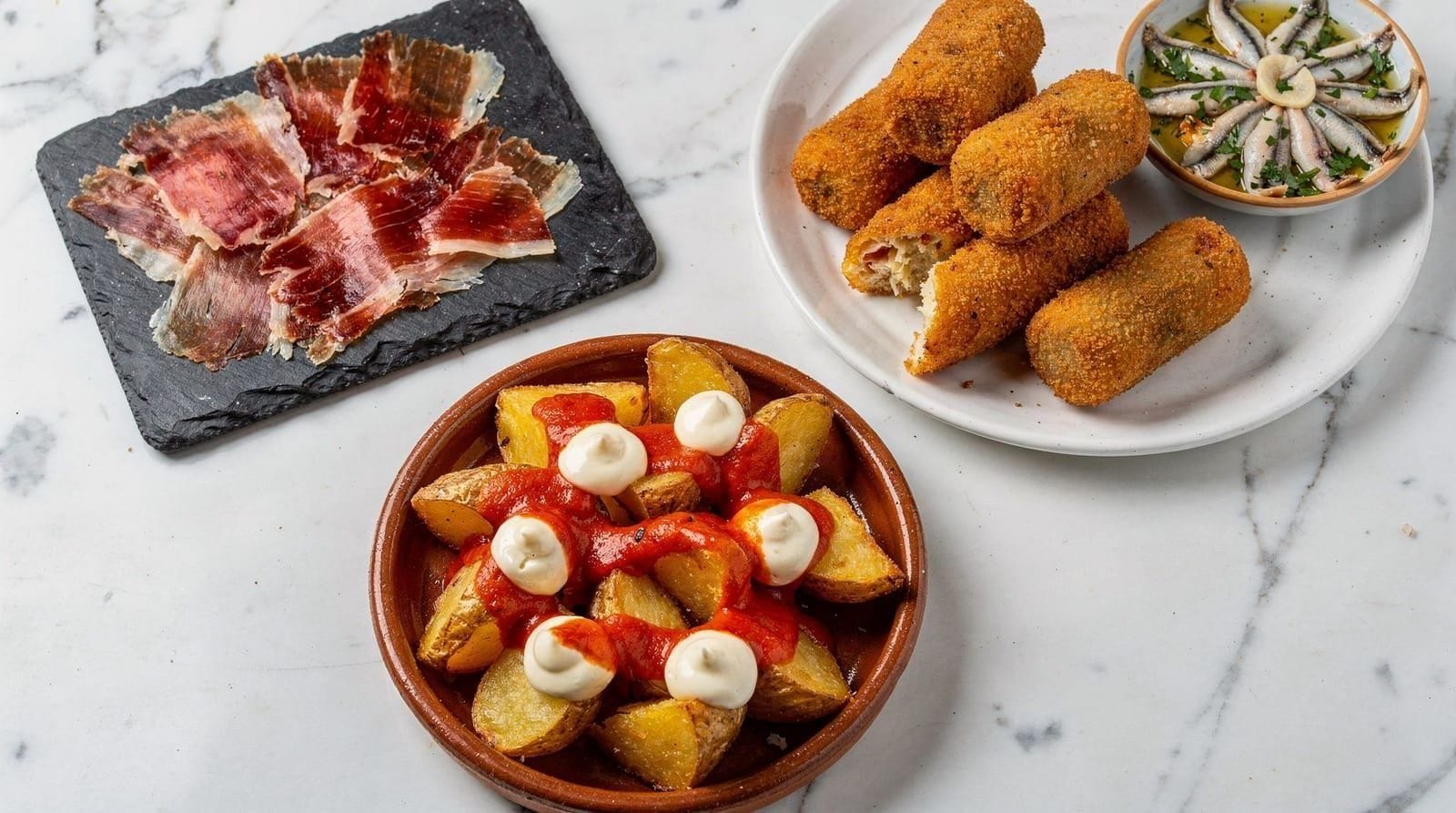
Several stalls cut jamón to order from whole legs. These are genuine ibérico products, not supermarket pre-packaged slices. The price per 100g is high (€12–18) but you are getting properly cured bellota ham. A better use of money than eating mediocre jamón cheaper elsewhere.
Wine and vermouth
The market has two or three wine stalls with by-the-glass options including Spanish natural wines and craft beers. At €4–7 per glass, the pricing is honest for a premium setting. The vermouth option (vermut de grifo, on tap) is particularly good value and appropriate as an aperitivo.
Cheese
A Spanish cheese stall worth stopping at — manchego in various ages, torta del Casar (Extremaduran sheep cheese, runny inside), idiazábal from the Basque Country. Tasting plates available.
What to skip
- The dessert stalls near the main entrance: tourist-facing, overpriced, mediocre quality (the exception is if there is a stall from a known Madrid pastry shop).
- The pre-packaged souvenir food items: branded olive oils, canned tinned fish with premium labels. These are cheaper at a supermarket.
Honest comparison: what you pay vs what you get
| Item | Mercado de San Miguel | Neighbourhood tapas bar |
|---|---|---|
| Glass of wine | €4.50–7 | €2.50–4 |
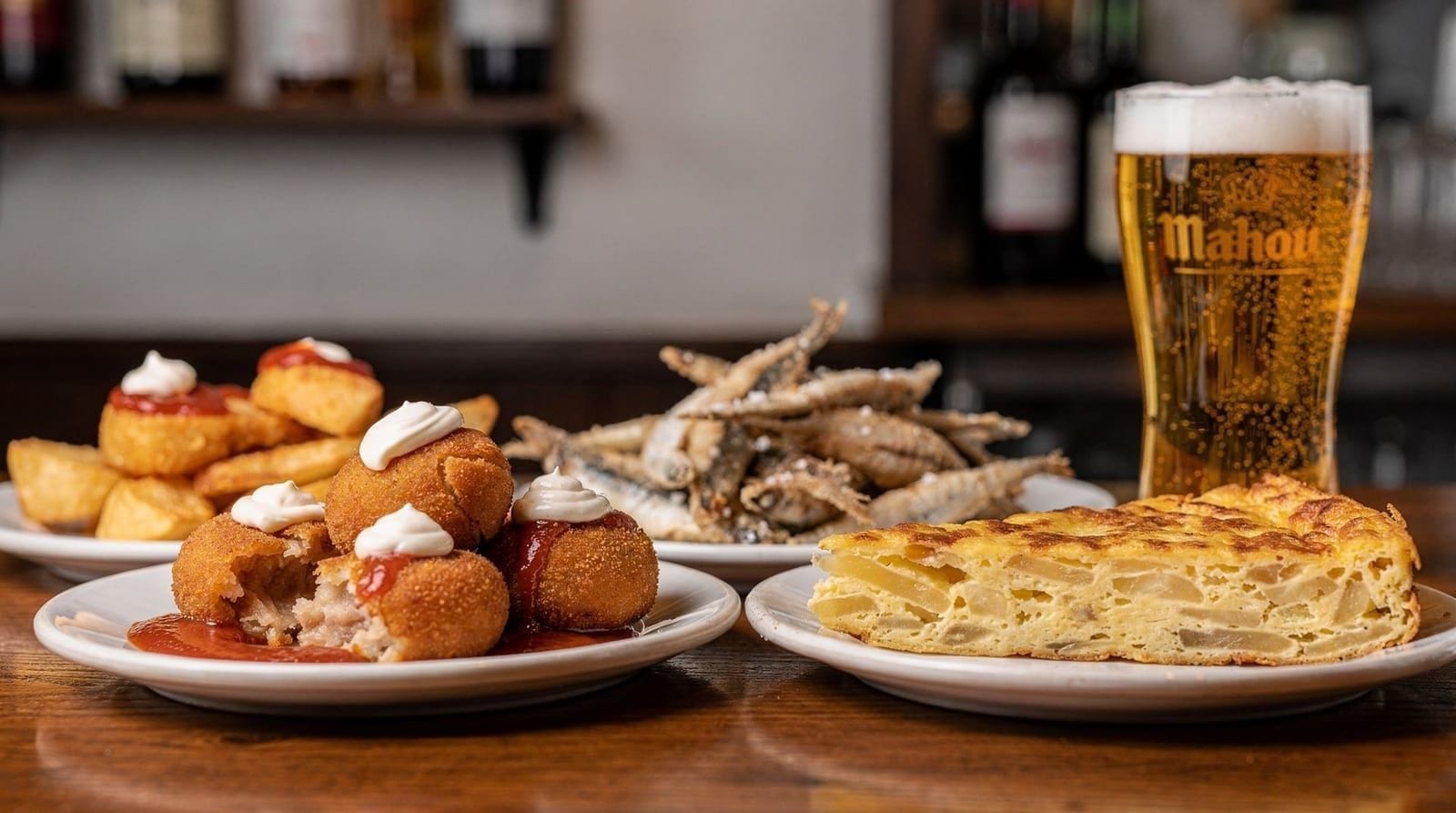
| Croqueta | €3.50 each | €1.50–2 each |
| Jamón (small plate) | €10–14 | €7–10 |
| Oyster (each) | €3–5 | N/A (not common at regular bars) |
| Beer | €3.50–5 | €2–3 |
| Patatas bravas | €6–8 | €3–5 |
The market charges roughly 40–60% more than a neighbourhood bar for comparable items. The difference is the setting — a beautiful 1916 iron market with good curation and easy access from Plaza Mayor. That setting has value; whether it is worth the premium is personal.
When to go and when to avoid
Best times:
- Tuesday to Thursday mornings (10:00–13:00): quiet, stall staff have time to talk, easy to find space at the counters.
- Wednesday or Thursday at 18:00–20:00: a nice aperitivo stop before dinner.
Avoid:
- Saturday and Sunday between 13:00 and 16:00: the market is completely packed, finding standing room at counters is hard, and the atmosphere becomes claustrophobic rather than pleasant.
- Friday and Saturday evenings: the same problem, more so. This is when the market is at its busiest and least enjoyable.
Better alternatives for local food shopping
If you want to see how Madrid actually shops for food:
Mercado de la Paz (Calle de Ayala 28, Barrio Salamanca)
The most functional and well-supplied neighbourhood market in Madrid. Serves the expensive Salamanca district but operates as a real market — butchers, fishmongers, cheese stalls, produce. Open Monday to Friday 09:00–20:00, Saturday until 14:30. Not tourist-facing at all.
Mercado de Antón Martín (Calle de Santa Isabel 5, Lavapiés)
The most multicultural market in central Madrid, serving the Lavapiés neighbourhood. Shops include traditional Castilian produce alongside South Asian, Latin American, and African food suppliers. The most genuinely working-class market in the centre.
El Rastro (Sunday, La Latina)
Sunday flea market — not food, but an experience integral to La Latina Sunday culture. See the El Rastro guide.
Guided food tours that include the market
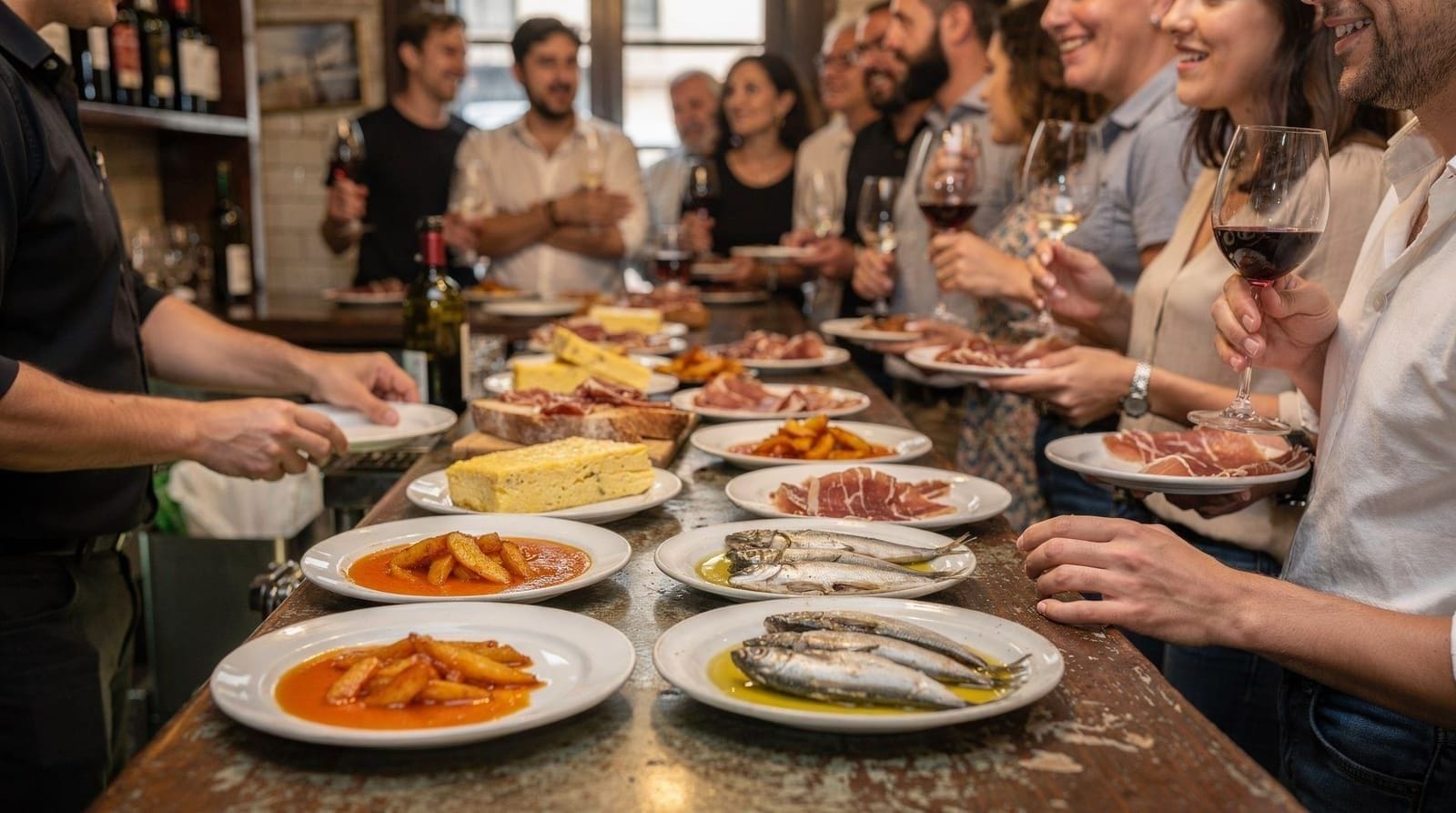
A guided food tour of San Miguel market and street food gives you context alongside the tasting — useful for understanding what you’re eating and why each stall exists.
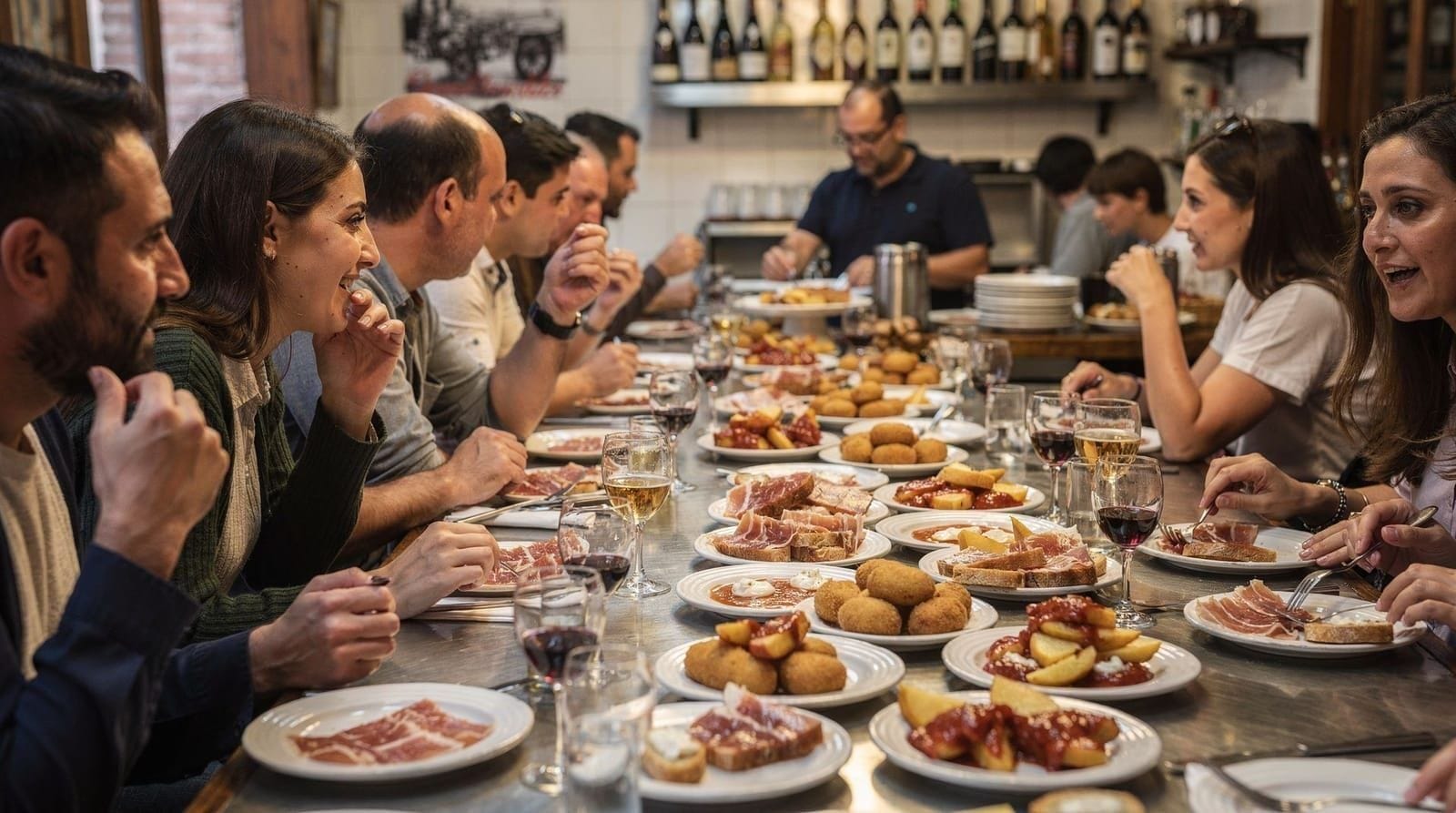
A comprehensive food tour combining the market with tapas bars moves between the market and the surrounding streets of La Latina and Austrias.
The market’s architecture: what you’re standing in
The Mercado de San Miguel’s building is one of the more important pieces of early 20th-century iron architecture in Madrid. It was designed by Alfonso Dubé y Díez and constructed in 1916 — one of the last examples of the iron-frame market construction style that had defined European covered markets since the Paris Les Halles (1857) and London’s Crystal Palace (1851).
Madrid lost many of its iron-frame markets to demolition (the Mercado de los Mostenses, the Mercado de Olavide) in the 20th century. San Miguel survived because it was small enough to be economically viable as a food hall. The 2009 renovation preserved the original structure — columns, glazing, ornamental details — while adding modern service infrastructure (ventilation, refrigeration, updated plumbing).
The result is genuine heritage, not reproduction. If you look at the cast-iron column bases and the decorative metalwork at the upper level, you are looking at 1916 workmanship that was not replaced in the renovation.
Competing food halls: context for the Mercado de San Miguel
The Mercado de San Miguel spawned several imitators:
Mercado de San Antón (Calle de Augusto Figueroa 24, Chueca): A 2011 renovation of a working-class market into a food hall. More neighbourhood-orientated than San Miguel — the Chueca clientele is more local and the food selection includes a stronger tapas bar component on the upper floors. Less touristy, similar price range.
Platea (Calle de Goya 5–7, near Barrio Salamanca): A 2014 conversion of a former cinema into a multi-level gourmet food hall. Larger than San Miguel, more entertainment-focused (live music, larger restaurant spaces). Clientele is wealthier and more Spanish. Worth knowing but less central for first-time visitors.
Mercado de la Reina (Gran Vía 12): A Gran Vía food hall that opened as a tapas concept. More bar than market. Convenient location but less interesting food offering.
Of these, Mercado de San Antón is the most useful alternative to San Miguel for visitors who want quality without the tourist density.
What the market tells you about modern Madrid
The Mercado de San Miguel’s transformation from working market to premium food hall is a compressed version of what has happened to many central Madrid neighbourhoods in the last 20 years. The affordable, functional, working-class infrastructure of the city’s historic centre has been replaced — or transformed — into premium experiences primarily accessible to tourists, wealthy residents, and the creative class.
This is not unique to Madrid (Paris, London, Barcelona, Amsterdam have all followed the same pattern). But it is worth naming, because the market you see today is not the market that served the neighbourhood’s residents. That market — the one that sold fish at 7:00 in the morning to the women who cooked for their families — is now the Mercado de la Cebada and the Mercado de la Paz.
Visiting the Mercado de San Miguel is worthwhile. But if you also visit one of the working markets, you will understand the city’s food culture more completely — and you will see what Madrid was before tourism became its primary economic driver.
Planning your San Miguel visit
The ideal visit format:
- Arrive on a Tuesday or Wednesday at 10:00 (opening time)
- Walk the full circuit once to see all the stalls before buying anything
- Stop for a glass of Albariño at the seafood stall (the white wine and oyster combination)
- One or two plates of something specific — the jamón, the oysters, or whatever looks freshest
- Leave before 13:00 to avoid the lunch crowd
Total time: 45–60 minutes is enough. This is not an all-day experience — it is a quality food stop.
What to skip: The dessert stalls near the entrance (overpriced and mediocre), the pre-packaged souvenirs, and any attempt to eat a full meal here (the standing-and-grazing format is not designed for it).
Combining San Miguel with Plaza Mayor and the Austrias
The Mercado de San Miguel is the most convenient food stop before or after visiting Plaza Mayor. The Austrias neighbourhood guide covers the historic district in full. A sensible morning sequence:
- 09:00: Arrive at Plaza Mayor before the tourist crowds peak
- 09:30: Walk the arcades, see the square, find the local morning café scene
- 10:00: Mercado de San Miguel opens — walk through for the architecture and a coffee
- 11:00: Continue to La Latina for the morning market scene or toward the Royal Palace area
This combination covers the historic core at the most comfortable time of day before it becomes crowded.
For the afternoon and evening equivalent, see the where to eat in La Latina guide for what happens in the neighbourhood after 13:00.
A note on Instagram and the market
The Mercado de San Miguel is one of the most photographed interiors in Madrid. The iron framework, the light through the glass, the colourful produce stalls — it photographs beautifully, and the photographs are accurate.
This photogenic quality is also why the market is perpetually busy with visitors who came primarily because they saw the photograph. This is a self-reinforcing loop. For a genuinely uncrowded photography visit, arrive at 10:00 on a weekday — the light is good, the stalls are fully stocked, and most visitors have not yet arrived.
The food tour worth it guide covers tours that include the market with contextual explanation.
Who should skip it entirely
If your priority is value for money or an authentic neighbourhood food scene, the honest advice is to skip the market and go straight to Mercado de Antón Martín or a La Latina tapas bar instead — you’ll pay 40–60% less for comparable food without the crowding. Budget travellers on a tight daily allowance are better served putting that €50–70 toward a proper sit-down meal elsewhere; see the Madrid on a budget guide for where that money goes further. The market makes most sense as a short, deliberate stop — one glass of wine and a plate of oysters — rather than a meal plan.
Practical logistics: paying and finding a spot
Most stalls accept card as well as cash, though a few of the smaller ones are cash-preferred at busy times — carrying €20–30 in cash avoids any friction. Toilets exist within the market building but are frequently queued at peak hours; the public facilities near Plaza Mayor are a reasonable backup if you’re pressed for time. There is no seating reservation system: standing counters and shared high tables are first-come, and at peak hours you’ll often eat standing with your plate balanced on a narrow shelf. If a proper seat matters to you, arrive right at opening (10:00) or plan around the quieter Tuesday–Wednesday window described above.
Frequently asked questions about Mercado de San Miguel
What is the Mercado de San Miguel?
A 1916 Art Nouveau covered market near Plaza Mayor, renovated in 2009 into a food hall with over 30 stalls selling tapas, seafood, jamón, oysters, wine, beer, and desserts. Originally a neighbourhood food market — it no longer functions as one. Now primarily a premium tourist and foodie destination.How much does food cost at the Mercado de San Miguel?
Significantly more than neighbourhood restaurants. Oysters: €3–5 each. A glass of wine: €4–8. Jamón ibérico: €8–12 for a small plate. Croquetas: €3–4 each. A light meal for two with drinks easily reaches €50–70. The price is the honest reality — factor it in before going.When is the best time to visit the Mercado de San Miguel?
Tuesday to Thursday, before 13:00. Weekends between 13:00 and 16:00 are the busiest and most chaotic — standing room only, hard to get a stall spot. Friday and Saturday evenings are also very crowded. Quietest on Tuesday and Wednesday mornings when it opens at 10:00.Is there a free entry to the Mercado de San Miguel?
Yes — entry is free. You pay only for what you eat and drink. There is no admission charge and no minimum spend.What should I order at the Mercado de San Miguel?
The seafood stalls are the highlight — fresh oysters from Galicia (Marisco Jesusa stall), grilled gambas (prawns), and berberechos (cockles) are good quality. The jamón ibérico stalls are reliable. Avoid the overpriced dessert stands near the entrance that exist to catch tourist attention first.Are there better local food markets in Madrid?
Yes. Mercado de la Paz (Salamanca district, genuine neighbourhood market), Mercado de San Antón (Chueca, more local-oriented but also touristy), and the Mercado de Antón Martín (Lavapiés, the most working-class and authentic). El Rastro on Sundays is a flea market, not food, but worth combining.Can I have a full sit-down meal at Mercado de San Miguel?
Not really — the market has standing counters and a handful of shared high tables, not a traditional restaurant layout. It works well for grazing several small plates over 45–60 minutes, but if you want a proper seated meal, a nearby La Latina restaurant is the better choice.Is Mercado de San Miguel worth it with young children?
It can work for a short visit — the seafood and cheese stalls are visually interesting, and there's no admission fee — but the standing-room crowding at peak times makes it hard with a pushchair or restless toddlers. A quiet weekday morning visit is far more manageable than a weekend afternoon.
Top experiences
Bookable activities with verified prices and instant confirmation on GetYourGuide.