Plaza Mayor guide: how to enjoy Madrid's grandest square without the tourist trap
Madrid: Prado Guided Skip the Line
Is Plaza Mayor worth visiting and should I eat there?
The Plaza Mayor itself is absolutely worth visiting — one of Europe's finest Habsburg-era squares, free to enter, impressive at any hour. The restaurants under the arcades are not worth eating at: standard prices are 2–3× the La Latina or Malasaña equivalent for mediocre food. Have coffee under the arcades if you want the experience; eat elsewhere.
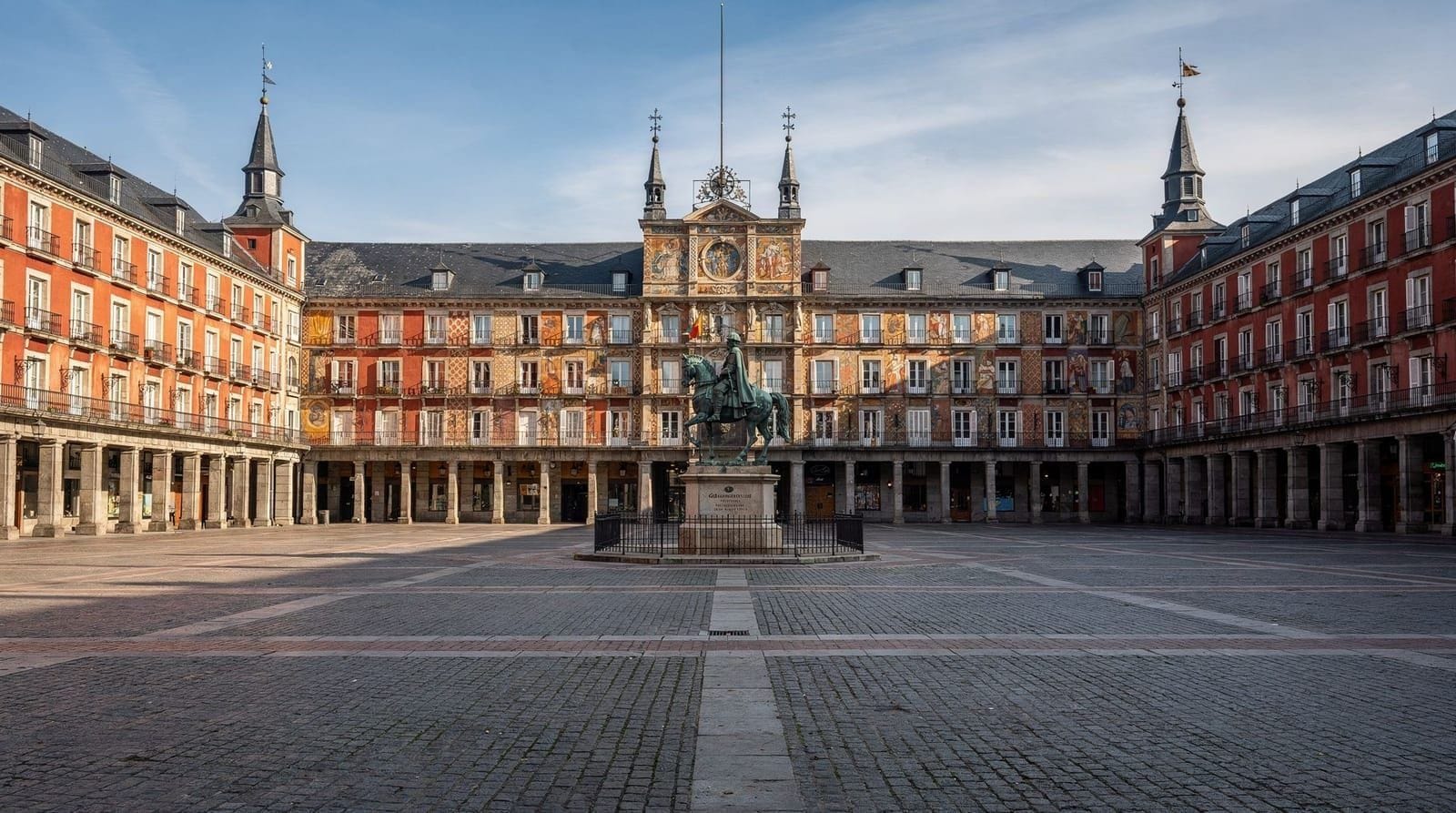
In brief: Plaza Mayor is Madrid’s most impressive public square — 17th-century Habsburg architecture, nine archways, 237 balconies, Philip III on horseback at the centre. Entry is free. The arcaded restaurants are overpriced and the food is consistently mediocre. Visit for the architecture; eat in La Latina.
| Where | Historic centre, 5 min walk from Puerta del Sol |
| Cost | Free to enter; coffee €3.50–5, beer €5–7 under the arcades |
| Time needed | 15–30 minutes for the square itself; longer at Christmas market time |
| Getting there | Metro Sol (Lines 1/2/3), 5-minute walk, or La Latina (Line 5), 8-minute walk |
| Best time | Early morning (07:00–08:30) or dusk from the arcades |
What Plaza Mayor is and how it was built
Philip III commissioned Plaza Mayor in 1617, seven years after moving the Spanish court back to Madrid from Valladolid. The architect Juan Gómez de Mora built it in three years — an extraordinary pace for the period — on the site of a previous market square called the Plaza del Arrabal. The plaza was inaugurated in May 1620.
The brief was precise: a formal, unified public space for the capital of a global empire. Gómez de Mora created a rectangle of 129 × 94 metres, enclosed on all sides by identical arcaded buildings of four storeys with slate-roofed towers at the corners. The uniformity was strict — every building followed the same facade design, and the residents of the square were regulated in what they could hang from the famous balconies. The effect is a closed room under an open sky, and it works precisely because the uniformity is relentless.
The Casa de la Panadería — the north side of the square, now freshly painted in Surrealist murals — was the oldest building, completed first (1619) as a combined bakery and administrative centre. It anchors the square’s ceremonial axis.
What it was used for
In the 17th and 18th centuries, Plaza Mayor was the stage for everything that mattered in the Spanish capital:
Bullfights: Professional bullfighting in Madrid developed here. The square’s uniform height and closed perimeter made it a perfect arena — temporary wooden stands were erected in the windows and balconies, which were rented out to wealthy families for the season. The royal family watched from the Casa de la Carnicería (east side). Bullfighting moved to permanent arenas in the 19th century; Las Ventas replaced Plaza Mayor entirely from 1931.
Auto-da-fé: The Spanish Inquisition conducted its public sentencing ceremonies (autos de fe) in Plaza Mayor — the reading of sentences, processions, and occasional executions. The most famous was the Auto de Fe of 1680, attended by Charles II. This aspect of the square’s history is largely unmarked.
Royal festivities: Beatifications, coronations, and royal celebrations. When Philip V returned from the War of Spanish Succession in 1703, the celebration in Plaza Mayor lasted three days.
Markets and commerce: The ground-floor arcades housed shops and market stalls throughout the Habsburg and Bourbon periods — the same function they nominally serve today.
The square burned twice (1631, 1790) and was reconstructed each time; the current facades date largely from Juan de Villanueva’s 1790 reconstruction, which gave the buildings their current proportions.
The nine archways and what connects to where
Plaza Mayor is not a dead end — it is a hub, connected to the surrounding medieval street pattern through nine archways. The most important:
Arco de Cuchilleros (southwest corner): Steps descend into Calle de Cuchilleros (Knife-sellers’ Street) and then into the La Latina neighborhood. This is the fastest walking route from Plaza Mayor to the best tapas bars in Madrid.
Arco de la Sal (north side, left of center): Leads to Calle Mayor and the route toward the Royal Palace (10 minutes west) and Puerta del Sol (5 minutes east).
Arco de Atocha (southeast): Leads toward the Barrio de las Letras and eventually the Prado (25 minutes on foot). If the Prado is your next stop, a guided Prado visit with skip-the-line entry lets you head straight in once you arrive.
Understanding the archways changes how you use the square — rather than backing out the way you came, you can enter from Sol via the northern archway, cross the square, and exit via Cuchilleros into La Latina. This is the most efficient routing for the classic Madrid first-morning circuit.
The arcades: what to spend money on and what to avoid
The 123 arcade bays at ground level host a mixture of souvenir shops, restaurants, bars, and a few genuine businesses. The honest assessment:
Coffee: Having a coffee under the arcades is a reasonable tourist experience. You will pay €3.50–5 for a coffee that costs €1.50 two streets away; you are paying for the location. Casa Rúa has been here longest and at least has genuine character.
Beer: Similarly, a cold caña here is €5–7. It is cold, the setting is excellent, and you are paying the Plaza Mayor surcharge. One beer is fine; a full round of drinks is economically irrational.
Full meals: Not worth it. Standard plaza meals (paella, cocido, bocadillos) run €15–25 per person at quality levels that range from mediocre to actively bad. The restaurants survive entirely on tourist traffic and have no incentive to improve. This is not hidden — it is one of the most documented tourist traps in Madrid.
Souvenirs: The souvenir shops under the arcades (keyrings, magnets, Real Madrid jerseys, matador figurines) are priced identically to every other tourist-area souvenir shop in Madrid. No bargaining.
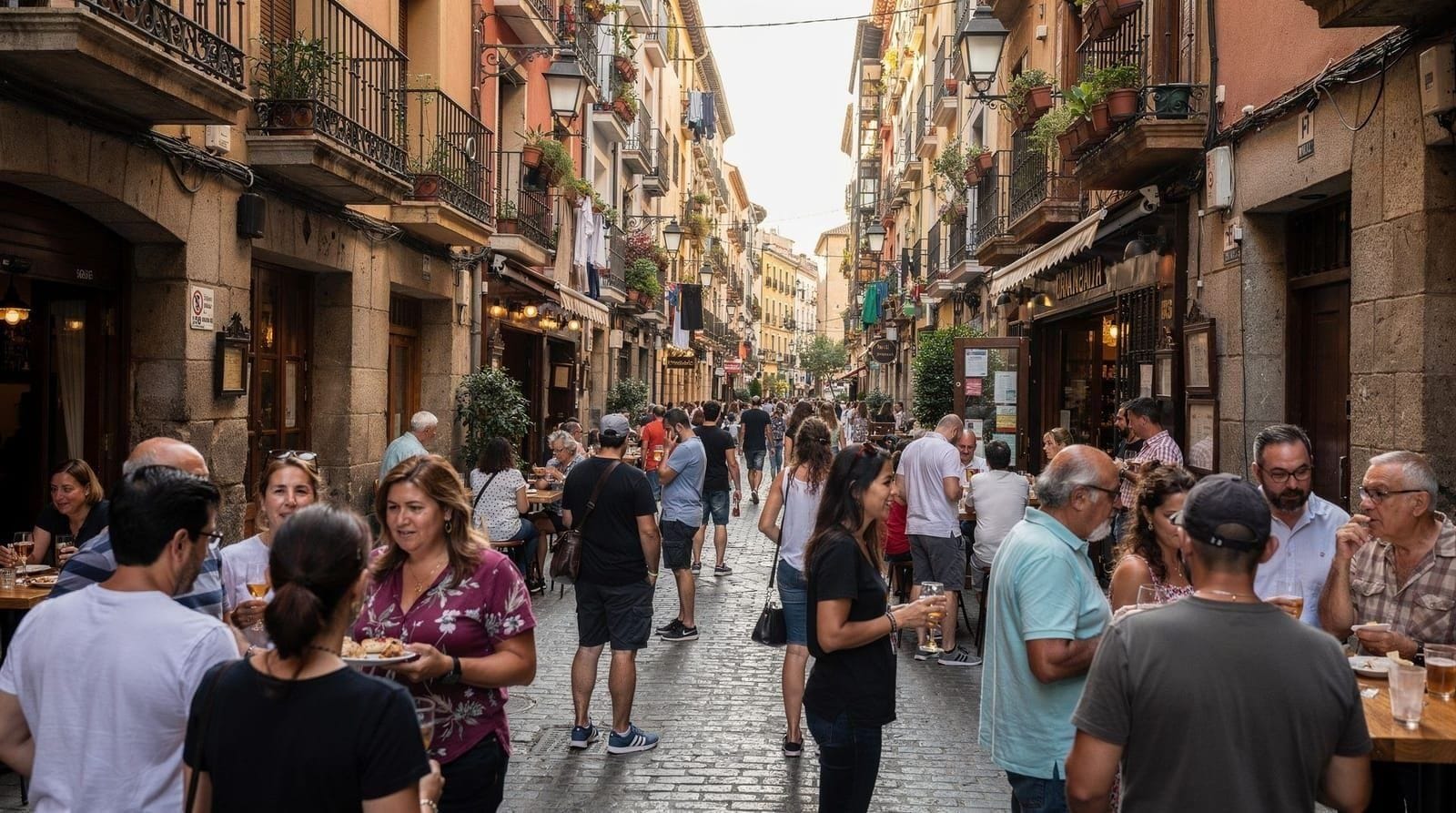
The alternative: Walk through Arco de Cuchilleros and down to Calle Cava Baja (La Latina). Within 5–7 minutes you will find traditional tavernas charging normal Madrid prices with actual quality. The guide to eating in La Latina covers specific recommendations.
The Christmas market: the best time to visit Plaza Mayor
The one scenario where eating and shopping at Plaza Mayor is genuinely worthwhile is the Christmas market, held from late November to 5 January. The square transforms into a grid of wooden stalls selling:
- Figures for traditional nativity scenes (belenes) — the market is the primary source for these in Madrid, with stalls specializing in everything from mass-produced figurines to hand-carved artisanal pieces
- Christmas decorations: Ornaments, lights, garlands
- Food: Churros, roasted chestnuts, turrón (the traditional Spanish almond confection), hot wine
- Costumes and accessories for the Three Kings (Reyes Magos) celebrations in January
The prices at the Christmas market are fair — it functions as a real market, not a tourist trap. The atmosphere on a cold December evening, with the lit arcades and the square full of Madrileños shopping, is one of Madrid’s best winter experiences.
Sunrise and late night: the best times for the space itself
Sunrise (07:00–08:30): The square is almost empty. The eastern facades catch the morning light; pigeons; a few café workers setting up. This is when the architecture speaks most clearly.
Late night (23:00–01:00): After the tourist restaurants close and the souvenir shops shutter, local Madrileños use the square as a meeting point before heading into the La Latina bars. The space is quieter but still animated. In summer, the square stays alive until 02:00–03:00.
Midday Saturday/Sunday: The busiest period, with tour groups and families. Manageable but the most crowded.
Practical matters
Address: Plaza Mayor, 28012 Madrid. Accessible through Calle Mayor (from Sol), Calle Atocha (from the south), and multiple cross-streets.
Metro: Sol (Lines 1/2/3), 5-minute walk west. La Latina (Line 5), 8-minute walk north.
Toilets: Public toilets are in the basement beneath the square (pay, small charge). The arcaded cafés will sometimes allow use of their facilities with a purchase.
Pickpockets: The square is on every pickpocket circuit in Madrid. Be attentive in the crowds, especially near the archways where exits concentrate the flow. Cross-body bags closed; phone in a front pocket. See pickpocket safety in Madrid.
Architecture detail: what to look for on the facades
The uniformity of the plaza’s facades masks considerable detail worth examining closely:
The slate roofs and towers: Each corner of the plaza has a slate-roofed tower with dormer windows — a specifically Castilian architectural tradition that distinguishes Habsburg Madrid from French or Italian Baroque squares of the same period. The combination of ochre stone walls, grey slate roofs, and the black ironwork balcony railings is the palette that defines the aesthetic of the Austrias quarter.
The balconies: The 237 balconies were the exclusive domain of the wealthy in the plaza’s active years — families paid premium prices for front-row access to the bullfights, processions, and autos-da-fé below. The arrangement of balconies (three rows per building) was regulated to ensure each had sight lines to the action below.
The Casa de la Carnicería (east side): The original Butcher’s House, rebuilt after the 1790 fire by Juan de Villanueva. The building now houses restaurants at ground level; the upper floors are residential. Less visually dramatic than the Casa de la Panadería but architecturally important as Villanueva’s interpretation of the original Gómez de Mora design.
The painted murals on the Casa de la Panadería: The current murals (1992, by Carlos Franco) are not universally loved — the allegories and surrealist elements feel anachronistic against the 17th-century architecture. Earlier versions of the murals were more straightforwardly heraldic. The debate about what should adorn this building’s facade has been running for decades.
The underground spaces: tunnels and passages
Plaza Mayor sits above a system of underground passages and vaults from the 17th century — the original undercroft of the market buildings and storage areas for the surrounding businesses. These are not accessible to visitors but occasionally appear in engineering and renovation reports for the plaza.
The public toilets in the basement (accessed via stairs near the Cuchilleros corner) date from the 20th century and use some of the original vault space. The descent into them gives a brief sense of the plaza’s underground layer.
Where to eat near Plaza Mayor (the honest alternatives)
5 minutes south: La Latina, specifically:
- Almendro 13 (Calle del Almendro 13): Traditional raciones in a beautiful 1920s-era bar. Huevos rotos, croquetas, jamón.
- Txirimiri: Basque pintxos bar — small plates of bread-topped preparations, priced individually at €2–3 each. Excellent value.
- Casa Lucio (Cava Baja 35): The classic Madrid comedor — eggs with potatoes, roast suckling pig (cochinillo), traditional desserts. Mid-range, excellent. Reservation recommended for dinner.
10 minutes north:
- Café de Oriente (Plaza de Oriente): Near the Royal Palace; higher-priced but genuine quality, the terrace facing the Royal Palace is exceptional.
The best tapas bars guide and the La Latina eating guide both cover these alternatives in detail.
Integrating Plaza Mayor into a Madrid itinerary
Plaza Mayor appears in almost every Madrid itinerary because it is genuinely central — geographically and historically. The natural circuit:
- Start at Puerta del Sol (Madrid’s official centre)
- Walk west along Calle Mayor to Plaza Mayor (5 minutes)
- Cross the square and exit via Arco de Cuchilleros toward La Latina for lunch
- Walk north to the Royal Palace (10 minutes from La Latina via Calle de Segovia)
- Optional: Almudena Cathedral adjacent to the palace
If you plan to go inside the palace rather than just admire its facade, booking ahead saves time at the entrance: a guided Royal Palace visit with skip-the-line entry fits neatly after a lunch in La Latina. Anyone who would rather have the whole historic centre explained on foot can look at a city walking tour combined with the Royal Palace, which covers the square along the way.
This is the classic Madrid morning, covered in the Madrid first weekend itinerary and the Madrid in one day guide.
Accessibility
Plaza Mayor’s ground surface is cobbled but flat and level throughout, making the square itself straightforward for wheelchairs and pushchairs once you’re inside — the harder part is the approach, since several of the connecting streets (particularly toward La Latina via Arco de Cuchilleros) involve steps or steep cobbled inclines. The most accessible entry is via Calle Mayor from Puerta del Sol, which is flat the whole way. The public toilets in the basement are accessed only by stairs; the nearest accessible facilities are in the surrounding cafés (ask staff) or at Puerta del Sol’s public toilets, which have step-free access.
The Sunday morning experience
Sunday morning at Plaza Mayor is one of Madrid’s most distinctive experiences — specifically between 09:00 and 11:00, before the tourist bustle begins. The arcade cafés are serving coffees to locals; the stamp and coin market is setting up in the centre of the square; the light is angled from the east; the pigeons have it largely to themselves.
Sunday stamp and coin market: Every Sunday morning from approximately 09:00 to 14:00, dealers spread stamps, old coins, postcards, and miniatures under the arcades. Prices are generally fair. Browsing without buying is entirely normal.
Visiting Plaza Mayor as part of a food tour
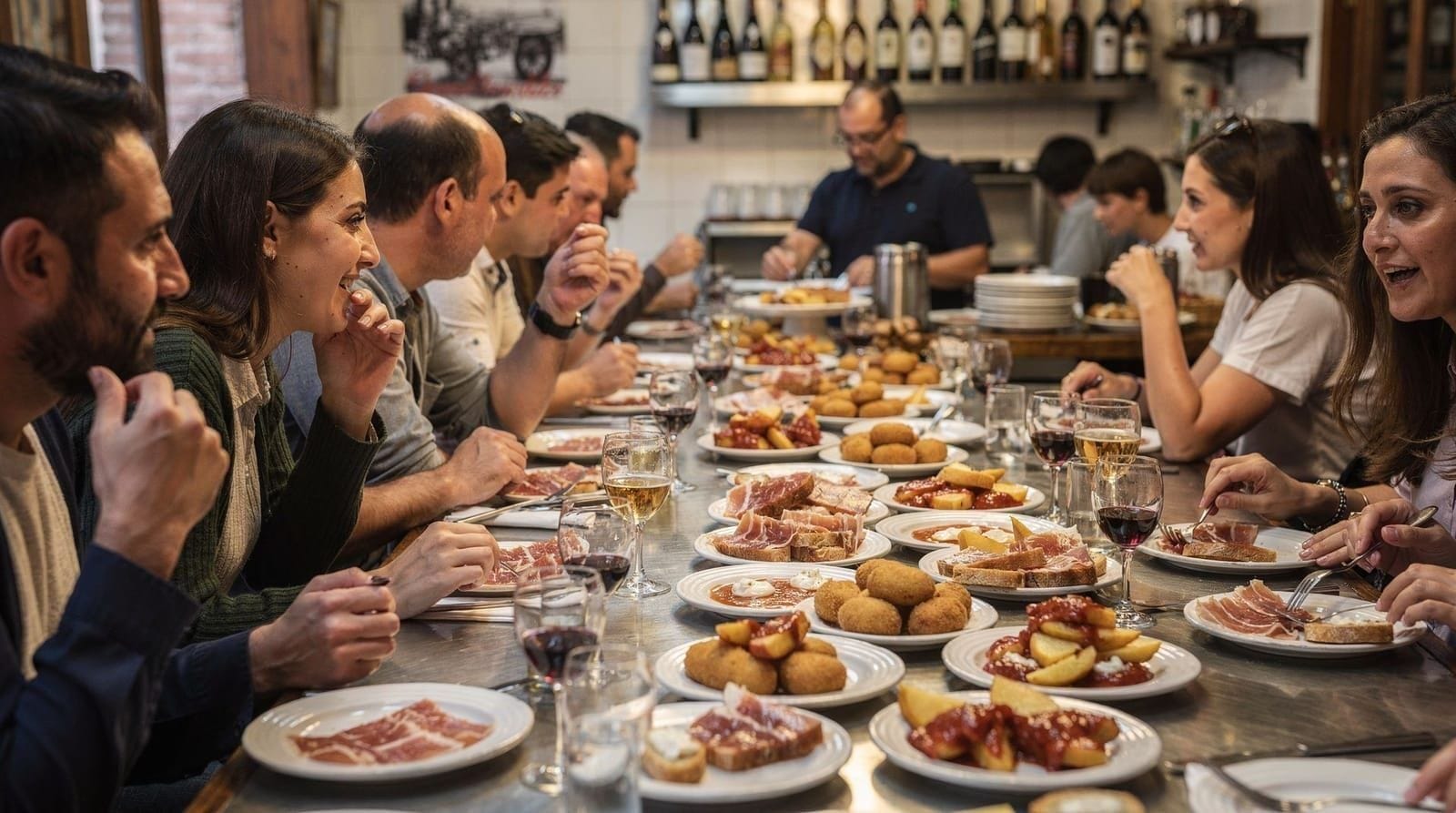
Because the square sits at the junction between the historic centre and La Latina, several Madrid food and walking tours route through it as a stop rather than a destination — a way to see the architecture without the cost of eating there. If you’re deciding between a self-guided visit and a guided food tour, the practical difference is mainly context and efficiency: a guide walks you through Plaza Mayor’s history in a few minutes and takes you directly to vetted tapas bars in La Latina, skipping the research of figuring out which arcade restaurants to avoid. For a self-guided visit, the Madrid tapas guide and best tapas bars guide cover the same ground without a booked tour, at your own pace.
Plaza Mayor versus other Madrid plazas
Plaza de Oriente (facing the Royal Palace): 19th-century formal square with equestrian statue of Philip IV and manicured gardens. Less crowded than Plaza Mayor; the Café de Oriente terrace is one of the finest outdoor coffee spots in central Madrid.
Plaza de Cibeles (Cibeles guide): A monumental intersection rather than an enclosed square — dramatic, historically charged (Real Madrid celebrations), architecturally spectacular.
Plaza de Santa Ana (Barrio de las Letras): The literary quarter’s hub, with terrace bars and the Hotel ME. More local character than Plaza Mayor; Cervantes and Lorca statues.
Of these, Plaza Mayor is the most formally successful as a contained public space — the enclosure, the uniform facades, and the single central axis create a spatial experience that the more open plazas cannot achieve.
Photography guide for Plaza Mayor
Best early morning (before 09:00): The eastern facades are in direct morning light; the square is empty; the equestrian statue of Philip III is well-lit. Arrive before 08:30 for the cleanest compositions.
Dusk from the arcades: Sitting under the western arcade and looking east across the square at dusk — the facades turn gold, the streetlamps come on, the evening crowd fills in. 19:00–20:30 in summer.
The Cuchilleros staircase (looking up from below): Exit the square via Arco de Cuchilleros and turn around immediately — the staircase and archway frame the façade above in a way that is invisible from inside the square. One of the more unusual Plaza Mayor images.
Avoid: Midday Saturday/Sunday in peak season — direct overhead light, maximum crowds, no depth in the facades.
Plaza Mayor’s arcade prices vs one street away
The price gap under the arcades is real and consistent enough to plan around:
| Item | Plaza Mayor arcades | La Latina, 5 min away |
|---|---|---|
| Café con leche | €3.50–4.50 | €1.20–1.80 |
| Caña (small beer) | €4–5 | €1.80–2.20 |
| Full meal | €20–30 per person | €10–15 (menú del día) |
The Plaza Mayor overpriced guide breaks this down item by item with the full explanation of why the gap exists. The short version for this guide: enjoy the architecture and a single coffee if you want the terrace experience, then walk to La Latina or where to eat in La Latina for anything more than that.
Frequently asked questions about Plaza Mayor guide
What is Plaza Mayor in Madrid?
Plaza Mayor is a rectangular 17th-century square at the heart of Habsburg Madrid, measuring 129 × 94 metres, surrounded by uniform four-storey arcaded buildings with 237 balconies. It was the main civic space of the Spanish empire — used for royal proclamations, bullfights, Inquisition trials, markets, and festivals from 1620 until the 19th century. Today it is Madrid's central tourist plaza.Is there an entry charge for Plaza Mayor?
No. Plaza Mayor is a public space, open 24 hours a day, free to enter through any of its nine archways. The arcaded ground floor contains shops and restaurants; the square itself has no admission.What restaurants in Plaza Mayor are worth eating at?
Honestly, none for a full meal. The Casa Rúa bar (corner of the square, arcaded, wooden interior) is the most legitimate historic café for a beer or coffee at the tourist-price rate (€3.50–5 for a coffee, €5–7 for a beer). For actual food, walk 5 minutes to La Latina: Txirimiri (Pintxos bar), Almendro 13 (raciones), or any bar on Cava Baja. The Madrid tapas guide covers La Latina specifically.What is the equestrian statue in the centre of Plaza Mayor?
Philip III (reigned 1598–1621), the king who commissioned Plaza Mayor. The bronze statue was made in Florence in 1616 by Juan de Bolonia and Pietro Tacca; it was moved to the centre of the square in 1848. Philip III is the monarch who moved the Spanish court from Valladolid back to Madrid in 1606.Does Plaza Mayor still host markets and events?
Yes. The Christmas market (late November to 5 January) fills the square with stalls selling nativity figures, Christmas decorations, and seasonal food — one of Madrid's most photogenic winter events. Stamp and coin collectors' market operates on Sunday mornings. Occasional cultural events and installations in summer.What is the Casa de la Panadería?
The brightly painted building on the north side of the square — blue, red, orange frescoes on a white facade — is the Casa de la Panadería (House of the Bakery), the oldest building in the square (completed 1619). It originally housed the royal bakery. The murals date from the 1990s (the building has been repainted multiple times; the current design by Carlos Franco is Surrealist-tinged). The building now contains the City of Madrid tourist office.How do I get to Plaza Mayor by metro?
Metro Line 2 or 3, Sol station — then walk west along Calle Mayor for 5 minutes. Or Metro Line 5, La Latina station — then walk north. On foot from Puerta del Sol: 5 minutes. On foot from the Royal Palace: 10 minutes east via Calle Mayor.Is Plaza Mayor wheelchair accessible?
The square itself is flat and cobbled throughout, which is manageable for most wheelchairs and pushchairs. The main accessibility challenge is the connecting streets — some of the archways, particularly Arco de Cuchilleros toward La Latina, involve steps. The flattest approach is via Calle Mayor from Puerta del Sol. The basement public toilets are stairs-only; step-free toilets are available at Puerta del Sol.