Madrid tapas guide: how, where, and when to eat like a local
Madrid: Food Tour Tapas Spanish Wine
What are the best areas for tapas in Madrid?
La Latina (around Cava Baja) is the traditional tapas hub. Malasaña has a younger, more local vibe. Avoid the tourist restaurants around Plaza Mayor and Puerta del Sol — they are overpriced and mediocre.
In brief: Tapas in Madrid are not free (you’re not in Granada), restaurants around Plaza Mayor are overpriced tourist traps, and locals eat dinner at 22:00. Know these three facts, stay in La Latina and Malasaña, and you will eat extremely well.
| Where | La Latina (Cava Baja) and Malasaña are the two core areas |
| Cost | Around €2.50–5 per tapa, €8–15 per ración |
| Time needed | 2–3 hours for a proper multi-bar crawl |
| Best time | Sunday lunch after El Rastro, or after 21:30 for dinner-hour tapas |
| Booking | Rarely needed for bar stands; popular sit-down spots on weekends can fill |
Understanding the tapas culture before you order
Madrid’s tapas culture is not the same as Andalusia’s or the Basque Country’s. In Granada and Jaén, you get a free tapa with every drink — that tradition does not exist in Madrid (with rare exceptions at old-school bars). In San Sebastián, pintxos bars line every street with elaborate bread-topped bites — Madrid’s format is more casual.
What Madrid has is a deep, neighbourhood-rooted bar culture built on simple, high-quality ingredients: Spanish jamón, fresh seafood shipped overnight from Galicia and the Atlantic coast, vegetables from Castilian farms, and olive oil from Andalusian co-operatives. The quality ceiling is very high if you know where to look.
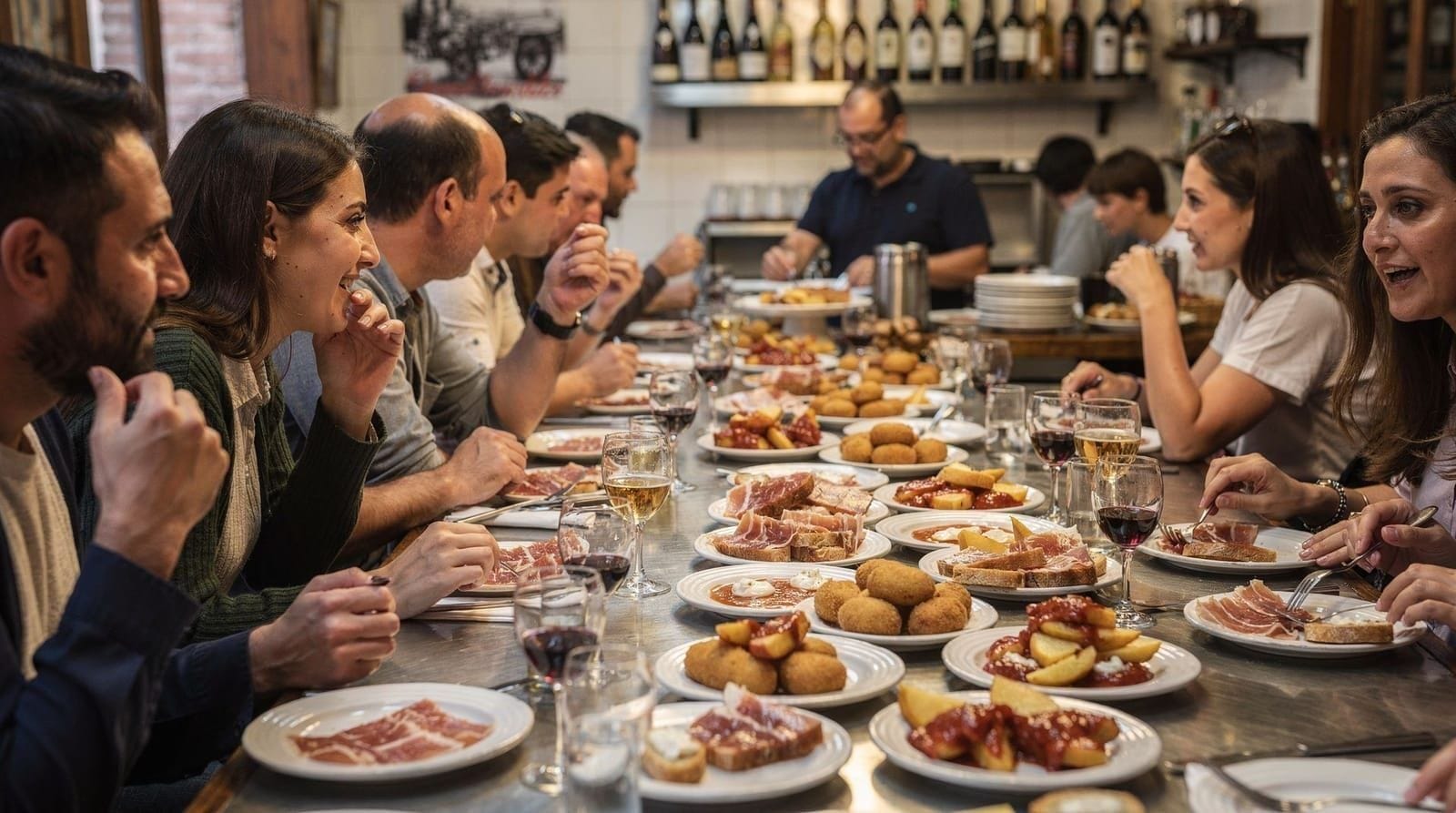
The core rule: move between bars. One bar, one or two drinks, one or two dishes, then move on. The Spanish call this the chiquiteo — a progressive bar crawl where each stop is short and social. No single bar does everything well. The ham specialist is usually not the best for seafood. The croqueta bar is rarely the best for tortilla.
The five Madrid tapas neighbourhoods worth your time
La Latina: the traditional hub
La Latina, specifically the streets around Cava Baja and Cava Alta in the old medieval quarter, is the most established tapas area in Madrid. On a Sunday afternoon after the El Rastro flea market, the entire neighbourhood becomes one long outdoor party.
The quality-to-price ratio is good but has slipped in the last decade as the area became well-known. The best bars here still charge honest prices (€3–5 per tapa), but the worst are now charging €7–9 for average food. Walk the side streets off Cava Baja rather than the main strip for better value.
Key spots: Casa Lucio (for huevos rotos — broken eggs — the neighbourhood’s signature dish), El Tempranillo (natural wines and good small plates), Txirimiri (Basque-leaning pintxos on Cava Alta).
See the full La Latina guide for the neighbourhood context.
Malasaña: local, younger, less polished
Malasaña has overtaken La Latina for actual madrileño night-out activity. The bars here are scruffier, the crowds younger, the menus shorter, and the attitude significantly less tourist-oriented. This is where people who live in Madrid actually drink on weekday evenings.
The downside: Malasaña tapas bars are inconsistent. Some excellent; many mediocre. There is no equivalent of La Latina’s density of reliable places. But the atmosphere is more authentic.
See the Malasaña bars guide for specific recommendations.
Chueca: bar-hopping with vermouth
Chueca shares borders with Malasaña and has a lively bar scene built around weekend vermouth (vermut) culture. Many of the better wine bars have opened in Chueca in the last five years. Less focused on traditional tapas, more on quality drinks with good small plates alongside.
The Chueca guide covers the neighbourhood in full.
Barrio de las Letras: literary quarter, competent food
The literary quarter around Calle de las Huertas has a dense concentration of restaurants and bars serving a mix of tourists and office workers. Quality is uneven — this is not the best neighbourhood for serious tapas, but there are reliable options and the area is pleasant to walk.
Sol and Plaza Mayor: avoid the restaurants
This cannot be said strongly enough: the restaurants on and immediately facing Plaza Mayor and Puerta del Sol are among the worst-value meals in Spain. They charge €12–18 for dishes that cost €4–7 in La Latina. The paella at those terrace restaurants is often reheated. The sangria is made from the cheapest possible wine. The only people eating there are tourists who do not yet know better.
Two blocks away from Plaza Mayor in any direction, prices drop dramatically and quality improves. The plaza is worth seeing; eat elsewhere. See the tourist traps guide for a full breakdown.
What to order: the essential Madrid tapas
Patatas bravas
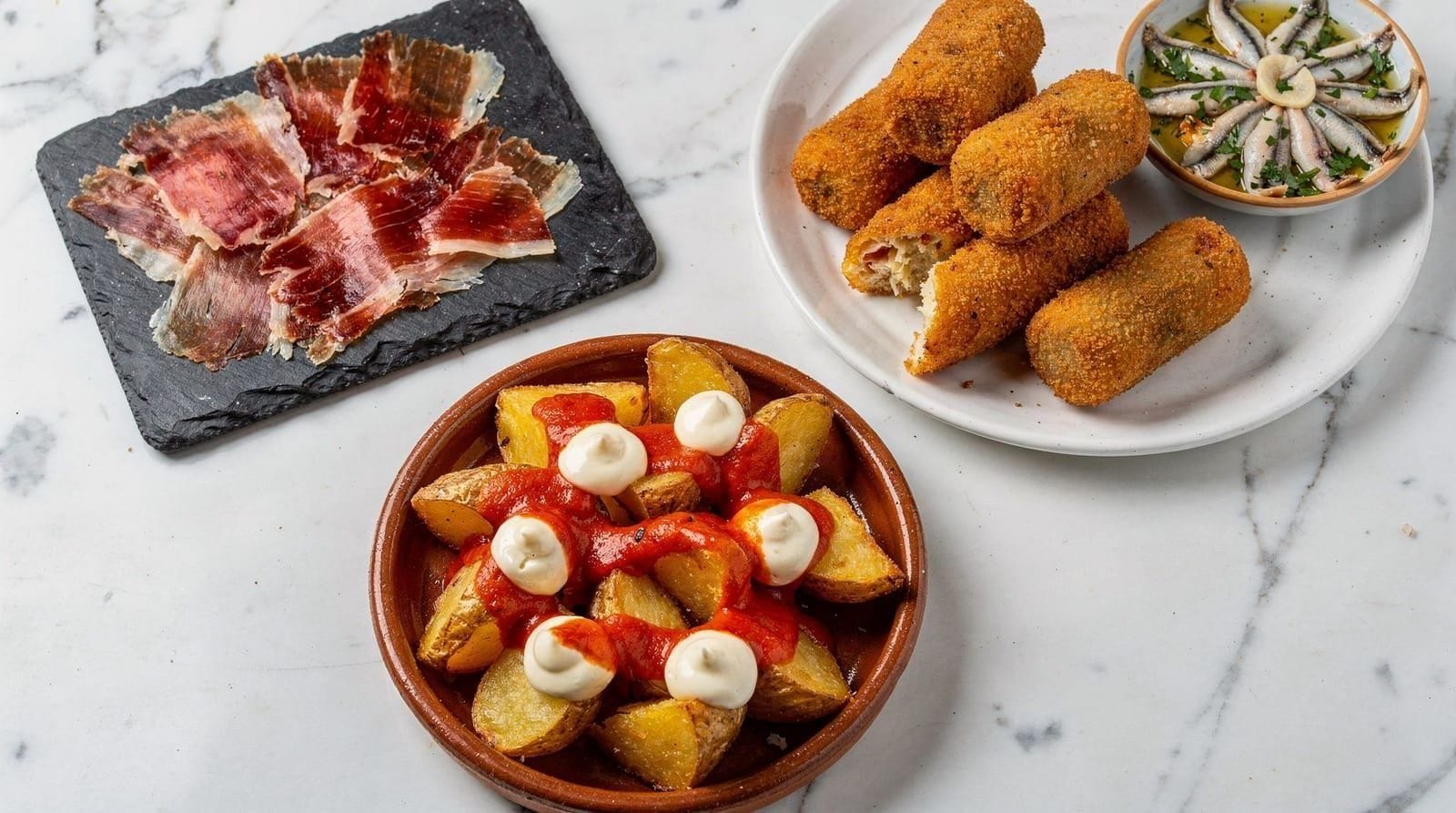
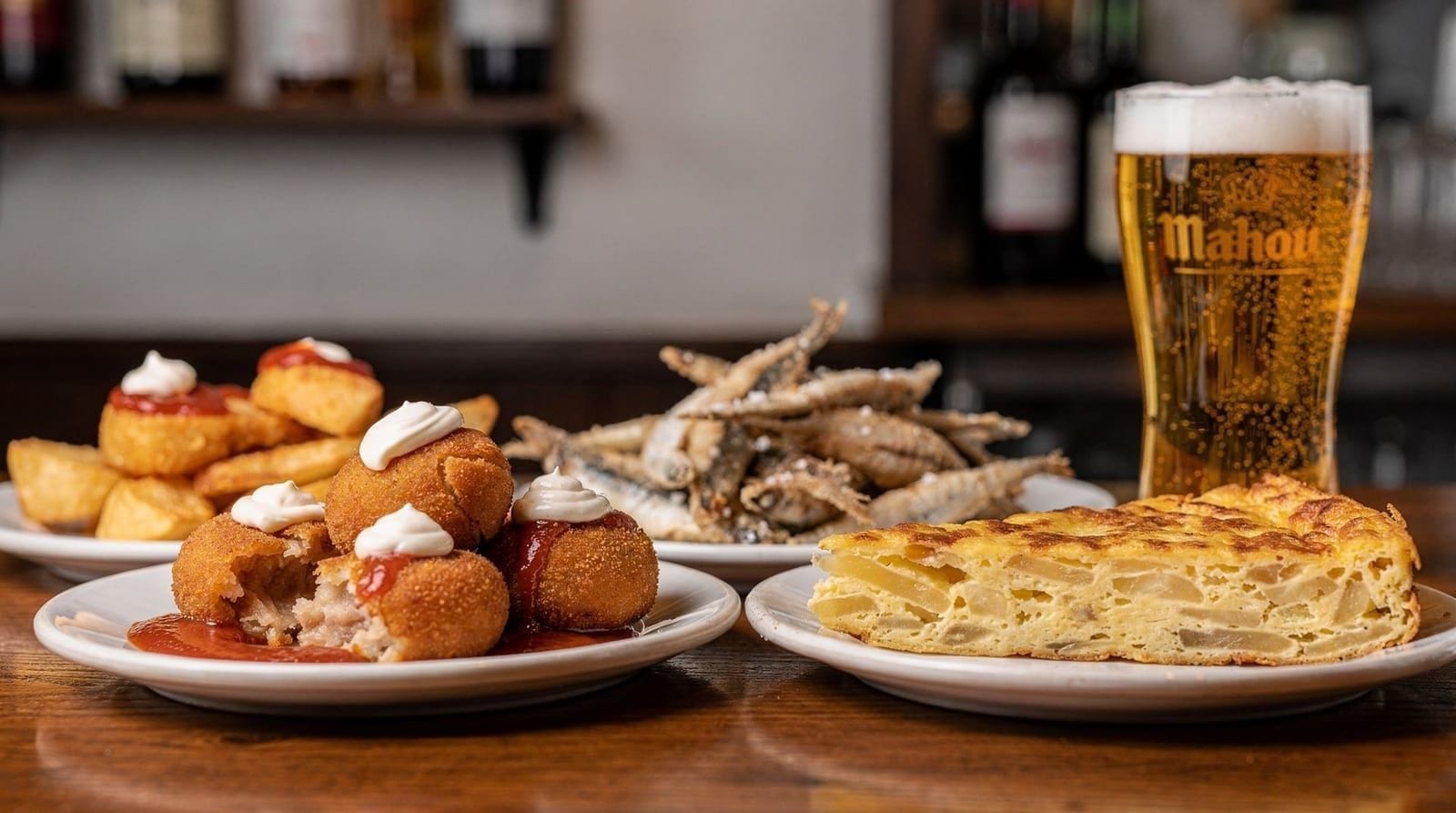
The benchmark dish you will find everywhere. Fried potato cubes with a spicy tomato sauce (bravas) and/or aioli. The quality varies enormously. Bad patatas bravas are soggy and drowning in bottled sauce. Good ones are crispy outside, fluffy inside, with a house-made bravas sauce that has actual heat. Docamar (Alcalá 337, near retiro) is often cited as Madrid’s best.
Croquetas de jamón
Ham croquettes — béchamel with jamón ibérico, breaded and deep-fried. When good, the inside is molten cream; when bad, they are dry rubber. Casa Labra (Calle Tetuán 12, near Sol) has been making them since 1860 and remains the reference. Also notable: the La Ancha croquetas and the house croquetas at Estado Puro (Prado Museum neighbourhood).
Jamón ibérico
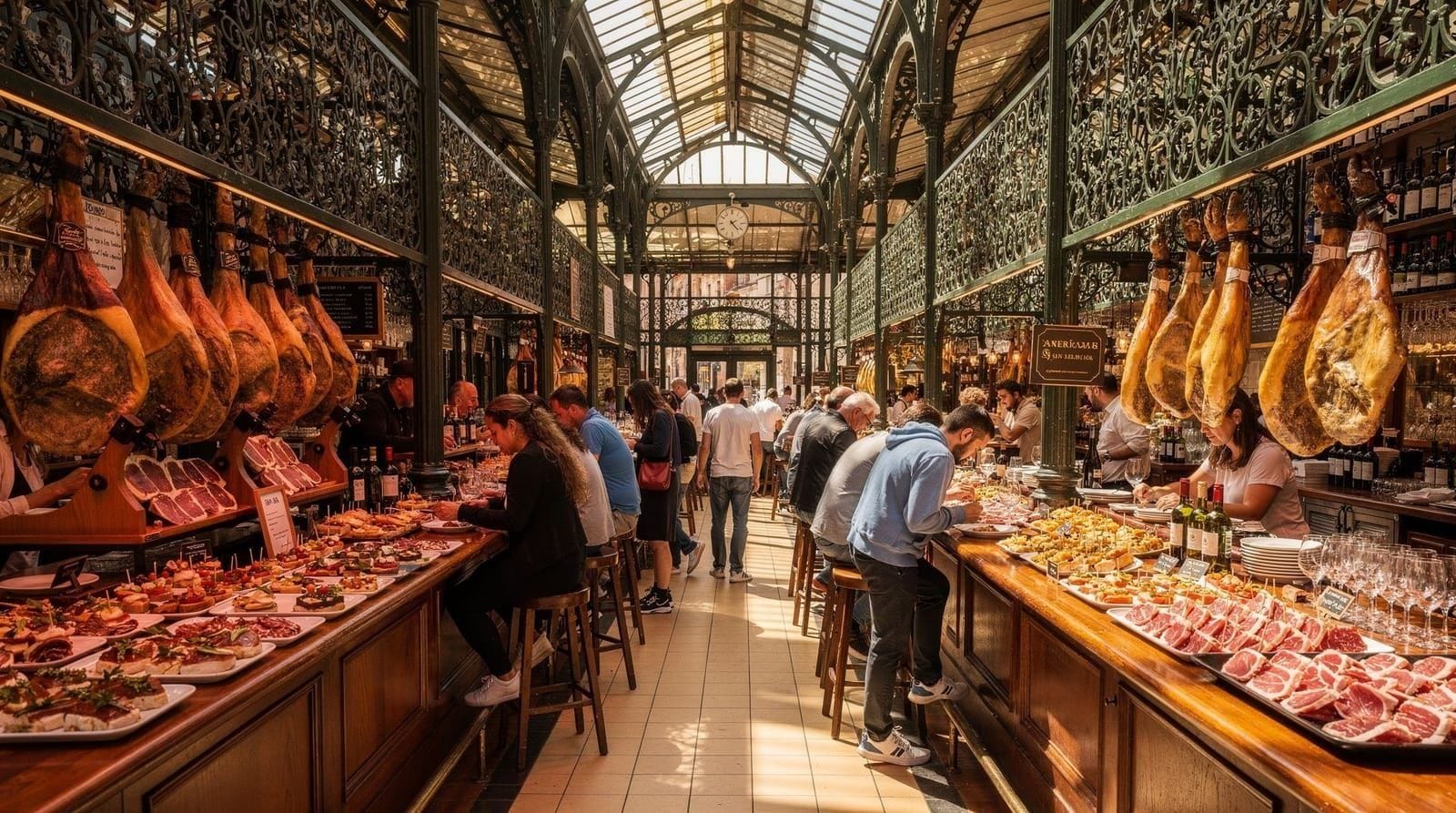
Spain’s finest ham — from acorn-fed ibérico pigs, aged 36+ months. Order it as a ración with bread. Price is a quality signal: genuine jamón ibérico de bellota starts at €12–15 for a small plate. If it is €6, it is not what the menu claims. Museo del Jamón is a reasonable budget option for a jamón bocadillo (sandwich). For the real thing, any Castilian deli or specialist bar.
Tortilla española
Potato and egg omelette, served warm or at room temperature, wet or firm in the centre (a matter of intense Spanish debate). Bar Nestor in San Sebastián is the national legend, but Madrid has its own: Juana la Loca (La Latina) makes an unusual version with caramelised onion; El Brillante (near Reina Sofía) does a solid traditional one.
Boquerones en vinagre
Fresh anchovies marinated in white vinegar and olive oil. Served cold, white-fleshed, with garlic and parsley. One of the most refreshing tapas in summer heat. Found in any decent Castilian bar.
Pimientos de padrón
Small green peppers from Galicia, blistered in olive oil and seasoned with sea salt. The famous rule: one in ten is spicy (the rest are mild). Seasonal but widely available. Good with cold beer.
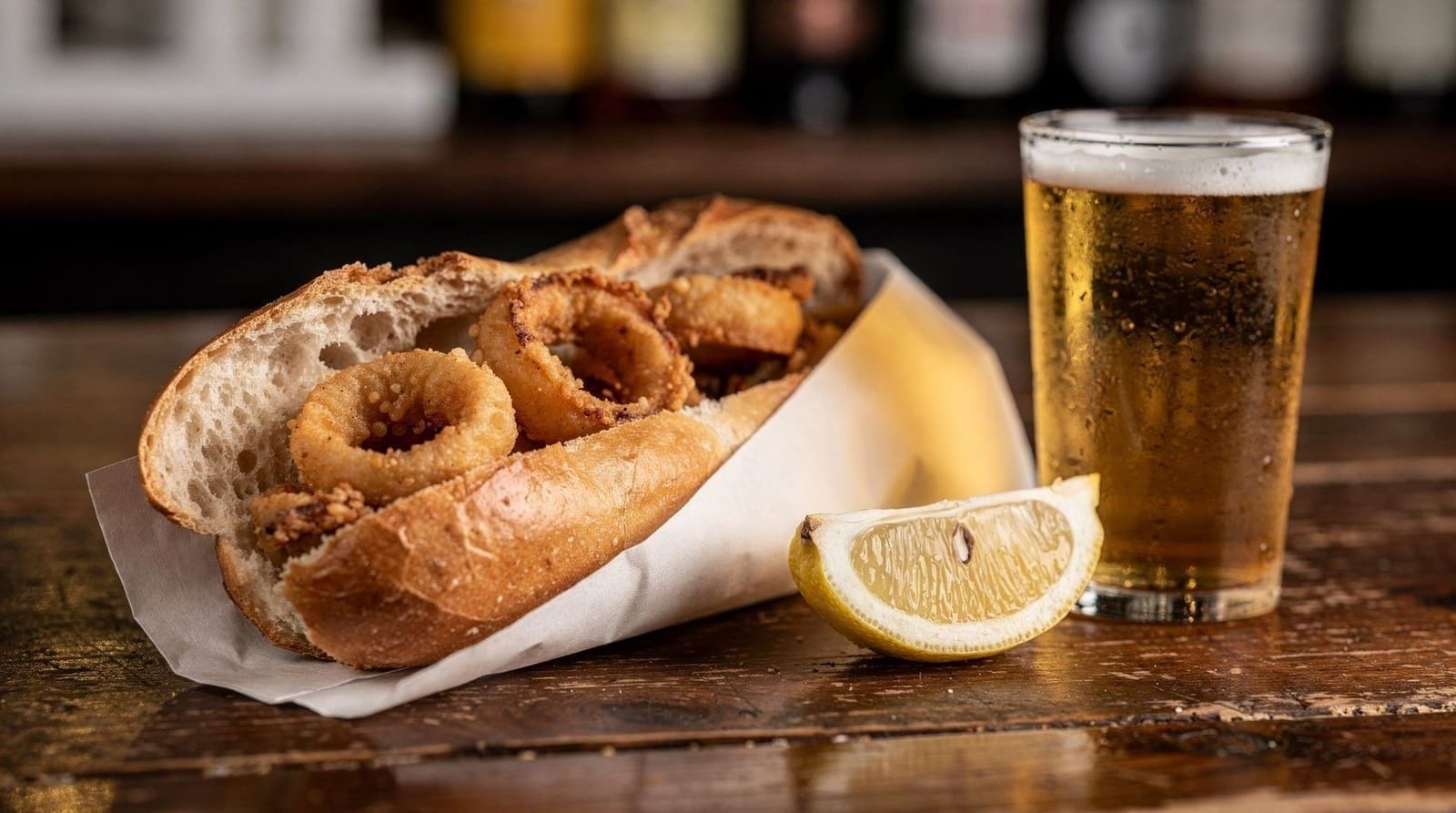
Bocadillo de calamares
Madrid’s own street food: deep-fried calamari rings in a crusty baguette. See the full guide to bocadillo de calamares.
A practical tapas crawl: La Latina on a Sunday
Sunday lunch after El Rastro is the best tapas experience in Madrid and requires zero planning. From 12:30 to 16:00, the area around Cava Baja becomes the city at its most social.
Suggested route:
- Start: Casa Revuelta (Calle de Latoneros 3) — a tiny, 100-year-old bar famous for fried bacalao (salt cod). Tiny plates, €2–3, standing only. Order bacalao and a beer.
- Bar 2: Almendro 13 (Calle del Almendro 13) — huevos rotos and raciones, good wine selection. More sit-down, popular. Expect a wait.
- Bar 3: El Tempranillo (Calle de la Cava Baja 38) — natural wines, rotating small plates. Less crowded than the main strip.
- Bar 4: Any bar on Calle Humilladero for the outdoor atmosphere.
Time the whole circuit for 13:00–15:30. Do not expect to sit until after 14:30 on Sunday; standing at the bar with a drink is the intended mode.
Guided food tours: are they worth it?
A guided tapas tour is useful on a first visit to Madrid if you want context — understanding what you’re eating, why it exists, how prices work, and which neighbourhood is which. A good guide will take you to bars you would not find alone and explain the cultural background. The food quality on a good tour is identical to what you would find independently — you are paying for curation and interpretation.
A bad food tour takes you to tourist-oriented bars that pay commission to the guide. The tell: if every bar is on a main commercial street and all the other customers look like tourists, something is off.
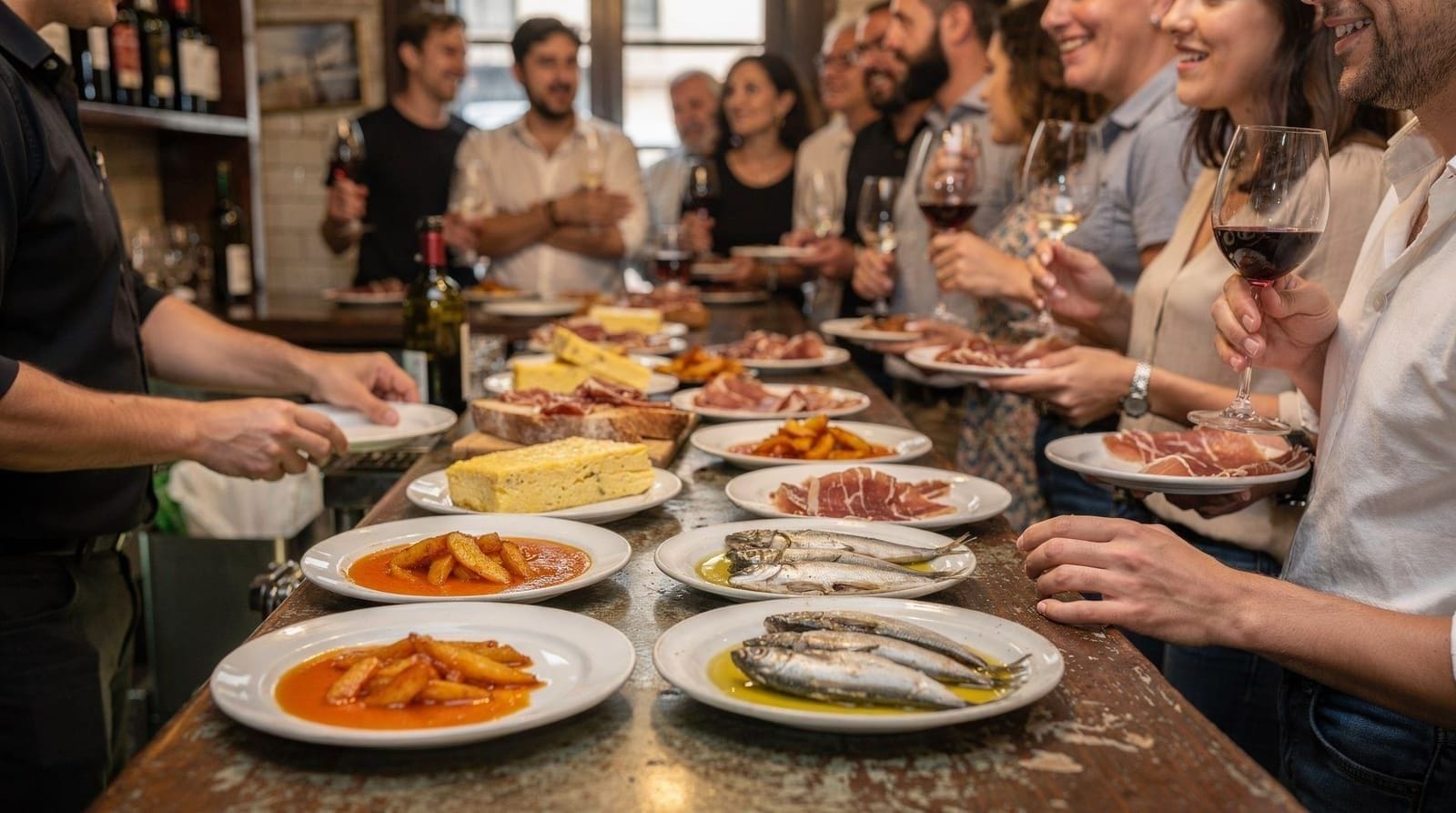
A tapas and Spanish wine food tour covers La Latina and central Madrid with a local guide who explains the culture alongside the eating.
A non-touristy tapas tour with 10 tapas and 4 drinks is explicit about avoiding the tourist circuit — the right approach.
Timing: the Spanish meal schedule
This is the single biggest adjustment for visitors from northern Europe or North America:
| Meal | Spanish time | Tourist trap time |
|---|---|---|
| Breakfast | 08:00–10:00 | Same |
| Lunch (main meal) | 14:00–16:00 | 12:00–13:30 |
| Aperitivo / vermut | 12:30–14:00 (Sunday especially) | N/A |
| Merienda (snack) | 17:00–19:00 | ”Tea time” |
| Dinner | 21:30–23:30 | 19:00–20:30 |
If you eat dinner at 19:30, you will be eating alone or with other confused tourists. Restaurants that open at 19:00 for dinner have their best dishes ready by 21:30 and their atmosphere from 22:00. Adjust or accept a worse experience.
Prices: what to expect
Pricing in Madrid is generally honest outside the tourist zones. A tapa at a local bar: €2.50–5. A ración: €8–15. A beer (caña, 250ml): €1.80–3. House wine (glass): €2.50–4. If you are paying more than this in a non-fancy neighbourhood bar, you have wandered into a tourist trap.
The expensive restaurants in Madrid — the ones with Michelin stars or celebrity chefs — are genuinely world-class and worth the splurge if that is what you want. See the Michelin Madrid guide for those. But the best everyday tapas are not expensive; they are just harder to find in the tourist-heavy areas.
Drinks to order alongside tapas
What you drink matters almost as much as what you eat, and getting it right marks you as someone who has done their homework.
Caña: The default order — a small (200–250ml) draft beer, served cold, meant to be drunk quickly while it’s fresh. Asking for a pint is a tourist tell; a caña is the local measure for a reason, and ordering several small ones over an evening beats one large warm one.
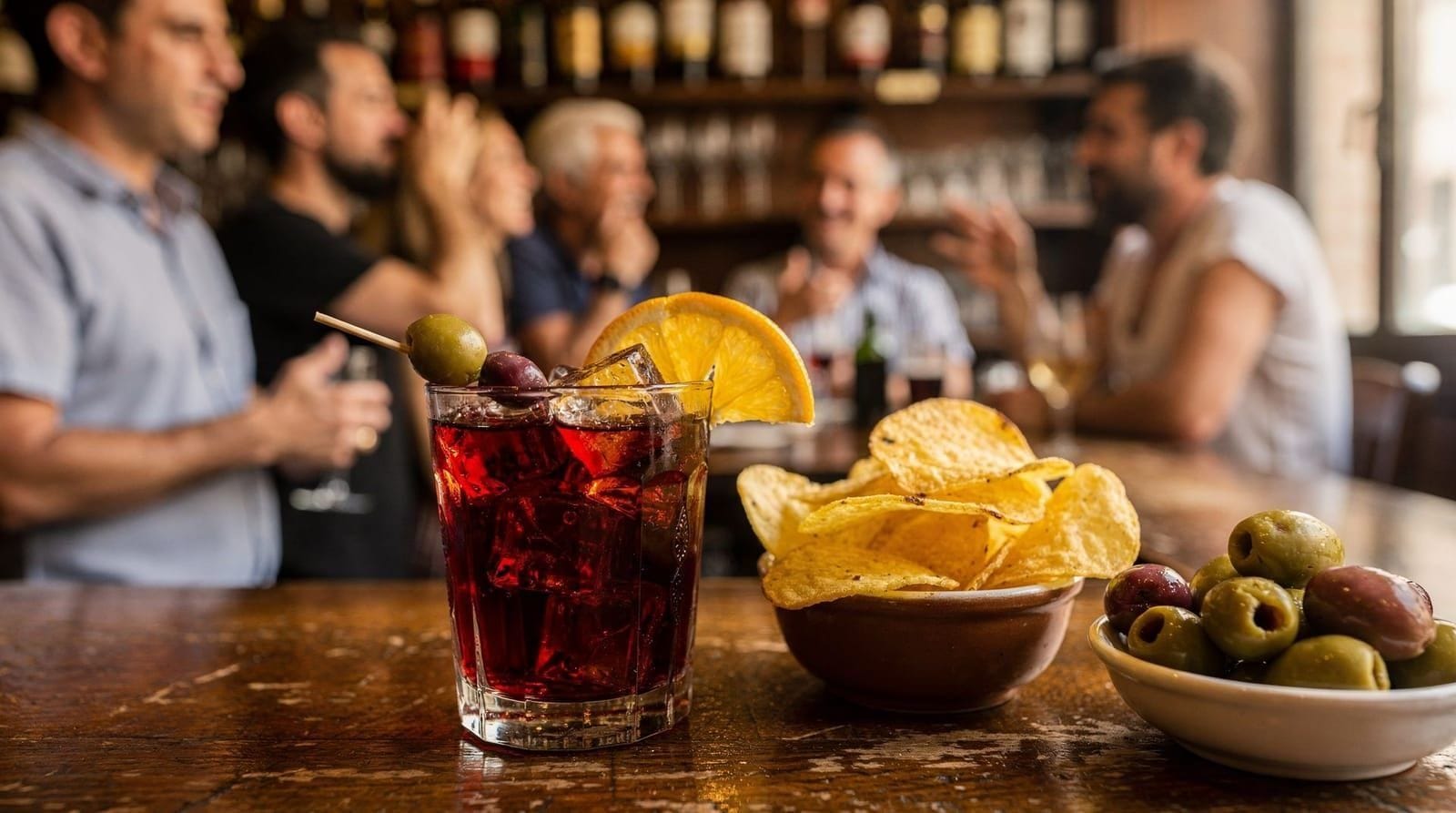
Vermut (vermouth): Particularly on Sunday around midday, vermut on tap or from the bottle, served with a slice of orange and an olive, is the aperitivo of choice before lunch. See the vermut in Madrid guide for where to find the best.
House wine (vino de la casa): A reliable, inexpensive glass of red or white at almost any bar, typically €2.50–4. Not sophisticated, but genuinely drinkable, and it’s what locals order without a second thought.
Tinto de verano: A lighter, more refreshing summer alternative to sangria — red wine mixed with lemon soda over ice. Sangria itself is more of a tourist-restaurant staple than a daily local order; tinto de verano is what you’ll actually see madrileños drinking on a hot afternoon.
Sample two-hour tapas crawl for a first evening
If you only have one evening to do this properly, a compact route beats trying to cover too much ground. Start around 20:30–21:00 (early by local standards but manageable for jet-lagged visitors) in La Latina: one bar for jamón and a caña, a second for croquetas and house wine, a third for patatas bravas. Two to three dishes and two drinks per bar is enough — the point is variety, not volume. If you have the stamina, finish with a late dessert or coffee in Barrio de las Letras on the walk back toward the centre. For a fuller framework on eating like a local across the whole trip, not just one evening, see eat like a local in Madrid.
Frequently asked questions about Madrid tapas guide
Is tapas free in Madrid?
No — unlike Granada or Salamanca, tapas in Madrid are almost never free. You pay for each dish. Some old-school bars include a small snack with drinks, but this is the exception, not the rule. Budget €2–5 per tapa, more in tourist areas.What time do madrileños eat tapas?
Tapas before lunch (13:00–14:30) and before dinner (20:00–22:00). Dinner itself starts at 21:30 at the earliest; 22:30 is normal. If you show up to a sit-down restaurant at 19:00, you will often be the only person there.What is the difference between tapas, pinchos, and raciones?
A tapa is a small single-serving dish. A pincho (or pintxo, Basque spelling) is typically a morsel on bread. A ración is a larger shared portion — essentially a full plate of one dish. A media ración is half a ración. Most bars do all three formats.What are the best tapas to order in Madrid?
Patatas bravas (fried potatoes with spicy sauce), croquetas de jamón (ham croquettes), jamón ibérico, tortilla española (potato omelette), boquerones en vinagre (anchovies in vinegar), and pimientos de padrón (small peppers, mostly mild). Casa Labra is the reference address for croquetas and bacalao.Which tapas bars should I avoid?
Any restaurant on the terrace of Plaza Mayor or immediately facing Puerta del Sol. These target tourists and charge €12–18 for dishes that cost €4–7 two streets away. The quality is generally poor. Walk two blocks in any direction and prices drop by half.How does a tapas crawl work?
The local model is the 'chiquiteo' or 'de tapas': you move from bar to bar, having one or two drinks and one or two dishes at each. One round per bar, tip is optional (rounding up is fine), move on. Three to five bars is a typical evening. Each bar tends to specialise — do not order everything at one place.Do I need to book for tapas bars in Madrid?
For a quick bar stand at the counter, no reservation needed. For sit-down meals at popular places like Juana la Loca or Casa Labra, it depends on the day — weekend lunches and evenings after 21:30 can be full. Walk-ins usually succeed at off-peak times.What is a montadito?
A montadito is a small open-faced sandwich — bread topped with ham, cheese, anchovy, or other ingredients. 100 Montaditos (a chain) popularised the format; local bar versions are far superior. Common bar snack alongside drinks.Is it rude to ask for the bill quickly in a tapas bar?
No, standing at the bar is normal and quick turnover is expected there — pay as you go, per round. At a sit-down table, though, rushing is unusual; Spanish service deliberately does not hurry you, and asking for la cuenta is the signal that you are ready, not a hint you were expected to give earlier.Can vegetarians eat well on a Madrid tapas crawl?
Yes, with some planning. Pimientos de padrón, tortilla española, patatas bravas, boquerones are the exception (fish), grilled vegetables, and cheese boards are widely available. Jamón and seafood dominate menus, so vegetarians should scan the board before sitting rather than assume every bar has options — some smaller, ham-focused bars genuinely don't.
Top experiences
Bookable activities with verified prices and instant confirmation on GetYourGuide.