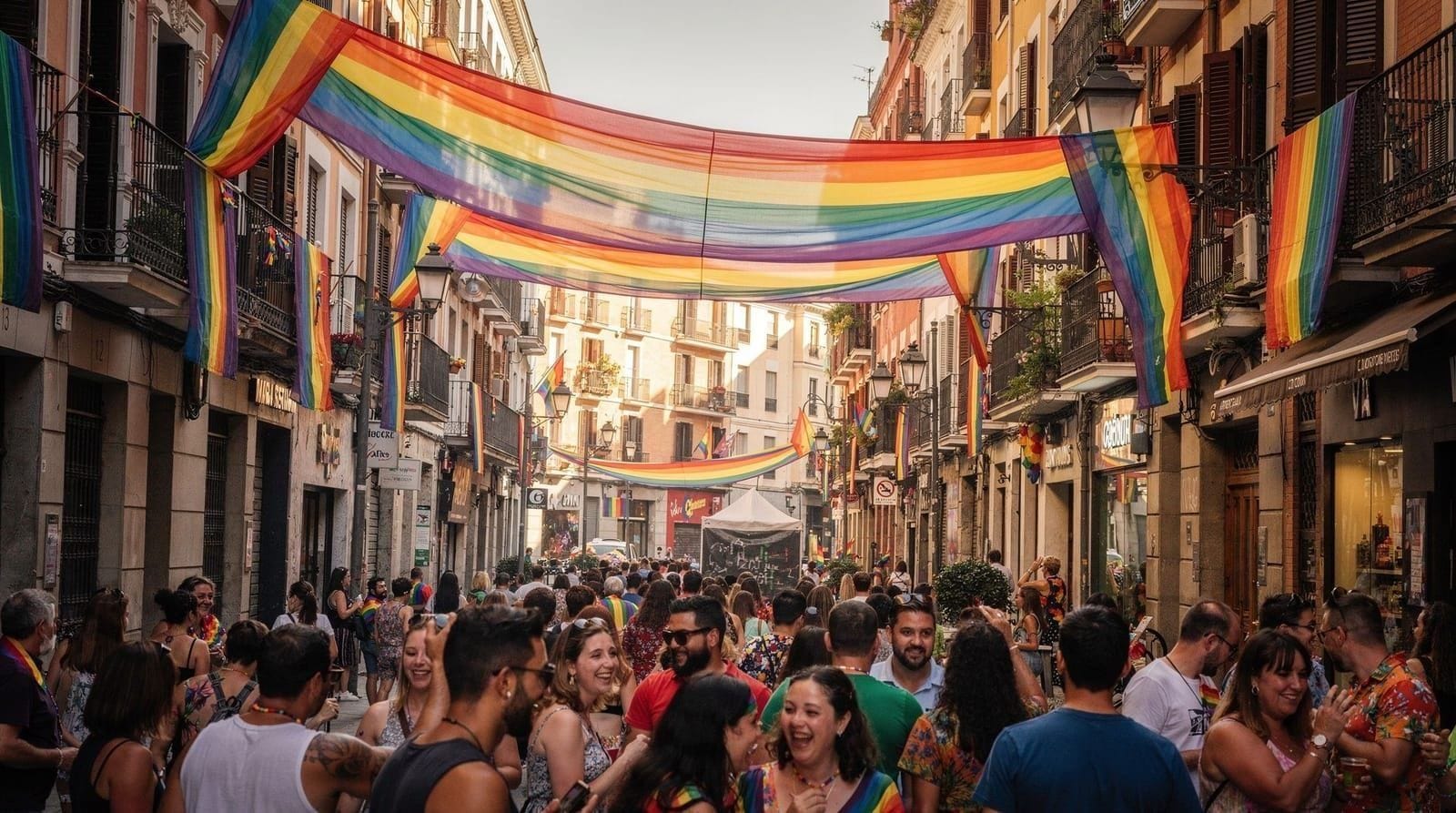
Chueca
Chueca is Madrid's LGBTQ+ neighbourhood and one of the city's most vibrant quarters — great restaurants, boutique shopping, the biggest Pride in Europe.
Madrid: Sunset Walking Optional Flamenco
Quick facts
- Metro
- Chueca (L5), Gran Vía (L5), Alonso Martínez (L4/5/10)
- Character
- LGBTQ+ hub, design, gastronomy, vibrant nightlife
- Pride (Orgullo)
- Late June–early July — one of Europe's largest
- Key square
- Plaza de Chueca — the neighbourhood's living room
- Best for
- Restaurants, boutique shopping, Pride, friendly atmosphere
Chueca was not always what it is now. In the 1970s it was a run-down neighbourhood with a reputation for drug use and crime. The transformation began in the 1980s as LGBTQ+ residents moved in and began opening bars, restaurants, and shops — partly because the rents were low and partly because the neighbourhood’s marginality from mainstream Madrid offered a kind of freedom that the post-Franco city was still learning to exercise.
By the mid-1990s Chueca had become the most visible LGBTQ+ district in Spain, and its transformation was often cited by urban planners and sociologists as a case study in how a marginalised community can revitalise a declining neighbourhood. The neighbourhood today is considerably more expensive and polished than its origins, but it has retained both its character and its function. Madrid Pride (Orgullo), centred on Chueca, draws an estimated 1.5–2 million people to the streets and is one of the three largest Pride celebrations in the world.
| Where | Central Madrid, between Gran Vía and Alonso Martínez |
| Getting there | Metro Chueca (L5), Gran Vía (L5) |
| Pride dates | Late June–early July, book months ahead |
| Time needed | Half a day for eating/shopping; evening for bars |
| Best for | Restaurants, boutique shopping, inclusive nightlife |
For a fuller walkthrough of the streets, the Chueca neighbourhood guide goes block by block, and the Madrid city overview shows where the quarter sits in the wider map. If you are still deciding where to base yourself, best area for first-time visitors and where to stay in Madrid compare Chueca with the alternatives.
Plaza de Chueca and the neighbourhood’s anatomy
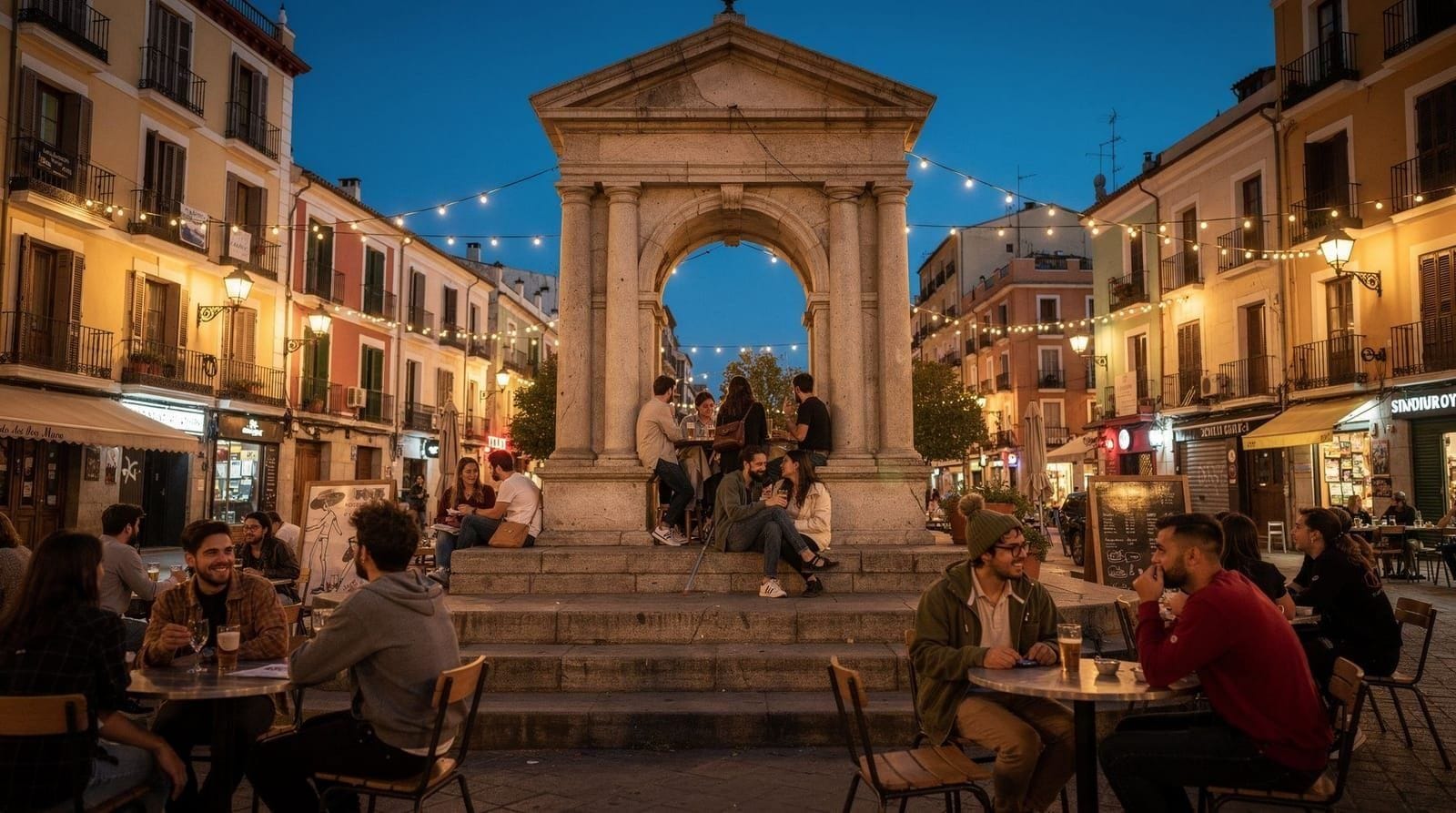
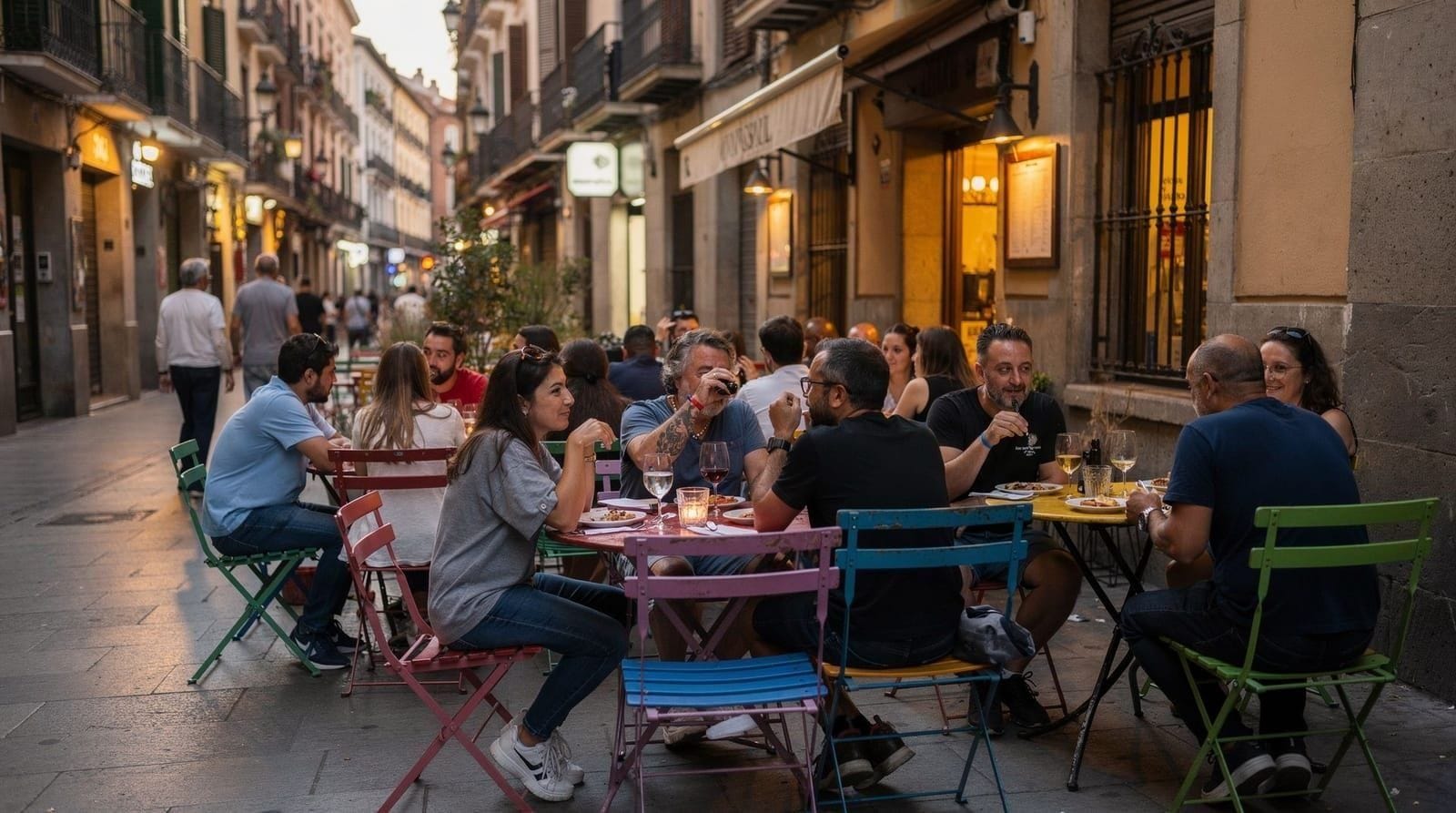
The neighbourhood’s centre is Plaza de Chueca — a small, terrace-ringed square that functions as an informal living room for the neighbourhood and a gathering point for visitors. On a warm evening, every table is occupied, the streets around it are busy, and the atmosphere is the kind of relaxed urban vitality that city planners spend careers trying to engineer. There is nothing spectacular about the square architecturally — it is modest in scale, the buildings around it are ordinary — but it works because of the people using it.
The character of Chueca spreads in several directions from the square: north toward Alonso Martínez (the restaurant zone becomes more formal and more expensive), west toward Fuencarral (the boundary with Malasaña — the two neighbourhoods are functionally adjacent and their characters bleed into each other on this street), south toward Gran Vía, and east toward Barrio de las Letras.
Calle Hortaleza is the neighbourhood’s main commercial artery — boutiques, design shops, bars and restaurants, the Librería Berkana LGBTQ+ bookshop. The character shifts gradually from the commercial-tourist toward the local-residential as you walk north from Gran Vía toward Alonso Martínez.
Calle del Almirante and Calle de Piamonte have the best concentration of design and homeware shops — smaller, more specialist, more curated than the Fuencarral/Gran Vía commercial strip.
Each neighbour has its own personality, and walking between them is part of the pleasure. Malasaña to the west is more indie and vintage-minded, Sol and Gran Vía to the south are the big-name tourist corridor, and the Barrio de las Letras to the east is literary and quieter. Chueca sits comfortably between all three, which is why it works so well as a connecting stop rather than an isolated one.
Restaurants and food
Chueca has a density of genuinely good restaurants that is arguably the highest in central Madrid outside Barrio de Salamanca. The combination of a resident population that cares about eating well, proximity to the theatre and design world, and a tradition of neighbourhood investment in food has raised standards across the area.
Bazaar (Calle de la Libertad 21): the most consistently recommended mid-range restaurant in the neighbourhood — a creative Mediterranean-influenced menu, excellent menú del día at lunch (~€12–€15), and a dinner menu in the €20–€30 per person range that represents genuine value for the quality. Very popular; arrive early or reserve. The design of the space (high ceilings, communal tables, open kitchen) is typical of the Chueca aesthetic.
La Carmencita (Calle de la Libertad 16): the oldest tavern in Madrid under current continuous operation, documented from 1854. The interior has been kept largely intact — dark wood, tiled walls, brass fittings — and the cooking is traditional Castilian updated with slightly lighter contemporary technique. The cocido on Thursdays is the house set piece (€22–€25 per person). Mid-range prices, genuine historical atmosphere.
Lateral (Calle Fuentes 3 and multiple locations): a reliable modern tapas restaurant chain that does consistently good work — good wines by the glass, creative montaditos (small open sandwiches), and a menu designed for grazing rather than formal courses. Good pre-cinema or pre-theatre option in the area.
El Cisne Azul (Calle de Gravina 19): a neighbourhood restaurant with an excellent menú del día and a loyal local clientele. One of the places where the Chueca neighbourhood-eating culture is visible at its most functional.
Mercado de San Antón (Calle Augusto Figueroa 24): a three-floor market with a food hall on the ground floor and a rooftop terrace bar. Significantly less tourist-facing than Mercado de San Miguel near Plaza Mayor, with better value and a more genuinely local customer base. The seafood bar on the first floor is particularly good.
Nina (Calle de Manuela Malasaña 10, just across the Malasaña boundary): consistently recommended for its southern Spanish-influenced cooking — excellent fried fish, good charcuterie, reasonable prices. Worth the brief walk out of Chueca proper.
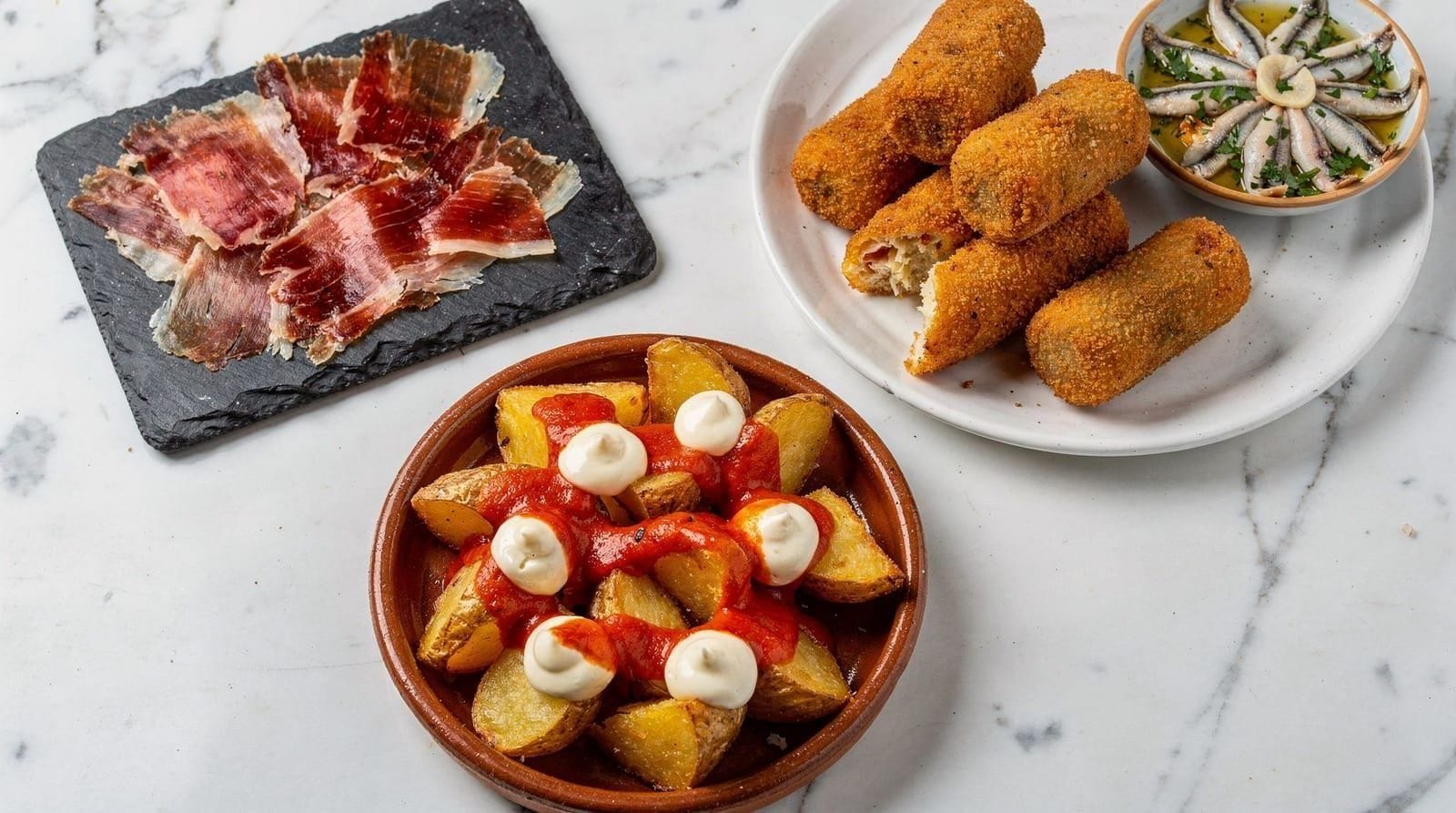
Madrid tapas and wine tasting tour with local guide — Chueca areaIf you would rather plan your own grazing route, the Madrid tapas guide and the list of best tapas bars explain how to order and what to look for. Travellers who want to avoid overpriced menus should read about tourist menu traps before choosing a table on a busy square, and the eat like a local guide covers rhythm and etiquette. Chueca is also a natural stop on the Madrid for foodies itinerary.
Shopping
Chueca’s shopping character is more design-oriented than Malasaña’s vintage focus, tilting toward homeware, concept fashion, and the kind of small boutiques that exist because designers choose to open them here rather than in the mall.
Calle del Almirante: the street with the most coherent design-boutique cluster in the neighbourhood. Several homeware and design shops, mid-range fashion, a couple of gallery spaces. Worth walking in its entirety even without specific shopping intent.
Calle de Piamonte: similar character, slightly more gallery-oriented. Some of Madrid’s better independent art dealers are on this street.
Librería Berkana (Calle de Hortaleza 62): one of the oldest LGBTQ+ bookshops in Spain, with an English-language section that covers LGBTQ+ fiction, travel, non-fiction, and theory. A genuine cultural institution in the neighbourhood; the staff are knowledgeable and the window displays are worth stopping for.
Mercado de Fuencarral (Calle Fuencarral 45): a converted 19th-century market building housing independent fashion stalls — local designers, sustainable brands, the occasional vintage vendor. More interesting than the average mall because the selection is curated rather than corporate. Entry is free; the stalls are open 11:00–21:00 most days.
Calle Fuencarral (the stretch north of Gran Vía): the main commercial street marking the Chueca/Malasaña boundary, now dominated by mid-range international fashion (Monki, Cheap Monday, local Spanish brands) interspersed with occasional independents. More interesting for casual browsing than serious shopping.
Bars and nightlife
Chueca’s bar and club scene operates on Madrid time — starting late and ending at dawn. The neighbourhood has a concentration of LGBTQ+-oriented bars alongside general-market establishments; the distinction matters considerably less than visitors from more socially segregated cities might expect. Most Chueca bars welcome everyone and the atmosphere is generally inclusive.
Diurno (Calle de San Marcos 37): a café-bar that shifts registers across the day — brunch in the morning, aperitivo in the afternoon, cocktails at night. One of the neighbourhood’s most versatile options and reliably good at all three functions.
Café Figueroa (Calle Augusto Figueroa 17): a classic gay bar with high ceilings, vintage chandeliers, and a mostly-male local crowd. Open since 1980, the bar has been through several of the neighbourhood’s transformations and has a character shaped by accumulated history.
El Rincón de Pelayo (near Plaza de Chueca): a neighbourhood wine bar operating at a genuine level of care — good regional Spanish wines, proper food, and a crowd that is there for the wine rather than the scene.
Lola (Calle de Pelayo 12): a classic bar that has been part of the Chueca fabric for decades, known for good cañas and a mixed crowd that represents the neighbourhood’s genuine diversity rather than its tourist-facing version.
For late-night clubs, the Chueca/Malasaña boundary has several venues that run until 05:00–06:00 on Friday and Saturday nights, including Acapulco, Heaven, and several that change their character and names across seasons — ask locally for current recommendations.
Madrid sunset walking tour with optional flamenco experienceFor the wider picture beyond this neighbourhood, the Madrid nightlife guide and Madrid at night place Chueca alongside other districts, while late-night Madrid is useful for planning how to get home. If you would like a view with your drink, the rooftop bars guide is the next stop, and Malasaña bars cover the venues just across the boundary.
Madrid Pride (Orgullo)
The annual Pride festival runs in late June/early July — precise dates shift year to year, approximately the last weekend of June and first days of July — with events concentrated in Chueca and extending across the city. It is one of the three largest Pride events in the world by attendance, drawing an estimated 1.5–2 million people.
The parade (Saturday): the main march follows the Paseo del Prado route and lasts several hours. The scale — the street full of people as far as can be seen in either direction — is impressive even for visitors who are not participants. The parade is political as well as celebratory; speeches and contingents representing specific rights campaigns are a regular feature.
The week before: concerts in the streets of Chueca, club events, a large outdoor stage in the neighbourhood, political panels and cultural events. The neighbourhood is consistently packed from Thursday evening through Sunday.
The Stonewall history in Spanish context: Spain was one of the first countries in the world to legalise same-sex marriage (July 2005) under the Zapatero government — ahead of most of Europe and well ahead of the United States. The Madrid Pride event has since grown to be partly a celebration of this legal and social achievement and partly a platform for continuing advocacy (equal rights in employment, adoption rights, trans rights). The political dimension makes it a more substantive event than some commercial Pride events elsewhere.
Planning for Pride: book accommodation 3–4 months in advance if you plan to visit during Pride week. Prices increase significantly (often 2–3x the normal rate) and the best properties fill early. Public transport runs extended hours but with very high loads during the parade. The Chueca and Sol metro stations are effectively impassable at peak times — walk rather than rely on the metro on parade day.
Vermouth culture in Chueca
Vermouth drinking (vermuteo) is a specifically Spanish weekend ritual — the hour between 13:00 and 15:00 on a Saturday or Sunday when a glass of house vermouth, a few olives, and a tapa provide the bridge between morning and the late lunch. Chueca has several establishments that take vermut seriously:
Bar Cock (Calle de la Reina 16): a historic cocktail bar with a 1930s aesthetic. Not strictly a vermouth bar but known for its interpretation of classic aperitivos and the quality of its bar programme.
Taberna La Confianza (Calle de Fuencarral 47): neighbourhood vermouth bar with good cañas and the specific atmospheric of a place that has been doing the same thing reliably for years.
Cervecería Santa Bárbara (Plaza de Santa Bárbara 8, at the Alonso Martínez end): a landmark tapas bar that has been on this square since 1925. Known for its shellfish — gambas (prawns), percebes (barnacles), navajas (razor clams) — at prices above the tapas-bar average but justified by the quality. Good draught beer and a lively atmosphere even on weekday evenings.
The vermouth in Madrid guide explains the tradition in more depth, and the Madrid wine bars guide is a good companion for those who prefer a glass of wine to a vermut.
The vermouth ritual in Chueca is best experienced on a Saturday from 13:00 — the square at Plaza de Chueca fills with people doing exactly this, which is one of the most genuinely Madrileño moments available to a visitor in the neighbourhood.
Chueca for design and architecture
The neighbourhood has a specific relationship with contemporary Spanish design — several of the country’s most recognised furniture, textile, and product designers have studios or showrooms in the streets around Calle del Almirante and Calle de Piamonte. This gives the neighbourhood’s shopping a different quality from the high-street fashion of Gran Vía or the vintage focus of Malasaña: here the emphasis is on contemporary Spanish design at a professional level.
The Fundación MAPFRE exhibition spaces are nearby (not in Chueca proper but in the Barrio de las Letras area, easily walkable) and frequently show high-quality photography and visual arts exhibitions. Free admission on certain days.
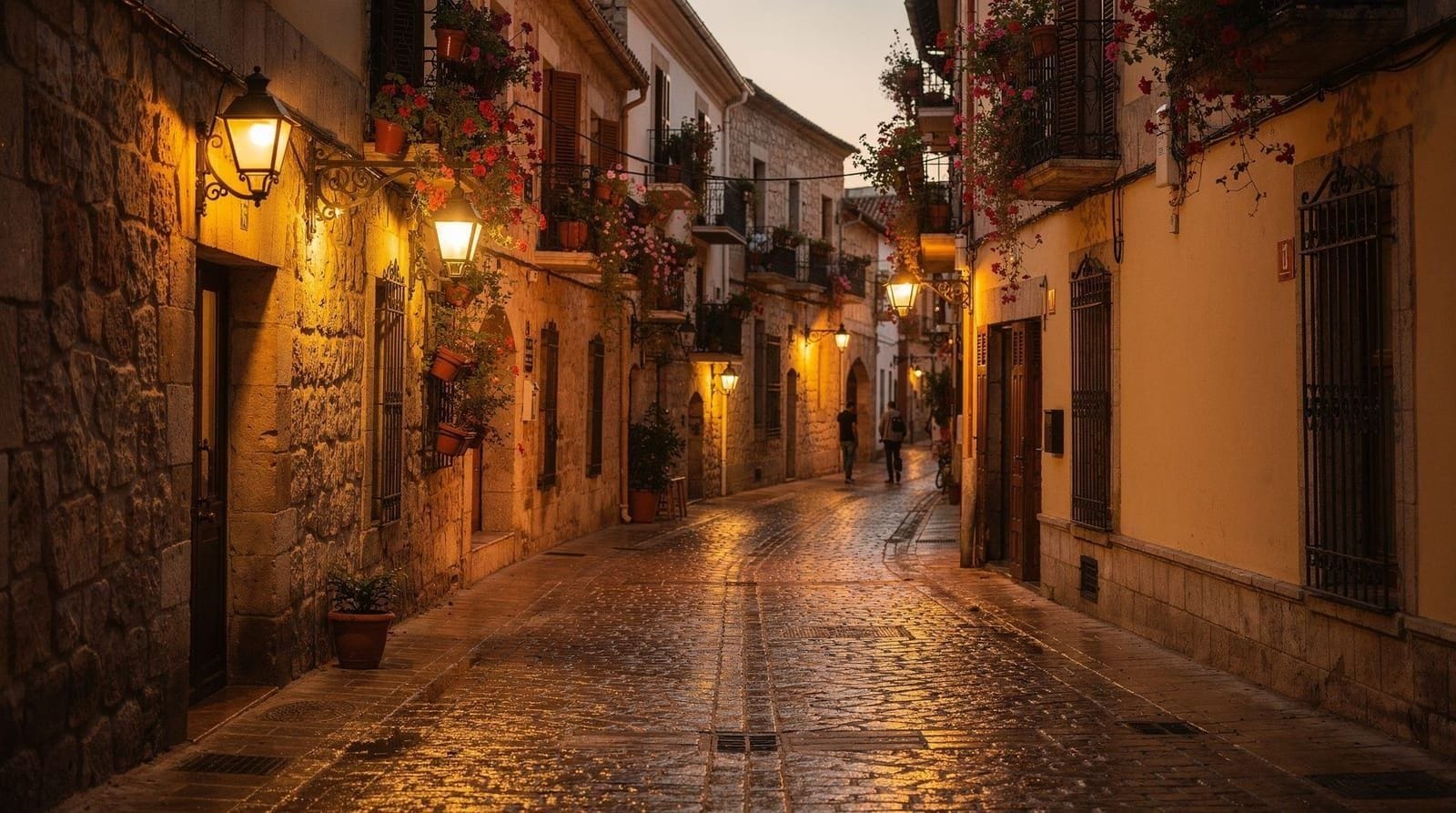
The neighbourhood architecture itself — late 19th-century apartment buildings that were run-down in the 1970s and have since been gradually restored — gives Chueca a more ornate streetscape than Malasaña’s simpler buildings. The ironwork balconies, the tiled building facades (azulejos), and the carved stone details on corner buildings are worth pausing for on the side streets away from the main commercial axes.
The neighbourhood for non-LGBTQ+ visitors
Chueca is a neighbourhood rather than an exclusively LGBTQ+ district, and non-LGBTQ+ visitors have excellent reasons to spend time here. The restaurants are among the best in central Madrid at mid-range prices. The shopping has a more interesting character than the tourist-facing Gran Vía. The bar culture is inclusive and generally good-natured. The neighbourhood’s relative lack of tourist density (compared to Sol, Plaza Mayor, and Gran Vía) makes the experience more pleasant on a basic logistical level.
Madrid private tour: hidden gems and local neighbourhoods with a guideGetting to Chueca
Metro: Chueca (Line 5) is the most direct station, placing you at the edge of Plaza de Chueca immediately. Gran Vía (Line 5) for the southern boundary. Alonso Martínez (Lines 4/5/10) for the northern restaurants and the quieter end of the neighbourhood.
On foot: 15 minutes from Sol (via Gran Vía or Calle Alcalá), 5 minutes from Gran Vía metro station, 5 minutes from Malasaña (they share the Fuencarral boundary).
For help with tickets and lines across the city, see the Madrid metro guide. If you are combining Chueca with other central sights, the Gran Vía guide and the Puerta del Sol guide are both an easy walk away, and the first weekend itinerary shows one way to fit Chueca into a short stay.
Chueca throughout the year
Chueca’s character shifts noticeably across the calendar — worth knowing before you plan a visit around a specific priority:
| Period | What to expect | Notes |
|---|---|---|
| Late June–early July | Pride week, packed streets, elevated prices | Book accommodation 3–4 months ahead |
| Summer (Jul–Aug) | Quieter, some closures | Locals leave for the coast; terraces stay lively evenings |
| Autumn–Spring (Sep–May) | Full restaurant and bar scene | Best time for a calm, representative visit |
| Weekday evenings | Restaurants without queues | Bazaar and La Carmencita fill fast on weekends |
For visitors who specifically want the Pride atmosphere, late June/early July is unmissable but requires the most advance planning and the highest budget. For a calmer, more typical experience of the neighbourhood’s food and shopping, any weekday outside summer works well. The Madrid at Christmas guide and Madrid in summer guide cover how Chueca fits into those specific seasonal visits.
Frequently asked questions about Chueca
Is Chueca good for non-LGBTQ+ visitors?
Yes — it is a neighbourhood rather than exclusively an LGBTQ+ district. The restaurants, bars, and shops are open to everyone. Non-LGBTQ+ visitors who want good food and an interesting neighbourhood without tourist saturation will find Chueca one of the better options in central Madrid.
When is Madrid Pride and how should I plan for it?
Late June to early July each year (precise dates change). The Saturday parade is the centrepiece; the Chueca street market and concerts run through the week. Book accommodation 3–4 months ahead; prices increase significantly during Pride week.
What are the best restaurants in Chueca?
Bazaar (Calle de la Libertad 21) for consistent quality at mid-range prices. La Carmencita (Calle de la Libertad 16) for historic atmosphere and traditional cooking. Mercado de San Antón for a casual option with good produce.
How does Chueca compare to Malasaña?
They share a boundary and overlap in character. Chueca is more polished, more restaurant-focused, with a stronger LGBTQ+ identity and more design-oriented shopping. Malasaña is slightly rougher, more indie in character, with better specialty coffee and a stronger vinyl/vintage scene. Both are worth visiting on any trip to Madrid.
Is there a gay neighbourhood beyond Chueca in Madrid?
Chueca is the primary concentration, but LGBTQ+-owned and welcoming businesses are distributed across the city — particularly in Malasaña, Lavapiés, and Barrio de las Letras. The gay Madrid guide covers the full picture.
Is Chueca expensive compared to other central neighbourhoods?
Mid-range overall — restaurants and bars are generally priced similarly to Malasaña and Barrio de las Letras, noticeably below Barrio de Salamanca’s fine-dining tier. Accommodation prices rise sharply during Pride week specifically; outside that period, Chueca is comparable to other central neighbourhoods.
What should first-time visitors to Chueca prioritise?
A walk along Calle Hortaleza and Calle del Almirante for the shopping character, lunch or dinner at Bazaar or La Carmencita, and — if timing allows — a Saturday vermouth stop at Plaza de Chueca. That combination covers the neighbourhood’s food, shopping, and social identity in half a day.
Top experiences
Bookable activities with verified prices and instant confirmation on GetYourGuide.