Madrid in summer: heat, festivals, and what actually works in July–August
Madrid: Old Town Walking Tour
Is Madrid worth visiting in summer and how hot does it get?
Madrid in July–August averages 33–38°C by day with nights cooling to 20–22°C — uncomfortable in midday sun but manageable with the right schedule. The city is partially emptied by Madrileños on holiday (locals leave, tourists arrive), attractions are quieter in early morning, and prices for accommodation remain lower than Barcelona or Lisbon in summer. The key is restructuring your day: museums 10:00–14:00, long lunch + siesta, evening from 19:00 onwards.
| Day temp | 33–38°C (July–August) |
| Night temp | 19–22°C |
| Prices | Lower than Barcelona/Lisbon in summer |
| Best schedule | Sightsee 09:00–13:30, rest, resume 17:00+ |
| Best day trip | Sierra de Guadarrama (10–15°C cooler) |
What Madrid summer actually feels like
Summer in Madrid is a test of scheduling. The city sits on the Castilian Plateau at 650 metres, and from mid-June through to mid-September, a high-pressure system parks itself over the meseta and the temperature climbs in a way that beach cities with their sea breezes never quite match.
July averages 34–36°C at peak, with heat waves — now an almost annual occurrence — pushing that to 40–42°C for days at a stretch. The key difference from coastal heat: humidity is low (typically 20–30% in summer). The sun feels extremely sharp and intense but sweat evaporates immediately. Shade is dramatically cooler than direct sun, which means Madrid’s covered arcades, the interior of its museums, and its tree-lined boulevards are genuinely refreshing rather than just slightly less brutal.
The upside: nights cool to 19–22°C. Evenings in Madrid in summer are among the best urban experiences in Europe — the population moves outside from 19:00 and stays there until 01:00 or later.
Month by month: June, July, August
June: the sweet spot
June is often the best summer month in Madrid. The school year ends mid-June; Madrileños have not yet departed en masse; temperatures run 28–32°C with evening lows of 17–19°C. June is when the rooftop bars open their terraces and the summer cultural programme begins in earnest.
Madrid Pride (LGBTQ+): The first week of July (sometimes overlapping into late June depending on the calendar) brings Europe’s largest Pride event, centred on Chueca and Gran Vía. The parade is Saturday afternoon — hundreds of thousands of participants — and the week-long festival fills the surrounding streets with events, concerts, and outdoor bars. Hotel prices spike significantly that week; book 3–4 months ahead if your visit overlaps.
Practical advantage of June: The museum free hours still work without the extreme July queues. The Prado’s 18:00 free window in mid-June has shorter queues than in July.
July: peak heat, peak events
July is the hottest month and also the most eventful:
Veranos de la Villa: Madrid’s summer cultural programme runs July and August. Free concerts, outdoor theatre, cinema, and dance performances across the city’s public spaces. The programme is published in late May on the Madrid city government website. Events at Conde Duque cultural centre, the Jardines Sabatini (behind the Royal Palace), and various district centres.
San Isidro extended season: While the main San Isidro festival is in May, several summer corridas (bullfights) at Las Ventas continue into July. For those interested, Las Ventas evening corridas at 19:00 avoid the worst afternoon heat.
Day trip strategy in July: Go to Segovia rather than Toledo. Segovia at altitude runs 5–8°C cooler than Toledo’s valley oven. Take the 08:30 AVE and return by 14:00.
August: the empty city
August is paradoxical. Tourist arrivals are high but local Madrid empties out. The restaurants that locals actually use — not the tourist-trap Plaza Mayor zone but the neighbourhood places in Chamberí, Malasaña, Lavapiés — may be closed for 2–4 weeks.
What stays open: all major attractions, the commercial centre (El Corte Inglés, Gran Vía shops), the touristy food halls, and everything oriented towards visitors rather than residents. What you lose: the authentic daily life texture of the city, which is one of Madrid’s strongest cards.
La Paloma festival (15 August): La Latina neighbourhood celebrates the Assumption of the Virgin with one of Madrid’s most atmospheric barrio festivals — free street concerts, traditional verbena dancing, local processions. Go in the evening from 20:00. The streets around Calle de Toledo and Plaza de la Cebada become a living room for the neighbourhood.
A guided old-town walking tour explores the Habsburg quarter including La Latina — most sensible in early morning or evening during summer.
The summer schedule that actually works
Ignoring this schedule is the main tourist mistake in July–August:
| Time | Activity |
|---|---|
| 08:00–09:00 | Breakfast at a local bar (croissant + café con leche, standing, €2.50–3) |
| 09:00–13:30 | Museums, major monuments — Prado, Royal Palace, Reina Sofía are open and manageable |
| 13:30–17:00 | Long lunch + rest; siesta is not a myth, it is the rational response to 38°C |
| 17:00–19:00 | Second wind: Retiro park in the shade, neighbourhood exploration |
| 19:00–22:00 | Peak evening: rooftop bars, tapas circuit, markets |
| 22:00–00:00 | Dinner (local restaurants start filling at 21:30) |
| 00:00+ | Optional: Madrid nightlife in Malasaña, Huertas, or Chueca |
The fatal mistake: Trying to do all sightseeing between 10:00 and 17:00 as if it were spring. Forty minutes in direct sun walking between the Prado and the Royal Palace in July is a significant dehydration risk. Use taxis or metro for inter-attraction transit.
Summer at Madrid’s parks and green spaces
Retiro park
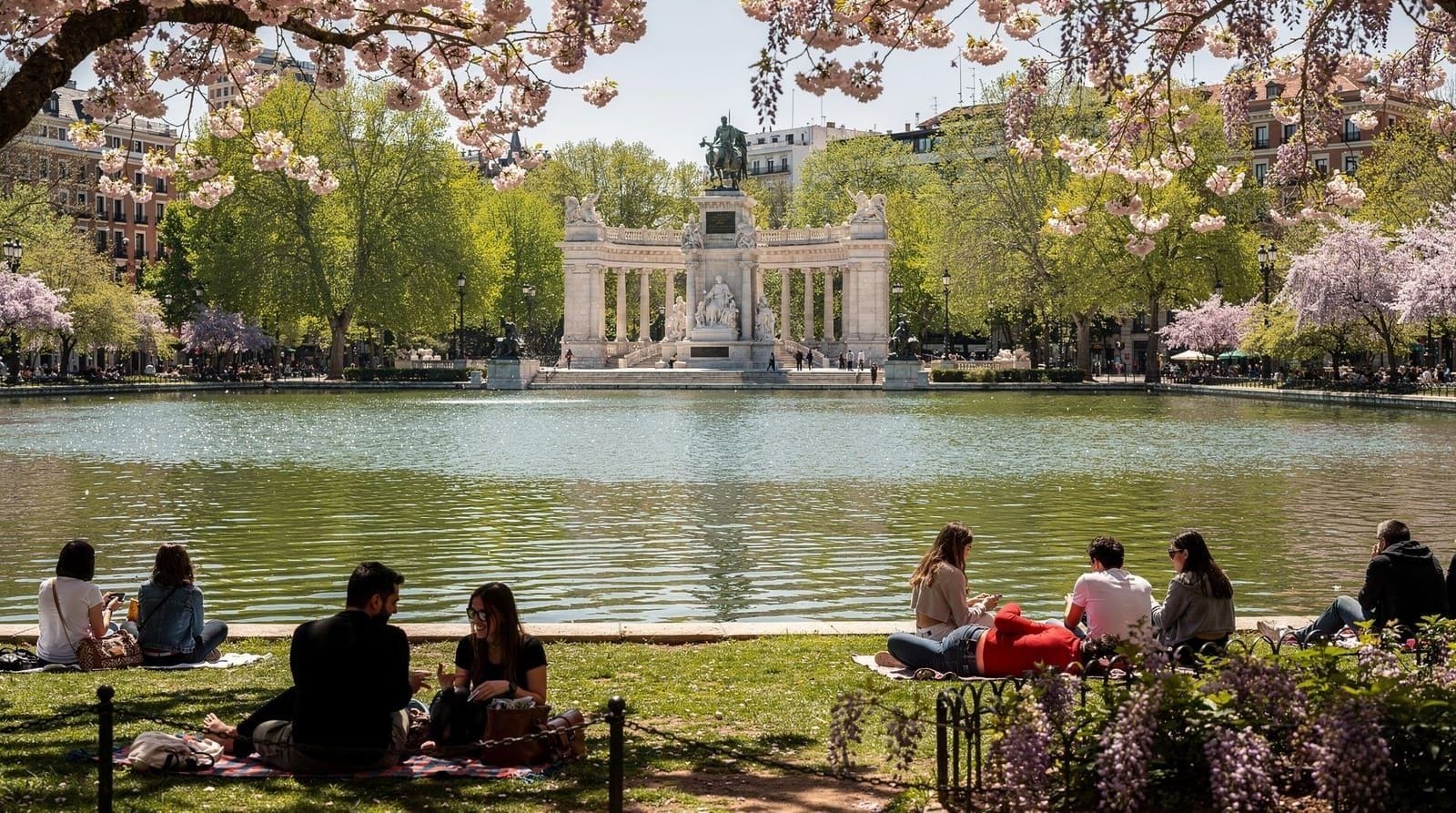
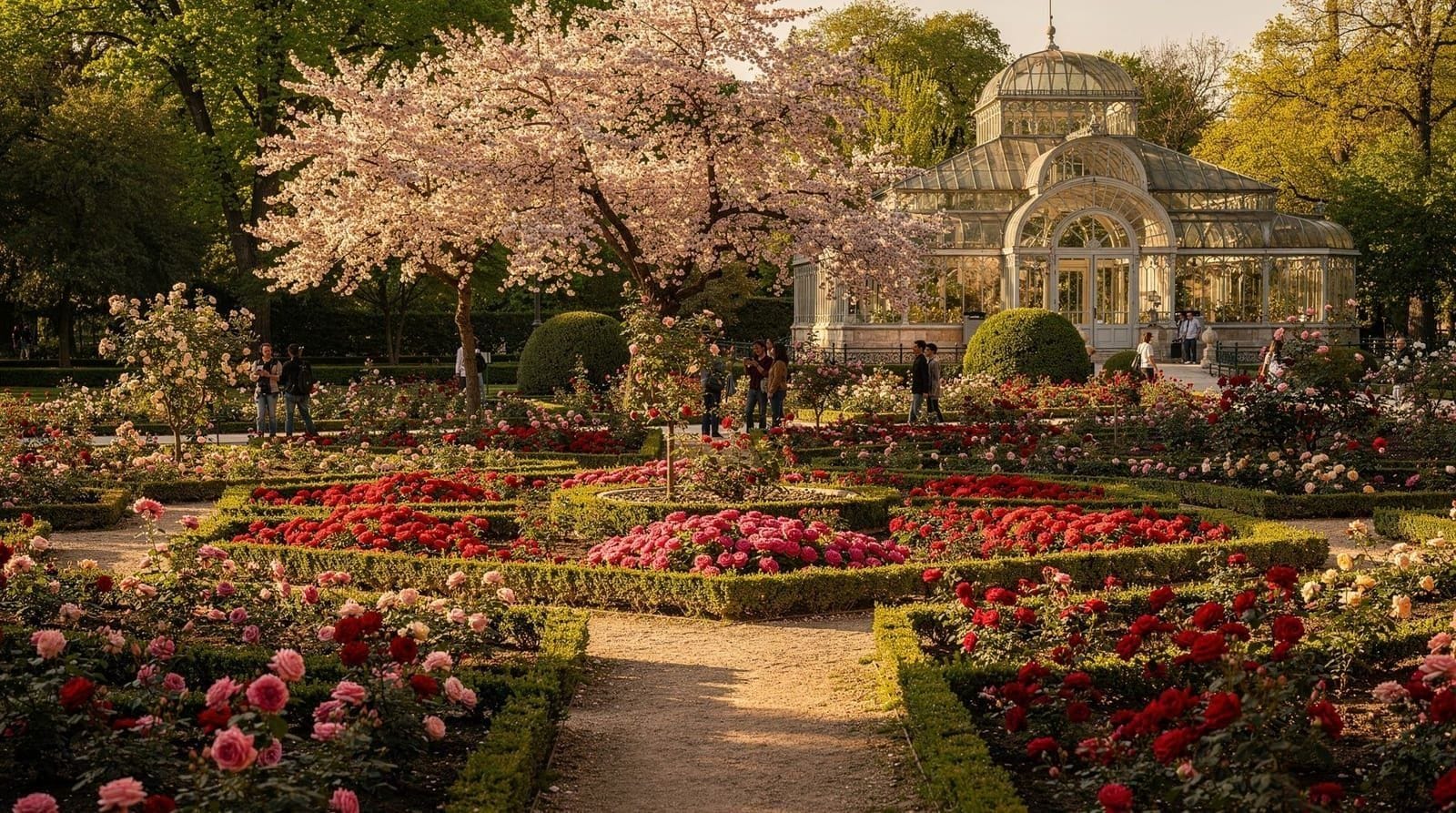
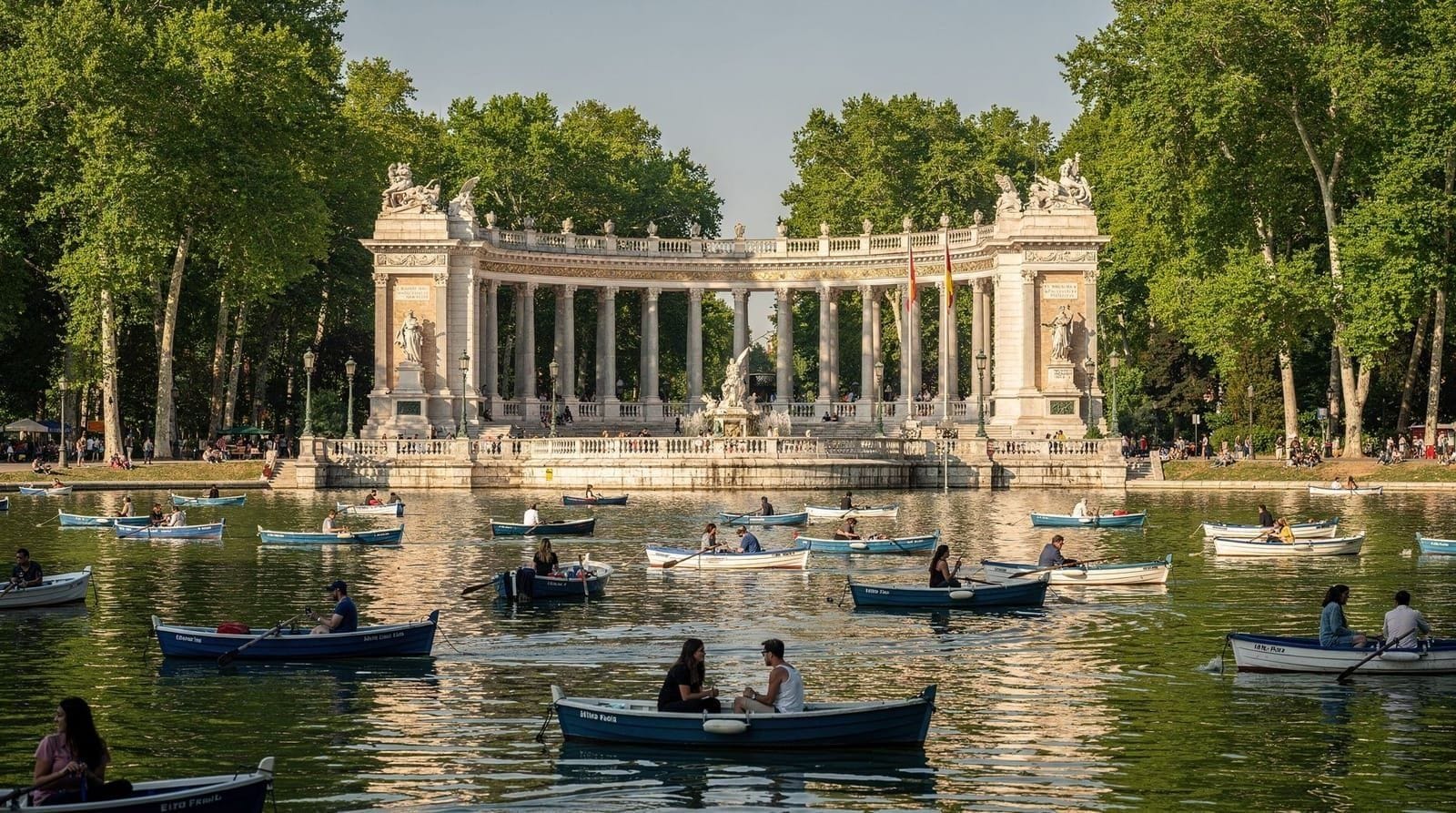
The Retiro’s 120 hectares of mature trees create genuine shade. In summer, the park becomes a social space from 08:00 (joggers, families, chess players) through to 22:00. The rowing lake is open for boat hire (€6/45 min). The Palacio de Cristal hosts free art exhibitions (air conditioned). The Rose Garden (Rosaleda) peaks in May but remains attractive through June.
Avoid 12:00–17:00 in the open areas around the lake — heat is extreme. The wooded areas in the southern half (Bosque del Retiro) stay 5–8°C cooler under the canopy.
Casa de Campo
Madrid’s largest park — 1,740 hectares, west of the river — has a swimming pool complex (Piscinas de la Casa de Campo) that is genuinely popular with locals in summer: €6 entry, large outdoor pools, surrounding pine forest. Less known to tourists than the Retiro. Take the metro to Lago station (the Teleférico de Madrid cable car from Rosales is closed for a full overhaul, with reopening planned for the first quarter of 2027 per EMT Madrid; check before planning around it).
Madrid Río
The riverside park along the Manzanares has splash zones (zona de baños) open in summer, free to use. On summer evenings from 19:00, the Madrid Río promenade fills with cyclists, skaters, and families. The area under the Toledo and Segovia bridges provides shade and breeze.
An e-bike city tour covers Madrid Río and the parks in the cooler morning hours.
Rooftop bars and summer terraces: what’s worth it
Madrid’s rooftop scene is legitimate. Several terraces have genuine views of the Sierra and the city’s skyline:
Círculo de Bellas Artes (Calle de Alcalá 42): The most architecturally interesting rooftop — a 1920s cultural centre with a circular terrace. Entry fee to rooftop (€6, €5 reduced). Views across the Gran Vía roofline and south to the Prado hill. Drinks are mid-range (€8–12); the view justifies it.
Terraza del URSO Hotel (Calle de Mejía Lequerica 8): Open to non-guests in summer, small but excellent. Chamberí neighbourhood, slightly off the tourist circuit.
Penthouse Terraza del ME Madrid (Plaza de Santa Ana): Most view guides recommend this. Accessible to non-guests for drinks. Views excellent, prices high (€14–18 per drink). The crowd is international tourist-hotel rather than local.
The rooftop bars guide has the full rundown of locations, opening hours, and honest pricing.
Summer day trips: what works, what doesn’t
Works in summer:
- Sierra de Guadarrama — pine forests, hiking at 1,800m, temperature 10–15°C cooler than Madrid. Cercedilla via Cercanías C-8a (45 min, €3.50).
- Aranjuez — the royal gardens are beautiful but the town is hot (similar elevation to Madrid). Go early: 09:00 arrival, back by 13:30. Cercanías C-3 (45 min).
- Segovia — cathedral, Alcázar, the Roman aqueduct. Go early: 08:30 bus or AVE, back by 14:00 to avoid peak heat.
Doesn’t work well in summer:
- Toledo — a stone city in a valley with no ventilation. Regularly records 40–44°C in July–August. Day trips possible only with very early departure (07:00–08:00) and return before noon.
- Ávila — the walls look beautiful but the exposed medieval city bakes in summer. Better in spring or autumn.
Practical summer information
Water: Madrid tap water is safe, clean, and tastes better than many bottled waters. The city has public drinking fountains in most parks and squares. Bring a refillable bottle — buying 500ml bottles at tourist-area kiosks (€2–3 each) is expensive and wasteful.
Air conditioning: All major hotels, museums, and restaurants are well air-conditioned. Be aware that stepping from 40°C outdoors into 20°C air conditioning repeatedly is hard on the body — some visitors find a moderate setting (24–25°C) easier to adapt to.
Crowds at attractions: The Prado, Reina Sofía, and Royal Palace all experience summer peak crowds, but Madrid’s museum infrastructure handles volume well. Book tickets online for the Royal Palace and Prado (morning sessions) to avoid same-day queue overhead.
Dress codes: No specific summer dress codes for sightseeing. Some churches require covering shoulders and knees (carry a scarf). The Royal Palace interior is cool enough to warrant a light layer.
Planning your days around the heat
The easiest way to enjoy a hot week is to give each part of the day one job. Mornings are for the big indoor sights: the Prado, the Reina Sofía or the Royal Palace are cool inside and far more pleasant before the sun gets high. If you want a single plan to hang the rest on, the Golden Triangle art walk fits neatly into a summer morning, and the Thyssen makes a good air-conditioned fallback when the day heats up faster than expected.
Afternoons are for doing very little. Eat a long lunch in a place with real shade or good air conditioning, then go back to your room. This is not laziness: it is how the city itself works in July, and the people who fight it are the ones you see sitting on kerbs looking exhausted. If you are travelling with children, the same logic applies, and the Madrid with kids guide and the rainy day ideas double as useful lists of indoor options when the sun is the problem rather than the rain.
Evenings are when you get your reward. Walk through Sol and the old centre once the light softens, watch the sunset from Temple of Debod, and let the night run late. For something more structured, a night-time guide to Madrid shows how the city shifts gear once the heat breaks, and the summer rooftop pools are worth a look if you want to cool off with a view.
Eating well when it is hot
Heavy winter dishes are not what most people want in the middle of summer, and Madrid has plenty of lighter options. Share plates at a bar, follow the tapas guide, and finish with a cold drink on a terrace. A vermut hour before lunch is a very local way to ease into the day without eating too much too early. If you want help finding places that are not tourist traps, the eat like a local guide is a sensible starting point, and the mercados guide lists covered markets that are comfortable places to graze out of the sun.
A few habits that make a difference
- Plan your longest walks for the first hours of the morning and the last hours of the evening, never for the middle of the day.
- Choose accommodation with working air conditioning and, if possible, a quiet room, since the city stays lively late at night.
- Keep a lightweight scarf or layer in your bag for cold interiors.
- Take the metro between distant sights rather than walking across open squares; the metro guide explains how to move around without stress.
- Be generous with yourself on timing: a slower summer itinerary almost always feels better than a packed one. If you need ideas for how many days to give the city, see how many days in Madrid.
Summer month by month at a glance
| Month | Day temp | Crowds locally | Events | Best day trip |
|---|---|---|---|---|
| June | 28–32°C | High (locals still around) | Pride week, terraces open | Sierra de Guadarrama or Segovia |
| July | 34–36°C, up to 40–42°C | High tourists, mixed locals | Veranos de la Villa | Sierra de Guadarrama |
| August | Similar to July, marginally cooler | High tourists, low locals | La Paloma (15 Aug) | Sierra de Guadarrama |
For the cooler seasons that bookend summer, see Madrid in spring and Madrid in autumn; for a wider seasonal comparison, the best time to visit guide covers the full year.
Frequently asked questions about Madrid in summer
How hot is Madrid in July and August?
July is typically the hottest month: average highs of 34–36°C, with peaks reaching 40–42°C during heat waves (which occur most years in recent decades). August is marginally cooler. Nights in summer fall to 19–22°C — warm but sleepable with air conditioning. Humidity is low (Madrid is at 650m altitude on the Castilian Plateau), which makes the heat more bearable than coastal cities but the sun is extremely intense between 12:00 and 17:00.What is open and closed in August in Madrid?
Most tourist attractions (Prado, Reina Sofía, Royal Palace, Thyssen) remain open all summer with standard hours. Some smaller restaurants and local businesses close for 2–4 weeks in August — this is most noticeable in residential neighborhoods like Chamberí. The food hall in Mercado de San Miguel stays open. Neighbourhood bars favoured by locals may be closed. Large commercial areas (Gran Vía shops, Salamanca district boutiques, El Corte Inglés) all operate normally.What festivals happen in Madrid in summer?
Key events: Veranos de la Villa (July–August, free outdoor cultural events across the city including concerts, theatre, cinema); Festival de Ópera en vivo at Teatro Real terrace (June–July); La Paloma Festival (15 August, La Latina neighborhood, one of Madrid's oldest barrio fiestas, free street events); Pride (LGBTQ+ Madrid Pride is Europe's largest, first week of July, centred on Chueca). The Rastro flea market operates Sundays through summer as usual.Are summer evenings in Madrid enjoyable?
Yes — summer evenings are Madrid at its most vibrant. From 19:00 the temperature drops to 28–30°C, the terraces fill, and the city follows its late Spanish schedule (dinner 21:00–23:00, nightlife extending to 03:00–05:00). The Retiro park stays open until 22:00 in summer and draws thousands of families. Temple of Debod at sunset (21:00–22:00) is spectacular. The rooftop bars of Gran Vía and Salamanca come into their own between June and September.Is summer a good time to do day trips from Madrid?
Selective. Toledo in July–August is genuinely brutal — the city sits in a valley with no sea breeze and consistently reaches 38–42°C. Morning departures (AVE 08:30, be back by 13:00) are necessary. Segovia is more bearable — higher altitude, slightly cooler. Sierra de Guadarrama (Cercedilla, Navacerrada) is the best summer day trip: cool pine forests at 1,800m, hiking, and easy access by Cercanías train.Where do Madrileños go in summer and what does that mean for tourists?
Most Madrileños leave for the coast (Valencia, Málaga, Galicia) or home regions during August. This creates an unusual effect: tourist attractions are busy, but local Madrid — the neighbourhood restaurants, the botillodromo, the residential terraces — is almost empty. As a tourist, you benefit from emptier museums and more relaxed service at mid-range restaurants; you lose access to the authentic daily life that makes Madrid compelling the rest of the year.What should I wear and bring for a Madrid summer visit?
Lightweight natural fabrics (linen, cotton); sun hat; SPF 50 sunscreen (the sun at 650m altitude is significantly stronger than at sea level); good sunglasses; a small reusable water bottle (Madrid tap water is excellent quality). Avoid dark clothing. Carry a small day bag that sits in front of you on metro — Sol station is a pickpocket hotspot year-round, worse in summer crowds. A light cardigan for over-air-conditioned museums and restaurants.Is Madrid too hot to visit in July and August?
Not if you restructure your day around the heat rather than fighting it: mornings for sightseeing, a long lunch and rest in the worst hours (13:30–17:00), and evenings for the parts of the city that come alive after dark. Visitors who try to sightsee on a normal 10:00–18:00 schedule genuinely struggle. With the siesta-shaped schedule, July–August is manageable and has real advantages — lower accommodation prices than Barcelona or Lisbon, and a lively evening culture.What's the single best summer day-trip alternative to a hot city?
The Sierra de Guadarrama, specifically Cercedilla or Navacerrada, reached by Cercanías C-8a in about 45 minutes. At around 1,800m altitude, temperatures run 10–15°C cooler than central Madrid, with pine forest hiking trails and none of the valley-oven effect that makes Toledo brutal in July and August.