Best time to visit Madrid: honest month-by-month breakdown for 2026
Segovia: Segovia Toledo Full Day
What is the best time to visit Madrid?
April–May and September–October are the optimal windows: comfortable 18–25°C temperatures, full cultural programming, outdoor terraces at their best, and the San Isidro festival in May. July and August are viable but demand heat management strategies — avoid midday, lean heavily on museums and air conditioning.
Direct answer: Spring (April–May) and autumn (September–October) are when Madrid is best. Summer works but requires heat management. Winter is cheapest and best for museum-focused visits.
| Best months | April–May and September–October |
| Hottest months | July–August, regularly 30–38°C |
| Cheapest months | January–February, hotel rates roughly 30–40% below peak |
| Big festival | San Isidro, around 15 May, book accommodation months ahead |
| Worth avoiding | Booking central hotels last-minute during San Isidro or Orgullo |
Madrid’s climate: the 650-metre factor
Madrid sits on a high plateau at 650 metres above sea level — higher than most European capitals. This creates a distinctly continental climate: hot, dry summers with intense sun; cold winters with occasional snow from the Sierra de Guadarrama; and superb transitional seasons.
The altitude means the summer sun is harsh even when temperatures are moderate. A 28°C Madrid day in May feels very different (and more pleasant) than a 28°C day in a lower-altitude European city. Equally, the winter cold is dry rather than damp — often more physically bearable than the wet 8°C of London or Amsterdam.
The practical upshot: the weather extremes at both ends of the calendar are manageable. The main challenge is the July–August heat, not the cold winters.
Month-by-month breakdown
January
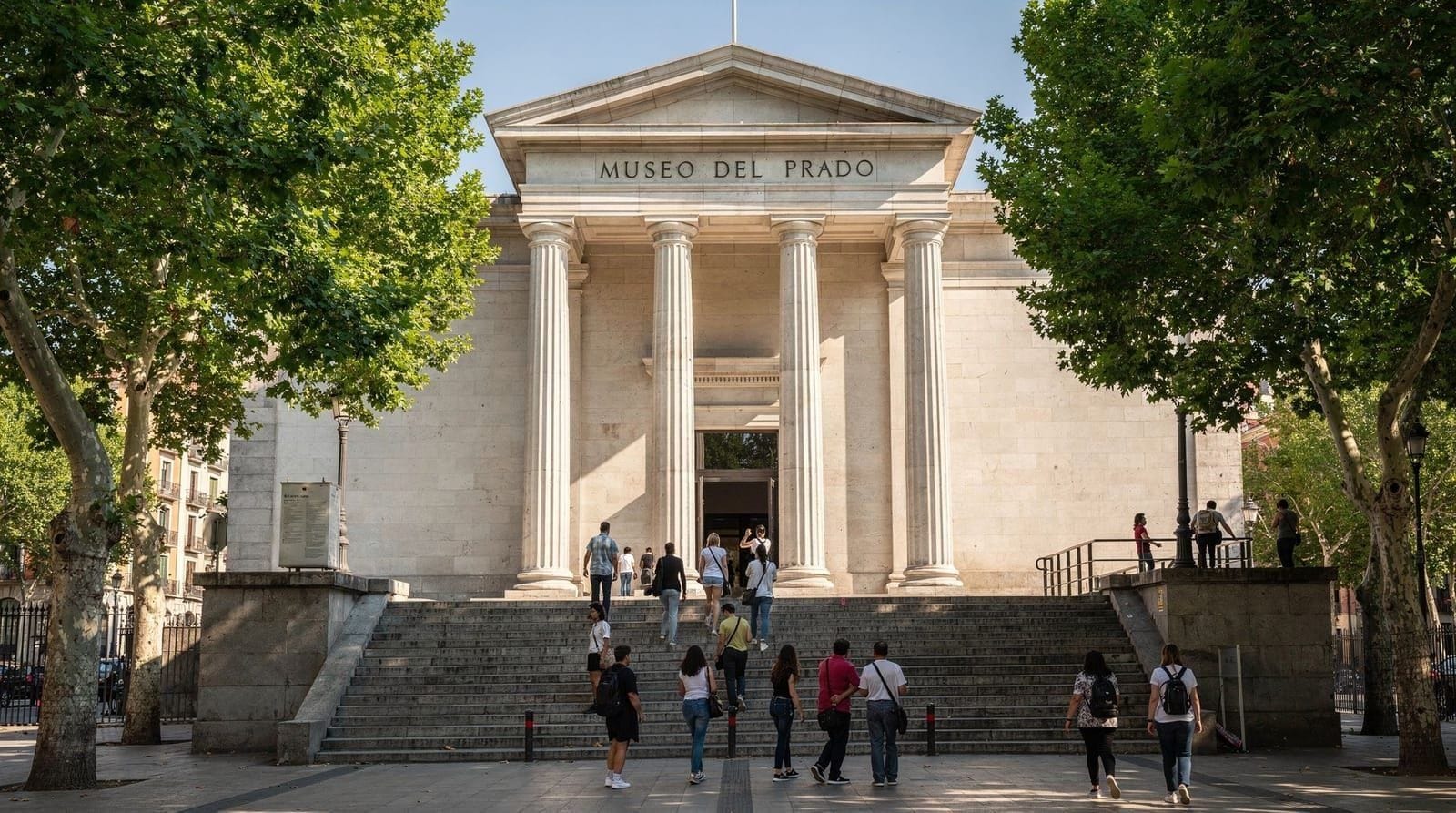
Cold (5–10°C average highs), quiet, cheapest. The Three Kings parade (Cabalgata de Reyes, 5 January) is a major event — floats, costumes, and sweets thrown into the crowd. After the parade, the city enters its quietest period of the year. Museums are uncrowded. Hotel rates are at annual lows. If your priority is seeing the Prado at half-capacity, January is genuinely ideal.
February
Still cold, still quiet. Carnival period (late February) brings street festivities in Lavapiés and central Madrid, though Madrid’s Carnival is less elaborate than Cádiz or Tenerife. The first signs of spring appear by late February. Accommodation remains cheap.
March
Weather begins to improve but remains unpredictable — 12–18°C, occasional rain, gusty winds from the sierra. The Prado and other museums are uncrowded on weekdays. A good month for indoor-focused visits combined with day trips on clear days. Note: Las Fallas is a Valencia festival in March, not Madrid — a common confusion.
April
Spring arrives properly. Temperatures 15–22°C, generally mild and dry. Parks in bloom. Outdoor terrace season officially underway. Easter week (Semana Santa) falls in April most years — solemn processions in Madrid, though less elaborate than Seville’s famous Semana Santa. Accommodation prices rise slightly around Easter. The overall verdict: April is excellent for visiting — pleasant weather, moderate prices, no extreme crowds.
May
Madrid’s best month for many visitors. Temperatures consistently 18–25°C. The San Isidro festival (around 15 May, officially the feast day of Madrid’s patron saint) transforms the city for a week:
- Free open-air concerts in multiple city parks and plazas
- Chulapos and chulapas (traditional Madrid costumes, women with polka-dot dresses and carnations) throughout the city
- Bullfighting season peaks at Las Ventas — the most prestigious bullfighting season in Spain
- Street markets, traditional food stalls
The downside: accommodation prices peak during San Isidro week. Book 2–3 months ahead if your trip coincides.
June
Still excellent weather, 22–28°C. Less crowded than May because San Isidro is over and summer tourism hasn’t fully peaked yet. The first weeks of June are a quiet sweet spot. Late June: Orgullo (Pride) begins, centred on Chueca — very lively, accommodation fills up fast. June is also a good month for day trips, with long daylight hours (sunset after 21:30) giving you full afternoon time in Toledo or Segovia.
July
Hot: 30–36°C regularly, spikes to 40°C during heatwaves. The most intense tourism month. The heat creates a revised daily schedule:
- 08:00–11:00: outdoor exploration (Royal Palace area, El Retiro walks, neighbourhood breakfast)
- 11:00–18:00: museums, air-conditioned cafés, long lunches
- 18:00–22:00: outdoor sightseeing revives (parks, plaza sits, rooftop bars)
- 22:00–02:00: dinner, bars, nightlife (genuinely the best Madrid late-night season)
The Veranos de la Villa open-air arts programme runs throughout July and August — free outdoor concerts in parks and city squares.
August
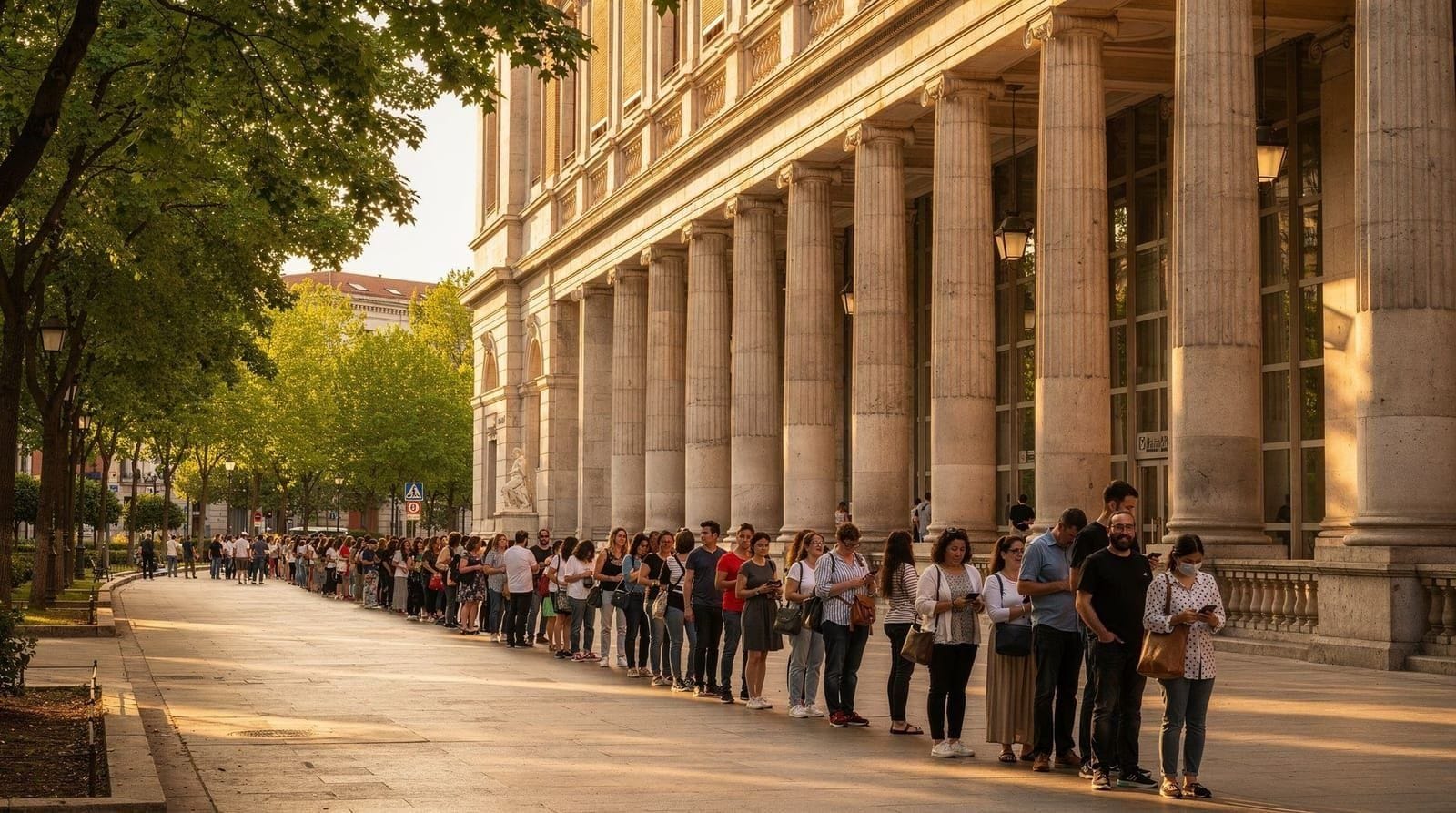
Similar heat to July but the city empties. Many Madrileños take their full August holiday (school holidays run July–August). Some neighbourhood restaurants and smaller shops close for 2–4 weeks. Tourist infrastructure stays open. The result: tourist Madrid functions normally but the authentic street life of residential neighbourhoods quiets down. Museums are busy with international tourists; queues at the Prado can be their longest of the year in August.
Honest verdict: August works logistically but feels less alive than any other month. If you have a choice, May, September, or October are all preferable.
September
Excellent. Temperatures return to 22–26°C. Madrid’s cultural season restarts — new exhibitions, theatre and opera season at the Teatro Real, restaurants that closed in August reopen. Locals return from holidays. The city feels full and energetic. Accommodation prices begin to rise through September. The lack of a single major festival means September is often overlooked — which makes it arguably Madrid’s best month for an uncomplicated, well-priced visit.
October
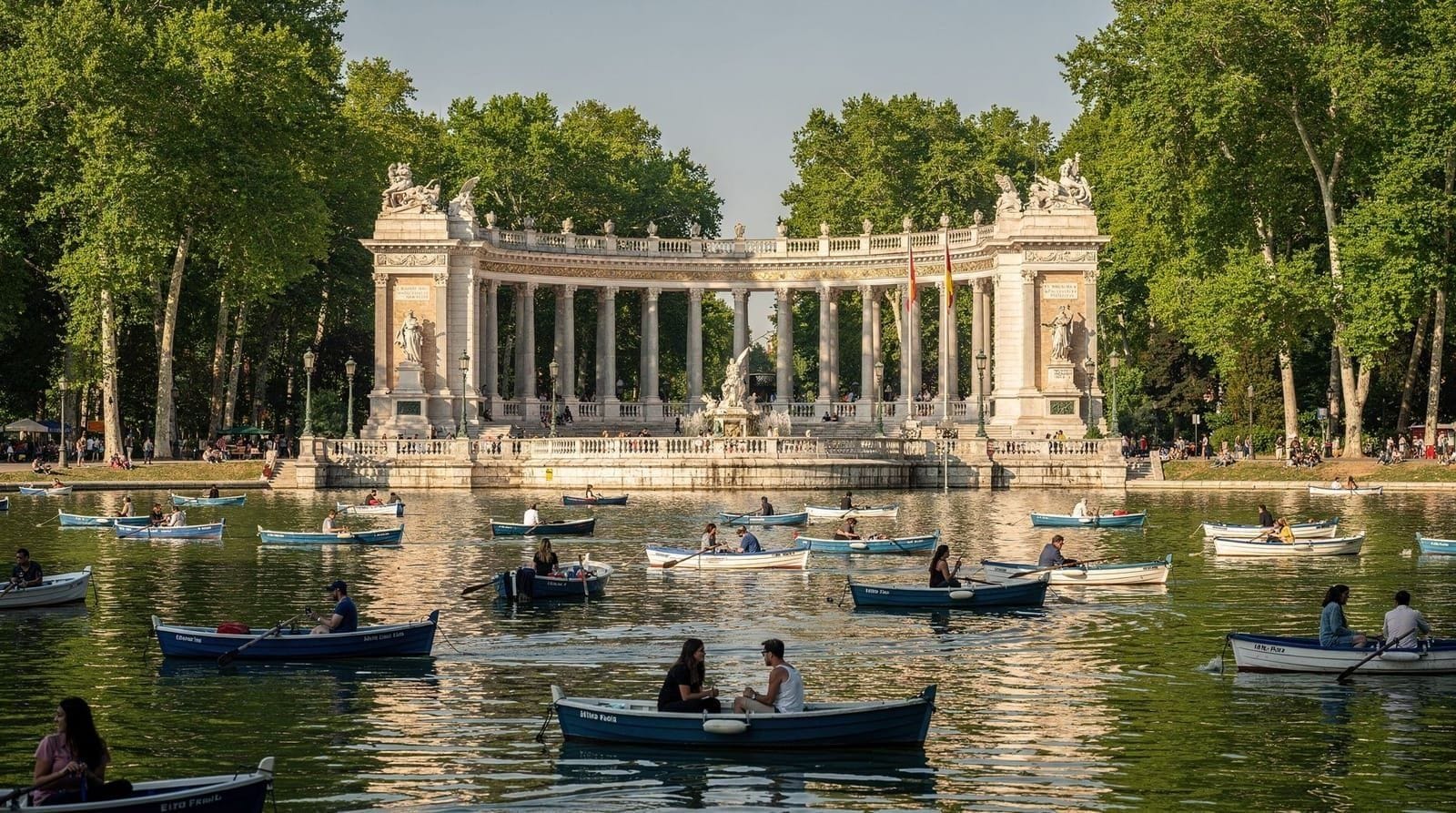
Peak autumn. 18–22°C, excellent light, Retiro Park’s trees turning colour. This is one of the most beautiful times to visit — the Retiro in October is genuinely photogenic. Accommodation prices match May (the other peak season). Book ahead for good central hotels. Olive harvest in Toledo and the surrounding region; new-season wine starting to appear on restaurant lists.
November
Autumn cooling, 12–17°C, some rain. Still enjoyable for the first two weeks; winter begins to settle in by mid-November. A good month for museum visits, smaller crowds, and genuinely off-peak pricing. The Christmas lights in central Madrid go up in late November.
December
Cold (8–12°C average highs) and festive. The Christmas lighting on Gran Vía is spectacular. Plaza Mayor hosts a traditional Christmas market (Mercado de Navidad) — small but atmospheric, with craft stalls and traditional food. New Year’s Eve at Puerta del Sol is one of Europe’s great public events: hundreds of thousands gather to eat 12 grapes at midnight (one per bell toll), broadcast nationally on Spanish television. Accommodation around Christmas and New Year is expensive and books well in advance.
A month-by-month hotel pricing guide
Understanding the price seasonality helps with planning:
Peak pricing periods (book 1–3 months ahead):
- May (San Isidro week, mid-May)
- Late June–early July (Orgullo/Pride)
- October (autumn peak, full city programme)
- Christmas and New Year (late December–early January)
- Easter week (varies each year, late March or April)
Off-peak with good value:
- January (post-Kings parade to mid-February)
- February (quiet, cold, lowest prices)
- Mid-November through early December
- Mid-January through mid-March
Middle ground:
- April (good weather, rising prices from Easter through late April)
- June (weather improving, prices moderate until Pride)
- September (excellent value in early-mid September before the autumn peak)
Example price ranges for a central 3-star hotel per night:
- Peak (May/October): €130–€180
- Shoulder (April/September): €100–€140
- Low (January/February): €70–€100
Booking directly with the hotel or via Booking.com/Hotels.com generally beats the highest rates; many hotels price-match with OTAs.
Madrid’s microseasons: the visitor’s calendar
Rather than thinking in broad seasons, experienced Madrid visitors work with microseasons:
Late March to mid-April: Spring is arriving. Temperatures are finally consistent. Retiro’s roses aren’t yet blooming but the parks are green. This is arguably the sweetest low-competition window before the April–May peak.
Mid-May (San Isidro week): The city at its most locally festive. Entirely worth the higher prices if you can book in advance. The corridas at Las Ventas during San Isidro are the most prestigious bullfights in the world — culturally significant even for those ambivalent about bullfighting as a tradition.
First two weeks of June: Warm, crowd levels moderate, before Pride kicks off. A consistently underrated time to visit. Sunset is around 21:30, giving enormous evening outdoor time.
September: Madrid’s best-kept secret. The city feels like it rediscovers itself after August. New restaurant menus, new exhibitions, everyone back from holidays. Temperatures perfect for day trips. Accommodation prices start low and rise through the month.
November–December (pre-Christmas): Cold but atmospheric. The first Christmas lights on Gran Vía typically go up in mid-November. Weekend afternoons in this period see Madrid’s residents doing their most Spanish things: walking the Retiro wrapped up, long lunches in Chamberí, afternoon vermouth in La Latina.
Avoiding specific issues
Avoid July–August if: You have limited tolerance for heat, you’re travelling with elderly relatives or young children who find 38°C difficult, you want authentic neighbourhood life rather than tourist infrastructure, or you need to budget tightly (summer peaks prices).
Avoid major festival weeks if: You haven’t booked well in advance. San Isidro (mid-May), Orgullo (late June/early July), and New Year’s Eve all create accommodation shortages in central Madrid.
La Tomatina and Las Fallas are NOT in Madrid. La Tomatina (tomato-throwing) is in Buñol, Valencia region, in late August. Las Fallas (fire festival) is in Valencia in March. These are sometimes mistakenly associated with Madrid in general Spain searches — they are not.
Day trips and seasonal considerations
The four best day trips (Toledo, Segovia, El Escorial, Aranjuez) are possible year-round, with seasonal variations:
Spring: Best season for all day trips. The Aranjuez royal gardens are spectacular in April–May. The strawberry season at Aranjuez runs April–June.
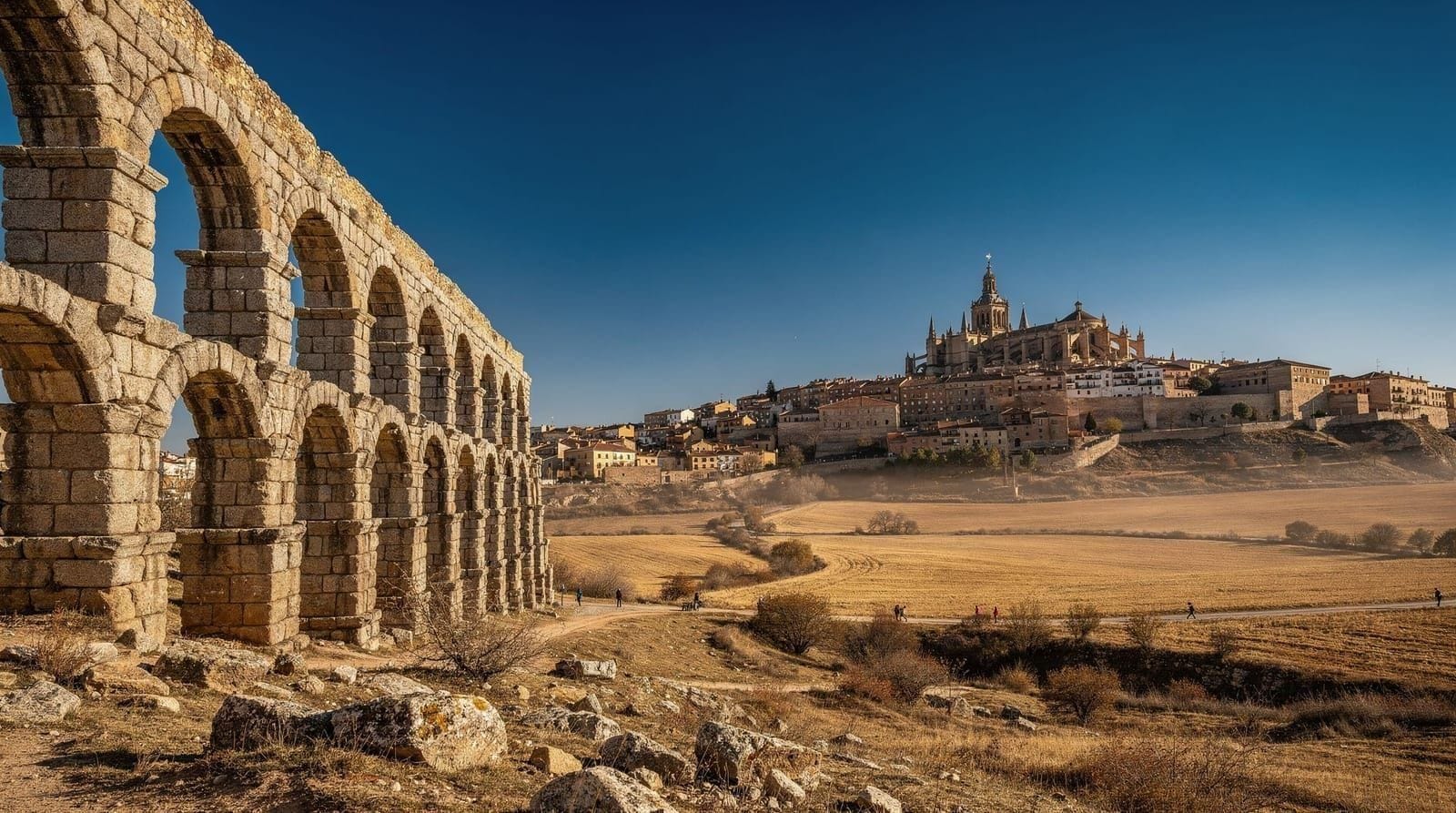
Summer: Toledo and Segovia are beautiful but hot at midday. Plan to be at the cathedral or aqueduct by 09:00, have a long lunch during the hottest hours, and explore again from 17:00.
Autumn: Excellent for all destinations. Segovia’s cochinillo season is at its most popular. The sierra views from El Escorial in October are outstanding.
Winter: Toledo’s medieval streets in the morning mist are atmospheric. El Escorial makes most sense in winter when the monastery’s austere grandeur fits the cold air. Book train tickets in advance for the Christmas holiday period.
See best day trips from Madrid and the AVE train day trips guide for detailed logistics by season.
Each city also has its own full guide: Toledo from Madrid, Segovia from Madrid, El Escorial from Madrid and Aranjuez from Madrid. If you can only fit one of the two star cities into a short trip, Toledo vs Segovia helps you choose. And if you would rather not manage train timings in the heat or the cold, a guided full-day excursion combining Segovia and Toledo takes the logistics off your hands in any season.
Comparison table: choosing your Madrid month
| Month | Weather | Crowds | Price | Standout |
|---|---|---|---|---|
| January | 8–12°C, cold | Very low | Cheapest | Three Kings (5 Jan) |
| February | 10–14°C, cool | Low | Cheap | Quiet museums |
| March | 13–18°C, variable | Low–Medium | Medium | First spring warmth |
| April | 16–22°C, mild | Medium | Medium–High | Parks blooming |
| May | 18–26°C, warm | High | High | San Isidro (15 May) |
| June | 22–29°C, warm | High | Medium–High | Long evenings |
| July | 30–36°C, hot | Very high | High | Museums essential |
| August | 30–36°C, hot | High | Medium–High | City empties locally |
| September | 22–26°C, ideal | Medium | Medium | Best underrated month |
| October | 17–22°C, excellent | High | High | Retiro autumn colour |
| November | 12–17°C, cooling | Low–Medium | Medium | Pre-Christmas lights |
| December | 8–13°C, cold | Medium | High (Christmas) | Christmas atmosphere |
Managing Madrid in summer: practical heat strategies
If you’re visiting in July or August and can’t change the dates:
The Madrid schedule: Adopt local hours. Breakfast early (08:00–09:00). Sightseeing in the morning (09:00–12:00). Long lunch at a restaurant with air conditioning (14:00–16:00). Rest or stay indoors 14:00–18:00 (the most intense heat). Back outside from 18:00, when the sun drops and the city revives. Dinner at 22:00. This is not laziness — it is rational heat management.
Rooftop pools: Several Madrid hotels open rooftop pool access to non-guests for a day fee in summer. The Hotel ME Madrid, Riu Plaza España, and VP El Madroño are among the options. Prices start around €30 for pool access including a drink. Not traditional tourism but a genuine Madrid summer experience.
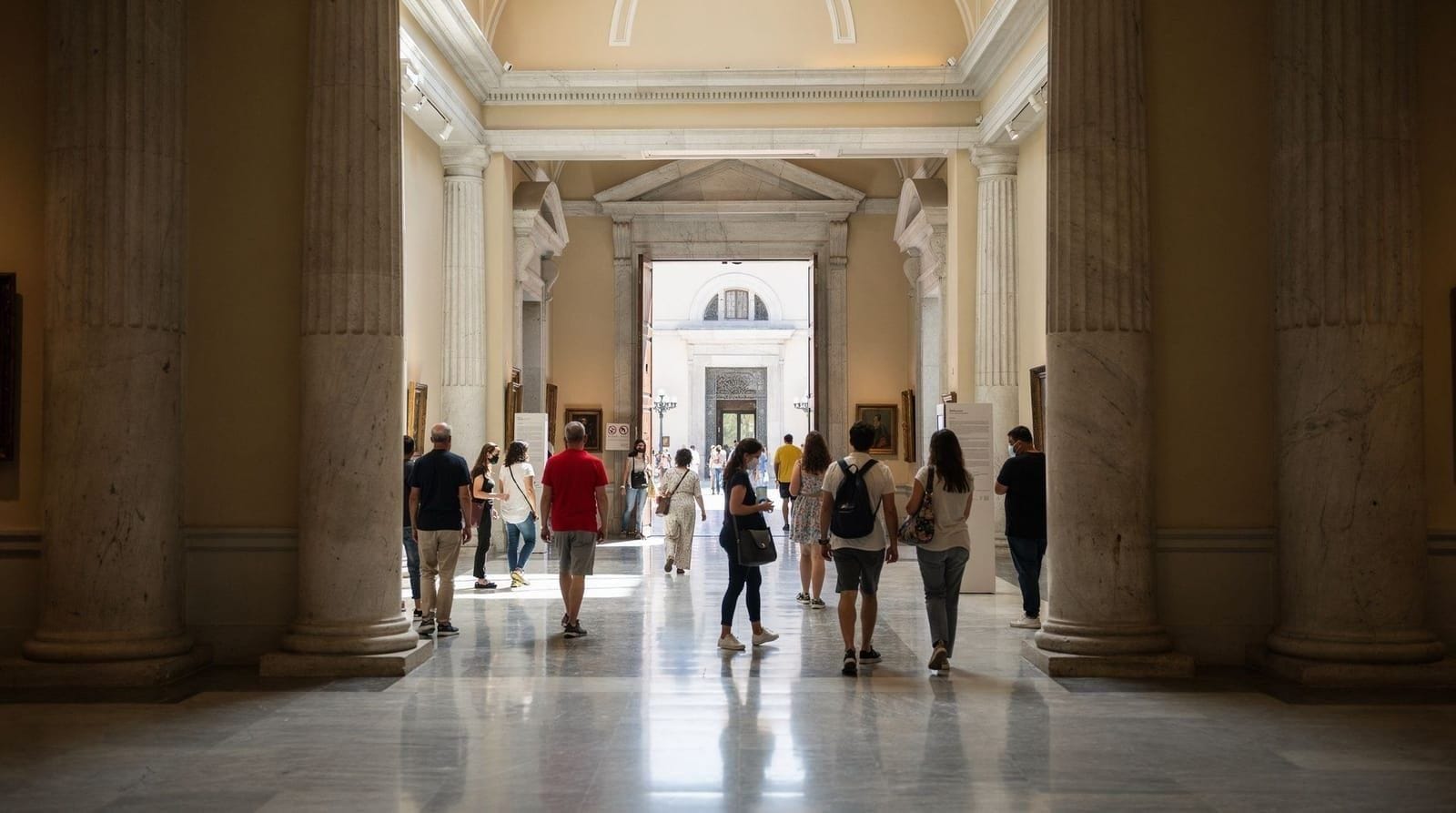
Museum AC as a feature: Madrid’s summer turns the Golden Triangle museums into premium destinations specifically because they’re cool. The Prado’s interior temperature is a relief on a 38°C day. Plan 2–3 hour museum visits for the 12:00–16:00 period and you gain both culture and thermal refuge. The Reina Sofía guide and the Golden Triangle art walk both slot neatly into this midday window. To make the most of a hot afternoon indoors, a guided Prado visit with skip-the-line entry keeps you out of the sun and out of the queue, which matters most in the busiest months. For the free-entry slots that suit winter and shoulder-season visits, see museum free hours.
Cold drinks culture: Madrid’s bar terraces in summer are full of people drinking agua con gas (sparkling water), tinto de verano (cold red wine with lemon soda), and clara (beer with lemon), all cold. The city has mastered cold-drink culture. Budget approximately €3–€4 per drink and plan regular hydration stops.
Where to avoid in peak summer heat: The cobblestone streets of La Latina between 13:00 and 16:00 are genuinely punishing in July heat. The streets store the sun and there’s limited shade. Either visit early morning (10:00–12:00) or after 18:00 when the stones cool and the area revives for the evening tapas circuit.
Public holidays that change how the city runs
Spanish and Madrid-specific public holidays affect opening hours more than most visitors expect — some museums close entirely, and many neighbourhood restaurants shut for the day even while tourist infrastructure stays open.
National holidays affecting Madrid: 1 January, 6 January (Epiphany/Reyes), Good Friday (variable, March/April), 1 May (Labour Day), 15 August (Assumption), 12 October (National Day), 1 November (All Saints), 6 December (Constitution Day), 8 December (Immaculate Conception), 25 December.
Madrid-specific holidays: 2 May (Comunidad de Madrid Day) and 9 November (Almudena, the city’s patron saint day) close many local businesses even though they are not always widely publicised to visitors.
What actually closes: Major museums (Prado, Reina Sofía, Thyssen) are typically closed only on 1 January, 1 May, and 25 December — check the specific museum’s calendar before a holiday visit, as exceptions exist. Neighbourhood restaurants and independent shops close more readily on any of the above, particularly around Christmas and Easter week. Public transport (Metro, Cercanías) runs a reduced Sunday-style schedule on national holidays, which affects day-trip planning — see the Cercanías guide for how this interacts with El Escorial and Aranjuez timetables.
Bridge weekends (puentes): When a holiday falls on a Tuesday or Thursday, many Spaniards take the adjoining Monday or Friday off, creating a four-day “puente” weekend. These weekends see Madrid’s own residents leaving the city for short breaks — central hotel prices can actually soften slightly, but day-trip destinations like Toledo and Segovia get busier with domestic tourism.
Using the weather for planning day trips
The AVE day trips are affected by season in specific ways:
Toledo in rain: Genuinely atmospheric in misty autumn or winter mornings — the medieval streets and cathedral interior are more dramatic in low light. The cathedral’s stained glass (best seen with low exterior light) is particularly good on overcast days. July–August: start early (08:30 train from Atocha) to explore before the midday heat.
Segovia in snow: Winter occasionally brings snow to Segovia (at 1,000m elevation). The aqueduct and Alcázar in snow is extraordinary. Check the forecast — the C-3 Cercanías continues to run in most weather, but verify conditions.
Aranjuez in spring: The strawberry season (April–June) coincides with the gardens at their best. The royal gardens are at maximum bloom. Plan Aranjuez for spring specifically if you want the full garden experience.
Sierra de Guadarrama in summer: The counterintuitive day trip for summer visitors: take the Cercanías C-8 to Cercedilla (cooler mountain air, 15–20°C even in July) and hike. Combining a museum morning in Madrid with an afternoon mountain escape is a legitimate summer strategy. See Sierra de Guadarrama day guide.
Going deeper on each season
Once you have a rough window in mind, the dedicated season guides cover what to pack, where to spend your time and how the city’s rhythm shifts: Madrid in spring, Madrid in summer, Madrid in autumn and Madrid in winter.
Festival-minded travellers will find more detail in the San Isidro festival article, the Semana Santa guide, the Christmas in Madrid guide and the Chueca and Pride guide, which is the best starting point if Orgullo is the reason for your trip. Whichever month you choose, the Madrid 3-day itinerary is a reliable frame to hang the season around.
Frequently asked questions about Best time to visit Madrid
What is the weather like in Madrid in spring?
March through May is Madrid's most beautiful season. March is variable (12–18°C, some rain). April stabilises into 15–22°C with mild days and cool nights — parks bloom, outdoor terraces open, and the city is at its most photogenic. May brings San Isidro (around 15 May) with festivals, concerts, and bullfighting — accommodation prices peak. Spring is also the least-crowded nice-weather period before summer.Is Madrid too hot in summer?
July and August regularly reach 35–38°C, with periodic heatwaves above 40°C. Sightseeing becomes uncomfortable between 12:00 and 18:00. However, Madrid in summer works well if you adopt the local schedule: early mornings for outdoor sights (before 11:00), museums and air conditioning for midday, late afternoon walk from 18:00, dinner at 21:30. Many Madrileños leave in August; some neighbourhood restaurants close; the city is quieter but tourism peaks.What is the best month for budget travel to Madrid?
November through February offers the lowest hotel prices — often 30–40% less than peak season. The weather is cold (8–15°C days) but manageable for sightseeing. Museums have shortest queues. Free museum evening hours become more practical (arriving at 17:30 for the 18:00 Prado opening is comfortable in winter). Christmas adds festivity but also increases prices from late December.When is Orgullo (Madrid Pride) and should I plan around it?
Madrid Pride (Orgullo) is one of Europe's largest LGBT+ festivals, centred on Chueca neighbourhood, typically running late June through the first week of July. The main parade takes place on a Saturday in early July. The city is very lively, accommodation in central areas sells out weeks ahead, and prices spike. An extraordinary event to attend; a logistical challenge to navigate without planning.What are the key festivals and events in Madrid in 2026?
San Isidro (patron saint, around 15 May): free concerts, traditional dress, bullfighting season opening. Orgullo/Pride (late June–early July): massive LGBTQ+ festival, Chueca epicentre. Veranos de la Villa (July–August): summer arts programme, outdoor concerts. Christmas and Cabalgata de Reyes (24 December–6 January): lights, Plaza Mayor market, Three Kings parade (5 January). New Year's Eve at Puerta del Sol: the grape-eating countdown tradition.