La Latina
La Latina is Madrid's tapas heartland — Cava Baja, El Rastro on Sundays, medieval alleys, and the city's best bocadillos. Honest guide for 2026.
Madrid: Non Touristy Tapas 10 Tapas 4 Drinks
Quick facts
- Metro
- La Latina (L5), Puerta de Toledo (L5), Tirso de Molina (L1)
- Key street
- Calle Cava Baja — Madrid's tapas corridor
- Sunday market
- El Rastro flea market, 09:00–15:00
- Best day
- Sunday (El Rastro + tapas lunch) or Saturday evening
- Budget for tapas lunch
- €15–€25/person with drinks
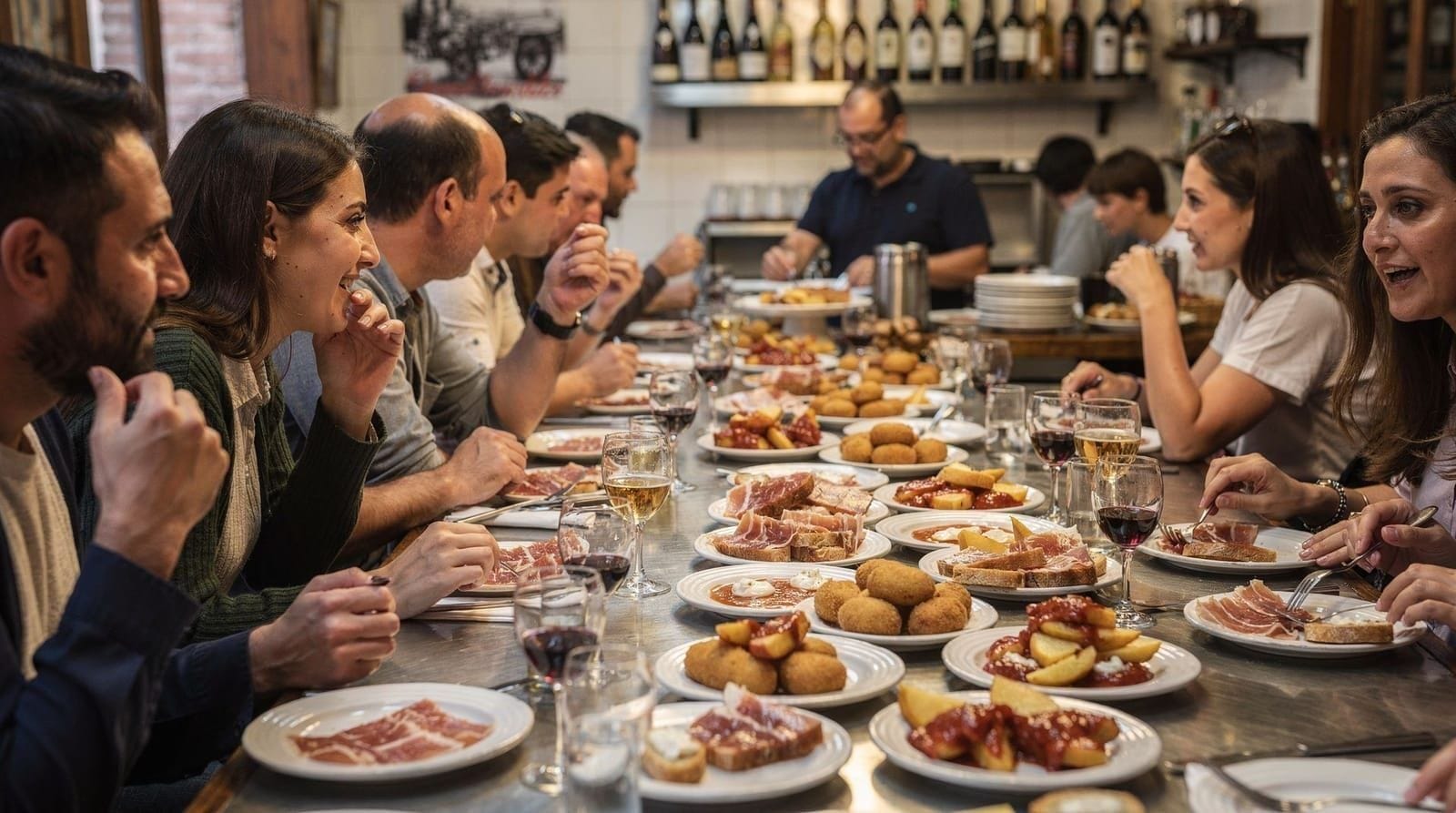
La Latina is where Madrileños go on Sunday. After El Rastro flea market winds down around 14:00, the streets around Calle Cava Baja and Plaza de la Paja fill with locals standing at bar counters eating croquetas and drinking vermouth. This is not a performance for tourists; it is what people in the neighbourhood have done every Sunday for generations, and it is the most direct available experience of how Madrileños actually socialise.
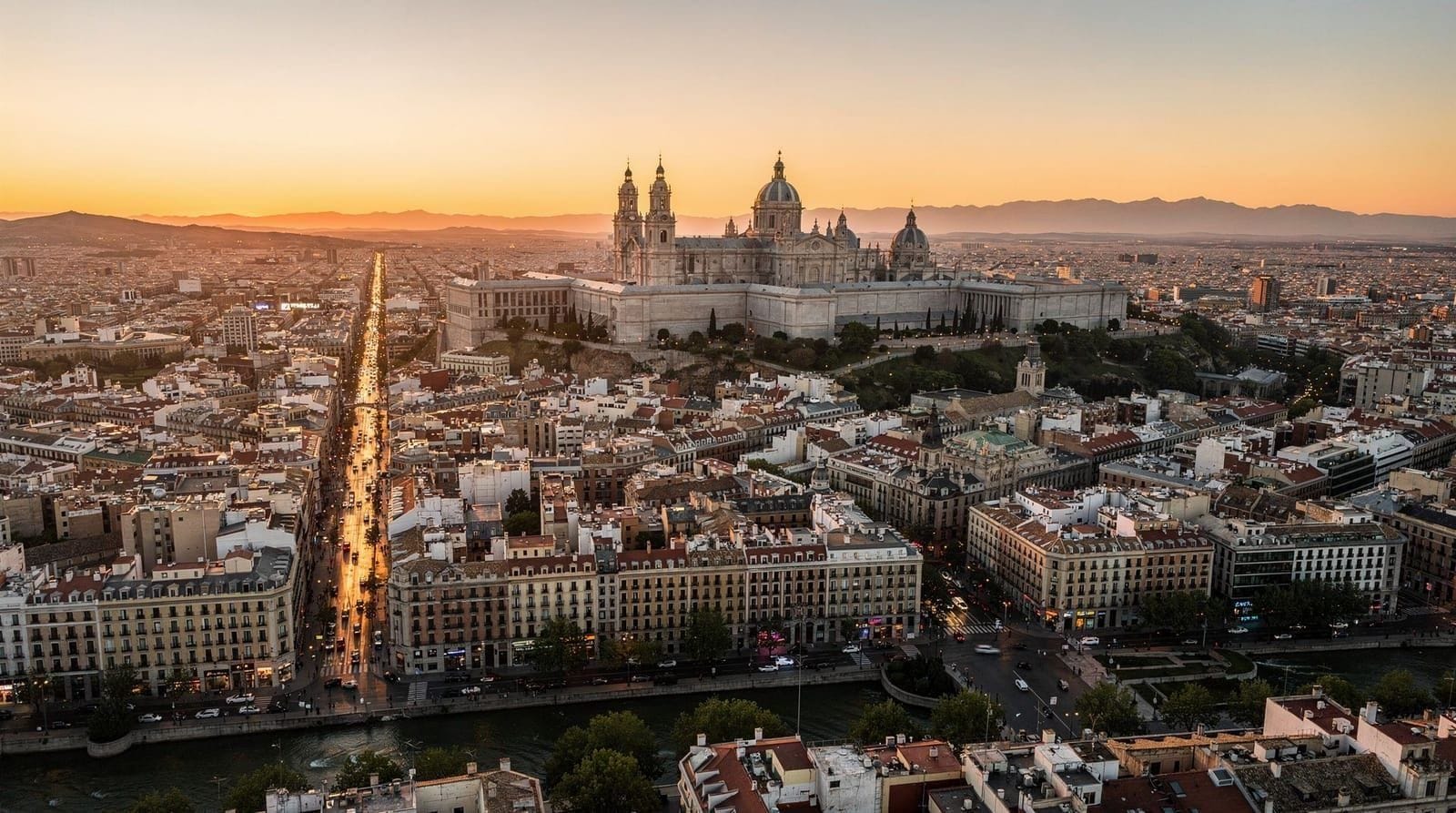
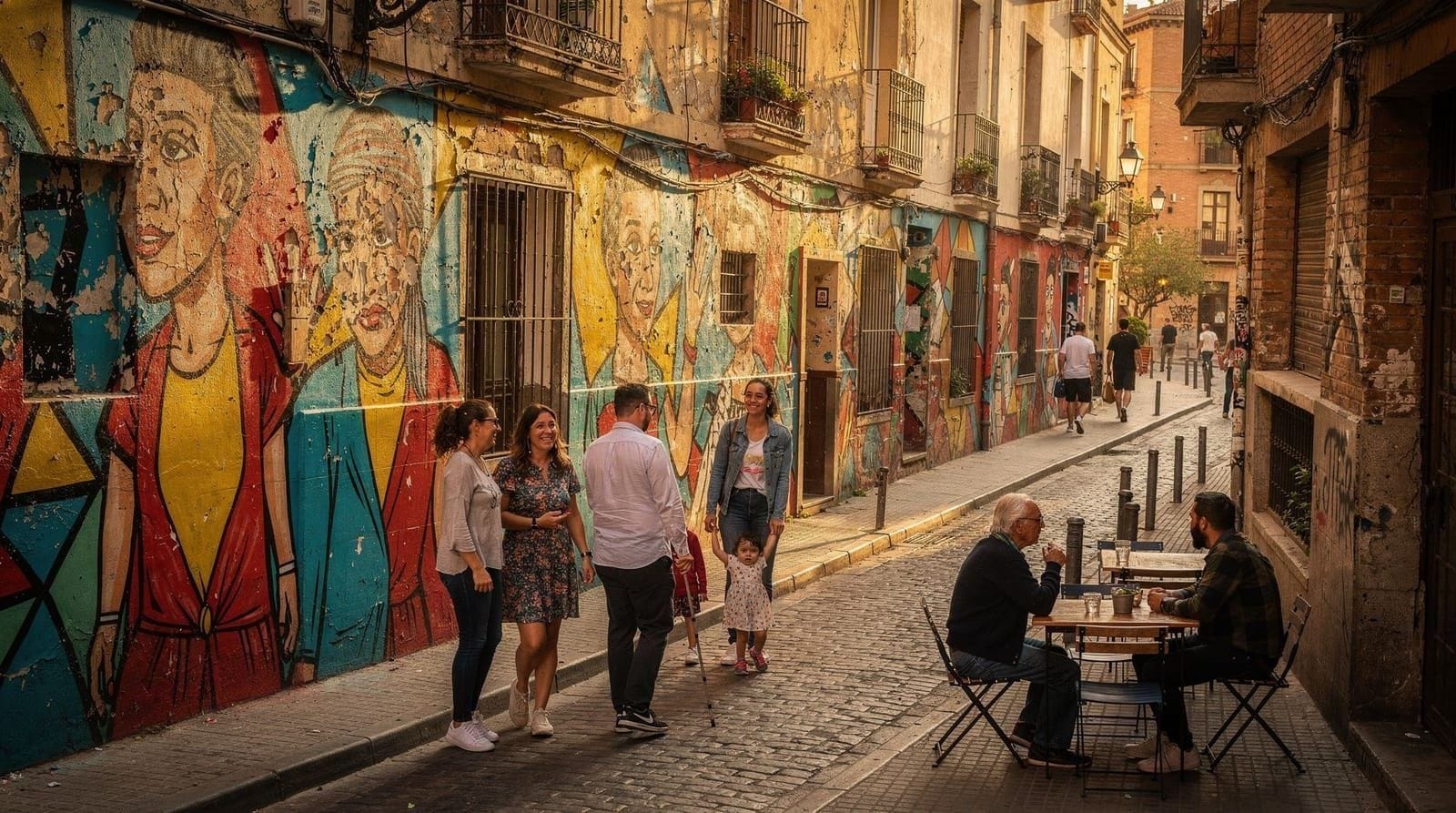
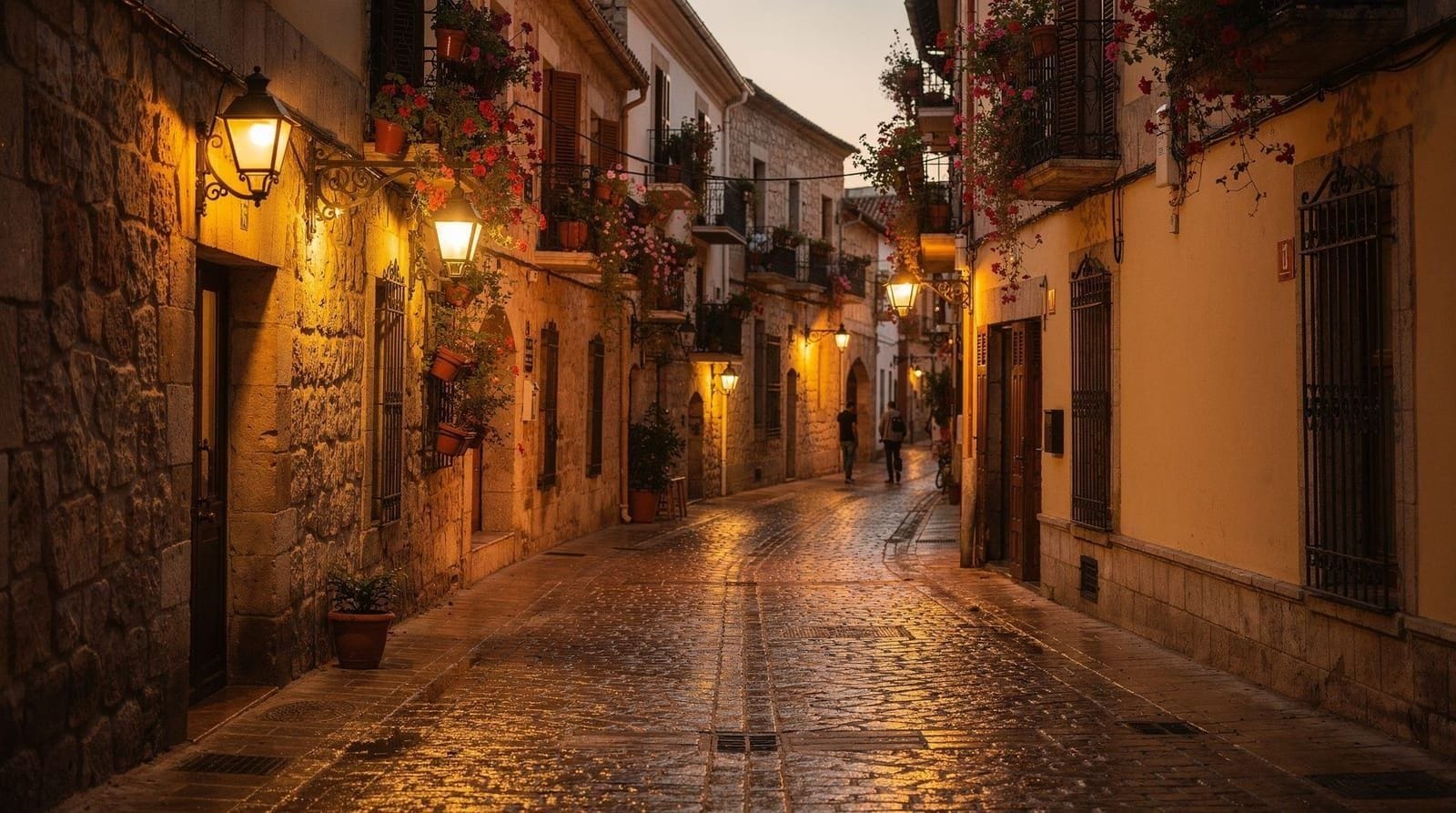
The neighbourhood occupies the southern edge of the old Habsburg quarter, stretching from Plaza Mayor south to the medieval city walls and east toward Lavapiés. The street grid is pre-planned — winding alleyways, sudden small squares, changes in level where the land drops toward the Manzanares valley. It is one of the most atmospheric parts of old Madrid, and also, conveniently, the part with the highest concentration of good, affordable tapas bars in the city centre.
| Where | South of Plaza Mayor, La Latina metro (L5) |
| Cost | €15–€25/person for a tapas crawl; El Rastro is free to browse |
| Time needed | Half a day; combine with Plaza Mayor or Lavapiés |
| Getting there | Metro La Latina or Tirso de Molina (L1); 5–8 min walk from Plaza Mayor |
| Best time | Sunday morning for El Rastro, into afternoon tapas |
El Rastro flea market
Madrid’s weekly flea market runs every Sunday (and Bank Holidays) from about 09:00 to 14:00–15:00 along Calle Ribera de Curtidores and the adjacent streets. It is one of the largest and oldest flea markets in Europe — the Rastro has operated in this location since at least the 18th century, when it occupied the site of the city’s slaughterhouse (rastro means “blood trail” in Spanish, referring to the trail of blood that the animals left on their way to slaughter).
The market today is a mixture of:
- Genuine antiques and secondhand goods: primarily in the permanent shops along Ribera de Curtidores and in the Galerias Piquer gallery complex at the southern end (Calle Ribera de Curtidores 29). The permanent dealers have licence plates and established reputations; the quality here is higher than the street stalls.
- Mass-produced cheap goods and tourist souvenirs: the main drag (especially the upper section near Plaza del Cascorro) is dominated by these.
- Vinyl records and secondhand books: on the side streets, particularly around Calle del Carnero and the streets feeding west from the main axis.
- Tools and metalwork: a specific El Rastro tradition — old tools, locks, keys, and hardware sold by vendors who have been here for decades.
What is genuinely worth exploring: the Galerias Piquer at the southern end for vintage furniture, ceramics, and art. The side streets for vinyl and books. The permanent shops on the west side of Ribera de Curtidores for genuine antiques.
What to expect physically: crowds on the main artery (Ribera de Curtidores) are serious from 10:00 onward — narrow streets, slow movement, significant pickpocket risk. Keep your bag zipped and in front of your body, use a cross-body bag rather than a backpack. The best strategy is to arrive at 09:00–09:30 before the main crowd, work systematically from south (Galerias Piquer) to north (Plaza del Cascorro), and finish by 12:00 when the post-market tapas places start filling.
After the market, the standard local sequence is to move a few streets northwest to Calle Cava Baja and the streets around Plaza de la Paja for a standing lunch at one of the tapas bars. This sequence — Rastro in the morning, tapas afterward — is the most Madrid thing you can do on a Sunday.
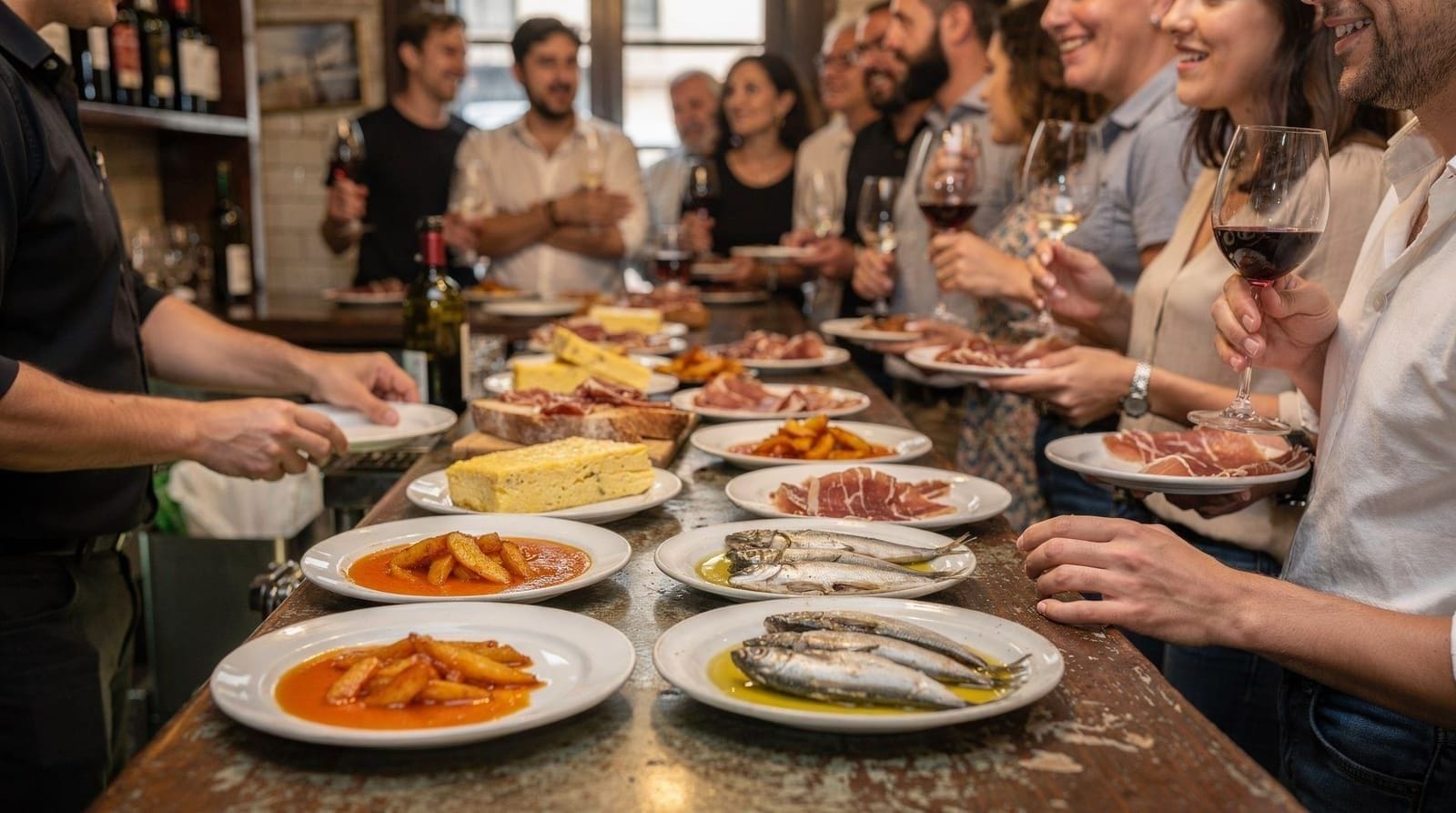
Non-touristy tapas tour: 10 tapas and 4 drinks with a local guideCalle Cava Baja: Madrid’s tapas corridor
Calle Cava Baja is the main artery of Madrid’s tapas culture — a street of approximately 20 traditional tabernas and bars running about 400 metres. It is busy every evening and packed on Sunday from early afternoon. The bars vary in style from ancient cave-like tabernas (literally carved into the hillside, with low vaulted ceilings) to newer natural wine bars, but the culture of the street — standing at the counter, plates appearing with your drinks, moving from one place to the next — is consistent and genuinely old.
The architecture of Cava Baja reflects the neighbourhood’s layered history: the street follows the course of an external moat (cava) that once ran along the outside of the 14th-century city wall. The buildings on the south side of the street are built directly over the old moat; many of the cellar bars are literally at the level of the original moat floor. This explains the unusual topography of the street — the south side is lower, giving the cave bars their characteristic descent into the hillside.
The format for a tapas crawl on Cava Baja: arrive at one bar, order a caña (small draft beer, €2–€3) or a glass of wine (€3–€4), receive the accompanying tapa (often free in the traditional bars, or €2–€4 for a small plate). Eat standing at the counter. Have another drink or move to the next bar. Repeat four or five times over two hours. Budget €15–€25 per person.
Recommended tapas bars on and near Cava Baja
Taberna Tempranillo (Calle Cava Baja 38): excellent natural and conventional wines by the glass, strong cheese and charcuterie selection, genuinely knowledgeable staff who can recommend from the extensive wine list without condescension. One of the best options on the street if wine rather than beer is the priority.
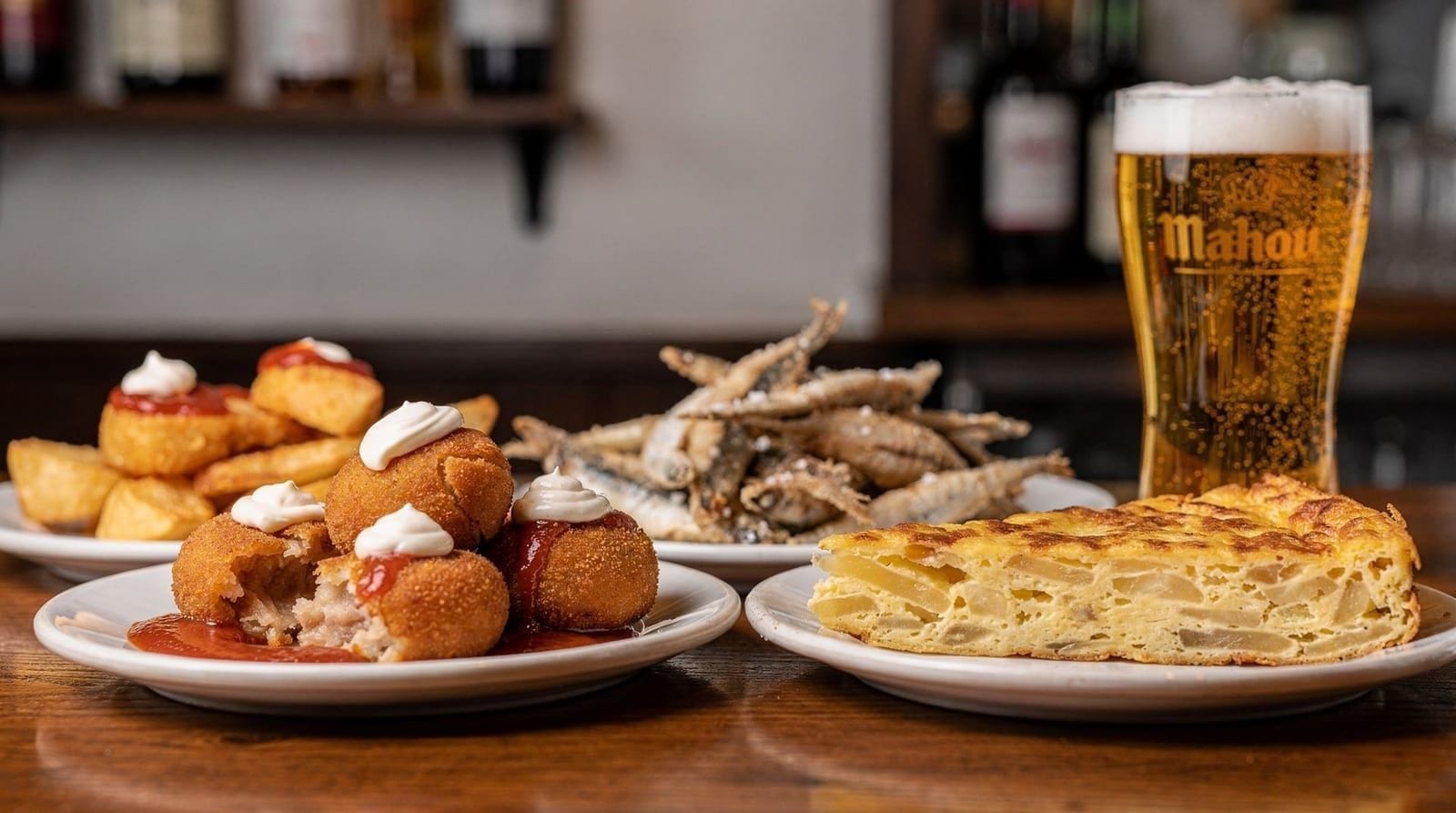
Juana la Loca (Plaza Puerta de Moros 4, one street over): the most acclaimed tortilla española in the neighbourhood — an elevated version with caramelised onion, slightly runny in the centre, served in a more restaurant-style setting. Expect a queue on Sunday.
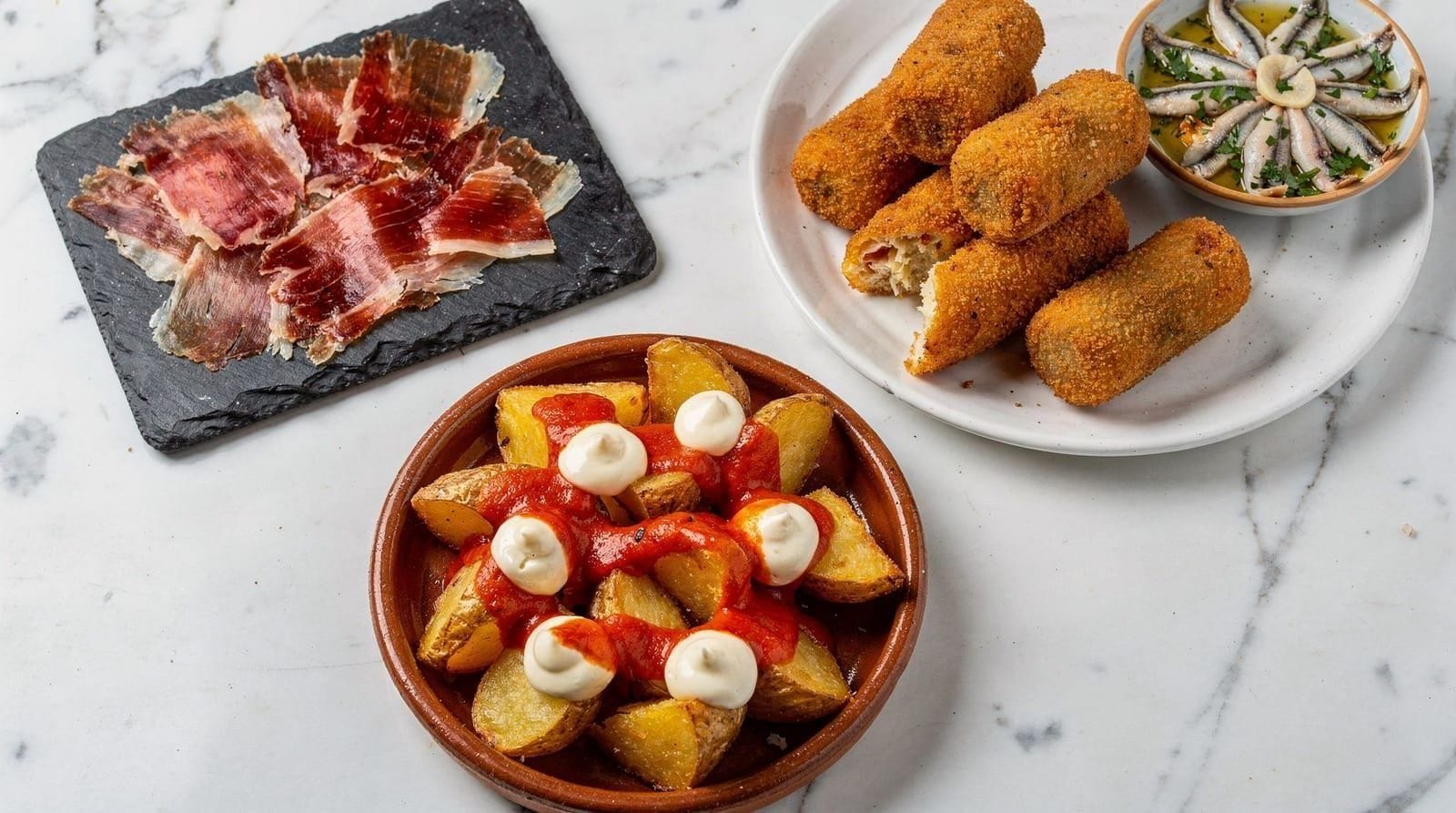
Taberna de los Austrias (Calle Cava Baja 26): a classic cave bar — low-beamed ceiling, hanging jamóns, hundreds of wines chalked on the board, traditional tapas including the excellent patatas bravas and croquetas. The oldest-feeling place on the street.
Almendro 13 (Calle del Almendro 13, just off Cava Baja): specialises in huevos rotos (fried eggs broken over crispy potato) and traditional Castilian small dishes. No tapas in the standing format — this is a sit-down tapas restaurant with waiter service. Excellent quality, often crowded. Book or arrive very early.
El Viajero (Plaza de la Cebada 11): three-floor bar with a rooftop terrace — the ground floor is a traditional tapas bar, the roof has views over the rooftops. Good for a drink at dusk after the tapas circuit.
Casa Lucio (Calle Cava Baja 35): Madrid’s most famous traditional restaurant — huevos rotos (the restaurant’s signature dish), roast meats, the old-fashioned ambience of an establishment that has not changed significantly since the 1980s. Full meal: €35–€50 per person. Clientele has historically included Spanish royalty, politicians, and celebrities; reserve well in advance.
Madrid food tour: tapas, wine, Cava Baja, vermouth, and local marketsVermouth culture in La Latina
Vermouth (vermut) is central to how La Latina drinks before lunch, particularly on weekends. The ritual — a glass of vermut rojo, usually house-made or from a small independent producer, served on tap or from the bottle with an olive and a slice of orange — happens roughly 12:00–14:30, before the tapas crawl proper begins. Several bars on and around Cava Baja specialise in it: look for chalkboard signs advertising “vermut de grifo” (draft vermouth), a specifically Madrid tradition that has seen a genuine revival over the past decade as small producers have started making serious, well-balanced vermouths rather than the mass-market sweet versions.
Ordering vermouth rather than beer or wine at midday is a small but real way to drink like a local rather than a tourist — it signals you understand the rhythm of a Madrid Sunday, where the sequence is vermouth, then El Rastro or a walk, then the tapas crawl proper, then a late lunch or an early dinner. A glass typically costs €2.50–€4.
If the ritual appeals, the vermouth guide goes further into what to order and where else in the city the habit has taken hold, and the Madrid tapas guide explains how the drink-then-tapa rhythm works across the capital.
Plaza de la Paja and the medieval churches
One of the most pleasant squares in central Madrid — a small, tree-lined plaza that was the centre of the neighbourhood’s market in medieval times. The square is bordered by several medieval churches and the Jardín del Príncipe de Anglona (a small walled garden behind the church of San Andrés, open on most days in the afternoon — free entry).
Iglesia de San Andrés: a 14th-century parish church, rebuilt after Civil War damage. The adjacent Capilla del Obispo (Bishop’s Chapel, built 1520–1535) is one of the finest examples of Plateresque Gothic architecture in Madrid — the carved stone portal and the ribbed vault interior are worth the modest entry fee. Opening times vary; often available for guided visits only. Check current schedules before making a special trip.
Basílica de San Francisco el Grande (Carrera de San Francisco 1, a short walk south): a large 18th-century basilica with a dome that is, depending on the measure, the second or third largest in Spain. The building contains a Goya early work — Saint Bernardino of Siena Preaching before Alfonso V of Aragon (1781), one of his first major commissions — alongside other significant paintings. Ticket: €6. The dome is the primary architectural feature.
Iglesia de San Pedro el Viejo (Calle Nuncio): one of the oldest churches in Madrid, partially dating from the 14th century, with a Mudéjar tower. Often overlooked in favour of the larger churches; worth pausing at the facade.
La Latina at Christmas and other seasonal moments
La Latina has its own seasonal rhythms beyond the Sunday routine. In the run-up to Christmas, the churches around Plaza de la Paja and San Andrés hold traditional carol services, and the neighbourhood’s bars put up festive decorations that feel more genuinely local than the commercial Gran Vía lights. San Isidro (mid-May), Madrid’s patron saint festival, has particular resonance here — the saint’s hermitage and the traditional romería (pilgrimage-picnic) take place a short distance southwest along the river, and the neighbourhood’s bars fill with people in traditional chulapo dress in the days around 15 May.
Summer brings a different rhythm: the tapas crawl shifts later into the evening to avoid the heat, and Plaza de la Paja and the terraces around El Viajero become the preferred spots for a cooler evening drink. Winter Sundays are quieter at El Rastro but the tapas bars on Cava Baja compensate with a cosier, more local atmosphere once the market crowd disperses.
The moat history and vermouth revival in context
La Latina’s contemporary character — the vermouth bars, the natural wine lists appearing alongside the traditional cave tabernas — sits directly on top of a genuinely old street plan. Walking from Plaza de la Paja down through Cava Baja to Puerta de Toledo traces a route that has existed in some form since the medieval period, when this was the edge of the walled city rather than its centre. The layering is part of what makes the neighbourhood interesting: a 21st-century natural wine bar occupying a cellar dug into a 14th-century moat wall is not an isolated curiosity here but close to the norm.
Medieval walls and the moat history
The Arab-era city walls of Madrid (constructed in the 9th–10th century during the Moorish occupation of the central Iberian plateau) survive in fragments. The most visible section is on Cuesta de la Vega, on the western edge of La Latina where the ground drops toward the Almudena Cathedral.
Approximately 120 metres of the original wall is preserved at street level in the Parque Mohamed I (named after the Moorish founder of the first settlement, Mayrit or Magerit, on this site in the late 9th century). The park around the wall section is free to visit. The construction is limestone and flint — the same materials available from the sierra to the north — and the height and thickness of the surviving sections give a genuine sense of the original fortification.
The name “cava” in Calle Cava Baja refers to the external ditch (cava) that reinforced the medieval wall on this side of the city. The moat was later filled in and built over, leaving the street that now bears its name.
Callejón del Gato and the distorting mirrors
A brief note on a La Latina curiosity: the Callejón del Gato (Cat Alley), a narrow passageway between Calle Álvarez Gato and Calle Espoz y Mina, contains the bronze convex and concave mirrors that inspired the esperpento technique of Spanish dramatist Ramón del Valle-Inclán. Valle-Inclán described the distorting mirrors in his 1920 play Luces de Bohemia as a metaphor for the grotesque distortion of Spanish reality — “Spain is a grotesque deformation of European civilisation.” The mirrors are still there; they still work.
Eating and drinking in La Latina
Beyond the tapas circuit on Cava Baja, the neighbourhood has several specific options worth knowing:
Casa Botin (Calle de los Cuchilleros 17, technically in the Austrias quarter but five minutes from Cava Baja): the world’s oldest continuously operating restaurant (Guinness, 1725). Excellent cochinillo and cordero asado from a wood-fired oven. Reserve well in advance; book the upstairs rooms for the most atmospheric seating. €30–€45 per person.
El Almendro and several smaller tapas establishments on Calle del Almendro (the cross street running east from Cava Baja): a cluster of good mid-range options that are slightly less crowded than the main Cava Baja corridor.
Mercado de la Cebada (Plaza de la Cebada): the neighbourhood’s main food market — fish, meat, vegetables, a couple of bars inside the market building. Not tourist-facing, functional, worth exploring in the morning. For a wider look at how Madrid’s neighbourhood markets differ from the showpiece ones, see the guide to Madrid’s markets, and for a fuller map of where to sit down, the where to eat in La Latina guide is the companion to this page.
Madrid tapas and taverns historical tour — La Latina and the old quarterThe neighbourhood’s history
La Latina takes its name from Beatriz Galindo (c.1465–1534), known as “La Latina” — Latin — for her expertise in the classical language at a time when learned women were sufficiently rare to acquire a nickname based on their learning. Galindo was a court humanist, tutor to Queen Isabella I of Castile, and one of the most educated women of her era. The neighbourhood that bears her name was built over the area where she established a hospital and church in the early 16th century; the toponym has been attached to this part of the city ever since.
The neighbourhood’s historical character is layered: the Islamic period (when it was part of the medina of the Moorish city of Mayrit, founded 9th century), the Jewish community that lived here until the 1492 expulsion, the medieval Christian settlement that replaced it, and the 16th-century Habsburg development that gave the street plan its current form. Walking the alleyways between Cava Baja and Plaza de la Paja, you are on a street layout that predates the discovery of the Americas.
The neighbourhood was working-class through most of its modern history — far from the 18th-century residential districts of Barrio de Salamanca or the bourgeois Chamberí. The affordability that kept it working-class is also what preserved its medieval street grid: there was never enough money to knock it down and rebuild. The irony is that what was poverty’s preservation has become authenticity’s advantage.
Getting to La Latina
Metro: La Latina station (Line 5) is the most convenient for Cava Baja and the central tapas district. Puerta de Toledo (Line 5) is closer to El Rastro’s southern end. Tirso de Molina (Line 1) for the northern section nearest Plaza Mayor.
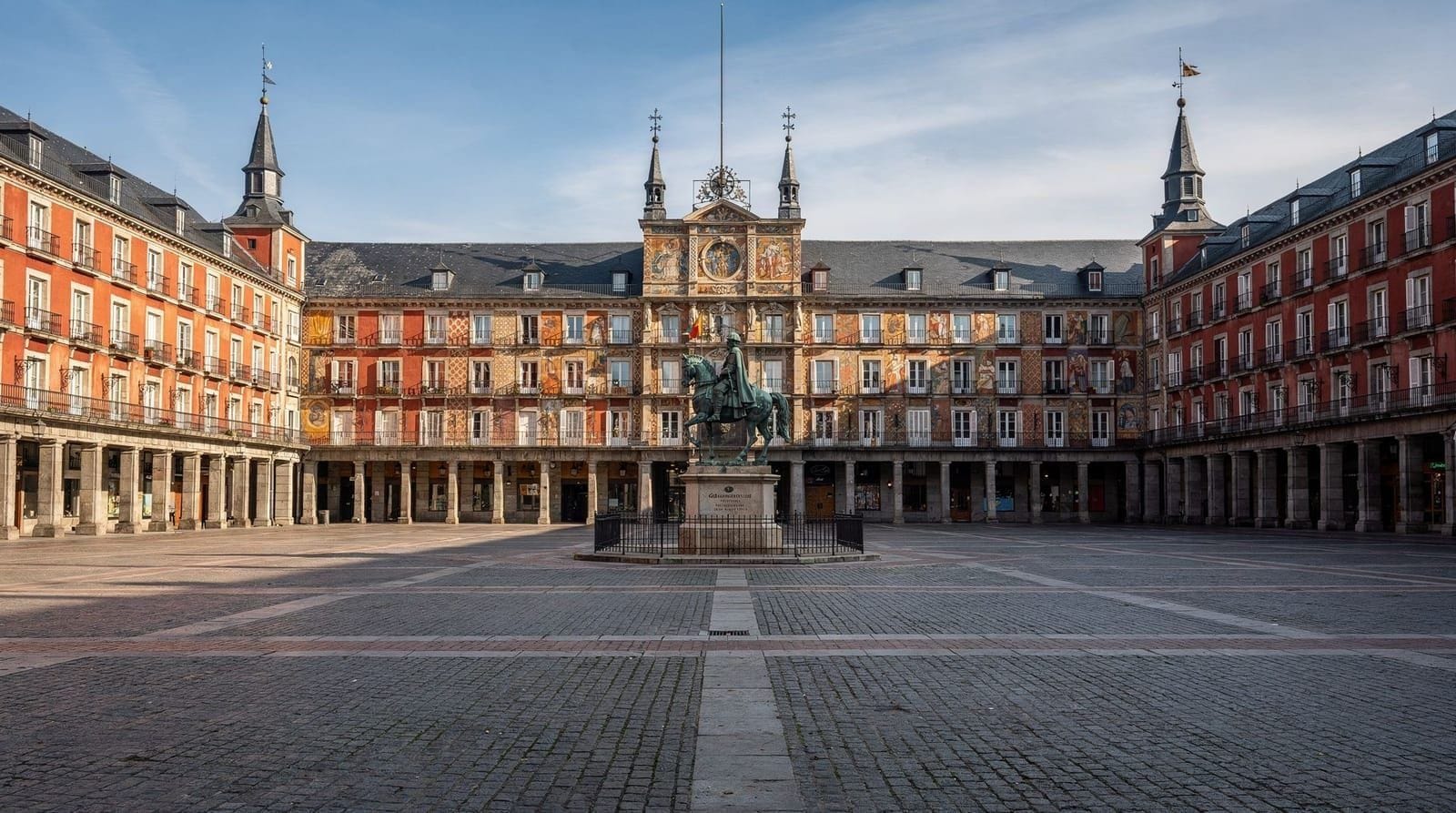
On foot from Plaza Mayor: 5–8 minutes south, via Calle Cuchilleros or the steps down from the plaza. This makes La Latina the obvious post-Plaza Mayor destination for a meal. The Plaza Mayor guide covers the square itself, and the Plaza Mayor restaurant verdict explains why the short walk south usually makes for a better lunch. For the metro lines mentioned here, the Madrid metro guide has the practical details.
If you want to fit La Latina into a longer stay, the Madrid for foodies itinerary and the first weekend itinerary both build a day around it, and the local tapas blog post adds more on ordering like a regular.
On foot from the Prado: about 25 minutes west, a pleasant walk through Barrio de las Letras that many visitors combine into a single afternoon.
Frequently asked questions about La Latina
When is the best time to visit La Latina?
Sunday mornings for El Rastro, with tapas from 13:00–16:00 afterward. This is the quintessential Madrid Sunday experience. Saturday evenings are also excellent for tapas without the market crowds. Monday–Thursday the neighbourhood is quieter and easier to move around; several restaurants are closed on Mondays.
What are the best tapas bars on Calle Cava Baja?
Taberna Tempranillo for wine and charcuterie, Juana la Loca for the best tortilla española, Taberna de los Austrias for traditional cave atmosphere, and El Viajero for a rooftop drink. Casa Lucio for a full sit-down traditional meal. The best tapas bars guide has a full ranked list, and the El Rastro flea market guide covers the market in more depth.
Is El Rastro worth visiting?
Yes — with managed expectations. The main artery (Ribera de Curtidores) is crowded and mostly tourist-grade merchandise. The genuine antiques and secondhand finds are in the permanent shops at the southern end (Galerias Piquer) and on the side streets. Arrive before 10:00 for the best selection and least congestion.
How does La Latina compare to Mercado de San Miguel for tapas?
La Latina is more authentic, less curated, and significantly cheaper. San Miguel is a beautiful iron market building with high-quality produce but tourist-facing prices and little local character. For a genuine tapas experience in traditional bars, La Latina clearly wins.
What is a standard budget for tapas in La Latina?
€15–€25 per person for a proper crawl with drinks at three or four bars. The format naturally controls spending — you rarely sit for a full meal, and each stop is a caña (€2–€3) or glass of wine (€3–€4) with a couple of small plates (€2–€4 each, sometimes free).
Can I combine La Latina with other neighbourhoods?
Yes easily — it connects naturally to Plaza Mayor and the Austrias quarter (5 minutes north), Lavapiés (10 minutes east), and the Barrio de las Letras (15 minutes northeast). A full day covering La Latina, the Austrias quarter, and Barrio de las Letras on foot is one of the best ways to understand central Madrid.
Top experiences
Bookable activities with verified prices and instant confirmation on GetYourGuide.