El Rastro flea market: the complete Sunday guide
Madrid: Paella Tapas Cooking Market
When is El Rastro and what can I find there?
El Rastro is held every Sunday and public holiday from approximately 09:00 to 15:00 on the streets around Calle de la Ribera de Curtidores in the La Latina neighbourhood. You will find antiques, second-hand furniture, vintage clothing, prints, leather goods, books, and significant quantities of tourist merchandise. The market is one of Madrid's great experiences but is also the city's highest-risk location for pickpockets — bag-handling awareness is essential.
| Where | La Latina, around Calle de la Ribera de Curtidores |
| Cost | Free to browse; items negotiable, cash only |
| Time needed | Around 2–3 hours, plus tapas afterward |
| Getting there | Metro La Latina or Tirso de Molina (Line 5/1) |
| Best time | 09:00–10:30, Sundays and public holidays only |
What El Rastro is and why it matters
El Rastro has been running in some form since the 18th century — this is not a heritage reproduction but a living market with continuous history. The name (“the trail” or “the trace”) refers to the blood trail left by animals being brought to slaughter at the former abattoirs in this area. Appetite for the charming backstory is a personal matter.
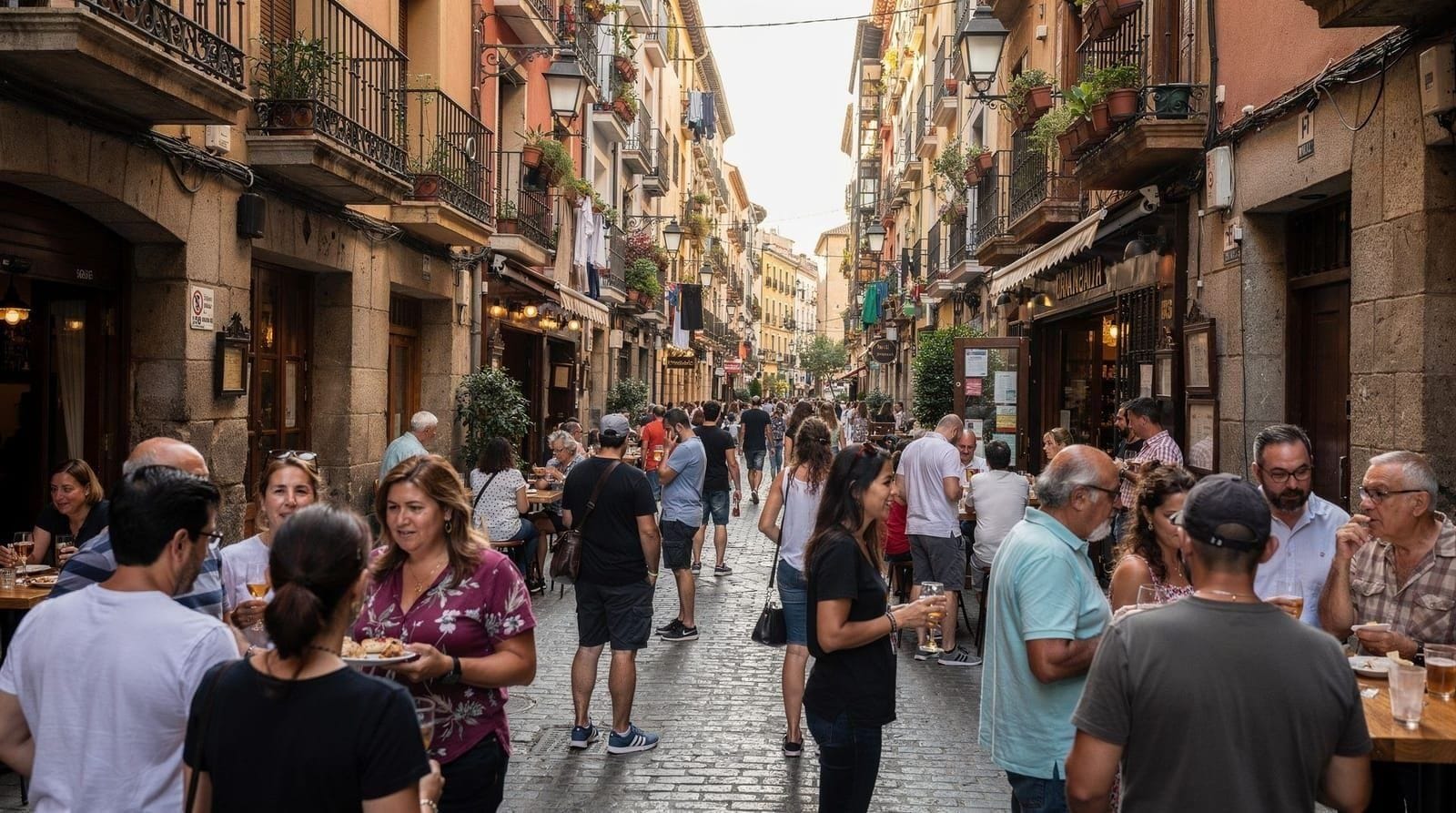
Today El Rastro occupies roughly a dozen streets radiating from the central Calle de la Ribera de Curtidores, spreading down the hill from the Plaza de Cascorro toward the banks of the Manzanares. On a typical Sunday in spring or autumn, 100,000 or more people pass through the market. On the first Sunday after New Year and on key public holidays, this number increases further.
This is simultaneously the market’s greatest appeal and its greatest challenge: the critical mass that makes El Rastro an experience is the same mass that makes it exhausting to navigate and high-risk for pickpockets.
The market structure
Main street — Calle de la Ribera de Curtidores: The central artery. Leather goods dominate (bags, belts, wallets — quality varies enormously, with mass-produced imports mixed with genuinely good Spanish leather). Clothing, tourist souvenirs, vintage watches, and general merchandise fill the remaining stalls.
Side streets — antiques and collectibles:
- Calle del Carnero: Furniture, decorative objects, mirrors, paintings. Some genuinely interesting pieces at the right price.
- Calle de Mira el Río Alta and Baja: More furniture and architectural salvage — old doors, tiles, ironwork.
- Calle de Fray Ceferino González: Books and print media — old magazines, newspapers, postcards, vintage maps. This is one of the most underrated sections. Old photographs of Madrid sell for €2–10 and make far better souvenirs than anything manufactured for tourists.
- Calle de la Encomienda and Calle del Carnero: Ceramics, vintage kitchen items, glassware.
Interior markets (galerias): Several converted buildings off the main street contain permanent and semi-permanent stalls specialising in coins, stamps, postcards, jewellery, and small collectibles. These are worth entering — the serious collectors work here rather than on the main drag.
What to buy (and what to skip)
Worth buying at El Rastro:
- Old prints, maps, and photographs of Madrid
- Vintage ceramics in Spanish regional styles (Talavera, Puente del Arzobispo)
- Leather goods from stalls that demonstrate Spanish manufacture (ask “¿es piel española?” — is this Spanish leather?)
- Books in Spanish (genuinely cheap)
- Vintage clothing from the specialist secondhand stalls (not the fast-fashion vendors)
Skip at El Rastro (better elsewhere):
- New tourist souvenirs (see the souvenirs guide for better options)
- Electronics and power adapters (quality unreliable)
- Branded goods at suspiciously low prices (counterfeit risk)
- Food items from unlicensed vendors
Timing your visit
09:00–10:30: Best time. The serious collectors are already here; the casual Sunday crowd has not yet arrived. Light, manageable, best atmosphere.
11:00–12:30: Busy but still navigable. Good time to browse without specific objectives.
13:00–15:00: Very crowded. Hard to move on the main street. Not a good time if you are looking for specific items or trying to negotiate carefully. However, this is when the post-market La Latina tapas ritual begins, which is the real payoff for a Sunday visit.
The Sunday ritual: market + tapas
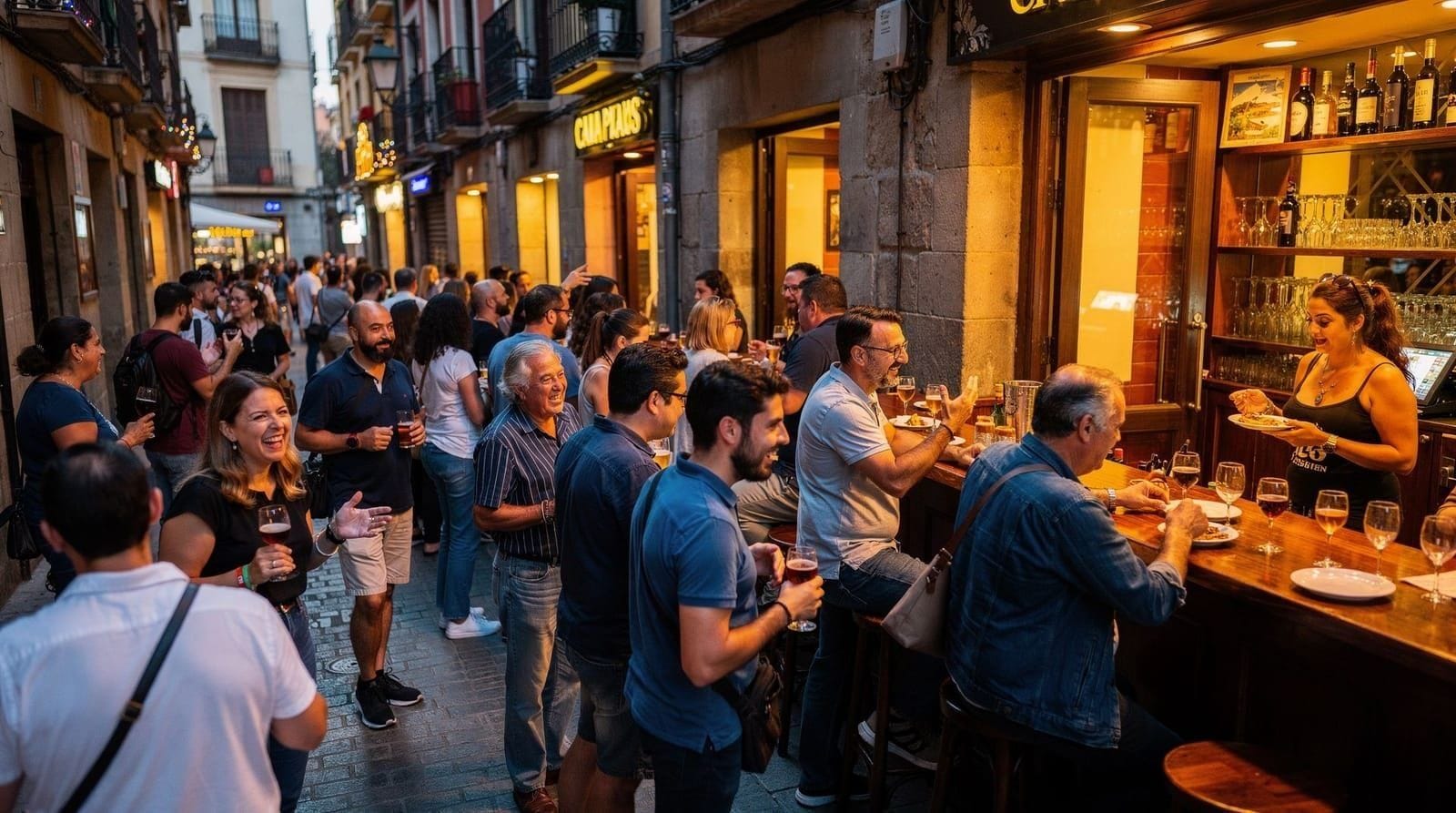
The canonical Madrid Sunday goes: El Rastro from 09:00 to 12:00, then tapas in La Latina from 12:00 to 15:00. This sequence is not a tourist construction — it is what Madrileños do. The Cava Baja bars fill rapidly from midday with market-goers and their acquaintances, and the combination of a Sunday market and long slow lunch is one of the best available experiences in the city.
After 15:00, most of the tapas bars on Cava Baja begin to ease off. A Sunday afternoon nap (siesta) is not culturally obligatory but is logistically sensible if you have energy for an evening programme.
The La Latina guide has the full breakdown of where to eat on Cava Baja and surrounding streets, and the where to eat in La Latina guide narrows it down to specific bars. If you are new to ordering small plates, the Madrid tapas guide explains how rounds, free tapas and shared raciones work, and best tapas bars gives you a shortlist to choose from.
If you would rather have the food side of the day organised for you, a guided session such as a hands-on paella and tapas cooking class with a market visit is an alternative way to spend an afternoon once the flea market is behind you. It is entirely optional — the self-guided Cava Baja crawl needs no booking.
Pickpocket guidance in detail
Standard recommendation throughout Madrid: the pickpockets and safe areas guide covers the full city picture. For El Rastro specifically:
- Shoulder bag: Wear it crossbody with the bag in front. Not on your back.
- Phone: In an internal jacket or trouser pocket, not in your hand or a back pocket.
- Wallet: Front trouser pocket or internal jacket pocket.
- Passport: Leave at the hotel. Take a photo on your phone as backup.
- Valuables: Leave expensive jewellery and watches at the hotel.
- Backpacks: These are targets. Either leave the backpack at the hotel, or use a slash-proof design and keep it in front.
The most common technique is distraction — someone approaches you with a question, points at something, or “accidentally” jostles you while an accomplice accesses your pocket or bag. The solution is simple spatial awareness: keep your hand on your bag in crowds and decline all unsolicited social approaches.
Madrid police are present at El Rastro every Sunday; the risk is manageable with awareness, not elimination.
Getting there and nearby
Metro: La Latina (Line 5) — exit and walk south. Tirso de Molina (Line 1) — exit and walk south through Plaza de Tirso de Molina.
From La Latina accommodation: The market is on your doorstep — 5–10 minute walk from most La Latina hotels.
From Sol: 15–20 minutes on foot via Calle Mayor and down into La Latina. Or metro: Sol → La Latina on Line 5 (four stops).
Nearby: After the market, the Barrio de las Letras is 20 minutes’ walk east; the Reina Sofía museum is 25 minutes south.
El Rastro in context: other Madrid markets
El Rastro is the most famous market but not the only one. For fresh food in a local context, the Mercado de la Paz in Salamanca and the Mercado de Maravillas in Tetuán are better daily markets without the tourist density. For food-hall experiences, Mercado de San Miguel (adjacent to Plaza Mayor) and Mercado de San Antón (Chueca) are the top options; the Mercado de San Miguel guide covers what is worth ordering there, and a guided street food tasting that includes San Miguel market suits visitors who want someone to lead the way through the stalls. See the full Madrid markets guide for comparisons.
Negotiation tactics and what to pay
Understanding El Rastro’s pricing dynamic saves money and avoids frustration.
The opening offer system: Most stallholders price items at 20–30% above what they will accept. Opening offers of 60–70% of the stated price are appropriate for items over €20. The counter-offer is typically 85–90% of the original ask; settlements happen around 75–80%. For items under €5, the stall is usually firm — it is not worth their time to negotiate.
When to negotiate: Toward the end of the market (after 13:30) when stallholders are mentally preparing to pack up, some will accept lower offers rather than transport items home. The risk is that the best items are gone by this point.
Cash is essential: Very few stalls accept cards. ATMs near La Latina metro are available but tend to have queues on Sunday mornings. Bring cash from your hotel.
Language: A few words of Spanish help: “¿Cuánto es esto?” (how much is this?), “¿Puede hacerme un precio?” (can you do me a price?), “Lo pienso” (I’ll think about it — useful for retreating gracefully). No stallholder expects perfect Spanish from tourists; the effort is appreciated.
El Rastro and the surrounding area
Calle de Embajadores (north of the market): The street leading away from the market north into Lavapiés has several interesting permanent antique and second-hand shops that operate during the week — the overflow of the Sunday market culture into daily life.
Tabacalera (Calle de Embajadores 53): The former tobacco factory, now a self-managed cultural centre, is worth entering after the market if you have energy. The courtyard has street art; the exhibition spaces show contemporary work. Free entry to the exterior.
Plaza de Cascorro: The square at the top of Calle de la Ribera de Curtidores where El Rastro effectively begins. The large statue of Eloy Alfaro (a heroic Spanish soldier, 19th century) has a strange afterlife as a flea market landmark. Good position for people-watching at the start or end of the market.
El Rastro for dealers and serious collectors
If you are a serious antique collector or dealer, El Rastro requires a different approach than casual visiting.
Arrive at 08:30: Before the official 09:00 opening, dealers are already working the arriving stallholders. The best pieces — particularly small furniture, silver, and quality ceramics — are often pre-sold in this window.
Know your category: El Rastro is not specialised. The print and map dealers are concentrated on one street; the ceramics dealers on another; the furniture on a third. Map your route before arriving using the mental geography above.
The interior galleries: The permanent indoor stalls (galerias antiqiarias inside converted buildings off Ribera de Curtidores) have more consistent stock than the street vendors. For coins, stamps, antique photographs, and small collectibles, these are the reliable sources.
Provenance questions: Don’t expect documentation. El Rastro operates on the principle of what you can see. For items of significant value (over €200), ask questions about origin — the stallholder may or may not know, but asking establishes that you are a serious buyer.
Weather and seasonal notes
El Rastro runs rain or shine, but the experience changes with the seasons. Summer Sundays (June–August) get uncomfortably hot by midday under the sun on the main street — start earlier than usual and retreat to a shaded tapas bar by noon. Winter Sundays (December–February) are cold but far less crowded, and dedicated collectors often prefer this season for actually finding things rather than fighting crowds. Spring and autumn are the most popular and most crowded — expect the full 100,000-plus Sunday turnout described above.
Stretching the day on a budget
El Rastro costs nothing to enter, which makes it one of the easiest items to slot into a tight plan. The Madrid on a budget guide shows how a free market morning, a shared tapas lunch and a walk through the neighbourhoods can fill a Sunday without much spending. Setting yourself a small cash limit before you arrive also helps you resist impulse purchases when the crowds and the patter of the stallholders start to work on you.
Exploring the neighbourhoods around the market
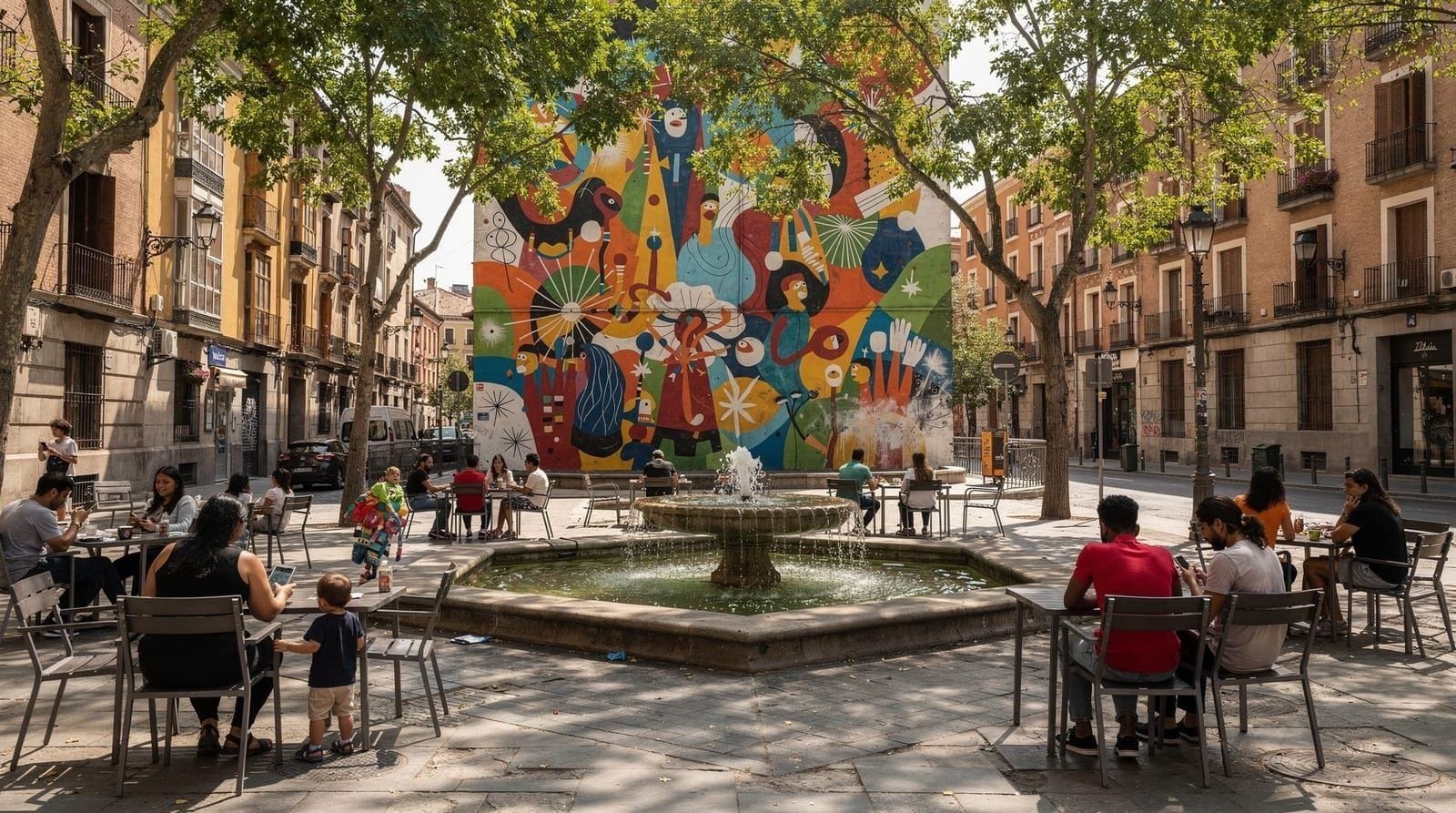
The market sits at the meeting point of two very different districts. The La Latina neighbourhood is the traditional, bar-lined side of the story, while the Lavapiés neighbourhood just beyond it is more multicultural and more alternative. If you have time after the stalls start closing, the Lavapiés guide and the street art in Lavapiés walk are natural next steps, and both are easy on foot from the bottom of Ribera de Curtidores.
How El Rastro fits a longer Madrid weekend
For visitors with more than a Sunday morning to spend in the area, El Rastro pairs naturally with a wider La Latina and Lavapiés circuit: the market in the morning, tapas on Cava Baja through early afternoon, and the Reina Sofía museum or a wander into Lavapiés’s multicultural streets once the crowds thin out after 15:00. This turns a single market visit into a full day that captures several of Madrid’s most distinctive neighbourhoods without needing a car or a booked tour.
Frequently asked questions about El Rastro flea market
What time does El Rastro open and close?
El Rastro runs from approximately 09:00 to 15:00 every Sunday and on public holidays. Stalls begin setting up from 08:30; the best finds and least crowded atmosphere are from 09:00–10:30. By 13:00 it is extremely crowded. Most stalls are packing up by 14:30. There is no El Rastro on weekdays or Saturdays.Is El Rastro worth visiting?
Yes — as an experience and a social ritual, absolutely. As a place to find specific antique bargains, it requires patience and early arrival. The combination of the market followed by Sunday tapas in La Latina is one of the best things you can do on a visit to Madrid. Manage expectations about what you will find for sale.How do I get to El Rastro?
Metro to La Latina (Line 5) is the most direct route — exit the metro and walk south down Calle de la Cava Baja or directly toward Plaza de Cascorro. Alternatively, Tirso de Molina (Line 1) puts you at the northern end of the market. On Sunday mornings, the streets around the market have no through-traffic, making it easier to navigate on foot than to arrive by car or taxi.What is the pickpocket situation at El Rastro?
El Rastro is the single highest-pickpocket-risk location in Madrid. The combination of dense crowds, distracted shoppers, and narrow streets creates ideal conditions for bag-snatching and phone theft. Keep bags zipped and in front of you, not on your back. Keep your phone in an internal pocket, not your hand or a back pocket. Do not wear expensive jewellery. This warning is not exaggerated — it is the universal advice from police, guidebooks, and anyone who has spent time at the market.What can I actually buy at El Rastro?
The main street (Calle de la Ribera de Curtidores) sells leather goods (some good quality, some poor), clothing, and tourist merchandise. The side streets are more interesting for antiques: Calle del Carnero and Calle de Mira el Río for furniture and decorative objects; Calle del Fray Ceferino González for books and old magazines. Interior markets (galería) off the main street sell smaller collectibles, coins, stamps, and vintage photographs.Is El Rastro only on Sundays?
El Rastro proper is only on Sundays and public holidays. During the week, some antique and second-hand shops remain open in the Ribera de Curtidores area — but the market itself, with hundreds of street stalls, exists exclusively on Sunday mornings.Can I negotiate prices at El Rastro?
Yes — negotiation is expected at most stalls, especially for larger items. The opening offer is often 20–30% above what a seller will accept. For small-priced items (under €5), negotiation is less common. Offer in euros in cash; stallholders typically do not accept cards. An ATM is available near La Latina metro.