Where to stay in Madrid: the honest neighbourhood guide
Madrid: Prado Guided Skip the Line
Where is the best area to stay in Madrid?
For first-timers, Sol/Centro or La Latina gives the best walkable access to the main sights. Malasaña suits younger travellers and nightlife seekers. Salamanca is the upmarket residential choice with excellent restaurants. Chueca is ideal for LGBTQ+ visitors and anyone who wants a village feel inside the city. Lavapiés offers the best budget rates and a genuinely multicultural atmosphere. Your best neighbourhood depends entirely on what kind of trip you want.
The honest neighbourhood map
Madrid has no bad areas for tourists — but it has very different areas, and choosing poorly wastes days recovering from a commute that should not exist. This guide cuts through the hotel marketing to tell you what each neighbourhood actually feels like to stay in.
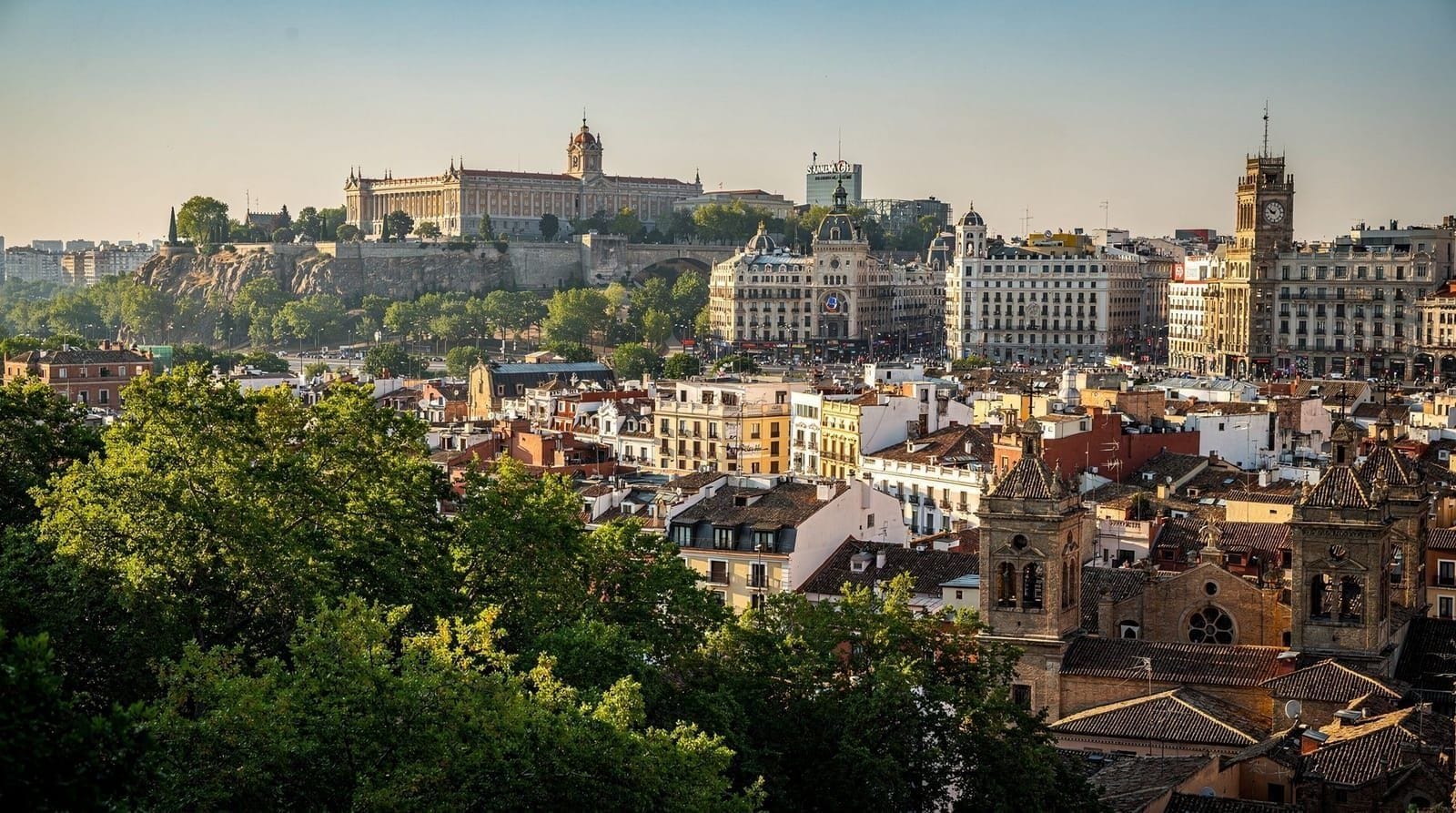
The core is compact. From Sol to La Latina on foot is eight minutes. From La Latina to Malasaña is twelve. The whole historic centre fits inside a zone you could walk end to end in forty-five minutes. Which means your choice of neighbourhood is really a choice of atmosphere, not logistics — most of the sights are equally reachable from any central address.
| First-timers | Sol/Centro or La Latina |
| Nightlife/budget-conscious | Malasaña or Lavapiés |
| Food-focused couples | La Latina or Chueca |
| Luxury/shopping | Barrio Salamanca |
| Typical mid-range price | Around €90–170/night in most central areas |
Sol and Centro: the obvious choice
Who it’s for: First-time visitors who want everything within a five-minute walk. Tour groups. Anyone who can’t face navigation.
The reality: Puerta del Sol is Madrid’s zero-kilometre point — all distances in Spain are measured from here. Staying here means zero effort to reach the Royal Palace, Plaza Mayor, and the main shopping streets. It is also the noisiest, most tourist-saturated neighbourhood in the city.
Streets like Calle del Arenal, Calle Mayor, and the Gran Vía corridor are busy until 3am on weekends. If you sleep lightly, request an interior room.
Price reality: The proximity premium is real. A three-star hotel near Sol often costs €130–180 that would be €90–120 in Malasaña for equivalent quality. You are paying for the postcode.
Best hotel picks by budget:
- Budget: Hostal Central Palace Madrid (doubles from €65, excellent location)
- Mid-range: Hotel Catalonia Puerta del Sol (€130–160, solid four-star)
- Splurge: Hotel Urban (Gran Vía area, design hotel, €280–380)
The Sol and Centro destination page covers the area’s attractions in depth.
La Latina: the most characterful choice
Who it’s for: Anyone who wants to eat and drink like a Madrileño. Couples. Weekend breaks. People who care about food.
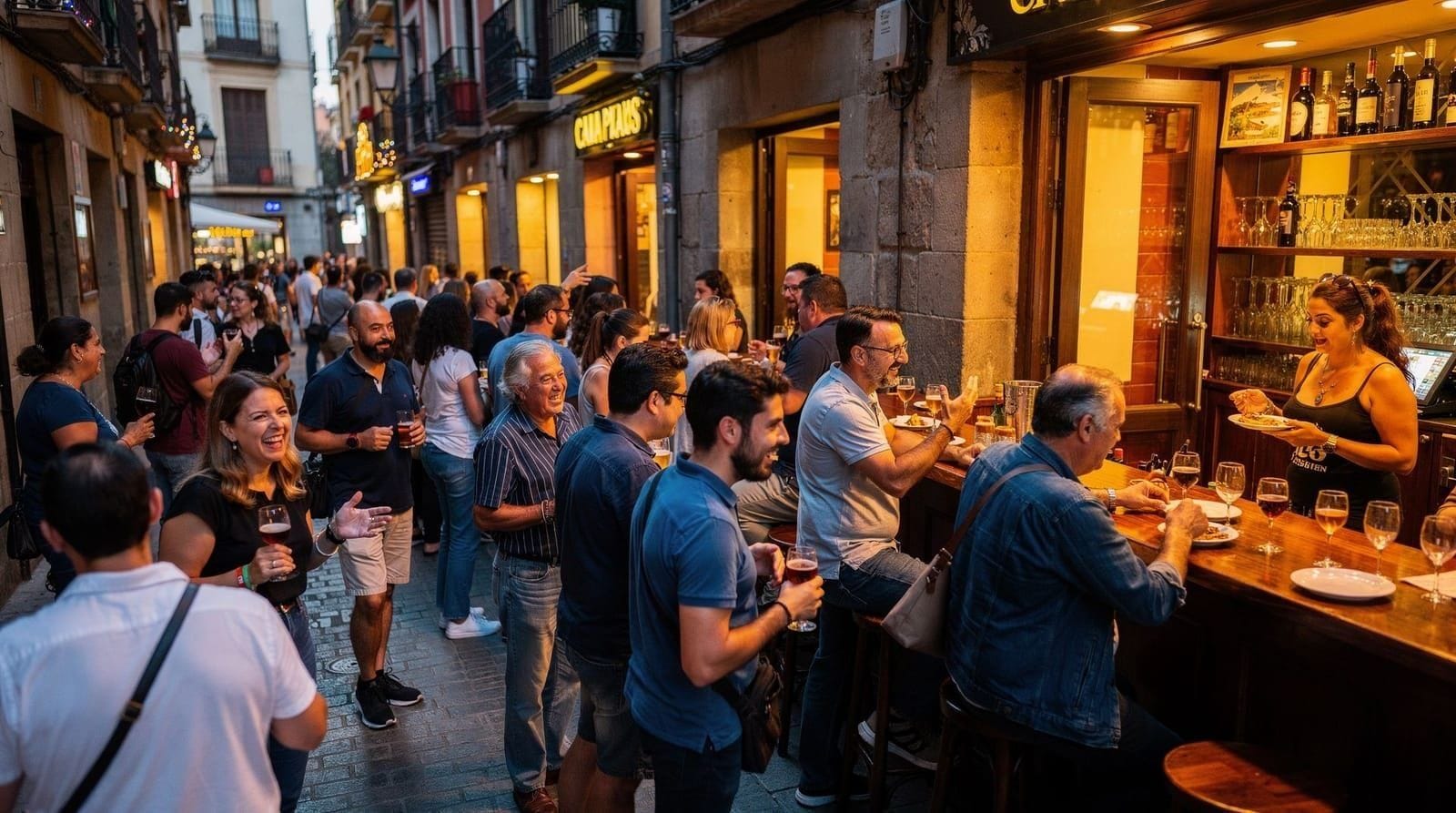
The reality: La Latina is Madrid at its most alive on a Sunday afternoon — tapas bars spilling onto Calle de la Cava Baja, El Rastro market filling the surrounding streets (Sunday mornings only), and a neighbourhood that feels genuinely inhabited rather than Disneyfied. See the La Latina destination page for what to do once you’re here.
The hotel stock is smaller and more boutique than Sol. You won’t find enormous chain hotels here — instead, small four-star conversions in historic buildings and reliable two-star hostalería. The area sits on a hill above the Manzanares river, which means some streets are steep.
Price reality: Mid-range stays run €90–160 per night. A genuine bargain relative to Sol for similar centrality.
Best hotel picks by budget:
- Budget: Posada del León de Oro (doubles from €85, genuine historic building, medieval courtyard)
- Mid-range: Hotel Vincci Soho (border of La Latina/Letras, excellent value, €110–150)
Malasaña: the creative neighbourhood
Who it’s for: Young travellers, solo visitors, those who prioritise nightlife and café culture. Anyone who has been to Madrid before and wants to see beyond the postcard.
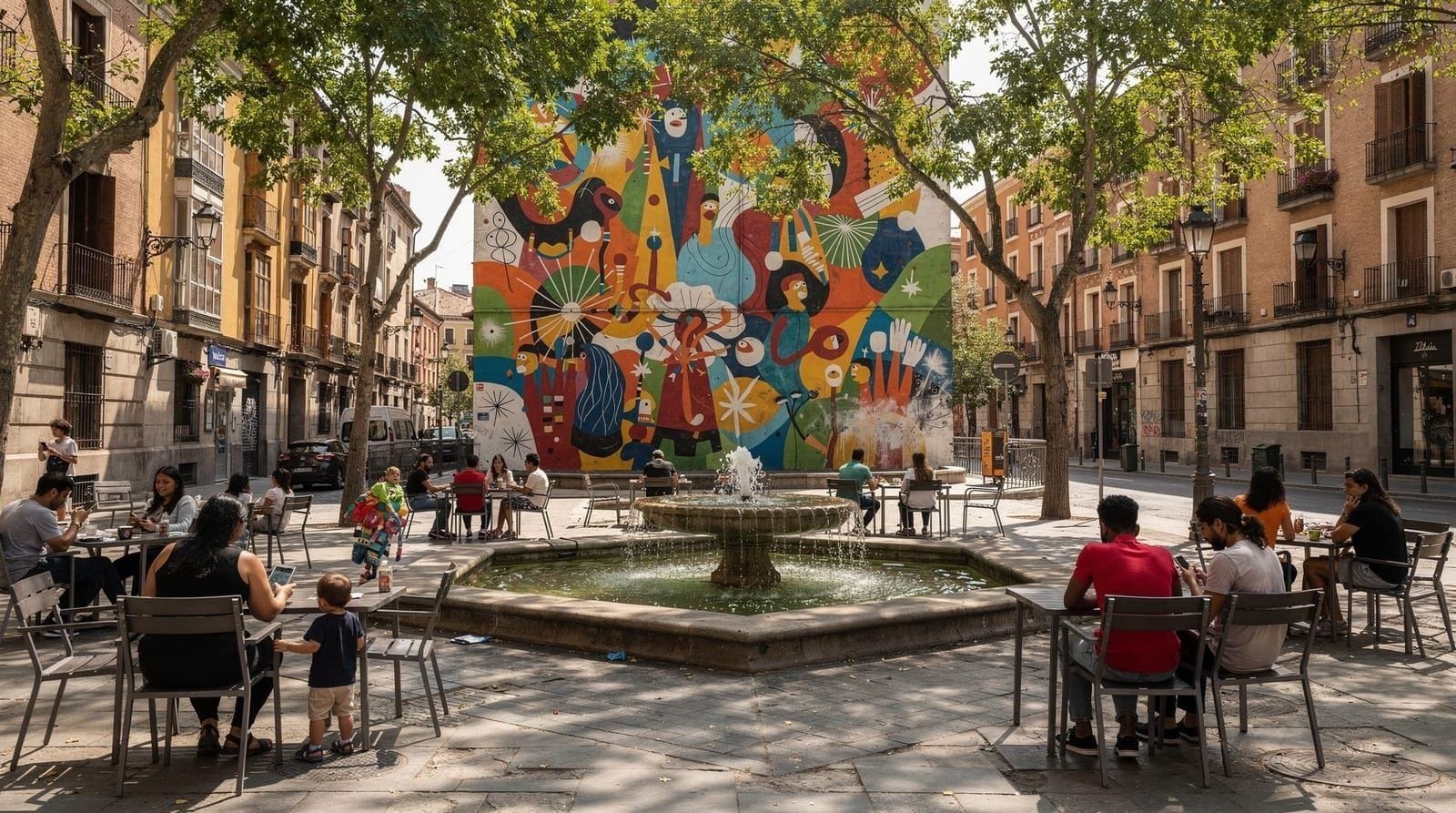
The reality: Malasaña was Madrid’s bohemian epicentre in the 1980s Movida Madrileña cultural explosion and never entirely stopped. Calle Fuencarral is the indie shopping spine; the Plaza del Dos de Mayo is the social hub. Coffee shops, vintage stores, record shops, and bars that stay open until 5am are the texture of the neighbourhood.
It is also 10 minutes’ walk from the Prado via Chueca and Cibeles — do not let anyone tell you Malasaña is inconveniently located. The Malasaña destination page goes deeper on what makes it tick.
Price reality: Frequently the best value for location in Madrid. Three-star hotels run €80–120; boutique four-stars €120–170.
Best hotel picks by budget:
- Budget: Generator Madrid (design hostel, dorms from €20, doubles from €70)
- Mid-range: Only YOU Hotel (boutique, excellent design, €140–200)
- Splurge: Hotel Orfila (small luxury hotel, €260–360, technically Alonso Martínez but walkable to Malasaña)
Chueca: LGBTQ+ hub and neighbourhood gem
Who it’s for: LGBTQ+ travellers, those who want a village feel within the city, good restaurants without tourist crowds.
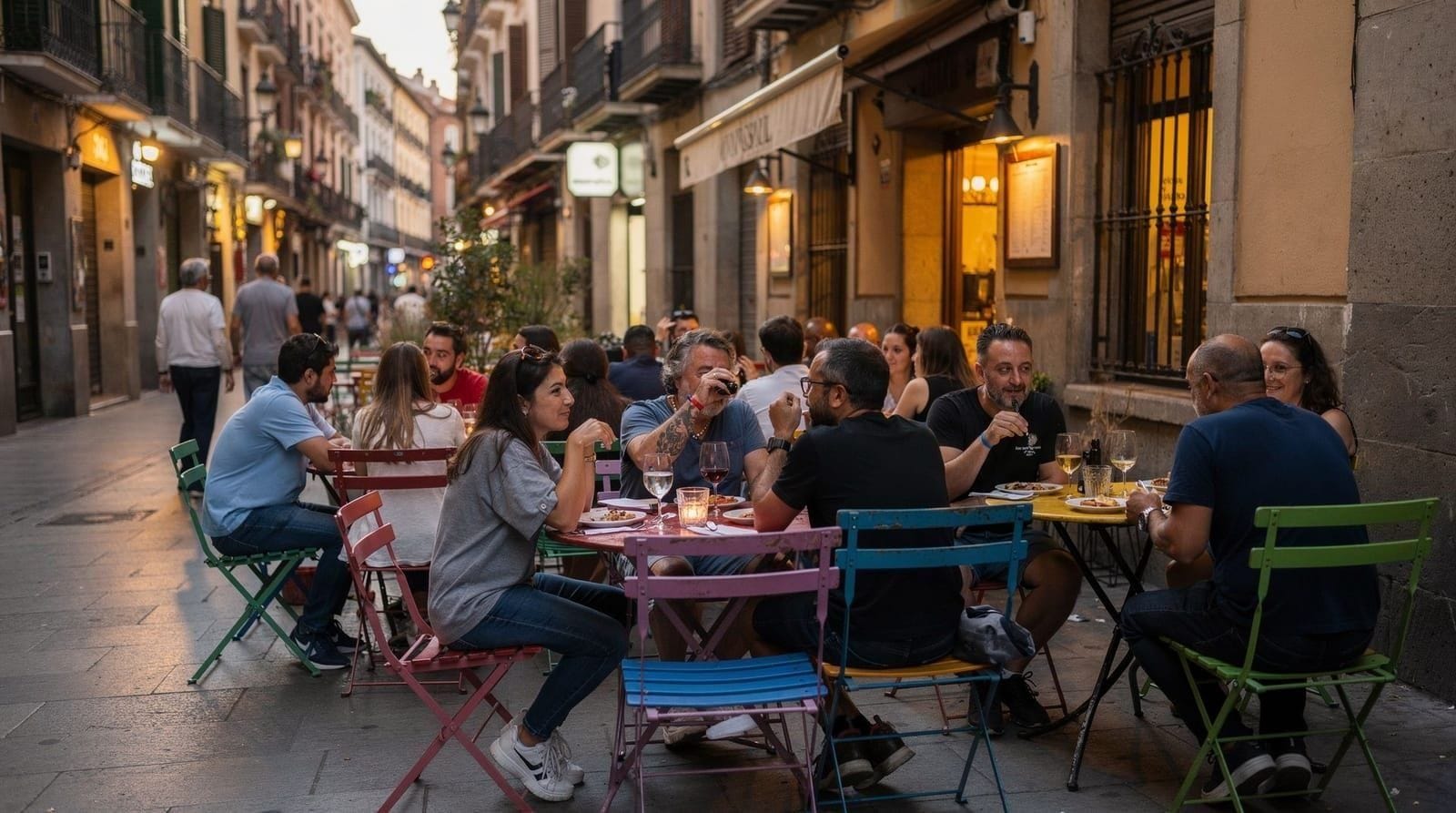
The reality: Chueca is one of the best-organised neighbourhoods in Madrid. The square itself (Plaza de Chueca) acts as a social centre; the surrounding streets have the highest density of quality bars and restaurants in the city at this budget level. During Pride (late June–early July) it is the epicentre of one of Europe’s largest Pride celebrations.
It is also extremely safe, extremely lively, and about fifteen minutes’ walk from the Prado. The Chueca destination page has the full neighbourhood breakdown.
Price reality: Slightly higher than Malasaña due to the stronger dining and café scene driving competition. Mid-range €110–170.
Best hotel picks by budget:
- Budget: Hostal Gala (doubles from €70, well-kept, good location)
- Mid-range: Room Mate Oscar (design hotel, central Chueca, €130–180)
- Splurge: The Pavilions Madrid (boutique, Chueca edge, €230–320)
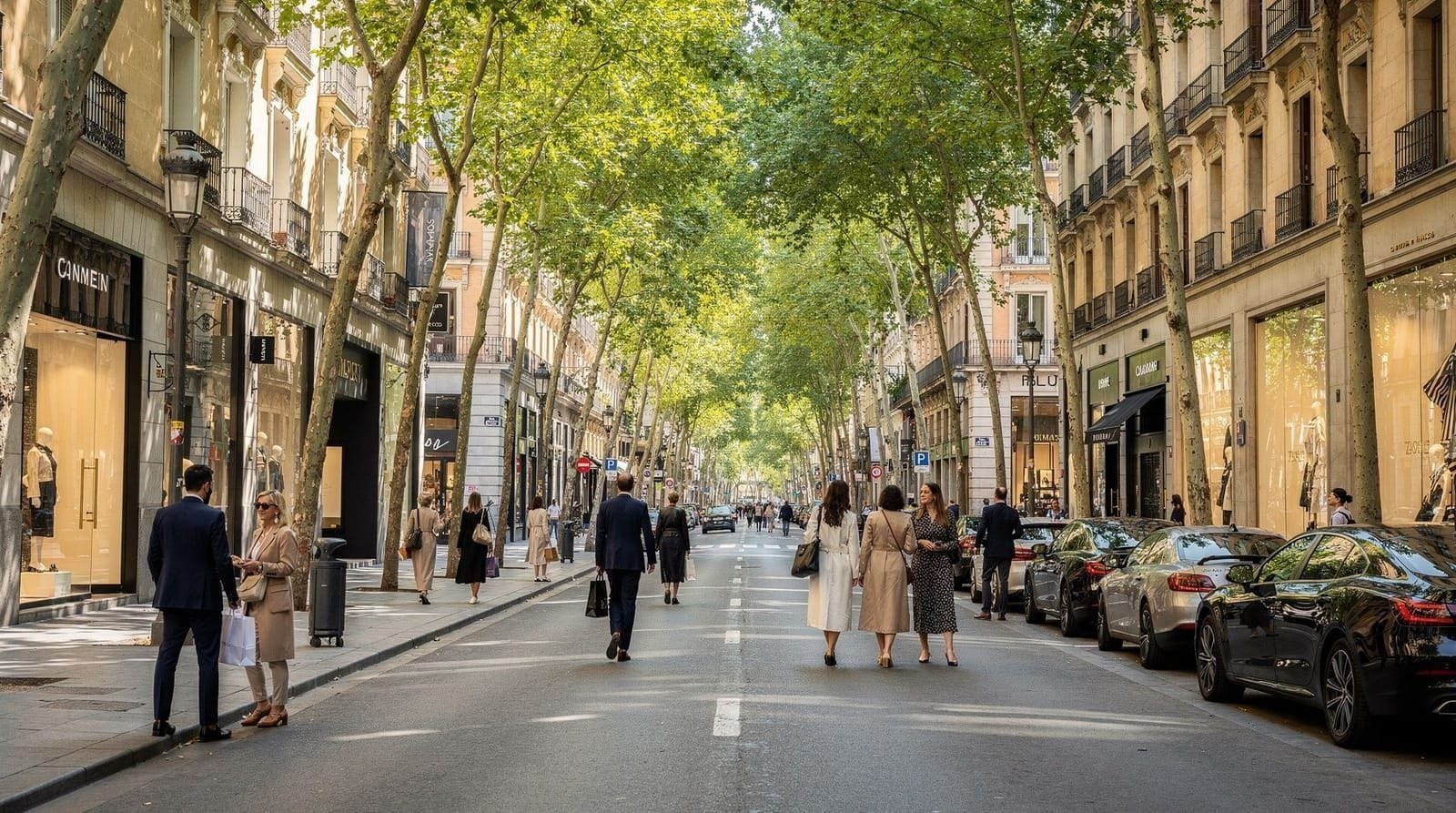
Barrio Salamanca: the upmarket residential choice
Who it’s for: Visitors who want luxury shopping, Michelin-starred restaurants, calm streets, and a neighbourhood that feels like Paris’s 16th rather than a tourist zone.
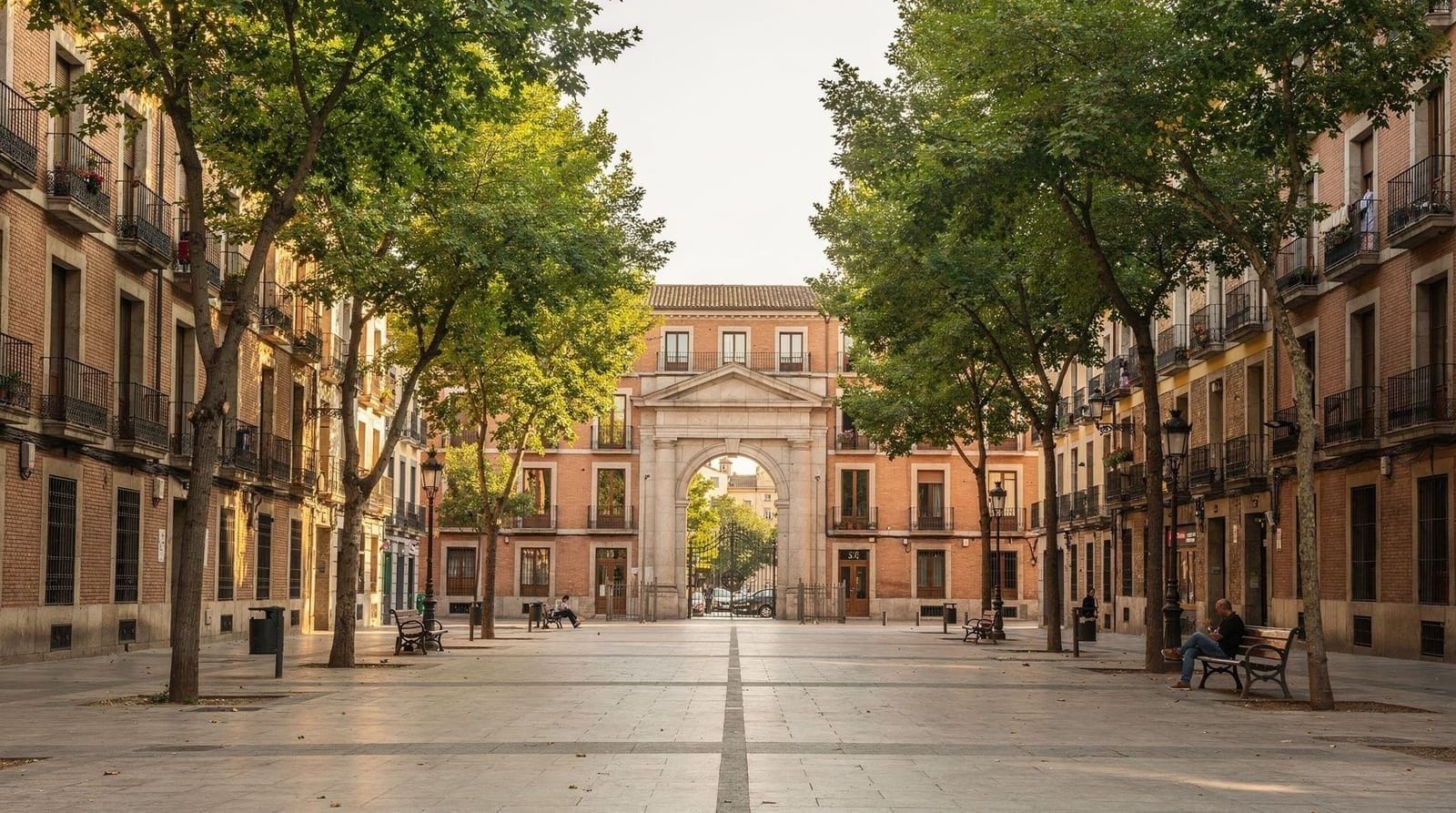
The reality: Salamanca is Madrid’s most exclusive residential neighbourhood. The grid of wide 19th-century streets between Serrano and Velázquez contains Spain’s finest concentration of designer boutiques, some of the city’s best restaurants, and hotels where service standards are genuinely high.
It is further from La Latina and the historic centre than Malasaña or Chueca — around a 25–30 minute walk to Plaza Mayor, or five minutes by metro. For visitors with heavy days at the Prado (which is just south of the neighbourhood), it is conveniently placed.
See the Salamanca district guide for the full shopping and dining breakdown.
Price reality: The highest hotel rates in Madrid outside a handful of Gran Vía luxury properties. Expect €150–200 for decent mid-range; €300+ for proper luxury.
Best hotel picks by budget:
- Mid-range: Hotel NH Collection Madrid Abascal (€140–190, solid four-star)
- Splurge: Urso Hotel (boutique luxury, €250–380)
- Ultra-luxury: The Westin Palace or Hotel Villa Magna (€400–600+)
Lavapiés: bohemian and genuinely multicultural
Who it’s for: Budget travellers, those who want real neighbourhood life rather than tourist infrastructure, food adventurers.
The reality: Lavapiés is the most diverse neighbourhood in Madrid — a working-class area that has absorbed waves of immigration over decades and become one of the most interesting food scenes in the city. Indian grocery shops, Moroccan tea houses, African restaurants, and traditional Spanish bars coexist on the same streets.
The neighbourhood has the highest concentration of interesting street art in central Madrid (documented in the street art guide). It slopes uphill from the Rastro flea market area and can feel labyrinthine. Not the slickest infrastructure but authentically Madrid.
Price reality: The most affordable central neighbourhood for accommodation. Budget hostels €20–40 per person; guesthouses €55–85 per double.
Best hotel picks by budget:
- Budget: Hostal Horizonte (doubles from €55, clean and honest)
- Mid-range: The Hat Madrid (rooftop bar, doubles from €90)
The Lavapiés destination page and the Lavapiés guide cover the full picture.
Barrio de las Letras: literary quarter, quiet nights
Who it’s for: Culture lovers, couples who want a calmer atmosphere, visitors focused on the art museum triangle.
The reality: Las Letras — the literary quarter around Calle de las Huertas — sits between Sol and the Prado in one of Madrid’s most atmospherically satisfying areas. The streets have literary quotes embedded in the pavements (Cervantes lived and died here); the hotels are boutique and genuinely good. It is also not as aggressively noisy as Sol, which makes it a surprising winner for light sleepers who still want central access.
See the Barrio de las Letras destination page and the Letras guide for full detail.
Price reality: Competitive with La Latina. Mid-range €100–170 per night.
Best hotel picks by budget:
- Mid-range: Hotel Intur Palacio San Martín (€120–170, beautiful palace building)
- Splurge: Catalonia Las Cortes (boutique, excellent Letras location, €150–220)
- Ultra: Me Madrid (rooftop pool, Plaza Santa Ana, €280–400)
Chamberí: the hidden alternative
Not on most first-time visitor shortlists, but worth knowing about: Chamberí, north of Malasaña and the Paseo de la Castellana, is where Madrid’s professional class lives. The neighbourhood has:
- Excellent restaurants on Calle de Ponzano (Madrid’s most talked-about casual dining street of the last decade)
- Calm, wide streets with very low tourist density
- The Alonso Martínez metro hub (Lines 4, 5, and 10) giving easy access to Salamanca, Sol, and the airport corridor
- Mid-range to upscale hotel options at non-tourist-saturated prices
For visitors specifically interested in eating well rather than sightseeing intensively, Chamberí is worth considering. The Chamberí destination page covers what to do there.
Retiro/Jerónimos: the museum district base
The area immediately east of the Paseo del Prado — between the Prado, the Retiro park, and the Thyssen — is a valid base for art-heavy visits.
Advantages: 5-minute walk to the Prado; 10-minute walk to the Thyssen; immediate access to Retiro park. Quieter than Sol. Less tourist restaurant saturation than the central areas.
Disadvantages: Fewer restaurants per block than Malasaña or La Latina. More expensive than equivalent quality in other areas. Fewer independent shops and bars.
Best for: Visitors making the Prado the primary focus — perhaps combining multiple long museum visits with mornings in Retiro. The free evening opening strategy works best from here. Academics and cultural tourists.
Price reality: Four-star hotels near the Prado run €150–250 per night. Not budget territory, but the access premium is genuine.
Making the base pay off: If you choose this area, build the trip around the museums on your doorstep. The Prado museum guide and the Reina Sofía guide will help you decide what to see first, and the Thyssen guide rounds out the trio. Many visitors find a guided visit makes the Prado far easier to digest, for example a guided Prado visit with skip-the-line entry, which saves you from wandering the galleries without a plan. If modern art is your priority, a skip-the-line Reina Sofía ticket gets you to Guernica without standing outside. The golden triangle art walk links the three museums into a single route, and museum free hours explains how to time visits from your hotel.
Practical checklist before booking
Check the noise situation. Interior rooms (habitación interior) are significantly quieter on busy streets. Ask specifically — most Madrid hotels on Gran Vía and Sol offer them.
Metro is your friend. Madrid’s metro is clean, safe, frequent, and covers every area in this guide. No neighbourhood requires you to take a taxi to reach the sights. Even from Salamanca, the metro to Sol is five minutes.
Book spring and autumn early. April–May and September–October see rates 30–50% higher than winter. San Isidro (around 15 May) and Madrid Pride (late June) spike demand severely.
August is a double-edged sword. Hotels are cheap and uncrowded, but some small restaurants and neighbourhood bars close for all or part of August. The museum queue problem disappears.
How to fit accommodation into your itinerary
For two to three days: stay in La Latina, Malasaña, or Chueca — maximum neighbourhood character with easy access to everything. For four to seven days: consider whether Salamanca suits you if your programme is art-heavy; or stay in Lavapiés if budget matters. For families: Barrio Letras is the calmest central option; see the family itinerary guide for activity planning.
Getting to and from your hotel
Whichever area you pick, think about arrival day. The airport to city guide explains the options, and the Atocha vs Chamartín guide matters if you arrive by train or plan day trips. For moving around once you are settled, the metro guide and the tourist travel pass guide cover the practicalities. If you are still unsure how long to stay, how many days in Madrid and the first-time area guide help narrow it down, while the 3-day itinerary shows how a short stay unfolds from a central base. Travelling on a tighter budget? See Madrid on a budget.
Frequently asked questions about Where to stay in Madrid
Is it safe to stay in central Madrid?
Yes. Madrid's centre — Sol, La Latina, Malasaña, Chueca, Lavapiés — is generally very safe at night. The main concern everywhere is pickpockets, not personal safety. Lavapiés has a grittier reputation but is overwhelmingly safe for tourists; the streets are busy until late. Avoid leaving bags unattended anywhere in the metro or tourist crowds.How much does a hotel in Madrid cost per night?
Hostel dorms run €25–45. Budget doubles €60–90. Mid-range central hotels €100–180. Four-star central hotels €180–280. Five-star luxury €300–500+. Madrid is roughly 20–25% cheaper than Paris or London for equivalent quality.Is Sol a good area to stay in Madrid?
Sol is supremely central but noisy and tourist-heavy. If you want to walk everywhere without effort, it works well. If you want atmosphere and authenticity, La Latina or Malasaña are better choices at similar or lower prices.Should I stay near the Prado museum?
Staying in the Retiro/Jeronimos area puts you steps from the Prado, Thyssen, and Reina Sofía, and Retiro park, but the neighbourhood has fewer restaurants and bars per square metre than La Latina or Malasaña. Better as a base for culture-intensive trips than for nightlife.Which Madrid neighbourhood has the best restaurants?
La Latina (traditional Spanish tapas), Chamberí (upmarket neighbourhood dining), and Salamanca (Michelin and fine dining) are the top choices for eating well. Malasaña and Chueca have strong café and bar scenes. Lavapiés has the city's best international food.Is Airbnb better than hotels in Madrid?
For groups of three or more staying a week or more, a flat in Malasaña or Chueca can be excellent value. For short stays and solo or couple travel, hotels typically offer better service and flexibility. Madrid's hotel stock is genuinely good and competitively priced.Which areas should I avoid for hotels in Madrid?
There are no areas tourists should categorically avoid. Areas around the Sol/Gran Vía axis have the highest tourist-pricing premium; you often pay more for less at hotels near Puerta del Sol than in equally central Malasaña or La Latina. The Atocha station area has functional business hotels but limited neighbourhood charm.