Sol and Gran Vía
Puerta del Sol and Gran Vía — Madrid's transit hub and main boulevard. What's worth your time, what to skip, and where the tourist traps are.
Madrid: Hop On Hop Off Panoramic
Quick facts
- Metro
- Sol (L1/2/3), Gran Vía (L5), Callao (L3/5)
- Key landmark
- Puerta del Sol — km 0 of Spain's road network
- Gran Vía length
- 1.3 km (Alcalá to Plaza de España)
- Main use
- Shopping, transit, connecting between quarters
- Pickpocket risk
- High — use cross-body bags, keep phone in pocket
Puerta del Sol and Gran Vía are the two arteries of central Madrid — the most-visited, most-photographed, and, frankly, most tourist-saturated parts of the city. Every visitor passes through; most stay longer than they need to. Understanding what they are actually for helps you use them correctly and move on to better things.
Sol is a transit hub and gathering point. Gran Vía is a shopping boulevard with exceptional architecture. Neither is a neighbourhood with genuine local character the way La Latina, Malasaña, or Chamberí are. Treat them as infrastructure — useful, sometimes spectacular, but not where you spend most of your time. That said, the architecture of Gran Vía is genuinely worth an attentive hour, and the New Year’s Eve tradition in Sol is an experience unlike any in Europe.
| Where | Central Madrid, between Centro and Chueca/Malasaña |
| Cost | Free to walk; rooftop viewpoints ~€4–€6 |
| Time needed | 1–2 hrs for orientation and architecture; not a full stop |
| Getting there | Metro Sol (L1/2/3) or Gran Vía (L5) |
| Best time | Evening for architecture; weekday morning for shopping |
Puerta del Sol
The semicircular plaza at the heart of Madrid is, more than anything else, a metro interchange: three lines (1, 2, 3) converge here, making it the connecting point for journeys across the city. Beyond that, it is Spain’s official geographic centre — the brass plaque set into the pavement in front of the Casa de Correos building marks kilometre zero of the national road network. All Spanish road distances are measured from this point.
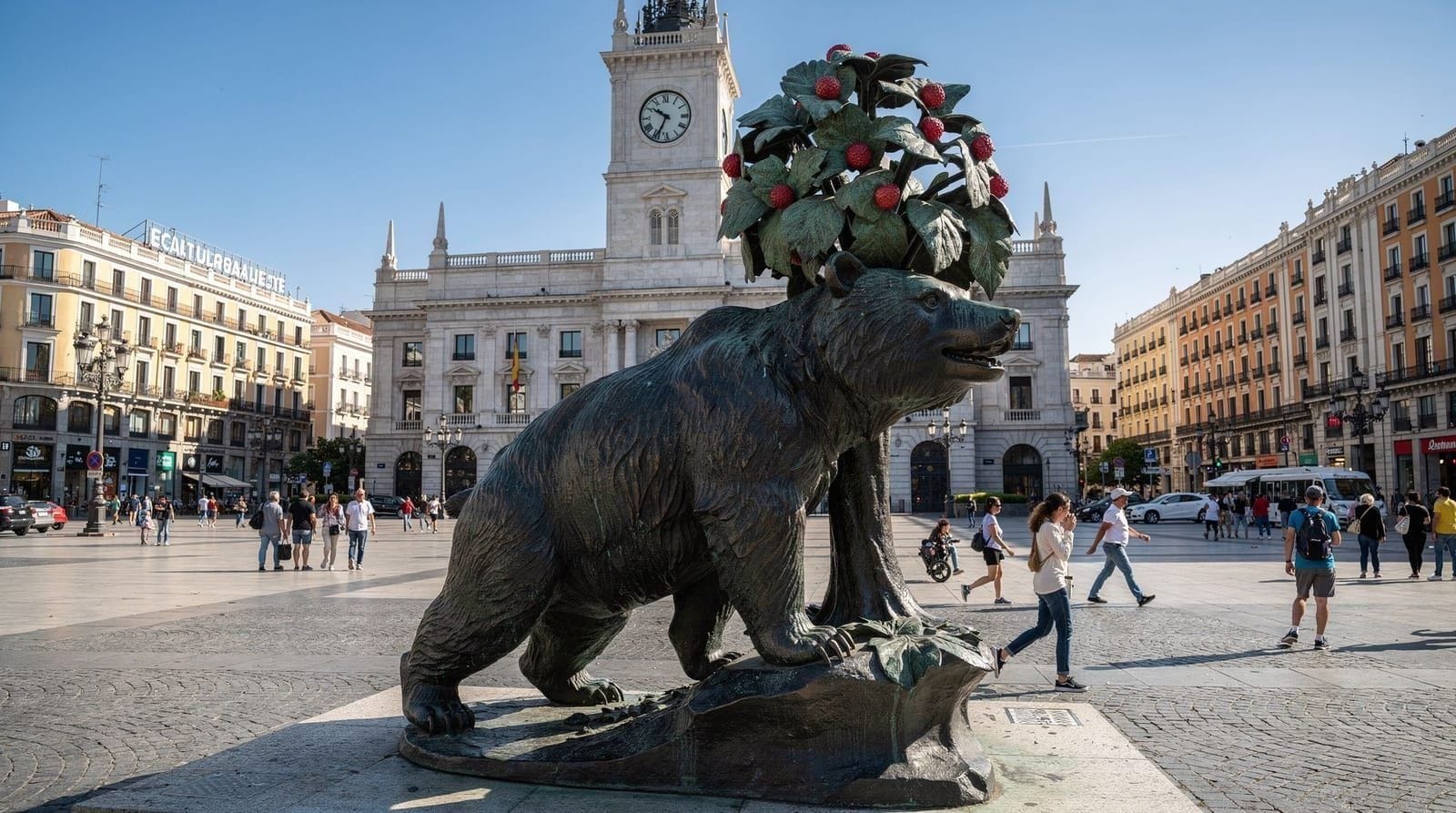
The Casa de Correos (the old post office, now the regional government building of the Comunidad de Madrid) occupies the south side of the square. Its clock tower is the venue for Madrid’s New Year’s Eve tradition: at midnight on 31 December, tens of thousands of people gather in the square to eat one grape per stroke of the clock (twelve grapes, twelve strokes). The tradition dates from 1909, when wealthy families mocked the poor by eating grapes at midnight — the poor adopted the practice in return, and it became the national New Year custom. If you are in Madrid for New Year, this is worth experiencing once — it is genuinely festive and extremely crowded; arriving in the square by 22:30 is advisable if you want a position near the centre.
The bronze bear and the strawberry tree statue (El Oso y el Madroño, on the east side of the square) is the symbol of Madrid — present in the city’s coat of arms, on the metro signs, and on the logo of Real Madrid. The bear and the wild strawberry (madroño) tree represent the city’s coat of arms, which medieval chronicles explain with reference to a land-ownership dispute between the city and the church. The statue is surrounded by tourists and selfie sticks at all daylight hours; the photograph is best taken early morning before the crowds arrive.
The square itself is an architectural palimpsest — rebuilt and modified across several centuries, with the current configuration dating largely from the 20th century. The main buildings are handsome rather than extraordinary; the square works because of its function (the country’s literal centre, the metro hub) rather than its beauty.
Practical warning: Sol is the primary pickpocket zone in Madrid. The combination of large tourist crowds, distraction from phones and maps, and highly skilled thieves (often working in coordinated teams) makes this the highest-risk area in the city. Use a cross-body bag worn in front, keep your phone inside a pocket or bag rather than in your hand, and do not respond to strangers who initiate contact (petition-clipboard people, rosemary-sprig women who push a sprig into your hand then demand money, people claiming you dropped something). The police presence is visible but the thieves are experienced.
Gran Vía: architecture and history
The 1.3 km boulevard connecting the Cibeles area to Plaza de España was cut through the old city in three stages between 1910 and 1931, demolishing approximately 300 houses and 14 medieval streets to create a Haussmannian axis for a capital that wanted to announce its 20th-century modernity. The social cost of that demolition was considerable — thousands of working-class residents displaced. The resulting architecture is, however, an unusually coherent collection of early 20th-century commercial buildings.
Stage 1 (1910–1917): from Calle de Alcalá to Calle de la Red de San Luis (the first third of the boulevard). The Edificio Metrópolis and the earliest Beaux-Arts buildings.
Stage 2 (1917–1922): through the centre of the historic city. More mixed styles; the Telefónica skyscraper went up in this section.
Stage 3 (1922–1931): west from Callao to Plaza de España. The cinemas and the Capitol building.
The architecture worth looking at
Edificio Metrópolis (corner of Gran Vía and Alcalá): the 1911 Beaux-Arts tower topped by a winged figure. Built originally for La Unión y el Fénix insurance company, whose phoenix and eagle figures topped the dome. When the building changed hands in 1975, the phoenix was replaced with the current Winged Victory (attributed as Ganymede on the dome). The best view is from Calle Alcalá looking up the boulevard toward the Metropolis dome — the framing with the Seguros building behind it is the most-photographed perspective.
Edificio Telefónica (Gran Vía 28): Spain’s first skyscraper (89 metres, 1929), designed by the American firm Weeks after the success of New York commercial towers. The building was used as an artillery observation post during the Civil War siege of Madrid (1936–1939); the Republican government deliberately paraded foreign journalists on its roof to demonstrate that the city was still held. Now a cultural centre (Espacio Fundación Telefónica) with free exhibitions on the ground floor covering the history of communications — a good stop on a rainy day.
Edificio Schweppes / Capitol (Gran Vía 41, now the Hotel NH Collection Madrid Gran Vía): the Art Deco tower at the top of the boulevard. The rooftop terrace is now a hotel bar accessible with a drink purchase — the view from here over the boulevard toward the Metrópolis is excellent, particularly at dusk when the building lights come on.
Palacio de la Prensa (Plaza del Callao 4) and Cine Callao (same square): the Callao square has two historic 1920s commercial buildings now housing cinemas. The Callao cinema, opened 1926, still shows major releases and the Art Deco interior is largely intact.
The walk from Alcalá to Callao (the most interesting half of Gran Vía architecturally) takes about 20–25 minutes at a slow pace, which is the right speed for looking up at the facades.
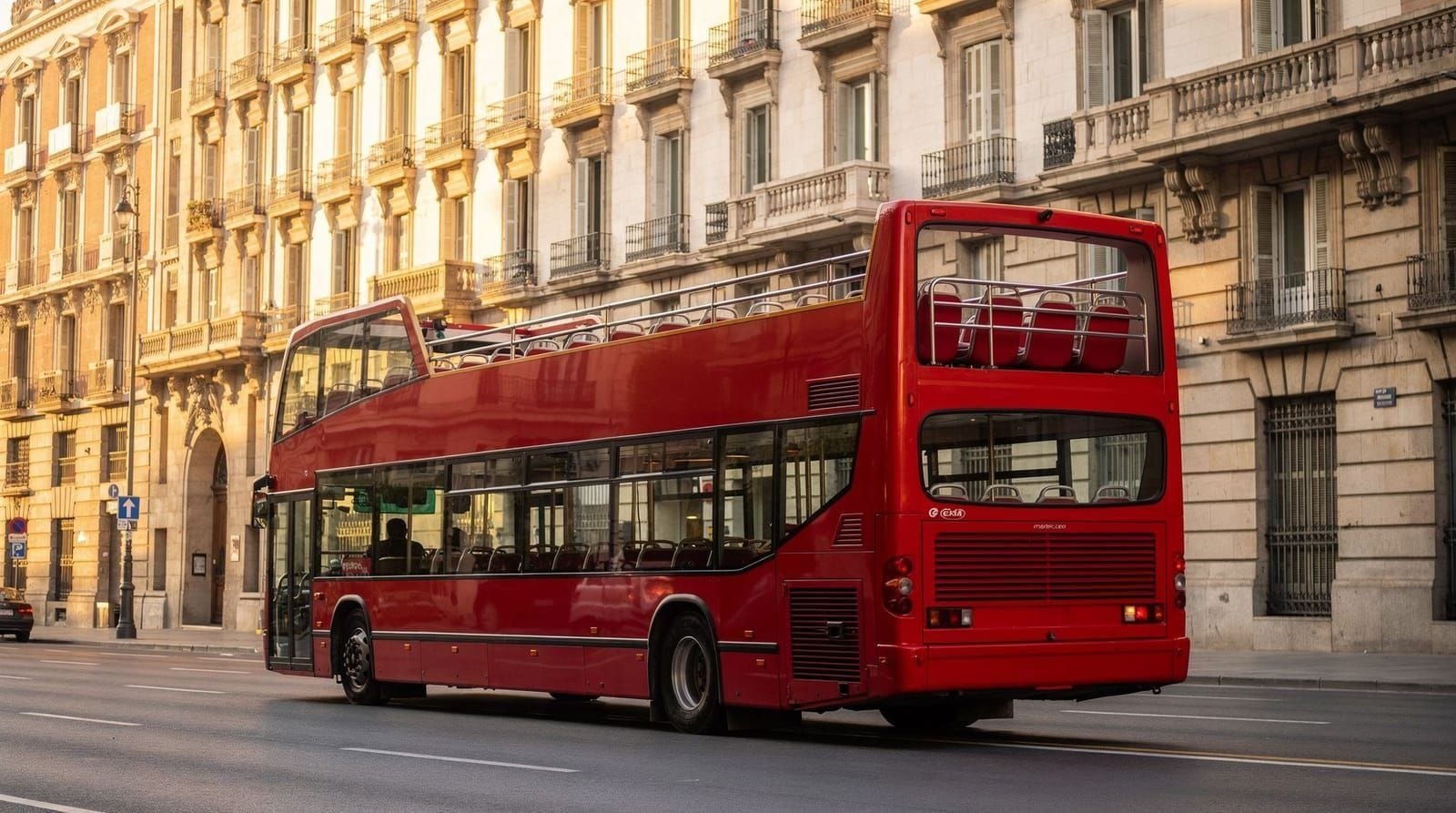
Madrid hop-on hop-off bus: Gran Vía, Royal Palace, Retiro, BernabéuShopping on Gran Vía and Sol
Gran Vía is Madrid’s main shopping boulevard. The stock is primarily international high-street brands — Zara, H&M, Mango, Primark, El Corte Inglés at the Callao end — no different from any other European shopping street. If you want local or independent shopping, Malasaña (north of Gran Vía) and Chueca (northeast) are considerably more interesting.
El Corte Inglés has two major branches within walking distance of Callao — one at Preciados 3 and one at Princesa 41. The Preciados branch has a Gourmet Experience food hall on the top floor: good views over the Callao area, a reasonable selection of prepared food and wine, prices above street level but competitive for a rooftop location. Useful if you need a break from the street and want a view.
Fnac (Preciados 28): the French media and electronics retailer is useful for guidebooks, city maps, adapters, and electronics. The English-language book section is reasonable for a non-specialist bookshop; Spanish-language books (travel, history) are extensive.
Mercado de San Miguel (Plaza de San Miguel, a 10-minute walk from Sol): the 1916 cast-iron market converted to a high-end food hall. Shellfish bars, jamón, croquetas, wine, vermouth. Prices are higher than neighbourhood equivalents (this is a tourist-facing space) but the produce quality is genuinely high and the iron and glass building is attractive. Good for a short exploration and a few items, not ideal for a sit-down meal.
El Rastro flea market is in La Latina (not Sol or Gran Vía) but draws visitors through Sol on the way south. La Latina destination page has El Rastro details.
Christmas lights and sales: from late November through early January, Gran Vía and the streets around Callao carry Madrid’s most elaborate Christmas illuminations, and the area gets considerably busier as a result — locals and visitors both come specifically for the lights, and the sales (rebajas) in January bring queues to the larger stores. If a Madrid trip lands in this window, see the Madrid at Christmas guide for how Sol and Gran Vía fit the wider seasonal picture, including the Puerta del Sol grape tradition on New Year’s Eve described above.
The Alcalá corridor: east of Sol
Calle Alcalá runs east from Sol past the Metrópolis building toward the Cibeles fountain, Retiro Park, and the Prado. This stretch has several notable buildings worth noting:
Círculo de Bellas Artes (Calle Alcalá 42): the cultural centre built in 1926 with a rooftop terrace that is one of the best public viewpoints in central Madrid. Small admission fee for the rooftop (€6). Worth doing on any clear afternoon.
Casino de Madrid (Calle Alcalá 15): not a gambling casino — a private gentlemen’s club built in 1903, one of the finest Beaux-Arts interiors in Madrid. Now houses a restaurant; the bar is accessible to non-members for drinks. The staircase hall is extraordinary.
Banco de España (Paseo del Prado, at the end of Alcalá): the Spanish central bank building, built 1882–1891, one of the best examples of 19th-century institutional architecture in the city. Not open to tourists but worth passing.
Nightlife and entertainment
Gran Vía and the Callao area are the main nightlife belt for a specific demographic: large clubs, mainstream bars, and the cinema complexes that anchor weekend evenings for Madrileños. The clubs on and around Calle Montera and Calle Desengaño run until dawn on weekends. This is louder and more mainstream than the bar culture of Malasaña or Chueca.
The cinemas (Callao, Capitol, Ideal in Barrio de las Letras) show major releases including English-language versions (version original or VO) — useful for evenings.
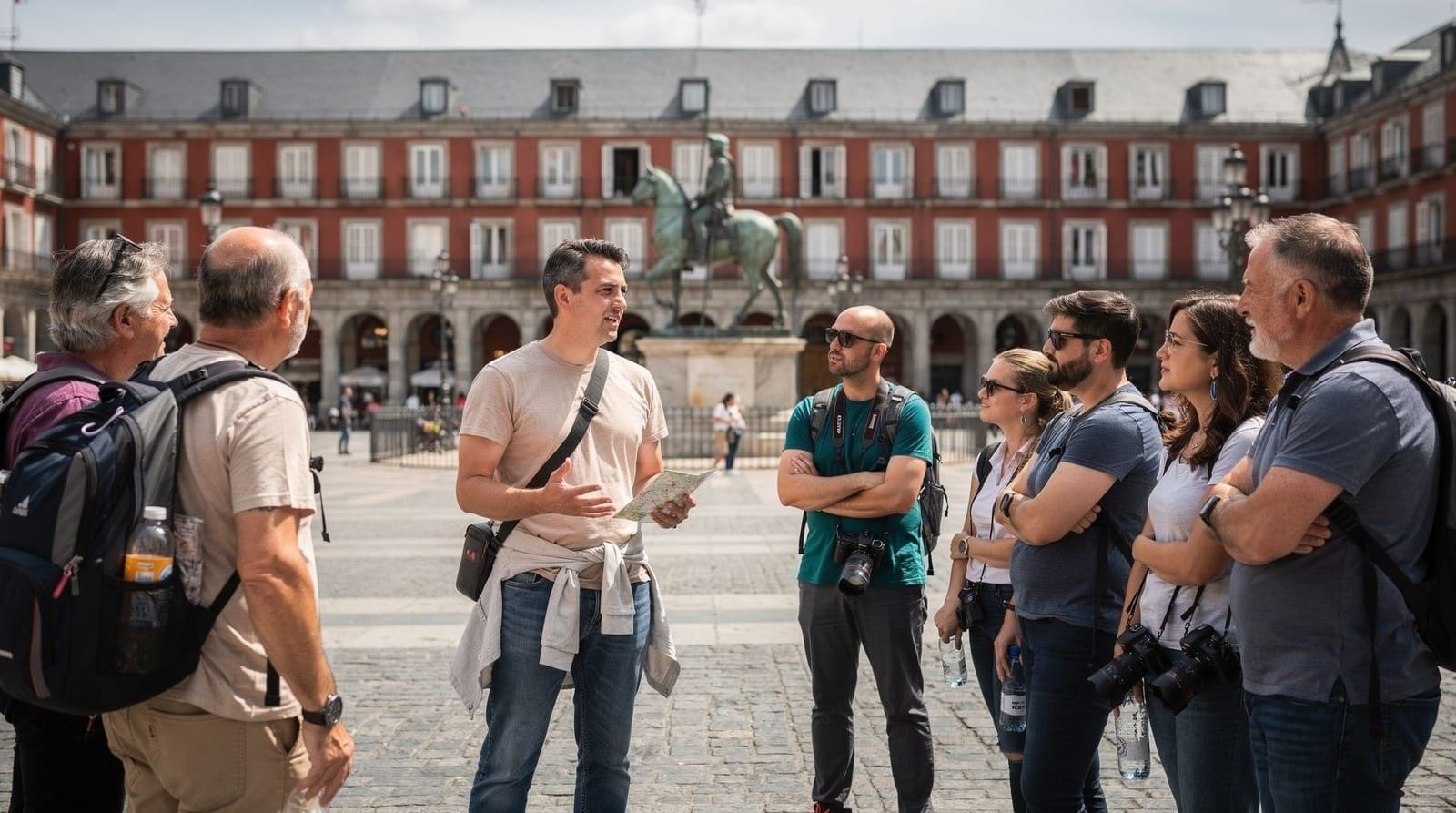
Madrid old-town secret-sites walking tour finishing with churrosEating near Sol and Gran Vía: the honest assessment
The area around Sol and Gran Vía has the worst concentration of tourist-trap restaurants in Madrid. The rule of thumb: any restaurant with picture menus in multiple languages in the window, a doorman trying to pull you in, or a prominent “sangria €5” sign on the A-board is overpriced relative to quality. This applies to most restaurants directly on Gran Vía, on Calle Preciados, and in the Plaza Mayor ring.
What actually works near Sol:
Bocadillo de calamares near Plaza Mayor (a 10-minute walk): Madrid’s signature sandwich — squid rings in a baguette. This is one of those dishes that should not work and does. The best options are in the bars around Calle de Botoneras near Plaza Mayor; Cervecería La Campana (Calle Botoneras 6) is consistently recommended. Cost: €3–€4.
Chocolatería San Ginés (Pasadizo de San Ginés 5, off Calle Arenal, between Sol and the Royal Palace): churros with thick drinking chocolate, operating 24 hours since 1894. Worth the brief detour at any time of day. A full ración of churros with chocolate is €5–€7.
Move to Barrio de las Letras or La Latina (both 10–15 minutes on foot from Sol) for proper lunch or dinner. The improvement in price-quality ratio is immediate and significant.
The tourist traps guide covers the Sol and Gran Vía restaurant landscape in greater detail with specific establishments to avoid.
Where to go instead: the neighbourhoods worth your time
Sol and Gran Vía work best as a launch point, not a destination. Once you have seen the bear statue, the km 0 plaque, and walked the Alcalá-to-Callao stretch, the more rewarding neighbourhoods are a short walk away in every direction:
| Neighbourhood | Distance from Sol | Character |
|---|---|---|
| La Latina | 15 min walk | Tapas bars, El Rastro flea market on Sundays |
| Malasaña | 10 min walk (via Gran Vía) | Independent shops, vintage, alternative bar scene |
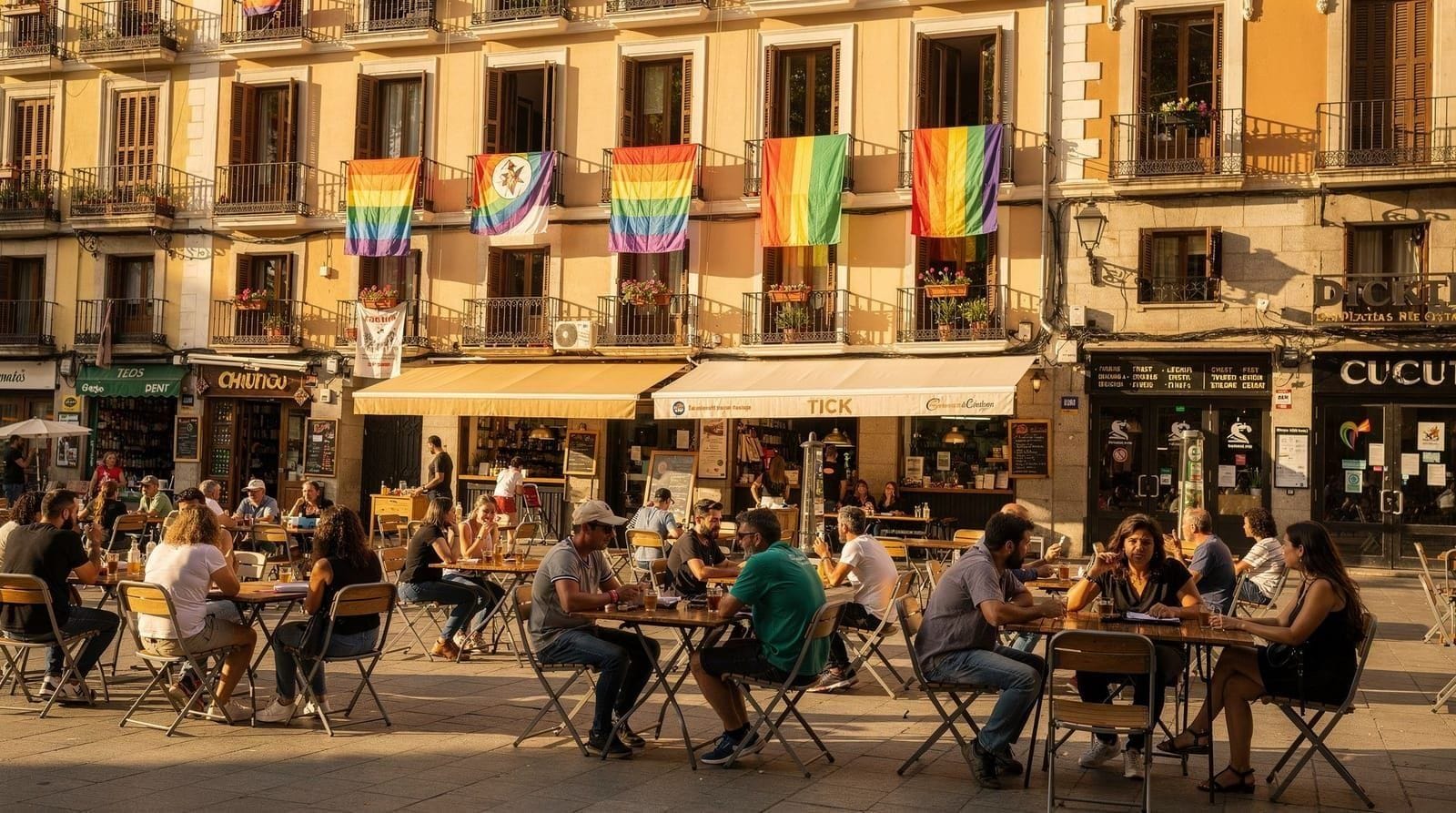
| Chueca | 12 min walk | LGBTQ+ nightlife district, design boutiques |
| Barrio de las Letras | 10 min walk | Literary quarter, better restaurants than Sol |
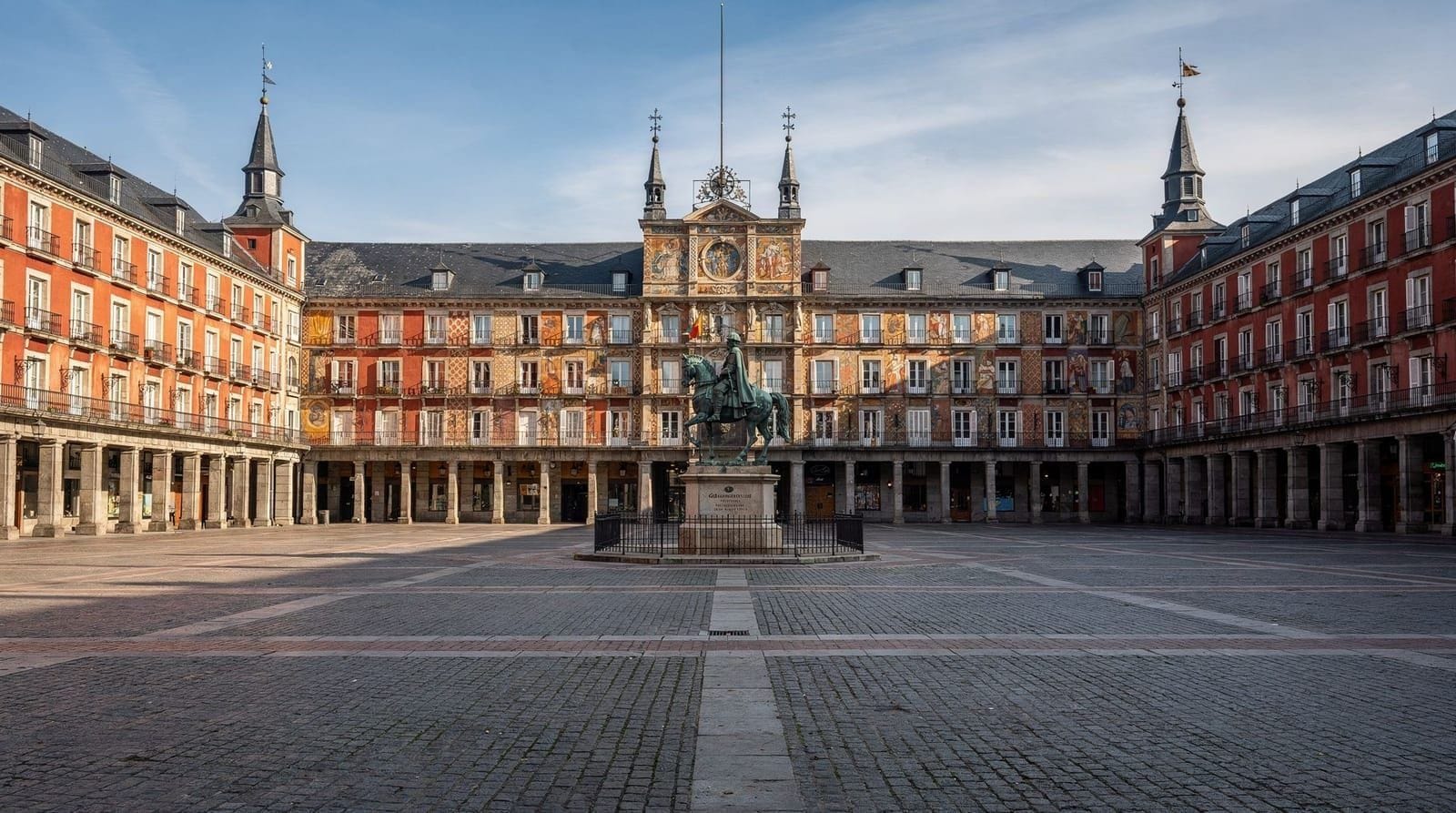
| Austrias / Plaza Mayor | 5 min walk | Habsburg-era old town, adjacent to Sol |
The tourist traps guide explains in more detail why the immediate Sol area underperforms on food and value compared with any of these five, and the eat like a local guide gives concrete alternatives within a 15-minute walk in any direction. For Sunday mornings specifically, the El Rastro flea market guide covers the market that draws crowds south from Sol through La Latina.
Getting around Sol and Gran Vía
Metro: Sol station (Lines 1/2/3) is the most central interchange in Madrid — from here you can reach the Prado (Banco de España, 2 stops on Line 2), La Latina (change at Tirso de Molina), Chamartín (change at Nuevos Ministerios), and the airport (Line 8 from Nuevos Ministerios). Gran Vía station (Line 5) sits midway along the boulevard. Callao (Lines 3/5) for El Corte Inglés and the upper end of Gran Vía.
Walking: Sol to Plaza Mayor is 5 minutes. Sol to the Prado is 20–25 minutes. Sol to La Latina is 15 minutes. Gran Vía connects Malasaña (north via Calle Fuencarral) and Chueca (northeast via Hortaleza) to the centre. The Tourist Travel Pass (unlimited metro/bus) is good value from about day 2 of a visit; for day 1, the single tickets at ~€1.50–€2 are adequate.
Frequently asked questions about Sol and Gran Vía
Is Puerta del Sol worth visiting?
As a sightseeing destination, it is more useful as a transit point and orientation marker than somewhere to linger. The bear-and-tree statue is worth a photograph; the km 0 plaque is a moment of interest. For New Year’s Eve it is genuinely exceptional. For the rest of the year, see it briefly and move to more interesting parts of the city.
What is the best thing to see on Gran Vía?
The Edificio Metrópolis (best view from Calle Alcalá looking up the boulevard) and the Edificio Telefónica (the Espacio Fundación Telefónica inside has free exhibitions). The walk from Alcalá to Callao in the evening, when buildings are lit, takes 25 minutes and covers the best architecture.
Where should I eat near Gran Vía?
Avoid the tourist restaurants on the main boulevard. The best nearby options are in Malasaña (north of Gran Vía) or Barrio de las Letras (southeast). The churros at San Ginés are the most legitimate local food experience near Sol itself.
What is the best way to see Gran Vía’s architecture?
Walk the full length (Alcalá end to Plaza de España, or in reverse) in the evening when the buildings are lit. A hop-on hop-off bus passes along it if you prefer a seated overview, though the walking experience is better for reading the architectural details.
Is Gran Vía safe at night?
Generally yes — it is busy until very late, well-lit, and has high pedestrian traffic. The main risk is pickpocketing, especially around Sol metro exits. The same precautions apply as during the day; after midnight the clubs bring larger crowds to the side streets.
How much time should I actually spend in Sol and Gran Vía?
An hour to ninety minutes covers the essentials: the bear statue, the km 0 plaque, and a walk along Gran Vía’s main architectural stretch. Treat it as a corridor between neighbourhoods rather than a destination — La Latina, Malasaña, and Barrio de las Letras all reward considerably more time.
Top experiences
Bookable activities with verified prices and instant confirmation on GetYourGuide.