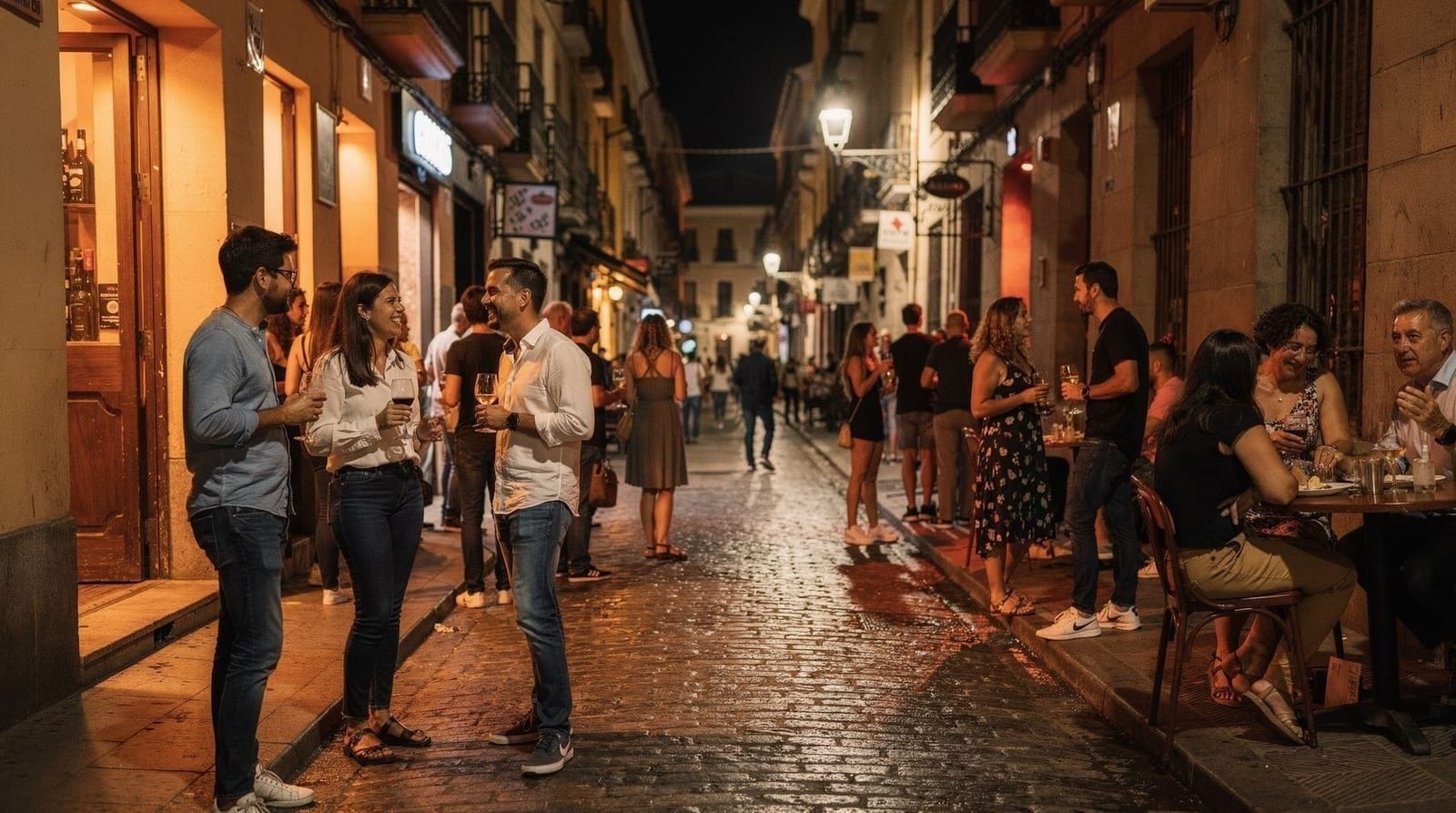
Malasaña
Malasaña is Madrid's creative quarter — record shops, natural wine bars, the best coffee, and the movida madrileña legacy. Honest 2026 guide.
Madrid: Inquisition Legends Evening Walk
Quick facts
- Metro
- Tribunal (L1/10), Noviciado (L2), San Bernardo (L2/4)
- Character
- Indie, creative, post-movida, increasingly gentrified
- Best streets
- Calle Fuencarral, Plaza del Dos de Mayo, Calle Manuela Malasaña
- Best for
- Bars, independent shopping, specialty coffee, nightlife
- Key event
- Dos de Mayo festival, 2 May
Malasaña is the neighbourhood that most embodies the post-Franco transformation of Madrid. The movida madrileña — the explosion of cultural freedom that swept Spain after the dictator’s death in 1975 — happened here, in bars and underground venues on the streets around Plaza del Dos de Mayo. Almodóvar shot his early films in and about these streets. Punk, new wave, and avant-garde art coexisted with cheap wine and political idealism in a neighbourhood that felt, briefly, like anything might happen.
Four decades later, the movida is history and Malasaña is considerably more gentrified. Rents have risen; the anarchic edge has softened. But the neighbourhood has retained more of its character than equivalent “cool” districts in other European capitals: the independent shops are real and varied, the coffee is taken seriously, the bars are genuinely diverse, and the street life has a quality that no marketing department could manufacture because it was built by people rather than by tourism strategy.
| Where | North of Gran Vía, between Chueca and San Bernardo |
| Cost | Coffee €2–€3.50; bars €3–€6 a drink; menú del día €10–€13 |
| Time needed | Half a day for shopping/coffee; evening for bars |
| Getting there | Metro Tribunal (L1/10), Noviciado or San Bernardo (L2) |
| Best time | Daytime for shops and coffee; Thursday–Sunday nights for bars |
The movida madrileña: brief history
The movida is worth understanding because it explains what the neighbourhood still is. When Franco died in November 1975, Spain began an unusually rapid transition to democracy (La Transición). The cultural lid lifted: censorship laws were relaxed, LGBTQ+ venues began operating openly, experimental music and art found audiences, and a generation born under the dictatorship discovered freedoms that they processed as fast and loudly as possible.
Malasaña was the geography of this explosion. The bars on Calle del Espíritu Santo, the punk clubs, the late-night cafés where Almodóvar and his circle gathered, the art spaces in converted apartments — all of this happened in this neighbourhood because the rents were low, the spaces were available, and the neighbourhood had always been working-class and therefore slightly outside the institutional gaze.
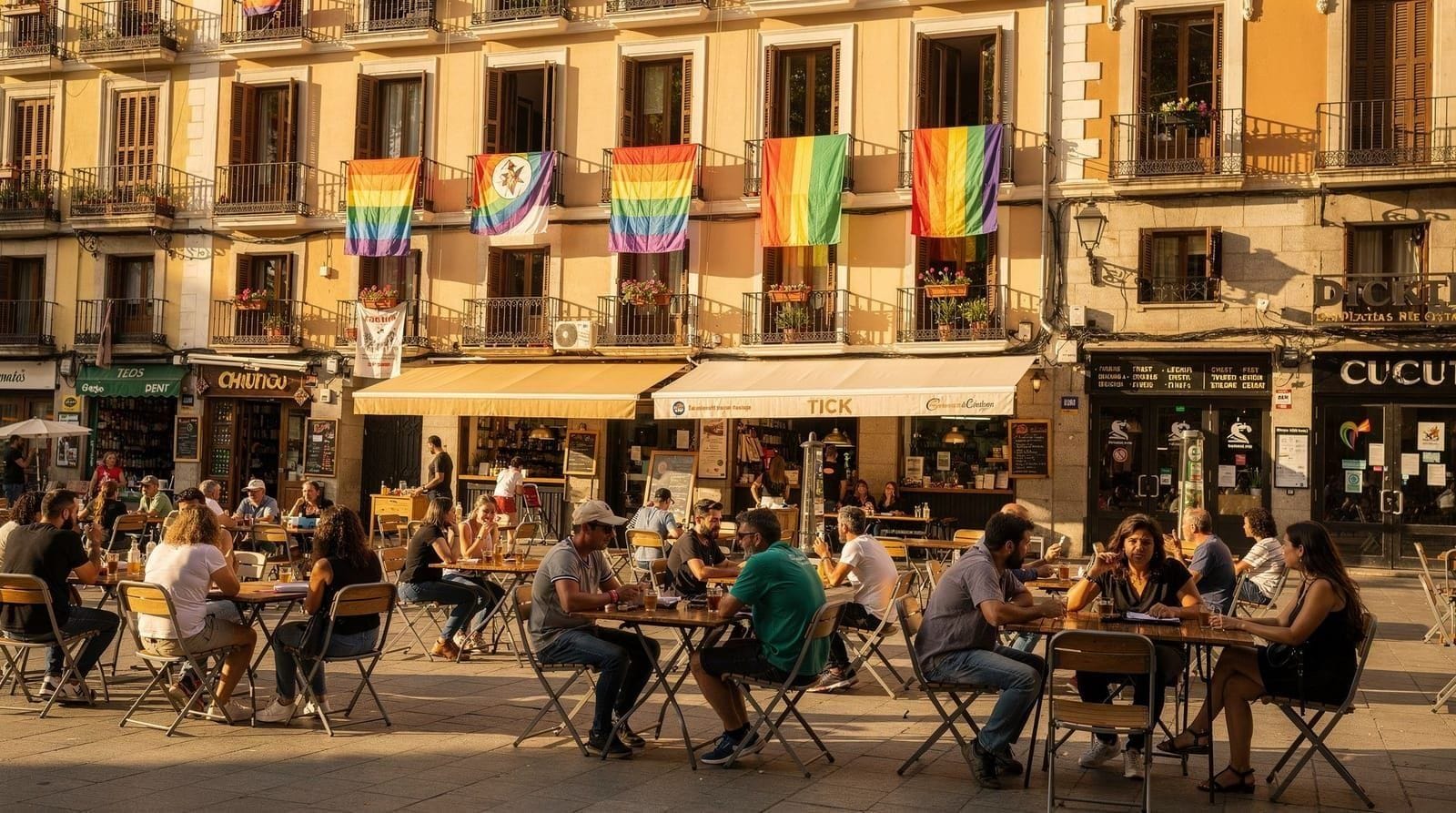
Plaza del Dos de Mayo was the symbolic centre — not because it had venues but because it was the neighbourhood’s gathering point, the square named after the 1808 uprising that Goya painted. There is a symbolic rightness to the movida coalescing around a square dedicated to a popular uprising against occupation: the cultural politics were explicit.
The movida’s end is usually dated to the mid-1980s when the mainstream absorbed it. Several of the key figures died young; others became successful enough to move on. What remained was a neighbourhood with a tradition of cultural independence that subsequent waves of residents have tried to maintain, with varying success.
What Malasaña is today
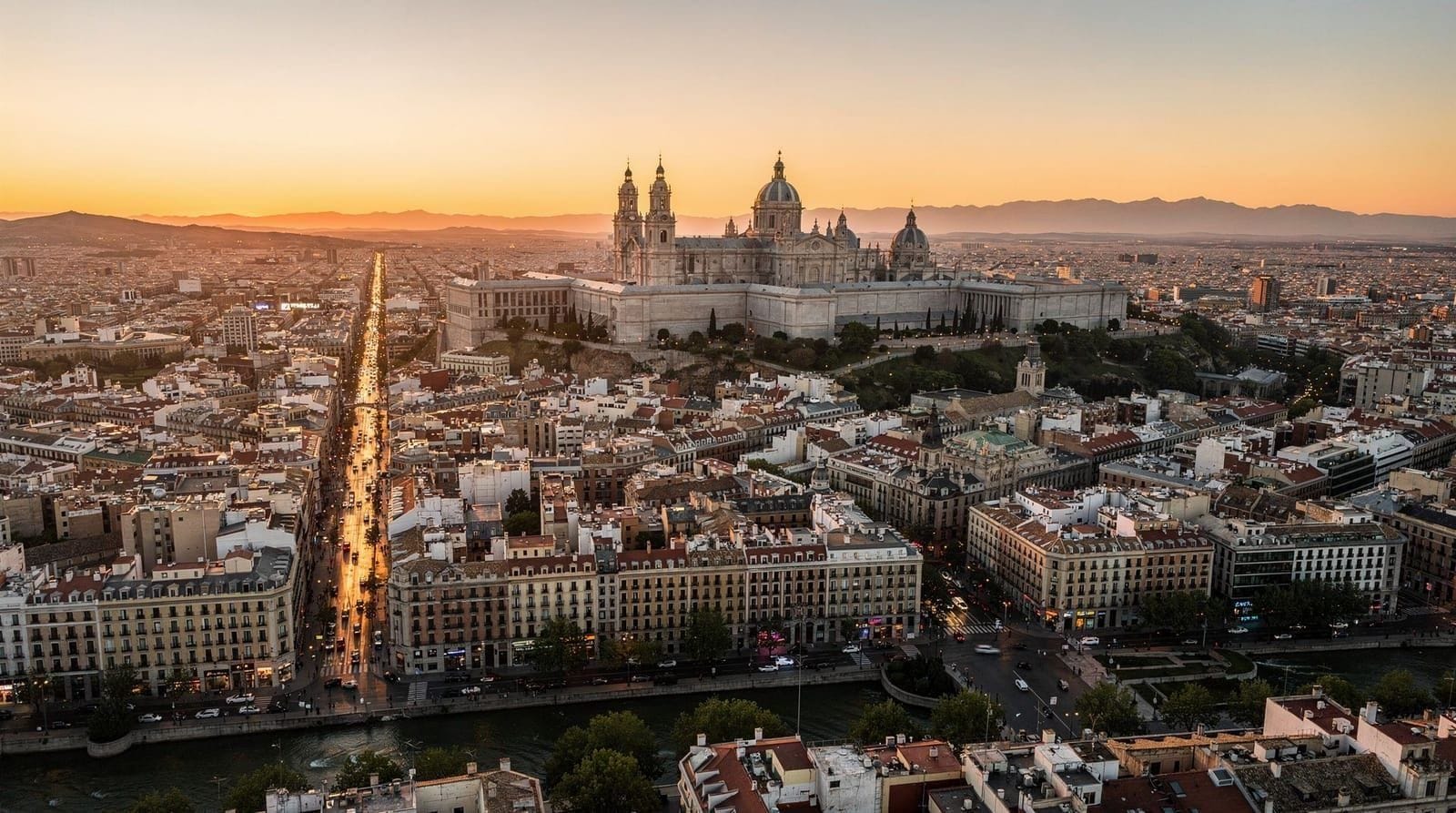
The neighbourhood sits just north of Gran Vía, bordered by Fuencarral to the east (where it meets Chueca) and San Bernardo to the west. Its centre of gravity is Plaza del Dos de Mayo, now ringed by bars with terraces; on a spring or summer evening it is one of the most animated public spaces in the city.
The character of Malasaña’s commerce is different from the rest of central Madrid: independent is the default rather than the exception. Record shops, vintage clothing, design bookshops, specialty coffee roasters, artisan food shops, natural wine bars, and independent restaurants fill the streets. The international chains that dominate Gran Vía are mostly absent from the neighbourhood’s interior streets.
The gentrification is real. Fifteen years ago, Malasaña had cheap rents; now it has some of the highest in the city centre. The older working-class residents have been largely displaced. Some of the original movida bars have been replaced by concept establishments. The neighbourhood acknowledges this tension — conversations about it happen in the bars themselves — but has not yet become as uniformly curated as equivalent districts in London or Paris.
Shopping and browsing
Calle Manuela Malasaña: the heart of the neighbourhood’s independent shopping scene. Vintage clothing shops, a couple of good design bookshops, small studios selling handmade goods. Worth walking in its entirety.
El Templo de Susu (Calle de la Palma 56): arguably the best vintage clothing shop in Madrid — well-curated, organised by category rather than stuffed in bins, priced accurately rather than at the inflated “vintage premium” found in some city centres. The selection skews toward 1970s–90s with a good range of sizes. Worth an hour.
Lata Peinada (Calle de San Vicente Ferrer 40): an excellent independent vinyl and CD shop, strong on Spanish and Latin music alongside international. The staff have genuine knowledge and the recommendation system works — tell them what you are looking for and they will find it.
Desperate Literature (Calle de Campomanes 13, just south of the neighbourhood boundary): one of the best English-language independent bookshops in Europe, focused on literary fiction, poetry, and the kinds of books that are deliberately difficult to find. A specific cultural institution worth seeking out.
Oxfam Intermón (Calle del Barco 26 and other locations): the fair-trade shop has a surprisingly good stock of Spanish textiles, food products, and design items that make useful non-generic gifts.
Calle Fuencarral (the stretch north of Gran Vía): the main commercial street on the Malasaña/Chueca boundary, now dominated by mid-range international fashion. More interesting in the small side streets off it than on the main drag itself.
Coffee and specialty roasters
Malasaña has the best specialty coffee culture in central Madrid. The neighbourhood’s approach — small independent roasters and cafés taking origin and process seriously — is several years ahead of the rest of the city centre, and the quality gap between the best Malasaña coffee and the standard Madrid café con leche is significant.
Toma Café (Calle de la Palma 49): one of the original specialty coffee shops in Madrid, opened 2011. Consistently excellent espresso and filter, knowledgeable and non-evangelical staff, no tourist markup. Worth seeking out for a morning coffee before the neighbourhood wakes up properly (open from about 09:00).
Misión Café (Calle del Barco 9): newer, with a strong emphasis on filter and single-origin coffees. The pour-over programme is exceptional; the space is small and usually busy. No food menu — this is purely a coffee destination.
Federal Café (Plaza de las Comendadoras 9): Australian-influenced brunch spot (avocado toast, eggs Benedict, good coffee) — very popular on weekends, queues form by 11:00. A useful morning option if you are staying nearby.
Café Comercial (Glorieta de Bilbao 7): one of Madrid’s most historic cafés (1887), recently renovated after a period of closure. The original marble tables and mirrors survive; the coffee programme has been modernised. A landmark for the neighbourhood.
Format note: unlike the standing-at-the-counter tapas culture of La Latina, Malasaña’s coffee shops are built for sitting and lingering — most have laptop-friendly tables and a genuinely relaxed pace, which reflects the neighbourhood’s population of freelancers, students, and creative professionals as much as its tourist traffic.
Restaurants
Malasaña has transitioned from the cheap student-bar economy of the 1980s–90s to a more varied scene. There are excellent mid-price restaurants in the neighbourhood’s interior streets:
La Gastroteca de Santiago (Plaza de Santiago 1): the kind of restaurant that has built a loyal clientele through consistency — excellent seasonal Spanish cooking, good wine list, prices that reflect genuine rather than inflated value.
El Tigre (Calle Infantas — technically the Chueca boundary): legendary for its enormous free tapas with every drink. Buy a caña (€3) and receive a plate of food big enough for a meal. Universally recommended for visitors on a tight budget; universally crowded.
Home Burger Bar and several other casual, mid-price spots on the interior streets round out an increasingly international dining scene — Malasaña now has genuinely good Korean, Vietnamese, and Middle Eastern food alongside the Spanish standards, a shift that has happened largely in the past five to eight years as the neighbourhood’s demographic has diversified.
Bars and nightlife
The movida may be history but the bars are still going, and Malasaña’s nightlife is less uniform than Chueca’s — it covers vermouth bars, craft beer, natural wine, cocktails, and clubs, often within the same street.
El Parnasillo (Calle de San Andrés 33): a classic Malasaña bar — long dark interior, theatrical atmosphere, mixed crowd, open until late. One of the neighbourhood’s most authentic surviving institutions from the movida era.
Bar El Palentino (Calle de la Palma 42): a neighbourhood classic with zero aesthetic pretension — formica tables, cheap house wine, loyal regulars who have been coming for decades. The anti-gentrification counterpoint to the natural wine bars that have opened on the same street.
El Jardín Secreto (Calle del Conde Duque 2, at the western edge): a small bar known for its botanical cocktails and an improbable garden concealed inside a building that looks entirely unremarkable from the street. Popular with couples.
La Vía Láctea (Calle Velarde 18): one of the bars that survived from the movida era — dark, loud, showing cult films on a screen, open until very late. The atmosphere is what a Malasaña bar is supposed to be.
The main nightlife streets — Calle del Espíritu Santo, Calle de la Palma, the streets feeding into Plaza del Dos de Mayo — become crowded from 22:00 onward Thursday–Sunday. Clubs in and around the area run until 05:00–06:00, with some running later. The neighbourhood is loud late at night; if you are staying in Malasaña and need sleep, choose accommodation on the quieter streets toward the west.
Vermouth and early-evening options: for a quieter alternative to the late-night bar circuit, several spots around Plaza de las Comendadoras serve a good vermouth hour (roughly 13:00–15:00 weekends), a lower-key way to experience the neighbourhood’s drinking culture without committing to a full night out. This end of Malasaña, further from Plaza del Dos de Mayo, has a noticeably calmer, more residential feel even on weekend evenings.
For a bar-by-bar breakdown, the Malasaña bars guide goes deeper than the shortlist above, and the Malasaña neighbourhood guide lays out how to combine shops, coffee and an evening in a single day. If you want to place Malasaña within the wider city after dark, the Madrid nightlife guide compares it with the other districts, and vermouth in Madrid explains the ritual behind the early-evening hour mentioned here.
Madrid evening walk: legends, history, and the dark side of the old quarterThe Dos de Mayo festival
On or around 2 May each year, Malasaña marks the anniversary of the 1808 uprising against Napoleon’s occupation with street concerts, free events, and the specific atmosphere of a neighbourhood that takes its own history seriously. The Plaza del Dos de Mayo fills, the bars overflow onto the streets, and the festival has a genuinely local rather than tourist-promotional character. On 2 May 1808, Madrileños rose against the French garrison in an uprising that sparked the Peninsular War — Goya’s Second of May and Third of May paintings in the Prado document the uprising and the executions that followed (see the Prado museum guide for how to find them). The Dos de Mayo guide covers the festival’s programme and history in more depth.
If you are in Madrid in early May, being in Malasaña on 2 May is one of the more authentic neighbourhood experiences available in the city.
Conde Duque Cultural Centre
At the western edge of Malasaña (technically the Conde Duque neighbourhood, but functionally adjacent), the enormous 18th-century barracks complex has been converted into a cultural centre with exhibition spaces, an open-air cinema in summer (part of the Veranos de la Villa cultural programme), and the Hemeroteca Municipal — the city’s newspaper and magazine archive. The building — a vast Churrigueresque Baroque barracks from 1720 — is extraordinary in scale. Free entry to the exhibitions and courtyard.
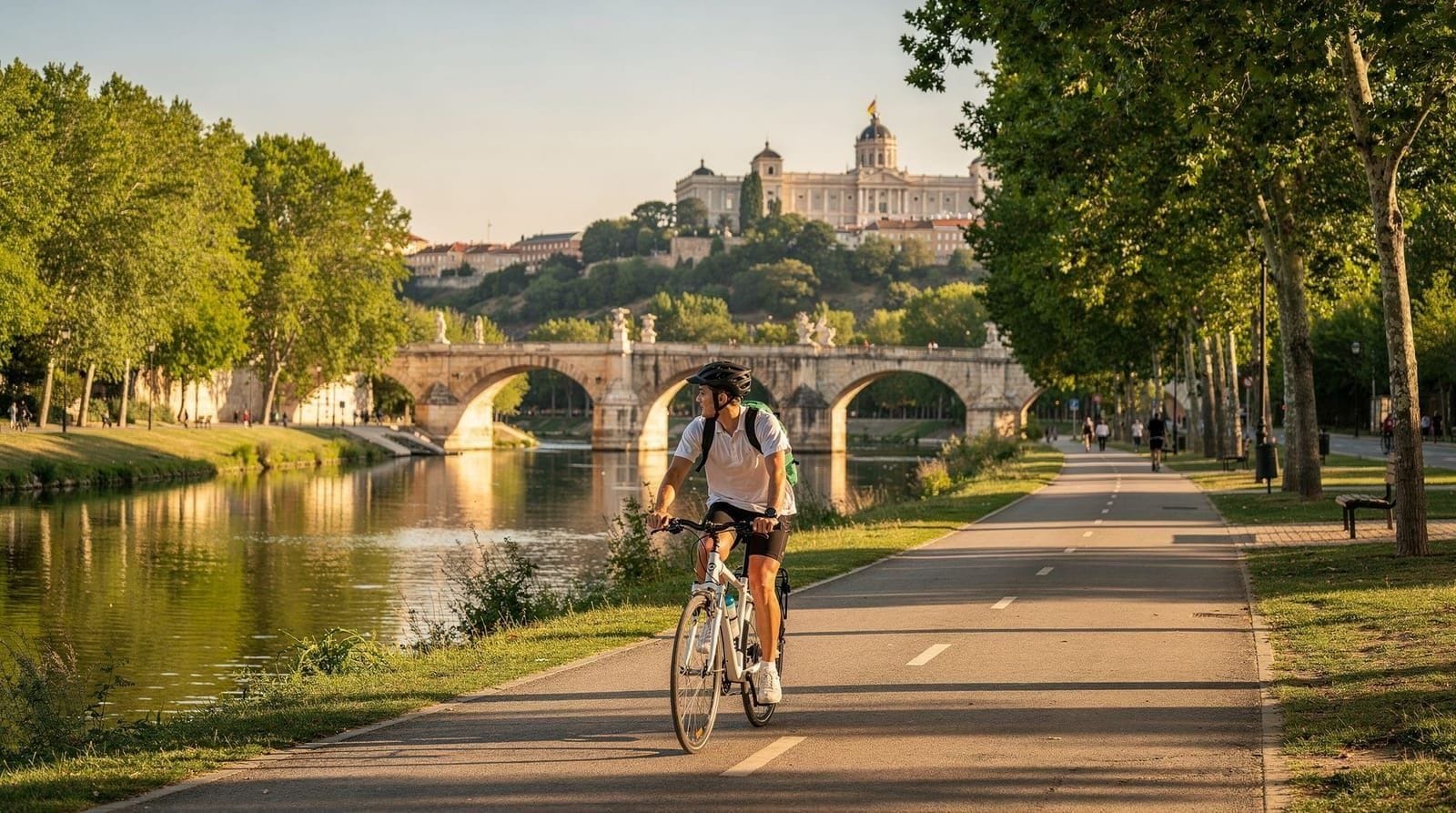
Madrid 3-hour sightseeing e-bike tour through Malasaña and the city centreFuencarral Street and commercial character
Calle Fuencarral forms the eastern boundary of Malasaña and functions as its main commercial artery, running north from Gran Vía through Chueca. On this street you find the full spectrum of what Malasaña has become: vintage clothing shops (Humana, Flamingos) alongside international chains, independent record stores next to fast-food franchises. The tension is visible and intentional — residents have repeatedly organised against chain-store proliferation, and there remains a higher proportion of genuinely independent businesses here than in most comparable central European neighbourhoods.
Mercado de Fuencarral (Calle Fuencarral 45) is a three-floor indoor market that leans toward streetwear and alternative fashion rather than food. It opened in 1996 and remains a useful barometer of what is commercially current in the neighbourhood — brands come and go here faster than anywhere else in central Madrid. Entry is free.
Malasaña’s architecture
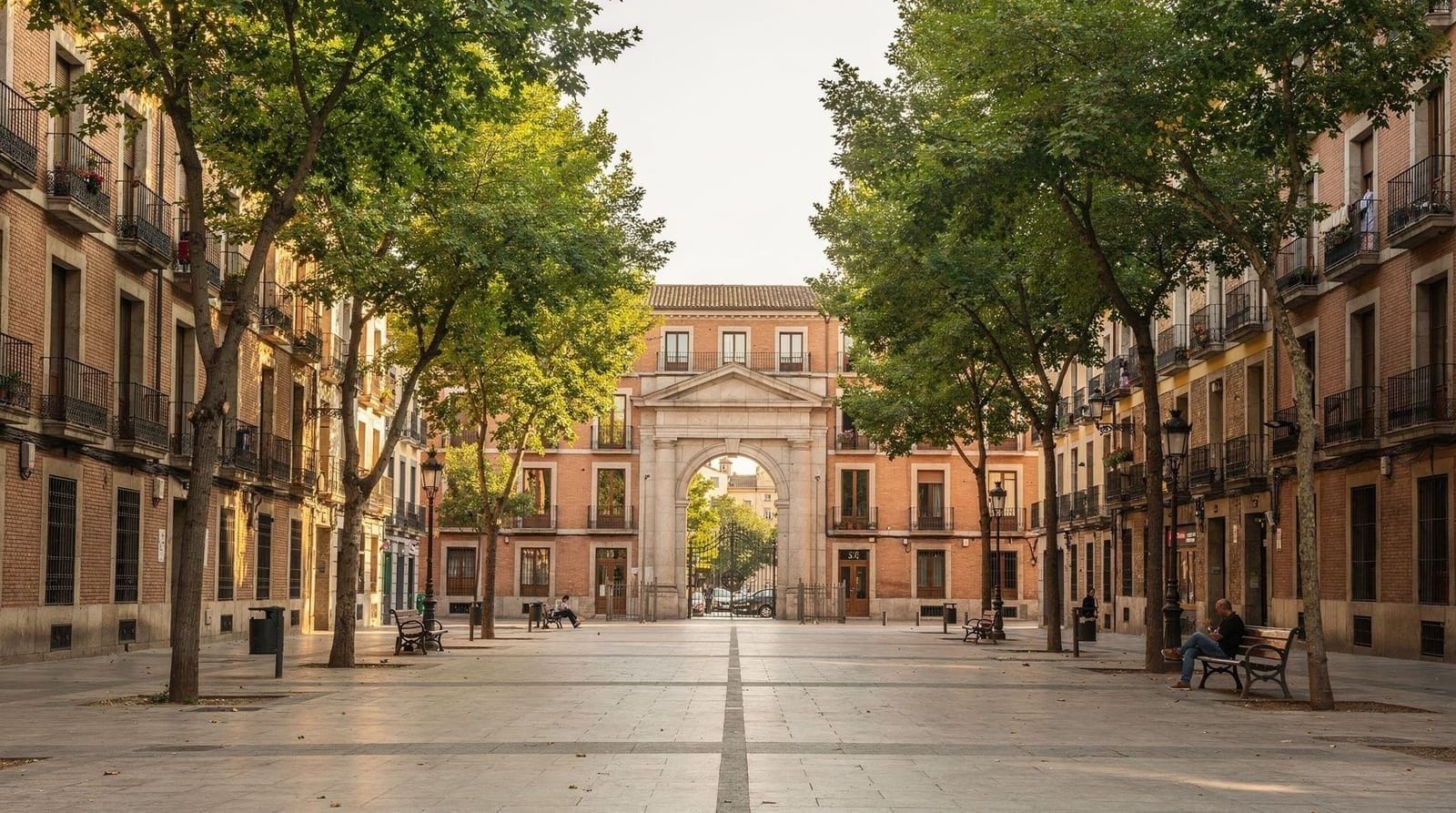
Beyond the bars and shops, Malasaña has a genuinely interesting building stock that is easy to overlook while focused on street-level commerce. The neighbourhood developed largely in the 18th and 19th centuries as a working-class residential district, and its streets are lined with modest but characterful casas de corredor — apartment buildings with shared internal galleries, a distinctively Madrid housing typology from the period.
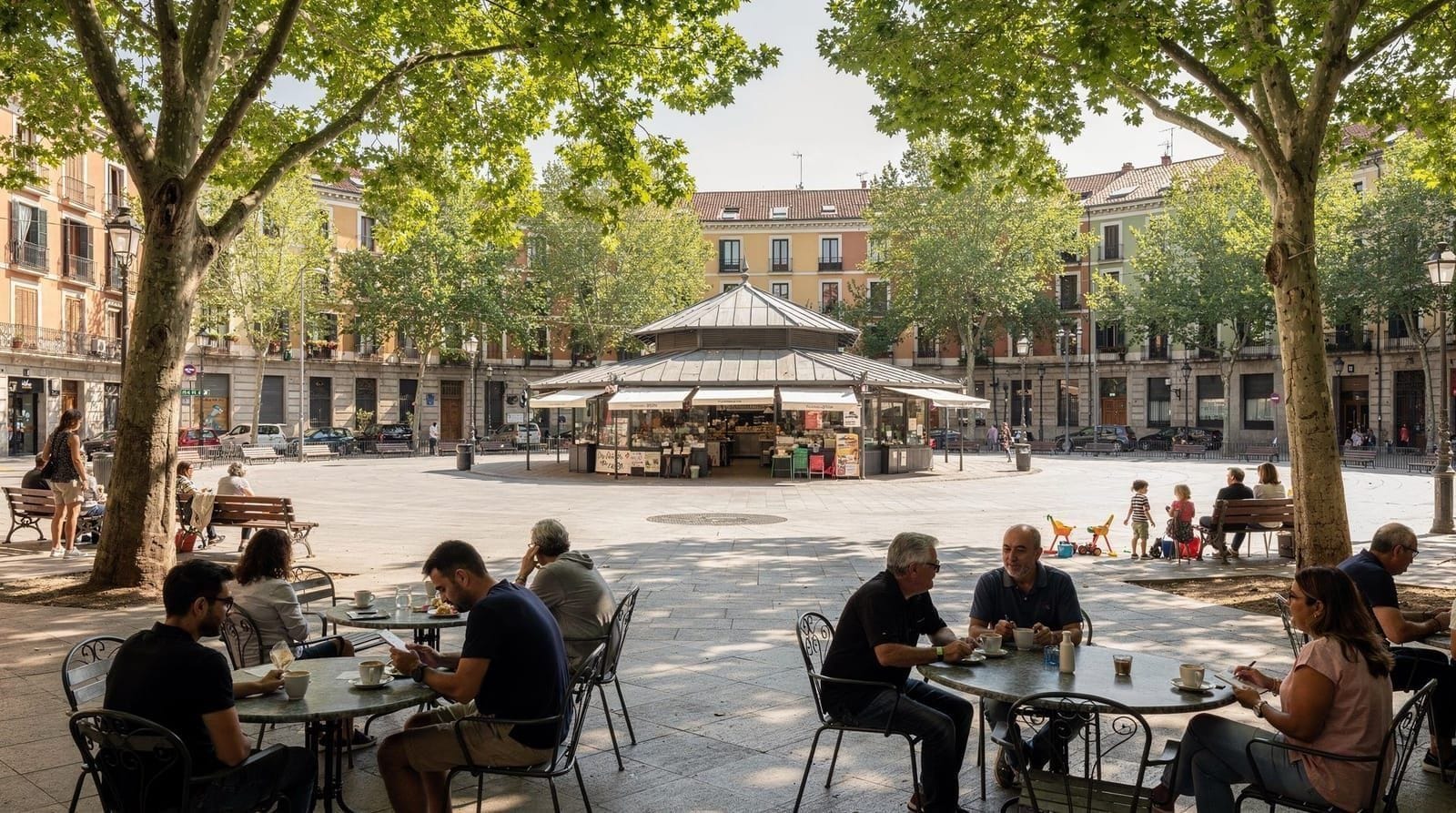
Plaza de las Comendadoras, at the western edge, is anchored by the Convento de las Comendadoras de Santiago, a 17th-century convent complex with an octagonal Baroque church, and offers one of the calmest, greenest small squares in the neighbourhood — a useful contrast to the busier Plaza del Dos de Mayo. Looking up rather than at shopfronts while walking Malasaña’s streets reveals wrought-iron balconies, decorative tilework, and the occasional Art Nouveau flourish that survived the neighbourhood’s various waves of renovation.
Fitting Malasaña into a wider Madrid trip
Because Malasaña works best as a relaxed half-day plus an evening, it pairs naturally with the big sights rather than competing with them. A morning at the Prado or on the Gran Vía leaves the afternoon free for coffee and browsing here, and the evening for bars. If you are still deciding where to base yourself, the best area for first-time visitors page weighs Malasaña against the other central options, and where to stay in Madrid covers the practical side. Travellers on a tight budget will find the Madrid on a budget guide a useful companion, since much of what makes Malasaña enjoyable costs very little.
Gentrification and what it has changed
Malasaña has been gentrifying steadily since the mid-2000s. Rents have risen sharply, long-term residents have been displaced, and the same independent character that attracted newcomers has been partially commodified. This tension is part of the neighbourhood’s contemporary identity — you will see hand-painted signs in windows, references to the movida heritage used both to celebrate and to argue for preserving what is left.
The Malasaña of 2026 is not the anarchic neighbourhood of 1980. But compared to similarly gentrified districts in other European capitals, it retains more neighbourhood texture — partly because of its physical size and partly because the residential streets away from Fuencarral and Corredera Baja de San Pablo remain genuinely mixed. The neighbourhood’s historically cantankerous, independent character has not entirely dissipated: it simply costs more to participate in now.
Getting to Malasaña
Metro: Tribunal (Lines 1/10) drops you directly onto Calle Fuencarral at the neighbourhood’s eastern edge. Noviciado (Line 2) for the western section. San Bernardo (Lines 2/4) for the western boundary and the Conde Duque area. All three stations are within a 10–15 minute walk of each other, so getting the exact stop right matters less than in larger neighbourhoods.
On foot from Gran Vía: 5 minutes north of the Gran Vía metro station. From Sol, about 15 minutes on foot via Gran Vía or Calle Fuencarral. Chamberí, the more residential and genuinely local neighbourhood to the northwest, makes a good contrast if Malasaña feels too busy — see the Chamberí destination page.
Frequently asked questions about Malasaña
Is Malasaña still the creative heart of Madrid?
It has changed significantly since the movida era and the early 2000s when it was still clearly counter-cultural. Rents have risen, chains have moved in on the main streets. But the interior streets still have genuine independent shops, roasters, and bars that are there because people wanted to open them rather than because a developer built a retail complex. Compared to equivalent “cool” districts in London, Amsterdam, or Paris, it retains more authentic neighbourhood character.
What is the best street in Malasaña?
Calle de la Palma for the combination of Toma Café, El Templo de Susu vintage shop, Lata Peinada vinyl, and El Palentino bar. Plaza del Dos de Mayo for the central square atmosphere. Calle del Espíritu Santo for nightlife.
How does Malasaña compare to Chueca?
They share a boundary on Calle Fuencarral. Chueca is more polished and restaurant-focused, with a strong LGBTQ+ identity and more design shopping. Malasaña is rougher-edged, more indie in character, with better specialty coffee and vinyl culture. Both are excellent and many visitors spend time in both without noticing the boundary.
What is the quietest part of Malasaña?
The area around Plaza de las Comendadoras and the streets toward San Bernardo, at the western edge, are noticeably calmer than the Plaza del Dos de Mayo core — a good choice for accommodation if you want proximity without the late-night noise.
Is Malasaña good for families?
During daytime hours, yes — the specialty coffee and brunch culture means family-friendly cafés, and the neighbourhood is pleasant to walk through. After about 21:00 it is a nightlife district and not particularly suited to children.
What is the cheapest way to spend an evening in Malasaña?
El Tigre (free tapas with every drink, near the Chueca boundary) for the best value. Walking the neighbourhood and sitting on the Plaza del Dos de Mayo terraces with a single drink costs very little. The neighbourhood is one of the better options in central Madrid for an evening on a tight budget — the menú del día at lunch is consistently available at €10–€13 in neighbourhood restaurants.
Top experiences
Bookable activities with verified prices and instant confirmation on GetYourGuide.