Madrid nightlife guide: how the city works after midnight
Madrid: Customized Night Private Guide
When does Madrid nightlife actually start?
Dinner at 21:30–22:00, drinks at bars from 23:00, clubs from 01:00–02:00, peak club hours 02:00–05:00. Madrid nightlife does not start when you think it does. If you arrive at a club at midnight, you will be there before the lights go on. If you leave at 01:00, you have barely started.
In brief: Madrid has one of Europe’s most genuinely late-night cultures — not as a tourist performance, but as how the city actually lives. Clubs peak at 03:00 on weekends. Metro stops at about 01:30 every night. Churros at 05:00 is a real thing. This guide covers the actual geography and timing so you do not waste your night arriving too early.
| Dinner | 21:30–22:00 |
| Bars peak | 23:00–01:00 |
| Clubs peak | 02:00–04:00 |
| Metro cutoff | About 01:30 every night |
| Full night budget | around €40–80 per person |
The Madrid nightlife timeline
Understanding the timing is the single most important piece of knowledge for Madrid nights. Visitors from northern Europe or North America consistently arrive too early — to bars at 21:00 (before locals have finished dinner), to clubs at midnight (before the cleaning staff has finished), and leave at 01:00 (when things are just warming up).
The actual schedule:
| Time | What is happening |
|---|---|
| 21:00–22:00 | Dinner (madrileños eating) |
| 22:30–00:00 | Bar scene beginning, cocktail bars and terraces active |
| 23:00–01:00 | The peak bar hour — Malasaña, Chueca, La Latina busy |
| 01:00–02:00 | Transition to clubs; pre-club drinks continue |
| 02:00–04:00 | Peak club hours — the fullest, best-atmosphere point |
| 04:00–06:00 | Clubs still going; some wind down |
| 05:00–07:00 | Final clubs close; Chocolatería San Ginés opens its best shift |
If you want to experience Madrid nightlife, you need to either adjust your schedule or accept that you will see the early stages and leave before it peaks.
The easiest way to adjust is to start the evening with a long, late dinner rather than a quick bite. Our tapas guide and the best tapas bars explain how to turn a bar-hopping dinner into the first act of the night, and the Madrid at night guide covers the quieter, sightseeing side of the same hours. If you are still planning your trip, how many days in Madrid will help you leave a late-start morning free after your biggest night.
The main nightlife neighbourhoods
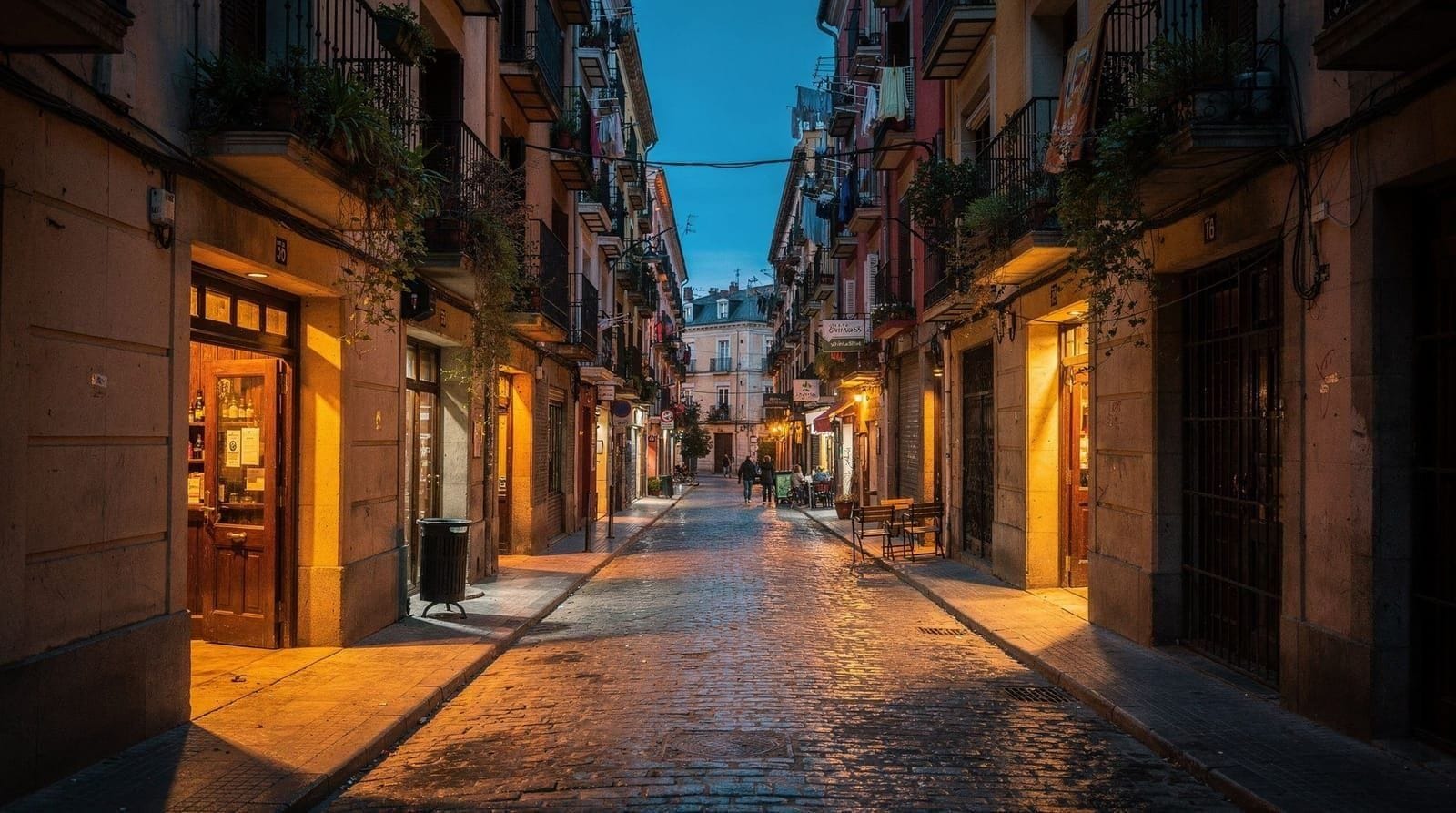
Malasaña: the neighbourhood bar scene
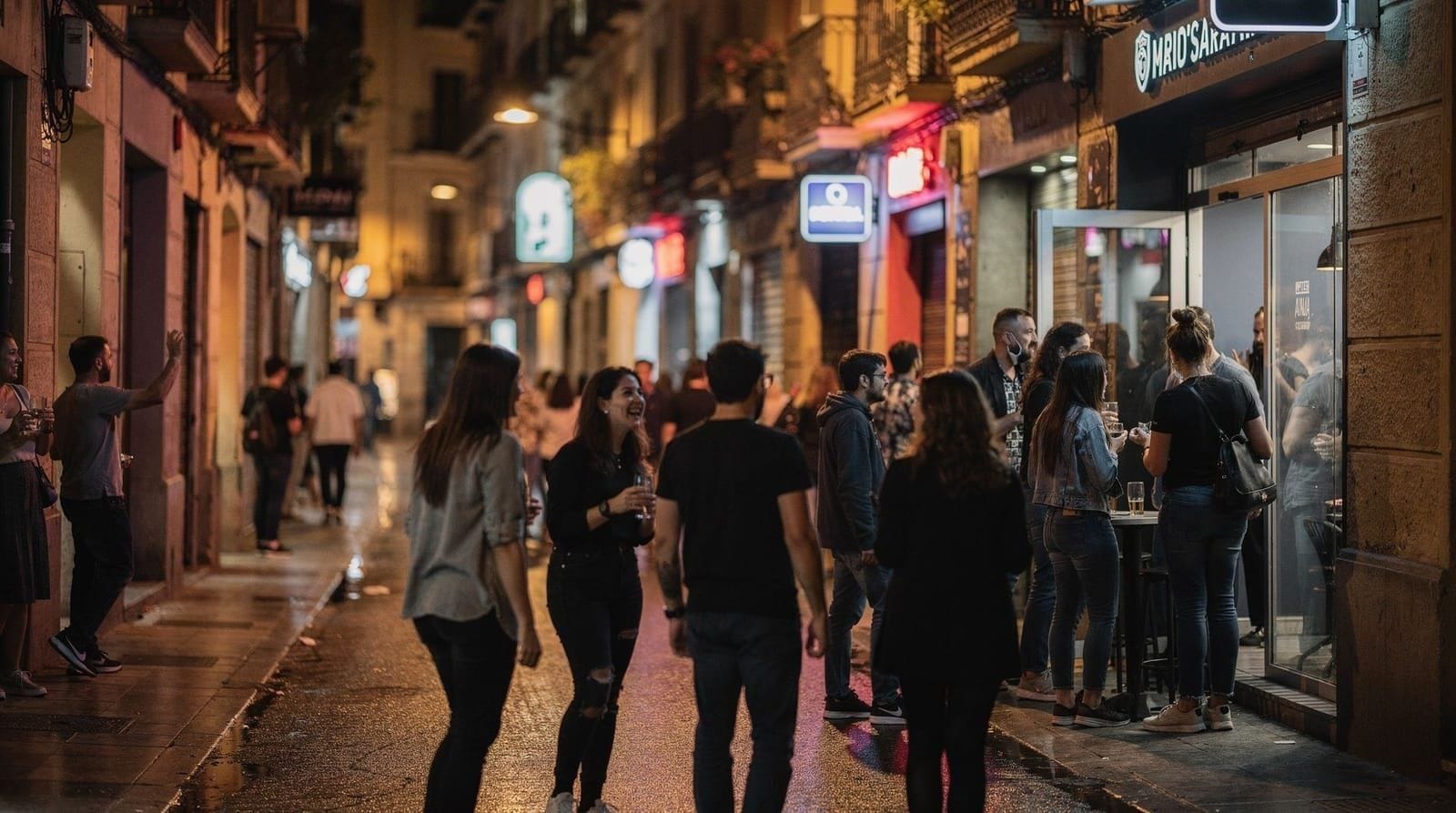
Malasaña is the most genuinely local nightlife neighbourhood in central Madrid. The bars here serve neighbourhood residents first and visitors second — there is no “nightlife district” branding, just a concentration of bars that happen to be in the same streets.
The vibe is casual, indie-leaning, musically eclectic (live music venues, DJs in tiny bars, a significant rock and electronic crossover). Dress code is whatever you wore to dinner. Age range is wide — this is not exclusively young.
Best streets: Calle del Espíritu Santo, Calle de Manuela Malasaña, Calle de San Andrés. The neighbourhood geography is detailed in the Malasaña bars guide.
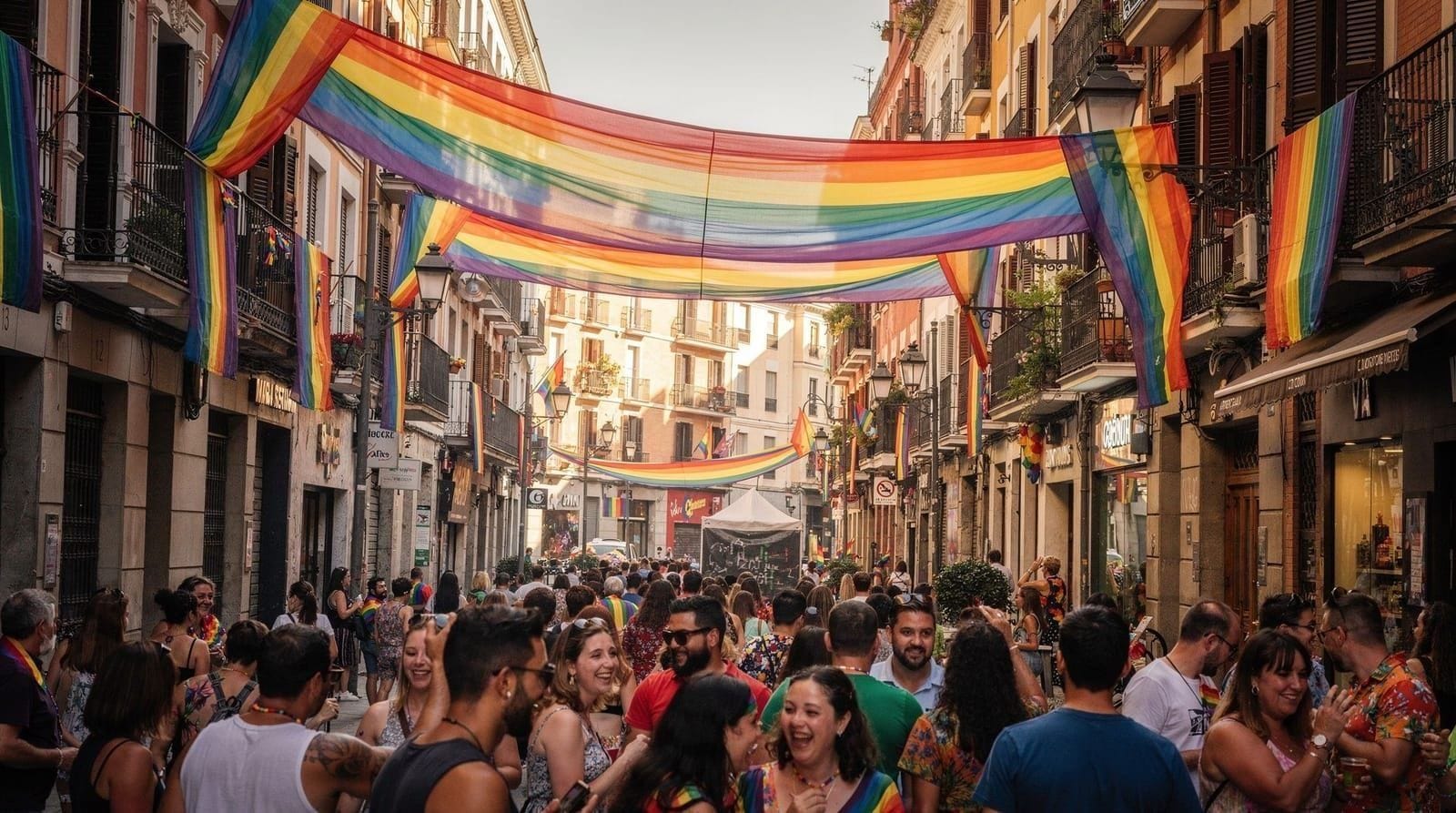
Chueca: cocktails, LGBTQ+ scene, and late bars
Chueca is Madrid’s most explicitly LGBTQ+ neighbourhood but functions as a general nightlife area — the bars here welcome everyone and the mixed crowd is one of the features. The concentration of cocktail bars is higher here than anywhere else in central Madrid.
The standard Chueca evening: dinner somewhere in the neighbourhood (21:30), cocktail bar at midnight, club or dancing bar from 01:30. The gay Madrid guide covers the specifically LGBTQ+ part of the scene.
La Latina: tapas to midnight
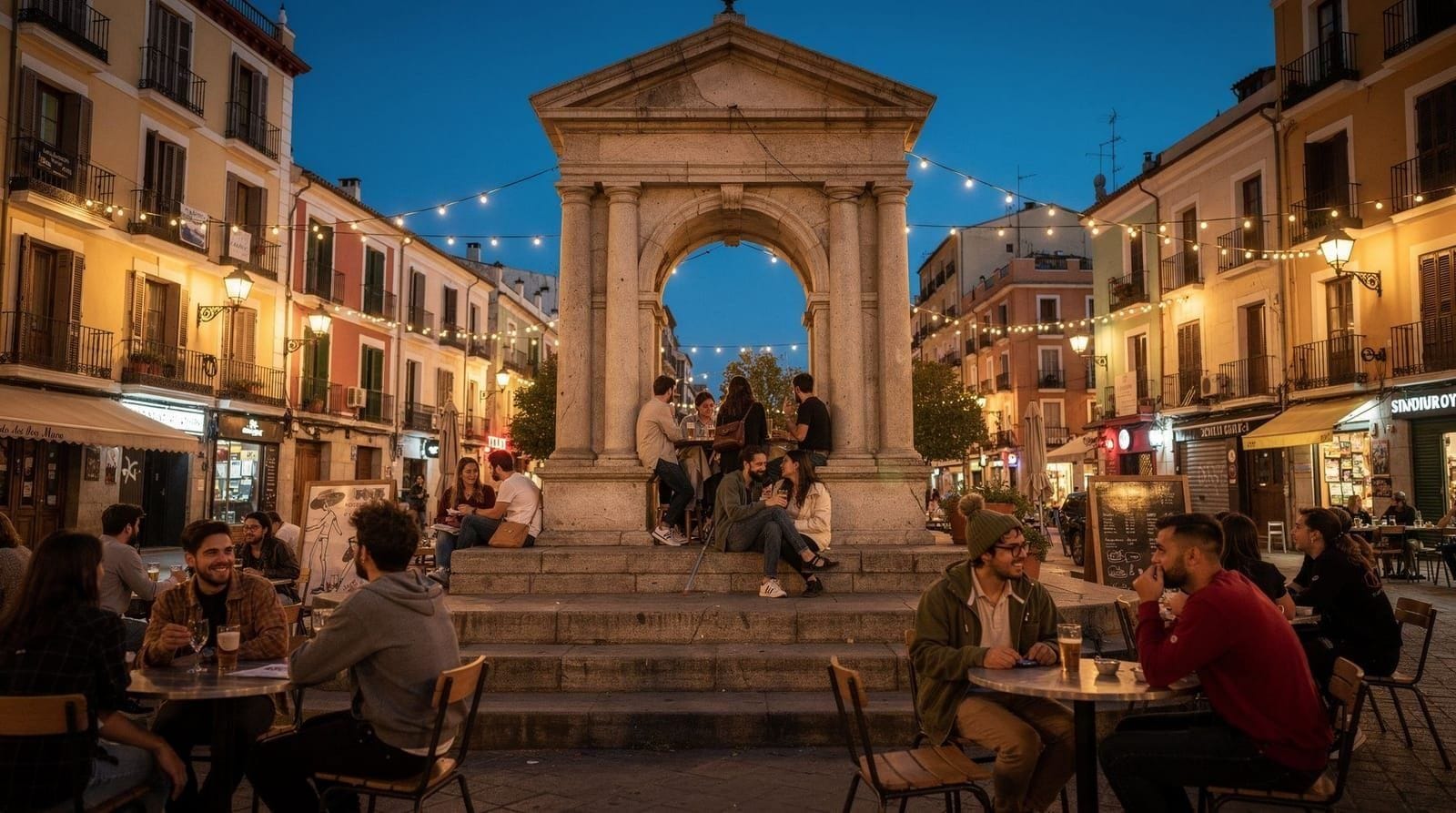
La Latina transitions from a daytime tapas neighbourhood to an evening bar scene after 20:00. If you want to eat well before the bars, see where to eat in La Latina and the full La Latina guide. The bars stay open later than most neighbourhoods, and the streets around Cava Baja remain active until 01:00–02:00 on weekends. This is not a clubbing destination — it is for bars, outdoor terraces in summer, and long evenings that start with tapas and end with a last drink at a neighbourhood bodega.
Huertas (Barrio de las Letras): student and mixed
Huertas has a high concentration of bars on and around Calle de las Huertas and Calle de la Cruz. The vibe is younger and more international than Malasaña or Chueca — this is where visiting students and backpackers are most likely to end up. Quality of bars is inconsistent. Good for a casual evening; less interesting as a destination for serious nightlife. The Barrio de las Letras guide explains the area’s literary history, which makes a pleasant early-evening walk before the bars fill up.
Gran Vía: mainstream and tourist-oriented
Gran Vía has commercial clubs and tourist-facing bars. The scale of operations here is larger (Kapital is a few streets away) and the atmosphere is less neighbourhood-specific. Fine for what it is; not where local madrileños typically spend their weekend nights.
If navigating the neighbourhood geography solo feels like too much for a first night, a guided evening removes the guesswork: Customised private night tour with a local guide
If you would rather see the lit-up city without committing to bars, a night-time ride is a gentler option. You can ride through the illuminated centre on an electric bike as the sun goes down, which also helps you get your bearings before a later evening out. Our e-bike tours guide and the Madrid by bike guide cover what to expect, and the Gran Vía guide and Puerta del Sol guide describe the two busiest hubs you will cross on any night out.
The best clubs in Madrid
Kapital (Calle de Atocha 125, near Retiro)
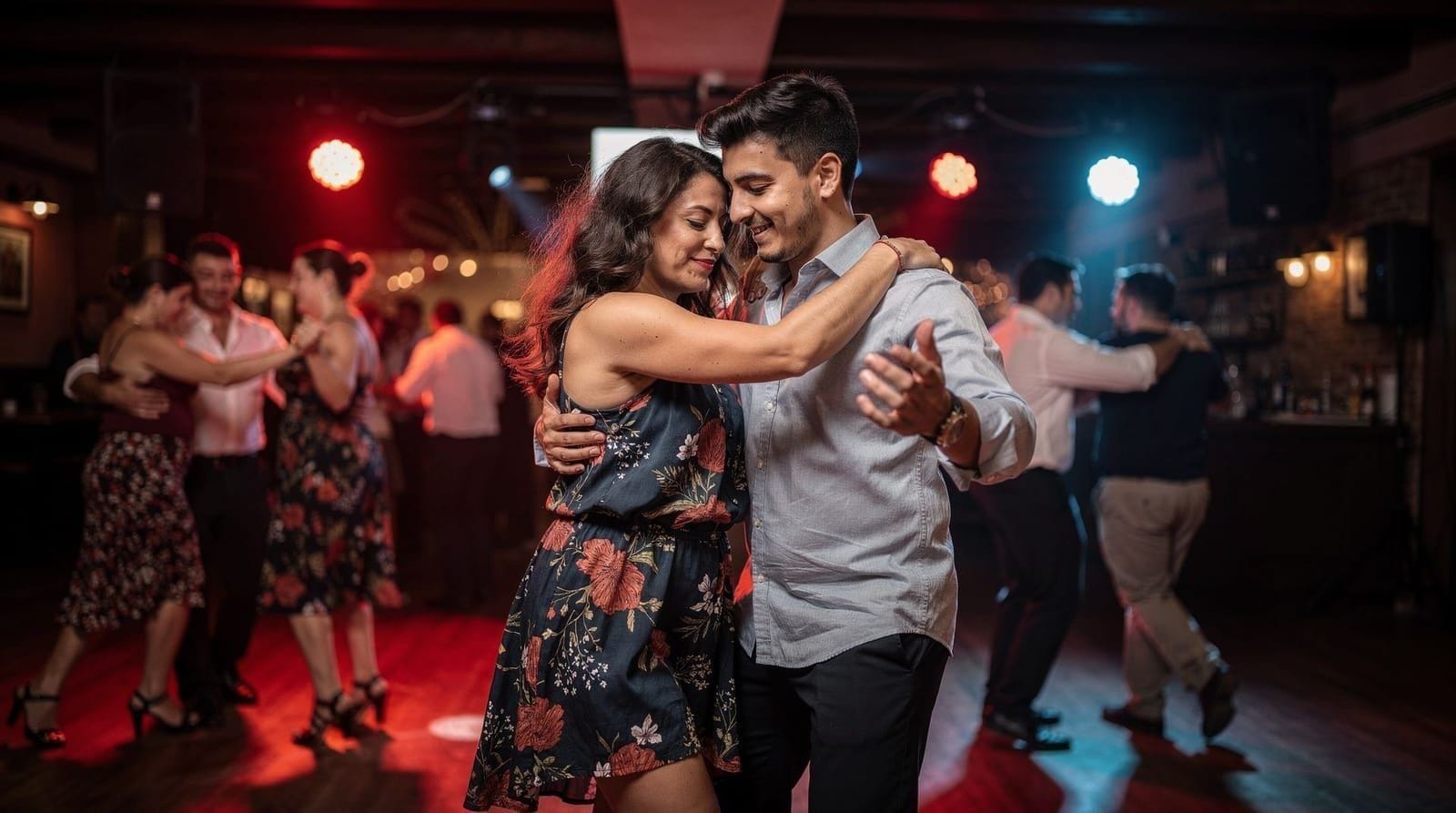
Madrid’s most famous club — seven floors of different music, from commercial pop (ground floor) to hip-hop, flamenco-fusion, and electronic across the upper levels. Can hold 3,000 people. The scale is impressive; the quality of the music varies by floor. Entry: €15–20. Pre-booking or guest list recommended for Friday/Saturday. Open Thursday through Sunday.
Honest note: Kapital is the tourist-default club. It is fine, it is reliable, and it is where everyone ends up when they do not know Madrid. It is not where locals who care about music actually go.
Joy Eslava (Calle del Arenal 11, near Sol)
A 19th-century theatre converted into a club in the 1980s. Beautiful space — baroque detail, multiple levels, excellent sound system. Commercial music, international crowd. Has managed to retain a good reputation despite being a central tourist club. Entry: €12–18. Open Thursday through Sunday.
Fabrik (Avenida de la Industria 82, Fuenlabrada)
Madrid’s most serious electronic music club — a converted industrial warehouse 30 minutes from the centre by taxi or night bus. Capacity of 5,000+. The sound system is among the best in Europe. This is where international techno and house DJs play when they come to Madrid. Entry: €15–25. Open Friday and Saturday nights into Sunday morning. Getting back to the centre requires a taxi (€30–40).
Sala Caracol (Calle de Bernardino Obregón 18, Lavapiés)
A medium-sized venue (600 capacity) that hosts a range of concerts, DJ nights, and club events. Less commercial than Kapital, more musical programming than pure club. Check the program in advance. Good for live music crossover events.
Rooftop bars at night
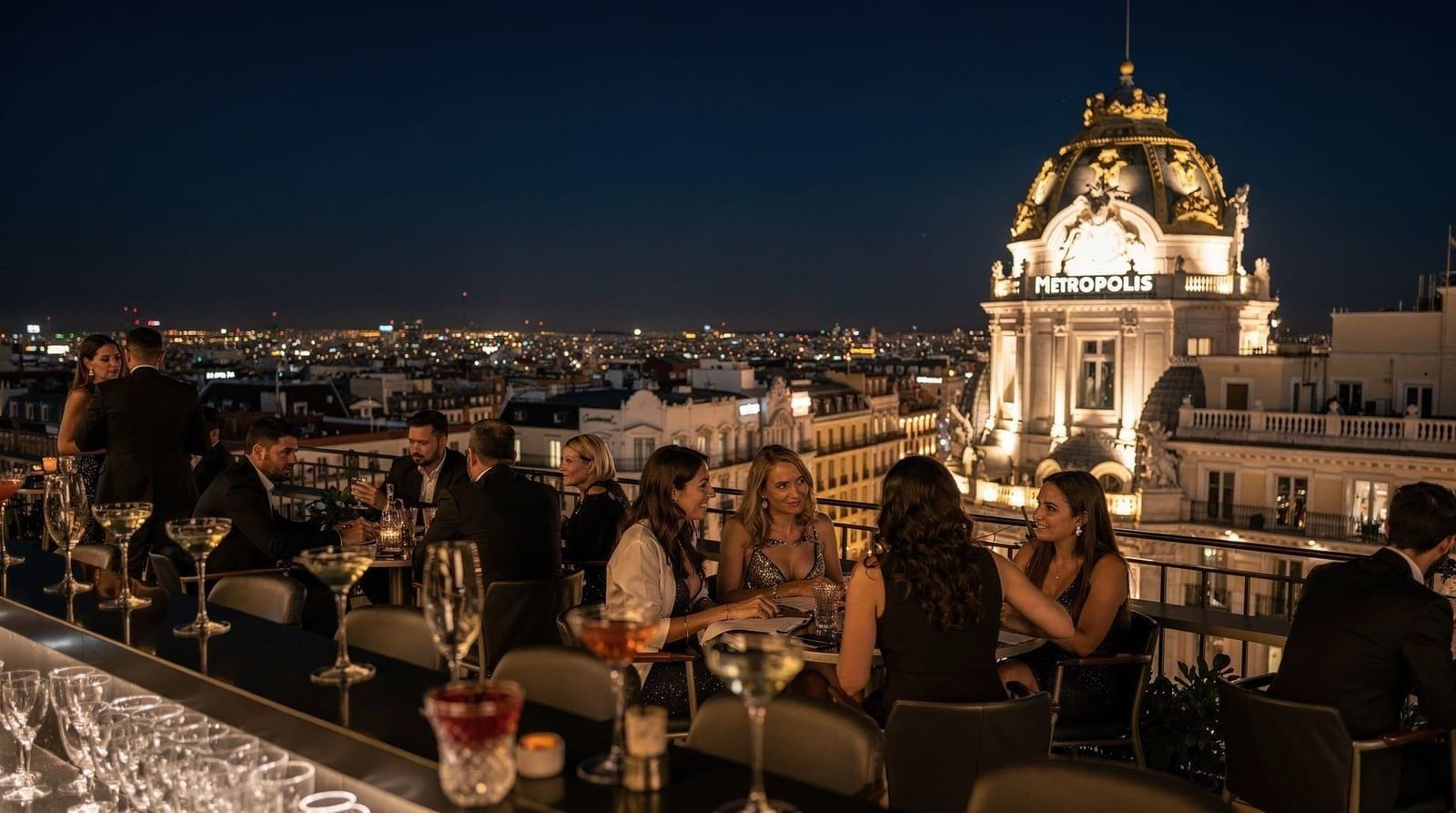
Several Madrid rooftops shift from afternoon views to evening nightlife. The rooftop bars at night guide covers this specifically. Key venues: Hotel Riu Plaza España, ME Madrid The Roof. Booking essential for weekend evenings. See also the daytime rooftop bars guide.
Not every good evening is about a club or a rooftop. A glass of wine in a proper wine bar is often the best way to start, and the wine bars guide and vermut guide show how Madrid does the pre-dinner drink. If you want some guidance, you can taste a selection of Spanish wines with a local host before heading out for the night.
Practical nightlife logistics
Getting home:
- Metro: until about 01:30 every night. The last metro is an absolute cut-off.
- Night buses (búhos): run from Plaza de Cibeles to all major areas, roughly every 30 minutes from 00:30 to 06:00.
- Taxi/Uber/Cabify: available until dawn and beyond. A taxi from Kapital to Malasaña: €8–12. Always use a licensed taxi (white with a red band) or the app services. The taxi vs Uber guide compares the two, and the Madrid metro guide explains the network you will be leaving behind after the last train.
- Walking: viable for short distances in the nightlife areas, less viable for club-to-home routes at 04:00.
Safety: The central nightlife neighbourhoods are safe at night by European standards. Pickpocketing is the primary risk — concentrated on the metro and in crowded club queues. Violent crime in these areas is rare. The main practical danger is drinks left unattended (standard precaution anywhere). For more detail on where pickpockets work and which areas to be careful in, read the pickpockets and safe areas guide.
Drink prices: Beer in a bar: €3–5. Cocktail: €8–14. Soft drink: €3–5. Most clubs charge similar to bars inside; entry fee is separate. Budget €50–80 for a full night including entry fees and drinks.
Madrid vs other European nightlife cities
A brief calibration for visitors coming from other cities:
Madrid vs Barcelona: Both have serious nightlife. Barcelona is slightly more international and more oriented toward beach-club and electronic music formats. Madrid is later, more local in character, and has better live music. The two cities are not competitors — they are different scenes.
Madrid vs London: London’s clubs close at 02:00–03:00 (some until 06:00 on specific licensed nights). Madrid’s clubs commonly run until 06:00–08:00. The price differential is significant — a night out in Madrid costs 40–60% of an equivalent London night.
Madrid vs Berlin: Berlin is the world reference for electronic music and has 48-hour club culture. Madrid has nothing equivalent in scope, but has genuinely good electronic venues (Fabrik especially) and a club culture that is more socially diverse than Berlin’s specialist scene.
Madrid vs Ibiza: Ibiza is summer-only, resort-focused, and extremely expensive. Madrid is year-round, city-based, and moderately priced. Different entirely.
Nightlife by season
Summer (June–September): The most active period for rooftop bars and outdoor terraces. The city’s parks and riverbank operate late. Heat (35°C+ in July–August) means the peak outdoor socialising happens after 21:00 when temperatures drop. Clubs are at their busiest.
Autumn and spring: The best balance of outdoor comfort and active nightlife. October and April are particularly good — warm enough for terraces, cool enough for comfortable walking between venues.
Winter (December–February): Madrid’s winter nightlife is indoor-focused. Bars are warmer, more intimate. Christmas and New Year (Nochevieja) see the most concentrated nightlife of the year — the Puerta del Sol countdown is the most filmed event in Spanish television. The weeks around Christmas and New Year are the most expensive for accommodation.
The flamenco night option
For visitors who want a specifically cultural experience rather than bar-and-club nightlife, flamenco shows operate in the evenings at tablaos (dedicated flamenco venues). The best tablaos guide and flamenco shows in Madrid go deeper, and the blog post on tourist versus authentic flamenco helps you pick a show that suits you. The best Madrid tablaos:
- Torres Bermejas (Calle de Mesonero Romanos 11): One of the most established, near Gran Vía. Show with dinner or drink-only options. Entry €45–65.
- Cardamomo (Calle de Echegaray 15, Barrio de las Letras): More intimate format, closer to the stage, particularly good for first-time flamenco viewers.
Honest note: Madrid’s flamenco tablaos are genuine but are performance venues, not spontaneous flamenco. Spontaneous flamenco in Seville’s gypsy quarter it is not. For the most authentic flamenco, Jerez de la Frontera and Seville’s Triana neighbourhood are the reference points. Madrid’s tablaos are excellent professional performances — just understand what format you are entering.
Dress code variations by venue type
| Venue type | Dress code | Entry |
|---|---|---|
| Traditional bar (Malasaña, La Latina) | Whatever you wore today | No entry charge |
| Cocktail bar (Chueca) | Smart casual | No entry charge |
| Hotel rooftop | Smart casual | No entry charge, drink minimum |
| Joy Eslava | Smart casual, no athletic | €12–18 |
| Kapital | Smart casual, no athletic | €15–20 |
| Fabrik | Casual (techno crowd) | €15–25 |
| Flamenco tablao | Smart casual, no athletic | €45–65 |
The “no athletic wear” rule is enforced more strictly at the premium clubs (Kapital) and hotel venues than at music clubs (Fabrik) or indie bars.
Getting the most from a Madrid night: a strategic guide
For your first night in Madrid: Keep it simple. Dinner at a decent restaurant in La Latina at 21:30, a bar or two in the neighbourhood until 00:30, then back to the hotel. Madrid nightlife rewards repeat visits and familiarity more than any other city — the first night is for orientation, not marathon drinking.
For a special night out: Pre-book a rooftop bar at 21:00 (Hotel Riu or Círculo de Bellas Artes), have an early dinner at 22:30, then move to Malasaña or Chueca from midnight. This covers the view, the dinner, and the bar scene.
For a genuine late night: Don’t start at a club. Start at a bar in Malasaña at 22:00, move bars until 01:00, arrive at a club at 01:30, dance until 04:00, churros at Chocolatería San Ginés at 04:30. This is the complete Madrid night. Budget one full recovery day.
See the late-night Madrid guide for the post-midnight specifics, and the churros con chocolate guide and the San Ginés churros verdict for the traditional end to a long night.
If you are building a whole trip around good evenings, the Madrid for couples and Madrid for foodies itineraries slot dinners and late drinks into a realistic day-by-day plan, and where to stay in Madrid helps you choose a base close enough to walk home from.
Neighbourhood quick comparison
| Neighbourhood | Best for | Starts busy | Vibe |
|---|---|---|---|
| Malasaña | Local indie bars, live music | ~23:00 | Casual, eclectic |
| Chueca | Cocktails, LGBTQ+ scene | ~00:00 | Mixed, welcoming |
| La Latina | Tapas-to-bar transition | ~20:00 | Traditional, social |
| Huertas | Student/international mix | ~23:00 | Younger, mixed quality |
| Gran Vía | Big commercial clubs | ~00:30 | Mainstream, tourist-heavy |
Frequently asked questions about Madrid nightlife guide
What time do clubs open and close in Madrid?
Clubs typically open at 00:00–01:00 and close at 05:00–07:00, sometimes later. Do not arrive before 01:30 or you will be in an empty room. Peak hours are 02:00–04:00. The best clubs on weekend nights are full from 01:30 to 06:00.Which is the best neighbourhood for nightlife in Madrid?
Malasaña for indie bars and live music. Chueca for the LGBTQ+ scene and cocktail bars. La Latina for tapas-to-midnight transition. Huertas (Barrio de las Letras) for a student/tourist mix. The Salamanca club strip (Kapital, Fabrik) for large commercial clubs. Gran Vía for mainstream options.Do I need to book for nightclubs in Madrid?
For the most popular clubs (Kapital, Joy Eslava), advance booking or guest-list is recommended for Friday and Saturday — long queues otherwise, and some nights you will simply not get in without a booking. For bars, booking is not necessary. For smaller clubs, showing up is usually fine.What is the dress code for Madrid clubs?
Smart casual to smart. Most clubs will turn away anyone in shorts, flip-flops, or athletic wear. Trainers/sneakers are generally fine if they are clean and fashion-rather than sport-oriented. The stricter door policies are at Kapital and Fabrik. Malasaña bars are entirely casual.Is Madrid nightlife expensive?
Beer at a bar: €3–5. Cocktail: €8–14. Club entry: €10–20, sometimes including one drink. The total for a night out (dinner, drinks, entry, taxi home) runs €40–80 per person depending on where you go. Madrid is cheaper than London or Paris for equivalent nightlife but not cheap in absolute terms.Is Madrid safe at night?
Yes, in the central neighbourhoods. Malasaña, Chueca, La Latina, and Huertas are all safe to walk at night. Pickpocketing is the primary risk — keep phones and wallets in front pockets in crowded bars and on metro platforms. The nightlife areas are well-populated until dawn; the streets are rarely truly empty.How does public transport work at night?
Metro runs until about 01:30 every night. After that, the night bus network (búhos — owls) runs on major routes until around 06:00. Taxis are widely available until dawn. Uber and Cabify operate in Madrid. Do not assume you can walk home from a club at 04:00 — check the distance first.What's the best neighbourhood for a first Madrid night out?
La Latina or Malasaña. La Latina eases you in with a tapas-to-bars transition that doesn't require staying out until dawn; Malasaña gives a genuinely local bar scene without the tourist-club pressure of Gran Vía or Kapital. Save Chueca's cocktail scene and the big commercial clubs for a second or third night once you've calibrated to Madrid's late schedule.Can I do a shorter, earlier version of Madrid nightlife?
Yes — dinner at 21:00, one or two bars in La Latina or Malasaña until midnight, then home. You'll miss the club peak (02:00–04:00) but still get a genuine taste of Madrid's evening culture without committing to a full recovery day. This is a reasonable choice for a first night or for travellers who need to be functional the next morning.