Gay Madrid and Chueca: the LGBTQ+ guide to Europe's most welcoming capital
Madrid: Reina Sofía Skip the Line Ticket
Is Madrid LGBTQ+ friendly and what is Chueca?
Madrid is one of Europe's most LGBTQ+-friendly cities — same-sex marriage was legalised in Spain in 2005, and public acceptance is consistently high. Chueca is the central LGBTQ+ neighbourhood — a full-time residential area that also hosts the best concentration of gay bars and clubs in the city. Madrid Pride (Orgullo) in late June is one of the world's largest.
In brief: Madrid’s LGBTQ+ credentials are structural, not performative. Spain legalised same-sex marriage in 2005 (ahead of the UK, Germany, and the US). Chueca is a full-time neighbourhood that functions normally during the day and transforms into the city’s gay social hub at night. Madrid Pride is one of the largest in the world. The acceptance level in the city generally is among the highest in Europe.
| Where | Chueca, between Gran Vía and Barrio Salamanca |
| Legal status | Same-sex marriage legal since 2005 |
| Best time | Year-round; Pride is last week of June |
| Getting there | Metro Chueca (Line 5) |
| Where to stay | Chueca for nightlife access, moderate prices outside Pride |
Madrid’s LGBTQ+ context
Spain’s relationship with LGBTQ+ rights has followed an unusual trajectory: from the extreme repression of the Franco dictatorship (homosexuality was criminalised until 1979) to one of the world’s most progressive legal frameworks in a single generation. Same-sex marriage was legalised in 2005, making Spain the third country in the world to do so. Transgender rights legislation followed in 2023.
The social acceptance rate is consistently high — surveys show Spain as one of Europe’s most tolerant countries on LGBTQ+ issues. In Madrid specifically, the combination of a progressive city government, a large and long-established LGBTQ+ community, and the structural influence of Chueca has created an environment where LGBTQ+ visitors are genuinely normal, not just tolerated.
Practical reality for visitors: Public displays of affection between same-sex couples are normal and unremarkable in Chueca, Malasaña, and the city centre generally. No particular precautions are needed in the central areas. Outside the city centre, in conservative suburbs or smaller towns nearby, the environment is more traditional — not hostile, but less openly affirming.
Chueca: the neighbourhood
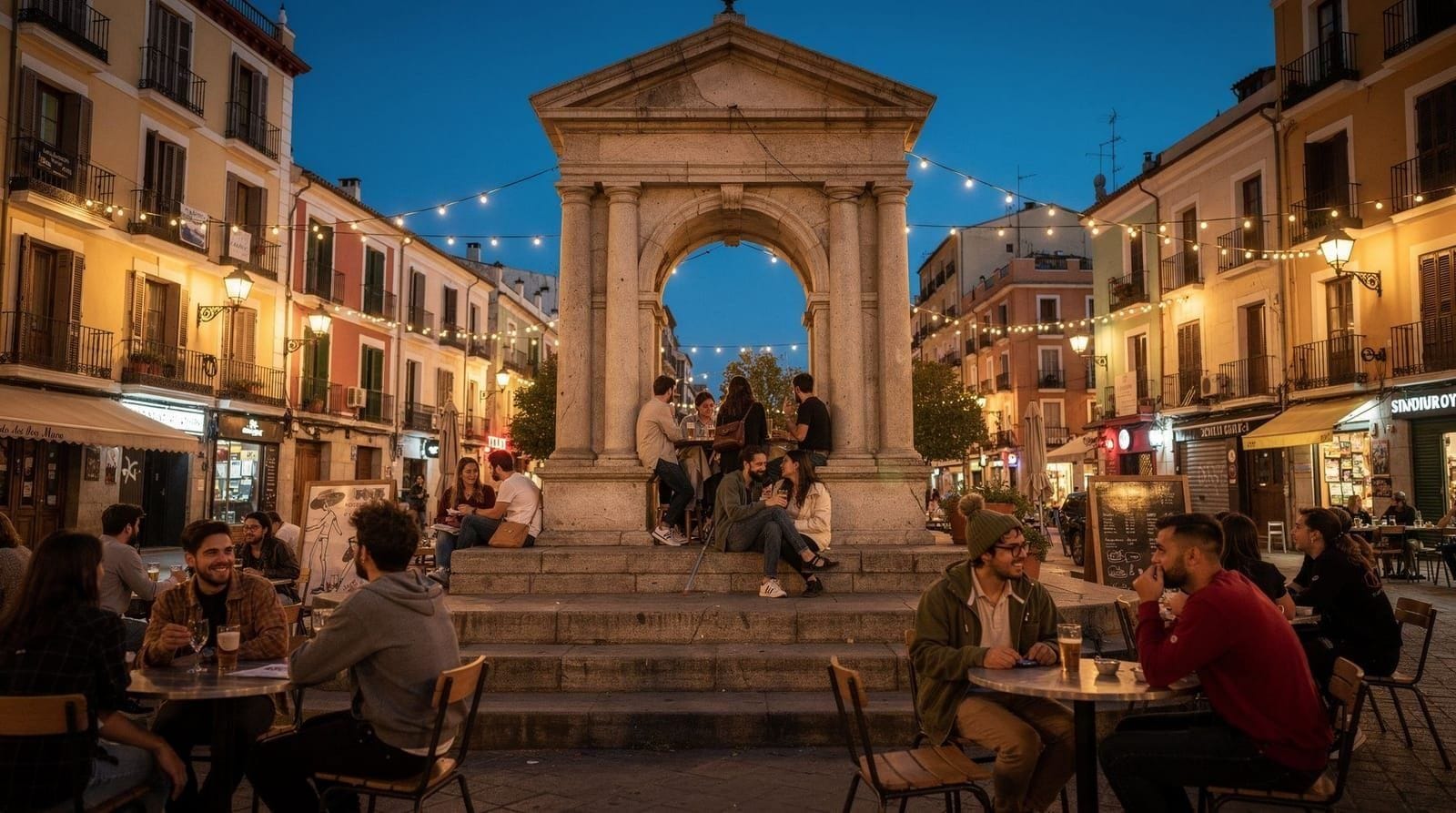
Chueca is a full residential neighbourhood between Gran Vía and Barrio Salamanca, centred on Plaza de Chueca (the square and metro station that give the neighbourhood its name). It is also the heart of Madrid’s LGBTQ+ scene — these two facts are not in tension; Chueca functions as a neighbourhood first and a gay district second.
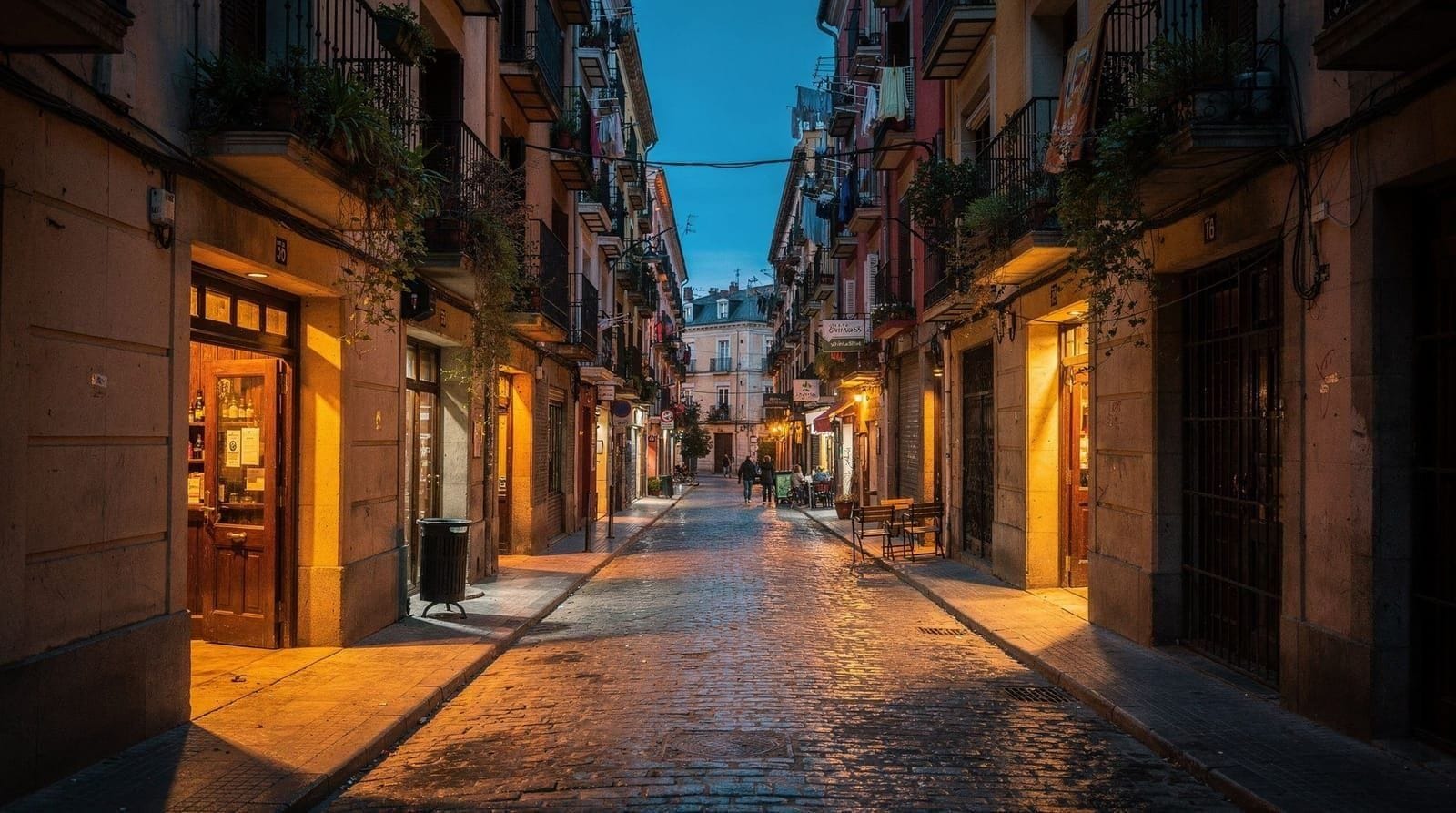
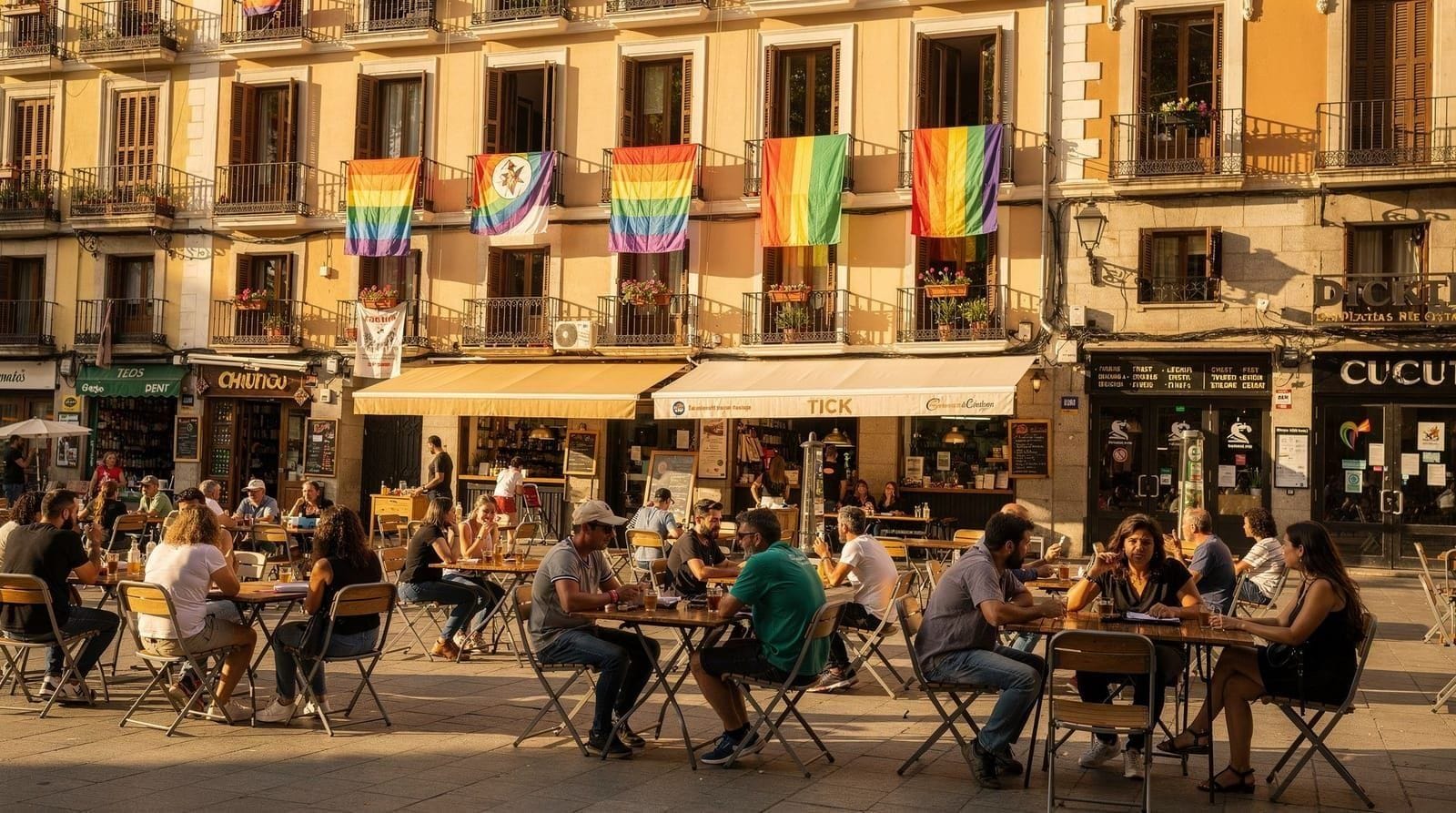
During the day, Chueca is boutique shops, café terraces, and a market (Mercado de San Antón). The demographics are diverse — LGBTQ+ residents, young professionals, families, older locals who were there before the neighbourhood’s transformation. The architecture is 19th-century apartment buildings with wide streets and well-maintained facades.
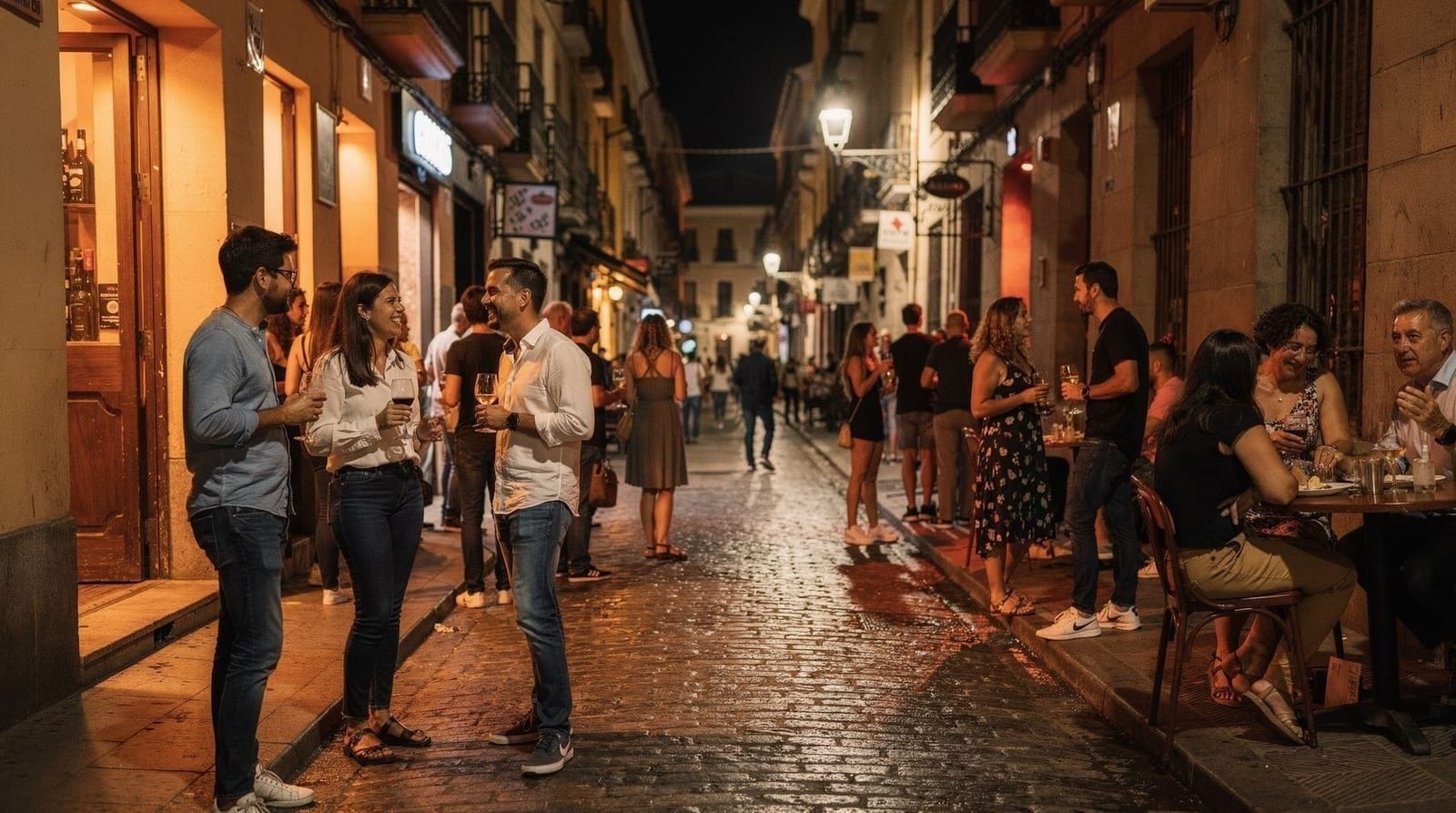
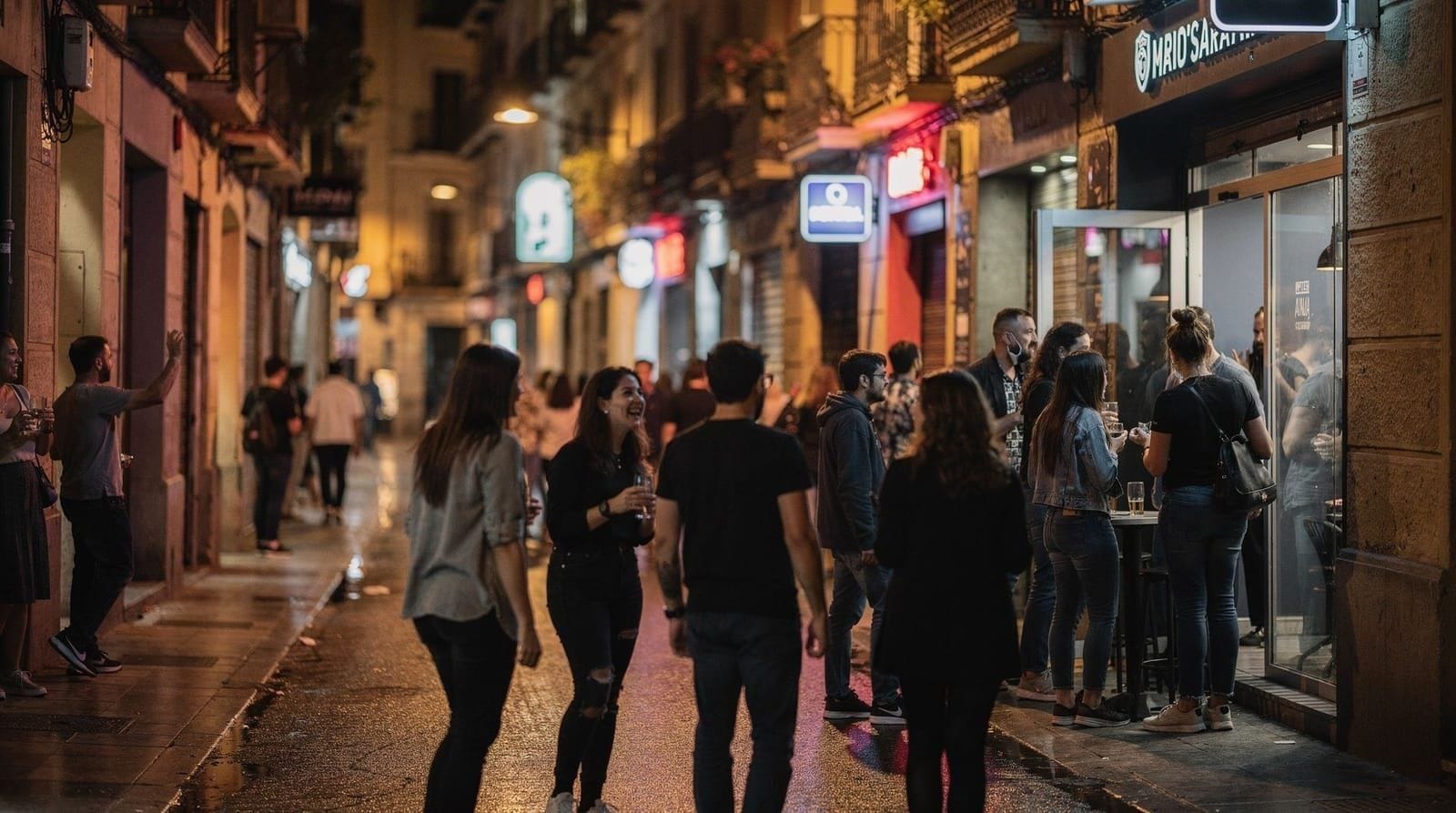
At night, particularly Thursday through Saturday, the neighbourhood’s gay-orientated bars and clubs become the centre of action. The clientele is mixed — Chueca has always been a straight-friendly neighbourhood, and the bars here welcome everyone. This is not a separatist space.
See the Chueca neighbourhood guide for the daytime picture.
The best gay bars in Chueca
Café Acuarela (Calle de Gravina 10)
One of the oldest gay cafés in Madrid — high ceilings, baroque decoration, ambient music, genuinely relaxed atmosphere. Not a nightclub — a café-bar where conversation is the point. Good for early evening drinks (19:00–23:00) before moving to louder venues. Mixed clientele, predominantly male.
El Mojito (Calle del Clavel 5)
A Latin-music gay bar that mixes salsa and reggaeton with a very social dance floor. More informal than the cocktail bars, louder, and with a younger crowd. Part of the bridge between Chueca’s bar scene and the Latin salsa clubs of the wider city.
Why Not (Calle de San Bartolomé 7)
One of Madrid’s most established gay clubs — a small venue by club standards but consistently busy from midnight. Electronic and pop music, mixed gay crowd (predominantly male but welcoming), central Chueca location. Entry: €8–12 including one drink.
Escape Club (Calle del Gravina 13)
A multi-level gay venue with different music zones. More mainstream than Why Not, catering to a wider age range. Good for a first Chueca night — accessible, not intimidating. Entry: €8–15.
Heaven (Calle de los Jardines 2, Gran Vía edge)
One of the larger gay clubs in central Madrid. Electronic music, younger crowd, good production values (light shows, sound system). Open until 06:00 on weekends. Entry: €12–18 including one drink.
Warm Up (Calle de San Mateo 21, Chueca edge)
A lesbian and queer women’s bar with a strong regular clientele. Less commercially visible than the male-focused venues but well-regarded within the community. Good cocktail selection, relaxed atmosphere.
Lesbian and queer women’s venues
Madrid’s lesbian bar scene is smaller than its gay male equivalent but genuine. The most reliable venues shift with time — the community is more gathering-in-private than gathering-at-a-bar-every-night. Medea and Fulanita de Tal have been long-standing references; check current status as venues in this segment change more than others.
Warm Up (above) is the most consistently active mixed-queer women’s space.
Madrid Pride (Orgullo de Madrid)
Madrid Pride — Orgullo de Madrid — takes place in the last week of June and attracts 1–3 million participants. It hosted World Pride in 2017 and was the largest LGBTQ+ event in history at the time.
Structure: The week includes cultural events, film screenings, debates, and concerts across the city. The main parade runs from Paseo del Prado to Atocha on Saturday afternoon (usually the last Saturday of June). Chueca is the epicentre — the neighbourhood’s streets become permanently pedestrianised for the week.
Practical note for the Pride week: Hotel prices in Chueca and central Madrid increase substantially during Pride week — sometimes 3–4x normal rates. Book months in advance if visiting during this period. The restaurants and bars in Chueca are full from morning to late night throughout the week. The main parade is free; some events require tickets.
2026 Pride dates: Check the Orgullo de Madrid official website for the 2026 programme (typically announced in March–April).
Beyond Chueca: the wider LGBTQ+ Madrid
Chueca is the visible hub, but Madrid’s LGBTQ+ community extends well beyond it:
- Malasaña: Historically associated with countercultural and artistic communities, Malasaña has a high proportion of LGBTQ+ residents and a casually queer bar culture. Less explicitly “gay bar” and more “bar where everyone is welcome.”
- Lavapiés: The most multicultural neighbourhood has a queer scene that intersects with its artistic and activist communities.
- Sala Barts and other music venues: LGBTQ+-themed events and nights at various venues across the city throughout the year.
Staying in Chueca
For LGBTQ+ visitors, Chueca is the natural base. The neighbourhood has multiple boutique hotels and Airbnb apartments; prices are moderate by central Madrid standards (€80–180 per night for a hotel double room outside Pride week). The location — central, metro-accessible, immediately in the heart of the gay scene — makes it the default for first-time visitors. See the where to stay in Madrid guide.
Safety and practical notes
Madrid is genuinely safe for LGBTQ+ visitors in the central areas. No particular precautions beyond standard city awareness are required.
Getting around at night: Metro until about 01:30 every night. Night buses from Cibeles/Sol. Taxis and apps (Uber, Cabify) available all night. See the getting around guide.
Language: Most Chueca bars have at least some English-speaking staff. The neighbourhood is accustomed to international visitors.
Age: Spanish clubs are 18+. ID checking is standard.
Dress code: Varies by venue. The cocktail cafés (Acuarela, Escape) are casual. The more club-format venues (Why Not, Heaven) are smart casual — trainers acceptable, no athletic wear.
Chueca’s social transformation: a recent history
Chueca was not always what it is today. In the late 1970s and 1980s, it was one of Madrid’s most derelict inner-city neighbourhoods — heroin-affected, vacant properties, high crime. The transformation came from below: LGBTQ+ people who could not afford more expensive central neighbourhoods began renting the cheap apartments and opening small businesses. The community effectively reclaimed a failing neighbourhood and rebuilt it into what exists today.
This history matters because it explains why Chueca has retained its community character even as it has become internationally known and property prices have risen sharply. The neighbourhood’s identity was built from genuine need, not from branding. The transformation is documented in Madrid’s cultural history and is referenced in the Chueca neighbourhood guide.
Beyond the bars: LGBTQ+ cultural Madrid
The LGBTQ+ scene in Madrid extends beyond the bars and clubs of Chueca:
COGAM (Colectivo de Lesbianas, Gays, Transexuales y Bisexuales de Madrid): The main LGBTQ+ advocacy and community organisation. Operates a community centre near Chueca with events, support services, and cultural programming. Open to visitors.
Film: Madrid’s LesGaiCineMad film festival (usually November) screens LGBTQ+ cinema from Spain and internationally. One of the most established LGBTQ+ film festivals in Southern Europe.
Literature: The literary quarter (Barrio de las Letras) has several bookshops with strong LGBTQ+ sections.
Art: Madrid’s major museums (Reina Sofía, Thyssen) have incorporated LGBTQ+ art and artists into their programming in recent years. The Reina Sofía in particular has work by artists whose LGBTQ+ identity was impossible to acknowledge during their lifetimes but is now central to their museum presentation.
Making a daytime of it: A museum morning is a good counterweight to a late night in Chueca, and the galleries are among the calmest places in the city to recover the day after a club. If you would rather have context than wander alone, a skip-the-line ticket for the Reina Sofía keeps the visit simple, while a guided visit to the Prado suits travellers who want the stories behind the paintings explained. Both fit easily into a slow morning before an evening back in the neighbourhood, and both pair well with a walk through the Barrio de las Letras afterwards.
Planning around Pride week
If you are visiting during Madrid Pride (late June), several practical considerations:
Transport: The neighbourhood around Chueca and Gran Vía is extremely crowded on parade day (usually the Saturday of the last week of June). Metro stations near the parade route (Chueca, Gran Vía, Banco de España) become exit-only at peak times. Plan your movement early in the day or on foot.
Accommodation: Book 3–6 months in advance. Pride week is the highest-demand period of the year in central Madrid — hotels and apartments book out completely at inflated prices. Staying slightly outside the Chueca–Sol core (Salamanca, Chamberí) may give better availability.
Food: Most Chueca restaurants have outdoor seating extended onto the street during Pride week. Waits for restaurants are long. Tapas-standing-at-the-bar is more practical than a full seated meal.
The parade: The Saturday afternoon parade is the centrepiece — floats, music, colour. The route runs from Paseo del Prado toward Atocha and takes 3–4 hours to pass from start to finish. Good viewing points are along Paseo del Prado and at Plaza de Atocha. Arrive early (by 18:00) for the best positions.
Chueca and the broader Madrid nightlife picture
Chueca is one node in Madrid’s nightlife geography. Its strengths:
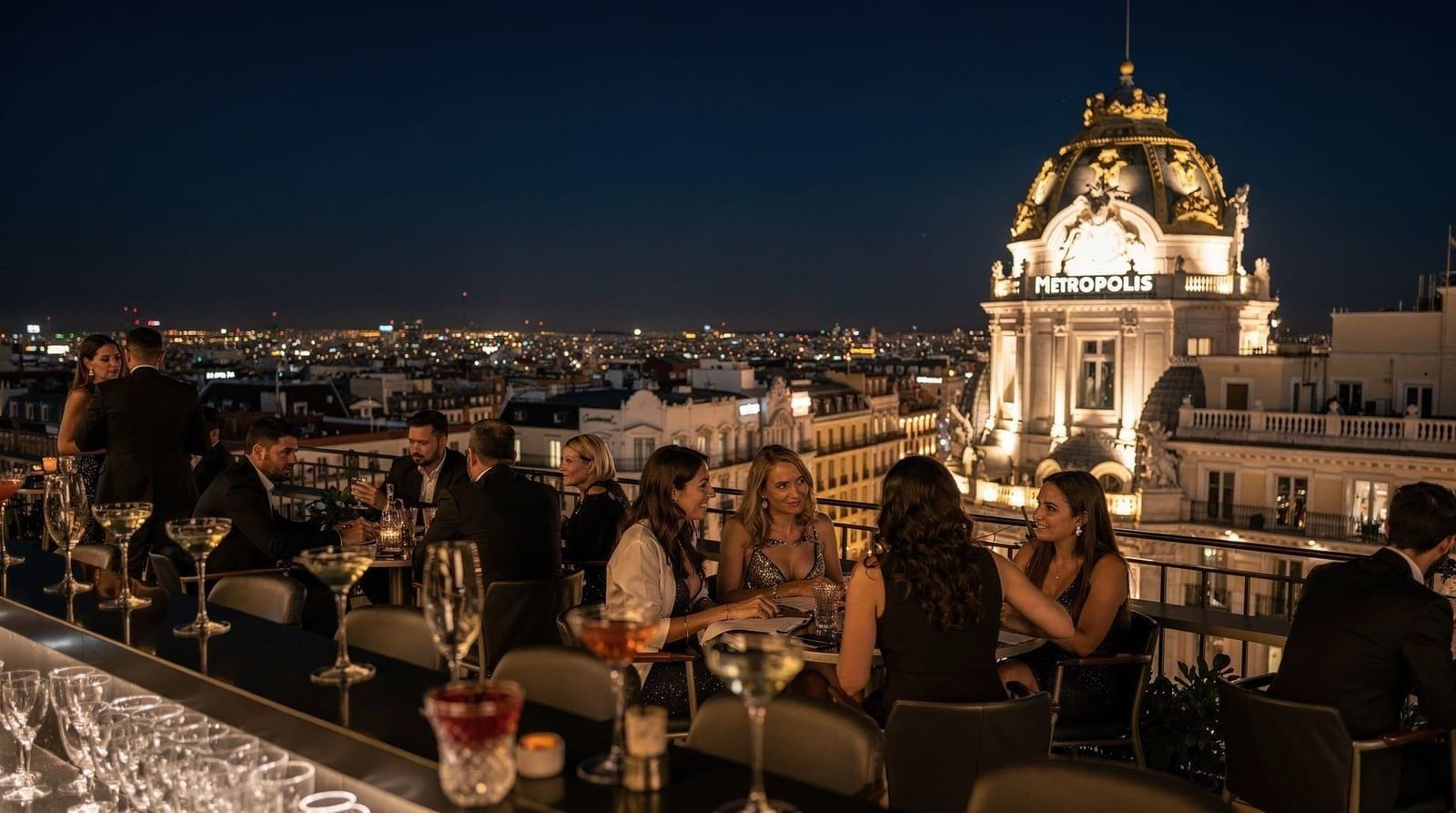
- The best cocktail bar concentration in central Madrid
- The most explicitly social neighbourhood (conversations between strangers are normal in Chueca bars in a way that is not true everywhere)
- Proximity to Malasaña (10-minute walk) and Barrio de las Letras (15-minute walk)
Its limitations:
- Less variety in club format compared to the large commercial clubs (Kapital, Fabrik)
- Expensive — Chueca cocktail bars are 20–30% more expensive than equivalent bars in Malasaña
- Crowded on weekends — the neighbourhood’s popularity means queues and noise
For the complete Madrid nightlife picture, including the club circuit and late-night transport, see the Madrid nightlife guide. For the quieter, more local Madrid bar scene, see the Malasaña bars guide.
Chueca for non-nightlife visitors
Chueca is not only a nightlife neighbourhood. The daytime offer deserves attention:
Mercado de San Antón (Calle de Augusto Figueroa 24): A working neighbourhood market that has evolved into a partial food hall — more authentic than the Mercado de San Miguel, with neighbourhood residents shopping alongside visitors. The ground floor butchers and fishmongers still operate as a real market; the upper floors have a terrace restaurant and bar.
Shopping: Chueca has the best independent shopping in central Madrid. Streets like Calle de Fuencarral, Calle de Hortaleza, and the area around Plaza de Chueca have boutique clothing, design shops, bookstores, and specialty food shops. Less chain-store dominated than the Gran Vía shopping strip.
Coffee: Chueca has several serious independent cafés — better coffee culture than the tourist-facing areas of Sol. Toma Café (Calle de la Palma, technically Malasaña border) is the neighbourhood’s most cited specialty coffee shop.
Sunday morning: Chueca’s Sunday morning has its own vermut culture alongside La Latina’s — bars around Plaza de Chueca from 12:00 onwards, slightly less intense than La Latina but equally local. See the vermut guide.
Eating in Chueca
The neighbourhood’s food scene has moved significantly upmarket over the last decade:
La Manduca de Azagra (Calle de Sagasta 14): A Navarran restaurant serving the region’s distinctive produce — white asparagus, piquillo peppers, lamb — at prices that reflect the quality. One of the better sit-down restaurants for traditional Spanish food outside the tourist circuit. €40–55 per person.
Celso y Manolo (Calle de la Libertad 1): A wine bar and restaurant that functions as a neighbourhood institution for Chueca’s more settled residents. Good Spanish wine list, excellent jamón, reliable tapas. More bar than restaurant in format but with serious food credentials.
La Carmencita (Calle de la Libertad 16): Madrid’s oldest restaurant in continuous operation in the same premises (1850s). The food is traditional and not remarkable — the reason to come is the room itself, a 19th-century taberna preserved almost intact.
Baco y Beto (Calle de Pelayo 24): The neighbourhood’s best natural wine bar with excellent small plates. Covered in the wine bars guide.
The tipping economy in Chueca
A practical note on tipping in Chueca bars versus other Madrid bars: Chueca has a more service-industry-aware tipping culture than traditional Madrid neighbourhood bars, partly due to the larger international visitor base. The norm is still not mandatory (Spain is not the US), but 10% is increasingly standard at sit-down venues in Chueca.
At cocktail bars: rounding up or leaving €1–2 per round is normal. At tapas bars and counter service: tipping is optional.
LGBTQ+ travel to Madrid vs other European destinations
For the traveller considering Madrid specifically for its LGBTQ+ environment, a brief comparison:
Madrid vs Amsterdam: Amsterdam has the oldest established gay neighbourhood in Europe (Reguliersdwarsstraat/Warmoesstraat), heavily tourist-facing and commercial. Madrid’s Chueca is more neighbourhood-integrated and less overtly tourist-facing.
Madrid vs Barcelona: Barcelona’s Eixample neighbourhood (specifically the “Gayxample” around Calle del Consell de Cent) is comparable in quality and scale. Madrid’s Pride is larger; Barcelona has the beach culture advantage.
Madrid vs London Soho: London’s gay Soho is under pressure from rising rents and has lost several venues. Chueca is more commercially stable and more resident-anchored.
Madrid vs Berlin: Berlin has the most progressive LGBTQ+ culture in Europe (particularly around Schöneberg and Friedrichshain) and the most alternative and queer scene. Madrid is more mainstream-welcoming, less subcultural.
The consensus among LGBTQ+ travel writers: Madrid is among the three best European cities for LGBTQ+ visitors alongside Amsterdam and Berlin, with the advantage of better weather, lower costs, and extraordinary food culture surrounding the gay scene.
A first-timer’s evening in Chueca
For visitors spending one evening in the neighbourhood without deep local knowledge, a workable sequence: early drinks at Café Acuarela (19:00–21:00) for a relaxed introduction to the neighbourhood’s atmosphere, dinner at Celso y Manolo or one of the smaller tapas bars around Plaza de Chueca, then moving to Escape Club or Why Not from around 23:30 once the later crowd arrives. Madrid’s nightlife runs later than most visitors expect — arriving at a club before midnight often means a near-empty room, since the real activity builds from 01:00 onward. Pace accordingly rather than front-loading the evening, and see the Madrid nightlife guide for the broader late-night transport picture once venues start closing.
Solo LGBTQ+ travellers in Madrid
Madrid is a genuinely comfortable city for solo LGBTQ+ travellers, in part because Chueca’s café culture makes it easy to spend an evening without needing a group. Café Acuarela and similar venues are well suited to sitting alone with a drink and people-watching, something that can feel more exposed in purely club-format venues. For solo travellers wanting structured social contact, COGAM’s community events and Madrid’s LGBTQ+ meetup groups (searchable via local listings) offer a lower-pressure entry point than the bar and club scene. The where to stay in Madrid guide covers Chueca’s accommodation options in more depth, useful for solo travellers weighing proximity to nightlife against a quieter base elsewhere in the centre.