Wine bars in Madrid: Spanish wine, natural wine, and where to find both
Madrid: Wine Tasting Experience
Where are the best wine bars in Madrid?
El Tempranillo (La Latina) for natural wines with tapas, Baco y Beto (Chueca) for serious Spanish wines, La Musa (Malasaña) for accessible neighbourhood wine. Sherry (jerez) is underappreciated in Madrid but La Venencia near Sol is the reference.
In brief: Madrid is not a wine-producing city, but it has access to Spain’s best regions — Rioja, Ribera del Duero, Priorat, and the underrated local wine of Vinos de Madrid. The best wine bars are clustered in La Latina, Chueca, and Barrio Salamanca. Natural wine has established a serious presence in Malasaña and Chueca in the last five years.
| Where | La Latina, Chueca, Barrio Salamanca, Malasaña |
| Glass price (traditional bodega) | Around €2–6 |
| Glass price (curated wine bar) | Around €5–12 |
| Don’t miss | La Venencia for sherry |
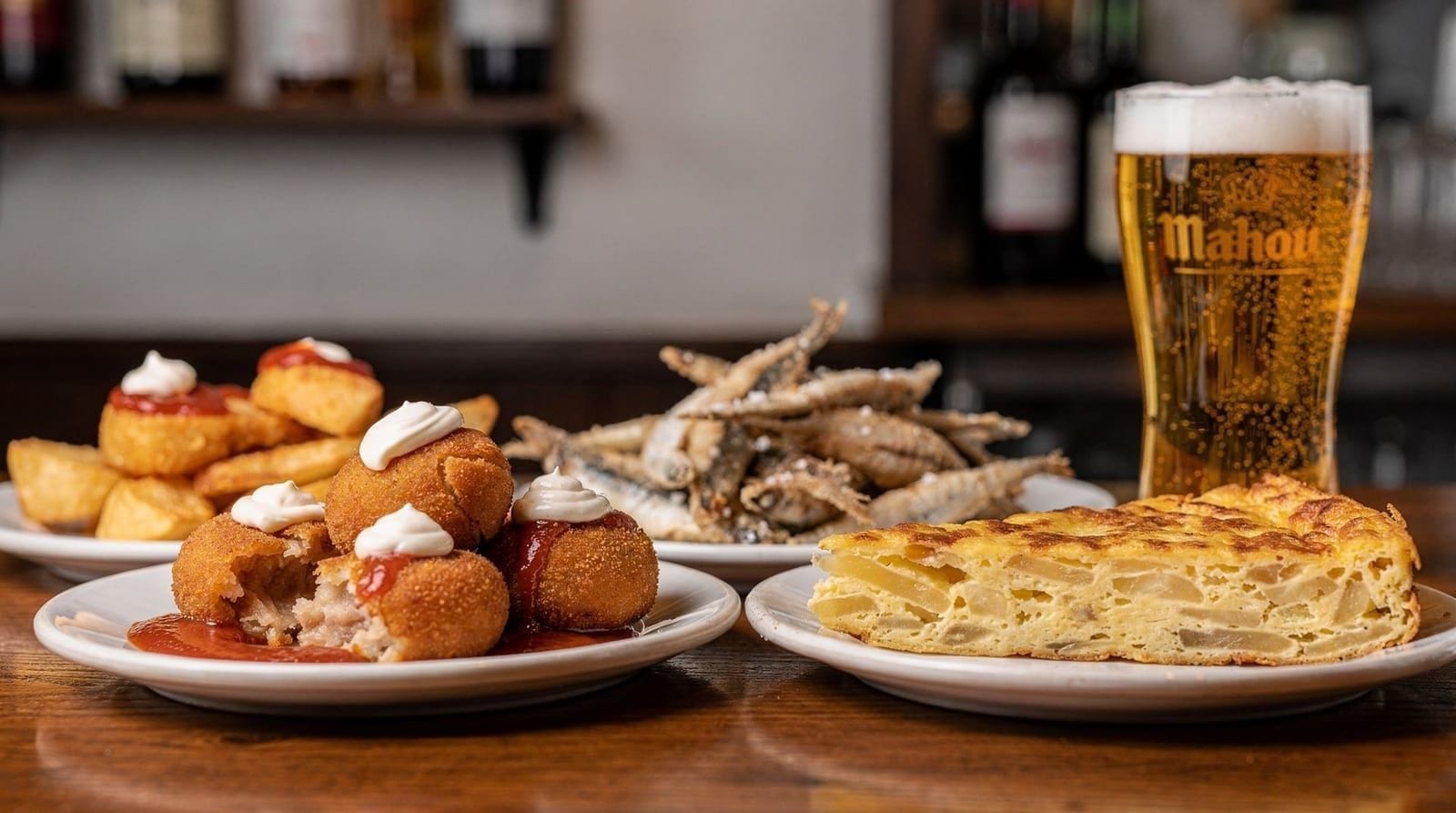
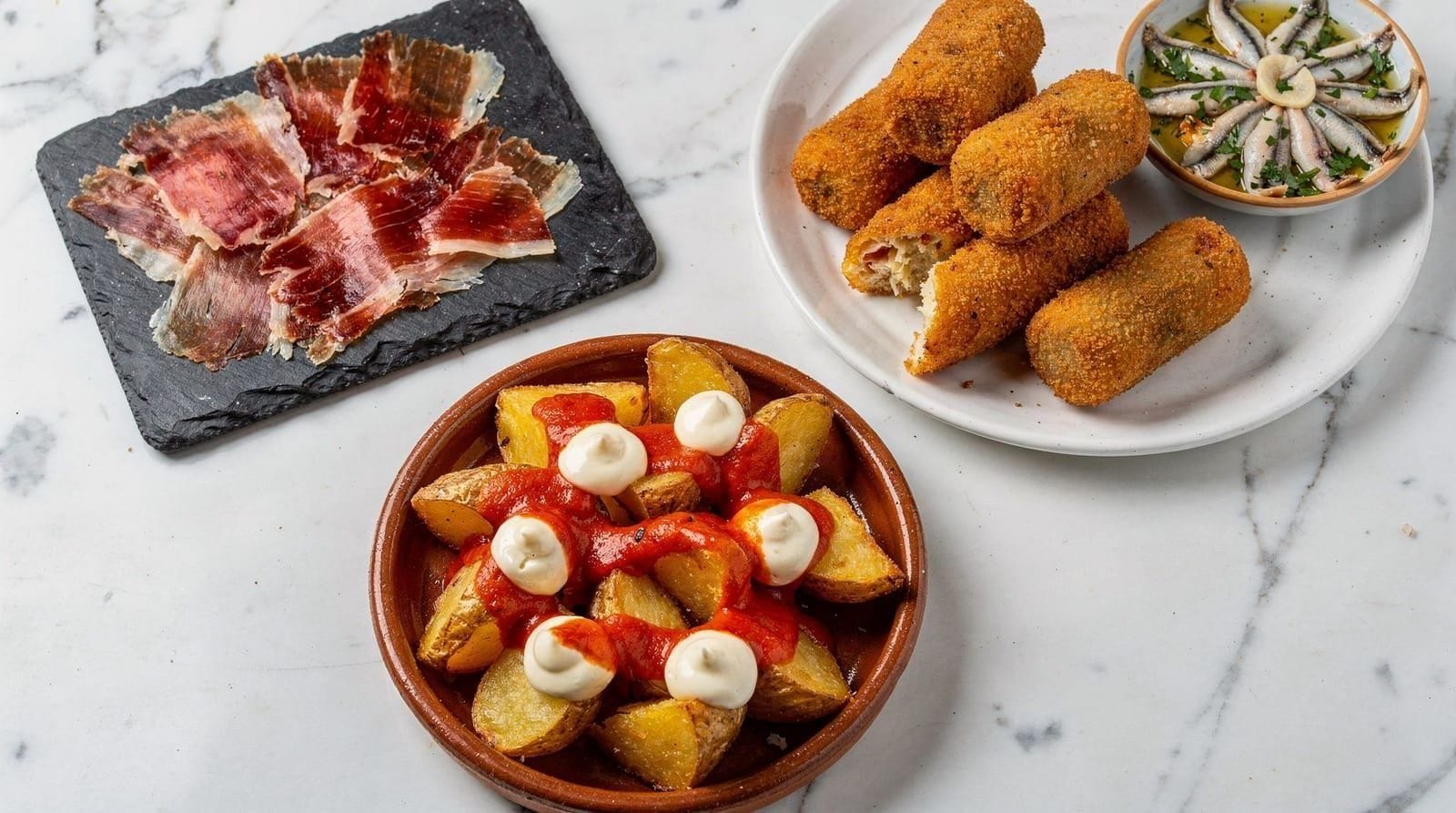
| Best paired with | Jamón ibérico, anchovies, tortilla |
Madrid’s relationship with wine
Madrid produces wine (Vinos de Madrid DO, from the surrounding province) but it is not primarily a wine city in the way that San Sebastián is a pintxo city or Jerez is a sherry city. What Madrid has is extraordinary wine access — being the country’s capital and commercial hub means the best bottles from every Spanish region end up here first.
The bar culture is historically beer and vermouth, with wine consumed at meals rather than as a standalone bar drink. This is changing: a generation of younger madrileños who have travelled to natural wine scenes in Paris, Copenhagen, and London have brought back the wine-bar-as-destination format. In the last decade, Madrid has developed a genuine natural wine scene that rivals Barcelona’s.
Wine regions to know before ordering
Rioja: The default red wine of Spain. Tempranillo-based, range from young fruity wines (joven) to complex long-aged reserves (gran reserva). Traditional oak aging gives the classic vanilla-cedar character. Every wine bar carries Rioja; quality ranges enormously by producer.
Ribera del Duero: The rival to Rioja. Same grape (tempranillo, called Tinto Fino here), higher altitude, more intense and tannic wines. Vega Sicilia is the most famous producer (and the most expensive Spanish wine). Peter Sisseck’s Pingus is comparable in prestige.
Priorat: Catalonia’s most prestigious region — old vine garnacha (grenache) and carignan, intensely concentrated, minerally, expensive. Small production. A serious wine bar in Madrid will carry a few examples.
Albariño (Rías Baixas): The essential Spanish white wine — from Galicia, aromatic, slightly saline, naturally low alcohol. Excellent with seafood. Very widely available.
Verdejo (Rueda): A lighter, floral white from near Valladolid. Good summer drinking. Often the house white at tapas bars.
Jerez (Sherry): Radically underappreciated in Spain outside of Andalusia. Fino (pale, dry, oxidative) is one of the most food-friendly wines in the world — perfect with jamón, anchovies, and seafood tapas. Manzanilla is the coastal version, slightly saltier. Amontillado is richer. See below for Madrid’s sherry bar.
Vinos de Madrid: The local DO is not prestigious internationally but produces increasingly interesting wines, particularly from old garnacha vines in the San Martín de Valdeiglesias and Arganda sub-zones. A good natural wine bar in Madrid will usually have a few examples of local wine alongside the better-known regions.
The best wine bars by neighbourhood
La Latina
El Tempranillo (Calle de la Cava Baja 38) The most important wine bar in La Latina — not because it has the deepest cellar, but because it has consistently offered a natural wine selection in a traditional tapas neighbourhood since the early 2000s. The selection changes regularly and the staff know what they are pouring. Good by-the-glass range. €3.50–6 per glass. Tapas to accompany: good-quality rotating small plates.
Chueca and surrounding area
Baco y Beto (Calle de Pelayo 24) A serious natural wine bar in Chueca with a well-curated list weighted toward small Spanish producers. The anchovy and cheese plates are excellent. The bar is small and usually busy from 19:00 onwards. €5–9 per glass, higher for special bottles. Best for people who take wine seriously.
La Venencia (Calle de Echegaray 7, Barrio de las Letras) The essential sherry bar — a bar that has been serving Spanish sherry (and nothing else) since 1922. The walls are unchanged. The barman chalks your bill on the bar. The sherry is poured from bottles drawn directly from barrels behind the counter. This is one of the most authentic bar experiences in Madrid. Order: a fino with anchovies. The entire visit costs €3–5.
Photographs are discouraged (a sign says so). They mean it. This is not an Instagram venue.
Bar Cock (Calle de la Reina 16) A 1920s cocktail bar that also does wines — specifically Spanish wines by the glass with good curation. The interior is Art Deco and genuinely beautiful. Slightly formal atmosphere. €6–10 per glass.
Barrio Salamanca
Celso y Manolo (Calle de la Libertad 1, Chueca) Technically on the Chueca–Salamanca boundary. A wine bar and restaurant with a well-structured Spanish wine list and good food alongside. More formal than the natural wine bars but excellent quality. €5–8 per glass.
Malasaña
Hermanos Vinagre (Gravina 17, Chueca) French-influenced wine bar format — bottle-focused rather than by the glass, with charcuterie and cheese. The most Paris-adjacent wine experience in Madrid. €6–12 per glass, significant markup on bottles.
Bodega de la Ardosa (Calle de Colón 13) Wine and vermouth from the barrel in a 130-year-old bodega. Not a fine wine destination — but genuine and unaffected. The house wines are simple and cheap (€2–3 per glass), and the atmosphere is irreplaceable. See the vermut guide.
Wine tastings and guided experiences
For structured wine education, a guided tasting with explanation is a better investment than wandering from bar to bar:
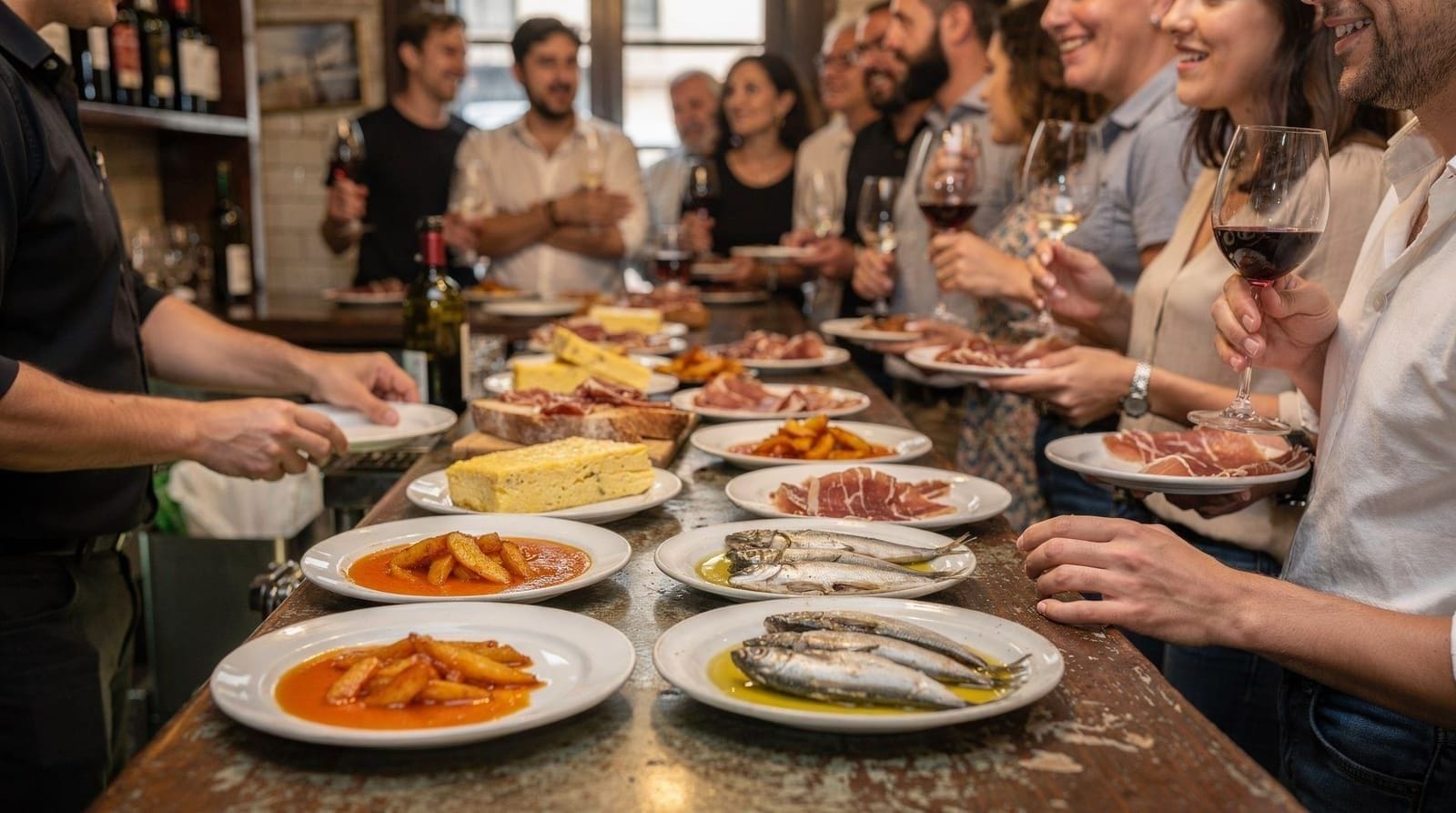
A Madrid wine tasting experience covers the main Spanish wine regions with pairings and explanation.
A four-Spanish-wine tasting experience is a shorter format covering key regions side by side.
A Spanish wine and olive oil tasting with tapas combines two of the defining flavours of Spanish food culture in one session.
Practical wine notes
Ordering by the glass: Most Madrid wine bars offer 4–8 wines by the glass from their list. In traditional tapas bars, the house wine is usually a Valdepeñas (Castilian red) or a simple Rioja — perfectly adequate for casual drinking.
Ordering a bottle: Wine lists at good restaurants and wine bars range from €18 (house wine) to several hundred euros for prestige bottles. For a mid-range dinner, €30–50 buys a very good Ribera del Duero or Rioja reserva.
Natural wine: Spanish natural wine is now well-distributed in Madrid but can be polarising — “funky,” oxidative, and sometimes unstable if poorly stored. The best natural wine bars vet their storage conditions. If you order a natural wine that tastes like vinegar or nail polish remover, it has been poorly handled — you can ask for a replacement.
Sherry pairing: Fino or manzanilla with jamón ibérico is one of the best food-and-drink pairings in the world. If you encounter resistance to this suggestion from a local, they have simply not tried it properly. La Venencia will demonstrate.
Building a wine evening around the neighbourhoods
Each wine neighbourhood has its own rhythm, and it helps to pick one per evening rather than crossing the city. La Latina suits an early start: the wine bar fits naturally into a tapas crawl, and the La Latina guide shows how the street’s bars connect. Chueca is the place for a more serious list, and the Chueca guide covers what else is nearby for dinner afterwards.
Malasaña is the natural-wine side of the city, and the Malasaña bars guide is a good companion if you want to move from wine to other drinks later in the night. Barrio Salamanca is calmer and more polished, which suits a slow glass after a day of shopping or museums. The Barrio de las Letras guide is useful for La Venencia, since the sherry bar sits in that part of town.
If you would rather let someone else plan the route, the food tour verdict explains when a guided format is worth it, and the eat like a local guide covers the habits that make a wine bar visit feel natural rather than touristy.
Spanish wine regions: a practical guide for ordering
Rioja: the baseline
Rioja Denominación de Origen Calificada (DOCa) produces more wine than any other quality region in Spain. Tempranillo is the dominant grape, blended with Garnacha, Graciano, and Mazuelo. The age classifications — Joven (young), Crianza (oak-aged minimum 1 year), Reserva (minimum 3 years), Gran Reserva (minimum 5 years) — are legally defined and meaningful.
For a wine bar: A Rioja Reserva from a mid-size producer (Lopez de Heredia, CVNE, Muga, Sierra Cantabria) in the €25–45 range at retail represents excellent quality. Avoid the mass-produced supermarket Riojas at restaurants — the step from €15 to €25 per bottle is significant in quality terms.
Ribera del Duero: the serious alternative
Tinto Fino (tempranillo clone) at high altitude produces more concentrated, tannic wines than Rioja. The region is newer as a DO (1982 versus Rioja’s much longer history) but has produced some of the most critically acclaimed Spanish wines (Vega Sicilia, Pingus, Aalto).
For a wine bar: Pesquera, Condado de Haza, and Emilio Moro are well-distributed, reliable mid-range options. Expect to pay €30–60 per bottle at a wine bar for quality.
Priorat: the prestige Catalonian red
Old-vine garnacha on llicorella (slate and quartz) soil in a steep Catalonian valley. Intensely concentrated, minerally, distinctive. Production is small; prices are high. If a Madrid wine bar carries Álvaro Palacios, Clos Mogador, or similar, it is a serious list.
Rías Baixas: the essential white
Albariño from Galicia’s coastal valleys — the aromatic, slightly saline white that pairs with every seafood dish on the menu. At €18–28 per bottle at a restaurant, it is not expensive. A glass of Rías Baixas Albariño alongside Galician oysters at the Mercado de San Miguel is the correct combination.
Vinos de Madrid: the local secret
The local DO (Denomination of Origin) covering vineyards in the Madrid province is not well-known internationally but has improved substantially in the last 10 years. Old garnacha vines in the San Martín de Valdeiglesias sub-zone (west of Madrid) produce wines of genuine quality. Natural wine producers have been particularly active here — the combination of old vines, granite soils, and cool altitude makes interesting wine.
For a wine bar: Ask specifically for a Vino de Madrid if you want to try the local product. Bodegas Bernabeleva, El Regajal, and Comando G are the most interesting producers.
Wine tastings as a structured experience
A structured wine tasting experience covers the main Spanish wine regions in sequence with comparison and explanation — more useful than wandering between bars if you want to build systematic knowledge.
A four-Spanish-wine tasting is a shorter format covering key regional contrasts side by side.
A Spanish wine and olive oil tasting with tapas combines two defining flavours of Spanish food culture in one session — the olive oil education is as important as the wine.
Buying wine to take home
Madrid has excellent wine retail. The best options:
Vinoteca (multiple locations): Good mid-range selection, good prices on everyday drinking wines.
Mercado de San Miguel (Plaza de San Miguel): Several stalls sell bottles, but the selection and prices are not particularly good. The on-premises drinking is better than the retail offer here.
El Corte Inglés Gourmet sections: Reliable for standard producers at fair prices. Good for familiar labels.
For bringing wine home: Spanish wine travels well (most is robust, no particular fragility). EU customs rules allow unlimited EU-to-EU transport; for non-EU travel, check your country’s import allowances. Fragile natural wines are worth packing carefully.
The wine and food pairing context
Madrid’s wine bars are inseparable from the food culture described elsewhere in these guides. The classic pairings in the Madrid context:
- Fino sherry + jamón ibérico: The pairing every serious food person should try at La Venencia
- Albariño + Galician seafood: Oysters, percebes, gambas at the Mercado de San Miguel
- Rioja Reserva + lamb: Castilian roast lamb (lechazo) at a traditional restaurant
- Verdejo + tortilla española: The lightest tapa with the lightest white wine
The Madrid tapas guide and where to eat in La Latina guide cover the food side of these pairings. For specific bars to pair with a glass, see the best tapas bars, and for the seafood stalls mentioned above, the Mercado de San Miguel guide. If a wine evening is part of a bigger food-focused trip, the Madrid for foodies itinerary shows how to fit it in, and the Michelin guide to Madrid is the next step for a special dinner with a serious wine list.
Wine culture beyond the bars
Wine and the Spanish daily meal structure
In Madrid, wine is not primarily a bar drink — it is a meal drink. The glass of wine comes with lunch (14:00) and dinner (22:00). Spanish culture does not strongly emphasise the pre-dinner cocktail culture of northern Europe; the aperitivo is typically vermouth or beer, and wine begins with the meal.
This means the best Spanish wine experience in Madrid is at a table with food, not standing at a wine bar counter. Wine bars exist for exploration and education; wine at its best in the city is at a restaurant where the sommelier has matched the bottle to the dishes.
Wine education resources in Madrid
Several institutions offer formal wine education:
Vinísimo (Calle de San Antón 8, Malasaña): A wine school and shop combination offering regular tasting workshops, wine courses, and private sessions.
La Escuela de Hostelería de Madrid: The professional hospitality school has public-facing wine events and courses.
Winemakers in residence: Several Madrid wine bars and restaurants host producer visits — the winemaker comes to the venue and pours their wines with explanation. These events are advertised via the venues’ social media and are often free or very low cost.
Wine tourism from Madrid: the day-trip dimension
Madrid is surrounded by wine country. Several day trips incorporate wine:
La Rioja (3 hours by car or AVE to Logroño): The classic destination. Not practical as a day trip but very feasible as an overnight extension.
Ribera del Duero (2 hours by car via the N-1): More achievable as a day trip. Several wineries in the Valladolid and Burgos provinces offer visits with tastings. Vega Sicilia does not offer public visits; Pesquera, Emilio Moro, and others do.
Vinos de Madrid (30–60 minutes from the city): The local DO is immediately accessible. San Martín de Valdeiglesias, 60 km west of Madrid, has several small producers who receive visitors. This is the most practical wine day trip from the city.
Toledo wine: The Castilla–La Mancha region surrounding Toledo has produced wine since antiquity. While not a prestige wine region, the Méntrida DO (north of Toledo) and Uclés DO (east) are making genuinely interesting wines. A Toledo day trip (see the Toledo guide) can include a winery visit.
A guided wine tour from Madrid provides the logistics for winery visits:
A half-day wine region tour from Madrid takes you to the vineyards within reach of the city with tastings and explanation.
The wine shop as an alternative to the wine bar
For visitors who prefer buying wine to drink privately, Madrid has excellent wine retail beyond the wine bars themselves:
Vinoteca García de la Navarra (Calle de Costanilla de los Ángeles 12): A specialist cave à vins in the old city with excellent staff knowledge and competitive prices.
Paco Méndez Vinos (Calle de Divino Pastor 12, Malasaña): Neighbourhood wine shop with strong natural wine selection and honest prices.
La Tienda del Vino (Calle de los Madrazo 8, Barrio de las Letras): Old-format wine shop selling loose wine by the litre as well as bottles — the cheapest quality wine available in the city.
For non-EU visitors taking wine home: check your country’s customs allowances before purchasing. Spain’s airport duty-free shops have reasonable prices for Ribera del Duero and Rioja if you prefer to buy at the last minute.
Frequently asked questions about Madrid’s wine bars
Do Madrid wine bars require a reservation?
Generally no for a glass at the counter — most wine bars, including El Tempranillo and Baco y Beto, operate on a walk-in basis. For a table at a wine-and-food destination like Celso y Manolo on a weekend evening, calling ahead is sensible, but the standing-bar wine culture described throughout this guide doesn’t need booking.
Is it normal to ask for a wine recommendation in Madrid wine bars?
Yes, and it’s expected. Staff at serious wine bars — Baco y Beto, El Tempranillo — are used to guiding visitors through an unfamiliar list, especially toward Spanish regions like Ribera del Duero or Vinos de Madrid that aren’t well known abroad. Asking “¿qué me recomiendas?” (what do you recommend) is a normal and welcomed question, not an imposition.
Top experiences
Bookable activities with verified prices and instant confirmation on GetYourGuide.