Vermut in Madrid: the Sunday ritual you need to understand
Madrid: Tapas Wine Tasting Local Guide
What is the vermut ritual in Madrid and where should I do it?
Vermut (vermouth) in Madrid is a Sunday pre-lunch ritual from about 12:00 to 14:30 — a glass of red or white vermouth on tap with an olive and a small snack, usually at an old-school bar. La Latina after El Rastro is the classic setting. Taberna El Tempranillo, Bar Sardina, and any neighbourhood bodega with a vermouth tap are the right places.
In brief: Vermut in Madrid is not just a drink — it is a specific Sunday morning social ritual. From 12:00 to 14:30, madrileños gather at old-school bodegas with draught vermouth taps (vermut de grifo), olives, and chips or a small tapa. La Latina, Chueca, and Malasaña are the main neighbourhoods for it.
| When | Sunday, roughly 12:00–14:30 (vermut de grifo) |
| Where | La Latina (classic), Chueca, Malasaña |
| Cost | Around €1.80–3.50 at a traditional bodega |
| Order | ”Un vermut, por favor” — red, on ice, with an olive |
| Pairs well with | El Rastro flea market beforehand, lunch afterward |
What vermut culture actually means in Madrid
In northern European cities, vermouth is a cocktail ingredient. In Madrid, it is a standalone drink consumed at a specific time of day (pre-lunch on Sunday) in a specific social setting (the neighbourhood bodega or taberna), with a specific purpose (aperitivo — appetite-opening).
This is the hora del vermut — the vermouth hour. It happens every Sunday and is one of the most distinctively Spanish social rituals you will encounter in the city. Understanding it changes how you experience Madrid.
The drink itself is red or white vermouth (vermut rojo or vermut blanco) — an aromatised fortified wine, typically from Reus in Catalonia (Martini and Noilly Prat are French; the Spanish tradition uses Catalan brands like Yzaguirre and Primitivo Quiles, plus Italian standards like Punt e Mes). In Madrid, it is almost always served de grifo — on tap — which gives it a slightly different character from the bottled version. Cold, with ice, a slice of orange, and an olive.
The Sunday choreography
A typical Sunday in Madrid’s older neighbourhoods:
09:00–11:00: El Rastro flea market in La Latina (if it is your neighbourhood ritual). Late risers skip this part.
11:00–12:00: Transition. Cafés busy with coffee and breakfast pastries.
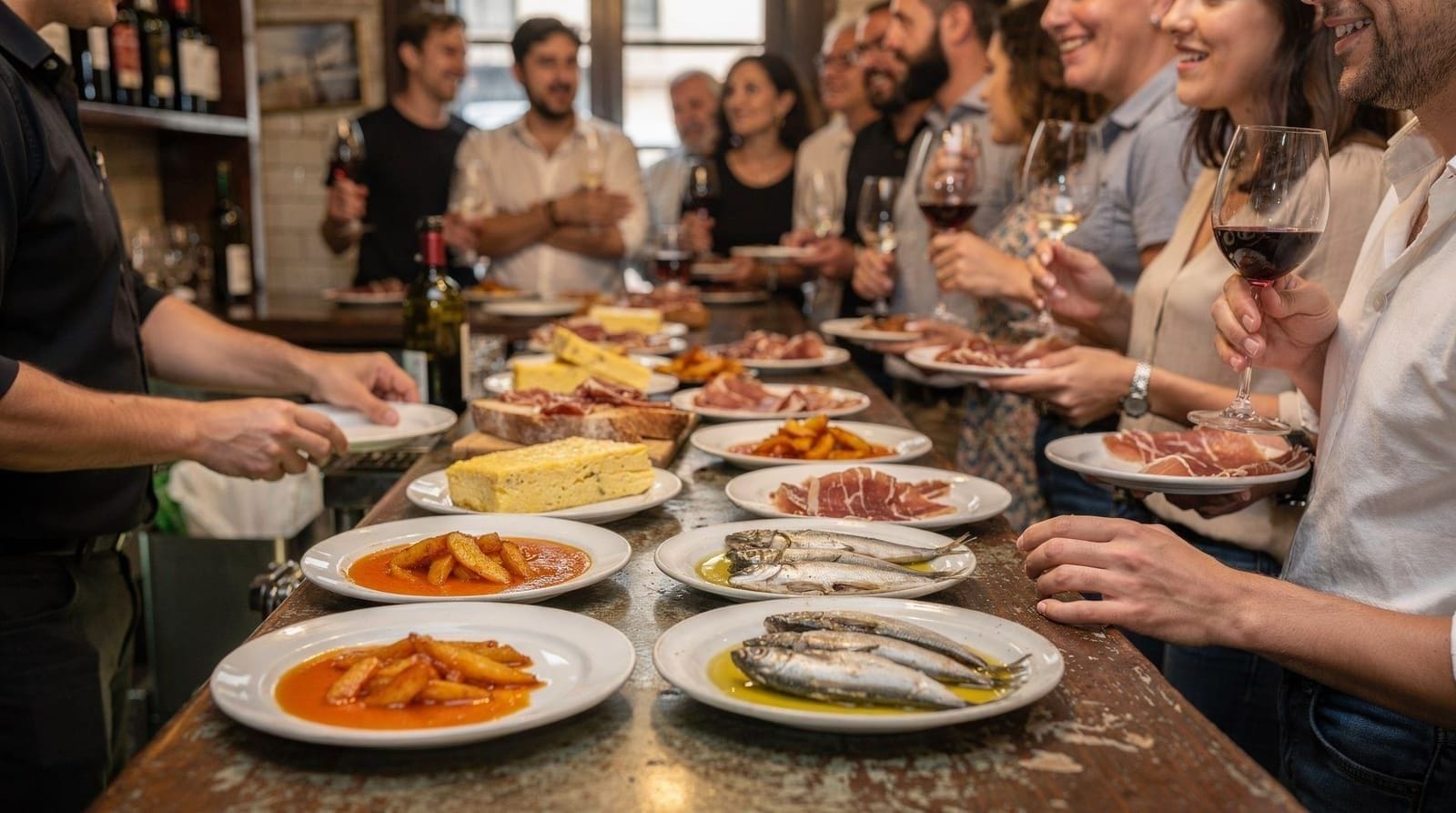
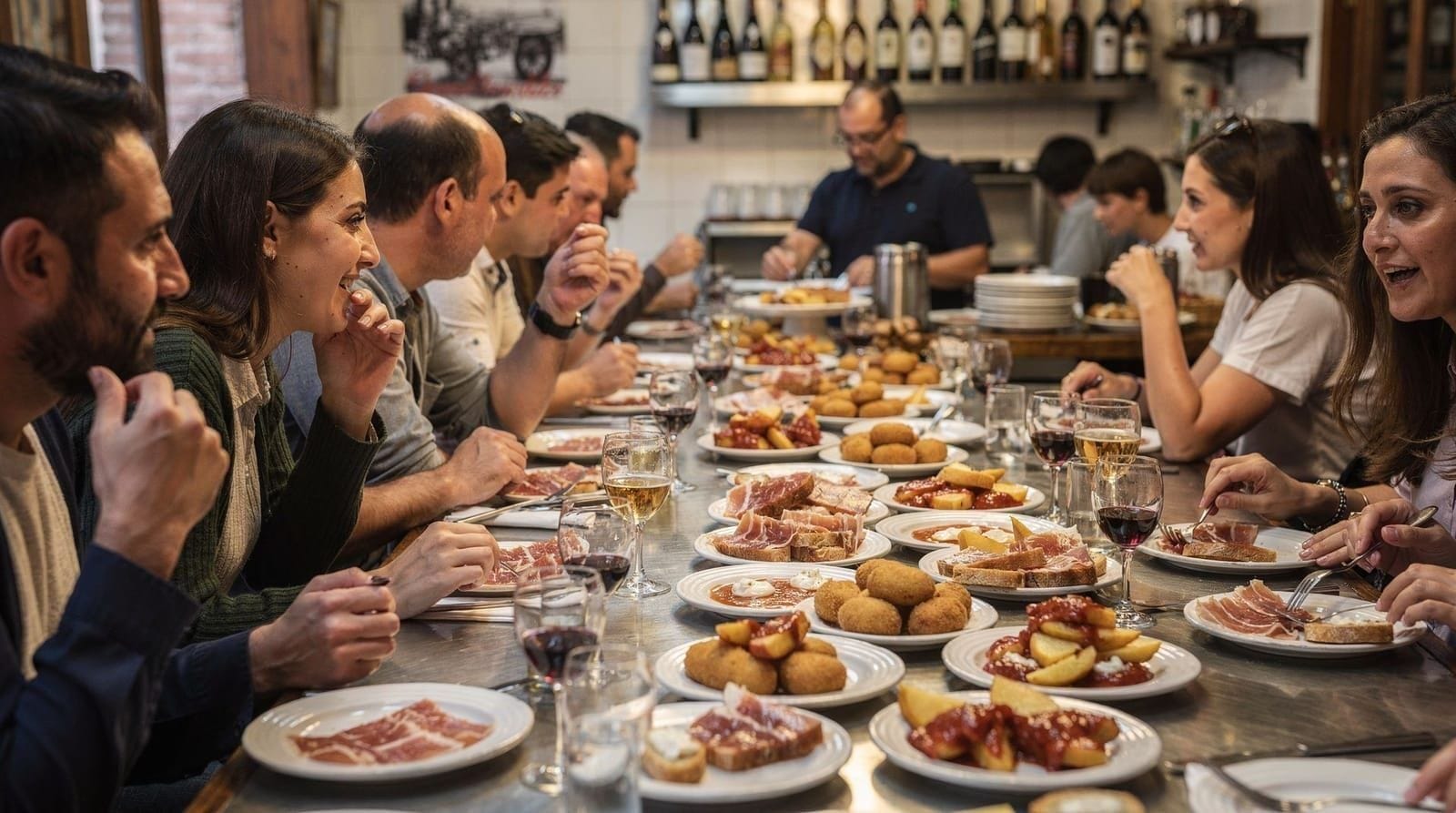
12:00–14:30: The vermut hour. Old-school bars with their shutters pulled up, the vermouth tap on, a tray of olives and chips on the counter. The bar fills progressively. By 13:00 there is no space and everyone is standing, talking, refilling. Noise level rises. Children present.
14:30–16:30: Lunch. The vermut crowd disperses to restaurant tables or goes home.
The rhythm is leisurely. Nobody rushes. The vermut is one glass, maybe two. The snacks are just enough to make the aperitivo last longer. The conversation is the point.
Where to drink vermut in Madrid
La Latina: the classic setting
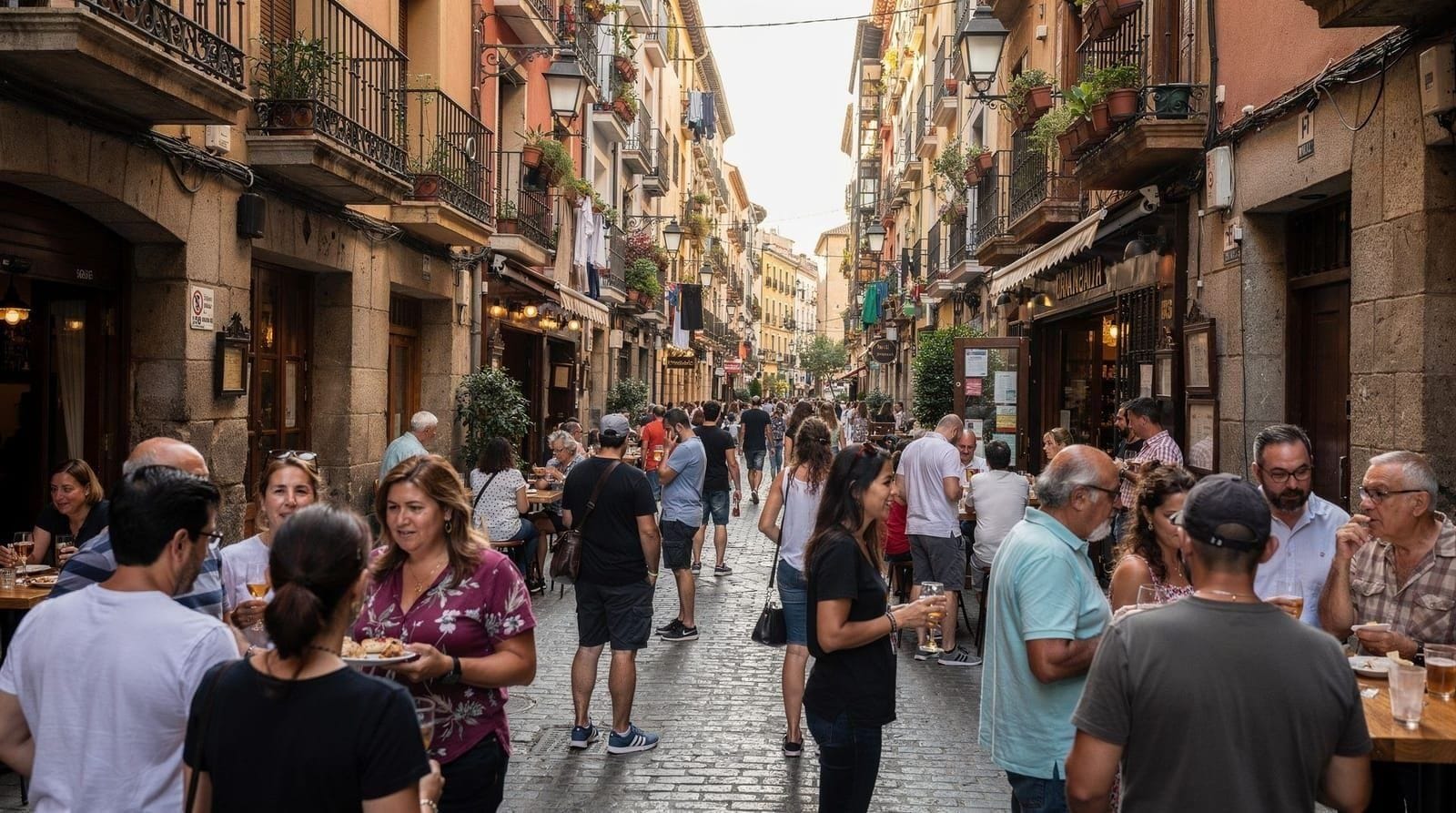
The area around Cava Baja and its adjacent streets is the most established vermut setting in Madrid. After El Rastro, the entire neighbourhood transitions into outdoor drinking mode.
Bar Sardina (Calle de la Cava Alta 25): A tiny, ancient bar that has been dispensing draught vermouth since before most of its clientele was born. No decoration beyond what has accumulated through decades. Vermut de grifo served in a small wine glass with an olive. €1.80–2.50. No frills, no pretension, genuinely good.
A local-guided tapas and wine tour is a useful shortcut if you want a knowledgeable local to steer you between the genuine vermut bars and the fashionable imitations on your first weekend in the city.
Taberna El Tempranillo (Calle de la Cava Baja 38): Better wine selection than most vermut bars — natural wines and good sherries alongside the vermouth. Slightly more polished but still neighbourhood-appropriate.
El Viajero (Plaza de la Cebada 11): Has a rooftop terrace that gets very busy on Sunday vermut hours. Good views, draught vermouth, more social buzz than the counter-bar options. Slightly more fashionable crowd.
If you want to understand the neighbourhood beyond its bars, the La Latina guide covers the streets, and the El Rastro flea market guide explains the morning that leads into the vermut hour. When the glass is empty and hunger arrives, where to eat in La Latina picks up the story.
For a guided evening version of the same idea, a guided tapas tour with drinks and food walks you between several bars in one go, which suits anyone who would rather not choose blind.
Chueca: the modern vermut scene
Chueca has absorbed Madrid’s aperitivo culture and added a more design-conscious layer to it. The bars here serve the same vermut ritual but with better-curated surroundings and sometimes a more formal food offering alongside.
Bodega de la Ardosa (Calle de Colón 13): As much Malasaña as Chueca (on the border). The oldest continuously operating bodega in the area, with vermouth from a ceramic tap on the bar. Also famous for tortilla española (see the best tapas bars guide). Sunday mornings are quintessential.
Hermanos Vinagre (Gravina 17, Chueca): Natural wine bar with excellent vermut selection. More hipster than traditional bodega, but the product is serious.
For the wider picture of the district, see the Chueca guide and the Malasaña bars guide, both useful for planning what to do once the vermut hour is over.
Malasaña: casual and local
Malasaña’s vermut scene is less structured than La Latina’s but has a more local feel — fewer tourists, more neighbours who have been coming to the same bar for 20 years.
La Palmera (Calle de la Palma 67): Old bodega format, good draught vermut, busy on Sunday mornings. The kind of bar that has survived every Madrid trend by remaining exactly what it always was.
Bar Cock (Calle de la Reina 16, between Malasaña and Chueca): One of Madrid’s classic vintage cocktail bars, which also does a proper vermut service. Beautiful Art Deco interior. More formal than a bodega but excellent quality.
What to order
The standard order: Vermut rojo (red vermouth) on the rocks with a slice of orange and an olive. In Spanish: “Un vermut, por favor.” They know what you mean.
Variations:
- Vermut blanco: white vermouth, slightly drier and more botanical
- Vermut con sifón: vermouth with a splash of soda water — refreshing in heat
- Vermut Martini: from a bottle rather than tap — a premium order
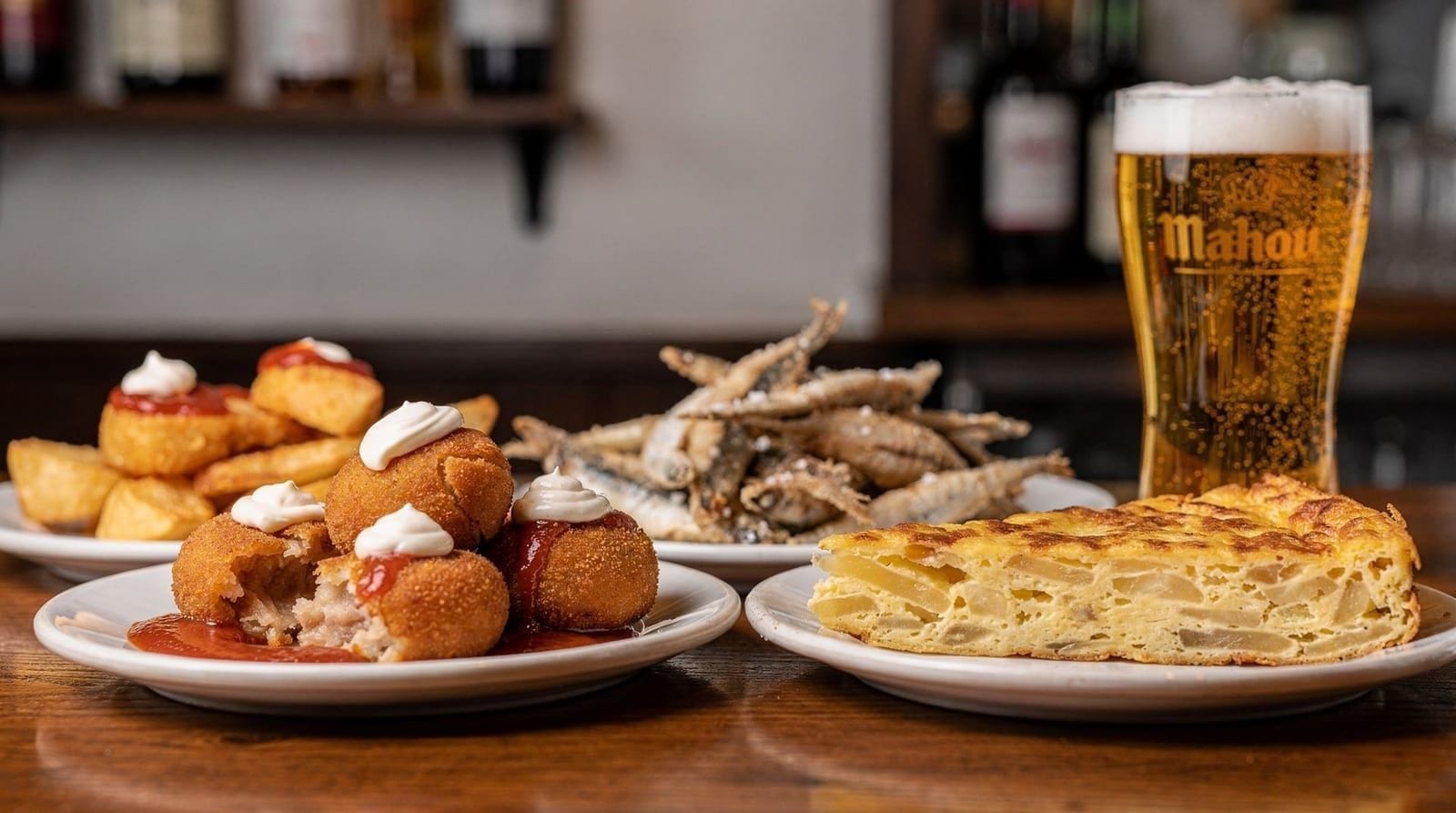
Snacks alongside: The bar usually puts chips and olives on the counter automatically as part of the culture. Sometimes a piece of cheese or small croqueta appears. This is not the full tapas experience — it is the aperitivo, just enough to make the drink last and prime the appetite.
Vermut in the broader drink culture
The vermut ritual coexists with Madrid’s larger drink culture — the wines, the beers, the cocktails. See the wine bars guide for where to drink serious Spanish wine. The Madrid nightlife guide covers what happens after the sun goes down.
Vermouth as an aperitivo is specifically pre-meal. Drinking it at 22:00 is unusual — by then the drink has transitioned to wine or cocktail territory. The temporal specificity is part of what makes it culturally coherent.
The Spanish vermouth industry
Spain produces its own vermouth, and Madrid’s bodega culture predates the Italian vermouth brands that now dominate export markets. Key Spanish producers:
- Yzaguirre: From Reus, Catalonia. The benchmark for Spanish red vermut. Complex, slightly bitter, well-balanced.
- Primitivo Quiles: A Valencian producer with an intensely aromatic red vermut that polarises opinion (strong, slightly medicinal) — beloved by aficionados.
- Mentrida: A Castilian vermut producer using local wine as the base — more austere than Catalan versions.
- Lustau: A sherry producer that makes a fino-based vermut — drier and more oxidative than the standard sweet style.
Madrid bars stock multiple Spanish vermuts alongside Italian standards. If you ask, a good bodega will offer you a taste before committing to a full glass.
Practical notes
Price: Draught vermut in a traditional La Latina or Malasaña bodega: €1.80–2.80. At a more fashionable bar: €3.50–5. At a hotel bar: €8–12. The traditional bars represent extraordinary value.
Alcohol content: Standard vermouth is 15–18% ABV — higher than wine, lower than spirits. Two glasses before lunch on an empty stomach will make themselves known. The Sunday ritual typically involves one glass, sometimes two.
Non-vermut alternative: If you do not like vermouth, order a caña (beer) or house wine and stand at the same bar. The social ritual is the point, not the specific drink.
Vermouth and the aperitivo economy
The hora del vermut is one component of Madrid’s three-stage Sunday eating model:
- Vermut (12:00–14:30): Aperitivo at the bar, standing, social
- Lunch (14:00–16:30): Seated meal, family or couple, unhurried
- Sobremesa (16:00–18:00): Post-meal conversation at the table, coffee
This model is specific to Sunday. On weekday evenings, the Spanish aperitivo exists but is called the caña y tapa — a beer and a small snack before heading home to cook dinner. The scale is smaller and the social ritual is less elaborate.
The overlap between these two — the Sunday vermut and the weekday caña — is what gives Madrid’s bar culture its density. There is always a reason to be in a bar at some point in the day.
Vermut bars vs wine bars: the distinction
In Madrid, a vermut bar and a wine bar are different animals:
Vermut bar (bodega / taberna): Traditional format, draught vermouth, olives, chips, marble counter. The aesthetic is functional, old, unchanged. The price is low. The clientele is local.
Wine bar: Curated selection, by-the-glass service, quality-focused. More modern in orientation, higher price, more design-conscious. See the wine bars guide.
The two overlap at bars like El Tempranillo (La Latina), which offers a serious wine selection within a traditional taberna format. But they are fundamentally different orientations — one serving the neighbourhood’s daily social function, the other serving the interest of the wine-curious.
Vermouth cocktails in Madrid
Beyond the straight vermut, several cocktail variations use vermouth as a base:
Bamboo: Equal parts dry sherry and dry vermouth. A classic aperitivo cocktail that has been popular in Spain since the 19th century.
Adonis: Sweet sherry and sweet vermouth. Richer than the Bamboo.
Vermut con sifón: The simplest extension — splash of soda water to lengthen the drink. Common at traditional bars where carbonation makes the vermut more refreshing.
Negroni: An Italian cocktail (gin, sweet vermouth, Campari) that has become very popular in Madrid’s cocktail bars. Not strictly traditional, but uses Spanish vermut brands effectively.
At a traditional Madrid bodega, you are not going to get a cocktail menu. The Bamboo or a straight vermut is your range. At cocktail bars in Chueca and Malasaña, the full menu is available.
Buying vermut to take home
The Spanish vermouth producers (Yzaguirre, Primitivo Quiles, and others) are widely available in Madrid supermarkets, wine shops, and specialist food stores. Prices are significantly lower than in export markets:
- Yzaguirre Rojo: €8–12 for 1L
- Primitivo Quiles: €9–14 for 1L
- Noilly Prat (French, dry): €12–16
The Mercado de San Miguel has vermouth on tap to drink on the premises and some bottles for sale. A good neighbourhood wine shop (vinoteca) or the El Corte Inglés food hall will have a wider vermouth selection if you want to buy for home.
Vermut and the food connection
The aperitivo function of vermouth exists because it genuinely stimulates appetite — the bitter botanicals (gentian root, wormwood, quinine bark) that define the flavour also trigger digestive juices. This is not marketing mythology; it is the pharmacological basis on which European aperitivo culture is built.
The practical consequence: if you drink a proper vermut before lunch, you will be more hungry for lunch. If you have been struggling to match the Spanish lunch schedule (the heavy 14:30 meal), a pre-lunch vermut helps.
Food that traditionally accompanies vermut:
- Olives (aceitunas): The universal accompaniment. Often brought automatically without ordering.
- Patatas chips: Simple, salty, standard.
- Boquerones en vinagre: Anchovies in vinegar. Classic pairing with vermouth — the acidity of both components is harmonious.
- Conservas: Tinned seafood (mussels, clams, sardines). The best traditional bars have a selection of quality Spanish tinned seafood on the counter. This is not cheap canned fish — it is a Spanish premium food category. A tin of Galician mussels in escabeche with a glass of vermut is a legitimate and excellent snack.
The Madrid tapas guide covers the broader food culture that the vermut ritual leads into. If you are building a food-focused trip around rituals like this one, the Madrid for foodies itinerary and the eat like a local guide show how to fit it in, and the tourist menu traps guide helps you avoid the places that imitate it.
Making vermut at home: the Spanish method
For visitors who want to recreate the experience at home:
The correct serve:
- Fill a wide-mouth glass with 3–4 ice cubes
- Pour 80ml of red vermouth
- Add one small splash of soda water (optional but traditional)
- Add a thin slice of orange (not lemon — orange is the Madrid serve)
- Place one large green olive on a cocktail stick, rest on the rim of the glass
The Spanish vermouth brands:
- Yzaguirre Rojo: Available in specialist wine shops internationally. The most export-accessible of the quality Spanish vermuts.
- Martini Rojo: Available everywhere, lower quality but perfectly acceptable for a basic serve.
- Noilly Prat: French origin, widely available, slightly drier than Spanish styles.
The important distinction: The vermouth ritual is not about the quality of the vermouth alone — it is about the social setting. The glass of Yzaguirre at Bodega de la Ardosa tastes better than the identical glass at home because the environment is part of the flavour.
Vermut vs aperol: the generational divide
A brief observation on changing drink culture in Madrid:
The traditional vermut ritual (red vermouth on ice, olive, soda) is associated with the over-40 madrileño demographic and the traditional bodega format. Over the last decade, Aperol Spritz has become the dominant pre-dinner drink among younger urban Spaniards — visible at every rooftop bar and fashionable terrace.
This is not a moral crisis, but it is a cultural observation. The traditional vermut bars remain the more interesting social space. The Aperol Spritz terraces are more Instagram-friendly.
If you want the authentic ritual, find a bar where the clientele is primarily over 45 and the vermouth is served from a ceramic tap. If you want the fashionable version, any Gran Vía or Chueca terrace will serve Aperol Spritz for €8–12.
Vermut in the context of the Spanish meal
Where vermut fits in the day:
Pre-lunch aperitivo (12:00–14:30): The primary function. Opens the appetite, marks the transition from the working morning to the social afternoon.
Post-Rastro recovery (La Latina, Sunday): The specific social ritual of El Rastro combined with vermut is detailed in the Sunday cocido guide.
Pre-dinner aperitivo (19:30–21:00, weekdays): Less common but present — a glass of vermut at a neighbourhood bar before heading home to cook or to a restaurant for dinner.
Not with dinner: Vermut is an aperitivo, not a dinner wine. The transition from vermut to wine or beer happens naturally once food arrives.
Identifying a genuine vermut bar
What to look for:
- A ceramic or chrome tap on the bar labelled “Vermut” or the brand name
- Bar snacks (olives, chips, a small plate) appearing automatically without ordering
- A clientele that includes older regulars who are clearly in conversation with the bar staff
- The price: under €3 for a glass (if it is €5+, you are at a fashionable bar, not a traditional one)
- The speed: a genuine vermut bar pours your glass in 30 seconds. No elaborate ritual.
What the fashionable version looks like:
- A cocktail menu that lists “Martini Rojo” or “Aperol Spritz” alongside the traditional vermut
- Design-conscious decor (natural wood, industrial lighting)
- €4–7 per glass
- Staff who explain the vermouth to you rather than simply pouring it
Both versions are valid. The distinction matters if you are specifically seeking the traditional cultural experience versus a good drink.
The broader context: vermut and Mediterranean aperitivo culture
Spain’s vermut tradition is part of the wider Mediterranean aperitivo culture that includes the Italian apéritivo hour (Campari, Aperol, Cinzano), the French apéritif (pastis, kir, vermouth), and the Catalan vermouth tradition (specifically from Reus, the production capital of Spanish vermouth).
The Spanish version is distinguished by:
- The ceramic barrel or tap service (rather than bottles)
- The olive as a garnish (rather than the Italian olive or lemon)
- The strong social dimension (you do not drink vermut alone at a table — you stand at the bar)
- The Sunday timing (the Spanish aperitivo peaks on Sunday; in Italy, it peaks on Saturday)
For the curious food traveller, tracing the similarities and differences between Madrid’s vermut culture and the Italian aperitivo reveals how a single category of drink can produce completely different social rituals across neighbouring countries.
Frequently asked questions about vermut in Madrid
Do I need a reservation for Sunday vermut?
No. Vermut bars work on a first-come, standing-room basis — you walk in, find space at the counter or bar, and order. The busiest bars in La Latina fill up by 13:00, so arriving by 12:30 gets you a comfortable spot rather than a squeeze. None of the traditional bodegas take reservations for the vermut hour.
Is vermut in Madrid always alcoholic, and is there a non-alcoholic version?
Yes, standard vermut is 15–18% ABV fortified wine. If you want to join the ritual without the alcohol, order a caña (beer, still alcoholic but lower strength) or ask for a soft drink — most bodegas are used to mixed groups and won’t treat a non-vermut order as unusual. There isn’t a widely available non-alcoholic vermut at traditional bars, so a soft drink or sparkling water is the practical substitute.