Sunday cocido in Madrid: the ritual, the restaurants, and what to expect
Madrid: Prado Guided Skip the Line
How do I experience the full Sunday cocido ritual in Madrid?
Start at El Rastro flea market in La Latina (10:00–14:00), have a vermut at a Cava Baja bar (12:30–13:30), then head to your pre-booked cocido restaurant for 14:00. La Bola (book in advance) or Malacatín (more atmosphere) are the two best options. Allow three hours. This is the quintessential Madrid Sunday experience.
In brief: Sunday in Madrid has a specific cultural choreography that most visitors miss. El Rastro flea market, vermut in La Latina, and then a cocido lunch that lasts until 17:00 — this is how many madrileños spend their Sunday, and participating in it is the most authentic Madrid day possible.
| Where | La Latina / El Rastro / Cava Baja |
| Cost | Around €34–55 per person for the full day |
| Time needed | 6–7 hours (10:00–17:00) |
| Booking | Cocido restaurant: 1–2 weeks ahead for Sunday |
| Best time | Every Sunday, year-round (cocido especially in cooler months) |
The Sunday architecture in Madrid
Spanish weekends operate on a different social calendar from northern European ones. Saturday night in Madrid is late (see the Madrid nightlife guide — clubs until 06:00) and Saturday morning is slow. Sunday has a specific, well-defined structure:
- Late morning (10:00–13:00): El Rastro flea market in La Latina
- Pre-lunch (12:30–14:00): Vermut and tapas in the neighbourhood
- Lunch (14:00–17:00): A serious restaurant meal — often cocido in winter
- Afternoon (17:00–20:00): Home, park, or café for extended coffee
This pattern repeats every Sunday and is not tourist infrastructure — it is the actual rhythm of Madrid’s social life. Visitors who arrive at restaurants at 13:00 and leave by 14:30 miss the point entirely. A Sunday cocido lunch is deliberately slow.
El Rastro: the starting point
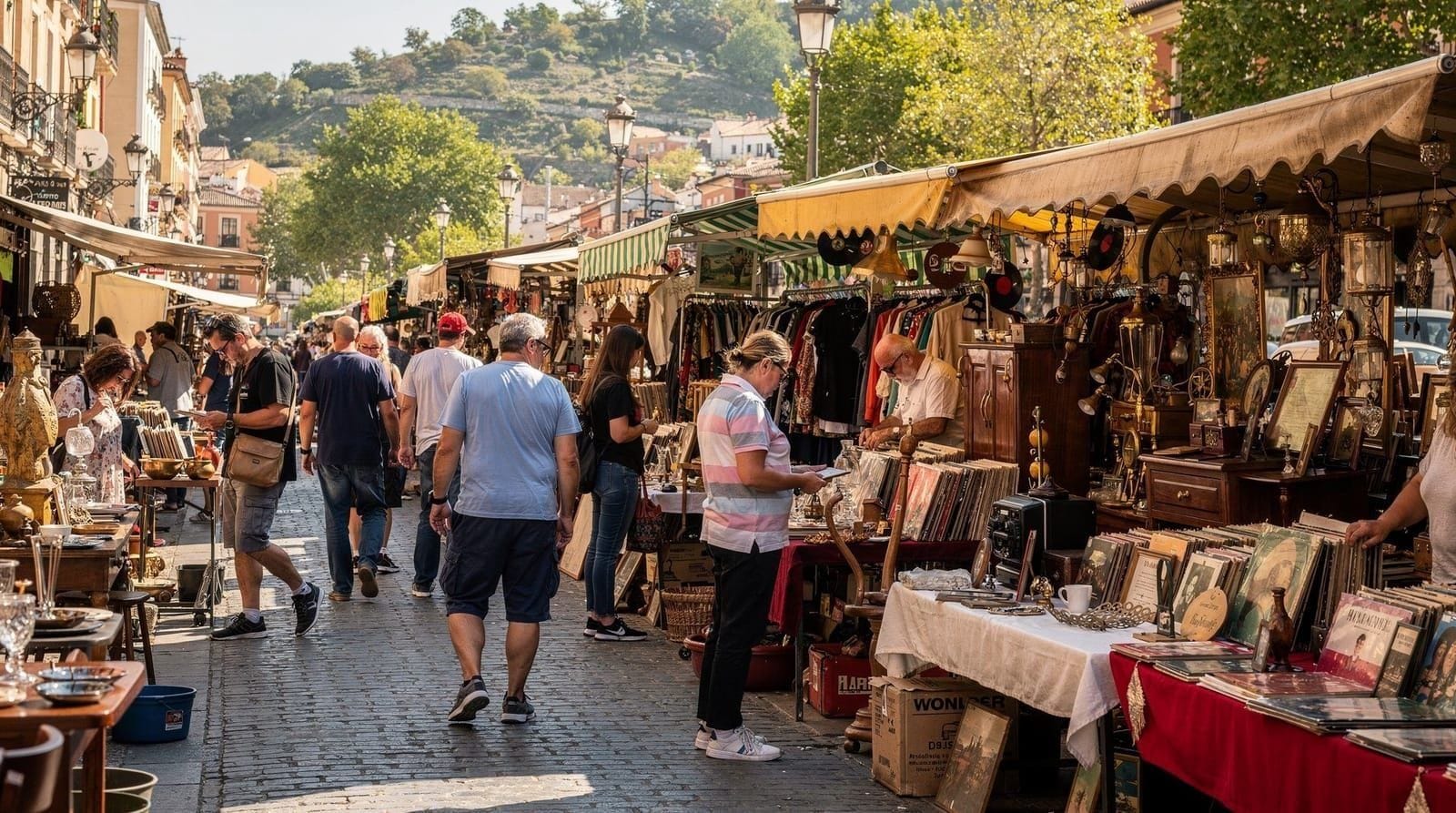
El Rastro (the flea market) occupies the streets around Calle de la Ribera de los Curtidores in La Latina every Sunday from approximately 09:00 to 15:00. It is one of Europe’s largest street markets — hundreds of stalls selling antiques, clothing, books, vinyl records, tools, jewellery, ceramics, and everything else.
What it is: A genuine working flea market where madrileños have been buying and selling secondhand goods since the 16th century. Also now a significant tourist attraction with accordingly mixed stalls.
What to buy: The antique furniture and large pieces are genuine and occasionally extraordinary; small objets (old books, ceramics, vintage clothing, vinyl) can yield good finds. The tourist trinkets (flamenco fans, Real Madrid merchandise) are overpriced and available in every shop in the city.
Practical: Get there before 11:00 for the best selection and before the crowds peak. Navigation is straightforward — follow the crowds from the La Latina metro station.
The flea market connects to the cocido lunch via geography: El Rastro ends, you walk one block to Cava Baja, you have a vermut, you go to your cocido reservation.
The vermut transition
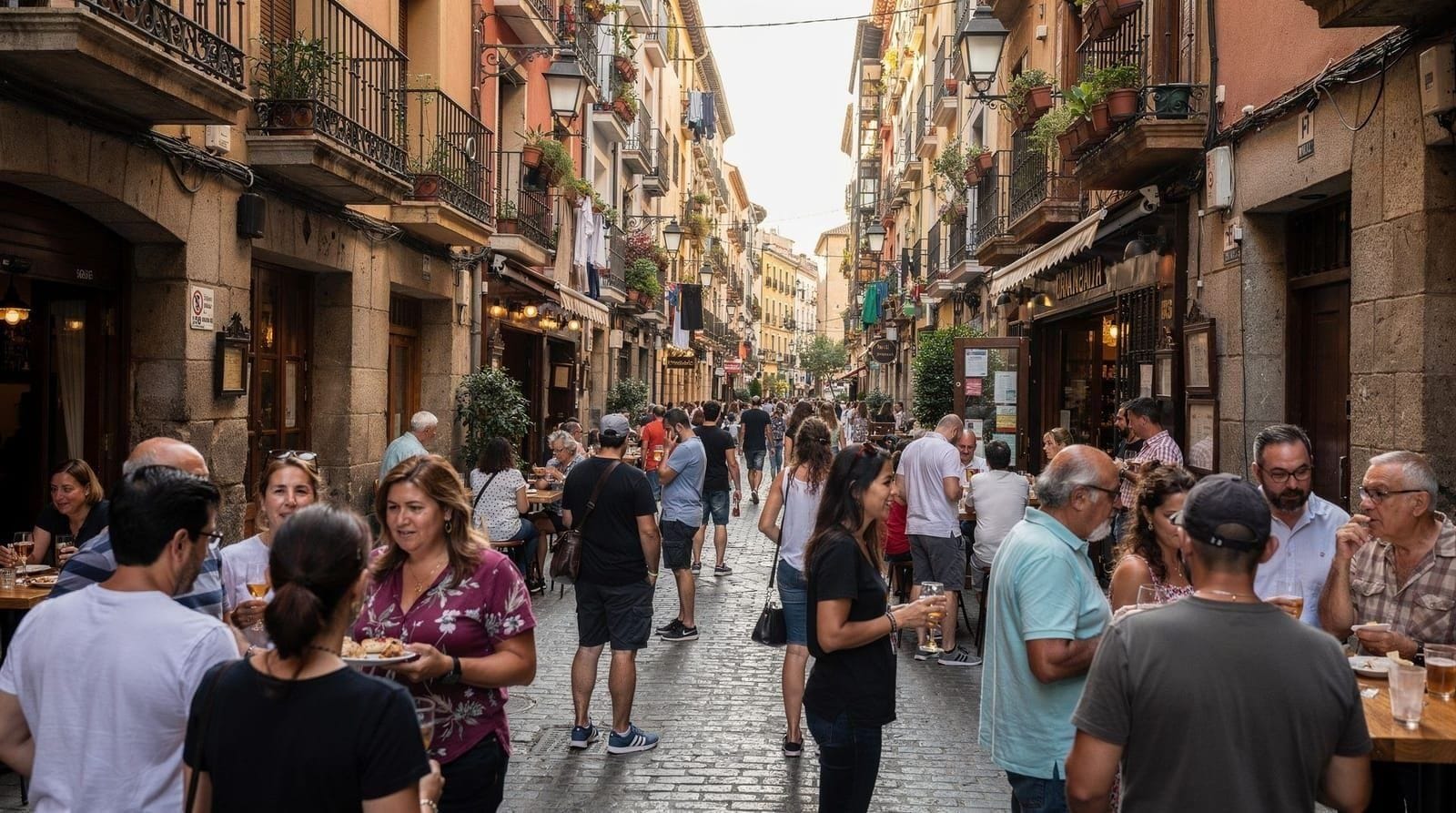
After El Rastro, La Latina performs its weekly transformation into an outdoor party. By 12:30, every bar on Cava Baja, Calle del Almendro, and the surrounding streets has its doors open and its tables outside.
The correct vermut-hour order:
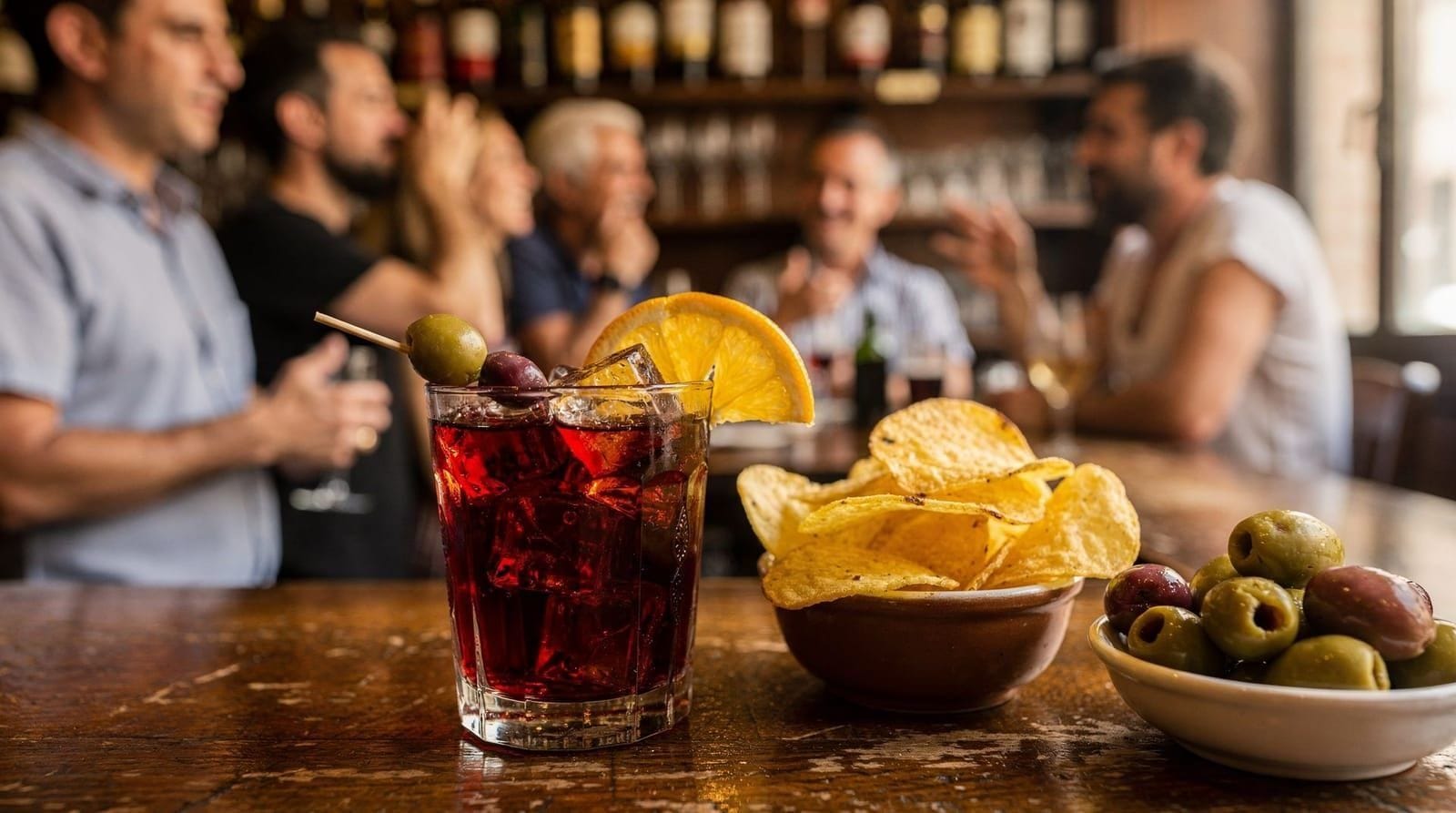
- Vermut de grifo (draught red vermouth) at any old-school bodega — €2–3
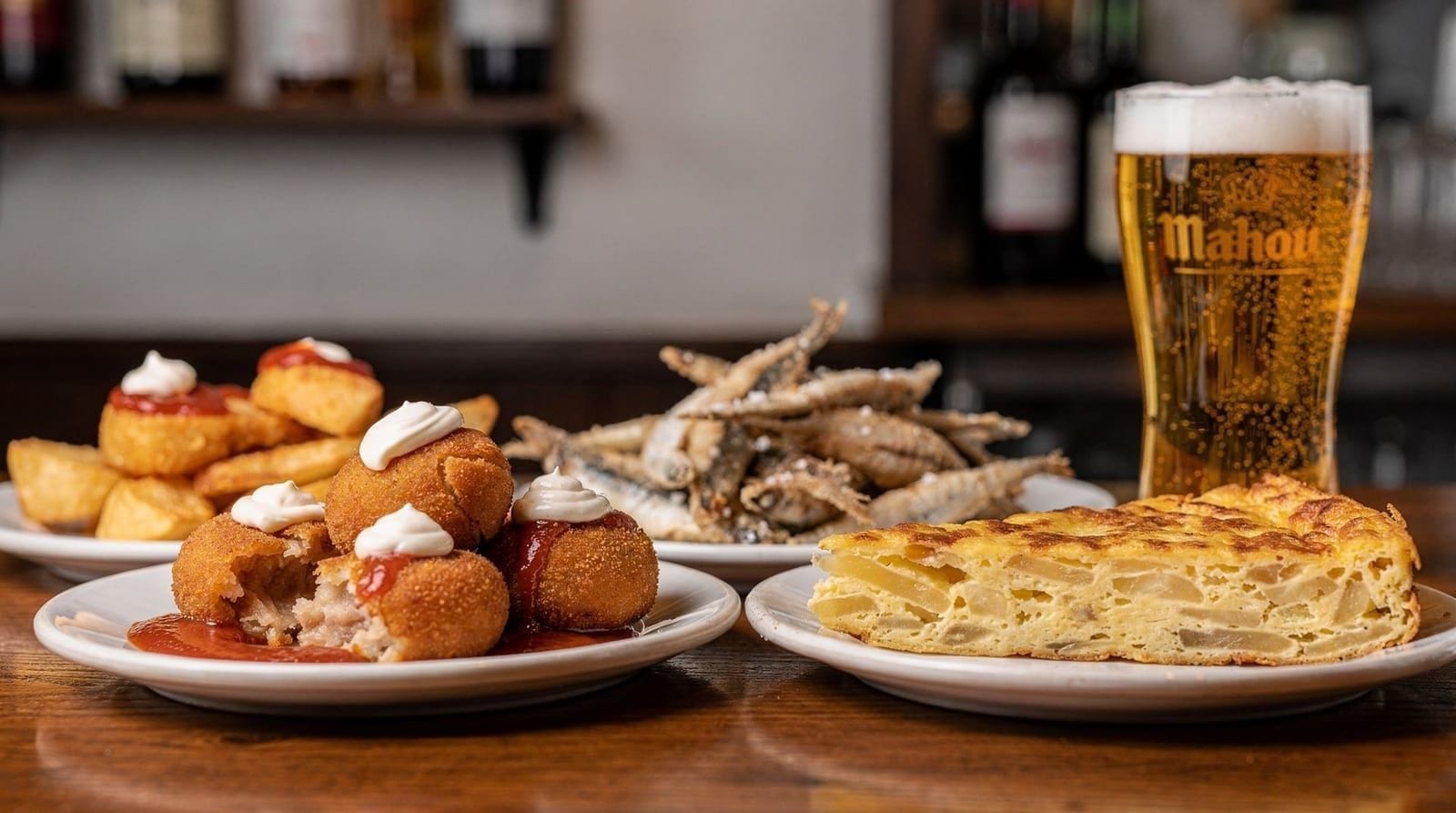
- A small plate of something: olives, chips, a montadito
- One glass, maybe two. No more — you have cocido ahead.
See the full vermut guide for specific bar recommendations.
Booking the cocido lunch
This step cannot be improvised. The best cocido restaurants in Madrid fill completely on Sunday. Walk-ins on Sunday lunchtime at La Bola are not realistic.
La Bola (Calle de la Bola 5): Book by phone as early as you can — a week or more ahead for Sunday. They prefer telephone reservations. If you cannot book by phone (no Spanish, no response), try email. They accommodate international visitors regularly. Table for two: book 14:00–15:00 slot. See the full cocido madrileño guide.
Malacatín (Calle de la Ruda 5, La Latina): Easier to book than La Bola, more local in atmosphere, communal tables, house wine from unlabelled carafes. A different but equally valid cocido experience. Can sometimes accommodate walk-ins if you arrive before 13:30.
The Thursday alternative: If your Madrid visit does not include a Sunday or if the Sunday cocido restaurants are fully booked, remember that cocido appears on the menú del día at neighbourhood restaurants every Thursday. €12–15 for a three-course meal including the cocido. Less ceremonial, but the same dish.
What the Sunday cocido experience feels like
Arrive at La Bola at 14:00. The room is small (maybe 12 tables) and already full. The noise level is significant — multiple families across multiple generations at adjacent tables. Someone has brought an elderly grandmother; someone else has brought a baby. This is the intended population.
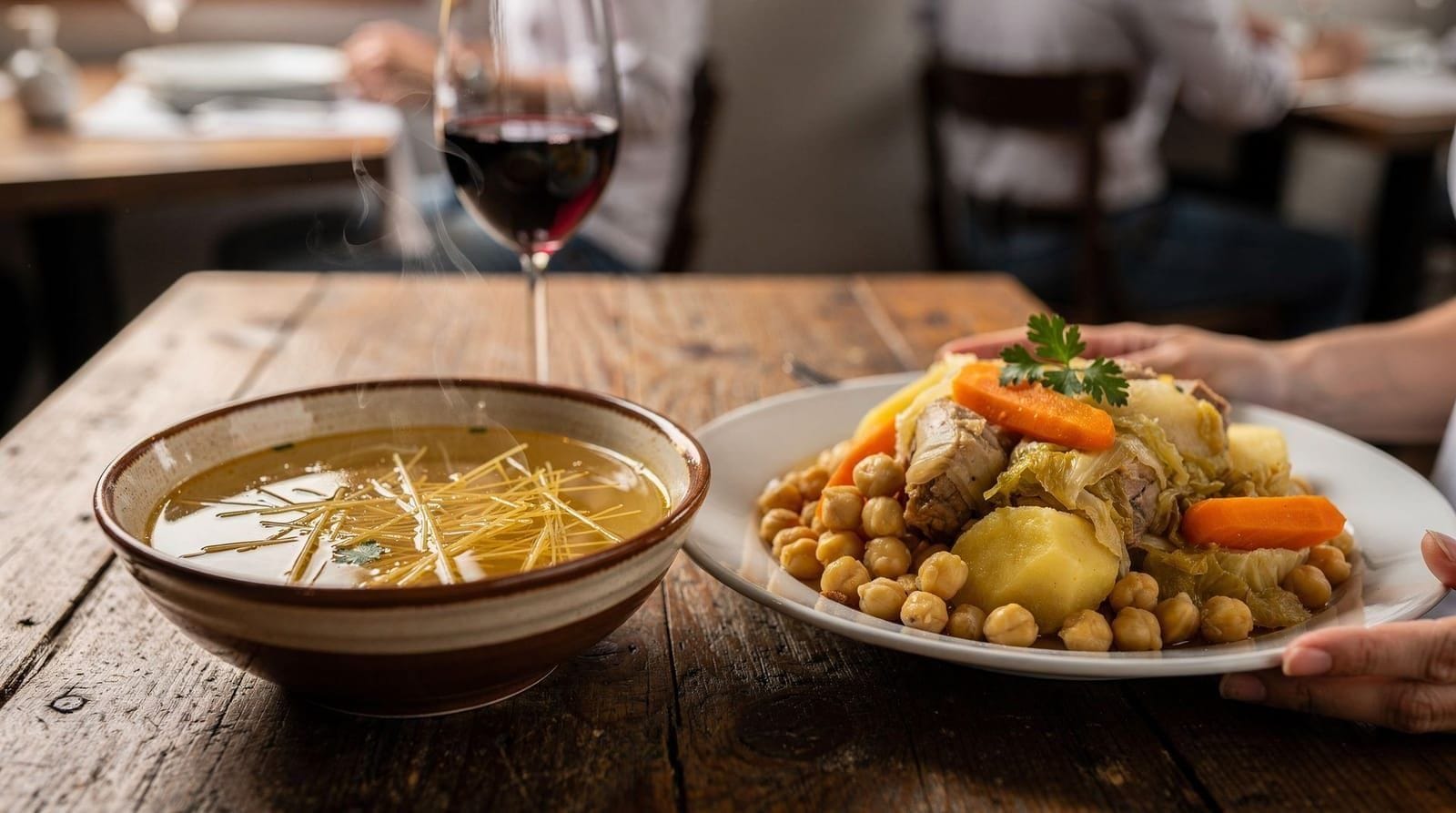
The clay pots (ollas) arrive at the table still bubbling slightly. The caldo (broth) is ladled into a soup bowl first — do not rush it, this course sets the tone for the whole meal. The chickpeas and vegetables arrive next. Then the meats: chorizo, morcilla, pork, chicken, jamón.
Eat slowly. There is no rush. The table is yours for as long as you want it on Sunday. Order house wine (usually a simple Castilian red). Order dessert (natillas, crema catalana, or whatever is offered). Drink coffee.
You will leave at 16:30 at the earliest. This is correct.
The afternoon after cocido
After a full cocido lunch, the traditional Sunday afternoon options:
Retiro Park: A 15-minute walk from La Bola. A slow walk around the lake is the most sensible activity after 500 grams of chickpeas and four types of pork. See the Retiro Park guide.
Home, or back to the hotel: If you have rented an apartment (the local option), the Sunday afternoon is for a nap. This is not laziness — it is physiological necessity.
A café for sobremesa: Sobremesa is the post-meal table conversation — the Spanish tradition of sitting and talking long after the plates have been cleared. A café near La Latina serves coffee and brandy for the transition.
Why Sunday specifically
Cocido is available on other days (La Bola is open every day (Sunday to Wednesday 13:00–16:00, Thursday to Saturday 12:00–20:30); Malacatín is open daily). But the Sunday version carries specific cultural weight: it is the family meal of the week, the social anchor, the deliberate counterweight to the chaotic Friday and Saturday nights. Eating cocido on a Sunday is participating in a cultural form that has remained structurally unchanged for 150 years.
You can eat cocido on a Thursday. You will eat the same food. But Sunday has the El Rastro, the vermut, the multi-generational table, the afternoon in the park — the whole architecture that turns a meal into a day.
Budget and practical notes
The full Sunday experience budget:
- El Rastro: free to browse; variable if you buy
- Vermut and tapas: €8–15 per person
- Cocido lunch at La Bola: €26 for the cocido à la carte (set menus from €39.90)
- Total: roughly €34–55 per person for the full Sunday
This is the best-value full-day experience in Madrid. Nothing else at this price level gives you as much genuine cultural immersion.
Getting to La Bola from La Latina: A 15-minute walk through the old city, or a taxi for €5–7. La Bola is near the Royal Palace — a convenient combination if you want to do the Royal Palace in the morning before El Rastro.
The full Sunday alternative: Malacatín
For visitors who cannot book La Bola or who want a different cocido atmosphere, Malacatín on Calle de la Ruda (a five-minute walk from La Latina metro) is the best alternative.
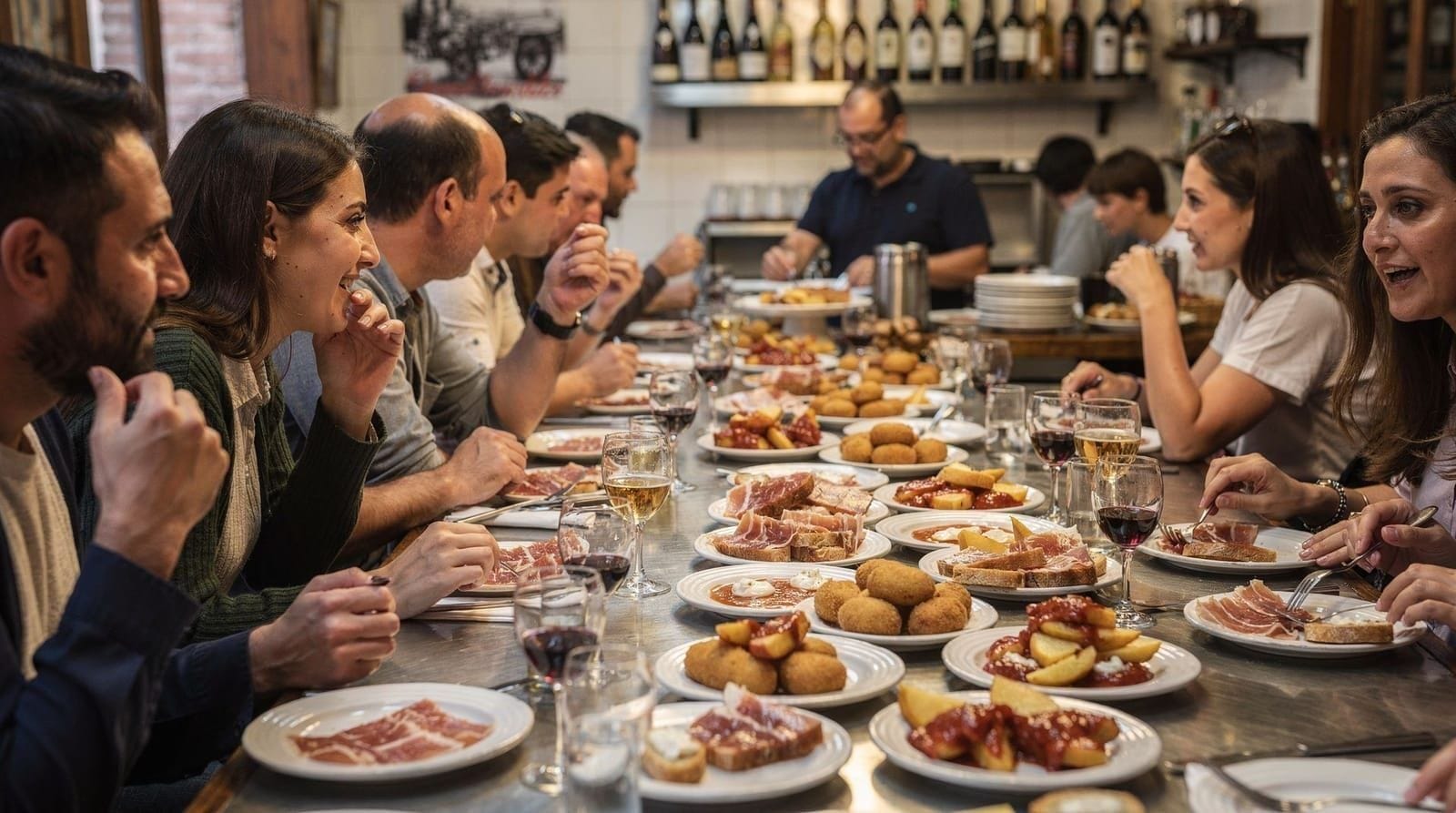
What Malacatín offers: Long communal wooden tables, wine from unlabelled carafes, the noise of multiple families eating simultaneously, and a cocido that is not as refined as La Bola’s but is the most “lived-in” version of the Sunday tradition. This is the place where a group of office friends, a multi-generational family, and two visiting tourists all occupy the same table because there are not enough tables and sharing is how it has always worked.
The wine is a simple Castilian house wine, poured from pitchers. It is not good wine in any objective sense. It is exactly the right wine for this meal.
Malacatín is slightly easier to book than La Bola (call 1–2 weeks in advance for Sunday) and accepts a walk-in before 13:30 if you can wait.
El Rastro: what to know before you go
El Rastro is not a curated artisan market — it is a Spanish street flea market that has been operating since the 16th century. The format is chaotic, the quality of merchandise ranges from genuine antiques to mass-produced junk, and the density of people on peak Sundays (10:00–14:00) is significant.
What is genuinely worth seeking at El Rastro:
- Books and maps: Old Spanish books, maps of Madrid and Spain, illustrated publications from the 19th and early 20th centuries. The book stalls on Calle de Embajadores and around the main market area.
- Vinyl records: Several specialists sell used vinyl at reasonable prices. Good for Spanish music, chotis, and international jazz.
- Ceramics: Old Talavera and Manises ceramics appear occasionally. Condition varies. Prices negotiable.
- Vintage clothing: Less curated than a dedicated vintage shop but broader selection. Prices are low.
What is not worth buying at El Rastro:
- Mass-produced “antiques” that are clearly new
- Electronics (phones, cameras) of unknown provenance
- Jewellery from unlicensed stalls (no consumer protection)
Pickpockets: El Rastro has a persistent pickpocket problem, particularly along the main Calle de la Ribera de los Curtidores. Use inside pockets or money belts for valuables. Do not have your phone visible in crowds.
Timing the whole Sunday
The full Sunday schedule with specific times:
| Time | Activity | Location |
|---|---|---|
| 09:30 | El Rastro opens | La Latina / Lavapiés border |
| 09:30–11:30 | Browse the market | Calle de la Ribera de los Curtidores |
| 11:30 | Market begins to thin | — |
| 12:00 | Vermut start | Cava Baja / Calle Almendro |
| 12:00–13:30 | One or two vermut stops | La Latina bars |
| 13:45–14:00 | Walk to La Bola | Austrias area |
| 14:00 | Cocido starts | La Bola |
| 16:30–17:00 | Meal ends | La Bola |
| 17:00–18:30 | Walk through Retiro or home | Retiro Park (15 min walk) |
This schedule is relaxed and does not require precision — the Sunday culture is exactly anti-precision. But the general sequence is how the best Sunday works.
What makes the Sunday ritual irreplaceable
The Sunday cocido ritual has survived two economic crises, a pandemic, and the transformation of La Latina from a local neighbourhood to a tourist destination. It continues because it serves a function that the rest of the week cannot replicate: the slow, multi-generational, unhurried meal.
Spain’s week is busy. Commuting, school, work, evening tapas — the daily rhythm is fast. Sunday, specifically Sunday lunch, is the pause. The cocido is the meal that takes three hours by design. You cannot rush it; the three vuelcos arrive at their own pace. This is the point.
For a visitor, participating in this ritual — booking in advance, arriving at 14:00, staying until 17:00 — is not just eating lunch. It is entering a social form that has remained structurally unchanged for 150 years and that most of the world has lost the equivalent of.
The eat like a local guide contextualises the Sunday ritual within the broader daily and weekly rhythm of Madrid life.
Alternatives to cocido for the Sunday lunch
If you cannot get a cocido reservation or are visiting in summer when cocido is less appropriate, Sunday lunch in Madrid has several other excellent options:
Roast lamb (lechazo or cordero asado): The classic Castilian alternative to cocido. A whole or half-lamb roasted in a wood oven, served with roasted vegetables. Restaurants specialising in this: Casa Botín (the oldest restaurant, though overpriced) or better, the Castilian restaurants in the outer barrios. Booking essential.
Shellfish (marisquería): A Sunday shellfish lunch is the alternative tradition for coastal families transplanted to Madrid. Several serious marisquerías in the Chamberí and Salamanca districts serve Galician shellfish — percebes (barnacles), nécoras (sea crabs), cigalas (Norway lobster) — at prices that are expensive but genuinely excellent.
Arroz (rice dishes): Not paella (which is Valencian) but Spanish arroz meloso or arroz caldoso — wetter, more soup-like rice preparations — are served at several Madrid restaurants as Sunday specials.
El Rastro in the context of the city’s market history
El Rastro’s name means “the trail” or “the drag” — a reference to the animal trails that led to slaughterhouses that once existed in the same area. The district was associated with the livestock and hide trade since at least the 16th century; the flea market evolved from the secondhand goods trade that always accompanies a commercial district.
Madrid’s historic market system occupied much of the south of the old city — the same area that is now La Latina and Lavapiés. El Rastro is the survivor of this tradition, operating on the same streets where trade has happened continuously for 400+ years.
The market’s character has changed substantially. In the 1970s–1990s, El Rastro was where Madrileños bought genuine secondhand goods — furniture moved between apartments, clothing from relatives, tools from closed workshops. The globalisation of retail has changed what people need from a secondhand market, and a significant portion of the market now sells mass-produced goods that happen to be displayed on tables rather than in shops.
But the genuine antique section survives on the upper streets (Calle de Ribera de los Curtidores above the junction with Calle de Embajadores) and in the adjacent indoor spaces (the Galerías Piquer, a covered antique market that operates within the El Rastro footprint on Sundays). For vintage prints, maps, and early 20th-century photography, El Rastro remains one of the best European markets.
How to combine the Sunday with sightseeing
Sunday morning in Madrid has one genuine sightseeing advantage over weekdays: the free entry hours at the Prado Museum.
The Prado opens at 18:00 on Sundays (from October to April; different hours in summer — confirm at the museum website) with free entry for the final two hours. This does not overlap with the morning El Rastro–vermut–cocido schedule, but it does offer an option for the late afternoon after your cocido lunch: a walk to the Prado at 17:30 to see the Velázquez rooms before the museum closes.
A complete Sunday sequence:
- 10:00–12:00: El Rastro
- 12:00–13:30: Vermut in La Latina
- 14:00–17:00: Cocido at La Bola or Malacatín
- 17:30–19:00: Walk through Retiro Park
- 18:00–20:00 (winter): Free entry to the Prado
- 20:00: Coffee or a glass of wine before dinner
This is too full a schedule for most people, but the components are all available if you want them. The Prado museum guide covers the free-entry hours and what to prioritise in limited time.
If you would rather not queue in the free-entry line after a long lunch, the alternative is to spend the Sunday differently and visit the Prado on another day with a pre-arranged guide. a guided Prado visit with skip-the-line entry keeps the museum unhurried and gives context to the Velázquez and Goya rooms, which is useful if you only have one visit to spend there. Our Prado in two hours piece explains how to cut the collection down to a sensible route.
Pairing the Sunday with a second museum
Because the cocido lunch fills the middle of the day, Sunday works best with one cultural stop, not three. A few options sit comfortably around the La Latina rhythm:
- Reina Sofía: The modern art museum is a short distance from Lavapiés, the neighbourhood next to El Rastro, so it is an easy continuation on foot. Read the Reina Sofía guide for how to approach Picasso’s Guernica, and the Guernica notes for context before you stand in front of it. If you prefer a guided approach, a skip-the-line entry to the Reina Sofía removes the ticket-line question from a day that is already full of waiting for tables.
- Thyssen-Bornemisza: A calmer, more compact collection that suits a post-lunch pace. See the Thyssen museum guide.
- The Golden Triangle as a whole: If art is the main reason for your trip, the golden triangle art walk and the Madrid for art lovers itinerary show how to space the three big museums over several days, leaving the Sunday for food.
- Free options: The museum free hours guide and the free things to do in Madrid page help if the cocido has already taken most of the day’s budget.
Fitting the Sunday into a longer stay
A Sunday cocido is easiest to enjoy when it is planned as the anchor of a weekend rather than squeezed into a tight itinerary. The Madrid first weekend itinerary and the Madrid for foodies itinerary both leave room for a long lunch. If you are still deciding how long to stay, how many days in Madrid helps you work out whether a Sunday falls inside your trip, and the Madrid in winter guide explains why the cooler months suit this meal best.
Getting to La Latina on a Sunday is simple by public transport; the Madrid metro guide covers the basics, and the La Latina guide maps out the bars and streets around the market. For other places to eat nearby if the cocido tables are full, see where to eat in La Latina, the Madrid tapas guide, and the best tapas bars. Travellers who want a guided food introduction before committing to a big lunch can read whether a food tour is worth it.
The Sunday ritual for solo travellers
The Sunday cocido ritual is usually presented as a family or group activity — and it is most natural that way. But solo travellers are not out of place at La Bola or Malacatín. Spanish restaurants are accustomed to solo diners, and a solo person eating a full cocido lunch at a restaurant table is unremarkable.
At Malacatín specifically, the communal table format means you are likely to be seated next to other people whether you came with them or not. Conversations happen; this is part of the Malacatín experience.
The alternative for solo travellers who are uncomfortable with a formal restaurant alone: the menú del día cocido on Thursday at a neighbourhood restaurant gives you the same dish in a more casual, counter-service context where solo eating is entirely normal.
Drinks: what actually goes with cocido
Wine: A simple, unpretentious Castilian red (tinto de la tierra) is the traditional pairing — cocido is a hearty, fatty dish and it wants a wine that can stand up to it without competing for attention. Both La Bola and Malacatín serve house wine that fits this description exactly; ordering something fancier misses the point of the meal.
Water: Always on the table, and worth drinking steadily through a three-hour lunch that includes a hot broth course and rich meats.
Coffee and digestif: A coffee and often a small glass of brandy or orujo closes the meal — this is the sobremesa transition, not a rushed final course. If the restaurant offers it, take the time; refusing it and asking for the bill immediately reads as genuinely odd to Spanish diners at a Sunday table.
Vermut beforehand, not during: The vermut hour on Cava Baja is a separate ritual that precedes the meal — ordering vermut at the cocido table itself is unusual. Have your vermut before you sit down, then switch to wine and water once the ollas arrive.
Dietary considerations
Cocido is built around pork, chicken, chorizo and morcilla alongside chickpeas and vegetables — it is not an easy dish for vegetarians, vegans, or anyone avoiding pork. Some restaurants can adapt a vegetable-and-chickpea plate on request if asked in advance, but this is a workaround, not a menu item, and neither La Bola nor Malacatín is set up to make cocido meaningfully vegetarian. Travellers with dietary restrictions are better served by choosing a different Sunday lunch entirely — the eat like a local guide covers Madrid’s broader tapas culture, much of which is easier to adapt. Morcilla (blood sausage) is a standard component of the meat course; ask for it to be left off your plate if you’d rather skip it — this is a normal and unremarkable request.
Where cocido comes from
Cocido madrileño descends from the medieval Iberian stew tradition of slow-simmering chickpeas, vegetables and whatever meat was available in a single pot over low heat — a practical response to scarce fuel and the need to feed a household from one fire. The dish’s specific Madrid identity solidified in the 19th century, when it became the standard working- and middle-class Sunday meal across the city, eaten in three courses (the “vuelcos” — broth, then chickpeas and vegetables, then meats) precisely because a single large pot could be stretched to feed everyone at the table generously.
The three-course structure is not a modern restaurant flourish; it reflects how the dish was actually eaten at home for generations, and the same sequence — soup first, so nobody fills up before the meats arrive — is what a good restaurant version replicates. Understanding this history is part of why the ritual, not just the food, is the point.
If you’re choosing between a Sunday alternative to cocido
| Option | What it is | Best for |
|---|---|---|
| Roast lamb (lechazo) | Whole/half lamb, wood-oven roasted | Groups who want a different Castilian classic |
| Shellfish (marisquería) | Galician percebes, nécoras, cigalas | Seafood lovers, higher budget |
| Arroz meloso/caldoso | Wet, soup-like Spanish rice | Lighter alternative, still a Sunday special |
| Menú del día cocido (Thursday) | Same dish, casual counter-service | Solo travellers, tighter budget |
For the fuller picture of how Sunday cocido fits within Madrid’s daily and weekly food rhythm, see the eat like a local guide; for Madrid’s nightlife the evening before, see the Madrid nightlife guide.