Cocido madrileño: Madrid's great winter stew explained
Madrid: Food Tour Tapas Spanish Wine
What is cocido madrileño and where is the best place to eat it?
Cocido madrileño is Madrid's signature chickpea and meat stew, served as a three-course meal. La Bola (Calle de la Bola 5, near the Royal Palace) is the most famous and historically reliable restaurant for cocido. Expect to spend €25–35 per person. It is a lunch dish, not a dinner dish — and it is best October through April.
In brief: Cocido madrileño is not a quick lunch — it is a two-hour affair at a restaurant table, built from chickpeas, winter vegetables, and every cut of cured and fresh pork the kitchen can find. It is served as three separate courses from one pot, and it is the most Madrid meal you can eat in winter.
| Where | La Bola, Malacatín (La Latina), Lhardy (Sol), Casa Carola (Chamartín) |
| Cost | Around €18–35/person; €12–15 on Thursday menú del día |
| Time needed | Around 2 hours at the table, lunch only |
| Best time | October–March; a genuinely winter dish |
| Booking | Reserve ahead, especially for La Bola at weekends |
What cocido actually is
Cocido madrileño belongs to the European family of peasant one-pot stews — the French pot-au-feu, the Italian bollito misto, the Spanish olla podrida — dishes that began as a way of using cheap cuts, bones, and pulses to make something nourishing from very little. Madrid’s version became the city’s defining dish because it suited the cold Castilian winters and because chickpeas (garbanzos) grew abundantly on the Meseta plateau.
The name just means “Madrilenian cooked thing.” The magic is in the pot, the time, and the sequence.
The three vuelcos
Cocido is served in three successive courses called vuelcos — literally “tippings” of the pot’s contents onto your table in order.
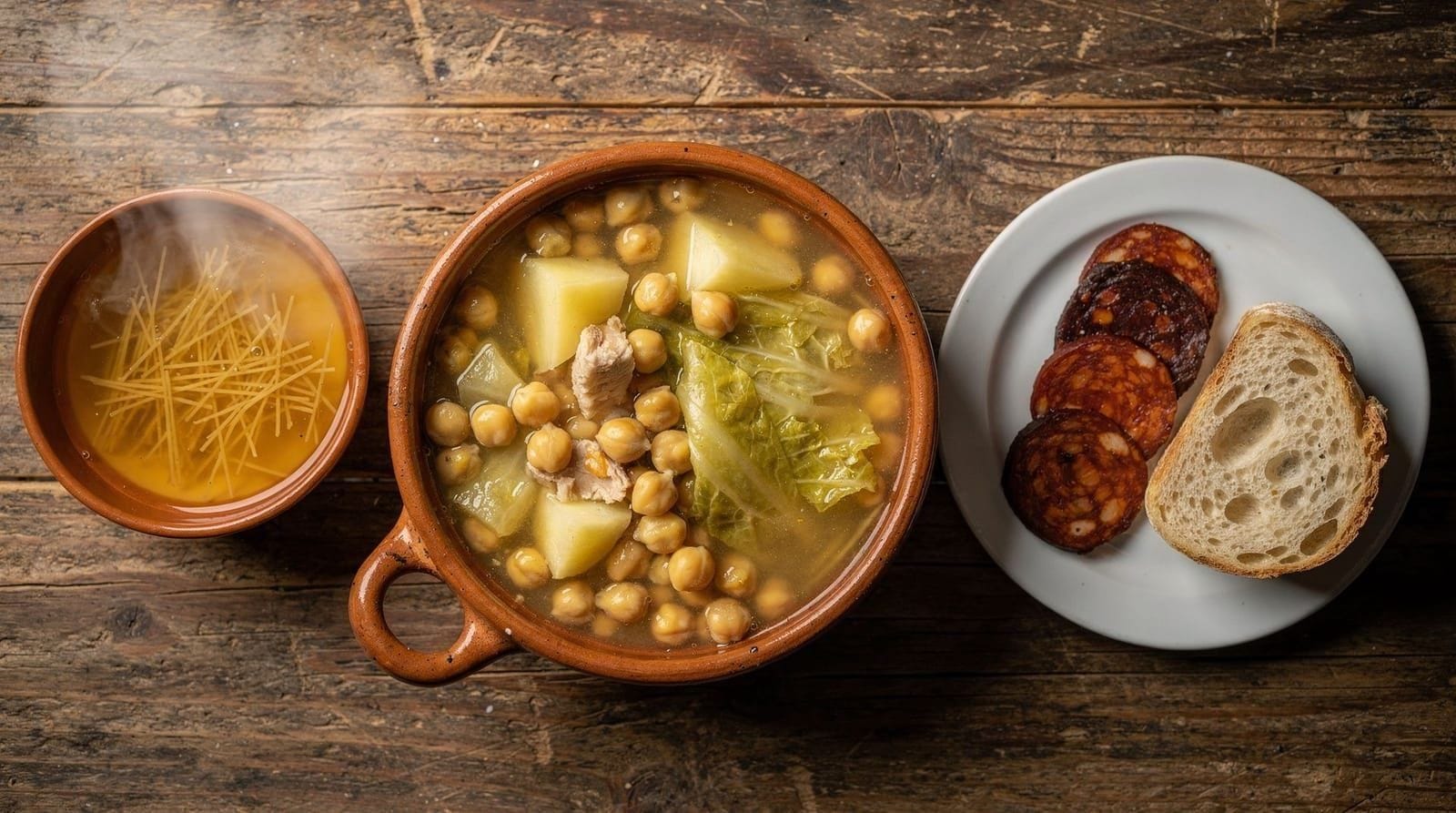
First vuelco: the soup The broth (caldo) in which everything has been cooked for three to four hours arrives first. At good restaurants it is golden-clear, intensely flavoured, mildly fatty, with thin fideos (vermicelli) or rice already added. Drink or eat it as a soup. This is also the course that tells you immediately whether the restaurant is serious — good cocido caldo is extraordinary; poor cocido caldo tastes of nothing.
Second vuelco: the vegetables The chickpeas arrive alongside the cooked vegetables: cabbage (repollo), carrots, potato, and in some versions green beans. The chickpeas at a good restaurant are intact but fully cooked — not mushy, not hard. They will have absorbed the flavour of everything that cooked alongside them.
Third vuelco: the meats The centrepiece. Depending on the restaurant, this plate may include: chorizo, morcilla (blood sausage), tocino (salt pork belly), pork ribs, beef shin, chicken, and a ham bone. The better the restaurant, the better quality each of these components is. At La Bola, the morcilla is house-sourced and the chorizo is specifically chosen for cocido (fatter and less cured than the eating variety).
You eat the meats with the chickpeas and vegetables, using the remaining broth as a dipping liquid.
Where to eat cocido madrileño
La Bola (Calle de la Bola 5) — the reference
La Bola is a family-run restaurant founded in 1870, located a five-minute walk from the Royal Palace (see the Royal Palace guide) in the Austrias neighbourhood. It is the most cited cocido address in Madrid, and unlike many “most famous” restaurants, it is famous for good reasons.
The distinguishing feature is the cooking method: individual clay pots (ollas) cooked directly over wood fire. This is not a visual gimmick — it produces a different result than a commercial kitchen’s gas burners. The clay pot transfers heat differently and the wood fire creates slight smokiness in the caldo.
Lunch only (13:00–16:00). Reservations essential, especially on weekends. Telephone booking preferred. €25–32 per person for cocido, bread, and one drink. Wine is extra.
Honest note: La Bola’s reputation means it is always full of tourists. This does not reduce the quality of the food, but the atmosphere is mixed — half local regulars, half visitors with guidebooks. If you want a more purely local experience, Malacatín comes closer.
Malacatín (Calle de la Ruda 5, La Latina)
Less famous than La Bola but more local in atmosphere. Long communal tables, house wine served from unlabelled carafes, extremely jovial service, and a cocido that is technically good rather than exceptional. The appeal is the experience — this is what a working-class Madrid cocido lunch felt like in 1970. Louder, less formal, and slightly cheaper (€18–24).
Lhardy (Carrera de San Jerónimo 8, near Sol)
Lhardy has been open since 1839 and is Madrid’s most elegant old restaurant. The cocido served here is the refined, bourgeois version — beautifully presented, made with top-quality ingredients, in a room with mirrors and chandeliers. Also significantly more expensive: expect €40–50 per person. Good for a special occasion; not a good daily-life recommendation.
Casa Carola (Calle de Orense 16, Chamartín)
Less central but worth the metro ride for cocido enthusiasts who want to see how the dish is eaten in a modern residential neighbourhood. Regular clients, very good ingredients, unhurried service. €22–28 per person.
The Thursday menú del día option
Many Madrid restaurants include cocido madrileño as their Thursday (jueves) special on the workers’ lunch menu (menú del día). For €12–15 you get a three-course meal including the cocido — this is how most madrileños actually eat it, not in a restaurant specifically dedicated to the dish. Look for signs or chalkboards outside neighbourhood restaurants that say “Jueves: cocido.”
The history behind the dish
Cocido’s origins are in the adafina — a Sephardic Jewish slow-cooked Sabbath stew made from chickpeas, vegetables, and meat, designed to cook overnight without fire on the day of rest. After the 1492 expulsion of Jews from Spain, the dish continued to evolve among the remaining population, with pork becoming the central protein — in part as a social signal of Christian identity (Jews and Muslims did not eat pork).
By the 19th century, cocido was the defining dish of Madrid’s working-class cuisine. Every household had its version; the wealthier the household, the more meat went into the third vuelco.
Seasonal reality: when to eat it
Madrid’s continental climate means brutally hot summers and genuinely cold winters. Cocido is inseparable from the cold season — October through March. In July and August, the last thing you want is a three-course hot stew at noon. Many restaurants remove it from the menu in summer, or offer it half-heartedly.
If your visit is in summer, shift your culinary focus to lighter dishes: mercado de San Miguel for varied small plates, bocadillo de calamares for street food, and the cold tapas at any neighbourhood bar. Come back in winter for cocido.
Cooking classes: make cocido yourself
A half-day Spanish cooking class sometimes includes cocido madrileño in the curriculum alongside paella and tortilla, depending on the season.
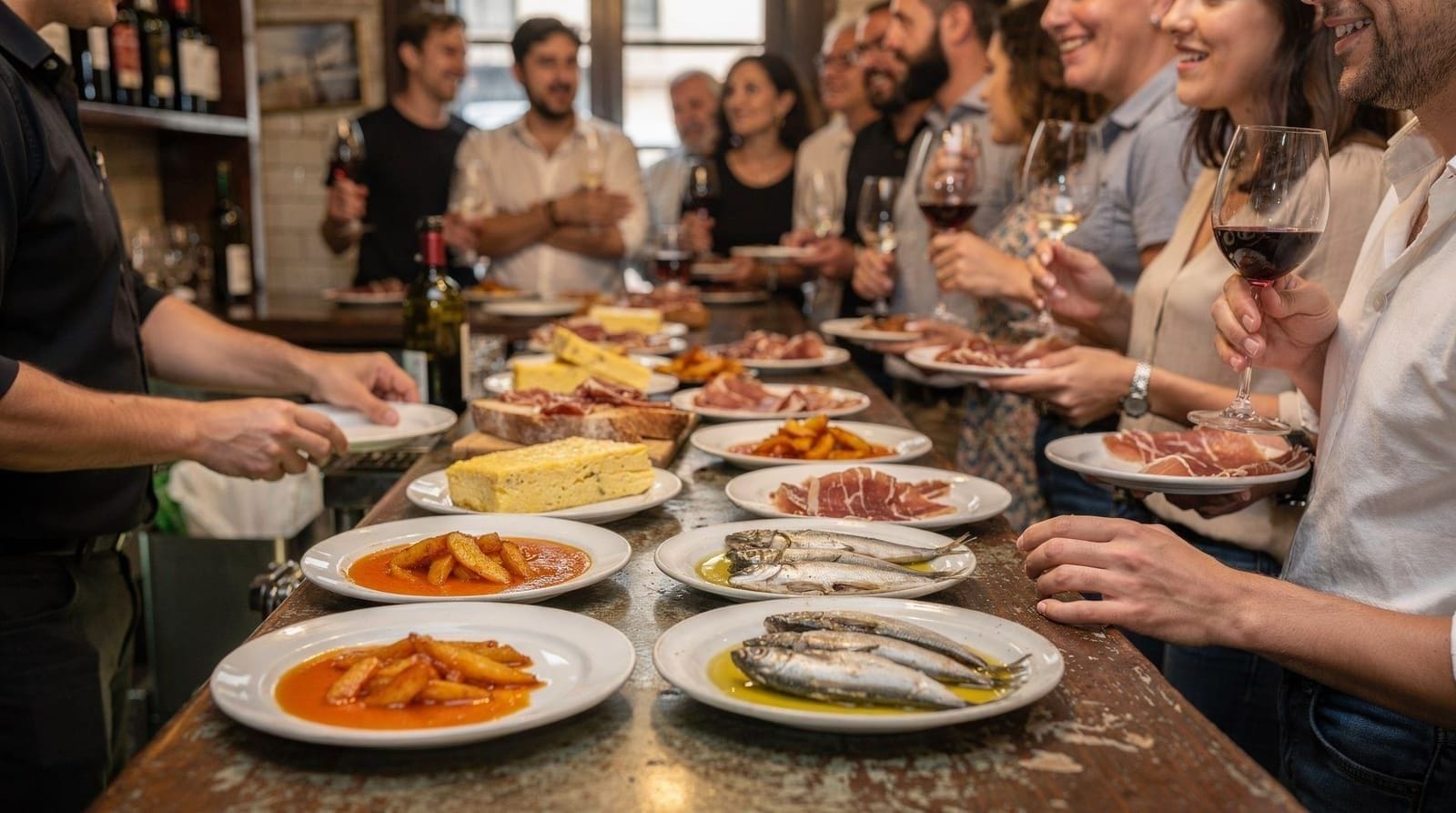
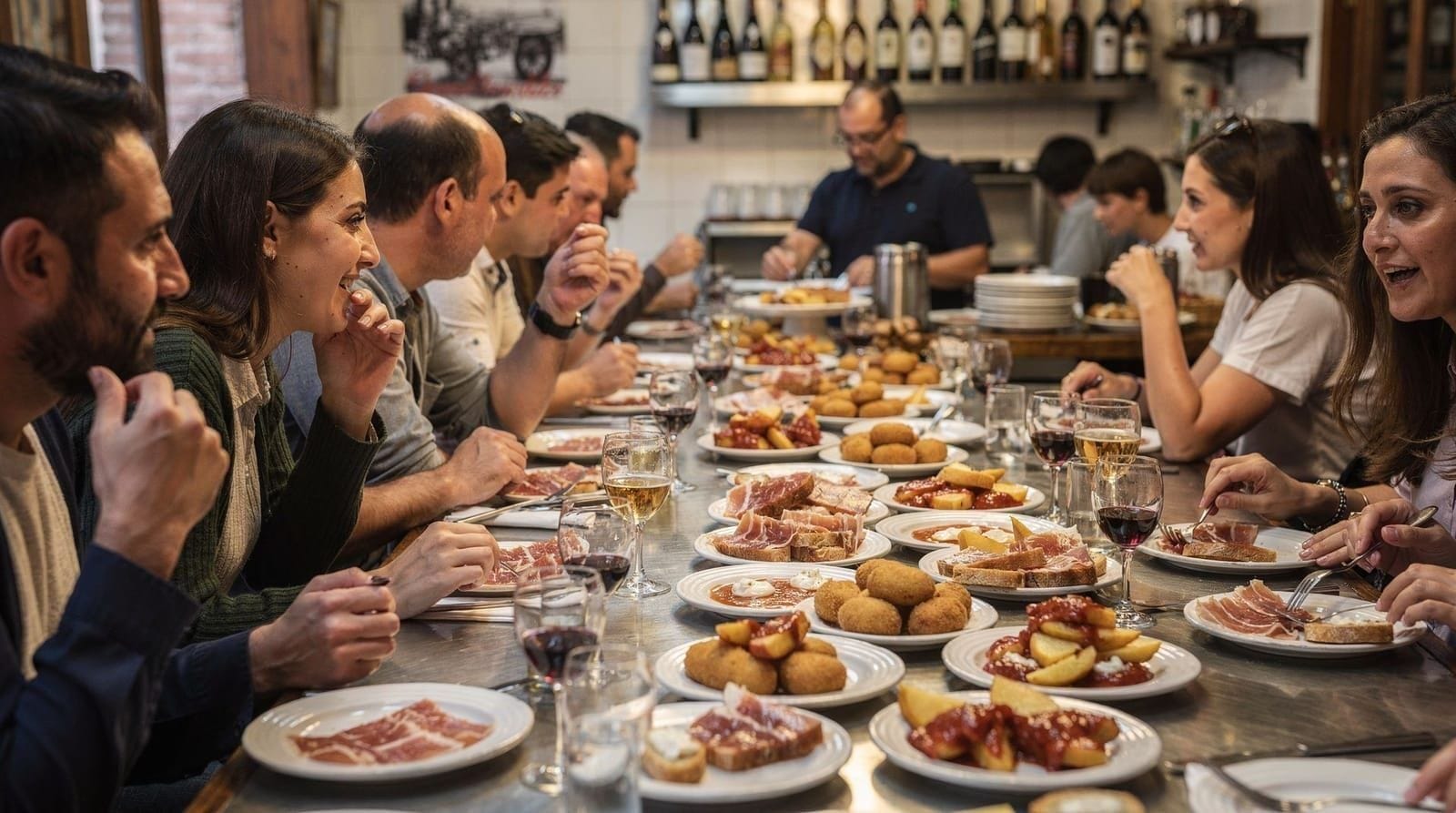
A tapas and wine food tour covers the food culture of Madrid more broadly, including traditional Castilian dishes.
Cocido vocabulary: what the menu means
Caldo: The broth — first vuelco. Sometimes called “sopa de cocido” when vermicelli or rice has been added.
Garbanzos: Chickpeas — the defining legume of the dish. Grown in Castile, with Fuentesaúco chickpeas (DO Garbanzo de Fuentesaúco) considered the finest Spanish variety.
Verduras: The vegetables — repollo (cabbage), zanahoria (carrot), patata (potato), judías verdes (green beans in some versions).
Carne: The meats — collectively, the third vuelco. Individual components: chorizo, morcilla, tocino (salt-cured pork fat), jarrete (beef shin), pollo (chicken), morcillo (veal shank in premium versions), and a jamón bone (hueso de jamón).
Relleno (optional): Some restaurants include a fried bread-and-egg patty in the third vuelco — this is a classic addition that not all restaurants maintain. It adds texture and richness.
Vuelco: “Tipping” — the name for each of the three sequential courses.
Variations: cocido is not one dish
The Madrid version (chickpeas, cabbage, Castilian meats) is the most famous, but the cocido family extends across Spain with regional variations:
Cocido madrileño (Madrid): The reference version — chickpeas, all the meats, three vuelcos.
Cocido montañés (Cantabria, northern Spain): Uses white beans instead of chickpeas; more cabbage; pork ribs and chorizos.
Escudella i carn d’olla (Catalonia): The Catalan version — similar in structure but with its own specific sausages (pilota, a meatball made of bread, pork, and egg) and pasta in the broth.
Puchero (Andalusia, Canary Islands): A lighter, spicier southern version with more vegetable emphasis and different meats.
Madrid’s cocido is generally considered the most elaborate and the most “complete” version in Spain, partly because the city’s historical role as a hub gave it access to the best ingredients from every region.
Making cocido at home
For visitors who want to recreate the experience:
Essential equipment: A large heavy-bottomed pot (at least 6-litre capacity) or a pressure cooker. The clay pots used at La Bola are not necessary at home — they are what makes La Bola distinctive, not what makes cocido in general possible.
Key ingredients:
- 500g dried chickpeas (soaked overnight)
- A beef shin or marrow bone for the broth
- A jamón bone (hueso de jamón salado) — critical for the broth flavour
- Cooking chorizo (different from eating chorizo — fatter, less cured)
- Morcilla — in Madrid, the blood sausage of Burgos (rice-based) is traditional for cocido
- Tocino ibérico (iberian salt pork fat)
- A full chicken or chicken thighs
- Vegetables: cabbage, carrots, potato
The method: Soak chickpeas overnight. Combine bones, tocino, and chickpeas in cold water; bring slowly to a simmer, skim thoroughly. Cook 2–3 hours at the lowest possible simmer (barely moving). Add vegetables in the last 45 minutes. Add sausages in the last 30 minutes.
The broth from this process is the caldo — clarify if desired by straining through a fine sieve, then add pasta or rice for the first course.
Cocido as food-cultural education
For visitors interested in food culture, cocido madrileño is a remarkable entry point into understanding how peasant cuisines evolve:
The dish’s central ingredient — the chickpea — was brought to the Iberian Peninsula by the Phoenicians over 2,500 years ago. The Sephardic Jewish slow-cooked version (adafina) was adapted after 1492 into the pork-centric version we eat today. The pimentón (paprika) that colours many preparations arrived from the Americas in the 16th century. The sausages (chorizo, morcilla) reflect centuries of Spanish pig-raising culture.
A single bowl of cocido contains, in layers, 2,000+ years of Iberian food history. This is not hyperbole — it is what food historians identify when they trace the genealogy of the dish. Eating it at La Bola in the building’s 1870 dining room adds another layer: the mid-19th century Madrid that the room has witnessed.
Pairing cocido with wine
Cocido is rich and slow, so the wine should not compete with it. A young Tempranillo from La Mancha or Ribera del Duero is the standard local pairing — enough body to stand up to the meats without the tannin of an aged Reserva overwhelming the delicate caldo. Some old-school madrileños drink the house red the whole way through the three vuelcos, others switch to a crisp white or a beer with the caldo and move to red only for the meats. Either approach is authentic; there is no strict rule beyond “don’t order something delicate.”
How locals eat it differently from tourists
A few habits separate a table of madrileños from a table of first-time visitors. Locals rarely finish all three vuelcos in full — the meat course especially is often shared or partly boxed to take home, because the portions are built for a full afternoon with nothing else planned, not a quick lunch between sightseeing stops. They also treat the caldo as the most important course, sometimes asking for a second small cup before the vegetables arrive, rather than rushing through it to get to the meat. And cocido is almost never eaten alone: it is a lunch for a group, ordered as a shared ritual rather than an individual dish, which is part of why solo diners sometimes feel out of place ordering it at a packed weekend table at La Bola.
Cocido and the Madrid for foodies itinerary
If your primary reason for visiting Madrid is food, cocido deserves at minimum one serious meal. The combination of:
- Sunday arrival
- El Rastro on the first Sunday
- Vermut and tapas in La Latina
- Cocido lunch at La Bola
…represents a single Sunday that comprehensively introduces Madrid’s food culture. The Sunday cocido guide details this sequence.
For the broader food trip to Madrid — combining the market, the tapas circuit, cocido, and a Michelin meal — the Madrid tapas guide and Michelin Madrid guide provide the full picture.
Building a cocido day around the table
Because cocido takes up an unhurried lunch, it helps to plan the rest of the day around it. A morning in La Latina or the Austrias quarter leaves you close to the best-known cocido tables, and a long afternoon walk afterwards is the natural way to digest. If you are visiting in the colder months, the Madrid in winter guide shows what else suits that season.
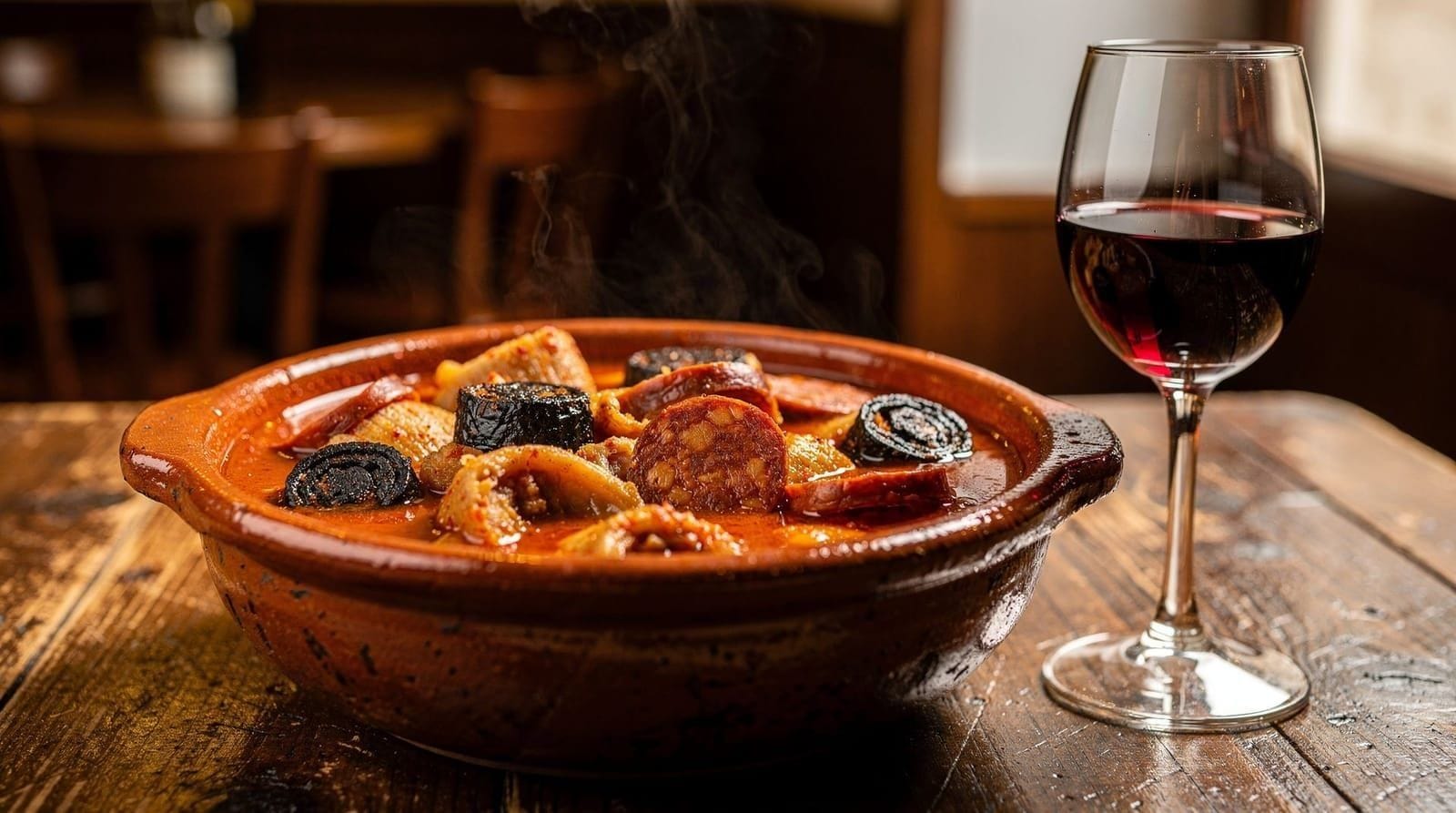
Cocido is one dish in a wider tradition of slow, hearty Madrid cooking. Callos a la madrileña is the other great winter classic, and the eat like a local guide explains the rhythm of Madrid meals, which helps when you book. To avoid overpriced dining rooms, read about tourist menu traps before choosing a restaurant, and compare our verdict in the blog post on the best cocido in Madrid.
Frequently asked questions about Cocido madrileño
How is cocido madrileño served?
Traditionally in three parts called 'vuelcos' (tippings). First, the broth (caldo) as a soup with thin noodles or rice. Second, the chickpeas (garbanzos) and vegetables — cabbage, carrots, potato. Third, the meats — chorizo, morcilla, pork belly, beef, sometimes chicken and a cured ham bone. The broth from the pot ties everything together.When should I eat cocido?
Cocido is emphatically a winter dish. Madrid restaurants typically serve it from October through March. In summer it is either unavailable or feels inappropriate given the heat. If you visit between November and February, cocido is the most Madrid thing you can eat.Is La Bola really the best cocido in Madrid?
La Bola is the most famous. It has been cooking cocido in traditional clay pots over wood fire since 1870, and the quality is genuine. But 'best' is subjective: Malacatín (Calle de la Ruda 5) serves it family-style with plonk wine and more atmosphere; Taberna El Alabardero is more polished. La Bola is the reference for authenticity and history.How much does cocido madrileño cost?
A proper cocido lunch at a restaurant like La Bola costs €25–35 per person including bread and one drink. At neighbourhood restaurants serving workers' lunch menus, it appears as a €12–15 menú del día option on Thursdays. Sobrino de Botín charges €35–45 and trades on its age more than its cocido.Can I make cocido at home?
The traditional method requires a clay pot (puchero) and a wood fire — La Bola's distinctive setup. Modern versions use a pressure cooker, which produces a similar result faster. The key ingredient is good chickpeas (garbanzos de Fuentesaúco are prized) and quality cured meats. The bones — jamón, tocino (fat pork), pork marrow — are what give the broth its depth.Is cocido madrileno suitable for vegetarians?
No. It is built on meat and bone broth. There is no meaningful vegetarian version in traditional restaurants. Some modern places do vegetable-only variations, but this is not traditional and rare in old-school establishments.
Top experiences
Bookable activities with verified prices and instant confirmation on GetYourGuide.