Madrid for foodies: a 3-day eating itinerary
Madrid: Food Tour Tapas Spanish Wine
Quick answer: Madrid is one of Europe’s best eating cities — not for haute cuisine alone, but for the sheer democratic quality of neighbourhood eating. Three food-focused days cover La Latina tapas, the San Miguel and San Fernando markets, an authentic cocido madrileño lunch, a food-tour evening, a cooking class, and the bar culture that makes Madrid different from anywhere else in Spain.
Madrid’s food identity is not as globally famous as Barcelona’s, which means it is underrated by people who have not been. The city has the highest concentration of Michelin-starred restaurants in Spain, a tapas culture that is entirely its own (different from Basque pintxos, different from Andalusian tradition), a market scene that was quietly excellent before the gentrification wave, and the best cheap eating in any major European capital — if you know where to go.
The central rule: eat where Madrileños eat, at the times they eat. Lunch at 14:00–15:30, dinner at 21:00 or later. Arriving at a restaurant at 19:30 looking for dinner will get you a half-empty room serving a tourist menu to people with the same idea.
| Duration | 3 days, structured around Madrid’s real eating hours |
| Pace | Full but flexible — built around meals, not sights |
| Getting around | Almost entirely on foot between neighbourhoods |
| Budget | Around €60–€90/day per person for food and drink alone |
| Best time | Autumn/winter for cocido season; any season for tapas and markets |
Day 1: Tapas culture and neighbourhood bars
Morning: Churros at the source
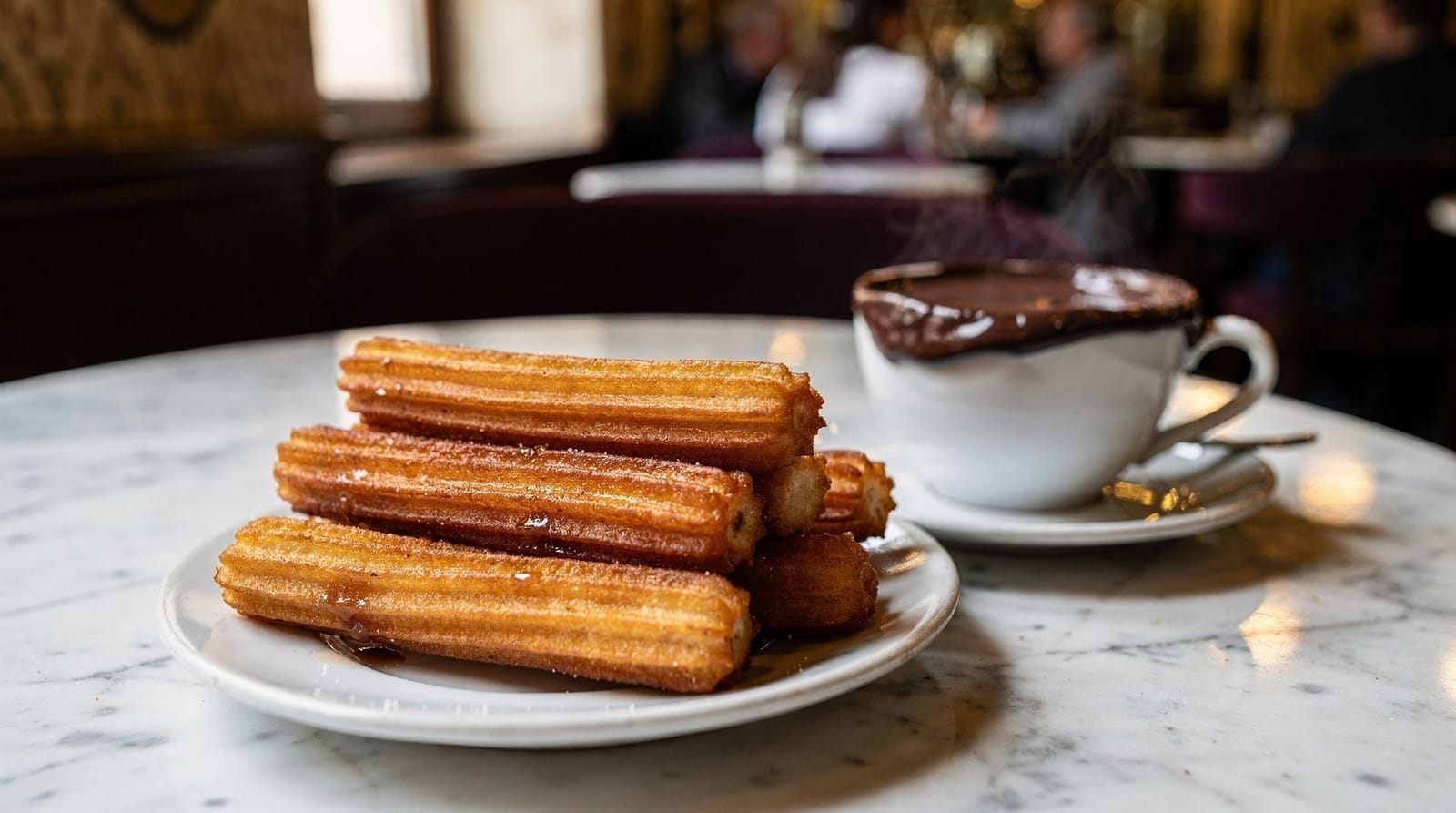
Start the food itinerary where Madrid has started mornings since the 19th century: churros con chocolate at Chocolatería San Ginés (Pasadizo de San Ginés, between Puerta del Sol and the Teatro Real). The historic churrería has been here since 1894; the porras (the thick version of churros, Madrid’s preference) are served with dense hot chocolate for dipping. This is not a tourist trap — this is a city institution that happens to be on tourists’ lists.
The churros con chocolate guide explains the difference between Madrid’s churros culture and what you get elsewhere in Spain, and which other churrerías are worth knowing.
Midday: Mercado de San Miguel and bocadillo de calamares
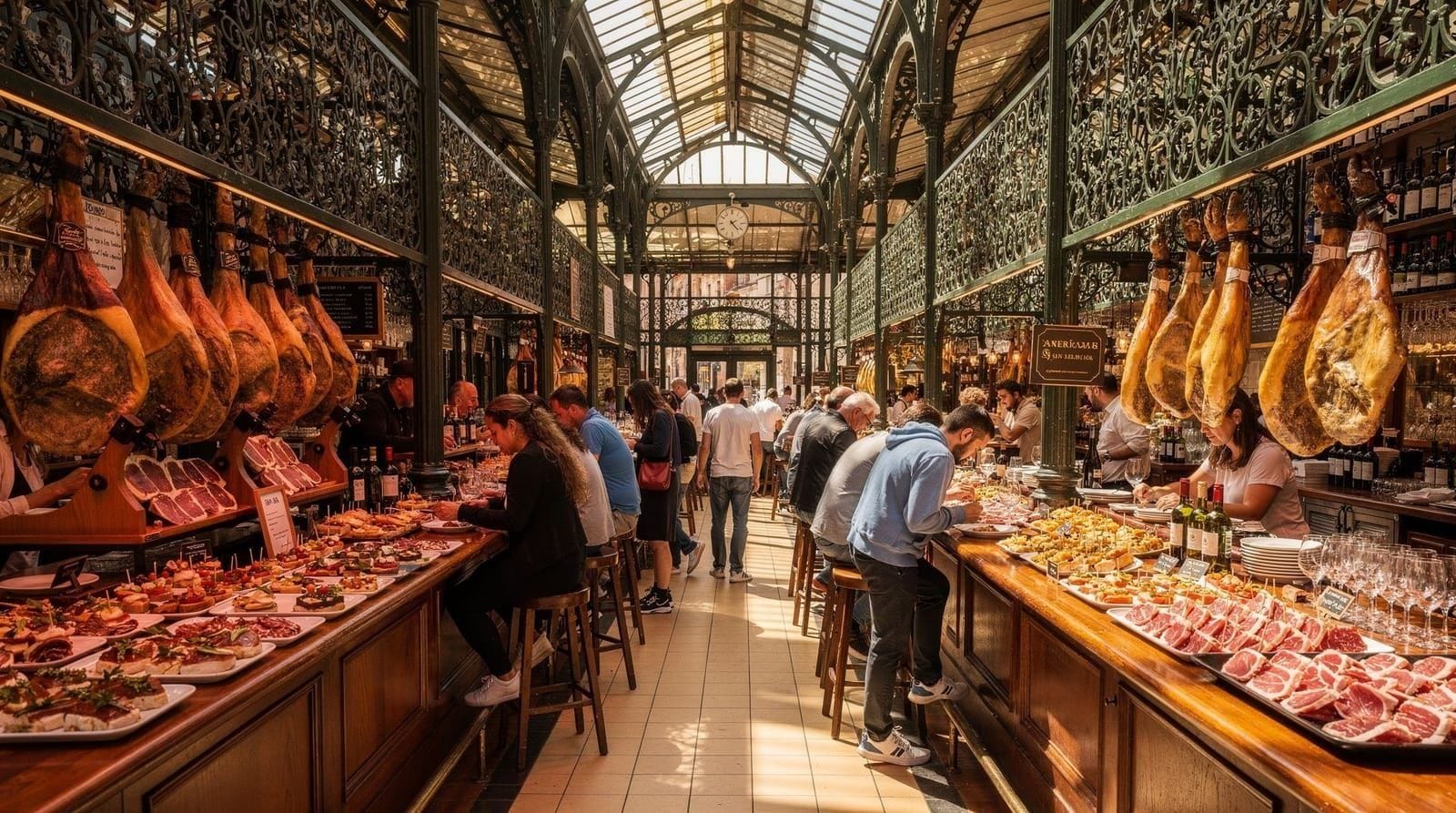
The Mercado de San Miguel near Plaza Mayor is the right market for a mid-morning snack circuit. The 1916 cast-iron structure holds stalls selling jamón, seafood, cheese, patatas bravas, wine, croquetas, and the full range of Spanish market food. Prices are higher than neighbourhood restaurants (it is a tourist market that also serves locals), but the quality is consistent and the setting is exceptional.
From the market, walk to Puerta del Sol for the rite-of-passage lunch: the bocadillo de calamares. A fried squid ring roll in a baguette, served with a cold beer, at a bar around Sol and the Plaza Mayor — Bar La Campana on Calle de Botoneras has served this for decades and charges around €3.50 for the sandwich. The bocadillo de calamares guide explains the cult.
Afternoon: La Latina tapas circuit
An early afternoon walk through La Latina before the evening rush. The neighbourhood around Cava Baja and Cava Alta is Madrid’s best address for traditional tapas, and the afternoon lull (15:00–19:00) is a good time to look at the bars without competing for space.
Walk the circuit: from the top of Cava Baja (near Puerta de Moros) southwards to where it meets Cava Alta, then through the side streets of La Latina proper. The where to eat in La Latina guide identifies the best places at each price point.
A cup of vermut (vermouth) at 13:00–14:00 is a Madrid tradition — look for bars serving house vermut on tap (vermut de grifo) from a barrel. The vermut guide explains the aperitivo culture.
Evening: Food tour
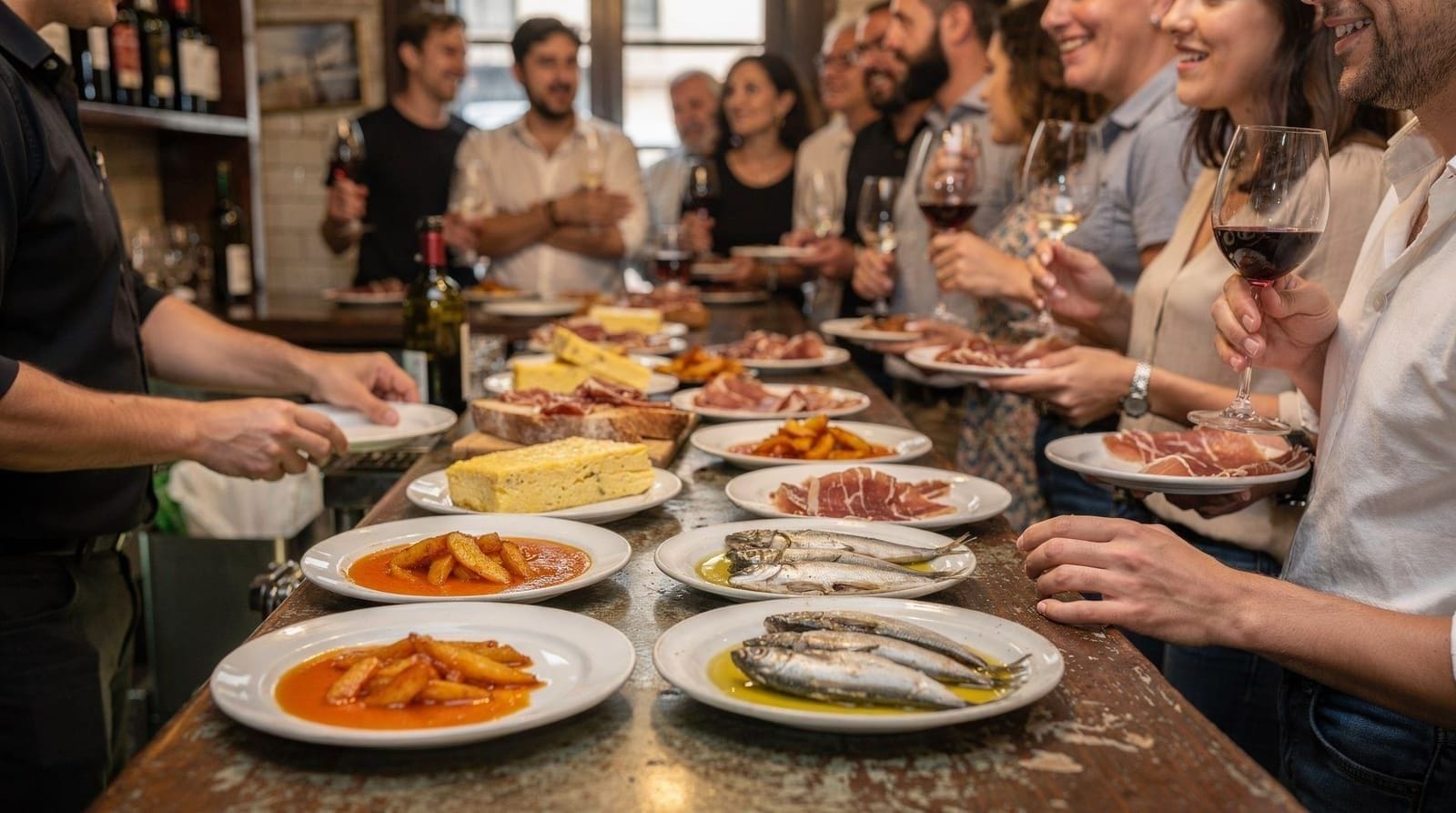
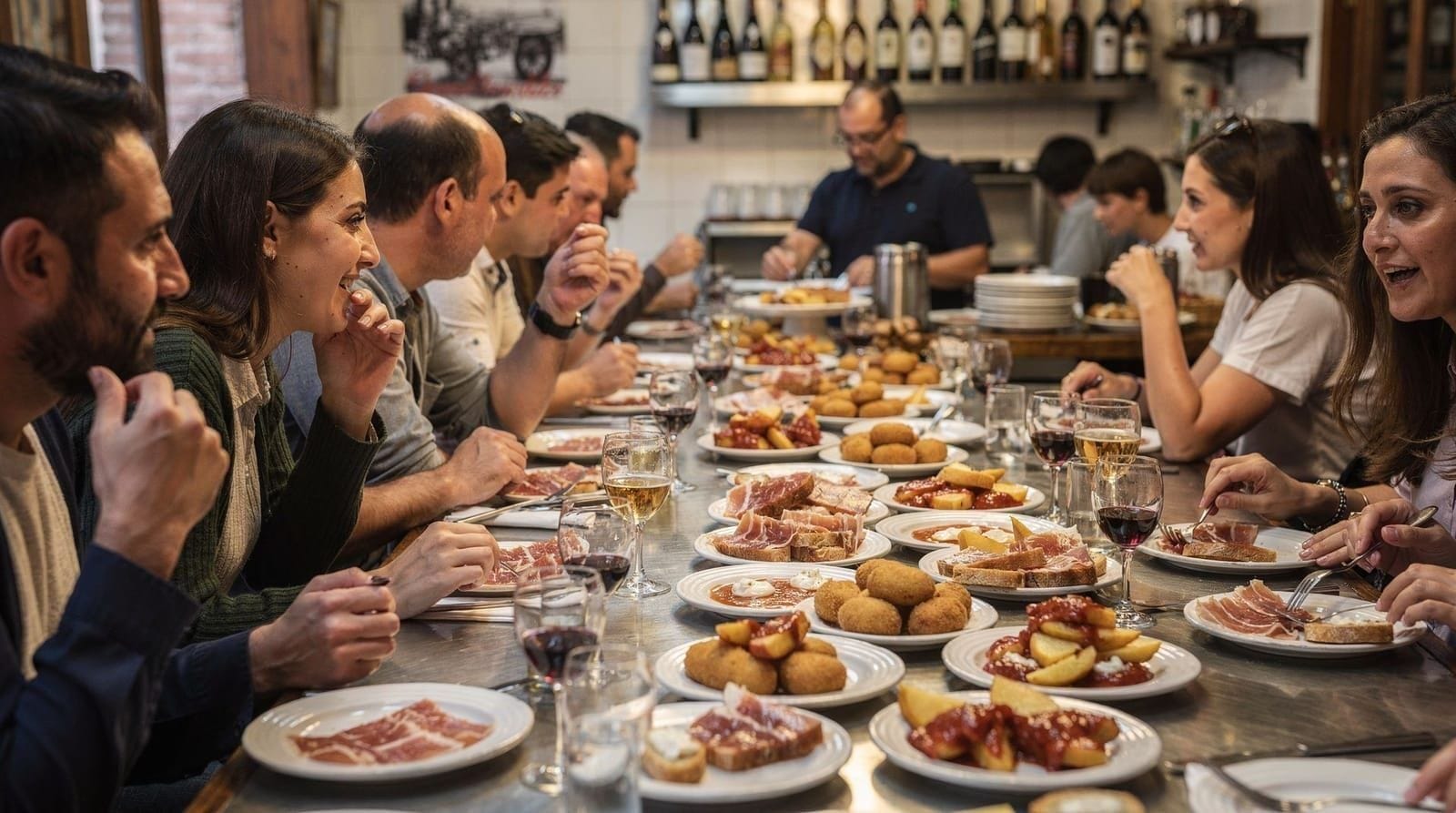
The evening of Day 1 is the right time for a guided food tour. The non-touristy Madrid tapas tour — 10 tapas and 4 drinks takes a small group through neighbourhood bars the solo traveller would not necessarily find, including places with no English signage or menus. Most good Madrid food tours last three hours and cost €60–€80 including all food and drinks.
The food tour guide evaluates the main operators and tells you what to look for in a good tour versus one that takes you to places you would have found yourself.
Finish in La Latina or Barrio de las Letras for late-night wine.
Day 2: Markets, cocido, and a cooking class
Morning: Cocido madrileño at a proper restaurant
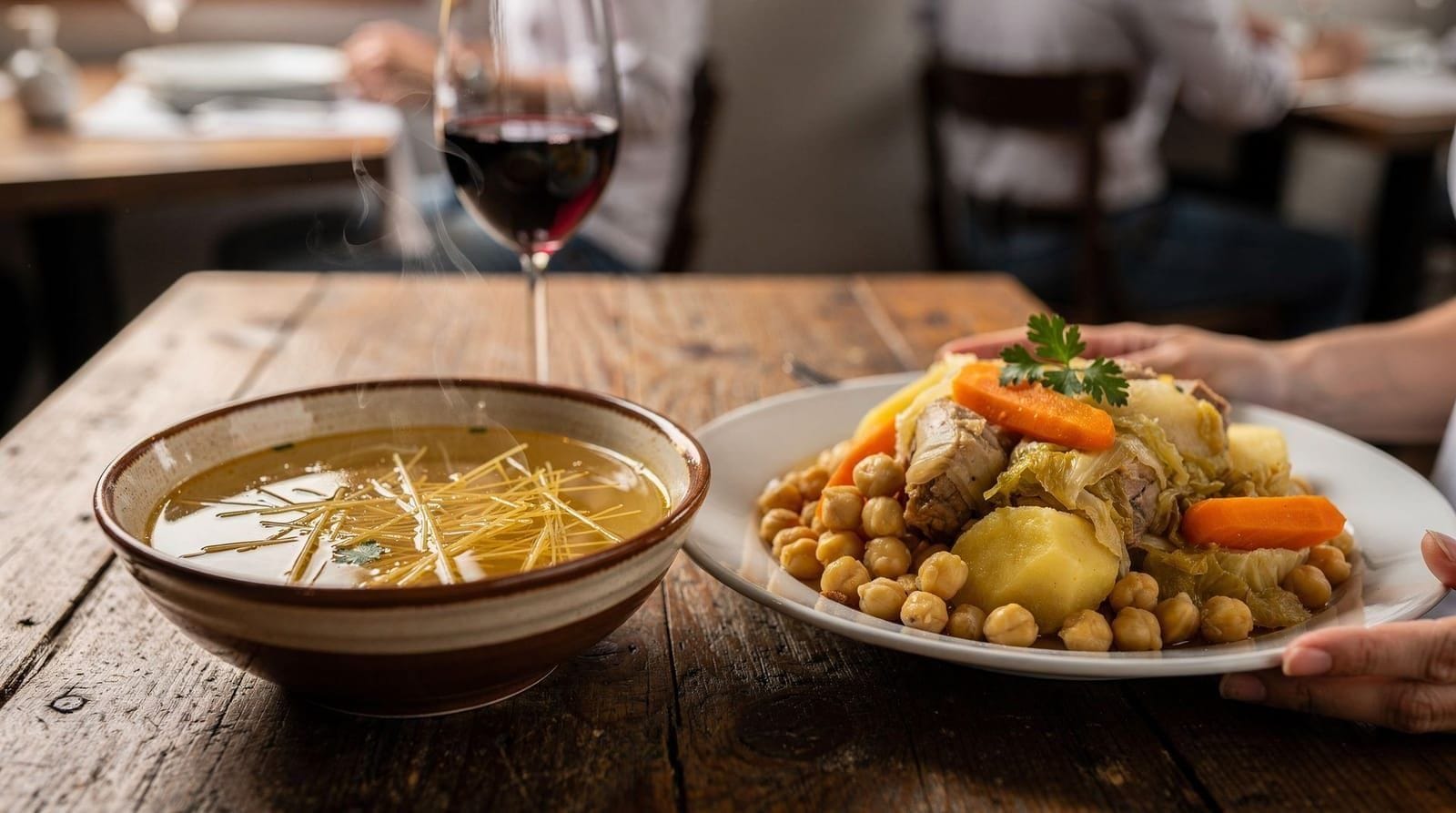
The cocido madrileño — a chickpea, meat, and vegetable stew served in three courses — is Madrid’s defining dish and the one thing you should eat here that you cannot replicate at home. It is a winter and autumn dish principally, though good restaurants serve it year-round.
The traditional version is served in three vuelcos (pourings): first the broth (served as a soup with thin pasta), then the chickpeas and vegetables, then the meats (chicken, chorizo, morcilla, pork belly, jamón). It is substantial; plan lunch around it. Lhardy on Carrera de San Jerónimo (near Sol) has served cocido madrileño since 1839; La Bola in the Austrias quarter is the other historic option. Book ahead for both.
The cocido madrileño guide and Sunday cocido guide explain the ritual, the best restaurants, and why Sunday is the traditional day to eat it.
Afternoon: Cooking class
After lunch, work off the cocido at a cooking class. The Madrid cooking class — paella, tortilla española and sangria is a three-hour afternoon session in a central cooking school where you make and eat the three most iconic dishes of Spanish food culture. Most classes are small (10–12 people) and the tortilla española component — a Spanish omelette made properly with slow-cooked onion — is genuinely instructive, since most people make it wrong at home.
The food tour worth it guide also covers cooking classes if you want to compare options.
Evening: Wine bars and Chamberí
The evening of Day 2 is for Madrid wine. The city has an excellent natural wine and regional wine scene; the wine bars guide maps the best neighbourhoods. Chamberí — north of Malasaña, less touristy than anywhere else on this itinerary — has a cluster of good wine bars on and around Calle de Santa Engracia.
Have dinner in Chamberí. The neighbourhood restaurants are lower-priced than the centre and serve a predominantly local clientele. A proper three-course dinner with wine is €30–€45 per person here; the same quality in Sol or La Latina might run €50–€60.
Chamberí rewards a slower pace than the tourist-centre neighbourhoods — there is no single headline attraction, just consistently good small restaurants and wine bars that have not adjusted their prices or their menus for a tourist audience. If Day 2 has left you tired from the cocido and cooking class, this is the right evening to simply pick a wine bar, order a few small plates, and let the evening happen rather than trying to cover ground.
Day 3: Market Sunday, El Rastro and callos
Morning: El Rastro and the Sunday vermouth circuit
If Day 3 falls on a Sunday, El Rastro flea market fills the streets of La Latina and Lavapiés from 9 am to 2 pm. The market is genuinely worth attending as a cultural experience — antiques, secondhand books, cheap clothes, ceramics, street food — though the El Rastro guide is honest about what is good value and what is overpriced junk (quite a lot is the latter, in this market as in all flea markets).
After El Rastro, Sunday in Madrid pivots to vermut and aperitivo culture, which then merges into the long Sunday lunch. The bar circuit around La Latina reaches its zenith on Sunday afternoon between 1 pm and 4 pm — this is not a tourist construction; this is how half a million Madrileños spend their Sunday. Join them.
Midday: Callos a la madrileña and a long lunch
Callos a la madrileña — Madrid’s other defining dish, a slow-cooked stew of tripe with chickpeas, chorizo, and morcilla — is the sister dish to cocido and divides visitors cleanly between the curious and the disgusted. If you are adventurous, this is the dish to try here. Casa Labra on Calle Tetuán (near Sol, open since 1860) and El Irati in La Latina are reliable addresses. The callos guide gives context and the best places.
If callos is a step too far, Sunday at a restaurant in La Latina or Barrio de las Letras with a proper menú del día (€12–€15) is a perfectly honest alternative.
Afternoon: San Fernando market and Lavapiés
The Mercado de San Fernando in Lavapiés is Madrid’s authentic neighbourhood market — less visited than San Miguel, much more local, with bars inside serving cheap tapas and cold beer to the surrounding community. The building is a 19th-century covered market hall; the bars inside are genuinely cheap and genuinely good.
End the food itinerary with the Madrid tapas and wine tasting with a local guide evening, or simply wander into the Lavapiés bar scene and eat wherever looks right.
Three-day food budget
Expect roughly €180–€270 per person across the three days for food and drink alone, excluding accommodation: churros and coffee €5–€8, the San Miguel market snack circuit €15–€25, the bocadillo de calamares €3.50, a La Latina tapas afternoon €20–€30, the guided food tour €60–€80, a cocido madrileño lunch €25–€40, the cooking class €70–€90, Chamberí wine-bar dinner €30–€45, and Day 3’s callos or menú del día lunch plus San Fernando market snacks €20–€30. Cutting the food tour and cooking class (the two priciest bookings) and replacing them with self-guided bar-hopping using the where to eat in La Latina guide brings the three days down to roughly €90–€130 per person without losing the core experience.
Understanding Madrid food culture
Madrid’s food identity is built on four things that do not translate well to a description but become obvious once you are eating them.
The menú del día. A three-course weekday lunch with bread, water, and often wine for €12–€15. This is not a tourist set menu — it is how working Madrileños have lunch. The quality is determined by the restaurant: a good neighbourhood restaurant offers the same dishes at lunch that they serve in the evenings, at significantly lower prices. A bad neighbourhood restaurant uses the menú to shift slower-moving stock. The difference is visible: the good ones have mostly local clientele, the bad ones have mostly tourists.
The culture of standing at the bar. Spanish eating in a tapas context is primarily a standing activity — you stand at the barra, you order drinks and bites, you move when ready. This is not a sign of low status (in Spain it is the opposite — the regulars at the best bars stand, not sit); it is simply how the culture works. Asking for a table in a tapas bar is fine, but you will pay more and the experience is different.
Spanish wine and the question of region. Madrid itself is a wine-producing region (Vinos de Madrid DO, with reds made primarily from Garnacha and Tempranillo in the south of the province). You will encounter these on menus but they are not the prestigious option; the wines most Madrileños drink in bars are Rioja (the default red), Verdejo from Rueda (the default white), and increasingly natural wines from smaller producers. The wine bars guide covers the good options.
The cocido-callos spectrum. Madrid’s defining dishes are both offal-adjacent: cocido uses cheap cuts of pork and chicken alongside chickpeas; callos is tripe. Neither is fashionable food in any international sense. Both are the result of centuries of working-class cooking making extraordinary things from available and affordable ingredients. Eating one of them at a restaurant that does it well is as close as you will get to the genuine material culture of Madrid’s food history.
Frequently asked questions about Madrid food
What is the difference between Madrid tapas and Basque pintxos?
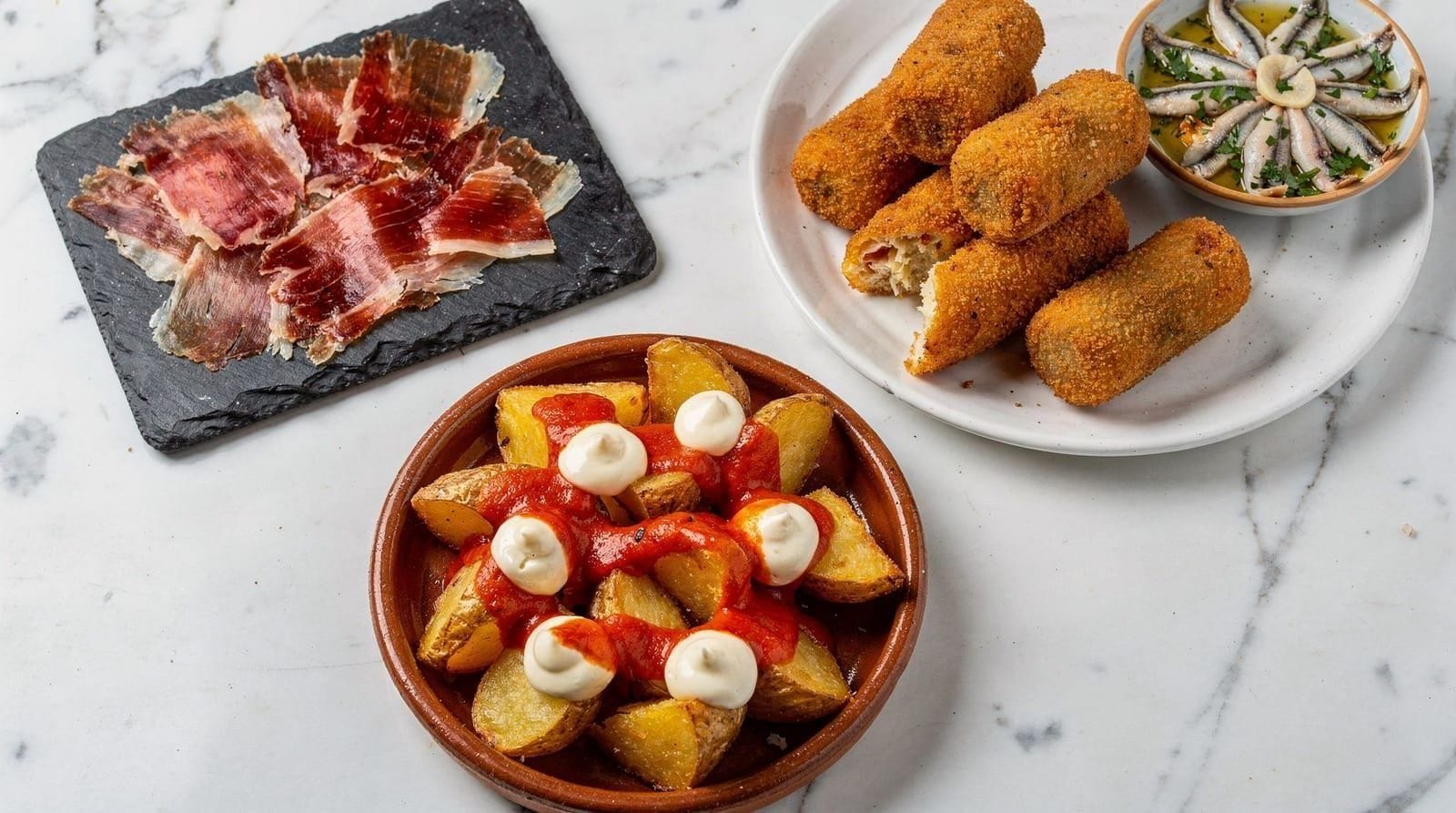
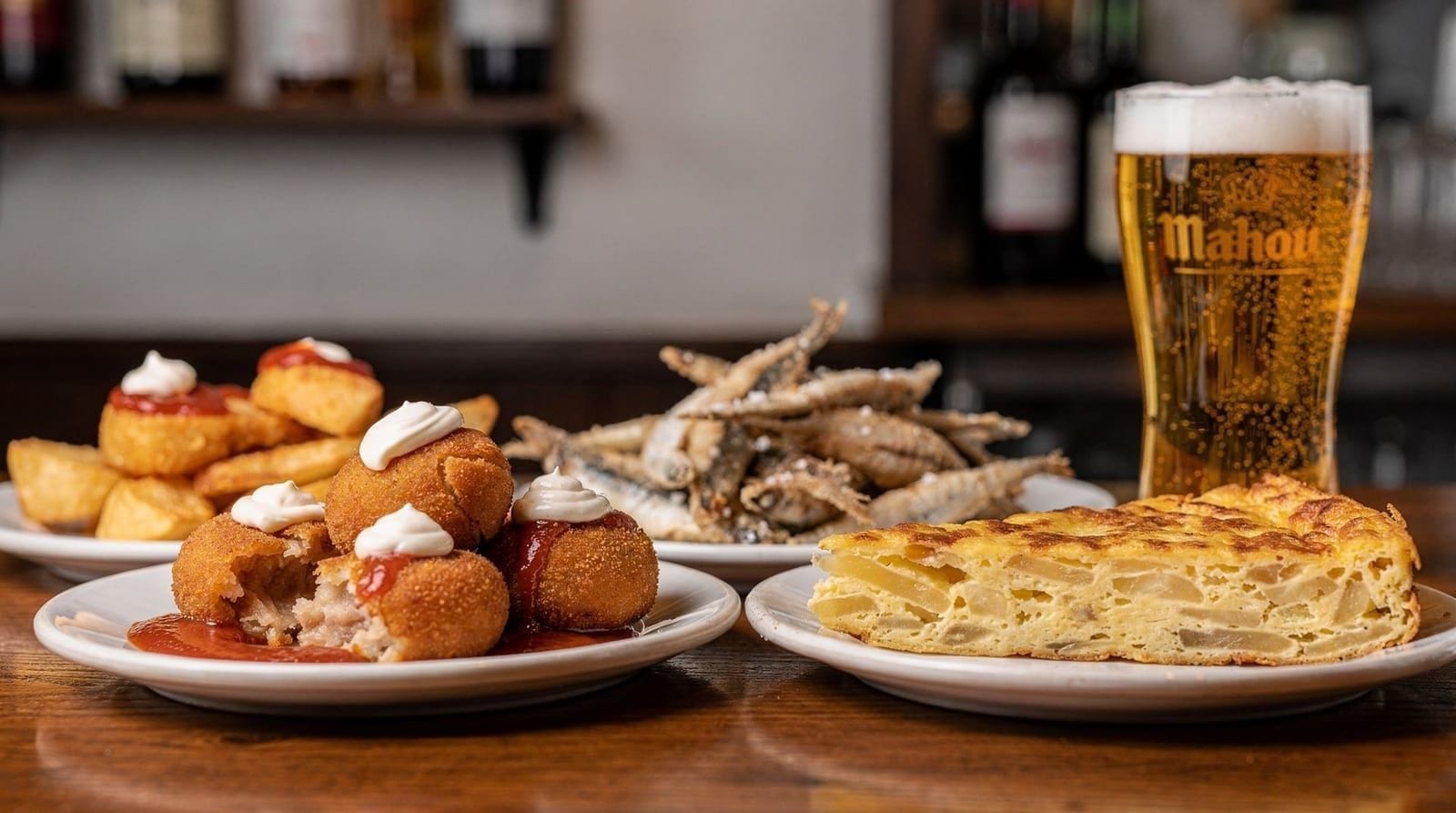
Basque pintxos (San Sebastián and Bilbao) are primarily bread-based — a slice of bread with various toppings, displayed on bars and eaten while standing. Madrid tapas are more varied: a small dish of something (patatas bravas, croquetas, a montadito, marinated olives, a piece of tortilla) that may or may not come free with your drink. In Madrid, the free tapa with every drink is the traditional expectation at many neighbourhood bars — you do not always have to order food separately.
What should I eat for breakfast in Madrid?
A tostada con tomate (toasted bread rubbed with tomato and olive oil, with or without jamón) and a café con leche (strong espresso with hot milk) is the standard Madrileño breakfast, available at any café for €3–€5. Alternatively, churros or porras with chocolate at a churrería — San Ginés is the famous address, but neighbourhood churrerías are cheaper and less crowded.
Is Madrid expensive for food?
By western European capital standards, no — Madrid is consistently cheaper than Paris, London, or Barcelona for equivalent quality. A proper neighbourhood lunch (three courses with wine) is €12–€15. A stand-up tapas evening (4–6 drinks and accompanying bites) runs €20–€30. The expensive exceptions are the tourist-facing restaurants around Sol and the Michelin-starred restaurants, which are still cheaper than Paris equivalents.
What is the best market for eating in Madrid?
For eating while you walk: Mercado de San Miguel (touristy but genuine produce, central location). For local atmosphere and cheap tapas: Mercado de San Fernando in Lavapiés. For specialist food products to take home: El Rastro on Sunday has food stalls with regional Spanish products. The mercados guide covers all of them.
Should I book a food tour or explore independently?
Both work, and they serve different goals. A guided tour like the non-touristy tapas tour is best on your first evening — it orients you quickly to bar culture, portion sizes, and ordering etiquette, and takes you to places without English menus that are genuinely hard to find alone. Once oriented, independent exploration using the where to eat in La Latina guide and the best tapas bars guide is cheaper and lets you linger exactly where you like.
Three-day summary
| Day | Focus | Signature dish |
|---|---|---|
| Day 1 | Churros, San Miguel market, La Latina tapas | Bocadillo de calamares |
| Day 2 | Cocido lunch, cooking class, Chamberí wine bars | Cocido madrileño |
| Day 3 | El Rastro, San Fernando market, Lavapiés | Callos a la madrileña |
Food practical notes
- Eat at the bar (barra) when you can. Standing at the bar in a tapas establishment is always cheaper than table service, often meaningfully so.
- Look for the menú del día. Every neighbourhood restaurant in Madrid offers a three-course weekday lunch (sometimes Saturday too) for €12–€15. It is the best-value eating option in the city.
- Avoid Plaza Mayor and Sol restaurant terraces. The price premium is 50–80% above identical food two streets away; the quality is often lower. See the tourist traps guide.
- Michelin Madrid. The city has over 20 Michelin-starred restaurants at genuinely lower prices than Paris, London, or Barcelona. If a tasting menu is on the agenda, the Michelin guide identifies the best-value starred restaurants.
- Spanish tipping culture. Rounding up or leaving a couple of euros is appropriate; a formal 15–20% tip is not expected in Spain.
Top experiences
Bookable activities with verified prices and instant confirmation on GetYourGuide.