Bocadillo de calamares: Madrid's iconic squid sandwich
Madrid: Food Tour Tapas Spanish Wine
Where do I get the best bocadillo de calamares in Madrid?
The Plaza Mayor area is surprisingly not bad for this specific sandwich — Bar La Campana (Calle Botoneras 6) is the classic address. Casa Labra nearby is the reference for croquetas. Bocadillo de calamares is €2.50–4 and is genuinely a Madrid original, not a tourist confection.
In brief: The bocadillo de calamares — a crusty Spanish baguette filled with deep-fried calamari rings — is Madrid’s closest equivalent to a city-specific street food. It is cheap (€2.50–4), found everywhere around the historic centre, and eaten standing at a bar or walking. It is also one of the very few good reasons to eat near Plaza Mayor.
| Where | Bar La Campana (Calle Botoneras 6), off Plaza Mayor |
| Cost | Around €2.50–4 for the sandwich; €5–7 with a beer |
| Time needed | 10–15 minutes, eaten standing at the counter |
| Best time | Lunchtime; avoid ordering it after 22:00 |
| Booking | None — counter service, short queue at peak lunch |
What makes the bocadillo de calamares a Madrid thing
Most cities do not have a sandwich that is specifically their own. Madrid does. The bocadillo de calamares is a fried calamari roll — deep-fried squid rings in a crusty bread baguette (barra or bocadillo), sometimes with a squeeze of lemon, occasionally with alioli or mayonnaise.
Why Madrid, which is 300 kilometres from the coast? Because Madrid has always been the inland hub of a country with a very long coastline. Fresh fish and seafood arrived by train from Galicia, Asturias, and Cantabria, and Madrid’s kitchens learned to handle them. Fried calamari became popular at bars around Plaza Mayor in the late 19th century, and the combination of fried squid with crusty bread calcified into a tradition.
The bocadillo de calamares is also cheap — which is why it became the working-class lunch option for centuries of madrileños. Office workers, market porters, and delivery drivers have been eating them standing at bar counters since before anyone alive was born.
Where to get one
Bar La Campana (Calle Botoneras 6, off Plaza Mayor)
The most cited address for bocadillo de calamares in Madrid. A tiny bar in one of the archways that open off the east side of Plaza Mayor, so old it does not bother with a proper sign. They serve essentially one thing: the bocadillo de calamares. Price: €2.50–3.50. Standing room only. Always a short queue at lunchtime.
This is a genuine institution, not a tourist trap — the queue is both madrileños and tourists, and the product is identical for both. The bread is crusty, the calamari is fresh and properly fried, and there is no other menu to confuse the operation.
The plaza mayor surrounding bars
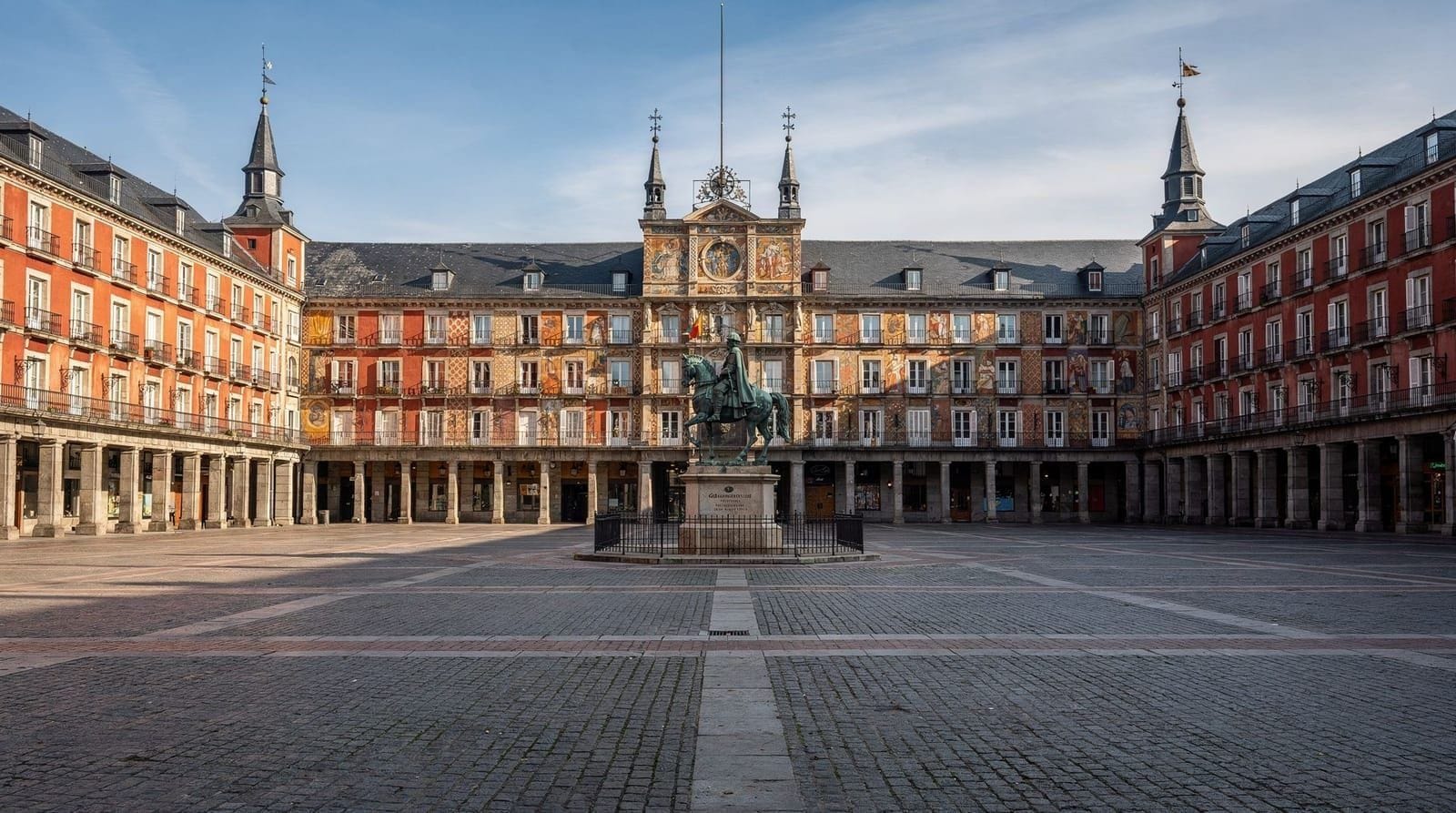
Plaza Mayor is, as noted elsewhere, generally not where you should eat. But: for this specific sandwich, the bars embedded in the arched periphery of the square (as opposed to the overpriced terrace restaurants facing the square’s open space) are actually legitimate. They serve bocadillo de calamares as their primary product and have been doing so for generations. Do not confuse these counter-service bar holes-in-the-wall with the tourist restaurant terraces — they are different in every way.
Rule: If there is a terrace with laminated menus and someone bringing you a basket of bread while you sit, you are in a tourist restaurant. If there is a counter, no seating, and a queue of people pointing at a sandwich, you are in the right place.
Wherever you see a bar near Sol
The Puerta del Sol–Plaza Mayor corridor has multiple bars selling bocadillo de calamares as their core product. This is one case where proximity to the tourist hub does not automatically mean poor quality or inflated prices. Competition is fierce for this specific item, and the market price is held down by the number of competing options: €2.50–4 for the sandwich.
How it is made
The ideal bocadillo de calamares has three components:
The bread: A fresh Spanish barra (similar to a baguette but slightly different flour and crust). Crusty outside, soft inside. Not toasted. Cut lengthwise.
The calamari: Fresh squid rings (not frozen, at good places), lightly battered, deep-fried until golden and crispy. The batter should be minimal — enough to provide crunch, not a thick coating that overwhelms the squid. Properly fried calamari is not greasy.
The condiment: Lemon slice on the side is traditional. Some bars add alioli, mayonnaise, or a thin tomato sauce. The purist version is lemon only.
The result is eaten immediately — the bread becomes soggy within minutes of assembly, and cold fried calamari loses its appeal fast.
The honest assessment
Is it the greatest sandwich in the world? No. It is a simple, cheap, satisfying street food that is elevated by context — the streets of old Madrid, a cold beer alongside, standing at a marble counter. The best versions are genuinely good. The mediocre versions (frozen calamari rings, thick floury batter, soggy bread) are exactly as disappointing as that description suggests.
The distinction between good and mediocre is primarily: fresh versus frozen squid, and batter weight. At places like Bar La Campana that have been doing only this for generations, the quality is consistent. At bars that add it to a tourist menu as an afterthought, it can be poor.
Price as a quality signal: A bocadillo de calamares should cost €2.50–4. If it costs more than €5 in a regular bar, you are being overcharged. At a market stall or hotel bar it might cost more — that is different territory.
What to drink with it
Cold beer is the universal pairing. A caña (250ml draught beer) for €1.80–3 is the standard accompaniment. House wine also works. The sandwich is specifically a lunch or midday snack food — you would not eat one at 22:00.
The broader Madrid street food scene
The bocadillo de calamares is genuinely distinctive — most of Madrid’s food culture is sit-down rather than street-oriented. The other major informal food options:
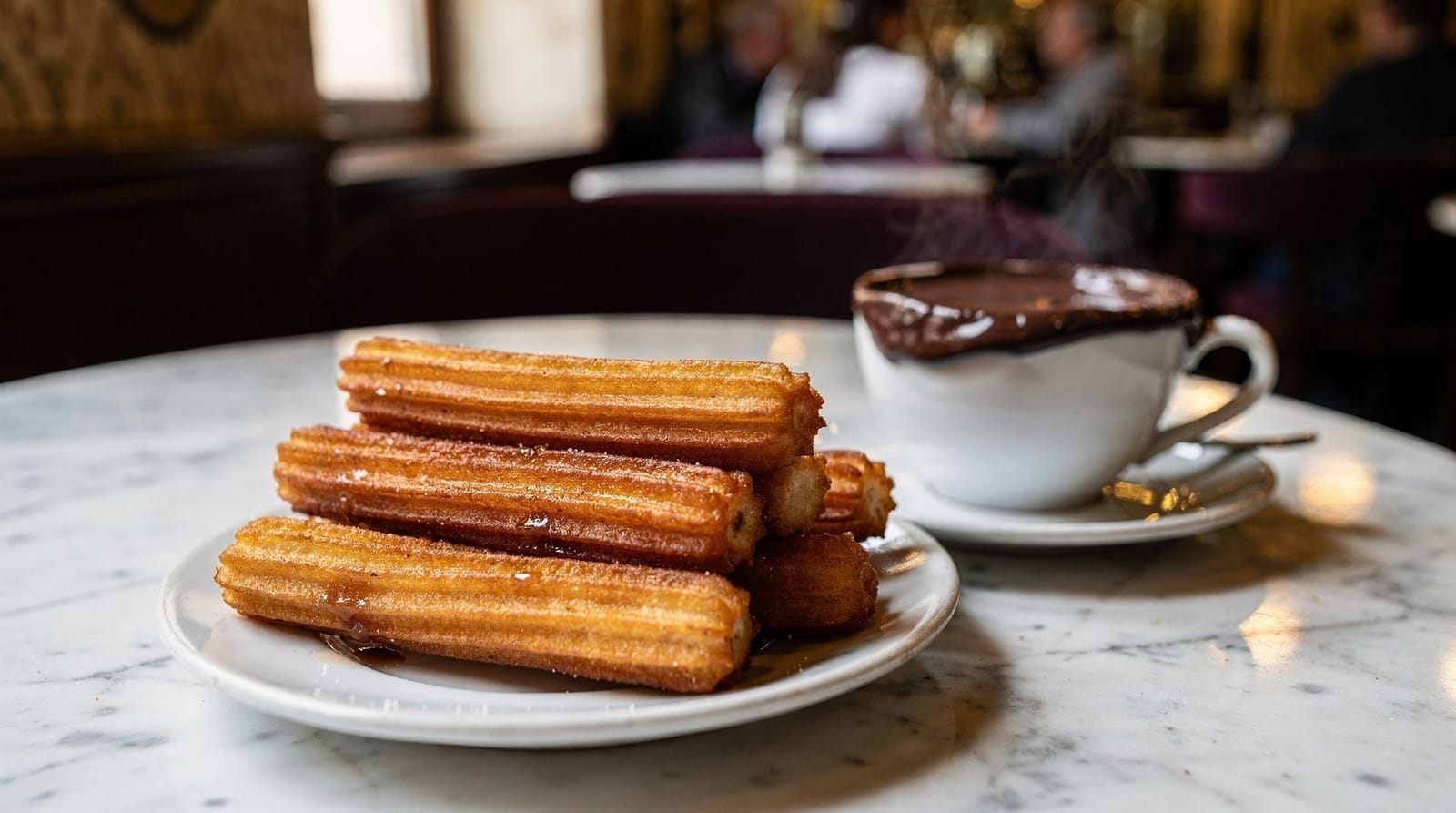
- Churros con chocolate: Breakfast or late-night, Chocolatería San Ginés.
- Patatas fritas from freidurías: Fried potato joints (freidurías) exist in working-class neighbourhoods, especially Lavapiés and Carabanchel. Not tourist-facing but excellent and cheap.
- Montaditos: Small bread-topped bites at any bar — a step up from street food but eaten at the counter.
For the full food context, see the Madrid tapas guide and the guide to eating like a local.
If you would rather not piece the street-food scene together yourself, a guided session can do it for you: a tapas and Spanish wine food tour walks you through the counter-bar culture with someone who knows which doors to try. Whether that is worth the money for you is covered in the food tour worth it guide, and the food walking tour page explains how these outings are structured.
Budget considerations
The bocadillo de calamares is one of the cheapest things you can eat in Madrid at a bar. A sandwich plus a beer: €5–7 total. As a budget lunch for one person, nothing in the city centre beats it on price. The Madrid on a budget guide covers other cheap eating strategies.
For context: the same lunch at a Plaza Mayor terrace restaurant would cost €15–20 for worse food. Two streets away, you eat better for a third of the price.
The calamares question: fresh vs frozen
The quality divide in bocadillo de calamares comes down almost entirely to the squid: fresh versus frozen.
Fresh squid (calamar fresco): Rings cut from whole squid that morning, white-fleshed, slightly sweet, with a clean sea flavour. When fried, they have a delicate crust and tender interior. The batter serves primarily to provide crunch.
Frozen squid rings (anillas de calamar congelado): Pre-cut rings from industrially processed squid, often from the Falkland Islands or Pacific sources. Slightly rubberier, less flavourful, but perfectly consistent and predictably edible.
Most bars in tourist zones use frozen rings — they are cheaper, easier to portion, and consistent. The best bars near the fishing ports of Galicia and the Basque Country use only fresh; in landlocked Madrid, the distinction depends on the bar’s supply relationships.
How to tell: At the counter, ask if it is fresco (fresh) or congelado (frozen). The staff will tell you honestly — there is no shame in the frozen product, it is the honest answer. At better bars like La Campana, the supply is directly from the Mercado Central de Pescados (Madrid’s wholesale fish market at Mercamadrid).
Calamares and Madrid’s seafood paradox
Madrid is 300 kilometres from the sea in three directions (Atlantic northwest via Galicia, Mediterranean southeast via Valencia, Atlantic southwest via Cádiz). Yet it is one of the best cities in Europe for fresh fish.
The reason is logistics: Madrid’s size and purchasing power means that the best Atlantic seafood — sardines from Galicia, percebes (barnacles) from Galicia, anchovies from Cantabria, baby eels (angulas) from the Basque Country — arrives overnight by refrigerated lorry. The city’s Mercamadrid is one of the largest fish wholesale markets in Europe after Tokyo’s Tsukiji.
The bocadillo de calamares is therefore not an anomaly — it is the everyday expression of Madrid’s paradoxical relationship with the sea: a city that consumes more fresh fish than most coastal cities, through the infrastructure of a capital rather than the geography of a port.
Seasonal availability
Unlike cocido madrileño and callos a la madrileña, the bocadillo de calamares is available year-round. There is no seasonal logic to fried calamari — the squid supply is consistent, the preparation is quick, and there is no heavy-stew aspect that makes it inappropriate in summer.
In practice, the sandwich is slightly more appealing in winter when the hot crispy texture provides comfort; in summer heat, the lighter pan con tomate or cold dishes are more natural choices. But there is no bad season for a bocadillo de calamares.
Variations and upgrades
The standard bocadillo de calamares is bread, calamari, optional condiment. Some bars have developed more elaborate versions:
With alioli: House-made garlic mayonnaise instead of plain mayonnaise. Common upgrade, adds richness. Good.
With pimiento de padrón: Some bars add a few fried pimientos de padrón (small green peppers, mostly mild) alongside the calamari in the roll. Unusual but good.
With caramelised onion: A modern bar preparation, not traditional. The sweetness contrasts with the savoury calamari. More restaurant than bar counter.
The upscale version: Madrid’s better casual restaurants sometimes serve a deconstructed or improved bocadillo de calamares — better bread, aioli from scratch, fritto misto technique instead of simple ring-and-batter. Prices €8–14 for what is essentially the same sandwich elevated. Worth trying once to understand what the potential ceiling of the dish is.
Alternatives for calamari lovers
If you want more of the calamari experience beyond the bocadillo format:
- Calamares a la romana: The same fried rings served as a tapa on a plate with lemon — how it appears at a sit-down bar or restaurant.
- Chipirones en su tinta: Small whole squid cooked in their own ink — a Basque preparation widely available in Madrid. Completely different dish, but for anyone who likes squid, extraordinary.
- Pulpo a la gallega: Galician octopus with paprika and olive oil on a wooden board. The most famous seafood tapa in Spain, different from calamares but equally iconic.
For the full seafood tapas landscape in Madrid, see the Madrid tapas guide and the mercado de San Miguel guide for where to find the best seafood in a market setting.
Fitting it into a day of Madrid eating
The bocadillo de calamares is a quick, self-contained meal rather than a course within a longer sitting, which makes it easy to slot into a day that already includes other food stops without overloading on any one thing.
As a midday anchor: Many visitors combine a mid-morning churros con chocolate stop with a bocadillo de calamares for a light lunch a few hours later — the two are complementary rather than repetitive, since one is sweet and one savoury. Both are also genuinely cheap, so together they rarely exceed €10–12 per person.
Before or after El Rastro: On a Sunday, the flea market crowd flows naturally past the Plaza Mayor arches on the way to or from La Latina tapas bars. A bocadillo de calamares at Bar La Campana works as a starter before a longer tapas crawl, or as a final bite on the walk back toward Sol.
Alongside a market visit: The sandwich pairs naturally with a browse through the covered markets. If you want to taste your way through one with some guidance, a street food visit to the San Miguel market covers the stalls, and the markets of Madrid guide shows where else to go. Neighbouring areas such as Austrias and Plaza Mayor and Sol and Gran Vía are easy to string together on foot.
Not as a replacement for a proper tapas evening: The sandwich is a snack, not a meal designed for sharing or lingering — it doesn’t substitute for the slower, social rhythm of an evening tapas crawl described in the best tapas bars guide. Treat it as a specific, time-efficient stop rather than the centrepiece of a Madrid food day.
For the evening itself, many visitors book a guided tapas outing with drinks so the bar-hopping is planned for them, leaving the bocadillo as the quick midday counterpart. If food is the main thread of your trip, the Madrid for foodies itinerary strings these stops together, and vermut in Madrid covers the pre-lunch drink that goes well with a sandwich like this. For a rough sense of where it sits among other bar food, the tourist menu traps guide explains what to avoid, and the La Latina eating guide lists the area’s counter bars.
Portion and pacing: One sandwich is a light lunch for most adults, not a full meal; pairing it with a small tapa elsewhere in the same outing (rather than a second sandwich) keeps the day varied rather than repetitive.
The social context: eating at the counter
The bocadillo de calamares is primarily a counter-eating food. Not because there are no tables at bars that serve it, but because the social model of the bocadillo is: arrive, order, eat standing, pay, leave. Ten minutes maximum. It is the most time-efficient meal available in central Madrid.
This standing-at-the-counter eating mode is also, incidentally, how most madrileños eat many of their meals. The image of long restaurant lunches is accurate for Sunday and holiday meals — but on weekday lunches, the counter bocadillo with a beer is the practical reality for a large proportion of Madrid workers. The bocadillo de calamares is embedded in this working rhythm.
The bread matters: why the barra makes or breaks the sandwich
The bread used for a bocadillo de calamares is not neutral. The ideal is a Spanish barra — a crusty white bread roll approximately 20–25 cm long, with a thin crust that shatters rather than compresses, and a soft interior that absorbs moisture from the calamari without becoming soggy immediately.
The difference between a bad barra and a good one: industrial barras (from commercial bakery chains) have a thick, tough crust and a dry, uniform interior. They are structurally adequate but add nothing. A barra from a decent bakery has a thinner, crisper crust, a slightly irregular interior, and a fresh flavour that complements rather than simply contains the calamari.
At the best bocadillo bars near Plaza Mayor, the bread is changed multiple times during the morning service. At tourist-oriented places, day-old bread is common.
How to assess the bread: Look at the crust. If it is pale beige and thick, the bread is industrial. If it is golden-brown with a few cracks on the surface, it was properly baked.
Price comparison: where to pay the least for the best
| Location | Price | Quality | Local clientele |
|---|---|---|---|
| Bar La Campana (Plaza Mayor arches) | €2.50–3.50 | Very good | Mixed local/tourist |
| Neighbourhood bar (La Latina) | €2.50–3 | Good | Primarily local |
| Tourist terrace (Plaza Mayor) | €8–14 | Poor | Primarily tourist |
| Hotel café | €6–10 | Variable | Tourist |
| Mercado de San Miguel stall | €5–7 | Good | Tourist |
The price difference between the best and worst bocadillo is €11. The quality difference is inverse to the price. This is the purest expression of Madrid’s honest eating philosophy: the best is also the cheapest.
The bocadillo in the context of Spanish sandwich culture
Spain has a sophisticated sandwich culture that is almost entirely unknown outside the country. Beyond the bocadillo de calamares:
Bocadillo de jamón ibérico: The simplest and most elemental Spanish sandwich — a crusty barra with nothing but ibérico ham. The quality of the jamón is everything.
Bocadillo de tortilla: Cold tortilla española in a barra. The most common Spanish school-lunch and worker’s lunch food. Inexpensive, filling, available everywhere.
Bocadillo de anchoas: White anchovies (boquerones en vinagre) in bread with olive oil and tomato. Very Spanish, less commonly served at tourist-facing bars.
Montadito: A small open sandwich — bread topped with various ingredients. The 100 Montaditos chain made this format internationally recognisable; better versions are found at any neighbourhood bar.
The bocadillo de calamares sits at the top of this hierarchy in terms of cultural specificity to Madrid. It is the one sandwich that could not exist anywhere else in Spain in quite the same form.
Finding your calamares: a neighbourhood-by-neighbourhood guide
Austrias (Plaza Mayor area): Bar La Campana is the essential address. Concentration of calamares bars in the arched periphery of the plaza (not the terrace restaurants).
La Latina: Several bars around Cava Baja and Calle Latoneros serve good bocadillos de calamares alongside their tapas. Less specifically focused on the calamares than the Austrias bars.
Sol–Gran Vía: Multiple options, quality variable. Stick to bars with visible counter service rather than sit-down restaurants.
Malasaña and Chueca: Casual bars across both neighbourhoods serve bocadillos, but calamares is not the centrepiece here in the same way as in the Austrias. Good quality but less the defining dish.
Markets: El Rastro (Sunday) has stalls selling bocadillo de calamares. The market version is the quintessential Sunday street food alongside the Sunday cocido ritual.
Frequently asked questions about Bocadillo de calamares
Is the bocadillo de calamares safe to eat and hygienic at street bars?
Yes — this is standard fried food at licensed, inspected bars, not informal street-cart food. The calamari is fried fresh to order at reputable places like Bar La Campana. The main quality signal is turnover: bars with a constant queue are frying continuously, which means fresh oil and fresh batches rather than food sitting around.Can I get a bocadillo de calamares to go?
Yes, most bars near Plaza Mayor sell it wrapped in paper for takeaway, which is how many locals eat it — walking or standing in the street rather than sitting down. Eat it within 15–20 minutes, since the bread turns soggy and the calamari loses its crispness quickly once out of the fryer.