Churros con chocolate in Madrid: the real guide
Madrid: Authentic Morning Churros Food
Where is the best place to eat churros con chocolate in Madrid?
Chocolatería San Ginés (Pasadizo de San Ginés 5, near Sol) has been open since 1894 and is the classic reference — open 24 hours from Thursday to Sunday, atmospheric, genuinely good. It is also always busy with tourists. For a more local experience, any neighbourhood churrería or café at 10:00 on a Sunday morning is equally good.
In brief: Churros con chocolate is a cultural institution in Madrid — eaten for breakfast on weekend mornings and as a late-night snack after clubs. Chocolatería San Ginés is the famous address, but any neighbourhood churrería produces a comparable result for less money and without the queue.
| Where | Chocolatería San Ginés (Pasadizo de San Ginés 5), or any neighbourhood churrería |
| Cost | Around €4.50–6 at San Ginés; €3.50–5 elsewhere |
| Hours | San Ginés is open 24 hours from Thursday to Sunday (Monday to Wednesday 08:00–24:00); neighbourhood spots typically morning/lunch |
| Best time | Sunday morning (10:00–13:00) or late night after clubs |
| Booking | None — take a number and wait, especially at peak times |
What churros con chocolate actually is
Churros are fried dough — piped through a star-shaped nozzle into hot oil, fried until crispy outside and slightly soft inside, then served with a cup of thick hot chocolate for dipping. The chocolate is not drinking chocolate — it is an intensely dense, almost solid suspension of cacao and sugar, designed specifically for dunking fried dough.
There are two formats:
- Churros: The thin, ridged sticks most people picture. Light, crispy, multiple in a serving.
- Porras: A thicker, single large churro — same dough, wider nozzle. Slightly doughier inside.
Most Madrid establishments serve both. The chocolate served alongside is the same regardless.
This is not a dessert in the Spanish mental model — it is a breakfast food, or a post-midnight recovery food after a night out. It is not commonly eaten at other times.
Chocolatería San Ginés: the honest assessment
Chocolatería San Ginés (Pasadizo de San Ginés 5) is located in an alley between Calle del Arenal and Calle Mayor, seconds from Puerta del Sol and a minute from Plaza Mayor. It has been open since 1894. It is open every day of the year: Monday to Wednesday 08:00–24:00, and 24 hours from Thursday to Sunday and on the eve of public holidays.
What it gets right
The recipe has not changed significantly in 130 years. The churros are properly made — fried to order (there is usually a wait for the first batch), crispy, fresh. The chocolate is the correct texture: thick enough that a churro dunked and lifted brings a coating of chocolate rather than a drip. The room is genuinely historic and atmospheric — tiled floors, marble counters, dated in a charming way.
The Thursday-to-Sunday 24-hour schedule is unusual and valuable: this is the one churros destination in Madrid where you can show up at 03:00 on those nights after a night in Malasaña and get the full experience.
What to know before going
It is almost always busy. At 10:00 on a Saturday or Sunday it will have queues; at 14:00 it will have tourists; at midnight it will have both. The service is functional rather than warm. The price (around €5–6 for a plate of churros or porras with a cup of chocolate) is fair but not cheap by neighbourhood standards.
How to order: Decide between churros (thinner, multiple pieces, €4.50) or porras (thick, single, €4.80). Ask for chocolate (€2.50, the dipping version). Take a number and wait. Seating is available inside and in the alley outside when weather permits.
Where locals actually go for churros
If you are not attached to the San Ginés experience, neighbourhood churrerías produce churros of identical quality for marginally less money without the tourist queue. This is also how most madrileños eat churros — at their local café rather than at the famous address.
What to look for: A café or bar with a churrería sign or visible churro-making equipment. Madrid has hundreds. The best experience is a Sunday morning (10:00–13:00), when neighbourhood cafés fill with families post-church or post-lie-in, and the churros come out fresh every 20 minutes.
Some dependable options:
- Churrería El Moro (Glorieta de Embajadores 10, Lavapiés) — neighbourhood institution, reliable quality, no tourist attention.
- Cafetería Brasería (Malasaña) — any of the older local cafés on Calle del Espíritu Santo or surrounding streets on Sunday morning.
- Bar Santander (Calle de Augusto Figueroa, Chueca) — old-school café serving churros to the same clientele for decades.
If you would rather not hunt for the right café yourself, a guided morning of authentic churros and local food takes the guesswork out of choosing. Otherwise, the neighbourhoods around La Latina, Lavapiés and Chueca are easy places to wander into a café on your own, and eating like a local more generally follows the same logic: skip the squares, walk two streets further.
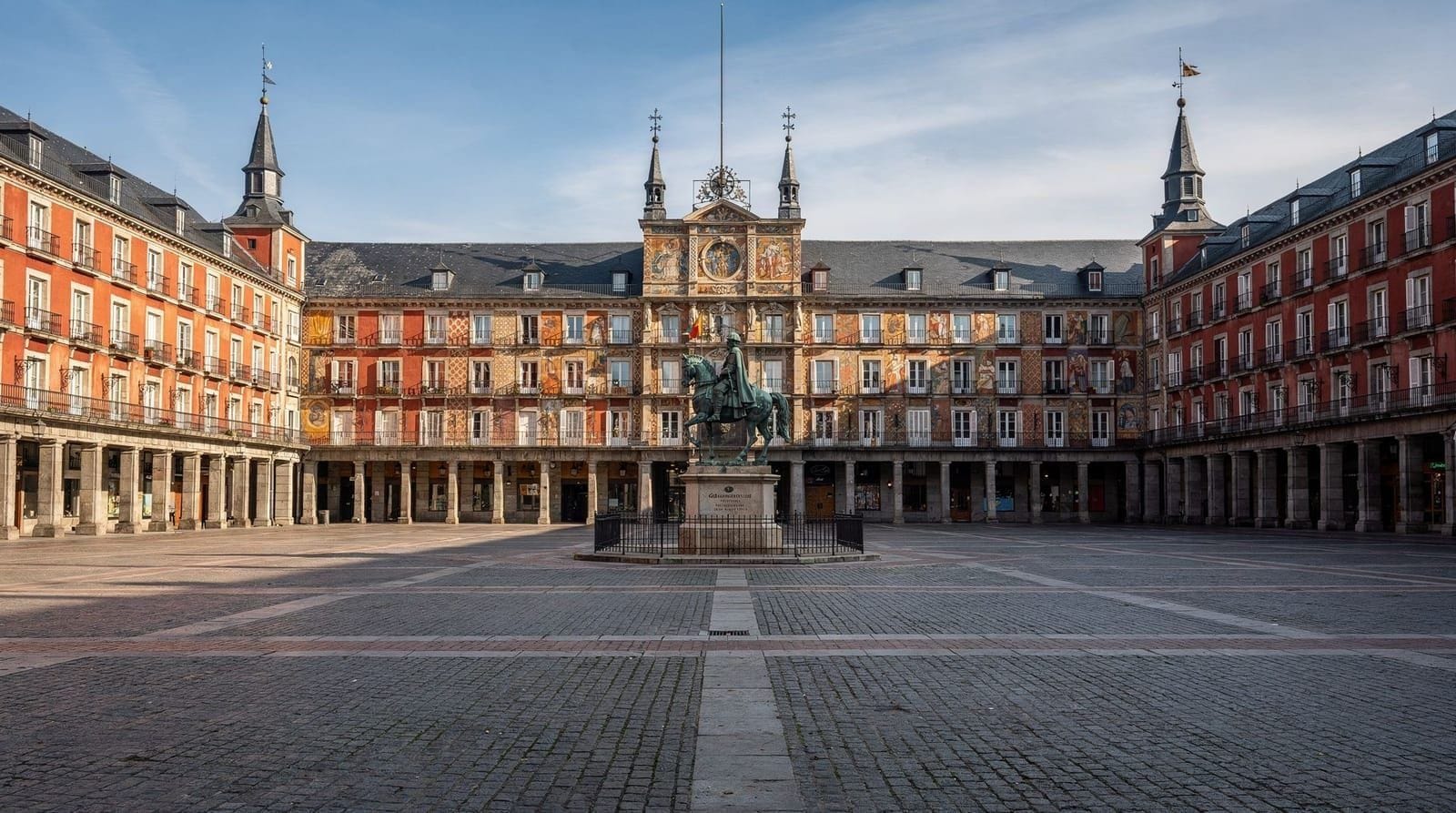
San Ginés also fits naturally into a wider walk through the old centre: Plaza Mayor and the Puerta del Sol are right beside it, and the late-night Madrid guide covers what else is open when the churros run out of excuses.
When to eat churros con chocolate
Sunday morning breakfast
The canonical time. Families, couples, and hungover twenty-somethings converge on churrerías across the city between 10:00 and 13:00. This is a social ritual as much as a meal. If you are doing the El Rastro flea market visit on Sunday (it runs until 15:00), stop for churros at a La Latina café before or after.
After a night out
San Ginés’s round-the-clock weekend opening exists precisely for this reason. Madrid’s nightlife (see the Madrid nightlife guide) runs until 05:00–07:00 on weekends. The tradition of ending a night out with churros con chocolate at San Ginés is documented at least since the 1980s. It still happens. At 04:00 on a Saturday, the clientele is exclusively people who have come from nightclubs in Malasaña or Chueca.
Not at dinner
Unlike some sweet fried foods, churros are almost never eaten as a dessert after dinner in Spain. If you order them after a dinner meal at a restaurant, you will get them — but you will also get a slightly puzzled look.
Making churros at home
The home churros kit exists (a star-tipped piping bag and a deep pan), and many Madrid visitors try to replicate the experience at home. The main challenge is the chocolate: achieving the correct thickness requires specific proportions of cacao powder, cornstarch, milk, and sugar, and patience. The churros themselves are straightforward once you have the oil temperature right.
Proper Spanish cacao powder (Valor brand is the standard) produces the closest result. A half-hour cooking class often demonstrates the technique alongside other Spanish dishes.
Practical information
Price range: €4.50–6 for a serving of churros or porras plus chocolate at San Ginés; €3.50–5 at neighbourhood places.
Allergens: Churros contain wheat, egg, and are fried in vegetable oil. The chocolate is dairy-based. Gluten-free versions are not typically available at traditional establishments.
Queues at San Ginés: At peak times (weekend mornings 09:00–13:00, late night after 01:00) expect to wait 10–20 minutes for a seat. The takeaway window moves faster if you just want churros to eat standing outside in the alley.
Getting there: San Ginés is a five-minute walk from Puerta del Sol metro station (Lines 1, 2, 3) or Sol–Gran Vía. The alley (Pasadizo de San Ginés) runs between Calle del Arenal and Calle Mayor — look for the illuminated sign.
The history of churros in Spain
The origin of churros is contested, as it is with most popular foods. Several theories exist:
The shepherds’ theory: Portuguese shepherds in the interior developed a fried dough that could be prepared over an open fire using only a clay nozzle — no oven required. The shape of the churro mimics the shape of a Churra sheep’s horns. This explanation is the most widely repeated in Spain, though its provenance is uncertain.
The Chinese origin theory: Some food historians link churros to the Chinese fried dough stick (youtiao), brought to the Iberian Peninsula via Portuguese trade routes in the 16th century. The simplicity of the preparation and the use of a nozzle supports this theory.
The monastery theory: Several Spanish convents claim to have developed churros as a food that could be prepared during Lenten fasting — no meat, simple ingredients. This is plausible given the documented role of convents in Spanish pastry tradition (see also the rosquillas and polvorones sold at Madrid’s El Rastro).
What is historically documented: churros appear in 18th-century Spanish texts as street food eaten by the working poor. The chocolate connection developed through the same period — Spanish chocolate (brought from Mexico in the 16th century) was a luxury in the 16th and 17th centuries, democratised by the 18th century into the thick hot chocolate still served at San Ginés.
The combination of fried dough and thick chocolate is specifically Spanish and specifically Madrileño in its cultural significance, even if the individual elements have wider origins.
The chocolate: what makes it different
The chocolate served with churros in Madrid is not hot chocolate in the northern European or American sense. It is something fundamentally different:
Spanish thick chocolate (chocolate a la taza) is made by cooking cacao powder, sugar, and sometimes cornstarch with milk until it reaches a consistency that is half-way between a liquid and a custard. When you dip a churro and lift it, the chocolate clings — it does not drip freely. The flavour is intensely cacao-forward with minimal sweetness compared to commercial hot chocolate.
The best versions use high-cacao content powder (minimum 70% cacao before other additions). Valor is the standard brand in Spain — dark, slightly bitter, available in every supermarket. For genuine connoisseurs, single-origin cacao versions are served at the more serious chocolate establishments.
What it is not:
- It is not ganache (which requires cream)
- It is not drinking chocolate (which is thinner and sweeter)
- It is not the packet “drinking chocolate” sold in northern European supermarkets
The texture and ritual — dipping the churro, letting the chocolate coat it, lifting without losing the coating — is the point of the dish as a physical experience.
Churros with coffee: the Spanish combination
The third option alongside the chocolate is coffee. Many madrileños have churros with their morning café con leche rather than with hot chocolate — a more practical weekday choice that does not require the intensity of a full chocolate cup.
This is the fastest, cheapest churro experience: a café bar, churros from the morning batch, a café con leche alongside. Total cost: €3–4. The chocolate version is more special-occasion, more weekend, more of a deliberate indulgence.
Order: “Un café con leche y unos churros, por favor.” (A coffee with milk and some churros, please.)
Madrid churros vs the rest of Spain
Churros con chocolate is eaten across Spain, but the Madrid version and ritual differ from other regions in a few specific ways worth knowing if you’ve had churros elsewhere:
Andalusia: In cities like Seville and Granada, churros are commonly eaten with coffee rather than thick chocolate, and the churros themselves are often thinner and less commonly paired with the dense, spoon-thick chocolate that defines the Madrid style. The Andalusian version leans more toward an everyday breakfast item than a specific late-night ritual.
Catalonia: Barcelona’s version — often called “xurros” locally — follows a broadly similar format to Madrid’s, but the late-night post-clubbing churros tradition is less institutionalised than Madrid’s Chocolatería San Ginés culture, which has the specific historical weight of a single, continuously-operating 1894 address.
Valencia and the “farton”: Valencia has its own thick-chocolate-adjacent tradition centred on horchata (a chufa-nut drink) paired with fartons (a soft, sugar-glazed pastry) rather than churros — a genuinely different regional sweet-breakfast tradition that visitors sometimes confuse with churros culture.
What makes Madrid’s version distinct: The specific combination of very thick, cacao-forward chocolate (rather than a thinner drinking chocolate), the round-the-clock institution of San Ginés, and the strong late-night-after-clubbing association are what set Madrid’s churros culture apart from the rest of the country — even though the fried dough itself is broadly similar nationwide.
Churros events and festivals
Madrid does not have a dedicated churros festival, but churros appear prominently at the city’s street celebrations:
San Isidro (May 15): Madrid’s patron saint festival. Churros stalls proliferate around the Casa de Campo and the areas around the Pradera de San Isidro. Eating churros con chocolate while watching a chotis dance is as Madrileño as it gets.
Feria de Otoño (Autumn Fair): Various neighbourhood autumn fairs across the city in September and October include churros stalls as standard equipment.
Nochevieja (New Year’s Eve): Many Madrid families end their New Year celebrations at a churrería. The Puerta del Sol countdown (see the Sol Gran Vía guide) is followed by churros in the nearby streets — San Ginés is packed until dawn.
Cooking classes and demonstrations
Many Madrid cooking classes include a churros and chocolate segment as part of a broader Spanish food experience. This is genuinely useful — making churros requires practice to get the oil temperature right and the piping pressure correct. A class gives you the technique and a recipe you can replicate.
The classes that include churros alongside paella and tortilla española give the best overview of Madrid’s domestic food culture. See the food tour guide for how to evaluate cooking experiences.
A paella, sangria and churros-making workshop in Madrid covers the technique hands-on alongside two other Spanish classics.
Churros in the context of Madrid’s food scene
Churros con chocolate sits alongside cocido madrileño, bocadillo de calamares, and vermut as one of the four genuinely Madrid-specific foods. Unlike the others, churros require no explanation or acquired taste — every visitor immediately understands fried dough with thick chocolate. It is one of the most accessible entries into Madrid’s food culture.
That accessibility is also why it appears on every tourist itinerary and why San Ginés is perpetually busy. For the record: the queue is worth joining once for the atmosphere. But if you go back a second time, find your local churrería instead.
The full Madrid food landscape — from tapas bars to the mercado de San Miguel to Michelin-starred restaurants — is covered in the Madrid tapas guide.
Frequently asked questions about churros in Madrid
Is there a difference between churros and porras?
Yes. Churros are thin (about 1 cm diameter), ridged from the star nozzle, and come as multiple pieces in a serving. Porras are 3–4 cm in diameter, a single thick spiral or stick, doughier in the centre. Both are good; the porra is more filling and better for intensive chocolate-dunking because the wide surface catches more.
Are churros only for breakfast?
Officially, no — you can order them any time a churrería is open. Practically, they are at their best fresh from the fryer in the morning, when the oil has been properly heated and the dough is made that day. Evening churros at San Ginés are perfectly good; midday churros are the same as morning ones. The cultural associations (breakfast, late-night post-club) are strong but not exclusive.
How many churros come in a serving?
At San Ginés, a plate of churros contains 6–8 pieces. A single porra is one large piece. The chocolate cup is separate and often the same size regardless of how many churros you order. Two people sharing one plate of churros and two cups of chocolate is the practical order.
Can I take churros away?
Yes. San Ginés and most churrerías have takeaway service — a paper cone of churros, chocolate in a cup with a lid. Useful for eating in the alley outside or walking to a nearby plaza. The churros deteriorate quickly once out of the oil (15–20 minutes), so eat immediately.
What other traditional Spanish pastries should I try in Madrid?
Madrid’s pastry culture extends beyond churros: rosquillas (ring-shaped pastries, associated with San Isidro, made in several varieties including “listas” with icing and “tontas” plain), bartolillos (triangular fried pastries with custard filling, specifically Madrileño and rare), pestiños (honey-glazed fried dough, Andalusian origin but widespread in Madrid), and miguelitos from La Roda (puff pastry with cream, sold at many confiterías). Most are available at traditional pastelerías and convents around the city — La Mallorquina on Puerta del Sol is the most central and the most reliable source for traditional Madrid sweets.