Are food tours in Madrid worth it? An honest assessment
Madrid: Food Tour Tapas Spanish Wine
Are food tours in Madrid worth it?
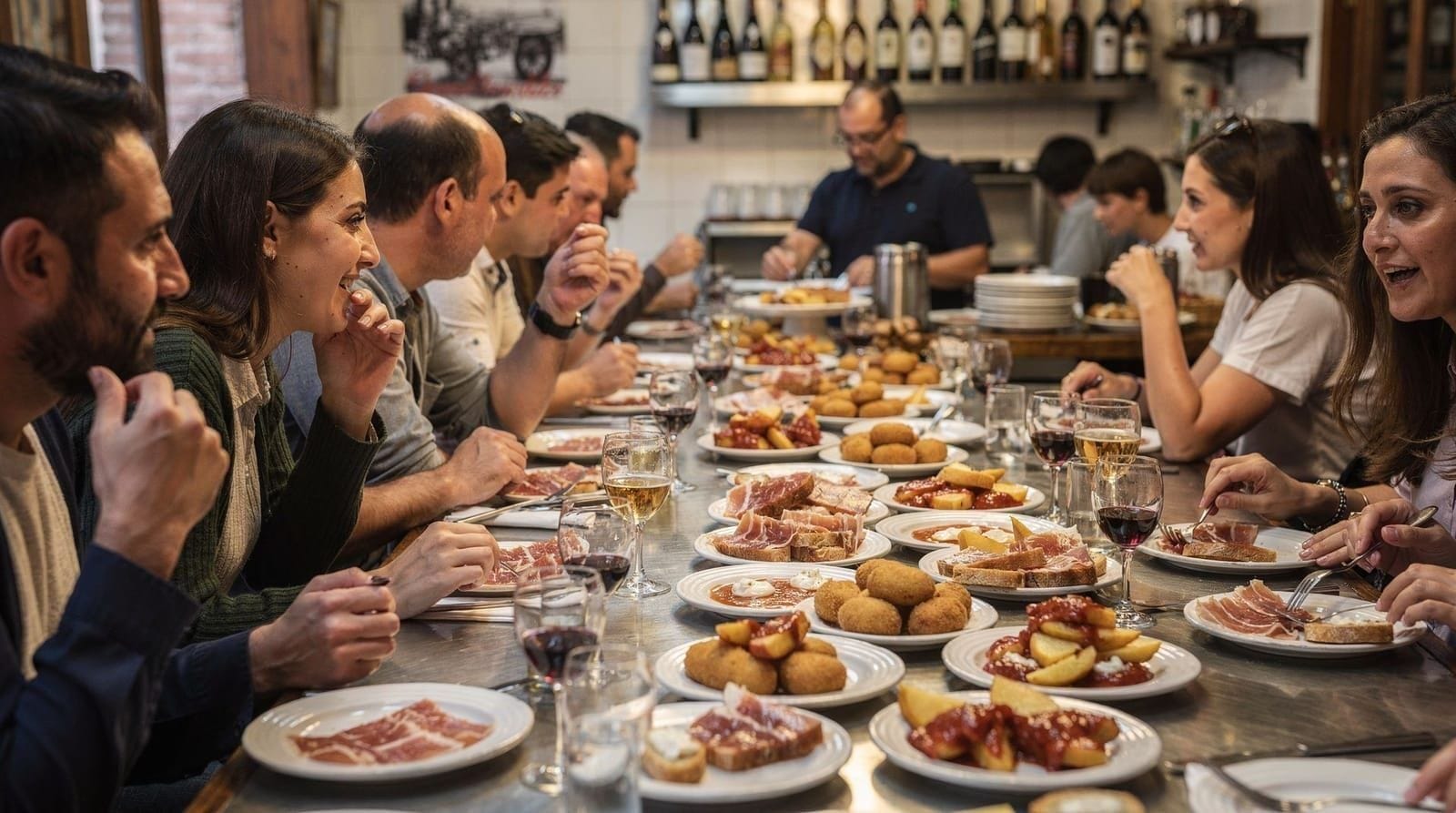
For first-time visitors who want to understand Madrid's food geography quickly, yes. A good food tour (€60–85) gives context, takes you to neighbourhood bars you would not find alone, and explains what you are eating. A bad food tour takes you to tourist-facing restaurants that pay commissions. The difference is knowing which tour to book.
In brief: Madrid food tours range from excellent to mediocre. The best ones are run by people who live in the city, take small groups to real neighbourhood bars, and give genuine cultural context. The worst take you to commission-paying restaurants around Plaza Mayor. Price is not a reliable quality indicator — a €75 tour can be worse than a €55 one.
| Cost | €50–95 per person, 3–4 hours |
| Includes | 8–12 tastings, 3–5 drinks typically |
| Best for | First-time visitors, solo travellers, limited time |
| Skip if | 5+ days in Madrid, already know the tapas culture |
| Booking | 48–72 hours ahead recommended |
Who should book a food tour in Madrid
A food tour makes sense in specific circumstances:
Book a food tour if:
- It is your first visit to Madrid and you have limited time (2–3 days) to learn the city’s food geography on your own
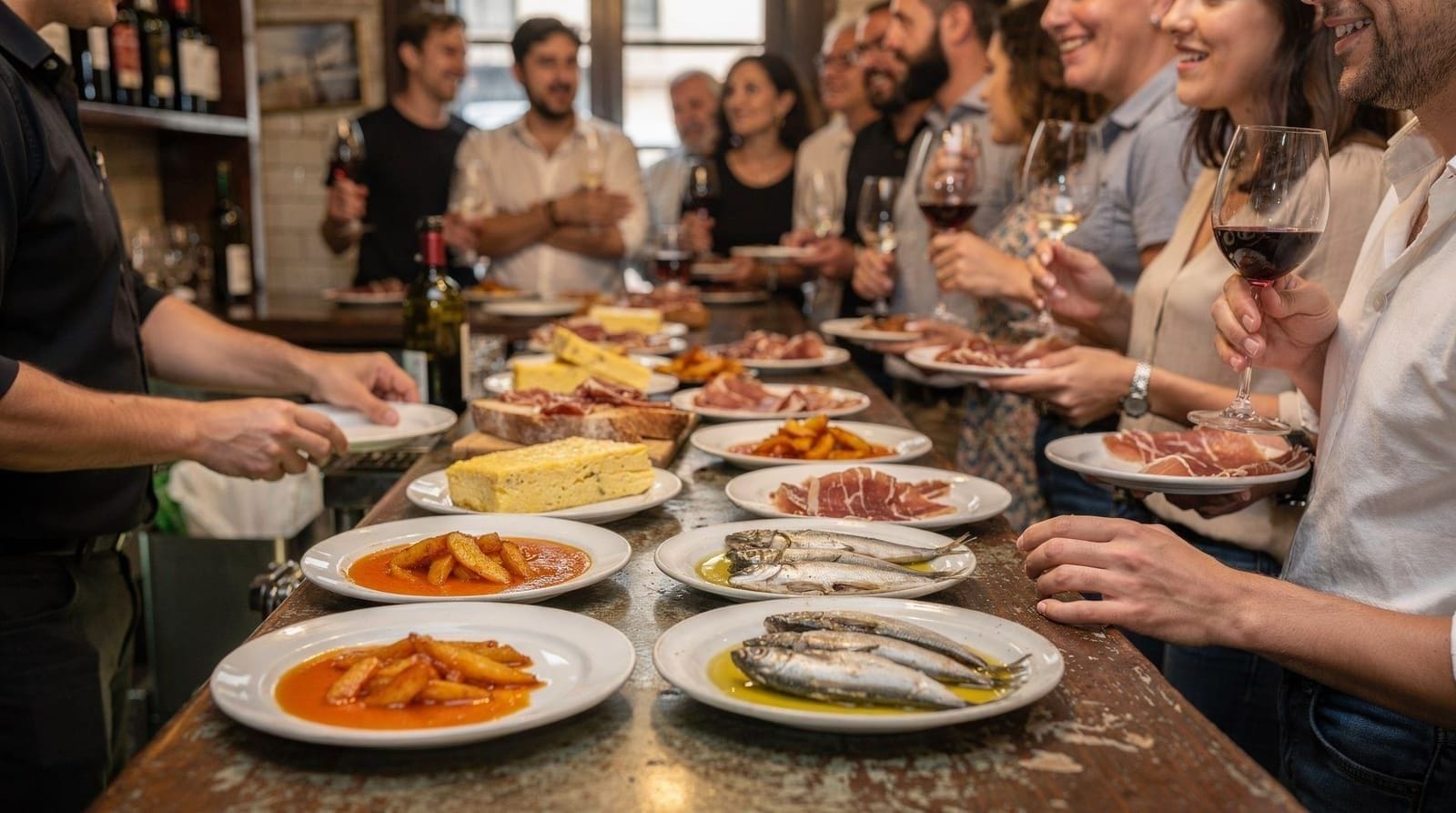
- You want to understand what you are eating, not just eat it — the context of tapas culture, jamón quality, regional wine differences
- You are travelling alone and want a structured social experience
- You want to be taken to bars you would not find searching online (the genuinely local places)
Skip the food tour if:
- You have 5+ days in Madrid and can do your own research
- You are an experienced traveller in Spain who knows the tapas culture
- You are primarily interested in restaurant dining rather than the bar crawl format
- You are travelling with someone who already knows Madrid
What separates a good food tour from a bad one
The guide matters more than the itinerary
A food tour lives or dies on the guide. A local who grew up in Madrid and genuinely loves the food culture will give you a completely different experience from a freelance guide who learned the route from a briefing document and takes groups through it mechanically.
Signs of a good guide:
- Knows the bar owners by name and is greeted as a regular
- Explains why each stop exists — history, neighbourhood context, ingredients
- Has an opinion about what to order and why
- Is willing to deviate from the script if something better is available
- Does not rush you out of each stop on a strict schedule
Signs of a mediocre guide:
- Reads from notes or a phone
- Does not interact with bar staff (because they are not regulars)
- Every stop is a tourist-friendly bar, not a neighbourhood institution
- The timing is rigid and you feel herded between stops
The stops matter too
The best food tours in Madrid include:
- At least 3–4 genuinely local bars or tabernas away from the tourist circuit
- At least one stop in La Latina or Malasaña (not just Sol and Plaza Mayor)
- Wine alongside food (not just beer)
- A jamón explanation and tasting
- Seasonal and regional context
Red flags in tour descriptions:
- “Includes visit to Plaza Mayor” as a food stop (Plaza Mayor restaurants are tourist traps)
- No neighbourhood mentioned beyond “central Madrid”
- Group sizes over 12 (bar visits with 15 people are uncomfortable at the counter)
- No mention of which specific bars are included
The better tours to consider
Non-touristy tapas and wine tours
A non-touristy tapas tour with 10 tapas and 4 drinks is explicit in its positioning — the name signals the right intent. Ten tapas across multiple stops with proper drinks covers significant ground.
A tapas and Spanish wine food tour covers the cultural context of both tapas and wine regions — good for someone who wants to understand the drink culture alongside the food.
Market-focused tours
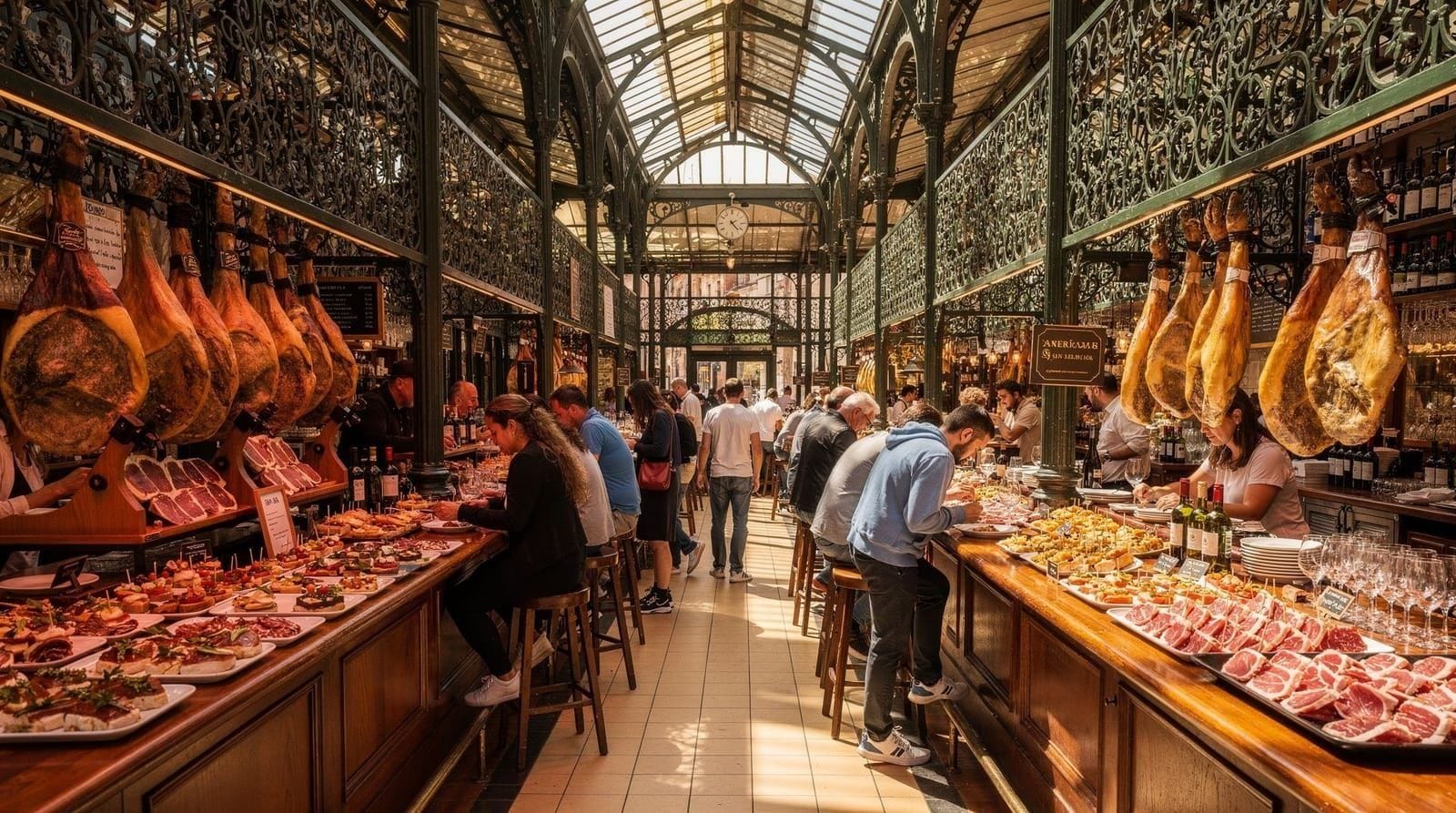
A food tour combining markets and tapas bars moves between the Mercado de San Miguel and neighbourhood tapas bars — useful for understanding the relationship between food sourcing and cooking.
Tasting-focused tours
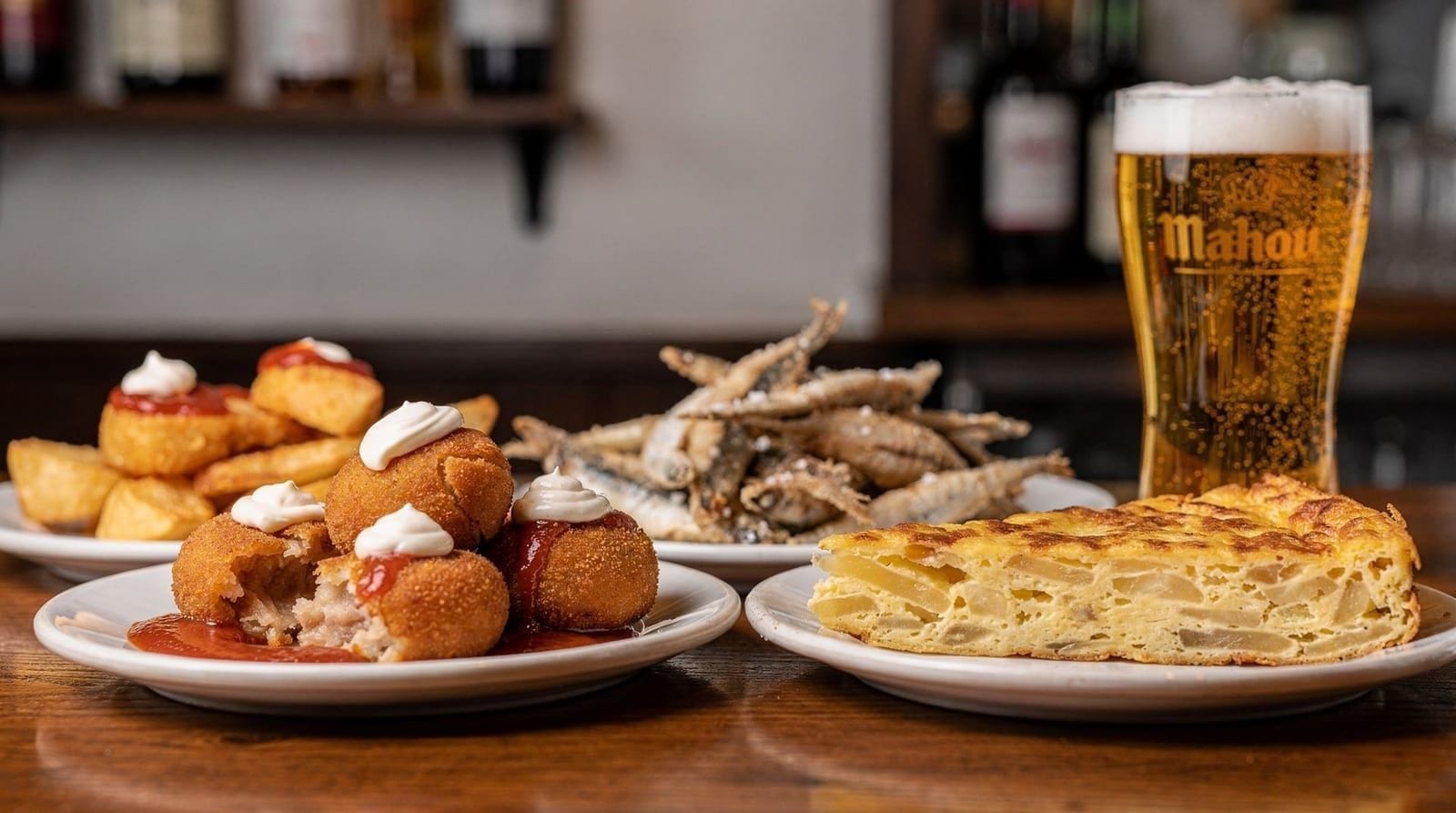
A food tour with 10 tastings and tortilla specifically includes the tortilla española among its tasting components — good for building an understanding of a specific dish’s variations.
Price and value
Madrid food tours typically run €50–95 per person for a 3–4 hour experience including 8–12 food tastings and 3–5 drinks. At the midrange (€65–75) you are getting:
- Approximately €25–35 worth of food and drink at market prices
- A 3-hour guided experience
- The guide’s knowledge and neighbourhood access
The premium over doing the same independently (€25–35 in food and drinks) is €30–50 per person. Whether this is worth it depends on your time constraints and how much you want structured context versus independent discovery.
The honest calculation: If you would otherwise eat at tourist restaurants because you do not know better, a €70 food tour saves you money. If you can navigate the city independently, you will eat as well and spend €30 less.
Alternatives to a paid food tour
If a food tour is not the right choice, the Madrid tapas guide and the best tapas bars guide give everything you need to plan a self-guided tapas crawl. The La Latina guide and Malasaña guide cover the two main food neighbourhoods in detail.
For a more structured approach to eating in Madrid without a group tour, a private guide is an option — costlier (€150–250 for 3 hours) but tailored precisely to your interests and schedule.
Timing and logistics
Most Madrid food tours depart at 11:30–13:00 (for a midday tapas experience) or 19:00–20:00 (for an evening crawl). Both formats are good; the midday version aligns with the traditional Spanish meal rhythm and gives you the afternoon free. The evening version overlaps with the local aperitivo hour and lets you finish the night at a bar you have now been introduced to.
Book 48–72 hours in advance for popular tours. Same-day availability exists but limits your options. Tours with very small groups (4–8) are preferable to large ones (12+) for the bar-counter experience.
What you will not get from a food tour
A food tour is an introduction, not a comprehensive education. After 3 hours and 10 stops, you will know the format and some neighbourhood geography. You will not have eaten at the best restaurant in Madrid or understood the full complexity of Spanish wine. Use the tour as a starting point, then explore independently for the rest of your trip.
The eat like a local guide covers the practical habits — timing, ordering, tipping, menu-reading — that complement the food tour experience.
The cooking class alternative
If you want deeper engagement with Madrid’s food than a tour provides, a cooking class is the next step. Classes in Madrid typically cover:
- Paella (the tourist staple, present in every class)
- Tortilla española (the most technically interesting of the standard dishes)
- Gazpacho or salmorejo (cold tomato soups, excellent for summer)
- Sangria or Spanish cocktails
The better classes take you to a local market first to source ingredients — this is the most useful component for understanding Spanish food culture, not just the cooking technique.
See the paella cooking class guide and the market sourcing section of the Mercado de San Miguel guide for the food sourcing context.
Food tours by neighbourhood: which to prioritise
La Latina tours
The most popular food tour geography — La Latina’s concentration of traditional bars makes it the easiest neighbourhood to build a tour around. Most Madrid food tours use La Latina as their primary location or starting point. Good for: tapas culture, jamón, traditional Castilian food. Less good for: modern Spanish cooking, natural wine, international influences.
Malasaña tours
Less common but more interesting for visitors who want to understand the younger, more creative side of Madrid’s food scene. Natural wine bars, new-generation tapas, coffee culture. More niche market.
Market-focused tours
Tours built around the Mercado de San Miguel (central, beautiful, touristy) or the Mercado de Antón Martín (Lavapiés, more local) are good for understanding where Madrid’s food comes from. The San Miguel tour is more accessible; the Antón Martín tour is more authentic.
Night tours
Several operators offer evening tapas crawls that start after 20:00 and end at midnight or later. These align with the local evening schedule better than afternoon tours. The Madrid nightlife guide covers the evening context.
What to eat on a good food tour
A properly designed Madrid food tour should include:
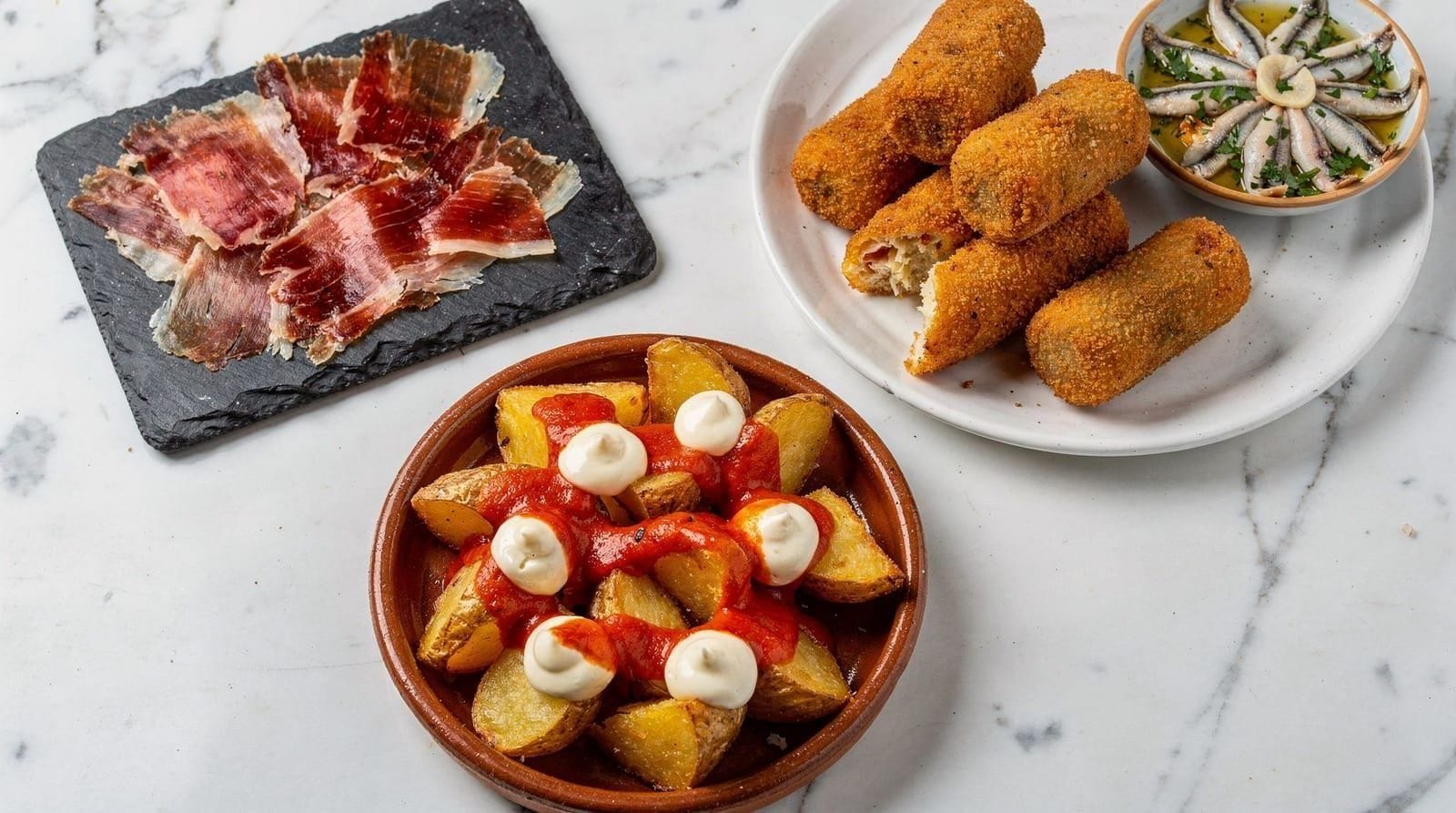
- Jamón ibérico de bellota — with an explanation of the difference between quality grades
- Tortilla española — ideally at a bar where they make it to order and it is served slightly wet in the centre
- Croquetas — ham or bacalao; the benchmark of the kitchen’s quality
- Something seasonal — callos in winter, gazpacho in summer, seasonal vegetables from the region
- Wine — at minimum a glass of Rioja and a glass of something local; ideally a sherry tasting
- Vermouth — at a traditional bodega, explained in cultural context
If your food tour does not include at least four of these six, the tour is either too short or too tourist-facing.
Red flags: the bad food tour
Red flags to check before booking:
- Menu mentions “paella” on a tapas tour (paella is Valencian, not Madrileño; its presence on a Madrid tour signals tourist-orientation)
- No specific bar names mentioned in the tour description (a good tour is transparent about where it goes)
- “Optional” drink upgrade for an extra cost (on a proper food tour, drinks are included)
- More than 15 people in the group (the tour becomes a procession rather than a bar visit)
- Meeting point is directly at Puerta del Sol or Plaza Mayor (the tour is in tourist territory from the start)
- No mention of what makes the stops different from tourist-facing places
Green flags:
- Small group (maximum 10–12)
- Named specific bars in the tour description
- Reviews mention that locals were present at the stops
- The guide lives in Madrid (not just “speaks Spanish”)
Practical booking tips
Book 48–72 hours in advance for the best available tours. Many good tours sell out on popular days (Saturday, especially). Same-day booking is sometimes possible but limits choice.
Morning vs evening: Morning tours (11:30–14:30) cover the pre-lunch tapas culture and vermut ritual, which is authentically Spanish. Evening tours (19:30–22:30) cover the aperitivo and early night culture. Both are good; the morning tour aligns better with the Spanish social rhythm.
Languages: Most good Madrid food tours offer tours in both English and Spanish. The English-language tours are not lower quality — the guides who lead English tours are often bilingual madrileños who understand both audiences.
Dietary requirements: Communicate in advance. A food tour centred on jamón and seafood is challenging for vegans; most operators can accommodate vegetarians if warned ahead.
Solo travellers: Food tours are excellent for solo visitors — structured social interaction, clear format, new acquaintances guaranteed. Several operators offer dedicated solo-traveller slots or are accustomed to integrating solo visitors into group dynamics.
The self-guided equivalent: building your own food tour
For visitors who prefer to explore independently but want the structure of a tour:
Morning (11:00–14:00):
- Start at Mercado de la Cebada (La Latina’s working market) — browse the stalls, understand what is in season
- Walk to Calle de Latoneros for Casa Revuelta — fried bacalao
- Continue to Cava Baja — one stop at El Tempranillo for a glass of wine
- End at Almendro 13 for huevos rotos
Budget for two: €40–50 including drinks. This is the equivalent of a €60+ food tour, self-guided.
The difference from a paid tour: you will not have the explanations, the cultural context, or the access to bars that the guide knows personally. For a first visit to Madrid, the paid tour gives context the self-guided version lacks. For a second visit, the self-guided version is better.
Cooking classes vs food tours: which to choose
Choose a food tour if:
- You want to understand Madrid’s food culture in context
- You prefer eating to cooking
- You have limited time (3 hours of eating vs a full day of cooking)
- You want to discover bars you can return to independently
Choose a cooking class if:
- You want to take skills home
- You enjoy the process of cooking as much as eating
- You want a specific dish (paella, tortilla española, churros)
- You prefer a structured learning environment
The two experiences are complementary rather than competing. For a 5+ day trip, both make sense — the food tour at the beginning for orientation, the cooking class at the end to consolidate what you have learned.
After the food tour: using what you learned
The value of a food tour extends beyond the three hours of the tour itself. A good guide leaves you with:
- Specific bar recommendations you can return to independently
- An understanding of Madrid’s meal schedule so you do not eat at the wrong time
- Wine knowledge — which regions, which grape varieties, what to order
- A cultural framework for understanding what you eat for the rest of your trip
The test: If you go back to one of the tour’s bars independently during your stay, the tour was worth it. If you have no desire to return to any of the stops, either the tour was not well-chosen or the bars were not interesting.
A useful post-tour exercise: revisit one of the bars from the tour on your last evening in Madrid, this time on your own schedule, without a guide. The difference in experience — you know what to order, you understand the context, you can point at the specific tapa you tried on the tour — demonstrates what the tour gave you.
For the complete food geography, the Madrid tapas guide and the best tapas bars guide remain the essential reference documents.
Food tours for specific dietary needs
Vegetarian travellers can generally be accommodated on most Madrid food tours with advance notice — operators will substitute Spanish tortilla, manchego cheese, pisto (Spanish ratatouille), and vegetable-based tapas for the jamón and seafood-heavy default menu. The substitution rarely feels like an afterthought on well-run tours, since Spanish cuisine has strong vegetarian dishes even if the tapas-bar default skews toward cured meat.
Vegan and gluten-free travellers face more limitations — Spanish tapas culture relies heavily on wheat-based bread, fried batter, and dairy, so confirm specifics with the operator before booking rather than assuming a generic “dietary requirements” checkbox will be handled well. If dietary restrictions are significant, a private guide (see below) who can adapt the entire route in advance is often the more reliable option than a fixed-group tour trying to substitute on the fly.
Group size and the counter-service reality
Madrid’s traditional tapas bars are built around standing-room counters, not seated dining — this shapes what a “good” group size actually means for a food tour. A group of 6–10 people can fit comfortably at most counters and order collectively without disrupting other patrons. Beyond 12, the group starts to dominate the physical space of a small neighbourhood bar, changing the atmosphere for everyone else there and often prompting the bar to seat the tour group separately or outside — which defeats the purpose of experiencing an authentic counter crowd. When comparing tour options, treat the advertised maximum group size as one of the more reliable quality signals, alongside the specificity of the itinerary description.
Top experiences
Bookable activities with verified prices and instant confirmation on GetYourGuide.