Tourist traps in Madrid: what to avoid and where to go instead
Madrid: Essential Flamenco Drink Artist Talk
What are the biggest tourist traps in Madrid?
The main ones: restaurants on and immediately around Plaza Mayor (charging €18–25 for a bocadillo de calamares that costs €3–4 one street away); the cluster of 'tourist menu' restaurants on Calle Victoria and around Puerta del Sol (often €15–22 for a fixed menu of frozen food); overpriced paella in the centre (real paella is a Valencian dish — Madrileños eat cocido and callos); and Mercado San Miguel (beautiful, expensive, designed for tourists rather than locals). None of these will ruin your trip, but all of them will cost you 2–3x what the equivalent quality costs a few streets away.
How tourist traps work in Madrid
Madrid is not a particularly aggressive tourist-trap city compared to Rome, Barcelona, or Prague. The scams are mostly passive — places that charge high prices for mediocre experiences and rely on foot traffic from visitors who haven’t researched alternatives. Nobody is going to force you into a bad restaurant. But the price differential between tourist-area eating and local-area eating is significant: often 2–3x for equivalent quality.
The pattern is consistent: the closer you are to the main tourist sightseeing circuit (Sol → Gran Vía → Plaza Mayor → Royal Palace → Prado), the worse the price-to-quality ratio. Move two or three streets off this circuit and the city operates at normal prices with normal quality.
| Worst zone | Plaza Mayor arcades, Sol side streets, Prado approach |
| Typical markup | Around 100–200% versus a neighbourhood equivalent |
| Biggest single trap | Plaza Mayor restaurants, especially for bocadillo de calamares |
| Easy fix | Walk two to three streets off the sightseeing circuit |
| Worth doing anyway | Looking at Plaza Mayor and Mercado San Miguel — just don’t eat a full meal there |
The Plaza Mayor restaurant problem
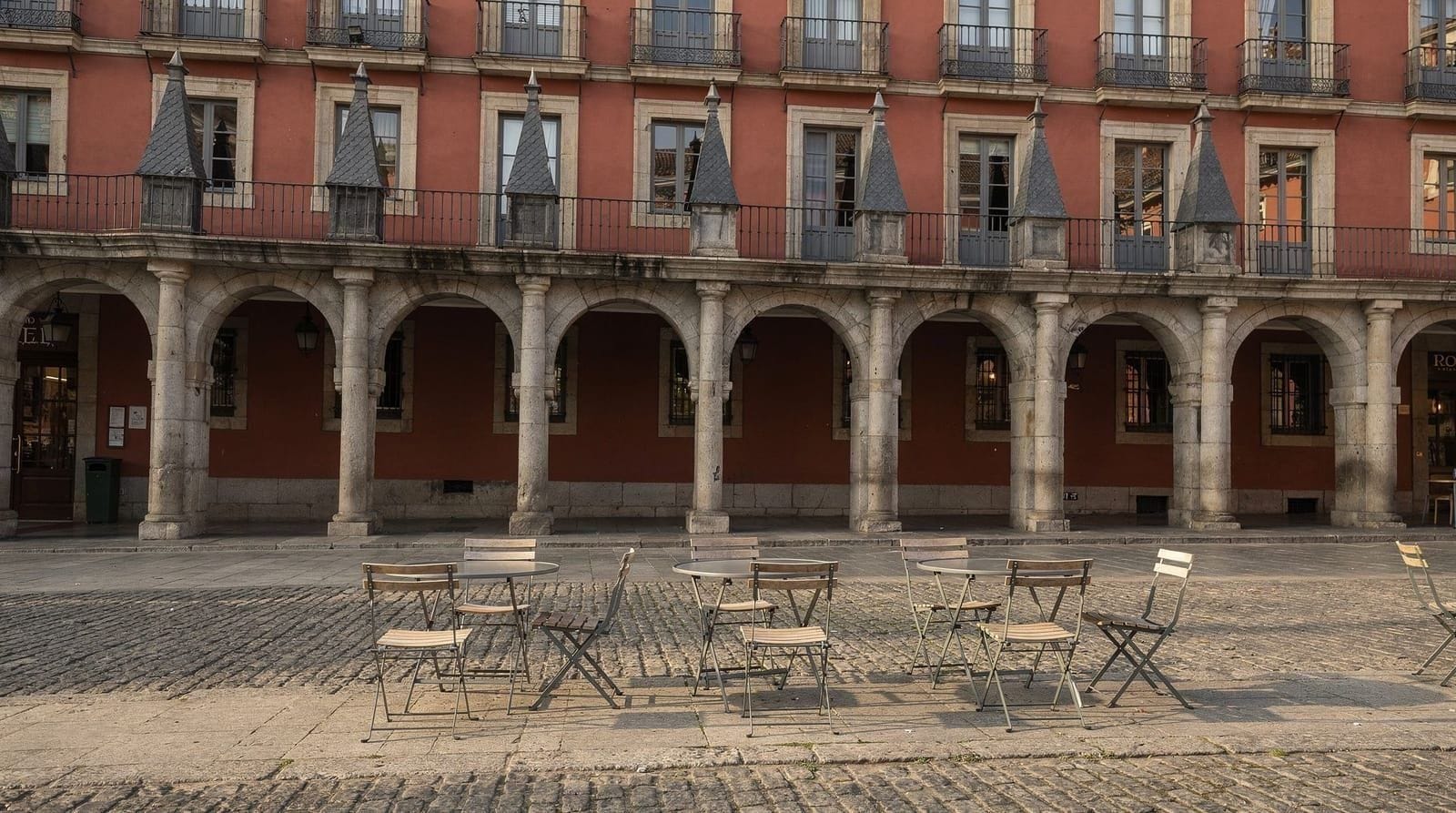
Plaza Mayor is Madrid’s most architecturally impressive square — a 17th-century Baroque enclosure, arcaded on all sides, with a equestrian statue at the centre. It is worth visiting, spending time in, and photographing. It is not worth eating at.
The restaurants on the arcades and immediately surrounding streets have a well-documented reputation for:
- Prices 100–200% above neighbourhood equivalents for the same dishes
- Aggressive staff stationed outside to draw passing tourists
- Food quality that ranges from mediocre to poor
- Serving “Spanish dishes” (paella, sangria) that no Madrileño would associate with the city
The bocadillo de calamares test case: This is Madrid’s most famous street food — a crusty roll filled with crispy fried squid rings. At Bar La Campana (Plaza de los Mostenses, 5 minutes from Gran Vía), it costs €3–4. At restaurants adjacent to Plaza Mayor, the same or inferior version costs €7–10. The squid is not from a different ocean.
What to do instead: Visit the Plaza Mayor for the architecture and atmosphere. For food and drink, walk south on Calle de Toledo toward La Latina, or west toward Calle del Almendro. The bars and restaurants in La Latina one block from the tourist circuit charge local prices and serve significantly better food. See the where to eat in La Latina guide for specific recommendations.
The Sol cluster: why Puerta del Sol is a food desert
Puerta del Sol itself is a significant public space with legitimate sightseeing value — the kilometre zero plaque, the clock tower, the dynamic pedestrian energy. The restaurants in the surrounding streets (Calle Victoria, Calle Arenal, the pedestrian streets between Sol and Ópera) are almost universally oriented toward tourist volume rather than food quality.
Warning signs of tourist-trap restaurants near Sol:
- Menu in 6+ languages displayed in the window
- Photos of the food on the menu
- Staff standing outside calling to passersby
- “Paella” prominently featured
- Sangria by the glass rather than by the bottle
- Prices that look cheap but aren’t (€15 “menú turístico” with tiny portions)
The real menú del día: Madrid’s lunch culture centres on the menú del día — a three-course fixed menu including wine or water for €10–14 at working-neighbourhood restaurants. These restaurants are not hard to find if you know where to look: Calle de la Montera (heading toward Malasaña from Sol), Calle de Hortaleza, the back streets of Chueca and Malasaña. The same lunch that costs €14 in Chamberí costs €20–25 in the tourist zone around Sol if the equivalent quality is even available.
Mercado de San Miguel: beautiful but tourist-priced
The Mercado de San Miguel (Plaza de San Miguel, just off Plaza Mayor) is one of Madrid’s most photographed food markets. The cast-iron structure, dating from 1916, is genuinely beautiful. The food stalls inside are beautifully presented. The prices are designed for visitors rather than locals.
Realistic budget at Mercado San Miguel: A single glass of wine (€5–7) + three small tapas (€4–7 each) + a dessert (€4–5) = €25–30 per person for what amounts to a snack. Compare this to the tapas circuit in La Latina or Malasaña where €15–20 covers a generous evening of bar-hopping with multiple tapas at each stop.
The honest use case: Mercado San Miguel is the right place if you want to buy a high-quality Spanish food product to take home (good olive oil, jamón, artisan cheese) or if you want one or two gourmet bites in a beautiful setting without sitting down for a full meal. As a lunch or dinner option, it is poor value compared to alternatives.
Better alternatives: Mercado de San Ildefonso (Fuencarral, Malasaña) is smaller, less tourist-oriented, and better priced. Mercado de Vallehermoso (Chamberí) is a proper working market with a good food stall section used by locals.
The paella scam: Madrid doesn’t have paella
This is the most important food fact for Madrid visitors: paella is not a Madrid dish. It is Valencian. The authentic version requires specific rice varieties, a wood-fire cooking method, and ingredients (rabbit, chicken, green beans, garrofón beans) that are specific to the Valencia region.
What appears on tourist-area menus in Madrid as “paella” is almost always:
- Rice with seafood cooked in a shallow pan (not paella)
- Frozen rice dish microwaved and served in a decorative pan
- A mediocre imitation aimed at visitor expectations
If you want paella, go to Valencia. In Madrid, the local rice dishes worth eating are arroz caldoso (soupy rice with shellfish) and arroz con bogavante (rice with lobster) — these are genuinely made in Madrid. But the main Madrid food traditions are cocido, callos, tortilla, bocadillo de calamares, and the broader tapas culture. The Madrid food guide covers what to actually eat.
Flamenco shows: separating quality from tourist volume
Not all flamenco shows in Madrid are worth attending. The spectrum runs from 30-minute tourist trap to 90-minute serious professional performance.
Avoid: Flamenco shows sold by touts at Sol and the airport. Shows advertised for €20–25 for “authentic flamenco” without a named venue. Shows that guarantee a seat if you decide right now.
Consider: The established tablaos — Cardamomo (Calle Echegaray 15), Torres Bermejas (Calle de Mesonero Romanos 11), Corral de la Morería (Calle Morería 17) — charge €35–75 but present genuinely skilled professional artists. These venues have been operating for decades and have reputations to maintain.
This flamenco show includes a drink and artist talk — a format that gives context to the performance rather than simply presenting it as a show.
The honest flamenco guide and tablao assessment explain exactly what to look for and what to avoid.
A useful test before paying: ask which artists perform, how long the show runs, and whether the venue has its own name and address. A serious tablao answers all three without hesitation. A tout selling “flamenco tonight” usually cannot. If you are curious but unsure how much you will enjoy it, the flamenco-versus-authentic blog post is a candid read on what separates a memorable evening from a forgettable one.
Eating well instead: how to find the honest version of each trap
Knowing what to avoid is only half the job. The other half is having a plan for the meal you would otherwise have wasted on a bad terrace. Madrid is a city where the best food is rarely the most visible, and a little structure removes most of the guesswork.
Eat standing up, in bars, in small doses. The local rhythm is a succession of short stops rather than one long sit-down meal: a drink and a tapa here, another bar a few doors down, a small plate somewhere else. This is exactly the opposite of how tourist-zone restaurants are set up, and it is why the cheapest and best food tends to be found where people stand at a counter. The Madrid tapas guide and the best tapas bars list are built around this way of eating.
Follow the lunch crowd. A bar that is full of people in work clothes at lunchtime, with a handwritten board rather than a laminated photo menu, is nearly always a safe choice. The eat like a local guide explains the rhythm of the Madrid day, including why dinner starts so late, which also means that restaurants advertising early dinners are usually aimed at visitors.
Learn the three or four dishes that are truly Madrileño. Once you know what the city actually cooks, a menu dominated by something else becomes a clear signal. Start with the cocido madrileño guide, the callos a la madrileña page and the bocadillo de calamares guide. Each of these is cheap, filling and almost never found at its best in a restaurant with a photo menu.
Do not forget the sweet stop. Churros with chocolate are a Madrid habit, and the most famous address is predictably crowded and not always the best value. The churros con chocolate guide and the San Ginés verdict help you decide whether the queue is worth it for you.
If you would rather have someone else do the filtering on your first evening, a guided evening can be a sensible shortcut. a small-group tapas crawl through non-touristy bars takes you straight to the places a visitor would walk past, and the food tour worth-it guide explains when a tour pays for itself and when you are better off wandering alone.
Other places where prices follow the footpath
The same logic that governs restaurants applies to shopping, drinks and even coffee. None of the following is a scam in the legal sense; they are simply the places where you pay for location rather than product.
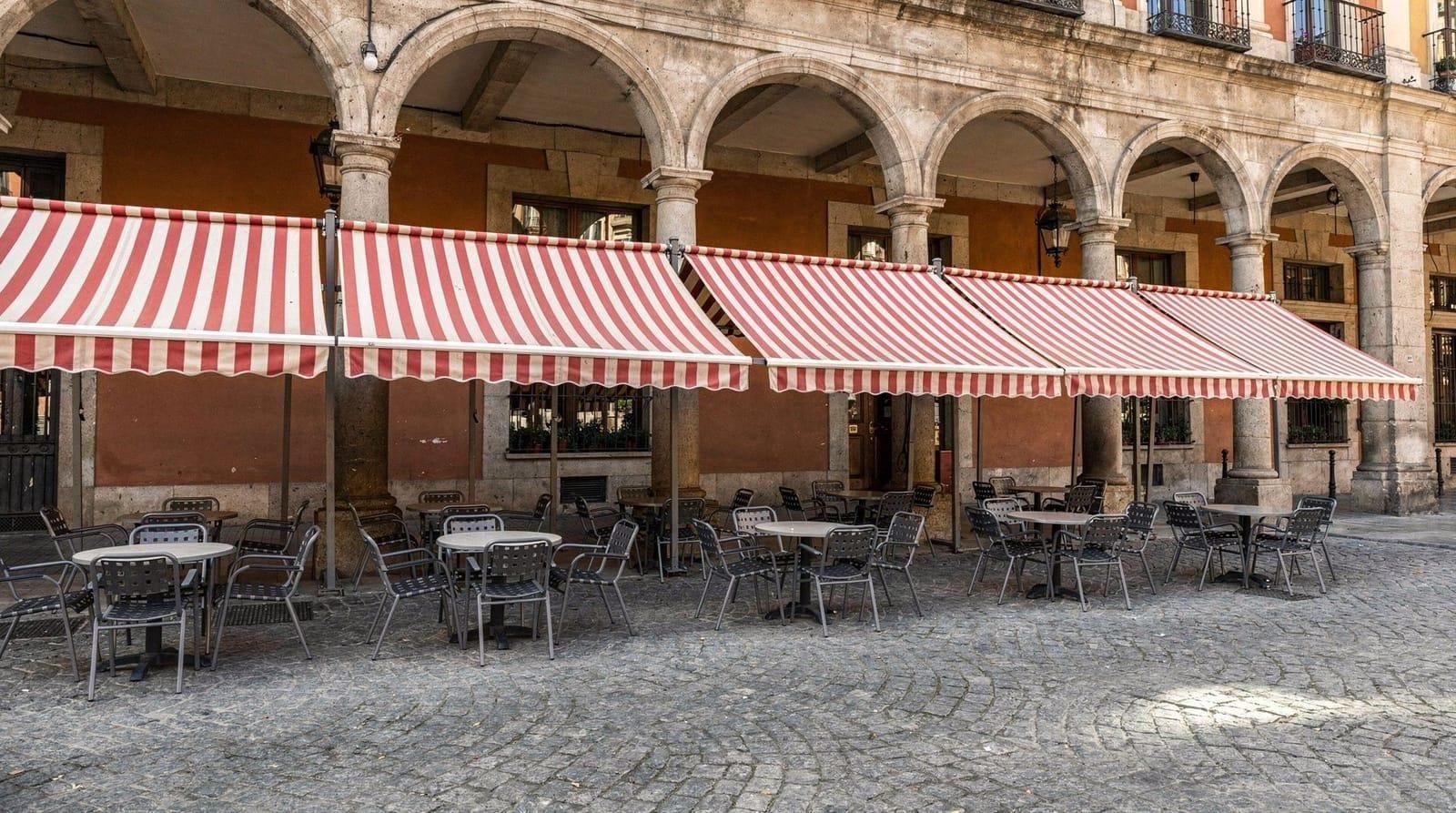
Terrace drinks on the big squares. A drink on a sunny terrace is one of the pleasures of Madrid, and there is nothing wrong with paying a premium for the view if you know that is what you are buying. The trap is ordering food as well, because the kitchen is rarely the reason the terrace is full. Have the coffee or the vermouth, enjoy the people-watching, then eat elsewhere. The vermut guide shows how locals do the same thing at a more sensible address.
The Gran Vía and Sol shopping strip. The big avenues are fine for mainstream shops, but souvenir stands and gift shops along the routes between sights are where markups are highest. For something more characterful, the souvenirs guide lists what is worth buying and where, and the El Rastro flea market guide covers the Sunday market for people who enjoy browsing, with a firm warning to watch your belongings there.
Taxis at the airport and the stations. Airport and station queues are the one place where an unprepared visitor can be taken a long way round. Read the airport to city guide before you land and the taxi versus Uber comparison so that you know what to expect. For general safety on crowded sightseeing routes, the pickpockets and safe areas guide is worth five minutes.
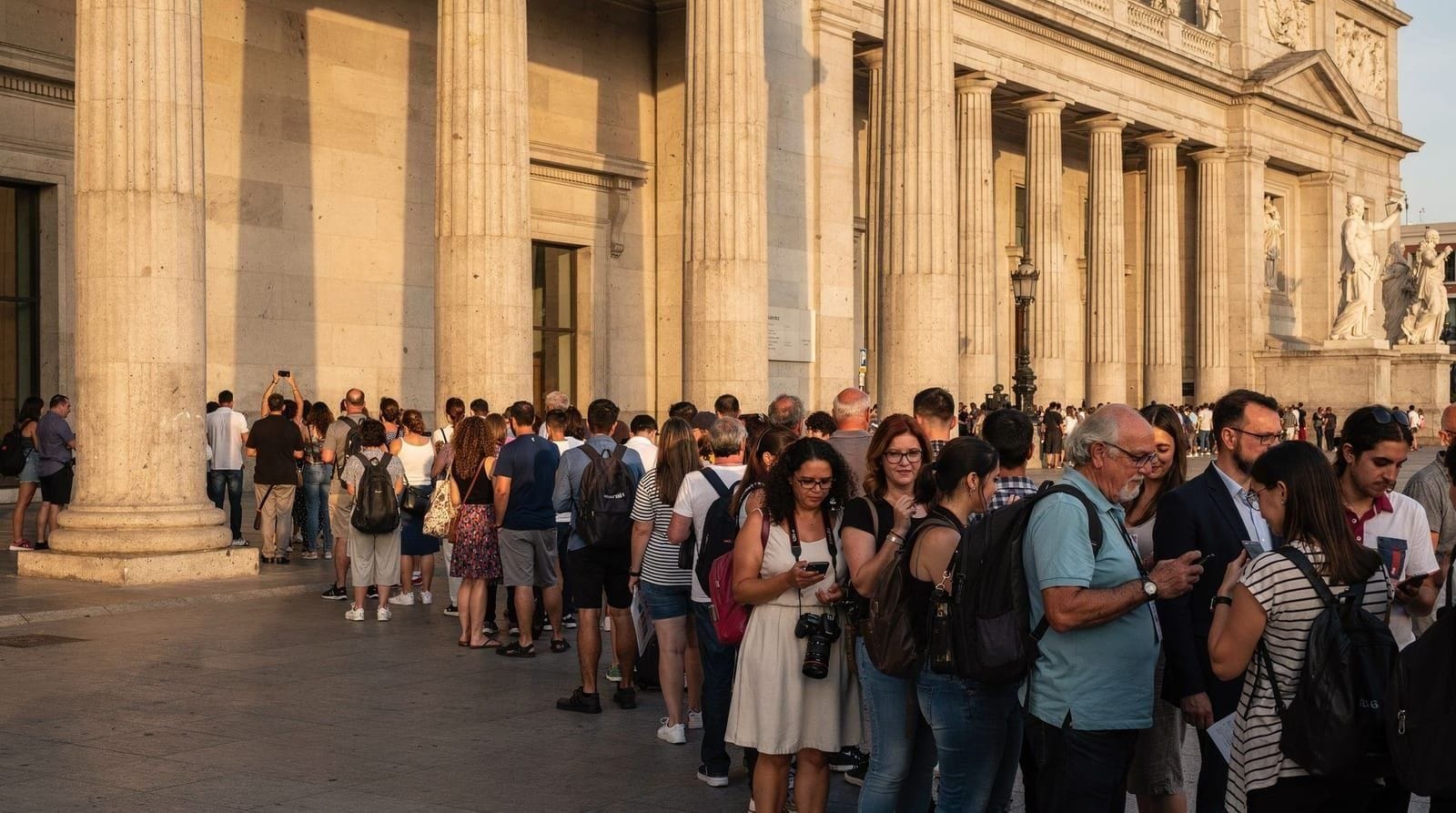
Museums and big attractions. Queueing at the door and paying full price is not always necessary. The museum free hours guide and its honest version explain how to plan around reduced-price windows, and the free things to do guide fills the rest of your day without spending anything.
A realistic first day that dodges the traps
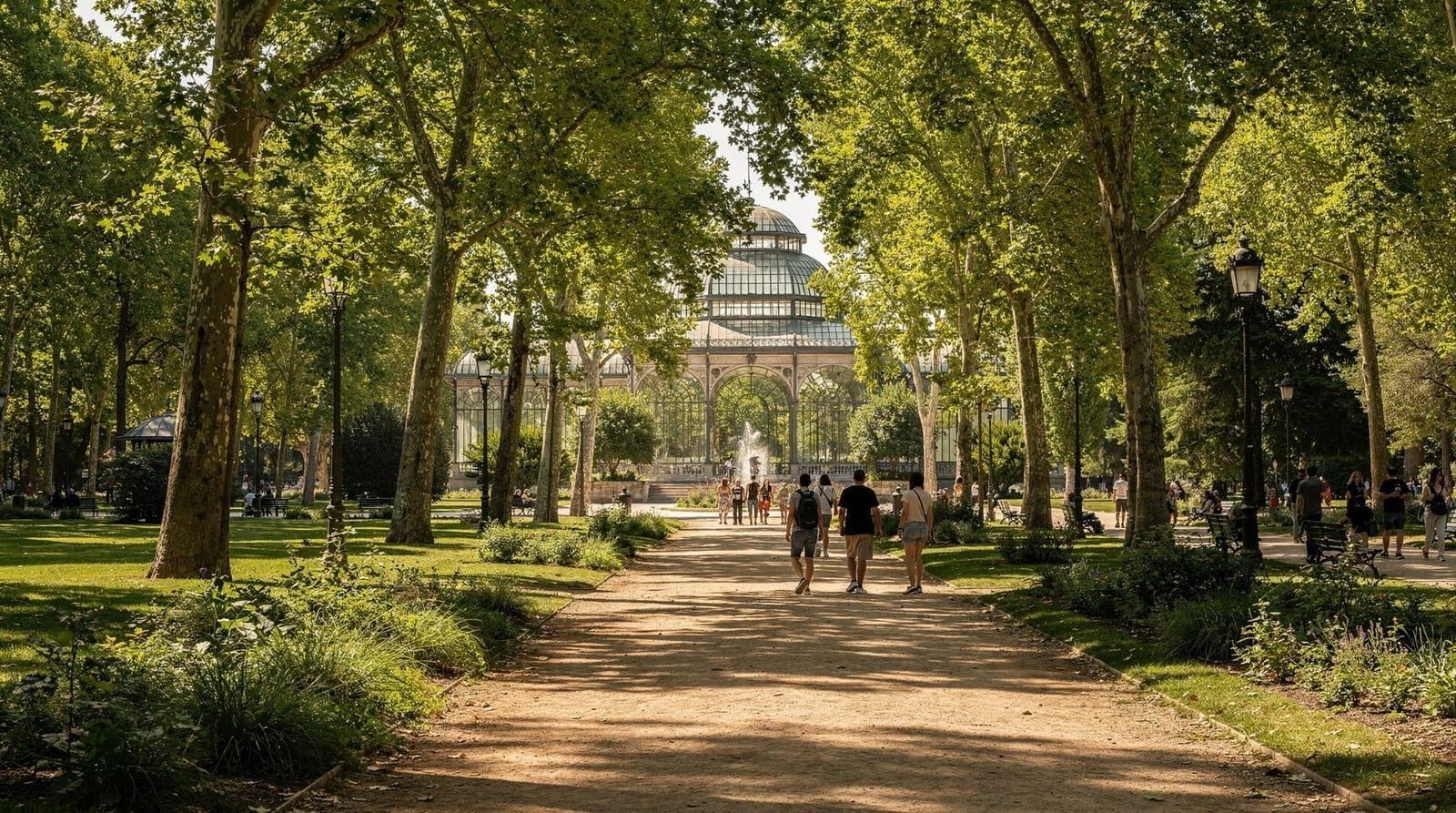
It helps to see how this plays out over an actual day. Start with a coffee and a pastry in a neighbourhood bar rather than the café on the nearest postcard square. Spend the morning on the big sights, and resist the lunch offers that appear right at their exits. Walk a few streets, and have the menú del día in a working district. After lunch, use the slow part of the afternoon for something indoors or in a park; the Retiro park guide is a good low-cost choice.
In the evening, treat Plaza Mayor and Mercado San Miguel as a look-and-photograph stop, then move on to La Latina for tapas or to Malasaña for a later drink. If you want a ready-made structure for a first visit, the three-day Madrid itinerary and the foodie itinerary are built with these habits in mind, and the budget guide shows how the same habits keep your daily spending down without cutting out the things you came for.
If you want to try paella anyway
Some visitors simply want to eat paella on holiday in Spain, and that is a perfectly reasonable wish. The honest approach is to do it in a way that does not rely on a tourist-zone kitchen. One option is a hands-on class, where you cook it yourself and learn what the dish should look like; a cooking workshop where you prepare paella and sangria yourself turns the “fake paella” problem into a skill you take home. Another is simply to be clear-eyed about what you are ordering: a rice dish in Madrid is fine to enjoy on its own terms, as long as you do not pay a premium for a claim of authenticity.
Hop-on hop-off buses: do the maths first
Madrid’s hop-on hop-off buses cost €25–30 per person per day. For context:
- A Madrid Metro zone A tourist day ticket (unlimited rides): €10.30
- A 10-trip metro card shared between two people (€7.30 for 10 trips, about €0.73 each): better for families
- Walking time between Prado and Plaza Mayor: 20 minutes
- Walking time between Royal Palace and Gran Vía: 15 minutes
The bus makes sense only in specific circumstances: you have mobility constraints, you are travelling with young children who cannot walk long distances, or you want the commentary/audio guide element. For everyone else, the metro and Madrid’s walkable centre make the bus redundant.
The two-street rule, applied
Almost every trap in this guide follows the same geometry: inflated prices concentrated on the exact paths tourists walk between sights, with genuinely good and fairly priced alternatives one or two streets away. It is worth internalising this as a habit rather than memorising every specific address:
- Standing in Plaza Mayor: walk toward La Latina or Calle de Toledo for food.
- Standing at Puerta del Sol: walk toward Malasaña or Chueca’s back streets for a menú del día — see the tourist menu traps guide for exactly what to look for.
- Wanting a market experience: prefer Mercado de San Ildefonso or Vallehermoso over San Miguel for anything beyond a quick browse.
- Wanting flamenco: book a named tablao in advance rather than a street tout’s “authentic show” — the best tablaos guide has the shortlist.
None of this requires advanced local knowledge — it requires resisting the convenience of the very first restaurant or shop you see after visiting a famous sight.
Frequently asked questions about Tourist traps in Madrid
Are Plaza Mayor restaurants as bad as people say?
Yes. The restaurants on the arcades of Plaza Mayor and the streets immediately adjacent (Calle Cuchilleros, Calle Ciudad Rodrigo) charge premium prices for mediocre food. A tortilla española that costs €4–5 in a local bar near Chamberí costs €8–10 here. The bocadillo de calamares (squid sandwich, Madrid's street food icon) costs €3–4 on Calle de Toledo or at the Cervecería La Campana — on Plaza Mayor it is €7–9. The location is the product; the food is irrelevant to the business model. Eat near the plaza rather than at it.What is the tourist menu (menú turístico) trap?
The 'menú turístico' — a fixed lunch menu for €12–20 in tourist areas — sounds like a bargain. Often it isn't. Signs in multiple languages (always a warning), photos of the food displayed outside, and staff who actively solicit passing tourists are all indicators. The standard tourist menu in high-traffic areas like Sol, Gran Vía, and around the main museums typically uses frozen or pre-prepared food and charges premiums for location. The real 'menú del día' — the local worker's lunch — is available at bars and unfancy restaurants in residential neighborhoods for €10–14 and is genuinely prepared fresh. One street off Gran Vía, the price-to-quality ratio shifts dramatically.Is Mercado de San Miguel worth it?
As an experience to look at: yes. As a place to eat: overpriced. Mercado San Miguel (just off Plaza Mayor) is beautifully renovated and visually impressive — an early 20th-century iron market hall with gourmet food stalls. The problem: a single tapa or small portion costs €4–8, wine by the glass is €5–7, and the portions are small. A 'lunch' costs €25–35 per person before you realise it. Locals use it occasionally for a specific artisan product; they don't eat there regularly. For the tourist-market experience at better value, Mercado de San Ildefonso (Malasaña) or the daily markets in residential neighborhoods are more honest.Is paella in Madrid authentic?
Almost never. Paella is a Valencian dish, not a Madrid dish. The 'paella' served at most tourist-area restaurants in Madrid is often a rice dish that has nothing to do with traditional paella (which requires specific Valencian rice varieties, proper stock, and wood fire). Madrileños eat cocido madrileño, callos a la madrileña, tortilla española, and bocadillo de calamares — not paella. If a restaurant near Sol or Gran Vía is prominently advertising 'paella', treat it as a signal that the kitchen is aimed at tourist expectations rather than local quality.What are the overpriced cocktail bar scams to watch for?
In the tourist-oriented bars around Sol, Gran Vía, and the Huertas area: some bars don't display prices on the menu and the bill arrives with €12–15 cocktails versus the €8 you expected. Rule: always check if prices are displayed; if they are not, ask before ordering. The regulated consumer protection law requires prices to be visible, but enforcement is inconsistent at venues targeting short-stay tourists. The cocktail bars and clubs in Malasaña, Barrio de las Letras (the authentic ones), and Chamberí are generally more transparent about pricing.What is the 'authentic flamenco' scam?
Not all flamenco shows are equal. The least valuable are the 30-minute 'tablao' shows sold by touts at the airport and in tourist offices near Sol — usually €20–40 for a short performance in a small venue with two dancers. These shows exist to monetise tourist turnover, not to present serious flamenco. The legitimate tablaos — Cardamomo, Corral de la Morería, Torres Bermejas, Café de Chinitas — charge €35–75 but present professional artists and full shows. The flamenco guide and honest tablao assessment explain the difference in detail.Are the hop-on hop-off buses worth it?
For most visitors, the hop-on hop-off buses are overpriced for what they deliver. A day pass costs €25–30 per person. The buses cover the main sightseeing circuit but Madrid is a compact, walkable city — the Prado to the Royal Palace is 30 minutes on foot via the scenic route. The main legitimate use case: families with young children or visitors with mobility constraints who need transport between sightseeing points without navigating the metro. For everyone else, the Zone A tourist day ticket (€10.30) covers the same routes and is vastly more flexible.What are the overpriced souvenir hotspots?
Shops within 100m of the Prado entrance, the Royal Palace, and Puerta del Sol charge 2–3x normal retail for the same products available one metro stop away. Standard warning: if the shop is on the tourist footpath between major sights, prices reflect the rent rather than the product value. The most egregious: miniature Prado replicas, 'authentic' mantilla fans (usually mass-produced in China), and flamenco dress accessories. The El Corte Inglés department store on Callao has a fair selection of Spanish food products (wine, oil, ibérico, turrón) at regular retail prices — the most honest souvenir shopping in central Madrid.