Overrated and underrated Madrid: what to skip and what everyone misses
Madrid: Prado Guided Skip the Line
What is overrated in Madrid and what do most visitors miss?
Overrated: Mercado de San Miguel (beautiful, overpriced), the hop-on hop-off bus (Madrid is walkable, the bus adds nothing), and the Retiro rowing lake (€6 for 45 minutes in a congested space). Underrated: Museo Sorolla (major Impressionist painter, free), the Conde Duque cultural complex, the neighbourhood vermut culture on Sundays, the Habsburg quarter beyond Plaza Mayor, and the Chamberí district for authentic Madrid life. The gap between the tourist circuit and what's genuinely worth your time is wider in Madrid than in most capitals.
| Overrated (skip or limit time) | Mercado de San Miguel meals, hop-on hop-off bus, Retiro rowing lake |
| Underrated (prioritise) | Museo Sorolla, Chamberí, Sunday vermut, Habsburg quarter, Fundación Mapfre |
| Cost to fix your itinerary | €0 — the underrated picks are mostly free or under €5 |
| Time needed | Half a day reallocated from the overrated list covers most of the underrated list |
| Best time | Sunday midday for vermut culture; weekday morning for Sorolla and the Habsburg quarter |
The framework for this assessment
“Overrated” in this guide means: the experience receives visitor time and money disproportionate to what it actually delivers. Not necessarily bad — some overrated things are good — but not worth the priority they receive.
“Underrated” means: genuinely excellent experiences that most visitors either miss or undervalue relative to the tourist circuit. These are the things that Madrileños would include in a recommended city visit that most guidebooks or algorithm-generated “top 10” lists omit.
This is an honest assessment based on what the city actually offers, not on popularity metrics.
Overrated: what receives more attention than it deserves
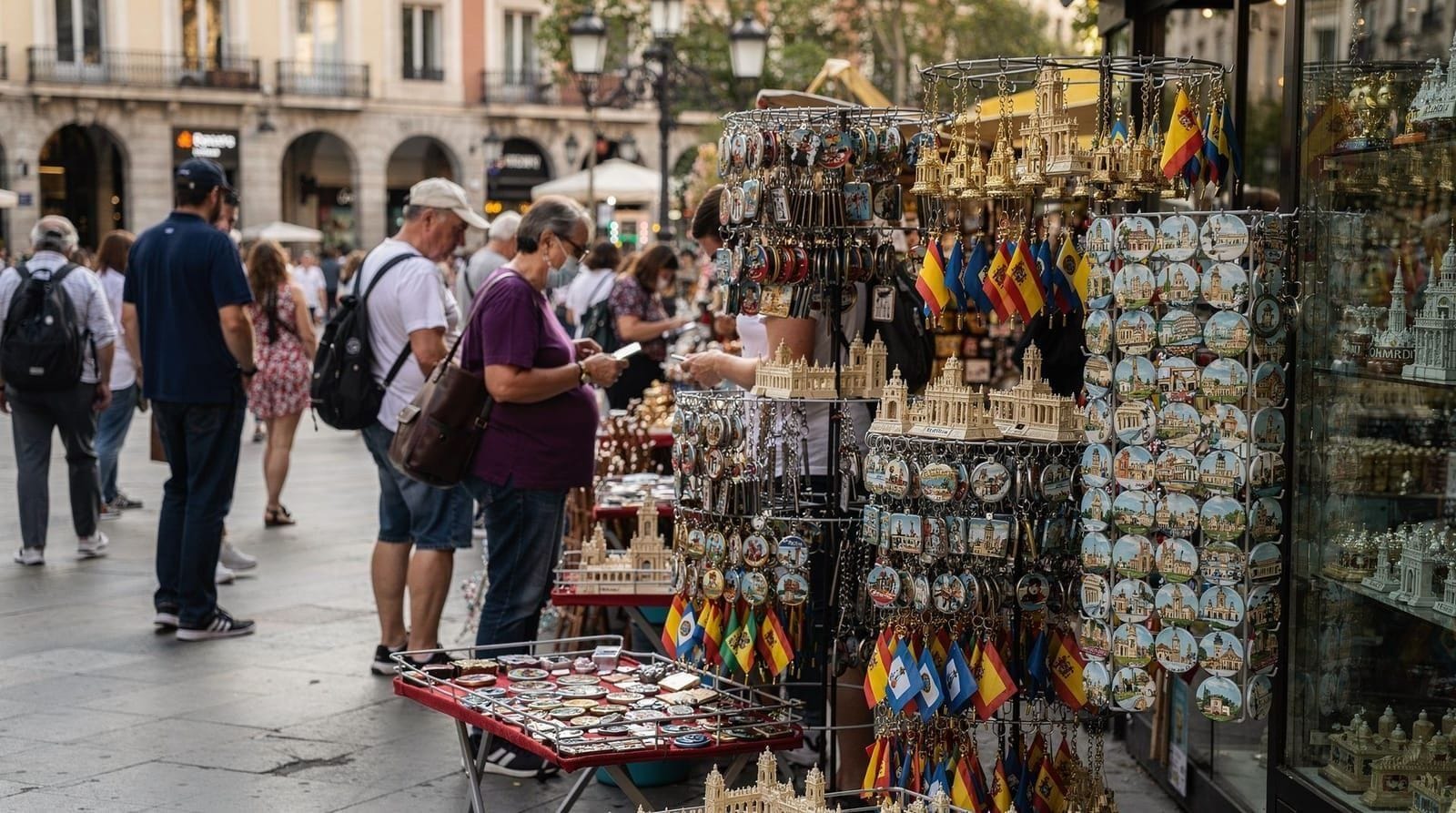
Mercado de San Miguel
Beautiful space. The cast-iron structure (1916) is architecturally genuine. The product selection is thoughtfully curated. And the prices are designed for international visitors with elevated expectations about what a “gourmet market” costs.
The honest verdict: An excellent place to buy one or two specific artisan products (a bottle of good olive oil, an anchovy selection, a slice of jamón ibérico for immediate consumption). A poor choice for a meal. If you are spending €25–35 per person on market snacks, you are 1 kilometre away from restaurants where that €30 covers a complete three-course lunch with wine.
The market is worth 20 minutes of your time on a visit to Plaza Mayor. It is not worth an hour and a significant portion of your food budget.
Hop-on hop-off bus
Repeatedly cited in tourist marketing because tour operators sell it. The reality: Madrid’s central sightseeing circuit is compact and walkable. The distance from the Prado to the Royal Palace is 1.5km — a 20-minute walk through pleasant streets. The metro covers the rest. At €25–30 per person for a day pass, the bus adds overhead (waiting time, limited stops, the circuit rather than your itinerary) without adding access.
When it is not overrated: Families with young children who cannot walk long distances between monuments; visitors with mobility constraints; visitors who genuinely want the overview commentary while sitting. For the walking visitor, the 1-day Tourist Travel Pass (Zone A, €10.30) or a Multi 10 ticket (€7.30 for 10 trips) is the tool.
The Retiro rowing lake
The rowing boats on the Estanque (the large central lake in Retiro park) are visually iconic — beautiful in photos. The reality: €6 per boat for 45 minutes in a congested oval lake surrounded by many other boats. The experience is pleasant for about 10 minutes, slightly repetitive thereafter. Worth it for families with children who specifically want the boat ride. Not worth it as a sightseeing choice for most adult visitors.
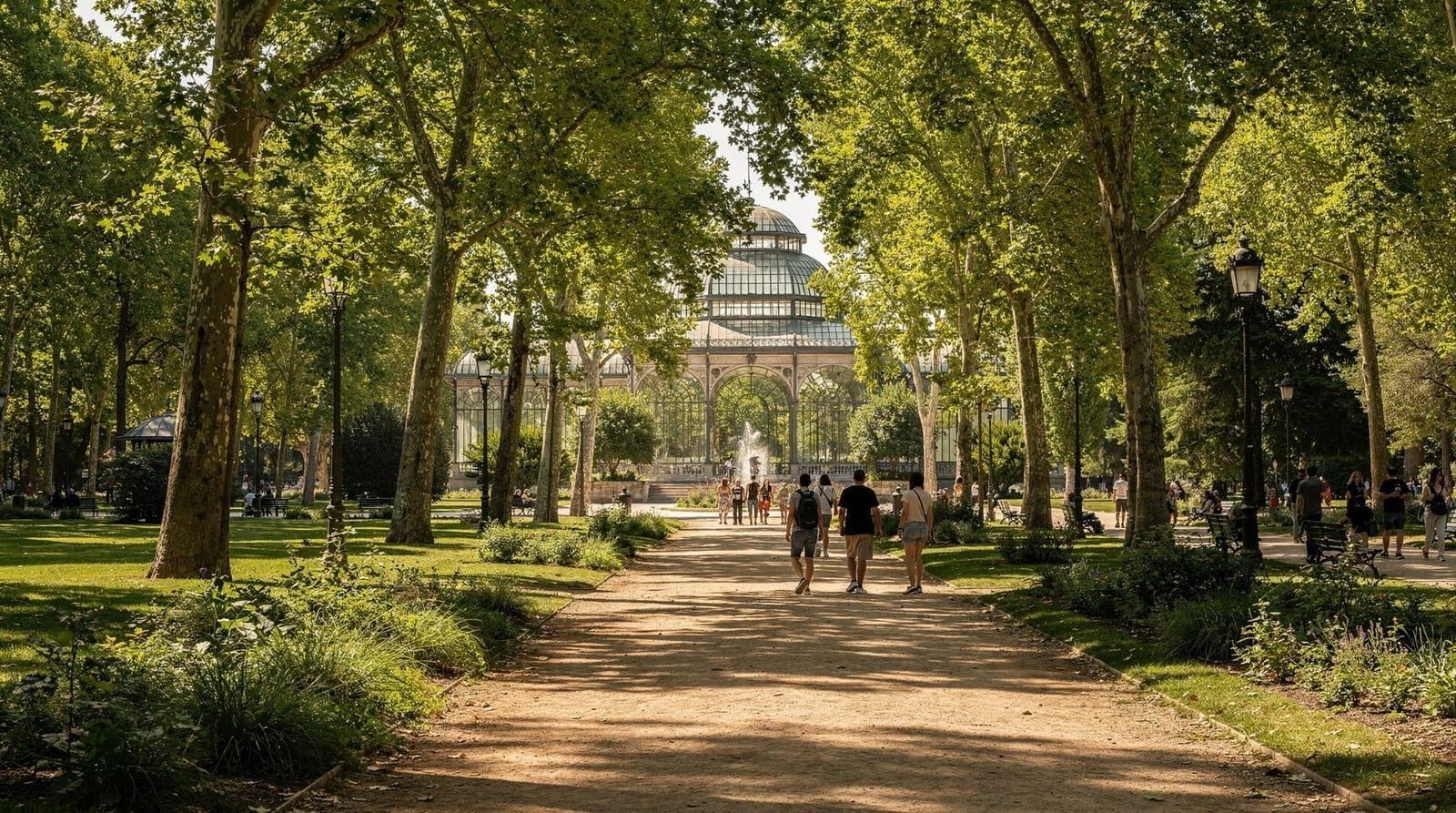
What is good at the Retiro (not overrated): The Palacio de Cristal (free, air conditioned, excellent art exhibitions); the Rose Garden in May; the wooded Bosque del Retiro section; the chess tables at the north end; simply sitting in the park reading. All free, all better than the lake boat.
Gran Vía at all hours
Gran Vía is Madrid’s most famous boulevard and genuinely impressive architecturally. But the visitor-oriented framing presents it as a strolling destination when it is primarily a functional shopping and transit street. The building facades — early 20th-century capitalist eclecticism, the Spanish version of Broadway — are worth looking at from the pavement. But Gran Vía is not a place to linger for hours; it is a place to walk through and notice.
The underrated alternative: Calle de Fuencarral (north from Gran Vía toward Malasaña) is a more interesting pedestrian street for genuine local shopping and café culture.
The famous sangria pitchers
Not an attraction, but a food choice to flag: sangria by the jug at tourist bars is rarely fresh-made and is often sweetened, cheap wine with fruit garnish added. Madrileños drink wine by the glass, beer (caña), tinto de verano (wine and lemon soda, an honest summer drink), or vermouth. Sangria is not a regular local drinking choice. The tourist-area sangria pitchers at €15–20 per jug are primarily serving the expectation that Spain means sangria.
Underrated: what most visitors miss
Museo Sorolla
If you visit one thing in Madrid that is not on the standard tourist circuit, make it the Museo Sorolla.
The original house and studio where Impressionist painter Joaquín Sorolla lived from 1911 to 1923 is currently closed for renovation (source: the museum’s official website, Ministry of Culture). Only the new building, at calle Zurbano 68 (opened on 15 October 2026), is open: Tuesday to Saturday 9:30–20:00, Sundays and public holidays 10:00–15:00, last entry 45 minutes before closing; closed Mondays, 1 and 6 January, 1 May, and 24, 25 and 31 December. Check the museum’s official website for the reopening of the house.
Admission is free. The paintings on display include major works from Sorolla’s Mediterranean light period — the colour and the luminosity of his work is a significant art experience.
See the Sorolla museum guide.
The Chamberí neighbourhood
Most visitor itineraries stop at Malasaña and Chueca for the “cool Madrid” experience. Chamberí, immediately north, is where Madrileños who have aged out of the nightlife circuit actually live — a prosperous, quiet, genuinely beautiful residential neighbourhood with:
- The best neighbourhood restaurant density in Madrid (menú del día institutions that have served the same clientele for decades)
- Andén 0 — the preserved ghost metro station (Chamberí station, closed in 1966, now a free museum accessible some weekends)
- Plaza de Chamberí, one of the city’s most pleasant neighbourhood squares
- The Museo Sorolla at its southern edge
It is not on the tourist circuit because it has no monuments. It is worth a half-day because it is what Madrid actually looks like for the people who live here.
Sunday vermut (vermouth) culture
The aperitivo ritual that precedes Sunday lunch is one of the most distinctive and least-known Madrid experiences. From 12:00 to 14:30, the bars of La Latina, Malasaña, Lavapiés, and Chamberí fill with Madrileños for a glass of vermouth on tap (usually Lustau or a house vermouth) with a small tapa.
This is not a tourist-designed experience. The bars that do this properly — old-fashioned, unmodernized places that have been serving the neighbourhood for 50+ years — are doing what they do every Sunday. Participating costs €2–4 (the price of a vermouth and a tapa) and puts you in contact with the city’s genuine social fabric.
See the vermut guide.
The Habsburg quarter beyond Plaza Mayor
The tourist circuit shows you Plaza Mayor, photographs it, and continues to the Royal Palace. The streets between and around them — the actual Habsburg Madrid of the 16th and 17th centuries — are largely unexplored by the same visitors.
The area south of Plaza Mayor (Calle de los Estudios, Calle de San Millán, the streets heading toward La Latina) contains: the oldest continuously operating church in Madrid (San Ginés, near Sol, free to enter), the baroque excess of the Basílica de San Miguel, the medieval-scaled lanes of the former Jewish quarter (judería), and the commercial energy of the historic market streets.
Two hours walking this area without a fixed agenda, following streets that look interesting, produces a much richer understanding of Madrid’s historic character than the standard Prado–Royal Palace–Plaza Mayor circuit. The Habsburg-Bourbon history guide provides context.
Fundación Mapfre
A commercial art foundation (insurance company backed) operating two exhibition venues in Madrid. The programming — major temporary exhibitions of significant photographers and modern artists — is consistently excellent, and the entry price is €3–5. In the past five years: major retrospectives of Harry Callahan, Richard Avedon, John Baldessari, and several significant Spanish artists. If a major exhibition is running during your visit, the Fundación Mapfre often delivers more per euro than anywhere else in Madrid.
Main space: Paseo de Recoletos 23. Check the current programme. It sits close enough to the Golden Triangle that pairing it with a Prado or Thyssen visit costs only an extra 10–15 minutes of walking, which makes it one of the easiest underrated additions to an existing museum day rather than a separate trip.
The Rastro beyond the main street
El Rastro is on most tourist lists, but most visitors walk the main street (Calle de la Ribera de Curtidores), see the tourist-facing stalls, and leave. The deeper interest is in the side streets and the area around Plaza del General Vara del Rey — antique dealers who operate in proper shops (some appointment-only), specialist book and map stalls, and the neighbourhood bars where post-Rastro vermouth is serious business.
Overrated vs underrated: the trade to make
The clearest way to reallocate a Madrid itinerary is to see the swaps side by side — each overrated pick has a genuinely better underrated equivalent nearby:
| Skip or limit | Do instead | Why |
|---|---|---|
| Mercado de San Miguel (full meal) | La Latina tapas bars, 5 min away | Same quality, half the price, more authentic |
| Hop-on hop-off bus | Walk + metro, or a free walking tour | Madrid’s centre is compact and walkable |
| Retiro rowing lake | Palacio de Cristal + Rose Garden (free) | Better experience, zero cost |
| Gran Vía as a destination | Calle de Fuencarral toward Malasaña | More interesting local shopping street |
| Sangria pitchers | Vermouth on tap or tinto de verano | What Madrileños actually drink |
The classics that earn their place
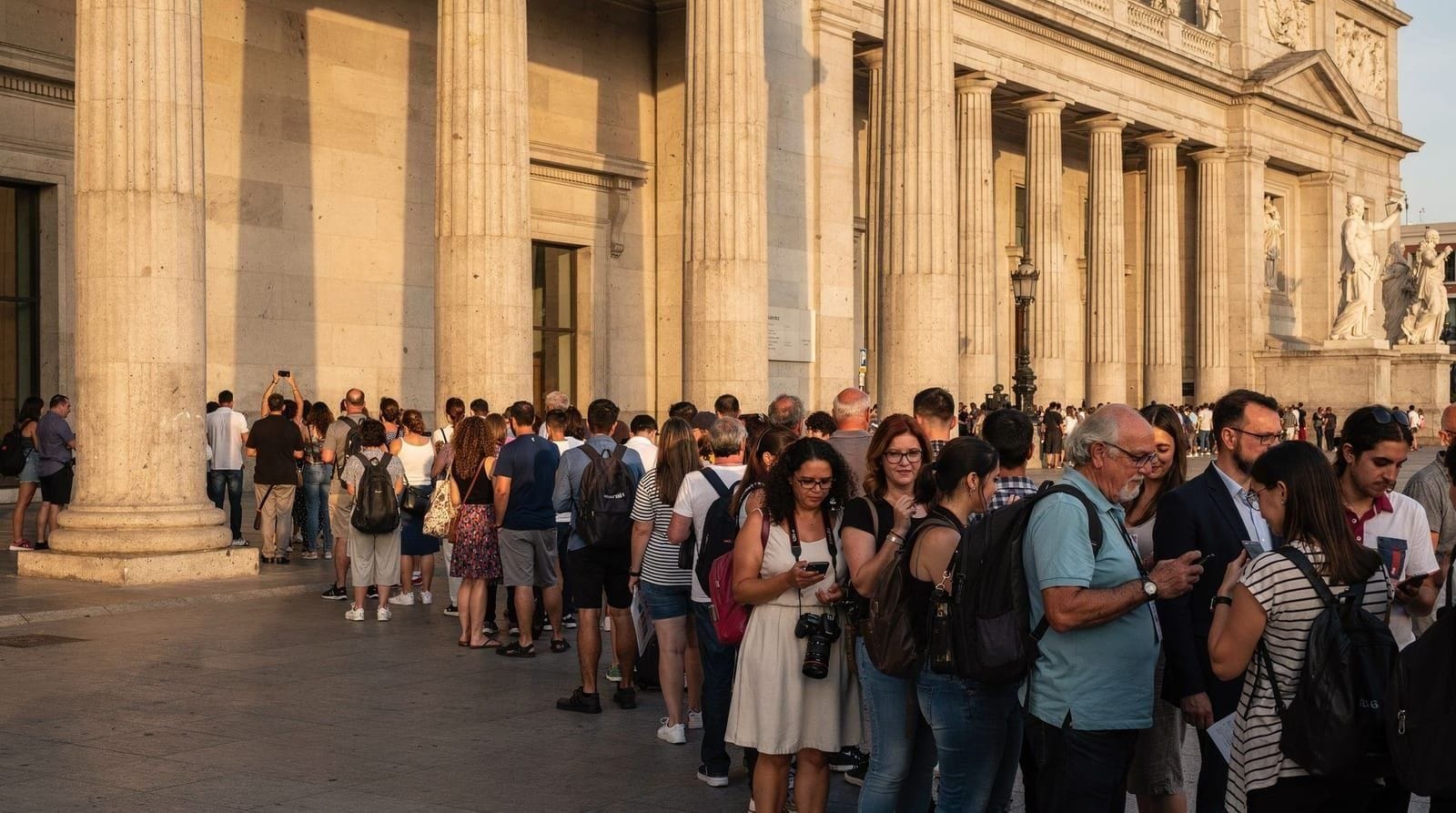
Not everything famous is overrated, and a guide about skipping things should say so. The big museums and the palace stay on the list because they deliver; the trick is how you visit them, not whether. The Prado museum guide and the Reina Sofía guide explain what to prioritise inside each building, and the Golden Triangle art walk shows how to link the museums without wasting energy on the way. If you would rather not spend the start of your visit in a queue, a guided Prado visit with skip-the-line entry keeps the focus on the paintings rather than the logistics.
The same logic applies to the Royal Palace. It is a big, ornate building where a bit of context makes the rooms far more interesting, and the Royal Palace guide covers what to look for. Visitors who like a narrated visit can book an expert-led Royal Palace tour with skip-the-line access, while those who prefer to wander at their own pace can simply go early and follow the guide. Either way, these are the sights to schedule deliberately, then use the rest of your time on the underrated picks above.
If you are weighing the Thyssen against the other two museums, the Thyssen museum guide makes the case for giving it real time, and the honest guide to museum free hours helps you decide when to go. For a wider look at what to avoid in the centre, the tourist traps guide and the Plaza Mayor overpriced guide pair well with this page, and the Madrid for art lovers itinerary puts the museums into a ready-made plan.
Where this leaves your itinerary
If you strip the overrated time sinks out of a standard Madrid trip and replace them with the underrated picks above, the net effect is more free time, not less — Sorolla, the Habsburg quarter, and Sunday vermut all cost less (in money and rushed pacing) than the attractions they replace. This works particularly well for a second or third Madrid visit, when the obligation to tick off the Prado–Palace–Plaza Mayor circuit has already been satisfied and there’s room to explore the Chamberí and Malasaña sides of the city properly. For first-time visitors trying to decide how to spend a limited number of days, see how many days in Madrid for how to balance the essential sights against these less obvious priorities.
Frequently asked questions about Overrated and underrated Madrid
Is the Museo Reina Sofía overrated compared to the Prado?
The Prado is the canonical 'must-see' and is justified — it is genuinely one of the world's great art museums. The Reina Sofía is sometimes treated as the secondary option, which is inaccurate. Guernica (Picasso, 1937) is one of the most significant paintings of the 20th century by any measure, and seeing it in person is a genuinely powerful experience. The Civil War art context, the Dalí and Miró rooms, and the documentary photography are excellent. The Reina Sofía is not overrated — it is sometimes visited in the wrong order (after the Prado when cultural fatigue has set in) which diminishes the experience.Is Puerta del Sol worth visiting?
As a monument: modest. Puerta del Sol is historically significant (the symbolic centre of Spain, kilometre zero of the national road network) and administratively important, but architecturally it is a busy traffic junction with a semicircular building, a clock tower, and the bronze bear-and-strawberry-tree statue. There is no great architecture to admire. Visit because it is where the city's energy concentrates, because the kilometre zero plaque is genuinely historic, and because you will pass through it anyway. Don't make a special trip solely to stand in the square.Is the Royal Palace worth the €18 entry?
Yes, for most visitors — but with a qualification. The Royal Palace (Palacio Real) is the largest royal palace in Western Europe by floor area and the interiors are genuinely opulent. The armory collection is excellent. However: the current royal family does not live here (they live at Palacio de la Zarzuela outside the city), so the visited spaces are a museum rather than a living palace. The entry price is justified for the scale and quality of the collection. The alternative: the exterior and the Jardines Sabatini (behind the palace) are free and almost as scenic.What is genuinely underrated in Madrid that most visitors miss?
Top underrated experiences: Museo Sorolla (free, genuinely extraordinary — the new building is open; the painter's original house is closed for renovation); the Chamberí neighbourhood (authentic Madrid residential life, excellent neighbourhood restaurants, the ghost metro station at Andén 0); the Sunday vermut circuit in La Latina and Malasaña; the Barrio de los Austrias at dusk when tour groups have left; the Fundación Mapfre (commercial gallery with frequently excellent temporary shows at €3–5); Templo de Debod at sunset (widely known but still undervisited compared to its quality).Is the Santiago Bernabéu stadium tour worth it?
For football fans: yes, genuinely. The Bernabéu is one of the iconic stadiums in the world and the tour is well-produced with access to the pitch, the dressing rooms, the trophy room (an extraordinary collection of Champions League trophies), and the new facilities added in the major renovation completed in 2024. For non-football fans: the architecture and the history are interesting at a general level, but €37 or more is a significant commitment for a sporting monument that doesn't connect emotionally. See the Bernabéu stadium tour guide for the tour details.Is the Thyssen-Bornemisza Museum underrated?
Significantly yes. The Thyssen is consistently the third museum on visitors' lists (Prado first, Reina Sofía second) and consequently gets a fraction of the attention and time. The collection — from Flemish primitives through Baroque, Impressionism, and 20th-century European and American art — is the most chronologically coherent of the three, and the building is more intimate than the Prado's overwhelming scale. On Monday (when it's free and relatively quiet), a 2-hour visit to the Thyssen is one of the best art experiences in Madrid.Is Mercado de San Miguel worth visiting at all?
Yes, for a short visit — just not for a meal. Twenty minutes browsing the stalls, buying a single artisan item (good olive oil, an anchovy tasting, a slice of jamón), and admiring the 1916 cast-iron structure is worthwhile. Spending €25–35 per person on a full snacking meal there is the overrated part; the same budget covers a complete three-course lunch with wine at a restaurant one kilometre away.What is the single most underrated free thing to do in Madrid?
The Museo Sorolla, without much competition. It is free and shows the work of a major Spanish Impressionist; the original house is closed for renovation, but the new building is open. Most first-time visitors never hear of it because it doesn't appear on generic 'top 10 Madrid' lists the way the Prado or Royal Palace do.