Free things to do in Madrid: 30+ genuine options without the filler
Madrid: Welcome Guided Walking
What is genuinely free in Madrid and what costs money?
Genuinely free: the three golden-triangle museums during their free windows (Prado Mon–Sat 18:00–20:00; Reina Sofía Sunday 12:30–14:30; Thyssen Mondays 12:00–16:00); six permanently free museums including Museo Sorolla and Museo Naval; Retiro park and all major city parks; the Rastro flea market; several significant churches; the city's street architecture and squares. Not free but often presented as such: 'free walking tours' (tip expected, €10–15 per person); some churches charge for specific areas. Madrid is genuinely generous with free access to major culture.
| Free museums | Prado/Reina Sofía/Thyssen (timed windows) + 6 permanently free |
| Free parks | Retiro, Parque del Oeste, Madrid Río, Casa de Campo |
| Free events | El Rastro (Sun), Veranos de la Villa (Jul–Aug) |
| Not really free | ”Free” walking tours (€10–15 tip expected) |
| Best free day | Sunday — Reina Sofía + El Rastro + free parks |
How free-friendly is Madrid?
More so than most major European capitals. The combination of free museum windows at world-class institutions, a generous stock of permanently free museums, and the city’s culture of outdoor public life creates real options for visitors who want to minimise costs without minimising quality.
The Prado, the Reina Sofía, and the Thyssen are free at specific times. The Sorolla museum is free every day it’s open. The Retiro park is free forever. El Rastro on Sunday is free. Madrid’s street life — the neighbourhood squares, the architectural character of the Habsburg quarter, the evening tapas circuit — costs nothing to participate in.
This is not about scraping for free options. It is about understanding that Madrid’s most valuable experiences are accessible without a budget.
The museum free windows in detail
Museo del Prado
- Free windows: Mon–Sat 18:00–20:00; Sunday and holidays 17:00–19:00
- Collection: Velázquez (Las Meninas, Las Hilanderas), Goya (Black Paintings, Maja, the royal portraits), Bosch (The Garden of Earthly Delights), El Greco, Murillo, Titian, Rubens
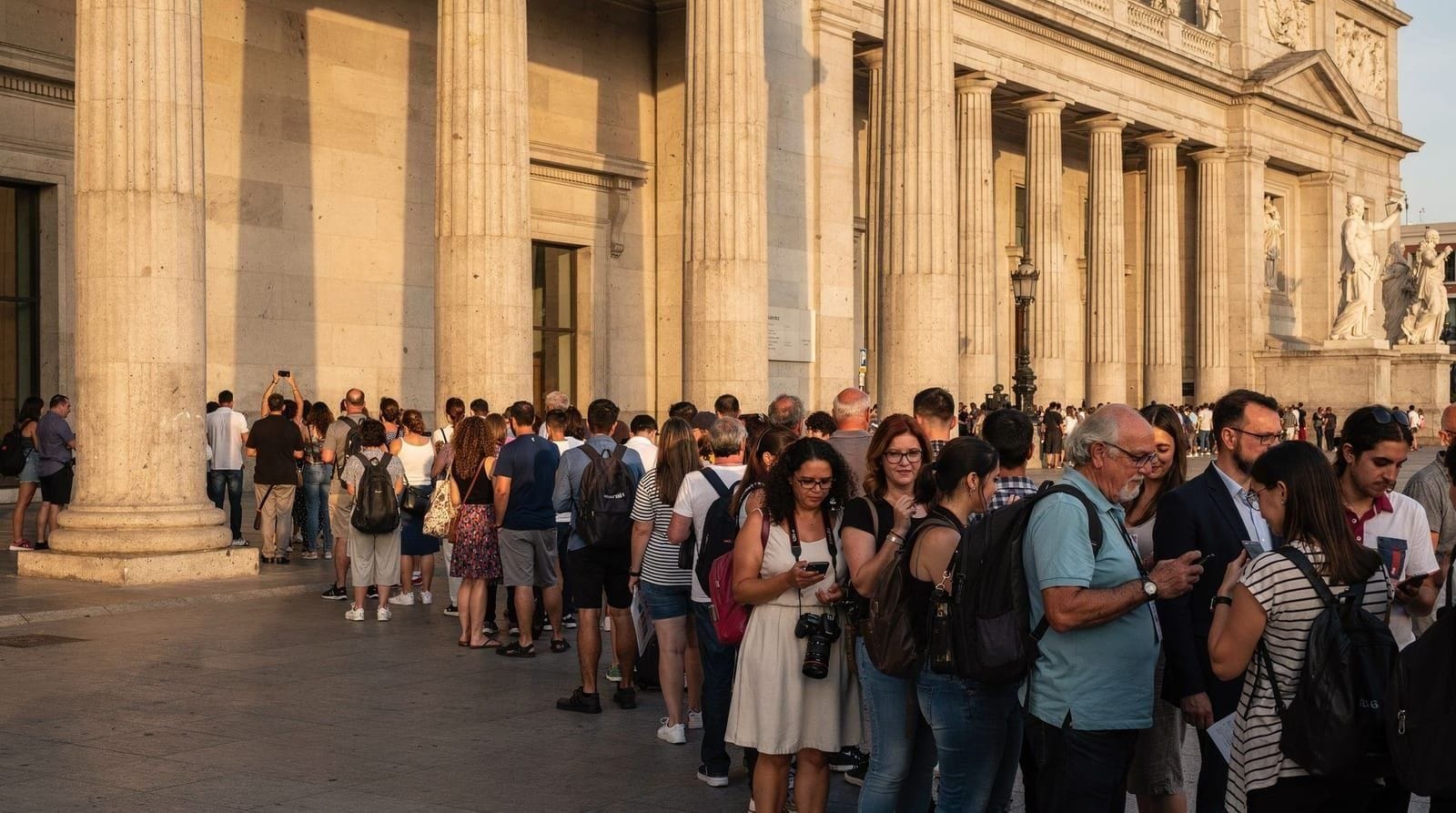
- Queue strategy: Arrive at Puerta de Goya (south entrance on Calle Felipe IV) 30–40 minutes before the free window in peak season (April–May, September–October). In winter, 10–15 minutes suffices.
- What you get: The full permanent collection — this is one of the world’s top five art museums in any measure, free twice daily
Museo Reina Sofía
- Free windows: Sun 12:30–14:30; Mon/Wed–Sat 19:00–21:00 (closed Tuesdays; a free ticket is needed, bookable online)
- Additional free days: 18 April, International Museum Day (18 May), 22 May, Día de la Hispanidad (12 October), 6 December
- Collection: Guernica (Picasso), Civil War art, Surrealism (Dalí, Miró), documentary photography, contemporary Spanish art
- Best advice: Be there for 12:30 on Sunday — you have two hours, so go to Guernica first and pick a few rooms rather than trying to see everything
Museo Thyssen-Bornemisza
- Free windows: Mondays 12:00–16:00 (permanent collection and current exhibitions); Saturdays 21:00–23:00; check thyssen.org as the policy occasionally adjusts
- Collection: 14th-century Flemish masters through 20th-century pop art — the most chronologically comprehensive collection of the three
The honest trade-off for free windows
Free windows at all three are genuinely worth using. The trade-off: at the Prado, the free window is 2 hours — enough for the key rooms but not for an exhaustive visit. If you want to spend a full morning, a paid ticket (€15, book online) gets you in at 10:00 with 8 hours and minimal crowds. The museum free hours honest guide gives the realistic assessment of what the free windows actually deliver.
Permanently free museums
Museo Sorolla (Calle Zurbano 68, new building, Almagro)
The museum of Impressionist painter Joaquín Sorolla. The original house museum (1911–1923) is closed for renovation (source: the museum’s official site, Spanish Ministry of Culture); only the new building on Calle Zurbano 68, opened on 15 October 2026, is open, with free entry (Tue–Sat 09:30–20:00, Sun and public holidays 10:00–15:00, last entry 45 minutes before closing, closed Mondays). Check the museum’s official site for the reopening of the house. A near-essential stop on any Madrid visit, particularly for those who came for the art. See the Sorolla museum guide.
Museo Naval (Paseo del Prado 3, next to the Thyssen)
Naval history of Spain from the age of exploration through the 20th century. The centrepiece is the Juan de la Cosa map (1500), the oldest known world map showing the Americas — it was drawn by Columbus’s chief cartographer. Free Tue–Sun 10:00–19:00. An hour is sufficient for a good visit.
Museo del Romanticismo (Calle San Mateo 13, Alonso Martínez)
A 19th-century bourgeois house preserved as a period interior, with furniture, paintings, decorative arts, and personal effects from the Romantic era. Small, atmospheric, and genuine. €3 entry; free on Saturdays from 14:00 and on Sundays; closed Mondays.
Museo de Historia de Madrid (Calle Fuencarral 78, Alonso Martínez)
City history from prehistoric times to the present. The 1721 Churrigueresque portal is reason enough to walk past. Free Tue–Sun 10:00–20:00. Good for context before exploring the Habsburg quarter.
Real Academia de Bellas Artes de San Fernando (Calle Alcalá 13)
A serious old-master collection often missed because it sits between the bigger names. Significant Goyas here — including the self-portrait — plus substantial collections of Murillo, Zurbarán, and Rubens. Free Tuesday–Friday 13:30–15:00.
Free outdoor and neighbourhood experiences
Parque del Retiro
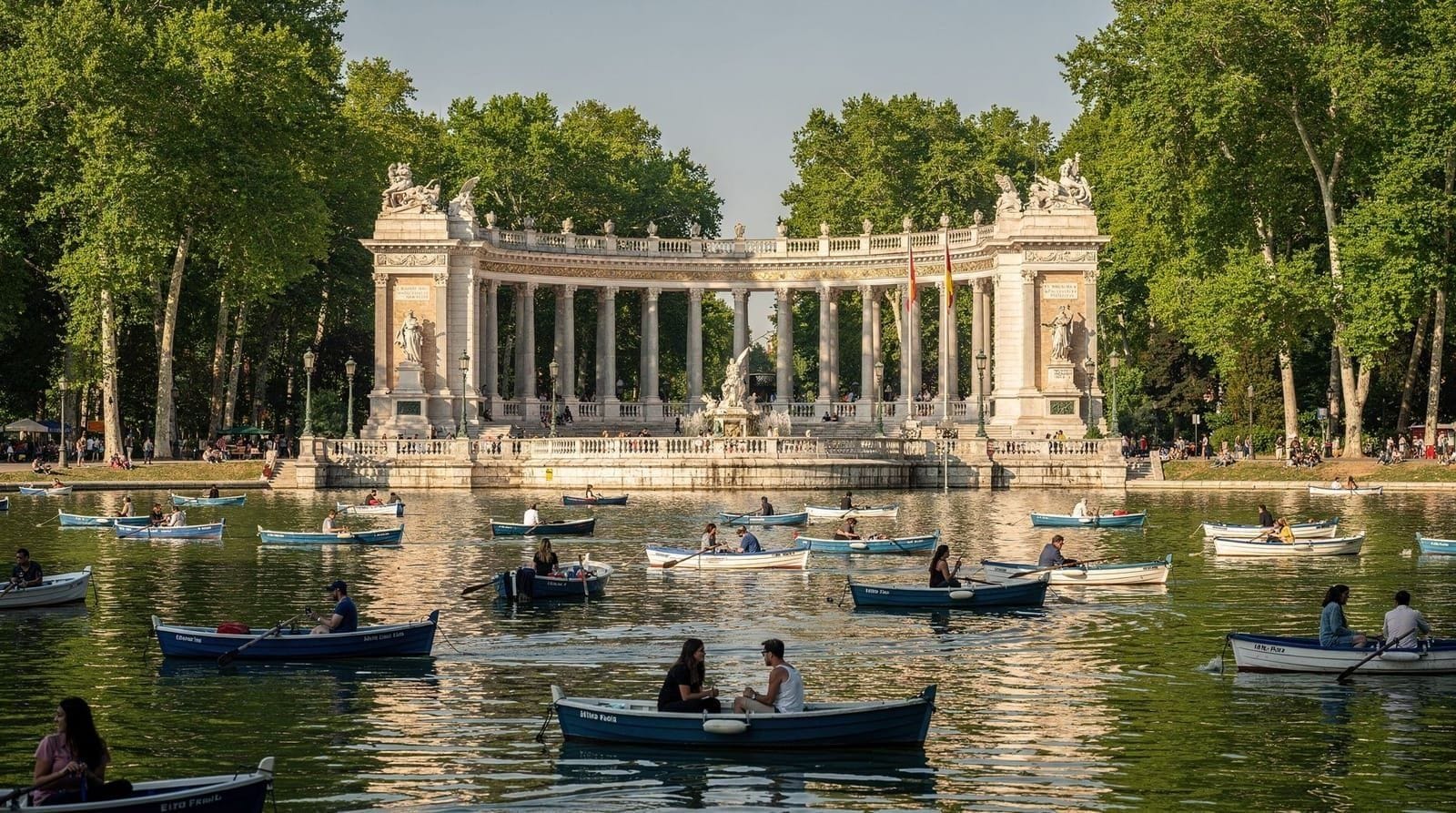
Free, always. The Retiro is 120 hectares of mature garden in the city centre — boating lake, rose garden (Rosaleda, best in May), Crystal Palace (closed until 2027), outdoor chess, jogging paths, and the most democratic social space in Madrid. Weekend afternoons in spring and autumn: families, buskers, roller-skaters, book vendors, and thousands of Madrileños doing exactly what they do. This is real Madrid, and it costs nothing.
Temple of Debod at sunset
The Temple of Debod — an actual ancient Egyptian temple donated to Spain in 1968, reconstructed in Parque de la Montaña near the Teleférico — is free to visit. The sunset view from the terrace behind the temple, looking west across the Casa de Campo toward the Sierra de Guadarrama, is one of Madrid’s best free visual experiences. Free Mon–Sun, extended summer hours.
El Rastro Sunday flea market
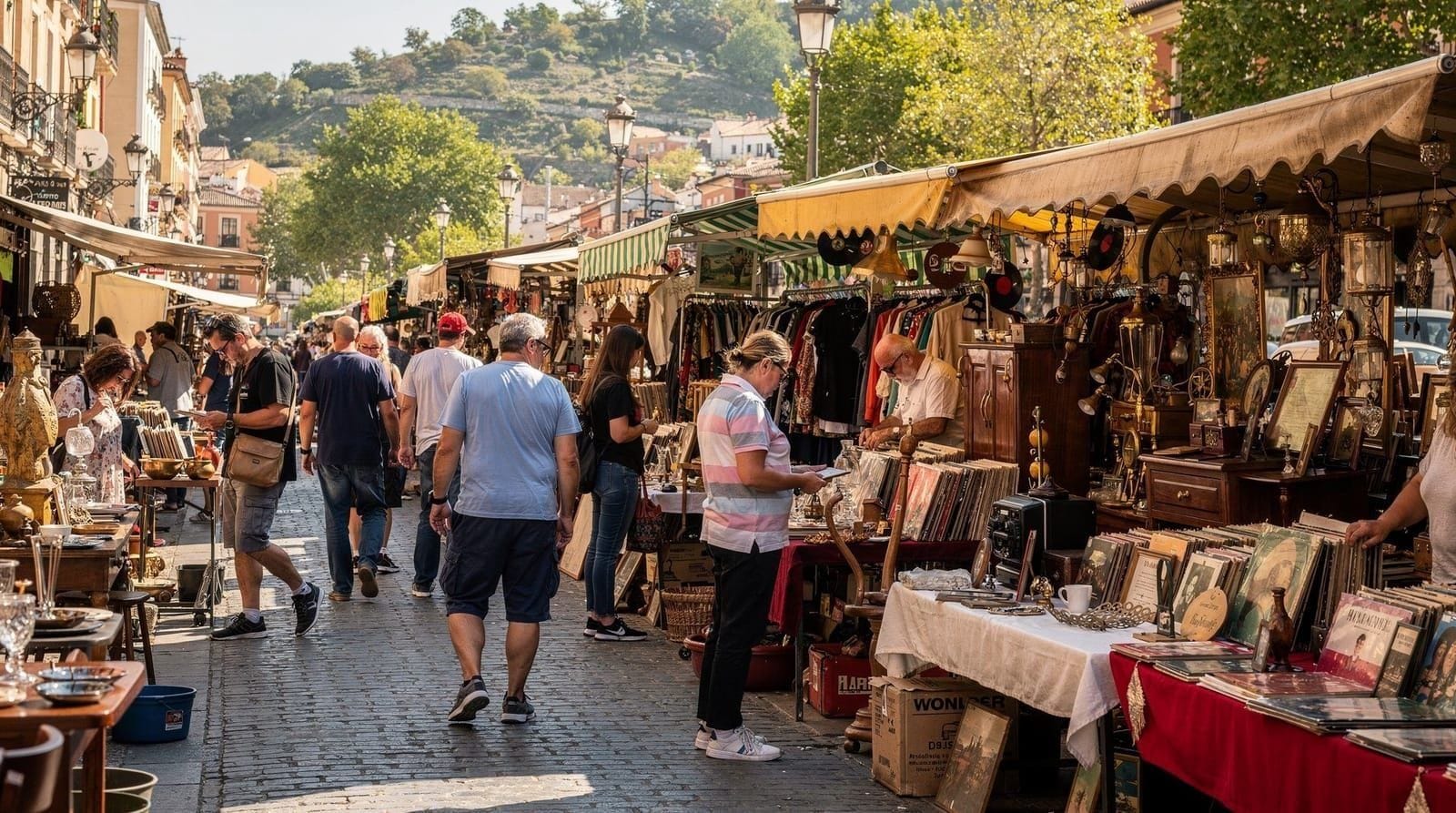
Every Sunday 09:00–15:00, the streets of La Latina (Calle de la Ribera de Curtidores and surrounding) become a 3,500-stall outdoor market. Free to browse, free to wander. After the market, post-Rastro tapas and vermouth in the neighbourhood bars is the traditional follow-up — the neighbourhood is most animated on Sunday mornings. See the El Rastro guide.
The Habsburg quarter
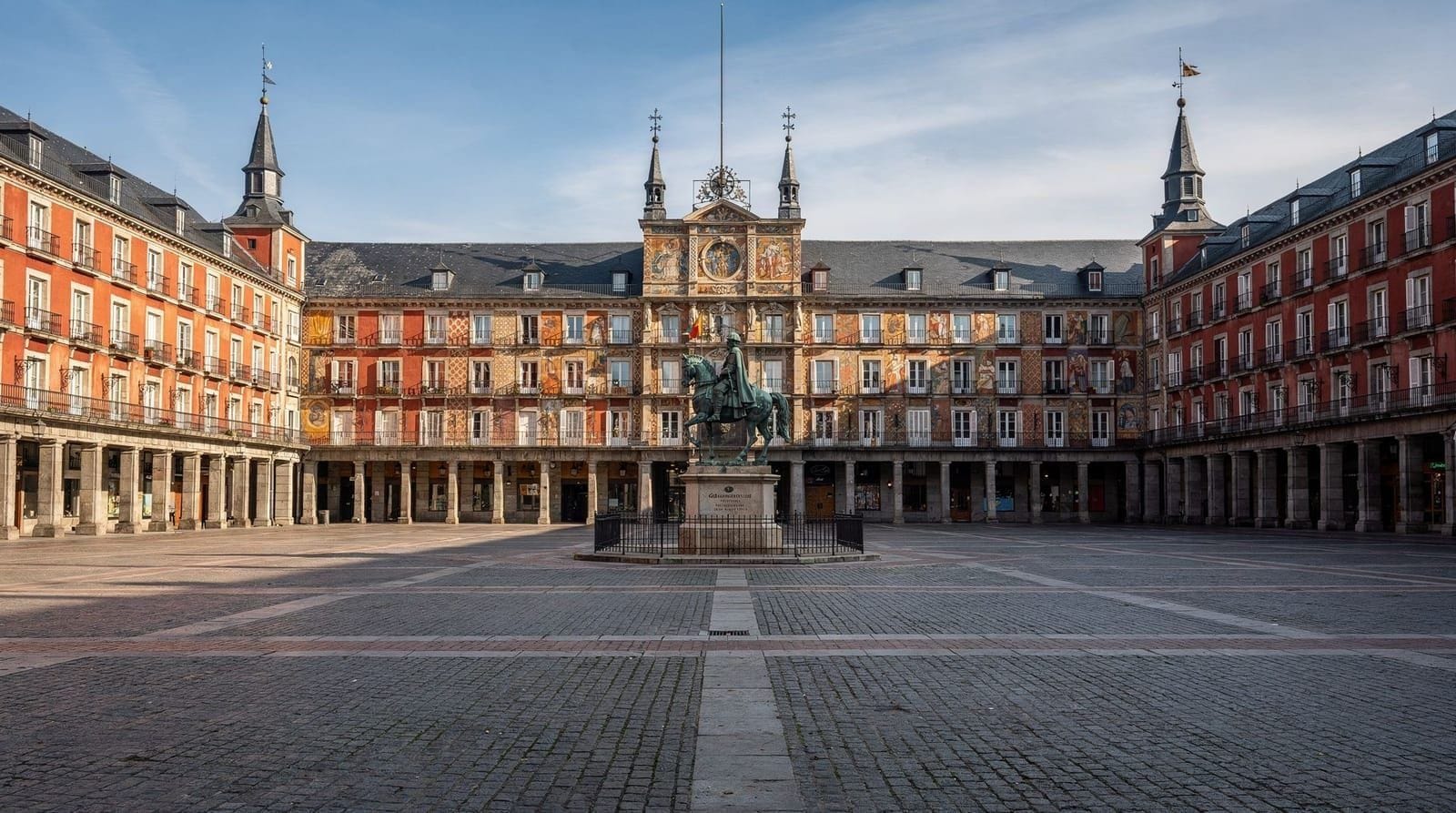
The area around Plaza Mayor and the streets radiating from it — the Habsburg Madrid of the 16th and 17th centuries — is essentially an outdoor architecture museum. Free to walk, free to look at: the Casa de la Villa, the Basílica de San Miguel, the convents of La Latina, the old carriage gates, the narrow lanes of the Jewish quarter. A properly structured walk through here with context takes 2 hours and costs nothing (though a guidebook or tour adds value). See the Habsburg–Bourbon history guide for historical context.
The Paseo del Prado and Recoletos boulevard
The UNESCO-listed Paseo del Arte stretches from the Prado through the Thyssen and Reina Sofía area — a linear cultural mile that is entirely free to walk. Continue north on the Paseo de Recoletos to the Cibeles fountain (Madrid’s most photographed urban composition) and the Biblioteca Nacional. Free architecture and urban landscape throughout.
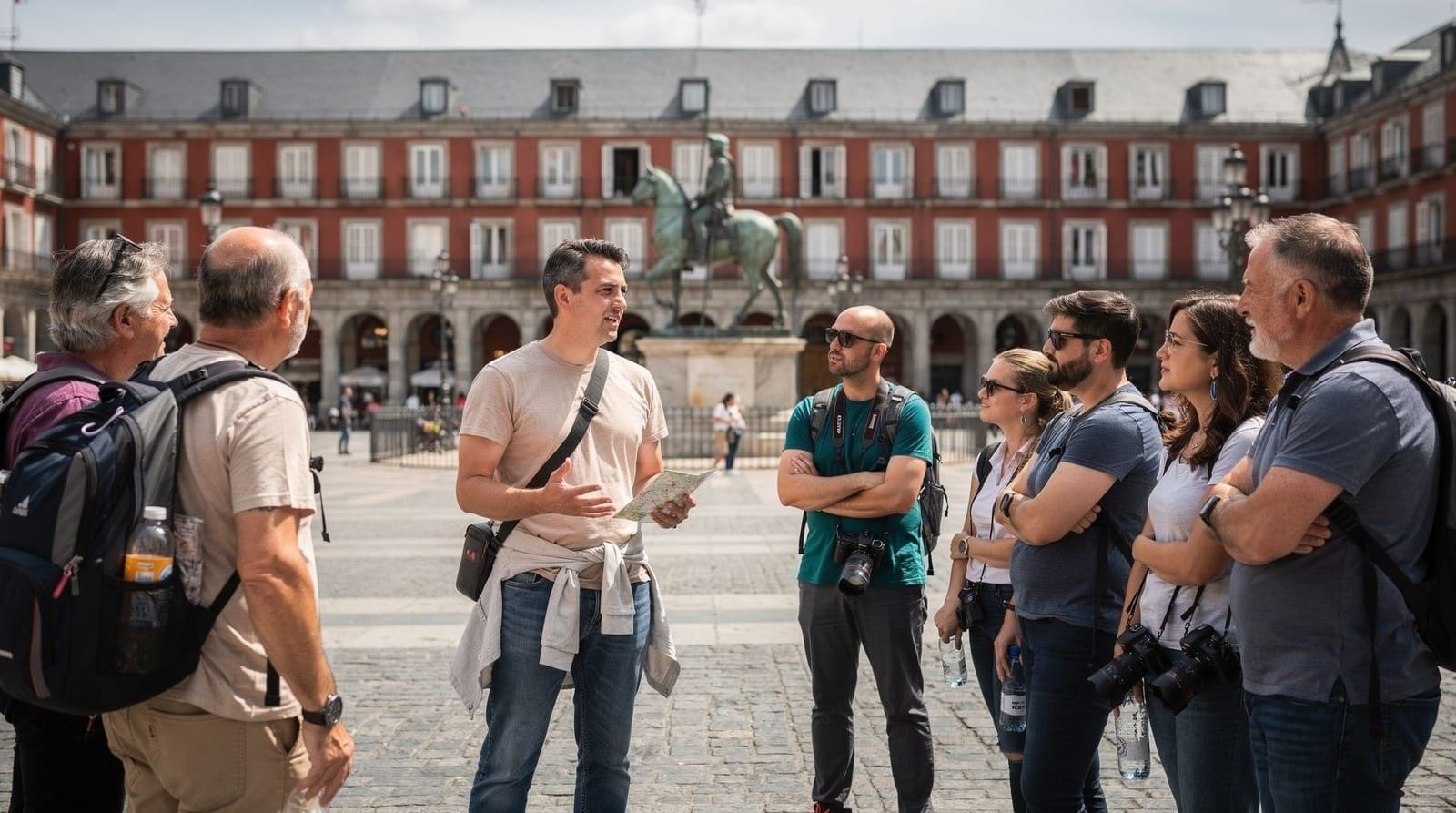
A free-format welcome walking tour of Madrid provides historical context for the monument-dense historic centre — useful for understanding what you’re looking at in the free outdoor architecture experience.
Free cultural events
Veranos de la Villa (July–August): The city government’s summer cultural programme. Free concerts at Conde Duque, outdoor cinema in various parks, free theatre and dance performances. Programme published at esmadrid.com in June.
Día de la Hispanidad (12 October): Military parade on Paseo de la Castellana (free, spectacular). Reina Sofía free all day.
International Museum Day (18 May): Most national museums free all day — one of the best value days in the Madrid calendar.
San Isidro (around 15 May): Free concerts in the Pradera de San Isidro and barrio fiestas throughout La Latina, Embajadores, and the Austrias quarter.
Domingo de Piñata / Carnival: The Sunday after Ash Wednesday, the Carnival Burial of the Sardine procession in Casa de Campo and street events — free.
Walking routes worth your time
Golden Triangle art walk: Free to do independently. Prado to Reina Sofía to Thyssen is a logical 1-kilometre circuit along the Paseo del Arte — the world’s highest density of major art museums in walkable distance. See the golden triangle art walk guide.
Literary quarter (Barrio de las Letras): The area around Calle de las Huertas, where Cervantes, Lope de Vega, and Quevedo lived, still has bronze quotations embedded in the pavement. Free to walk, rich with literary history. Literary quarter guide.
Madrid Río promenade: The riverside park below the Puerta de Toledo bridge, stretching for 6 km along the Manzanares. Free, good for cycling, walking, and watching the city from water level.
Building a genuinely free day in Madrid
The most efficient free day combines a museum window with outdoor time, timed around the Sunday Reina Sofía opening. A realistic sequence: 09:00 El Rastro flea market opens in La Latina, browse for a few hours; 12:00 walk (or short metro ride) to the Reina Sofía for the free window 12:30–14:30, prioritising Guernica and the Civil War rooms; 15:00 lunch in La Latina (not free, but the neighbourhood’s tapas prices are reasonable); 16:30 walk north to the Retiro for the rest of the afternoon — rowing lake if budget allows the modest fee, otherwise the Rosaleda is free; sunset at the Temple of Debod if you have the energy for one more stop. This single day covers a world-class museum, Madrid’s most authentic market, and two of its best free outdoor spaces without spending beyond a lunch and possibly a boat ride.
Free viewpoints beyond the Temple of Debod
Madrid has more free elevated views than most visitors realise. Alongside the Temple of Debod, the Faro de Moncloa offers Madrid’s highest free panorama (92 metres, weekends and holidays only), with 360-degree views including the Sierra de Guadarrama on clear days. Both are entirely free and can be combined with a Parque del Oeste walk between them. For visitors without a weekend day free, these two remain the best-value viewpoints once weekday-accessible options (which mostly charge €3–5) are considered.
Making the most of a short free window
A free window rewards a plan. Pick three or four works before you go in, walk straight to them, and treat everything else as a bonus. At the Prado that usually means Velázquez, Goya and Bosch; the Prado museum guide lays out the rooms in a sensible order, and the Prado in two hours piece shows how to cover the essentials without rushing. At the Reina Sofía, go to Guernica first, before the rooms around it fill up; the Reina Sofía museum guide explains what surrounds it. For the Thyssen, the Thyssen museum guide helps you choose which centuries to prioritise.
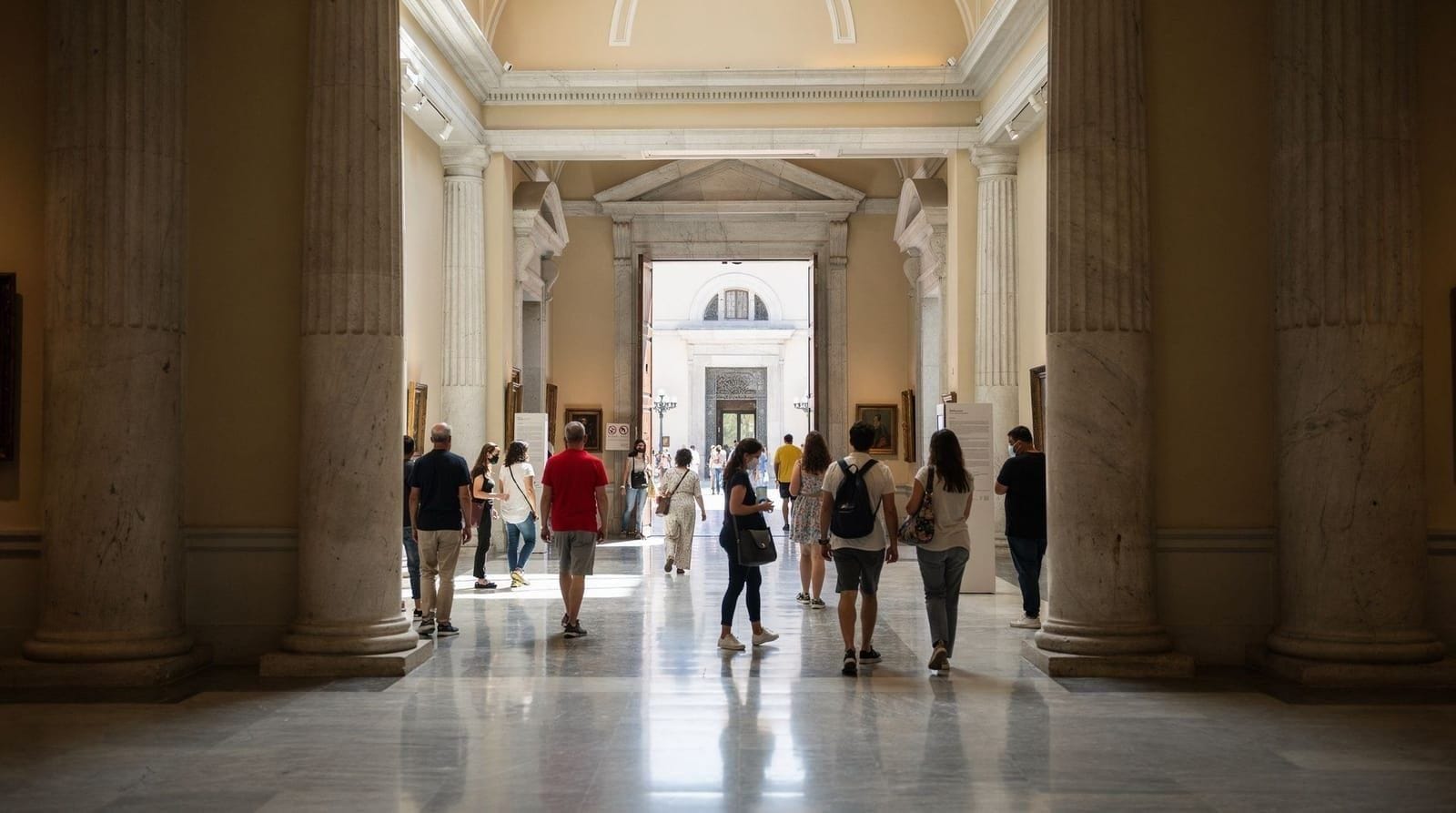
If you would rather have someone explain what you are looking at, a guided visit covering the three big art museums is a paid alternative to the free windows, and it makes sense when you want context more than you want to save money. Neither approach is better; they suit different travellers. For a wider look at how free access compares across institutions, see the museum free hours guide.
Free food-adjacent experiences
Eating is rarely free, but some of the best food-related moments in Madrid cost nothing to enjoy. Browsing a covered market costs nothing, and the markets of Madrid guide explains which ones are worth wandering through even if you buy nothing. The Mercado de San Miguel guide is honest about where the browsing ends and the tourist pricing begins. Watching the Sunday vermut ritual in La Latina is free as a spectator sport, and the vermut in Madrid guide explains what the locals are ordering.
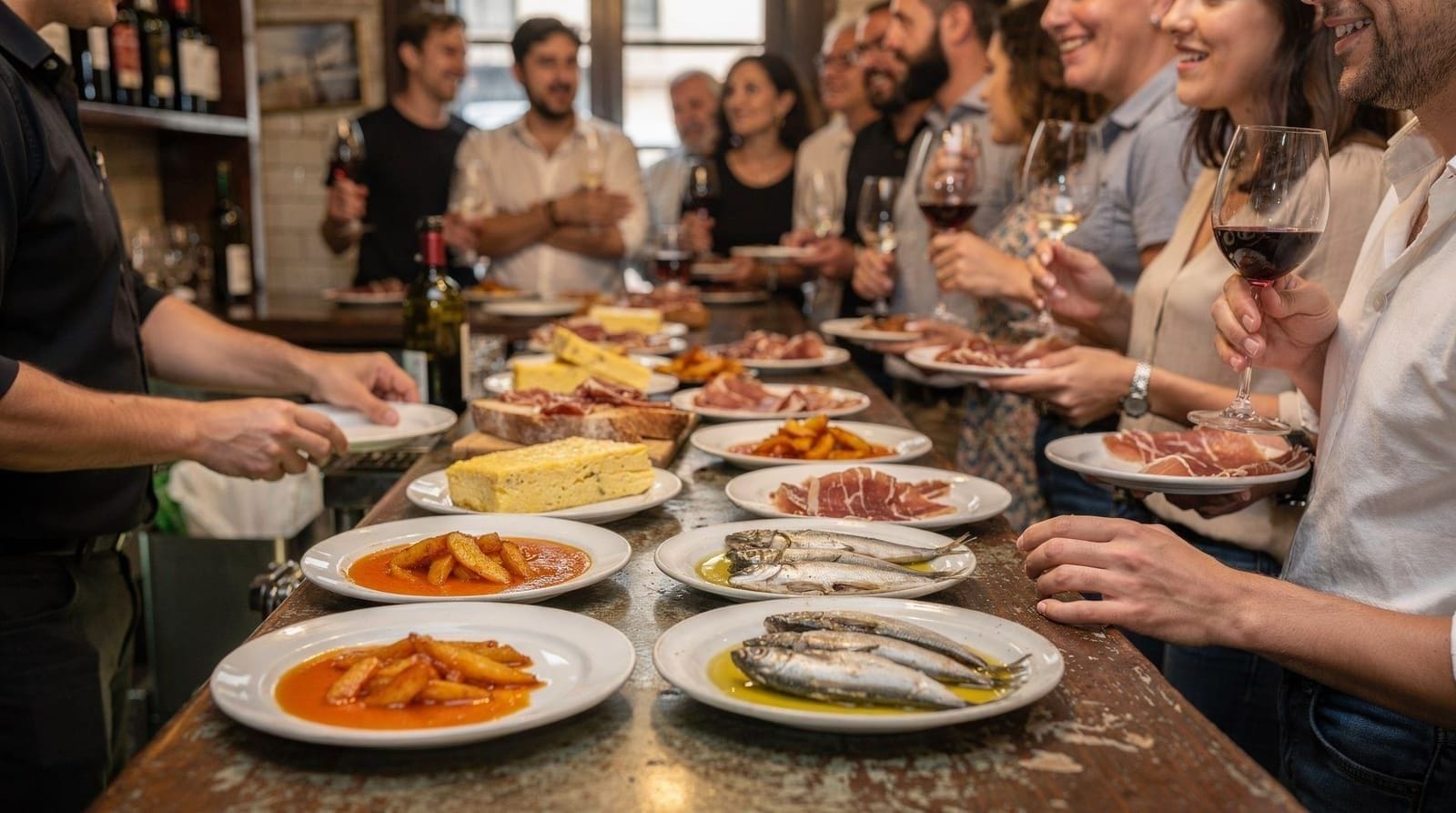
When you do decide to spend on a meal, a tapas outing built around bars away from the tourist squares is a good way to anchor a free day with one proper evening, and the eat like a local guide will help you avoid the overpriced options around the main squares.
Pairing free days with the rest of your trip
A free day works best when it sits inside a larger plan rather than replacing it. If you are travelling on a tight budget, the Madrid on a budget guide and the matching budget itinerary show how to combine free access with affordable meals and transport. The first weekend itinerary fits several of the free highlights above into two days, and the Madrid for art lovers itinerary builds a route around the museum windows. Families can lean on the free parks, and the Madrid with kids guide suggests how to pace them.
For parks specifically, the Retiro park guide covers the gardens in more depth, Madrid Río is the better choice for a long riverside stroll, and the Parque del Oeste guide covers the green strip that leads towards the Temple of Debod. The Casa de Campo guide is worth reading if you want something wilder than the city-centre gardens.
If you are considering a tip-based tour, the free walking tours guide explains how the format works, and a paid walking tour of the old town gives you a fixed price and a guaranteed group size if you would rather know the cost up front. Either way, a good guide turns the free architecture of the historic centre into something you remember.
Practical habits for a free-first trip
Check opening arrangements shortly before you travel, because free-access rules can change and holidays shift schedules. Carry a bottle and refill it, bring a light layer for the evenings, and keep small change for the tip a walking guide will expect. Keep valuables close in crowded queues; the pickpockets and safe areas guide explains where to be most alert. Finally, leave slack in the day: the best free moments in Madrid are often the unplanned ones, such as a street musician in a square or a quiet church you happen to pass.
Frequently asked questions about Free things to do in Madrid
When is the Prado free and is the queue manageable?
The Prado is free Monday through Saturday 18:00–20:00 (last admission 19:30) and Sunday/holidays 17:00–19:00. The queue forms 30–45 minutes before opening during spring and summer peak season, 10–20 minutes in autumn and winter. Arrive at the Puerta de Goya (south entrance) rather than the main Velázquez entrance — the queue often moves faster there. Once inside, you have the full permanent collection (Velázquez, Goya, Bosch, El Greco) until closing.Is the Reina Sofía free on Sundays?
Yes, but only for two hours: Sunday 12:30–14:30 (the museum itself is open 10:00–14:30 on Sundays, but earlier entry is paid). A free ticket is required and can be booked online. It is still excellent access to the permanent collection including Guernica, though expect the window to be busy. The museum is closed Tuesdays. Evening free windows (Monday, Wednesday–Saturday 19:00–21:00) give a 2-hour window. Fixed dates — 18 April, 18 May (International Museum Day), 22 May, 12 October (Día de la Hispanidad) and 6 December — are free all day.What are the permanently free museums in Madrid?
Six major museums, free or with free hours: Museo Sorolla (Calle Zurbano 68, new building; the original house museum is closed for renovation) — the painter's museum; Museo Naval (Paseo del Prado 3) — naval history including the Juan de la Cosa world map; Museo del Romanticismo (Calle San Mateo 13, €3, free Saturday from 14:00 and Sunday) — 19th-century bourgeois interior; Museo de Historia de Madrid (Calle Fuencarral 78); Real Academia de Bellas Artes de San Fernando (Calle Alcalá 13, free Tuesday–Friday 13:30–15:00); Museo Arqueológico Nacional (Calle Serrano 13, free Saturday from 14:00 and Sunday).Is the Rastro free and worth visiting?
Completely free to attend. El Rastro is Madrid's Sunday flea market, operating every Sunday and public holiday morning (09:00–15:00) in La Latina — Calle de la Ribera de Curtidores and surrounding streets. It is one of Madrid's most authentic weekly events: 3,500+ stalls selling antiques, clothes, tools, books, oddities. No entry fee, no pressure to buy. After the market, the bars of La Latina fill with post-Rastro tapas and vermut — this is one of Madrid's most genuinely local Sunday experiences.Are there free concerts and cultural events in Madrid?
Yes, extensively. Summer: Veranos de la Villa (July–August) provides free outdoor concerts, theatre, and cinema across the city. Year-round: the Centro Cultural Conde Duque (Calle del Conde Duque 11) programmes free exhibitions and occasional free concerts. The Casa de América (Paseo de Recoletos 2) has free or low-cost exhibitions and events. Many churches host free classical music concerts, particularly around festivals and Christmas. The La Virgen del Puerto riverside amphitheatre has free summer concerts.What about free walking tours — are they actually free?
Free walking tours are based on a tip model — you pay what you want at the end, but the expectation is €10–15 per person. They are not scams; many guides are knowledgeable and the quality of the standard 2-hour historic centre tour is often good. But 'free' is a marketing term, not an accurate description. If you participate in a free walking tour and leave without tipping, you are effectively taking money from a guide who has worked 2 hours. Budget €10–15 per person and it is a fair arrangement; expect genuinely free and you will feel pressured.Is Retiro Park free?
Yes, completely free, 24 hours. The Retiro (120 hectares, in the city centre) is free to enter and exit from any of its gates at any time. The rowing lake boat hire is not free (€6/45 min). The Palacio de Cristal (glass exhibition hall) inside the park is closed until 2027. The Rose Garden (Rosaleda) is free. The outdoor chess tables at the north end are free to use. The park is one of the genuine free highlights of Madrid regardless of season.
Top experiences
Bookable activities with verified prices and instant confirmation on GetYourGuide.