Malasaña guide: Madrid's creative neighbourhood explained
Madrid: Old Town Walking Tour
What is Malasaña like and why do people love it?
Malasaña is a working-class neighbourhood that became the bohemian epicentre of Madrid's 1980s cultural explosion (the Movida Madrileña) and never fully gentrified. Today it has the best concentration of independent coffee shops, vintage clothing stores, natural wine bars, and affordable tapas in central Madrid. It is the neighbourhood most Madrileños would choose for a spontaneous Sunday morning — not the Royal Palace.
| Where | North of Gran Vía, Metro Tribunal / Noviciado |
| Best for | Coffee culture, vintage shopping, independent bars |
| Getting there | 12–15 min walk from Sol, or Metro Line 1/10/2 |
| Best time of day | Morning for cafés, evening for bars |
| Stay here if | You want value-for-location without the Sol premium |
What Malasaña actually is — and is not
Every travel article calls Malasaña “hipster.” This is both reductive and somewhat dated. Malasaña is a neighbourhood of about 50,000 residents that has been through cycles of working-class grit, artistic explosion, drugs-and-punk decline, cultural rehabilitation, and mild gentrification — without ever becoming the kind of sanitised tourist experience you find in Covent Garden or Le Marais.
The neighbourhood’s boundaries are roughly: Calle de Alberto Aguilera to the north, Gran Vía to the south, Calle de Fuencarral to the east, and Calle de San Bernardo to the west. This is about 400 by 400 metres of streets that reward walking without a plan.
The Malasaña destination page covers the neighbourhood’s history. This guide focuses on how to use it — where to eat, drink, sleep, and shop, plus practical logistics for fitting it into a wider Madrid trip.
The Movida Madrileña: why this matters
You cannot understand Malasaña without understanding the Movida. After Franco’s death in 1975, Spain’s cultural repression — 40 years of it — released overnight into one of the most intense explosions of creative energy in 20th-century European history. Between roughly 1977 and 1985, Madrid’s young population produced music, film, fashion, and art at a speed and volume that astonished the rest of Europe.
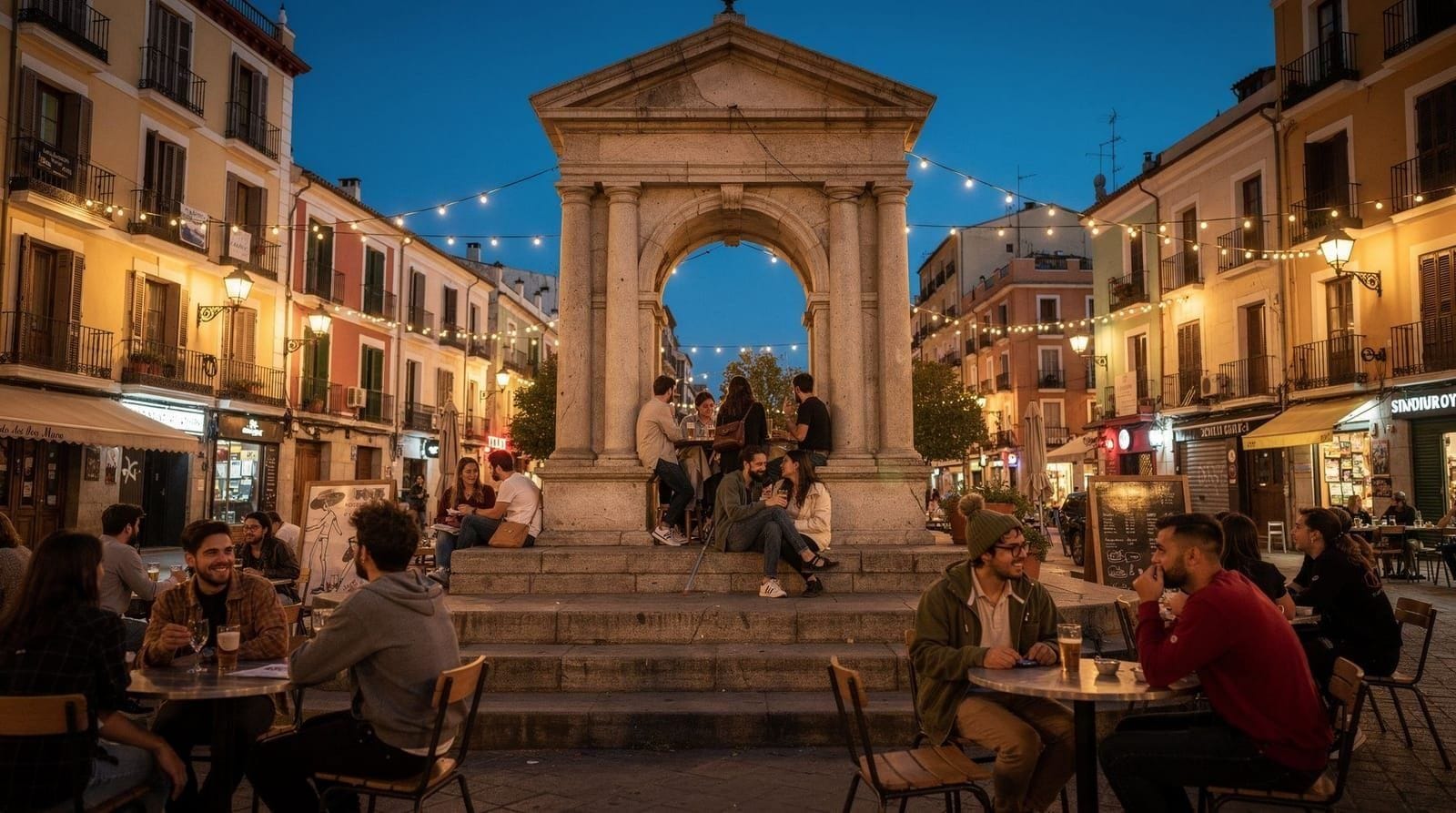
Malasaña was the geographic centre of all this. The Plaza del Dos de Mayo became the meeting point. The bars on Calle del Pez, Calle de la Palma, and Calle del Espíritu Santo hosted performances that launched careers. Pedro Almodóvar made his early films in these streets. The bands that defined Spanish rock — Alaska y los Pegamoides, Nacha Pop, Radio Futura — played the small venues here.
The Dos de Mayo plaque on the plaza still commemorates the 1808 uprising against Napoleon; it now also commemorates a different kind of revolution.
Getting here
Metro: Tribunal (Lines 1 and 10) is the most central stop, dropping you at the northern edge of the neighbourhood. Noviciado (Line 2) accesses the western edge. Chueca (Line 5) gives easy access to the eastern streets.
Walking from Sol: 12–15 minutes north via Gran Vía or directly up Calle de Fuencarral.
Walking from the Prado: 30 minutes via Chueca — manageable, and the walk through Cibeles and Chueca is interesting in itself.
By bicycle: BiciMAD stations sit at multiple points along the neighbourhood’s edges (Tribunal, San Bernardo, Fuencarral), making a quick ride from the historic centre or Chamberí a realistic 10–15 minute option outside the busiest traffic hours.
Where to eat in Malasaña
La Carmencita (Calle de la Libertad 16): One of Madrid’s oldest taverns, dating to 1854. The kitchen serves traditional Castilian dishes — cocido madrileño, croquetas, huevos estrellados — at prices that have not fully tracked with the neighbourhood’s rising profile. Lunch set menu around €14–16.
Federal Café (Plaza del Dos de Mayo 19): The best avocado toast in Madrid, which sounds ironic but is genuinely excellent. The terrace on Dos de Mayo is one of the best outdoor seating spots in the neighbourhood for breakfast or weekend brunch. Queue expected on Saturday and Sunday mornings.
Bodega de la Ardosa (Calle de Colón 13): A 19th-century wine cellar with original barrels, vermouth on tap, and some of the best tortilla española in Madrid. Order the tortilla and a glass of vermouth at any time of day and feel immediately correct.
La Mucca de Pez (Calle del Pez 12): Reliable Italian-influenced kitchen with generous portions and an affordable wine list. One of the neighbourhood’s consistently good mid-range options.
El Ñeru (Calle de la Palma 11): Asturian cooking — sidra (cider), fabada (bean stew), cachopo (stuffed veal escalope). Good for when you want something substantial and regional.
Where to drink
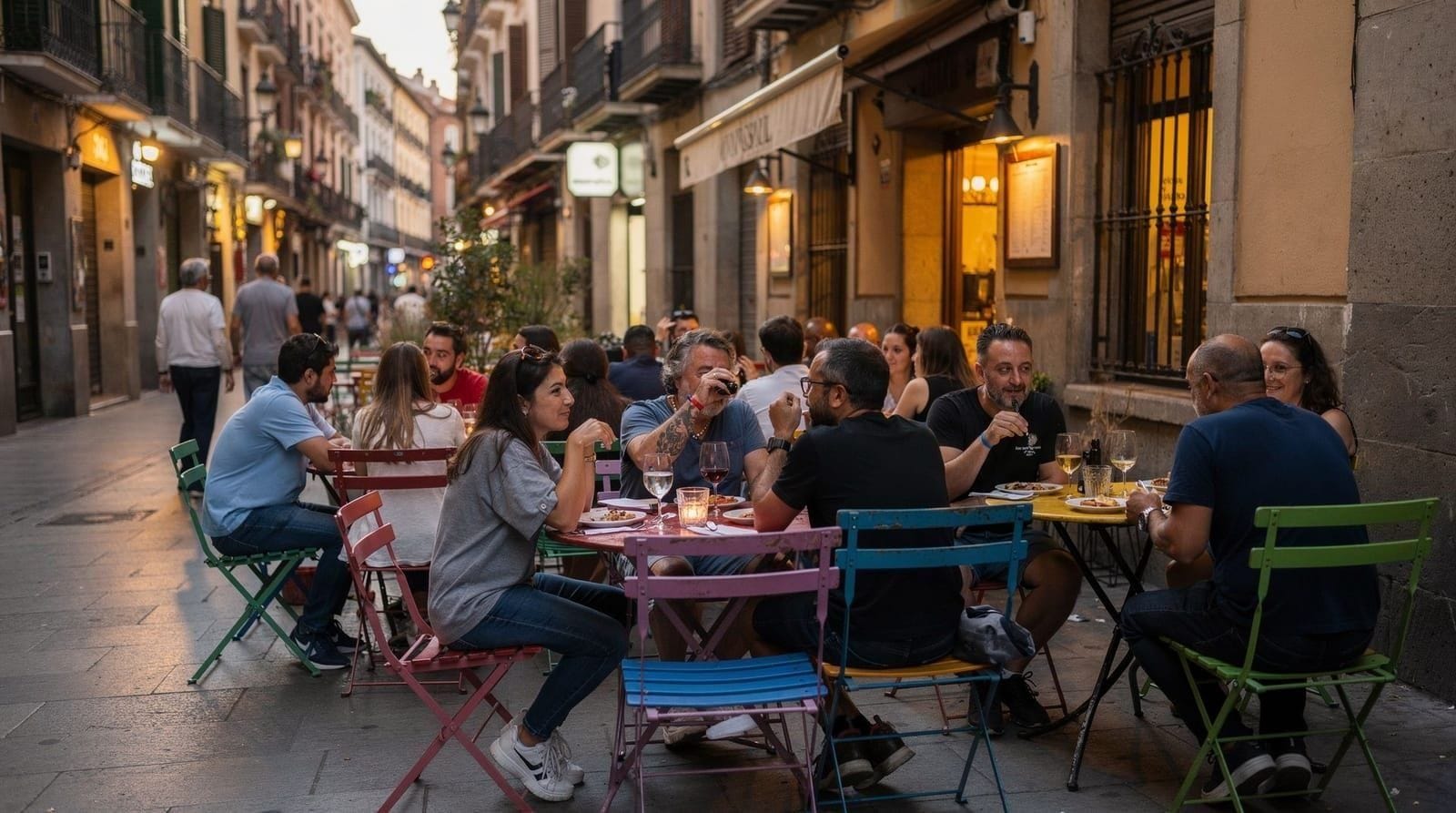
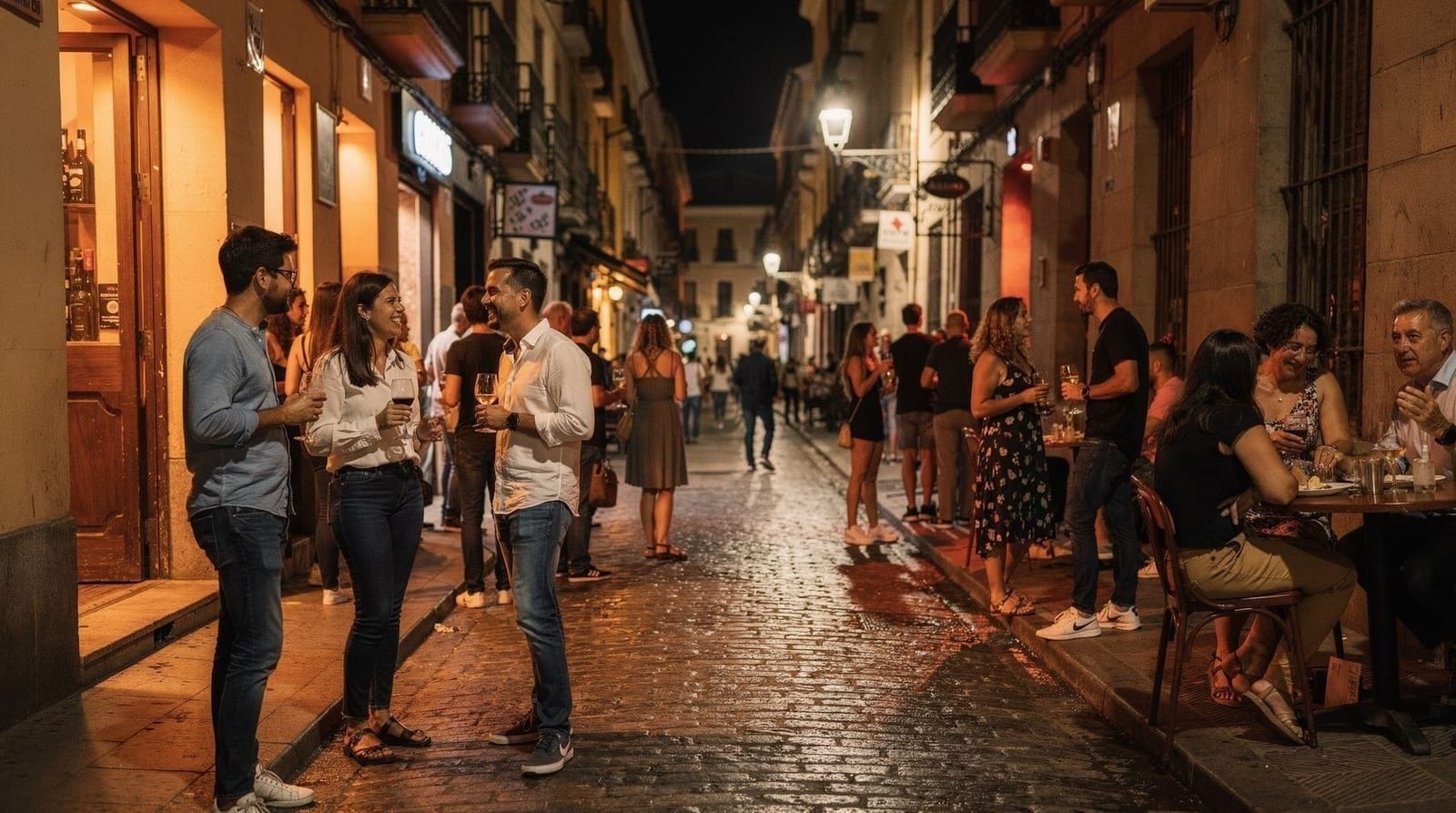
Malasaña’s bar scene runs from vermouth hour (13:00) through to 05:00+ on weekends. A typical Malasaña evening involves multiple venues rather than settling in one.
El Penta (Calle de la Palma 4): Dive bar with strong character, cold beer, good music. The antidote to any bar that has “craft” in its name.
Lolina Vintage Café (Calle del Espíritu Santo 9): The definitive Malasaña ambience — vintage furniture, mismatched crockery, natural light, and a clientele that looks like it walked out of a photograph of the Movida. Good for coffee in the afternoon, wine in the evening.
Tupperware (Calle de la Corredera Alta de San Pablo 26): The bar most associated with the neighbourhood’s underground music scene. Live music some nights; reliably loud, intentionally unfussy.
Bar El 22 (Calle del Pez 22): Corner bar with excellent draft beer and zero pretension. The kind of place where regular customers’ names are known by the bar staff. This is not a tourist destination; it’s a local bar that will make you feel like one.
Shopping on Calle Fuencarral
Calle Fuencarral is the main shopping spine running from Gran Vía north into Malasaña and Chueca. It is the best street in Madrid for independent fashion, streetwear, and mid-range retail — distinct from the luxury of Calle Serrano in Salamanca and the chains of Gran Vía.
Notable stops on Fuencarral:
- Bershka and Zara (lower section, near Gran Vía — mainstream but popular)
- El Templo de Susu — vintage and second-hand, serious selection
- Funkadelica — vinyl records, genuinely good stock from all eras
- Magpie — curated vintage clothing
- Achoté — Spanish independent fashion
The Mercado de Fuencarral (indoor market, around halfway up the street) is a multi-brand concept store with clothing, accessories, and food stalls. Good for browsing even if you do not intend to buy.
For vintage beyond Fuencarral: Calle de la Velarde and surrounding streets have a cluster of second-hand and vintage shops that tend to be less curated but sometimes yield better finds at lower prices.
Where to stay in Malasaña
The accommodation here offers the best value-to-location ratio in central Madrid. The tourist premium is lower than Sol; the neighbourhood quality is higher.
Hostal Pizarro (Calle de Pizarro 16): Clean, well-run guesthouse. Doubles from €65. Honest.
Only YOU Hotel Málasana (various — the brand has multiple Madrid properties): Design-forward boutique hotels that Madrid’s creative industry uses for client visits. Doubles typically €140–200. Genuinely stylish without being exhausting about it.
Generator Madrid (Calle de Santa Engracia 120): Best-in-class hostel design. Dorms from €20, private rooms from €70. Rooftop bar. Slightly north of the core Malasaña area but on Line 7 metro.
Day structure in Malasaña
Morning: Coffee at Federal Café or Lolina Vintage. Walk Calle del Pez and surrounding streets before shops open. Browse the market at Noviciado if it’s a weekend.
Afternoon: Calle Fuencarral for shopping. Vermouth at Bodega de la Ardosa from 13:00. Lunch at La Carmencita or El Ñeru.
Evening: Walk to Chueca for dinner if you want something more varied; return to Malasaña for bars from 21:00.
Late night: The real Malasaña starts after midnight. Friday and Saturday nights run to 04:00–06:00 without strain.
Using Malasaña as a base for the whole city
A guided old-town walking tour makes a sensible complement to a Malasaña base — it covers the historic centre (Royal Palace, Plaza Mayor, Sol) in a structured two-hour sweep, which pairs well with the self-directed exploration that Malasaña rewards.
From Malasaña, the Prado museum is a 30-minute walk through Chueca and Cibeles — the most scenic walking route in the city. The Retiro park guide covers the park, which is 25 minutes on foot or two metro stops from Tribunal.
Galleries and cultural spaces in Malasaña
The neighbourhood has a quiet but genuine contemporary art scene — not the institutional culture of the Prado zone, but the working galleries and project spaces that sustain living artists.
Sala Rekalde (various Malasaña addresses — check current): Small commercial gallery with rotating exhibitions by emerging Spanish artists. Free entry to openings, which are typically Thursday evenings.
Espacio Trapézio (Calle de la Palma 16): Artist-run space with a programme of experimental art, performance, and sound. The kind of space that exists because the neighbourhood’s rents, while rising, still make independent cultural operation possible.
La Neomudéjar (Calle de Ávila — Metro Jesús de Medinaceli area): Further east but within the creative neighbourhood zone — a former ceramic tile factory turned exhibition space. The architecture (Mudéjar revival, 1900) is as interesting as anything shown inside.
The street art in Malasaña is less concentrated than in Lavapiés but present on blank walls throughout. The area around Calle de San Bernardo has commissioned murals from local artists; the streets around the Plaza del Dos de Mayo have political and social commentary pieces that change seasonally.
Malasaña for solo travellers
The neighbourhood is one of Madrid’s best for solo visitors. The café culture — tables often occupied by solitary readers, remote workers, and people watching the street — normalises solo time in a way that the taberna culture of La Latina (which is more group-oriented) does not.
Practical solo advantages:
- Coffee shops with enough ambient activity to make solo sitting comfortable
- Bars where standing at the counter is the cultural norm — ideal for solo drinking
- A relatively young, internationalised population that is accustomed to solo visitors
- Good metro and walking access to all sights without needing to arrange shared transport
The Generator Madrid hostel (technically Chamberí/Malasaña border) is the reference solo-traveller base for this neighbourhood.
What to skip
The restaurant on Calle del Pez with the English-language menu board in the window: Any Malasaña restaurant signalling heavily to tourists has compromised the thing that makes the neighbourhood worth visiting. Walk another 50 metres.
Overpriced cocktail bars on the Gran Vía edge: The closer to Gran Vía, the higher the tourist premium. The real Malasaña experience is on the streets that don’t appear on the first page of results when you search “cool bars Madrid.”
Malasaña and the Dos de Mayo history
The Plaza del Dos de Mayo commemorates the 2nd of May 1808 uprising against Napoleon’s forces occupying Madrid. On that morning, a group of Madrileños armed with whatever they could find attacked French soldiers near the site of the royal stables, triggering a city-wide uprising that was suppressed violently by the French by nightfall. The executions of the insurgents — depicted famously in Goya’s painting “Third of May 1808” (now in the Prado) — became the spark for the wider Peninsular War.
The square carries this history lightly today — cafés, a playground, young Madrileños sitting on the grass. The Monteleón barracks (the site of the main resistance) stood on the square’s location. Two figures — Daoiz and Velarde, the artillery officers who led the armed resistance — have statues here.
Understanding this context makes the neighbourhood feel different. Malasaña was never a quiet residential area; it has a history of resistance and non-conformity that the Movida Madrileña continued and the neighbourhood’s current character perpetuates.
Coffee culture in Malasaña
The neighbourhood has one of the best café concentrations in Madrid — independent coffee shops that take the craft seriously rather than the Spanish café tradition of an espresso made from pre-ground industrial blends.
La Bicicleta Café (Plaza de San Ildefonso 9): The reference Malasaña café — third-wave coffee, good food, creative environment, extremely popular on weekend mornings. Expect a queue. The queue moves.
Tom’s Café (Calle de la Palma 5): More peaceful than La Bicicleta, equally good coffee. Quieter mornings, reliable afternoon spot.
Café Federal (Plaza del Dos de Mayo 19): Australian-influenced café on the main plaza. The best brunch in the neighbourhood.
Toma Café (Calle de la Palma 49): Small, serious, Spanish specialty coffee. The baristas know what they’re doing.
La Tape (Calle de San Vicente Ferrer 23): Café and natural wine bar — good for afternoon coffee that transitions into evening wine.
Music and the Malasaña scene
The neighbourhood’s Movida heritage means music culture runs deep. Several important venues and record shops remain active.
Costello Club (Calle del Caballero de Gracia 10, near Gran Vía edge): Live music and DJ nights, diverse programming. One of Madrid’s most active small live music venues.
El Junco (Plaza de Santa Bárbara 10, technically Chueca border): Jazz, soul, and live music. The closest Madrid has to a genuine jazz club.
Contramano (Calle del Arquillo 6): Small venue, alternative programming, long-running. The kind of place the neighbourhood’s history produced.
Danza y Movimiento (Calle de la Palma): Dance performance space that also functions as a social centre for the neighbourhood’s artistic community.
Record shops: Malasaña still has a vinyl culture. Calle de Fuencarral and its side streets host several shops with serious collections — Funkadelica is the most established. New releases, Spanish music, classic rock, electronic — the selection reflects the neighbourhood’s eclecticism.
Seasonal Malasaña
Spring (April–May): The best time. The terrace culture comes alive on Dos de Mayo and the surrounding streets. The neighbourhood’s year-round indoor character opens up.
Summer (July–August): Busier with visitors; slightly fewer local regulars (some Madrileños leave for August). The nightlife remains strong. Avoid the streets around 14:00 in a heatwave — find a bar interior and wait for 18:00.
Autumn (September–October): Returns to full neighbourhood intensity. Film festival season brings more cultural activity.
Winter: Malasaña’s indoor culture — the cafés, wine bars, and intimate venue scene — is at its best in winter. The Dos de Mayo plaza is less populated but the surrounding streets maintain activity.
Malasaña in context
Malasaña connects naturally with Chueca to the east — the two neighbourhoods have a shared character and together form the most interesting extended neighbourhood in central Madrid. A morning in Malasaña and an evening in Chueca is a satisfying day.
The neighbourhood also connects north toward Chamberí — a more residential, upscale area with an excellent restaurant scene on Calle de Ponzano. The Chamberí destination page covers this adjacent neighbourhood.
For a broader overview of which neighbourhood to base yourself in, see the where to stay in Madrid guide and the best area for first-timers guide.
Malasaña on a budget
Malasaña is one of the better neighbourhoods for keeping costs down without sacrificing quality. Menú del día lunches run €12–15 at neighbourhood restaurants, a caña at a local bar costs €2.50–3.50, and the free galleries and street art cost nothing at all. Compared with staying in Sol, a Malasaña base saves noticeably on both accommodation and food, since the tourist-price premium common near Puerta del Sol largely doesn’t apply here. See the Madrid on a budget guide for the wider city picture, and eat like a local for extending the same value-conscious approach across the whole trip.
A one-day Malasaña walking route
For a visitor with a single day to give the neighbourhood, a loop rather than a grid works best: start at Federal Café on Plaza del Dos de Mayo for breakfast, walk Calle del Pez west toward San Bernardo taking in the smaller boutiques, cut back east along Calle de la Palma for the wine bars and Espacio Trapézio, have lunch at La Carmencita or Bodega de la Ardosa, then finish the afternoon on Calle Fuencarral for shopping before deciding whether to stay for the evening bar scene or move on to Chueca. This covers the neighbourhood’s full range — food, culture, shopping, and nightlife — in about six hours without retracing your steps.
Pairing Malasaña’s bars with a guided tapas evening
Malasaña rewards wandering, but a first evening can feel like a lot of doors and no obvious way in. If you would rather have someone else choose the stops, a tapas crawl built around neighbourhood bars rather than tourist squares is a good way to learn how ordering works before you strike out alone. The same logic applies to wine: a local-led tapas and wine tasting suits visitors who enjoy the natural wine bars described above but do not know where to start. Neither replaces the unplanned bar-hopping that defines the area; think of them as a first-night orientation, after which you can return to your favourites on your own.
For the wider picture on whether a guided evening is worth the money, the food tour worth it guide and the food walking tour guide set out the trade-offs honestly.
Eating well beyond the places listed here
The restaurants and cafés above are a starting point, not a complete map. Once you have a feel for the neighbourhood, the best tapas bars guide and the Madrid tapas guide help you read a menu and order the way locals do. If you want a vermouth ritual that mirrors the one at Bodega de la Ardosa, the vermut in Madrid guide explains the habit, and the wine bars guide points toward similar rooms elsewhere in the city.
Hungry for the traditional dishes served at La Carmencita? The cocido madrileño guide and the callos a la madrileña guide explain what you are ordering and why it matters here. For a sweet stop after a night out, the churros con chocolate guide covers the classic late-night habit.
Extending the evening beyond Malasaña
When the neighbourhood’s bars wind down, or if you want a different mood, the Madrid nightlife guide and the Malasaña bars guide go deeper on where to head next. The late-night Madrid guide is useful for planning around the city’s famously late rhythms, and the Dos de Mayo guide gives more on the plaza that anchors so much of the area’s social life. For a daytime counterpoint, the Lavapiés guide and the La Latina guide offer two very different neighbourhood atmospheres a short ride away, and the Madrid itinerary for foodies shows how a Malasaña day can slot into a longer trip.
Frequently asked questions about Malasaña
Is Malasaña a good base for a first visit to Madrid?
Yes, with one caveat: it’s a 12–15 minute walk from Sol rather than right in the historic centre, so first-timers who want everything within five minutes should consider Sol/Centro instead. For visitors who value neighbourhood character, better value, and don’t mind a short daily walk or metro ride, Malasaña is one of the strongest bases in the city.
How does Malasaña compare to Chueca for a short visit?
They complement each other more than compete. Malasaña has the edge for daytime coffee culture, vintage shopping, and casual bars; Chueca has more polished cocktail bars and a stronger LGBTQ+ scene. Many visitors do a morning in one and an evening in the other, since they’re a 10-minute walk apart — see the Chueca guide for the comparison in full.