Best area to stay in Madrid for first-time visitors
Madrid: Prado Reina Sofía Entry Guided
What is the best area to stay in Madrid for a first visit?
La Latina or Barrio de las Letras for most first-timers — both give central access to the Royal Palace, Prado, Plaza Mayor, and tapas bars without the tourist-saturation of Sol. Malasaña is better if you prioritise nightlife and café culture. Salamanca suits first-timers who want upmarket shopping and calm streets. Sol is the laziest option — extremely central but noisy and overpriced for what you get.
Why first-timers get the neighbourhood choice wrong
Most travel sites recommend Sol for first-timers because it is easy to explain. “Everything is close” is technically true. What they do not tell you is that Puerta del Sol at midnight on a Saturday is an assault course of street performers, tourist menus, pickpocket hotspots, and noise that permeates walls. Many first-time visitors end up sleeping in earplugs wondering why people say they love Madrid.
The better approach is to understand what each area actually delivers — then match it to your specific trip style.
| Best all-round choice | La Latina — authentic tapas, central, reasonable prices |
| Best for art/museum trips | Barrio de las Letras — closest base to the Golden Triangle |
| Best for nightlife | Malasaña or Chueca |
| Best for pure convenience | Sol/Gran Vía — everything within 20 minutes, at a price premium |
| Minimum stay to justify a first visit | 3 full days |
The five realistic choices for first-timers
La Latina: best all-round base
Walking distance to: Royal Palace (15 min), Plaza Mayor (8 min), Prado (25 min), Retiro (30 min).
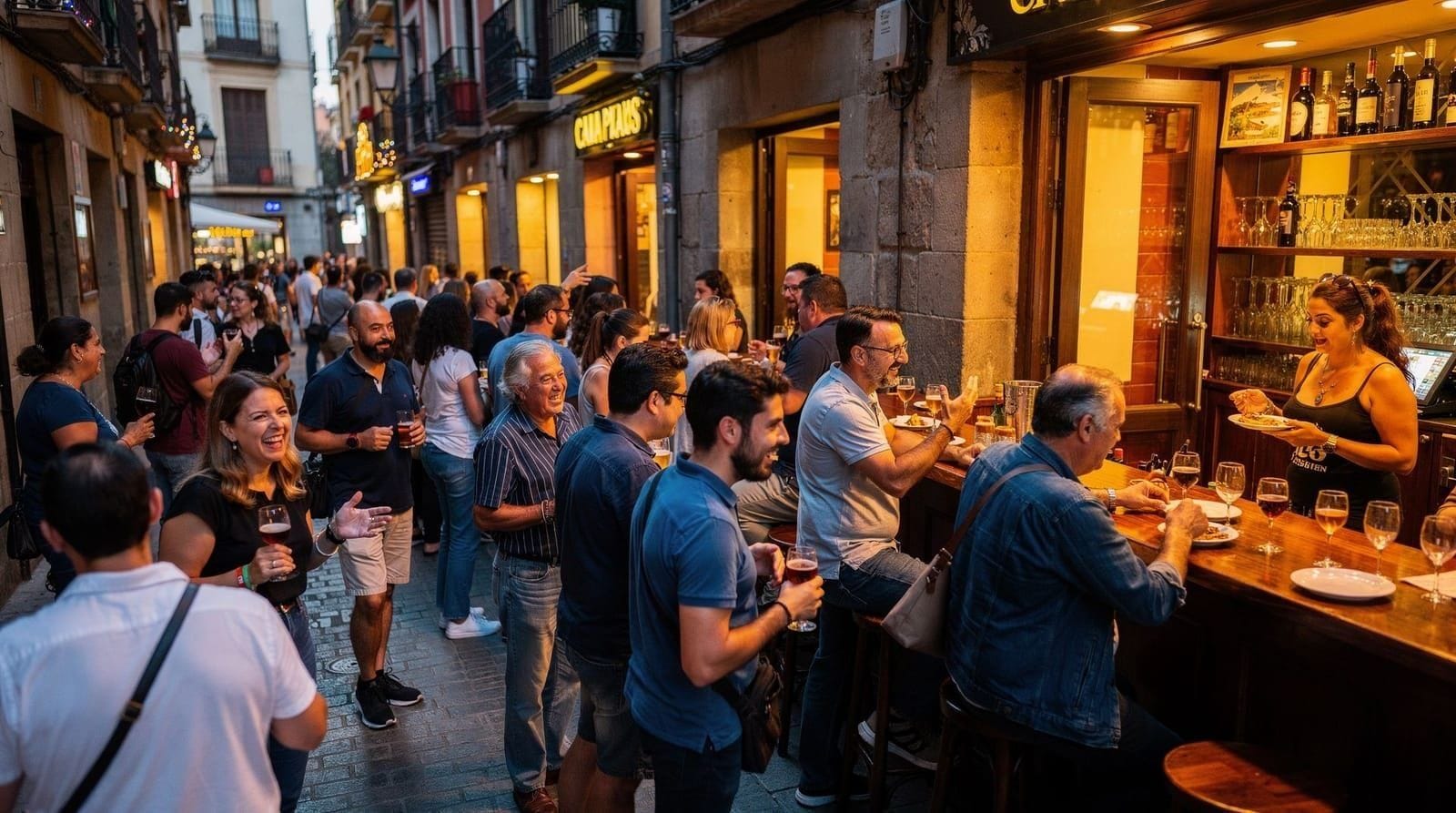
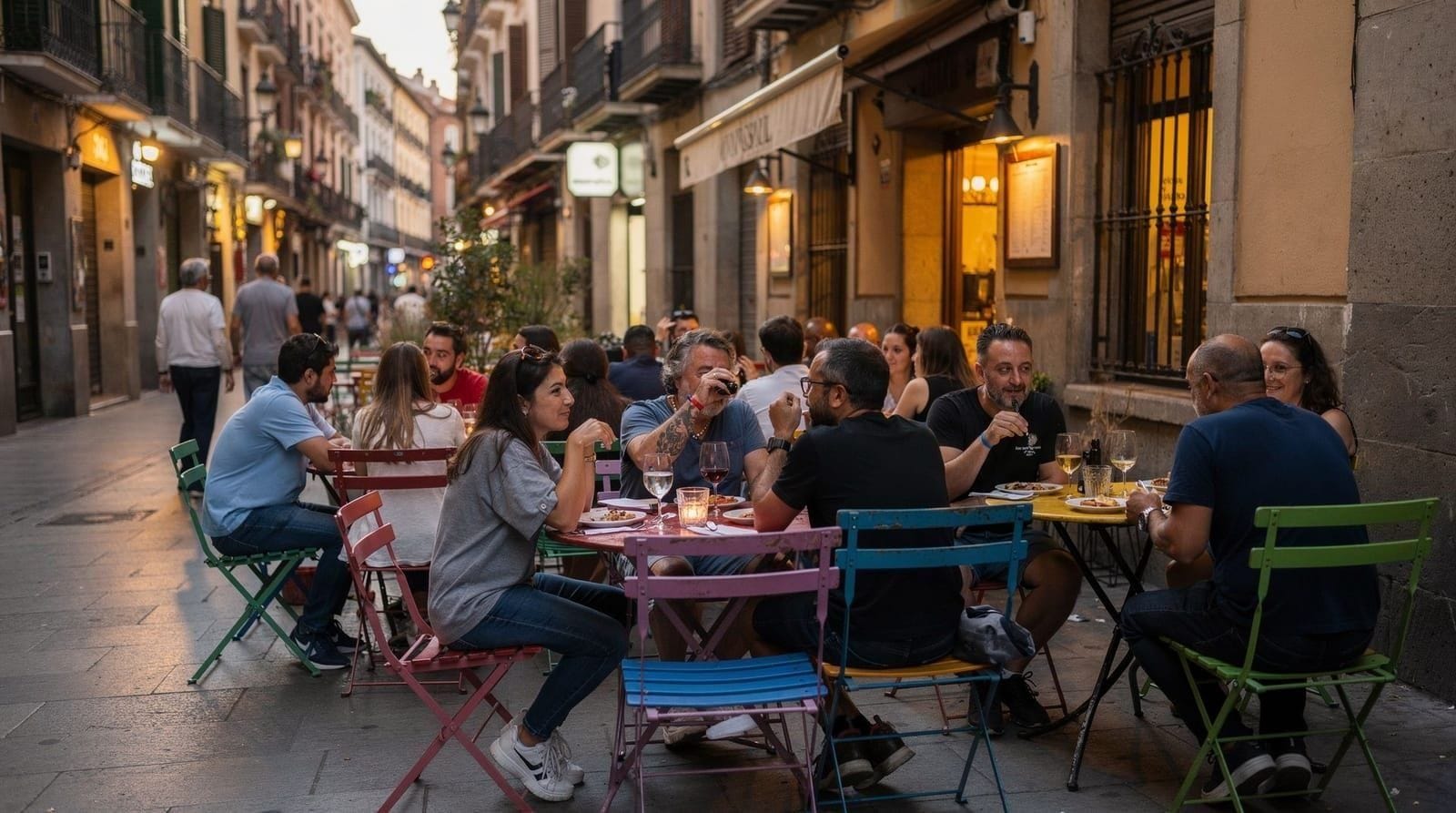
La Latina is the neighbourhood that most quickly converts visitors into people who understand why Madrileños are proud of their city. The streets around Calle de la Cava Baja contain Madrid’s densest concentration of good tapas bars — old-school cervecerías where the bar staff know the regulars, and the jamón hanging from the ceiling is not decorative. On Sundays, El Rastro market fills the surrounding streets from 09:00 to 15:00.
What you gain: Authentic atmosphere, best tapas access, reasonable prices, easy walking to all major sights.
What you sacrifice: Slightly less metro connectivity than Sol (though the La Latina metro stop is five minutes’ walk). No luxury hotel stock — this is boutique or mid-range territory.
Best for: Couples, food lovers, first-timers who care about authenticity over convenience.
See the La Latina destination page and La Latina guide for what to do and where to eat.
Barrio de las Letras: culture-focused base
Walking distance to: Prado (10 min), Thyssen (10 min), Reina Sofía (12 min), Sol (12 min), Plaza Mayor (15 min).
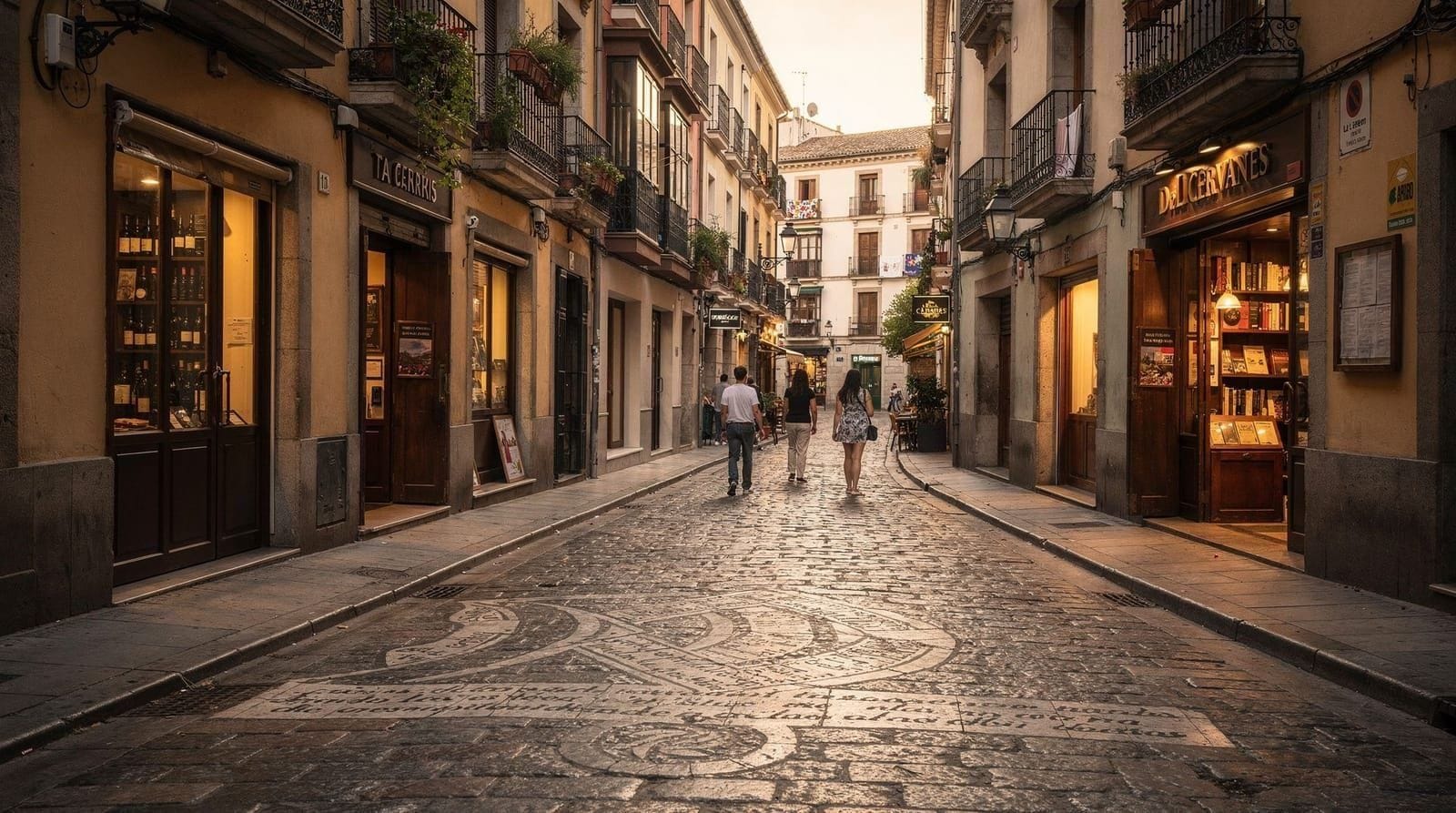
The literary quarter between Huertas and the Paseo del Prado is the smartest choice for art-focused first visits. The hotel stock here is the best in Madrid at the mid-range and boutique level — conversions of historic buildings with good service and sensible layouts. It is quieter than Sol at night, which is not nothing when you need to be functional for morning museum visits.
Literary quotations are embedded in the pavements — Madrid’s nod to its Golden Age writers (Cervantes, Lope de Vega, Quevedo). The neighbourhood pubs and wine bars are sophisticated without being pretentious. Plaza de Santa Ana is the social hub.
Because the museums are so close, this is also the base where a guided visit is easiest to fit in without planning a whole day around it. If you would rather have someone steer you through the collections, a guided visit to the Prado and Reina Sofía with entry included pairs naturally with a hotel a short walk away.
Best for: Art lovers, culture-focused first visits, couples who want to eat and drink well without chaotic surroundings.
See the Barrio de las Letras guide for the full neighbourhood breakdown.
Malasaña: best for younger first-timers
Walking distance to: Gran Vía (10 min), Prado (30 min via Chueca and Cibeles), Royal Palace (20 min).
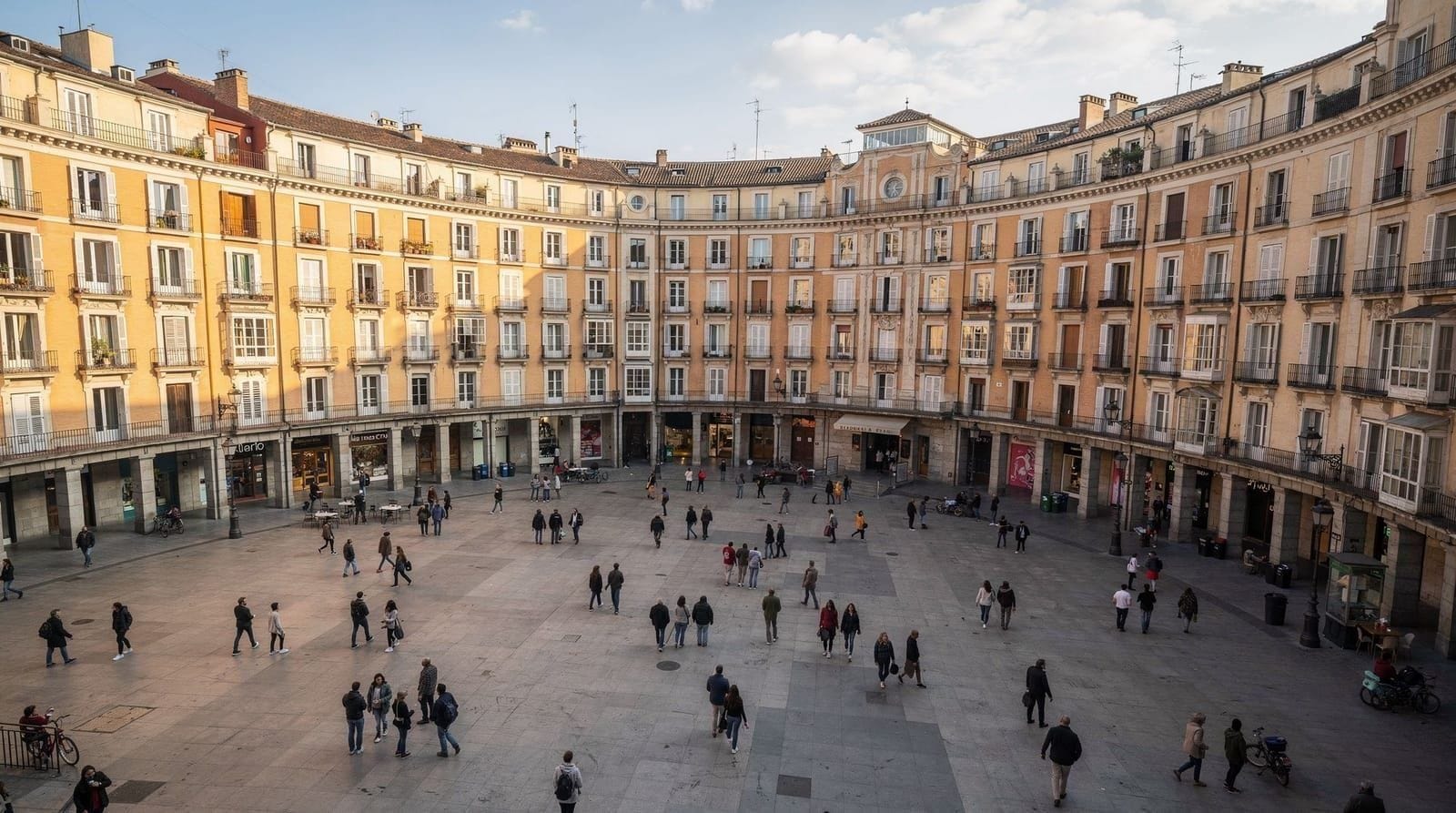
Malasaña is where Madrid’s creative energy lives. The Plaza del Dos de Mayo commemorates the 2nd of May 1808 uprising and now serves as a neighbourhood social hub. The streets radiating from it contain Madrid’s best coffee shops, independent record stores, vintage clothing, and bars that take pride in not having a tourist menu.
The hotel options here punch above their price point. A three-star hotel in Malasaña often delivers what you’d pay €40 more for in Sol — because the tourist premium is lower.
Best for: First-timers under 35, solo travellers, nightlife priorities, creative types.
See the Malasaña guide and the Malasaña destination page for the full picture.
Chueca: best for community atmosphere
Walking distance to: Gran Vía (8 min), Prado (25 min), Retiro (20 min), Salamanca (15 min).
Chueca operates as a village within the city. The square (Plaza de Chueca) has a market on weekend mornings; the surrounding bars and restaurants are some of the most reliable in Madrid at the mid-range level. It is Madrid’s LGBTQ+ neighbourhood and one of the most welcoming areas in the city for all visitors.
During Madrid Pride (late June/early July), Chueca is the epicentre of one of Europe’s largest celebrations — if your trip overlaps, expect extraordinary energy and very high hotel demand (book months ahead).
Best for: LGBTQ+ visitors, first-timers who want community atmosphere, good food without tourist premiums.
See the Chueca guide and the Chueca destination page.
Sol/Gran Vía: when pure convenience wins
Walking distance to: Literally everything — this is the geographic centre.
If you have mobility limitations, very young children, heavy luggage, or a trip where you genuinely cannot afford to spend any mental energy on navigation, Sol makes sense. The metro hub here connects to every line. Everything is within 20 minutes on foot.
The trade-offs are real: higher prices for equivalent quality, more noise, more tourist-priced restaurants within arm’s reach. The Sol and Centro guide covers how to navigate the neighbourhood honestly.
Best for: Visitors with mobility considerations, those on very short stays (one or two nights), travellers who prioritise accessibility over atmosphere.
The areas first-timers should skip
Chamartín: This is where the Bernabéu stadium is — genuinely excellent for a football-focused visit, but 20+ minutes by metro from the historic centre and with minimal neighbourhood life for non-football visitors.
Near Atocha station: Functional business hotels at reasonable rates, but the neighbourhood (Embajadores, lower end of Lavapiés) has minimal atmosphere and no strong reason to be here unless you’re arriving/departing from Atocha repeatedly. Stay in Lavapiés proper instead.
Further out on the metro: Anything requiring more than two metro stops to reach Sol is too far for a first visit. Madrid’s outer suburbs are residential and not designed for tourists.
Budget by area (2026 mid-season)
| Area | Hostel dorm | Budget double | Mid-range | Boutique/4★ |
|---|---|---|---|---|
| Sol/Centro | €30–45 | €80–110 | €130–180 | €200–350 |
| La Latina | €25–40 | €65–90 | €100–150 | €150–250 |
| Malasaña | €20–35 | €60–85 | €90–140 | €130–220 |
| Chueca | €22–38 | €65–90 | €100–155 | €150–260 |
| Barrio Letras | €25–40 | €70–95 | €110–170 | €160–280 |
| Salamanca | — | €90–120 | €140–200 | €220–400 |
| Lavapiés | €18–35 | €50–80 | €80–130 | €120–180 |
All prices per room per night, excluding city tax (€1–4 per person per night depending on hotel category).
Practical decisions before you book
Check the check-in/check-out alignment with your transport. If you arrive at Atocha at 07:00 by overnight train from Barcelona, staying near Atocha for the first night and moving to your chosen neighbourhood on day two is sometimes more practical than dragging luggage across town at dawn.
Request a quiet room explicitly. Madrid’s older buildings have interior patios (interior rooms face the courtyard rather than the street) — ask for these by name. In any Sol/Gran Vía hotel, interior rooms are significantly quieter.
Book the Prado free hours as your first evening activity. The Prado is free Monday–Saturday 18:00–20:00 and Sunday 17:00–19:00. This is one of Madrid’s most genuine travel tips — no queues, the rooms are less crowded than during the day, and it gives you an immediate sense of what the city offers. Plan dinner at 21:00 (Madrileños eat late).
If the free evening window does not suit your plans, or you want context for what you are looking at, a guided Prado visit with skip-the-line entry is a sensible daytime alternative, and it works well as a first-morning activity wherever you are staying. For more on making the most of the museum, see the Prado Museum guide.
Getting the first day right from any neighbourhood
Regardless of where you stay, the optimal first morning in Madrid follows a similar structure:
08:30–10:00: Walk before the tourist crowds arrive. The Plaza Mayor at 08:30 is almost empty — the best time to see it. The Royal Palace forecourt is uncrowded before 10:00.
10:00–13:00: Royal Palace visit (opens 10:00). Allow two hours for the State Apartments. The Royal Palace guide covers the skip-the-line options.
13:00–15:30: Walk down to La Latina for lunch. Even from Sol this is 12 minutes; from Malasaña or Chueca it is 20 minutes. The Cava Baja tapas experience is the essential first-day food activity regardless of your base.
15:30–18:00: Rest or neighbourhood exploration — let the heavy lunch settle. This is also when metro commuting is lightest if you want to move between areas.
18:00–20:00: Prado free opening hours. Walk from anywhere in the historic centre (20 minutes maximum). The evening atmosphere in the museum is the best time for Velázquez’s Las Meninas and the Goya dark paintings — fewer crowds, better light. Travellers who would rather see Picasso’s Guernica as well can look at a skip-the-line ticket for the Reina Sofía on another day, since the two museums are close neighbours in the Letras area.
21:00 onwards: Dinner in your neighbourhood at the Madrileño hour.
What “walkable” means in Madrid
Every guide to Madrid describes the centre as “walkable” — it is worth being specific about what this means in practice.
The distance from Puerta del Sol to:
- Royal Palace: 1.2 km (15 minutes at a moderate pace)
- Prado museum: 1.5 km (20 minutes)
- Retiro park east entrance: 2.0 km (25 minutes)
- Plaza Mayor: 0.6 km (8 minutes)
- Malasaña (Plaza del Dos de Mayo): 1.2 km (15 minutes)
- La Latina (Cava Baja): 0.9 km (12 minutes)
- Chueca (Plaza de Chueca): 0.9 km (12 minutes)
These are genuinely walkable distances on flat or gently sloping terrain. The only significant incline in the historic centre is the hill from the Manzanares river area up to La Latina — noticeable but not steep.
The practical implication: for most visitors, the metro is optional during the day. Save it for longer crossings (airport, Bernabéu, or outer areas) and walk the historic core.
Neighbourhoods to consider for second or third visits
First-time visitors should prioritise the areas in this guide. For return visitors who know the historic centre:
Chamberí: The neighbourhood north of Malasaña that is Madrid’s version of a genuinely residential, non-tourist-facing urban experience. Excellent restaurant scene on Calle de Ponzano. The Chamberí destination page covers what makes it worth a visit.
Retiro/Jerónimos: Staying close to the Prado on a return trip focused on art allows an early arrival before the queues form. The neighbourhood is quieter and more residential than the tourist centre.
Lavapiés: As noted above, rewards the visitor who has already seen the main sights and wants to understand how a diverse modern Madrid neighbourhood operates. The Lavapiés guide covers this in depth.
The honest cost comparison
The accommodation price difference between Sol and the better-value neighbourhoods is real and consistent.
For a five-night stay in a comfortable three-star hotel:
- Near Sol: €130–160/night = €650–800 total
- Malasaña or La Latina: €90–120/night = €450–600 total
The saving (€200–350 over five nights) buys additional meals, day trips, or museum visits. The proximity to Puerta del Sol that you are paying for is worth approximately 12 minutes of walking time — which is what it takes to get from La Latina or Malasaña to Sol on foot.
For budget-conscious first-timers, the Madrid on a budget guide has the full cost breakdown including food, transport, and activities.
Matching the area to your travel style
Beyond neighbourhood character, a few practical traveller profiles help narrow the decision faster:
Families with young children: Prioritise short walking distances and step-free access over atmosphere — Barrio de las Letras and Sol both work well, since neither requires long treks with a pushchair, and both put you close to Retiro Park for downtime. See the Madrid with kids guide for the fuller family-specific picture.
Solo travellers: Malasaña and La Latina both work well — enough foot traffic in the evening to feel comfortable walking back to a hotel, plus a manageable size that makes orientation easy within a day or two.
Couples on a first visit: Barrio de las Letras or La Latina strike the best balance of atmosphere, food quality and reasonable pricing without tipping into loud nightlife zones.
Business travellers extending into leisure time: Salamanca or Chamartín-adjacent hotels often suit the work trip logistics, but plan to spend leisure time in La Latina or the historic centre rather than expecting your business-district base to deliver first-visit atmosphere on its own.
Repeat visitors travelling with a first-timer: If you already know Madrid and are showing someone their first visit, resist the urge to base yourselves in a neighbourhood you personally favour for its quiet — Barrio de las Letras or La Latina give a first-timer the fullest, most immediately legible sense of the city, and you can always add a detour to your own favourite quieter spot for an afternoon.
Frequently asked questions about Best area to stay in Madrid for first-time visitors
Is Sol the best area for first-time visitors to Madrid?
It is the most obvious choice but not necessarily the best. Sol's main advantage is pure convenience — everything is close. Its disadvantages are noise, tourist density, and a price premium of 20–40% over equally central neighbourhoods like La Latina or Malasaña. For most first-timers, La Latina or Letras is a better balance.How many days do first-time visitors need in Madrid?
A minimum of three full days covers the Royal Palace, Prado, Retiro park, Plaza Mayor, and one neighbourhood properly. Four to five days is more comfortable, allowing day trips. See the full breakdown in the how-many-days-madrid guide.Do first-timers need a car in Madrid?
No. The historic centre is walkable and the metro covers everything else. A car is only useful for day trips to rural areas like Chinchón or Consuegra — for Toledo and Segovia, the AVE train is faster and cheaper.Is Madrid safe for first-time solo travellers?
Yes. Madrid is consistently ranked among Europe's safest capitals. Solo travellers — including solo women — navigate the city at night without significant concerns. The standard pickpocket awareness (keep bag in front, avoid flash phone use on crowded metro) applies, as in any major European city.What should first-timers do on day one in Madrid?
Walk the historic core: start at the Royal Palace, walk through Plaza de la Armería, continue to Plaza Mayor, then down into La Latina for tapas on Calle de la Cava Baja. In the evening, catch the Prado's free opening hours (18:00–20:00 Monday–Saturday; 17:00–19:00 Sunday). This gives you the architecture, the food culture, and the world's best art collection in one day.Which area is best for first-timers who want nightlife?
Malasaña and Chueca are both excellent bases for nightlife-focused first visits. Malasaña leans indie and late-night; Chueca is vibrant and community-oriented. La Latina is strong for early evening tapas but quiets after midnight compared to these two.Is it better to stay near a Metro station or within walking distance of sights?
For first-timers, walking distance to sights matters more than Metro proximity, since the historic centre is compact and most of a typical day happens on foot. Metro access becomes more important for reaching the airport, the Bernabéu, or outer neighbourhoods — check that your hotel is within 5–10 minutes of any Metro line rather than requiring a specific station.Should first-timers split their stay between two neighbourhoods?
Generally no, for trips under five nights — packing and moving hotels costs a half-day of logistics that's better spent sightseeing. For longer stays (six-plus nights), splitting between a central base (La Latina or Letras) and a second area (Salamanca or Chamberí) can work well to sample different neighbourhood characters without constant commuting.