Lavapiés guide: Madrid's most diverse neighbourhood
Madrid: Food Walking Drink Local Guide
Is Lavapiés worth visiting and is it safe?
Lavapiés is one of Madrid's most interesting and genuinely authentic neighbourhoods — multicultural, budget-friendly, with excellent international food and a thriving street art scene. It is safe for visitors; the gritty reputation is outdated. It is the best neighbourhood in Madrid for eating food from outside Spain (Indian, Moroccan, Ethiopian, Asian) and for experiencing the city as Madrileños actually live it rather than as a tourist product.
What Lavapiés actually is
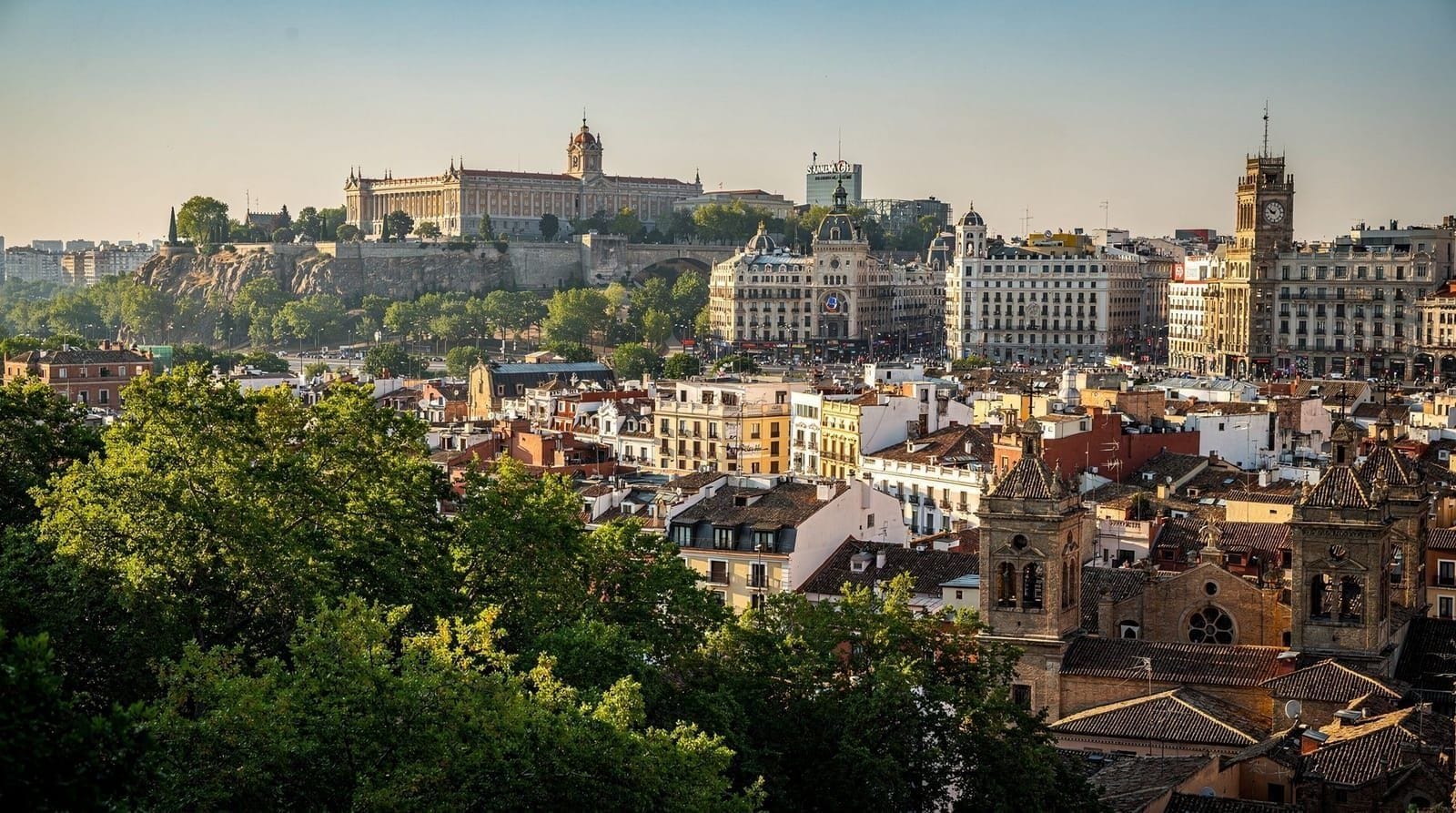
Lavapiés sits on a hill south of the Gran Vía axis, bounded roughly by the Reina Sofía museum to the south, La Latina to the west, and the Tirso de Molina metro stop to the north. It is one of the oldest working-class neighbourhoods in Madrid — historically the Jewish quarter before the expulsion of 1492, later a textile and artisans’ district.
| Where | South of Gran Vía, between the Reina Sofía, La Latina and Tirso de Molina |
| Best for | International food, street art, budget stays |
| Getting there | Metro Lavapiés or Embajadores (Lines 3 & 5) |
| Typical meal | around €8–15 per person |
| Best time to go | Weekday evenings for food, Sunday morning for El Rastro |
Today Lavapiés has absorbed more waves of immigration than any other Madrid neighbourhood. A walk through its streets passes Moroccan bakeries, Indian grocery shops, Bangladeshi restaurants, Chinese supermarkets, African hair salons, and traditional Spanish tabernas that have been here since before the Internet. This is not a curated multicultural experience; it is an actual multicultural neighbourhood.
The Lavapiés destination page covers the neighbourhood’s history and main sights. This guide covers what to eat, where to stay, and how to use the neighbourhood.
Why visitors overlook Lavapiés — and why they shouldn’t
The standard first-time Madrid itinerary does not include Lavapiés. This is because:
- The big tourist sights (Royal Palace, Prado, Plaza Mayor) are not here.
- The neighbourhood’s reputation for petty crime (exaggerated and largely historical) puts cautious travellers off.
- The food scene is not “Spanish” in the way that La Latina is Spanish.
All three are weak reasons to skip it. The Reina Sofía museum is on its southern border — you are likely passing through anyway. The safety situation is genuinely fine for any visitor exercising normal urban awareness. And the non-Spanish food scene is precisely why Lavapiés is interesting: you can eat better Indian food here than in most European cities for €10.
Eating in Lavapiés
Casa Justa (Calle de Embajadores 60): Traditional Spanish taberna at the northern Lavapiés edge. Good tortilla, honest prices, old-fashioned service. One of the few Embajadores-area places that hasn’t changed its formula in decades.
Restaurante Palacio de Goa (Calle del Olmo 7): This is the Indian restaurant that consistently wins arguments about which is Madrid’s best. Kerala-inflected cooking, good vegetarian options, reasonable prices (€12–20 per person). Go for the fish curries if they’re available.
Bazar Kenia (Calle de Tribulete 4): Small Kenyan-East African restaurant. Stews, rice, succulent goat. The kind of restaurant that takes a neighbourhood seriously.
Pizzería Barbarella (Calle del Amparo 24): Neapolitan-style pizza made well, affordable prices, a Lavapiés staple for the neighbourhood’s artistic community. Long queues Thursday through Saturday from 19:30 — go early or put your name on the list.
Taberna de Antonio Sánchez (Calle del Mesón de Paredes 13): A historic taberna dating from 1830. The bullfighting memorabilia on the walls and the ancient bar should be experienced even if you only have a glass of vermouth. Historic in the genuine sense, not the Disneyfied sense.
If you would rather have a local walk you through the neighbourhood’s food scene than piece it together yourself, a guided tapas walk is a reasonable shortcut — see the best tapas bars guide for a self-guided version too. Madrid food walking tour with local guide
Street art in Lavapiés
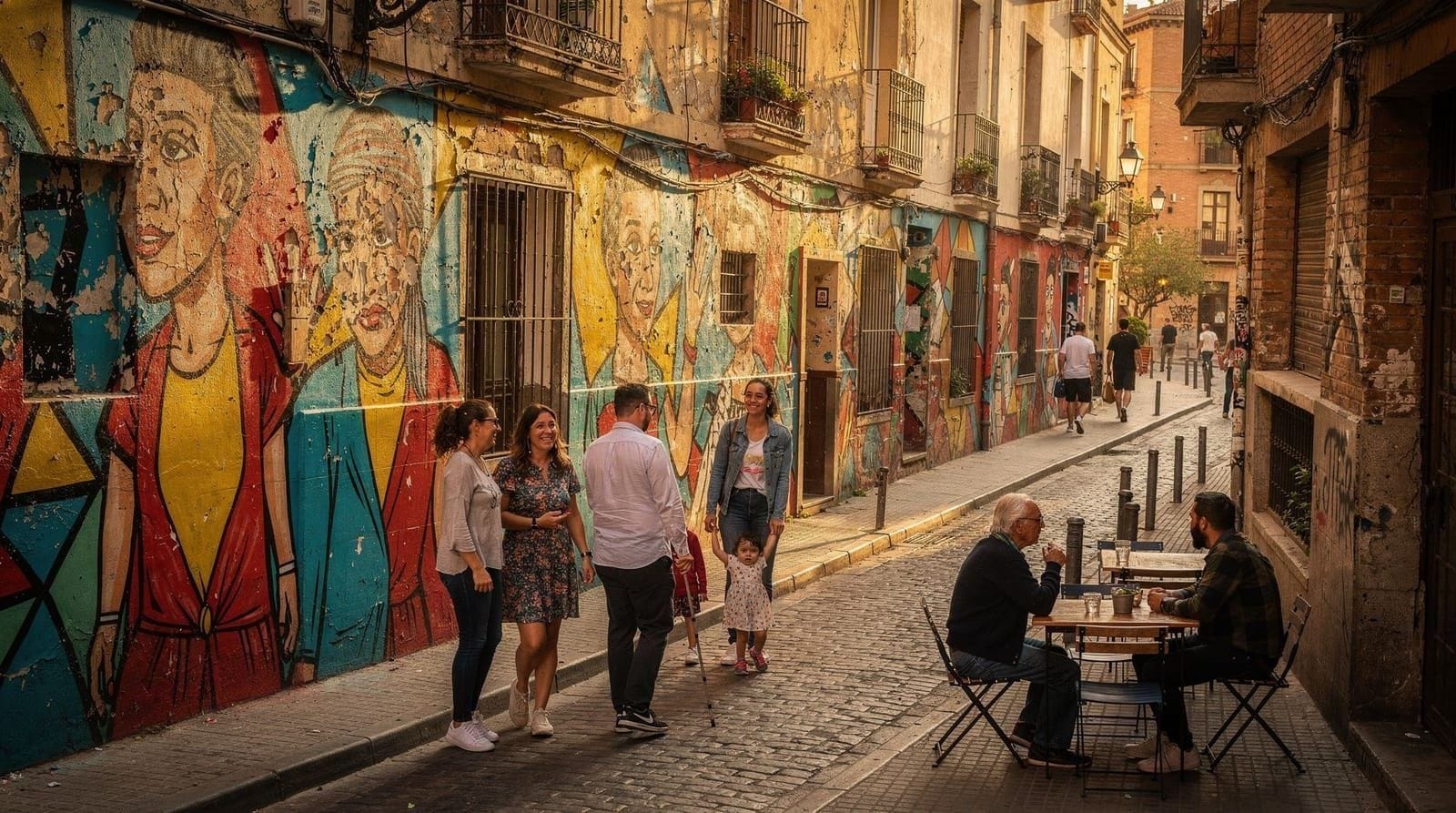
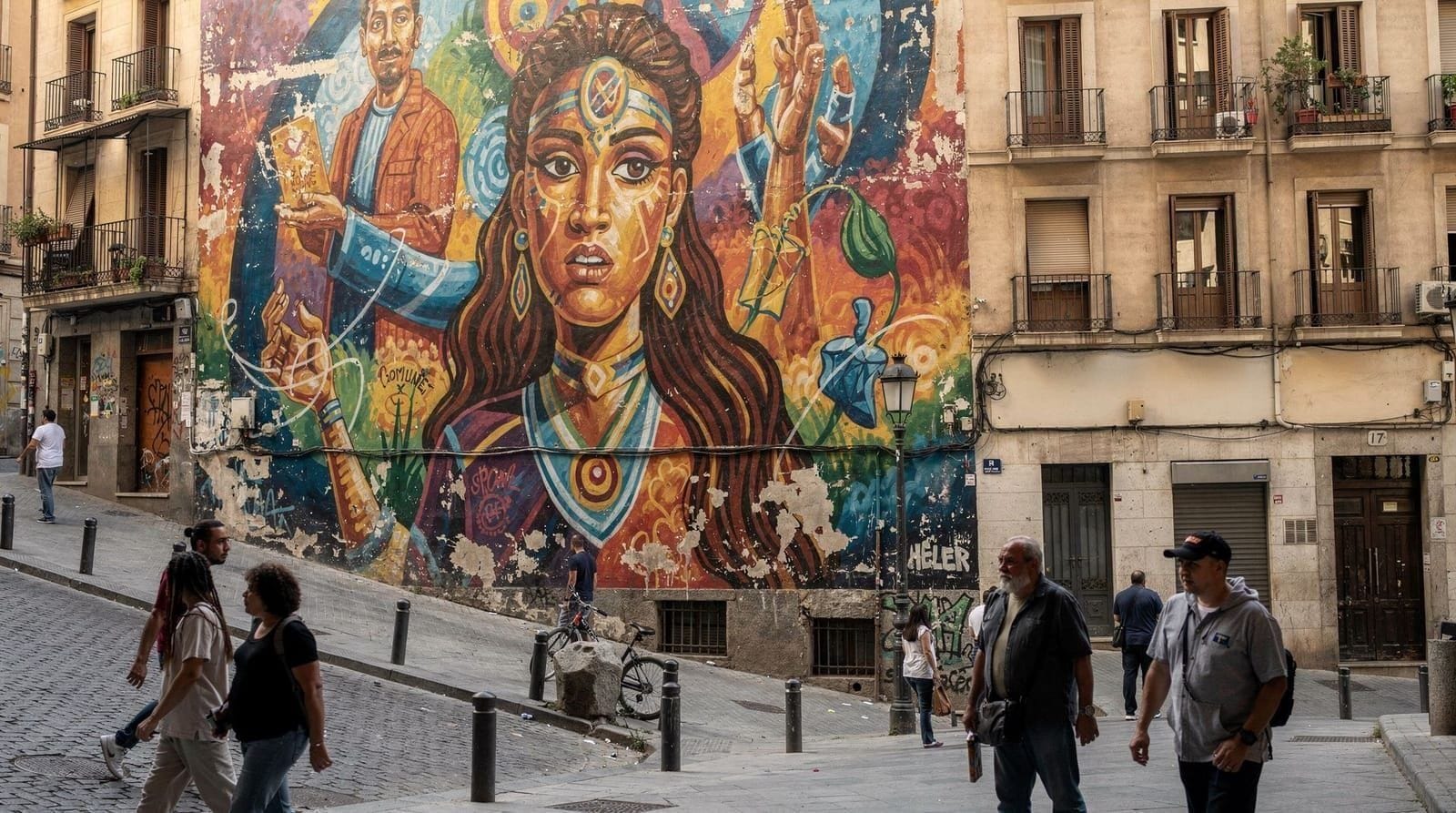
Lavapiés has the highest concentration of significant street art in central Madrid. This is partly structural — the neighbourhood has more exposed wall space than the more densely built-up historic centre — and partly because the neighbourhood’s artist community has been active for decades.
The street art guide covers the best works and walls in detail. Key areas:
Calle de la Cabeza and surrounding streets: A concentration of large-format murals, several by internationally recognised artists. The work changes as new pieces appear; what makes this area interesting is the layering of works over years.
Calle de Argumosa: A pedestrianised street with terraces and a concentration of arts venues that has been the neighbourhood’s bohemian spine since the 1990s.
Tabacalera: A former tobacco factory converted to a cultural centre — the street art surrounding it and within its courtyard is some of the most significant in Madrid. Free entry to the exterior; check the calendar for exhibitions.
Where to stay in Lavapiés
This is the most affordable accommodation zone in central Madrid. The trade-off is infrastructure — fewer four-star hotels, more independent guest houses and hostals.
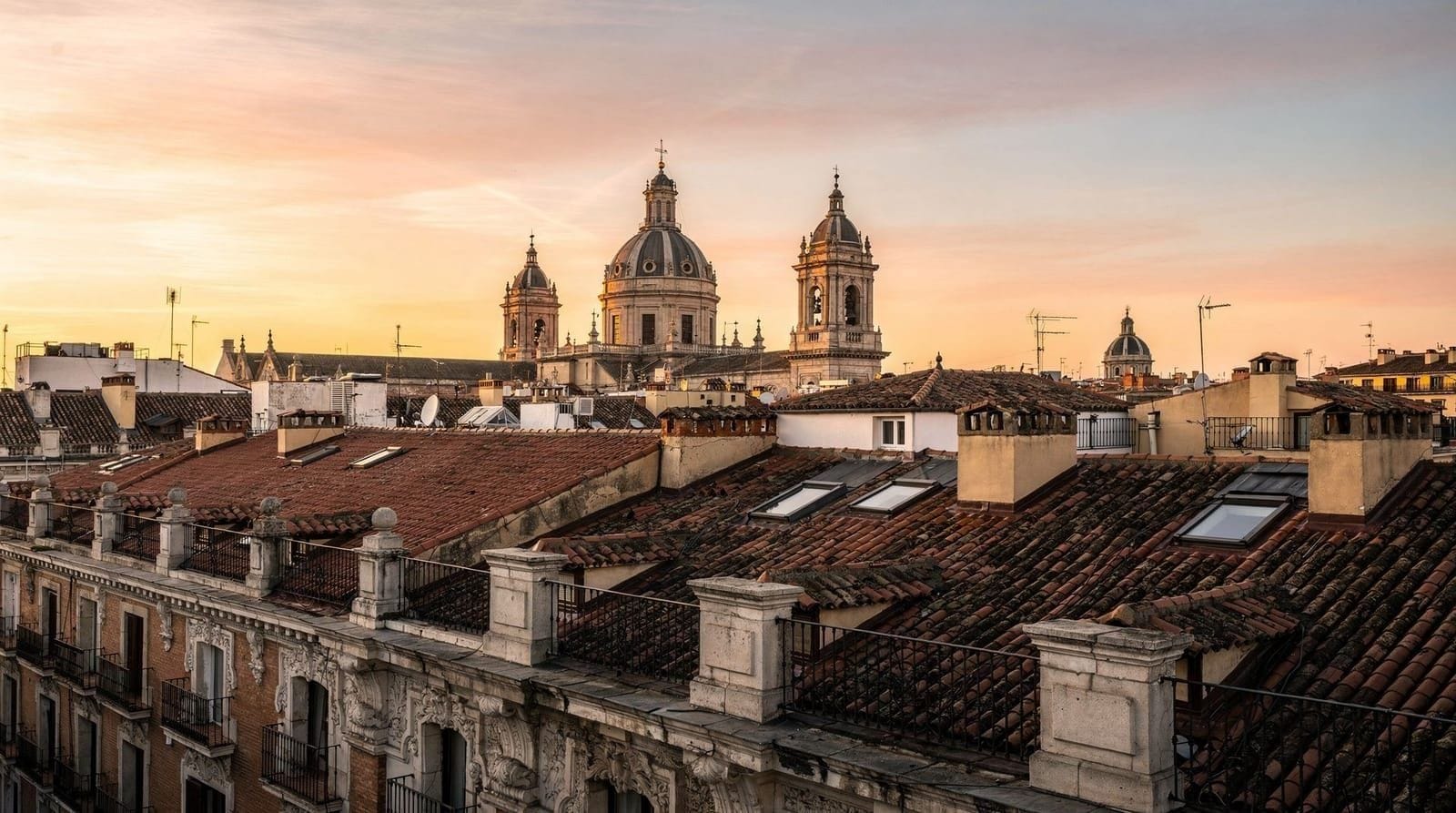
The Hat Madrid (Calle Imperial 9): The best-designed accommodation option in the area — on the border between Lavapiés and La Latina. A hostel/hotel hybrid with a well-regarded rooftop bar. Dorms from €22; private rooms from €85. The building is an attractive conversion; the rooftop is one of the better views of the historic skyline.
Hostal Horizonte (Calle de Atocha 65): Clean, honest, well-located guesthouse at the Atocha/Lavapiés boundary. Doubles from €55. No design pretensions but competently run.
Chic&Basic Colors (various Madrid locations): The brand has a property accessible to Lavapiés. Design-forward at budget prices. Doubles from €70.
The neighbourhood on foot: a walking tour
Lavapiés rewards walking without a specific plan. The street grid is labyrinthine enough to be interesting but contained enough that getting genuinely lost is not possible. A suggested two-hour walk:
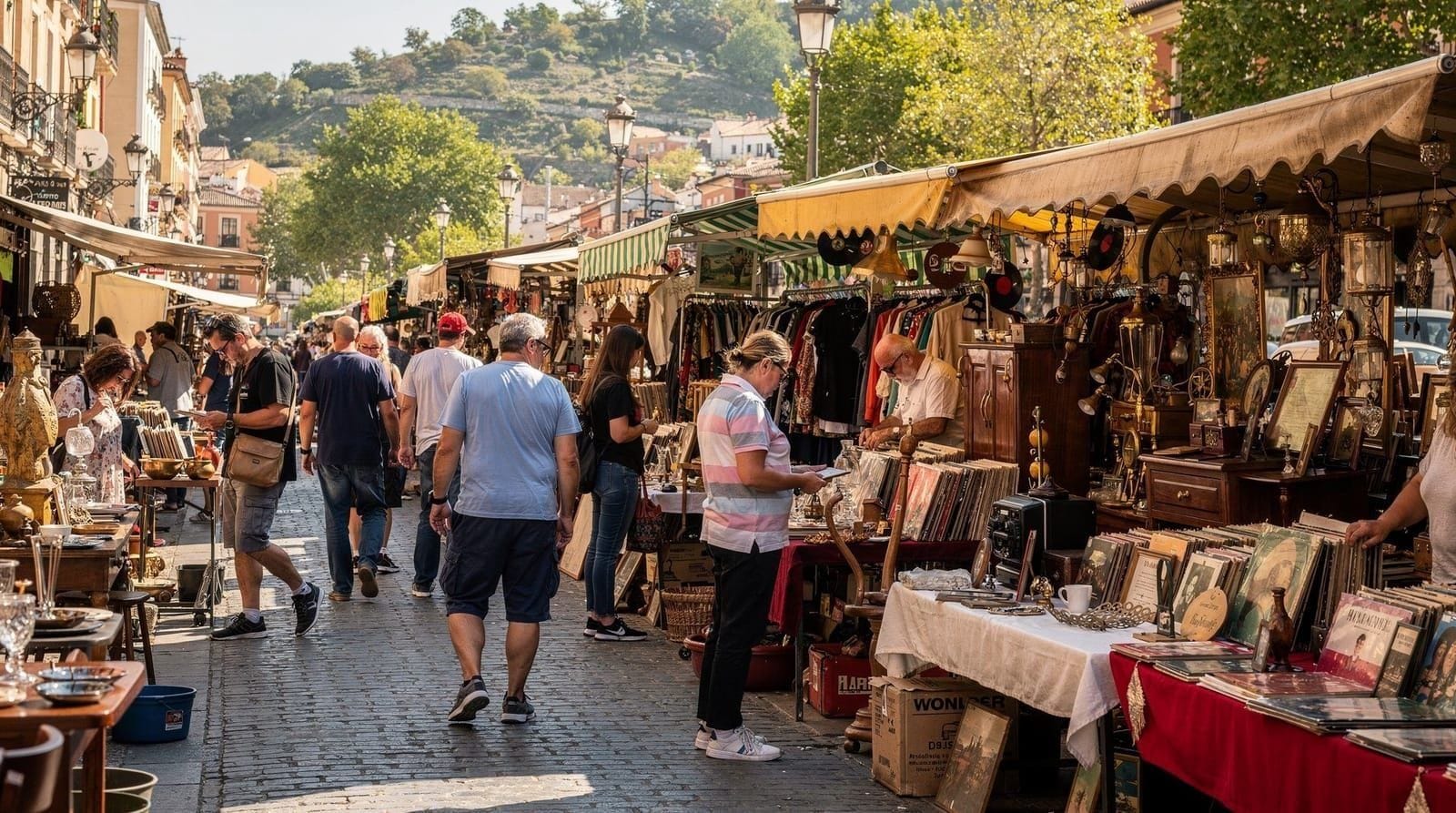
Start at La Latina metro: Walk south down Calle de la Cava Baja to Plaza de Cascorro. This is the top of El Rastro territory — on weekdays, mostly empty; on Sundays, the start of the flea market chaos.
Continue south down Calle de la Ribera de Curtidores: On weekdays this is a quiet street of antique and second-hand shops. Some are open; most have window displays worth examining.
Turn east onto Calle del Carnero: Then south again on Calle de Mesón de Paredes, which is Lavapiés’s main north-south artery. The Taberna de Antonio Sánchez (No. 13, opened 1830) is here — the oldest tavern in Madrid. Stop even if not eating.
Continue south to Plaza de Lavapiés: The neighbourhood’s central square, smaller than its designation suggests. The Teatro Valle-Inclán is on its southern edge; the surrounding streets have the highest density of bars and cafés in the neighbourhood.
East along Calle de Argumosa: The neighbourhood’s most café-dense street — terraces in warm weather, indoor life in winter. This is the Lavapiés axis most visitors see, and it is genuinely pleasant.
South to Calle de Santa Isabel: The northern façade of the Reina Sofía museum faces this street. The green corridor of the Parque del Olivar de la Hinojosa connects here.
Return via Tabacalera (Calle de Embajadores 53): The most direct return north passes the Tabacalera — worth entering the courtyard to see the street art if the gates are open.
Getting around from Lavapiés
Metro: Lavapiés station (Line 3) and Embajadores (Lines 3 and 5) are the main hubs. Sol is three stops from either.
Walking: The Reina Sofía is a 10-minute walk south. La Latina is 10 minutes west. Sol is 15 minutes north. The Prado is 20 minutes southeast.
Atocha access: The Atocha train station — key for day trips to Toledo, Segovia, and beyond — is a 15-minute walk from the southern Lavapiés boundary.
That makes Lavapiés a practical base for a train-led trip: the Atocha vs Chamartín guide explains which station you will use, and the Toledo day trip guide shows how an early departure from Atocha works. To the west, the Barrio de las Letras guide covers the literary quarter on the other side of the Reina Sofía, and the free things to do guide lists inexpensive ways to fill the hours between meals. If you are still deciding how long to stay overall, the three-day Madrid itinerary shows where an evening in Lavapiés fits.
El Rastro from Lavapiés
Lavapiés is the best base for El Rastro on Sunday mornings. The market begins on the Calle de la Ribera de Curtidores, which is the eastern boundary of Lavapiés. From most Lavapiés accommodation, El Rastro is a 5–10 minute walk. This is significantly more convenient than walking from Sol or Malasaña.
The El Rastro guide covers the market comprehensively. Reminder: pickpockets target El Rastro more heavily than any other location in Madrid. Keep bags in front and phones internal.
Lavapiés as a budget base for Madrid
For visitors on a tight budget, Lavapiés offers:
- The most affordable hostel and guesthouse rates in central Madrid
- Access to the Reina Sofía (free Monday and Wednesday–Saturday 19:00–21:00; Sunday 12:30–14:30)
- The cheapest good food in the city (€8–12 for a complete meal at numerous international restaurants)
- Walking distance to both La Latina (for Sunday tapas and El Rastro) and the Prado/Thyssen corridor
- A genuinely interesting cultural environment
For a detailed budget breakdown, see the Madrid on a budget guide.
Lavapiés and La Latina: the comparison
The two neighbourhoods are adjacent and complementary. La Latina is older-established, more tourist-integrated, stronger for traditional Spanish tapas. Lavapiés is more diverse, cheaper, stronger for international food and contemporary culture. A well-planned Madrid trip visits both.
From Lavapiés: walk north along Calle de Embajadores to La Latina’s Plaza de Cascorro and Cava Baja. The Sunday combination of Lavapiés-area El Rastro into La Latina tapas is one of the best things you can do on a visit to Madrid.
| Lavapiés | La Latina | |
|---|---|---|
| Food scene | International (Indian, Moroccan, Ethiopian) | Traditional Spanish tapas |
| Price level | Cheapest in central Madrid | Mid-range, tourist-adjusted |
| Accommodation | Hostels, guesthouses | More hotels, fewer budget beds |
| Atmosphere | Gritty-authentic, artsy | Postcard-pretty, busier with visitors |
| Best day to visit | Any weekday evening | Sunday (with El Rastro) |
See the full neighbourhood comparison in where to stay in Madrid.
Lavapiés culture: venues and institutions
La Tabacalera: The former National Tobacco Factory at Calle de Embajadores 53 is one of the most significant cultural spaces in Madrid. It operates as a self-managed social centre — contemporary art exhibitions, performance events, film screenings, and markets. The courtyard is open during events; street art covers the exterior walls and much of the interior. Entry is free for most events. Check their programme before visiting.
Cine Doré / Filmoteca Nacional: The national film archive cinema at Calle de Santa Isabel 3 — one of the most beautiful small cinemas in Madrid, a 1923 Modernist building. The Filmoteca shows Spanish and international archive films at €4 per session. One of the city’s genuine cultural bargains. Programming is mostly in Spanish, but many international films are shown in the original language.
Teatro Valle-Inclán: National theatre programming at a high standard. On the border of Lavapiés and Letras; check for English-language productions or shows with supertitles.
Sala Equis: A club/arts venue in a former cinema on Calle del Duque de Alba — one of Madrid’s better independent venues for film, live music, and cultural events. Casual atmosphere, reasonable prices.
Food deep dive: the international scene in Lavapiés
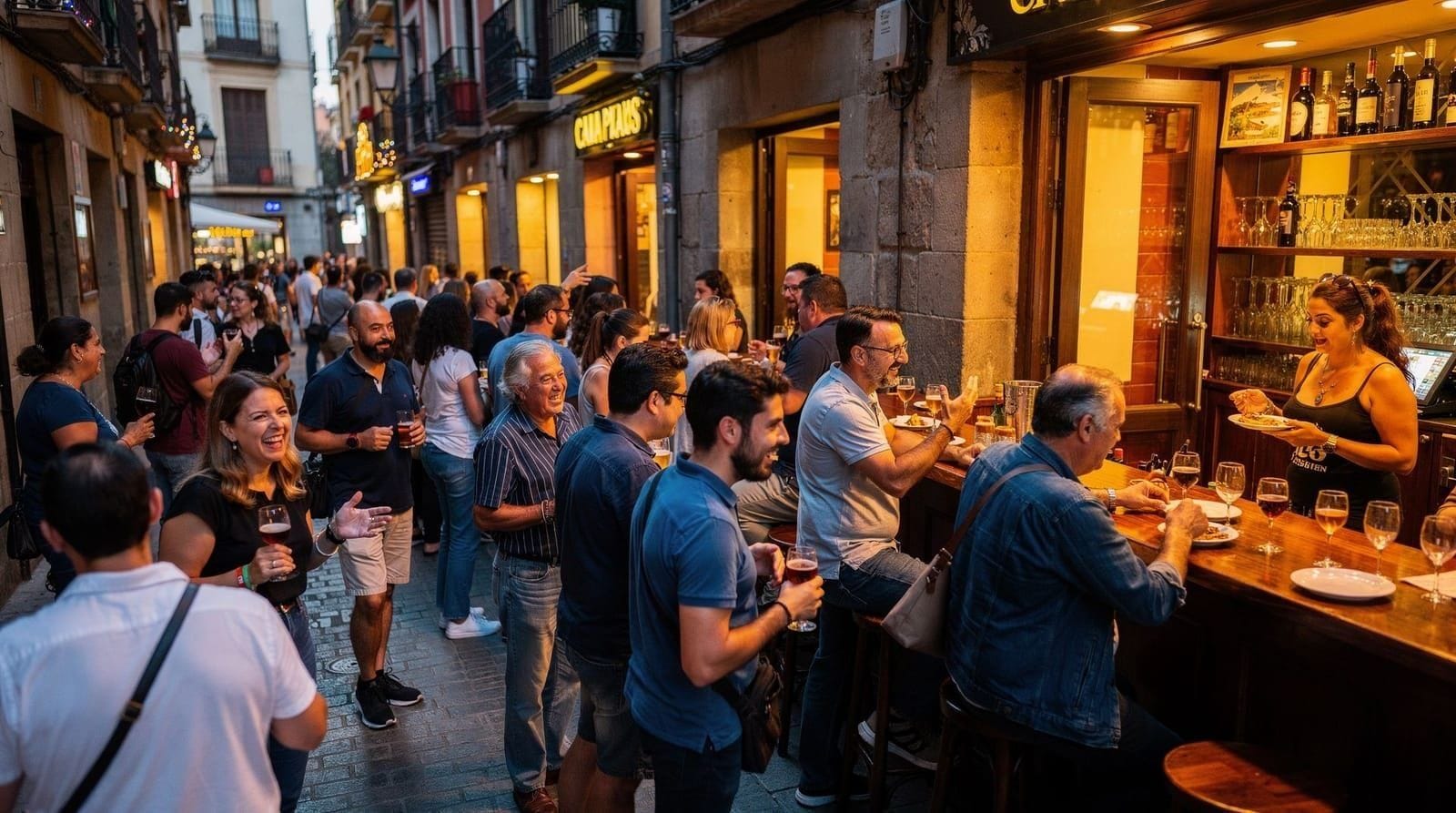
Lavapiés has the most varied food culture in Madrid. The concentration of immigrant communities — Moroccan, Indian, Bangladeshi, Ethiopian, Senegalese, Chinese, and others — has produced a restaurant scene that is unmatched in the city for international variety.
Best Indian food in Madrid (the running debate): Palacio de Goa (Calle del Olmo 7) is consistently considered the benchmark, but several other establishments compete. Calle de Lavapiés itself and surrounding streets have multiple Indian restaurants; quality varies. Look for restaurants with handwritten menus and South Asian clientele — these are the reliable ones.
Moroccan food: Several good Moroccan restaurants operate around Calle del Sombrerete and Calle de Mesón de Paredes. The best serve proper tagines and couscous rather than the fusion versions common in tourist areas. Ask for the set lunch — typically €8–10 for three courses.
Ethiopian/East African: A small cluster on and around Calle de Mesón de Paredes. Injera-based cuisine (the fermented flatbread used as both utensil and plate), stewed meats and vegetables. An unusual dining experience and very affordable.
Spanish traditional: The Taberna de Antonio Sánchez (1830, Calle del Mesón de Paredes 13) predates all the international arrivals. The menu is traditional Castilian — cocido on certain days, callos (tripe stew), game in season. The interior is a genuine museum of Madrid tavern culture.
How to plan a food evening here: start with a vermouth at a neighbourhood bar (the vermouth guide explains the ritual), move to a small international kitchen for the main meal, and finish with something sweet or a coffee on a terrace. Share dishes where the menu allows it, since that is the easiest way to taste more of a cuisine you may not know well. The eat like a local guide covers the habits that make Madrid dining easier, and the tourist menu traps guide explains what to avoid when a menu looks too generic. For market food, compare the neighbourhood’s own stalls with the options in the Madrid markets guide, and if food is the centre of your trip, the Madrid for foodies itinerary shows how Lavapiés fits alongside other districts.
Lavapiés in the Reina Sofía context
The Reina Sofía is at the southern boundary of Lavapiés — the museum’s main entrance faces onto Calle de Santa Isabel, which is effectively the neighbourhood’s southern edge. For a Lavapiés-based visitor, the Reina Sofía is a 10–15 minute walk.
The museum’s free hours (Monday and Wednesday–Saturday 19:00–21:00; Sunday 12:30–14:30) are particularly well-suited to a Lavapiés base: you can eat in the neighbourhood, walk to the Reina Sofía for the free evening session, and return for drinks without any transport.
The Reina Sofía guide covers how to navigate the collection — Picasso’s Guernica, the permanent collection of 20th-century Spanish art, and the temporary exhibitions. Guernica occupies Room 206 in the Sabatini building; arrive for the free session by 19:15 for best conditions.
If you would rather not depend on the free window, a timed entry removes the guesswork about queues: a skip-the-line ticket for the Reina Sofía lets you choose a calmer moment of the day and still be back in the neighbourhood for dinner. Art-minded visitors can then extend the day with the Golden Triangle art walk, which links the Prado museum and the Thyssen-Bornemisza to the Reina Sofía, or follow the Madrid for art lovers itinerary. Lavapiés is the natural place to unwind afterwards: the cafés on Argumosa suit a slow debrief after hours among paintings.
The Lavapiés flea market calendar
Beyond El Rastro (Sundays), Lavapiés has its own smaller market events:
Mercado de Antón Martín (Calle de Santa Isabel 5): A neighbourhood food and general market that has partially evolved toward a food-court format. Good for a weekday morning lunch.
Occasional street markets: Lavapiés hosts occasional neighbourhood markets and design fairs, particularly in spring and autumn. Check local listings for current programming.
Lavapiés for longer stays
For visitors spending a week or more in Madrid, Lavapiés merits more consideration than it typically gets. The budget accommodation, the food variety, the cultural density (La Tabacalera, Cine Doré, Mercado de Antón Martín), and the neighbourhood life make it one of the most satisfying bases for extended stays. The commute to tourist sights is minimal — the Prado is 20 minutes on foot, the Reina Sofía is 10, La Latina is a five-minute walk.
For shorter stays (two to three nights), La Latina or Barrio de las Letras offers more immediately tourist-relevant infrastructure. But Lavapiés rewards the visitor who looks for Madrid beyond its postcard version.
Safety in Lavapiés, honestly
The gritty reputation is a real thing to address, not just wave away. What is true: Lavapiés had genuine petty-crime problems in the 1990s and early 2000s, and some older guidebooks still repeat that framing. What is true today: it is a normal, lived-in Madrid neighbourhood with the same basic urban-awareness rules as anywhere else — watch bags on crowded metro carriages, keep phones out of back pockets around El Rastro, and use the same common sense you would in any dense city district. Violent crime against tourists is not a meaningful risk here. The pickpockets and safe areas guide covers Madrid-wide precautions that apply equally in Lavapiés.
At night the neighbourhood is busy and well-lit along its main streets (Argumosa, Mesón de Paredes, the square itself); side streets empty out earlier than in more central districts, which is normal for a residential area rather than a warning sign. If travelling solo at night, stick to the lit main routes described in the walking tour above.
For getting around after dark, the Lavapiés and Embajadores metro stations run until about 1:30am every night, and taxis are easy to flag on Calle de Embajadores or Calle de Atocha at any hour. There is no particular need for a private transfer within this part of the city — Lavapiés is compact enough that the whole neighbourhood is walkable, and the getting around by metro guide covers the wider network if you’re combining a Lavapiés evening with a stay elsewhere in Madrid.