Reina Sofía museum guide: Guernica, Dalí, Miró, and Madrid's modern art palace
Madrid: Reina Sofía Skip the Line Ticket
When is the Reina Sofía free and how do I see Guernica without queuing?
The Reina Sofía is free Monday and Wednesday–Saturday 19:00–21:00, and Sunday 12:30–14:30 only. It is closed Tuesdays. Guernica (Room 206, second floor) draws the biggest crowds mid-morning on weekends — aim for the free evening windows or a weekday morning to see it without a crowd.
In brief: The Reina Sofía holds Guernica — one of the most politically and artistically significant paintings of the 20th century — plus the most comprehensive collection of Dalí and Miró outside their dedicated museums. Standard entry is €12; free evenings Monday and Wednesday–Saturday 19:00–21:00, and Sunday 12:30–14:30.
| Where | Calle de Santa Isabel 52, next to Atocha station |
| Cost | €12 standard; free in the evening windows and Sunday 12:30–14:30 |
| Time needed | 45 min (Guernica only) to 3 hours (full collection) |
| Getting there | Metro Atocha Renfe (Line 1), 2-minute walk |
| Best time | Weekday morning (10:00–12:00) or the free evening window |
A 19th-century hospital turned modern art palace
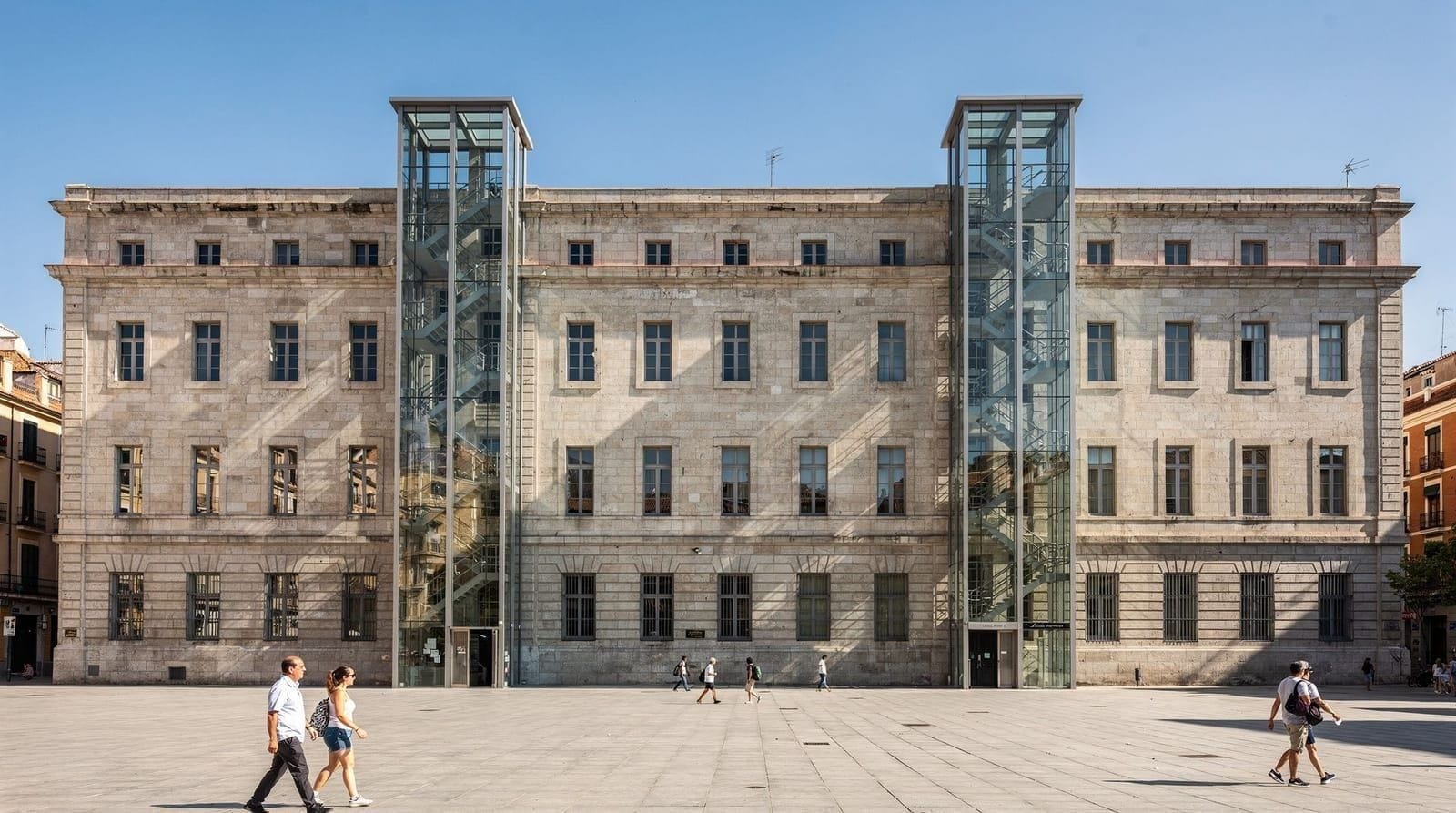
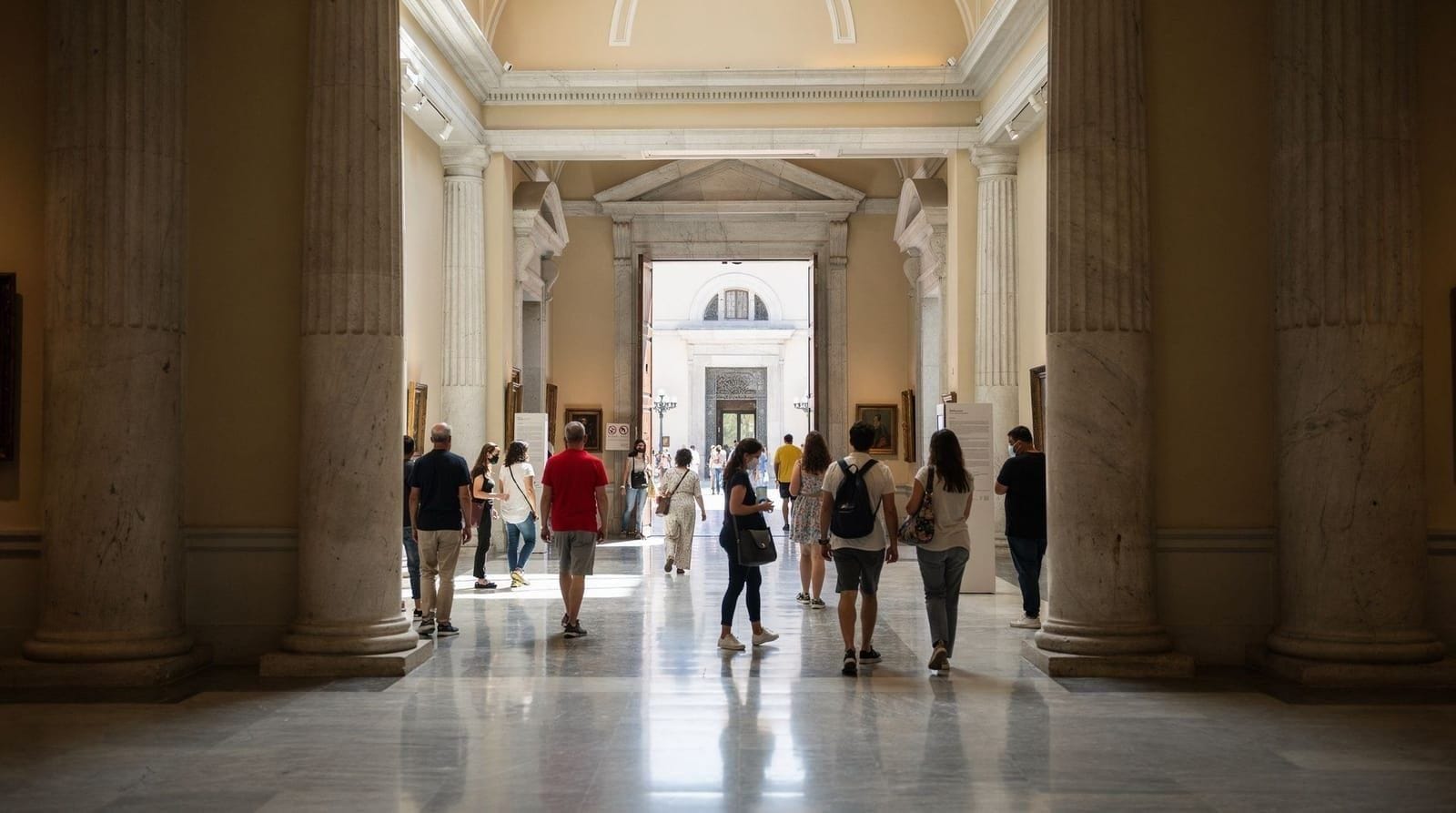
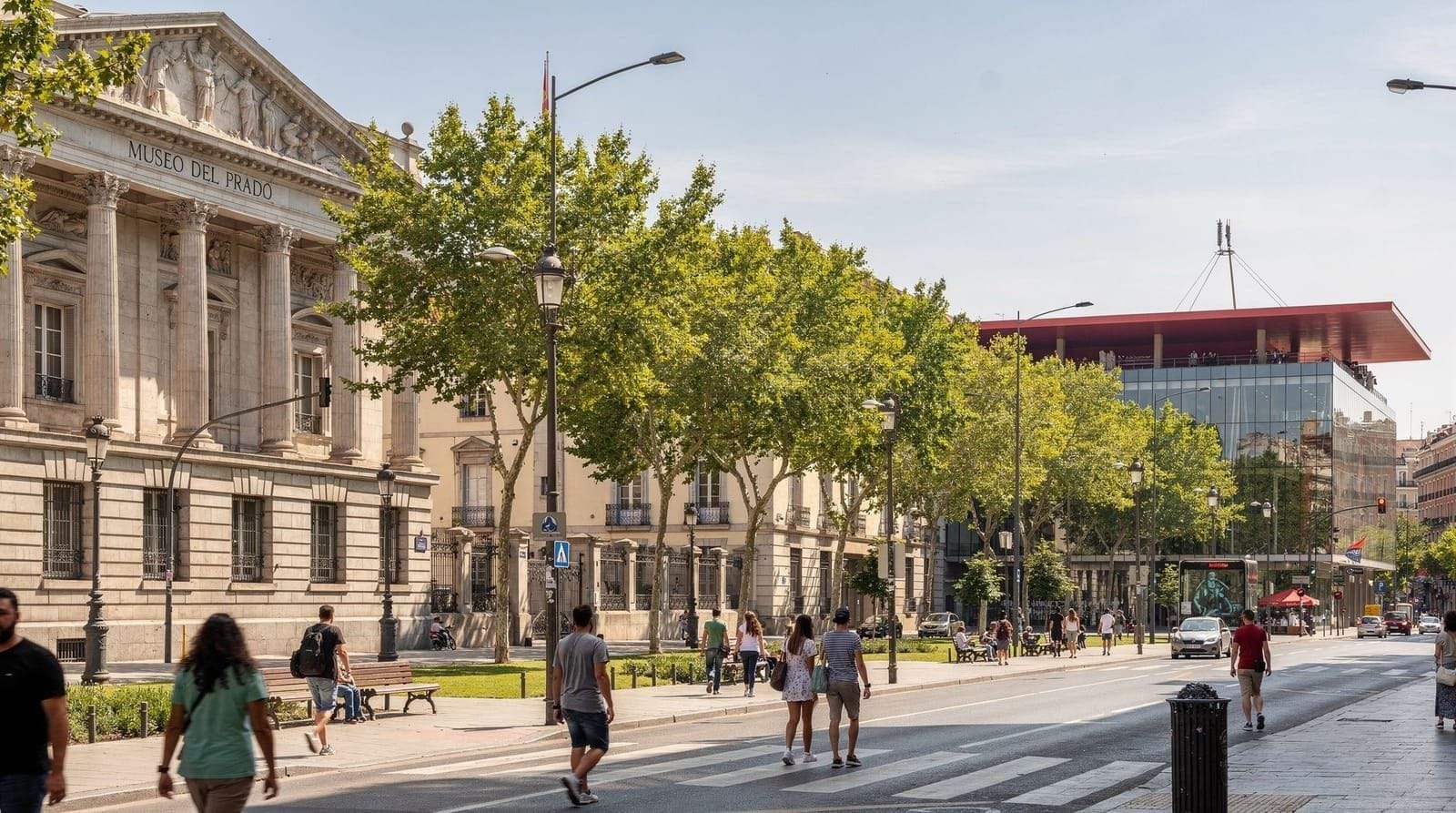
The Reina Sofía occupies the former Hospital General de Madrid, a neoclassical building from the 18th century that was converted into a museum in stages and fully inaugurated in 1992. The original structure — known as the Sabatini building after its architect — sits on the Paseo del Prado south of the Prado Museum and Atocha station. In 2005, Jean Nouvel added a radical expansion: a titanium and steel canopy that floats over a new courtyard and houses additional exhibition space, a library, and the museum auditorium.
The architectural contrast is intentional. The Sabatini building’s neoclassical restraint suits the collection’s focus on early 20th-century Spanish modernism; the Nouvel addition’s futurism accommodates the post-1945 international work and temporary exhibitions that don’t fit the original building’s character.
Guernica: understanding what you are looking at
Pablo Picasso painted Guernica in response to a specific atrocity: the aerial bombardment of the Basque town of Guernica on 26 April 1937 by Nazi Germany’s Condor Legion, at the request of Francisco Franco’s Nationalist forces during the Spanish Civil War. The attack killed between 150 and 1,600 civilians (estimates vary; the exact number was suppressed for decades). Picasso, living in Paris at the time, painted the 7.77-metre canvas in grey, black, and white over six weeks.
The painting is not documentary. There are no aeroplanes, no soldiers. Instead: a screaming woman holding a dead child, a wounded horse, a bull, a severed arm still gripping a broken sword, a fragmented figure with open mouth, an electric light bulb shaped like an eye. Picasso refused to explain the symbolism precisely, saying that a work of art should carry its own message directly to the viewer.
The painting spent 40 years at MoMA in New York — Picasso stipulated it could not return to Spain while Franco ruled. It arrived at the Reina Sofía in 1992, seventeen years after Franco’s death.
Room 206 holds the painting itself, and the adjacent rooms (205, 207) display Picasso’s preparatory studies — the developmental sequence from first sketches to final canvas. These studies are worth equal time: you can watch Picasso problem-solving, trying different arrangements of the horse and bull, different positions for the screaming woman.
The room is always busy. Morning weekends are worst; the free evening windows (19:00–21:00) offer the most contemplative viewing.
A private Guernica tour provides historical context about the Spanish Civil War and Picasso’s artistic choices that turns a painting into an experience.
The rest of the second floor: Dalí, Miró, and the Spanish avant-garde
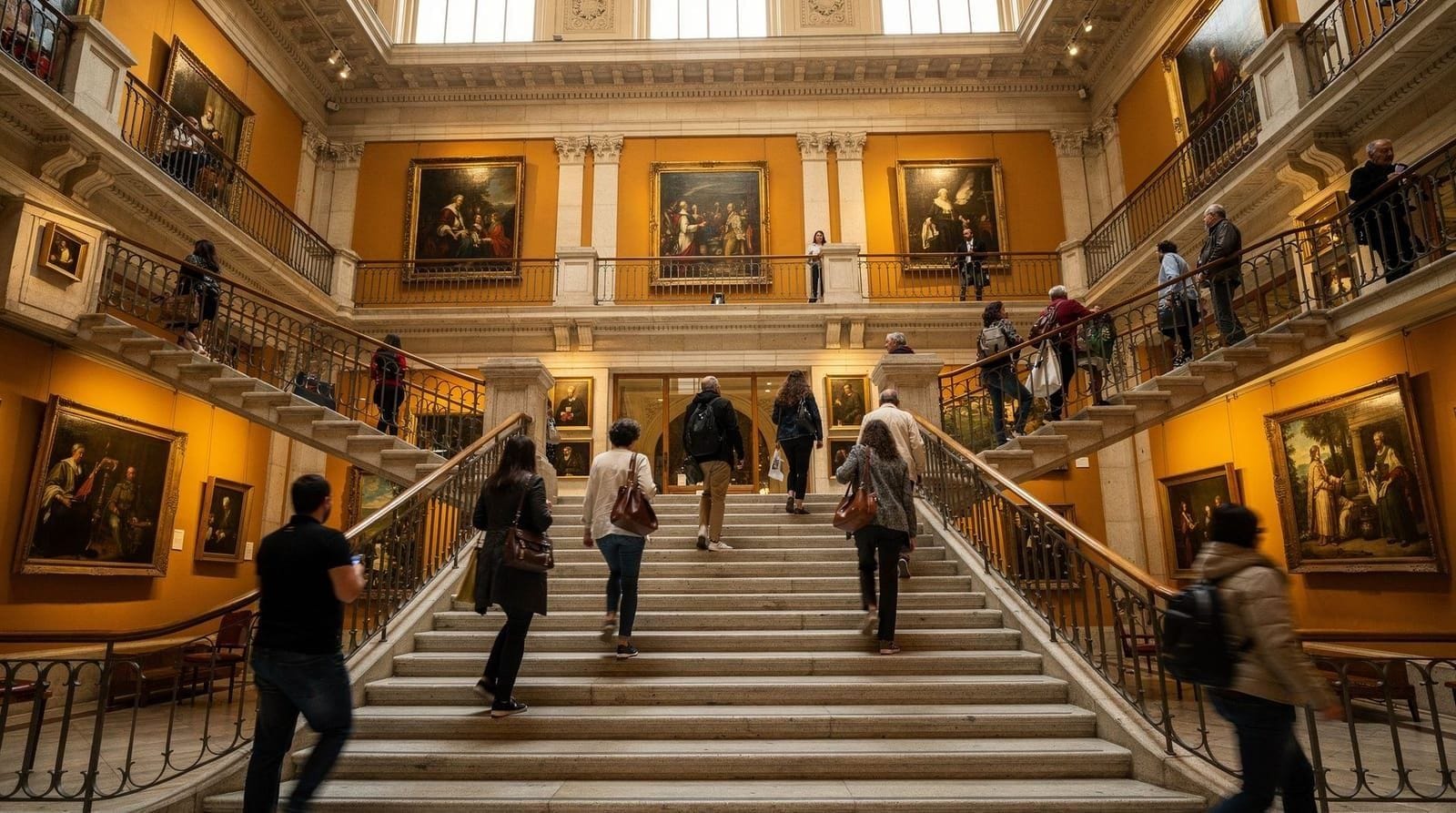
The Reina Sofía permanent collection is arranged chronologically across two floors of the Sabatini building.
Floor 2 (1900–1945): Beyond the Picasso rooms, this floor covers the full arc of Spanish modernism. Miró’s large-format paintings — bold primary colours, biomorphic shapes, a language entirely his own — occupy several rooms. The Great Red Sun and the Constellations series show the range from exuberance to introspection.
Dalí’s surrealist works here include The Great Masturbator (1929), a disquieting dreamscape from his formative Parisian period, and a selection of early paintings that pre-date the Salvador Dalí Theatre-Museum in Figueres. The Reina Sofía’s Dalí collection is Madrid’s best — anyone interested in Surrealism should plan adequate time.
Spanish Cubism and Expressionism rooms frame the collection: Juan Gris, María Blanchard, and international figures who moved through Madrid’s avant-garde circles in the early 20th century.
Floor 4 (1945–present): Post-war abstraction, Spanish informalism (the Grupo El Paso), conceptual art, and international work that contextualizes Spanish art within broader European movements. Eduardo Chillida’s sculptures, Antoni Tàpies, and Eduardo Arroyo are the anchors here.
Practical logistics
Address: Calle de Santa Isabel 52, 28012 Madrid. The main entrance is on Calle Santa Isabel, steps from the Atocha roundabout.
Getting there: Metro Line 1 (Atocha Renfe), 2-minute walk. The Reina Sofía is adjacent to Atocha station — convenient if you’re arriving by train from Toledo or connecting to the Cercanías network. On foot from the Prado: 8 minutes south along Paseo del Prado.
Tickets: Buy online at the Reina Sofía website for timed entry; tickets can also be purchased at the desk, but queues build on weekends. The free windows still require a free ticket, which you can reserve online; free visits are for individuals, not groups.
Audio guide: Available at the information desk, €4. The museum’s free app (iOS/Android) includes audio commentary for the permanent collection.
Cloakroom: Mandatory for large bags and backpacks; free.
Café and bookshop: The Sabatini building café is pleasant and not overpriced by museum standards. The bookshop on the ground floor is one of Madrid’s best for art books, design publications, and posters.
The Nouvel building and temporary exhibitions
The 2005 Jean Nouvel extension is worth visiting even if you’re not seeing a temporary exhibition — the canopy architecture is dramatic, and the ground-floor courtyard (free access, no ticket needed) hosts installations and is a cool refuge in Madrid’s summer heat. Temporary exhibitions run 3–4 months; current programming is listed on the museum website.
Combining the Reina Sofía with a wider Madrid visit
The Reina Sofía sits at the southern end of the Barrio de las Letras, Madrid’s literary quarter. After the museum, Calle Huertas and the streets around the Plaza de Santa Ana offer genuinely good mid-range dining, vermouth bars, and a more local atmosphere than the tourist-heavy areas around Sol.
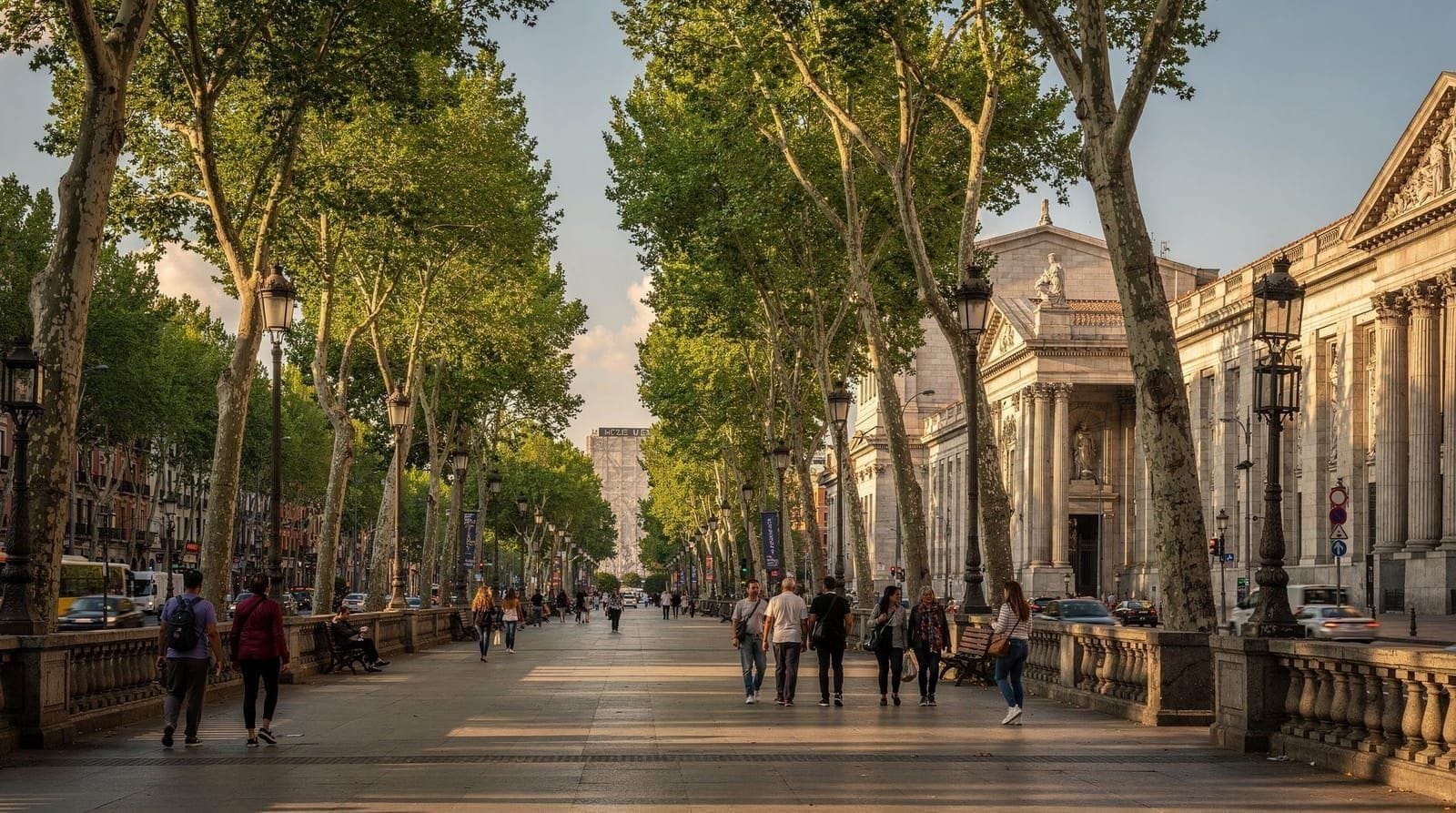
For the full Golden Triangle art walk, the Reina Sofía is the natural starting or ending point — it is the furthest south of the three museums, and the walk to the Prado and then the Thyssen runs north along the Paseo del Prado, one of Madrid’s finest urban promenades.
A Guernica, Reina Sofía, and Thyssen combined guided tour covers both institutions in a structured half-day with an expert commentary on each.
What’s overrated and what’s underrated
Overrated: Rushing Guernica after a 30-minute queue, snapping a photo without engaging with the preparatory studies in the adjacent rooms, then leaving. The painting without context is powerful; with context, it is devastating.
Underrated: The Miró rooms on floor 2. Joan Miró is often treated as the afterthought between Picasso and Dalí, but his body of work here is exceptional — joyful and politically charged simultaneously, which is a difficult tone to sustain across a 50-year career. Visitors who spend real time with Miró consistently find it the most uplifting part of the visit.
Underrated (2): The museum’s late-night weekday opening. On Monday and Wednesday–Saturday evenings from 19:00, the Reina Sofía is free and open until 21:00. This is the best time to visit Guernica — the room is quieter, the guards less stressed, and the painting holds the space as intended.
How to see the Reina Sofía on a budget
Free entry covers the permanent collection in full — you can spend two hours here without paying anything on a Monday or Wednesday–Saturday evening (19:00–21:00), or during the Sunday window (12:30–14:30). The main cost is time (for the free window queue) or online ticketing fees for advance booking.
The museum free hours guide covers the Prado and Thyssen windows as well, for a full free-culture day in Madrid. Combined with free things to do in Madrid like Retiro park and the Temple of Debod sunset, it is entirely possible to build a first-rate cultural Madrid day with minimal expenditure.
What serious art visitors often miss
The temporary exhibitions: The Reina Sofía’s exhibition programme is among the best in Europe for 20th-century and contemporary art. Past shows have included major retrospectives of Louise Bourgeois, Francis Bacon, and Antoni Tàpies. These require a separate or combined ticket but are often worth the additional cost. Current programming is listed on the museum website several months in advance.
The architecture library: The Jean Nouvel extension houses the Biblioteca del Museo Reina Sofía, one of Spain’s finest art and architecture research libraries. Day-visitor access is possible; the Nouvel building’s ground floor and reading room are worth seeing as architecture regardless of research interest.
The Sabatini building exterior courtyard: Accessible for free from the Calle Santa Isabel entrance, the neoclassical courtyard of the original hospital building offers a quiet space outside the museum proper. The original Sabatini building’s proportions are best understood from this internal courtyard.
Practical advice for different types of visitors
For Guernica specifically: If Guernica is the primary reason for your visit and you have limited time, enter during a weekday morning (10:00–12:00 on Wednesday, Thursday or Friday; the museum is closed Tuesday) when Room 206 is least crowded. The evening free windows (19:00–21:00) are excellent but the preparatory sketch rooms adjacent to Guernica are sometimes more crowded then because visitors concentrate in that corridor.
For the full collection: Allow 2.5–3 hours. Start with Guernica and work outward to the preparatory rooms, then move through the rest of floor 2 (Dalí, Miró), and finish on floor 4. This sequence follows the chronology of Spanish modernism and makes the individual works more legible in sequence.
For repeat visitors to Madrid: The Reina Sofía’s collection is large enough that second and third visits reveal works overlooked on the first. Floor 4 — the post-war and contemporary section — tends to get less attention than floor 2 on first visits; it deserves equal time.
The Reina Sofía and Spanish political history
The museum’s collection is inseparable from Spain’s political history in the 20th century. The most famous works — Guernica, the Dalí surrealist works, the Miró paintings — were all made in the context of the Spanish Second Republic (1931–1939), the Civil War, or the early Franco dictatorship. Many of the artists spent years in exile; several never returned to Spain.
The museum’s acquisition policy has prioritised works that could not have been exhibited in Spain under Franco (died 1975) — the entire floor 2 collection, in a sense, is the visual record of what Spanish modernism looked like during the decades when it was suppressed at home and flourishing in Paris, New York, and Barcelona.
This political context gives the Reina Sofía a seriousness of purpose that is unusual among European art museums. The building is not just a repository of important works; it is the institutional acknowledgment of a cultural history that was systematically denied for 40 years. For visitors with even basic knowledge of the Spanish Civil War, the museum experience is richer for this backdrop. The habsburg-bourbon-history guide covers the broader historical arc; the Reina Sofía is where that history arrives in the 20th century.
Nearby eating after the museum
Leaving the Reina Sofía via the Calle Santa Isabel entrance puts you at the southern edge of the Barrio de las Letras — Madrid’s literary quarter, with a high density of mid-range restaurants and bars used by locals rather than tourists. The streets around Calle Huertas, Plaza de Santa Ana, and Calle del Prado itself have options at every price point.
Mid-range: La Dolores (Plaza de Jesús 4) for bocadillos and beer in a traditional tiled bar; Casa Alberto (Calle Huertas 18) for raciones and stewed meats in a taverna that has been operating since 1827.
Budget: The many set-menu restaurants on Calle Huertas and side streets offer a three-course menú del día with drink for €12–15 at lunch.
The eating in La Latina guide is 10 minutes northwest; the tapas bars guide covers the broader city. For the Reina Sofía afternoon visit, eating in Barrio de las Letras beforehand (lunch 14:00) and then returning for the 19:00 free window is the most comfortable structure.
Reina Sofía vs Prado vs Thyssen: choosing your priority
If you only have time for one museum, the choice depends on your taste rather than which is “better.”
| Museum | Choose this if you want | Signature works |
|---|---|---|
| Reina Sofía | 20th-century, political art, Picasso/Dalí/Miró | Guernica, The Great Masturbator |
| Prado | Old Masters, Spanish Golden Age | Las Meninas, the Black Paintings |
| Thyssen-Bornemisza | Chronological survey across 700 years in one visit | Impressionist and early modern works |
For most first-time visitors with limited time, Guernica alone justifies prioritising the Reina Sofía over the Thyssen — it’s a work that repays being seen in person in a way photographs cannot convey.
Frequently asked questions about Reina Sofía museum guide
What are the Reina Sofía's opening hours?
Monday and Wednesday–Saturday 10:00–21:00, Sunday 10:00–14:30. Closed Tuesdays, 1 and 6 January, 1 May, 24, 25 and 31 December, plus two variable local holidays (15 May and 9 November). Last admission is 30 minutes before closing.How much does the Reina Sofía cost?
Standard admission €12 for adults. Free Monday and Wednesday–Saturday 19:00–21:00, and Sunday 12:30–14:30. Also free all day on 18 April (International Monuments Day), 18 May (International Museum Day), 22 May, 12 October (Spain's National Day), and 6 December (Constitution Day). Under-18s and EU students under 25 always free.Where is Guernica in the Reina Sofía?
Guernica is in Room 206 on the second floor of the Sabatini (main historic) building. Take the lifts inside the main entrance and follow the signs — it is the most clearly signposted room in the museum. The painting measures 3.49 × 7.77 metres and dominates the entire room.Can I take photos of Guernica?
Photography of Guernica is not permitted. Photography is allowed in some other galleries — check individual room signage. The no-photography rule at Guernica is enforced consistently.What else is in the Reina Sofía besides Guernica?
The second floor covers Spanish art 1900–1945, including Picasso's full Guernica development cycle (studies and preparatory works in adjacent rooms), plus major Dalí and Miró works. The fourth floor covers post-war and contemporary Spanish and international art. The Nouvel building (the glass extension) houses temporary exhibitions and the architecture library.How long should I spend at the Reina Sofía?
Guernica plus the immediate Picasso rooms: 45–60 minutes. The full permanent collection (floors 2 and 4): 2–3 hours. With the Nouvel building temporary exhibitions: 3–4 hours. For most first-time visitors doing a Golden Triangle day, 90 minutes is the practical allocation.Is the Reina Sofía suitable for children?
More so than the Prado, frankly — Miró's bold colours and Dalí's surreal imagery often connect with children better than 17th-century religious painting. The Guernica room is moving and historically significant; brief context about the Spanish Civil War helps children understand what they're looking at.
Top experiences
Bookable activities with verified prices and instant confirmation on GetYourGuide.