Madrid for art lovers: the 3-day golden triangle deep dive
Madrid: Prado Guided Skip the Line
Quick answer: Madrid has three of the best art museums in the world within a 1 km radius. Three days allows you to do all three in depth, add the Sorolla and the Descalzas Reales, walk the golden triangle route with gallery stops, and still have evenings for the neighbourhood art scene. Book the Prado and Reina Sofía tours in advance; the Thyssen is free on Mondays (12:00–16:00).
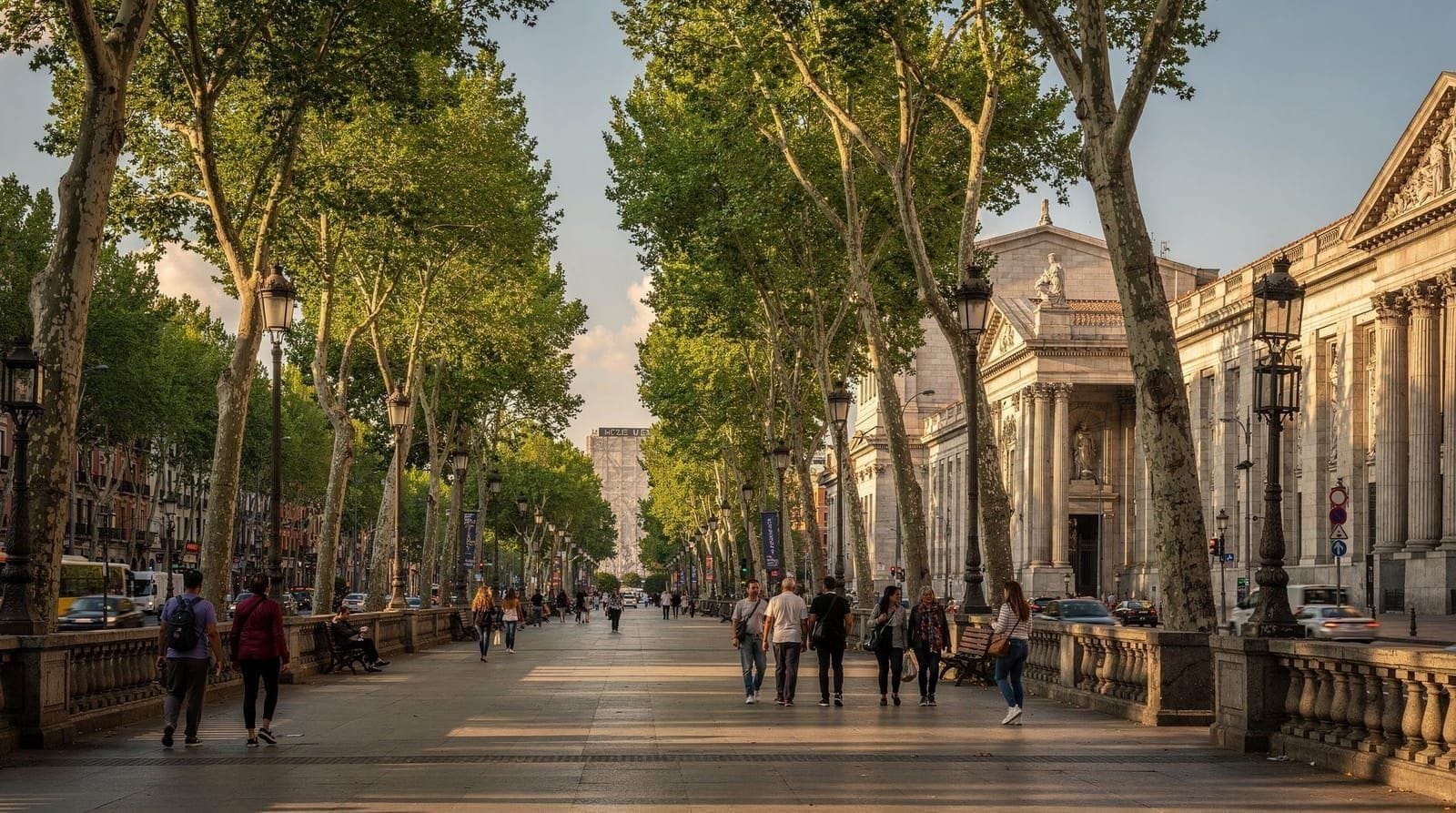
Madrid’s claim as one of Europe’s great art cities is not based on one exceptional collection — it is based on concentration. The Prado, Reina Sofía, and Thyssen-Bornemisza all sit within walking distance of each other on the Paseo del Prado. Between them they cover the full span of Western painting from 13th-century medieval panels to late 20th-century contemporary work, with the Spanish collection — Velázquez, Goya, El Greco, Picasso, Miró, Dalí — being genuinely unmatched anywhere.
Add the Sorolla Museum, the Descalzas Reales monastery, and the city’s neighbourhood galleries, and three days of dedicated art travel is not enough. This itinerary manages the prioritisation.
| Duration | 3 days for the golden triangle plus two smaller museums |
| Pace | One major museum per day, one smaller stop in the afternoon |
| Getting around | Walking within the Paseo del Prado area; metro north to Sorolla |
| Budget | Museum tickets €40–€60 total if paying individually across all stops |
| Best time | Any season; use free-entry windows to cut costs in any month |
Day 1: The Prado in depth
Morning: Prado with a guide
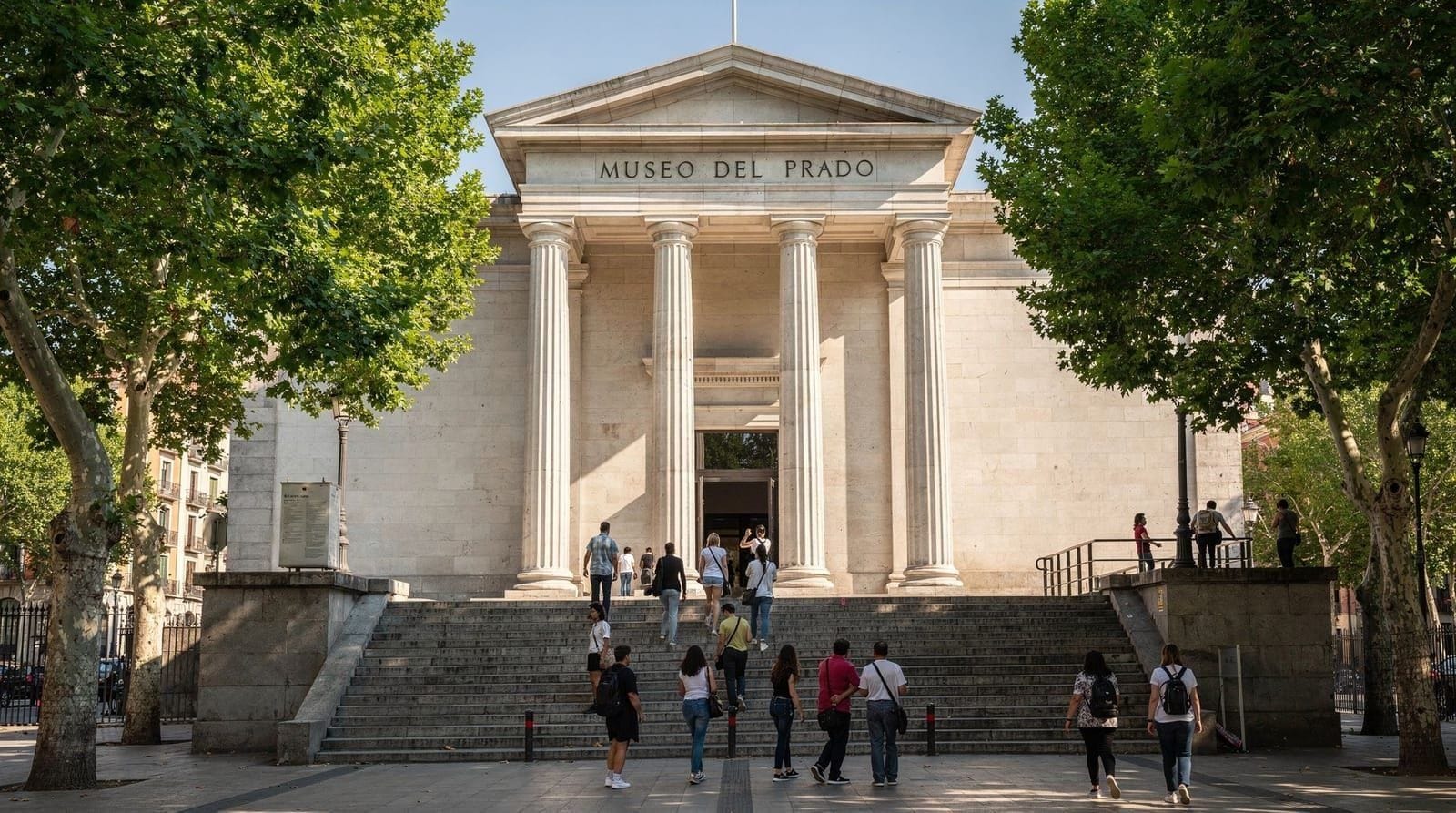
Arrive at the Prado Museum when it opens at 10 am (pre-book a timed entry). If this is your first time, take the Prado skip-the-line guided tour for a two-hour orientation — the museum holds over 8,000 paintings and 5,000 drawings, and orientation is not optional. If you are a repeat visitor, go directly to the rooms you want.
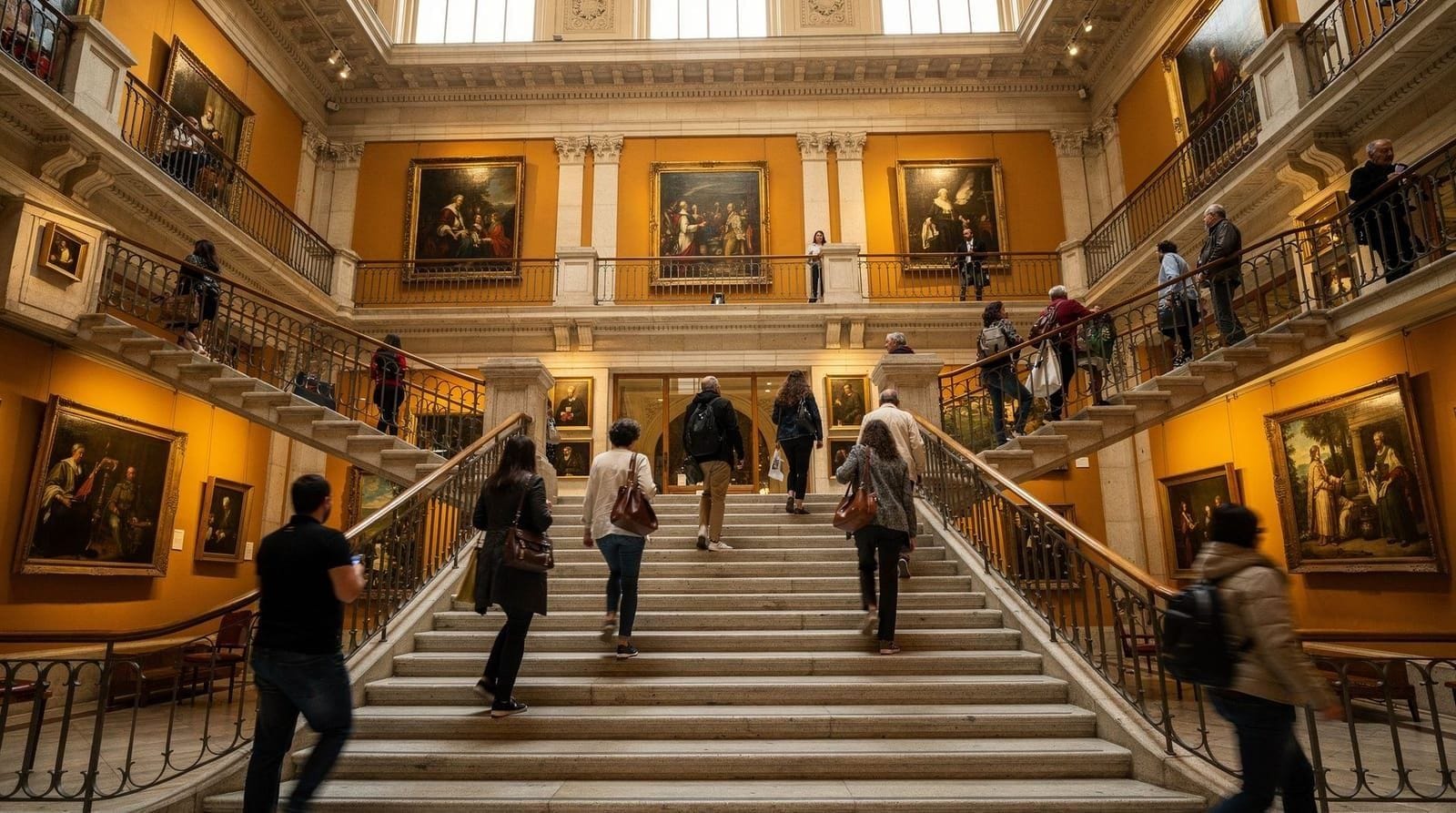
For Spanish art: The Velázquez rooms (12–15) are the core. Las Meninas (Room 12) is the painting that rewards the most time: a painting about painting, about representation, about the relationship between the artist and the subject, and about royal power all at once. Come back to it twice. The equestrian portraits of Philip IV in Room 13 and the late self-portraits in Room 15 show the full arc of Velázquez’s career.
Goya takes up an enormous space in the Prado’s narrative. The court portraits and the tapestry cartoons are the accessible entry; the Second of May and Third of May paintings in Room 64 mark the hinge where Goya’s comfortable royal career ended and his dark obsessive late work began; the Black Paintings in Room 67 (transferred from the walls of his house, the Quinta del Sordo) are the destination.
For El Greco: Rooms 8B and 9B. The painter arrived in Toledo in 1577 and never left Spain; his elongated, spiritually intense figures were entirely out of fashion in his own time and were rediscovered in the 19th century as proto-Expressionist. The Adoration of the Shepherds in Room 9B was painted for his own tomb.
For Italian Old Masters: Titian, Raphael, and Tintoretto are in the ground-floor Italian rooms. Titian’s portraits of Charles V and Philip II (Rooms 26–29) shaped how we picture the Habsburg court.
Bosch’s Garden of Earthly Delights (Room 56A) is in a category of its own — three hours of study would not exhaust its detail.
Afternoon: The Thyssen-Bornemisza
After lunch in Barrio de las Letras, walk to the Thyssen-Bornemisza Museum on Paseo del Prado (seven minutes on foot from the Prado’s north entrance). The Thyssen’s collection fills the specific gap the Prado leaves: 13th–17th century Italian and Dutch/Flemish primitives (ground floor), the full sweep of 19th-century European painting including Impressionism (floor 1), and an extraordinary 20th-century collection with works by Van Gogh, Mondrian, Kandinsky, and Hopper that the Prado and Reina Sofía barely touch.
The Thyssen guided skip-the-line tour is useful on a first visit for a museum this large. For art-literate visitors who want to self-navigate, the free Thyssen audio guide app is excellent.
The Thyssen is free every Monday from 12:00 to 16:00.
Evening: Barrio de las Letras
Dinner in Barrio de las Letras — the literary quarter between the Prado and Huertas is where Madrid’s arts scene has centred for 400 years and still does. Calle de las Huertas and the surrounding streets have the highest concentration of bookshops, small theatres, and wine bars in the city. The neighbourhood is quieter and more local-feeling than Sol or La Latina.
Day 2: Reina Sofía and the 20th-century Spanish story
Morning: Reina Sofía in depth
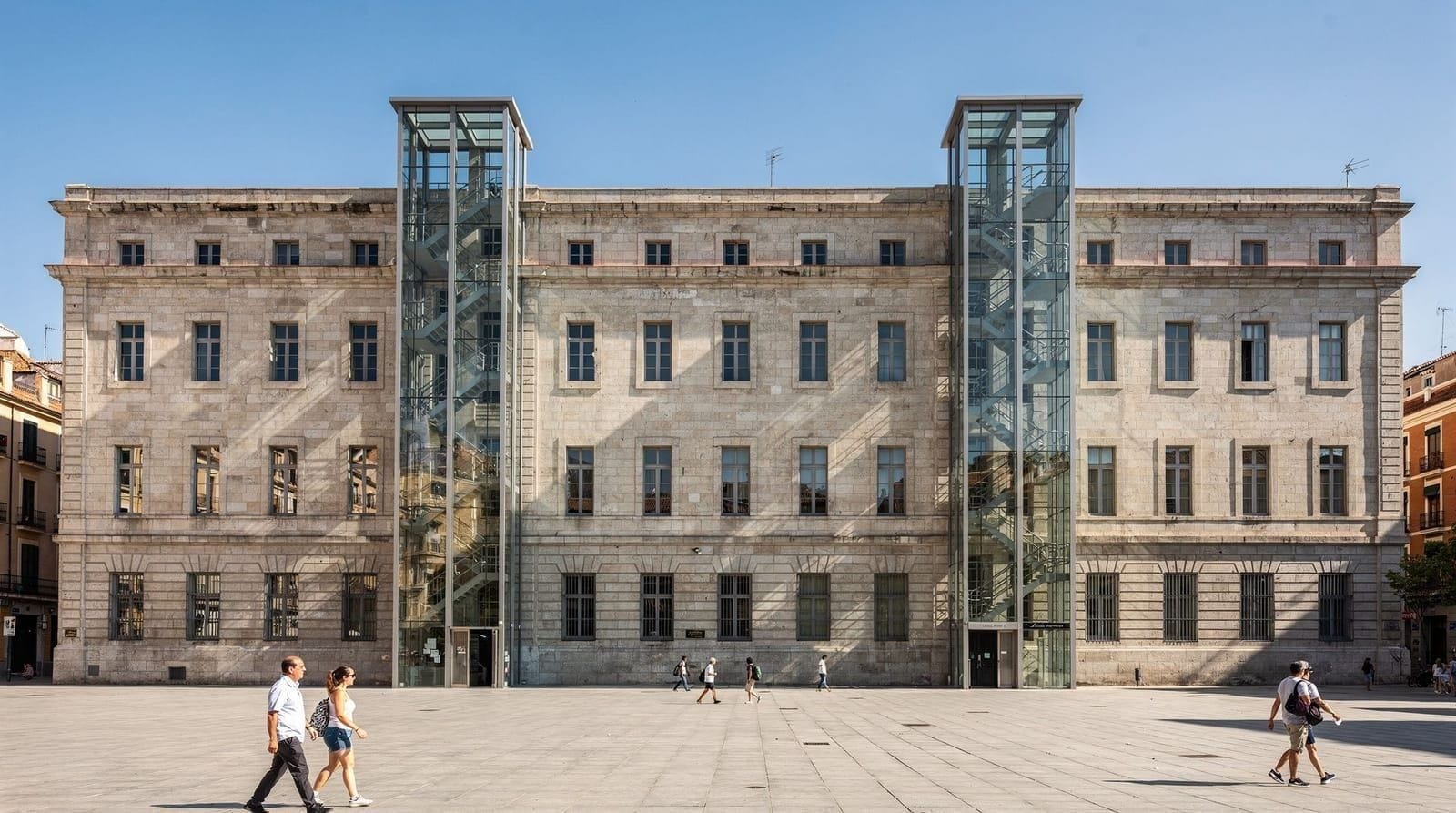
The Reina Sofía is organised chronologically from 1900 to the present across the building’s four floors. Come knowing the historical context and the art lands harder.
The essential narrative arc: the Spanish avant-garde of the early 20th century (Picasso’s pre-Guernica work, the Cubists, the Spanish connection to Paris), the Republic and Civil War period (Guernica and the political art surrounding it), the Franco dictatorship and its effect on cultural production, and the explosion of Spanish contemporary art after Franco’s death in 1975.
Guernica (Room 206, second floor) is the centrepiece. Picasso painted it in six weeks in Paris in 1937 in response to the Nazi bombing of the Basque town of Guernica at Franco’s request — an act of terror that killed hundreds of civilians. The painting returned to Spain from New York in 1981 after Franco’s death; Picasso had specified it could not come home while Spain was under fascism. The condition: a democratic Spain and the Reina Sofía as its home. Spend 20–30 minutes here.
The private Reina Sofía Guernica tour provides the political and artistic context that makes the painting fully comprehensible.
The Surrealist rooms on floor 3 include Dalí and Miró alongside international Surrealists in the Spanish orbit. The post-war and contemporary collections on floors 3–4 are less visited and less famous; for art-specialist visitors they are worth the time.
Afternoon: Sorolla Museum
After lunch, take the metro north to the Sorolla Museum in Almagro (metro Gregorio Marañón or Rubén Darío). This is Madrid’s best-kept museum secret — the collection of Joaquín Sorolla, with 2,000 of his paintings. Sorolla was Spain’s great Impressionist and light painter, a master of Mediterranean sun on white clothes and water. The original house-museum is closed for renovation; only the new building is open, free of charge (details below).
The museum is rarely crowded, never as famous as it should be, and completely absorbing. Allow 90 minutes.
Evening: Private gallery walk in Malasaña and Chueca
Madrid has a significant commercial gallery scene centred north of Gran Vía in Malasaña and Chueca. Most galleries are free to enter and open into the evening. The Malasaña guide identifies the gallery cluster around Calle de San Marcos and Calle Barquillo.
This is a good evening for a longer dinner. The restaurants around Chueca (Calle de Hortaleza, Calle de Pelayo) are some of Madrid’s best for modern Spanish cooking.
Day 3: The golden triangle walk and smaller museums
Morning: Descalzas Reales
Start early at the Monastery of Las Descalzas Reales, one of Madrid’s best-kept art secrets. The Franciscan convent was founded in 1559 by Joanna of Austria and endowed by successive members of the Spanish royal family. The interiors hold tapestries designed by Rubens, Flemish paintings, sculpture, and reliquaries — an extraordinary collection in a setting that has barely changed in 400 years.
Opening hours are limited (mornings on specific days; check the official website before you go) and visitor numbers are capped, which is the reason this place has survived intact.
The golden triangle art walk links the Descalzas Reales through the Austrias quarter to Paseo del Prado — walk it mid-morning to connect the Habsburg and classical contexts.
Midday: The three-museums pass and the Paseo del Prado
The three-museums golden triangle combined ticket is worth calculating against individual tickets if you have not yet visited all three. For art lovers spending multiple days, individual timed-entry tickets often make more sense — but the combined pass has logistical convenience.
Lunch at one of the good restaurant options on Calle de Moratin or Calle del Prado, the north edge of Barrio de las Letras.
Afternoon: Cibeles Palace and the Retiro
The Cibeles Palace — Madrid’s neoclassical city hall — has a free rooftop viewpoint and regularly hosts contemporary art exhibitions in its interior spaces. Entry to the exhibitions is free or low-cost. The view from the rooftop over the Cibeles fountain, the Paseo del Prado, and the Retiro park is the definitive Madrid panorama.
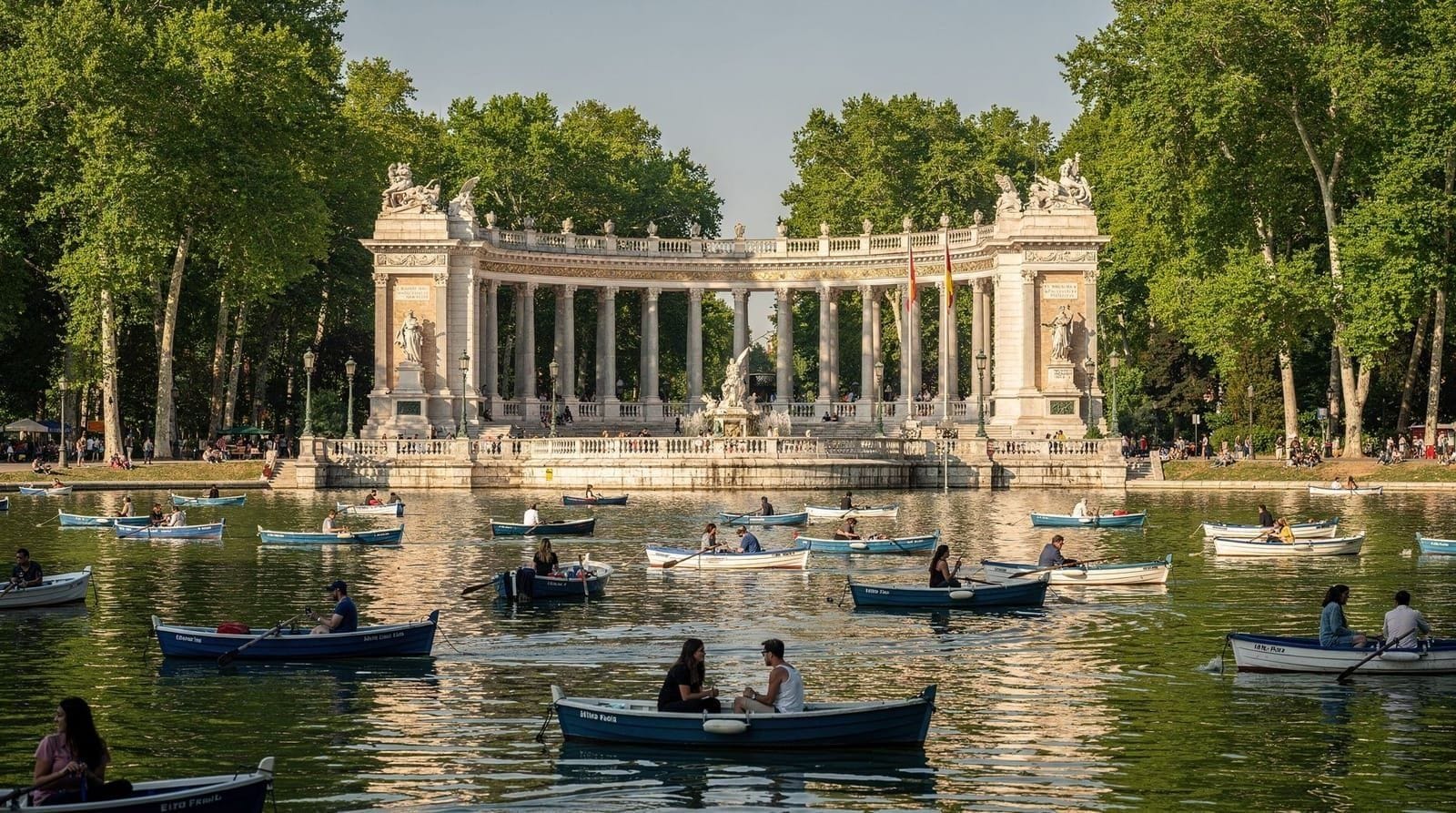
Finish in the Retiro Park at the Crystal Palace (Palacio de Cristal) — a wrought-iron and glass pavilion that hosts free contemporary art installations from the Reina Sofía’s collection. No queue, no ticket required, genuinely excellent contemporary art.
The Retiro’s Rose Garden (Rosaleda) and the Cecilio Rodríguez Gardens at the park’s southern end are the botanical close to a three-day art itinerary.
Practical notes for art lovers
- Plan around free-entry windows. Prado (Mon–Sat 18:00–20:00, Sun 17:00–19:00), Reina Sofía (Mon and Wed–Sat 19:00–21:00, Sun 12:30–14:30; closed Tuesday), Thyssen (Mon 12:00–16:00). Details at museum free hours guide.
- Physical stamina. Three museums in a day is too much — your eyes and feet will tell you. One major museum per day with a smaller one in the afternoon is the right pace for genuine engagement.
- Photography. The Prado prohibits photography throughout. The Reina Sofía and Thyssen allow photography without flash in most rooms. Check at the information desk.
- Best time to visit. Any season is fine for museum-focused trips. Winter (November–February) has fewer crowds and lower prices; spring and autumn are more pleasant overall.
The Prado versus the Louvre: why Madrid matters for art
Art travellers planning their European itinerary frequently underestimate the Prado relative to the Louvre and the Uffizi. The Prado’s case for parity rests on three arguments.
First, the depth of the Spanish school. Velázquez, Goya, Murillo, Ribera, and Zurbarán are all represented here at a depth — the number of works, and the quality of the individual works — that no other museum matches. The Louvre has Velázquez; the Prado has 50 Velázquez paintings including the masterworks he painted for the Habsburgs across his entire career.
Second, the Italian connection. Philip II and his successors were obsessive collectors of Italian painting; the Prado’s Titian collection is the best outside Venice (Philip II commissioned a series of mythological paintings from Titian personally), and the Raphael and Tintoretto holdings are substantial. This is Italian painting assembled by people who considered Italy their backyard.
Third, Bosch. Philip II was fascinated by Hieronymus Bosch — possibly because Bosch’s apocalyptic imagination resonated with the king’s intense religiosity. The Prado’s Bosch holdings are unmatched anywhere, including the Garden of Earthly Delights triptych, which is one of the most extraordinary and densely imagined paintings in Western art.
The Sorolla Museum: Madrid’s best-kept art secret
The Sorolla Museum is consistently among the highest-rated museums in Madrid on review platforms, and consistently under-visited because it lacks the name recognition of the golden triangle. Joaquín Sorolla (1863–1923) was Spain’s great impressionist light-painter — technically brilliant, commercially successful, and somewhat unfashionable for most of the 20th century because he was not Modernist enough.
His house in the Almagro neighbourhood, where he lived from 1911 until his death, was left to the Spanish state by his widow. It is closed for renovation (source: the museum’s official website, Ministry of Culture); only the new building, at calle Zurbano 68, opened on 15 October 2026, is open. Entry is free: Tuesday to Saturday 9:30–20:00, Sunday and public holidays 10:00–15:00, last entry 45 minutes before closing, closed on Mondays, 1 and 6 January, 1 May, and 24, 25 and 31 December. Check the museum’s official website for the reopening of the house.
The 2,000-plus paintings in the collection include the enormous Provinces of Spain series painted for the Hispanic Society of America in New York — 14 panels totalling 70 metres in length, showing regional Spanish life with an ethnographic precision and visual joy that is entirely unlike anything else in the Madrid museum landscape.
The museum is on Metro Line 5 (Gregorio Marañón or Rubén Darío stations). Allow 90–120 minutes.
Building a fourth day if you have it
Three days covers the golden triangle plus the Sorolla and Descalzas Reales properly, but a fourth day rewards art travellers who want depth over breadth. Good additions: a return visit to the Prado focused entirely on the Spanish 17th-century “Golden Age” rooms without the pressure of covering the whole museum in one pass; a slower afternoon at the Temple of Debod near Plaza de España, whose Egyptian reliefs make an unexpected counterpoint to a triangle-heavy trip; or a day trip to Toledo specifically for El Greco’s paintings in situ at the cathedral and the Casa del Greco, which the Prado’s El Greco rooms only partially represent. Repeat visitors often find the fourth day becomes their favourite because it has no checklist pressure.
What the golden triangle costs, realistically
Budget €40–€60 per person across three days if buying individual tickets: Prado €15 (or €22–€35 for the guided tour), Reina Sofía €12 (free during the weekday evening windows and Sunday 12:30–14:30), Thyssen €14 (free on Mondays 12:00–16:00), Sorolla Museum free (new building), and the Descalzas Reales €9. Timing your Reina Sofía and Thyssen visits to the free windows can cut this to €25–€30 total, though it means less control over exactly when you visit. The combined three-museum pass is worth comparing directly against this total before buying — it rarely beats individual tickets for a focused, multi-day visit but simplifies planning.
Frequently asked questions about Madrid for art lovers
How many days do I need to do Madrid’s art properly?
Three days is the minimum for the golden triangle plus one smaller museum. Four or five days allows you to add the Sorolla Museum, the Descalzas Reales monastery, the Cibeles Palace contemporary exhibitions, and the Crystal Palace in Retiro. Repeat art visitors (second or third Madrid trip) often spend a week and still find new things to see.
Can I photograph inside the Prado?
No. The Prado prohibits photography of the artworks throughout the museum — a policy in place since the collection was nationalised and which remains one of the most restrictive of any major art museum. The Reina Sofía and Thyssen permit photography without flash in most areas; the Sorolla Museum allows photography throughout.
Is it worth buying a combined ticket for all three golden triangle museums?
The three-museums combined ticket is worth calculating versus individual tickets. For a first visit spending 90 minutes in each museum, individual timed-entry tickets often work out similarly priced and give better scheduling flexibility. For multiple visits over several days, the combined pass has logistical convenience. Compare prices before you buy.
What is the best guide for a Prado first visit?
A professional guide for 90–120 minutes is genuinely the best investment on a first Prado visit — the museum is enormous, the works require historical context to appreciate fully, and a good guide will cover the essential rooms efficiently. The Prado museum guide covers the self-guided approach in detail as an alternative.
Should I visit the Sorolla Museum before or after the golden triangle?
After, ideally on Day 2 or Day 3 once you have some Prado and Reina Sofía context. Sorolla worked in a completely different register from the Prado’s Old Masters and the Reina Sofía’s 20th-century political art — seeing him fresh, without that contrast, means missing how distinctly joyful and light-filled his work is by comparison. Many art travellers rank the Sorolla as their favourite Madrid museum precisely because it arrives as relief after two intense days.
Three-day summary
| Day | Focus | Evening |
|---|---|---|
| Day 1 | Prado in depth, Thyssen-Bornemisza | Barrio de las Letras dinner |
| Day 2 | Reina Sofía, Sorolla Museum | Malasaña/Chueca gallery walk |
| Day 3 | Descalzas Reales, Cibeles Palace, Retiro Crystal Palace | Farewell dinner |
Top experiences
Bookable activities with verified prices and instant confirmation on GetYourGuide.