Cibeles Palace and fountain: Madrid's civic symbol and free cultural centre
Madrid: Royal Palace Prado One Day
Is the Cibeles Palace free to visit and what can I see there?
Yes, the ground floor exhibition spaces are free and open to all. The rooftop belvedere (Mirador de Madrid) costs €4 and is open Tuesday–Sunday. The building houses the Madrid City Hall and CentroCentro cultural centre, with free exhibitions, events, and a café. The rooftop gives one of the best views of Gran Vía and central Madrid.
In brief: The Cibeles Palace (Palacio de Cibeles) is Madrid’s city hall, a 1919 Plateresque-Baroque building housing the CentroCentro cultural centre with free exhibitions and a €4 rooftop view. The adjacent Cibeles fountain is the city’s most famous civic gathering point. Both are free or near-free to experience.
| Where | Plaza de Cibeles 1, Metro Banco de España (Line 2) |
| Cost | Free for CentroCentro; around €4 for the Mirador rooftop |
| Time needed | 45–60 minutes, longer with a current exhibition |
| Hours | Tuesday–Sunday, 10:00–20:00 (CentroCentro); closed Mondays |
| Best time | Late afternoon for the Mirador, dusk for photographing the fountain |
The building that became Madrid’s city hall a century after it was built
The Palacio de Cibeles was not built to be Madrid’s city hall. It was constructed between 1905 and 1919 as the headquarters of the Correos y Telégrafos (Spanish Postal and Telegraph Service), designed by architects Antonio Palacios and Joaquín Otamendi in an elaborate style that blends Spanish Plateresque, Gothic revival, and Central European Baroque — a confident statement of institutional purpose for a communications ministry at the height of the telegraph age.
The building occupied the most prominent position in Madrid — the Plaza de Cibeles, the intersection of the Paseo del Prado and the Calle de Alcalá, two of the city’s principal axes — and its silhouette (towers, pinnacles, carved stone facades) immediately became part of the Madrid skyline. The choice of location over the 18th-century neoclassical buildings on the same plaza gave the Postal Ministry a prominence that embarrassed several contemporaries who felt a communications ministry had no business being grander than the Bank of Spain opposite.
The Correos occupied the building for nearly a century. In 2007, Madrid City Hall moved its main administrative offices here, and the building reopened in 2011 after restoration with the CentroCentro cultural programme installed in the public areas. The postal functions moved elsewhere; the architecture stayed.
The Cibeles fountain and plaza
The Fuente de Cibeles stands in the centre of the Plaza de Cibeles at the junction of four major streets. It was installed in 1782 under Charles III, when the Paseo del Prado was developed as a grand public promenade. The sculpture — Cybele, Phrygian goddess of nature and city life, in a chariot drawn by two lions — was designed by Ventura Rodríguez and sculpted by Francisco Gutiérrez and Roberto Michel.
The fountain has been Madrid’s primary civic gathering point for celebrations for over two centuries. The association with Real Madrid began in 1986 when the club won La Liga and supporters spontaneously gathered at Cibeles rather than at the Bernabéu. The tradition has continued: European Cup and Champions League titles bring hundreds of thousands of people to the plaza. The club’s open-top bus celebration traditionally stops at Cibeles before continuing.
Atlético de Madrid supporters gather at the Neptuno fountain, 300 metres south on the Paseo del Prado — the rivalry extends to which civic monument each club claims. During Derby periods, both fountains may be cordoned off in advance by city police.
Inside the Palacio: CentroCentro
The interior of the Palacio de Cibeles has been restored to its original grandeur in the public areas, which now house the CentroCentro cultural centre. The ground-floor spaces include:
The Sala Principal: The former main post office hall — a large, light-filled room with stone columns and decorated vaulting, now used for large-scale temporary exhibitions. The architectural space itself is the attraction as much as whatever is being exhibited.
Upper floor galleries: The historic offices on floors 2–5 have been converted into exhibition spaces accessed by lift and staircase. Programming covers urban planning, social issues, Madrid history, and design — the curatorial angle is consistently civic, reflecting the City Hall’s ownership of the building.
The Balcony of Mayors: The ceremonial balcony on the building’s main facade, from which the Mayor of Madrid addresses the crowd during the New Year’s Eve celebrations (in coordination with the Puerta del Sol event) and after Real Madrid title victories. During normal visiting hours, the balcony may be accessible from the interior.
The Mirador de Madrid: best views for €4
The rooftop belvedere is the building’s most visited paid feature. Accessible by lift from the interior, the Mirador occupies the upper terrace of the building with 360-degree views:
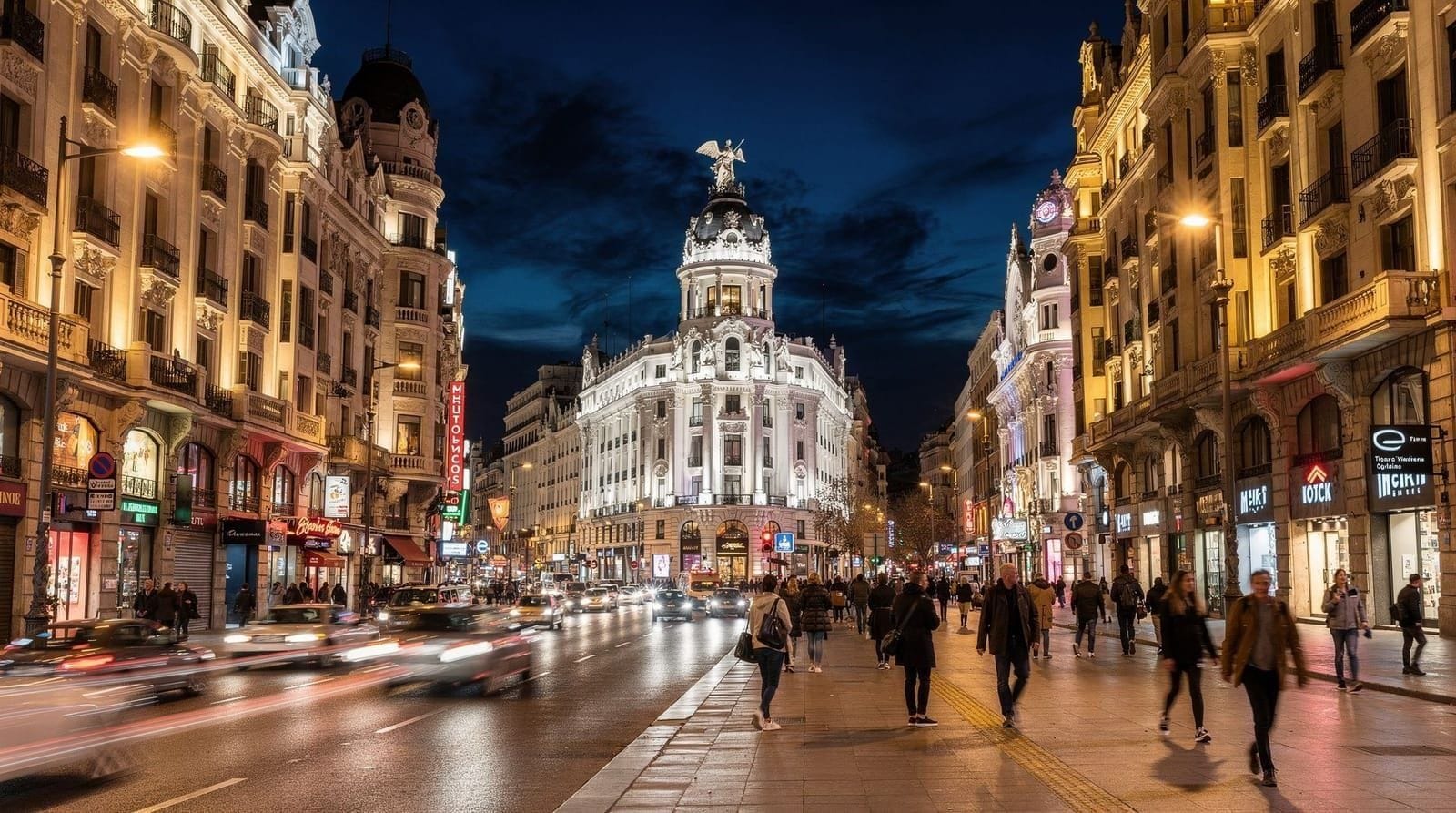
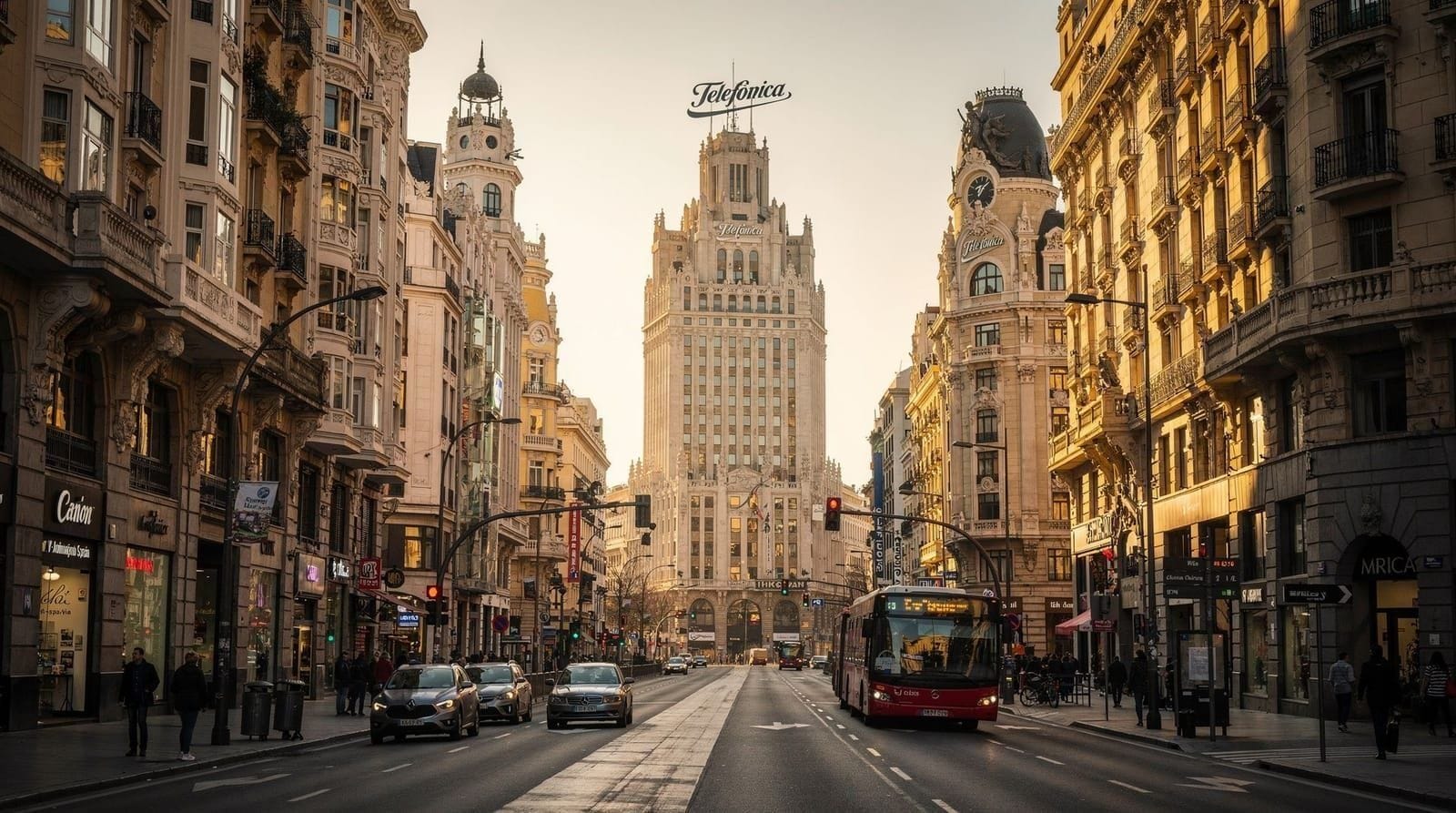
West toward Gran Vía: Looking down the Calle de Alcalá toward the Metrópolis building corner and the Gran Vía boulevard beyond. This is the defining architectural view of Madrid’s 20th-century urban ambition — the sequence of Beaux-Arts and Art Deco facades receding toward the western horizon.
South toward the Paseo del Prado: The Prado museum garden, the Thyssen building, and the broader Paseo del Prado tree canopy. The Neptune fountain is visible.
North: The Banco de España (directly opposite), its neoclassical dome, and the streets of the Barrio de las Letras.
East: The beginning of the Retiro park and the Puerta de Alcalá triumphal arch, framed by the Calle de Alcalá.
At €4, this is the most affordable quality rooftop view in central Madrid, and significantly less crowded than the Círculo de Bellas Artes rooftop two streets away.
Practical logistics
Address: Plaza de Cibeles 1, 28014 Madrid.
Getting there: Metro Banco de España (Line 2), exit 1, directly at the plaza. The Cibeles fountain is visible from the Metro exit.
CentroCentro access: Free, no ticket needed. Enter through the main door on Plaza de Cibeles.
Mirador de Madrid: Tickets at the CentroCentro ticket office on floor 2. €4 (current pricing — verify on site). The lift access is inside the building.
Café: A café-bar operates on the ground level of CentroCentro with reasonable prices and the architectural setting of the former post office hall.
Photography: Permitted throughout the public areas, including the Mirador. The fountain is best photographed from the Alcalá side at dusk, when the facade of the Palacio de Cibeles is lit.
The Plaza de Cibeles buildings
The four buildings framing the Plaza de Cibeles represent four different architectural traditions and four different functions:
Palacio de Cibeles (northwest): Madrid City Hall / CentroCentro, the most elaborate.
Banco de España (northeast): The Spanish central bank (1891, eclectic Neoclassical/Renaissance), with its distinctive corner cupola. Not publicly accessible except for the ground-floor exhibition space (free, irregular schedule).
Palacio de Linares (southeast): A 19th-century aristocratic palace now housing the Casa de América, a cultural centre focused on Spain’s relations with Latin America. The interior (free, limited access) has elaborately decorated rooms from the 1870s.
Palacio de Buenavista (southwest): The Ministerio del Ejército (Army Ministry), dating from 1769. Not publicly accessible.
Walking the plaza and reading the four facades as an architectural survey of Spanish institutional buildings from the 18th to early 20th century takes about 20 minutes and costs nothing.
Combining Cibeles with the Paseo del Prado
The Palacio de Cibeles stands at the northern end of the Paseo del Prado museum corridor. From Cibeles walking south:
- Banco de España and Real Academia de Bellas Artes (2 minutes)
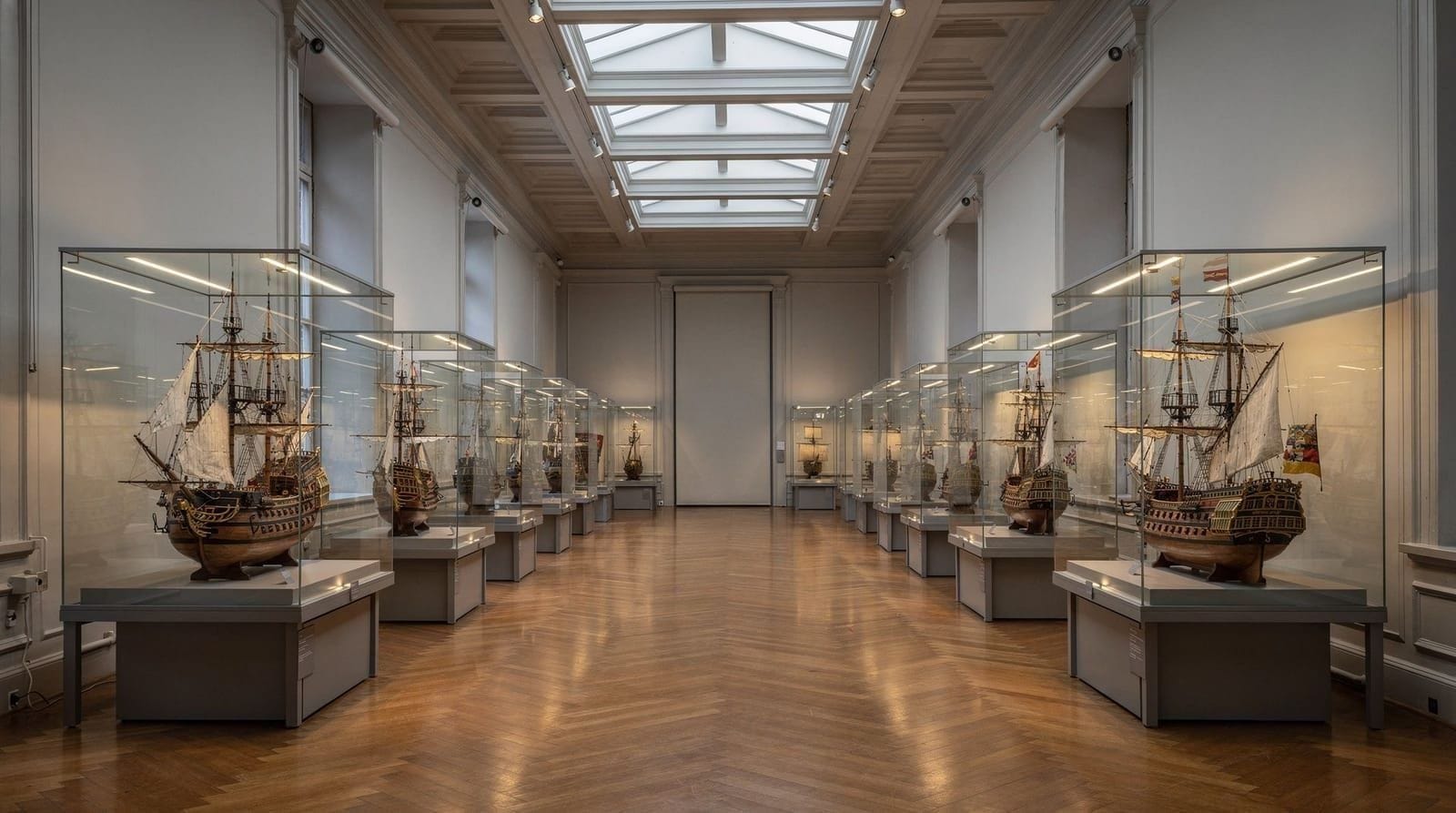
- Museo Naval (3 minutes south, free)
- Thyssen-Bornemisza Museum (5 minutes south)
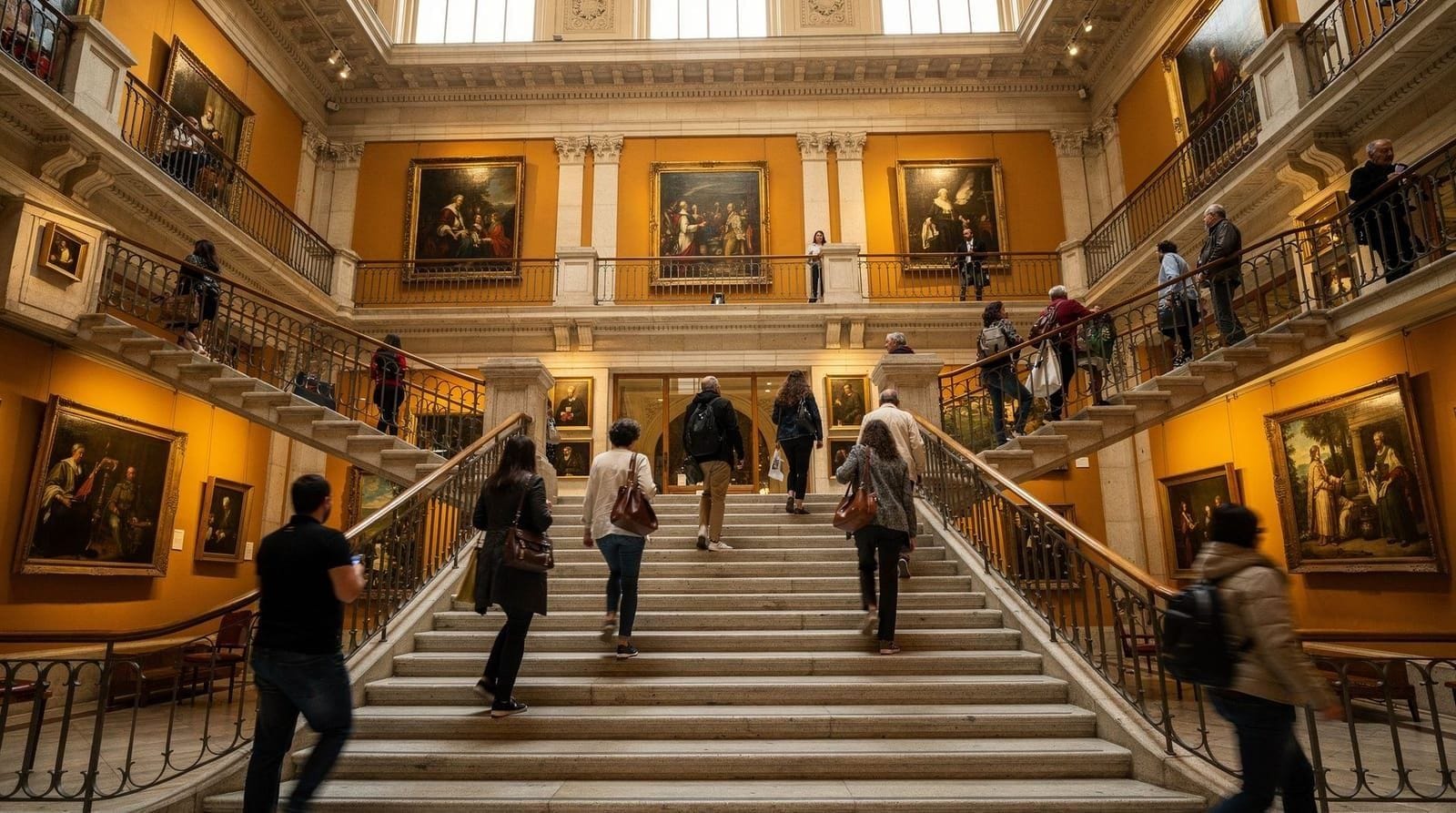
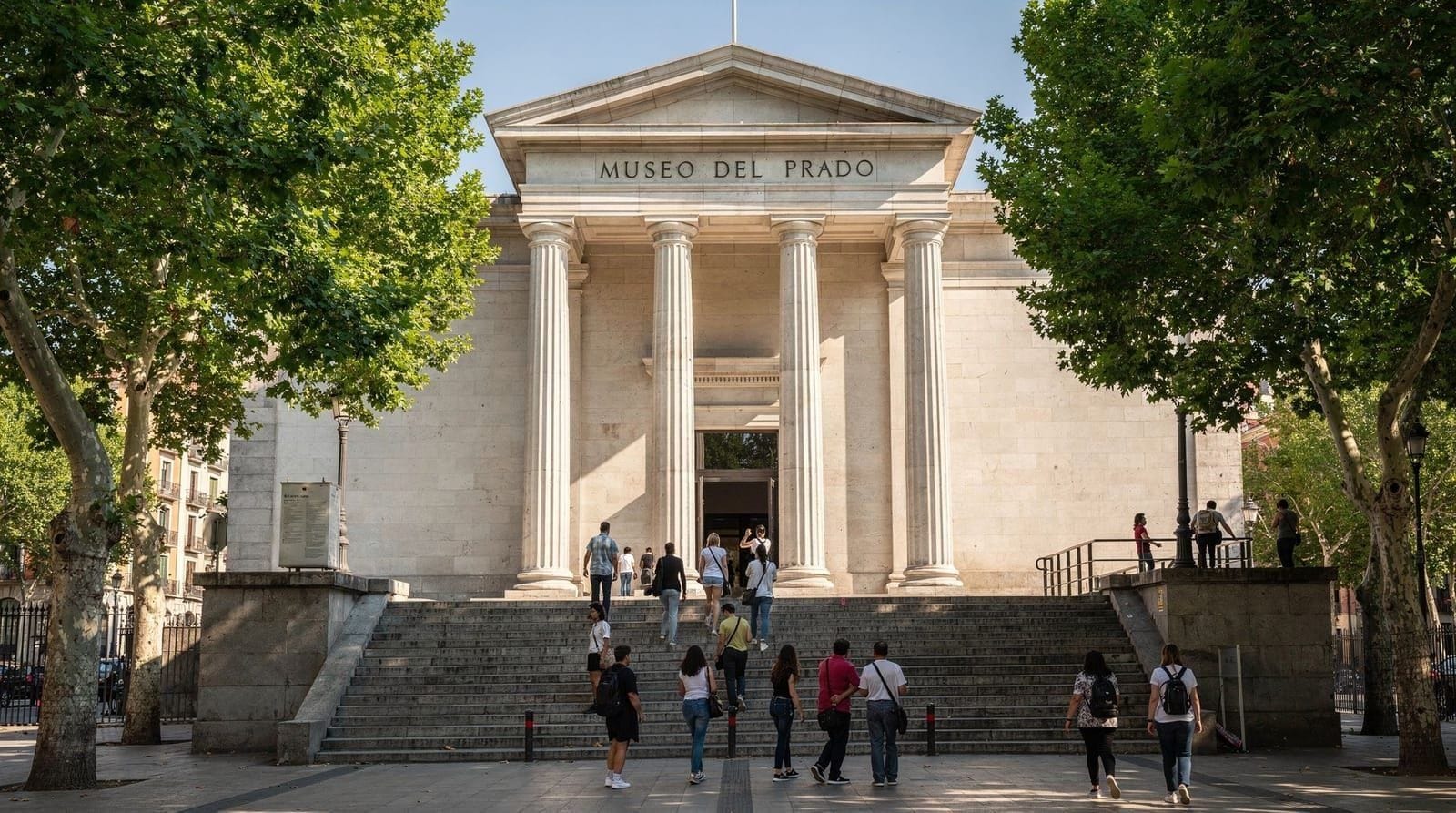
- Prado Museum (8 minutes south)
- Reina Sofía Museum (15 minutes south)
The Paseo del Prado walk — from Cibeles to Atocha — is one of Madrid’s finest urban promenades, lined with trees, fountains, and museum facades. It appears in the Golden Triangle art walk guide as the north–south axis connecting the three main museums, with Cibeles as the northern landmark.
For first-time visitors building an orientation walk, starting at Cibeles and walking south to Atocha provides Madrid’s most instructive architectural sequence — from 19th-century institutional buildings through the Golden Triangle museums to the 1992 glass-and-steel Atocha station.
If your plans also include royal Madrid, the Royal Palace guide and the Madrid royal sites itinerary fit naturally with a Cibeles morning. Anyone who wants to pair the palace with the Prado in a single day can look at a one-day combination of the Royal Palace and the Prado, and visitors who prefer to avoid queues at the palace can book a fast-access Royal Palace ticket ahead of time.
The Cibeles fountain in Spanish culture
The Fuente de la Cibeles is not merely Madrid’s best-known landmark — it is one of the most charged public spaces in Spanish cultural life. A brief history of significant events at the fountain:
The Civil War (1936–1939): During the Siege of Madrid, the Cibeles fountain was sandbagged and covered with protective boarding to shield it from artillery damage. The gesture — protecting an 18th-century water feature while the city was under bombardment — is regularly cited as an example of Madrid’s particular relationship with its civic symbols.
Franco’s death (1975): The transition to democracy saw the fountain become a gathering point for political expression. Crowds assembled at Cibeles on 20 November 1975 to hear the announcement of Franco’s death.
Real Madrid Champions League titles: The association began in 1986 and has continued through every major title since. The ritual is now embedded in Spanish football culture: the team bus arrives at the fountain; the players address the crowd from the steps; champagne is poured into the fountain basin. City authorities partially protect the fountain structure before anticipated celebrations.
Political demonstrations: The fountain’s plaza has hosted demonstrations of every political persuasion since the transition to democracy. Its central location — where the major radial arteries of the 19th-century city meet — makes it the natural focus for any large public gathering.
The Banco de España opposite
The Banco de España (Spanish central bank) occupies the northeast corner of the Plaza de Cibeles in a building completed in 1891, extended in 1920, and extended again in 1968–1973. The eclectic Neoclassical/Renaissance style — dome, corner towers, rusticated stone base — was chosen to project institutional gravitas.
The bank is not publicly accessible in the usual sense, but a ground-floor exhibition space occasionally opens for scheduled visits. The exterior is best viewed from the Cibeles plaza side, where the curved corner with the dome is the most architecturally resolved element.
The Banco de España holds Spain’s gold reserves and issues the Spanish euro coins. In the collection: one of the finest numismatic collections in Europe, not publicly displayed. For visits to the accessible spaces, check the Banco de España website for current programming.
The Paseo del Prado: Madrid’s linear museum
The street sequence from Cibeles south to Atocha — the Paseo del Prado itself — is one of Europe’s finest museum promenades. The 18th-century development of this boulevard was part of Charles III’s programme to give Madrid an enlightened public infrastructure comparable to Paris’s grands boulevards.
The sequence of institutions from Cibeles south:
- Museo Naval (free, 5 minutes south)
- Thyssen-Bornemisza Museum (5 minutes)
- Prado Museum (8 minutes)
- Real Jardín Botánico (10 minutes)
- Reina Sofía Museum (15 minutes)
- Atocha station (18 minutes)
This 20-minute walk covers the core of Madrid’s cultural endowment. The Paseo del Prado itself — tree-lined, with fountains at major intersections (Cibeles/Neptuno/Apolo) — is the finest urban promenade in Spain.
CentroCentro programming and what to expect
The CentroCentro cultural centre programmes approximately 4–6 major exhibitions per year, alongside a busy events calendar (concerts in the main hall, lectures, film screenings, children’s workshops). The exhibitions are consistently high quality and the topics are civic and relevant: Madrid urban planning, climate adaptation, social inequality, and the city’s history are recurring themes.
For visitors who want to understand how Madrid thinks about itself — how the city government presents its history and future to its citizens — CentroCentro is more informative than any tourist attraction. The exhibitions are designed for citizens rather than tourists, which means they engage directly with Madrid’s actual urban and social challenges.
Practical tip: The CentroCentro website lists current exhibitions with English descriptions. If an exhibition is running during your visit, budget 45–60 minutes alongside the Mirador visit for a complete experience of the building.
Accessibility and Cibeles at Christmas
Accessibility: The Palacio de Cibeles has been substantially adapted since its 2011 restoration — lift access serves CentroCentro’s ground and upper floors, and the Mirador de Madrid rooftop is reached by the same lift rather than stairs, making it one of the more wheelchair-accessible viewpoints in central Madrid compared to older monuments like the Royal Palace’s more restricted upper floors. Accessible toilets are available on the ground floor. The plaza itself is flat and easy to cross, though pedestrian crossings at the surrounding intersection can involve longer waits given the volume of traffic on Calle de Alcalá and the Paseo del Prado.
Cibeles at Christmas: The Palacio de Cibeles is part of Madrid’s wider Christmas lighting circuit — the building’s facade is illuminated alongside the Gran Vía lights each December, and the plaza is a common stop on a walking route between the Gran Vía guide lights and the Paseo del Prado. The building itself does not host a dedicated Christmas market (unlike Plaza Mayor), but the CentroCentro programme sometimes runs seasonal events in December — check the current listings if visiting over the holidays.
New Year’s Eve: The Balcony of Mayors, mentioned above, is used by Madrid’s mayor to address the crowds gathered nearby on 31 December, in coordination with the main countdown event at Puerta del Sol a short walk away — the plaza itself gets busy but nowhere near as densely packed as Sol on the night itself.
Eating and drinking around Cibeles
The immediate surroundings of Plaza de Cibeles have several options worth noting:
Café del Círculo de Bellas Artes (Calle de Alcalá 42, 2 minutes north): One of Madrid’s best traditional cafés, in the 1926 arts centre building. High ceilings, marble columns, professional service, and coffee at reasonable prices. The rooftop terrace (€6 entry) is immediately adjacent. This is the authentic grand-café experience that Madrid’s central tourist area largely lacks.
Terraza del Thyssen (Paseo del Prado 8): The Thyssen’s rooftop restaurant is open for dinner in summer — one of the better-value rooftop dining options in the city. Reservation required.
Bar Palacio de Linares (inside the Casa de América, Plaza de Cibeles): A café-bar in the 19th-century palace of the Marqués de Linares. The decor is overripe Bourbon palace style; the coffee is standard. Worth a single visit for the room.
The Barrio de las Letras neighborhood — 5 minutes southwest — has the best concentration of mid-range bars and restaurants in the immediate area, with prices significantly lower than the tourist-facing establishments on the Paseo del Prado itself.
If you’d rather see Cibeles as part of a guided route through the museum district, a walking tour combining the historic centre with Prado skip-the-line entry covers this stretch of the Paseo del Prado with a guide.
Frequently asked questions about Cibeles Palace and fountain
What are the Cibeles Palace opening hours?
CentroCentro (cultural centre, ground to 5th floor): Tuesday–Sunday 10:00–20:00. Rooftop belvedere (Mirador de Madrid): Tuesday–Sunday 10:30–14:00 and 16:00–19:30. Closed Mondays. Access to the city hall administrative areas is restricted.What is the Cibeles fountain?
The Fuente de la Cibeles is a late 18th-century sculptural fountain depicting Cybele, the Greek goddess of nature, riding a chariot drawn by lions. Designed by Ventura Rodríguez and installed in 1782, it stands in the centre of Plaza de Cibeles at the intersection of the Paseo del Prado and the Calle de Alcalá. It is Madrid's most recognisable civic symbol — Real Madrid fans gather here to celebrate Liga and Champions League titles.What happens at the Cibeles fountain when Real Madrid wins?
Real Madrid supporters have celebrated major titles at the Cibeles fountain since 1986. The fountain is Madrid's equivalent of the Arc de Triomphe for football — when Real Madrid win La Liga or the Champions League, hundreds of thousands of people gather at the plaza. The city partially protects the fountain structure with wooden boarding before anticipated celebrations.What is CentroCentro inside the Cibeles Palace?
CentroCentro is Madrid City Hall's cultural programming arm, operating within the Cibeles Palace building. It hosts free and low-cost exhibitions on architecture, design, social themes, and Madrid history. The exhibition spaces occupy the restored historic rooms of the building (inaugurated 1919), and the programming changes every 2–4 months.What is the best viewpoint at the Cibeles Palace?
The Mirador de Madrid rooftop belvedere, accessible for €4, sits at the top of the Cibeles Palace and looks directly down the Calle de Alcalá toward the Metrópolis building and Gran Vía. The view to the west-northwest is the best urban view in Madrid for the architectural boulevard. The view east includes the Banco de España and the beginning of the Paseo del Prado.