Prado Museum guide: everything you need to visit Madrid's greatest art collection
Madrid: Prado Guided Skip the Line
Is the Prado Museum worth visiting and how do I avoid queues?
The Prado is one of the three or four finest art museums on earth and absolutely worth visiting. To avoid queues, book skip-the-line tickets online in advance, or arrive during the free-entry windows: Monday–Saturday 18:00–20:00 and Sunday/holidays 17:00–19:00. Arrive 30 minutes before the free window opens.
In brief: The Prado is non-negotiable for any Madrid visit — the finest concentration of Spanish, Flemish, and Italian masters outside the Vatican. Standard tickets are €15; free evenings run Monday–Saturday 18:00–20:00 and Sunday 17:00–19:00. Book ahead for any weekend or peak-season visit.
| Where | Paseo del Prado, Jerónimos district, central Madrid |
| Cost | €15 standard; free in the daily evening windows |
| Time needed | 2 hours minimum, 3–4 hours for a proper visit |
| Getting there | Metro Atocha (Line 1) or Banco de España (Line 2) |
| Best time | Weekday morning at opening, or the free evening window on a low-season weekday |
Why the Prado stands apart from other European museums
The Prado Museum (Museo Nacional del Prado) opened in 1819 as the royal painting collection of the Spanish Bourbon monarchy, which means it reflects four centuries of Spain’s imperial wealth and artistic taste rather than the acquisitions of any single collector or war. The result is a museum with no equal for the Spanish Golden Age — Velázquez, El Greco, Zurbarán, Ribera, Murillo — and a Flemish collection assembled when the Spanish crown controlled the Low Countries. Goya is represented at a depth that no other museum approaches, with works spanning his entire career from court painter to voluntary exile in France.
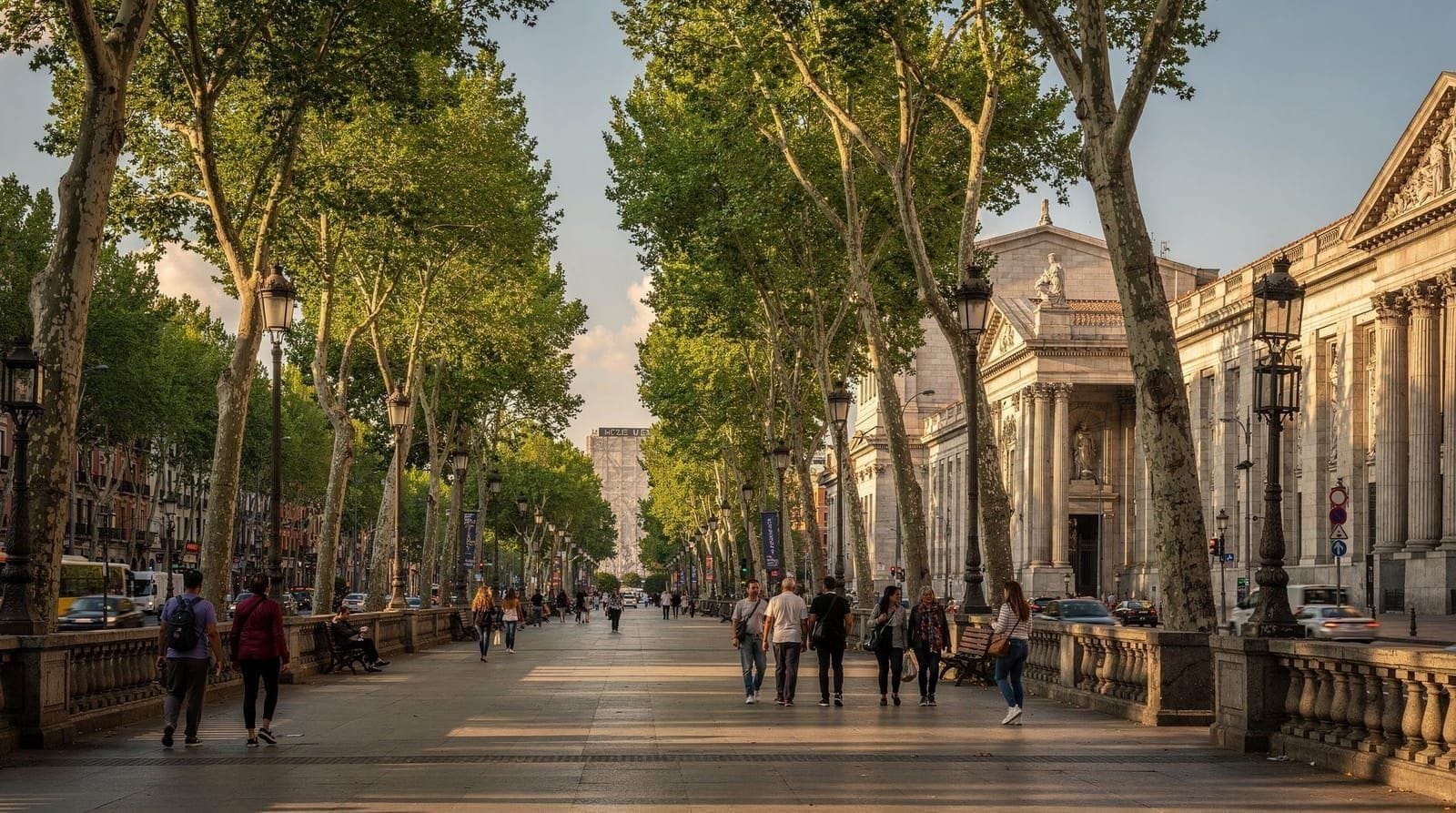
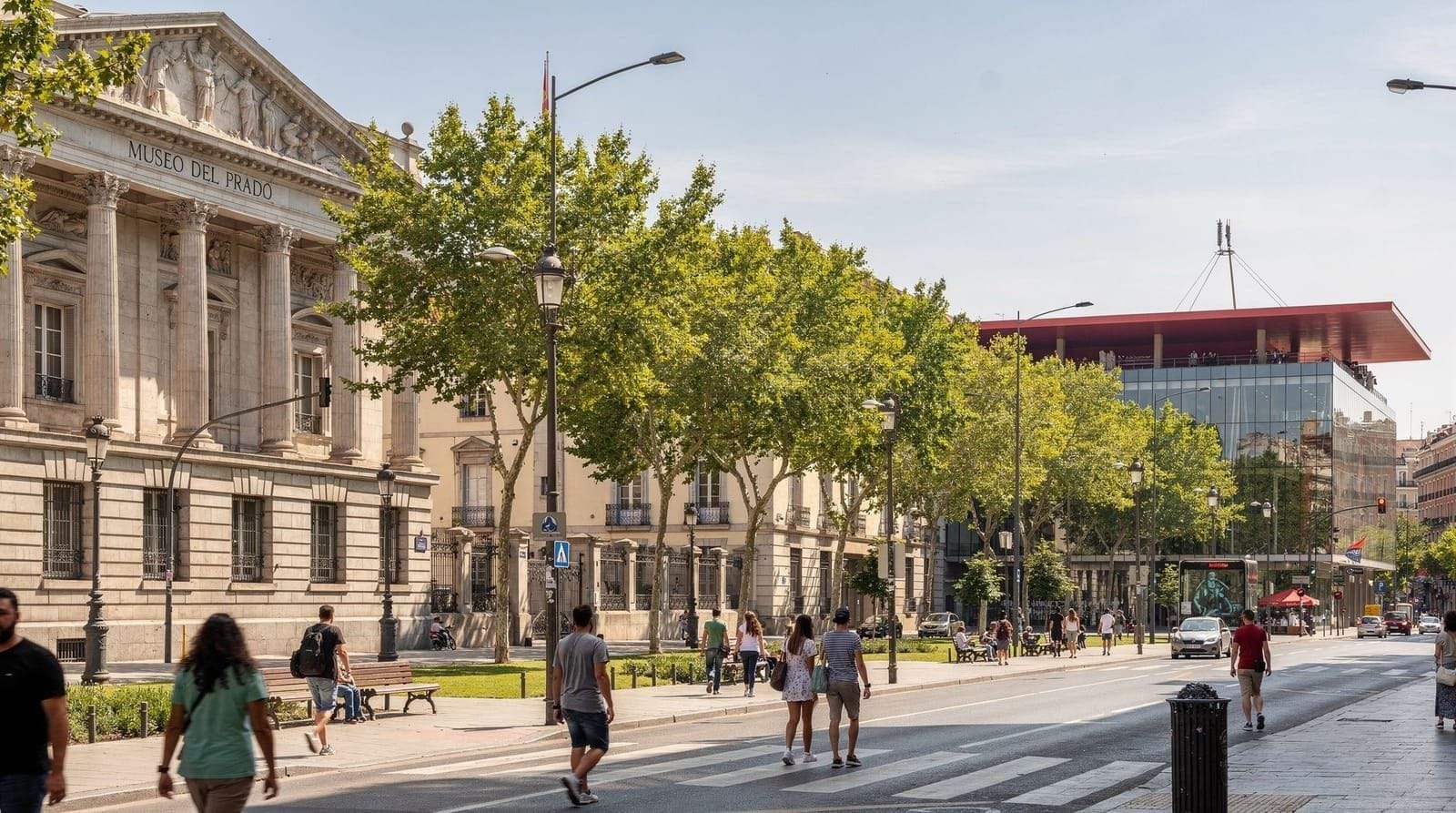
The Prado sits on the Paseo del Prado, the grand promenade connecting the Retiro park gardens to the Atocha train station. The main Villanueva building (1819) has been extended into the neighbouring Jerónimos monastery cloister; together they house 8,000+ works on permanent display and a conservation catalogue of 20,000+ pieces in storage.
This is not a checklist museum. The best Prado visits are selective — pick two or three rooms and absorb them rather than covering everything at a jog.
Free-entry windows: what you need to know
The Prado offers genuinely free admission twice daily:
- Monday–Saturday: 18:00–20:00 (last entry 19:30)
- Sunday and public holidays: 17:00–19:00 (last entry 18:30)
These windows are well-publicized, which means queues form. In summer and during school holidays, the queue for the free Monday–Saturday window can be 45–60 minutes long. Strategies:
- Arrive 30–40 minutes before opening. The queue starts forming around 17:20–17:30 for the 18:00 opening.
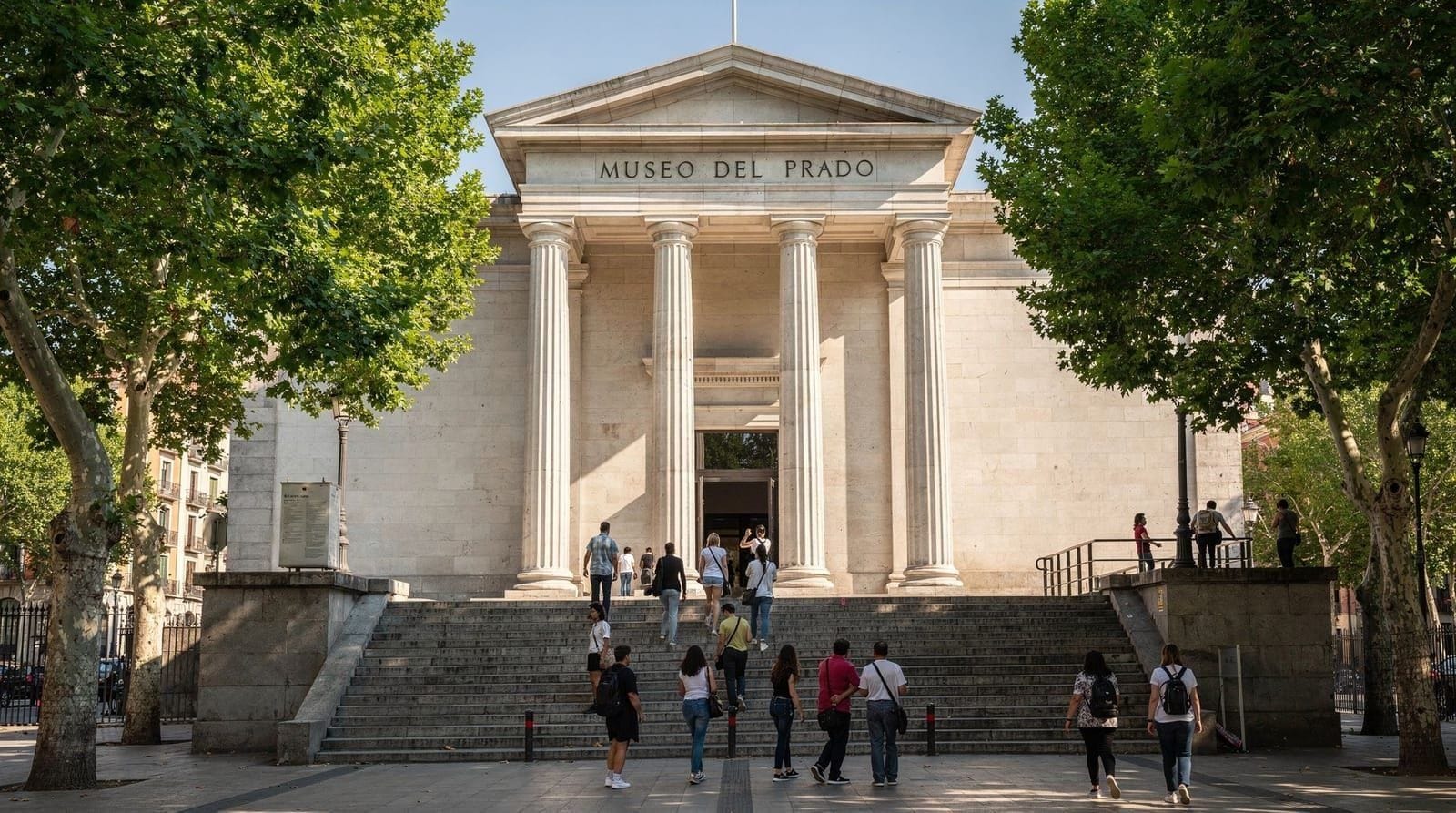
- Use the Jerónimos entrance (east side, facing the church) — it often has a slightly shorter queue than the main Goya entrance.
- Go on a Wednesday afternoon in low season (January–March): lower demand, shorter queue.
Two hours in the free window is enough for the Velázquez room, the Goya Black Paintings, and one other major section. If that is your budget, plan the visit route in advance.
A guided skip-the-line Prado tour bypasses both the ticket queue and the planning — a guide selects the 10–12 essential works and explains the historical context that makes them legible.
The essential rooms
Velázquez and the Spanish Golden Age (rooms 9–15)
This is the core of the Prado’s identity. Las Meninas (1656) is in room 12, and it rewards sustained attention. The painting depicts the Infanta Margarita surrounded by attendants, but the real subject is the act of painting itself — the viewer occupies the position of the king and queen reflected in the background mirror. The more you look, the more the spatial relationships become unstable.
The same rooms contain the equestrian portraits of Philip IV and Philip III, and the multiple portraits of court dwarfs and jesters that are as psychologically acute as the royal commissions. Velázquez treated his subjects with attention regardless of rank.
Goya (rooms 34–38, 64–67, and the Black Paintings basement)
Francisco Goya is at the Prado in five modes: court painter (the royal family portraits, including the famously unflattering portrait of the family of Charles IV), Romantic painter (the Majas), war documentarian (The Third of May 1808), and — in the Black Paintings — something that has no precedent in Western art.
The Black Paintings were murals Goya painted on the walls of his house outside Madrid between 1819 and 1823, when he was in his 70s, deaf, and disillusioned with Spain’s political violence. Saturn Devouring His Son is the most famous — a god consuming his child with a wild-eyed desperation — but the room that contains all 14 paintings together is one of the most unsettling experiences in any European museum. They were transferred to canvas and donated to the state after Goya’s death.
Bosch: The Garden of Earthly Delights (room 56A)
Hieronymus Bosch’s three-panel altarpiece arrived in Spain at Philip II’s request in the 1590s and has been in the Prado since 1939. The central panel’s fantastical nude figures, hybrid animals, and moral inversions are still genuinely strange after 500 years. Philip II reportedly meditated on it daily, which tells you something about the Habsburg court’s relationship with sin and salvation.
Flemish masters (rooms 55–64)
Rogier van der Weyden’s Descent from the Cross (c. 1435) is arguably the most technically accomplished painting in the museum — the grief on each face is specific and human rather than stylized. Rubens, Titian, and Tintoretto fill the adjacent rooms, reflecting Spain’s close ties with Italy and the Low Countries.
El Greco (rooms 8A, 9)
Domenikos Theotokopoulos, known as El Greco, worked in Toledo under Philip II’s patronage. His elongated figures and intensely saturated colours were ahead of their time by three centuries. The Prado holds major works including The Trinity and The Adoration of the Shepherds. For the full El Greco experience, the day trip to Toledo includes the Museum of El Greco and the painting of The Burial of the Count of Orgaz in situ.
Practical logistics
Address: Calle de Ruiz de Alarcón 23, 28014 Madrid. The main entrance faces Paseo del Prado (the Goya entrance, with the bronze Goya statue).
Getting there: Metro Line 1 (Atocha) or bus 9/10/14. On foot from Puerta del Sol: 20 minutes south along Carrera de San Jerónimo and into the Paseo del Prado. On foot from the Reina Sofía museum: 8 minutes along Paseo del Prado.
Bags and coats: Mandatory cloakroom for large bags and coats. Free. Takes 5 minutes.
Audio guides: €4 at the desk, available in English, Spanish, French, German, Italian. The official Prado app (free download) offers equivalent commentary without the rental fee.
Café and restaurant: The Prado has a cafeteria in the Jerónimos building (reasonable coffee, high prices for food) and a fine-dining restaurant (require reservation). For post-museum dining, the Barrio de las Letras neighborhood has numerous good options within a 5-minute walk.
Museum shop: Worth a stop for Goya prints, Velázquez reproductions, and specialist art books. Prices are fair by museum-shop standards.
Planning your visit around the broader Golden Triangle
The Prado pairs naturally with the other two museums of Madrid’s art triangle. A serious art trip covers:
- Day 1 morning: Prado (3 hours)
- Day 1 afternoon: Thyssen-Bornemisza (free Mondays 12:00–16:00, also Saturdays 21:00–23:00), five minutes north along the Paseo del Prado
- Day 2 morning or evening: Reina Sofía (free Mon/Wed–Sat 19:00–21:00, Sunday 12:30–14:30 only; closed Tuesdays)
The Golden Triangle art walk guide covers connecting these three museums on foot, with context for each.
A guided Golden Triangle tour covers the Prado, Reina Sofía, and Thyssen in one day — a significant undertaking but effective for visitors with limited time who want orientation in all three collections.
If you are planning a 2–3 day Madrid visit, the Madrid for art lovers itinerary builds a full schedule around the Triangle with practical timing.
Avoiding the worst tourist mistakes
Not checking the room layout: Download the floor plan before you go. The Prado’s layout is not immediately intuitive — rooms are numbered non-sequentially and the two buildings connect in ways that catch visitors off guard.
Arriving at 10:00 on a Saturday without tickets: The wait for same-day tickets can be 45–60 minutes in peak season. Online booking eliminates this completely.
Trying to see everything: People who try to cover all 8,000 works leave exhausted with no specific memory of anything. Pick 8–10 works you want to see, find them on the map, and spend real time with each.
Missing the Goya Black Paintings: Many visitors don’t realize these are in the basement of the Villanueva building. They are the most powerful works in the collection and the most likely to be missed.
Eating at the Prado café: Functional but overpriced. Better to eat before or after at one of the bars on Calle Moratin or around the Retiro park.
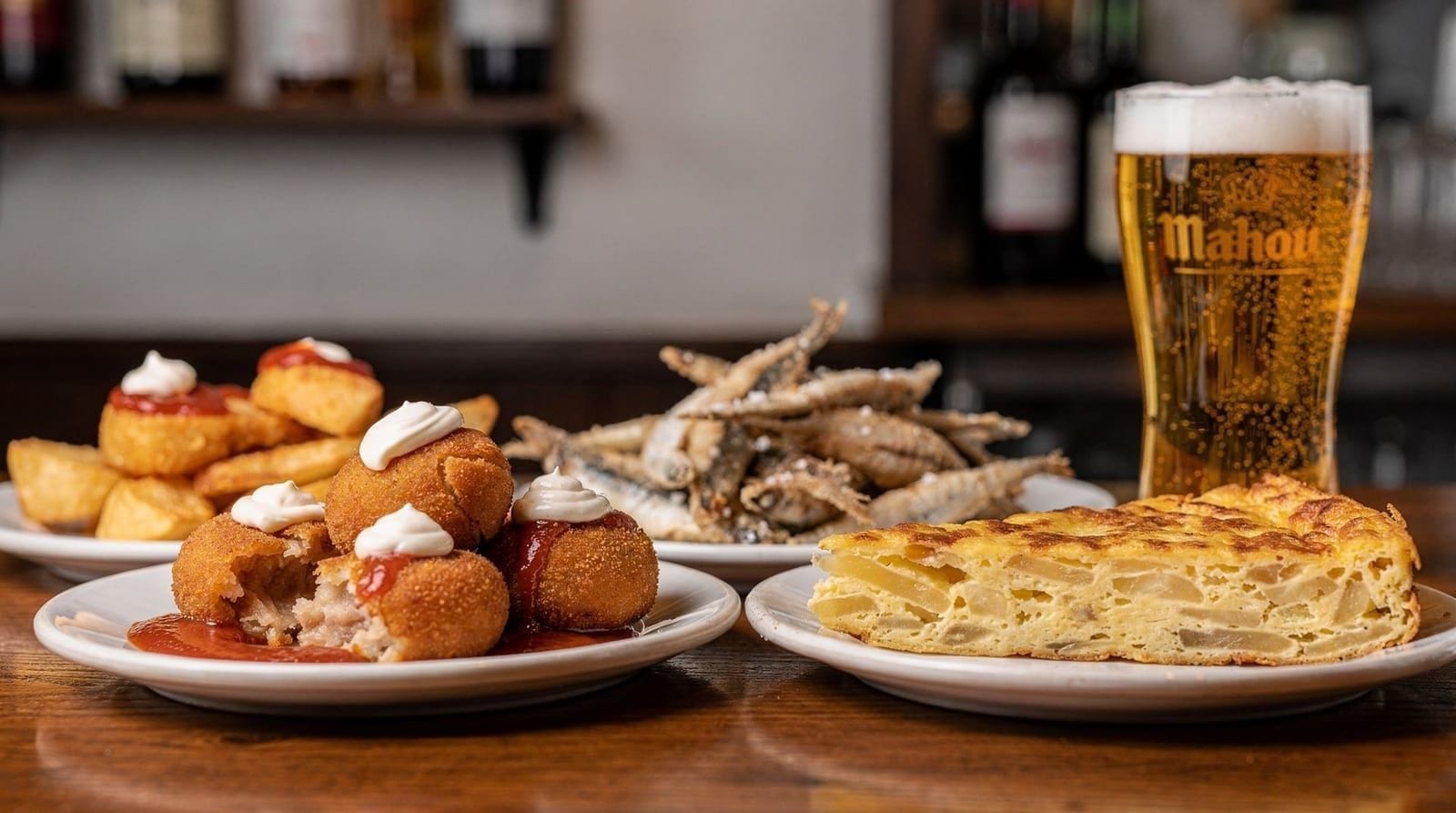
An expert Prado tour with optional tapas afterward combines the museum visit with an introduction to the Letras neighborhood food scene.
How to integrate the Prado into a Madrid itinerary
One day in Madrid: Prado in the morning (10:00–13:00), lunch in Barrio de las Letras, Retiro park in the afternoon, dinner in La Latina.
Two days: Day 1 afternoon Prado (free window), Day 2 morning Royal Palace, afternoon Thyssen or Reina Sofía.
Three days: Full Golden Triangle spread over Days 1–2, with the 3-day Madrid itinerary for the complete structure.
For those combining Madrid with Toledo, note that the Prado has a permanent El Greco room — see it here, then see El Greco in context in Toledo the next day. The Madrid and Toledo 2-day itinerary builds this pairing explicitly.
The Prado’s scale: understanding the full collection
The Prado’s permanent collection is enormous — over 8,000 works on display, drawn from a catalogue of more than 20,000 paintings, sculptures, drawings, and prints. First-time visitors often feel overwhelmed or, conversely, leave wondering if they missed something important. Some context helps.
The Spanish Golden Age is the Prado’s heart: Rooms 9–28 on the main floor contain Velázquez, El Greco, Zurbarán, Murillo, and Ribera — the core of what makes this museum irreplaceable. Plan to spend 50% of your visit here.
Goya is the crown: Rooms 34–38 on the main floor (court portraits, the Majas) and the basement Black Paintings room (Rooms 66–67). Goya alone justifies the visit.
The Flemish and Italian rooms complement the Spanish: Rooms 55–70 cover Titian, Rubens, Bosch, van der Weyden, and Dürer. Worth visiting after the Spanish rooms rather than before.
The 18th-century rooms are often thin: The neoclassical rooms on the upper floors cover 18th-century Spanish court painting — technically interesting but not why most people come. Skip these if time is short.
Dining around the Prado
Before the visit: The Huertas/Letras neighborhood (5 minutes north) has good breakfasts (churros con chocolate at any local bar, €3–4) and café con leche at half the price of the Prado café.
After the visit: Calle Moratin (east side of the Prado area) and Calle del Prado have a range of restaurants from tapas bars to sit-down lunch menus. Casa Lastra Sidrería (Calle del Olmo) for Asturian sidra and cider-house food; Estado Puro (Plaza de Cañalejas) for modern tapas.
The Prado and Spanish identity
The Prado was not originally called the Prado Museum — it was the Royal Painting Museum (Museo Real de Pintura), reflecting its status as the crown’s private collection made public. The transition from royal property to national museum happened gradually over the 19th century as Spain moved through constitutional monarchies and republics.
This history matters for how you understand what you see. The Prado is not a museum in the sense of a neutral institution collecting the best art regardless of origin. It is, at its core, the Spanish monarchy’s art collection — which means it reflects four centuries of Habsburg and Bourbon taste, diplomatic relationships (gifts, inheritances, treaties), and religious patronage. The collection is powerful because it is specific, not because it is comprehensive.
Understanding this helps explain the gaps: minimal Impressionism (the French collections went to French museums), limited Italian Renaissance (the Spanish crown preferred Flemish masters and their own court painters), and almost no English or Northern German work. The Prado is Spain’s visual autobiography.
The Casón del Buen Retiro: the Prado annex
Connected to the main Prado building by an underground passage, the Casón del Buen Retiro (a 17th-century pavilion from Philip IV’s Buen Retiro palace complex, now adjacent to the Retiro park) houses the Prado’s 19th-century Spanish painting collection and the library. The ceiling fresco by Luca Giordano — the Allegory of the Golden Fleece, covering the entire ceiling of the main hall — is one of the great Baroque ceilings in Spain. Entry included with the standard Prado ticket.
Most visitors miss the Casón entirely; it is worth 30 minutes for the Giordano ceiling alone.
Prado vs Reina Sofía vs Thyssen: which one first?
Visitors with limited time often ask which of the three Golden Triangle museums to prioritise. The honest comparison:
| Museum | Best for | Time needed | Free window |
|---|---|---|---|
| Prado | Old Masters — Velázquez, Goya, Bosch, El Greco | 2–4 hours | Mon–Sat 18:00–20:00, Sun 17:00–19:00 |
| Reina Sofía | 20th-century art — Guernica, Dalí, Miró | 1.5–3 hours | Mon, Wed–Sat 19:00–21:00, Sun 12:30–14:30 |
| Thyssen-Bornemisza | Chronological survey, Impressionism | 1.5–2 hours | Mon 12:00–16:00, Sat 21:00–23:00 |
If you can visit only one, the Prado is the correct choice for anyone with a general interest in painting — it has no real equivalent elsewhere in Spain. If your interest leans toward modern and contemporary art specifically, start with the Reina Sofía instead and treat the Prado as the follow-up.
Booking logistics that actually matter
Timed entry vs open ticket: Online tickets are sold with a timed entry slot, but once inside there is no time limit — you can stay as long as the museum is open. Arrive within the 30-minute window printed on the ticket; arriving late risks being turned away at busy periods.
Refunds and changes: Prado e-tickets are generally non-refundable but can sometimes be exchanged for a different date via the official Patrimonio-style booking portal if done more than 24 hours ahead — check the specific terms at purchase, as third-party resellers have different policies than the museum’s own site.
Combining with a Golden Triangle pass: Some operators bundle Prado, Reina Sofía, and Thyssen entry with a discount versus buying separately. This makes sense only if you genuinely intend to visit all three within a short window — otherwise the standalone €15 Prado ticket is simpler and cheaper.
Frequently asked questions about Prado Museum guide
What are the Prado Museum's opening hours?
The Prado is open Monday–Saturday 10:00–20:00 and Sunday and public holidays 10:00–19:00. Last admission is 30 minutes before closing. The museum is closed on 1 January, 1 May and 25 December, and open 10:00–14:00 only on 6 January, 24 December and 31 December.How much does the Prado cost and when is it free?
Standard admission is €15 for adults. Free entry Monday–Saturday 18:00–20:00, and Sunday/public holidays 17:00–19:00. Queues for the free windows form quickly — arrive at least 30 minutes before opening. Under-18s and EU students under 25 enter free at all times.Do I need to book Prado tickets in advance?
Strongly recommended in spring and autumn peak season (April–May, September–October) and any weekend year-round. Online tickets include timed entry and let you skip the ticket queue. The free evening windows do not require advance booking but do require queuing.How long should I spend at the Prado?
Two hours is a minimum to cover the undisputed highlights without rushing. Three to four hours gives you space to absorb the Spanish Golden Age rooms, the Flemish collections, and the 18th-century works. The collection has 8,000+ works; a full survey takes multiple visits. Most first-time visitors do 2–3 hours.What are the must-see paintings at the Prado?
Las Meninas (Velázquez), The Garden of Earthly Delights (Bosch), Saturn Devouring His Son (Goya), The Third of May 1808 (Goya), The Naked Maja and The Clothed Maja (Goya), The Descent from the Cross (van der Weyden), and the Annunciation (Fra Angelico). Allow time for El Greco's room. The Goya Black Paintings are among the most viscerally powerful works in any European museum.Can I take photos inside the Prado?
Photography is not permitted inside the permanent collection galleries. Sketching is allowed (pencil only, no easels). The ban is strict and enforced by gallery attendants.How do I get to the Prado by metro?
Metro Line 1 (blue), Atocha station — 5-minute walk along Paseo del Prado. Or Metro Line 2 (red), Banco de España — 10-minute walk. Buses 9, 10, 14, 19, 27, and 34 stop nearby. On foot from Sol: about 20 minutes through the Barrio de las Letras.Is there a combined ticket for the Prado, Reina Sofía, and Thyssen?
There is no single museum-run combined ticket for the three institutions. However, several guided tours cover all three (the 'Golden Triangle' tours), and some ticket platforms bundle the entry fees. Check available options when booking — tour operators often negotiate priority access at all three venues.
Top experiences
Bookable activities with verified prices and instant confirmation on GetYourGuide.