Madrid in 3 days: the complete first-time itinerary
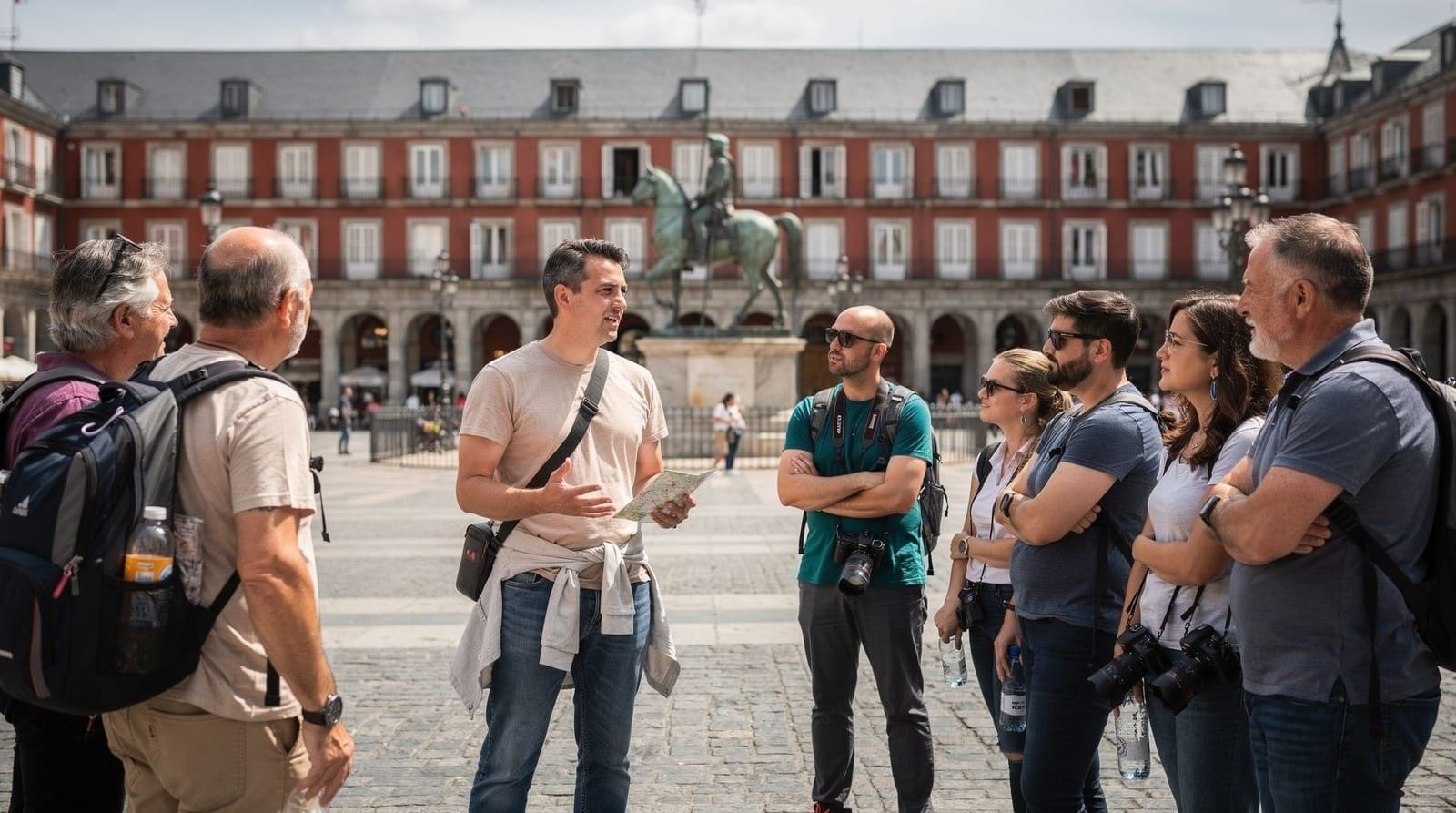
Madrid: Old Town Walking Tour
Quick answer: Three days in Madrid is the right minimum for a real visit. Day 1 covers the royal and Habsburg city — Royal Palace, Austrias quarter, La Latina, and the Prado. Day 2 completes the golden triangle with the Reina Sofía and Thyssen, plus Retiro Park and an evening flamenco show. Day 3 opens the choice: a half-day in Malasaña and Chueca, or a day trip to Toledo (33 min by AVE from Atocha).
Three days is where Madrid stops feeling rushed and starts feeling good. The first two days build a proper foundation — the royal city, all three golden triangle museums, the parks, the tapas bars, the evening life. By day three you have enough context to make choices: neighbourhood wandering, a day trip into Castile, or specialist interests like football or food markets.
This itinerary works from mid-April through October. In summer (July–August), shift outdoor activities to mornings and evenings, use the afternoon museum visits as heat refuge, and book everything two to three weeks ahead. In winter, crowds are smaller and hotels are cheaper; the museums are the reason to be here.
| Duration | 3 days — the practical minimum for a first Madrid visit |
| Pace | Moderate: one major sight plus one museum most days, one evening plan |
| Getting around | Almost entirely on foot; metro only for La Latina and the day trip station |
| Budget | Mid-range around €150–€220/day per person, including a 3-star hotel |
| Best time | Mid-April to October; shift outdoor time to morning/evening in July–August |
Day 1: The royal city and the Prado
Morning: Royal Palace and Madrid de los Austrias
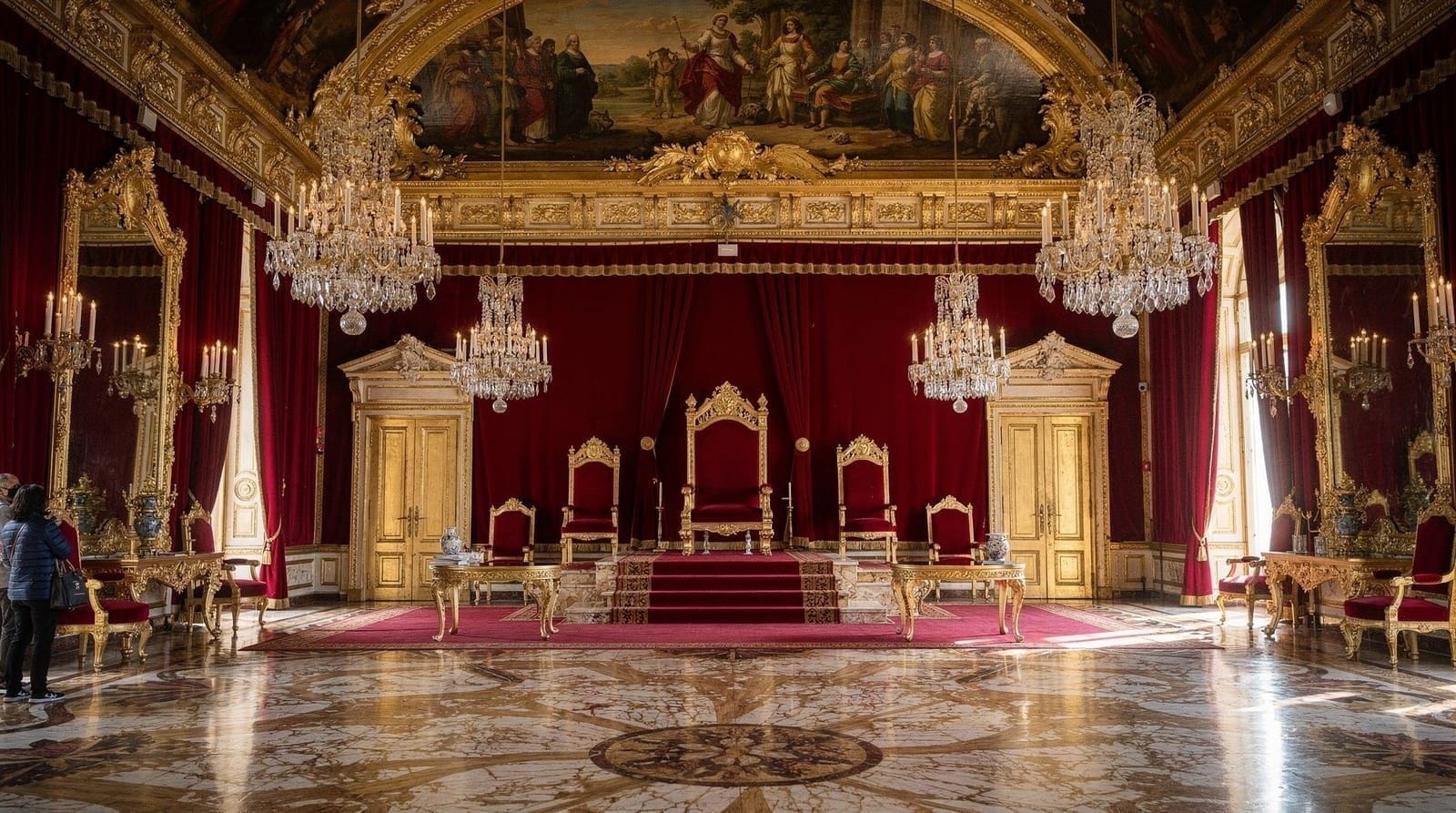
Start at the Royal Palace by 9:30 am. Pre-book a Royal Palace fast-access ticket — the walk-in queue in spring and autumn can run 45–60 minutes. The palace circuit takes 90 minutes: Throne Room with Tiepolo ceiling, Gasparini Room with embroidered silk walls, the Royal Armoury, and the Almudena Cathedral view from the courtyard.
Walk east through Madrid de los Austrias. The Habsburg quarter pre-dates the bourbon palaces by a century — Philip II made Madrid Spain’s capital in 1561 and the city was built around his Alcázar, which burned down in 1734 and was replaced by the current Royal Palace. What remains from the Habsburg period is a network of narrow streets and the great Plaza Mayor, constructed under Philip III in 1619.
Stop for coffee at a cafe off the plaza (not on it), then continue to Puerta del Sol and east through Barrio de las Letras.
Midday and afternoon: The Prado
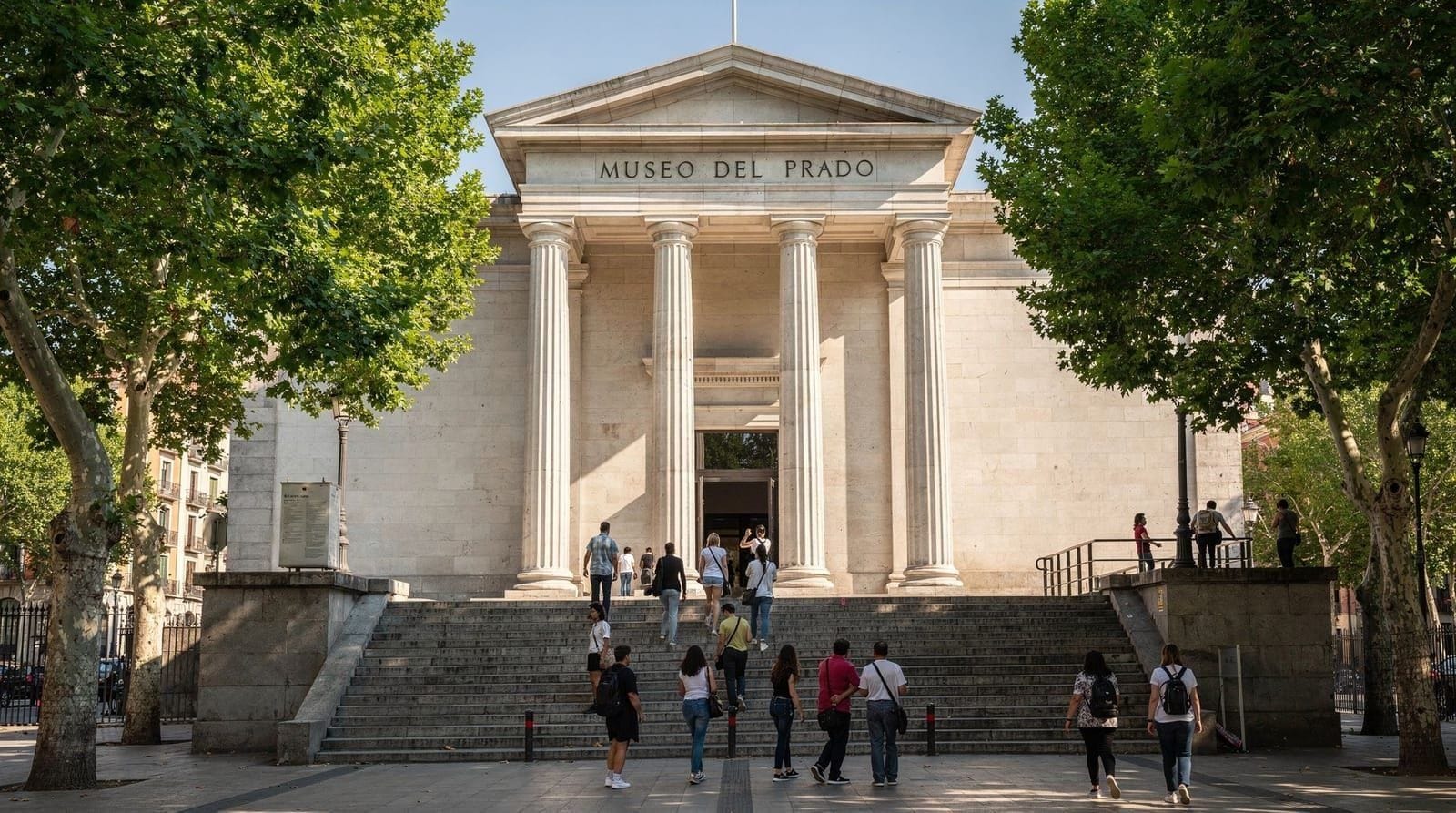
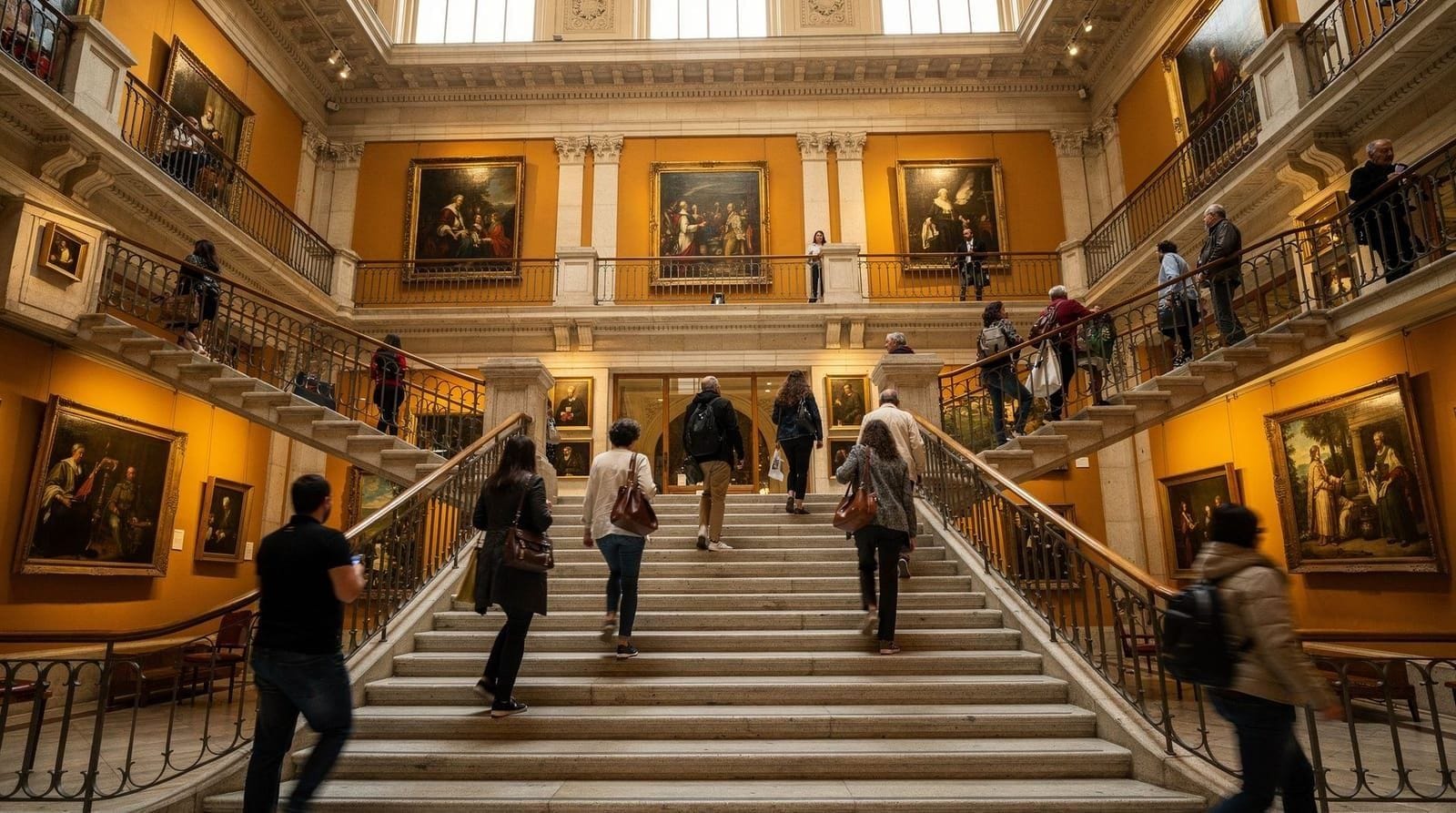
Allow a proper two to two-and-a-half hours at the Prado. Three artists dominate: Diego Velázquez (the court painter who made the Spanish Habsburgs immortal in paint — Las Meninas in Room 12 is the anchor), Francisco Goya (the 18th–19th century artist who tracked Spain’s history from royal flattery to the horror of war — the Black Paintings in Room 67 are the emotional centre of the museum), and El Greco (the Toledo-based Greek painter in Rooms 8B and 9B).
Bosch’s triptych The Garden of Earthly Delights in Room 56A is one of the strangest and most obsessively detailed paintings in the world; it arrived in Spain because Philip II bought it and it has been here ever since.
The Prado guided skip-the-line tour is a time-efficient option on a first visit — a focused 90-minute tour with a guide covers the masterworks with enough context to understand what you are looking at.
Lunch near the Prado in Barrio de las Letras. The streets around Calle de las Huertas have good neighbourhood restaurants with proper menú del día at €12–€15.
Evening: La Latina
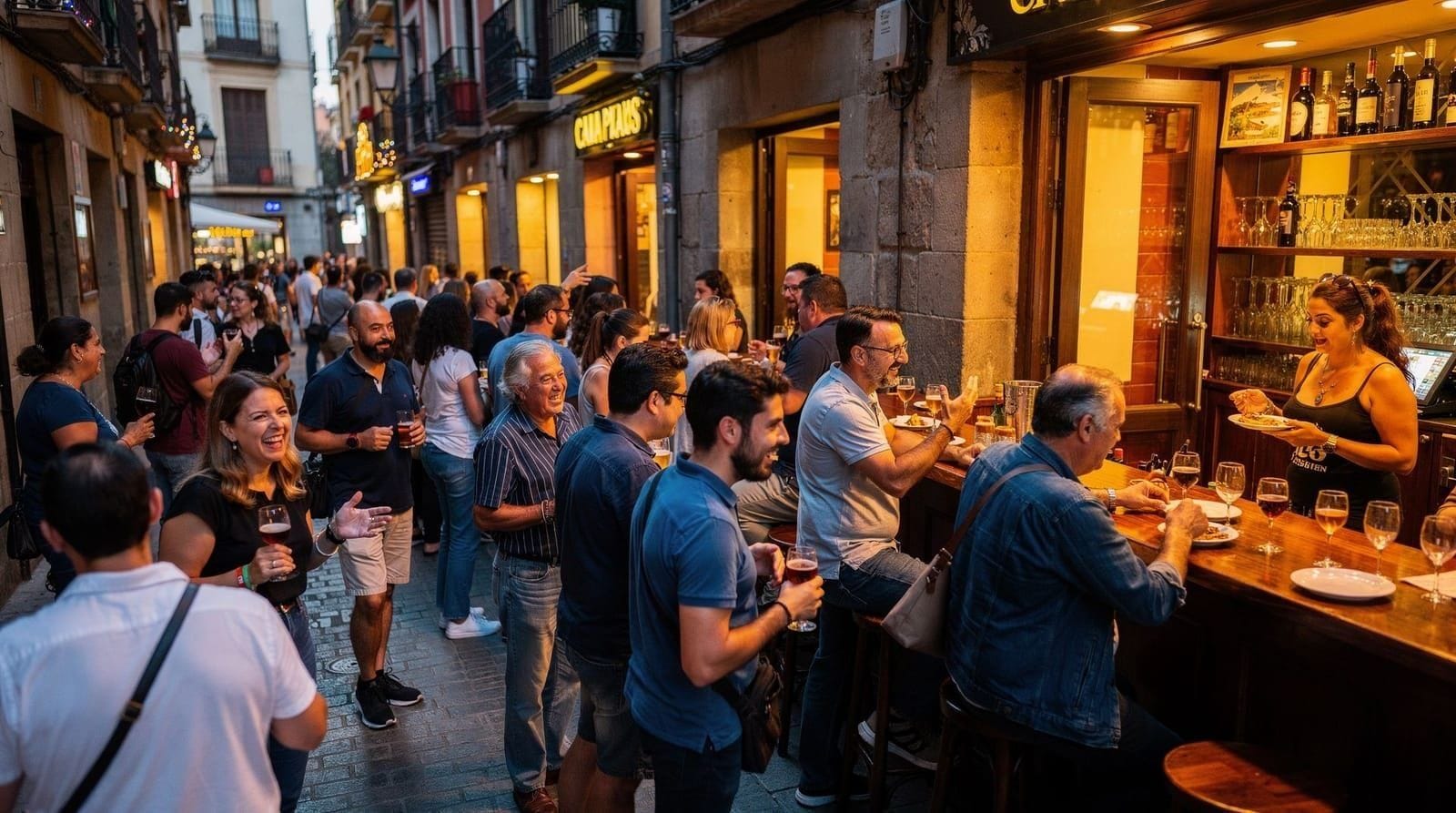
Metro to La Latina for the evening. The tapas circuit on Cava Baja — starting at the top near Puerta de Moros and working down — is the most authentic version of the Madrid eating ritual: stand at the bar, order wine or a caña, eat pintxos or raciones, move to the next bar. The best tapas bars guide has the specific bar-by-bar breakdown.
The neighbourhood is best from 7 pm to midnight. Dinner happens late — most kitchens peak at 9–10 pm.
Day 2: Reina Sofía, Retiro Park, Thyssen, flamenco
Morning: Retiro Park and Reina Sofía
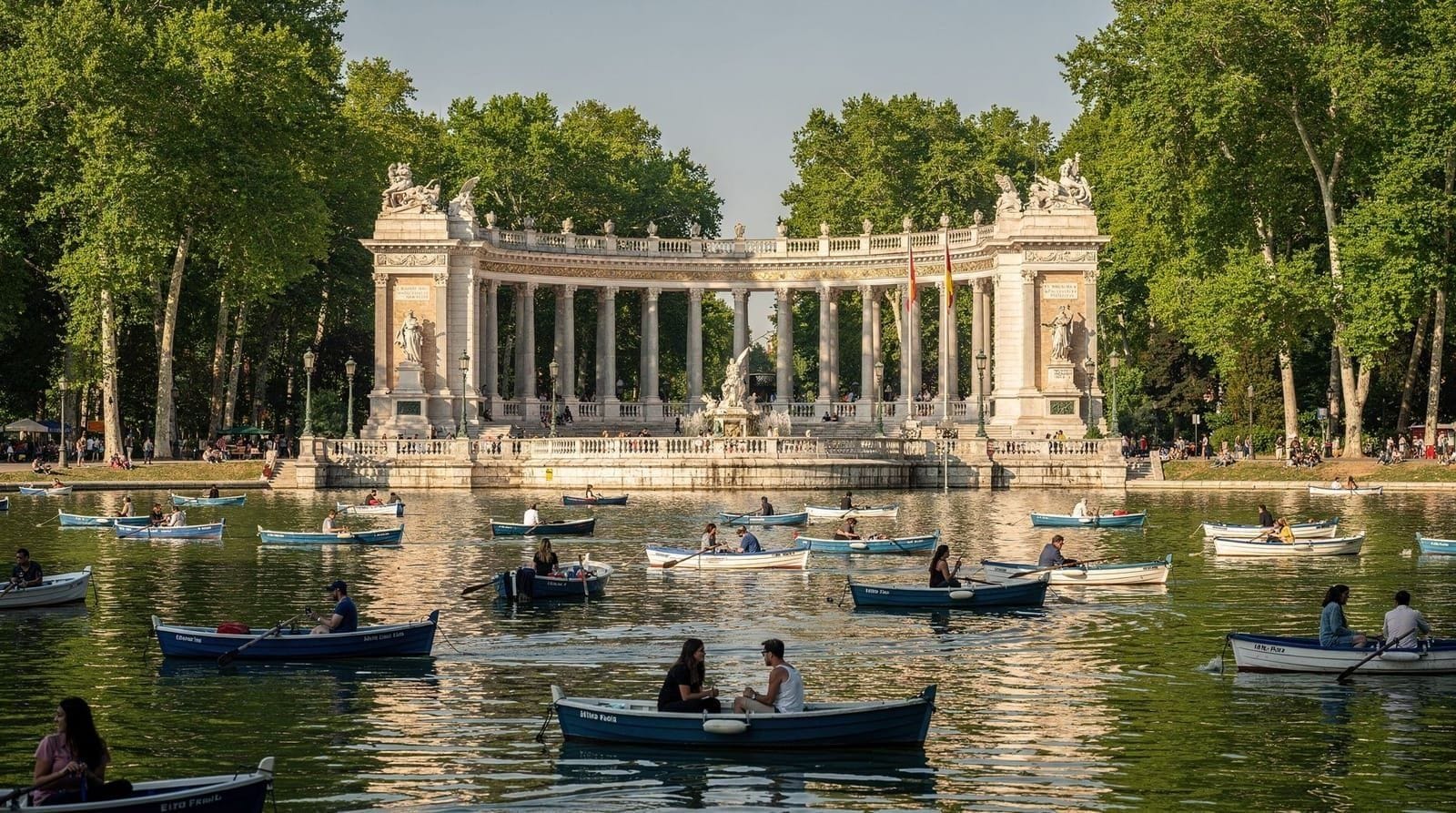
Start at the Retiro Park by 9 am. A 45-minute walk around the Estanque Grande, past the Crystal Palace (closed until 2027), and past the Rose Garden is the right morning opener before a museum-heavy day. Rowing boats on the lake are available from around 10 am.
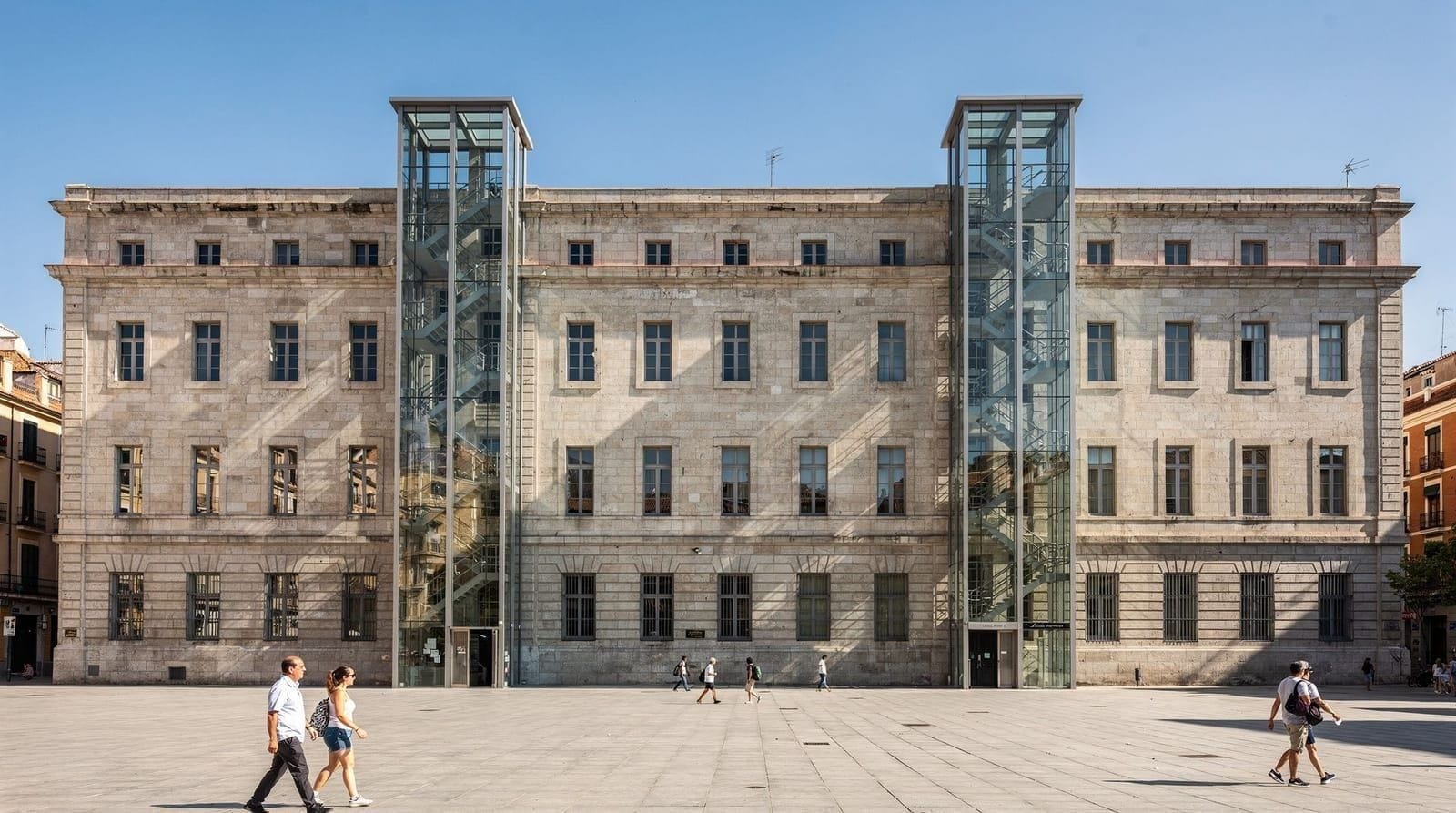
From the southern end of Retiro, walk five minutes to the Reina Sofía Museum. Allow 90 minutes. The goal here is Guernica — Picasso’s 1937 painting in Room 206 is one of the most politically powerful works in any museum anywhere. The permanent collection of 20th-century Spanish art that surrounds it (Miró, Dalí, the post-war generation) is excellent; the building itself, a converted 18th-century hospital, adds architectural interest.
Free entry Monday evening 19:00–21:00 and Sunday afternoon 13:30–19:00.
Lunch in Lavapiés or at one of the good restaurants near Atocha station. This is a multicultural neighbourhood with a price point well below the tourist centre.
Afternoon: Thyssen-Bornemisza
The Thyssen-Bornemisza Museum on Paseo del Prado fills the gap in the golden triangle: where the Prado covers Spanish and Italian Old Masters and the Reina Sofía handles the 20th century, the Thyssen spans the full sweep of Western European painting from the 13th to the 20th century. The impressionist and early modern rooms (Van Gogh, Cézanne, Monet, Hopper) are the popular draw; allow 90 minutes for a focused visit.
Free entry every Monday.
After the Thyssen, the three golden triangle museums are complete. The golden triangle art walk guide connects them on foot through Barrio de las Letras and is worth doing as an afternoon stroll if you have energy.
Evening: Flamenco show
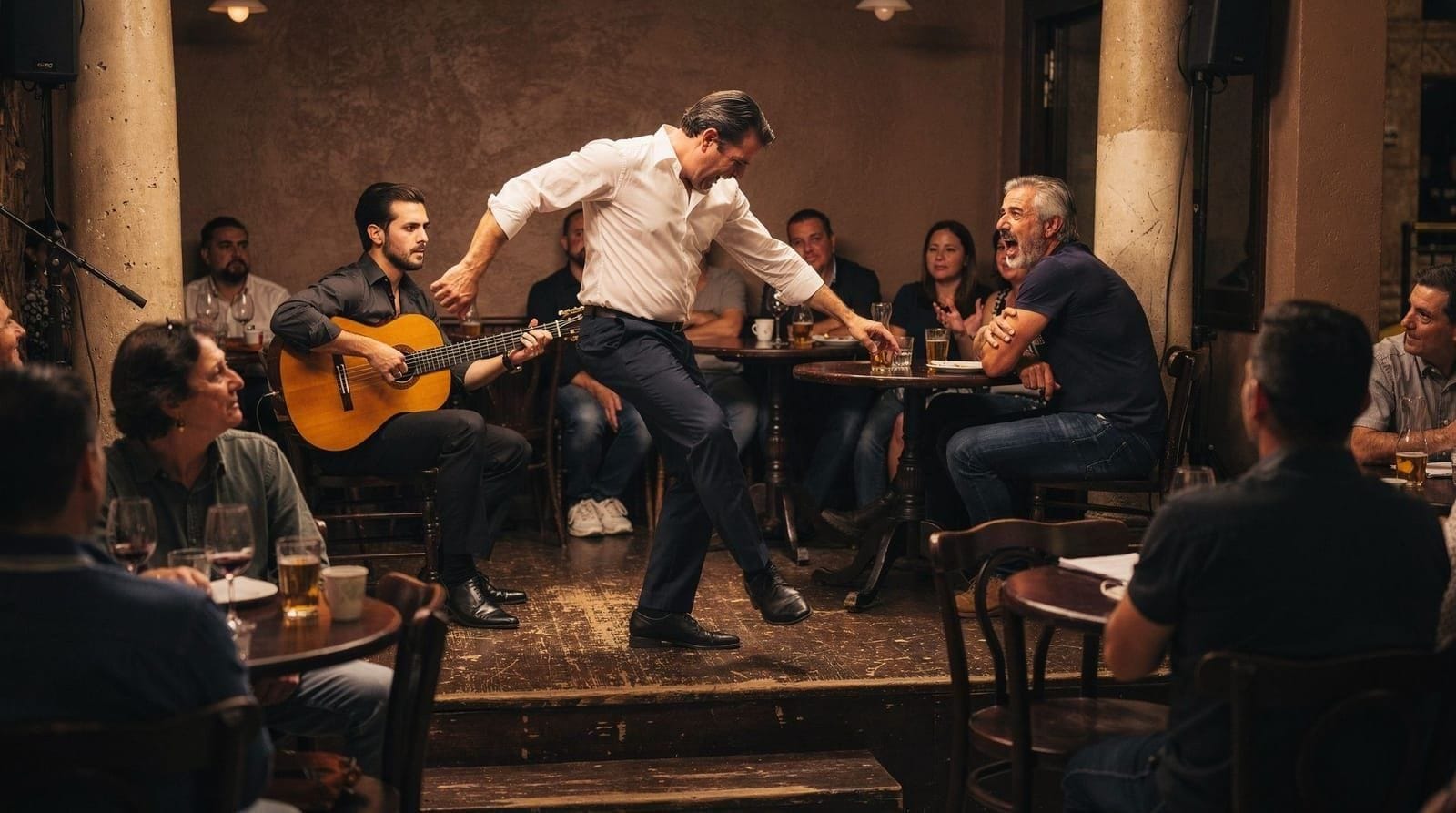
Book a flamenco show in advance. The La Cueva de Lola flamenco show is a well-regarded small-venue option in the Austrias quarter; the flamenco guide and best tablaos guide cover the full range from free-access tascas to formal dinner shows.
Dinner before or after the show depending on timing. Flamenco shows typically run 19:00–20:30 or 21:00–22:30; plan your dinner accordingly.
Day 3: Neighbourhood life or Toledo day trip
Option A: Malasaña, Chueca and Gran Vía
Spend the morning in Malasaña — the neighbourhood around Plaza del Dos de Mayo and Calle Fuencarral is Madrid’s best for independent shopping, vintage, and neighbourhood-feeling cafés. The Malasaña guide identifies the side streets worth wandering.
Cross into Chueca by mid-morning — the two neighbourhoods are adjacent and share the same easy café culture. Chueca is cleaner and more design-conscious, with excellent brunch restaurants and the highest concentration of LGBTQ+ bars in the city.
Afternoon on Gran Vía for shopping or simply to see the city’s architectural showpiece — the wide boulevard built in the early 20th century on the model of Paris’s Haussmanian avenues, lined with theatres, cinemas, and hotels. The view east from the corner of Alcalá towards the Cibeles fountain is the classic Madrid urban photograph.
Finish with a sundowner at the Azotea del Círculo de Bellas Artes rooftop (Calle de Alcalá 42; €6 entry) or the rooftop bars around Gran Vía. The rooftop bars guide has the full list.
Option B: Toledo day trip
Toledo is 33 minutes from Madrid Atocha station by AVE and is one of the best urban day trips in Europe. The medieval city sits on a rock above a bend in the Tagus river with three cathedrals (one Gothic, one Mudéjar, one Mosque-turned-church), the Alcázar fortress, the synagogues of the former Jewish quarter, and the city’s connection to El Greco — who worked here for the last 37 years of his life.
The Toledo from Madrid guide covers the logistics in full. A Toledo guided day trip from Madrid handles transport and entrance fees in one package; alternatively, go independently on the AVE (€12–€16 each way, 33 min) and use the Toledo tourist bracelet for multi-monument entry.
Return to Madrid in the evening for dinner and the final night.
Where to stay for 3 days
Centre (Sol/Gran Vía/Barrio de las Letras): Best for first-timers — everything on this itinerary is within walking distance. Mid-range doubles €100–€180/night. See the where to stay guide.
La Latina: More neighbourhood feeling, slightly further from the Thyssen and Reina Sofía. Quieter at night than Sol.
Malasaña: Best if evenings and neighbourhood life matter more than proximity to the royal sites.
What Madrid does that other Spanish cities do not
Madrid has a specific character that distinguishes it from Barcelona, Seville, and Valencia in ways that matter for how you plan a three-day visit.
Scale and walkability. The historic core — Royal Palace, Austrias quarter, Sol, La Latina, Lavapiés, Prado, Retiro — fits inside a 2.5 km radius. You can walk between almost everything on this itinerary; the metro is useful mainly for the airport, for getting to La Latina directly, and for the Bernabéu on a later trip. This walkability means that spontaneous detours (stumbling into a neighbourhood bar, following a side street you had not planned) are easy and genuinely rewarding.
Late hours. Madrid is Europe’s latest city. Lunch at 14:00–15:30 and dinner at 21:00–23:00 is not a tourist quirk; it is how the city actually operates. Kitchens in proper neighbourhood restaurants do not open until 20:30 or 21:00. Bars are full at midnight on a Tuesday. If you try to eat at 19:30, you will find yourself in a near-empty restaurant serving a tourist menu to people in the same situation.
On a three-day visit, this means structuring your days later than you might instinctively. A 9 am museum opening visit, a 14:30 lunch, an afternoon museum or walk, an evening neighbourhood circuit at 20:00–21:00, dinner at 21:30 — this is the right Madrid rhythm and it is genuinely more enjoyable than the northern-European 7 pm dinner habit.
The tapas culture is not what most visitors expect. The Madrid version of tapas is not primarily a prelude to dinner (as it tends to be in tourist restaurants). It is an entire social system built around standing at a bar (barra), drinking a small glass of wine or beer, eating a free or cheap tapa that accompanies it, and talking. The meal structure is: drinks-and-tapas as dinner, perhaps followed by a sit-down restaurant, or drinks-and-tapas as the entire evening depending on appetite and company.
The geography of tapas Madrid: La Latina (Cava Baja, Cava Alta, Plaza de la Paja), Barrio de las Letras (Calle de las Huertas, Calle de Echegaray), and Malasaña for more bohemian versions. The area around Sol and Plaza Mayor has tapas bars, but the prices are 50–80% higher for the same product. See the eat like a local guide for the honest breakdown.
The Toledo option in context
The Day 3 Toledo option transforms this from a city-only trip into a Spain-in-three-days experience. Toledo is 33 minutes from Madrid Atocha by AVE — genuinely the fastest and most rewarding cultural day trip from any European capital — and represents a different chapter of Spanish history than Madrid.
Madrid is the capital of the modern Spanish state and the Bourbon monarchy. Toledo was the capital of Visigothic and then the Habsburg Spain; it is where the Christian, Jewish, and Islamic cultures of medieval Spain lived in complex proximity, producing the intellectual and artistic synthesis that made 12th-century Toledo a centre of learning that transmitted classical knowledge to medieval Europe.
The monuments are real and substantial: a Gothic cathedral that is one of the five greatest in Spain, two surviving medieval synagogues, a Moorish mosque-turned-church, the Alcázar fortress that played a role in the Spanish Civil War, and El Greco’s paintings in situ in the city where he spent the last 37 years of his life.
A self-guided Toledo day on the AVE requires no more planning than booking a Renfe ticket (€12–€16 each way) the day before. The Toledo from Madrid guide gives the walking route and priorities.
Getting around during your 3 days
You will use the metro far less than most first-timers expect. The Royal Palace, Austrias quarter, Sol, Prado, Retiro, and Barrio de las Letras are all within a 2.5 km radius, so walking is usually faster than waiting for a train once you factor in station access. Reserve the metro for two specific trips: getting to La Latina in the evening if your feet are tired after a museum day (Line 5, La Latina station), and reaching Atocha station for the Toledo AVE on Day 3. A single ticket costs €1.50–€2; if you expect four or more metro rides across the three days, the Tourist Travel Pass pays for itself. Taxis and ride-hailing are reasonably priced (a cross-town ride rarely exceeds €12–€15) and worth using late at night after a flamenco show rather than waiting for a bus.
Realistic daily budget for 3 days
A mid-range 3-day trip runs approximately €470–€860 per person excluding flights: accommodation €100–€180/night (€300–€540 total), museum tickets from €18 (Royal Palace only) to about €59 at full price for the Royal Palace, Prado, Reina Sofía and Thyssen combined (less if you time free-entry windows), meals €50–€70/day between menú del día lunches and a proper dinner, and the Toledo day trip (if chosen) adding €15–€40 for transport plus €10–€15 for the tourist bracelet. Flamenco with a drink adds €25–€45 per person. Budget travellers can cut this by 30–40% using free museum hours, hostel or Airbnb accommodation, and tapas-as-dinner instead of sit-down restaurants — see the eat like a local guide for where the savings are real rather than a compromise on quality.
Frequently asked questions about 3 days in Madrid
Is 3 days enough for Madrid?
Three days covers the first tier properly: Royal Palace, all three golden triangle museums, Retiro Park, La Latina, a flamenco show, and your choice of Malasaña or Toledo for Day 3. The things not covered in three days: Bernabéu stadium tour, Sorolla Museum, Lavapiés in depth, Chamberí, the Sierra de Guadarrama, and the other day trips (Segovia, El Escorial, Aranjuez). Three days is a satisfying introduction that leaves you wanting to return.
What should I skip if I only have 3 days?
On a first visit: skip the Thyssen-Bornemisza Museum (less essential than the Prado and Reina Sofía; save it for a second trip), skip the Bernabéu (also second trip material), skip Malasaña if the choice is Malasaña vs Toledo (Toledo is more distinctive). Do not skip the Prado, the Royal Palace, La Latina tapas, or a flamenco show.
What is the best flamenco show for a first visit?
A tablao with professional dancers (not a restaurant side show), in a venue with maximum 80–100 audience. The flamenco guide and best tablaos guide rank the honest options. Price range: €25–€50 for a show with one drink included; dinner shows run €60–€90.
How should I get between the major sights?
Walk where possible (most central sights are 10–25 minutes apart on foot), metro for La Latina (metro station on Line 5) and to/from the airport. A single metro ticket is €1.50–€2; a Tourist Travel Pass for 3 days is worth buying if you expect to make 4+ metro journeys per day. See the tourist travel pass guide.
Can I do 3 days in Madrid without pre-booking anything?
Not comfortably in peak season. The Royal Palace and Prado can both sell out same-day entry slots or force a 45–60 minute walk-in queue from April through October, and a good flamenco show routinely sells out 2–3 days ahead. In winter (November–March), spontaneity is more forgiving, but booking the Royal Palace and one flamenco show in advance still removes the two biggest risks to this schedule.
Is 3 days better spent entirely in the city, or with the Toledo day trip?
If this is your only visit to Spain for the foreseeable future, take Toledo — it adds a genuinely different historical layer (Visigothic, Jewish, Islamic, medieval Christian Spain) that Madrid itself does not have, and the AVE makes it low-effort. If you plan to return to Madrid or are combining this trip with other Spanish cities later, Option A (Malasaña and Chueca) is the better use of Day 3, since it deepens rather than duplicates what a future visit could cover.
Day-by-day summary
| Day | Focus | Evening |
|---|---|---|
| Day 1 | Royal Palace, Madrid de los Austrias, Prado | La Latina tapas crawl |
| Day 2 | Retiro Park, Reina Sofía, Thyssen-Bornemisza | Flamenco show |
| Day 3 | Malasaña & Chueca, or Toledo day trip | Farewell dinner |
Practical tips for 3 days
- Pre-book the Royal Palace and Prado. First visit, peak season — queues are the biggest schedule risk.
- Book flamenco on day one of arrival. Good shows in high season sell out 2–3 days ahead.
- Use the metro selectively. Most of this itinerary is walkable; the metro is mainly useful for the airport transfer, La Latina (metro station avoids a 25-minute walk), and getting to/from Malasaña.
- Lunch at 14:00–15:00, dinner at 21:00. This is not an exaggeration — kitchens in neighbourhood restaurants do not open until 21:00.
- Museum-free hours: Plan around the free windows if budget is tight. See the museum free hours guide.
Top experiences
Bookable activities with verified prices and instant confirmation on GetYourGuide.