Best tablaos in Madrid: honest comparisons and prices 2026
Madrid: Flamenco Torres Bermejas
Which tablao is best in Madrid for a first-time flamenco visitor?
Torres Bermejas near Gran Vía is the most accessible first-time option — established venue, reliable quality, show with a drink from €35, central location. Las Carboneras in La Latina is a good choice for a neighbourhood atmosphere (check its booking page for current prices). Corral de la Morería is the top tier (Michelin-star restaurant, show tickets from €95.90, dinner menus extra) for a special occasion. All three have live musicians and credentialed performers.
What makes a tablao worth your money
A tablao is a dedicated flamenco venue — not a restaurant that adds a show, not a bar with background music. The defining characteristics of a quality tablao are: professional artists with established careers, live musicians (guitarist and singer at minimum), and a seated audience whose attention the performance demands.
Madrid has roughly a dozen venues that call themselves tablaos. Not all deserve the name. This guide covers the six that consistently clear the bar.
| Where | Six venues across La Morería, Gran Vía, Barrio de las Letras, La Latina & Santo Domingo |
| Price | Show + drink from €35 (Torres Bermejas); Corral de la Morería show from €95.90; dinner menus extra |
| Duration | Around 75 minutes for the show; 2.5–3.5 hours with dinner |
| Booking | 1–3 weeks ahead for weekends; Corral de la Morería books out first |
| Best slot | The 22:00–22:30 show for the more local, less rushed atmosphere |
Corral de la Morería
Address: Calle Morería 17, La Morería (near Royal Palace) Since: 1956 Price: Show ticket €95.90 (dinner not included); dinner menus from €49.95 to €79.95 on top
The benchmark. Founded by Manolo del Arco in 1956 and now with a Michelin-star restaurant (chef David García), Corral de la Morería has maintained a position at the top of Madrid’s tablao scene for seven decades by doing the obvious thing: hiring the best artists and refusing to compromise on quality.
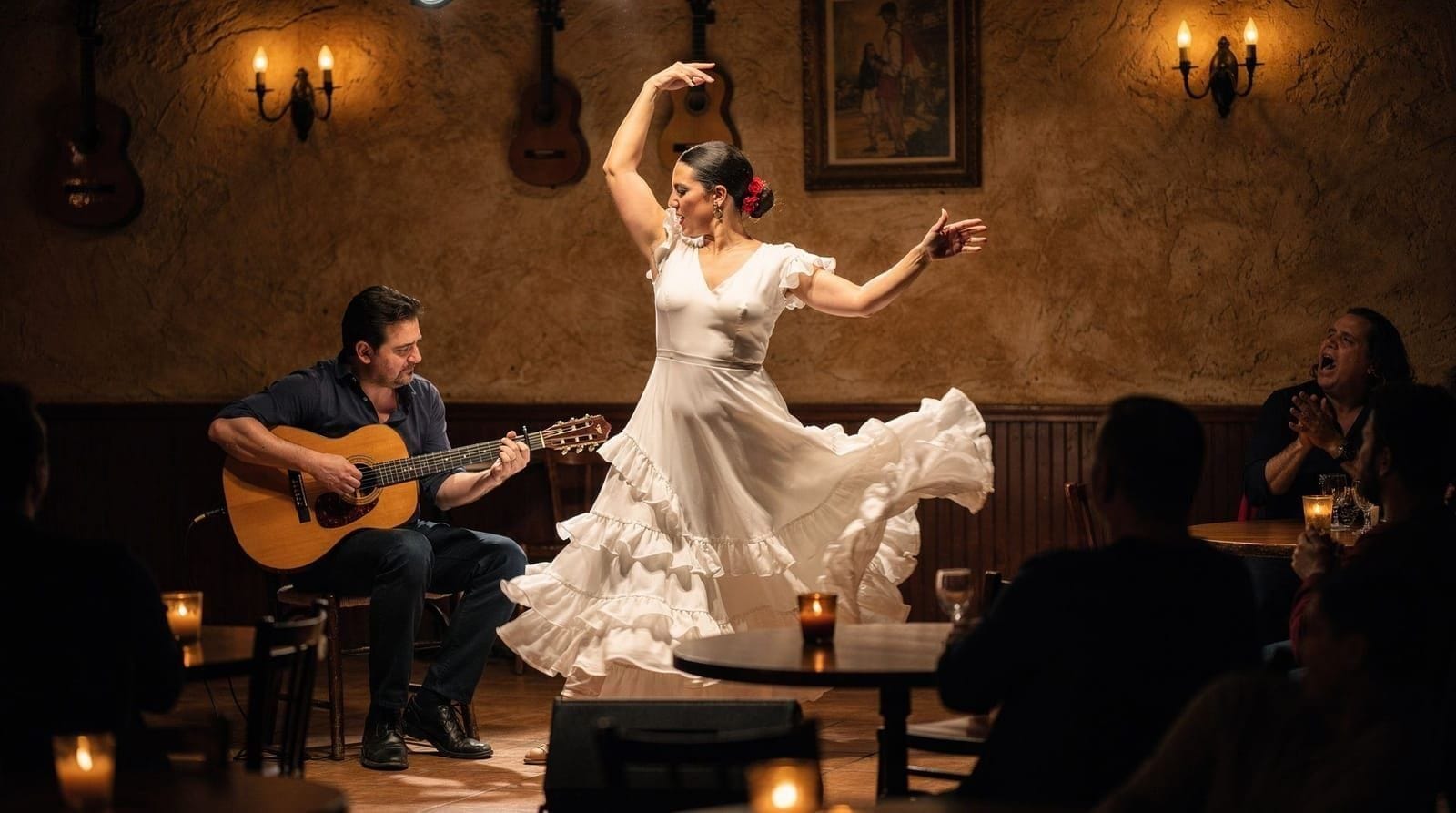
The physical space is theatrical — low-lit, intimate, with the dining area wrapping around a stage visible from almost every seat. The floor-to-ceiling glass panel revealing a section of original Moorish city wall adds historical weight. Performers rotate during the 75-minute show; typical casts include 4–6 artists.
Who it’s for: Couples wanting a special evening, serious flamenco enthusiasts, anyone for whom price is secondary to experience.
What to know: Dinner reservations should be made 2–3 weeks ahead for weekend slots. Show-only tickets (drink included) can usually be booked closer to the date. The early show (around 20:00) typically has a slightly more international audience; the later show (22:00) draws more Spanish visitors.
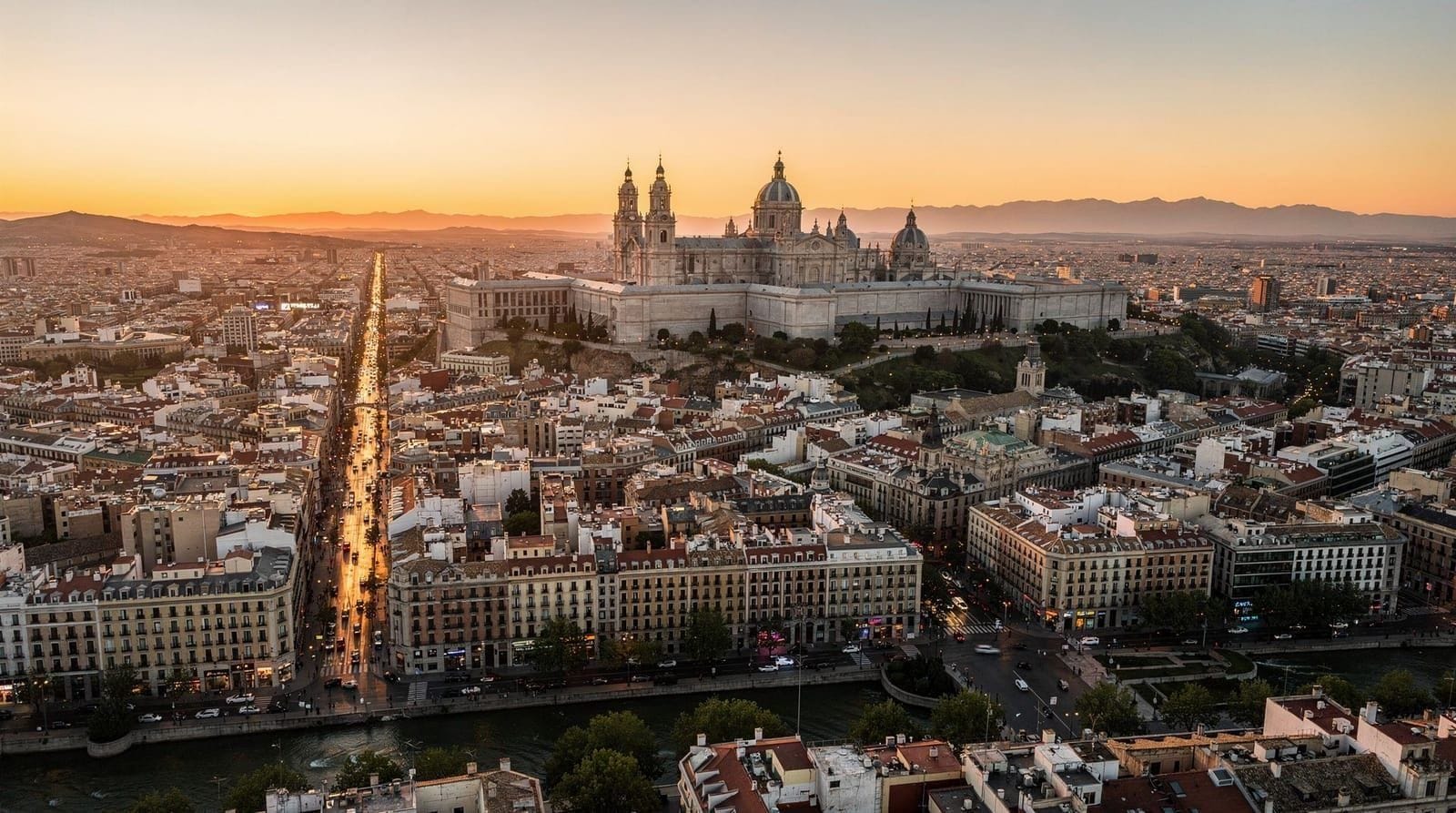
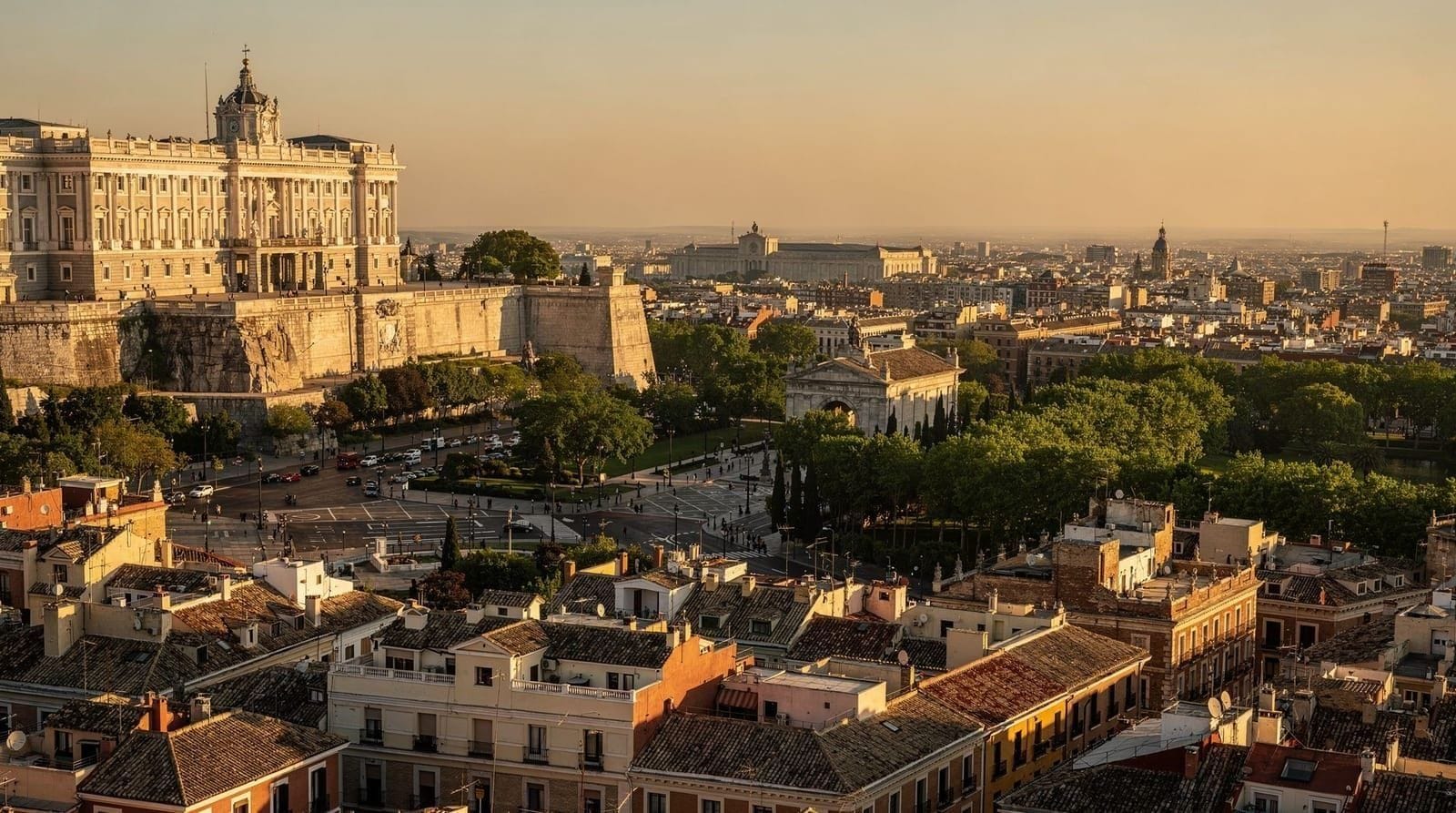
The location pairs naturally with a daytime visit to the Royal Palace and the Almudena Cathedral, both a short walk away, so the evening can close a day spent in the oldest part of the city. For couples planning a splurge, the Madrid for couples itinerary shows where a Corral evening fits best.
Torres Bermejas
Address: Mesonero Romanos 11, near Gran Vía Since: 1960 Price: Show + drink €35; menus with show €50–85
The Alhambra-inspired interior — archways, tile work, lanterns, horseshoe arches referencing the Torres Bermejas towers in Granada’s medieval wall — makes this one of the most recognizable tablao spaces in Madrid. It is also, consistently, one of the most competent commercial operations.
The artist roster changes but maintains a professional standard. Live guitar and singing are standard. Shows run approximately 75 minutes with multiple artists in rotation. The dinner menu is Spanish-international rather than haute cuisine but perfectly acceptable.
A flamenco show at Torres Bermejas is a reliable entry point for first-time tablao visitors — located near Gran Vía, accessible from most central hotels, and consistently reviewed positively for quality-to-price ratio.
Who it’s for: First-time visitors wanting a polished, well-located show without the Corral de la Morería price premium.
What to know: The space can hold larger groups; it’s a popular choice for corporate events, which occasionally affects the atmosphere of specific shows. Weeknight early shows tend to have more intimate atmospheres.
Casa Patas (closed)
Address: Calle Cañizares 10, Barrio de las Letras
Casa Patas, the Barrio de las Letras tablao that many older guides still recommend, closed permanently in 2020. Its non-profit foundation, Fundación Casa Patas, continues its activities, but there are no public flamenco shows at the old venue. For a smaller, neighbourhood-scale tablao, Las Carboneras in La Latina is the closest alternative on this list.
The Barrio de las Letras itself remains worth an evening: see the Barrio de las Letras guide for where to eat and drink, and the Prado Museum and Golden Triangle art walk for the daytime.
Las Carboneras
Address: Plaza del Conde de Miranda 1, La Latina Since: 1991 Price: See the venue’s booking page; shows with one drink at 20:00 and 22:00, dinner shows at 19:15 and 21:30
Set in what was an old coal merchant’s warehouse in the heart of La Latina — one of Madrid’s most characterful historic neighbourhoods — Las Carboneras has built a reputation for a good price-quality ratio and an audience that includes local Madrileños alongside tourists.
Shows run nightly in peak season, less frequently out of season. The performance format is similar to the other tablaos — mixed cast, rotating artists, live musicians. The setting (exposed brick, historic street, La Latina atmosphere) is naturally atmospheric.
Who it’s for: Value-conscious visitors who want a real tablao experience without the top-tier prices. Groups mixing flamenco first-timers with people who’ve seen it before.
What to know: The La Latina location means it’s easily combined with an evening tapas crawl along Cava Baja before the show.
If you go that route, the where to eat in La Latina guide and the broader best tapas bars list help you pick a stop that fits the Spanish dinner rhythm, and the Sunday El Rastro market is a natural daytime companion when your show falls on a weekend.
Café de Chinitas
Address: Calle Torija 7, near Santo Domingo Since: 1970 Price: See the venue’s booking page; shows with one drink at 20:30 and 22:30
Named after a legendary café-cantante in Málaga that was an institution of 19th-century flamenco culture, Café de Chinitas has served as a reliable mid-range tablao for decades. It is popular with groups and business visitors, which influences the atmosphere — more formal, slightly less spontaneous than Las Carboneras.
The artistic quality is professional and the production design is well maintained. Live musicians, rotating cast, 75-minute show format. The dinner menu is reasonably priced for the setting.
Who it’s for: Groups, visitors for whom reliability and central location are priorities, business entertainment.
Emociones
Address: Various central locations (check booking) Price: See the booking page
A smaller-scale production with consistent reviews for intimate atmosphere and accessible pricing. Works well for visitors who want to experience flamenco without the formality of the major tablao venues.
Emociones live flamenco provides a show-format experience with drink included that works well for solo travellers and couples who want flexibility in booking.
Tablao comparison table
| Tablao | Price (show+drink) | Best for | Location |
|---|---|---|---|
| Corral de la Morería | Show €95.90 (dinner extra) | Special occasion, serious flamenco | La Morería |
| Torres Bermejas | €35 (menus with show €50–85) | First-time visitors, central location | Gran Vía area |
| Las Carboneras | See booking page | Value, neighbourhood atmosphere | La Latina |
| Café de Chinitas | See booking page | Groups, reliability | Santo Domingo |
| Emociones | See booking page | Flexibility, intimate setting | Central |
What to avoid
Restaurant flamenco packages: Many central Madrid restaurants — particularly around Puerta del Sol and Plaza Mayor — advertise “flamenco nights” or “dinner and flamenco” experiences. These typically involve a 30-minute reduced show performed by artists who may or may not have tablao experience, while guests eat. The food is invariably tourist-grade and overpriced; the flamenco is rarely at tablao standard. The giveaway: if the main selling point is “unlimited sangria and flamenco,” walk past.
Shows advertised without named artists: Quality tablaos list their performers. If a booking page only mentions “flamenco show” with no artist information, it’s usually because the artists are not ones whose names would help sell tickets.
Venues on online booking aggregators with prices under €20: At that price point, the show will not have live musicians and will likely be a low-quality production. Flamenco at professional level costs money — the instruments, the costumes, the practice time, the stage management.
Combining tablaos with Madrid’s cultural scene
Flamenco is best experienced in the context of an evening, not as an isolated tourist tick. The most satisfying approach:
- Afternoon in a neighbourhood — La Latina for its medieval streets, Barrio de las Letras for the literary quarter around Cervantes and Lope de Vega
- Tapas at a neighbourhood bar before 21:00 (Spanish dinner rhythm — order around 20:30, show at 22:00)
- Late show at a tablao (the 22:00 slot has the most authentic atmosphere in most venues)
For the wider cultural context of flamenco in Spanish history, the guide to Habsburg and Bourbon history covers the court culture within which flamenco developed as a popular art form in opposition to official taste. The literary quarter guide connects the performing arts tradition to Madrid’s literary history.
Booking advice
Book direct when possible — tablao websites often offer identical or slightly better prices than third-party platforms and avoid commission layers. GYG and similar platforms are useful for comparison and for bundled experiences (show + transfer, show + dinner).
Avoid 19:00–20:00 shows if you’re not yet jet-lagged — the early shows are primarily for visitors who find late-night impractical. For a more local atmosphere, book the 22:00–22:30 slot.
Group bookings (8+ people): All major tablaos offer group rates; contact the venue directly for negotiated pricing and reserved tables. Most can accommodate groups up to 30–40 in their main spaces.
Flamenco with an artist talk and drink adds an educational dimension to the show experience — the pre-show talk contextualises what you’re about to see, which significantly improves the experience for first-time viewers.
A note on flamenco tourism generally
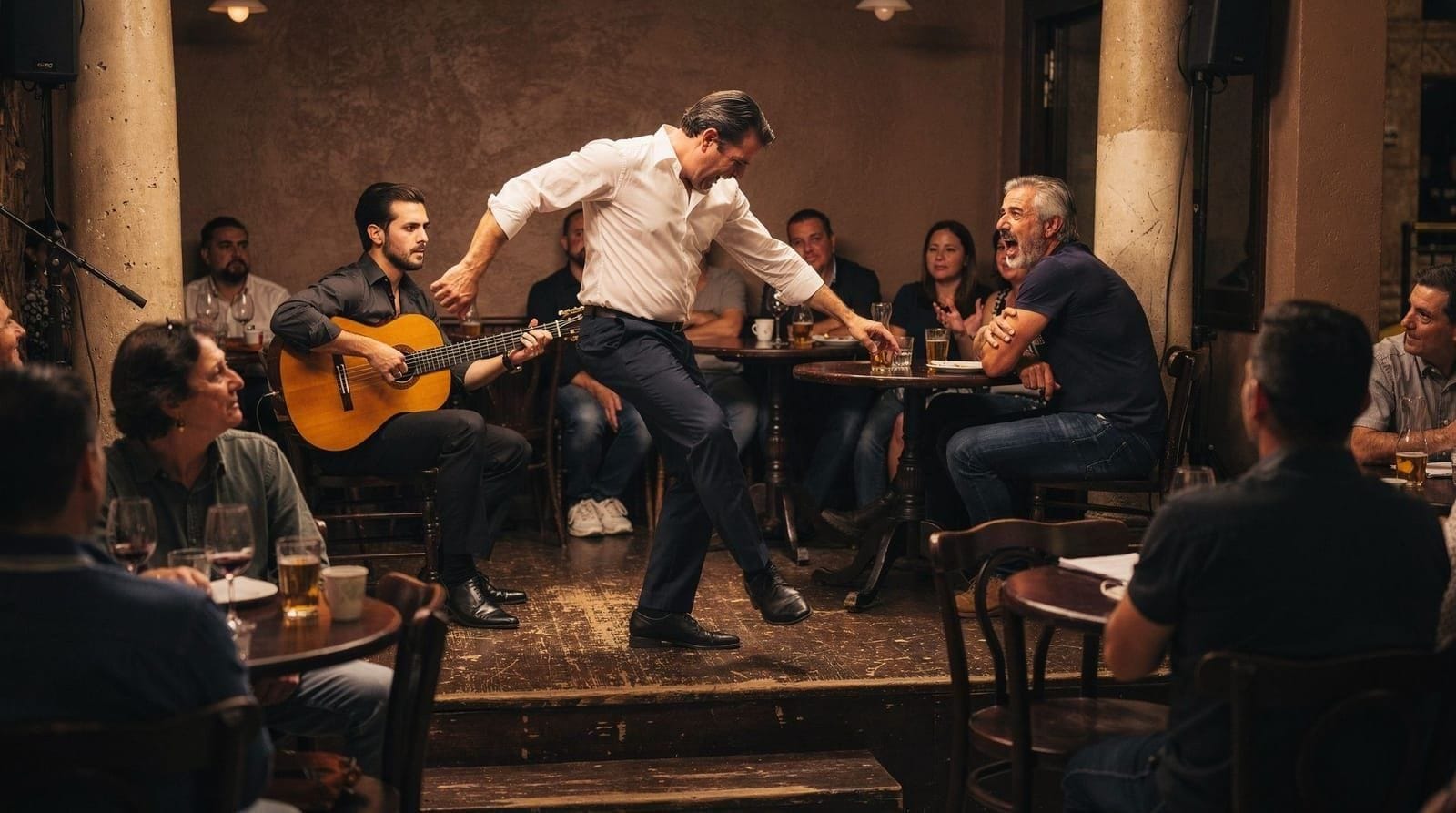
Flamenco is an art form with a complicated relationship to tourism. The commercial tablao circuit makes it financially viable for professional artists to continue working in Madrid; without tourist income, many of these venues would not exist and the performers would have fewer regular stages. At the same time, the most powerful flamenco performances tend to happen in smaller rooms, with more mixed audiences, with less production design — because the stakes feel different when you’re not just servicing a tourist expectation.
Both things can be true. A good tablao provides genuine value for visitors; it also creates a particular kind of performance. The peñas and informal spaces provide something different. If flamenco interests you beyond a single evening, seek both.
See the broader flamenco shows in Madrid guide and the Madrid nightlife guide for the full picture of evening entertainment options.
For a candid take on how to tell an authentic evening from a staged one, the blog post on flamenco: tourist show versus the real thing is a useful companion, and the tourist traps guide shows where else visitors tend to overpay.
What a good flamenco show actually costs you
Let us be precise about the full economics of a tablao evening, using Torres Bermejas as a worked example:
Show only (drink included): €35 per person. Duration: 75 minutes. You sit, have one drink, watch the show, leave. This is a complete experience.
Dinner + show: €50–85 per person depending on the menu. Duration: 2.5–3.5 hours. You arrive at 20:00, eat a 3-course dinner (Spanish-international cuisine, house wine included at some packages, extra cost at others), show starts at 22:00, you leave at 23:30.
Additional drinks: At a tablao during the show, a beer or wine costs €8–12. A second drink during the show adds €8–12 to your total.
Transport: Taxis home after 23:30 cost €5–8 from central locations. Uber is generally cheaper.
For the ride home, the taxi vs Uber guide explains the options, and the Madrid metro guide is worth checking if you would rather take public transport. Late finishes are normal in this city, and the Madrid at night guide covers what else stays open once the show ends.
Total for one person, show only, minimal extras: approximately €40–50. Total for one person, dinner show, two drinks, taxi: approximately €65–105.
These are not tourist-trap prices for what you get — a professional performance at one of Europe’s best flamenco venues. But they are significantly higher than a neighbourhood bar evening. Budget accordingly and the experience delivers; budget for a cheaper night out and it will feel expensive.
Flamenco footwear: a technical note
The percussion element of flamenco dance (zapateado — the footwork) is produced by specific footwear: flamenco shoes with wooden heels and a rigid sole structure that allows precise rhythmic striking. Both male and female performers wear these; the sound is produced by heel, ball, and toe strikes in complex patterns.
Professional flamenco shoes are made by specialist cobblers in Seville, Cádiz, and Madrid; they cost €100–300+ for professional-grade shoes. The detail matters because it explains why flamenco stages are typically made of specific woods (usually cypress or spruce) rather than standard stage materials — the acoustic resonance of the wood is part of the instrument.
At a tablao, the stage is your proximity to this. Front-row or first-tier seating puts you close enough to hear the footwork directly rather than through the sound system. This matters; request front-section seating when booking if possible.
Flamenco in the 21st century
Contemporary flamenco exists on a spectrum from pure tradition (palo seco — unaccompanied singing, the most austere form) to fusion with jazz, electronic music, classical composition, and dance theatre. Several Madrid artists and choreographers working in this fusion space perform at smaller venues than the traditional tablaos:
Teatro de Madrid and Teatros del Canal: Larger productions combining flamenco with contemporary dance and theatre aesthetics. Typically annual rather than nightly runs, with dates announced through Madrid’s cultural listings.
Suma Flamenca: An annual flamenco festival (typically June) that brings both traditional and contemporary artists to various Madrid venues, including some free outdoor performances.
The traditional tablaos serve the mainstream visitor market; the festival circuit and smaller venues serve the art-form’s ongoing development. Both are valid; knowing both exist allows you to choose where your evening budget and interest align.
Dress code, accessibility, and dietary notes
Dress code: No tablao in Madrid enforces a strict formal dress code, but the venues are indoor, seated, evening spaces — smart-casual is the norm. Shorts and beach sandals stand out at Corral de la Morería or Torres Bermejas; jeans and a collared shirt or a simple dress are perfectly fine everywhere on this list. Café de Chinitas and Torres Bermejas, given their groups and business-visitor clientele, skew marginally smarter.
Accessibility: Most tablaos occupy older buildings with limited step-free access; Corral de la Morería and Torres Bermejas can usually accommodate wheelchair users with advance notice, as seating can be arranged near ground level rather than on raised tiers. Las Carboneras has a narrower, more cramped interior — contact the venue directly before booking if mobility is a concern, since generic online booking pages rarely list accessibility details accurately.
Dietary needs: Dinner-show packages are largely fixed Spanish-international menus; vegetarian options exist but are limited, and vegan or allergen-specific requests should be flagged when booking, ideally 24–48 hours ahead. Show-only tickets sidestep the issue entirely — you order your own drink and are not committed to a set menu, which is one more reason first-timers with dietary restrictions often prefer the show-only format described in what a good flamenco show actually costs you.
Before your tablao visit: contextual reading and listening
If you are going to a flamenco show for the first time, 30 minutes of preparation significantly increases the experience:
Listening: Search for recordings by Camarón de la Isla (widely considered the 20th century’s greatest flamenco singer) or Paco de Lucía (the guitarist who defined the modern flamenco guitar aesthetic). Even 15 minutes of listening familiarises you with the musical vocabulary.
Reading: Federico García Lorca’s essay “Play and Theory of the Duende” (1933) is a lyrical examination of what makes flamenco (and art generally) genuinely powerful versus merely technically competent. Short and accessible; available online in translation.
Film: Carlos Saura’s flamenco trilogy (Bodas de Sangre, Carmen, El Amor Brujo) films actual flamenco performances as dramatic subjects. The 1983 Carmen is the most accessible starting point.
None of this is necessary; you can walk into a tablao cold and have a good evening. But preparation converts a spectacle into an experience.
Frequently asked questions about Best tablaos in Madrid
Do I need to book a tablao show in advance?
Yes, for weekend evenings and for Corral de la Morería at any time — book at least a week ahead, two to three weeks for a Saturday dinner show. Weeknight early shows at Torres Bermejas or Café de Chinitas can sometimes be booked a day or two out, but flamenco is a fixed-capacity seated show, not a walk-in bar, so last-minute availability is never guaranteed.Is dinner-and-show worth it, or should I book show-only?
Show-only (with one drink included) is the better value for most first-time visitors — from about €35 at Torres Bermejas, roughly 75 minutes, and a complete experience. The dinner package extends the evening to 2.5–3.5 hours and costs significantly more for food that is rarely the highlight. Book dinner only if you want the fuller evening out rather than the food itself.
Top experiences
Bookable activities with verified prices and instant confirmation on GetYourGuide.