Chueca guide: Madrid's most welcoming neighbourhood
Madrid: Prado Skip the Line Official Guide
What is Chueca like and who should stay there?
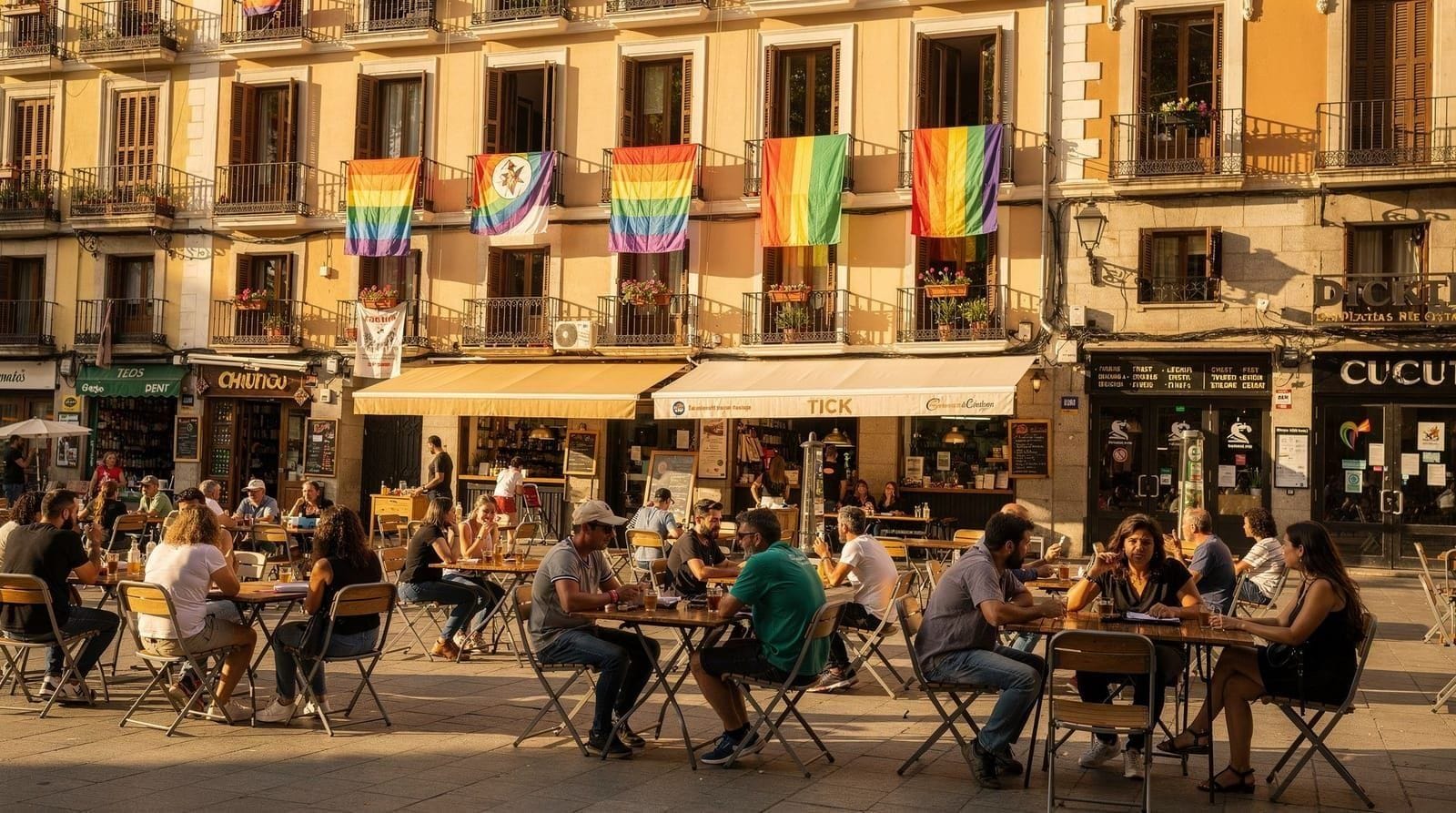
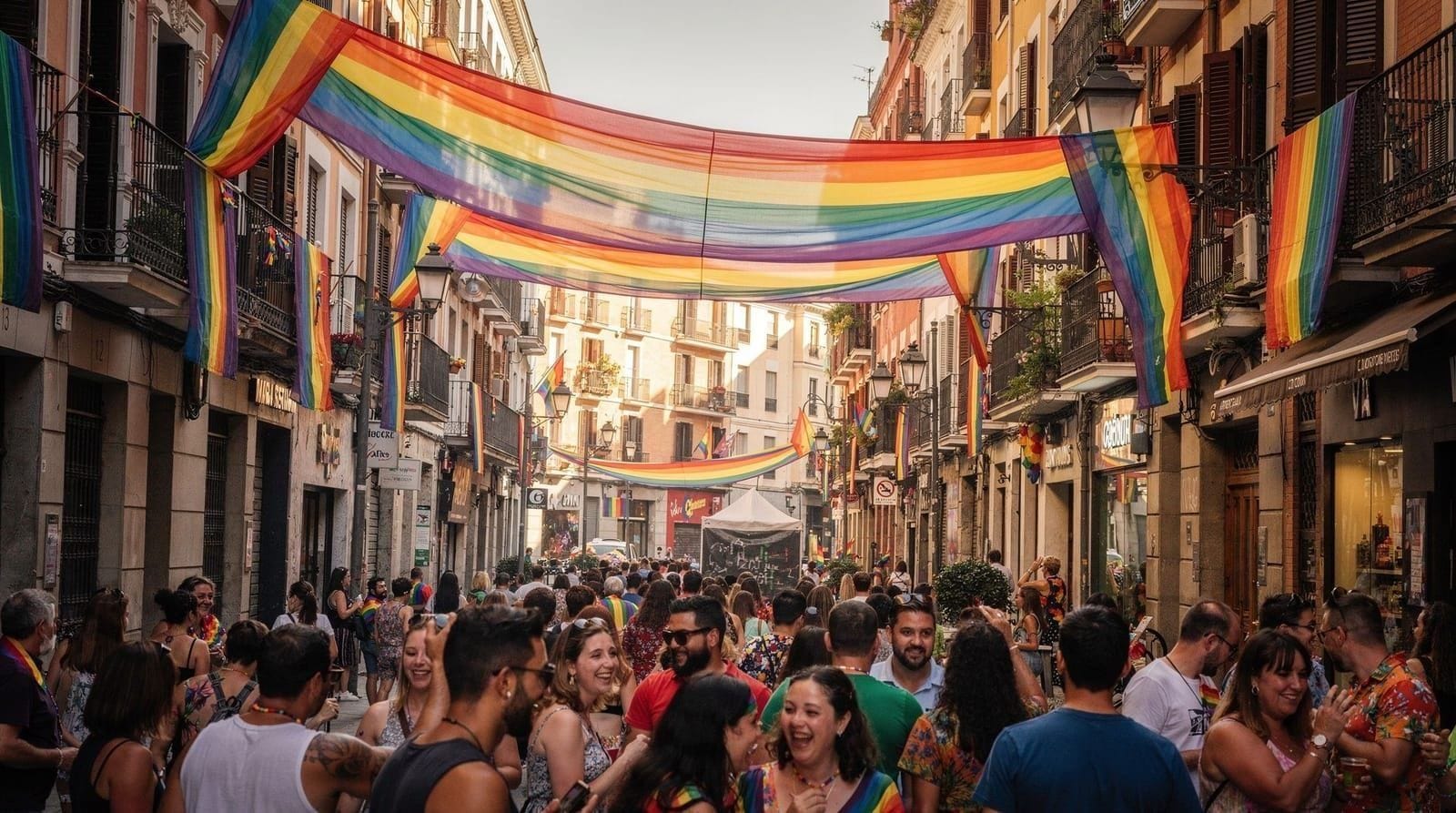
Chueca is Madrid's LGBTQ+ neighbourhood — a lively, welcoming, village-like district with some of the best mid-range restaurants in the city, a strong community atmosphere, and easy metro access. It is a good base for any visitor, not only LGBTQ+ travellers. During Madrid Pride (late June/early July) it becomes the epicentre of one of Europe's largest celebrations. The hotel options are solid and less tourist-inflated than Sol.
What makes Chueca different
| Where | Central Madrid, between Gran Vía and Salamanca |
| Best for | Restaurants, nightlife, an easy walkable base |
| Getting there | Metro Chueca (Line 5), reached from Sol via Gran Vía (Line 1) |
| Hotel prices | Around €70–150 doubles; spikes 50–100% during Pride |
| Peak time | Late June–early July for Madrid Pride (Orgullo) |
Chueca’s transformation is one of Madrid’s most significant urban stories. Through the 1980s and early 1990s, the neighbourhood was neglected — a zone of empty buildings, petty crime, and few amenities. The LGBTQ+ community began opening businesses here precisely because property was cheap and tolerance (post-Franco, post-Movida) was increasing. By the late 1990s, Chueca had become one of the best-functioning neighbourhoods in Madrid: clean streets, thriving commerce, active civic life, and a reputation that drew visitors from across Spain and Europe.
This story matters because it explains the neighbourhood’s character today. Chueca is genuinely proud of what it built. The plaza at its centre (Plaza de Chueca) is used as a proper public space — weekend morning market, neighbourhood football in the side streets, café terraces that fill for the morning coffee ritual. It feels earned.
The Chueca destination page covers the history and main attractions. This guide is about how to navigate and stay in Chueca as a visitor.
Getting to Chueca
Metro: Chueca station (Line 5) drops you directly into the neighbourhood centre. From Sol or Atocha: Line 1 to Gran Vía, then Line 5 for one stop.
Walking from Malasaña: 10 minutes east via Calle de Fuencarral. The two neighbourhoods are natural companions — a morning in Malasaña, an evening in Chueca, is a well-worn city circuit.
Walking from Salamanca: 15 minutes west via Calle de Goya or Calle de Alcalá. The contrast between the two neighbourhoods — upscale residential Salamanca vs lively community-focused Chueca — is one of Madrid’s interesting juxtapositions.
Where to eat in Chueca
Chueca has the highest density of reliable, independently-run restaurants per street in central Madrid. The quality floor here is higher than in Sol and lower-tourist-priced than in Salamanca.
Bazaar (Calle de la Libertad 21): One of the most reliably good restaurants in Chueca — a long-running spot with an international-influenced menu (not purely Spanish), good wine list, and a design that is stylish without being intimidating. Book ahead for dinner.
Cinco Jotas (Calle de Fuencarral 73): The premium jamón ibérico brand’s own restaurant. If you are going to eat jamón in Madrid — and you should — this is where quality is guaranteed. Jamón by the plate, charcutería, and simple accompaniments. Not cheap, but honest about what it is.
La Castela (Calle del Doctor Castelo 22): A genuine neighbourhood bar-restaurant — tiled walls, old-school service, traditional Spanish cooking. The tortilla is excellent; the weekday lunch menu (€13–15) is one of the better deals in the area.
Baco y Beto (Calle de Pelayo 24): Natural wine bar with serious selection. Small plates, rotating wines by the glass, knowledgeable staff. The Chueca wine-bar circuit is one of the better natural wine scenes in Madrid.
Lateral (various Madrid locations, Chueca on Calle de Fuencarral): Small-plates Spanish concept. Reliable, affordable, works for groups who cannot agree on what to eat.
Where to drink in Chueca
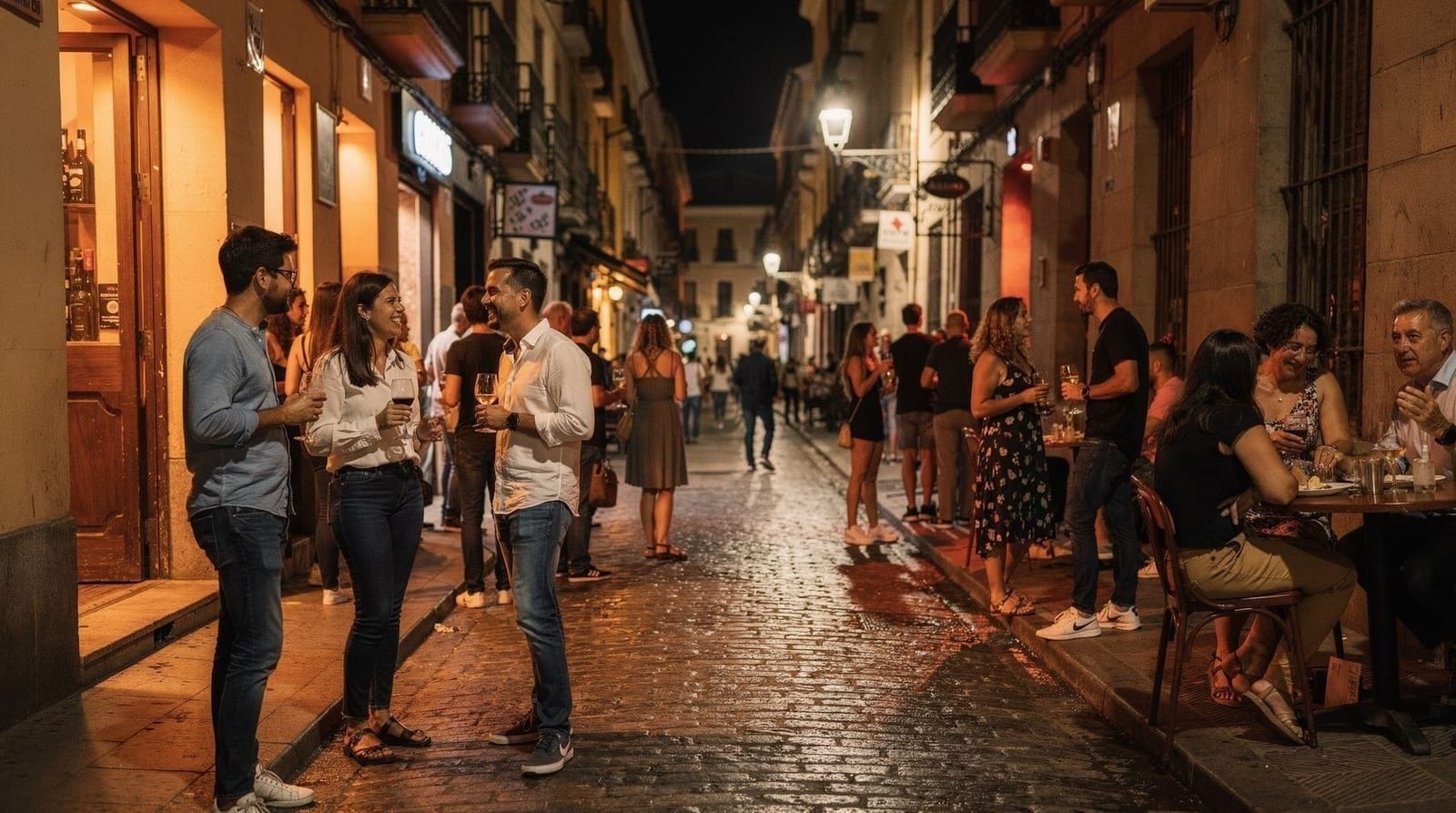
The bar scene in Chueca has two distinct modes: pre-midnight neighbourhood drinking (wine bars, vermouth spots, cocktail bars) and late-night dance venues. Both are well-represented.
Del Diego (Calle de la Reina 12): Classic Madrid cocktail bar, in operation since 1992. The gin and tonics are properly made; the atmosphere is old-school sophisticated rather than trendy. One of the few bars in central Madrid with consistent craft.
El Tigre (Calle de las Infantas 30): Legendary for its free tapas with every drink — a custom that has become rarer in Madrid as prices rose. The bar is deliberately no-frills; the tapas (usually a plate of mixed things with every caña) are the draw. Crowded on weekends.
Teatro Barceló (Calle de Barceló 11): The major late-night venue in Chueca/Malasaña border territory. A converted theatre with multiple floors, serious sound system, and an eclectic booking policy. This is where Chueca’s nightlife goes after midnight.
Pride: what to expect
Madrid Pride (Orgullo) is held annually in late June/early July and is one of the largest LGBTQ+ events in the world — with the official parade drawing estimates of 1–2 million people along the route from Atocha through the centre to Cibeles. The Chueca neighbourhood is the epicentre for the entire week-long celebration.
Practical implications for visitors:
- Hotel prices spike 50–100% for Pride week. Book four to six months ahead.
- The neighbourhood is extremely crowded from Thursday through Sunday of Pride weekend. The Chueca metro station regularly has queue management in place.
- The atmosphere is exceptional — genuinely celebratory, inclusive, and unlike anything else in European urban life.
- If your trip overlaps with Pride but you are not there specifically for it, consider staying in a different neighbourhood (Malasaña or La Latina) for the Pride weekend itself to avoid the crowds.
Where to stay in Chueca
Hostal Gala (Calle de Hortaleza 63): Doubles from €70. Clean, well-managed, excellent Chueca location. Family-run in the best sense.
Room Mate Oscar (Plaza de Vázquez de Mella 12): The flagship Room Mate in Madrid — design hotel, rooftop pool, strong Pride positioning. Doubles from €130, significantly higher during Pride. Genuinely well-located on the edge of the plaza.
Hotel Preciados (Calle de Preciados 37): Technically between Sol and Chueca, but ten minutes’ walk to the Chueca plaza. Three-star, €110–150, solid quality.
The Pavilions Madrid (Calle de Cervantes 34): Boutique hotel on the La Letras/Chueca border. Smaller and quieter than the Room Mate; excellent service. Doubles from €230 in high season.
Shopping in Chueca
Chueca’s shopping mixes the independent Fuencarral stores (see the Malasaña guide for detail on Fuencarral) with a strong LGBTQ+-specific retail scene and some of Madrid’s better independent fashion.
Calle de Fuencarral (running through both Malasaña and Chueca): The main independent shopping spine — vintage, streetwear, Spanish fashion brands, record shops.
Calle de Hortaleza and Calle del Barquillo: Home furnishings, design, and boutique fashion. The Chueca version of shopping tends toward interiors and lifestyle rather than mass fashion.
Cluster of design shops around Plaza del Rey: A small concentration of quality independent design shops including some of Madrid’s better concept stores.
Day structure for Chueca visitors
Morning (09:00–12:00): Start with breakfast at a Chueca café — the neighbourhood has some of Madrid’s best coffee shops. Walk the streets around Plaza de Chueca, which runs a small morning market on weekends. Browse the design shops on Calle del Barquillo.
Midday (12:00–15:00): Vermouth hour at a neighbourhood bar from 12:00. Lunch at Bazaar, La Castela, or one of the Jorge Juan corridor restaurants if you have walked east. The Mercado de San Antón (15 minutes’ walk, Chueca/Malasaña border) is an option for a market lunch.
Afternoon (15:00–18:00): Walk north into Malasaña — the two neighbourhoods connect naturally along Fuencarral and the surrounding streets. Browse the vintage shops and independent retail. Coffee at a Malasaña café before heading back.
Evening (20:00–midnight): Return to Chueca for dinner — the neighbourhood’s restaurant density means no need to go elsewhere. Start at a wine bar from 20:00; dinner at 21:30 (the Madrileño time). Bars from 23:00.
Food beyond the obvious: Chueca’s restaurant depth
Chueca’s restaurant scene extends well beyond the well-known Bazaar and the reliable classics. The neighbourhood has enough density that a determined food explorer can eat for a week without repeating.
Yakitoro (Calle de Reina 41): Izakaya-style Spanish-Japanese fusion from Alberto Chicote. Skewers cooked over charcoal, good sake and Japanese whisky list, late-night-friendly (open until 01:00). A genuinely good cross-cultural kitchen.
Casa Julio (Calle de la Madera 37): The reference croqueta bar in Chueca. Specialises exclusively in croquetas (creamy béchamel croquettes) in rotating varieties — classic jamón, bacalao, mushroom. Queues at peak hours; worth it. €4–6 for a plate of four.
Celso y Manolo (Calle del Barquillo 5): Old-school Spanish taberna that has maintained quality and integrity through the neighbourhood’s transformation. Good wine list, generous portions, honest prices. The kind of bar that reminds you what Chueca was before it was a destination.
La Tasquita de Enfrente (Calle de la Ballesta 6): One of Madrid’s best traditional-format restaurants — daily market menu, no written menu (the waiter recites the day’s options), impeccable sourcing. Expensive for the format (€60–80 per person with wine) but genuinely outstanding. Reserve weeks ahead.
Practical: navigating Chueca’s bar street
The area around Calle de Pelayo, Calle de las Infantas, and Calle de Fuencarral concentrates the neighbourhood’s bar culture. Navigating it:
Early evening (20:00–22:00): Wine bars and vermouth spots. Del Diego for proper cocktails. El Tigre for free tapas with drinks (very crowded by 21:30).
Late evening (22:00–midnight): The transition from bar to club begins. The larger venues (Teatro Barceló, Kapital further south) take over from the neighbourhood bars.
After midnight: Chueca’s club circuit. The neighbourhood has enough late-night venues to support a full night without leaving.
For the full Madrid nightlife picture, see the Madrid nightlife guide and the dedicated gay Madrid Chueca guide.
What to know about Chueca’s geography
The Chueca neighbourhood occupies roughly 600 by 600 metres of central Madrid — small enough to cover entirely on foot in an afternoon, dense enough to reward multiple return visits.
Key reference points:
- Plaza de Chueca: The social centre. Café terraces, weekend market, the fountain that marks the neighbourhood’s heart.
- Calle de Hortaleza: Runs north from the plaza through the residential part of the neighbourhood, lined with restaurants and boutiques.
- Calle de Fuencarral: The main commercial axis, shared with Malasaña to the northwest.
- Calle de Augusto Figueroa: Home of Mercado de San Antón and the most active restaurant street.
- Calle del Barquillo: Design, interiors, and lifestyle shops on the eastern edge of Chueca.
The neighbourhood is entirely walkable and has no significant hills (unlike La Latina, which sits on a slope). Navigation is straightforward once you establish the plaza as your reference point.
Health and wellness infrastructure
One of Chueca’s characteristics that is rarely mentioned in travel guides: the neighbourhood has a very high density of quality gyms, yoga studios, and wellness facilities. This is partly a function of the demographic (the community tends to prioritise this) and partly an infrastructure that has built up over decades.
For visitors staying in Chueca on longer trips:
- David Lloyd and other premium gym chains have city-centre locations reachable from Chueca.
- Multiple yoga studios operate drop-in classes (ask at your hotel for current addresses, as these change regularly).
- The Retiro park is 20 minutes’ walk east — Madrid’s primary outdoor exercise space, with running paths and open-air yoga in the mornings. See the Retiro park guide.
Chueca and the Prado: the art museum link
One under-remarked fact about Chueca’s location: it is a straightforward 25-minute walk from the neighbourhood to the Prado museum, via Cibeles and down the Paseo del Prado. The walk itself is excellent — Calle de Alcalá to the Fuente de Cibeles (one of Madrid’s most photogenic architectural compositions), then south along the tree-lined Paseo del Prado to the museum entrance.
The golden triangle art walk guide details this route with the architecture and public spaces along the way.
If combining a Chueca base with intensive museum visiting, plan morning museum sessions (09:00–13:00) and use the neighbourhood for afternoon and evening activities. The free evening opening at the Prado (18:00–20:00 Monday–Saturday) can be reached by walking from Chueca in 25 minutes.
If you would rather not spend your museum time queuing, booking ahead is the simple fix: a skip-the-line visit with an official guide lets you walk down from Chueca and go straight in, while a guided visit covering both the Prado and the Reina Sofía suits a longer art-focused day from your Chueca base. For a more personal pace, a private skip-the-line tour of the Prado keeps the group small and the route flexible. The Prado museum guide and the Reina Sofía guide explain what is worth prioritising in each.
Safety in Chueca
Chueca is one of the safer neighbourhoods in central Madrid. The active street life and well-lit streets maintain a natural oversight that deters most opportunistic crime. The neighbourhood’s community pride also means residents are invested in the quality and safety of public space.
Standard Madrid pickpocket awareness applies everywhere — keep bags in front on crowded streets, phone in an internal pocket near metro stations. This is common-sense urban behaviour rather than a Chueca-specific concern.
The pickpockets and safe areas guide covers the full city safety picture.
Seasonal considerations for Chueca
Spring (April–May): Terrace season begins in earnest. The Plaza de Chueca terraces fill quickly in the warmth; this is the best period for the neighbourhood’s outdoor café culture.
Summer (June–August): Pride transforms Chueca in late June/early July — extraordinary atmosphere, very high crowds. After Pride, Madrid empties partially in August (many locals leave for the coast). Some smaller Chueca businesses take partial August holidays.
Autumn (September–October): Equivalent quality to spring. The neighbourhood returns to full capacity after summer. Film festival season (late September) brings additional cultural activity.
Winter (November–March): Chueca’s indoor culture — bars, restaurants, intimate venues — is at its best. Christmas lights on the main streets are impressive; the neighbourhood does Christmas Eve celebrations at the plaza. Prices are at their lowest.
LGBTQ+ history in Chueca: a short walking route
For visitors interested in the specific history behind Chueca’s transformation, a handful of sites tell the story in about an hour on foot:
Plaza de Chueca: The symbolic heart of the neighbourhood’s revival, and the natural starting point — the square where the community’s public life is most visible today, from morning coffee to the evening bar crowd described in where to drink in Chueca.
Calle de Pelayo: One of the first streets where LGBTQ+-owned businesses opened in the 1980s, when property here was cheap precisely because the area had been neglected. Several of today’s wine bars and restaurants occupy buildings with that same commercial lineage.
The former sites of early gay bars and activist spaces: Chueca’s transformation was driven partly by grassroots activism following the end of the Franco dictatorship (which had criminalised homosexuality); walking tours run by local LGBTQ+ history guides cover specific addresses in more depth than a self-guided walk can, and are worth booking if this history particularly interests you.
The Pride route: The official Orgullo parade route runs from Atocha through the city centre to Cibeles, passing along the edge of Chueca rather than solely through it — walking a short stretch of this route outside Pride week gives a sense of scale for the estimated 1–2 million people who fill it during the festival itself, as described in Pride: what to expect above.
This kind of walk works well combined with the gay Madrid Chueca guide, which covers the fuller history and contemporary scene in more depth than this practical neighbourhood guide.
Chueca in a broader Madrid trip
For most visitors, Chueca works best either as a dedicated half-day neighbourhood exploration or as a full base. Combined with Malasaña on the same day, it forms an extended creative neighbourhood circuit that covers a significant piece of central Madrid.
From Chueca, the Salamanca district is 15 minutes east — the contrast between the two makes for an interesting comparative experience. The combination of a Chueca morning (community atmosphere, good coffee) and a Salamanca afternoon (luxury retail, high-end lunch) is one of Madrid’s more satisfying day structures.
For the full accommodation comparison across all Madrid neighbourhoods, see where to stay in Madrid and the best area for first-time visitors guide.
Frequently asked questions about Chueca guide
Is Chueca only for LGBTQ+ visitors?
No — Chueca is a genuinely mixed, welcoming neighbourhood that works as a base or destination for any visitor. Its identity as Madrid's LGBTQ+ hub shapes the atmosphere and the bar scene, but the restaurants, shopping and central location make it a sound choice regardless of who is staying there.How does Chueca compare to Malasaña as a base?
Chueca is slightly quieter and more upscale than Malasaña, with a stronger restaurant scene and a more community-feel plaza; Malasaña leans more into vintage shopping and an edgier bar culture. The two are a 10-minute walk apart and are often combined in a single day — see the Malasaña guide for the comparison in full.