Salamanca district guide: Madrid's upmarket neighbourhood
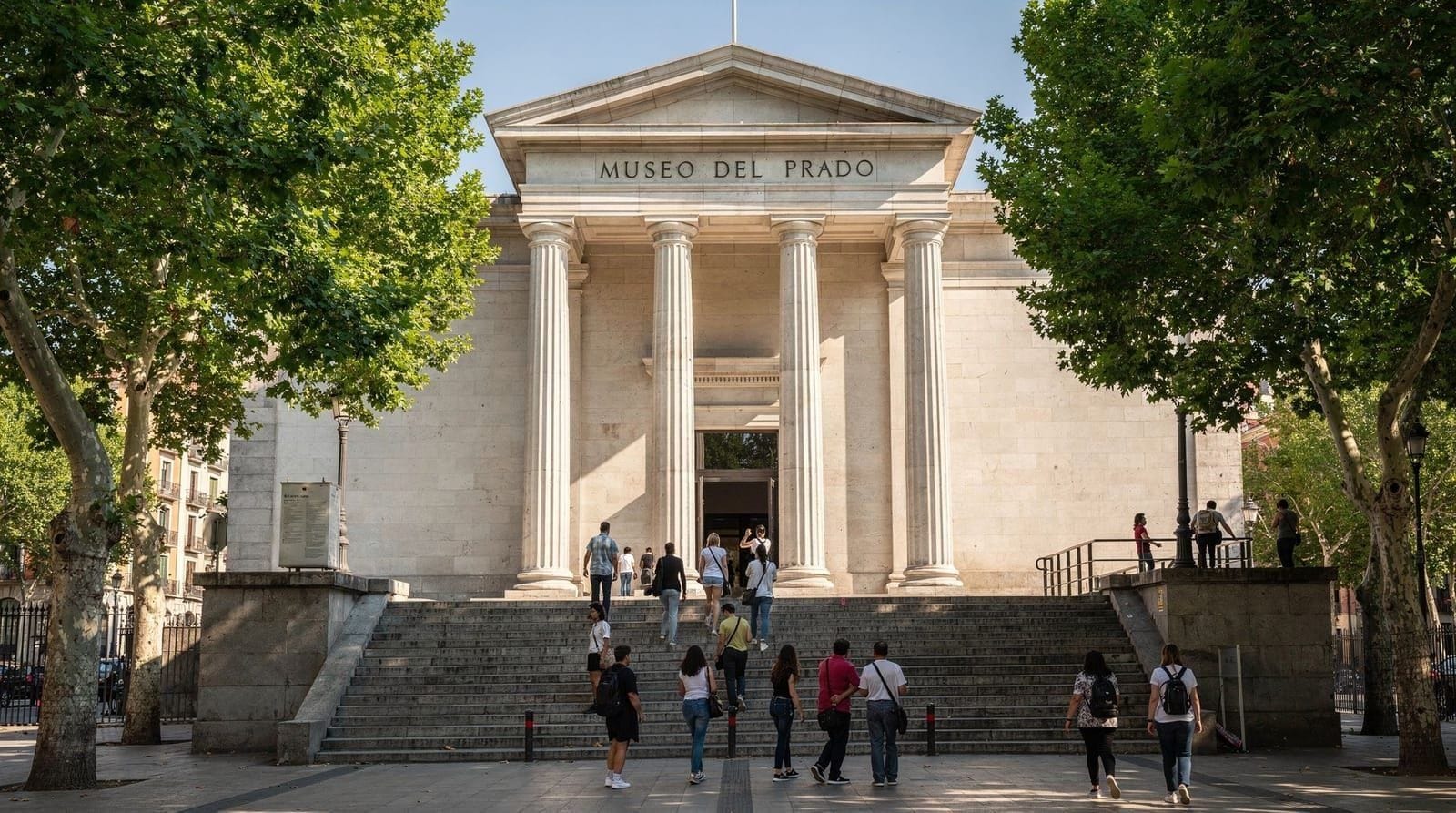
Madrid: Prado Guided Skip the Line
What is the Salamanca district in Madrid known for?
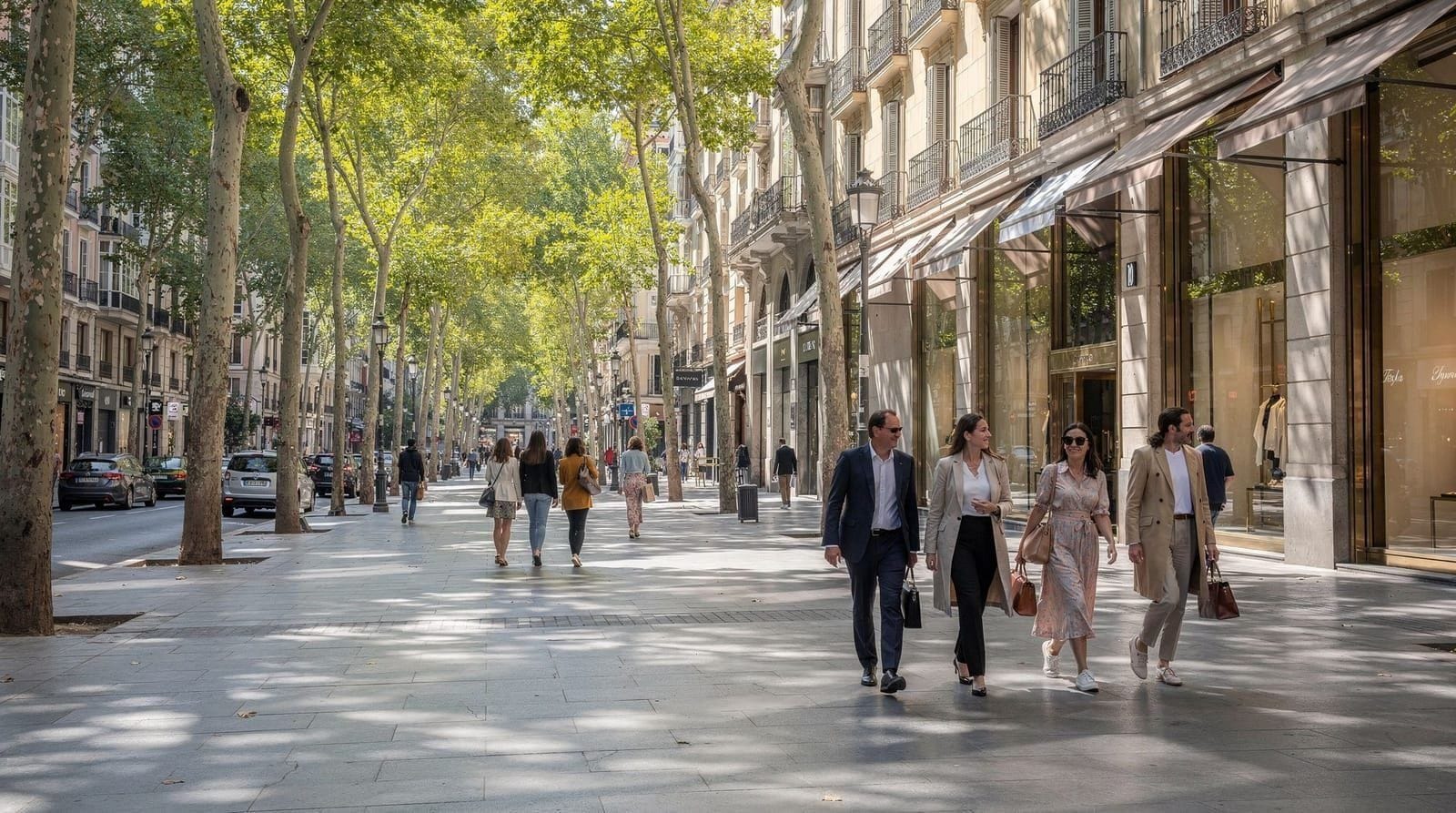
Salamanca (Barrio de Salamanca) is Madrid's upmarket residential neighbourhood — a 19th-century grid of wide streets east of Retiro park containing Spain's highest concentration of designer boutiques (Calle Serrano is Spain's Bond Street), high-end restaurants, and luxury hotels. It is calmer and less tourist-saturated than Sol, with excellent metro connections to the historic centre. The Prado and Thyssen museums are 15 minutes' walk south.
What Salamanca is and why it matters
The Barrio de Salamanca is not the city of Salamanca. It is a neighbourhood of central Madrid — one of the most distinctive in Europe. It was planned in the mid-19th century by the developer José de Salamanca y Mayol, who bought land east of the historic centre and built a rational grid of wide streets specifically intended for the upper and middle bourgeoisie.
The plan succeeded so completely that it still operates as it was designed — a residential neighbourhood for Madrid’s professional and commercial class, with retail streets calibrated to that clientele’s purchasing power. The grid pattern (unlike the labyrinthine medieval streets of La Latina or the slightly chaotic post-Movida streets of Malasaña) gives Salamanca a Parisian feel: wide boulevards, symmetrical apartment facades, and a public space designed for promenading rather than tourism.
The Barrio Salamanca destination page covers what to see in the neighbourhood. This guide focuses on the practical question of staying here and using it for shopping and dining.
| Where | East of Retiro park, north of the Prado/Recoletos axis |
| Cost | Free to walk; window-shopping costs nothing; hotels run above the city average |
| Time needed | Half a day for a proper walk, shopping and lunch |
| Getting there | Metro Serrano or Velázquez (Line 4), or 15 minutes’ walk from Retiro |
| Best time | Weekday mornings for shopping; evenings for Jorge Juan restaurants |
Calle Serrano: the shopping spine
Calle Serrano is Spain’s most prestigious retail street — the Bond Street or Avenue Montaigne equivalent. Running south to north from the Cibeles area up through Salamanca, it contains:
International luxury: Loewe (the Spanish leather house — buy here, not at the airport), Louis Vuitton, Zara’s flagship (their best-stocked stores globally), Mango Committed, Massimo Dutti headquarters.
Spanish luxury brands:
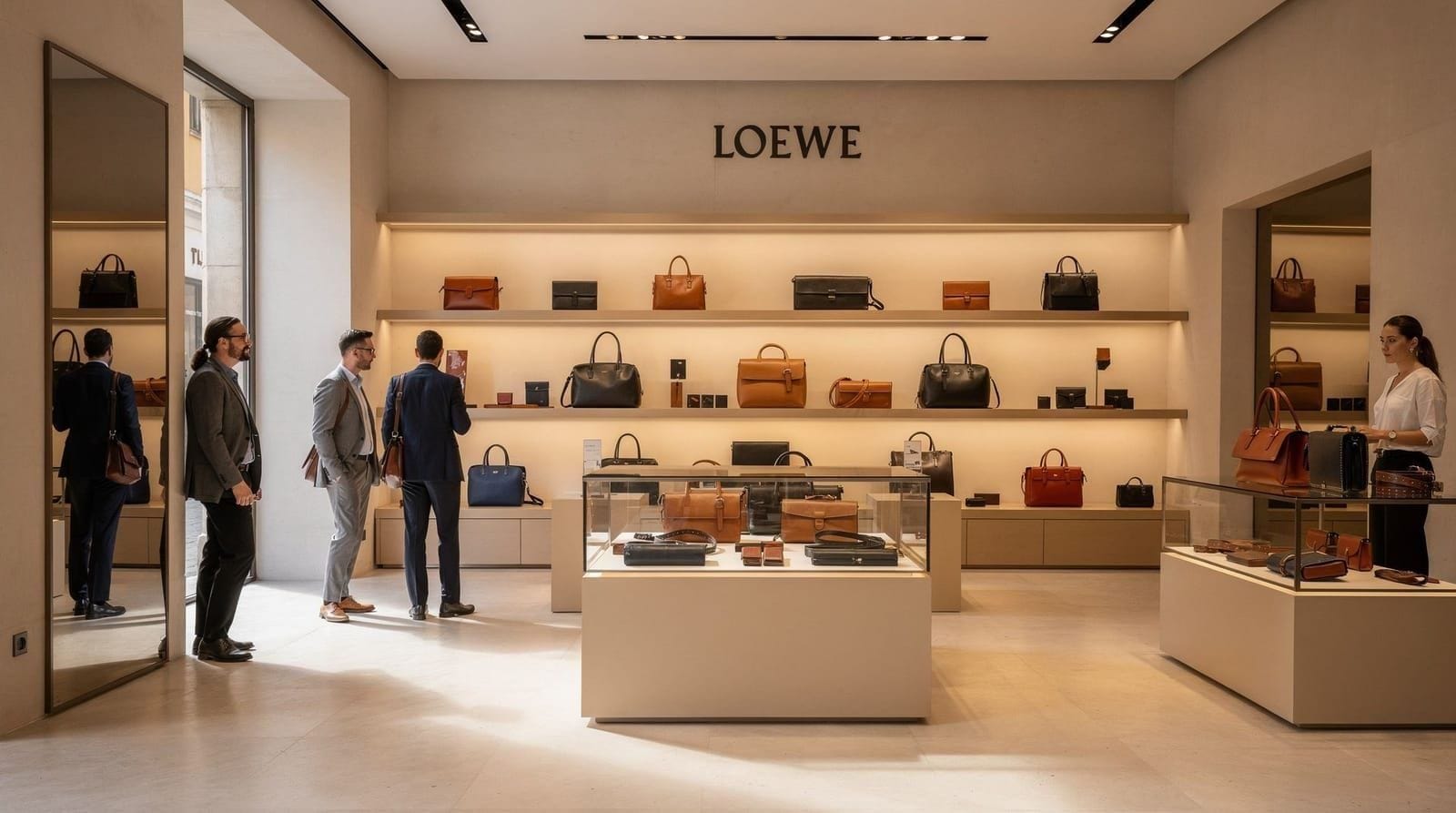
- Loewe (Calle de Serrano 34): The original house, founded 1846 in Madrid. The Serrano flagship is the right place to buy a Loewe bag or perfume — better selection than elsewhere and it is a Spanish brand.
- Adolfo Domínguez: Spanish luxury fashion, quieter in profile than it was in the 1990s but still well-made.
- Purificación García: Accessories and fashion, Spanish mid-luxury.
Market alternative: The Mercado de la Paz (Calle de Ayala 28) is the Salamanca neighbourhood food market — very different from the tourist experience of Mercado de San Miguel. This is where Salamanca residents buy their jamón, cheese, and produce. Excellent quality, weekday mornings are the best time.
Beyond Serrano: the grid
Calle Serrano is the main axis but not the only interesting street in Salamanca.
Calle de Ortega y Gasset: Between Serrano and Velázquez, this is where the most exclusive brands cluster — Cartier, Hermès, Valentino, Dior, Chanel. Not a shopping street for most visitors but interesting to walk for the architecture and window displays.
Calle de Goya: The neighbourhood’s main commercial street, running east-west. More accessible price points than Serrano — good pharmacy, a Corte Inglés department store (the main one is at Calle de Goya 76), and reliable cafés.
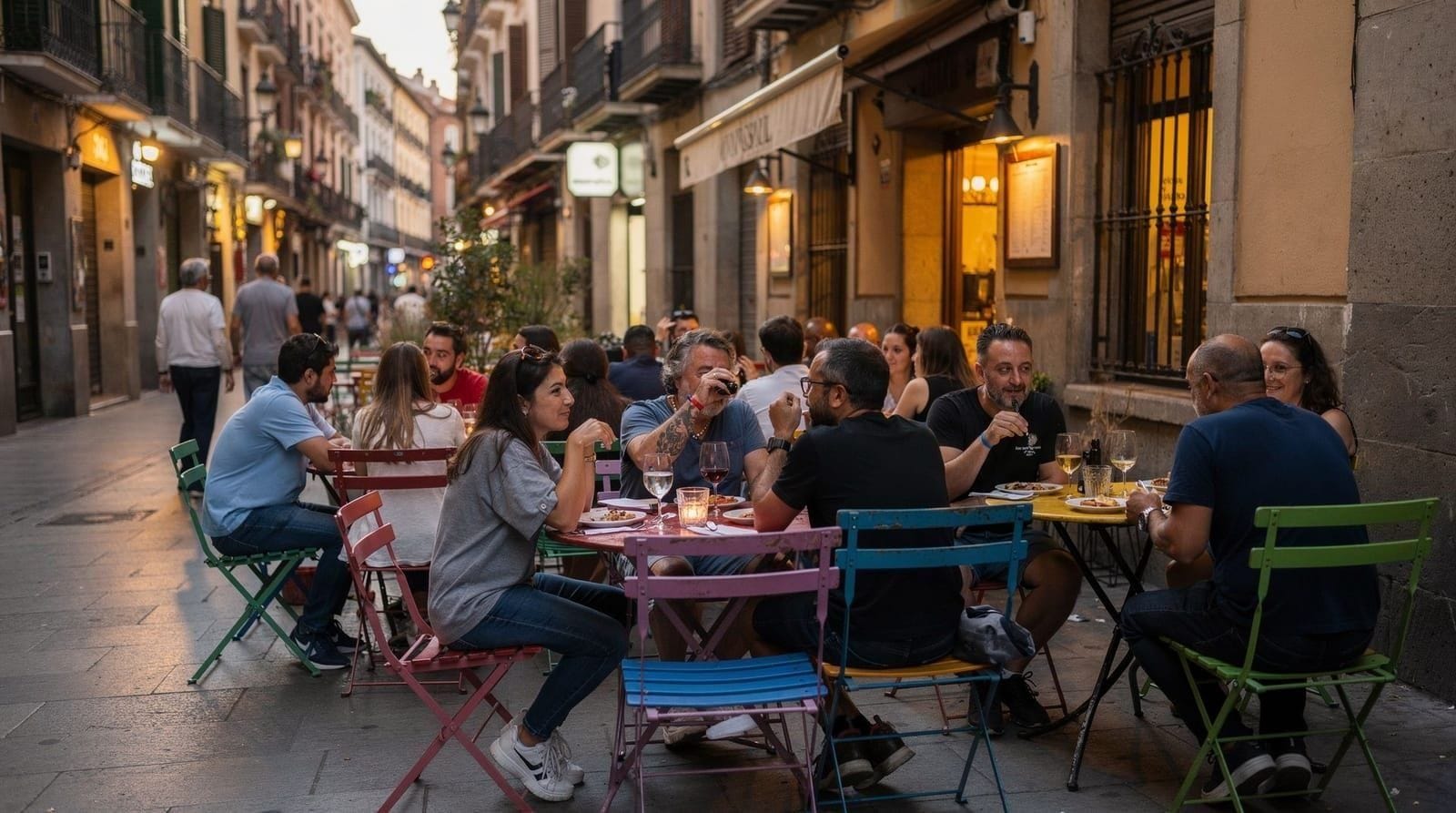
Calle de Jorge Juan: Emerging as Madrid’s most interesting restaurant street. A cluster of quality independent restaurants — Japanese, Spanish contemporary, wine bars — has formed here over the last decade. For dinner in Salamanca, start here.
Calle de Claudio Coello: Parallel to Serrano and slightly less trafficked. Independent boutiques, good bookshops, well-regarded neighbourhood restaurants.
The Salamanca luxury shopping guide covers the full shopping circuit in detail.
Where to eat in Salamanca
Salamanca has some of Madrid’s best restaurants — but also some of its most tourist-trap places near the Serrano axis. The rule is simple: the closer to Serrano, the higher the tourist premium. The better eating is on the cross streets.
Coque (Calle del Marqués de Riscal 11): Two Michelin stars. The Sandoval brothers’ restaurant is one of the best in Madrid — a theatrical tasting menu that takes Spanish technique seriously without losing contact with flavour. A serious occasion; reserve months ahead.
Ramón Freixa Madrid (Calle de Claudio Coello 67): Two Michelin stars. More intimate than Coque, strong technique on Spanish ingredients, excellent cheese course.
Botín is NOT in Salamanca. The world’s oldest restaurant (Sobrino de Botín, Calle de los Cuchilleros 17) is in Madrid de los Austrias near Plaza Mayor — mentioned because visitors sometimes confuse the two Salamancas.
Sacha (Calle de Juan Hurtado de Mendoza 11): The neighbourhood institution for upmarket but honest Spanish cooking. Not Michelin-starred but arguably more enjoyable — old-school service, proper cocido madrileño on Thursdays, exceptional tortilla.
El Paraguas (Calle de Jorge Juan 16): Contemporary Spanish, excellent wine list, reasonable prices for the Salamanca postcode. One of Jorge Juan’s better established spots.
La Mallorquina de Serrano (Calle de Serrano 6): Bakery café for breakfast. The pastries (especialidad: ensaimada and various croissants) are serious. Morning coffee and a pastry on a Salamanca terrace is the neighbourhood’s best €4 investment.
Where to stay in Salamanca
The hotel stock here reflects the neighbourhood’s residential character — boutique conversions and luxury chains rather than budget backpacker infrastructure. This is not the place to find a €60 double room.
NH Collection Madrid Abascal (Calle de José Abascal 47): Four-star, professional, excellent service. Doubles €140–200. Slightly north of the Salamanca grid but walks easily to both Salamanca shopping and Alonso Martínez (for Malasaña/Chueca access). The NH Collection standard is consistently reliable.
Urso Hotel (Calle de Mejía Lequerica 8): Boutique luxury in a converted house. 78 rooms, spa, strong service standards. One of the city’s best small luxury hotels. Doubles €250–380.
Hotel Villa Magna (Paseo de la Castellana 22): The traditional Salamanca business hotel — five stars, Castellana location, impeccable service. A fixture of Madrid’s luxury hospitality for decades. Doubles €400–600+.
Senator Gran Vía (technically mid-Salamanca/Alonso Martínez area): Four-star, better value than the pure-luxury options, reliable chain quality. Doubles €130–180.
Salamanca compared to Madrid’s other bases
Choosing a Madrid base often comes down to Salamanca versus one of the historic-centre neighbourhoods. Here is the honest comparison for the areas visitors weigh most often:
| Area | Character | Distance to Royal Palace | Best for |
|---|---|---|---|
| Salamanca | Calm, upmarket, residential grid | 25–30 min walk / 15 min metro | Shopping, fine dining, quiet nights |
| La Latina | Historic, tapas-focused, lively | 15 min walk | Sunday tapas, nightlife, atmosphere |
| Sol / Gran Vía | Central, busy, tourist-dense | 5–10 min walk | First-timers, maximum walkability |
| Malasaña / Chueca | Alternative, nightlife, independent shops | 15–20 min walk | Nightlife, LGBTQ+ scene, indie culture |
| Chamberí | Residential, local dining, quieter still | 20–25 min walk | Authentic dinners without tourist premium, similar calm to Salamanca at lower cost |
None of these is objectively “best” — see the best area for first-time visitors guide for a fuller framework, and the how many days in Madrid guide for matching a base to your trip length. Salamanca’s trade-off is consistent throughout this guide: you pay in commute time and hotel price for calm, space and quality.
Getting around from a Salamanca base
Salamanca is served by three metro lines that make it easy to reach without a car: Line 4 (Serrano, Velázquez) runs directly toward Chamberí and connects at Alonso Martínez to Line 10 for Nuevos Ministerios and the Chamartín AVE trains; Line 2 (Goya, Príncipe de Vergara) runs toward Sol and the historic centre; and Line 5 (Núñez de Balboa) runs west toward Chueca and the centre. Walking is entirely viable for anything inside the neighbourhood itself — Salamanca’s flat, wide grid is one of the most pleasant parts of Madrid to cover on foot, unlike the steeper, narrower streets of La Latina. Taxis and ride-hailing apps are plentiful on Serrano and Goya at most hours, useful for a late return from Ponzano or a dinner that runs past the last convenient metro.
Salamanca vs the historic centre: the commute question
The honest calculation: from a Salamanca hotel to the Royal Palace is about 25–30 minutes’ walk or 15 minutes by metro (Serrano → Sol, two changes). From a La Latina hotel to the Royal Palace is 15 minutes’ walk.
For a trip focused heavily on museums (Prado, Thyssen, Reina Sofía — all in the southern strip), Salamanca is actually closer than La Latina. For a trip focused on the historic centre (Royal Palace, Plaza Mayor, Sol), Salamanca is less convenient but not impossible.
The Salamanca trade-off: calmer streets, quieter hotels, better restaurant quality at the top end, access to the best shopping in Madrid — at the cost of slightly more transit effort to reach the main sights.
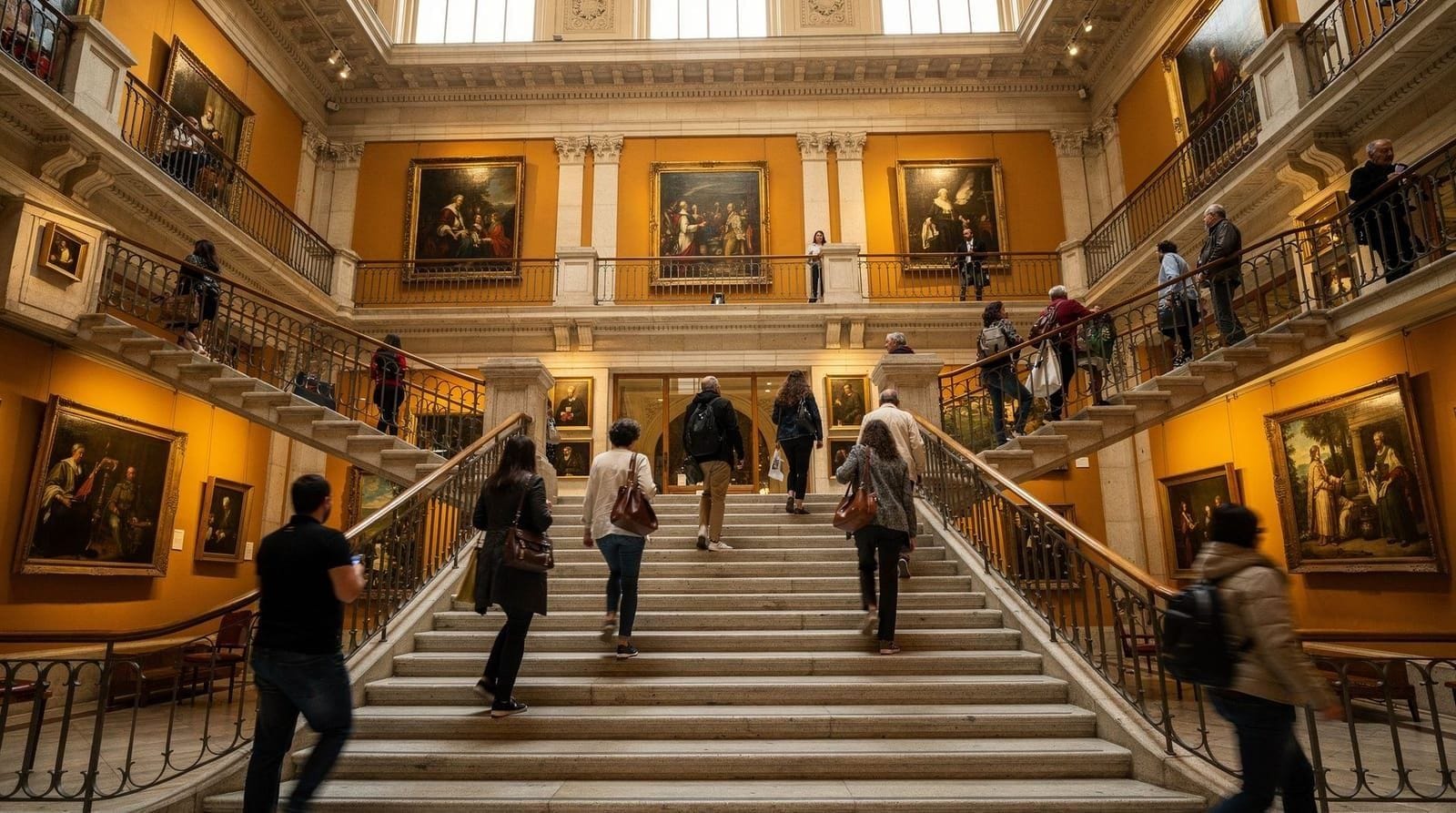
If the museums are the reason you chose this base, it is worth deciding early how you will tackle them. The Prado rewards some preparation, and a guided visit with a skip-the-line guided visit of the Prado is one way to cover the highlights without wandering the galleries unprepared. Our Prado museum guide and the golden triangle art walk explain how to sequence the three big museums from a Salamanca hotel, and the Madrid for art lovers itinerary turns that into a day-by-day plan.
Salamanca in a broader trip
A half-day in Salamanca works well within a longer Madrid itinerary: morning coffee on Calle de Jorge Juan, a walk up Serrano, lunch at one of the cross-street restaurants, then metro back to the historic centre for the afternoon. See the four-to-five day Madrid itinerary for a day structure that incorporates Salamanca properly.
For a deep dive on shopping, see the dedicated Salamanca luxury shopping guide and the overview of Madrid markets and souvenirs.
Chamberí: the adjacent neighbourhood
North of Salamanca, separated by the Paseo de la Castellana, lies Chamberí — a neighbourhood with a similar residential character but more authentic day-to-day life and one of Madrid’s best restaurant concentrations.
Calle de Ponzano (10 minutes from Salamanca): In the last decade, this street has become Madrid’s most talked-about casual dining destination — a dense concentration of pintxos bars, modern Spanish bistros, natural wine bars, and quality seafood places at prices 20–30% lower than equivalent Salamanca restaurants. Madrileños from across the city come to Ponzano for weeknight dinners.
Mercado de Barceló: Chamberí’s covered market, recently renovated. Less prestigious than Mercado de la Paz but more varied and cheaper. Good for produce and the food court upstairs.
The Chamberí destination page covers the full neighbourhood. For visitors staying in Salamanca, an evening dinner circuit to Ponzano is one of the best adjacent excursions.
Salamanca’s connection to the day trip network
The Salamanca neighbourhood is well-positioned for day trips via the metro connection to the main railway stations.
From the Serrano or Velázquez metro stations, Atocha (for Toledo AVE, 33 minutes) is reachable in under 15 minutes. Chamartín (for Segovia AVE, 28 minutes) is accessible by changing at Alonso Martínez from Line 4 to Line 10 (via Nuevos Ministerios).
This means a day trip to Toledo or Segovia from a Salamanca base adds minimal overhead — a short metro ride to the station, an efficient AVE connection, and return to Salamanca in the evening for dinner on Jorge Juan. The best day trips from Madrid guide and the Toledo from Madrid guide cover the day trip logistics.
Travellers who like the name and want to see the real university city of Salamanca can do that too: the Salamanca from Madrid guide and the Salamanca destination page explain the options, and an organised outing such as a day trip combining Ávila and Salamanca removes the planning if you would rather not handle trains yourself. The AVE train day trips guide and the Madrid and Toledo itinerary are useful companions when you are comparing which excursion to build around your Salamanca base.
Salamanca for families
The Salamanca neighbourhood is one of Madrid’s better family bases. The wide streets and sidewalks make pushchairs practical. The Retiro park is a 15-minute walk south — the Retiro park guide covers the lake, playgrounds, and Palacio de Cristal that make it excellent for children.
The neighbourhood’s restaurants are family-friendly in the sense that proper restaurants in Spain do not exclude children — Spaniards bring children to dinner at 21:30 without awkwardness. Sacha and the Jorge Juan corridor restaurants handle families competently.
Mercado de la Paz is an excellent destination for a family who wants to understand Spanish food culture — the stalls are engaging for children, the sights and smells are memorable, and buying and eating jamón on the spot is universally enjoyed.
Salamanca’s parks and public spaces
The neighbourhood is served by three significant green spaces:
Parque del Retiro (southern border): Madrid’s great public park. From Salamanca, the closest entrance is Puerta de Alcalá (10 minutes’ walk). The Retiro park guide covers what to do inside.
Jardines del Descubrimiento (Plaza de Colón): A formal garden at the southern end of Paseo de la Castellana, with a large monument to Columbus. Good for an evening walk from a Salamanca hotel.
Jardín de la Infanta (Calle de Serrano / Jardines Cecilio Rodríguez): A small formal garden at the northern end of Retiro, accessed from Calle de Serrano. Often missed by visitors but pleasant.
Cultural institutions in Salamanca
Salamanca is not only about shopping. The neighbourhood has several important cultural institutions:
Museo Lázaro Galdiano (Calle de Serrano 122): A remarkable museum in a Belle Époque villa — the collection of art patron José Lázaro Galdiano (donated to the state), including El Greco, Velázquez, Goya, Constable, and Rembrandt. One of Madrid’s best under-visited museums. Closed Monday; standard entry €8, free Tuesday–Friday 14:00–15:00.
Fundación Juan March (Calle de Castelló 77): Private foundation with a strong programme of temporary exhibitions — generally at a high curatorial level. Free entry. Worth checking what is on.
Museo de Arte Público de Madrid (Paseo de la Castellana): An open-air sculpture museum under the Juan Bravo bridge — a unique installation of abstract Spanish sculpture from the 1970s, free and permanently accessible.
Salamanca’s neighbourhood life
Away from the shopping streets, Salamanca has a neighbourhood rhythm that is less tourist-facing than the Serrano axis suggests. The Calle de Ponzano (slightly north, toward Alonso Martínez) is one of Madrid’s best bar and restaurant streets for the local professional demographic — pintxos bars, modern Spanish bistros, wine-focused restaurants. It became a destination in its own right over the last decade.
For accommodation in this area, Calle de Ponzano puts you equidistant between Salamanca, Chamberí, and Malasaña — useful if you want Salamanca access without paying Salamanca hotel prices.
An evening walk through the old town
Many visitors who stay in Salamanca still want one evening in the oldest part of the city. A guided stroll such as a walk through the old town and the poets’ district is an easy way to do it without choosing among crowded restaurants alone. The Barrio de las Letras guide, the literary quarter guide and the Plaza Mayor guide cover the same ground on your own, and you can return to Jorge Juan afterwards for a quieter late dinner.
Getting the most from Salamanca on a budget
You do not need to buy anything in Salamanca to benefit from the neighbourhood. A morning walking Serrano and Ortega y Gasset is worthwhile for the architecture alone — the Loewe flagship (Serrano 34) is one of the most beautiful retail interiors in Madrid, and it is a free experience to enter and look at the craft.
The Museo Lázaro Galdiano (free Tuesday–Friday 14:00–15:00) is a better use of time than many more-visited Madrid museums. Mercado de la Paz’s standing jamón counter experience can be done for €8–12 per person.
Pairing the neighbourhood with other free or low-cost options keeps a trip affordable; the free things to do in Madrid and Madrid on a budget guides list more, and the museum free hours guide helps you time your visits.
A Salamanca morning followed by a metro journey to La Latina for Sunday tapas is one of the best zero-waste Madrid day structures: beautiful streets, exceptional food craft, genuine neighbourhood atmosphere — total cost under €30 including lunch and transport.
Frequently asked questions about the Salamanca district
Is Salamanca a safe area to stay in Madrid?
Yes — it is one of Madrid’s safest and calmest neighbourhoods, largely residential with low street crime. The wide, well-lit streets and steady evening foot traffic around Jorge Juan and Serrano make it comfortable to walk after dark, including for solo travellers.
Can I visit Salamanca without spending money on luxury shopping?
Yes, easily. Walking Serrano and Ortega y Gasset for the architecture and window displays costs nothing, the Museo Lázaro Galdiano is free Tuesday to Friday 14:00–15:00, and a coffee and pastry at a Serrano café runs a few euros. Mercado de la Paz also makes an affordable, low-key way to experience the neighbourhood’s food culture.