Salamanca luxury shopping: Madrid's golden mile guide
Madrid: Food Tour Tapas Spanish Wine
What is the best luxury shopping street in Madrid?
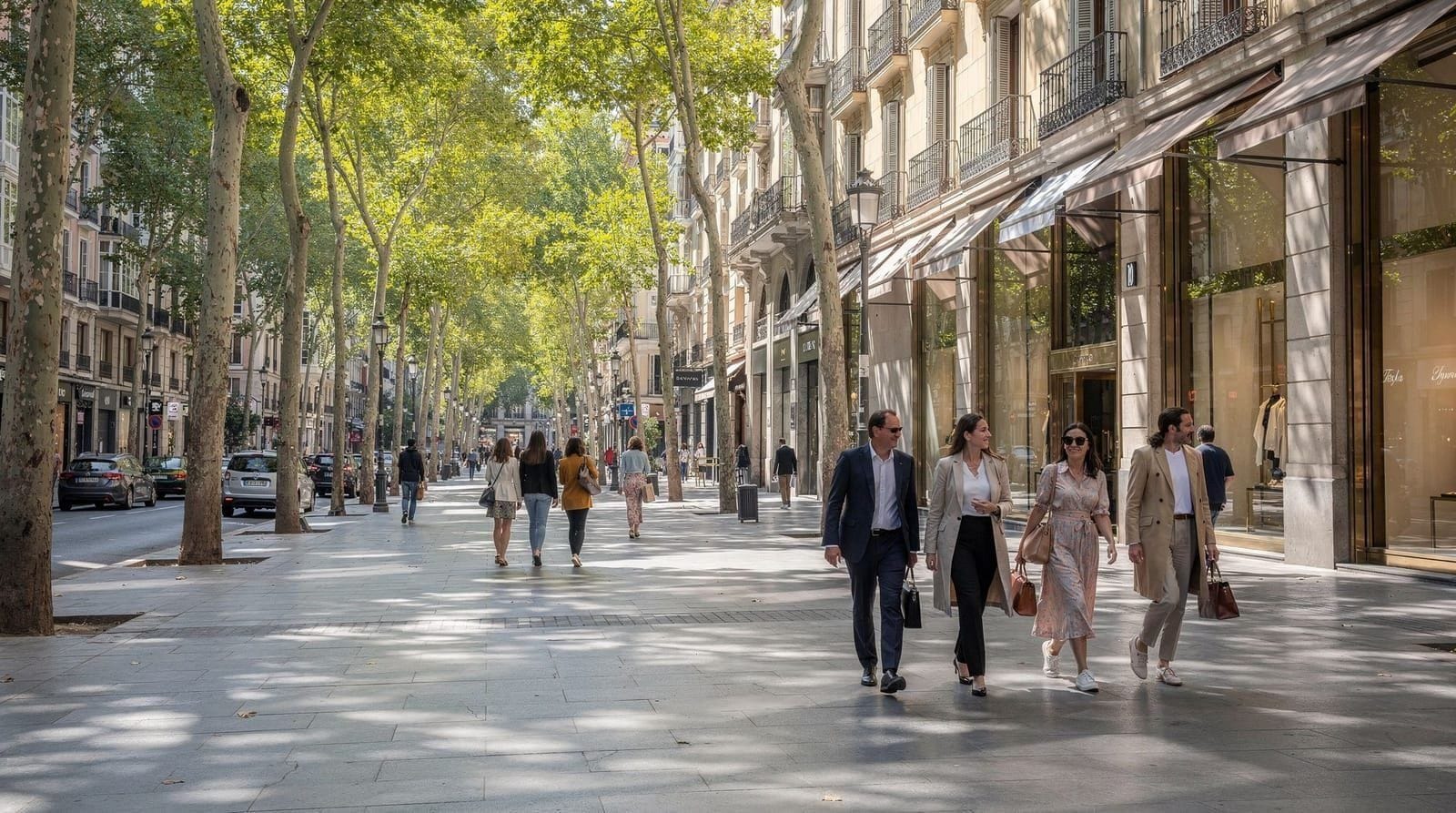
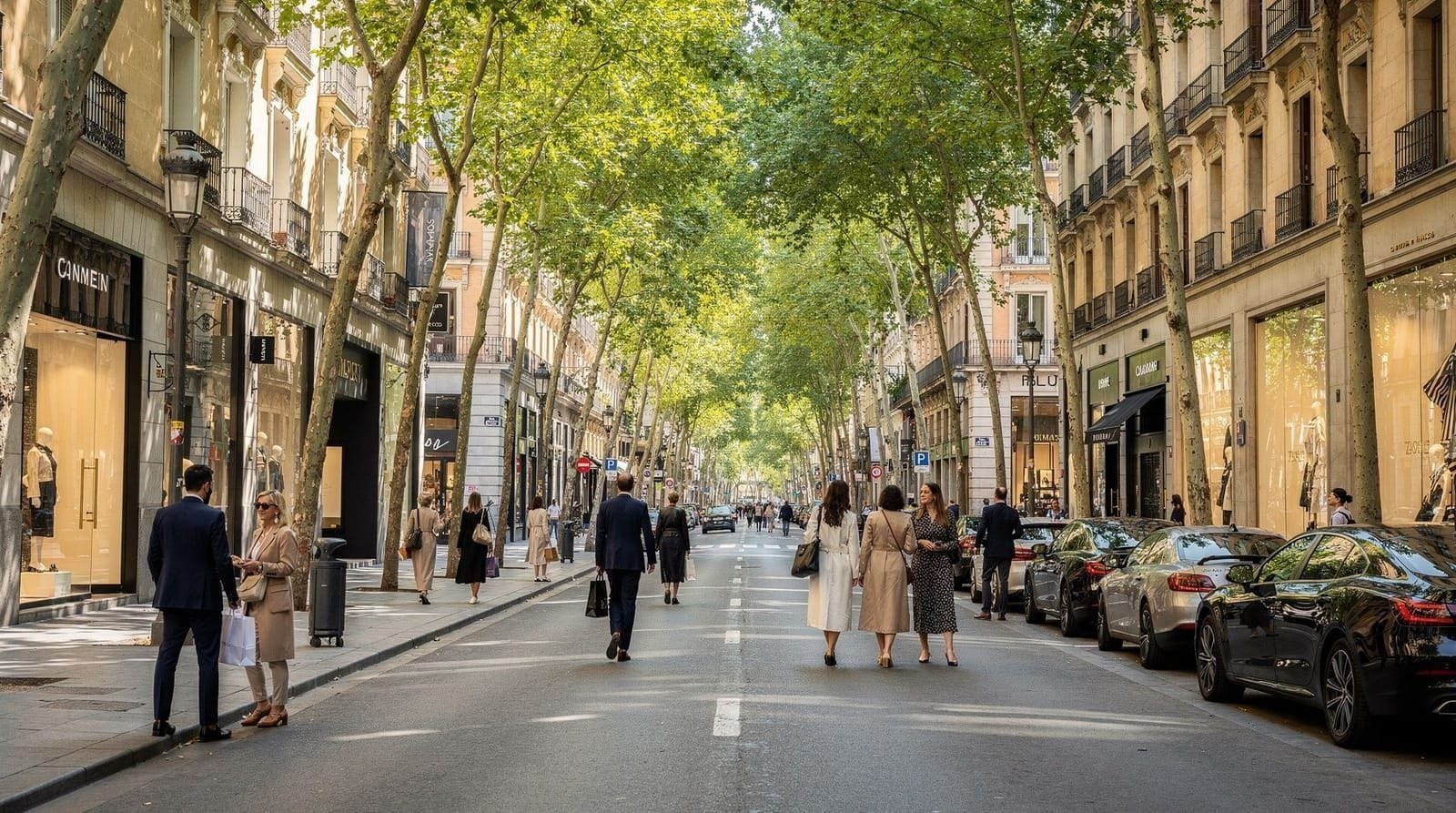
Calle Serrano in the Barrio Salamanca is Madrid's premier shopping street — Spain's equivalent of Bond Street or Avenue Montaigne. It contains international luxury brands, the Loewe flagship (the historic Spanish leather house), upscale department store options, and several Spanish mid-luxury brands not easily found elsewhere. Adjacent streets (Ortega y Gasset, Claudio Coello, Jorge Juan) complete the luxury zone.
Why Salamanca is where serious shopping happens
The Barrio Salamanca was planned in the 1860s for Madrid’s bourgeoisie — wide, symmetrical streets with enough space for carriage traffic and the architectural weight of a prosperous residential quarter. The retail that developed here followed the clientele: quality-focused, price-insensitive, and oriented toward Spanish production at its best.
Today Salamanca operates as Madrid’s luxury retail hub with the same logic. International brands are here because their clientele is here; Spanish luxury brands are here because this is where they are taken seriously.
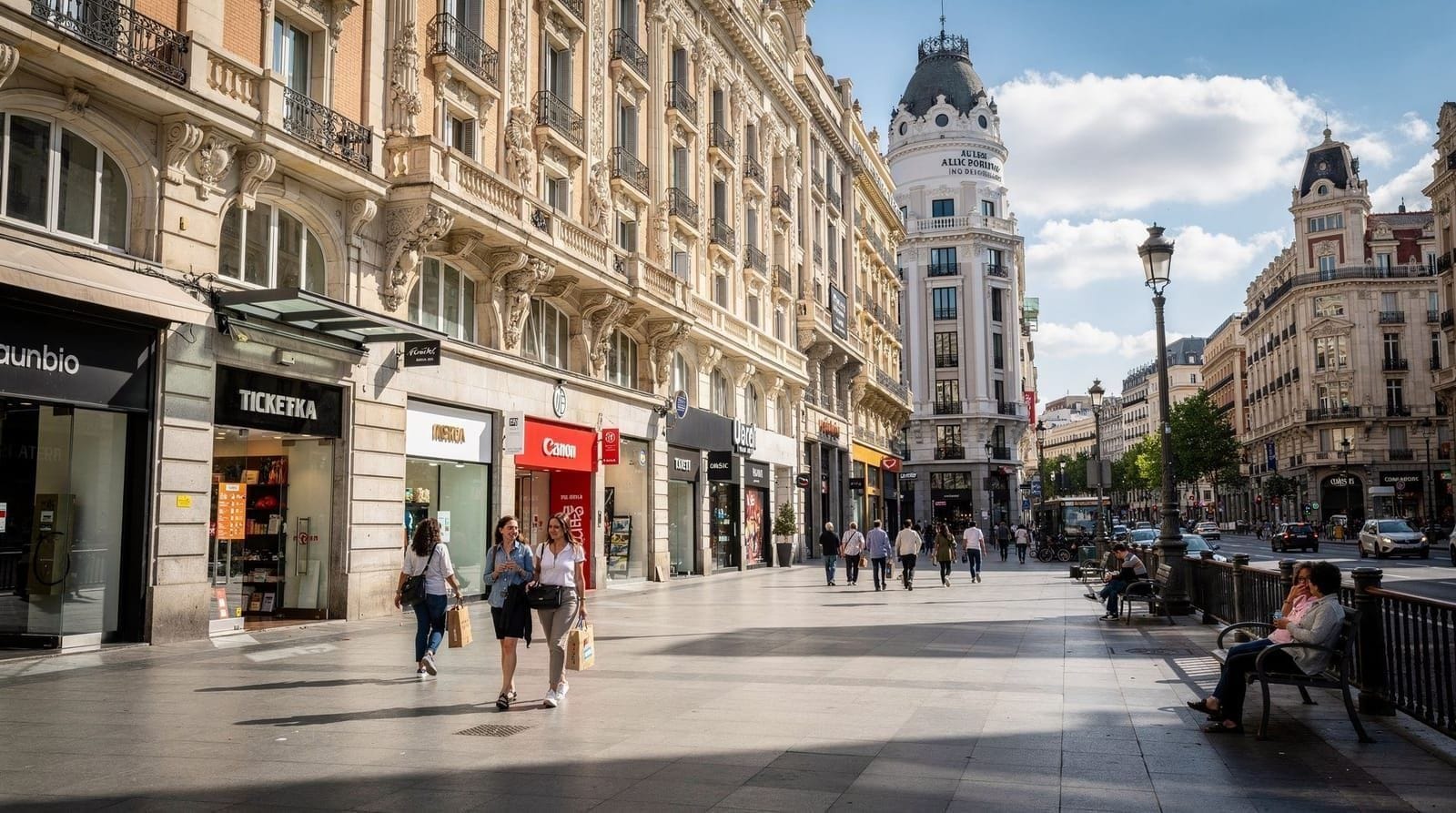
The key distinction from Gran Vía: Gran Vía is high-street retail at scale. Salamanca is where you come to buy something that will last twenty years. The Salamanca district guide covers the neighbourhood for staying and dining; this guide focuses on the shopping circuit.
| Where | Calle Serrano and the surrounding grid, east of Retiro |
| Cost | Free to browse; luxury purchases start around €150–300 for accessories |
| Time needed | Half a day for a proper circuit, more if adding Mercado de la Paz and lunch |
| Getting there | Metro Serrano or Velázquez (Line 4) |
| Best time | Weekday mornings for quieter stores; January and July for sales |
Salamanca vs Gran Vía: which shopping street for what
| Salamanca (Calle Serrano) | Gran Vía | |
|---|---|---|
| Character | Quiet, upscale, boutique-paced | Busy, high-street, department-store scale |
| Price level | High to very high | Mid-range to high |
| Best for | Spanish luxury (Loewe), considered purchases | Fast fashion, mainstream chains, souvenirs |
| Atmosphere | Calm, residential backdrop | Crowded, theatrical, tourist-heavy |
| Typical visit | Half a day, unhurried | An hour or two between sights |
See the Gran Vía shopping guide for the high-street counterpart to this circuit — most visitors benefit from doing both on different days rather than choosing one exclusively.
Calle Serrano: the main axis
Calle Serrano runs from Cibeles in the south through the heart of Salamanca for approximately two kilometres. The shopping density is highest in the central stretch between Calle de Goya and Calle de Juan Bravo.
The Spanish brands to prioritise
Loewe (Calle de Serrano 34): The most important Spanish luxury brand for visitors to Madrid. Founded in 1846 in Madrid as a leather cooperative, Loewe became Spain’s premier leather goods house — the equivalent of Hermès in leather craft. The Serrano flagship is the correct place to buy: better selection than the international branches, authentic provenance, and a price point that (while expensive) is justifiable for the quality.
The Puzzle bag, the Hammock, and the Balloon bag are the contemporary signatures. The leather accessories and wallets are more accessible price points. The perfume line (the fragrance 001 in particular) is an underrated purchase — elegant, distinctly Spanish, unusual outside Spain.
Adolfo Domínguez (Calle de Serrano): The Galician designer who became internationally known in the 1980s. The brand has quieted since its peak, but the quality remains — tailored shirts, structured suits, well-made accessories. Conservative but genuinely Spanish luxury.
Purificación García (Calle de Serrano): Accessories-focused Spanish designer. Leather bags and wallets of consistent quality. Less internationally recognised than Loewe but genuinely Spanish and well-made.
Adolfo Domínguez and Hakei are also worth noting on Serrano for quality Spanish fashion at mid-luxury price points.
International brands on Serrano
The full complement of international luxury is represented: Louis Vuitton, Dior, Chanel, Valentino, Prada, Gucci. These are the same brands you will find in any major European capital. If buying international luxury, the advantage in Madrid is pricing — Spain’s lower overall cost of living occasionally translates to slightly lower retail prices before tax-refund calculations.
Tax-free shopping: Non-EU visitors can reclaim Spanish VAT (21% on luxury goods) at most Salamanca retailers; there is no longer a minimum purchase amount. Ask the store for the tax-free form (DIVA) and have it validated by customs at the airport before checking in your bags.
Calle de Ortega y Gasset: ultra-luxury
Running parallel to Serrano between Velázquez and Serrano, Ortega y Gasset is Madrid’s highest-density luxury cluster — Cartier, Hermès, Valentino, Chanel, Ralph Lauren, and similar houses occupy its short length. Walking this street is worth doing purely for the window displays; purchasing is a personal decision about whether the Madrid presence of these brands offers any advantage over your home market.
Hermès (Calle de Ortega y Gasset): The Madrid flagship is well-stocked and staff are professional. Allocation-controlled items (Birkin, Kelly) are no more available here than anywhere else.
Calle de Jorge Juan: the emerging dining-and-boutique street
Jorge Juan has developed into Salamanca’s most interesting street for a different kind of shopping — Spanish contemporary fashion, concept stores, and quality restaurant alternatives to the main Serrano axis.
Slow Love (Calle de Jorge Juan): Spanish sustainable fashion brand. Good quality, reasonable prices for the Salamanca neighbourhood.
El Jardín de las Delicias: A concept store mixing clothing, books, ceramics, and food products from small Spanish producers. If you want genuinely Spanish gifts with a contemporary presentation, this is the right address.
Calle de Claudio Coello: books and independents
Running parallel to Serrano on the western side, Claudio Coello has a quieter, more independent character. Good independent bookshops, a few quality boutique clothing shops, and some of Salamanca’s better neighbourhood restaurants.
Panta Rhei (Calle de Claudio Coello): One of Madrid’s best independent bookshops — strong social science and humanities sections, some English-language titles. A good place to find Spanish-interest books not easily available elsewhere.
Mercado de la Paz: the neighbourhood food market
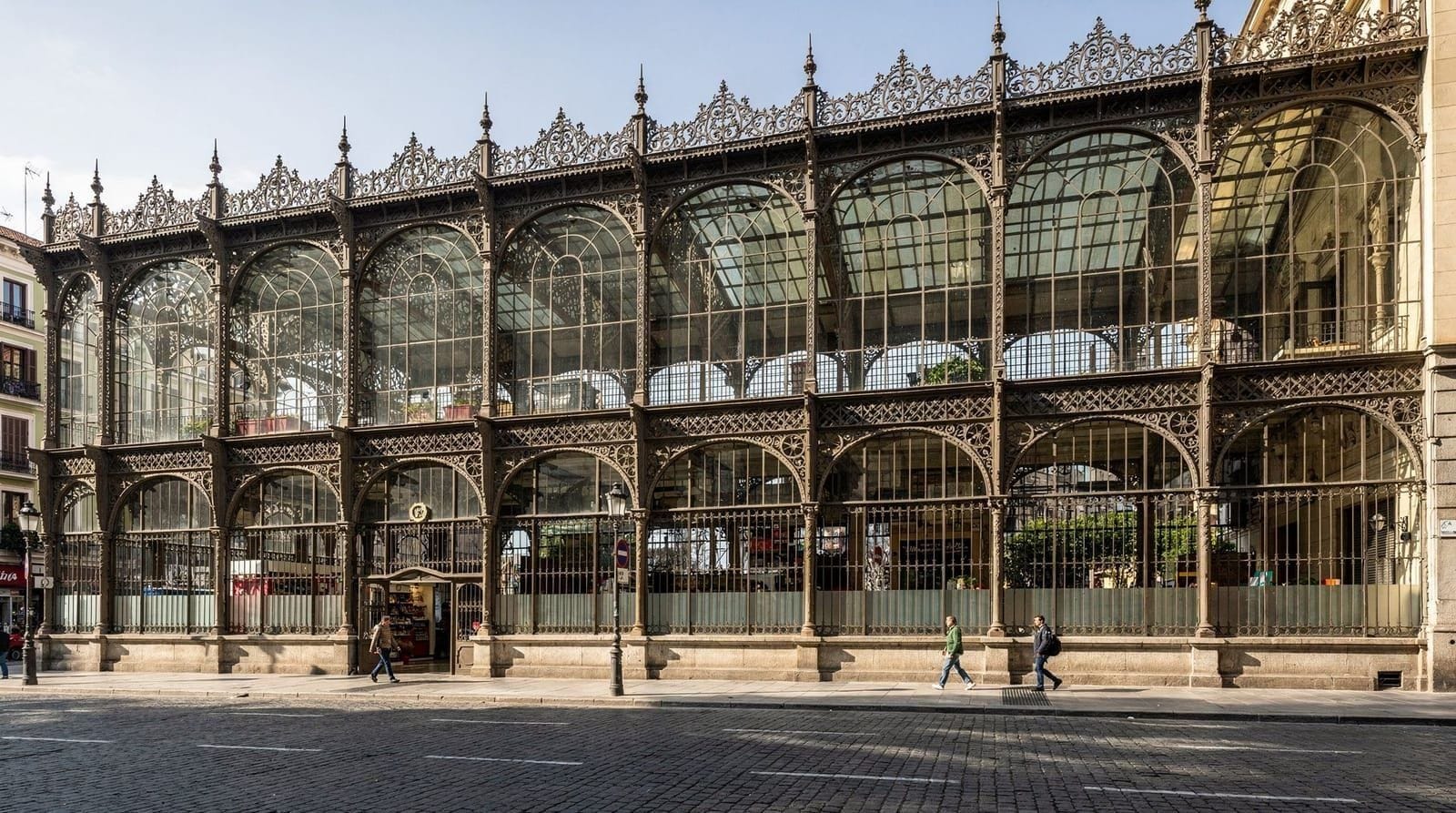
Calle de Ayala 28 (a five-minute walk from Serrano). Salamanca’s neighbourhood food market is the opposite of Mercado de San Miguel — it is not a tourist food hall but a working market where the neighbourhood’s residents shop.
The jamón counter alone is worth the visit. Spanish supermarket jamón is serviceable; Mercado de la Paz jamón ibérico from a specialist counter, sliced to order, is the reference experience. Bring cash; expect to pay €15–25 for a small selection of the finest hams.
Also excellent: the cheese counter (manchego, cabrales, various artisanal), the bakery section, and the fresh fish (octopus, clams, percebes if the season is right). The market is open Monday–Saturday, approximately 09:00–14:30 and 17:00–20:30.
If you enjoy markets, it is worth comparing this one with the Mercado de San Miguel guide and the wider Madrid markets overview. Visitors who prefer to taste their way through the city with someone explaining what they are eating can join a guided tapas and Spanish wine tasting walk on another day; our food tour verdict explains who benefits most from that format.
What to actually buy in Salamanca
Best purchases for visitors:
-
Loewe leather goods — the most justifiable luxury purchase in Madrid. Spanish brand, Spanish manufacture, Spanish craftsmanship. Prices are consistent with international stores but the selection and experience are superior.
-
Spanish wine from a specialist — the wineshops in and around Salamanca carry Spanish wines not easily found internationally. A neighbourhood wine shop (vinoteca) is the place to find an extraordinary selection of Ribera del Duero, Rioja, Priorat, and smaller DOs at good prices.
-
Jamón from Mercado de la Paz — vacuum-packed jamón ibérico for travel is available; a quality leg of jamón in a vacuum bag is allowed in most international hand luggage (check airline rules).
-
Perfume — Loewe’s fragrance line, and Spanish perfume houses like Carner Barcelona and Fueguia 1833 (if you can find them), represent genuinely Spanish production. Airport perfume shopping saves tax but lacks selection.
Skip in Salamanca:
- Tourist ceramics and bullfighting memorabilia (go to El Rastro or the souvenirs guide instead)
- International luxury at Spanish prices (the VAT reclaim makes this worthwhile only if the purchase is large enough to justify the airport queue)
Practical information
Getting there: Metro to Serrano (Line 4) drops you directly onto the street. Alternatively, Velázquez (Line 4) or Núñez de Balboa (Lines 5 and 9) for the southern end of the district.
Hours: Most Salamanca shops follow Spanish retail hours — Monday to Saturday 10:00–20:30, with a brief midday break at some smaller independents. Closed Sunday (except some large chains and the Corte Inglés).
August caveat: Some smaller Salamanca boutiques close for part or all of August. If shopping is a primary goal, visit in spring or autumn.
Combining with Chueca: The metro from Serrano to Chueca (two stops, three minutes) makes it easy to combine a Salamanca shopping morning with a Chueca lunch and afternoon. The contrast between the two neighbourhoods is one of Madrid’s more interesting urban experiences.
For the broader neighbourhood context, see the Salamanca district guide and the where to stay in Madrid guide.
Luxury shopping: what Madrid has that other cities don’t
The case for luxury shopping in Madrid rests on two specific arguments:
1. Spanish brands at their source. Loewe in Madrid is not the same as Loewe in London or Tokyo. The flagship has better stock, the staff understand the history and craft of the house, and you are buying a Spanish product in Spain. The same logic applies to Adolfo Domínguez, Purificación García, and Hakei. International brands are interchangeable across capitals; Spanish brands are not.
2. Price differential. Spanish luxury retail prices are typically 10–20% lower than in the UK, US, or Australia before VAT reclaim. On a €1,200 bag, this is €120–240 — meaningful. The VAT reclaim adds a further 14% (the net refund after processing fees) on top of the base price differential. For significant luxury purchases, the combined saving can exceed €300.
This does not make Salamanca a discount shopping destination — it remains genuinely expensive. But for visitors who were already planning a luxury purchase, Madrid offers a meaningful financial argument alongside the Spanish-brand case.
The VAT reclaim process in detail
Non-EU residents are entitled to a refund of Spanish VAT (IVA, currently 21% on most goods) on purchases, with no minimum purchase amount.
Process:
- At the point of purchase, ask for the “tax-free form” (formulario de devolución de IVA).
- The retailer fills in the form; you provide your non-EU passport number.
- At Madrid Barajas airport, have the form stamped by customs before check-in (Customs desk, international terminal).
- Submit the stamped form to the Global Blue, Planet, or Premier Tax Free desk for your refund (cash or card).
Practical notes:
- Budget 30–45 minutes at the airport for the customs queue. Do not leave this until 45 minutes before departure.
- Some retailers (including Loewe and El Corte Inglés) process the refund digitally — ask at the point of sale.
- The refund rate after processing fees is approximately 14–16% of the purchase price, not the full 21% VAT — the difference goes to the processing company.
- Goods must be exported unused — customs may ask to inspect them at the airport.
The Corte Inglés dimension
El Corte Inglés — Spain’s dominant department store chain — has its best-stocked central Madrid location on Calle de Goya in Salamanca (No. 76-78). The Goya branch is specifically worth knowing about for:
The food hall (supermercado in the basement): One of the best Spanish food selections in Madrid — properly curated jamón section, imported international foods, good wine department. Prices are not supermarket prices but the quality and convenience are unmatched for a department store.
Tax-free processing: El Corte Inglés processes the non-EU VAT reclaim in-store — you leave with a processed form rather than having to queue at the airport. Ask at any checkout.
Customer service standard: Unusually professional for a large retailer — English is spoken in most departments; returns are handled without drama.
Electronics and phones: If you need a replacement charger, SIM card, or electronics, the El Corte Inglés electronics floor (separate building on Goya) is the most reliable central option.
Michelin-level food to go: The Club del Gourmet section of the Corte Inglés food hall stocks prepared dishes, high-end charcuterie boards and a genuinely good wine selection for a hotel-room dinner or a picnic in nearby Retiro. It’s a useful fallback on an evening when a Michelin reservation (see the Michelin Madrid guide) wasn’t possible.
Understanding Spanish luxury quality
The Spanish luxury tradition is less internationally marketed than French or Italian equivalents, which creates a significant value gap for informed buyers. Spanish craft production in leather, ceramics, and textiles is at a comparable level to the better-known European traditions.
Loewe leather: The house uses calfskin and lambskin at a standard competitive with any European luxury leather goods producer. The LVMH acquisition in 1996 brought investment without diluting the Spanish identity — the design direction under Jonathan Anderson since 2013 has been internationally acclaimed.
Spanish ceramics (Talavera, Puente del Arzobispo, Sargadelos): These are the Spanish ceramic traditions worth understanding. Not available in Salamanca specifically — for authentic craft ceramics, the specialist shops near Sol or Artesanía Nacional on Calle de la Paz are better sources.
Spanish jewellery designers: The Ortega y Gasset axis has several established Spanish jewellers — Carrera y Carrera (founded 1885, specialising in figurative gold and diamond work) is the most internationally recognised. Less French Baroque, more geometric Modernist influence.
A Salamanca shopping morning: practical sequence
09:30: Coffee at a neighbourhood café on Calle de Jorge Juan or Calle de Goya.
10:00–12:30: Walk Calle Serrano south to north. Stop at Loewe (No. 34) for the flagship experience. Continue to Adolfo Domínguez for Spanish fashion. End at Purificación García.
12:30: Turn east onto Calle de Ortega y Gasset for luxury brand window-shopping. Walk one block.
13:00: Mercado de la Paz (Calle de Ayala 28, five minutes from Serrano). The jamón counter for a standing mid-morning snack. €5–8 for a selection.
14:00: Lunch at Sacha (by reservation) or one of the Jorge Juan corridor restaurants.
15:30–16:30: A neighbourhood wine shop (vinoteca) for Spanish wine selection and purchase.
17:00: Metro from Serrano to Chueca for afternoon exploration of the creative neighbourhood.
This sequence uses the Salamanca morning well and transitions naturally into the afternoon without over-buying.
Pairing shopping with the rest of Madrid
A shopping morning works best as one part of a varied day rather than the whole of it. Salamanca sits close to the green space of Retiro, so a walk through the Retiro Park guide route is a natural way to clear your head after a few hours of boutiques and bags.
If art is also on your list, the museums of the Paseo del Prado are the obvious companion. The Golden Triangle art walk links the Prado, the Reina Sofía and the Thyssen-Bornemisza, and you can read the Prado Museum guide before choosing how deep to go. Travellers who want help getting through the collections can book a guided visit covering the three big art museums and keep the shopping for a separate half-day.
For a wine-minded evening after the wine shop visit, the wine bars guide and the vermouth guide suggest places to sit down and taste what you have been reading about. If you would rather learn how to pair the bottles you bought, a tasting of several Spanish wines with a guide is a relaxed way to do it.
Couples will find ideas for slower days in the Madrid for couples itinerary, and food-focused travellers can fold this circuit into the Madrid for foodies itinerary. If you are still deciding how to spread your time, the 3-day Madrid itinerary shows where a shopping morning can slot in without crowding out the major sights.
Seasonal considerations
Christmas: The Salamanca neighbourhood’s Christmas shopping (November–December) is the best in Madrid — quality retailers, beautiful window displays, and genuinely festive without the crush of Gran Vía. The Corte Inglés on Calle de Goya becomes a full Christmas experience; the toy department (in early December) is excellent for family gift-buying.
January sales (Rebajas de enero): Spanish sales are substantial — 30–50% off across most Salamanca retailers from 7 January. The quality available in Salamanca January sales is some of the best value in European luxury retail.
Spring/autumn: The most comfortable seasons for Salamanca shopping — mild temperatures, full stock before seasonal changes. April, May, September, and October are ideal.
Summer: August is when many smaller boutiques take partial holiday. The major chains and luxury houses (Loewe, Zara flagship) remain open throughout.
Budgeting for a Salamanca shopping trip
Salamanca does not have to mean an unbudgeted splurge. A realistic range for a considered visit: window-shopping and a Mercado de la Paz jamón tasting cost under €15 total; a single accessory purchase (a Loewe wallet, a Purificación García bag) runs €150–400; a full leather goods purchase (a mid-size Loewe bag) typically runs €1,500–2,500 before VAT reclaim. For a broader sense of how this fits a Madrid trip’s overall costs, see the Madrid on a budget guide — Salamanca shopping is one of the few genuinely optional big-ticket expenses in an otherwise affordable city.
Frequently asked questions about Salamanca shopping
Is Salamanca shopping too expensive to be worth visiting if I’m not buying luxury goods?
No — walking Calle Serrano and Ortega y Gasset costs nothing, the Loewe flagship interior is worth seeing even without buying, and Mercado de la Paz offers an affordable, genuine food experience. Combine it with a visit to the Salamanca district guide sights for a full half-day that doesn’t require a single luxury purchase.
How many days in Madrid do I need to include a proper Salamanca shopping morning?
If shopping is a real priority, budget at least a half-day within a multi-day Madrid itinerary — trying to squeeze Salamanca into a single frantic hour between other sights undersells both the neighbourhood and your budget for considered purchases. Visitors with 4+ days in Madrid have the easiest time fitting it in without rushing.