Madrid souvenirs guide: what to actually buy (and what to skip)
Madrid: Prado Guided Skip the Line
What are the best souvenirs to buy in Madrid?
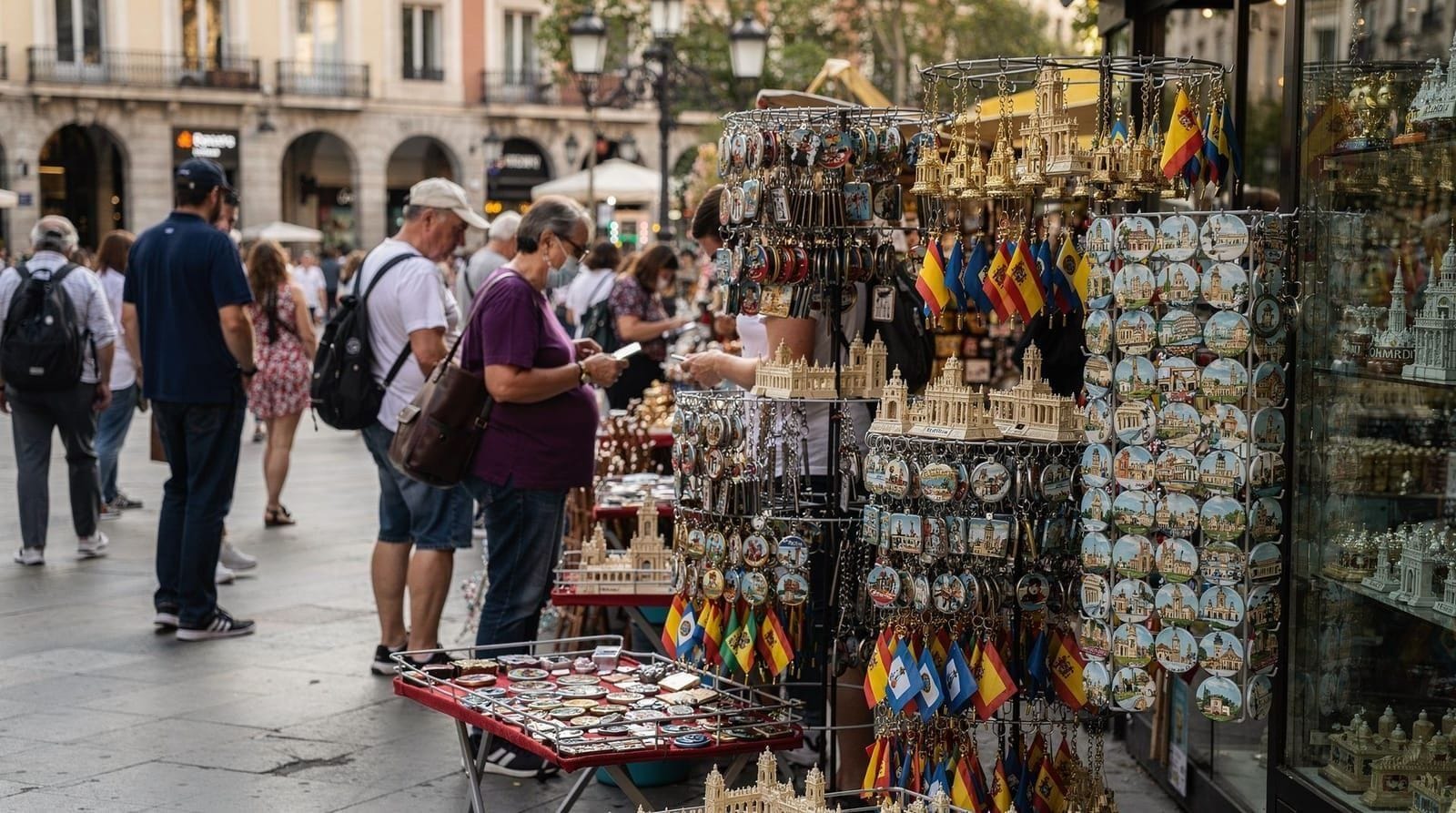
The best Madrid souvenirs are food products: jamón ibérico (vacuum-packed), manchego cheese, saffron, olive oil, and Spanish wine. For non-food: Loewe leather goods (Spanish brand, best bought in Madrid), Toledo metalwork (genuine craft from nearby Toledo), and vintage prints or maps from El Rastro. Avoid mass-produced ceramic bulls, plastic flamenco dolls, and branded merchandise from Plaza Mayor shops — these are made in China and sold at inflated tourist prices.
The honest souvenir situation in Madrid
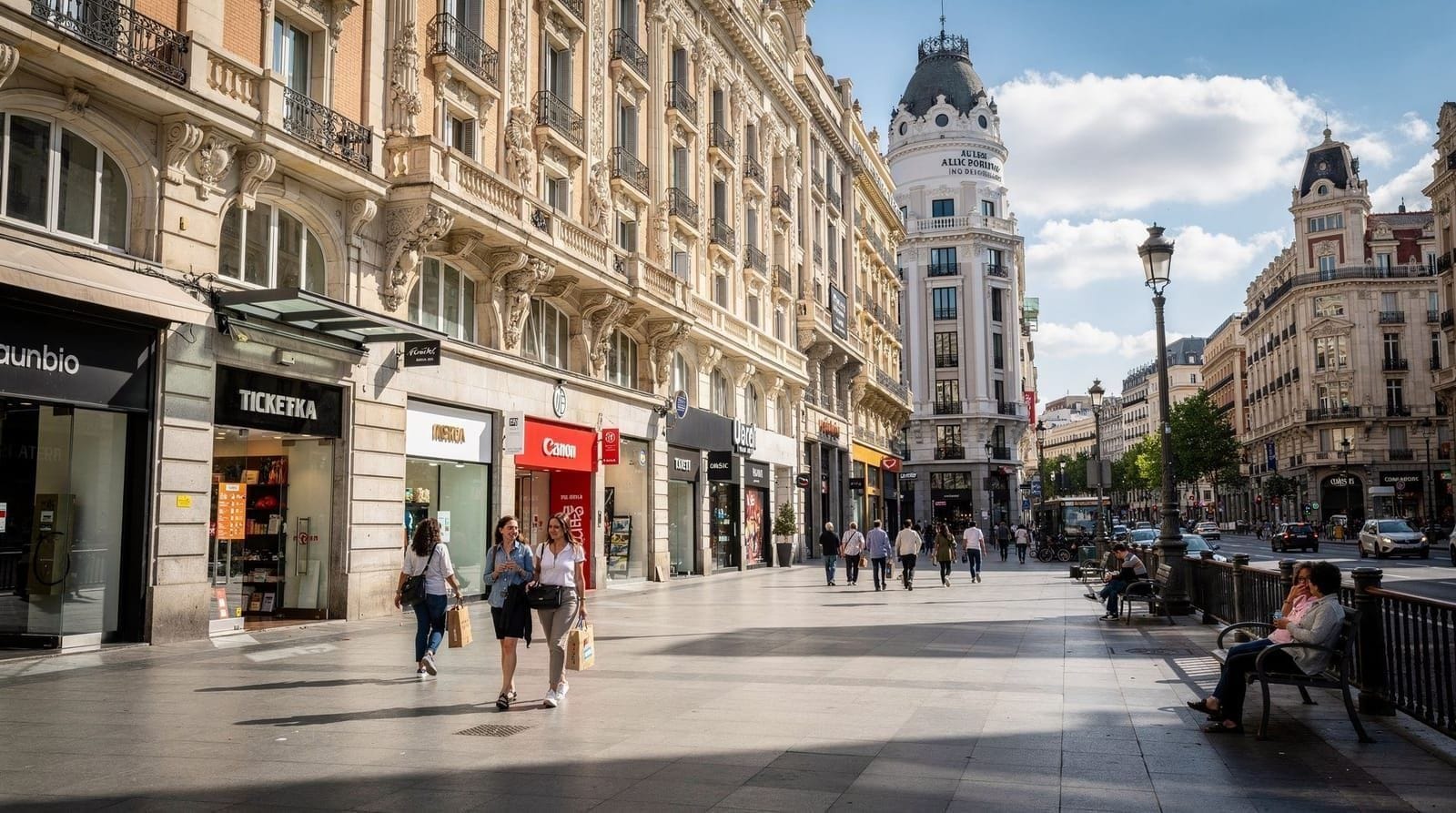
Most of what is sold in the souvenir shops around Puerta del Sol, Plaza Mayor, and the Gran Vía is manufactured in China and Portugal, assembled into “traditional” packaging, and sold at prices that reflect the tourist footfall rather than any intrinsic value. The ceramic bulls, plastic flamenco dancers, and “hand-painted” tiles that dominate the tourist merchandise sector have no meaningful connection to Madrid or Spain beyond their labelling.
This guide exists to help you avoid this and find things worth buying.
| Where | Mercado de la Paz, El Rastro, Salamanca |
| Cost | From €2 (paprika tin) to €150+ (Loewe leather goods) |
| Time needed | An hour for food shopping; a half-day if combining with El Rastro or Salamanca |
| Getting there | Central; most sources are within walking distance of Sol or a short metro ride |
| Best time | Sunday morning for El Rastro; weekday mornings for market food shopping |
Food and drink: the best category
Spain produces world-class food products that are often significantly cheaper in Spain than internationally. These are genuinely the best Madrid souvenirs for most visitors.
Jamón ibérico
The finest cured meat in the world — and a product genuinely worth buying in Spain.
What to buy: Jamón ibérico de bellota (acorn-fed, the top category). Vacuum-packed portions of 100–200g from a quality counter. Slices from a fresh leg, vacuum-packed by the market stallholder, are ideal.
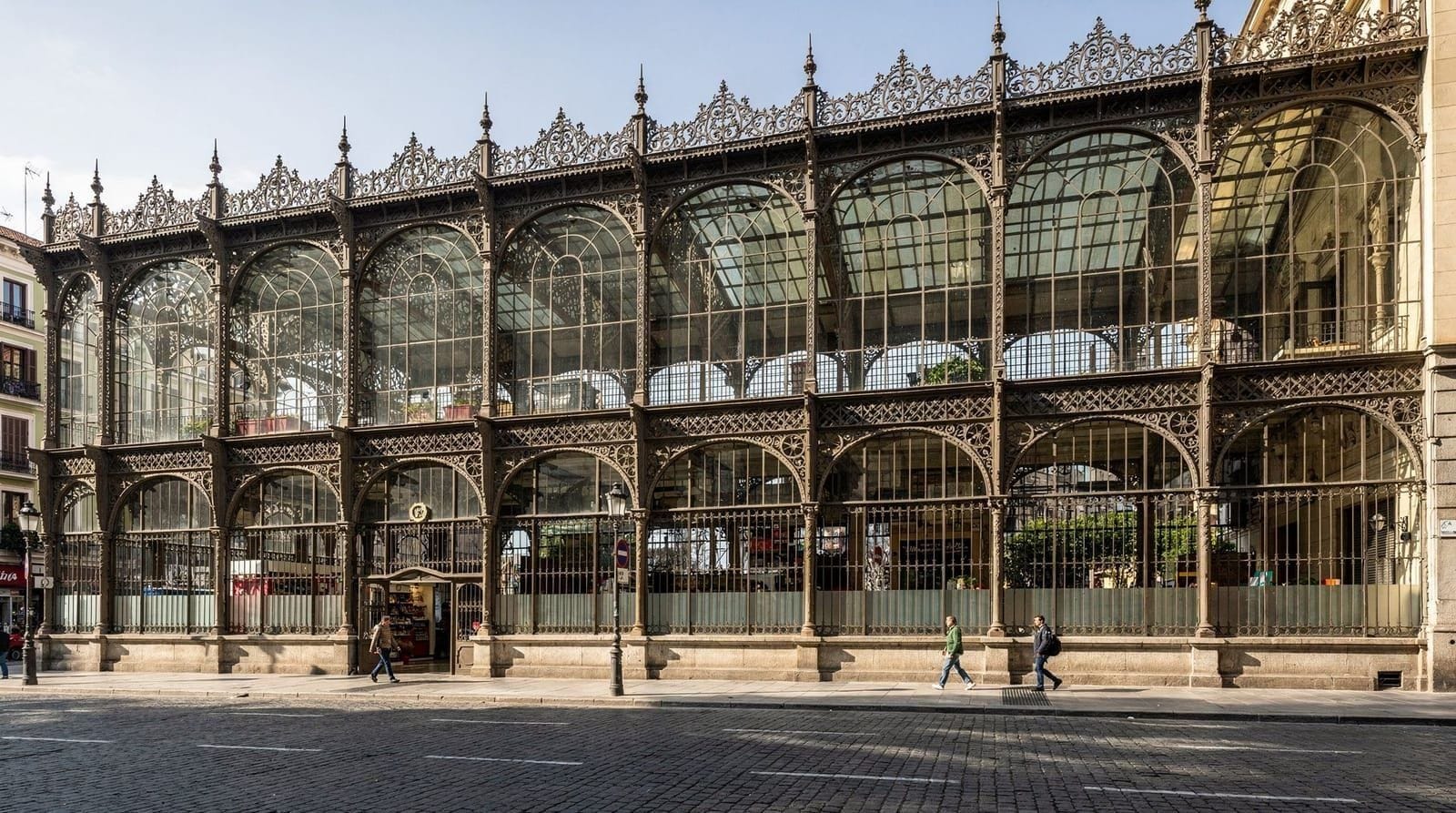
Where to buy: Mercado de la Paz (Salamanca, best quality), Mercado de San Miguel (convenient but expensive), specialist shops on Calle de Ponzano (Chamberí neighbourhood). Major supermarkets (Mercadona, El Corte Inglés food hall) have acceptable vacuum-packed options at lower prices.
What to pay: Quality jamón ibérico de bellota runs €10–20 per 100g. Anything significantly cheaper is a lower category.
Travel: Most countries allow cured meat imports from EU countries in sealed vacuum packaging. Check your destination’s customs rules before buying.
Manchego cheese
Spain’s most internationally recognised cheese — a sheep’s-milk cheese from La Mancha in various ages (fresco, semicurado, curado, viejo). Buy a wedge from a market cheese counter rather than pre-packaged.
What to buy: Curado (6 months, firm and nutty) or viejo (12+ months, more intense) for travel. Fresco is too soft for transport.
Accompaniment: Buy membrillo (quince paste) in a block or small jar from the same stall — the combination of manchego and membrillo is one of Spain’s definitive flavour pairings.
Spanish olive oil
Spain produces approximately 50% of the world’s olive oil — including some of its finest. The supermarket own-brand olive oil (Mercadona or Día label) is genuinely excellent at €4–8 for a litre. For gifts, Oleoestepa, Castillo de Canena, or Melgarejo brands in decorative tins are available at El Corte Inglés and specialist food shops.
Practical note: Liquids over 100ml are prohibited in hand luggage. Buy olive oil only if you are checking luggage, or buy at the duty-free after security.
Pimentón de la Vera (smoked paprika)
The smoked paprika used in chorizo, patatas bravas, and much of Spanish cooking. Available in tins at any supermarket or market stall. The de la Vera designation (from Extremadura) indicates the finest smoked variety. Buy both dulce (sweet) and picante (spicy) versions. A tin of 75g costs €2–5.
Why it’s a good gift: Unavailable in this quality in most international supermarkets; an inexpensive and lightweight purchase; and it genuinely transforms cooking at home.
Spanish saffron
La Mancha saffron (azafrán de La Mancha, with the DOP designation) is the reference quality worldwide. Supermarket own-brand saffron in Spain is higher quality than most imported saffron sold internationally. Specialist food shops have premium options.
What to buy: Small glass or tin containers (0.5g–1g) — saffron goes a long way. €8–15 for a quality container.
Wine
Spain produces excellent wine at prices well below international market rates. Key regions accessible in Madrid shops:
- Ribera del Duero: Spain’s most prestigious red wine region (Vega Sicilia, Pingus, Pesquera). Mid-range bottles €8–20.
- Rioja: International reference for Spanish wine. Gran Reserva bottles €15–40.
- Priorat: Catalonia’s mineral, intense reds. €15–30.
- Rueda: Fresh white wines from Verdejo grape. €6–12.
Where to buy: A good wine shop (vinoteca) is the place for a knowledgeable selection and staff. El Corte Inglés food hall has good coverage at accessible prices. The Salamanca luxury shopping guide covers the district’s shopping in context.
Non-food souvenirs worth buying
Toledo metalwork
The city of Toledo (33 minutes by AVE from Atocha) has a 2,000-year tradition of blade and metalwork production. Damasquinado (gold and silver inlay on dark steel — a technique introduced by Moorish craftsmen) produces genuinely beautiful decorative objects: jewellery boxes, picture frames, small ornamental pieces. It is not cheap, and distinguishing authentic handmade damasquinado from factory production requires attention — ask about the production method and look for hand-finished irregularities.
Toledo is worth visiting as a day trip regardless (the Toledo from Madrid guide covers this). Buying metalwork there, from established workshops in the old town, is more meaningful and often cheaper than buying Toledo products in Madrid souvenir shops.
Loewe leather goods
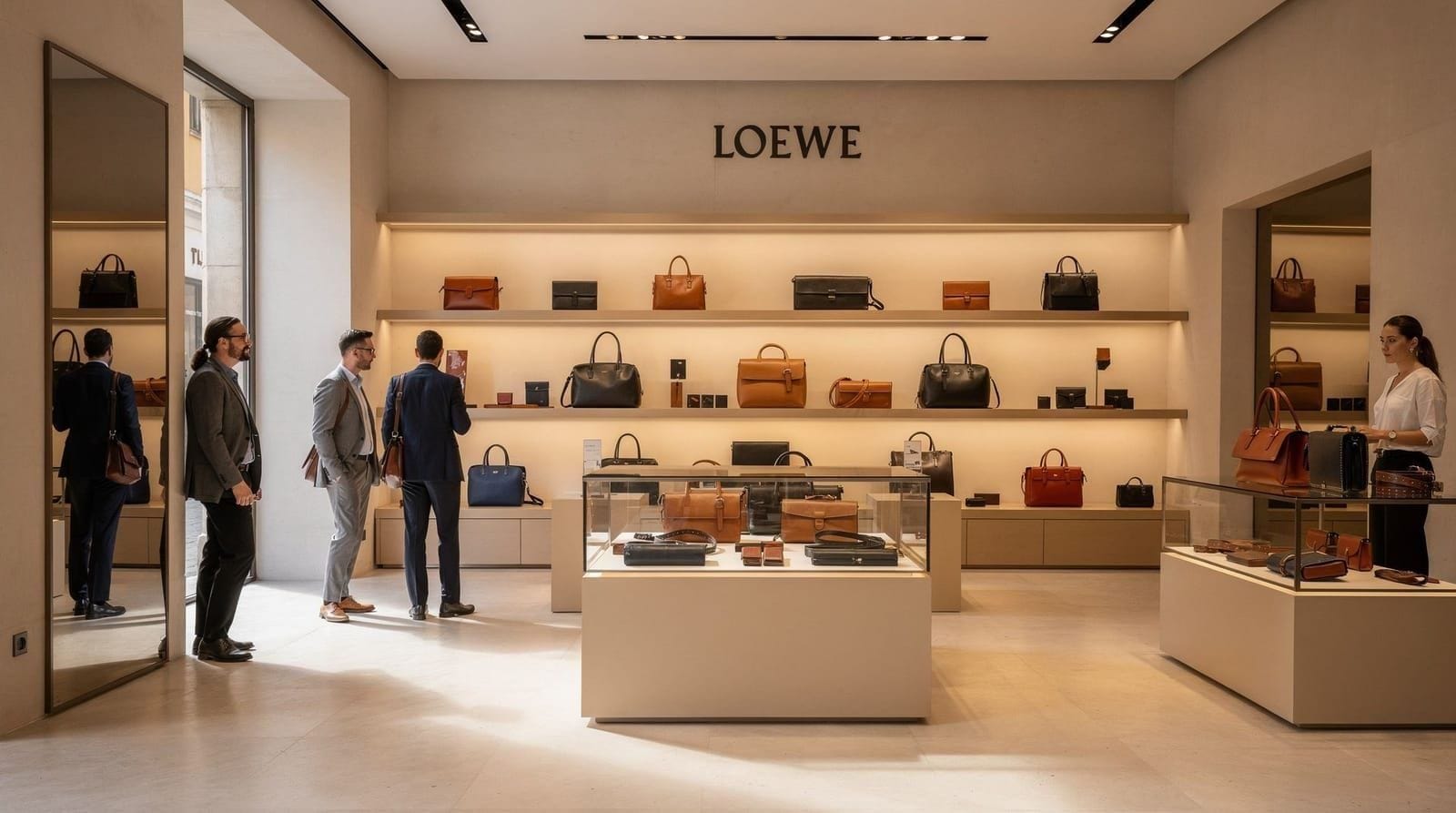
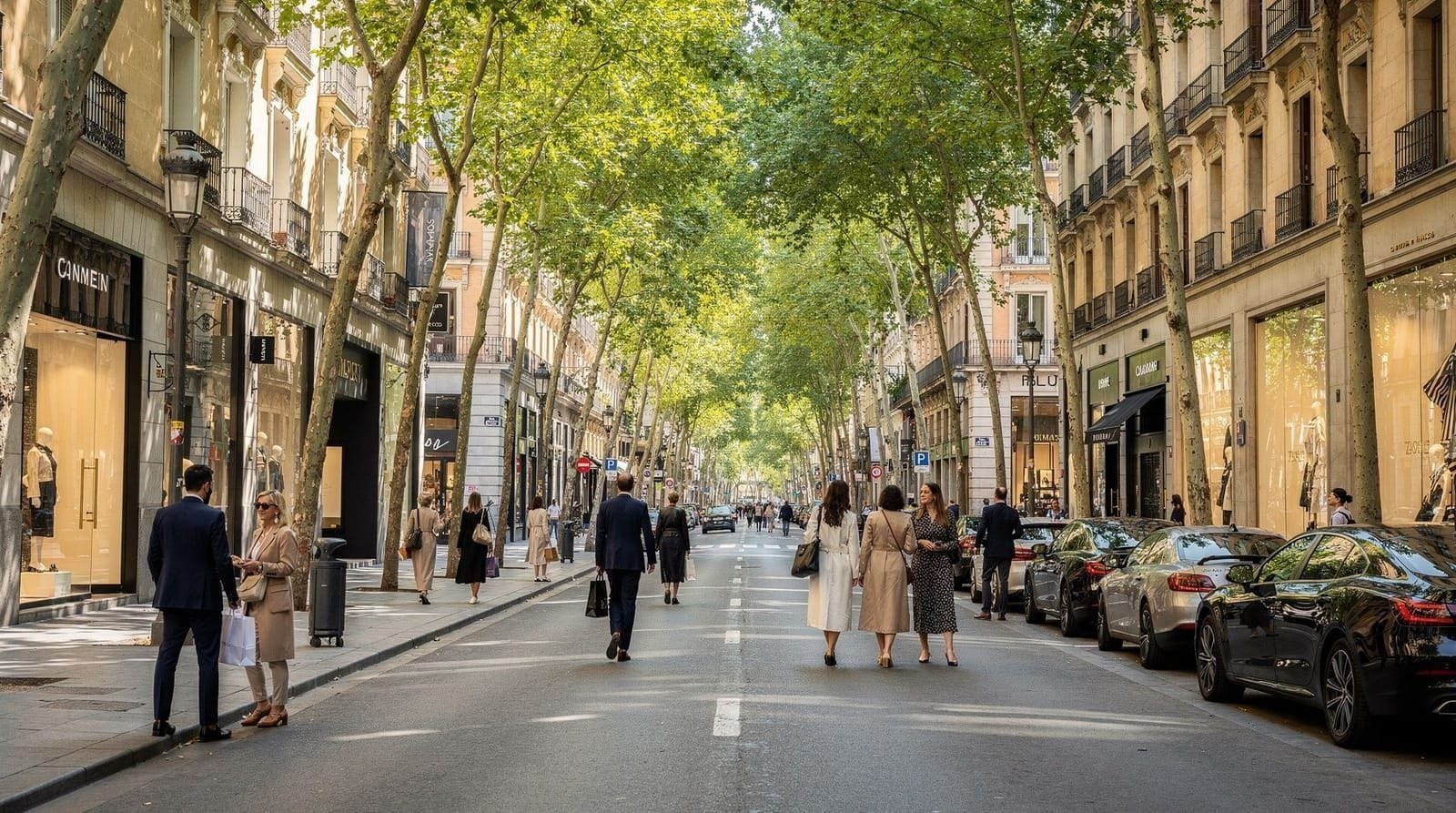
The Spanish luxury leather house has been headquartered in Madrid since 1846. Buying a Loewe wallet, card holder, key ring, or bag in Madrid is the correct purchase — Spanish brand, Spanish manufacture, full selection at the flagship (Calle de Serrano 34), and a provenance that cannot be replicated by buying the same item abroad.
Entry-level Loewe purchases: card holders (€80–150), small leather accessories (€50–100). The full range is detailed in the Salamanca luxury shopping guide.
Vintage prints and photographs from El Rastro
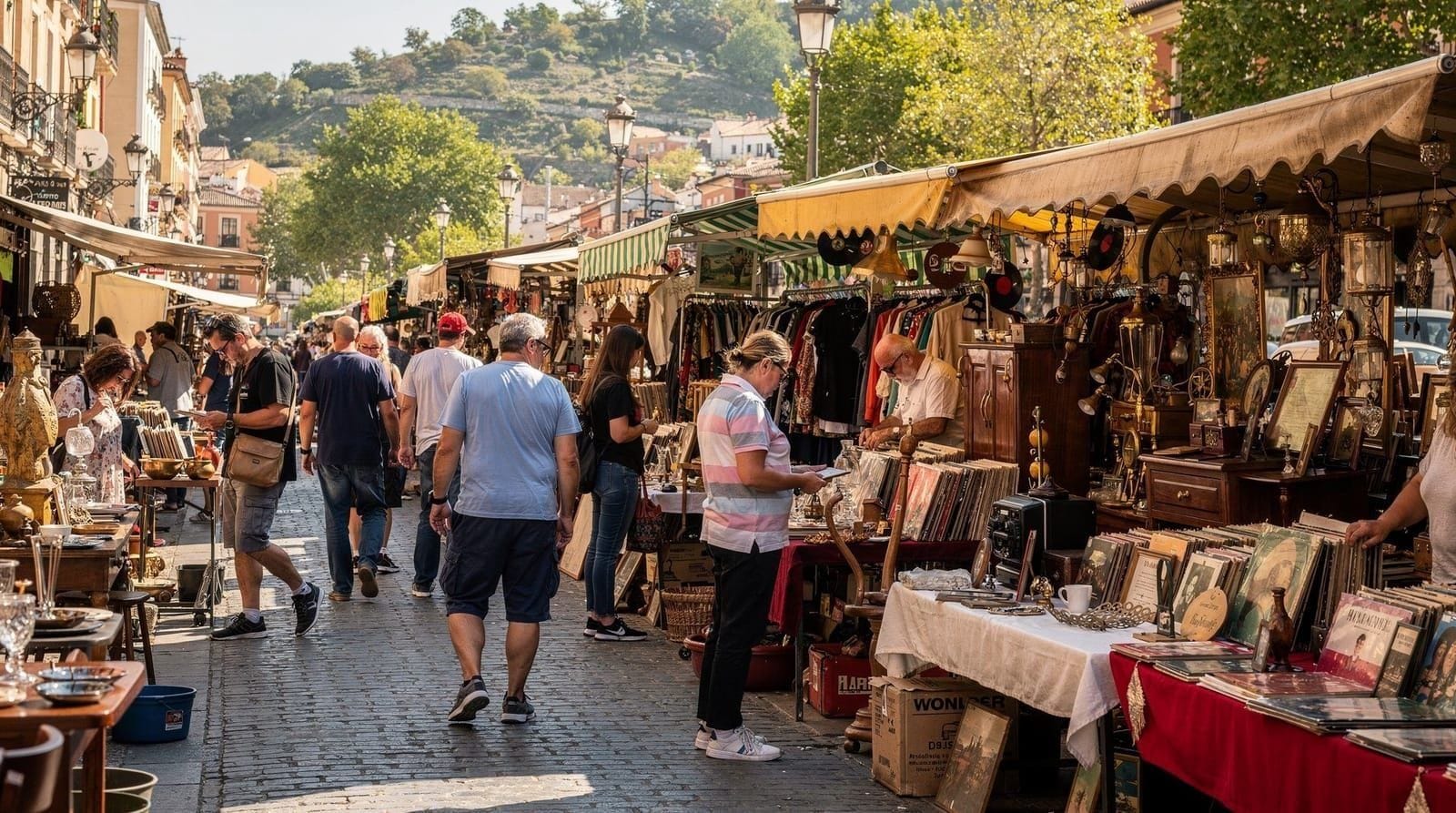
Old photographs of Madrid (19th and early 20th century), vintage posters, and antique maps are available from the print and book stalls at El Rastro (Sunday market, La Latina). These are more interesting, more personal, and in many cases more affordable than anything in a souvenir shop. A good vintage photograph of the Gran Vía under construction or of the old Retiro park costs €5–15. The El Rastro guide covers how to find the print stalls.
Spanish ceramics (authentic)
Talavera de la Reina (a town 130km from Madrid) produces genuinely traditional Spanish pottery — blue-and-white tin-glazed earthenware with patterns that have not significantly changed since the 16th century. Authentic Talavera is available at good quality from specialist shops in Madrid.
How to identify genuine Talavera: Look for the Talavera de la Reina DOP certification on the piece or its packaging. Anything described as “Talavera-style” or without certification is likely a mass-produced imitation. Prices for authentic pieces: €15–60 for a medium bowl or plate; more for larger pieces.
Where to buy in Madrid: specialist craft shops in the centre; look for the Talavera de la Reina DOP certification before paying.
What to skip (and why)
Ceramic bulls: Manufactured in Portugal and China, sold in tourist shops throughout Spain at inflated prices. No connection to Madrid or Spanish craft traditions.
Flamenco dolls and castanets: Mass-produced, plastic, and usually not made in Spain. Flamenco is Andalusian, not Madrileño — buying flamenco merchandise in Madrid is like buying kilts in London.
Real Madrid and Atlético merchandise from tourist shops: If you want official club merchandise, buy it from the official stores (Real Madrid Store at the Bernabéu, Atlético shop at the Metropolitano) or the club’s official online shops. Tourist-area merchandise is frequently counterfeit.
“Artisan” food products near Plaza Mayor: The decorative olive oil tins and jamón packaging near Plaza Mayor’s tourist shops are marked up significantly compared to the same products at a supermarket or proper market. The products inside are not meaningfully higher quality.
Budget guide for souvenirs
| Item | Where | What to pay |
|---|---|---|
| Jamón ibérico (100g, good) | Mercado de la Paz | €12–18 |
| Manchego curado (wedge) | Any market | €6–12 |
| Pimentón de la Vera tin | Supermarket | €2–4 |
| Spanish saffron (0.5g) | Supermarket/market | €8–15 |
| Rioja Gran Reserva bottle | Wine shop / El Corte Inglés | €15–35 |
| Vintage El Rastro print | El Rastro (Sunday) | €5–15 |
| Loewe card holder | Serrano 34 | €80–150 |
| Authentic Talavera piece | Craft shop | €15–60 |
Packing souvenir purchases
Fragile ceramics: Wrap in clothing inside checked luggage. Airport ceramic wrap services are available in international departure halls but add cost.
Liquids (wine, olive oil): Must be checked luggage or airport duty-free (for amounts over 100ml). Duty-free at Madrid Barajas T4 carries decent Spanish wines.
Jamón and cheese: Generally permitted in checked luggage for most destinations. In vacuum-sealed packaging. Check the customs rules of your destination country before buying.
For the full overview of where to shop in Madrid, see the Gran Vía shopping guide, the Salamanca luxury shopping guide, the mercados guide, and the El Rastro flea market guide.
Craft and artisan souvenirs: where to find them
The tourist shops near Sol and Plaza Mayor sell mass-produced merchandise. For genuinely handmade Spanish craft, you need to go slightly off-script.
El Rastro (Sunday market, La Latina): The antique and collectible sections (Calle del Carnero, Calle de Fray Ceferino González) are the right source for vintage prints and photographs. These require early arrival (09:00–10:30) and a willingness to look. For the context, see the El Rastro guide.
Toledo old town (day trip): If you take the 33-minute AVE to Toledo, the craft shops in the Casco Histórico sell the best damasquinado metalwork at source prices. Better selection and more honest pricing than buying Toledo metalwork in Madrid souvenir shops. The Toledo from Madrid guide covers how to combine shopping with sightseeing on the day trip.
Corral de la Morería shop (flamenco venue): For high-quality flamenco-related items (real fans, quality mantillas, professional dance accessories) rather than tourist versions — specialist shops near the flamenco venues in the Austrias area and the associated gift shops are more reliable than generic souvenir stores.
Pharmacy and beauty: the overlooked Spanish buy
Spanish pharmacies (farmacias) sell products not easily available internationally at significantly lower prices than Spanish equivalents in export markets.
ISDIN sun protection: Spain’s leading dermatological brand. Widely used by Spanish dermatologists and available in every pharmacy. ISDIN Eryfotona photoprotective creams are considered world-class for sun protection and skin repair. Available in Spain at €25–40 for products that cost €60+ internationally.
Neutrogena and La Roche-Posay: Same formulations as international versions, but Spanish pharmacy pricing is typically 20–30% lower than Northern European equivalent.
Ordesa baby products and Laboratorios Cinfa: Spanish pharmaceutical brands with good reputations for tolerability. Less relevant for adult visitors but excellent for parents of young children.
Pharmacies are identified by a green cross sign. They are common throughout the historic centre and open on a rotating schedule — a list of the nearest 24-hour pharmacy is displayed in the window of any closed pharmacy.
Books and stationery: the literary city
Given Madrid’s literary heritage (Cervantes, Lope de Vega, Quevedo — all lived within 500 metres of the Barrio de las Letras), book-related souvenirs have particular resonance.
Don Quijote in Spanish: A well-produced Spanish edition of Don Quijote — the 400th-anniversary Alfaguara edition is particularly good — costs €12–20 at any FNAC or Casa del Libro. The Quijote in Spanish is a meaningful object to bring back from the city where Cervantes died.
Leather-bound notebooks: Spanish stationers (papelerías) produce leather notebooks that outlast most European alternatives. Moleskine is available everywhere; Spanish artisan equivalents from specialist stationers near the Universidad Complutense area are more interesting and typically cheaper.
Madrid-themed print posters: Vintage tourism posters reproduced from the 1930s–1960s Spanish National Tourist Office collection are available at good quality from the FNAC and some print shops. They are not original but they are attractive reproductions of genuinely interesting graphic design.
Spirits and tobacco: the honest picture
Spanish brandy: Brandy de Jerez (Spanish sherry-region brandy) is one of Spain’s underappreciated exports. Torres 20, Lepanto, and Cardenal Mendoza are quality producers available at any supermarket or El Corte Inglés at €15–30. These are not cognac; the flavour is richer and more raisiny. A good buy if you drink brandy.
Gin: Spain is one of the world’s largest gin markets and producers. Gin Mare (Mediterranean herbs, made in Barcelona) is the most internationally known Spanish gin. Nordes (Atlantic Galician gin) is interesting. Available at El Corte Inglés and specialist spirits shops.
Tobacco (if relevant): Spain taxes tobacco lower than Northern Europe; cigarettes and cigars are cheaper here. Cuban cigars are available legally (and correctly aged) in specialist tabacaleras near Sol and in the Salamanca area.
Travel note: Most countries impose duty-free allowances on alcohol and tobacco brought in from outside the EU; check your destination’s limits before buying larger quantities, since exceeding them at customs can mean paying duty on the excess or having it confiscated.
Gift ideas by recipient
Matching a souvenir to the person you’re buying for is often more useful than a generic list:
| For | Best pick | Why |
|---|---|---|
| A serious home cook | Pimentón de la Vera + saffron | Genuinely improves their cooking; inexpensive and lightweight |
| A wine enthusiast | A Ribera del Duero or Priorat bottle from a good wine shop | Hard to find at this quality-to-price ratio outside Spain |
| A design-conscious friend | A Loewe leather accessory or a vintage El Rastro print | Distinctive, Spanish-specific, not available generically elsewhere |
| Children | A small Talavera piece or a Don Quijote picture book | Colourful, genuinely Spanish, low cost |
| Yourself | A market jamón portion, eaten before you leave | The best souvenir sometimes isn’t one you bring home at all |
The duty-free calculation
Spain’s international airport (Madrid Barajas T4) has duty-free shops after security. For most purchases, the in-city prices are lower than the airport duty-free. Exceptions:
- Perfume and cosmetics: Airport duty-free is competitive for international brands. Worth comparing.
- Alcohol: Duty-free can be marginally cheaper than city prices; the selection is more limited.
- Spanish products specifically: Supermarket and market prices for Spanish food products (jamón, olive oil) beat airport retail significantly.
General rule: buy Spanish products (food, Loewe, Spanish-brand fashion) in the city. International products (international perfume, Scotch whisky) at the airport if convenient.
The VAT reclaim at the airport (for non-EU residents) adds a further argument for buying luxury goods in the city: see the Salamanca luxury shopping guide for the full VAT reclaim process.
Building a souvenir shopping route into your trip
Rather than treating souvenir shopping as a last-minute errand, it fits naturally into stops you’re already making. A Sunday morning at El Rastro covers vintage prints and antiques before lunch in La Latina. A Salamanca shopping half-day (see the Salamanca district guide) covers Loewe and other Spanish luxury alongside Mercado de la Paz’s jamón counter. A weekday visit to any of the neighbourhood markets covers the food essentials without a special trip. Budget travellers should also see Madrid on a budget for how souvenir spending fits into an overall trip budget — food souvenirs in particular deliver outsized value relative to their cost.
Pairing souvenir stops with sightseeing
The easiest way to avoid a rushed last-day shopping dash is to match each shopping area with the sights next to it. The Salamanca district, home to Loewe and Mercado de la Paz, sits close to the Retiro, so a morning of browsing can be followed by a slow walk through the Retiro Park guide route. The tourist strip around Sol is best treated as a place to pass through: the Puerta del Sol guide and the Plaza Mayor guide explain what is worth seeing there, and the shops can simply be ignored.
Art lovers can build the day around the museums and shop afterwards. If you plan to see the Golden Triangle, the Golden Triangle art walk shows how the three big galleries fit together, and the Prado Museum guide helps you choose what to see first. Queues are the main thing that eats into shopping time, so many visitors book a guided Prado visit with priority entry and keep the rest of the morning free. The same logic applies to the Reina Sofía guide: a Reina Sofía ticket that lets you skip the line leaves more of the afternoon for the market stalls.
History fans will find that the old centre combines well with souvenir hunting. The Royal Palace guide covers the visit, and a guided Royal Palace tour with skip-the-line entry is a practical way to fit it in before heading to the craft shops near Sol. For wider context on how the city got its character, the Habsburg and Bourbon history guide is a good companion.
If you are travelling with a limited budget or a short stay, the one day in Madrid itinerary and the free things to do guide help you decide how much time to give shopping at all. For food-focused gifts, the eat like a local guide and the best tapas bars guide point to places where you can taste before you buy, and the Madrid for foodies itinerary strings those stops into a full plan.
Frequently asked questions about Madrid souvenirs
Can I bring jamón ibérico home in checked luggage?
Generally yes for vacuum-sealed, commercially packaged jamón, but rules vary significantly by destination country — some countries outside the EU restrict or prohibit cured meat imports entirely. Check your destination’s customs website before buying, since a market stallholder can vacuum-pack a portion but cannot guarantee it clears your country’s border.
What’s the single best souvenir if I only have time to buy one thing?
For most visitors, a good jamón ibérico portion or a bottle of Rioja Gran Reserva offers the best combination of authenticity, value, and packability. Both are genuinely Spanish, meaningfully better or cheaper than what’s available at home, and don’t require judging craft authenticity the way ceramics or metalwork do.