Madrid on a budget: how to visit well for less in 2026
Madrid: Food Tour Tapas Spanish Wine
How much does a budget day in Madrid cost in 2026?
A genuinely enjoyable budget day in Madrid costs €35–€55 per person: free museum entry (Prado/Reina Sofía evening hours), menú del día lunch €12–€15, coffee €1.60, tapas and a glass of wine €4–€6, Metro rides on a €7.30 Multi 10 card. Madrid is 20–25% cheaper than Paris or London.
The short version: Madrid is genuinely affordable for a European capital. Free museum evening hours, cheap excellent coffee, €12–€15 set lunches, and enormous free parks mean you can have a world-class cultural experience on €40–€60/day once accommodation is sorted.
| Backpacker budget | around €45–€60/day, accommodation included |
| Mid-range budget | around €100–€140/day |
| Cheapest lunch | menú del día from around €11–€13 (Lavapiés/La Latina) |
| Free culture | Prado, Reina Sofía and Thyssen all have free hours |
| Best-value transport | Multi 10 card at €7.30 for 10 trips (Tourist Travel Pass Zone A: 3 days €23.10) |
Why Madrid rewards budget travellers
Madrid is not a cheap city by Spanish standards — it’s the capital, and accommodation especially reflects that. But compared to Barcelona, Paris, London, or Amsterdam, Madrid offers significantly better value:
- Museum admission is either free (at designated hours) or reasonable (€12–€15 for full access)
- Food quality is high even at budget prices — the menú del día (three-course set lunch) tradition makes eating well affordable
- Public transport is inexpensive and covered by the €7.30 Multi 10 card
- The best parks (Retiro, Madrid Río, Casa de Campo) are completely free
- Coffee culture means you can spend hours in a café for €1.60–€2.50
The backpacker budget is approximately €55–€80 per day. The mid-range independent traveller: €120–€180. Luxury: €250+. These figures include accommodation; without accommodation, Madrid can be extremely affordable.
Free museums and attractions
Madrid’s museum free hours are one of the best deals in European travel. These are permanent schedules (not special events) as of 2026:
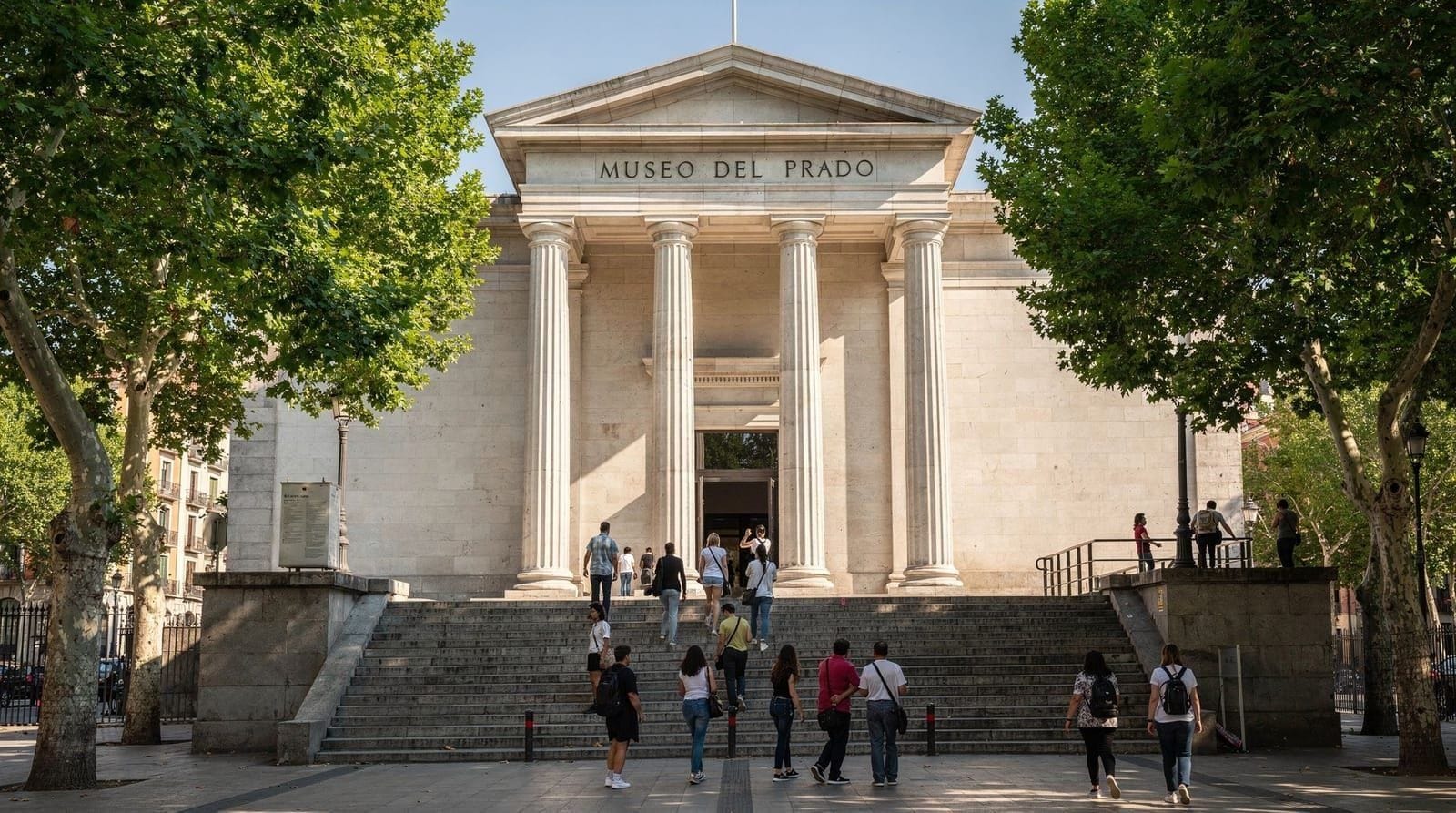
Museo del Prado (Prado Museum)
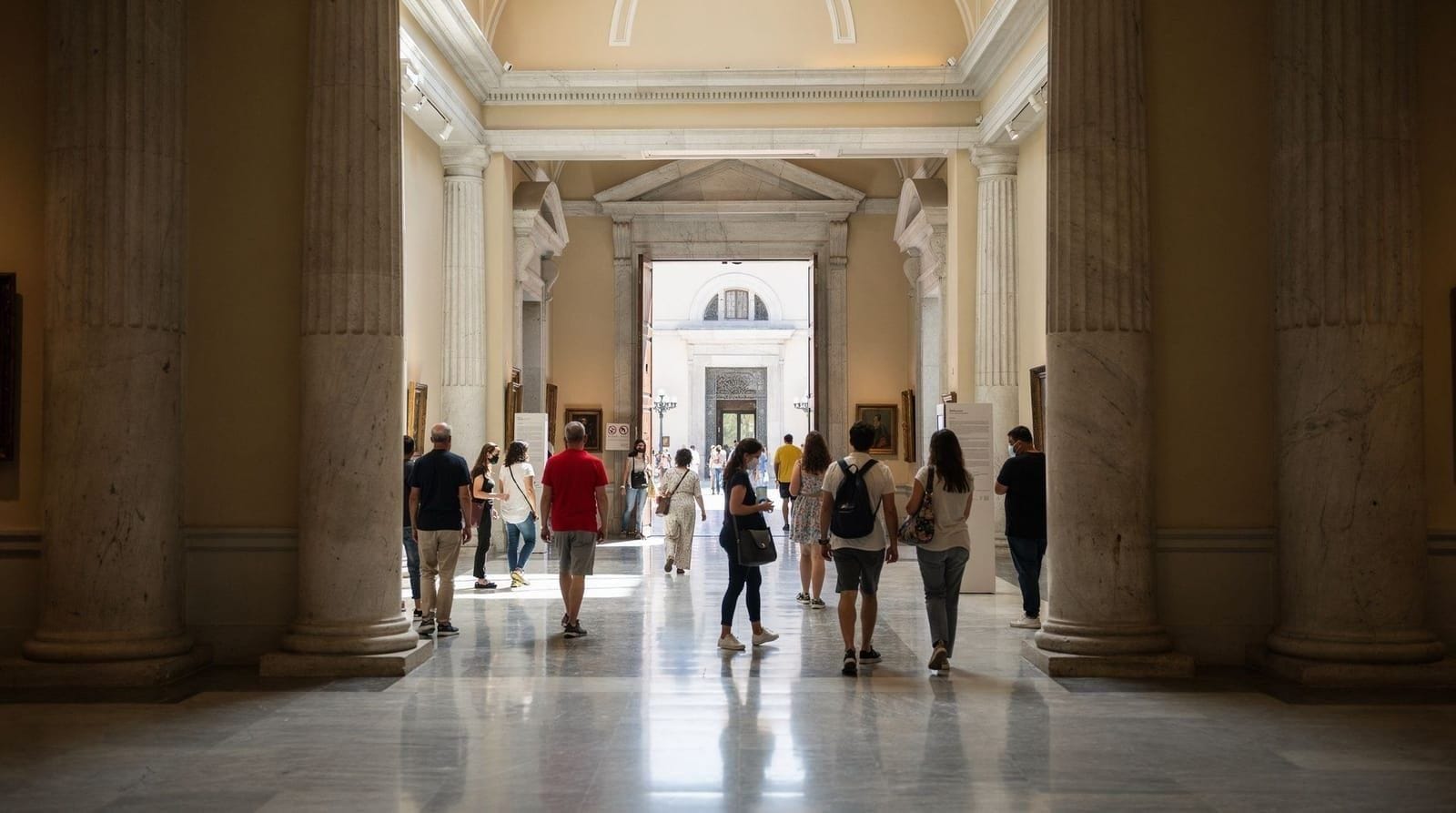
- Free: Monday–Saturday 18:00–20:00, Sunday and public holidays 17:00–19:00
- Queue reality: lines form by 17:30 (weekdays) and 16:30 (Sundays/holidays). Arrive at least 40 minutes before free entry opens. Waits of 20–45 minutes are normal in peak season.
- What to see in 2 free hours: The Velázquez rooms (Las Meninas, plus the court portraits), Goya’s Black Paintings (Sala 66–67), Bosch’s Garden of Earthly Delights (Sala 56A). These three sections alone justify the visit.
- Full guide: Prado museum guide
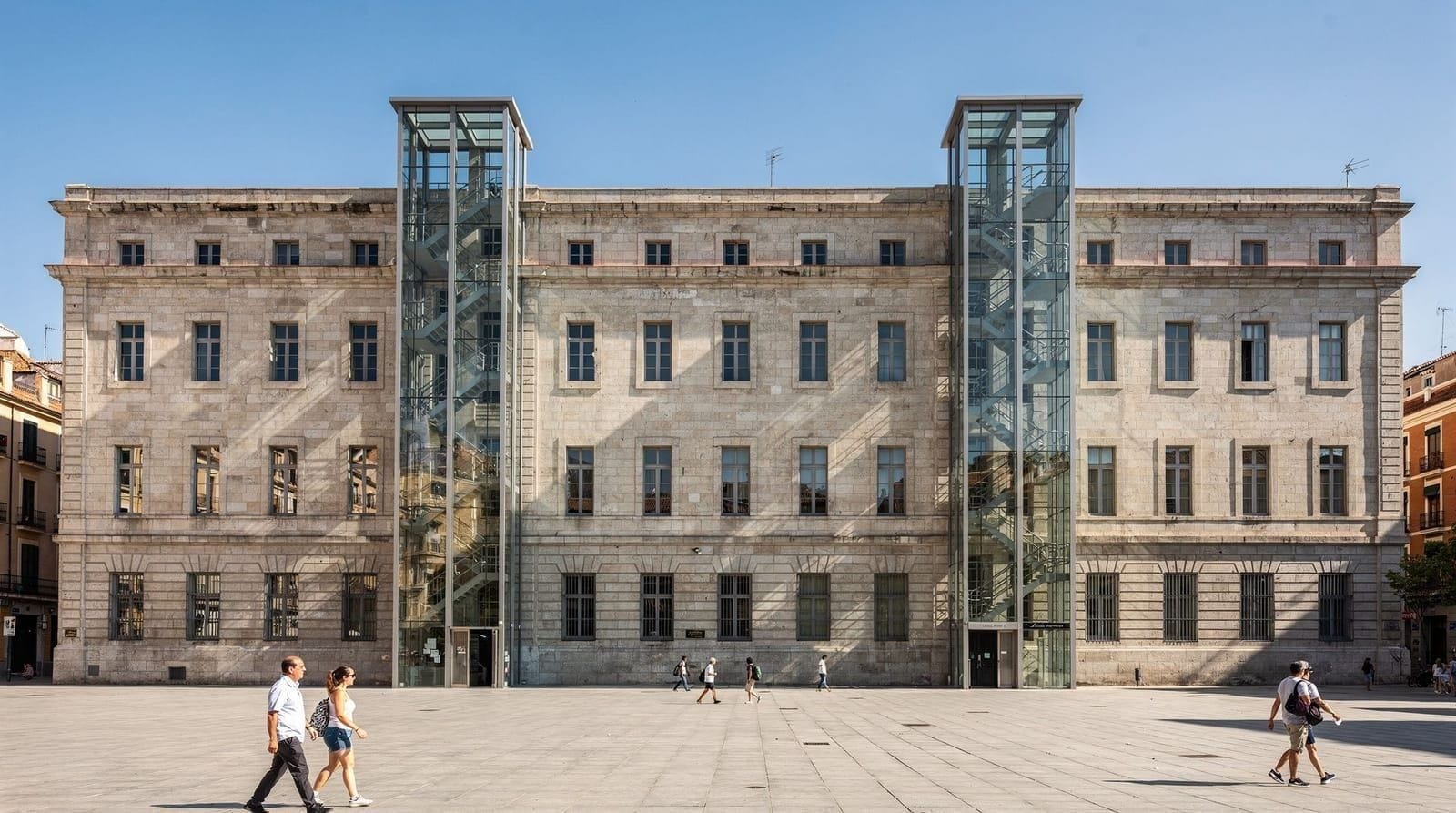
Museo Reina Sofía
- Free: Monday, Wednesday–Saturday 19:00–21:00, Sunday 12:30–14:30
- Also free all day on: 18 April, 18 May, 22 May, 12 October, 6 December
- Closed Tuesdays
- The Sunday free window is only two hours (12:30–14:30), so arrive early to queue; the museum itself opens at 10:00 on Sundays but is paid until 12:30
- Full guide: Reina Sofía museum guide
Museo Thyssen-Bornemisza
- Free: Mondays (permanent collection and current exhibitions)
- Monday free hours: 12:00–16:00
- A Monday combining Thyssen (free) + Prado free evening (18:00–20:00) is an extraordinary art day for zero museum cost
Other free attractions:
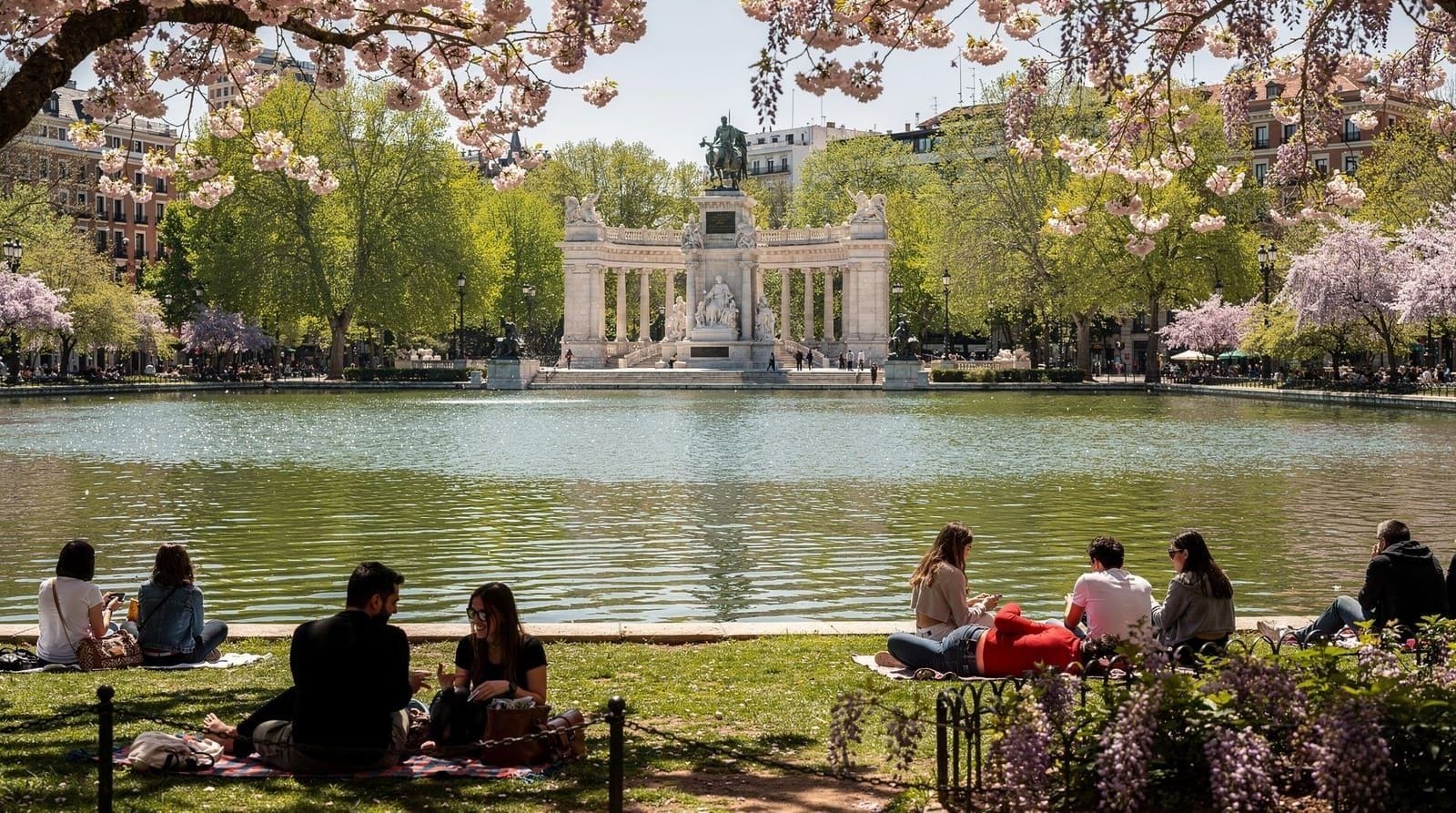
- Retiro Park — Madrid’s central park, 125 hectares, always free. The Crystal Palace (glass pavilion) inside is closed until 2027. See Retiro park guide.
- Templo de Debod — Egyptian temple donated by Egypt in 1968, on a hill with great views. Free entry; closes seasonally.
- El Rastro flea market — Madrid’s enormous Sunday flea market in La Latina. Free to browse, arrive before 11:00. See El Rastro guide.
- Retiro’s Palacio de Cristal — Closed until 2027.
- Madrid Río — The 6 km riverside park along the Manzanares, with pavilions, playgrounds, and views. Completely free.
- Casa de Campo — 1,700 hectare forest park west of the city, free to enter.
- Plaza Mayor, Puerta del Sol, Gran Vía — All public spaces; no admission charge.
- Cibeles and Neptuno fountains area — The grand 18th-century boulevard is a free architectural walk.
Free museum strategy: the honest version
The free evening hours are real but have practical constraints:
Prado evening queue: On a busy Saturday in May or October, the free queue can be 45–60 minutes long. Arrive 50 minutes before the free window opens, bring something to read or use the time to have a coffee nearby. The queue moves relatively quickly once the doors open.
Is it worth queueing? For the Prado: yes, unequivocally. The full ticket costs €15. The free experience is identical to the paid experience.
Combination strategy: Buy a full Prado ticket for one morning visit (€15) to see everything without a time limit, and use the free Reina Sofía Sunday window (12:30–14:30) for Guernica. This costs €15 for two world-class museum experiences vs the €27 for both full-price.
See the dedicated free museum hours guide for the complete breakdown including seasonal variations and public holiday schedules.
Food: eating well cheaply
Madrid’s food culture strongly favours the budget traveller:
Menú del día (set lunch): The three-course set menu with bread, a drink (wine, beer, or water), and sometimes a dessert or coffee is the best-value meal in Spain. Prices in 2026:
- Lavapiés / La Latina neighbourhood restaurants: €11–€13
- Chamberí, Malasaña: €12–€15
- Sol / Gran Vía / tourist-heavy areas: €14–€18 (quality drops as price rises in these zones)
- Avoid the “menú del día” signs around Plaza Mayor — some charge €18–€22 for mediocre food
The menú del día is lunch only (typically 13:30–16:00). Dinner lacks this equivalent.
Tapas strategy: In Madrid, ordering a caña (small draft beer) or glass of wine at the right bars comes with a free tapa. This tradition is strongest in La Latina (particularly Cava Baja), Lavapiés, and Chamberí. Bars where you can eat lunch for the price of two drinks:
- Cervecería Cervantes (Barrio Letras) — classic tapas with drinks
- Bar Tomás (Chamberí) — legendary patatas bravas
- La Pepa (La Latina) — good free tapas with house wine
A budget tapas lunch (2–3 drinks, snacks) can cost €8–€12 per person in the right places. If you’d rather have a local guide do the bar-hopping legwork for you once during the trip — worth it for orientation even on a tight budget — a guided evening covers several stops and a fair amount of wine and tapas for a set price, which can actually work out cheaper than a badly chosen night on your own:
Madrid tapas and Spanish wine tasting tourMercado de San Miguel vs. Mercado de Vallehermoso: The Mercado de San Miguel near Plaza Mayor is beautiful but tourist-priced — expect €3–€5 per pintxo. Mercado de Vallehermoso in Chamberí is a working neighbourhood market with fresh produce, cheap lunch bars, and local prices. Budget travellers should visit Vallehermoso.
Coffee: Madrid’s coffee culture rivals any European city. A solo (espresso) or café con leche at a neighbourhood bar: €1.40–€1.80. The same in a hotel or tourist-area café: €3–€4. Stick to bars and neighbourhood establishments. Coffee quality at local cafés is excellent.
Supermarkets: Mercadona and Dia are the main budget supermarkets. Spanish supermarket quality is high — cheese, charcuterie, fruit, and baked goods for self-catering are genuinely good. Mercadona near Sol (various locations on and around Gran Vía) is useful for picnic supplies.
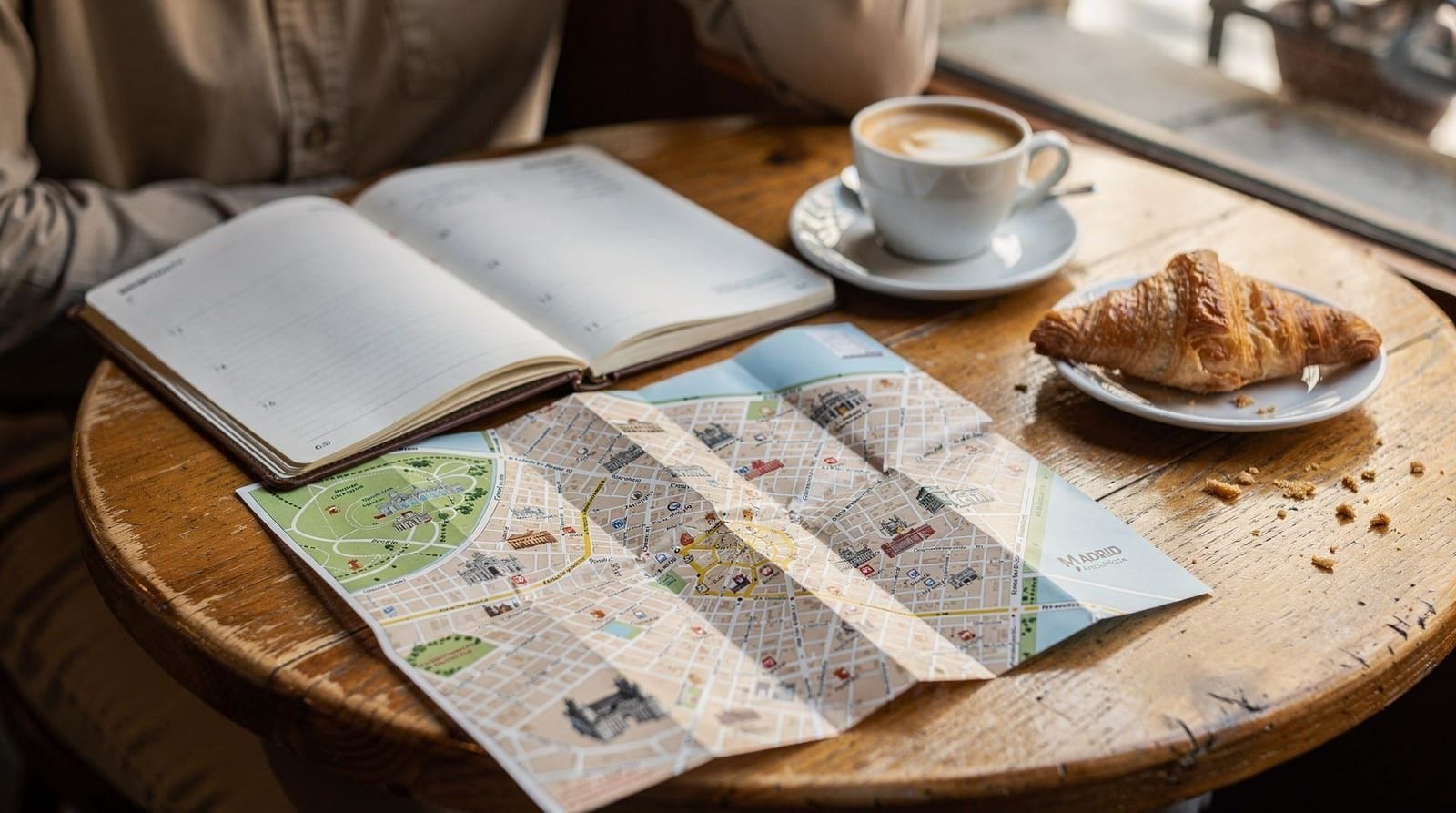
Picnic in the Retiro: One of the great free Madrid pleasures. Buy provisions at a nearby market (La Boquería de Lavapiés or any Mercadona), take them to Retiro Park, and spend a morning or afternoon in the park for virtually nothing.
Transport on a budget
The full analysis is in the Tourist Travel Pass guide. The summary:
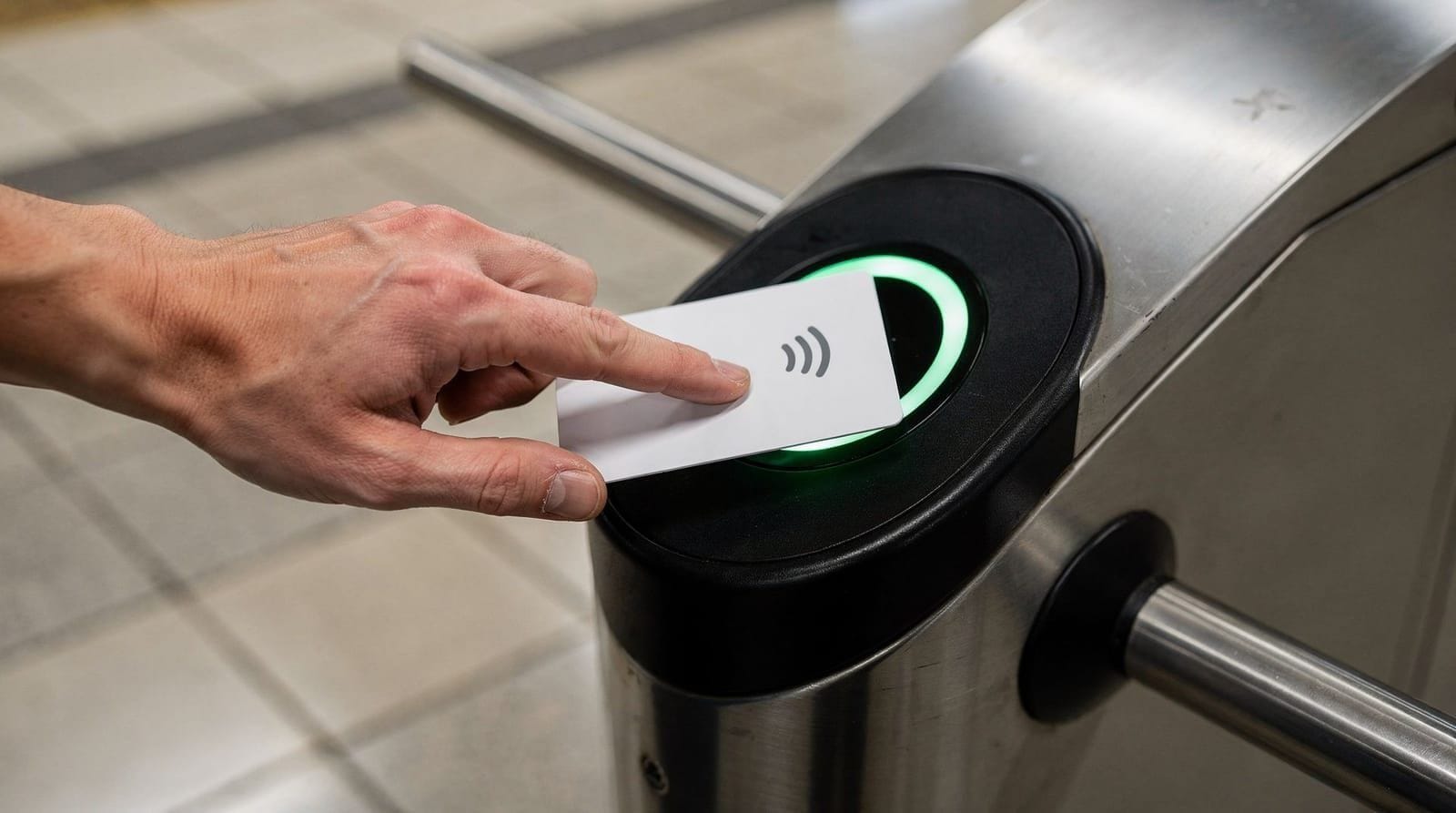
- Multi 10-trip card (Metro, EMT buses): €7.30, about €0.73 a trip — the cheapest option for most visitors (the €3 airport Metro supplement still applies)
- Tourist Travel Pass, Zone A (3 days): €23.10 — worth it only if you ride many times a day; no airport supplement to pay
- Tourist Travel Pass, Zone T (3 days): €35.00 — worth it mainly if you add Cercanías day trips to El Escorial, Aranjuez or Alcalá
- Walking: Central Madrid is compact and beautiful to walk through. Sol to the Prado: 20 minutes. Sol to the Royal Palace: 20 minutes. La Latina to Malasaña: 25 minutes. Heavy metro use is optional in the historic core.
Day trips by train:
- AVE to Toledo: ~€12–€16 each way (Renfe.com)
- AVE to Segovia: fares vary, check Renfe
- Cercanías to El Escorial: fare on Renfe (free with a Zone T Tourist Pass)
- Cercanías to Aranjuez: see Renfe for the current fare (free with a Zone T Tourist Pass)
Book AVE tickets 2–4 weeks ahead for “Promo” fare prices, which can be significantly cheaper than walk-up rates.
Accommodation on a budget
Hostels: Madrid has an excellent hostel scene, particularly in Malasaña and La Latina. Dorm beds start at €18–€30 per night. Good options cluster around Sol, Fuencarral street, and Lavapiés. Private rooms in hostels: €50–€80.
Budget hotels: Two-star hotels in good locations start around €60–€90 for a double room. Avoid the immediate vicinity of Sol on a budget — you pay a location premium. Lavapiés and Chamberí are 15–20 minutes from the main attractions and significantly cheaper.
Self-catering apartments: Airbnb and Booking apartments in Malasaña or Chamberí from ~€60–€80/night for a studio. Self-catering saves significantly on food costs.
Best value neighborhoods for budget stays: Lavapiés (multicultural, cheap, excellent local restaurants, 2 Metro stops from Sol), Chamberí (residential, authentic, 2 Metro stops from Sol), Argüelles (quiet, good transport links).
A realistic budget daily breakdown
Backpacker budget (€45–€60/day):
- Accommodation (hostel dorm): €20–€25
- Breakfast (bakery or supermarket): €3–€5
- Menú del día lunch: €12
- Coffee, afternoon snack: €3–€5
- Dinner (tapas and a drink or two): €10–€15
- Transport (Multi 10 card, about four trips): ~€3/day
- Museum entry (average across free and paid days): €0–€5
- Total: approximately €51–€70
Mid-range budget (€100–€140/day):
- Accommodation (budget hotel or apartment): €50–€70
- Meals (menú del día + sit-down dinner): €30–€40
- Transport: Multi 10 card + Cercanías day trips (or a Zone T Tourist Pass)
- One museum admission: €15
- Incidentals (coffee, ice cream, snacks): €10–€15
- Total: approximately €105–€140
Free and cheap entertainment beyond museums
Madrid’s free culture extends well beyond the major museums:
Free concerts and performances:
- The Círculo de Bellas Artes hosts free or low-cost events in its main courtyard and roof terrace
- Veranos de la Villa (summer arts festival, July–August): free open-air concerts in parks and city squares, including Conde Duque, Jardines de Sabatini, and Retiro. High-quality performances (classical, jazz, flamenco, world music) at zero cost
- San Isidro festival (mid-May): free concerts throughout the city for 5–7 days
- The Teatro Real and Teatro Español regularly offer free open rehearsals — check their websites
Free neighbourhood exploration:
- Malasaña’s street art (Calle Velarde, Plaza del Dos de Mayo area): free outdoor gallery
- Lavapiés street art: a genuinely dense concentration of murals, entirely free to walk
- Chueca’s rainbow streetscape: particularly vibrant around Orgullo/Pride (late June)
Free views:
- Templo de Debod: Egyptian temple at sunset with views over Casa de Campo — free
- Faro de Moncloa: The communications tower observation deck has a fee (€4), but the circular walk of the nearby Parque del Oeste with views toward the sierra is free
- El Mirador del Faro (near Moncloa): free hilltop views
- The roof of Círculo de Bellas Artes: small entrance fee (~€6) for the rooftop terrace with panoramic city views — not strictly free but excellent value
El Rastro Sunday market: Europe’s largest Sunday flea market in La Latina. Free to browse, though you’ll be tempted to buy. Over 3,500 stalls selling antiques, vintage clothing, books, art, and general second-hand goods. Best visited 09:00–12:00 before it gets very crowded. See El Rastro guide.
Budget drinking strategy
Madrid has some of the best-value bar culture in Europe:
Vermut hour (vermut or vermouth): The Madrid Sunday tradition of mid-morning vermouth is an institution. From about 12:00–14:30 on Sundays, neighbourhood bars serve vermouth (vermut) with free olives and snacks for €2.50–€3. The best areas: La Latina (Cava Baja, Calle Almendro), Chamberí (Alonso Martínez area), Lavapiés.
La Hora del Vermut on weekdays: Many bars offer the same ritual on Thursday and Friday lunchtimes before dinner. The tapas associated with it are often included in the drink price.
Wine: Spain produces excellent wine at low prices. House wine (vino de la casa) at a bar costs €2–€3 per glass. A bottle of Rioja at a neighbourhood restaurant: €10–€15 for something genuinely good. The same quality wine in a tourist restaurant near Sol costs €18–€25.
Beer: A caña (small 200ml draft beer) costs €2–€2.50 in a neighbourhood bar, €3–€4 near Sol/Gran Vía. The caña is the standard measure — order it (not a pint, which costs significantly more) to drink like a local on a budget.
Avoiding tourist-area markup: The rule is simple. Take any major tourist area (Plaza Mayor, Sol, Gran Vía), walk 2–3 streets away, and prices return to neighbourhood levels. The quality difference is usually also in your favour.
Budget-friendly day trips
Day trips from Madrid don’t have to be expensive:
El Escorial (Cercanías C-8, free with a Zone T Tourist Pass): A magnificent royal monastery-palace at a fraction of the AVE day-trip cost. The Royal Site entrance is €14; check Renfe for the Cercanías fare.
Aranjuez (Cercanías C-3, free with a Zone T Tourist Pass; see Renfe for the fare otherwise): The Royal Palace and formal gardens at €9 admission. Walk the grounds and town for an excellent half-day.
Alcalá de Henares (Cercanías C-2, free with a Zone T Tourist Pass; see Renfe for the fare otherwise): Cervantes’ birthplace, a UNESCO university town, largely explorable without entrance fees. The Cervantes Museum costs a few euros. An excellent half-day on a small budget.
Toledo by bus (ALSA from Méndez Álvaro, from around €6.55 each way): Significantly cheaper than the AVE. Takes 50 min–1h30 but is a legitimate budget alternative. Most of Toledo’s key sights are either free to view from outside or have modest entrance fees (€5–€12 each).
For full day-trip logistics see best day trips from Madrid and day trips without a car. If you’d rather skip timetable-planning entirely, a self-paced day trip that still gives you flexibility (rather than a rigid group tour) is a reasonable middle ground for budget travellers short on time:
Toledo day trip from Madrid, your own wayFree walking routes worth doing on foot
Madrid rewards travellers who are willing to walk rather than default to the Metro, and several of the best routes cost nothing beyond good shoes.
The historic triangle: Puerta del Sol → Plaza Mayor → Palacio Real, all connected in about 20 minutes of walking through Austrias, with the option to loop back via Plaza Mayor at a quieter hour. See the historic centre guide for the full route.
The riverside loop: Madrid Río runs roughly 6 km along the Manzanares with almost no elevation change, connecting parks, playgrounds, and river bridges — genuinely pleasant on foot or by bike, and completely free.
Gran Vía to Malasaña: Walking from Gran Vía up into Malasaña covers early-20th-century architecture, independent shops, and street art for the cost of nothing but time.
Retiro’s free corners: Beyond the Crystal Palace (closed until 2027), the Retiro Park has quiet paths, the rose garden (La Rosaleda), and the boating lake (paddleboat rental is one of the few paid extras, at roughly €6 for 45 minutes) that reward slow, unhurried wandering.
Money-saving habits that add up
A few small habits make a proportionally large difference over a multi-day trip:
- Drink coffee standing at the bar, not seated on a terrace — many bars charge €0.30–€0.60 more per drink for table service, and the same coffee tastes identical standing up.
- Buy the multi-trip Metro card even for a short stay — the per-trip cost drops noticeably after 3–4 rides compared with single tickets.
- Time museum visits around free hours rather than around your itinerary — a Monday built around Thyssen’s free window plus the Prado evening slot saves roughly €29 in entrance fees alone.
- Eat your main meal at lunch, not dinner — the menú del día pricing gap between lunch and dinner in Madrid is real and consistent city-wide.
- Carry a refillable water bottle — Madrid’s tap water is genuinely good, and buying bottled water at tourist spots adds up over several days.
What not to spend money on
Expensive tourist menus near Plaza Mayor: The restaurant strips on Plaza Mayor and directly on Puerta del Sol charge €18–€25 for food that genuinely isn’t better (and is usually worse) than a €13 menú del día two streets away. Budget travellers who default to these locations waste money.
Tourist hop-on hop-off buses: At €25–€35 per person, they are not good value compared to the public transport network. The Metro is faster, cheaper, and goes everywhere the tourist bus goes.
Bottled water: Madrid’s tap water is excellent, mountain-sourced, and rated among the best-tasting in Spain. Refill your bottle at any hotel, café bathroom, or public fountain.
Airport currency exchange desks: Worst rates in the city. Use an ATM (Cajero Automático) inside the airport or in the city. Avoid dynamic currency conversion offers.
Frequently asked questions about Madrid on a budget
Is it cheaper to buy a multi-day museum pass or pay individual entries?
For most budget travellers, individual entries timed around free hours beat a bundled pass. The Madrid City Card is mainly a Zone A transport pass with attraction discounts, not a museum entry pass, and it does not replace the Prado, Reina Sofía and Thyssen free windows described above.
What’s the single best money-saving move for a first-time visitor?
Base your itinerary around the free museum hours rather than fitting them in as an afterthought. A traveller who plans a Monday around Thyssen’s free window and the Prado’s evening slot, and eats a menú del día for lunch, can cut €30–€40 off a day’s spending without feeling like they’re missing anything.
Can you visit Madrid for less than €50 a day?
Yes, if you’re in a hostel dorm and using free museum hours, you can keep costs to €40–€50 per day. Picnic lunches, tapas bars where drinks come with free food, free parks, and free museum evenings can fill a day without significant spending.
Is food in Madrid cheap compared to other European capitals?
Yes. Madrid is approximately 25–30% cheaper for meals than Paris, London, or Amsterdam. The menú del día tradition means a three-course lunch with wine for €12–€14 is widely available. Dinner tends to be more expensive (€20–€35 in a sit-down restaurant) but tapas bars remain affordable at all hours.
Are there tourist cards that combine transport and museums cheaply?
The Madrid City Card costs €10.30 for 1 day, the same as the Zone A Tourist Travel Pass, and adds attraction discounts rather than free museum entry. For most budget visitors who ride the network only a few times, a Multi 10 card + free museum hours is the better value combination.
Is tipping expected in budget restaurants?
Tipping is not mandatory in Madrid. In a neighbourhood bar or café, rounding up is enough (paying €12.30 as €13.00). In a sit-down restaurant, 5–10% is generous and appreciated but not expected. You will never be chased out of a restaurant for not tipping.