Sol and Centro guide: Madrid's tourist hub, honestly assessed
Madrid: Walking Tour and Prado Skip the Line
Is Puerta del Sol worth staying near in Madrid?
Staying near Sol is convenient but expensive for what you get. The area is Madrid's tourist core — all the main sights are walkable, but you pay a 20–40% hotel premium over equally central La Latina or Malasaña, and the noise and tourist-density can be exhausting. The area is genuinely impressive architecturally and historically; the issue is the restaurants, bars, and hotels that cater to tourist footfall without competing on quality.
What Sol and Centro actually are
Puerta del Sol is the most famous square in Spain. All road distances in the country are measured from the zero-kilometre stone embedded in the pavement here. The clock tower on the Real Casa de Correos building chimes at midnight on New Year’s Eve while Madrileños eat 12 grapes in time with the bells — a tradition that draws tens of thousands to the square every 31st December.
The Centro district extends out from Sol in all directions: east along the Gran Vía, west toward the Royal Palace, south toward La Latina and Barrio de las Letras, north toward Malasaña. It is not a single neighbourhood with a coherent character — it is the part of Madrid where the density of tourists is highest and the neighbourhood life is thinnest.
The Sol and Gran Vía destination page covers what to see. This guide covers what it is actually like to stay and eat here, and where to find the parts that are worth your time.
| Where | Madrid’s absolute centre — Puerta del Sol and the streets radiating from it |
| Cost | Free to walk; expect a 20–40% tourist premium on food and hotels right on the square |
| Time needed | A morning or afternoon for the main sights; base here for a few nights if convenience matters most |
| Getting there | Metro Sol (Lines 1, 2, 3) — Madrid’s most connected station |
| Best time | Early morning for the square without crowds; any evening for Gran Vía’s lights |
The honest assessment of the area
Sol is simultaneously the most convenient location in Madrid and the one where you are most likely to spend money poorly. The problem is structural: when millions of tourists pass through an area, the businesses that serve them optimise for volume and footfall rather than quality. This explains:
- Restaurant menus with photographs, English translations, and prices 30–50% above equivalent quality in surrounding neighbourhoods
- Hotels charging a premium purely for the postcode
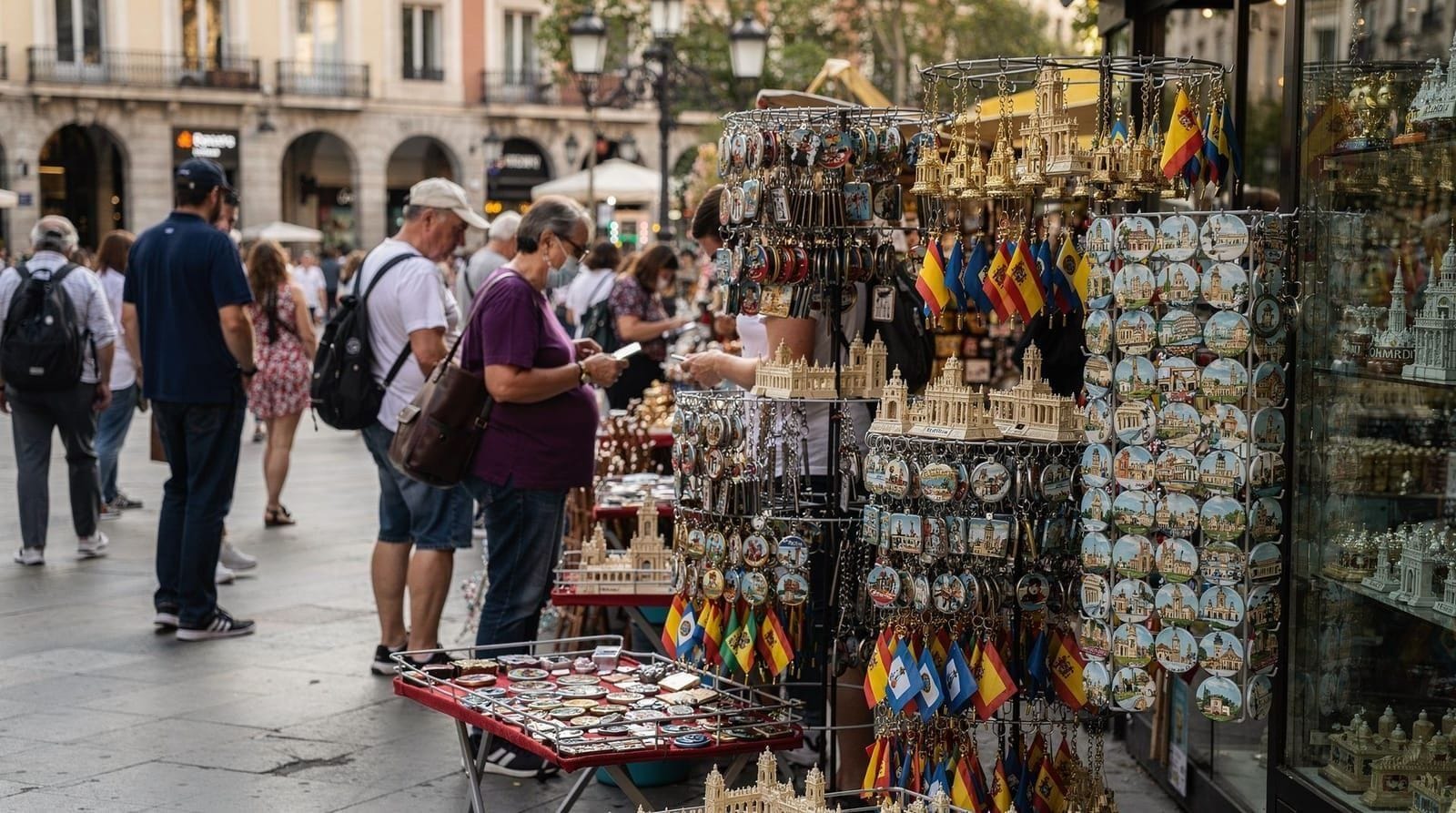
- Souvenir shops and street food that exists entirely to extract tourist spending
None of this means you should avoid Sol — the architecture, the energy, and the access to everything else are genuine. It means you should navigate it with awareness.
What to actually do in Sol and Centro
Puerta del Sol itself: The square is worth experiencing — the energy of Madrid’s busiest public space, the famous bear-and-strawberry-tree statue (Oso y el Madroño), and the architectural frame of the Casa de Correos. Plan to spend 20–30 minutes here, buy nothing from anyone who approaches you.
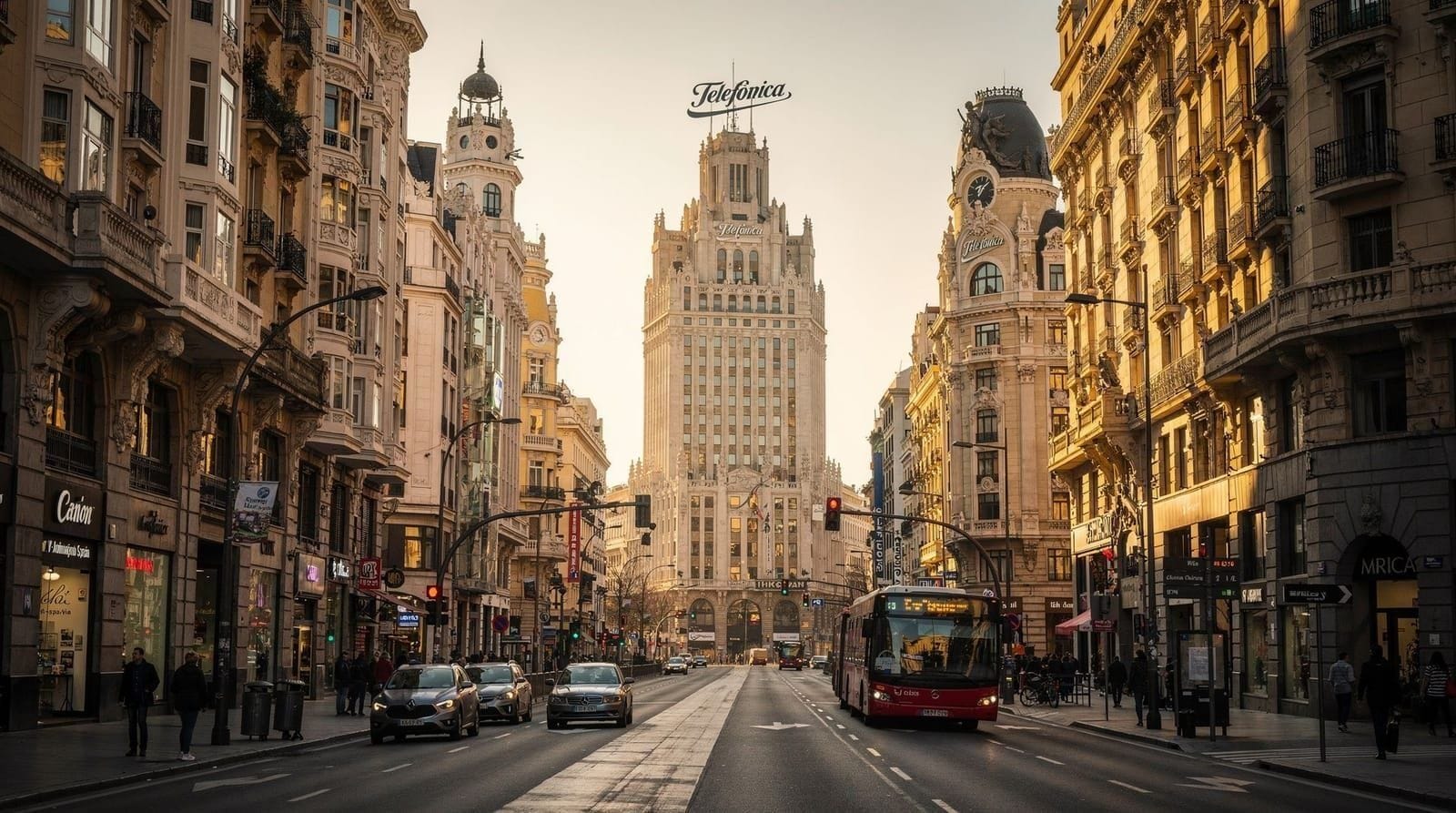
Gran Vía: The great Madrid boulevard, built between 1910 and 1932, is genuinely impressive. The early stretch from Calle de Alcalá toward the Edificio Telefónica (Gran Vía 28) has the best architecture — American-influenced beaux-arts buildings that reflect Madrid’s ambitions in the early 20th century. Walk it once, preferably in the evening when the neon lights activate.
Mercado de San Miguel (Plaza de San Miguel, adjacent to Plaza Mayor): A 19th-century iron market converted into a food hall — beautiful building, excellent for a standing lunch of high-quality Spanish products (jamón, cheese, seafood). Tourist-priced (plan for €20–30 per person if you eat seriously) but the quality is honest. See the mercados guide for comparison with other markets.
Plaza Mayor: Five minutes’ walk from Sol via Calle del Arenal or directly down Calle Mayor. A Habsburg-era colonnaded square that is one of Europe’s great public spaces. The restaurants on the square are significantly overpriced (see below). The square itself is free and beautiful.
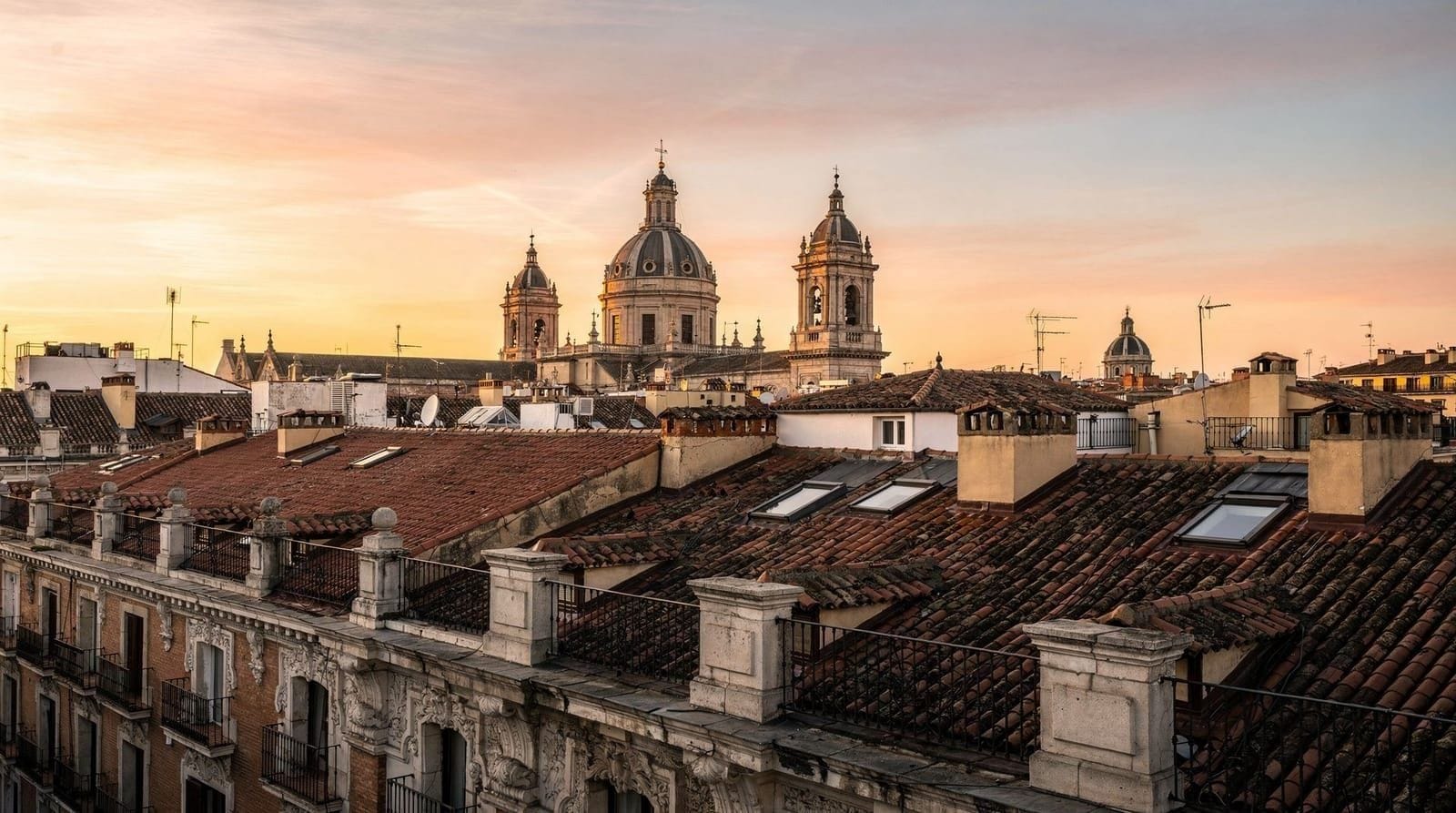
Calle Mayor and the Madrid de los Austrias: Walking from Sol west toward the Royal Palace along Calle Mayor passes through the medieval core of Madrid — the area around Plaza de la Villa, Calle del Sacramento, and the Almudena Cathedral zone. The Madrid de los Austrias destination page covers this in depth.
The tourist traps to avoid in Sol and Centro
Restaurants on Plaza Mayor: The colonnaded restaurants on the plaza serve food at 60–80% above comparable quality elsewhere, sustained entirely by tourist footfall. A caña (small beer) costs €5–7 here vs €2–3 in La Latina. The paella in the tourist-menu restaurants is almost certainly frozen. Walk two blocks in any direction for better food at half the price. The tourist traps guide covers this in detail.
Restaurants on Puerta del Sol: Same dynamic. The restaurant with the terrace tables facing the square is not where Madrileños eat.
Street performers and petition signers: Professional pickpocket zones cluster around Sol, Gran Vía, and the metro stations. Petition-with-clipboard approaches and the “I have something for you” gambits are common. Politely decline and keep moving.
The overpriced souvenirs on Gran Vía: The souvenir shops between Sol and Callao sell identical products at tourist premiums. Better selection and prices in the El Rastro market on Sundays.
Where to eat near Sol (that’s actually good)
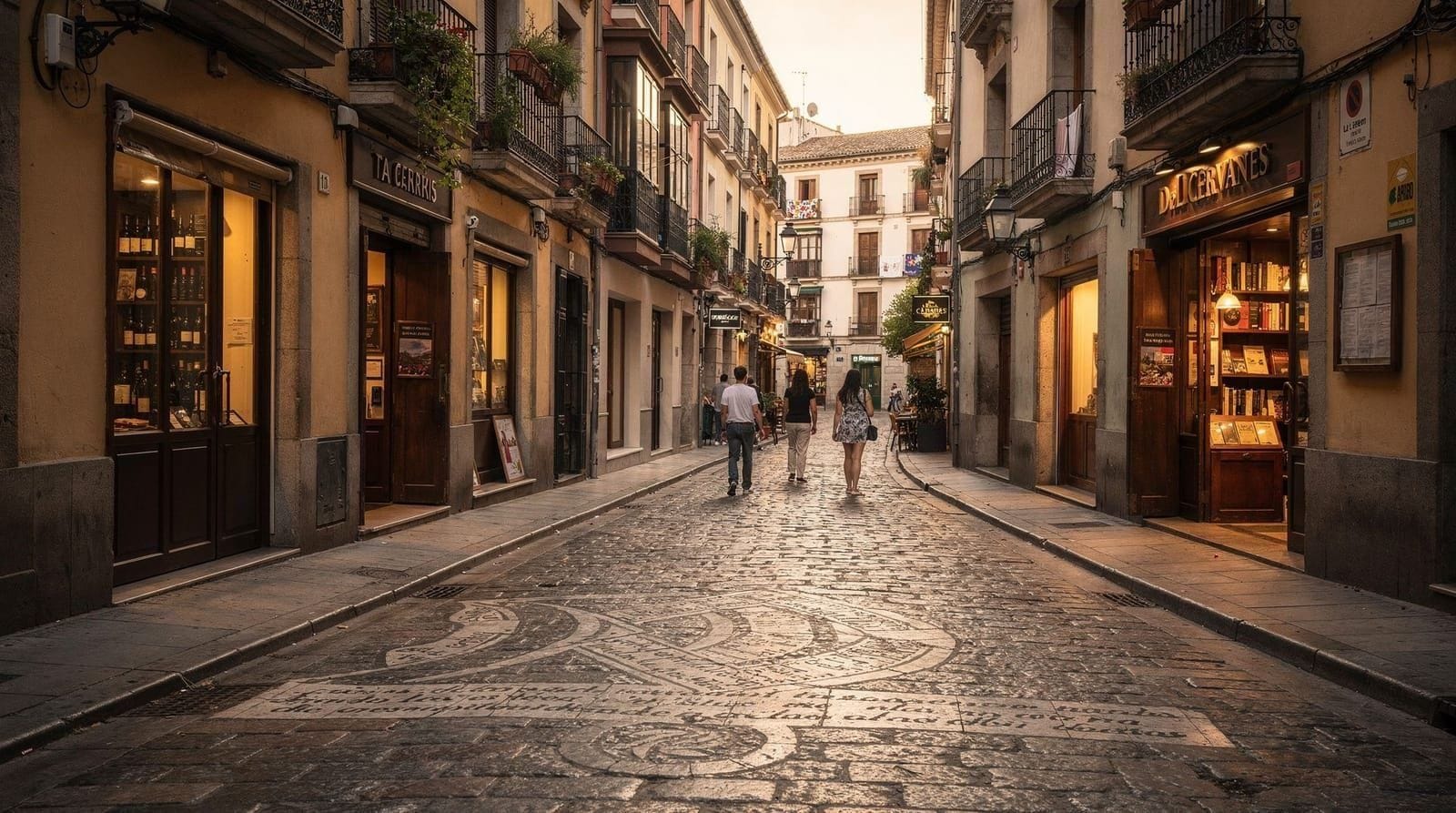
The trick is to walk two to three streets off the tourist spine.
Chocolatería San Ginés (Pasadizo de San Ginés 5): The most famous churros con chocolate in Madrid, open 24 hours, just off Calle del Arenal. This is a genuine Madrid institution rather than a tourist trap — locals eat here at 06:00 after a night out. Go early morning or very late.
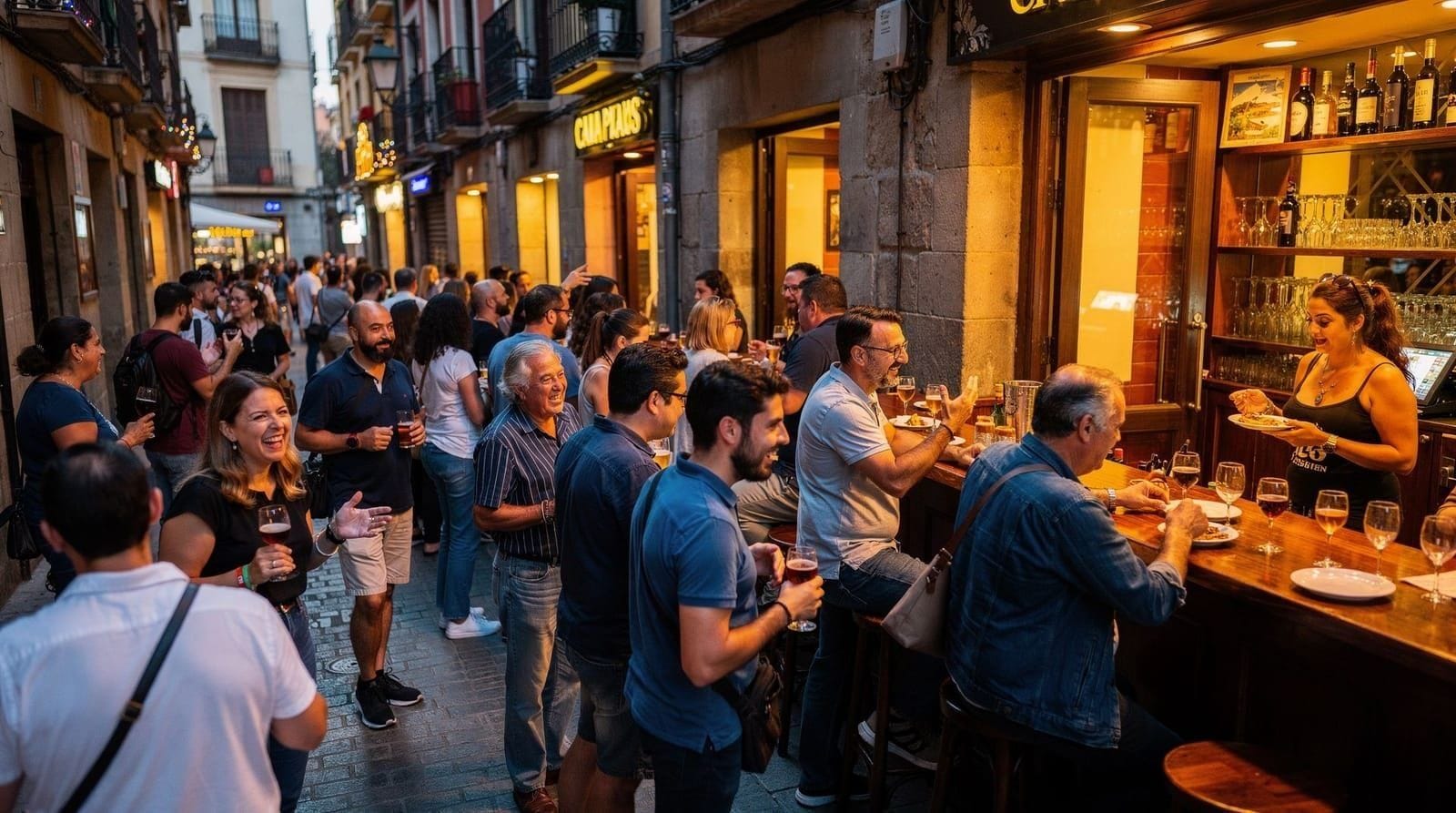
Casa Labra (Calle de Tetuán 12): Founded 1860, on a side street just off Sol. Famous for its bacalao (salt cod) croquetas and soldaditos de Pavía (cod fritters). Standing at the bar, with the cooks working in the open kitchen behind, is genuinely transporting. A caña and two raciones costs around €8–10.
Casa Ciriaco (Calle Mayor 84): Traditional Castilian cooking in a room that hasn’t changed much since 1917. The perdiz en escabeche (marinated partridge) and callos are the specialties. Not fashionable but excellent.
La Mallorquina (Puerta del Sol 8): A bakery-café opened in 1894, famous for its pastel de gloria (a cream-filled pastry) and napolitanas. The downstairs confectionery counter is the thing — buy pastries to take away. The café upstairs is expensive but atmospheric.
Where to stay near Sol
If you decide Sol is your base, here’s how to get it right.
Interior rooms: Always request an interior room (habitación interior) in any Sol-area hotel. Rooms facing the street are significantly noisier — Madrid’s centre does not quiet down until 03:00–04:00 on weekends.
Hotel picks:
- Budget: Hostal Central Palace Madrid (doubles from €65, excellent central location, honest quality)
- Mid-range: Room Mate Mario (Calle de Campomanes 4, near Opera metro, €110–150, good service)
- Splurge: Hotel Urban (Carrera de San Jerónimo 34, design hotel, excellent restaurant, €280–400)
- Luxury: Hotel Palace Madrid (Plaza de las Cortes 7, the historic grand hotel, €350–600)
Across all price brackets, book directly with the hotel or a reputable platform and check recent reviews for noise complaints specifically — Sol-area properties vary considerably in soundproofing quality even within the same star rating, and a street-facing room description doesn’t always make clear how loud a weekend night actually gets.
Sol at night: what it’s actually like
The Sol area transforms radically after midnight on weekends. The Callao area (where Gran Vía meets Calle de Preciados) is a hub for late-night clubs and pre-clubs. Puerta del Sol itself is busy with tourists and street performers until 01:00. The metro runs until about 01:30 every night, then again from 06:00.
For genuine Madrid nightlife, Sol is a staging area rather than a destination. The real late-night scenes are in Malasaña and Chueca. The Madrid nightlife guide covers this properly.
Getting the most from a Sol-based stay
Use it as a transit hub, not a stay hub. The best use of Sol is as the metro connection for the rest of the city. From Sol metro, you can reach any other central neighbourhood in under 10 minutes.
Book the Prado free evening hours. From Sol, the Prado is 20 minutes’ walk via Carrera de San Jerónimo. The free hours (18:00–20:00 Monday–Saturday) mean you can do Sol sightseeing in the afternoon and walk to the Prado for the last two hours without queuing. See the museum free hours guide.
If the free evening window does not suit your schedule, or you want context rather than a quick lap, a guided walk through the centre combined with skip-the-line entry to the Prado links the two neatly in one outing. The Prado museum guide and the golden triangle art walk show how to plan the visit either way.
Walk to La Latina for dinner. The walk from Sol to La Latina (via Calle Mayor and down into the Latina streets) takes 12 minutes and takes you from tourist-pricing to honest Madrileño tapas. Do this every evening and the Sol hotel room becomes good value.
The iconic sights in Sol and Centro
Puerta del Sol: The square itself hosts three permanent points of interest beyond its energy as a public gathering space:
- Zero-kilometre stone (km 0): Embedded in the pavement in front of the Real Casa de Correos. Marked with a compass rose — all road distances in Spain are measured from here.
- El Oso y el Madroño: The bear and strawberry tree statue is Madrid’s civic emblem. Always surrounded by photographers; best visited early morning for unobstructed views.
- The Real Casa de Correos: The clock tower whose bells toll twelve times at New Year’s midnight. Thousands gather in the square; the grape-eating tradition (twelve grapes, one per bell stroke) is observed collectively.
Plaza Mayor: Five minutes from Sol via Calle del Arenal. The 17th-century colonnaded square — built under Philip III, completed 1619 — is one of Spain’s great public spaces. The equestrian statue of Philip III (1616, cast in Florence by Giovanni de Bologna) anchors the centre. The uniformity of the facades (all four sides built to the same design) creates the architectural effect the square is known for. The restaurants are overpriced; the architectural experience is free.
Puerta de Toledo and Puerta de Alcalá: The two surviving 18th-century triumphal gates that marked the city’s boundaries. The Puerta de Toledo is southwest of Sol, at the beginning of the road to Toledo. The Puerta de Alcalá is northeast, at the junction of Alcalá and Paseo del Prado — arguably the most photographed monument in Madrid after the Prado itself.
Shopping near Sol: where it works
The shopping axis around Sol — Calle de Preciados and Calle del Carmen running north, Calle Mayor running west — contains Madrid’s most concentrated retail in the lowest price bracket. For specific purposes:
El Corte Inglés (Calle de Preciados 3): The flagship of Spain’s department store chain. Eight floors of everything, good customer service, and a food hall in the basement that has some of the most consistent jamón and cheese selection in central Madrid at non-tourist-market prices. Tax-free shopping available for non-EU visitors.
Fnac (Calle de Preciados 28): Books, music, and electronics. The best centrally-located bookshop — good English-language travel section, Spanish literature, music.
Calle de Preciados pedestrianised section: The mainstream Spanish fashion brands (Zara, Mango, H&M, Bershka) are here at high density. If you need any of these, this is the efficient option — comparable to Gran Vía but somewhat less crowded.
Sol vs the alternatives: an honest comparison
| Base | Character | Price vs Sol | Walk to Royal Palace |
|---|---|---|---|
| Sol / Centro | Maximum convenience, high tourist density | Baseline (highest) | 15–20 min |
| La Latina | Historic, tapas-focused, lively evenings | 10–20% lower | 10–15 min |
| Barrio de las Letras | Literary quarter, boutique hotels, calmer | 10–15% lower | 15–20 min |
| Malasaña | Independent, nightlife-driven, younger crowd | 15–25% lower | 15–20 min |
The pattern holds across nearly every comparison: Sol costs more for marginal convenience gains over neighbourhoods that are just as walkable to the main sights. See the best area for first-time visitors guide for the full decision framework, and where to stay in Madrid for a neighbourhood-by-neighbourhood breakdown.
The Madrid de los Austrias connection
Puerta del Sol is the eastern gateway to Madrid’s oldest historical district — the area of Habsburg-era architecture (Madrid de los Austrias) stretching west toward the Royal Palace. The Madrid de los Austrias destination page covers this zone in depth.
The walk from Sol to the Royal Palace via Calle Mayor passes:
- Plaza de la Villa: Madrid’s old town hall and the oldest surviving public square in the city. The Casa de la Villa, the Torre de los Lujanes (15th century), and the Casa de Cisneros are visible from the plaza.
- Calle del Sacramento and Calle de San Justo: The narrow streets between Plaza de la Villa and the Almudena Cathedral area. Medieval street width, preserved facades, genuinely atmospheric.
- Catedral de la Almudena: The cathedral faces the Royal Palace across a large plaza. Built over 110 years (completed 1993), it is not universally admired architecturally but the interior is large and the views of the palace from the plaza steps are outstanding.
This walk (Sol to Royal Palace) takes 20 minutes without stops and is one of the best free experiences in central Madrid.
If you would rather have the stories behind these streets than decode them alone, a local guide makes the medieval core far richer. a private walk with a local through the lesser-known corners of the centre is a sensible option for anyone who wants to get past the tourist spine, and our free walking tours guide and guided vs self-guided comparison help you decide how much structure you want. The Habsburg and Bourbon history guide gives useful background before you set off.
Sol’s connection to day trips
Sol metro (and nearby Atocha station, 20 minutes’ walk south) is the practical starting point for every day trip from Madrid:
- Atocha to Toledo: AVE train, 33 minutes, hourly departures. See the Toledo from Madrid guide.
- Chamartín (metro from Sol) to Segovia: 28–30 minutes by AVE. See the Segovia from Madrid guide.
- Atocha to Aranjuez: 45 minutes by Cercanías. See the Aranjuez guide.
A day trip from a Sol-area hotel is logistically simple: metro to the station, train to destination, return for dinner. The day trips from Madrid guide covers all options. This is arguably where a Sol base earns its premium most clearly — for a trip built heavily around day trips rather than city nightlife, the zero-transfer convenience genuinely saves time each morning.
The New Year’s Eve tradition
Puerta del Sol on New Year’s Eve (Nochevieja) is one of the most famous events in Madrid — tens of thousands gather in the square to eat twelve grapes to the twelve strokes of the midnight bell from the Real Casa de Correos clock. Grape-eating in time with the bells is supposed to bring luck; missing a grape is supposed to bring the reverse.
Practical if you want to attend: Arrive by 22:00 to secure a reasonable position. Bring grapes in your pocket (or buy prepacked portions sold around the square). Keep valuables secured — the pickpocket risk at this event is significant. The atmosphere is exceptional. Most Sol-area hotel guests can watch from their windows if they request a street-facing room for this specific night.
Frequently asked questions about Sol and Centro
Is it safe to walk around Sol at night?
Yes, in the general safety sense — Sol is heavily trafficked and policed at all hours. The real risk is petty theft (pickpocketing, bag-snatching) rather than violent crime, concentrated in the densest crowd areas and around the metro entrances. Keep valuables secured and be alert around street performers and clipboard approaches, especially late on weekend nights.
How many days should I base myself in Sol if I choose to stay there?
Two to three nights is usually enough to get the convenience benefit without paying the premium for longer than necessary. Many visitors do well splitting a longer trip — a few nights near Sol for the first-timer sights, then relocating to La Latina or Malasaña for better value and atmosphere on the remaining nights.