Segovia from Madrid: the complete day-trip guide
Segovia: History Charm Full Day
How do I get from Madrid to Segovia, and how long does it take?
AVE/AVANT high-speed train from Madrid Chamartín station to Segovia-Guiomar station takes 28–30 minutes. Fare: variable, see the Renfe website. From Segovia-Guiomar station, bus 11 (€2.25) connects to the aqueduct in about 15 minutes. Note: trains depart from Chamartín (not Atocha) — take Cercanías from Sol (5 min) to reach Chamartín. Budget a full day for the aqueduct, Alcázar, cathedral, and a proper cochinillo lunch.
Why Segovia belongs on your Madrid itinerary
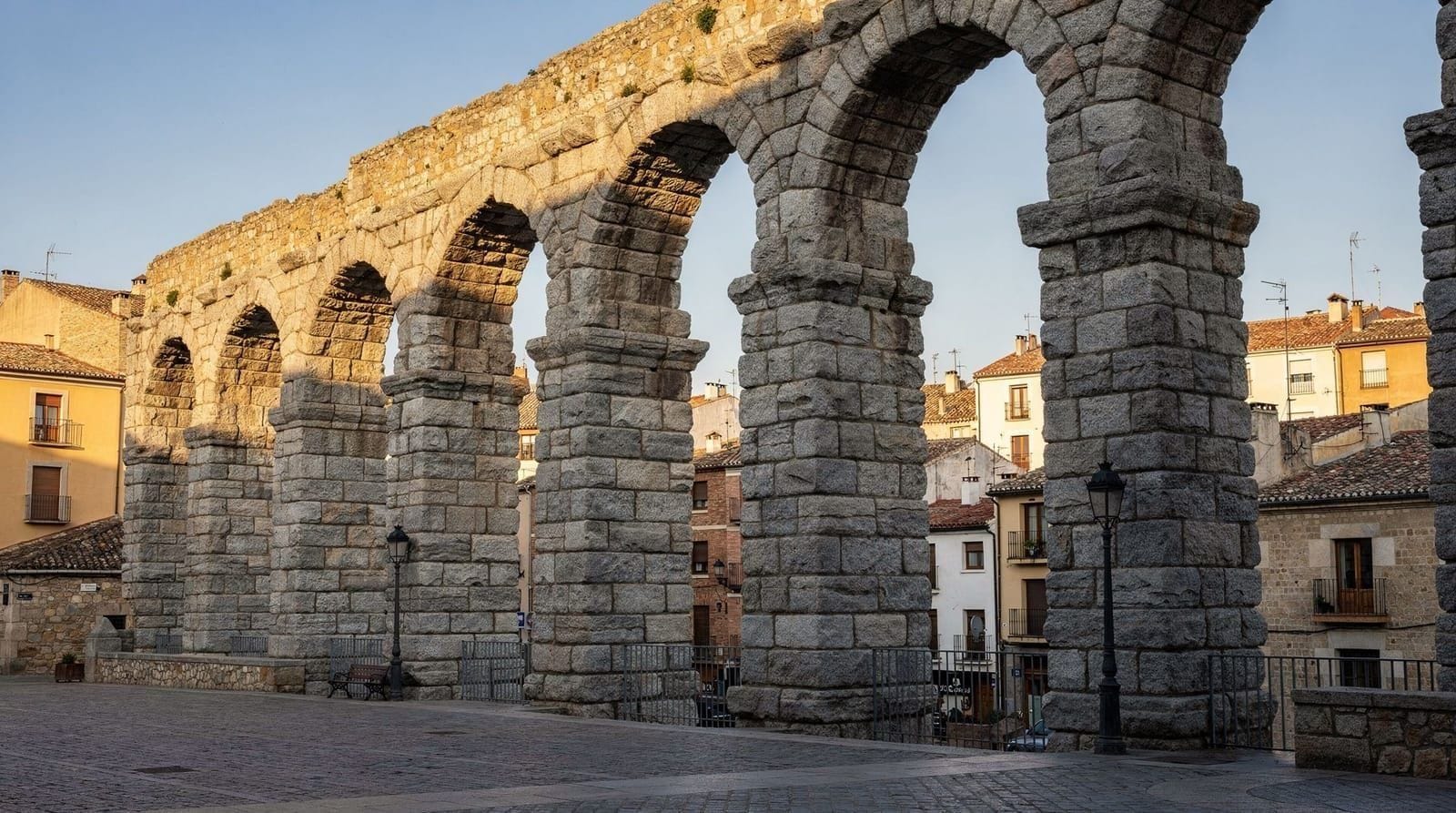
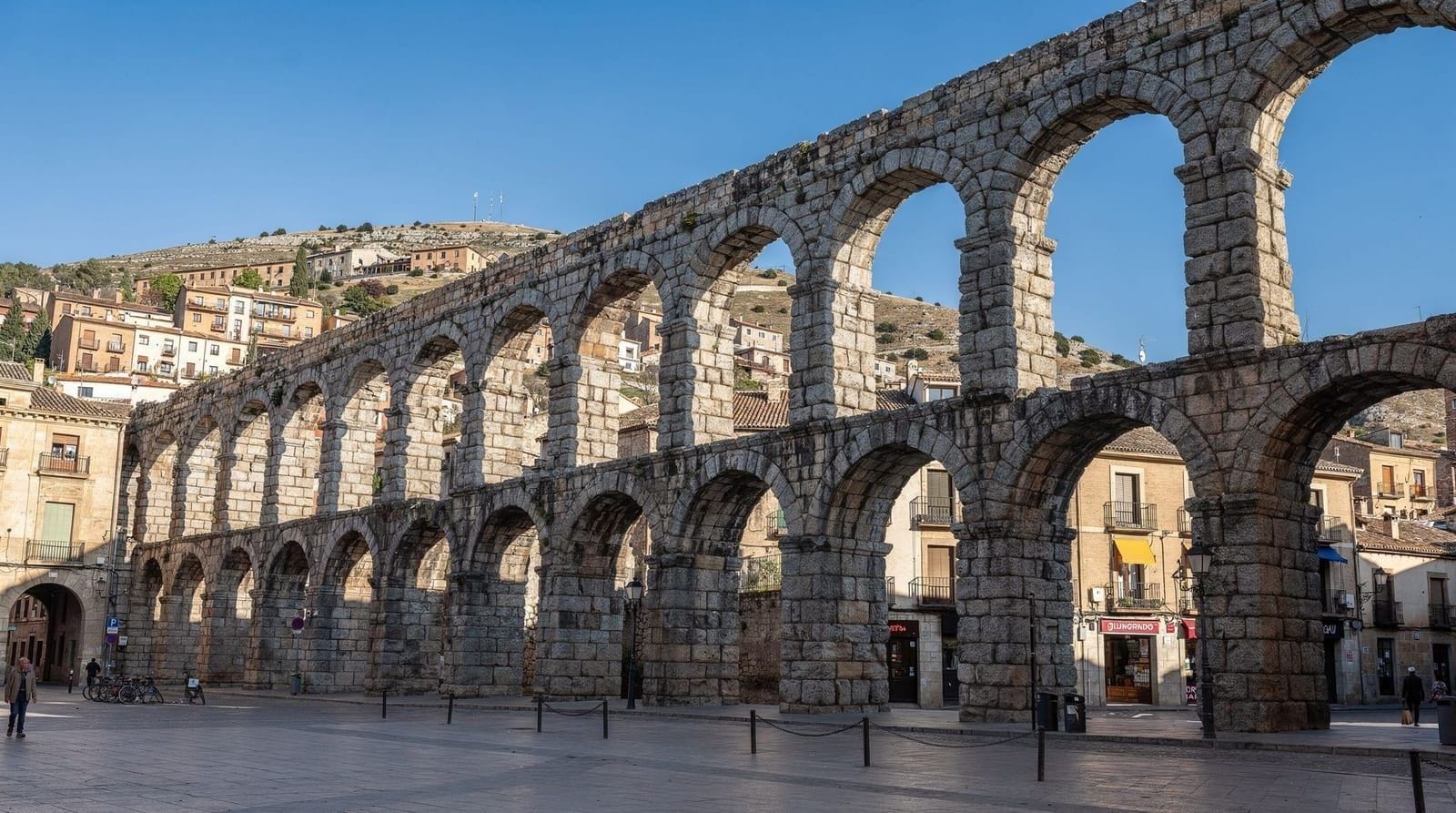
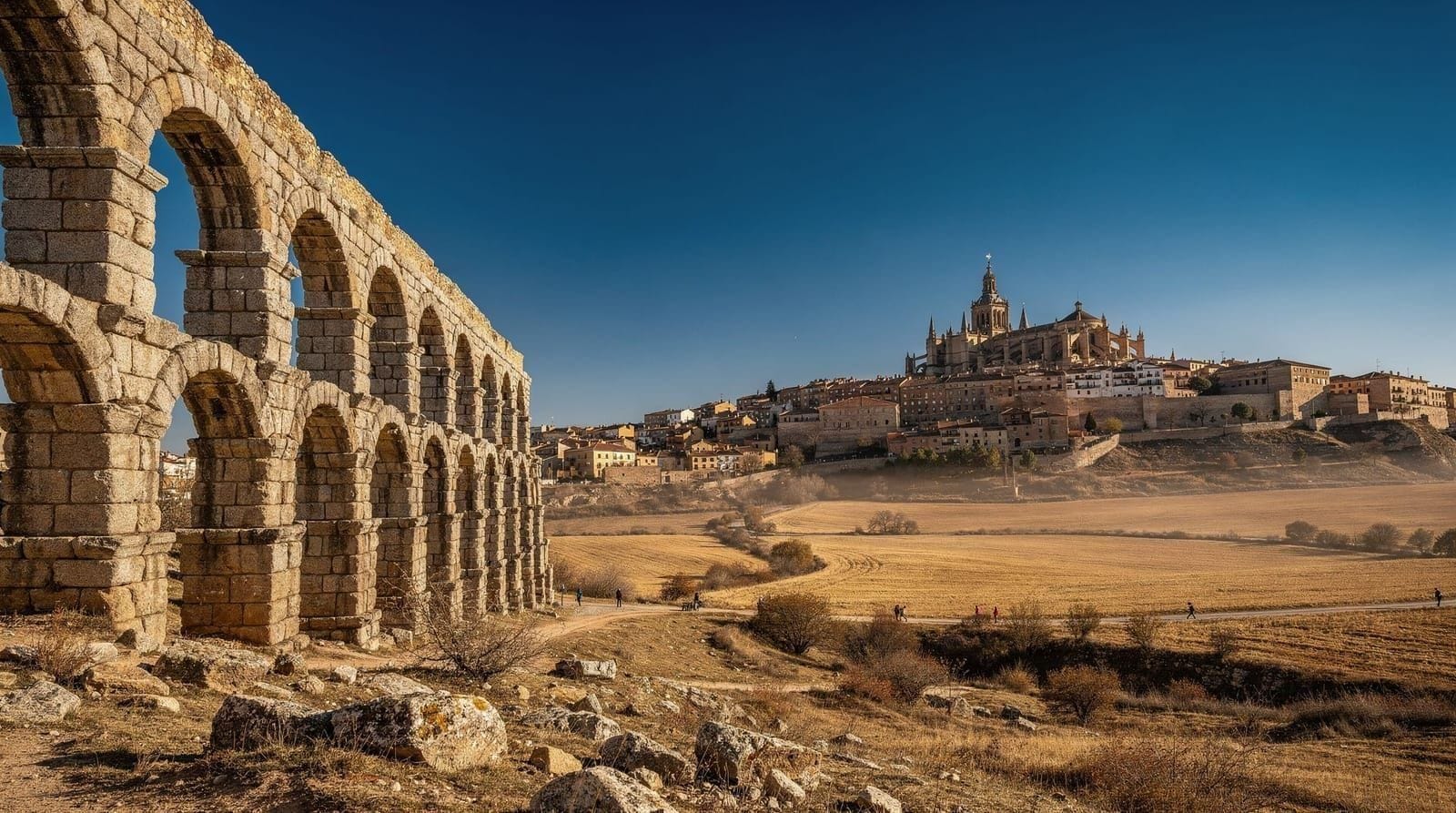
Segovia has what no other city in Spain can claim: a 1st-century Roman aqueduct crossing the modern city centre intact, 166 arches at 28 metres high, no mortar — held together only by the precision of cut granite. Stand beneath it on the Plaza del Azoguejo and grasp what Roman engineering meant: this structure has been delivering water from the Sierra de Guadarrama to the city for nearly 2,000 years.
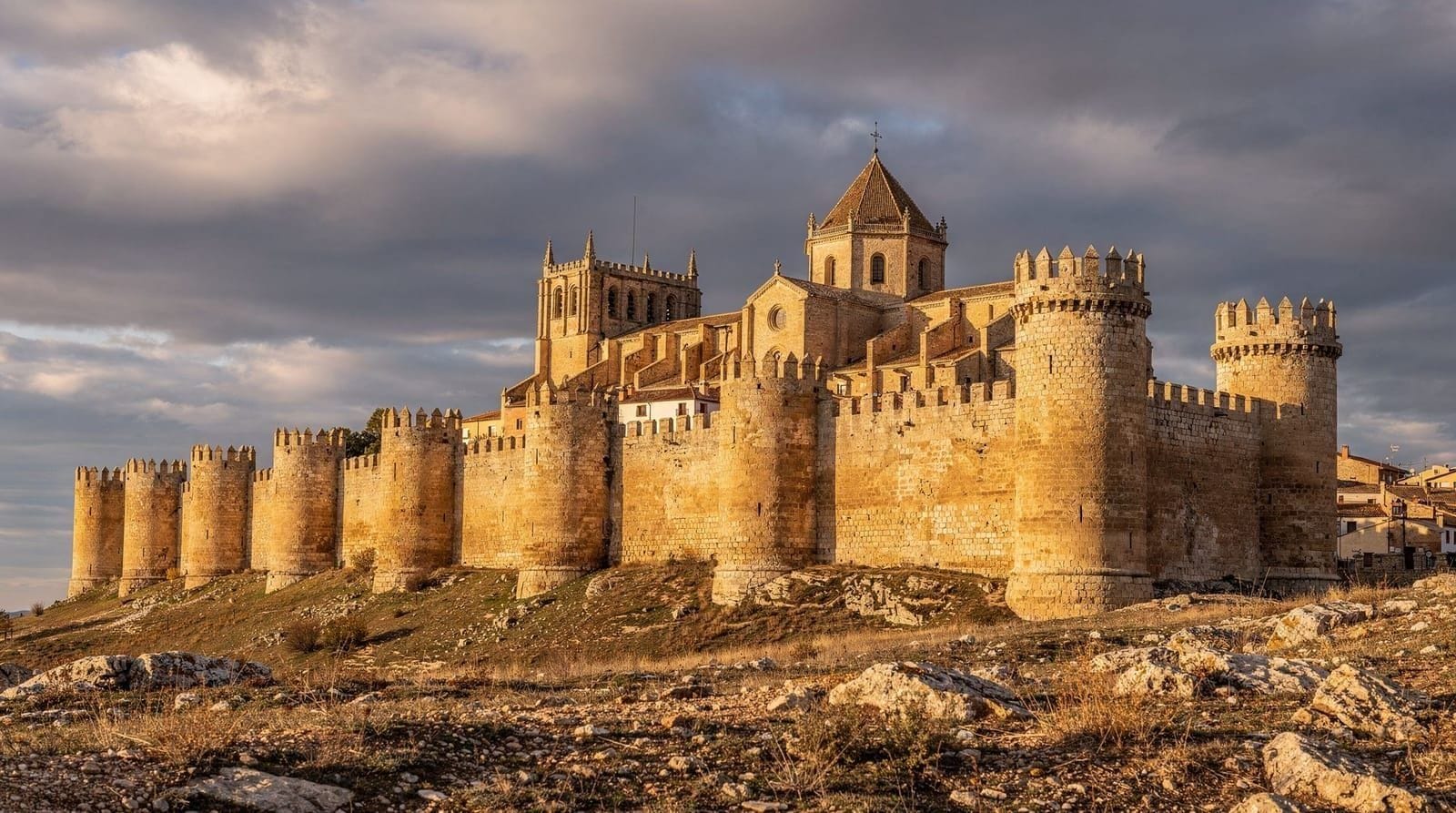
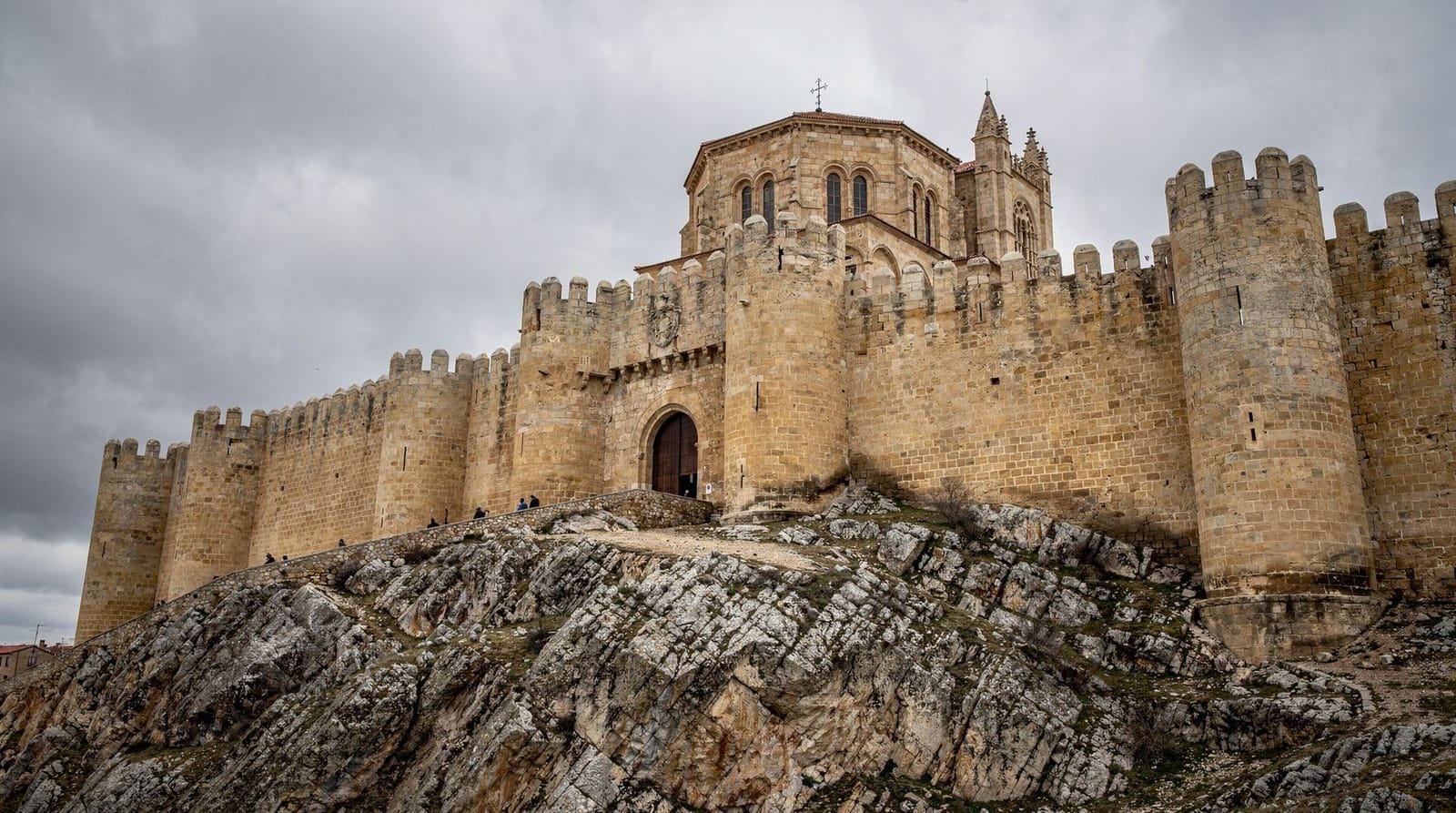
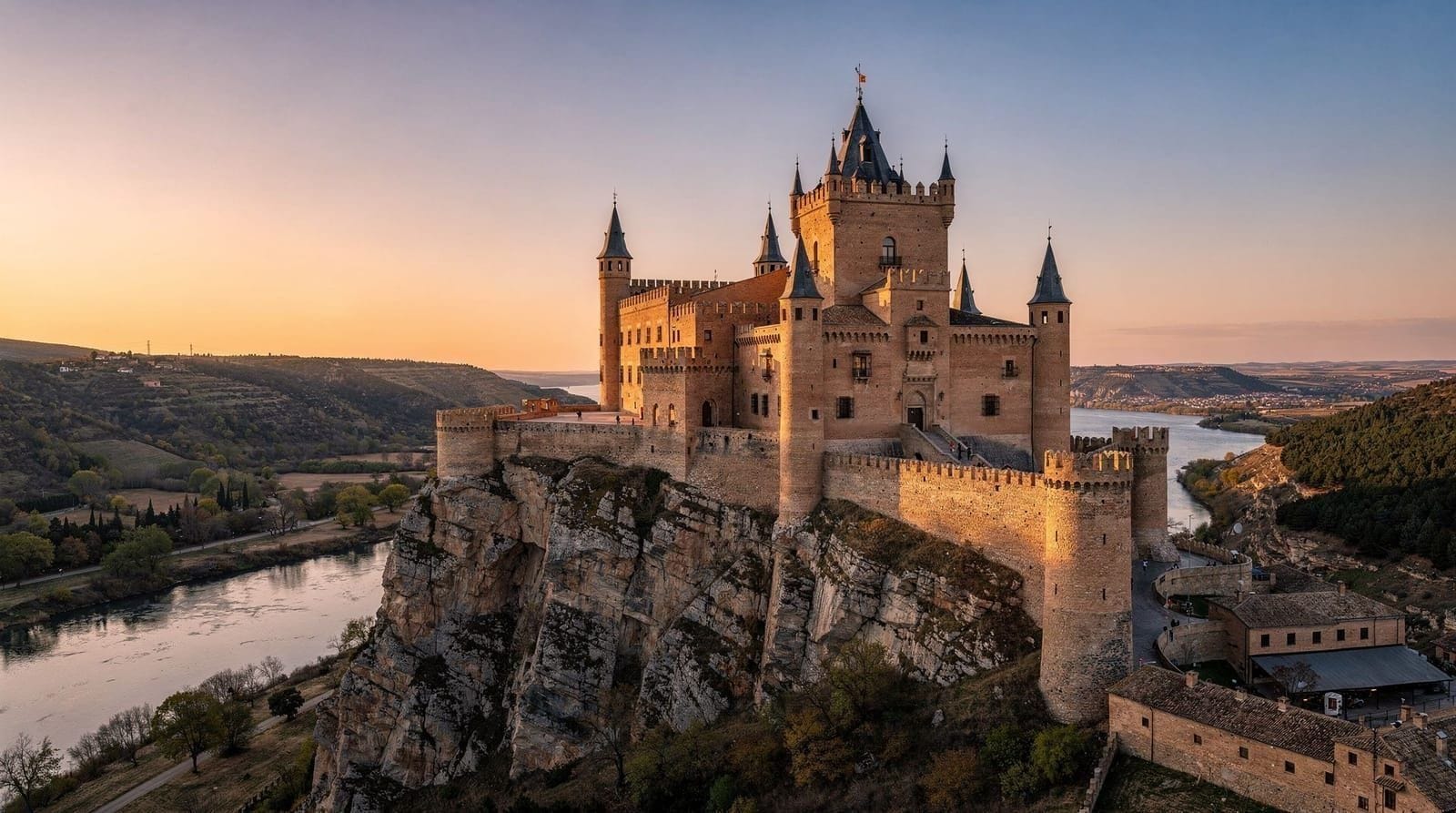
Above the city: the Alcázar, a castle that sits on a rocky promontory like something from a medieval manuscript. Inside: royal chambers with gilded ceilings, a tower with 360-degree views, and enough atmosphere to understand why Spanish monarchs chose Segovia as a preferred residence. Spain’s last Gothic cathedral anchors the old town centre.
This is all 28–30 minutes from Madrid by AVE high-speed train.
| Where | 90 km northwest of Madrid, in Castilla y León |
| Cost | Train fare variable (see the Renfe website), plus ~€11–14 for main sight admissions |
| Time needed | Half a day for the essentials, full day with lunch and the Jewish quarter |
| Getting there | AVE/AVANT from Chamartín (NOT Atocha), 28–30 min |
| Best time | Early morning for the aqueduct without crowds; any season, cooler months for the uphill walks |
Getting to Segovia from Madrid
By AVE/AVANT train (recommended)
Trains depart from Madrid Chamartín-Clara Campoamor station and arrive at Segovia-Guiomar station in 28–30 minutes. This is fast — no other transport mode comes close.
- Departure station: Madrid Chamartín (NOT Atocha — see note below)
- Arrival station: Segovia-Guiomar (5 km from the aqueduct)
- Frequency: Several trains a day (first departure around 06:20; see the Renfe website)
- Fare: variable; book via the Renfe website
- Tourist Travel Pass: NOT valid — separate Renfe ticket required
Important — Chamartín, not Atocha: Most tourists arrive in Madrid at Atocha or Sol. To reach Chamartín, take Cercanías Line C-3 or C-4 from Sol (5 minutes) or from Atocha (15 minutes). The Chamartín Metro station is also served by Lines 1 and 10.
From Segovia-Guiomar station: bus 11 runs to Plaza del Azoguejo (near the aqueduct), fare €2.25, journey 15 minutes. Taxis are available at the station (€8–10).
By bus from Madrid Moncloa
Avanza buses depart from Moncloa bus station (Metro: Moncloa, Lines 3 and 6) to Segovia bus station in about 1 hour 15 minutes. Segovia bus station is a 20-minute walk from the aqueduct or a short taxi ride. Slower than the train, but with a more central arrival.
By guided tour
Full-day Segovia history and charm tour from Madrid — guided bus tour with walking tour of the old town. Good if you want commentary throughout.
Segovia guided walking tour with Cathedral and Alcázar entry — local guide in Segovia, entry tickets included.
For those wanting to combine Segovia and Ávila: Full-day Ávila and Segovia tour from Madrid.
What to see in Segovia: the essential circuit
The Roman aqueduct
Start here. The aqueduct’s double-tiered arcade crosses the Plaza del Azoguejo and is best appreciated from ground level — walk beneath the arches, then climb the steps behind the tourist office to see the upper portion from eye level. Built in the late 1st or early 2nd century AD. 728 metres long, 166 arches, 20,400 granite blocks. No entrance fee; no ticket needed. It’s simply there, in the middle of the city.
Early morning (before 09:30) or late afternoon (after 17:00) are best for photographs — tourist groups arrive mid-morning and create busy conditions around the main viewing point.
Alcázar de Segovia
Walk up from the aqueduct through the old town (15–20 minutes on foot, mostly uphill through pleasant streets). The Alcázar sits on the westernmost point of the city’s promontory, where the Eresma and Clamores rivers meet below cliffs.
The interior includes: the Sala del Solio (throne room with gold muqarnas ceiling), the Royal Bedroom with carved wooden ceiling, a medieval armoury, and the Torre de Juan II (152 steps, worthwhile views of the Guadarrama range).
Admission: €7 for the palace and artillery museum, €10 with the Torre de Juan II. Buy tickets at the door or online. Weekends and summer: book ahead. Open daily: April–October 10:00–19:30, November–March 10:00–18:00; last entry 30 minutes before closing.
Cathedral of Segovia
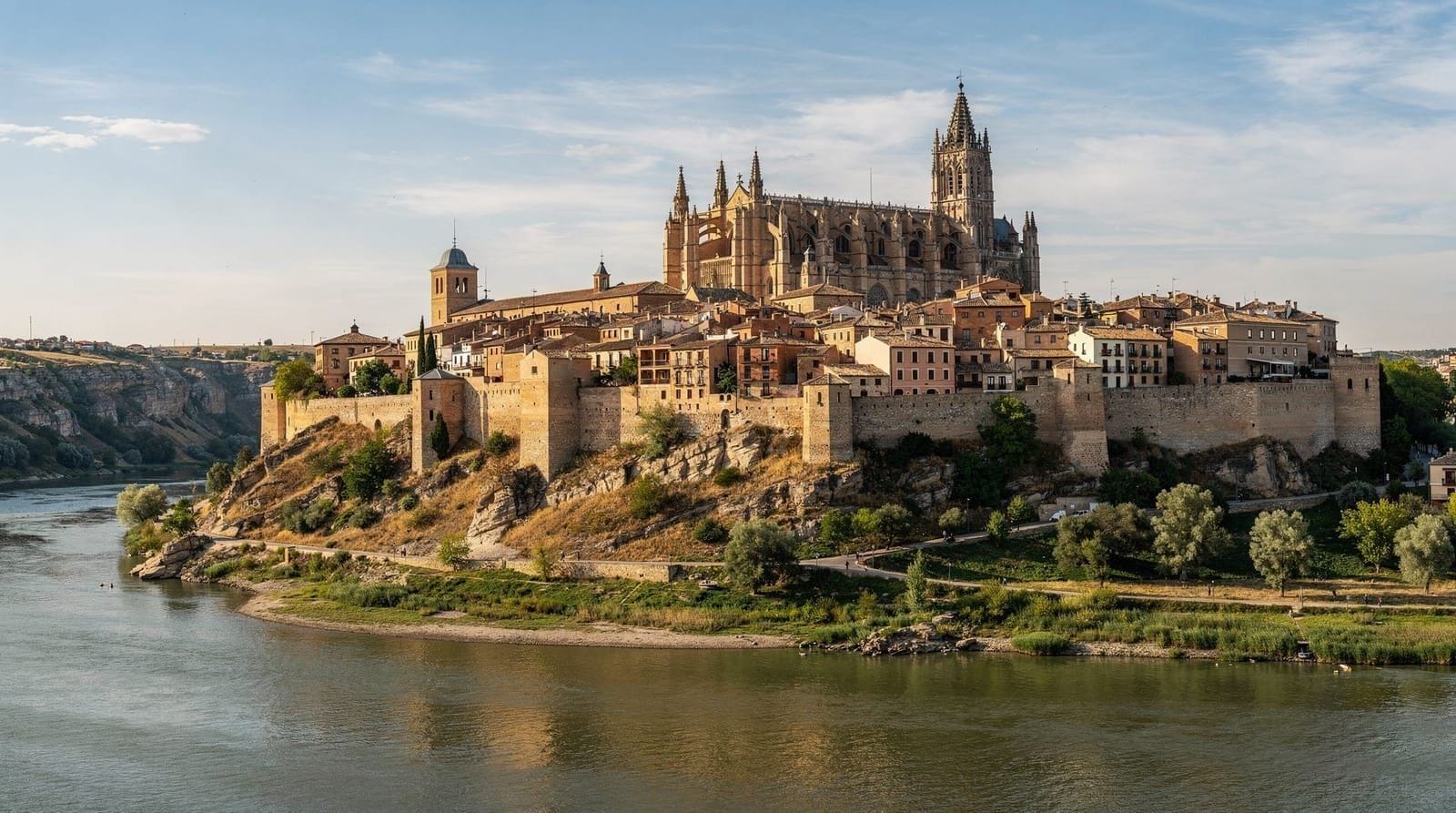
Spain’s last Gothic cathedral, completed in 1768 — so Baroque elements blend into the Gothic structure. Less overwhelming than Toledo’s cathedral but more serene, with excellent stained glass and a fine cloister. Admission: €4. Walk from the Alcázar: 10 minutes back through the old town centre.
The Jewish quarter (Barrio Judío)
Segovia had one of the most important Jewish communities in Castile before the 1492 expulsion. The Barrio Judío lies between the Alcázar and the Calle Judería Vieja. Little remains — no active synagogues survived — but the narrow streets, small plazas, and architecture reveal the quarter’s original character. A short detour worth 20 minutes.
Vera Cruz church and the valley below
Outside the city walls, reached by descending from near the Alcázar: the Iglesia de la Vera Cruz, a 13th-century Templar church with a twelve-sided plan. The walk down and back (30 minutes round trip) also provides the best view of the Alcázar from outside the walls, framed against the Guadarrama mountains in winter snow.
Where to eat in Segovia
Cochinillo asado — the centrepiece
Mesón de Cándido (Plaza del Azoguejo 5): The most famous cochinillo restaurant in Spain. Founded 1931, certified Mesón de Castilla y León, with a theatrical carving ceremony using a ceramic plate. Book for lunch (13:30–15:30). Expect €35–50 per person with wine. Touristy but genuinely excellent.
El Bernardino (Calle Cervantes 2): More relaxed atmosphere, slightly less expensive (€28–40), equally good cochinillo. Locals’ second-choice recommendation. Easier to get a table without advance booking on weekdays.
Restaurante José María (Cronista Lecea 11): The third member of Segovia’s cochinillo triumvirate. Traditional, reliable, busy. Worth booking for weekends.
Budget options
Calle Juan Bravo has several bars with menú del día (€12–15) — try Bar Cueva de San Esteban for Castilian comfort food at local prices. Bocadillos (sandwiches) from any bakery give you a cheap breakfast before the main sights.
If you are still deciding how to reach the station, the Atocha vs Chamartín guide explains how the two terminals differ, and the Cercanías guide covers the commuter lines that link them to the centre. For a wider look at rail excursions from the capital, the AVE train day trips guide puts Segovia alongside the other high-speed options, and the Segovia destination page gathers everything on the city in one place.
Segovia and El Escorial: a possible pairing
Some visitors weigh combining Segovia with El Escorial rather than Toledo or Ávila, since both sit in the Sierra de Guadarrama foothills. In practice this is a demanding day — the El Escorial from Madrid guide covers the monastery in the detail it deserves, and doing both properly in one day rushes each. If your time is limited to a single Guadarrama-area day trip, choose based on interest: El Escorial for royal and religious history in a single vast building, Segovia for a compact old town, the aqueduct, and cochinillo. The best day trips from Madrid guide has the full comparison across all of Madrid’s popular excursions.
Practical logistics: connectivity and mobility
Segovia’s old town is compact but genuinely hilly — the walk from the aqueduct up to the Alcázar climbs steadily for 15–20 minutes, which is worth planning for if mobility or stamina is a concern; consider a taxi from Plaza del Azoguejo directly to the Alcázar and walking downhill afterward instead. Mobile signal is reliable throughout the town centre; non-EU visitors should check their connectivity options guide before travelling, since the AVE route through the Guadarrama tunnel has patches of no signal.
Understanding Segovia’s history
Segovia’s prominence comes from two separate eras separated by 1,500 years. First: the Roman colony of Segobriga, which built the aqueduct to supply a population of perhaps 20,000–30,000 people with water from the Sierra de Fuenfría. The engineering precision of 166 interlocking arches carrying water 17 km, with enough gradient to maintain flow, represents the apex of practical Roman infrastructure. The fact that the aqueduct operated continuously until the 19th century is the clearest possible evidence that the Romans built to last.
Second: medieval and early modern Segovia became a favourite royal residence — the Alcázar served as a primary royal palace, and it was here in 1474 that Isabella I of Castile was proclaimed Queen on the death of her brother. Isabella and Ferdinand — the Catholic Monarchs who commissioned Columbus and expelled the Jews — are the defining figures of late medieval Spain, and Segovia was central to their story. The cathedral (their last great Gothic commission) was begun in 1513 to replace an earlier cathedral destroyed in the Revolt of the Comuneros.
The cloth trade made Segovia prosperous in the 15th–16th centuries — the damp microclimate of the Eresma valley, ideal for washing raw wool, attracted weavers from across Castile. The Baroque merchant houses visible throughout the old town are the product of textile money. Philip II’s court preferred Segovia for summer residence; the court hunting grounds at the nearby Riofrío palace (18 km away) remain open today.
A practical Segovia itinerary
Half-day (4–5 hours on-site)
09:30 — Arrive at Segovia-Guiomar station, bus 11 to Plaza del Azoguejo. 09:45 — Aqueduct (30 min, walk underneath and around). 10:30 — Walk up Calle de Cervantes toward the old town (20 min uphill). 11:00–12:30 — Alcázar (1.5 hours including tower climb). 12:45 — Cathedral (45 min). 13:30 — Cochinillo lunch at El Bernardino or Mesón de Cándido. 15:30 — Bus 11 back to station, train to Madrid by 17:00.
Full day (7–8 hours on-site)
Follow the half-day plan, then after lunch (15:30): walk the Judería and old town streets, descend to the Eresma valley to visit the Vera Cruz church (30 min), walk along the river path with Alcázar views, return to town for afternoon coffee, explore the Cathedral interior if not done earlier, train home 19:00–20:00.
What makes cochinillo different in Segovia
The official definition: a suckling pig not older than 21 days, fed exclusively on its mother’s milk. Maximum weight 4.5 kg. Roasted in a clay-lined wood oven (horno de leña) at moderate temperature for 2–2.5 hours until the skin develops a crisp, crackled surface and the meat beneath is soft enough to separate without a knife.
The carving ceremony at Mesón de Cándido — and at other serious restaurants — uses a ceramic dinner plate to “cut” the pig, demonstrating that the meat has reached the correct texture. The plate then smashes on the floor for luck. The tradition dates to the early 20th century; whether it was invented for theatrical effect or emerged from genuine practice is disputed, but it’s now an inseparable part of the Segovia cochinillo experience.
Segovian cochinillo received Protected Geographical Indication (PGI) status in 2003. The denomination covers the provinces of Segovia, Ávila, Salamanca, and Valladolid — but the practice is most strongly associated with Segovia.
Comparing Segovia to Madrid’s other Castilla y León day trips
Madrid sits within easy reach of several walled and fortified Castilian cities, and Segovia is often weighed against them:
| Destination | Journey time | Signature sight | Best for |
|---|---|---|---|
| Segovia | 28–30 min (AVE) | Roman aqueduct, Alcázar | Fastest trip, most dramatic single monument |
| Toledo | 33 min (AVE) | Cathedral, El Greco trail | Dense layered history, art |
| Ávila | ~1h26 (train) | Complete medieval walls | Walking the walls, quieter atmosphere |
| El Escorial | ~1h (train) | Royal monastery-palace | Religious and royal history in one vast building |
All four are realistically doable independently by train, and none needs more than a single day. Visitors with limited time often default to Segovia specifically because the 28-minute AVE makes it the lowest-commitment option of the four for the reward it delivers — see the Ávila from Madrid guide for the walls-focused alternative if you have a second day trip to spare.
Segovia in your Madrid itinerary
See the Madrid and Segovia itinerary for a structured 2-day plan. The Madrid week with day trips pairs Segovia with other Castilian day trips across a 7-day stay.
Undecided between Segovia and Toledo? The Toledo vs Segovia guide gives a direct decision framework.
For the Escorial and royal sites route, see the Madrid royal sites itinerary.
Back in the capital, the Royal Palace guide is a natural companion to the Alcázar, since both show how the Spanish crown lived. If you are weighing how many days to give the whole trip, the how many days in Madrid guide helps you decide where a Segovia day fits, and the Ávila destination page is worth a look if the walled city appeals as a second excursion.
DIY by train vs guided tour: the verdict
DIY wins for independent travellers. The AVE from Chamartín is 30 minutes and cheaper than a bus tour. Segovia’s monuments are well-signposted and tickets are easy to buy at the door (except Alcázar on weekends — book that online). The bus connection from Segovia-Guiomar to the aqueduct is straightforward.
Guided tour makes sense if: you want the historical context delivered by a local guide (Segovia’s layers of Roman, Visigoth, Moorish, and Christian history genuinely benefit from explanation), or you want to combine Segovia with Ávila in one day without planning complex logistics. It also removes the single most common visitor mistake — heading to Atocha rather than Chamartín — since a tour handles pickup and departure logistics for you.
Madrid–Segovia–Ávila full-day with Alcázar and wall tickets is the best combined-city option — includes entry to both monuments.
Frequently asked questions about Segovia from Madrid
Is Segovia better than Toledo for a day trip from Madrid?
Different strengths. Toledo is denser with monuments and art; Segovia is more compact and arguably more beautiful. Segovia suits those who want architecture, a fairytale castle, and exceptional food (cochinillo asado). Toledo suits those who want layered cultural history and the El Greco trail. See the full comparison at toledo-vs-segovia.Which station in Madrid do trains to Segovia depart from?
Chamartín-Clara Campoamor, in the north of Madrid. Important: most tourists arrive at Atocha. From Atocha, take Cercanías C-3 to Chamartín (~15 min, Tourist Travel Pass valid). From Sol, Cercanías takes ~5 minutes to Chamartín. Don't miss this detail — Atocha trains do not serve Segovia.What does the Alcázar of Segovia look like inside?
The interior has ornately decorated royal chambers (azulejo tiling, carved wood ceilings), a collection of medieval armour and weapons, and a tower climb of 152 steps with panoramic views across the Castilian plain. The exterior — pointy towers, turrets, slate roof — is the archetype of a fairy-tale castle. Walt Disney reportedly used it as a model for the Cinderella castle.What is cochinillo and where should I eat it in Segovia?
Cochinillo asado (roast suckling pig) is Segovia's signature dish — a very young pig (21 days old, fed only on milk) roasted until the skin crisps to crackle and the meat falls apart. Traditionally served by cutting it with a ceramic plate (not a knife) to demonstrate tenderness. Mesón de Cándido (Plaza del Azoguejo, near the aqueduct) is the most famous restaurant; El Bernardino and Restaurante José María are equally respected alternatives. Budget €25–40 per person for a cochinillo lunch.Do I need to book the Alcázar in advance?
Booking ahead is recommended for weekends and July–August. The Alcázar can sell out its timed entry slots by mid-morning on busy days. Book via the Alcázar's official website. Tower access is a separate ticket. Weekday visits in shoulder season rarely require advance booking.How long do I need in Segovia?
A full day is best: aqueduct (30 min), walk up to the Cathedral (45 min + entry), Alcázar (1.5–2 h including tower), lunch (1.5–2 h), late afternoon walk back down through the Jewish quarter. Arrive by 09:30 and leave around 18:00.Can I combine Segovia with Ávila in one day?
Guided tours combining Ávila and Segovia are popular — the two cities are ~60 km apart by road. Doing it independently by public transport is complex (no direct train or bus between the two; you'd need to return to Madrid and switch). If combining, take an organized tour or hire a car.
Top experiences
Bookable activities with verified prices and instant confirmation on GetYourGuide.