Toledo vs Segovia from Madrid: which should you choose?
From Madrid: Toledo Tour with Cathedral and 7 Monuments
Should I visit Toledo or Segovia from Madrid?
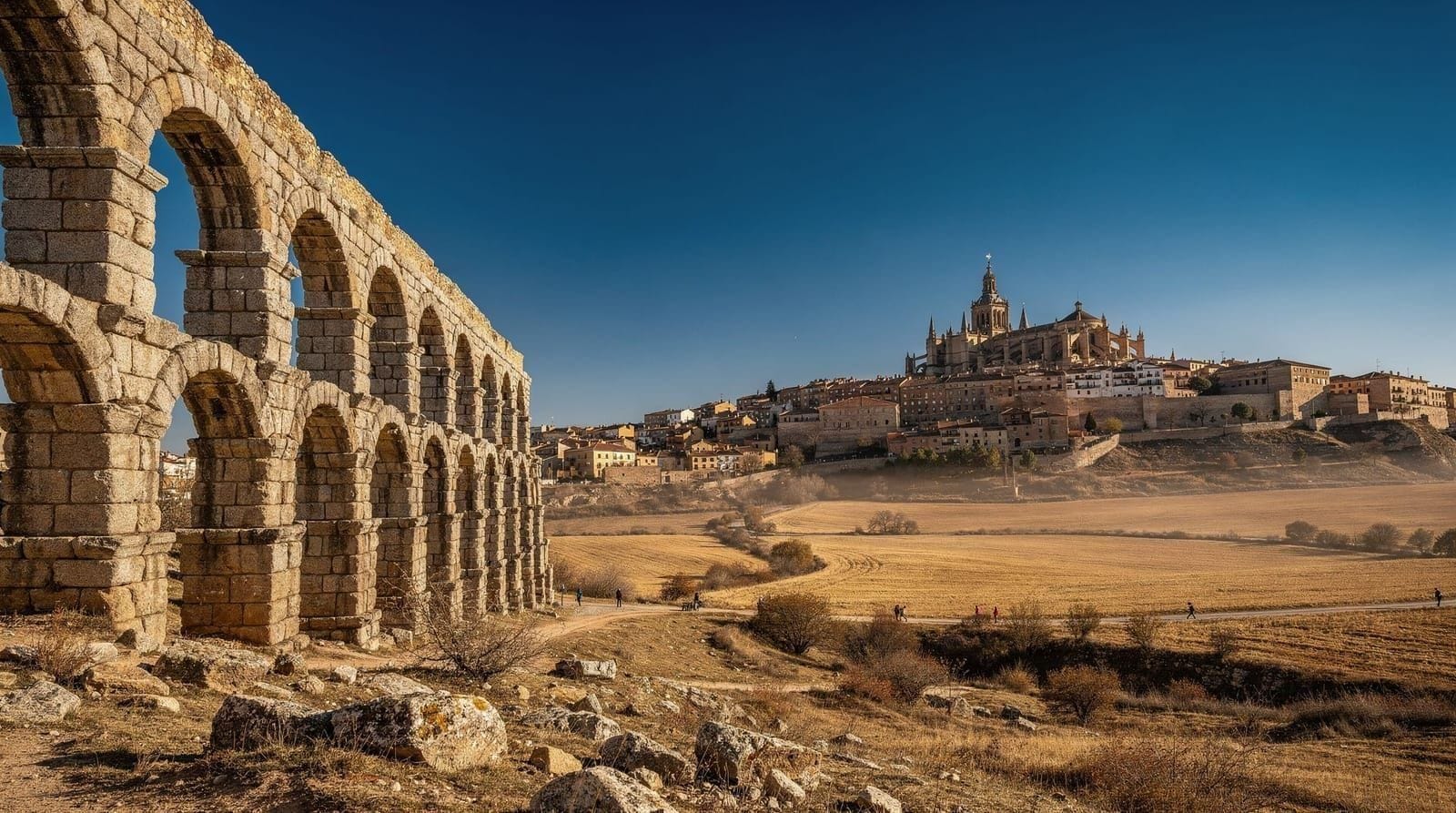
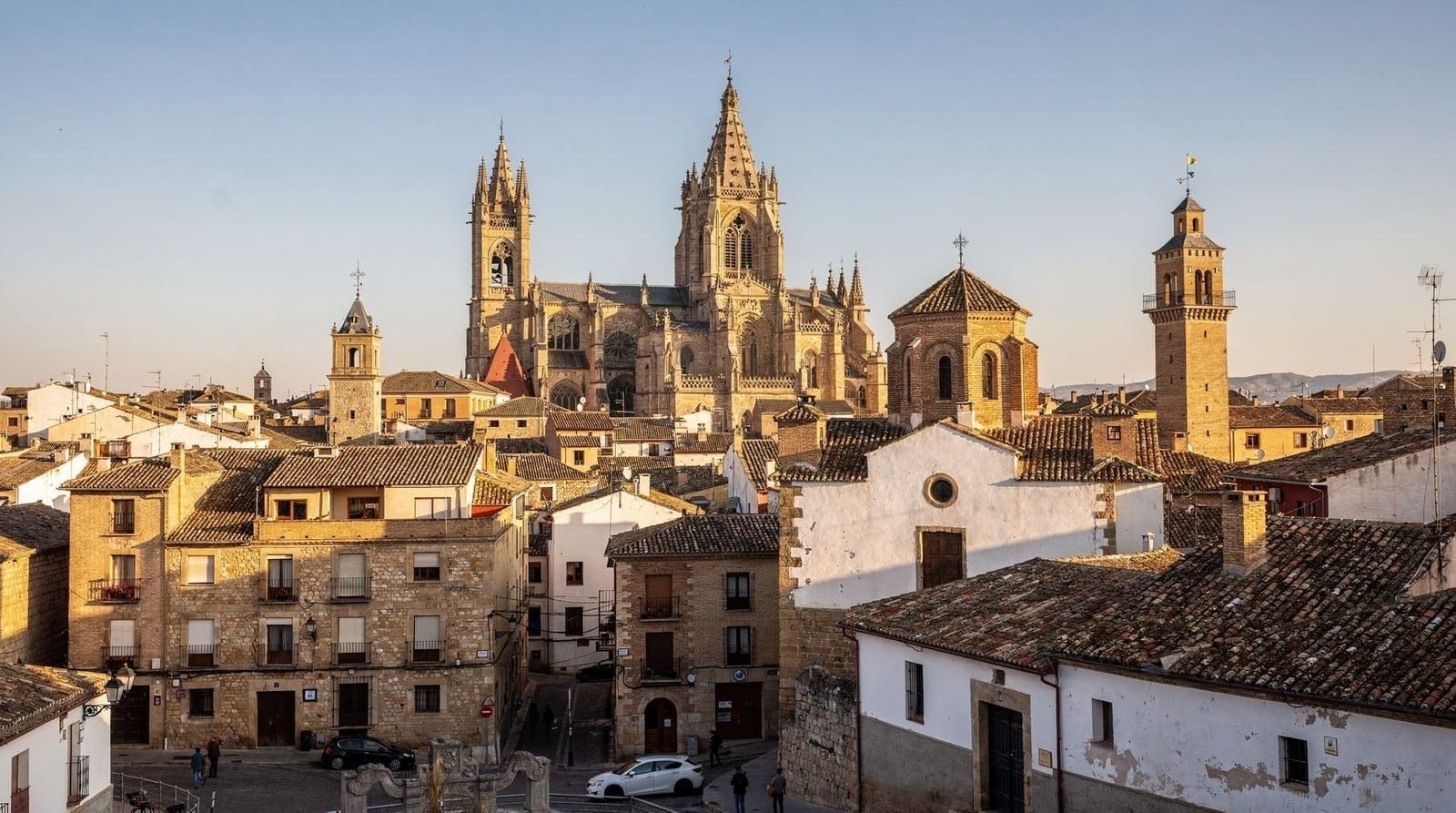
Toledo if you want the densest concentration of history, art, and medieval atmosphere — the cathedral, El Greco, three-culture heritage, and labyrinthine old town. Segovia if you want architectural drama (Roman aqueduct + fairy-tale Alcázar), exceptional food (cochinillo), and a slightly more relaxed pace. Both are under 33 minutes from Madrid by high-speed train. If you have time for only one: Toledo. If you can do two, they're a perfect pair — one day each.
| Toledo | 33 min from Atocha, full day, ~€50–65/person |
| Segovia | 28–30 min from Chamartín, half-day viable, train fare variable (see Renfe) |
| Both | Under 33 min by train, UNESCO-listed, opposite directions |
| Time needed | Toledo 6–8 hrs; Segovia 4–6 hrs |
| Decision shortcut | One day free → Toledo; food-focused or short on time → Segovia |
The decision most Madrid visitors face
Toledo and Segovia are Madrid’s two star day trips — UNESCO-listed, under 33 minutes by high-speed train, world-class monuments, entirely different personalities. Most travel blogs tell you to do both. That’s correct advice. But when you have a limited schedule and need to prioritise, the choice matters.
This guide gives you an honest, structured comparison across every dimension that affects a day trip. At the end: a decision tree based on your actual situation.
The monuments, side by side
| Toledo | Segovia | |
|---|---|---|
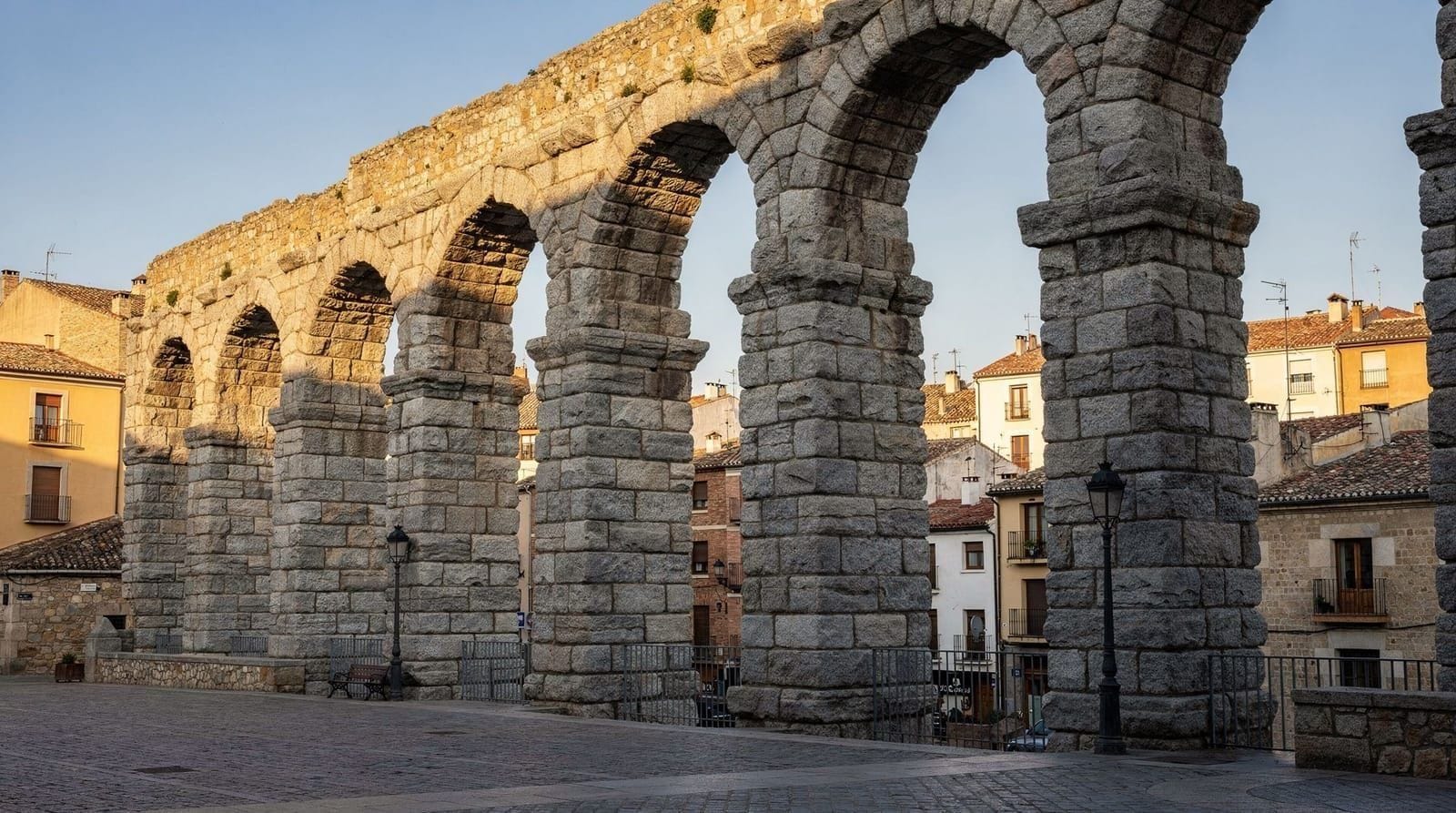
| Defining monument | Gothic cathedral (250 years to build) | Roman aqueduct (2,000 years old, intact) |
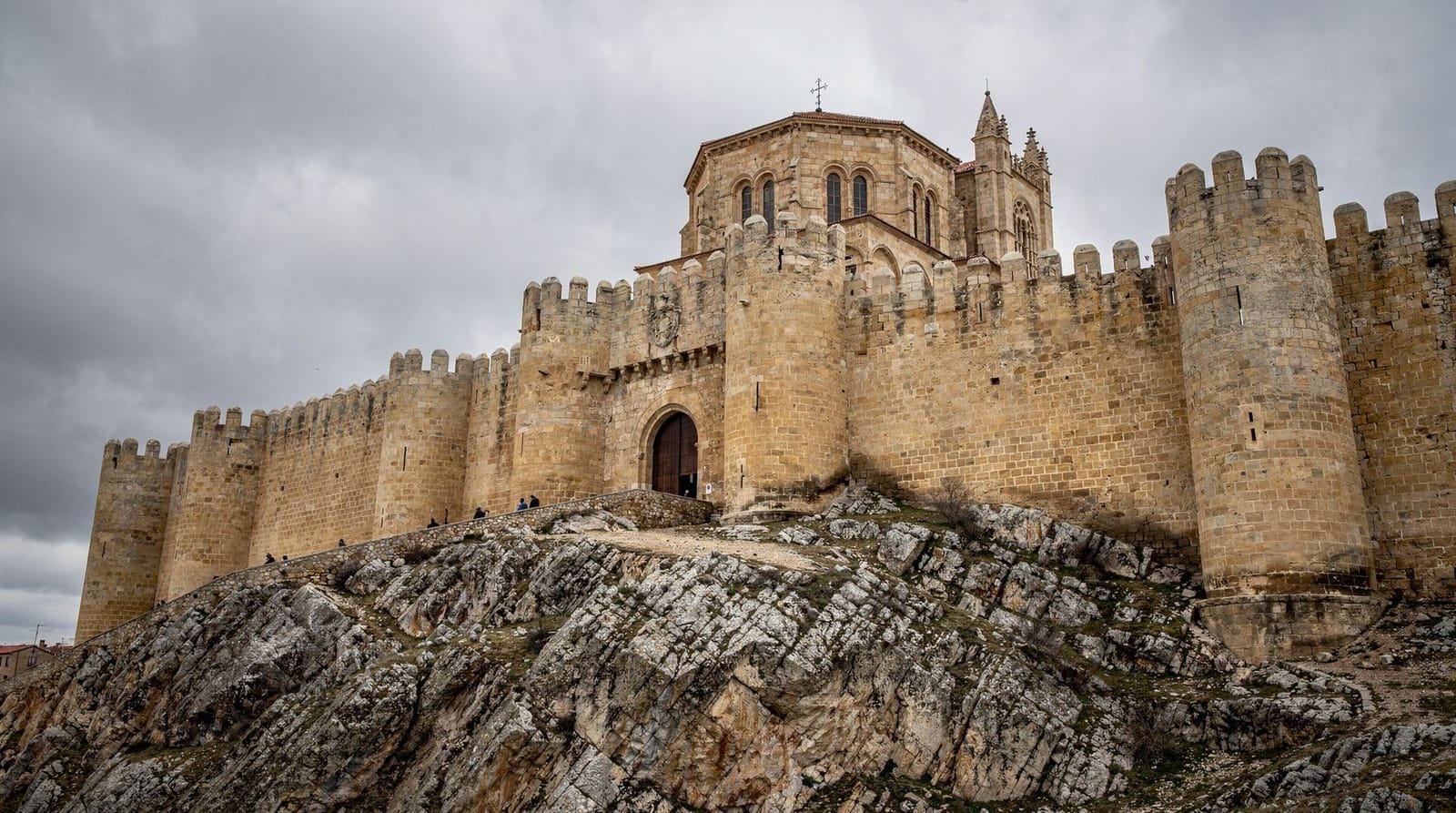
| Castle | Alcázar — now a military museum | Alcázar — now a royal palace museum |
| Art | El Greco museum (€3), cathedral El Greco paintings | Pinturas in the Alcázar chambers |
| Extra | Synagogues, mosque-church, San Juan de los Reyes | Vera Cruz church, Casa de Lozoya |
| Cathedral | Monumental Gothic, 90 min minimum | Last Gothic in Spain (1768), 45 min |
| Total time needed | 6–8 hours minimum | 4–6 hours for the three monuments |
Verdict: Toledo has more total content. Segovia is more concentrated. Toledo rewards slow visitors; Segovia suits those with less time.
The food comparison
Toledo’s food
Toledo’s mazapán (marzipan) is one of Spain’s most famous regional confections — Santo Tomé brand sells it in shops throughout the old town. The street food is good. For sit-down meals: venison and game (caza) from the Montes de Toledo, carcamusas (pork and tomato stew), and cod dishes reflect Toledo’s historical position on major trade routes.
The problem: tourist-trap restaurants are concentrated near the cathedral and Zocodover. Move two streets away for dramatically better quality and value.
Segovia’s food
Cochinillo asado — roast suckling pig — is a genuine pilgrimage for food lovers. The 21-day-old pigs are roasted until the skin crisps and the meat falls apart; the carving ceremony at Mesón de Cándido (where a plate, not a knife, cuts through it) is theatrical and correct. This is one of the great food experiences within a day trip of any European capital.
Segovia also has excellent cheeses from the surrounding plateau (queso castellano) and the local pastry called ponche segoviano (a rum and marzipan layered cake).
Verdict: Segovia wins on food. The cochinillo experience is a genuine reason to choose it over Toledo. If you’re a food-motivated traveller, Segovia earns significant extra points here.
Madrid–Segovia–Toledo full-day tour — for those who want both cities in a single guided day.
The atmosphere comparison
Toledo’s atmosphere
Toledo is an ancient city that has never entirely adjusted to its tourist role. The streets are narrow, the hill is steep, the monuments are dense. At 11:00 in summer, the tour group throughput on Calle del Comercio can be intense. But at 09:00 before the buses arrive, or at 17:00 when many groups leave, Toledo reverts to something close to a genuinely medieval experience.
The “three cultures” narrative — Jews, Christians, and Muslims who coexisted and built here before 1492 — gives Toledo a historical complexity that Segovia doesn’t match.
Segovia’s atmosphere
Segovia is slightly more comfortable. The old town is smaller and the monuments are spread across a manageable area rather than layered on top of each other. The cochinillo restaurants are excellent and unpretentious. The locals — university students, families, professional residents — are visible in a way that’s not always true in heavily touristed Toledo.
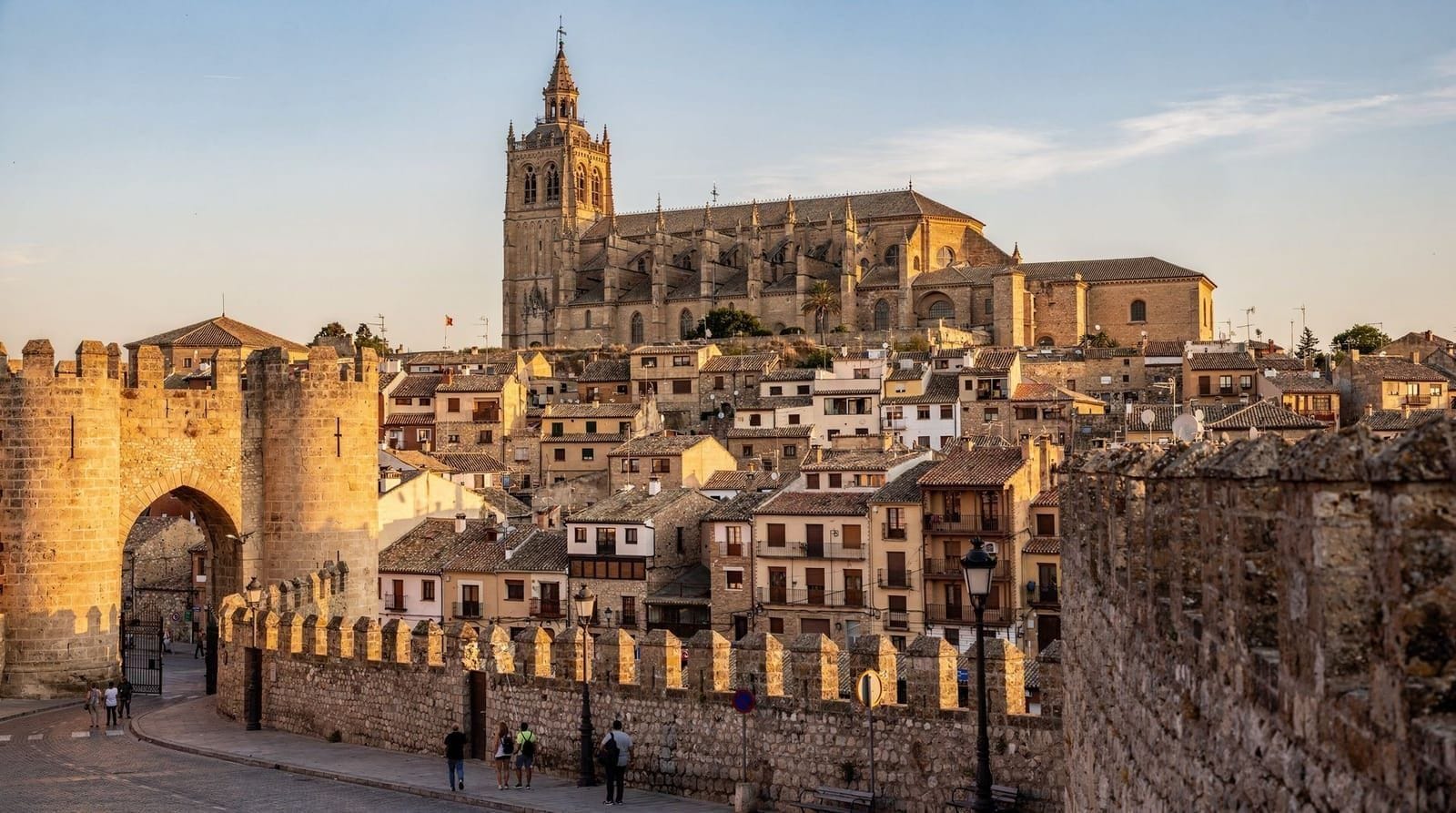
The Alcázar’s castle quality gives Segovia a more fairytale visual character that some visitors find more immediately striking.
Verdict: Depends on preference. Toledo for historical depth; Segovia for visual drama and comfort.
The practical comparison
| Toledo | Segovia | |
|---|---|---|
| Train from | Atocha (more central) | Chamartín (need Cercanías from Sol) |
| Train time | 33 min | 28–30 min |
| Train fare (return) | ~€24–32 | variable, see Renfe’s website |
| Station to old town | 1.5 km, bus 5 or walk 25 min | 5 km, bus 11, 15 min |
| Walkability | Steep, cobbled, hilly | Manageable hills, largely pedestrianised |
| Half-day viable? | Tight | Yes, 4–5 hours works |
| Crowds (peak summer) | High | Moderate-high |
Whichever city you pick, the getting-there details are worth sorting out the day before. The Atocha vs Chamartín guide explains which station you will use and how to reach it, and the AVE train day trips guide covers booking and what to expect on board. If you would rather not deal with stations at all, day trips without a car lays out the other options, and the Tourist Travel Pass guide is worth a look for the local transport side of the journey.
The decision: who should choose which
Choose Toledo if:
- You want the maximum cultural and historical density
- Art (El Greco) is important to you
- You’re happy spending a full day (6–8 hours on-site)
- You want Madrid’s most iconic day-trip landmark
Choose Segovia if:
- Food is central to your travel motivation (cochinillo is a reason in itself)
- You have half a day rather than a full day
- You want architectural drama over historical complexity
- You’re travelling with children who respond better to a “real castle” than a cathedral
Do both if:
- You have 5+ days in Madrid
- You enjoy historic cities and can dedicate a full day to each
For the full planning frameworks, see the Madrid and Toledo itinerary and the Madrid and Segovia itinerary. The Madrid week with day trips covers both as separate days in a 7-day structure.
Fitting the choice into your Madrid stay
The right city often depends on how the rest of your trip is shaped. If your days in the capital are already packed with museums, a lighter outing suits you; the Madrid in one day and 3 days in Madrid plans show how little slack a short stay has, while the 4–5 days itinerary leaves room for one of these trips without sacrificing the big sights. Travellers who care most about food can pair the Segovia day with the ideas in eat like a local, and those who want to understand the wider history behind both cities will enjoy the Habsburg and Bourbon history guide. Once you have chosen, the Toledo destination page and the Segovia destination page give a quick overview of each city. Anyone still hesitating will find a candid second opinion in the blog post Segovia or Toledo: which first?.
What about adding Ávila?
Ávila — the third of Madrid’s classic walled cities — rounds out what some call the “Castilian triangle.” If your Madrid stay extends to 5+ days, adding Ávila gives a genuinely different experience: quieter, less touristed, the best medieval city walls in Spain, and a strong Saint Teresa heritage. The three cities together span Roman, Visigoth, Moorish, Jewish, Christian, and Renaissance layers across a 100 km radius.
The longer view: context for each city
Toledo across time
Toledo’s significance spans the entire arc of Spanish history. The Visigoths chose it as their capital in the late 6th century — the conversion of Recared from Arianism to Catholic Christianity here in 587 AD shaped the religious character of Spain for the following millennium. Arab rule from 711 brought the city’s first golden age: a cosmopolitan court where Jewish scholars, Christian intellectuals, and Muslim philosophers worked together on scientific and philosophical texts. The School of Translators (12th–13th centuries) transmitted Greek philosophy and Arabic science to European scholarship.
The Christian reconquest of Toledo in 1085 began the city’s second transformation. Ferdinand III and Alfonso X maintained Toledo as a tri-faith city longer than almost anywhere else in medieval Spain — the coexistence (convivencia) that produced Toledo’s layered religious architecture: a mosque within a church within a former mosque, a synagogue converted to a church, a Mudéjar-decorated Christian building using Islamic craftsmanship.
El Greco’s arrival in 1577 gave Toledo its 16th-century artistic identity. His 37 years in the city produced the greatest body of work by any artist associated with a single Spanish city — the Burial of the Count of Orgaz, the View of Toledo (now in the Metropolitan Museum of Art), the Apostolado series in the El Greco museum.
Segovia across time
Segovia’s Roman aqueduct was operational for roughly 1,900 years — a longer continuous service life than any other major Roman infrastructure in Spain. The aqueduct’s survival (while Roman aqueducts elsewhere were cannibalized for building materials) reflects Segovia’s continuous use as a significant settlement through the Visigoth, Arab, and medieval Christian periods.
The Reconquest reached Segovia in 1083 — two years before Toledo — and the city quickly became a strategic royal residence for the kings of Castile and León. Isabella I’s proclamation as Queen of Castile in Segovia’s Alcázar in 1474 was the pivotal moment in Spain’s consolidation: the marriage to Ferdinand of Aragon that followed made possible the unity of the Spanish kingdoms, the final Reconquest of Granada (1492), and the Columbus voyages (also 1492).
Segovia’s prosperity in the 15th–16th centuries rested on the Castilian wool trade — the Merino sheep bred on the Castilian plateau, their wool combed and processed in workshops along the Eresma river, and the cloth sold across Europe through Segovian merchant networks. The wealth is visible in the Baroque mansions and churches throughout the old town.
Seasonal comparison
| Season | Toledo experience | Segovia experience |
|---|---|---|
| Spring (Apr–May) | Crowds manageable, perfect weather | Gardens at their best; Segovia quieter |
| Summer (Jun–Aug) | Very hot; start before 09:00; busy midday | Hot but slightly cooler than Toledo |
| Autumn (Sep–Oct) | Ideal light; manageable crowds | Mountain backdrop spectacular |
| Winter (Nov–Mar) | Quietest period; cold (5–12°C) | Snow possible; Guadarrama backdrop dramatic |
Verdict: Both cities are best in spring and autumn. Summer is manageable but requires early starts. Winter is excellent for monument-focused visits with minimal crowds.
Guided tours for both cities
Full-day Toledo tour with optional cathedral entry — the most comprehensive Toledo guided option from Madrid.
Full-day Segovia history and charm tour from Madrid — bus transfer and guided walking tour of the key monuments.
Madrid–Segovia–Toledo full-day tour — for those who want both cities in a single guided day (expect 2–3 hours each; a compromise but an efficient one).
Traveling with children: which wins?
Segovia’s Alcázar has the strongest child appeal of the two cities — a genuine turreted, fairy-tale castle silhouette (reportedly one inspiration for Disney’s Cinderella castle) that requires no historical context for a child to find exciting. Toledo’s Alcázar, by contrast, is now a military museum with heavier, more adult-oriented content, though its interactive exhibits do work reasonably well for children aged 8+. For families with younger children (under 8) short on patience for cathedral interiors, Segovia’s more compact circuit and shorter total walking distance make it the easier day. For families with older children genuinely interested in history — the “three cultures” story, El Greco, sword-making demonstrations — Toledo has more to offer. Both cities involve significant walking on cobbled, hilly streets; a carrier is more practical than a stroller for either.
First-time visitor vs repeat-visitor priorities
First-time Madrid visitor with one day trip to spare: Choose Toledo. Its density and the range of what it covers (Gothic cathedral, Moorish fortress, synagogues, El Greco) make it the more complete single day-trip experience, and it’s the destination most visitors mention when planning a Madrid trip in the first place.
Repeat Madrid visitor who has already done Toledo: Segovia becomes the natural next day trip — its food-forward, architecturally dramatic character offers a genuinely different experience rather than a lesser version of the same thing.
Visitors building a longer Castile itinerary: See both, plus Ávila for the full three-city picture, ideally with a full day dedicated to each rather than compressing them.
For the individual full guides, see Toledo from Madrid and Segovia from Madrid; for the wider set of options beyond these two, see best day trips from Madrid and day trips by train.
Frequently asked questions about Toledo vs Segovia from Madrid
Which has more to see — Toledo or Segovia?
Toledo has more monuments per square kilometre: a Gothic cathedral, the Alcázar, the El Greco museum (€3), multiple synagogues, the Mosque of Cristo de la Luz, and San Juan de los Reyes — easily a full 8-hour day. Segovia's three key monuments (aqueduct, Alcázar, cathedral) take 4–5 hours; you can add the Vera Cruz church and a long cochinillo lunch and still finish by 17:00. Toledo wins on monument density.Which is better for food — Toledo or Segovia?
Segovia wins on food. Cochinillo asado (roast suckling pig) in Segovia is one of the great Spanish culinary experiences — Mesón de Cándido and its competitors have been perfecting it for generations. Toledo's food is good (venison, carcamusas, the famous mazapán) but doesn't have the same culinary centrepiece. If eating is central to your day, Segovia.Which city is less crowded with tourists?
Both are popular; Toledo typically has more visitors overall, concentrated in the cathedral area. Segovia's crowds cluster around the aqueduct and Alcázar. In pure terms, Segovia tends to feel slightly less overwhelming because its old town is more compact and the main viewing point (the aqueduct plaza) disperses quickly. In peak summer both can feel very busy by mid-morning.Which is the better half-day trip from Madrid?
Segovia works better as a half-day. The three key monuments are close together; the aqueduct can be seen in 20 minutes; the Alcázar takes 1.5 hours; the cathedral 45 minutes; and a quick cochinillo lunch rounds it out in 4–5 hours total on-site. Toledo's density of monuments means a half-day feels rushed — you end up choosing between the cathedral and everything else.Which has the better train journey from Madrid?
Both are fast: Toledo 33 min from Atocha (AVANT), Segovia 28–30 min from Chamartín (AVE). The Toledo train is more convenient for those staying south of Madrid (Atocha is more central). The Segovia train requires reaching Chamartín, which is 5 minutes by Cercanías from Sol. The journeys are comparable; the Segovia train is slightly faster.Can I do Toledo and Segovia on the same day?
No — not independently. Toledo is 90 km southwest of Segovia; they are in opposite directions from Madrid. Guided tours combining Toledo and Segovia exist but make for an exhausting day with 2–3 hours at each city instead of 6–8. If you want both, give each city its own day.Which city has better views?
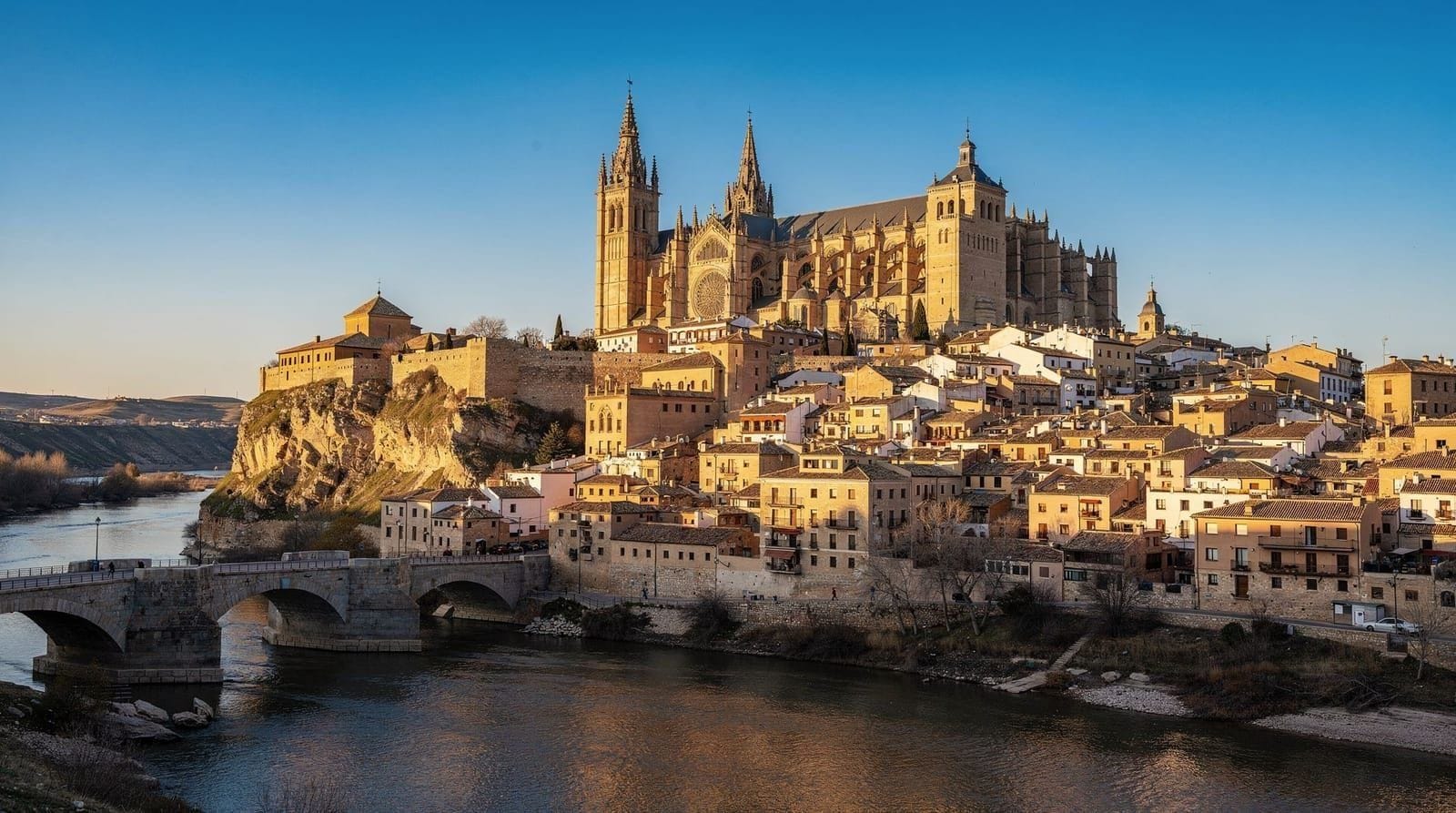
Both have dramatic viewpoints. Toledo's Mirador del Valle (across the Tajo river) gives the complete picture of the walled city on its hill — one of Spain's great panoramas. Segovia's Alcázar tower gives 360-degree views across the Castilian plain with the Sierra de Guadarrama as a backdrop. Toledo's external view is more dramatic; Segovia's internal views are better.Is one safer or more accessible than the other?
Both are very safe. Both have significant hills and cobbled streets — Toledo is steeper overall (the city climbs to the Alcázar at the top). Segovia has the aqueduct area at the base and rises to the Alcázar, but the gradient is more gradual. Neither is easy for wheelchairs. Toledo's narrow old town streets carry some car traffic; Segovia's are mostly pedestrianised near the monuments.Which is better for families with young children?
Segovia generally works better for children under 8 — the Alcázar's fairy-tale castle silhouette needs no historical context to be exciting, and the shorter, more compact circuit suits shorter attention spans. Toledo suits families with older children (8+) genuinely interested in history, given its greater depth and the interactive exhibits at its Alcázar military museum.If I've already done Toledo, is Segovia still worth a separate trip?
Yes — Segovia offers a genuinely different experience rather than a lesser version of Toledo. The Roman aqueduct, the cochinillo food tradition, and the more relaxed half-day pace make it a worthwhile follow-up day trip rather than a repeat of what Toledo already covers.
Top experiences
Bookable activities with verified prices and instant confirmation on GetYourGuide.