Madrid and Segovia: art, aqueducts and the Alcázar in 2 days
Segovia: Guided Walking Alcázar Entry
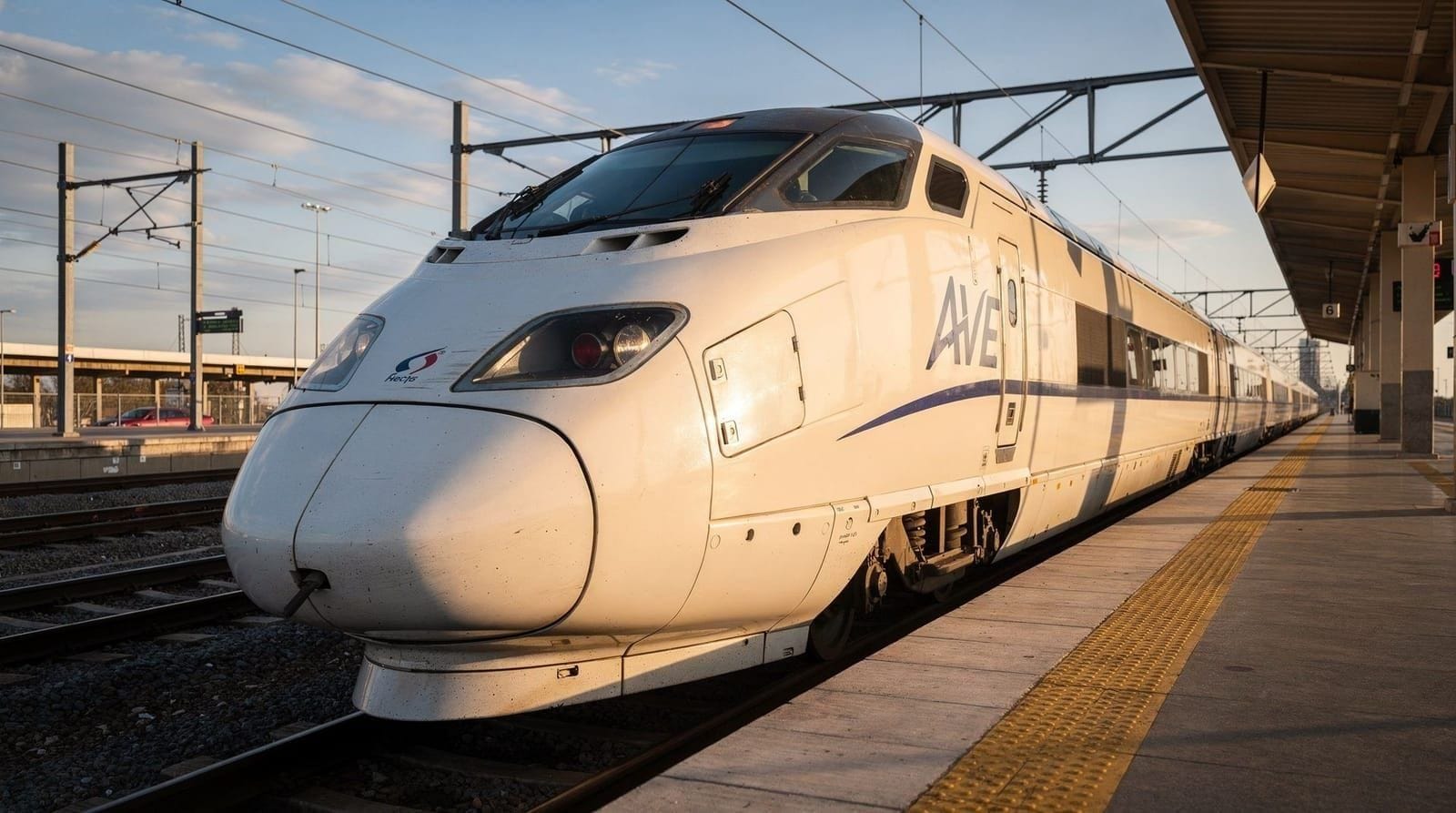
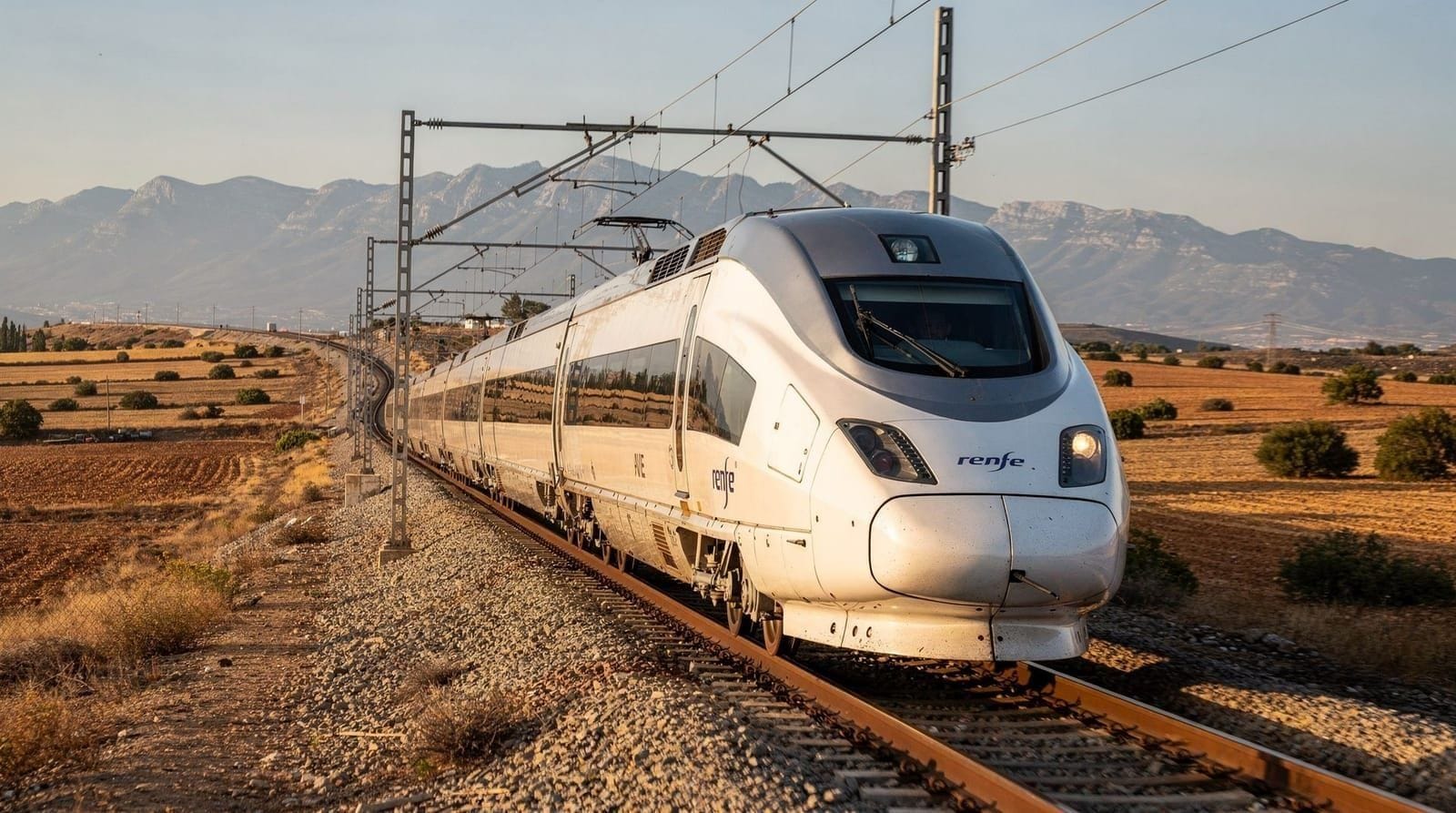
Quick answer: Segovia is 27 minutes from Madrid by AVE from Chamartín — the fastest and most architecturally striking day trip from the capital. Two days covers Madrid’s Prado and historic centre on Day 1, then a full Segovia day with the aqueduct, Alcázar, cathedral, and lunch of roast suckling pig. This combination covers two very different expressions of Spanish culture.
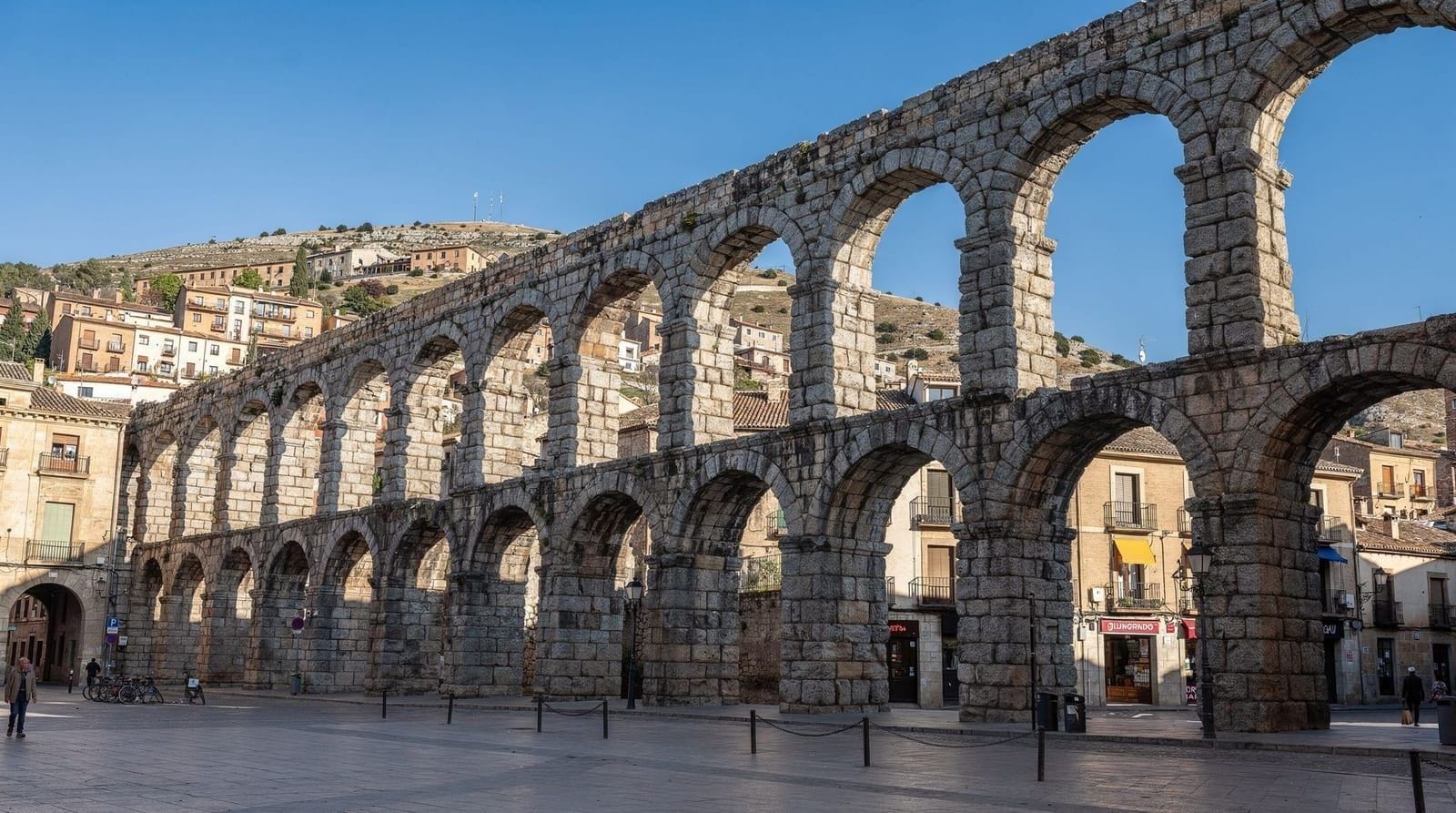
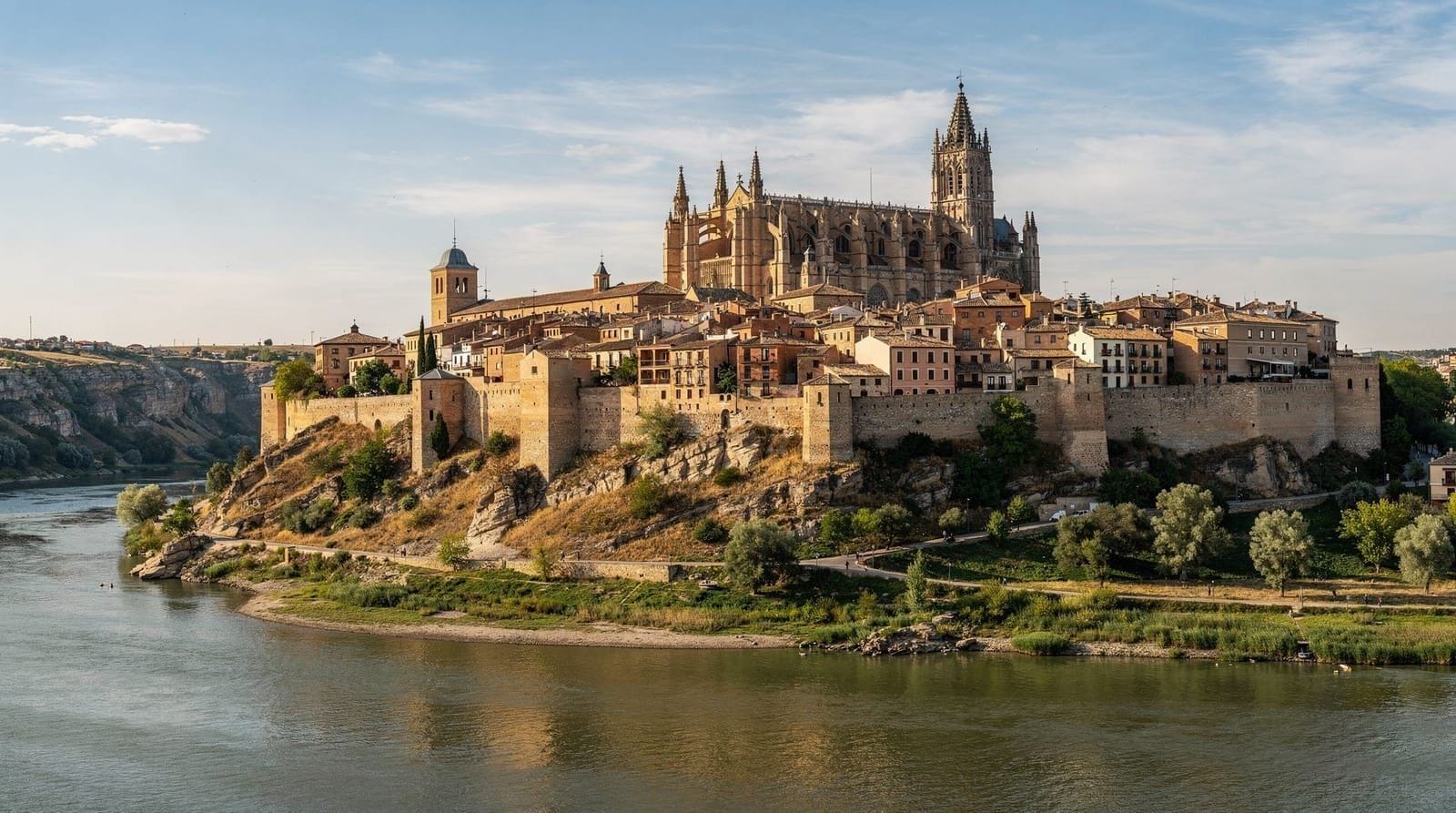
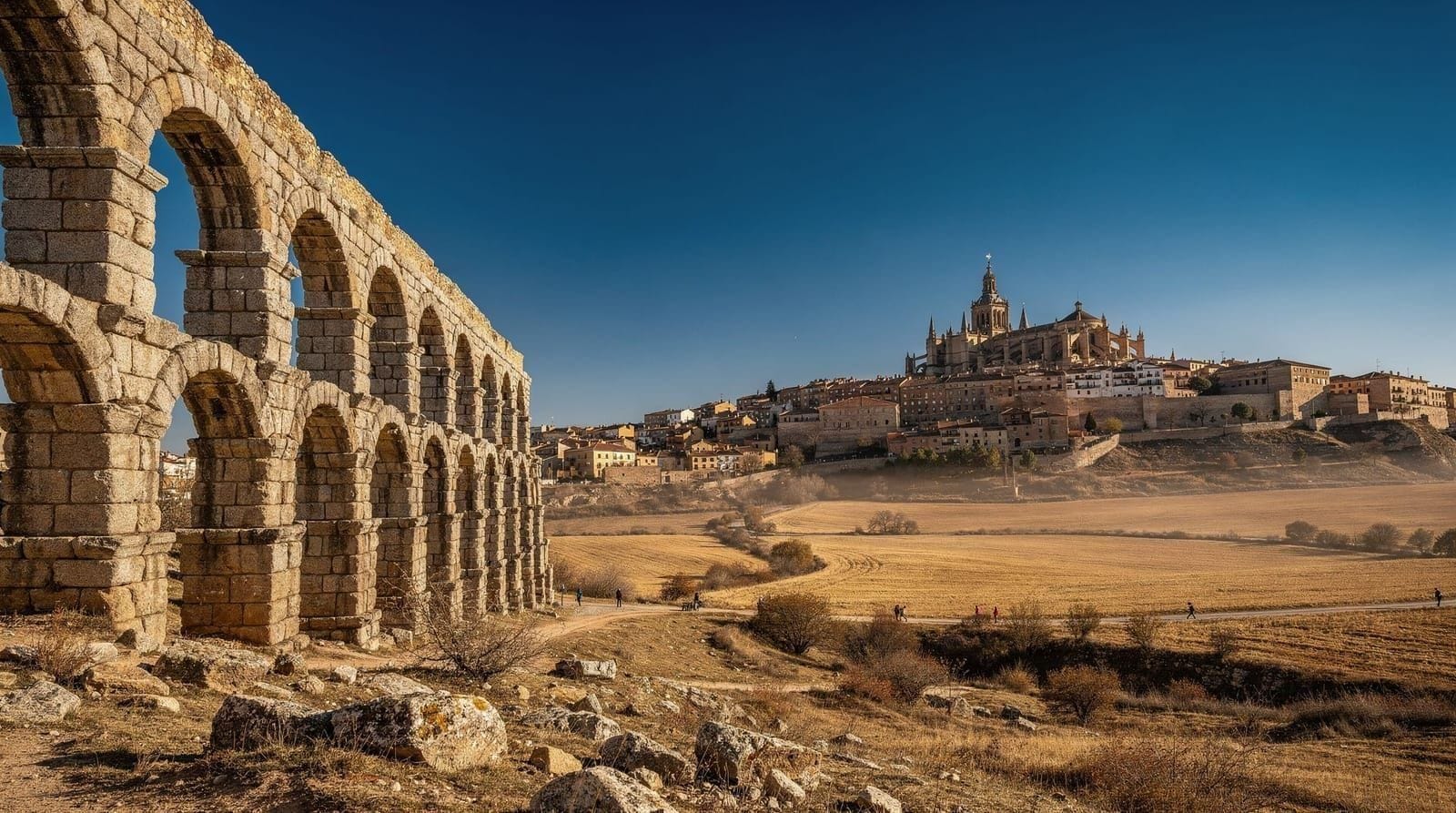
Segovia is quieter and smaller than Toledo, but its headline monument — a 166-arch Roman aqueduct 29 metres high, 728 metres long, built without mortar in the 1st or 2nd century AD — is one of the most startling engineering works surviving from antiquity. Arriving in Segovia and encountering the aqueduct in the city centre feels disproportionate in the best way: a structure of that scale and age simply standing there in the middle of a small Castilian city.
The combination of Madrid and Segovia over two days works because the train journey is short enough that Segovia genuinely feels like a day trip rather than a separate destination.
| Duration | 2 days (1 in Madrid, 1 in Segovia) |
| Getting to Segovia | AVANT high-speed train from Chamartín, 27–30 min |
| Cost of the day trip | Train fare variable (see the Renfe website), plus €7–€10 for the Alcázar |
| Pace | Easy — Segovia’s centre is compact and walkable in half a day |
| Best time | Spring for snow-capped Guadarrama views; avoid midday heat in July–August |
Day 1: Madrid — Prado, historic centre, evening tapas
Morning: Prado Museum
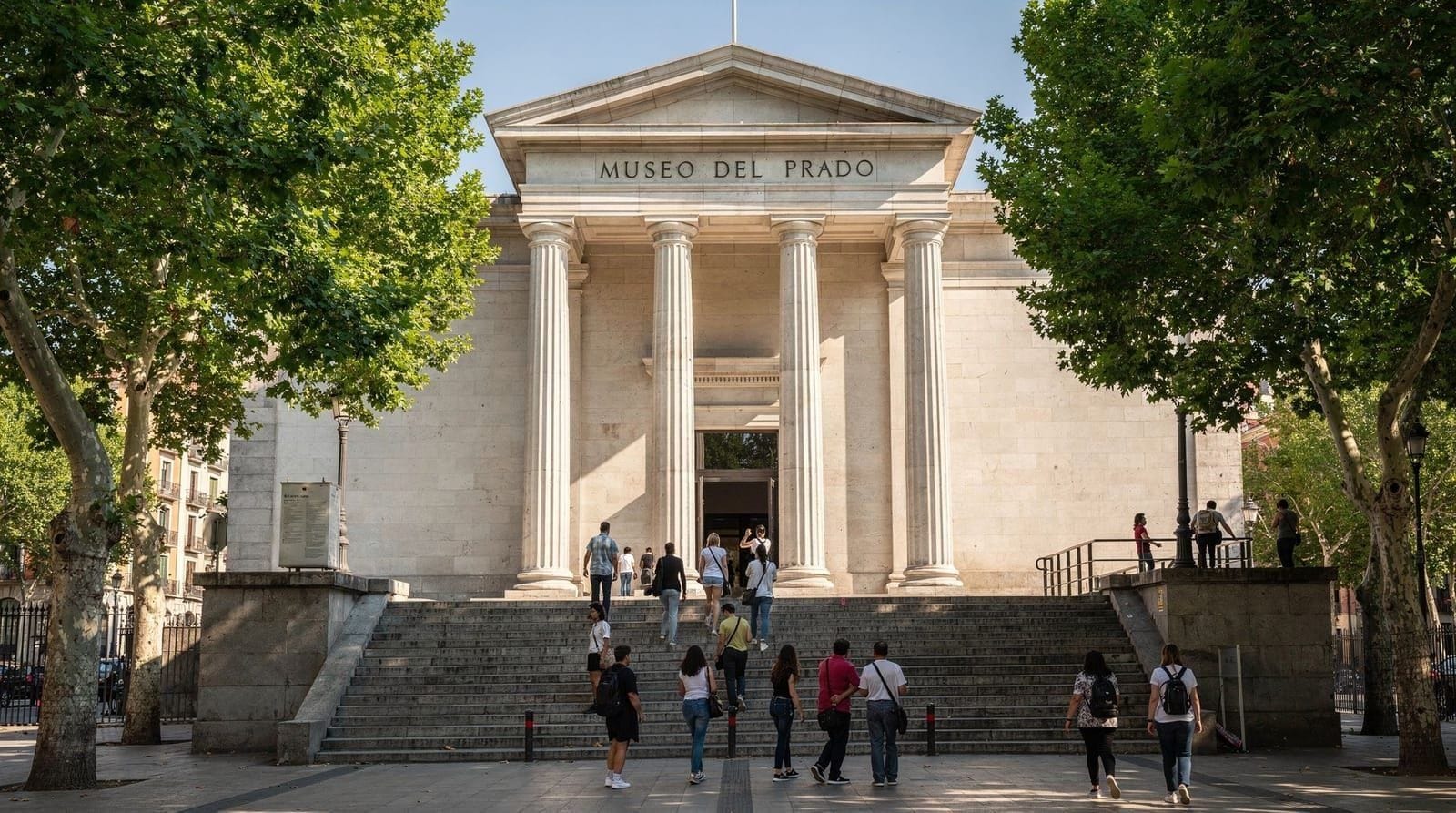
Start the two-day combination with Madrid’s most important art museum — the Prado. Book the Prado skip-the-line guided tour for a two-hour oriented visit if this is your first time; the guided context for Velázquez, Goya, and El Greco is genuinely useful.
After the Prado, a 20-minute walk through Barrio de las Letras brings you to the edge of the Austrias quarter.
Midday: Historic centre
Walk through the Austrias quarter to Plaza Mayor and Puerta del Sol. The plaza circuit, as always, is best experienced as a walk-through rather than a sit-down — the surrounding restaurant terraces are significantly overpriced. From Sol, walk into the narrow streets of Barrio de las Letras for a proper menú del día lunch at €12–€15.
Afternoon: head to the Royal Palace if you did not see it on arrival, or spend the afternoon in Retiro Park as a decompressor before the day trip tomorrow.
Evening: La Latina
La Latina for the evening. Madrid from its best angle on a first night — the tapas bars of Cava Baja, a glass of local wine, the neighbourhood at 9 pm full of people eating and talking. The where to eat in La Latina guide identifies the specific bars worth knowing.
Day 2: Segovia — the aqueduct, Alcázar and cochinillo
Getting there: AVE from Chamartín
Take the AVANT from Madrid Chamartín to Segovia-Guiomar. Trains run from approximately 6:20 am; the journey is 27–30 minutes. Book on Renfe at least the day before — fares vary (see the Renfe website), seats sell quickly on weekends. Note the station: Segovia-Guiomar is the AVE terminus, which is several kilometres from the city centre; from there, take bus No. 11 (€2.25) directly to the Plaza Mayor.
Aim to arrive in the city centre by 9:30–10:00 am.
Morning: The aqueduct and the cathedral
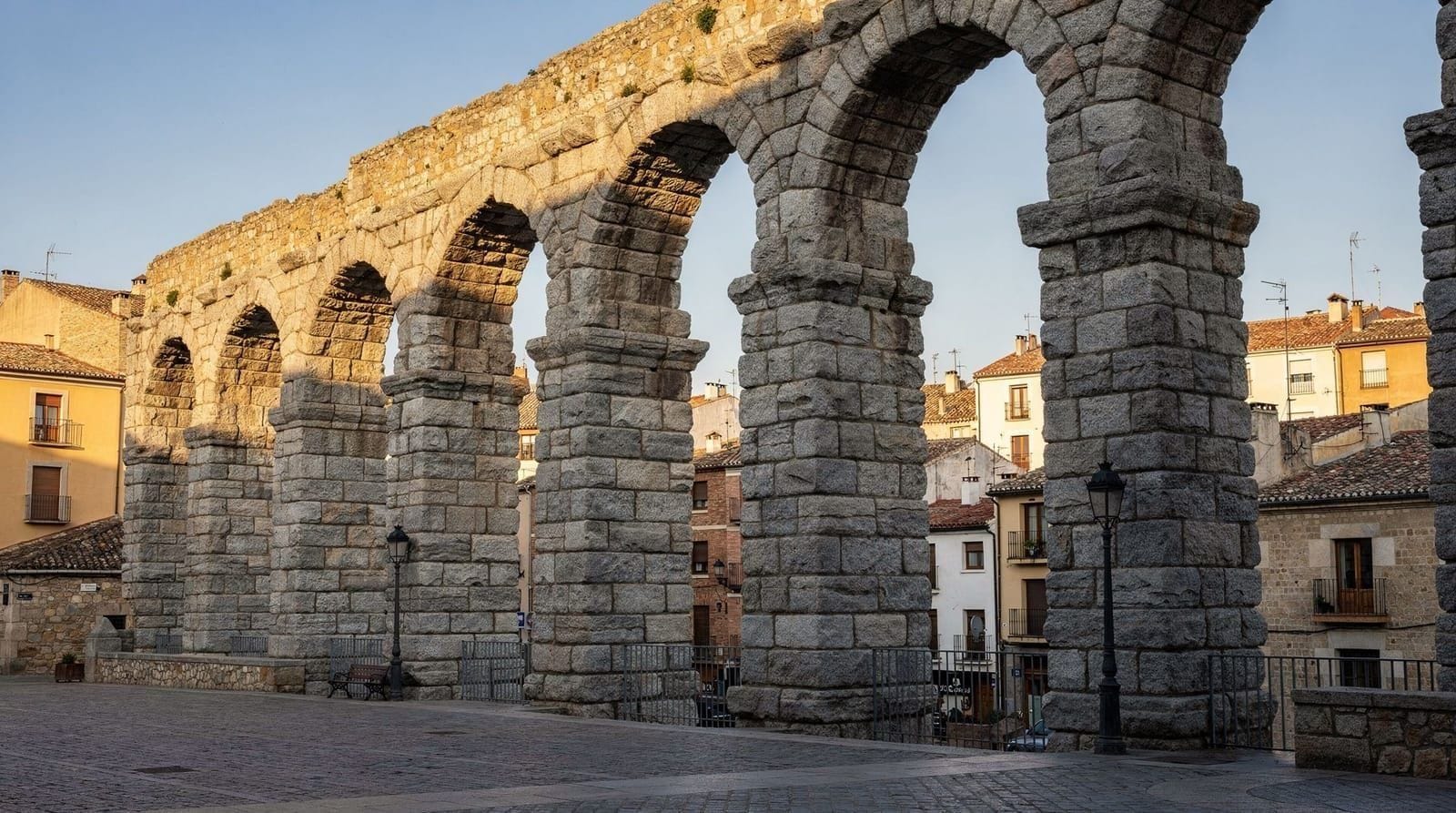
The Roman aqueduct runs through the middle of Segovia at the Plaza del Azoguejo — a city-centre square where the structure reaches its maximum height of 29 metres. It was built to carry water from the Rio Frío, 17 km away, to the city; the two-storey arched structure carried water until the 19th century. No mortar was used; the granite blocks are cut and fitted dry, held in place by gravity and precision.
Stand at the base and look up; the scale becomes clear. The tourist information centre at the base has good historical context. Entry to the walkway at the top of the first storey is free; the view along the upper tier of arches is the best angle.
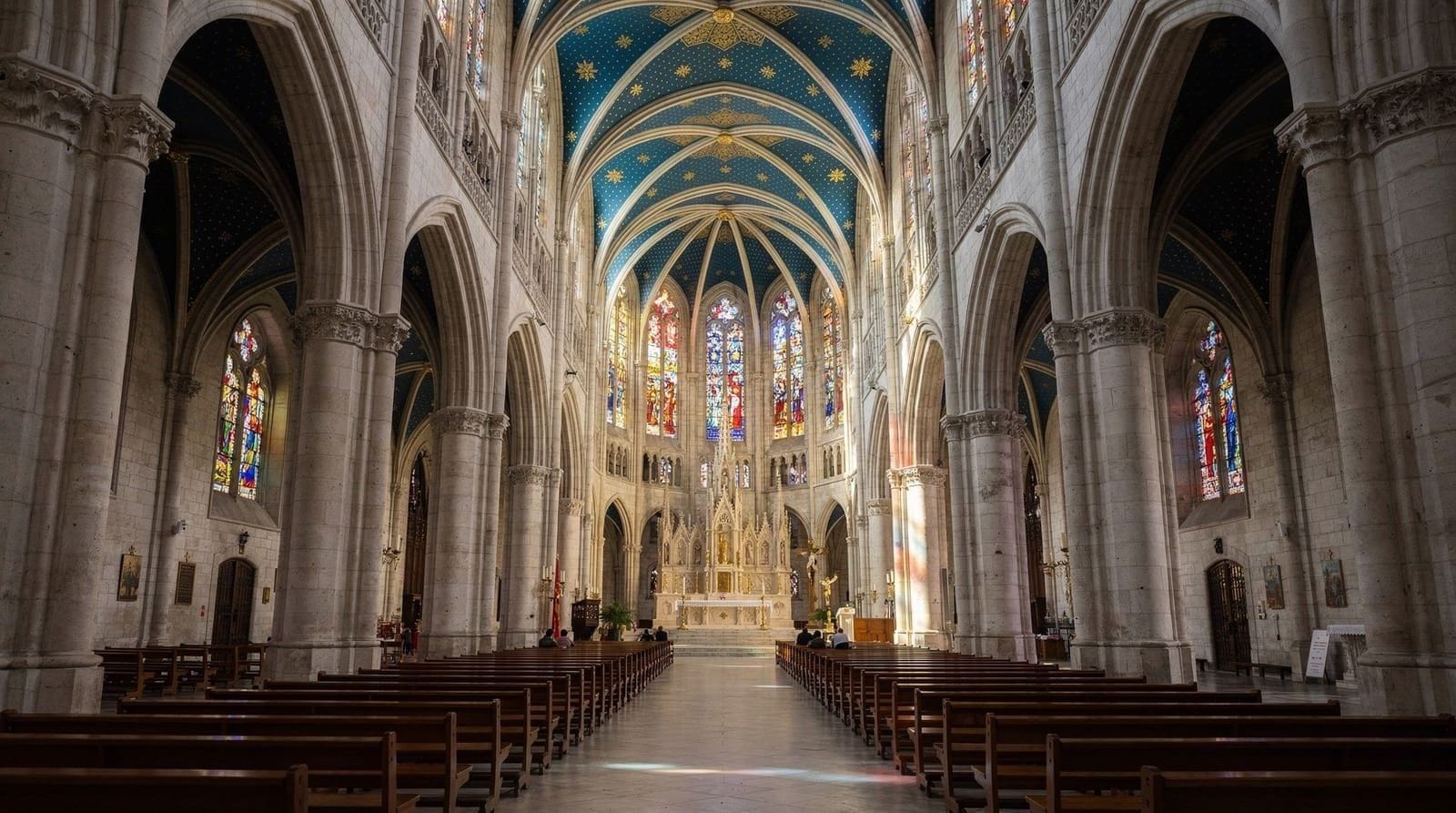
Walk from the aqueduct up through the historic centre (all uphill; comfortable shoes required) to the Catedral de Segovia — a late Gothic cathedral completed in 1577, the last major Gothic cathedral built in Spain. The exterior is one of the most ornate Gothic profiles in Castile; the interior is elegant and relatively simple. Entry around €4.
The Segovia guided walking tour with Alcázar entry covers the aqueduct, historic centre, and Alcázar in a structured half-day, which is the most efficient way to understand the historical layers.
Midday: Lunch — roast suckling pig
Segovia is Spain’s capital of cochinillo asado — roast suckling pig cooked in a wood-fired oven. A 21-day-old pig, fed only on milk, cooked for three hours at low temperature until the skin crisps like glass. The traditional demonstration: the chef uses the edge of a dinner plate to carve the pig, proving it is tender enough to cut without a knife.
The landmark restaurant is Mesón de Cándido at the foot of the aqueduct, which has operated since 1786 and whose clientele includes the Spanish royal family and various heads of state. It is not cheap (€30–€45 per person for a full lunch with wine) but for the quality it offers reasonable value. Reserve in advance. José María on Calle Cronista Lecea and El Bernardino near the cathedral are reliable alternatives.
If the cochinillo budget is too much, the menú del día at neighbourhood restaurants in Segovia runs €12–€15 as everywhere in Castile.
Afternoon: Alcázar of Segovia
The Alcázar of Segovia is the castle that reportedly inspired Walt Disney’s concept of Cinderella’s castle, though Disney has never confirmed this. Whether true or not, the fairy-tale profile — slate-blue turrets, a promontory above the confluence of two rivers, a needle-spire tower — is extraordinary. The castle has been a royal palace, a military academy, and now a military museum and heritage site.
Entry is €7 (€10 with the tower, which has the best view over the valley). The interior has good medieval and early modern Spanish military history. Allow 90 minutes.
From the Alcázar, walk back through the old city — the streets between the cathedral and the Plaza Mayor are worth taking slowly for the architecture and the craft shops selling Segovian ceramics.
Return to Segovia-Guiomar by bus No. 11 from Plaza Mayor. Check the time of the last AVANT train to Madrid Chamartín on the Renfe website.
The Segovia guided walking tour with cathedral and Alcázar is the best-value structured option if you want a guide for the full day.
What Segovia does that Toledo does not
Toledo and Segovia are two of the most visited day trips from Madrid, and the comparison is worth making clearly because most visitors choose one and would benefit from choosing both.
Toledo’s strengths: more historical layers (Jewish, Christian, and Islamic heritage coexisting in a single medieval city), more art (El Greco’s presence is everywhere), and more monuments per square kilometre. Toledo is the richer intellectual experience.
Segovia’s strengths: the aqueduct is more visually extraordinary than anything Toledo has at a single glance, the Alcázar is more photogenic, the city is quieter and less crowded on most days, and the cochinillo lunch is a culinary experience with no equivalent in Toledo. Segovia is also slightly easier to walk — Toledo’s rock formation makes everything uphill and steep.
The Toledo vs Segovia comparison guide goes through this in detail. The honest conclusion is that if you can do both, do both — they are 27 and 33 minutes from Madrid respectively by AVE, and a Madrid week naturally accommodates both.
The aqueduct in context
The Roman aqueduct of Segovia deserves more than a quick photograph. It was built — the exact date is disputed, but archaeological evidence suggests around 50–100 AD — to carry water from the Rio Frío, fed by the snow-melt of the Sierra de Guadarrama mountains 17 km away. The water was used for domestic supply and, crucially, for the baths and fountains that were the social infrastructure of a Roman city.
Two rows of arches, with the lower row supporting the upper row, carry the channel at gradually decreasing height as it traverses the valley from the Sierra to the town. Where it crosses the Azoguejo square, the maximum height is 28.5 metres — almost ten storeys — entirely in dry-fitted granite, no mortar, just mass and geometry. The structure carried water until 1906 when the channel fell into disuse; restoration work in the 1990s was controversial because it involved replacing some damaged stones with new stone, which changed the aqueduct’s visual texture in the restored sections.
Understanding the construction logic — how a Roman engineer in the 1st century AD calculated the grade necessary to maintain water flow for 17 km — is part of what makes the monument more interesting than it looks at first. The Segovia municipal museum at the base of the aqueduct has an installation explaining the hydraulics.
Getting the timing right on Day 2
The single biggest scheduling risk on this itinerary is missing the early AVANT and losing an hour of your Segovia day. Aim to leave your Madrid hotel about an hour before departure if you are catching one of the early trains, allowing time to reach Chamartín, clear the platform, and board with a small buffer — Renfe gates typically close a few minutes before departure. If an early start is not realistic, a mid-morning departure (9:00–9:30 am) still leaves a full afternoon in Segovia, but tighten the itinerary by choosing either the Alcázar or the extended Jewish quarter walk rather than both. Whichever train you take, check the return schedule from Segovia-Guiomar before you leave Madrid — missing the last train means an expensive taxi or an overnight you had not planned for.
Segovia’s medieval Jewish quarter
A smaller-known aspect of Segovia is its medieval Jewish quarter, one of the most important in Castile. The Judería (Jewish quarter) occupied the area between the cathedral and the town walls; the main synagogue was located approximately where the Corpus Christi convent now stands (it was seized and converted in the 15th century, as was the case with Jewish sacred buildings throughout Castile).
The Isabella I connection: Isabella the Catholic, the queen who ordered the expulsion of the Jews from Spain in 1492, was proclaimed queen of Castile at Segovia’s Plaza Mayor in 1474. The connection between the city and the defining event of Spanish Jewish history is not casual.
The streets of the former Judería — Calle de Juan Bravo and the lanes south of it — preserve their medieval scale even if the original buildings are long gone. A walk through this area adds a layer of historical depth that is easy to miss if you concentrate solely on the aqueduct and the Alcázar.
Realistic cost for the two days
Budget roughly €70–€135 per person for the full two days, excluding your Madrid hotel on Day 1 (already accounted for elsewhere if this is part of a longer trip): the Prado ticket or guided tour €15–€35, dinner in La Latina €25–€35, the Segovia AVE return (variable fare, see the Renfe website; not included in this total), the Alcázar and cathedral entries around €14, the bus No. 11 return €4.50, and the cochinillo lunch at Mesón de Cándido €30–€45 (or €12–€15 for a standard menú del día if you skip the splurge). Travelling as a pair roughly halves the per-person transport cost if you book a return AVE fare together, and shoulder-season prices (spring, autumn) run 10–15% below summer weekend peaks.
Where to stay in Segovia for an overnight extension
If two days is not enough for Madrid and you want to extend the Segovia visit into an overnight, the city has good accommodation options at significantly lower prices than Madrid. Staying overnight allows a later afternoon walk to the Alcázar at the golden hour (the light on the castle at sunset is the definitive photograph), dinner in a local restaurant at normal Spanish hours (9–10 pm), and a calmer morning before returning to Madrid.
Mid-range hotels in Segovia’s historic centre run €70–€110/night for a double; some are installed in historic palaces and convents. The Segovia from Madrid guide has accommodation recommendations.
Frequently asked questions about Madrid and Segovia
How long is the bus from Segovia-Guiomar station to the city centre?
Bus No. 11 takes approximately 20 minutes from Segovia-Guiomar AVE station to Plaza Mayor/city centre. A taxi from the station to the centre costs €7–€10 and takes 10 minutes.
Can I visit both Toledo and Segovia in one day from Madrid?
Technically possible but not recommended. Both are half-day minimum visits; doing both in one day means seeing neither properly. The best day trips guide explains how to plan multiple day trips over several days.
Is Segovia worth visiting without the cochinillo?
Yes — the aqueduct and the Alcázar alone justify the trip. The cochinillo is an optional bonus. Budget travellers can eat a proper menú del día in Segovia for €12–€15, which is the same price as Madrid and equally good.
What else is there to do in Segovia beyond the main monuments?
The city has a strong craft tradition (Segovian ceramics are distinctive); good independent restaurants in the streets off Plaza Mayor; a small but interesting archaeological museum in the tower of San Agustín; and the Jewish quarter streets for a quieter historical walk. The Segovia from Madrid guide covers the full picture.
Should I book Segovia from Chamartín or Atocha?
Chamartín only — this is a common mistake. The AVANT service to Segovia-Guiomar departs exclusively from Madrid Chamartín, not Atocha (which serves Toledo and southern destinations). If you are staying near Sol or the Prado, allow 15–20 minutes to reach Chamartín by metro before your train.
Day trip summary
| Step | Detail |
|---|---|
| Outbound | AVANT from Chamartín, 27–30 min, book 1–2 days ahead |
| Arrival | Segovia-Guiomar station, then bus No. 11 (~20 min) to Plaza Mayor |
| Morning | Roman aqueduct, then uphill walk to the cathedral |
| Lunch | Cochinillo at Mesón de Cándido, or a budget menú del día |
| Afternoon | Alcázar of Segovia and the old Jewish quarter streets |
| Return | Bus No. 11 back to Segovia-Guiomar, AVANT to Chamartín |
Practical notes
- Segovia station is not in the city centre. The AVE terminus at Segovia-Guiomar is 6 km from the old city; bus No. 11 connects them (€2.25, 20 minutes). Do not confuse it with Segovia-Empalme, the older station on the slower regional rail line, which is closer to the centre but takes much longer from Madrid.
- Book the AVE from Chamartín, not Atocha. Segovia-bound trains leave from Chamartín. From Sol, take Metro Line 1 (10 minutes) or Line 10 to Chamartín.
- Book the Mesón de Cándido in advance. The restaurant fills by 13:30 on weekends; book online 2–3 days ahead for Saturday or Sunday lunch.
- Best season for Segovia. Spring and early summer — the Guadarrama mountains behind the city still have snow on the peaks in April and May, which makes the panorama from the Alcázar tower exceptional. Autumn is equally good. July and August are hot at midday (Segovia sits at 1,000 m altitude but the heat is still significant); arrive early.
- Comfortable shoes. The walk from the aqueduct at the lower end of the city to the Alcázar at the upper end involves a consistent uphill gradient on cobblestones. This is not extreme, but it is not flat.
Top experiences
Bookable activities with verified prices and instant confirmation on GetYourGuide.