AVE train day trips from Madrid: Toledo, Segovia, and beyond
Toledo: Day Trip Local Guide
What is the best AVE train day trip from Madrid?
Toledo (33 min from Atocha, ~€12–€16 each way) and Segovia (27–30 min from Chamartín, fare varies, see Renfe) are the two standout AVE day trips — both UNESCO World Heritage cities reached faster than many city metro commutes. For longer range, Seville (2h30) and Barcelona (from 2h45) are also popular but better as overnight stays.
The short answer: Spain has the longest high-speed rail network in Europe. From Madrid, two UNESCO World Heritage cities — Toledo and Segovia — are closer by AVE than most suburbs are to their city centres. Toledo in 33 minutes. Segovia in 27. These are genuinely the best day trips in Spain.
| Fastest options | Segovia (27–30 min), Toledo (33 min) |
| Typical fare | Toledo €12–€16 each way, Segovia varies (see Renfe), cheaper 2–3 weeks ahead |
| Station | Atocha for Toledo/Cuenca/south Spain; Chamartín for Segovia/Ávila/north |
| Booking | renfe.com or the Renfe app directly — avoid third-party fees |
| Best for one day trip only | Toledo, if you must choose just one |
Spain’s AVE network: what makes it special
Spain’s AVE (Alta Velocidad Española) high-speed rail network is the longest in Europe, with trains running at up to 310 km/h on dedicated high-speed track. Madrid sits at the hub. The AVE/AVANT services (AVANT being the shorter regional high-speed services) radiate out to Toledo, Segovia, Cuenca, Seville, Barcelona, Valencia, Zaragoza, Málaga, and beyond.
For day trips, the relevant services are:
- AVANT to Toledo (from Atocha, 33 minutes)
- AVE/AVANT to Segovia (from Chamartín, 27–30 minutes)
- AVE to Cuenca (from Atocha, approximately 55 minutes)
- AVE to Seville (from Atocha, approximately 2h30)
- AVE to Barcelona (from 2h45, from Atocha or Chamartín)
The day-trip sweet spot is everything under 90 minutes each way. Toledo and Segovia are in a class of their own.
Toledo by AVE: the unmissable 33-minute day trip
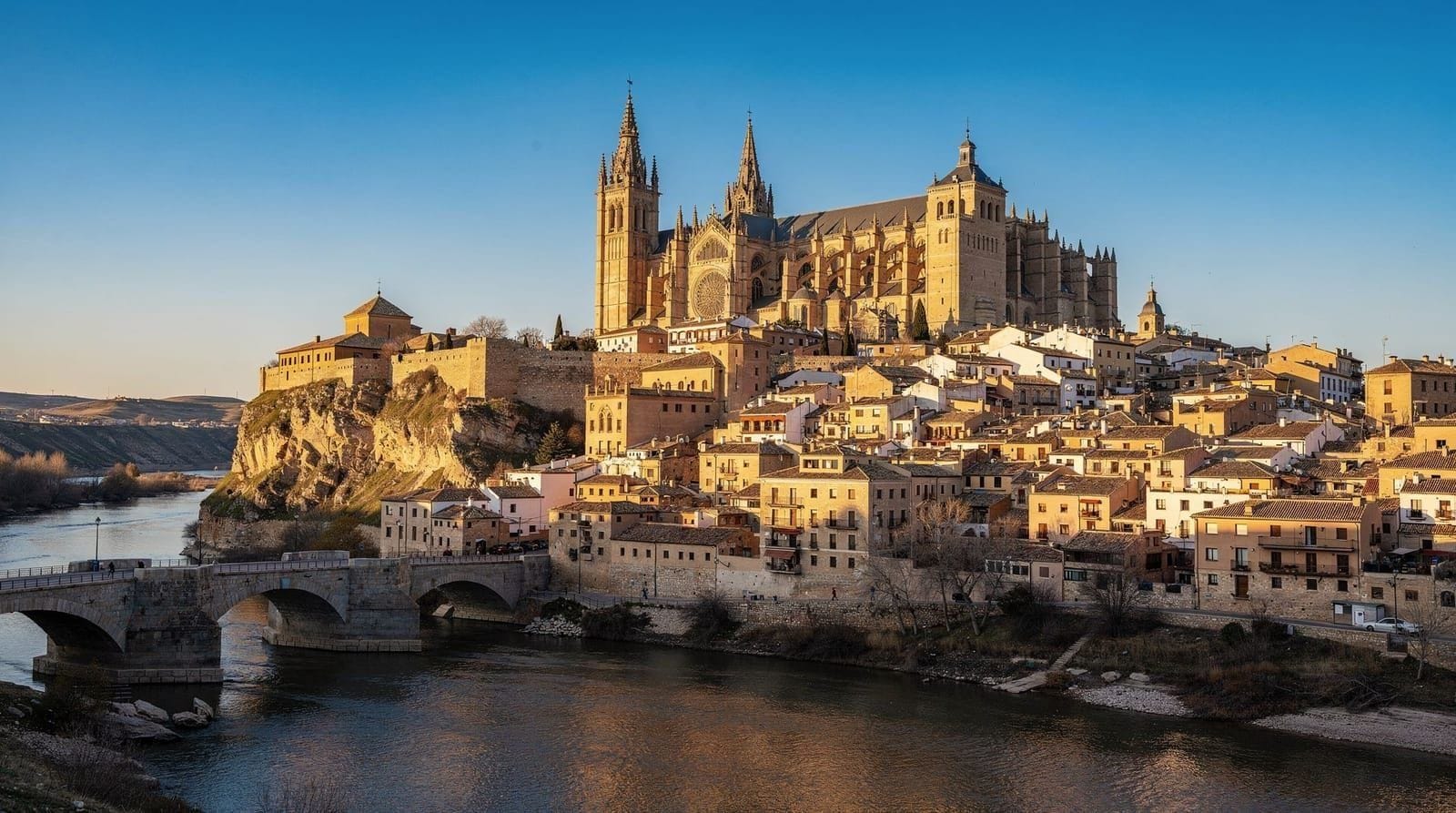
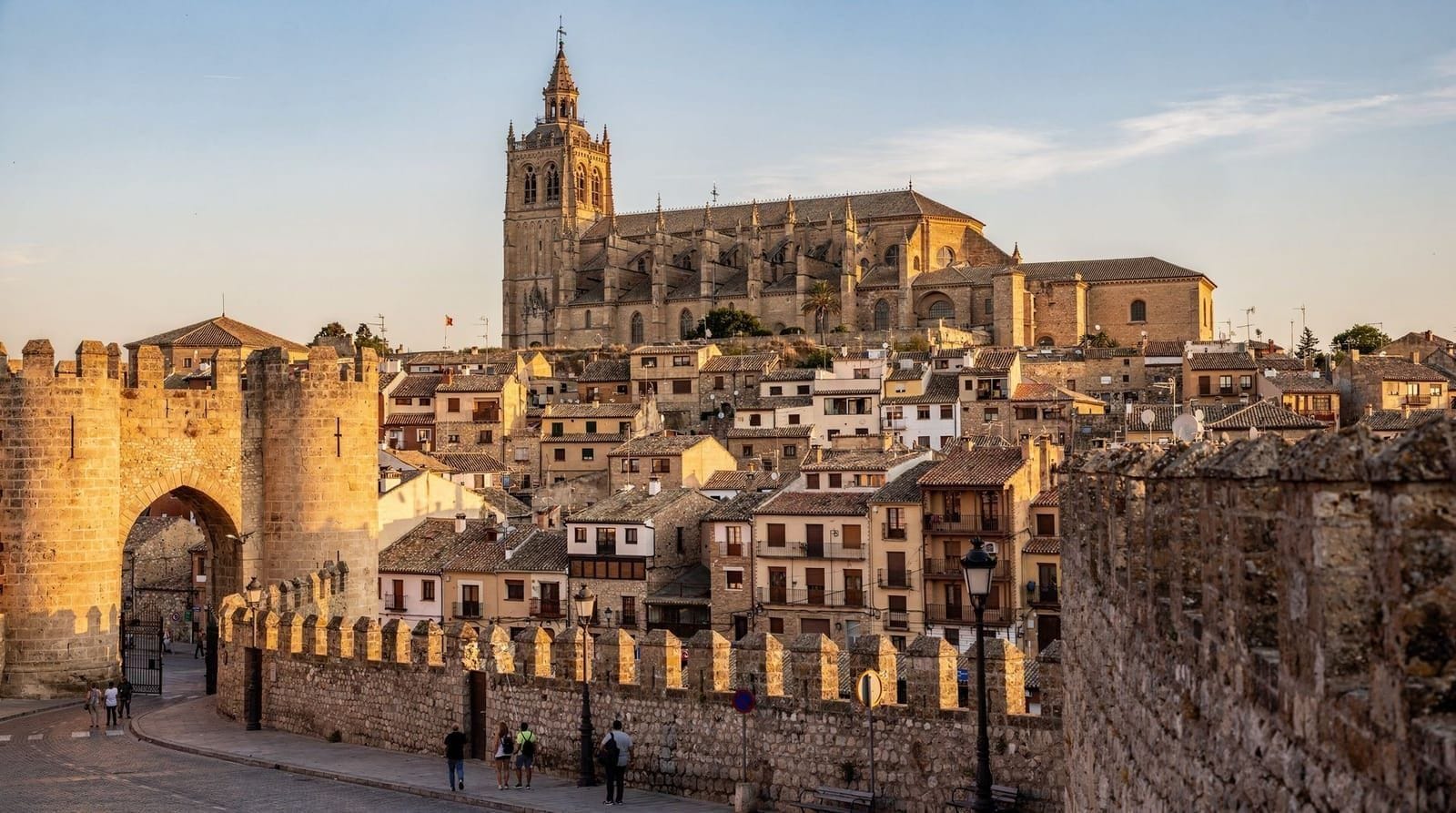
Toledo is not just a beautiful city — it is the most concentrated medieval UNESCO World Heritage site within easy reach of any European capital. The old city sits on a granite hill encircled by the River Tagus, with layers of Roman, Visigothic, Moorish, Jewish, and Christian heritage stacked on top of each other.
Getting there: Renfe AVANT service from Atocha station in central Madrid. Journey time: approximately 33 minutes. Several trains a day (see the Renfe site). The Toledo station is at the bottom of the old city; a bus or taxi takes 5–10 minutes to the historic centre.
Fares: Around €12–€16 each way in 2026 for a standard seat on AVANT. Book at Renfe.com or the Renfe app — do not use third-party aggregators, as they add fees for the same fare.
What to see in Toledo: The Cathedral (one of the finest Gothic cathedrals in Spain), the Alcázar, the El Greco museum (the city where the Greek-born painter spent most of his working life), the Synagogue of Santa María la Blanca, the Mosque of Cristo de la Luz, and the walled street network itself. A serious visit requires 5–7 hours; a half-day covers the essential circuit.
For a guided experience with entry to key monuments:
A guided day trip from Madrid to Toledo with a local guide covers the major sites with context that the self-guided route misses, particularly in terms of the “three cultures” (Christian, Jewish, Muslim) narrative.
Pair with the Toledo from Madrid guide for the complete day-trip logistics.
Segovia by AVE: the Roman aqueduct in 27 minutes
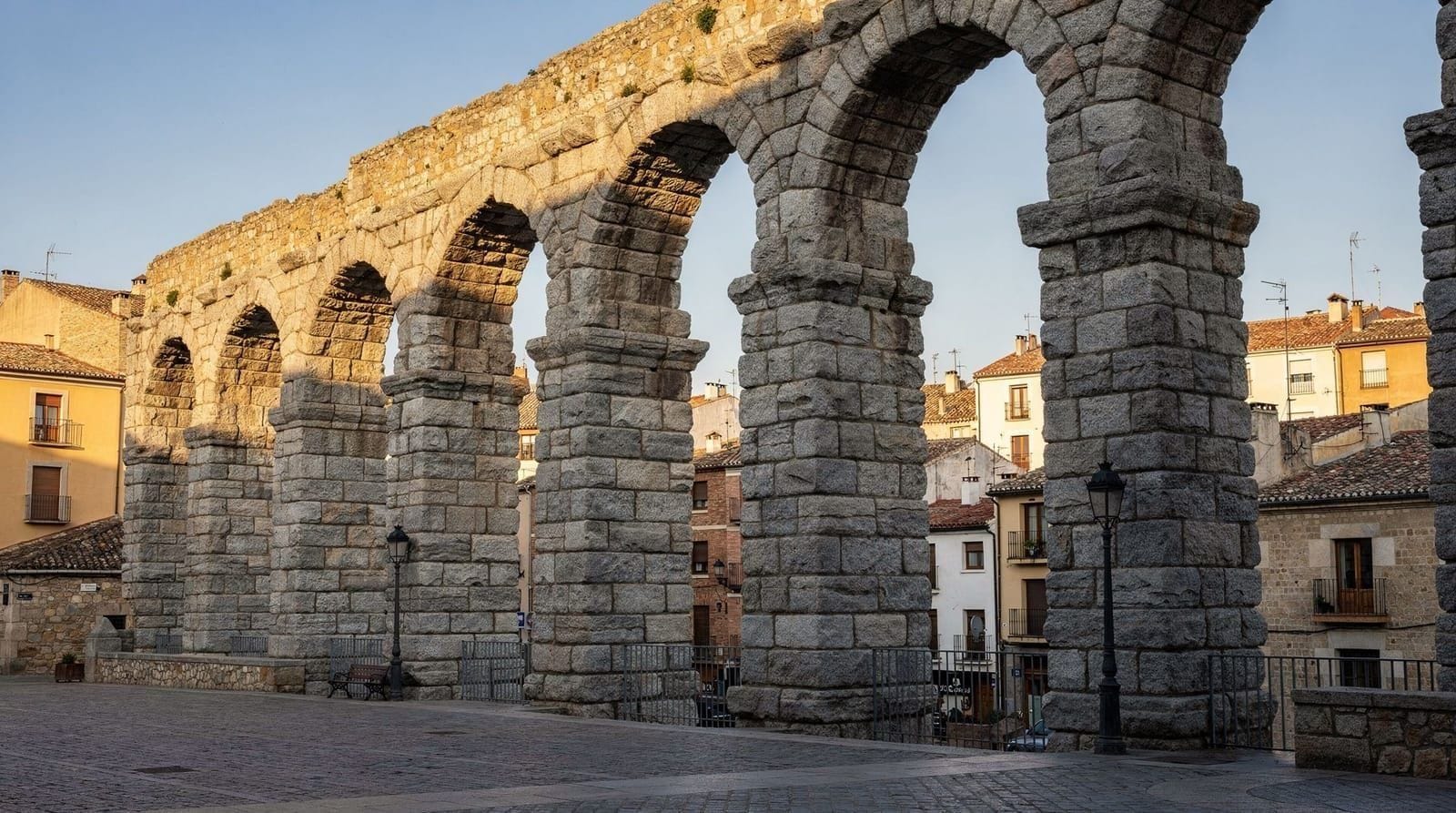
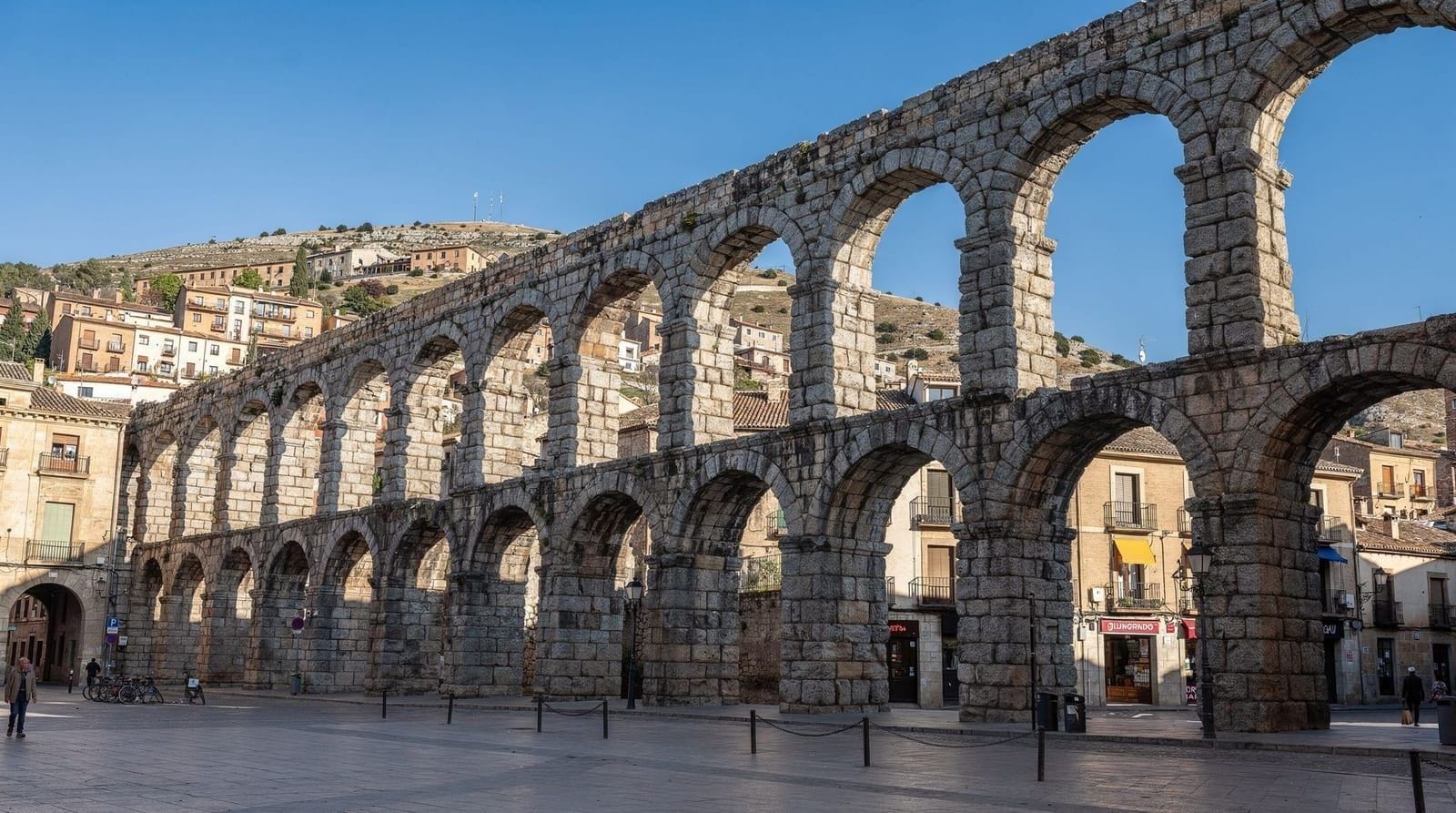
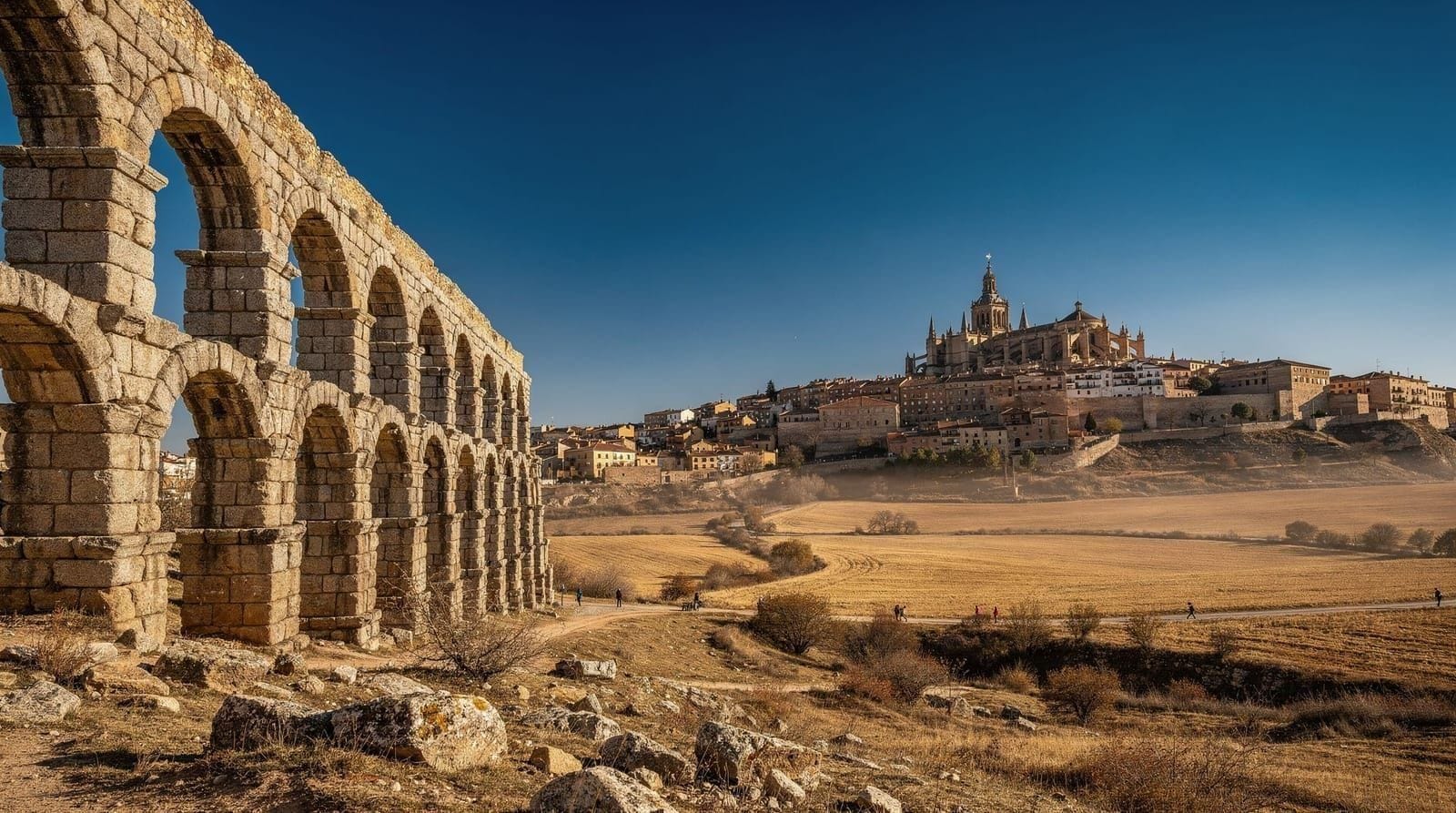
Segovia offers a different proposition to Toledo: a better-preserved Roman aqueduct than anything in Rome itself, a fantasy-castle Alcázar that inspired the Disney design, and the finest cochinillo (roast suckling pig) restaurant tradition in Castile.
Getting there: AVE/AVANT from Chamartín station (not Atocha — this is a common mistake). Journey time: approximately 27–30 minutes. Note that the Segovia high-speed station (Segovia-Guiomar) is at the edge of the city, 5 km from the historic centre — budget €10 for a taxi into the centre or use the connecting bus.
Fares: Fare varies, see the Renfe site. Again, book directly through Renfe.
What to see in Segovia: The Roman aqueduct (2,000 years old, 166 arches, no mortar — still standing without reinforcement), the Alcázar of Segovia (the castle on a rocky promontory that famously inspired Disney’s Cinderella Castle), the Gothic cathedral in the central plaza, and the Jewish quarter. Lunch of cochinillo (roast suckling pig) at Mesón de Cándido or José María is a significant part of the experience.
A half-day or full-day guided trip to Segovia with cathedral and Alcázar access covers the highlights with a local guide.
Full logistics in the Segovia from Madrid guide.
Cuenca by AVE: dramatic gorge city in 55 minutes
Cuenca is undervisited compared to Toledo and Segovia, which makes it excellent for avoiding crowds. The old city perches on cliffs above two gorges, with the famous “hanging houses” (casas colgadas) suspended over the drop. It was a surrealist art hub in the 1960s — the Museo de Arte Abstracto Español is in one of those hanging houses.
Getting there: AVE from Atocha. Journey time: approximately 55 minutes. Fares around €12–€18 each way.
Day-trip reality check: Cuenca city is manageable as a day trip. The full Cuenca experience also includes the Ciudad Encantada (Enchanted City) — a natural rock formation of eroded limestone 35 km from town that requires either a guided tour, a rental car, or a taxi. Plan accordingly.
Seville and Barcelona: better as overnight trips
Seville (2h30 from Atocha) and Barcelona (from 2h45, from Atocha or Chamartín) are technically doable as day trips but punishing. You’d spend 5 hours on trains for 4–5 hours in the city. Both cities deserve at least 2 nights. They are included here because visitors frequently ask — the honest answer is: take the overnight option, or build a separate trip.
If Cuenca appeals, the Cuenca destination page and the Cuenca from Madrid guide cover what to see once you arrive.
Which station: Atocha or Chamartín?
This is the most common source of confusion for first-time visitors:
| Destination | Station | Line |
|---|---|---|
| Toledo | Atocha | AVANT |
| Cuenca | Atocha | AVE |
| Seville | Atocha | AVE |
| Barcelona | Atocha or Chamartín | AVE (both) |
| Segovia | Chamartín | AVE/AVANT |
| Ávila | Chamartín | Regional/AVANT |
Atocha station (full name: Madrid Puerta de Atocha–Almudena Grandes) is in the south of the city, on Metro Line 1, accessible from Sol in about 10 minutes. Chamartín (full name: Chamartín–Clara Campoamor) is in the north, also on Line 1, about 20 minutes from Sol.
For a full comparison of the two stations including facilities, transport connections, and hotel proximity, see the Atocha vs Chamartín guide.
Booking AVE tickets: the practical guide
Always book direct with Renfe. The official website (renfe.com) and app offer the same prices without booking fees. Third-party aggregators (Omio, Trainline, Rail Europe) charge service fees of €3–€8 per ticket for the same seat.
Book ahead for better prices. AVE fares are dynamic — the “Promo” and “Promo+” fares available 1–3 months out are significantly cheaper than buying the day before. For a family of four doing Toledo in summer, the difference between a same-day fare and a 3-week advance fare can be €50–€80 total.
Which class? “Turista” (standard class) is entirely adequate. The seats are comfortable, the ride is smooth, and the journey times are short enough that “Turista Plus” or business class make little practical difference.
Cancellation policy: “Promo” fares are non-refundable. “Flexible” fares allow changes and refunds. For a day trip with fixed accommodation, the Promo fare is usually fine — trains to Toledo and Segovia run frequently enough that an hour-earlier or later train rarely causes problems.
Day trips by bus: the alternative
Not all day trips from Madrid use the AVE. Several destinations require buses or regular Cercanías trains:
- El Escorial: Cercanías C-3 from Atocha, approximately 1 hour. Or bus from Moncloa.
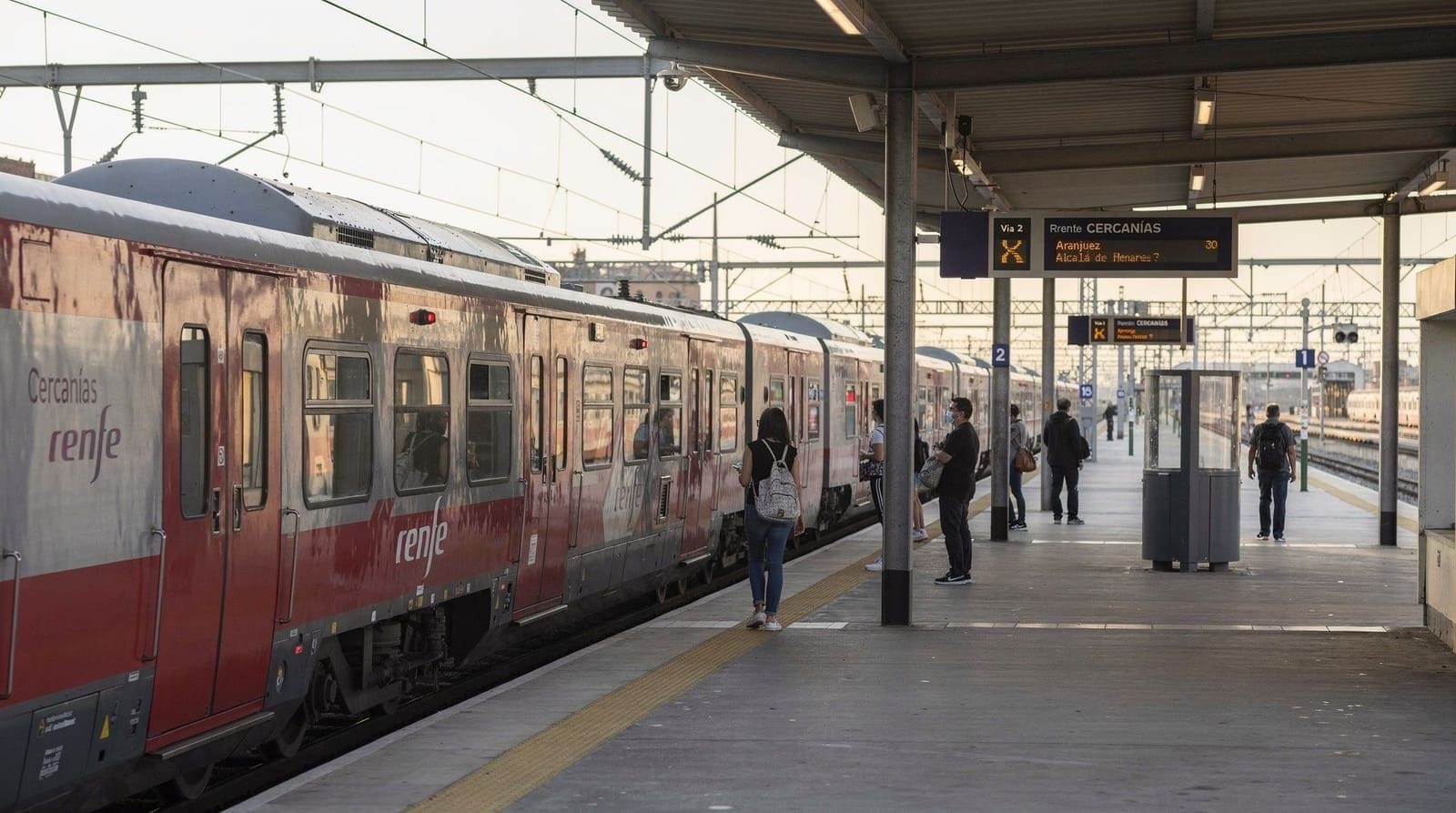
- Aranjuez: Cercanías C-3 from Atocha, 45 minutes (or the “Strawberry Train” tourist service on selected dates).
- Chinchón: Bus 337 from Conde de Casal, approximately 1 hour.
- Consuegra (windmills): Bus from Estación Sur, approximately 2h20.
The Cercanías guide covers suburban rail options in detail. For bus-based day trips, see day trips without a car from Madrid.
Combining day trips: the Toledo + Segovia double
Toledo and Segovia can be combined in a single day, but it requires efficiency. The most common approach is an early Toledo morning (08:30 AVANT from Atocha, arriving ~09:00, 4–5 hours in the city), then train back to Madrid (~14:30), cross town to Chamartín, and afternoon Segovia (~16:00–20:00). This works but is tiring.
The alternative is a guided tour combining both — several operators run Toledo + Segovia full-day tours from Madrid by bus. More practical for families than managing two sets of train tickets.
A combined day trip from Madrid covering El Escorial and Segovia is one variant of this multi-destination approach.
For planning guidance on sequencing day trips across a 3–7 day Madrid stay, see best day trips from Madrid.
If you can’t decide between the two headline cities, the Toledo vs Segovia comparison lays out the trade-offs, and the Madrid and Toledo itinerary and Madrid and Segovia itinerary show how each fits into a wider stay.
Ávila by train: the medieval walled city
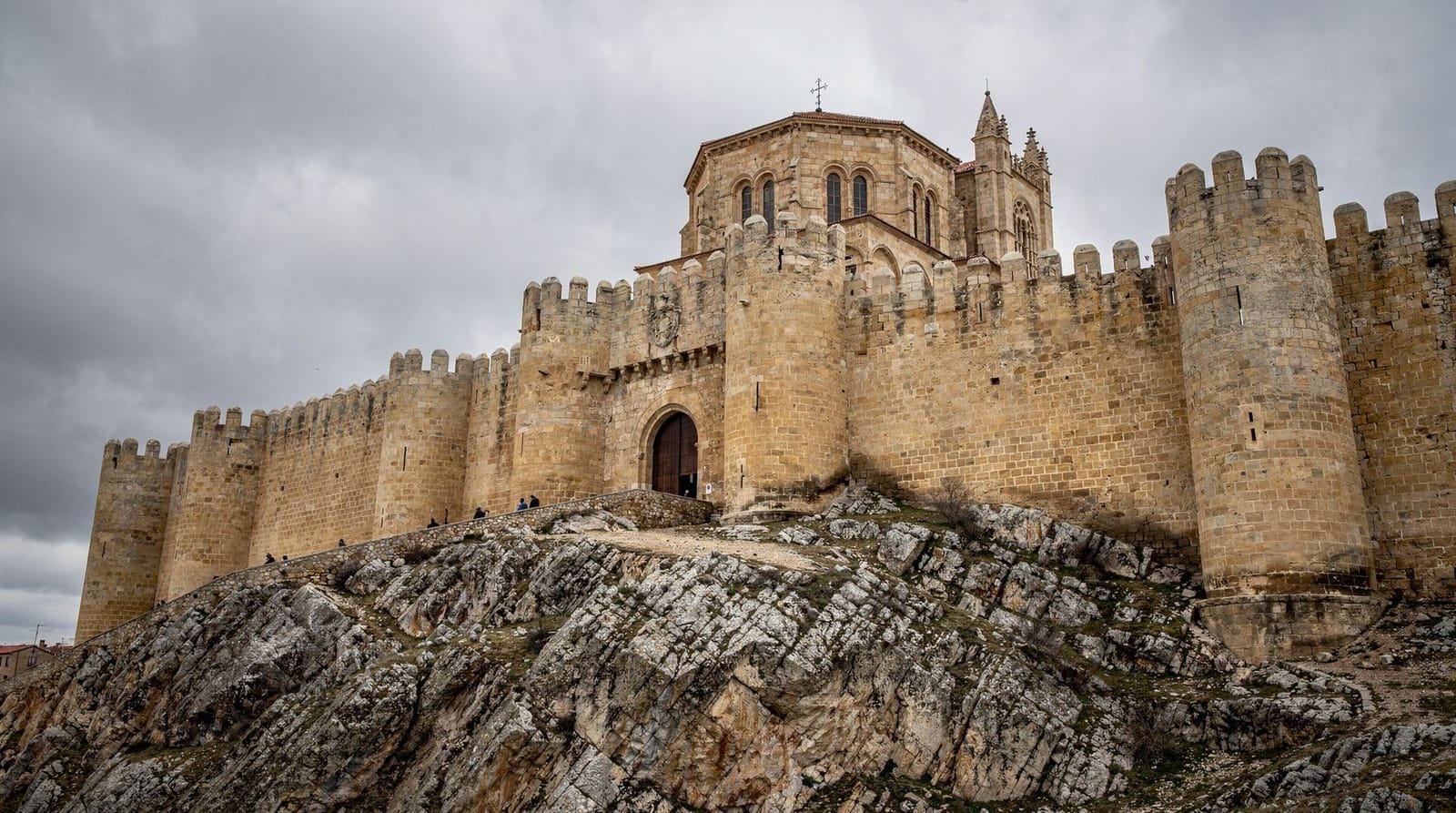
Ávila deserves its own section because it’s often added to a Toledo + Segovia day-trip plan and deserves independent consideration. The city has the best-preserved medieval city walls in Spain — 2.5 km of complete fortified wall with 88 towers, all walkable from the outside and (partially) from above via an elevated walkway.
Getting there: Regional train or AVANT from Chamartín. Journey time: approximately 1h26 direct, up to about 1h55 on the slowest trains. Fares approximately €7–€16 each way.
The honest assessment: Ávila is smaller and more limited in content than Toledo or Segovia. The walls are extraordinary, the old cathedral (built into the wall itself) is interesting, and the town is genuinely medieval in character. But 3–4 hours is enough; a full day can feel thin. Ávila is best combined with Segovia in a twin-city day, or visited as a 4-hour stop.
The “three walled cities” itinerary: A popular formula combines Toledo, Segovia, and Ávila across 2–3 days with a Madrid base. This is a good structure for history-focused visitors. The Ávila destination page and the Madrid week with day trips itinerary help you slot it into a longer stay.
Spain’s AVE network: context for day-trip planning
To appreciate the day-trip opportunity from Madrid, it helps to understand that Spain’s AVE network is genuinely extraordinary:
- Spain has the longest high-speed rail network in Europe (more than France, Germany, or Japan’s shinkansen network per capita)
- Madrid is the single hub from which all of Spain is reachable in 4 hours or less by AVE
- The network was built aggressively from the 1980s onward as a national infrastructure priority
- Trains run at up to 310 km/h, genuinely the fastest wheel-on-rail service in Europe
The result: Madrid is uniquely positioned as a day-trip base. No other European capital — not Rome, not Paris, not London, not Berlin — can place 4 separate UNESCO World Heritage cities within 33–90 minutes of travel time. This is Madrid’s single greatest practical advantage for tourism, and it’s genuinely underappreciated.
Buying tickets: the renfe.com advantage
Spain’s national rail operator Renfe runs all AVE, AVANT, and regional train services. The official booking channels:
renfe.com (website): Full functionality, English available, accepts international cards. No booking fee for standard purchases. The promotional fare prices are identical online and at the station — there’s no online-only discount.
Renfe app: Same functionality as the website, slightly more convenient for mobile booking. Stores your journey history and allows easy rebooking.
At the station: Self-service machines or staffed counters. Staffed counters have queues at busy times (particularly mornings in summer). Machine booking is fast for straightforward journeys.
Third-party platforms (Trainline, Omio, Rail Europe): These add service fees of €3–€8 per booking. The underlying ticket is identical — you’re paying for the interface convenience. For any trips over 2 people, the Renfe direct booking saves meaningful money.
Important: For AVE and AVANT, you must show your booking reference/ticket and ID at the security check before boarding. Inspectors verify ID against ticket name — do not buy tickets in another person’s name.
Practical logistics for AVE day trips
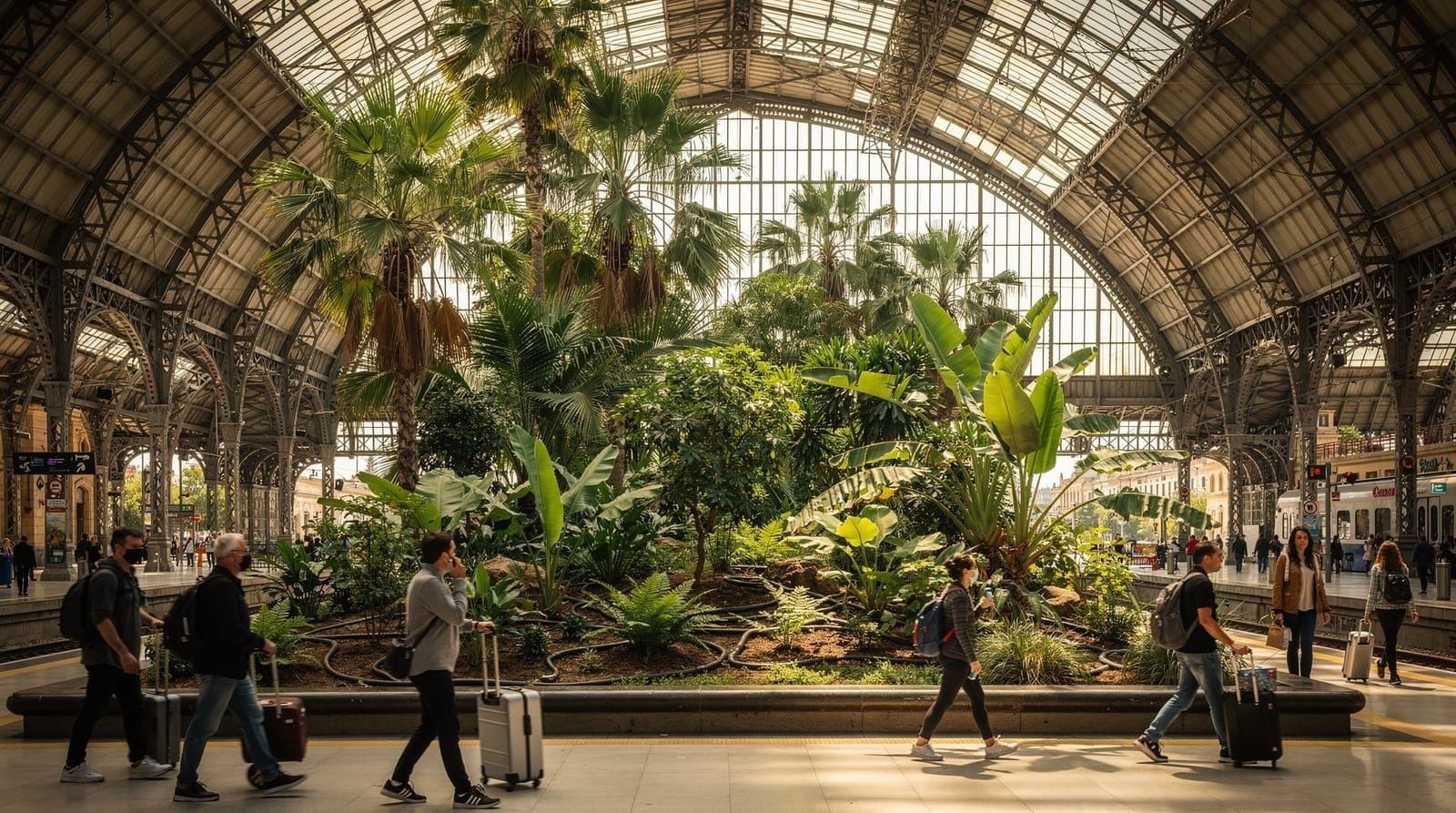
Station facilities: Both Atocha and Chamartín have luggage storage (consigna), cafés, pharmacies, and left luggage lockers. Atocha also has a famous indoor tropical garden inside the old station building (worth a 10-minute stop). For full station comparison, see Atocha vs Chamartín.
Getting to the station from your hotel: Metro Line 1 serves both Atocha (station: “Atocha Renfe”) and Chamartín (station: “Chamartín”). Allow 30–40 minutes from a central hotel to train departure time, including ticket collection if needed.
Arriving at the destination station: Toledo’s AVE station is at the foot of the hill — a 15-minute walk or 5-minute taxi to the old city. Segovia-Guiomar is 5 km out — always take the connecting bus or taxi, there is no pleasant walk. Cuenca’s station is 5 km from the upper old city.
What to eat on day trips: Both Toledo and Segovia have strong lunch traditions worth experiencing. In Toledo: venison stew (ciervo guisado), marzipan (mazapán), and the local toledano cheeses. In Segovia: cochinillo at the serious restaurants requires a reservation, especially at weekends. Book the day before.
Weather and seasonal timing for AVE day trips
Toledo and Cuenca sit on exposed hilltops with little shade, so July–August visits (regularly 35–38°C) reward an early departure — the 08:00 or 08:30 AVANT gets you walking the old town before the worst midday heat, with a long lunch break planned into the itinerary. Segovia’s altitude (around 1,000m) makes it noticeably cooler than Madrid year-round, including a real chill in spring and autumn evenings — worth a layer even when Madrid itself feels warm. Winter (December–February) is the quietest and often the most pleasant time to do these day trips: shorter opening hours at some monuments, but minimal queueing and comfortable walking temperatures in both cities.
For a first-hand view of how these trips go in practice, the blog has tips for day trips by train and an honest look at one day in Toledo.
Rail passes and multi-trip savings
If you’re doing more than two or three AVE day trips in a single visit, check whether your total spend nears the cost of an Interrail/Eurail Spain pass or Renfe’s own multi-trip promotions — for most Madrid-based visitors doing Toledo and Segovia only, buying single Promo fares directly still works out cheaper than a pass, since passes are priced for longer multi-region itineraries. The bigger saving lever for most travellers is simply booking each AVE leg 2–3 weeks ahead rather than the pass itself.
Frequently asked questions about AVE train day trips from Madrid
Do I need to book AVE tickets in advance?
For Toledo on weekdays, you can often buy same-day. For Toledo on weekends and during summer, book 3–7 days ahead to secure seats and save on fares. For Segovia, same rules apply. The train doesn’t fill up the way budget flights do — advance booking is primarily for fare savings rather than seat availability.
Can I use the Tourist Travel Pass on AVE trains?
No. The Tourist Travel Pass covers Metro, EMT bus, and Cercanías only. AVE and AVANT are Renfe intercity services requiring separate tickets. The Tourist Pass does cover Cercanías-served destinations like El Escorial and Aranjuez.
Is it cheaper to take the bus to Toledo instead of AVE?
The Alsa bus from Madrid Estación Sur to Toledo costs from around €6.55 each way and takes 50 minutes to 1h30. The AVE costs €12–€16 but takes 33 minutes. For a few euros more, the AVE saves up to an hour of travel time. For most visitors, the time saving is worth it.
What about the guided day-trip buses offered by tour operators?
Operator-run day trips (€40–€80 per person including guide and entry) are convenient but significantly more expensive than booking your own transport and tickets. They work well for those who don’t want to manage logistics or prefer a narrative guide. The independent route with a self-guided audio tour app is a reasonable middle ground.
Is it possible to visit Toledo AND Segovia in one day?
Technically yes — see the combined section above — but it’s an intense day. Better to give each city its own day if your schedule allows. If you only have one day for day trips, Toledo is the higher-priority UNESCO experience; Segovia is a strong second.
Which AVE day trip is best for someone who can only do one?
For most first-time visitors, Toledo edges out Segovia — the “three cultures” layering of Roman, Moorish, Jewish and Christian heritage in one walkable old town is hard to match, and 33 minutes each way leaves the most time on the ground. Segovia wins if the Roman aqueduct and a proper cochinillo lunch matter more to you than religious architecture, or if you’d rather avoid Toledo’s heavier crowds. Neither choice is wrong; see the Toledo from Madrid and Segovia from Madrid guides for a fuller comparison.
Do children travel free or at a discount on AVE trains?
Renfe applies specific conditions for children — check them on the Renfe site when booking. For families planning several day trips, this makes the AVE more competitive with bus fares than the adult price alone suggests.
How the AVE day trips compare
| Destination | Time from Madrid | Typical fare | Best for |
|---|---|---|---|
| Toledo | 33 min (Atocha) | €12–€16 | First-time visitors, “three cultures” history |
| Segovia | 27–30 min (Chamartín) | Varies, see Renfe | Roman engineering, fairytale castle, cochinillo |
| Cuenca | ~55 min (Atocha) | €12–€18 | Avoiding crowds, dramatic gorge scenery |
| Ávila | ~1h26–1h55 (Chamartín) | €7–€16 | Medieval walls, a shorter half-day stop |
| Seville | ~2h30 (Atocha) | Varies, book ahead | Overnight trip, not a day trip |
Top experiences
Bookable activities with verified prices and instant confirmation on GetYourGuide.