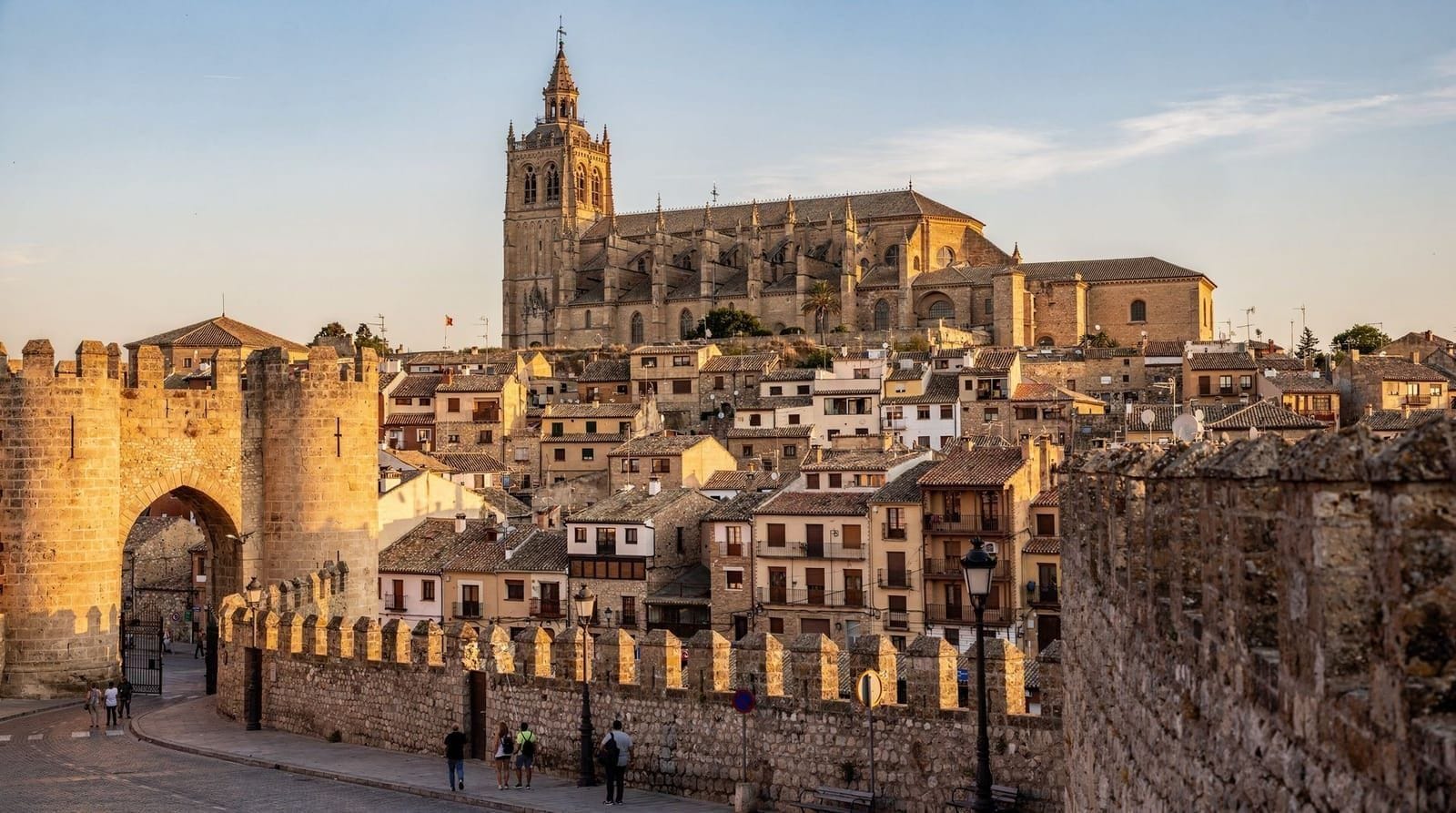
Madrid and Toledo: the perfect 2-day combination
Toledo: Guided Day Trip by Bus
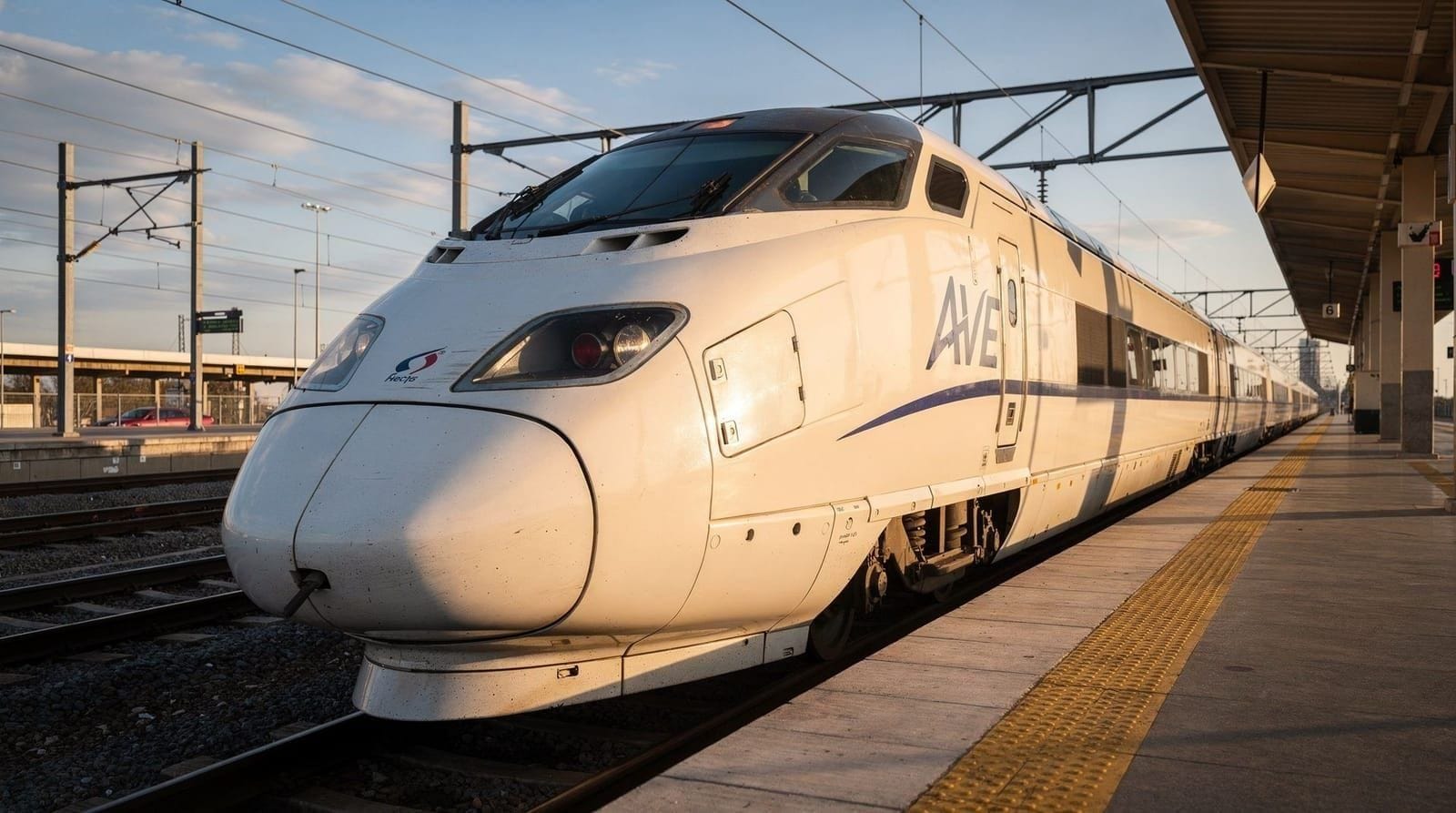
Quick answer: Madrid and Toledo work as a natural two-day combination. Day 1: arrive in Madrid, see the Royal Palace, settle in, and spend the evening in La Latina. Day 2: take the 33-minute AVE from Atocha to Toledo for a full day in the medieval city, returning to Madrid in the evening. This is Spain’s best single day trip from a capital city.
Toledo and Madrid make sense together because they represent different chapters of the same Spanish story. Madrid became Spain’s capital in 1561 when Philip II moved the court here from Toledo — the former capital kept the cultural and religious heart of Habsburg Spain (its cathedral, its synagogues, its mosques, its El Greco paintings) while Madrid got the administrative machinery and the royal palace. Visiting both is seeing both sides of what made Spain.
The journey between them is one of the easiest in Europe: 33 minutes on the AVANT high-speed train from Madrid Atocha to Toledo, with the first departure around 6:45 am.
| Duration | 2 days (1 in Madrid, 1 in Toledo) |
| Getting to Toledo | AVANT high-speed train from Atocha, 33 min |
| Cost of the day trip | Around €12–€16 each way, plus around €24 in entries |
| Pace | Full day — Toledo rewards 5–6 hours on foot |
| Best time | Spring or autumn; arrive before 11 am to beat tour-bus crowds |
Day 1: Madrid arrival and the royal city
Afternoon: Arrive and visit the Royal Palace
If you are arriving into Madrid Atocha or Barajas in the late morning, you have time for a focused afternoon in the city before heading out to Toledo the next day.
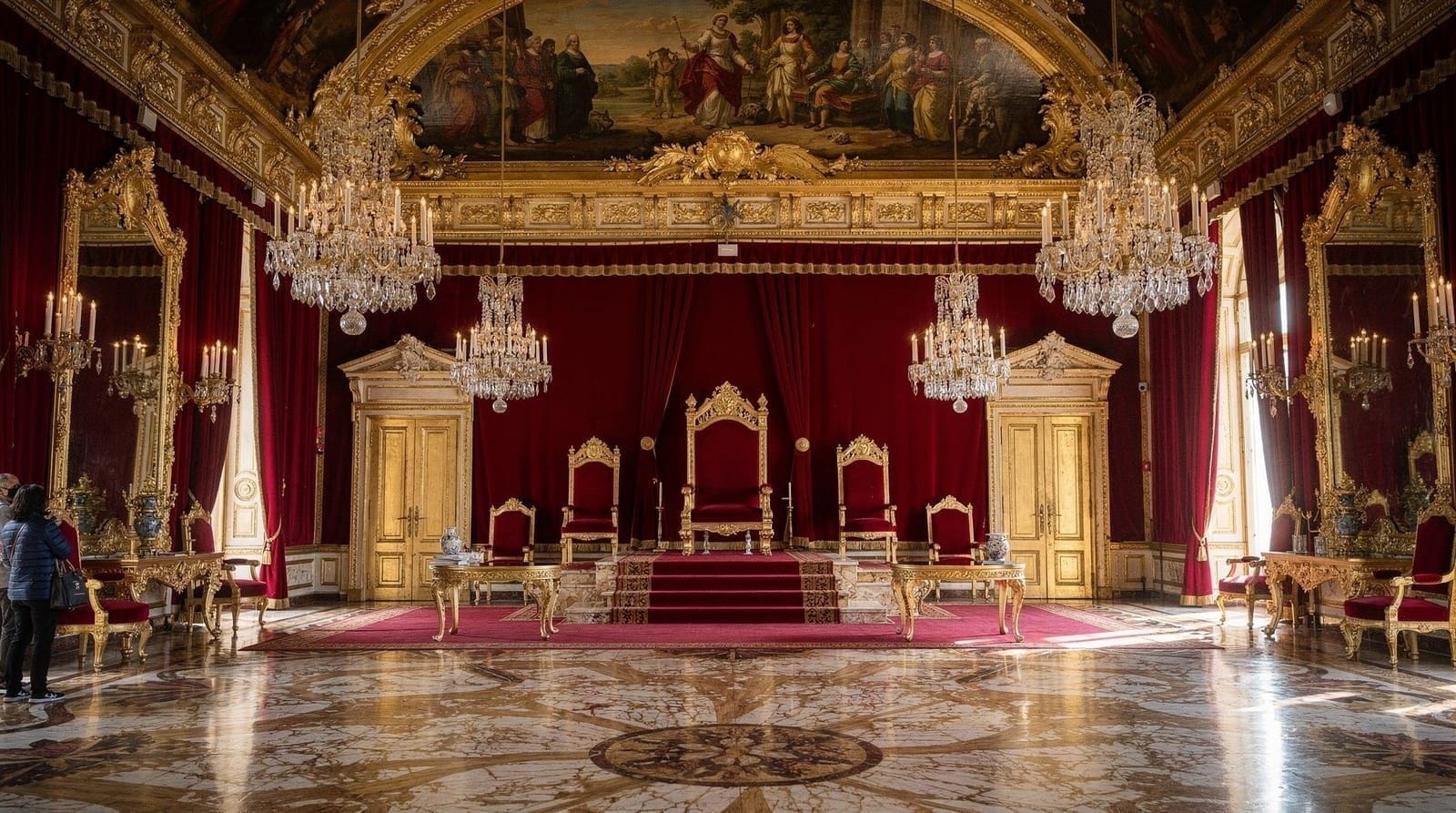
The priority is the Royal Palace. Book a Royal Palace fast-access ticket for the afternoon (slots available from 10:00 to 17:00 most days). The palace circuit — 30-odd state rooms including the Throne Room, the Gasparini Room, and the Royal Armoury — takes 90 minutes. The Almudena Cathedral immediately opposite is free to enter; allow 20 minutes.
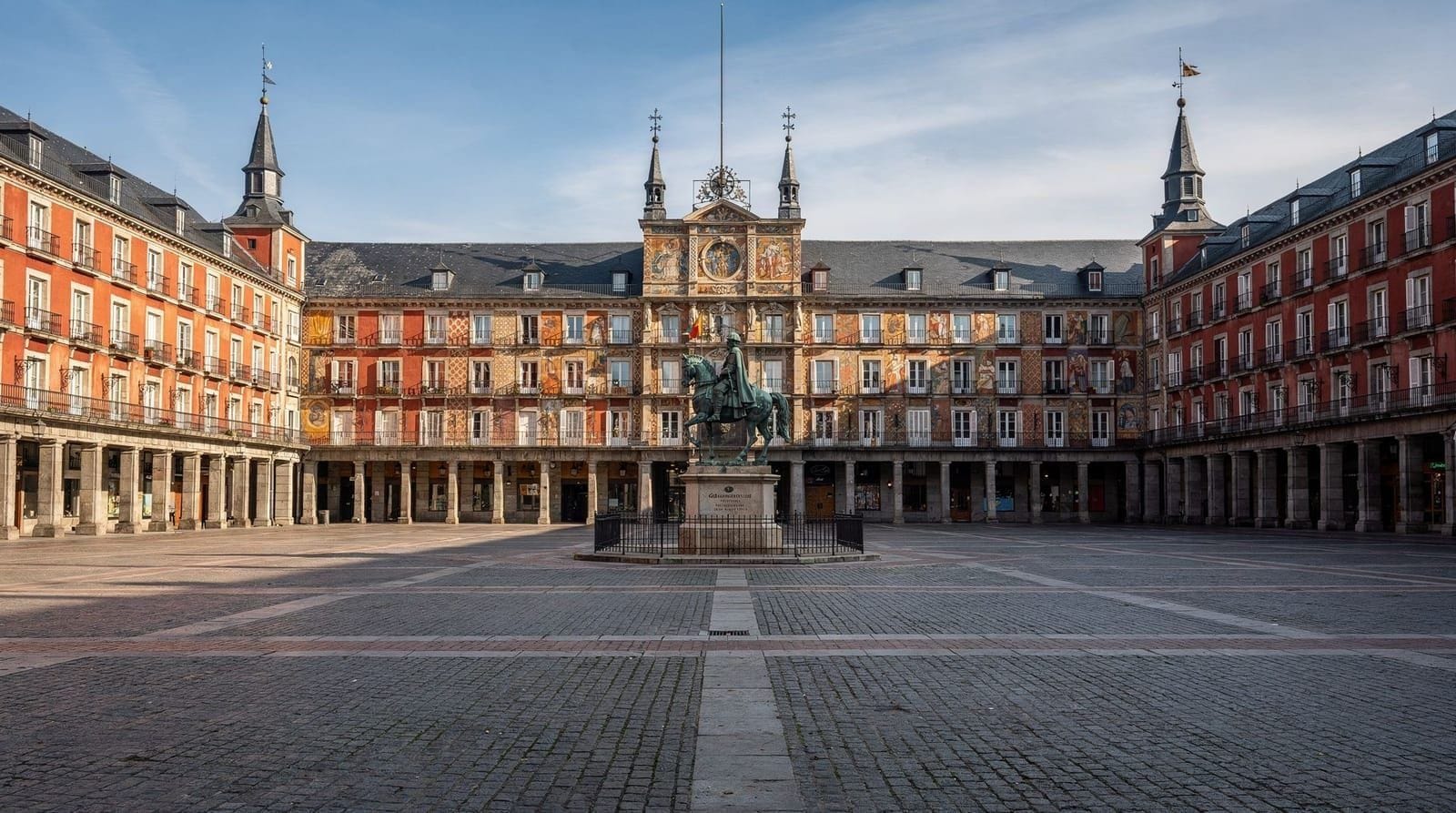
After the palace, walk east through the Austrias quarter to Plaza Mayor. The square is worth seeing even though the surrounding restaurants are overpriced; walk through it and continue to Puerta del Sol, the central hub of Madrid and zero-kilometre marker for Spain’s road network.
Evening: La Latina
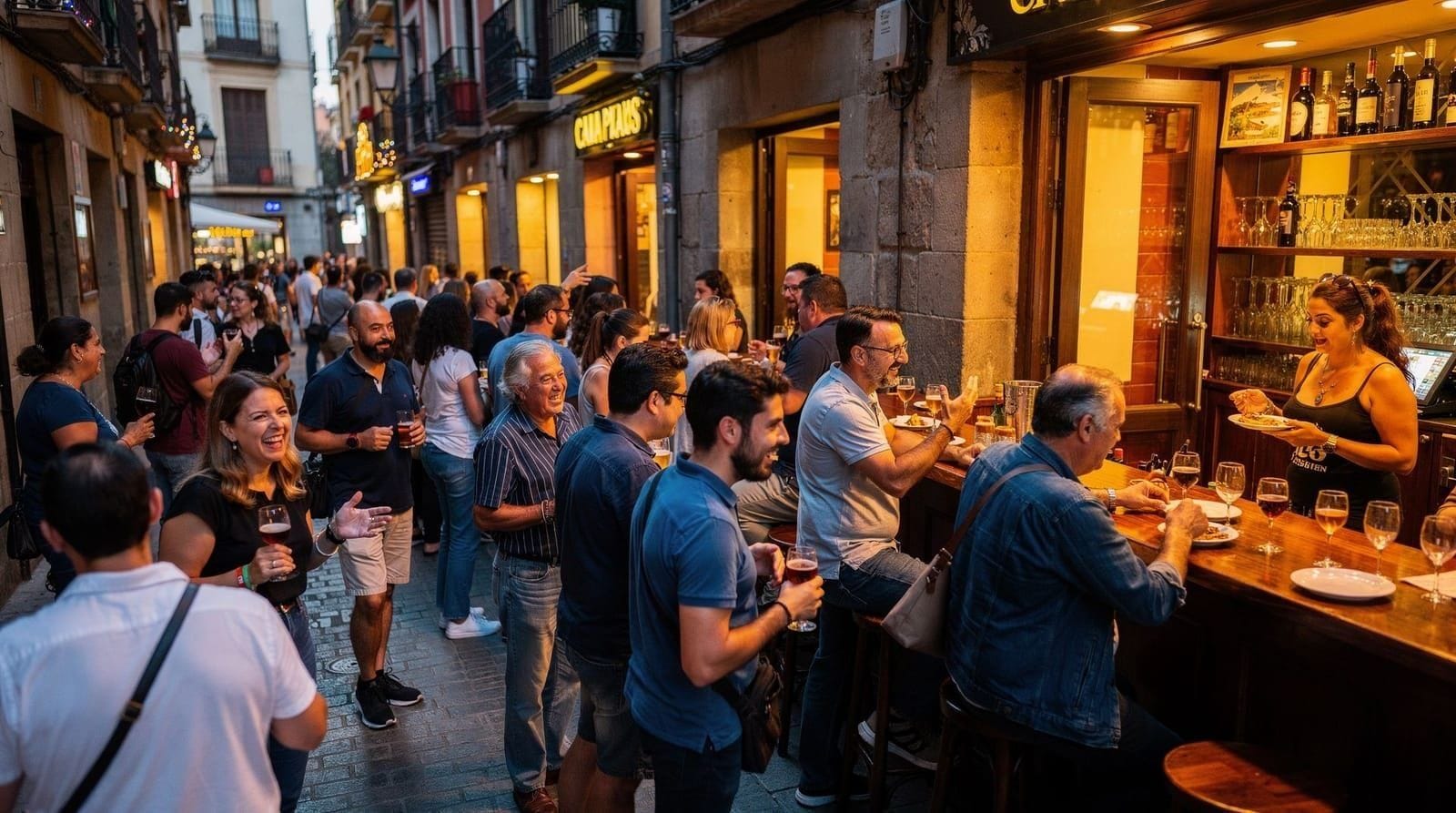
Head to La Latina for dinner. The neighbourhood is at its best in the evening — Cava Baja and its surrounding streets fill with a mix of tourists and Madrileños doing the tapas circuit. Pick two or three bars, eat standing at the counter, and move on. The where to eat in La Latina guide identifies the best places beyond the obvious tourist cluster.
Madrid dinner starts at 9 pm; if you arrive in La Latina before 8:30 pm you will find yourself in a half-empty bar. Use the time before dinner for a drink and a walk through the neighbourhood streets.
Day 2: Toledo — the medieval city
Getting there: AVE from Atocha
Take the AVE or AVANT from Madrid Atocha to Toledo. The first train leaves around 06:45; the journey is 33 minutes. Book through Renfe (the Spanish national rail operator) at least the day before — tickets are around €12–€16 each way and sell quickly on weekends. On-the-day tickets are often available but prices are higher.
Toledo station is a magnificent Mudéjar-revival building at the base of the city’s rock. From the station, take a taxi (€5–€7) or bus No. 5 to the old city entrance at Bisagra Gate — the climb on foot from the station is steep and about 15 minutes in the heat.
Aim to arrive by 10:00 am; the city fills with day-trippers from around 11:00 am.
Morning: Toledo Cathedral and the Jewish quarter
Toledo’s old city is compact — everything is within 20 minutes’ walk of everything else — but dense with monuments. The priorities depend on your interests; the circuit below covers the main ones in a logical walking order.
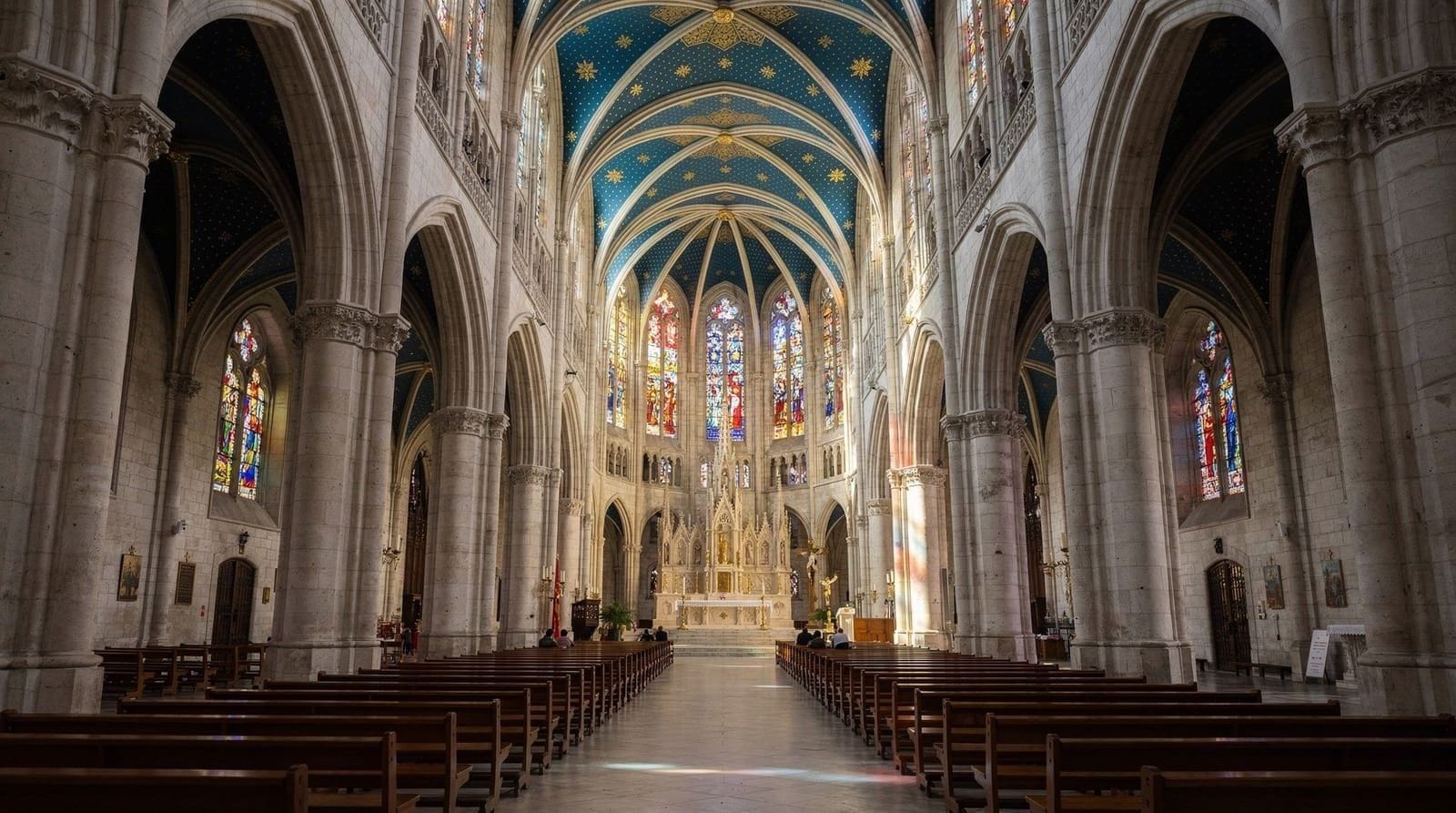
Toledo Cathedral (Catedral Primada de Toledo) is the main Gothic structure and one of the greatest medieval cathedrals in Spain. Construction began in 1226 on the site of a Visigothic cathedral that had been a mosque for three centuries; it was completed 300 years later. The interior — 88 pillars, a 42-metre vaulted nave, a sacristy with a ceiling fresco by Luca Giordano and 19 Greco paintings on its walls — rewards a proper visit. Entry to the cathedral plus its chapels and museum is around €12. Buy tickets in advance online to avoid the queue at the entrance.
After the cathedral, walk into the old Jewish quarter (Judería). Toledo had the largest Jewish community in medieval Castile; after the expulsion of 1492, the two surviving synagogues were converted to Christian churches and survived as a result. Sinagoga del Tránsito (14th century, extraordinarily preserved Mudéjar interior) and Sinagoga de Santa María la Blanca (12th century, the oldest surviving synagogue building in Europe) are both worth visiting.
Lunch in a restaurant in the old city. Toledo cooking features partridge (perdiz en escabeche, the city’s signature dish), venison, and the famous Toledo marzipan (mazapán). Adolfo Colmenero near the cathedral is one of the best options for a serious sit-down lunch; Taberna el Botero near the Zocodover square is good for lighter tapas.
Afternoon: Alcázar and the viewpoints
The Alcázar of Toledo on the city’s high point was a Roman military camp, Visigothic palace, Moorish castle, and Habsburg royal residence before it was destroyed and rebuilt multiple times — most recently damaged in a famous siege during the Spanish Civil War. The current building houses the Museo del Ejército (Army Museum), which is unexpectedly excellent and covers Spanish military history from the medieval period to the 20th century. Allow 90 minutes; entry is €5 (closed on Mondays).
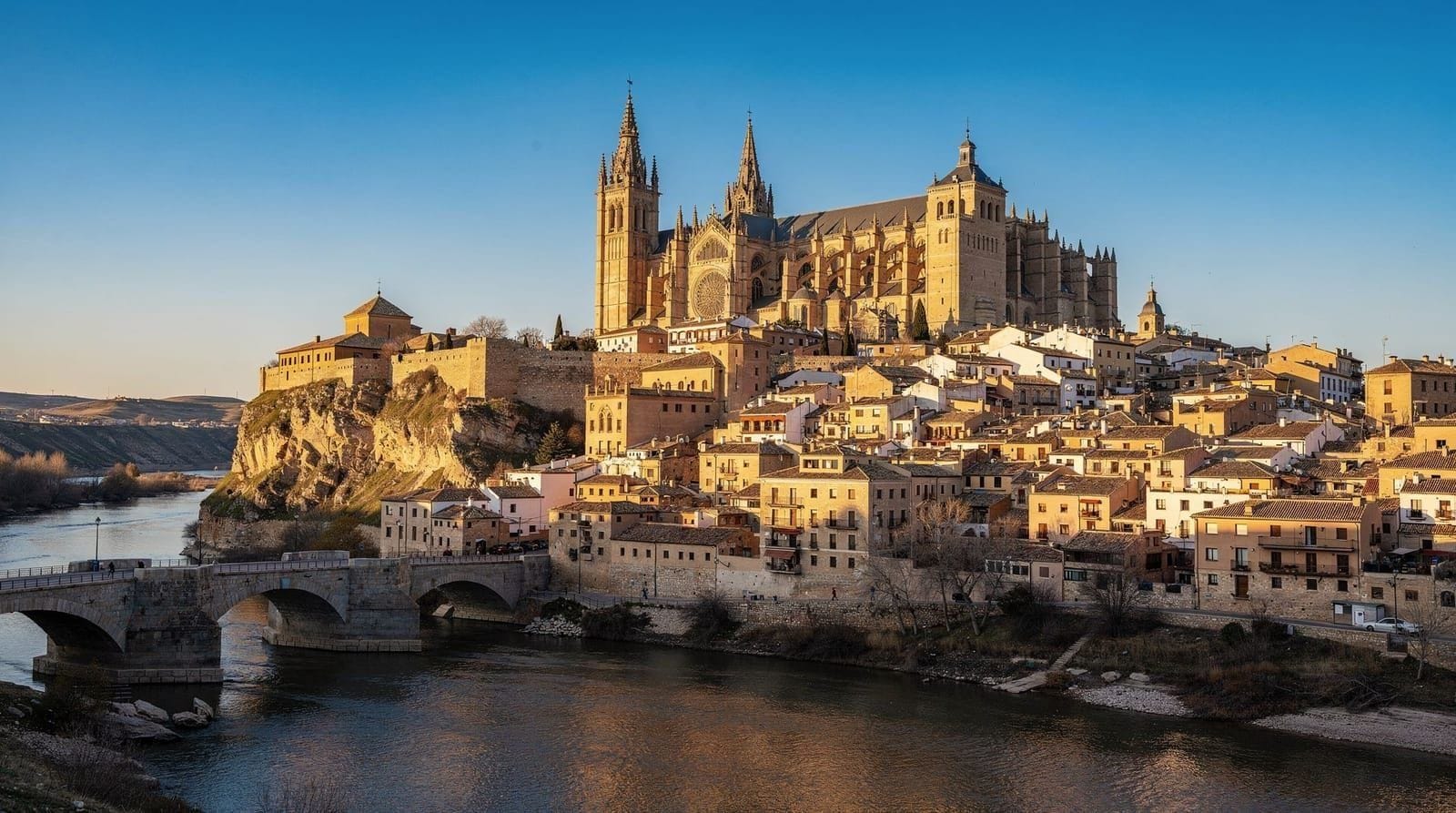
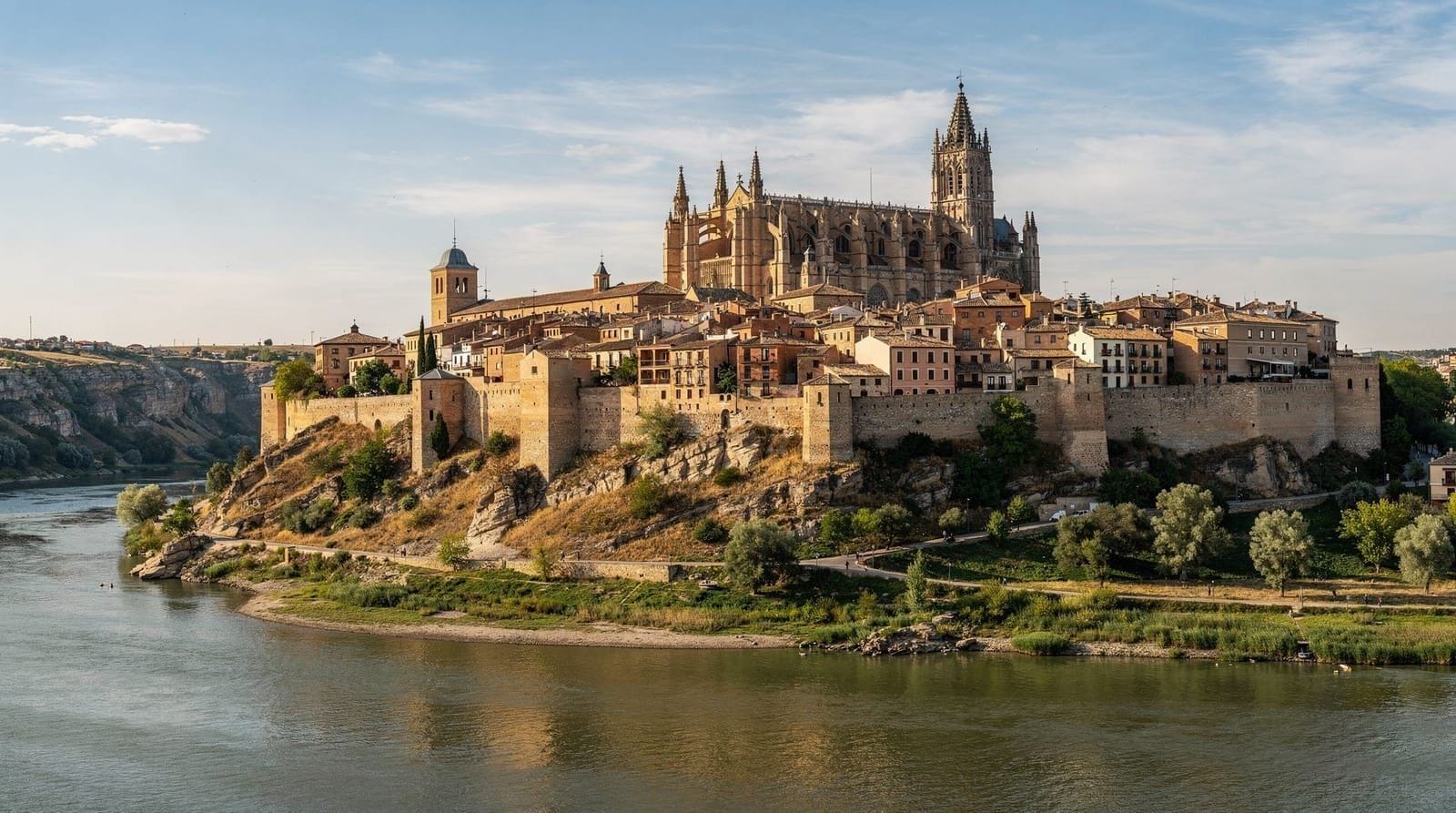
From the Alcázar, walk to the Mirador del Valle viewpoint. The 20-minute walk from the Alcázar takes you down and across the Tagus river bridge to the panoramic viewpoint on the opposite bank — this is the photograph of Toledo, the image of the medieval city rising from its rock above the river, that appears in every guide. It is worth the walk.
Return to Toledo station by bus or taxi for a late afternoon AVE back to Madrid.
A private Toledo day trip by train from Madrid handles the AVE booking and a private guide in the city — worthwhile if you want to understand the city’s religious and political history properly. For independent travellers, the Toledo from Madrid guide covers the complete self-guided logistics.
If you want a combined guided approach from Madrid, the Toledo Cathedral and 7 monuments tour from Madrid includes transport and entrance fees for the main sites.
Why this combination works
Toledo and Madrid are 33 minutes apart by AVE, but they represent different worlds and different historical eras. Madrid is urban, baroque, 17th–19th century in feel, forward-looking. Toledo is medieval, cramped, built on a rock, saturated with history at every corner. Seeing both in two days gives you the full picture of what Spain has been.
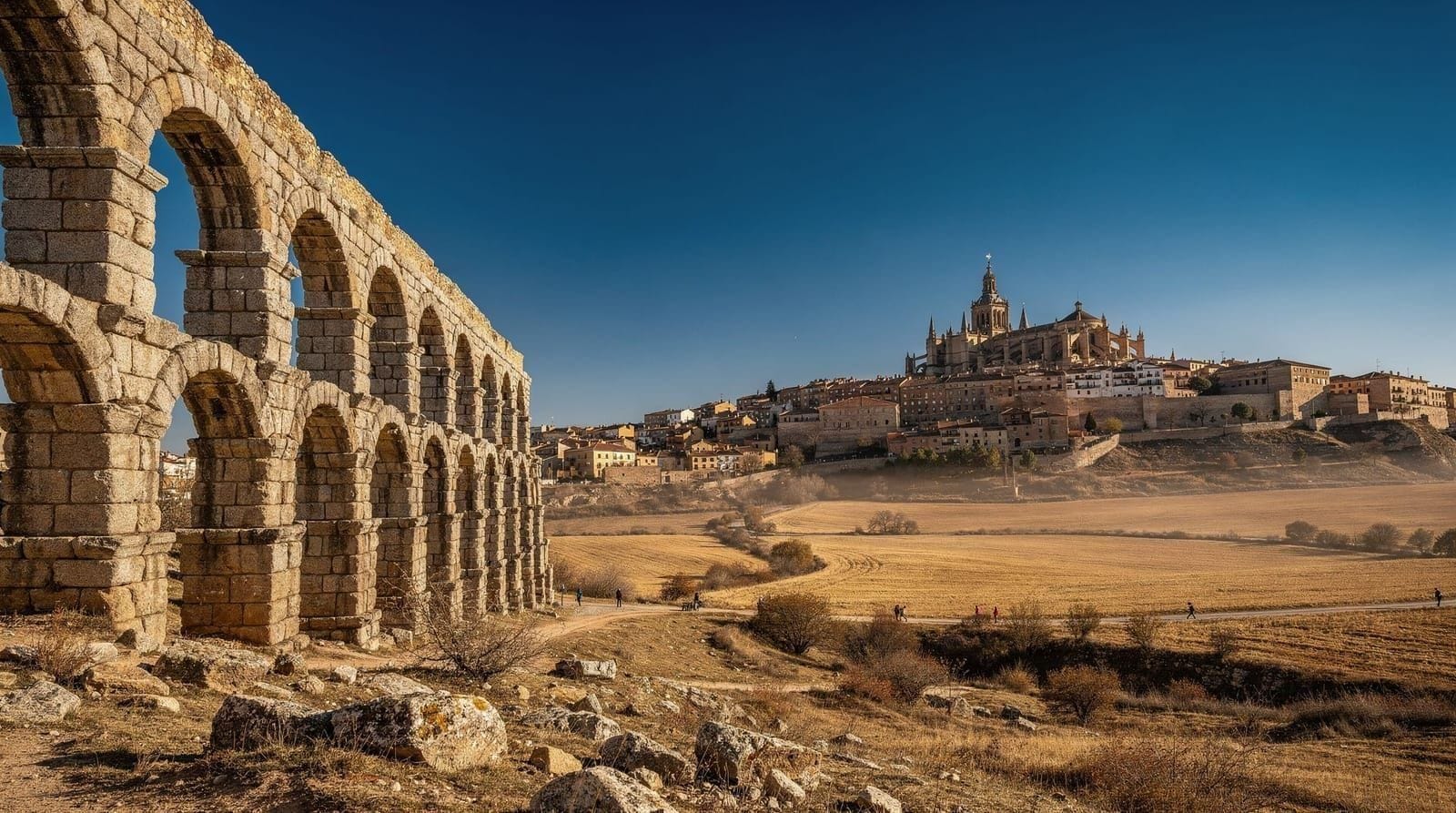
The toledo vs segovia comparison guide helps if you need to choose between the two; the consensus is that Toledo is the richer day trip and Segovia is the more visually spectacular in a single image. If you have time for both, do them.
Practical notes
- Book the AVE in advance. Weekend trains sell out, especially the 09:00–11:00 slot. Book on Renfe’s website or app the day before at minimum.
- Toledo crowds. Arrive before 11:00 am to avoid the main tour-bus wave that descends by late morning. Midday in summer (July–August) is extremely hot; plan accordingly.
- Toledo on foot. The city is hilly and cobbled; comfortable walking shoes are essential. A taxi from the station to the old city is €5–€7 and avoids the steep climb.
- Marzipan. Toledo marzipan (mazapán de Toledo, made by the convent of San Clemente since the 16th century) is an excellent souvenir and entirely edible. Buy it from the convents (sold through a rotating turntable window) for the authentic version.
Toledo in depth: what makes the city exceptional
Toledo sits on a promontory of granite almost entirely encircled by the Tagus river — a natural defensive position that explains why it has been a centre of power from the Visigoths (who made it their capital after Rome fell) through the Moors (who called it Tulaytulah and governed it for three centuries) to the Christian kingdoms of Castile (who used it as capital from the 10th century to 1561).
The three-religions heritage is not a marketing construction — it is a genuine historical reality that played out for centuries at close quarters, producing a culture of intellectual synthesis and, eventually, catastrophic rupture. At its height in the 11th and 12th centuries, Toledo was one of the great centres of learning in Europe, partly because its translation schools produced the Latin versions of Arabic and Greek scientific and philosophical texts that fed the early universities. Aristotle reached medieval Europe largely through Toledo.
The ruptures — the 13th-century forced baptisms, the 1391 massacres of Jewish communities, the 1492 expulsion — are also part of the story. The synagogues that survived did so by being converted to churches before they could be destroyed. The Sinagoga del Tránsito became the church of El Tránsito; the Sinagoga de Santa María la Blanca became a church in 1391, after the massacre. Both buildings are now preserved as cultural monuments.
Understanding this makes the monuments more meaningful. When you stand in the Sinagoga del Tránsito’s main hall — Mudéjar plasterwork decoration made by Muslim craftsmen for a Jewish patron in a city ruled by a Christian king in 1357 — you are looking at a cultural phenomenon that had no parallel anywhere in medieval Europe.
El Greco in Toledo
Domenikos Theotokopoulos, known as El Greco (The Greek), arrived in Toledo in 1577 and never left. He had come hoping to win the commission for the new El Escorial monastery; Philip II rejected his work for the high altar as insufficiently austere. Toledo gave him everything Madrid could not: patrons among the wealthy clergy and nobility, a city that suited his elongated spiritual style, and the freedom to develop his extraordinary late painting style free of court constraints.
The Casa del Greco museum (near the Sinagoga del Tránsito) displays a reconstruction of his workshop and studio with a permanent collection of his paintings. The cathedral sacristy has 19 of his paintings, including portraits of the apostles and the Disrobing of Christ (El Espolio) — one of the most powerful religious paintings in Spain.
Walking the city knowing El Greco walked the same streets gives Toledo’s medieval geography a specific resonance.
Toledo Cathedral: five centuries of ambition
The Catedral de Toledo is the primatial cathedral of Spain — the seat of the Archbishop of Toledo, who is the most senior Catholic churchman in the country. Construction began in 1226 on the site of a mosque (which had itself replaced a Visigothic cathedral), and continued in various phases until the late 15th century. The result is a textbook of Gothic architecture across five centuries, with the later additions growing steadily more elaborate.
The essential spaces inside: the Coro (choir) with its wooden choir stalls carved with scenes from the Reconquista; the Sacristía Mayor with its El Greco paintings along the walls and the ceiling fresco by Luca Giordano; the Capilla Mayor with the polychrome retablo that took the sculptors 50 years to complete; and the Transparente — an 18th-century Churrigueresque opening cut through the Gothic vaulting to allow natural light to fall on the tabernacle, one of the more audacious architectural interventions in any Gothic cathedral.
Entry to the cathedral (with access to the most significant chapels) costs around €12; book online to avoid the queue at the entrance.
Realistic budget for the two days
Excluding your Madrid accommodation, budget roughly €140–€220 per person for the combination: the Royal Palace ticket €18, dinner in La Latina €25–€35, the Toledo AVE return €24–€32, the cathedral and Alcázar entries around €17, a taxi or bus from Toledo station €5–€7 each way, and a sit-down Toledo lunch €20–€35 (less for tapas). Toledo marzipan from a convent turntable window makes an inexpensive, memorable souvenir at €3–€8 for a small box. Booking the AVE and cathedral tickets online in advance avoids both premium last-minute fares and long entrance queues.
Toledo station logistics
Toledo’s train station sits at the base of the city’s rock, a genuine 15-minute uphill walk from the old town gates — manageable with light daypacks but unpleasant in summer heat or with luggage. Bus No. 5 runs from the station to Zocodover square; a taxi costs €5–€7 and takes 5–10 minutes, the better option if you are short on time or the day is hot. On the return leg, allow at least 20 minutes’ buffer before your scheduled AVE — the station can be busy with returning day-trippers in late afternoon, and missing a booked train means paying for a new ticket rather than a simple exchange.
Frequently asked questions about Madrid and Toledo
Is Toledo worth a full day from Madrid?
Yes. Toledo rewards a full five to six hours of walking; half a day is enough for the aqueduct and the Alcázar, but misses the Jewish quarter, the cathedral, the El Greco paintings, and the riverside Mirador viewpoint. If you are considering Toledo as a half-morning trip, consider adjusting to a full day.
Should I take a guided tour or go independently to Toledo?
Both work. A guided day trip from Madrid handles logistics and provides historical context — useful on a first visit. Independent travel on the AVE gives more flexibility with timing and is cheaper. The Toledo from Madrid guide covers both options in full.
Can I buy Toledo Cathedral tickets in advance online?
Yes, and it is strongly recommended — the walk-in ticket queue can be 20–40 minutes at peak times. The official cathedral website sells timed-entry tickets; alternatively, the Toledo tourist bracelet covers multiple monuments.
What is the best season to visit Toledo?
Spring (April–May) and autumn (September–October) for comfortable walking weather. Winter is quiet and cold but manageable. Avoid July–August midday — the city has no shade and regularly reaches 38–40°C. The viewpoint across the Tagus at sunset is spectacular in any season but is at its best in autumn when the light is warm and the sky is clear.
Do I need to book Toledo Cathedral and Alcázar tickets separately?
Yes. The Toledo tourist bracelet (€14) bundles entry to seven monuments, but it includes neither the cathedral nor the Alcázar, so both need their own tickets; it is better value than individual entries (€4 each) if you plan to see more than three of its monuments.
Two-day summary
| Step | Detail |
|---|---|
| Day 1 afternoon | Royal Palace, Austrias quarter, Plaza Mayor |
| Day 1 evening | La Latina tapas |
| Day 2 outbound | AVE from Atocha, 33 min, arrive by 10 am |
| Day 2 morning | Cathedral, Jewish quarter synagogues |
| Day 2 afternoon | Alcázar, Mirador del Valle viewpoint |
| Day 2 return | AVE back to Madrid in the late afternoon |
Top experiences
Bookable activities with verified prices and instant confirmation on GetYourGuide.