El Escorial from Madrid: monastery, palace & half-day guide
El Escorial: Escorial Valley Basilica Day Trip
How do I get from Madrid to El Escorial and how long does it take?
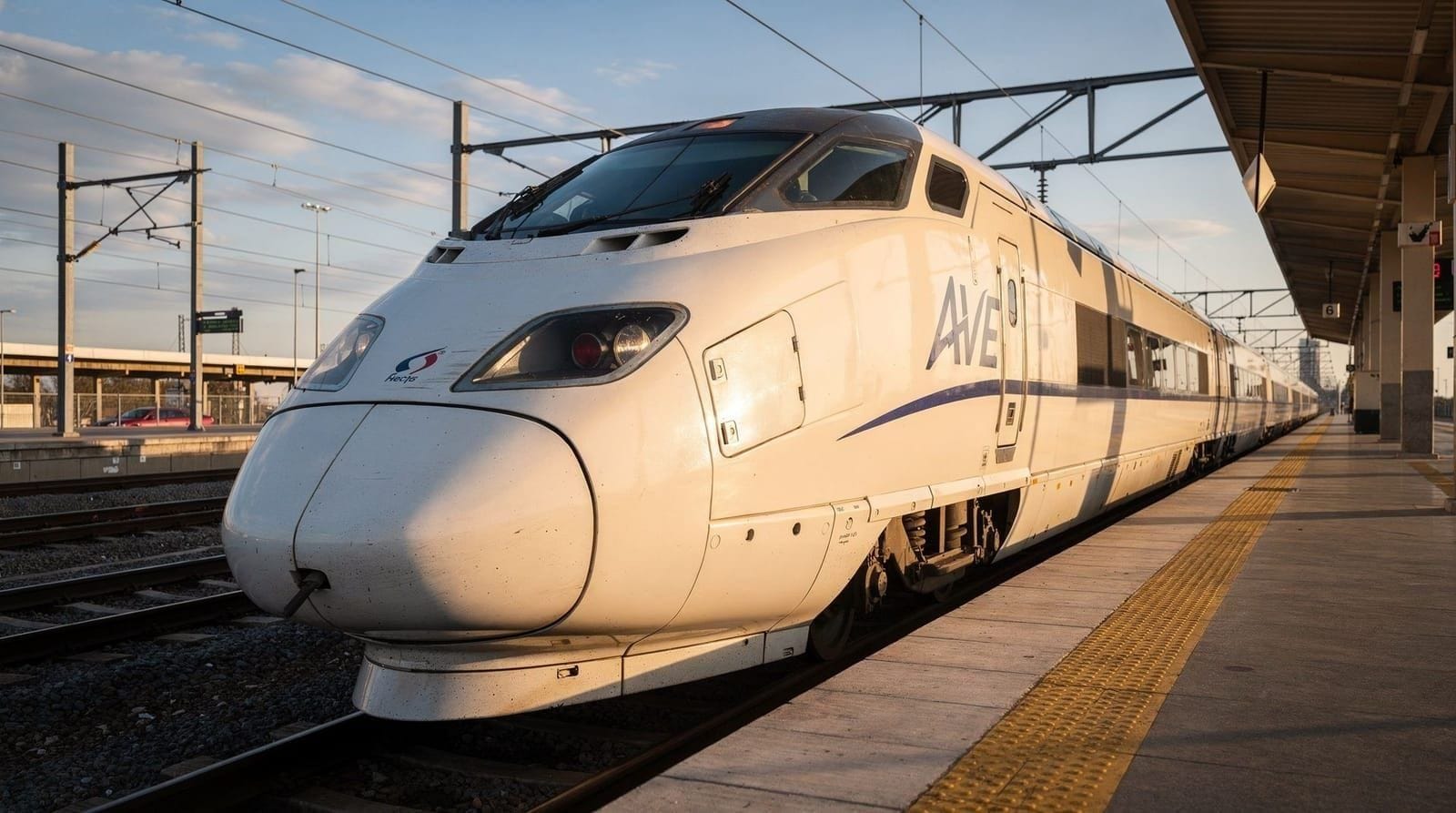
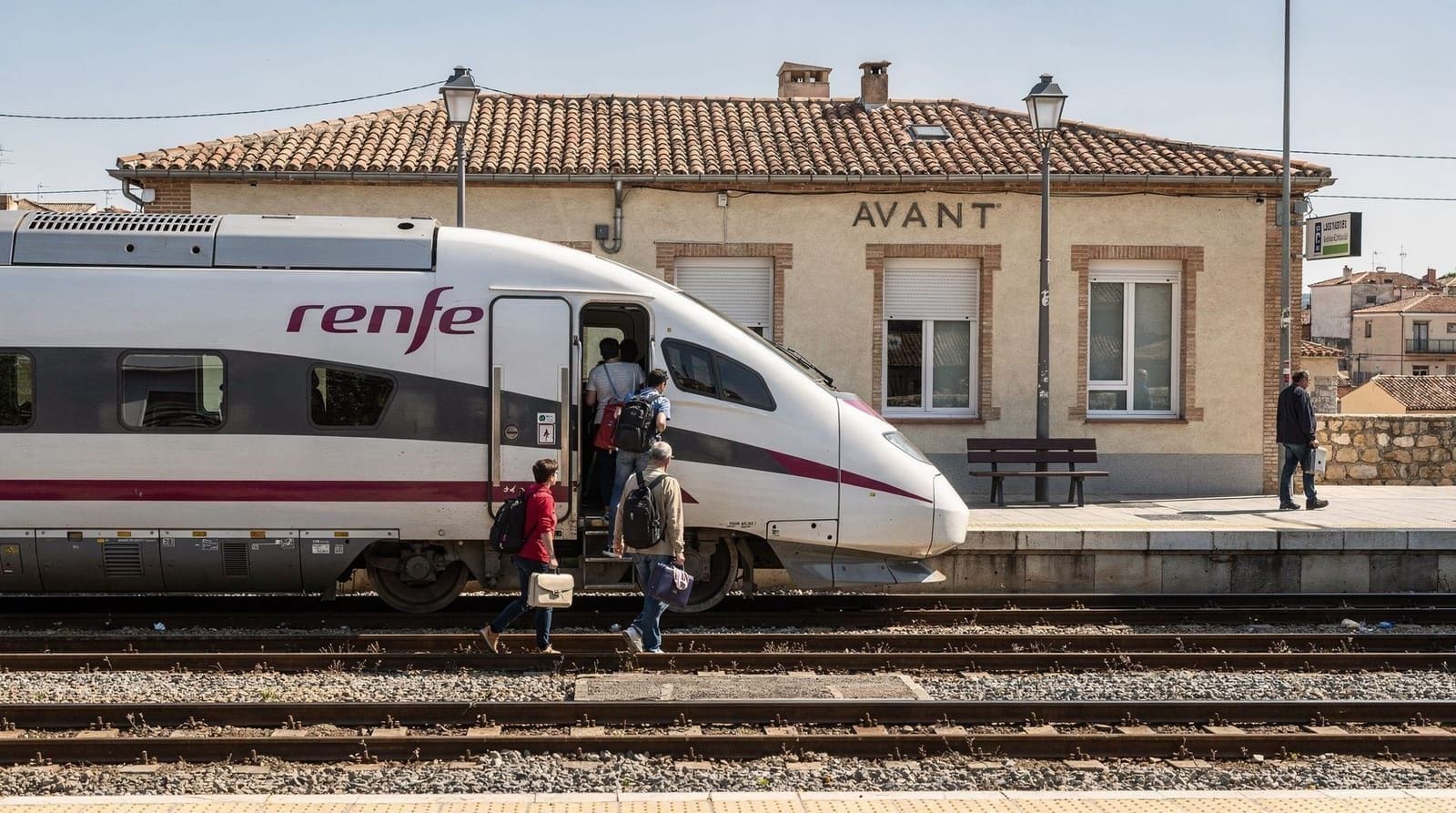
Cercanías C-8 commuter trains from Madrid Atocha or Sol take approximately 1 hour to El Escorial town. Fare: see the Renfe website (the Tourist Travel Pass zone T is valid on the whole Cercanías network, including El Escorial). From El Escorial station, bus L661 (10 min) or a 2-km uphill walk connects to the monastery. The Royal Site (monastery-palace) takes 2–3 hours to visit; add the Valle de los Caídos/Cuelgamuros for a full day.
| Where | San Lorenzo de El Escorial, ~50 km northwest of Madrid |
| Cost | Around €14 entrance; Cercanías fare: see Renfe |
| Time needed | Half-day (2–3 hrs on site) or full day with Cuelgamuros |
| Getting there | Cercanías C-8 from Atocha, then bus L661 |
| Best time | Morning, to avoid weekend queues |
What El Escorial represents
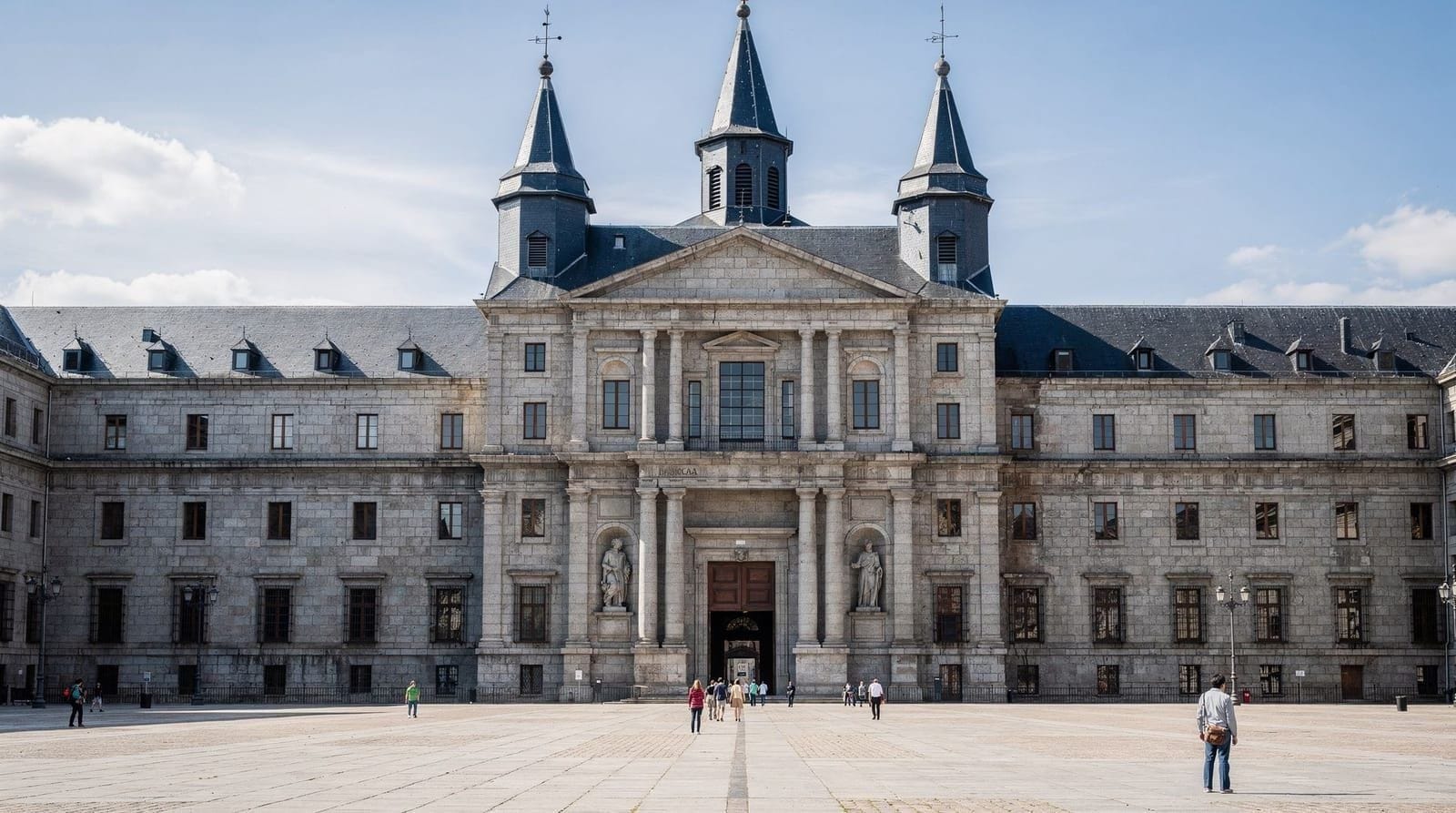
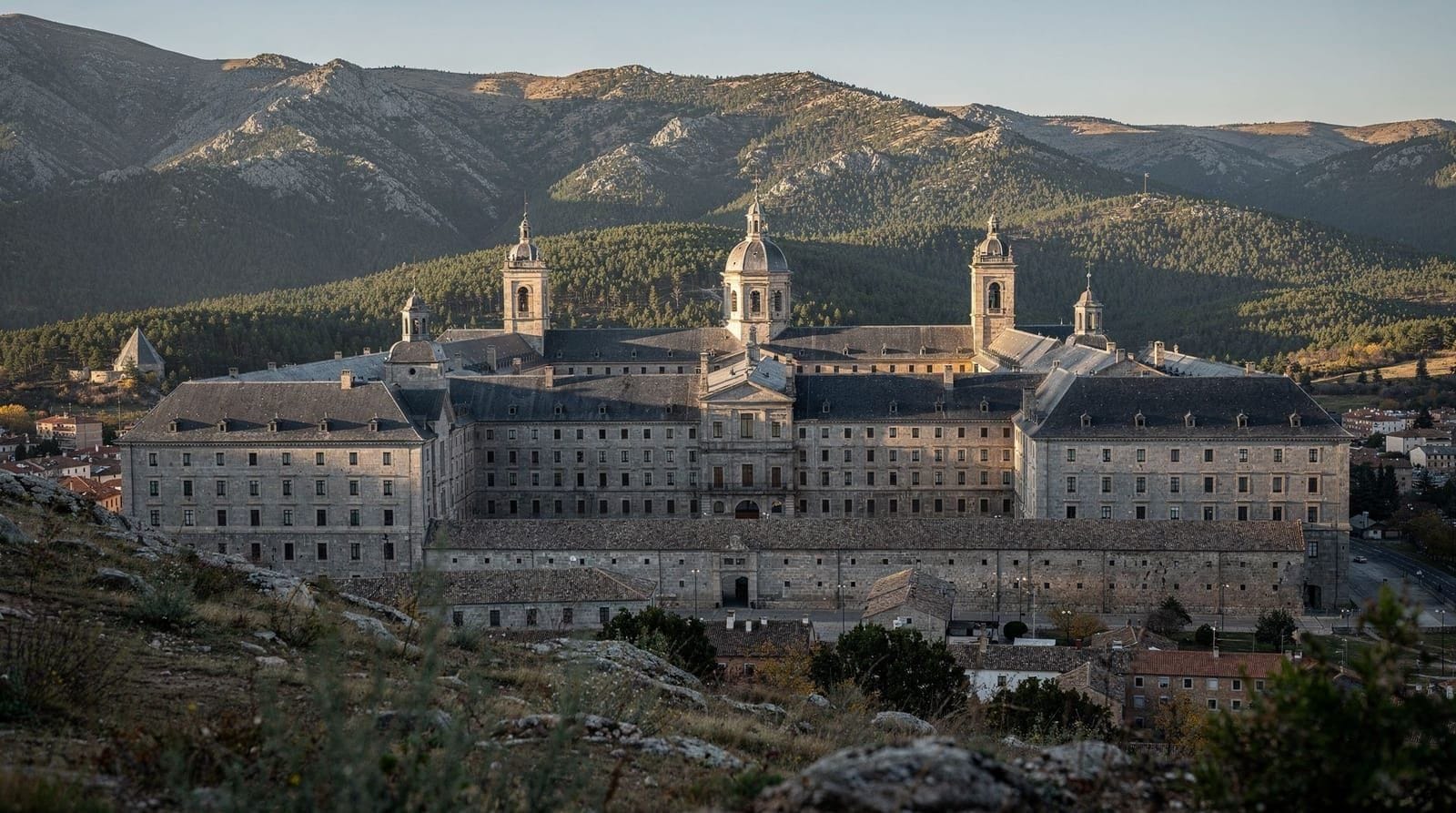
Philip II conceived El Escorial as a statement. He was the ruler of the largest empire the world had seen — Spain, the Americas, the Philippines, parts of Italy and the Low Countries. He chose not to build in marble and gold. He built in grey granite.
The Real Sitio de San Lorenzo de El Escorial is austere in a way that still unsettles. 206 metres long, 161 metres wide, 1,200 doors, 2,673 windows, 86 staircases — numbers that convey scale but not the strange quality of standing inside the largest Renaissance building in the world, designed by a king who ran a global empire from within its walls.
The Panteón de los Reyes — the burial chamber of Spanish monarchs directly beneath the high altar — is one of the most powerful rooms in Spain. Two hundred years of royal history in a perfectly symmetrical octagonal chamber. Charles V is buried here. Philip II. And so on, to the late 20th century.
All of this is 1 hour from Madrid by commuter train.
Getting to El Escorial from Madrid
By Cercanías train (recommended)
Cercanías C-8 trains connect Madrid Atocha, Sol, and Chamartín to El Escorial town in approximately 1 hour.
- Departure stations: Madrid Atocha or Sol (C-8, platform signs say “El Escorial” or “Ávila”)
- Arrival station: El Escorial (town station) — 2 km downhill from the monastery
- Frequency: Several trains a day (see Renfe)
- Fare: see the Renfe website; the Tourist Travel Pass (zone T) covers this journey
- From the station: Bus L661 to the monastery (10 min) or 2-km uphill walk
By guided tour
El Escorial and Valley of the Fallen day trip from Madrid — guided bus tour with both sites. Good if you want commentary and transport arranged.
El Escorial half-day tour from Madrid — shorter format, morning or afternoon departure.
El Escorial monastery and site guided tour — local guide at the site; you arrange transport independently.
What to see at El Escorial
The monastery complex (2–3 hours)
Enter through the main courtyard (Patio de los Reyes) — the statues of six Old Testament kings line the basilica façade. The basilica itself is the centrepiece: a severe, barrel-vaulted church with Herrera’s granite interior, the high altar by Pompeo Leoni, and the royal oratories where Philip II could attend Mass from his private apartments.
The Panteón de los Reyes: Descend below the high altar. The octagonal chamber — black Belgian marble and gilded bronze — holds 26 sarcophagi of Spanish monarchs. Hushed, subterranean, and unlike anything else in Spain. Included in the general admission.
The library (Biblioteca Real): One of the great Renaissance libraries — 40,000 volumes and manuscripts, with the bindings facing outward (spines inward, the original shelving method). The vault ceiling, painted by Pellegrino Tibaldi, depicts the seven liberal arts. Allow 30 minutes.
The palace apartments: The austere rooms where Philip II lived and governed — a deliberate contrast to the splendour of Versailles-era royal palaces. The king’s bedroom, from which he could see the high altar through a window while bedridden, is the key stop.
The New Museums (Nuevos Museos): Three floors of paintings — significant works by El Greco, Velázquez, Titian, and Hieronymus Bosch. Bosch’s “The Garden of Earthly Delights” has recently been rehung here. Worth 45–60 minutes for art lovers.
The Valle de Cuelgamuros (check current status)
8 km from El Escorial, a basilica cut into a mountain, topped by a 150-metre stone cross visible for 40 km in every direction. The site’s political and historical complexity — built under the Franco dictatorship, used as a burial monument — has made its future uncertain. As of 2026, the site’s visiting arrangements are subject to change. Check the current opening status before planning your visit. Guided tours from Madrid typically include it as an add-on; independent access requires a bus from El Escorial town.
El Escorial royal site entrance ticket — skip the queue with pre-booked admission.
Philip II and the meaning of El Escorial
Philip II was not building a holiday palace. He was building a monument to his father’s empire and his own vision of what Spain should be: a Catholic superpower, ordained by God, ruled from a stone monastery by a king who prayed as much as he governed.
Charles V (Charles I of Spain) had spent his reign fighting heresy in Germany, managing the conquest of the Americas, warring with France, and battling the Ottoman Empire. He abdicated in 1556, retired to the Yuste monastery in Extremadura, and died there. Philip II — his son, who inherited Spain, the Americas, the Philippines, and much of Italy — chose to build a monument that combined his father’s legacy with his own religious program: a monastery, a basilica, a mausoleum for his dynasty, a library of human knowledge, and a palace from which he could govern without the pomp of a secular court.
The dedication to Saint Lawrence (San Lorenzo) connects to the Battle of Saint Quentin (1557), won on the feast day of Saint Lawrence, in which Philip defeated the French. He promised a church; he built what is effectively a city.
Juan de Herrera’s design — he took over from Juan Bautista de Toledo in 1567 — became the model for a Spanish architectural style (Herreran or Desornamentado, meaning “without ornament”) that dominated official Spanish architecture for two centuries. The absence of decoration was not poverty but theology: God’s presence needed no embellishment.
A practical El Escorial itinerary
Half-day (3–4 hours)
10:00 — Arrive at El Escorial station. Take bus L661 (10 min) to the monastery. 10:15 — Enter via the Patio de los Reyes. 10:20–11:00 — Basilica (40 min: the altarpiece, the choir stalls, the royal oratories). 11:00–11:30 — Descend to the Panteón de los Reyes (30 min). 11:30–12:00 — Palace apartments (30 min). 12:00–12:30 — The library (30 min). 12:30 — Exit, lunch in San Lorenzo de El Escorial town (15 min walk from monastery). 14:00 — Bus L661 back to station, return train to Madrid.
This covers the core of El Escorial. You miss the Nuevos Museos painting galleries (1.5 hours) and the Valle de Cuelgamuros.
Full day
Follow the half-day plan. After lunch (14:00): take the bus to Valle de Cuelgamuros (check current opening status before visiting). Return to El Escorial station for the 18:00–19:00 train back to Madrid.
The library: what 40,000 manuscripts looks like
The Biblioteca Real is a 54-metre-long room with cedar bookshelves running floor to ceiling on both sides. The books are arranged with their spines facing inward — the opposite of modern shelving practice, but the original 16th-century method to protect the gold lettering on the spines from fading. The effect, with rows of leather covers facing outward, is visually striking.
The ceiling vaults are painted by Pellegrino Tibaldi with the seven liberal arts: Grammar, Rhetoric, Dialectic, Arithmetic, Music, Geometry, and Astronomy — the medieval curriculum that Philip II intended the library to support.
The collection includes: Arabic manuscripts from the conquest of Granada, Greek papyri, Hebrew Bibles, the personal correspondence of Philip II, the original manuscript of Saint John of the Cross’s poetry (a contemporary of Teresa of Ávila), and early printed books from the Gutenberg era.
Not all of it is on display — most is in archival storage. What you see are the 16th-century furniture, globes, and the magnificent room itself.
El Escorial in your Madrid itinerary
El Escorial fits naturally into the Madrid royal sites itinerary, paired with Aranjuez for a 2-day tour of Spain’s Habsburg and Bourbon heritage sites. The Madrid week with day trips places El Escorial on a day combining with Aranjuez or as a standalone half-day.
For the broader day-trip context, see best day trips from Madrid.
The Panteón de los Reyes in detail
No other space in Spain concentrates this much dynastic weight in so small a room. The Panteón de los Reyes is an octagonal chamber, 11 metres across, accessed by a staircase descending directly below the main altar of the basilica. The walls are black Belgian marble; the sarcophagi are gilded bronze; the ceiling chandelier is a single enormous bronze piece. The room was designed in the 1620s by Juan Gómez de Mora under Philip IV and completed in 1654.
The sarcophagi are arranged in tiers. By tradition: on the left wall, kings (who leave a direct heir); on the right wall, queens consort and queens regnant. This rule has been contested — Joan of Castile (mother of Charles V) is here despite her unofficial designation as mentally incapable; some queens consort who did not produce reigning heirs are not. The current occupants include:
- Charles I (Holy Roman Emperor Charles V), d. 1558
- Philip II, d. 1598 (who is responsible for this entire building)
- Philip III, Philip IV, Charles II (the last Habsburg)
- The Bourbon line from Philip V to Alfonso XIII
One sarcophagus is currently empty — by tradition, held for the reigning monarch. The chamber of “pudridor” (the rotting chamber) is an adjacent room where newly deceased monarchs rest for approximately 25 years before their remains are transferred to the official marble sarcophagus — a practical arrangement that accounts for the time required for decomposition before the remains can be permanently placed.
Alfonso XIII (who abdicated in 1931 and died in exile in 1941) was repatriated and interred here. Juan Carlos I (who abdicated in 2014) has expressed wishes about his eventual burial here; the arrangement has not been finalized publicly.
San Lorenzo de El Escorial: the town
The monastery dominates the hilltop, but the town of San Lorenzo de El Escorial surrounding it is a pleasant small city in its own right — a cluster of slate-roofed streets, a main plaza with outdoor cafés, and several good restaurants serving Castilian food from the surrounding mountains.
The town grew to house the servants, artisans, and merchants who supplied the monastery and royal court during Philip II’s residence. Its grid layout and uniform architecture reflect 16th-century urban planning rather than organic growth.
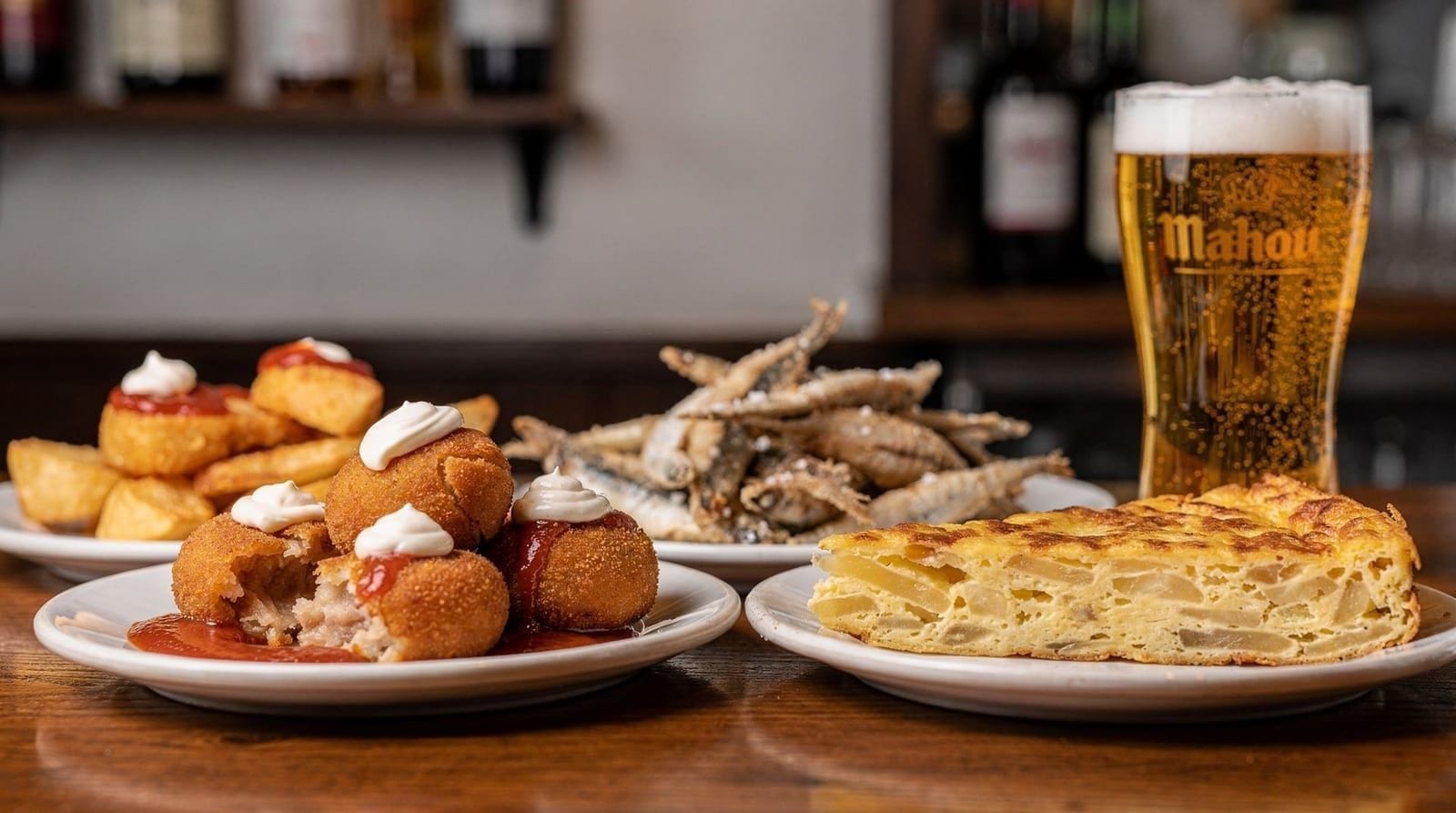
Restaurants in town: La Cueva (Calle San Antón 4) is the local institution — Castilian lamb (lechazo) and suckling pig in a historic cellar restaurant. Budget €25–35. The Plaza de la Constitución has several outdoor café-restaurants that are fine for a quicker post-monastery lunch. Avoid the overpriced options immediately outside the monastery gate.
DIY by Cercanías vs guided tour: the verdict
DIY is straightforward and cheap. The Cercanías train is direct from Atocha (Tourist Travel Pass may cover it) and the bus from the station to the monastery is quick. El Escorial’s audio guide handles the historical context. This is not a city requiring navigation — there’s one main site and it’s clearly signed.
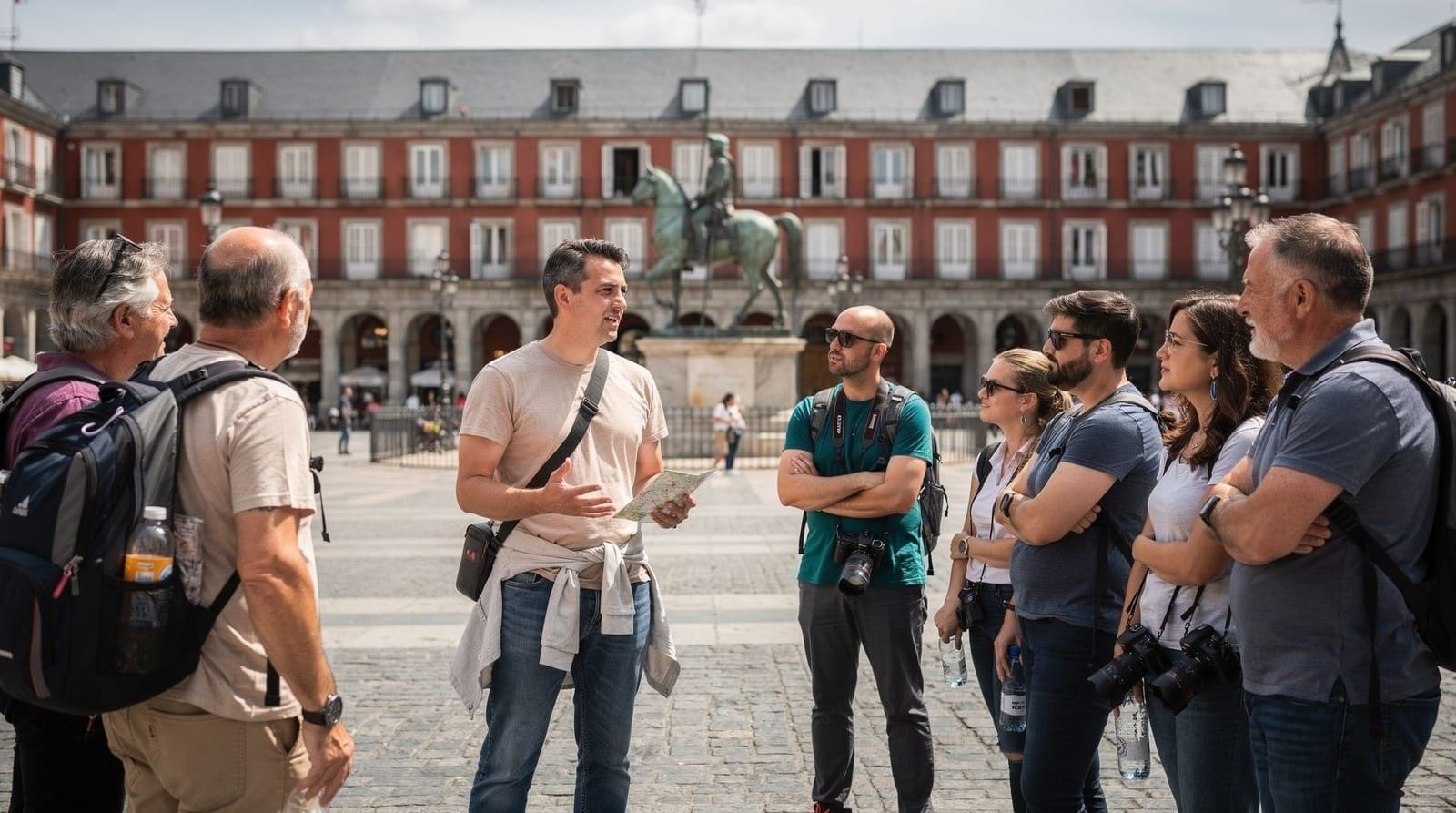
Guided tour adds value if: you want live interpretation of the political and religious history (the monastery’s meaning is inseparable from Philip II’s worldview, which benefits from explanation) or if you want to combine it with the Valle de Cuelgamuros without managing two separate bus connections.
El Escorial compared to Madrid’s other royal day trips
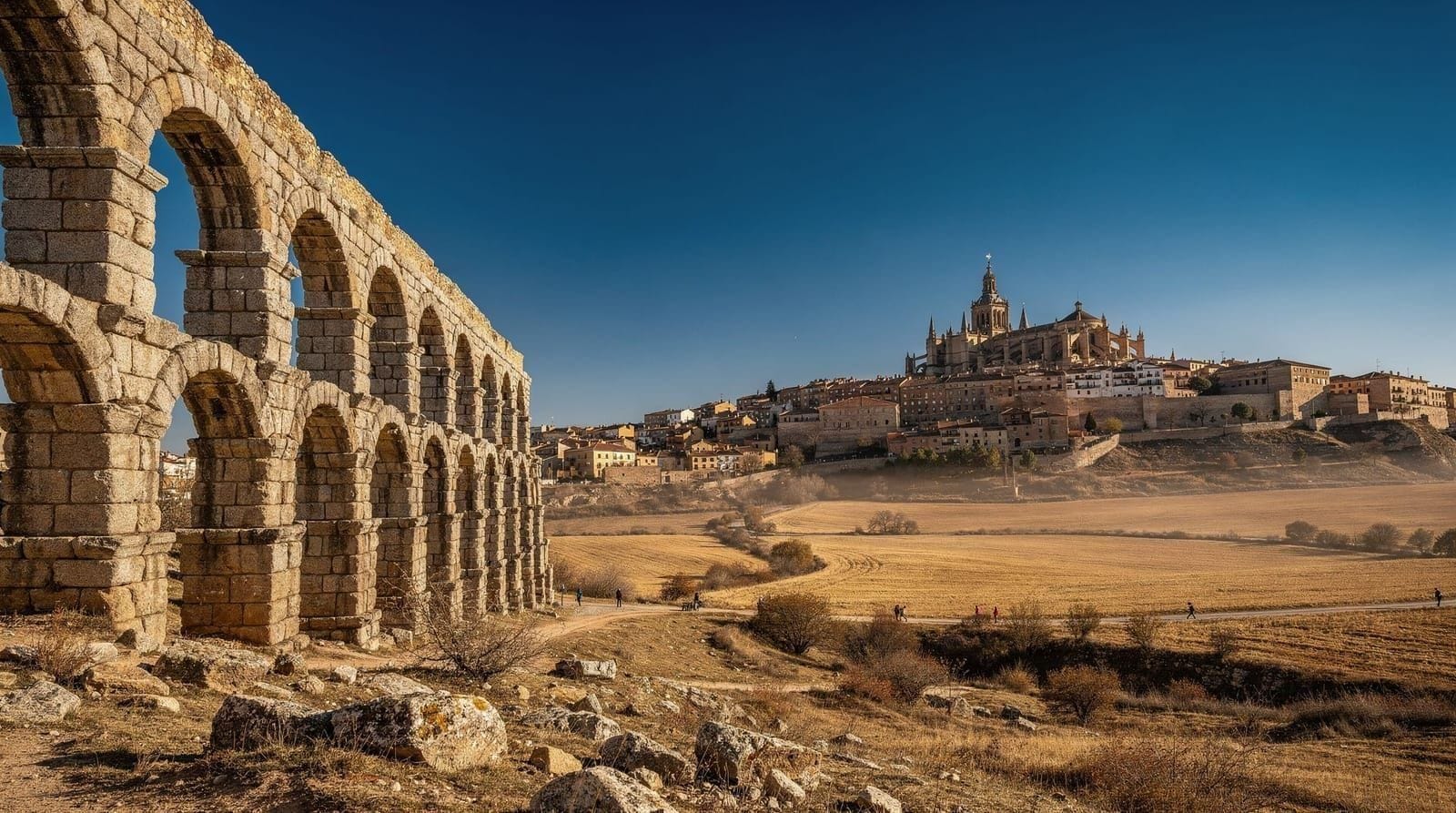
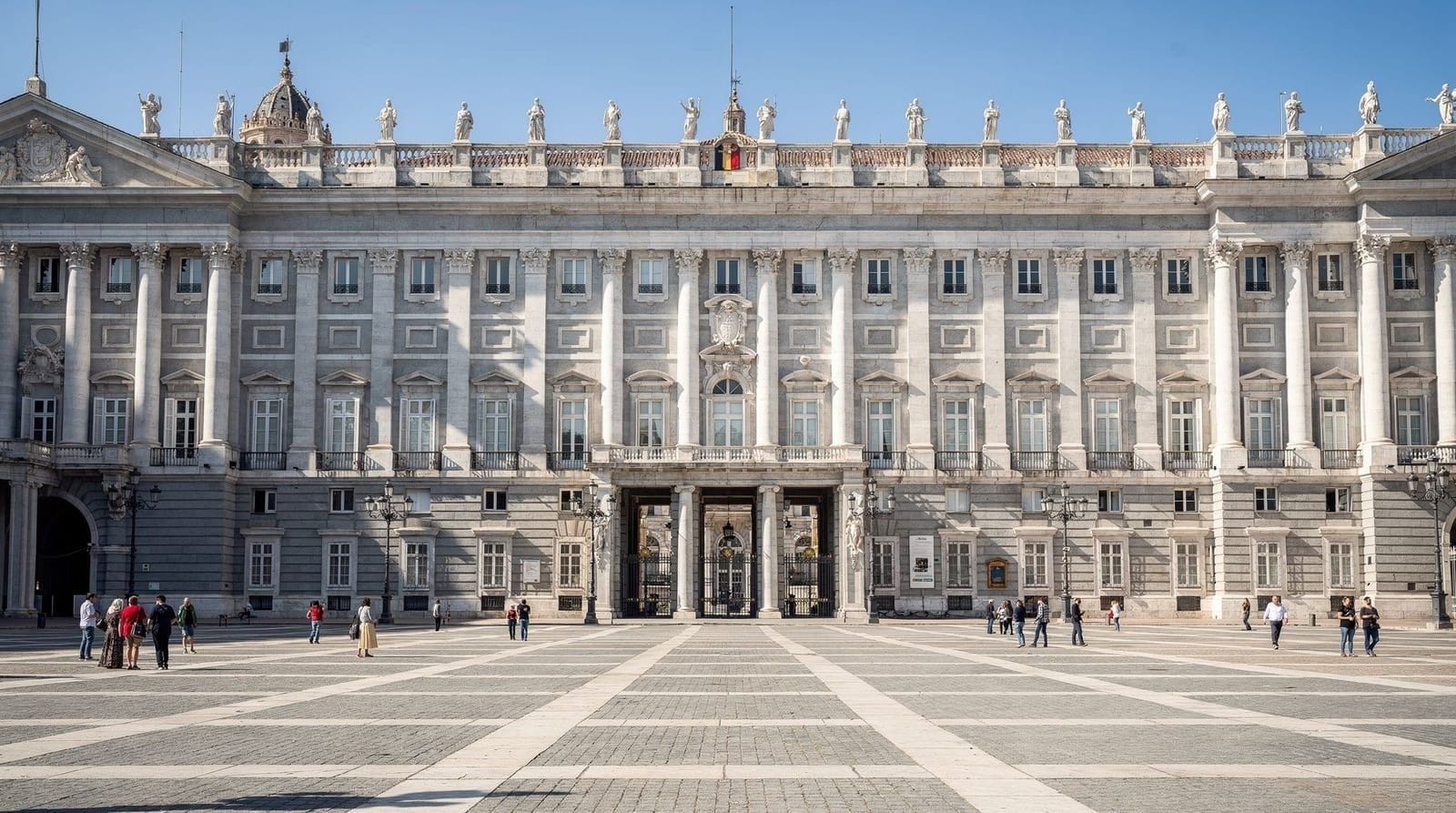
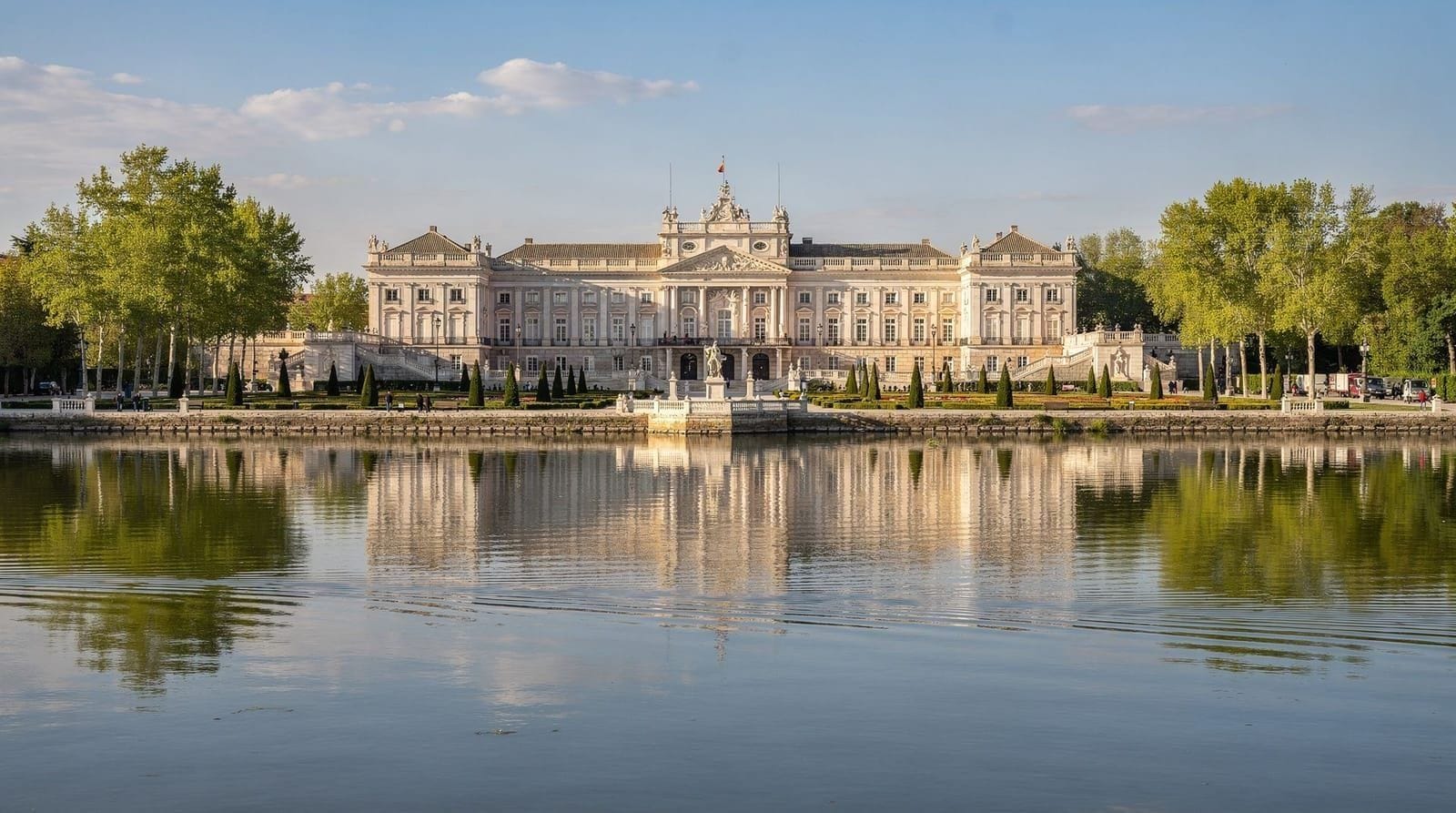
El Escorial is the most architecturally imposing of the Habsburg royal sites near Madrid, but it isn’t the only one. Aranjuez offers a lighter, more decorative Bourbon palace with gardens, better suited to a relaxed spring or summer day. Segovia, while not a royal residence in the same sense, pairs a dramatic Alcázar with the Roman aqueduct and a livelier old town for wandering. If you only have time for one royal day trip, El Escorial rewards visitors specifically interested in Habsburg history and religious architecture; Aranjuez suits those wanting gardens and a gentler pace.
Practical add-ons beyond the monastery
Visitors with extra time in San Lorenzo de El Escorial town can extend the day with a walk through the Casita del Príncipe gardens (a smaller royal retreat within walking distance, when open) or simply linger in the Plaza de la Constitución for a slower Castilian lunch before the return train. For the full range of train-based day trips from Madrid, including how El Escorial compares on journey time and cost, see the day trips from Madrid by train guide.
Fitting El Escorial into the rest of your trip
El Escorial works best when you treat it as one thread in a larger story. The El Escorial destination page gives the wider picture of the town and its surroundings, while the Valle de los Caídos destination page explains the monument that many visitors pair with the monastery.
If the history of the dynasty that built the monastery interests you, Habsburg and Bourbon history is the natural background read before you go, and the Royal Palace guide shows how the Bourbon court later chose a very different style in the capital itself. Seeing both makes the austerity of El Escorial feel intentional rather than merely plain.
Getting out of the city is easier with some planning. The Cercanías guide explains how the commuter network works, and the Tourist Travel Pass guide is worth reading if you are wondering how far your ticket stretches. If you would rather not drive, day trips without a car lists the other options that work on public transport.
Travellers weighing a guided outing against going alone can read guided vs self-guided for the general trade-offs. Those with a little more time can compare this trip with a Toledo day trip, or read the longer opinion piece on why El Escorial is underrated before deciding how much of a day to give it.
Frequently asked questions about El Escorial from Madrid
What exactly is El Escorial and why should I visit?
El Escorial (officially the Real Sitio de San Lorenzo de El Escorial) is a vast monastery-palace-library complex built by Philip II of Spain between 1563 and 1584. It is the largest Renaissance building in the world by floor area, combining a royal palace, basilica, monastery, royal crypt, library of 40,000 manuscripts, and art collection. Philip II ran his global empire from here. The architecture — deliberately austere grey granite — embodies Habsburg power and Spanish Catholicism.How much does El Escorial cost to enter?
The monastery entrance is €14 for adults and €7 reduced (ages 5–16, over 65, students under 25); under-5s are free. EU and Ibero-American citizens enter free on Wednesdays and Sundays from 3 pm, with proof of status. Includes access to the basilica, palace apartments, library, chapter rooms, and Panteón de los Reyes (royal burial chamber). Book online to avoid queues, especially at weekends.What is the Panteón de los Reyes?
The Royal Pantheon is the burial chamber of most Spanish monarchs from Charles I (Charles V of the Holy Roman Empire) to the present day. Located directly beneath the main altar of the basilica, the octagonal chamber holds the marble sarcophagi of 26 kings and queens consort. One of the most solemn and atmospheric spaces in Spain.Is the Tourist Travel Pass valid for El Escorial?
Yes. The Tourist Travel Pass zone T is valid on the whole Cercanías network of the Community of Madrid, including El Escorial; only the Renfe services to Toledo are excluded. Check the current conditions on the CRTM website.What is the Valle de los Caídos / Valle de Cuelgamuros?
A giant basilica and monument built under Franco's regime, using forced labour, and completed in 1959. Originally the burial site of Francisco Franco (his remains were transferred to a family mausoleum by court order in 2019) and José Antonio Primo de Rivera (founder of the Falange). Since then, it has been officially renamed 'Valle de Cuelgamuros.' Visiting status and access have changed — check current opening status before planning, as the site has been subject to ongoing government decisions about its future use.Can I combine El Escorial and Segovia in one day?
Guided tours combining El Escorial and Segovia exist and are efficient — the two sites are about 55 km apart by road. Doing it independently by public transport is complex (different rail lines from different Madrid stations). A guided day tour handles this combination best.
Top experiences
Bookable activities with verified prices and instant confirmation on GetYourGuide.